Rob Greenlee: The Shift from Podcaster to Content Creator
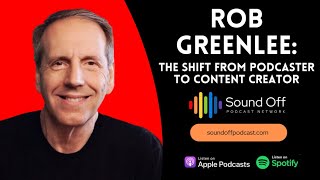
In this episode of the Sound Off Podcast, host Matt Cundall interviews veteran podcaster and media strategist Rob Greenlee. The conversation traces the evolution of podcasting from a niche, trust‑focused medium to a broader content‑creation ecosystem. They discuss the 2024 U.S. election’s reliance on long‑form audio, the erosion of trust in traditional broadcast, and how podcasts offered a more authentic platform for political dialogue. Greenlee argues that the label “podcaster” is limiting; creators now produce multi‑format content across RSS, YouTube, Spotify, X/Twitter, and other platforms. The duo examines the tension between open RSS distribution and platform‑controlled models (Spotify, YouTube, X), highlighting how these services cache or host content, potentially stripping creators of dynamic ad insertion and monetization control. They explore brand‑safety concerns, the rise of automated content moderation, and the impact on advertising revenue, noting a plateau in CPM growth and a concentration of ad spend on a few large shows. The discussion moves to the decline in new episode volume, the challenges new creators face, and the cost‑sensitivity of hosting platforms that slows adoption of Podcasting 2.0 features (new RSS tags, micro‑payments). Greenlee envisions a future where creators identify as “creators” rather than podcasters, with platforms like Spotify rebranding to attract audio‑video creators, and calls for industry‑wide licensing models to rebalance power. The episode ends with speculation on 2025 trends, emphasizing the need for better analytics, diversified distribution, and a possible resurgence of open, creator‑centric podcasting.
Chapters
The Sound Off Podcast, the show about podcast and broadcast, starts now.
Thank you very much, by the way, for inviting me on the New Media Show a few weeks ago.
Yeah, it was great to have you. Yeah, it's always great to talk with you.
We got into it over the presidential election. We were speculating a lot about what would happen and the value of podcasting. And maybe it's too soon to ask this question, but how are we going to look back on the election of 2024 and podcasting's role in it?
Well, I think it is a sign of a shift that's been happening for for many years now. I think it all started back when George W. Bush actually started publishing a podcast out of the White House. This was many, many years ago now. And then we saw another inflection point when Barack Obama joined Marc Maron in his garage in LA and did a podcast. And so I think what we saw over the last 6 months or so was kind of an example of a shift that's really really borne out in its full, I guess, glory, depending on what side of the fence you're on, that podcasting now or independent media or citizen media, however you want to term it, has come into its own. And it's time for individuals and people to have a voice. And that's, I think, what we saw happen. Was the campaign for president of the United States really, I think, and to a large degree hinged on the long-form conversations that happened around politics and policy and stuff that were possible in a podcast versus mainstream media, which is oftentimes very restricted and highly edited and very controlled. And that's really, if you really want to sum it down to the bottom line, that's really what's different about podcasting versus mainstream media. And I think it was just borne out in a way that had a significant global impact.
So I've been on the planet now a little over 50 years, and I feel that I've seen the candidate interview on CNN. I know what it is. It's worse than ever. I don't know that it's going to change my mind, but Kamala Harris on Call Her Daddy sounds interesting. Donald Trump appearing with Joe Rogan, that could be interesting.
Yeah.
And we're already— I think a lot of Americans and people around the world are spending time on podcasting. It's— I'm not sure if it's a difference maker, but it certainly gets people listening more.
Yeah. And it's actually expanding beyond what people have traditionally thought of as podcasting too. I mean, I'm increasingly getting this feeling inside of me that really calling yourself a podcaster is really kind of a limiting thought, right? But then again, it depends on how you define what a podcast is too. So I'm increasingly feeling like I'm a content creator now. I'm creating content for lots of different purposes, lots of different distribution platforms, lots of different kind of consumption behaviors as well. And to call yourself a podcaster seems like it's not really reflecting what the, what the real world experience is for the consumers of this, of this online media. It's, it's basically replacing what a lot of people had in their, their, their everyday behavior of consuming content on on mainstream media, cable channels, network TV, all this kind of stuff that I think in a lot of people's minds has those medium or that medium has lost the trust of the consumer of that content in an increasing way. Not everybody's lost trust in it, but I would say that a growing percentage of the population has maybe looked at it with a skeptical eye, but then You know, that can exist also on the podcasting side. There can be things that have been said that people don't agree with. But, but, but I do think those longer form conversations give an opportunity to, to get a deeper glimpse into who those people are, what they're about, what their policies are. And hopefully when they do those conversations, they will be willing to open up really more to help people understand who they are. And I think that's where Kamala Harris really kind of fell down was, was that she was still thinking in the traditional media model and was not necessarily willing to do 3-hour conversations. And that explains why she didn't go on Joe Rogan. So, and, and that's a shift in people's pathway to trust, I believe.
Yeah. So trust is something that you've really focused on for the last couple of years. What were some of the early indications that you should really be thinking about trust in the media because we are at a point now where trust is at an all-time low. But you saw this coming.
Yeah.
And, you know, I'm talking about like, you know, 5 years ago, 3 years ago, it's come up. I know you're talking about it more and more. So what did you see all those years ago that has— that makes you want to say, hey, look, we're here, I told you so?
Well, I've actually felt this way for most of my my career in online media was that this is different from the traditional mainstream kind of media model, right? It's a conversation. It's more authentic. It's more real. So I've really had this thought for many, many years, just like you say. It just didn't come into, I guess, clear focus of the importance of trust. And as that's developed, over the last, maybe the last 5, 6, 7, 8 years or so, how it's really kind of become more and more important that we all are able to adjust and cope and be able to rationalize our own thoughts around this concept of trust. As we increasingly become a competitive society, instant communications, it's very easy to have information out there that is maybe challenging, maybe hateful, maybe all these kinds of things that rile people's emotions. And I think that is at the core of where we all need to, as human beings, we have to get grounded in our beliefs and our values and be able to project that onto onto the world and not let the world manage us and be so susceptible to the winds of people's opinions and not be grounded ourselves. And that is fundamentally around our individual ability to trust and our internal strength as a human being to be able to hear things that come from various sources and to make those evaluations and judgments ourselves around How do those align with who I am and what I believe? And then really focus on finding the truth and finding the facts and doing your research and not just taking what somebody says and just instantaneously running with it. But a lot of ways it's really in a lot of ways impossible to 100% know what is true and what is false clearly at all times. All we can go from is our gut experience and what feels right to us. Now, granted, sometimes those gut reactions can be wrong. Sometimes they can be right. But we have to be confident that we've made the, the effort to, to build some level of trust in, in what we believe.
How happy are you that when you started the new media show, that you called it a show instead of a podcast, even though it's available in podcast. You could also get it in on Apple in video form. You could also get it on Facebook. You could also get it on Twitter. It's always been a show. And I find myself, if I'm looking at starting somebody's show, they want to call it the something podcast. I don't know. It's a something show. It will be available as a podcast.
Well, I think we got in that mindset, Todd and I, and very early with that new media show of sorts, because we were doing it live. We've been doing that show live for, I think it's coming up on 13 years. And so we were doing a live show like that before it was really kind of commonplace. So that way of thinking about it and just the fact that we named it the New Media Show takes it out of the the realm somewhat of just being about podcasting, which, which we do only pretty much talk about podcasting. But if you look back at the arc of time on that show, we've talked about video and we talked about video cameras and we talk about lighting and we talk about all forms of new media, right? So as we have thought about it, we've thought about it being kind of like new, a new form of media, which lends us down this path of it's not just a podcast., right? It's live on video. It's on instant replay on YouTube. It's on, yeah, even though, you know, I don't think that Todd, my co-host, is really all that enamored with video and what it's done for him. I think he's primarily focused on audio, but I think we're both geeks. So we've always played around with video because we could, right? It had nothing to do with that it was our primary strategy or our approach in the market, but we could see kind of those bigger trends that were moving in the market around YouTube. I mean, I spent a lot of years working on video with YouTube, but not as a content creator, but as just working with those that were using video in their podcast, which has been around a very long time. Actually, most people don't know that when podcasting started for the first 3 or 4 years of the medium, video was like 30 or 40% of the podcasting market and people were publishing video files into their RSS feeds. And the reason that they were doing that is because the internet connectivity wasn't that good back then. And so people were wanting to still get video, but the best way to get video back then was to download it. But now we've kind of come into a different time when streaming is now high bandwidth, high quality. And people just want to get it streamed now. And that's, that's really applied a lot of pressure on podcasting to, to move beyond this download model. And increasingly, because we didn't continue to embrace video in RSS, that we've, we've given or left the door open for Spotify and YouTube to come in and, and kind of take over the video side and put the audio in the backseat of sorts.
Yeah. And I could hear on the New Media Show, Todd, you know, is kind of begrudging to, you know, that side of it because, and I was going to ask you about Spotify who have come out now and said, oh, we're, we're open for video. We can't wait for you to upload your video. And so Rob, if I take this episode and I upload it to Spotify, that's all that's going to be there. There's going to be no RSS feed. That means there's going to be no dynamic ad insertion, no dynamic messaging. It's going to be really the longer form video that people will have to listen to, which is not the audio experience that I strive for every week. And I feel like, I feel like I'm being tricked. I feel like they're trying to trick us out of our RSS feed.
Yeah, they are. All right. And, and to be honest with you, they are, they have always wanted to do that. Back when I first started working with Spotify, this is many years ago, as they were wanting to enter the podcasting space, they were wanting to take the RSS feeds and cache all the episodes, just like what YouTube is doing today with video. And to some degree with the audio feeds that are in there right now from RSS is that they're taking that content, making derivative version of it, making a video, and then making that available on their platform. And the only way you can control it or edit it or delete it is you gotta go into your YouTube channel and make those adjustments. So it's really this focus that Spotify has always had of trying to get control of the media itself because they have this feeling like they can deliver that media file to their listeners more efficiently and quicker. And in a better listening experience than relying on the podcast hosting platforms to deliver it on a progressive download. So this is the tension that I felt when I was working with Facebook as well, when they were trying to enter podcasting too. And this conversation happened around Pandora and it's happened around lots of companies that I've worked with very early in the medium when I was working for the hosting platforms. And they were pushing back. They were wanting to say, well, you know, I don't trust that you guys can deliver on it. We want to be in control of the experience of our users. And so Spotify has always wanted to do this, just that the industry pushed back against them in that timeframe to say we have to have pass-through, which means that those media files are hosted on the hosting platforms and they have to be delivered real-time to Spotify like Apple does. Doesn't cache episodes as far as we know, but they deliver it real time. So if we make any changes to that media file, it updates automatically through the system, right? Or if we want to add dynamic ad insertion or programmatic ads or all that stuff, it just passes right through. And there's a central control that comes from the podcaster and the host that they've selected to manage all that for them. But once that gets broken up and all these platforms like Spotify and YouTube and, and, and maybe even Apple at some point where you have to upload directly to them, it's hosted on their platform, then they get to control the monetization. They get to control, well, all of the dynamically inserted monetization. Now, granted, you can still put in your own host reads that are, that are built into the content, but that control kind of goes away from a central distribution platform too. And I think it adds an increasing load to content creators if they're going to have to go into each of these platforms and upload directly to them and be a part of their monetization strategy, just like what YouTube is doing today. You just look at what YouTube and you can see what the future could look like. And I think that is unfortunately, I think the path that we're on, the podcasting industry really didn't embrace video to combat this potential outcome. But we're— we may be past the point of no return on this, being able to pull back RSS from its fate. Yeah.
You know, another example, and I think here X Twitter is probably another example, very quietly in the last 6 months, you can't take your video and stream it directly to X Twitter without a subscription and being verified. And now comes, I guess, I don't know if there was an announcement with this, maybe there was, that if you're just going to be linking to your website, they're not going to really support that nearly as much unless you upload directly to, directly to, which I noticed the New Media Show has started to do. I've started to do it as well.
Yeah, I just started to do that and I've been streaming live to X, Twitter for many years. And that, that's a great pathway in as well. But you're right, they did make a shift. I mean, I do have a blue checkmark and I do have all that stuff that Elon has, has imposed on there. And there has been talk that Twitter X will support, you know, video in an increased way to compete with YouTube and to compete with increasingly Spotify. They've been very resistant to embracing RSS, which I can't say I'm surprised. They of course want to— each of these platforms wants to control what media they get, how they get it, that the media is exclusively on their platform. And that's the approach that we're seeing happen and take over. And it is an existential threat to RSS. There's no question about it. I think it's also unsustainable though too. If we see all these platforms going this direction, it's putting just an untold burden on content creators. So something's gotta give, you know, we can't just shift all this additional work over to content creators that all these content creators have historically been able to create efficiencies, right? You publish once and it goes everywhere. That would increasingly go away. Um, but do they care? I, that's the big question mark.
I've never been more excited though for the RSS feed.
I, well, yeah, I mean, I am too. I mean, I've been a big fan of it too. I mean, it's, it's helped me with my career and it's helped me with the shows that I've done and, and I still embrace it. I'm, I'm doing two shows that have audio, um, and video being published in RSS. So it's, it's something that I want to see come back and I've been pressuring Apple, uh, and the team over there to make visible the video podcasts that are over there. I mean, you can't even find them right now. But in the early days of the medium, that was surfaced as a toggle at the top of the app, right? Where you could select, well, I wanna have video, I wanna have audio. But for some reason, Apple removed that a few years ago. And that basically buried all the video podcasts that were in the Apple Podcasts app. And I think that really hurt the industry. As you see what's unfolding right now. And I'm hoping that they bring it back. I've been talking to them about it for probably the last year to say, well, you have content in there, why don't you surface it and make it available to people? It's just that they may be worried that there's not enough content in there at this point because they've killed it off, that bringing it back will expose a hole that maybe they don't want to expose.
So new podcasters will come to me and they're like, well, how quick before I'm in YouTube? 'Can the video be on Spotify?' And I go, 'That's not where the fun is.' You know, maybe they see famous people on these platforms and want to, you know, get in on that. But increasingly, without an RSS feed, I will upload to Twitter, I will upload my video to Spotify, and then to YouTube. It really depends on the users inside that platform how famous I get and how much I'm going to be consumed. I could be unknown on YouTube and famous on Twitter. I've already had some people come to me and say, well, we put our stuff up on YouTube, but we keep getting censorship notes for violation for health talk or political talk or vaccine talk or bad words. Could be anything like that.
Yeah. And that's increasingly going to continue to happen. I think it's gonna be an interesting time in the next 6 months to figure out this whole kind of tension between free speech moderation and monetization. Those are the 3 pieces to that puzzle of brands want to have a safe place for them to run their advertising, right? And if they have a particular political view or, view or whatever it is, they want it to be not violated by a piece of content that they advertise on, right? So this is kind of, this is relatively new to podcasting. Podcasting really hasn't had this metric of moderation and evaluation of the topics and the words used in the podcast and red flags being thrown up whether or not it's acceptable to a particular advertiser to be a part of.. And I think that had to be evaluated manually by the brands. Now it's being automated. So there's advantages and disadvantages to having that happen. And is there a risk that there's a thumb being put on the scale around this concept of censorship, right? That is unfair, maybe unreasonable. And I think that the industry is wrestling with this, and I think that the advertising industry has embraced it because they think that they're going to get more brand deals in the door, so more advertising support in the door to support podcasts if they embrace it. I think the opposite can happen. I think the opposite can happen from the standpoint of they find shows that are not friendly to them and they're less likely to advertise on. So it goes both ways, right? It's not an all-win going in. It's basically putting some roadblocks into getting advertising into the medium. And I think it may explain as you look to the future, and this is another controversial view too, but are we going to see the advertising in podcasting continue to grow or have we topped out because the brand's not buying across many, many shows, they're buying across very few shows, and they typically buy on the big shows, ones that they have a history with. And oftentimes even these brand safety models may violate these brands' kind of views or what they feel comfortable with, but they'll still advertise on some of the big shows because they've always done it right. And they feel, well, nothing bad happened in the past with this content creator. So it can create a double standard that happens in the industry as well. So, you know, and it keeps smaller content creators that are trying to break through with maybe controversial content because that's what listeners want is people talking about the issues of the day, what people are concerned about today. And that's what's driving a lot of attention now is controversy.
And you mentioned it from the brand side of things, but, you know, controversy in a podcast or brand safety, that could come down to something as simple as, oh, this is a true crime podcast and I've got a true crime podcast here in, in our stack at the network and they pass over it all the time and they say, no, no, give us something else. And I'm like, yeah, but there's a lot of downloads here, a lot of interest, and it doesn't pass the brand safety test because there could be a bludgeoning, there could be a killing, and I can guarantee you there's probably a dead body. Involved in the whole thing, you know, we just give us something else.
Yeah. Yeah. I mean, I think that's the, that's the real danger of— I know there's a video on, on YouTube that you can go watch today with Conan O'Brien. If you do Conan O'Brien brand safety in, in the search algorithm of YouTube, you can get to this video and it has the whole Conan O'Brien team sitting around a table talking about brand safety and suitability and how that impacts his show and how he thinks about it and how it's causing him to change his content if he wants to keep his, his advertising deals. And, and but I've also heard subsequent to that is that a lot of his advertising deals that he had over the last, over the last 10 years are still with him. Regardless of the brand safety stuff. So, you know, it's, it's this kind of method to maybe exclude certain, certain people, but still maintain those relationships with the big shows. So it's, it's, it's kind of insidious to some degree, and I'm a little bit worried about it. But I know that as I speak to the advertising industry here, I understand why you're doing it and I understand the benefits of doing it, I think everybody just needs to understand what the slippery slope of this is and how it might actually limit the growth of advertising and content going forward, not enhance it like they all think it is.
And I also look at, well, do I want to be on YouTube? Yes, I do. But why am I really here on YouTube? Like, this is on YouTube right now. And I'm like, Why am I here? And I got to go buy myself the shirt. And the shirt says, I'm just here for the search. Because that's really the only benefit that I personally can see. Now, somebody else might have other benefits to it. Maybe some people will watch your show live if you happen to do it live. But for me, it's, it's about the search. And I really don't have any interest in monetizing with YouTube. I would need 1,000 subscribers., and then from there I'm probably going to pull more money out of my RSS feed anyhow. So I mean, is that— should we be looking at video just to be part of it and just there for the search?
Well, I've been increasingly looking at it from the standpoint as, well, where— what do consumers of this content want? I mean, where do— where are they getting their content? Where is— where's those trend lines moving towards? And And that's why I think about the people that are creating this content, think of themselves as creators as well. On the other side, as we think about the consumers of this content, they're increasingly thinking that they're watching or consuming or listening to a podcast, right? So those people are going to these platforms. The research is coming back showing increasingly that people are fairly ambidextrous about where they want their content from. So, so do we play against that or do we play into that is the question. The mantra in podcasting has always been is to go to where your audience is, right? Not force them to go somewhere else, right? That maybe they don't want to go to or they're not already. So this, the whole ideology around RSS was to be everywhere, right? So how can you say, well, going forward then, that being only in RSS is the path to be everywhere. It's increasingly not accurate to say that. And I think that's the tension that we have to think about here is going forward, do we want to be everywhere or do we only want to be in a limited set of consumption platforms where the research is showing that increasing numbers of people are not in anymore? So that's not to say that listening to audio podcasts isn't a growing market. It is, but it's only growing at, and historically this has been the case, it's only been growing 3 to 4% every year. Right. And there is an upper limit to how many, um, how many listeners that we can gain from podcasting. It's been growing like that for 20 years. Um, is it going to grow at 3 or 4%? Every year for the next 20 years? I, I don't know. I don't think so. I think we are. I think it's possible that we will reach some sort of maximum saturation for podcasting in the next 5 to 10 years. So where is the next upswing in audience attention? Is it going to come from video? And I'm increasingly seeing that as the trend line that people, especially this is a generational shift that we're seeing. Is that people are increasingly wanting to consume video in all these different forms and delivery platforms. You know, you get, I mean, you really have to include TikTok. You got to include, you know, Facebook, obviously you have to include X, you have to include all these platforms in what the future of media consumption is trending towards right now. And as a podcast industry, are we just going to ignore that or are we going to embrace it? I think that's the bigger question, and it's really about values of syndication, right? And I've always had— if I think back to my history, I started on broadcast radio and was on XM side of that radio network, was on 15 broadcast stations. I was on all sorts of digital distribution platforms before podcasting that were kind of doing an MP3 download or they were recording a live stream, audio stream that I was doing. And then putting that out as an MP3. So I've always embraced all the methods of distribution. It hasn't been exclusive to just RSS. And that's how I think about the market today.
So we'll mark it to this point in the show when I actually start talking about broadcasting and their relationship with podcasting, as this did start as a podcast about broadcast, but has since evolved. Yeah, but congratulations, by the way, to podcasting, which is now just like broadcasting in that broadcasters like to lay off the podcasters as much as anybody else in the business.
Of course.
Of course. Yes. Is that across the industry in podcasting where there have been cuts inside companies where they have had to maybe scale down podcast divisions?
What have you seen? Yeah, it's been going on for a good over a year now. Companies have scaled back because a lot of brands and advertisers have cut their budgets. A lot of people in the industry don't like to talk about this, but it is what's been going on. That doesn't mean that CPMs have dropped dramatically, though they have dropped somewhat. But, and the other thing that I hear too is that Oftentimes the brands are buying on fewer shows, which is another trend line that will blunt any kind of massive growth in the, the, the projections for advertising revenue in the coming year. I know we've been trying to get significantly over $2 billion in advertising revenue for like the last 5 years. So we have reached some sort of kind of limit at this point. Not so much a defined, definite limit, but I think we are struggling to get over even up to 2.2 billion over the last couple years. And we have to all ask ourselves, well, why is that happening? What do we need to change, or how do we need to approach this market that will break through? And the only answer that And Todd's been saying this, Todd Cochran, my co-host, has been saying for a long time is that these brands are not buying across larger numbers of shows. They're fairly restrictive on how many shows that they want to work with, and they will spend increasing budgets in those shows. And what we're seeing is those really big shows are getting overloaded in advertising. And that's causing a blowback in the research around increasing sensitivity to ad load. That's happening. And I believe that's happening because of the overload of ads in the big shows. Those big shows reach probably half of the listening audience in the world and, and or, you know, off of downloading off a podcast. And those, those half of the consuming base are driving these numbers of a perception of too much ad load in the, in the shows. There is a limit in podcasting If you go back to the early days of podcasting, it was a very different dynamic. And I could spend the next half hour just talking about how sensitive people were in the early days of podcasting to any kind of commercialization, because podcasting started as an oppositional response to over-commercialization of radio. And so this medium was born on an anti-commercialization model. But we've, over the years, we've embraced advertising and it's being done in a way that is heading us back towards the commercial radio model. And as we've seen more of the radio companies get into podcasting, they're bringing a lot of those approaches to the market because guess what? We all want to make money and they're public companies and they have shareholders and they need to generate revenue. And as they moved into podcasting, those priorities came into podcasting. So we have that to deal with right now. The things that I've been saying here most recently online is, is are we going to get to a point where there needs to be Podcasting 2.0, which, which is basically a, a, a new medium that's born as oppositional to over-commercialization of podcasting. So I don't, I'm not sure where that goes if we're gonna get into more audience paying for content and private communities and private content. Is that where the industry is moving towards? I'm increasingly wondering if paid podcasts, paid-for podcasts, and podcasts that are done and published to private communities is kind of the trendline of the future.
Yeah, another one that I see, and maybe we saw it firsthand when we were at Podcast Movement, and I know your co-host Todd was saying, where are the creators? And then wanted to supply some visual evidence of the lack of creators as well. But I have noticed that, you know, that going to conferences, we're not going to see the creators like we did in 2017, 2018. But also during the pandemic, there were about 800,000 new episodes that would be released in a month. And today that number sits at 350,000 new episodes, podcasts releasing episodes within the last 30 days.
Yeah.
And I'm not sure, should we be concerned about that number or is that just what it is?
I do wonder, big picture, if, if what we're seeing happen is kind of like The cream is rising to the top and there's, there's smaller numbers of shows that are active. And this may be part of the trend line around, you know, the foundations of mainstream media of sorts. We're, we're heading back to this maybe potential environment of, of fewer shows that are successful and larger shows. That's one of the big things that podcasting had for many years was clearly an identity crisis around the significance of the medium, right? And how many shows there were and how small the audiences were in the early days of podcasting. But now I think we've come into an era where big shows are getting huge and global audiences, and that is shifting the conversation and making it difficult for new shows and smaller shows to get a footing and get off the ground and find success. And we're seeing a lot of content creators now as podcasters struggling to build audiences in their shows. And it's, I think it's a reflection of a shift away from mainstream media over to looking at online content now as the mainstream. And then we're getting back to more smaller numbers of shows that people are willing to embrace in their media consumption diets. And since broadcast is kind of like fading right now, people's attention are gravitated towards maybe some of those personalities that they had experienced on mainstream media that are building huge audiences on the digital side now. And so, you know, and the emphasis is really being pulled towards around advertising and audience development towards shows that are established with established brands and established names that people are already aware of. And it's getting more and more difficult for any new content creators to break through.
Yeah, I might add there's also TikTok, which has taken off, and Instagram Reels. So that's piling on some scroll time as well.
So, right. Snapchat is another one that's still around. Yeah.
Yeah. And to that, you know, if we release a podcast, you know, from our network today and we don't do a ton of marketing around it and just let's say the creator will tell their friends, family, use their socials, we'll get about 75 downloads for that first episode after the first week. It used to be you could get to 150 pretty easily without trying. And that's not there anymore. And I single out about 150 because I know Rob Walsh over at Libsyn will often say that, you know, if your episode gets more than 150 downloads after 30 days, you've probably beaten half the podcasts out there. Right, right, right. Yeah. So to that, yeah, I totally, I can totally see what you're saying when it comes to like, you know, it's harder to get started. And then, and then tack on video and then tack on, you know, Twitter and then tack on all the other things you have to buy for. Oh, and StreamYard, by the way, just upped their prices by 47%. Um, we're not— do you remember the days when people used to complain about how much it cost to sign up for Spreaker?
Yeah. And that was pretty inexpensive, really. It's $20. Yeah, right, right. But that's, you know, what's You know, and what's interesting too is that the, the cost of doing this stuff, getting a subscription like that generally hasn't gone up. Um, it's been what it's been for like the last, you know, I, I talked to Todd Cochran because he, he runs Blueberry, which is a fairly good size podcast host and he hasn't raised his prices. And I know that Lipson hasn't really raised their prices. All these platforms, um, have been holding on because Podcasters are generally very price sensitive. And they've been, you know, that was one of the big things that always kind of like got in my way with doing any kind of partnerships when I was in my partnerships role with various companies was, was that if you did a partnership with a company that wanted to do kind of like a rev share or whatever, you know, that if you wanted to bundle it into those podcast hosting platforms, plan accounts to offer that like transcripts or something like that. And it would cost, you know, an additional $10 a month or something like that, their bill would go from $20 to $30 just to add transcripts. And it's like, we just never were willing to really accept that as an option because we knew that there would be pushback on that. So we were always faced with this dilemma of, do we just absorb it and take it? And, or do we raise the prices to be able to embraced that. And it's really kind of been a, I think, a limiting characteristic of what we've been able to do with the technology of the hosting platforms. And that may be one of the, one of the reasons why we've seen kind of like a slow development of the Podcast 2.0 initiatives around new RSS tags is that it's been expensive to add these things to platforms and, and the hosts are very price sensitive and also, cost sensitive too around adding a bunch of new features that there's a potential that nobody will use them. Right. And they won't be a priority to the content creator. So we basically limited ourselves to some degree in how, how we've approached this market and left the door wide open for a big platform like a Spotify and YouTube to come in and disrupt us.
Yeah. So we're past the midway point of this show and if you listen straight through, we already had an ID run that said that our show and our company supports Podcasting 2.0. And somebody's sitting there going, well, what's that really about? And I say, well, it's all these great new initiatives that can go into a podcast app whereby you could support this show by sending us a few Satoshis if you like. For a show like yours, a new media show, you get a flag on your app that says, hey, the show is now live. You can listen to this in your vehicle. And you can also send them some Satoshis.
Yeah, it's an awesome idea. It's awesome, actually, when it works, it's awesome. And it's basically, the problem is it's not embraced because it wasn't Spotify's idea or it wasn't Apple's idea. And that's been the challenge that we face with any of these things for many years is that unless it comes from those big platforms, they don't really want to embrace it because it wasn't their idea.
They are 80% of the listening. I think so. I think, but if they do jump into a couple of those things, then the rest could follow suit.
No. Uh, up to a point.
I mean, who doesn't want a live tag?
Like Spotify must want a live tag, but they don't. But Spotify doesn't really do anything with live yet. Now's your chance.
I know they could.
Netflix is doing it. Right. And I think. If we could get traction on that RSS 2.0 project or the Podcasting 2.0 project, I think it would be terrific. But I think we have very strong proprietary interests now that are taking over. And podcasting, don't misunderstand what I'm saying. Podcasting has always had a component of proprietary platforms. So saying that podcasting is an open medium is a little bit of a, misrepresentation to some degree. I mean, it's open from the model of how we use to distribute our shows, but we've always distributed our shows via RSS into proprietary platforms. So it's, it's just been a pathway in. It's not been an end of itself to some degree around capabilities, right? It's always been gated by these big platforms and their influence and being able to reach audiences. And That was always the trade-off that every content creator made was, well, you know, we'll take your content, you know, because we have the ability to, to give you reach. Right. That was the value that content creators have exchanged with these big platforms for a long time is the ability to reach an audience. Right. They're not saying that they're guaranteeing audience. All they're saying is that you have an opportunity and that's the value equation. Now, Todd and I have occasionally talked about, well, maybe the whole podcast medium needs to band together and do like music did and create a licensing format for podcasters putting their content into these platforms where they have a certain requirement to pay you a certain percentage of their revenue based on the consumption of that piece of content. I know I did a deal like that myself with Microsoft many years ago around my, my audio show that I did. I got paid 25 cents per download. Back in that day, going from Windows XP to Pocket PC devices where each time an episode transferred from my PC to a Pocket PC portable media player device of sorts, I got paid 25 cents. So what if, what if the industry banded together and said, sorry, Spotify, you can't have our content until you get into a licensing agreement with every podcaster in the industry. How would that change the conversation? Well, that would be the place to leave, right?
Yeah. Yeah. Right. That would be the one we would pick on. Right. I, I would be for that. I'd be willing to give up, you know, the 15% of the audience and tell them you got to go to another app in order to listen to this particular show. They're already willing to separate me from what I want by asking for my video. So they would be the one that we could target. Now, have you ever tried to get all podcasters to do the same thing? No, because they're still saying Google Play and iTunes in some shows.
So, well, we've always said that podcasters are like stray cats, right? They like to run in all different directions. So you can never corral them into one bucket very effectively. And I think that kind of mental thought about the podcasting space is still accurate. There isn't really one global body really that fully encompasses this medium of podcasting. And because I don't know that anybody would trust any one body to have that role. So it's just one of those, you know, podcasting has been a very I guess in a lot of ways kind of a distrusting medium from its early years. And I think it's also, you know, I think as we've moved into more modern times, I believe it's been a trusting medium probably beyond the scope of maybe what was reasonable.
I want to get you out of here because I think you've got to do the New Media Show here in a few minutes.
No, I do it at 8 PM Eastern.
Oh, that's right.
You move times. Yeah. Todd's out of the country, so.
Yeah. Well, what's something for 2025 that should excite a podcaster today?
Hmm. Uh, I think probably pulling back and thinking of yourself, uh, like I've been saying, as, as a content creator, um, not exclusively a podcaster per se. I think that that is going to be the mantra as we move forward. And you can see a sign of that in the strategy selection that Spotify has chosen. And that's going to impact a lot of people. A lot of people are going to see what Spotify does and they're going to start shifting. And I think people are not readily seeing from the creator side this word podcast anymore. Now it's creators or Spotify for Creators is now the name. They basically dropped Anchor, they've dropped the word podcast, and so now they want creators, and creators is a bigger bucket term to describe video and audio, not just audio, right? And I think that is a big shift. And if you look at YouTube, YouTube is using the word podcast primarily as a name of a playlist, right? So they are not, they are clearly thinking about creators. I mean, if I look at their interface and their backend, just the analytics that they have is just like exponentially more than anything you could get with a podcast. I mean, it's just, it's mind-boggling how much data you can get from your profile area or your studio experience in YouTube. And I think that that's created an expectation that podcasters want as well. And I think a lot of the advertising market wants to see that level of data in podcasting too, which I think is another big driver of this shift in perception and shift away from RSS is because RSS isn't going to give them that level of analytics.
Rob, once again, thanks so much for being on the SoundOff podcast.
Well, thank you, Matt, for having me on again. I think probably this is like maybe the third time. I appreciate being invited again. So I didn't say anything bad in the past that got me banned.
But I'm glad you're counting.
That's—
it is.
It's the third time. Yeah. Oh, of course. Three's a charm. Yeah.
All right, Matt, thank you. The Sound Off podcast is written and hosted by Matt Cundall, produced by Evan Serminski, edited by Chloe Emont Lane, social media by Aidan Glassie. Another great creation from The SoundOff Media Company. There's always more at soundoffpodcast.com.
More from Rob

Future-proofing with Delphi AI/Human clones: your podcast as a personal LLM | New Media Show






How sports reveal what AI spectacle gets wrong #Technology #Sports #Commentary



