Spotify Lays off 200 in Podcast Division #544 - New Media Show Live - June 7th, 2023
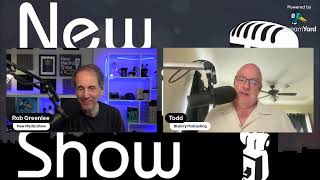
Rob Greenlee and Todd Cochrane break down Spotify's 200-person podcast layoff and how the industry is shifting. They dig into AI tools like Descript for voice cloning and transcription, but both warn that fully synthetic podcasts lose the warmth that makes them work. Current AI accuracy sits around 93-94%, and indie creators are unlikely to adopt expensive workflows anyway.
Chapters
To go.
Okay, okay. Welcome to the New Media Show.
We're back doing the New Media Show again.
People are actually going to listen to this junk.
We do it live. We're live right now. We'll just do it live. Let's go in live. Let's go in live. We just can't get enough. The New Media Show.
Let's go!
Just do it live! We'll do it live! We'll do it live!
Part of being by the boom.
The New Media Show. If we do it live, just do it live! We'll do it live! The New Media Show. I'm like Adam Curry and you're more like John C. De Vorak.
I think I am Adam Curry and you're the old curmudgeon.
We do it live on the New Media Show again.
The New Media Show. Technology, we make it sound so special. Well, Rob, here we are again with a new media show. How are you?
I'm doing terrific, Todd. It's great to be back doing the show again for— yeah, how many episodes is it now? I think we're up to 540-something. 547. Wow. Okay.
Yeah, I think it's fun. This might be 545, so I have to look, but you know, it's, it's a number.
It's a number, and we have taken quite a few days off of the show over the years. That's, that's why the number probably isn't even a lot higher than that, right?
That's very, very true.
Well, Todd, there's been a lot of stuff happening in the, in the medium over the last week or so. It's kind of, kind of surprising. So I, I kind of dug through and found some, some hot topics for us to talk about on the show today. So I'm excited for these topics because they're really gonna uncover a whole bunch of new elements. And I'm sure that you're, you're probably seeing the same thing.
You know, I've had my head down, so I've just been reading— yeah, I've just been reading what's been going on with the, you know, in pod news and that kind of stuff. But, uh, you know, it's, it's, it's, it's, uh, you know, and it's surprising there's as much going on as there is, uh, being you know, that it's, you know, middle of the summer here.
Yeah. So I guess it's indicative that this medium is still charging forward and doing well, but we continue to see layoffs too. So that's the thing, you know, with like a Spotify. So maybe that's more of a reflection of overinvestment as compared to the opportunity because they were kind of looking to the future of seeing a lot of growth. But, you know, Spotify let go of 200 people, um, just specific—
specifically in their podcast area, right?
Exactly. So that's— that is, if there ever was a clear indication that there's an advertising revenue challenge, that would be— that would be the one right there. Um, that's a— that's a big big reduction in the production side and some reorganization and some new leadership and all sorts of stuff going on over there.
So yeah, it's, it's actually, it's actually, well, you know, I'm hearing, I'm seeing all the social posts by people that are like, I was part of the drawdown and part of the cut. And, uh, you know, so it's, I guess from that perspective, I'm, you know, I, I don't know if I Call me— am I surprised? Really? You know, because they don't have that deep of a pool. And I don't know what— if it was a combination of what, Gimlet and who— the cuts didn't come from, uh, Megaphone. Came from where? It came from Gimlet and Pearcast.
Yeah, exactly. It was more on the content production side. Um, a lot of consolidation going on there. On that side. Yeah.
So that just tells you that maybe the advertising piece is doing okay, but the content production side is, uh, you know, waffling.
Well, that and maybe they're not growing the audience that they need to pay for the staff that they have, or, um, just the advertisers aren't, um, aren't there as much as they were prior. So it's, you know, it's got to be one of the two, and I I have heard many people in the industry say that there, there has been a significant drawdown in advertising buys and campaigns and things like that. So I don't know if you're seeing it, Todd, on your platform or, or, or not. I mean, as we've seen in the past, these, these indications can vary wildly between different players in the industry.
Well, from the programmatic side, I see no change. You know, we continue to add podcasters to, that are enabling programmatic and they're getting paid. So from that perspective, the numbers continue to go up and, you know, maybe it's a, it's an indication of just adding more people, the numbers going up, but I don't really see a decline in inventory.
So that's good, that's good to see.
So, you know, again, we're working with SoundStack, so I don't control that piece. They, they're the ones that do the fill. So From my perspective, you know, we just set it and forget it, and we get a report at the end of the month, and we write the checks, and, you know, uh, or swap money, and it, uh, you know, it works out.
Well, as long as the, the revenue is still coming into your advertisers through this, this program, um, you know, the programmatic stuff, it's— that's fantastic news. That also is an indication that maybe the the advertisers are looking for more value in their buys. So maybe what we've seen is a reduction in the, the host read buys, which tend to be a little higher CPM, right?
Well, I did hear, um, I was getting caught up on some podcasts and I did hear the one of the team— I don't know if it was the founder or who it was from Red Circle— said that they felt programmatic was being a little softer currently. Um, but you know, from my perspective, it doesn't look like it's softening. But again, um, you know, we're dealing with, uh, probably much, much lower numbers than what— you know, if you have a staff— you know, we're a team of, uh, under 20. And when you, you know, when you hear that they're cutting 200, that's, uh— you have to have a serious amount of revenue coming in to, to meet the expectations of, of a payroll like that, of a payroll of 200. That, you know, that's, that's a that's a big number. And you probably think that if you think about what, what they pay, there's probably, you know, probably minimum salary over there was probably $100,000 at least. And, you know, maybe not for some staff members, but let's just take an average of $100K a year and you multiply that out by 200. That's a, that's, that's a number. You know, that's a big number. And if you're on the content creation staff and you have to create hit after hit, you have to drive audience and drive numbers. If they're not doing that, if not creating original content, you look at all the content they didn't create that they said they were going to. And yeah, and then the budgets that they're placing against some of these shows, you know, that's a, you know, for an independent podcaster, it's a you know, it's, it's, if someone says to, someone called me and said, hey Todd, uh, uh, you know, we'll, uh, we're going to produce your show for you and, uh, it's going to cost you $5,000 an episode, you know, I would just, I'd hang up on them. But that's what they were, you know, that's what the overhead costs on some of those show productions were. Um, huge, huge money. So you know, not only do you have huge overhead for salaries and you have huge production costs, and then look what you— then you take that baseline. Let's say it's $5,000 an episode, and maybe that's not even— maybe that's talent cost, everything. That means that show has to produce, and with the staff that was behind it, let's say there's 6 or 7 people, you take their salaries You take the production costs per episode, all of a sudden now that show's got to produce $25,000, $30,000 in revenue per episode to even make sense. Yeah. And guess what? If you're building brand new content and trying to garner new audiences, that's easier said than done. I would never ever want to have to be in the business of How many create hits like television shows? Who wants to be in that business where you are going to do a pilot, do 2 or 3 or 4 or 5, and then say, okay, nope, that didn't work? You know, most podcasts take hundreds of episodes to garner huge audiences. So if they're trying to create a one-hit, you know, they're trying to create a serial every time, they're not going to do it. So, and again, I don't know what everyone's roles over there were. They got cut, but sounds to me like, um, they just weren't creating hits.
Well, that's, that's the challenge, and it's also an interesting opportunity for the podcast space. You know, you think about all those creators, all those producers, all those hosts or whatever that are getting, getting let go, right? What are they likely to do after they leave? They're, they're going to obviously look for a new, new position somewhere, or they're going to start their own production company, right, and start producing their own shows or be a consultant to other shows. Um, so this could be, you know, it's kind of like a reshuffling of the chairs on the deck, right? People are, you know, so we could come out of this with kind of like a renewed energy around independent producers too that are creating new shows that are independent from the big networks. So, so they've, you know, what Spotify and what these bigger companies have done is absorb a lot of the talent from the media medium of podcasting into their kind of pool of creators. And have been creating shows for their particular platform. But if they're let go, they're free to do, you know, their own thing. So we may see an influx of this. And I think we saw this— we're going to see this on the technology side with a lot of tech companies because a lot of tech workers have been let go. And I think what a lot of those folks are going to do is go off and create their own startup or they're going to create their own AI company. And so what this oftentimes creates is kind of like this explosion of smaller companies that are starting up, trying to establish themselves. Some will fail, some will make it, but it could create a completely new industry of podcasting as we look, you know, 2 or 3 years from now. There could be, it could be a significant change. And this is kind of a good lead-in to what I wanted to talk about next was, is mainstream media kind of dying off. As you look at major networks, major media sources right now are increasingly losing the trust with their audiences. Can they be believed for what they're telling us? Are they part of telling less than truths out there about what's happening in the world? And that's driving people to independent media increasingly. Thus kind of plays off this thing I was talking about before about independent producers, um, having a leg up. I mean, I think we're starting to see, you know, I don't know if you saw Tucker Carlson just launched his, his new Twitter show. I don't know if you've seen that or not, but it's had 60 million views of his new Twitter show. That's like, that's like exponentially bigger than his Fox News show.
So, well, that's— it's a number. And but I do want to come back to one thing you said. Yeah. And I've actually got to thinking this week a little bit based upon some discussions from my team in our rant channel. You know, you asked me last week if we think podcast consultants should have an exam. And based on a couple of calls this week, Um, I think so, you know, not that they're going to ever take one.
Well, and should a podcast consultant actually have their own show, right?
Right, right. That was the other piece of what we talked about, and it was because it was very obvious. Um, I won't go into the details, but it was a very common Podcast 101 thing that my support team said to a matter of fact, not one, but two podcast consultants for one show that were on a tech support call. And Mike said a certain phrase, a certain term, and both of the consultants were like deer in the headlights. And they were— and he says, what do you mean you don't understand that? You know, what do you, what do you mean that you don't understand what I'm talking about. And, um, and it was, it was in, and, you know, Mike's kind of like doing the head slap, right? So he had to kind of go through and explain this Podcast 101 thing to these two individuals. And the host was also on the call. And, uh, and, you know, Mike's being politically correct and nice and You know, and it's just, uh, one thing's for sure, if you are a good podcast consultant, if you are educated about the podcasting space, nuts to bolts, you just, you know, it's more than being an editor, right? Right. And, and this was a very simple thing that is, if, if a client would have come to me And said, and of course that's unfair because I've probably seen every scenario of stupidity out there, and Mike has too. And, and I was, um, it was one of those situations where in like 3 seconds I said, oh, here's the problem, you know. And yet 2 consultants had to get my support team on the call. We had to explain, spend 15-20 minutes with them explaining what the issue was. And literally was a very, very simple fix, but the, the so-called consultant had nary a clue, nary a clue where to even start. So, yeah, I think what will happen then is if these individuals that were laid off, if they don't get rehired into other groups, I think you're right, they'll probably start businesses. And maybe we'll see some of those folks at Podcast Movement You know, I know that the amount of email coming into my inbox asking me, are we hiring, has went up exponentially from people that I have never heard of before, had no idea. You know, I'm an ex-employee over here, or I'm an ex-employee there, I used to work here, and I had nary a clue who they, who they are. And we're not hiring. You know, I, I don't need to hire anybody right now. So, um, yeah, so it's— it is kind of an interesting time.
Yeah. And I don't know if you saw the article, um, that was talking about Marty Michael from Gumball. I don't know if you've ever heard of—
I've heard of Gumball, but I don't know if I've heard of him.
Um, yeah, I worked with Marty when he was just getting started with that, that network, um, when I was working at Spreaker. Um, but he was talking about how Gumball has integrated what all of their podcasting stuff that they're doing. So they started out as kind of like a younger comedy kind of, uh, it was called HeadGum. Um, building out all these shows, like they had like 25 shows or whatever that were primarily just audio, right? And they were doing live, live events, live shows. This is all prior to the pandemic. And what they've increasingly done is shift over to doing more YouTube stuff. So they're combining, they're increasing, and this is a network that looks like is starting to work on trying to solve this dilemma of, you know, an audio podcast being successful as a video show on YouTube. So, and then selling that to advertisers. And I know that that when I was at Lipson, the AdvertiseCast folks were merging those, those YouTube numbers in with their pitches to advertisers increasingly. So I would imagine they're doing it more, but that's, that's the game that he's playing. So, so they're actively trying to find YouTubers that are successful on YouTubers and getting them to create audio programs as well. So you've got this convergence that's that's happening. And that's kind of a little bit what I'm playing with, with my new Trust Factor show that I'm doing. We're making a video show but having it also available, um, as an audio podcast too. So, um, trying to work on that. Now granted, um, there's many in the industry that don't necessarily like the fact that we're seeing YouTube aggressively name and get involved in podcasting, because I think that there's some in the industry that have stated that they're— that could be disastrous for the podcast industry to have YouTube really kind of take over dominance of the listenership side of podcasting and monetization.
Well, if they have success in, in moving those shows to that medium, then, you know, that's a good business model. That's something that I don't think a lot of other people are doing.
Yeah, and I just, I think that's kind of at the cutting edge of where this medium is, that people are enthusiastic about YouTube and enthusiastic about this convergence. And then I'm also hearing increasing conversation around the convergence between radio and podcasting more. And I've heard some from the radio industry that are starting to spout that, you know, creating shows that are digital first and then formatting them in a way that they could be also distributed as radio shows as well as podcasts. And I think that the NPR folks have kind of pioneered that approach to some degree. But, but, you know, so I think this era is about convergence somewhat. And I think also about trying to find ways of repurposing content into various platforms. As well, whether it be shorts or full-length episodes, and being able to somehow figure out ways to monetize them on all these platforms.
Well, I'm glad I don't have that issue of having to.
And then there's AI.
Now let's— we've been down that road a little too deep here recently. We don't need to go—
we beat that, that horse, that dead horse quite a bit, right? Right. So this past week also had Apple announcing iOS 17, which isn't gonna officially come out till the fall, but I guess there's some significant upgrades to the Apple Podcast feature set. Todd, I don't know if you read through that, that announcement, but, and also Apple Music Radio is actually gonna be integrated into the Podcast app.
Which I don't know if that's a great idea. That's just going to dilute I think it's a competitive effort to Spotify is what it is, I think. Yeah, but it's— I think it's still going to dilute the, the space. I, I don't know, I just, uh, I have mixed emotions on, on that. Yeah, yeah, because, you know, podcasters are having a hard enough time already being found in the podcasting app, and now they're going to add music to it. Come on, bad move. It's a bad move. Yeah, I just don't think it's a good move. They haven't— they have a music app, so—
yes. So we got a comment from, um, Ivo who said, also in the Netherlands, that there is a radio station, a commercial radio station, that converted a podcast to a radio show. Um, I mean, the concept of repurposing a podcast on, on the radio isn't kind of something new, but it's, it's typically gone the other way, right? You create a radio show and then you repurpose it out as a podcast. But increasingly I'm hearing that this is happening more and more where, where it's going the other way, which may be a better approach. I don't know what you think, Todd.
Uh, you know, radio stations have been attempting and to do this a little bit, but there's not that— there's not been that many that have done it successfully. Yeah, um, because that, that re— they take the radio program and try to make it into a podcast, it never seems to completely, um, get the vibe. It still feels like it's radio versus being a podcast oftentimes and not.
Yeah, well, I think it's it's a delicate line to watch and to actually do. And we'll see. I mean, I'm gonna follow it pretty closely, but to get back to the Apple Podcast thing, they're gonna upgrade, I guess, the search capability of the platform, which is always a good thing, right? So they're gonna be looking for other fields and other areas in the metadata to produce better results. Plus they're going to finally, Todd, they're gonna support their own ecosystem. Finally. In their namespace and actually display episode art. So, you know, that's been a component of their namespace for, I don't know how many years now, Todd.
Years and years and years and years and years.
Right, and they are just now, you know, embracing the, the episode art.
Um, so, so that's, you know, and that's gonna, you know, that's gonna open up a whole business realm. Um, you know, because, you know, I've been fortunate enough on my tech show to have people submit, you know, a variety of album art. I have over 100 pieces of album art that I can rotate in. And matter of fact, every episode I put a different, uh, album art in for the episode. Now this show, you know, we don't have that depth of, of album art. So maybe if you're a listener of the show and you have some artistic capabilities, we will, uh, we can start adding, um, you know, we can start doing episode art on this show. Matter of fact, if you, if you do episode art for us and we use it in the show, we'll put you in the value split for the Value for Value. We'll give you a, we'll give you a value split., of the, of the episodes, you know, earnings from value for value.
Yeah, that'd be great. But I guess all these upgrades are coming to, um, all of the, the, the OSs for, for Apple. They have the, the iPad, um, OS, the macOS, watchOS, and the tvOS. So Apple has a lot of OSs, don't they?
And, and soon some, you know, $34.99 Wear OS or whatever they're calling it.
So, right. Well, That's the other big announcement is their AR glasses that they announced this past week too. And I'm curious on how that's going to be around the consumption of video podcasts. So, well, the challenge—
$3,500. Who has— who has— Rob, who has $3,500? Well, it's laying around to do AR glasses. You know, there's— there's— there have been all kinds of It's a lot of money.
I've heard some people say that, um, if you don't own like a 72-inch television or something like that, flat-screen television that can cost, you know, $2,000 or $3,000, this could be a way that you could upgrade your, your TV viewing experience to a 100+ virtual screen.
So who wants to sit with something on their head? Right. No, I, it's just, to me, it's, it's cool and it has some utility, but to me, it's like, it's just another part of the Apple ecosystem where you're paying homage to, to the, to the Mac and, you know, you're shelling out thousands of dollars a year for, for, for upgrades. And, uh, right in this day and age, I don't know if people are going to be I think there'll be a subset of people that will rush to get one because they got to have everything Mac anyway, but not me.
Well, and I did see in their, their demo, in their presentation, that they demoed being able to take like, uh, FaceTime calls and— right— and like Zoom calls. I just wonder what the image looks like going back to them because you don't have like a webcam in front of you, right? So how does that work? Or is it going to be, you know, like a virtual version of yourself or something like that?
That's going to be sitting there looking like a dork with a headset on top of your head, right?
It's going to be auto-generated from the AI, right? That's going to be integrated into—
and part of the challenge has always been with these is people that wear glasses are always at a disadvantage and wearing these types of devices, uh, you know, if you have good vision, they seem to work really well. It was just like with the Apple Glass or whatever they called it for a while. If you didn't wear glasses, you know, it was a great product to have fun with, but if you wore glasses, you're stumbling around blind because getting a prescription version of those was just insanely expensive.
Yeah, well, that's— I guess this device has that ability too. You can get prescription lenses for being able to look into the device, um, but, and I guess No, you can see the person's eyes, um, on the other side. So when a person enters the room, you can see that person through its cameras, um, but— and you can also see that person that's walking in the room can see your eyes through the lens.
So, well, iOS 17, I think my biggest excitement is the episode album art support, right? I think that's going to be big. So, you know, there's, there's all kinds of fun things you can do with that. Yeah.
And that update's not going to be available on your iOS device until the fall. So it's usually like in late August or early September.
I did see some people that already loaded the beta up. I think, I think I saw some posts on people that played with the beta, but I wouldn't load beta.
No, no, on my primary device.
Oh, it's a little early for that. So yeah, my, my days of, uh, wanting to, uh, to do that is gone. Hey, you want to thank, uh, Papa HD for the, uh, 1, 2, 3, 4 boost. He's listening on Fountain. So thanks for, uh, for tuning in today and, uh, and, and listening live and boosting. We are lit live in the Podcast 2.0 space by using one of those newfangled dangled podcastapps@podcastapps.com. And what's the beauty of this right now is a lot more apps are starting to add the live function. So I think we're up to 5 or 6 apps now that support Lit and Live. So, uh, it continues to grow. I think Pocket Cast is in that group now as well. So fantastic. Yeah, so if— so you're going to be able to experience us in the app, live. And if you want, you can boost the show. So thanks, Papa HD, for the, uh, for the boost here about 20 minutes ago.
So, Todd, I also noticed that, uh, downloads from Apple Podcasts are at an all-time high, I guess, according to Buzzsprout's stats for, for May. So I don't know if you're seeing the same thing.
I haven't looked, and I know we made some changes based upon, you know, some of the stuff that was going on with Apple Core Media. So I haven't been in and looked at, uh, at May's numbers, but, uh, it can better— more define what is actually Apple Podcasts now, right?
It's separating the Apple Core Media stuff from, from those numbers.
Um, which— so what did Buzzsprout actually give numbers?
Uh, I didn't actually see that specifically. Let's see here. Um, If I can see that. Let's see here if they gave some numbers on that. On— no, I didn't.
I don't have a shortcut for that. Yeah, they didn't actually do it. But one thing has not changed is the number of shows being published in the last 30 days. That number is still down. We're still around 360,000, uh, for the last 30 days. And what's more interesting is the number of shows that are producing episodes in the last 90 days is down significantly as well. So that's down to 508,000 shows have published a new episode in the last 90 days, 447,000 last 63, 67 in the last 30, 254 in the last 10, 123,000 in the last 3 days. So So are you surprised by that, Todd? No, I'm not surprised at all. Okay.
Not in the least.
Why is that? I mean, you know, I'm just, I'm just using the bellwether of what we're doing in sales. Oh, you know, I'm just, I'm just looking at our numbers and, uh, you know, we fortunately, my, my, I guess for, for a better word, my, uh, what's the word I want to use? Revenue line is still creeping up and we're still putting more people in than we're losing. So, you know, that's a key metric for me and I'm watching it month to month to month to month to see what's happening and see if that gap is getting bigger because obviously you want the line to go, you know, north a little faster than it goes south. And, uh, so overall I'm pretty pleased. And also people are taking advantage of our add-on services too, so that helps as well. Matter of fact, we've seen a big growth in, in some of our add-on services and people using, you know, adding additional services to their current plans. So that, you know, that helps the bottom line too.
So what do you think is going on out there, Todd? Is it just that there's fewer new shows, or the shows that have been active over the last, maybe the last year whatever, have, um, podfaded.
Is that— well, you know, we, we had this, uh, you know, this, um, what do you want to call it, uh, this drunken stupor during COVID COVID, right, that's true.
It's true.
And it was growing almost 100,000 shows a month where it was just out of control, right? And all those shows— and again, I don't have a list of the shows that were starting in February, March of '19 and went through. But I would, I would guess a lot of those secondary shows people started, and I just don't— I think we're back on the normal growth track now. It's, it's a little slower now because of the economy and things being tighter. Um, but also at the same time, from my perspective, you know, there's 30 podcast hosts out there. They're competing for, for business. And the, um, the simple fact is you just spread more users. We are migrating a huge number of folks to Blueberry that are coming for specific, uh, features now. And, you know, that was part of my game plan for really the last 2 years, was continue to add features, features, features, features, and get to the point where we are feature-rich enough that we become, you know, a viable migration place, you know, where we— and because, you know, most, probably 95% of podcasters will never migrate in their lifetime. They started Libsyn, they stay at Libsyn. They started Buzzsprout, they'll never leave Buzzsprout.
And are you seeing that there's continued substantial growth in the the WordPress side of your business with the plugin?
That's always been a mainstay. Okay.
So it's— I mean, is it—
is the balance of that still as strong? Probably 70-30. Okay. You know, 70% of our customers are on WordPress, 30% are on the platform. But it's, it's the features. And I'm not going to talk about the specific features they're coming for because you know, let the competitors figure that out on their own. Right. Right. Sure. So, but, you know, it's about features.
It's about, you know, making the experience— the differentiations. Right. That's the— that's the key with all these companies. And, you know, I'm not in the hosting business like I was before, but that, you know, trying to say, well, this platform is better than this one, it really gets back to the content creator and what they're trying to accomplish, what their goals are. I know I get asked continuously, well, I'm doing this show, this type of show, you know, where's the best place for me to go? The answer always is their own dot-com. Well, yeah, I mean, that's, that's certainly true from a, from an SEO standpoint, right, things like that. But, but as far as the feature set, pricing, all that stuff of various platforms, um, you know, it can, it can vary a lot. And the the actual functionality and the additional features. You know, I know there's been some announcements of AI kind of integration with some of the podcast hosts over the last few weeks. And, and so you can clearly see where that is moving the ball forward with differentiation as well.
So, but again, it's, it's, it's, it's a feature and right, depends on how well it's been like, you know, what Buzzsprout did. They integrated with Podimo or whatever the name of the platform is. And so they're reliant on them, 100% reliant, for them to keep that product viable and, uh, and not be something that is, you know— I, here's my challenge. Again, I keep saying this, something— if you're going to add a product to your service, it has to be something that's going to be useful for a very long time. And if you do not With the pace of everything, the way it's moving, you know, you could spend a lot of time and effort and all of a sudden you could end up with a product that is timed out, right?
The service that BusBrot integrated with was— it's called Podium, I think. Yeah, it's P-O-D-I-U-M. And it's a—
they—
this is kind of marketing terminology, but they're a trailblazer in artificial intelligence AI tools for podcasters.
So yeah. And I haven't tested their platform, so I really can't speak to it.
Well, Albin posted, and you would expect this from Albin, but he said he tested all of the other AI tool options and these folks, um, stood out. But I also think that, I think these folks were one of the few of these AI platforms that had active and reliable API connections too. So that's always a necessary component if you want to do a partnership like that. So I'm not sure that, you know, other platforms that are doing similar competitive services to what these folks are doing had active APIs.
Right. And that, that's always an issue is we've always been API feature rich. So when people want to integrate with our stats, they can, they can pull our stats via API and all those types of things.
So you're a young company, you oftentimes haven't had the time or the resources to develop a robust set of APIs.
It's usually the older companies that don't have it.
Well, that too. It goes the other way too, right? Right.
It depends on the business model too. Yeah, the younger companies should have— I guess for better words, they should know, um, yeah, they should have thought about that, right, as a marketing vehicle for them. But, you know, so Podium did it, so I'm sure Podium is going to be looking to do more deals with more companies. And, uh, again, it is just a matter of then, you know, feature, feature, feature chase, you know. So I've never been one to actually try to chase features. I think that's dumb to do that. So we always try to look at things that were a unique value that would help our, you know, that's going to help our, our customers on our platform.
Well, I think, you know, I think that the integration with this new service, it's called Co-host AI, I guess is what Buzzsprout's calling it. But, you know, you upload your media file and it automatically does all that stuff as part of your, your episode publish workflow. Right. So, so there is an advantage there, I think, to some degree to have that kind of workflow. It's the same thing. It probably works with their Magic Mastering that they have too. So the audio file gets processed and then—
by the way, their Magic Mastering is Auphonic.
So just for— correct. Right. They did another API strategic partnership. Right, right, right. So, so it's, it's interesting to see this stuff. And I, I don't know, was there another platform that did an API integration like that?
I don't know.
I'm sure everyone's working on something. Asha, I think, is doing something too. So that's the company out of France.
But there was something I was going to say to you and I can't remember. Oh, I know what I was going to tell you. So by the way, your experiment failed last week, right? Which experiment was that? Recording the show on your phone.
Oh, right, right. I think it was just too much data.
It couldn't handle too much. Yeah, yeah, you have to do that in segments, I think.
Yeah, or just shorter shows, I guess. I, I haven't tried it with, you know, like a 30-minute show or something like that, which I will, so to see if it works for shorter content.
But what they said was it was supposed to work for 90 minutes or 120 minutes or something, and it did it. 110, I think. 110 is— yeah.
And it just absolutely choked on it. I guess our content was so in-depth and controversial it couldn't take it.
Well, yeah, controversial. I think it just choked on it. It's what it did. As soon as you told me you got the error message, I was like, oh, that's, that's great. That's, that—
I'm sure that worked out well.
That's, that's not a good sign. So that's where the API integrations come in, is where you can actually, you know, you're not doing it on a phone, you're not, you know, you're not trying to, you know, it's a more reliable—
the jury-rigged solution, right? Right. So I also saw some numbers too. It said that 50%— I don't know, I, I have a hard time believing this, but it said 50% of YouTube creators earn more than $500 a month.
50% of it.
50% of those— well, all it says is YouTube creators earn those that are monetized, right? I'm sure that's true. Yeah. Claims a new survey, but, uh, I guess a person posts the, um, I guess people are continuing to be revoked in their monetization.
Right, all the time, right? Say one thing wrong and the YouTube gods will take, taketh away.
Well, they figure that they, you know, it's been evaluated and it's not a channel that they're going to be able to sell advertising to, so why have it as an advertising-enabled platform, right? I think we talked about this moderation issue, right? That could be what happens to podcasts in the future too. God forbid, right? So I think the technology is wanting to join us over here in the podcasting space to have deeper moderation. So I guess it's up to the industry to decide how much we want to embrace, um, brand suitability and brand safety. Um, is it going to be pervasive in the industry, or is, is this what we want?
I think is— well, that'll be part of the closed podcasting ecosystem that's pervasive and moderating. That'll be part of the closed podcasting.
Yeah, I mean, yeah, those listening platforms that want to embrace that, right?
It won't be part of the open podcasting ecosphere. Yep.
So we have a brewing, um, conflict coming?
Well, I don't think there's any conflict. I think there is just educating.
There's those that, that want that moderation being termed as brand safety for advertising. It's coming into the medium through the advertising pathway. Um, the question gets back to is once it gets in, is it going to expand, right?
Well, with more than certain platforms, with at least 75% of shows in existence today that don't do any monetization it doesn't matter to them at all. Yeah, right.
So I, you know, I think it's at some point some of this becomes a little moot point, uh, but that's one of the downsides of going, you know, this industry moving more towards a proprietary-based approach.
But, but, but Rob, industry is not moving towards a proprietary-based space. Well, that's good. That's a good— yeah, it is, it is certain companies moving toward a closed proprietary ecosystem.
Well, we do have those in this medium.
Yeah, we do. So those, and, and those people should— there should be a list made of who's doing this type of activity so content creators can know and understand, uh, that, uh, you know, their, their content is— especially if it— if they're being monetized is subject to this scrutiny. They should know that, right? If they don't, I can't imagine anyone that's being monetized doesn't know that if their content is being scrutinized this way.
Well, yeah, I think that's a bigger question. I know that those companies are actively involved in the monetization conferences and things like that, like the IAB. They're actively involved in sponsoring and being involved in those opportunities to come into the medium through the advertising channel.
And that's— but there are some longstanding companies in the podcasting space that are doing none of this, right? Yeah, it's a lot of the newcomers that are part of it. It's still early. It's still early for this. Well, it's part of this again. It's part of the closed ecosystem. You know, those that are closed, that are not open, are doing these types of, in my opinion, nefarious activities. And people will, will probably cringe when I say that, but you know, I, I get 5 calls a week for companies that want to help us with content moderation. I keep telling them we don't have any content Moderation. We don't do content moderation, right?
I have a known— you're going to lose your safe harbor if you do it too, right?
And that's the other thing, it blows them away. What do you mean you do no content moderation? No, we don't do content moderation.
Because once you enable that in your platform, you've basically walked away from— was it Section 230, right, of the, of the, um, of the legal code around, um, yep. Being a platform for just discovery of content. You're not responsible for what the content is. So once you start getting in there and doing like what YouTube is doing, uh, YouTube is not considered a safe harbor for new content.
So they've lost— well, they may claim they have it, but they still moderate heavily. Spotify moderates heavily. I get the reports of their moderation.
But are they moderating based on topics, or are they moderating based on copyright episode content?
So they are heading down the moderation path. Absolutely. I see it. I see reports all the time. If you say certain— it's usually a certain genre of content that gets considered unsafe to advertisers. So, well, no, it's considered unsafe for their platform. They're not even— these These aren't even shows that are monetized. These are shows that they are removing, that they are doing censoring on because of whatever reason, whatever they deemed— it deemed they violated their terms of service, deemed this unacceptable content.
Well, that's an interesting question, Todd. I mean, it would be interesting to go look at some of these companies that are doing this, to look at their terms of service to see if they've modified those and just not let anybody know.
Well, I don't think anybody's ever read 800 pages of the legalese over there, so—
and I have really, really tiny characters too.
They always reserve the right to remove content. That's always a clause. That's a clause on my terms of service too, right? You know, you do such and such, you're gonna, you know, you're no longer gonna be a customer of mine. So they, they all have that in there. They have a— they have the right to remove content. So it's just the content that they, what they deem from time to time. It blows me away. I just, I see it come in and then the podcasters, well, my episodes don't. So sometimes they only take down an episode. Sometimes they take down a whole show. So I have a podcaster come and tell me, my episode's not on Spotify. I'm like, well, we sent you the report of why it was removed. Yeah. And the minimalistic reason we are given. So yeah, I have a dedicated spreadsheet that they have shared with me that is, you know, has tabs in it of every month and stuff that they've removed and, and, you know, that they don't want on the platform. So these are shows are not being monetized. Yeah, yeah, it's, uh, it's interesting on that side, but from that standpoint, they're the only ones that report anything. I don't get anything from anyone else. I don't— he— of course, I don't hear if some— the only reason I find out if something's been removed, if a customer comes to, hey, I'm not over on such and such. And most podcasters are not checking these platforms to make sure all their episodes are there. The show's over there, they say, oh, my show's over there, I'm good. They don't go over there and look, and neither do I. I don't have time to go look at each platform to see if all my episodes have have made it over there, have been syndicated over there. So, so, you know, these platforms are already moderating content, right?
Yeah. So, so I don't know if you saw the, um, the, the, the SiriusXM media survey that was done, um about growing up with podcasts, the Gen Z podcast listener report.
I don't know if you saw this or not.
No, I did not. So they're, they're, they're saying Gen Z is flocking to podcasts. So it says 47% of, um, of Americans 13 to 24 have listened to a podcast in the last month. And, and it says increase in 13 to 24 listenership in the last 5 years is 57%. So we've seen a big uptick in the amount of Gen Z folks. These are folks between the ages of 13 and 24 are listening to podcasts. And I guess back in 2018, only 28% Um, so what are they listening to? Uh, let's see, does it, uh, it says, well, it runs through listeners at a glance. Um, women 46%, 1 in 5 are Hispanic and Latino, and 15% are Black, um, Black Americans, and 4% are Asian Americans.
So it says engagement is off the charts. Okay, so, okay, that's, that's how buzz, buzzwords. So what are they engaging on?
Do they say, um, I haven't come across that yet. Say, okay, here it is. Gen Z's monthly podcast listener content snapshot. So the top genres for for Gen Z is comedy. Uh, number 2 is the entertainment and celebrity content, and number 3 is true crime. Number 4 is music. So I'm not really sure music and podcasting kind of don't go together that well, but I guess on some platforms they do, um, like Spotify. And then number 5 is games and hobbies. As far as genres, the top format is real life stories, um, so more reality-based storytelling, I guess. And then number 2 would be banter and conversation, which has always been a big part of podcasting. And the, the format is, um, you know, regular episodes. And number 4 is the interview. And then number 5 is bingeable shows. So this concept of uploading a bunch of episodes, and which has been going on at Netflix for a long time, is a big trend in the media industry. Is, you know, this, this cadence of publishing weekly, at least on the video side, has been drifting away as mainstream media is drifting away. So, so when Netflix puts up a new series, they put up all the episodes at once.
So, well, one thing that we can be assured is there is a very, very small subset of podcasters that are making bingeable, releasing 8, 9, 10 episodes at once. There's not a lot of podcasters doing that. I mean, it's a tiny, tiny amount.
Yeah, I agree, I agree. It's not that, um, that, that big of an activity.
Matter of fact, on our platform, I know who they are. Because it's my sport team does because they say, hey, we've got 12 episodes we're going to upload. We're gonna have enough storage, can you extend our storage because we don't do anything the other 5 months. So we know who we know who those customers are. And it's a very, very, very tiny percentage of shows. I would imagine most of that bingeable content is coming out of companies that you know, just laid off 200 people, like Gimlet, right? They're doing those types of, you know, documentaries or whatever it may be. Um, I've never considered making a bingeable listening— oh, hopefully you don't crash this time, Rob. Yeah, never made a bingeable podcast.
Yes, I wanted to share this, uh, this social media in podcasts with the Gen Z, and it has some percentages of the Gen Z on their listenership and how they're discovering shows on social. And it looks like Gen Z is discovering on YouTube 84%, and on TikTok it looks like 80%, on Instagram 71%, and Facebook 55%, and Twitter 55%. So this kind of, kind of feeds into the, the topic of the importance, the growing importance with the younger generation of YouTube. So, and it says here, turning to podcasts for big issues. So the big issue, uh, it says 6 in 10 are, are tune in to podcasts to keep up with latest social issues. Number 1 is social justice. Number 2 is the economy. And number 3 is gun laws. Number 4 is mental health. Number 5 is reproductive rights and climate change. Those were the big issues. And on the mental health side, it says here, over 8 in 10 listen to podcasts while doing nothing else. Says 80% listen to relax, and 2 and 3 listen to escape.
That's interesting. Escape.
Escape from reality, I guess. Yeah. And then on a trend with ad reception, I guess, which is kind of an interesting way of describing this, uh, it says the Gen Z monthly podcast listener to open to ads and making purchases ad types they find useful. 84% hosts discuss products and services. Well, that's not a huge surprise. And then 80% sponsorship messages, 76% recorded messages. It says after hearing an ad, 43% have purchased a product, and 44% have asked someone to purchase a product.
That was for folks 13 to 17. So they have some age range. Yeah, they said age group, which I find kind of funny because, you know, why did they change that? Well, because they didn't want to say that these teenagers were buying stuff on their own. They had to have a separate category there.
Oh, I see what you're saying. Yeah, but I think it's interesting that the Gen Z population values host-read ads.
I don't think—
I think everyone does, right? Right. So that's the future, right? The pre-recorded stuff is still pretty high, 76%. So, so I guess it's safe to say that the path that we're on is, um, is okay.
So anyway, well, if you're, if you're an advertising, you know, if you're, if you have a show that's getting advertising. You know, again, they don't talk about the shows and the engagement that don't have advertising, right?
Right, that's true. That's, that's very, very true, Todd. So, so anyway, um, wanted to— let's see, what, what else do we want to talk about? Um, oh, the top 10 podcasts reach a third of all listeners.
Did you see this?
Okay, whatever. I know, it's like, you know, yeah, it's the old trend of the big get big and I think in, in the small, small get struggling, right? So yeah, so it said, um, so the quote here is, want to reach a third of all podcast listeners? Just advertise on the top 10 podcasts, says Edison Podcast Metrics. The data highlights how big the most listened to podcasts are for, you know, if you want to get the top 50.
Um, I don't know what the breakdown of the top 50 is, but, um, well, I'd like to know what type of, you know, if you look at, uh, Podtrac's numbers, you can never really see who the biggest show is. It's a network, it's not a show.
They never show you who they were tracking.
I thought they were tracking the show. They have some shows, but most of their data is on networks. So, you know, they never, they never really break it down. Yeah. Um, you know, and, and what, what, what is the biggest show in podcasting doing these days numbers-wise? That would mean that someone— there would have to be shows that would be reaching 50 40, 50 million people. Yeah, well, I wouldn't be surprised. I would be shocked if there was people— if there was a Joe Rogan. How many, how many shows? How many people they say he was reaching in his show?
I haven't heard any recent numbers, and I haven't heard, uh, whether Spotify has put up any updates on that. So that's a, that's, that's a very good question. You know, there's increasingly, you know, some of the large shows are actually conservative shows, which is very interesting to me because I know in the early days of podcasting, politics wasn't really a big genre, you know. And it always leaned left.
Yeah, it mostly always leaned left, right? There's a matter of fact, if you— because I tried to do a little bit of a a small— like, it wasn't super scientific. It was just like maybe looking at 250 shows and being able to determine— it was just kind of this random sample of were they left or were they right. And if I remember correctly, when I did that, it was always the shows leaned more left than right, right?
And, um, so for whatever reason that might be Yeah, and I think if I think back to the earlier days of the medium, the conservative talk programs tended to be stronger on the radio than they were in podcasts.
They did not— I don't think there was very many conservative shows, talk shows per se, in podcasting up until a few years ago. Now The Daily Wire changed all that.
Is that the right one?
Yeah, well, I mean, it's—
that's right, network. It's one of the big ones, right? I mean, there's other shows like The Dan Bongino Show and things like that that have kind of taken Rush Limbaugh's role in the radio.
Rush never really— Rush never really had a podcast though. He was more, uh, he had this— if he did, it was, it was private. It was a, you know, you had to—
it was a paid model. Yeah, yeah, right, right. But we are seeing You know, growth in, you know, some of these big talkers moving to online, you know, like Tucker Carlson or whatever. He's a very interesting example of that. And I think we're gonna see others following his lead, given that he had, in his first episode, he had over 60 million views of his video on Twitter. I mean, I think he was getting like 3 million on Fox.
I have no idea what he was getting there. I think it was more than that, but still, it's— yeah, but he, he had the number one program on Fox for a while, didn't he?
Yeah, that doesn't speak well for cable television, does it?
Well, I think, I think he was the biggest on—
I think he was the number one show on, on all networks with about 3.5 million, was the biggest show on cable news.
So that tells you something there.
Yeah, go from 3 million to 60 million just by changing your, your publishing platform is remarkable.
You know, I— it's, it's— for me, I, I can barely, I can barely watch any mainstream media anymore. I mean, I start getting apprehensive still to this day. I just don't— it's the same old doom and gloom. Same old stuff, same old politics, same old junk, you know. Yeah.
And can you, can you trust it? That, that's the other thing. Is it all just propaganda, government propaganda, or corporate propaganda? I mean, we just, you know, it's hard to know, right?
You must be in— Rob, I think you— have you started listening to the No Agenda Show?
Uh, I listen to it on occasion, but I've got my own thoughts on this based on what I see in the world.
So I know, but there's, there's some zingers out there. There's some stuff out there that's reported on that you really don't analyze what is being said. You're kind of like, hmm, where did that come from? Well, that's certainly true. Or you hear these montages of, uh, every station, every mainstream media person saying the same phrase. It's always funny seeing those, right? The exact same phrase, exact same words. Again, and so, so either Republicans or the Democrats sent the talking points over, and here's what you're to say.
Talk about if you don't say the right thing, you're obviously not part of the memo distribution.
That's right, right. And you know, it's spread far and wide, you know. It's kind of funny though, it's because I've always told my, my writing team at GNC I've always told them, do not ever— you can use a quote from a press release, but do not do verbatim. Please read the press release, do your own research, and then write the article. Um, don't ever regurgitate the talking points in a press release unless it's— and if you do, make sure you quote it so that you know it's a quote from the press release and You can separate yourself from it, right? Right. Because if it's wrong, you could get called out for it in the future, right? So it's, it's like one of those things where you're, you're always, uh, you know, always trying to look at things from, you know, okay, how are they— because companies, you know, we're all guilty of this, companies want to set a certain message, they want to set a certain tone, and they want that to be conveyed exactly like it's being put out. And I often get really irritated, uh, and I don't have my— well, maybe I do have my button here. Let's see if I have it. Um, I get really irritated. Don't eat me, James Cridland. When sometimes I'll send something over to James and then he'll take like 3 words from what I sent him over, and I'm like, James, you missed the key point.
You missed the key point of what I took, what he wanted out of it.
He took what he want— he took just, just a— like, I'm like, fuck, you know, I just like, come on.
Yeah, I think we need to get James back on again.
So, you know, so it's, you know, and so I'm sometimes delivering that message and then I'm like, I didn't get what I wanted out of that from a, from a bump standpoint.
Yes, I guess, uh, James is up in Toronto right now at the North America Radio Days. Um, so there's a few folks from the podcast industry up there speaking at that event.
I didn't, I didn't venture up there, but, um, that's going on, I, I think, today actually. So, so are you being affected in your area with all this smog and folk?
Oh, smoke? Yeah, yeah, from the 150 Canadian wildfires.
Yeah, really? Oh yeah, I heard they shut down JFK and stuff today. I heard it got so bad they did a ground stop on airline traffic.
Oh really?
I hadn't heard that.
But, and it's, you know, yeah, I know. I went out and got a, got a new air filter for my air conditioning system. Wow, that was specific. I've done that when I used to live out in Seattle too, because Seattle would have a bunch of, um wildfires up in Canada, and I'm just a little perplexed why the fires are always happening up in Canada.
I wonder what's going on with that. Well, they happen in California too because they don't burn anymore, right? And they happen— they happen out west, and they— you know, we have fires all over the United States all the time.
It's amazing that they're always the worst up in Canada though, for some reason.
Lightning strikes the ground, right? A tree or something or someone throws out a cigarette or whatever, and guess what? Next thing you knew, you get 80,000 acres on fire.
So, well, from what I've heard, that, um, 9 million square— um, 9 million square miles or acres have actually been affected by this up in Canada.
That's big. Huge. So they must be super, super dry up there right now then, I guess.
I mean, it's, it's, it's crazy, but I know that everybody's staying inside now, and I noticed in New York City they're back to wearing masks again.
Well, when you have— when you— I would think probably an appropriate time to actually wear a mask.
Well, there you go. Well, that, that's, you know, what is the appropriate time, right? It's not a political debate. It's like, it's not healthy to breathe, uh, wood smoke, you know.
Kind of what it is. When you're walking around in New York, you are exposed to more nasty smells and coming from cars. They're worried about—
they're worried about a little smoke. A little smoke, Todd?
It turns the sun red, right?
I know, I know, I know. It's, it's more than a little smoke.
But well, you know, but still, you know, cars and turns the skyline purple too, or blue, or whatever, you know, what it is from exhaust.
So, right, right. Yeah. So anyway, so, so anything else, uh, going on with you?
Well, yeah, I'll be back. Well, actually, next week, um, I'm gonna be in Columbus, and, uh, my team is all flying in. So we'll, uh, we're convening for our last hurrah at our office. Uh, this will be the last time we do a team meeting, at least in the office we're in now, because our lease is up in the end of July. And we're shutting down our 6,000-square-foot office in Columbus, largely because everyone's remote. We've been remote, we've stayed remote, and people have moved around from the pandemic, and we really don't need the seats. So if you're in the Columbus area and you would like a stand-up desk, a really nice one, we do have a couple for sale. We've got to— we're going to be doing a liquidation of whatever we can sell before our lease is up at the end of July, and the rest of it will sadly probably go into storage. So, and I've been very adamant that I want, uh, um, climate-controlled storage because the mistake people do when they put, uh, nice equipment into storage units that aren't climate-controlled within about 3, 4, 5 months, all of a sudden, because of the heat, everything starts getting gunky and you might just throw it in the trash. So, uh, we're gonna— we're gonna be putting stuff in climate-controlled storage, and, uh, hopefully we'll be able to sell a bunch of stuff before we, uh, close the office. But, you know, it's kind of crazy. I, I think we spent 70, maybe 75 grand on, on office furniture and, uh, got 2-3 years worth of use out of it. And then the pandemic hit, and it's really— it's one of those things where you're like, well, that was dumb. Um, but at the time, it was just the way we were operating. And, uh, so we got TVs, we've got nice chairs. So again, if you're in the—
if you're in the—
reach out to Todd. Yeah, we'll be— we'll probably putting stuff up on Facebook Marketplace.
So, so I wanted to say, if you're watching this and you want to throw a comment in whatever platform that you're listening on, I can actually see those comments and I can put them up on the screen and, and we can answer your question. So feel free to post a question in the, in the kind of chat area of whatever platform that you're listening for. I'm not sure if all the platforms are supporting this. This, uh, this process. But, uh, you know, post a comment or a question and we'd be happy to talk about it in the last few minutes of the show.
So, so, uh, very quiet over on our Facebook page, um, and I think— I don't know why it's— but, uh, so yeah, no, no comments on, on Facebook so far. But what is this? Facebook's trying to get me to create an avatar. Is this something new? Facebook avatar? Yeah, it says create with avatar.
I don't need an avatar. Ah, Lou wrote us.
Oh, there we go. Oh, he said hey, fellas. There's a name.
There's an OG right there. Yeah, he's been doing podcasts about Disney forever, Lou.
One thing's for sure, he's got a lot to talk about recently with all the, uh, the drama, right, with Disney. Yeah, but I tell you, the, um, one thing that I've, uh, because I've been remote away from the studio for almost a month now, and, uh, you, uh, you appreciate, um You learn to appreciate good bandwidth, and you have— but you can, you can really do this with a minimalistic system. I only came with my RODECaster, my MacBook, and one PC. And really, the only reason I came with the PC is it— I had it set up to do the streaming. And now, hindsight's 20/20, I probably could have just done it with a MacBook. But 2 computers, a RODECaster, a boom mic.
Um, and it's a lot to pack on an airplane.
It's not bad, actually. You know, it packs up pretty— it all fits into one tiny suitcase. So, uh, and just one check-in. Your boom arm? Yeah, it fits right into one of those small carry-on types. But I check it, and it did fine. But Um, yeah, very, very minimalistic. Now if one cable went bad, we would be in trouble, but, uh, I've been very, very careful here. But yeah, back in the studio. Actually, like I said, we'll be in the— I'll be in Columbus next week, but after that we'll be back, back live in, uh, the Palatial New Media Production Studio.
So it's like, uh, Mike Dell wrote us. I did a Boostagram.
Thank you, Mike. Oh, he did? So let me, let me go look. I'm not hearing the boost come through for some reason. And, uh, how come that didn't update? Let me refresh the page. Oh, live boost! Go podcasting! A 333 boost. So a 3333 boost. So thanks, Mike, for the, for the boost.
Yeah, thanks, Mike. And then, uh, Lou wrote, I don't know, through, uh, 3 old school podcasters get into a room, right? Right. Well, You got to include, uh, Mike Dell on that one too, right?
So there's 4. Yeah, that's awesome. But to be honest with you, Rob, it's just for me it's been very, very productive. I've been able to really, really hone down and concentrate, and, uh, so it's been, it's been nice. So we'll see what happens when we get back in the, back in the, uh, back in Michigan and back in this, back in the studio.
So Todd, as you think about, you know, like the next couple of years or whatever, I mean, what do you think of the role of kind of OG podcasters like ours have in this medium? What kind of a role do you see us, or is there going to be a whole new generation of folks that are going to kind of take over for us or from us ultimately?
What do you think? Well, I don't know. I guess we'll have to see. Because most of them don't last long enough to take over for us, you know. Most of them haven't been around long enough, or, or they, they, they time out, you know. They don't stay with the industry long enough, um, you know. Therein lies the challenges, you know. You look at Mike. Mike's been in the space, you know, just about as long as the rest of us have, and Lou as well. And, you know, there's not a lot of people that can say they've been— especially works directly in the industry, right, on a day-to-day basis— that, that stay in the same place for, you know, you look at you, Rob, you've bounced around, you know, 6, 7 different jobs. Yeah. So, you know, but I don't think there's— but I was doing that before I started getting into podcasting, so But I don't think there's a lot of people that stay in the space for many, many years.
So I started working in the online media space in 1999, so it isn't like I've—
I'm a Johnny-come-lately.
It's just right, right, for a variety of, of companies in the space. And that's going to continue. I'm gonna— like, I'm working with StreamYard now, and, and so there's going to be probably a couple other companies that I'm going to going to align with in my efforts.
So, but the— in part of the challenge is the ongoing challenge then would be, is at least for me, that the, the thought process is, okay, um, who is going to stay in the industry long enough to basically, you know, step into any type of leadership shoes when it comes to educating and fighting for the space and doing everything else that is needed on an ongoing basis and not be willing to roll over to the closed ecosystem or be part of the closed ecosystem promoting the closed ecosystem.
Yeah, I do think that, you know, I can think of a few folks that are stepping up, like, like an Ariel Nissenblatt, right? One that's really kind of stepped up and becoming an influencer in the podcasting space. And she's part of that kind of younger generation that's coming up. And, and I do think that she tends to embrace these new ideas in the podcasting space increasingly, but we're oftentimes a little skeptical of and feel like it's, it's still early. And, but, you know, I also, you know, AI is going to dramatically change things, so we're going to see a different landscape as you look to the future. And I just wonder, you know, there are signs of other folks that are going to step up and be leaders in this medium going forward. But I agree with you, Todd.
I think it's different now. I'll take a little exception to AI changing podcasting. Well, AI is going to maybe change— it's going to change production, right? But it's not going to change— the person still has to have an engaging voice, still has to be able to engage an audience, ask questions, talk without stumbling completely over themselves like I do all the time. They're gonna have to have— they're still going to have to be a voice talent. They're still going to have to be a podcaster. No AI is going to take over the New Media Show. No AI is going to take over the Geek News Central Show where someone is going to listen and thinking that they're— if they think they're listening to a bot there's no, there's no, there's no warmth in that. There's no humanity. It's just being dribbled to you. So I still think from an entertainment standpoint, you're still going to have to have a voice. You're still going to have to interject. You're going to have to be human, human emotion, all the things that go along with it. And if we get to the point where bots are creating podcast content, it's going to be a very very sad day. And, uh, and maybe people are going to experiment with putting that type of content out.
I think it's already being done.
I think it's already being done. Well, I hope people do not embrace that content. If they embrace that content, then we're doomed.
We are doomed. It's, it's novelty content right now, right? It's kind of like, oh, this was created by AI, I'm going to listen to it. But are they going to engage with it?
How can you engage with it? It's a long term basis. You don't engage with it. It's a language model. It's not. It doesn't have human characteristics. It doesn't have. It doesn't have. It hasn't come to life. It hasn't. It could pass the Turing test.
No, no, no, no, no, no, no, no. Well, there's many in the industry that, that think that we have reached a Turing point. Oh, I don't know about that. With some of these tools. There's, there's stealth AI tools out there that aren't public that are much better than ChatGPT, from what I've heard. Um, so they're, they're, they're stealth projects is what they are. And now those are the projects that you— that we all have to be a little bit worried about.
Well, again, when it comes to human-to-human interactivity, I don't care. It— the day a bot replaces my voice, I'll retire. I'll just be done, you know. I'm not— I'm—
and if people are too— that's what Descript is trying to do, right? You can create your, your voice clone over there.
Well, if they have— hopefully that is being used as an overdub to, to edit, not necessarily to create a whole line of content.
I think it's going to be used that way. I think the first part, or the first place it's going to be used, is around translation into multiple languages. So you'll take the English version, put it into the system, create a transcript, and then create derivative multi-language content out of that transcript.
But I think what's going to happen is, is that that will be less than perfect for a very, very long time.
I would tend to agree with that. Yeah, I mean, I don't know if I— highest percentage of accuracy, it's usually Like what, 93, 94?
Well, if you give it a very accurate transcript, it'll create a— well, again, any type of translation software, I don't care what you use, um, it doesn't get it right maybe, maybe 50% of the time.
It gets the concept correct. Do is you're going to have to, you know, create the episode and then run it through the transcription service, and then you're going to have to have a human editor review it edit it before you take it to translating into another human's voice. It could be the same host voice that translates it into various languages.
97% of podcasters will never do this because they can't afford it. They don't have the time. They don't have the time to make social posts. So come on. I think we're getting ahead of ourselves just a little bit on this. We'll see where this leads. You know, I understand from a, you know, I know a lot of people that do copy editing, you know, they should be shivering in their boots, um, from a job's perspective because I hear that industry is just getting decimated. Copy editing, you mean? Copy editing, people that are doing short, short stories, bloggers, uh, paid writers, those folks are getting, getting decimated currently.
Um, that's why we have a writer's strike going on right now, probably.
Well, I think what it is is ultimately because it's a language model, those folks are going to be affected the most first, and then other industries down the road.
I still think that there's folks out there that think that the writer's strike is having a big impact on podcasting, and I tend to think that that's not the case. I mean, there's a certain subset of the industry that's affected by that, but they're, they're usually high-production, um, shows, right, that are—
that hire writers, right? Higher— high-production scripted shows that I have absolutely no desire to listen to because there's very little humanity and it's just someone reading a script.
And anyone can do that. It's like TV content or movies or that kind of stuff.
True, right? Yep. Again, 97, 98% of podcasters will never have the budget to have a screenwriter writing for them. Yeah, it's just a fact. This is still an indie organ— this is still an indie space. Yeah, with a, with a, you know, the segmented commerciality.
That's closed. Yeah, yeah. I'm still kind of wrestling with the concept of how much do I embrace this AI stuff or how much do I shun it because it's gonna potentially make changes to the, to the industry. Just like with what's happening with YouTube. Are, are we thinking we're progressive or we're advancing the medium while at the same time undermining it?
At the same time. So here's what else— here's my, here's my thought process. You and I record for the audience. Everyone records for the audience. What we do with the metadata is for Google, right? So the AI piece is going to help improve the metadata that Google gets that it can chew on. That's, that's the vast— that's the majority of the improvement. And it's going to maybe help people that are less creative create maybe more creative episode titles, maybe create a little richer, deeper show notes, or don't have time to do this. There's some stuff here that's— and there's going to be some stuff that's going to come that's going to give an average podcaster a little additional advantage in, in putting out, uh, you know, maybe chapter markers and that kind of stuff.
So So are you gonna start doing that with this show to some degree, um, or what's your thoughts on, on that? I'm thinking about doing it for the other shows that I'm, I'm involved.
Well, first of all, I used in order to take the transcript from this show, I have to ingest it into any of these platforms. I have to have an API access to do that because I can't just shove an hour and a half worth of transcript into the thing because it won't take it. It won't take it. It won't take it because it's beyond the character limit. That's why you have to have the API access to do it.
That's why the integrations didn't— didn't— doesn't Blueberry support transcripts?
I thought you guys did. We do, we do. But you take a transcript then and have— you have to take that— if you take that raw transcript without an AI, without a Podium or CapShow or medium and you shove that into ChatGPT, it says too many characters.
You have to— I see what you're saying, right?
I got you, right? Okay. And it's a pain in the butt, and so it adds just a whole bunch of more time.
So yes, I'm, I'm getting free access to Captcha, so I'll be able— I mean, I could, I could process it CapShow.
Yeah, I— and the thing is, I've been running this show through Medium, and again, the results I get are from a titling and from a show notes description is less than optimal. Not what you— you know what I would— not what—
not what I would type. Uh, yeah, that's always the key question, right? Is it— is it better than what the podcaster would write, or is it lesser than?
If it's too generic and not precise enough, um, it's, it's just easier for me to handwrite it myself without going through this extra minutia.
Because as far as I know, the AI isn't technical enough to evaluate popularity of keywords, right, as a, as an evaluational filter.
Right, right. But, but for Geek News Central, it's become part of my workflow because I— the show notes are a different animal and how I produce those over there, right? So this show, I just have to see how it works, have to figure it out, have to figure out a workflow.
Yes. I wonder how you create a standard output through ChatGPT through this, as far as on show notes and stuff like that. And I was talking to the CEO of CapShow and asking her about some of those questions too around, you know, standard format, or is there the ability to create unique formats of the, of the show notes, right? Or is it a standard output, right, that has the certain structure to it?
The contents may vary based on the— again, I think this long-form content like this I think the model has a hard time with it. I think it has a very, very hard time with this depth of data to create a—
it's like it crashed the ChatGPT, right?
I think it has a hard time creating a good summary. I think shorter shows will do better with some of this. It's more tight where the content's more tight.
Yeah, I didn't try and do it, um, for this, this week's episode. I probably should have tried again to see if I could get it to work, but Um, yeah, well, if I get back in the studio, I'll be playing around with it, see if I can. Right, so we're, we're not doing a show next week?
No show next week, and then we'll be back on schedule.
Yeah.
Okay, I think we're at the end of the—
oh yes, we are, we're at 90 minutes.
We made it. Yes, we did.
So anyway, I hope we didn't bore you to death, right?
Yeah, and we didn't go too far down the AI rabbit hole.
Well, I think we, we definitely went down the rabbit Cool.
So anyway, I'm Todd at blueberry.com, @geeknews on Twitter.
I'm at Rob Greenlee on Twitter as well, and I have a website, robgreenlee.com, and you can check out my, my new show that is Trust Factor, and that's on the 100tvnetwork.com. So you can check that out. You can send me an email if you want, rob robgreenlee@gmail.com.
I'd love to hear from you. And don't forget to get over to newmediashow.com and follow or subscribe to the podcast. We are also on Twitter at @NMSpodcast, and we're basically everywhere podcasts can be consumed. I think we're on like 20 different locations right now with this live stream.
So yeah, it's on all, all my personal profiles as well.
So yeah, so Okay everyone, thanks for being here, and, uh, we'll see you in 2 weeks. Okay. All right, Todd, take care.
Thanks.
Great show, Todd.
Thanks. Thank you too. Thanks for joining us.
All right.
More from Rob

Future-proofing with Delphi AI/Human clones: your podcast as a personal LLM | New Media Show






How sports reveal what AI spectacle gets wrong #Technology #Sports #Commentary



