StreamLeaders Report Panel Discussion Creators Burn Out and Tesla V.12 Self-Driving Revolution
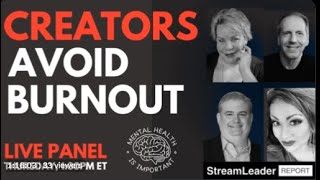
Ross Brand moderates a panel on Tesla's Full Self-Driving V.12, which uses AI-only decision-making with 8 cameras and no map reliance, then shifts to creators discussing burnout. Claudia Santiago, Rebecca Gunter, and Rob share how autistic burnout, appearance pressure, and screen work cause physical ailments like text-neck and migraines, and how scheduled breaks and boundary-setting help.
Chapters
All right, so we've got a really important topic. It's an intense topic. It's a topic that isn't discussed enough among creators but really should be, and that's talking about creators and their well-being, some of the challenges unique to creators, um, and their mental health their ability to avoid burnout. Should they take breaks? How should they align their schedules and their workflow so that they can best thrive? Plus, Tesla's got a new self-driving car, a new addition, and Rob will have some of the details on that as well. What do you say we do a show?
Let's do it.
It's the Stream Leader Report live panel, creators talking to creators. Raw, real, and unscripted. And sometimes they say the quiet part out loud. Here are your hosts, Claudia Santiago, Rebecca Gunter, Rob Greenlee, and Ross Brand.
All right, welcome everybody to the Stream Leader Report. It's great to have the whole gang back. I'm Ross Brand. My show is the Stream Leader Report. We have Rebecca Gunter. She is the Peach in Chief at Stone Fruit. We have Rob Greenlee, host of Trust Factor, and we have Claudia Santiago, the host of Viva La Stage. Rebecca, of course, is also the host of Business in the Raw. And we're going to talk all about creators and their mental well-being, their ability to avoid burnout, but First, uh, I want to turn it over to Rob as Tesla's got a new self-driving car and apparently there's a lot of big updates for this version. Tell us what's going on with that, Rob.
Yeah, I know that, uh, I'm sure many have heard that Tesla's been working on full self-driving for a while and a lot of their cars come with, uh, the ability to, you know, for free basically kind of do some self-driving. It's called Autopilot, and I've been using it for over a year, year myself in my own car. But what Elon did— Elon Musk, the CEO of Tesla and about 10 other companies— but he, he did a live stream from his Tesla via his mobile phone and has had like 47 million people watch this this, this live stream from his Model S that was running the first, uh, version, version 12 of the Full Self-Driving software, um, that is like a $15,000 upgrade, uh, to your, your Tesla vehicle. So not everyone has this. I believe it's like 400,000 drivers globally have access to the Full Self-Driving software that's being regularly updated. But this 12.0 version that he demoed is running entirely on AI and it has no specific code in the stack that tells the car to stop at a stop sign when the stoplight turns red or navigate a roundabout or, you know, slow down for a speed bump. All right, so what's happened is— how does it know? Yeah, so it's been training this machine learning algorithm for the last, I don't know, 4 or 5 years or so based on real-world video driving. And so what it's really— what's really revolutionary about this is the fact that it's actually becoming an autonomous mind. It's, it's— I, I believe it's tapping into a lot of the research that Elon's been doing with the platform that he's been working on called Neuralink. And, and he's created an AI platform that is really not too much disliked from the human brain, um, and how it functions and how it takes visual input and makes decisions. And that's kind of what this is. I mean, I think it's a big revolution, you know, and the implications of this even goes beyond just self-driving. I mean, it This is something that he could build into his robots. He could have this capability where all it does, all you do is feed the algorithm a bunch of good videos, right, of good behavior on the part of drivers and their cars. And the, the cars will replicate that in any given situation that is similar to what it's been trained on. So what does this mean? If you think about how we learn, we learn from, you know, audio input, we learn from visual input, and we make, you know, different, you know, choices. We make our decisions based on our learnings and what we've learned about our environment. So if you take that analogy, that's what's really being on display here. And I think it's a huge change. And what's really, I think, the most interesting, and it really aligns with humans, is, is the fact that it doesn't need an internet connection for it to do this. And it doesn't need a map, or it doesn't need like a GPS system for it to navigate the world. It just looks at the world, it's got 8 cameras in the car, and it figures out how to go and where to go based on its learnings. So each vehicle has its own autonomous mind, really, is what it really comes down to. I think up to this point, a lot of that's been connected internet. It's been very reliant on GPS data and that kind of stuff. But now he's moved into a whole nother realm, and I kind of wanted to share this because I'm not sure that most people really grasp what he's actually accomplished here and, um, and what the implications of it. So that's, that's kind of the, the whole story. And we'll see, uh, there's a lot of people speculating that we will see probably sometime in 2024, what's called robotaxis, which will be driverless cars that do not have any pedals or steering wheel. And these vehicles will be driving people up and dropping people off, and they will drive safer than human drivers. So because it's got, it's got more eyes, it's got 8 eyes, we only have 2.
That's interesting, I never thought about that.
Yeah.
So is this like an operating system update that, for instance, you could add to your car? You don't have to buy a new car to have this if you have a Tesla?
Yeah, it's really the same analogy for what we've been doing with our laptops and our PCs for a long time. We, we just get a software patch update, and that's what this is. I mean, um, when that— when you pay the $15,000 or you spend $199 a month to get access to Full Self-Driving, at some point down the line. I don't know if it's going to be a few more months. There's still some more bugs that he's trying to work out, um, but that'll, that'll be an option in cars that are under the Tesla name. So, so, and who knows, this technology could wind up getting into Fords and getting into BMWs and stuff like that because he's already talked about licensing this technology to other automakers. So, so anyway, I don't know what anybody else likes to comment about that, but that's, you know, he's, he's right on the cusp of creating an artificial human being is what it, you know. And the analogy that I like to play is that it's always the goal, or it always has been the goal, to create what they call AGI, which is artificial general intelligence. And I would say this is as close as anybody's come to having that. So interesting.
What I thought was interesting is you said your car does some self-driving.
What? Yeah, I haven't spent the $15,000.
What is some self-driving like? What does that mean?
Well, that means that I can, I can get on the road, I can activate it, and it will use all of its cameras and all of its sensors, and, and it will follow the, the road. It'll obey the speed limits. It'll— it's not going to change lanes. It's not going to do anything like that. That's, that's where the upgrade comes in too, is when it actually will navigate the world. So I could actually just enter a destination and it will physically go through all the intersections. It'll change lanes, it'll, it'll do everything, stop at stoplights, all that stuff. But the, the version that I use, unless there's a vehicle in front of me coming up to an intersection, the car won't stop. So it is possible that the version I'm running will actually run stoplights and stop signs.
So you have to— you're letting it do some of the work. You can take your foot off the gas, so to speak.
Exactly.
Like on the freeway. Keep a pedal on the—
Yeah, yeah. And it actually prompts you if you don't have your hand on the steering wheel. So you actually have to have your hand on the steering wheel even while it's self-driving. So. Yeah, but anyway, very interesting.
Yeah. Hey, I'm just on the chat here. If I'm looking down, Beauty Bubble's in here and she says we almost learned to make full stops at stop signs. Apparently the AI knows something like 97% of drivers do not stop fully.
Shocker. Yeah, exactly. That's true. So he's— so Elon is struggling to get training video to be able to train the AI to fully stop at stop signs.
So, so it's not learning from, from other drivers. It's supposed to learn from its own experience of driving and the real traffic laws, or it's going to see people, you know.
Well, there's, there's millions of Teslas out there that have the 8 cameras running and they're capturing that video. And the problem is that if so many people are speeding and running stoplights and stop signs and stuff like that, that's the training data that it has. So what they have to do is filter through the illegal activities that are in these videos. And find the legal stuff and highlight that. And that's what gets presented to the machine learning platform, is to actually learn how to stop at a stop sign.
Yeah. You know, I was reading a bit of that link that you sent and blew my mind. I know. And you know, one of the things that just popped into my head as I was reading is that Okay, so this is cool, it's got things figured out, but what about accidents? What about like, no accident is the same, come something coming behind you or a deer runs in front, how do they, you know, you have to spontaneously respond to that. Yeah, how would that work?
Yeah, and that's, that's one of the big challenges of, uh, full self-driving. That's the challenges for humans too. I mean, if you think about You know, how would you make that choice if you had to? And, and can you really avoid getting hit by the side by another human driver that's out of control or drunk or something like that? I don't think that the AI is going to be tremendously better at that, but it might pick up activity that may be a threat to the vehicle before you do because it has more eyes on the road.
And then how would insurance coverage work, you know? Uh, like, insurance would have to, like, rework all their packages because if it's a car that Tesla AI— right, who gets the ticket?
Who's responsible is really what your question is, right? Well, and Tesla is offering its own insurance, so, you know, not every state supports Tesla insurance, but as you can kind of See, long term, I believe Tesla will take responsibility for its vehicles' accidents. And, and if the accidents are not Tesla's fault, then guess what? The other insurance company pays for it. So they— it's in their best interest to design this, the self— full self-driving and design these vehicles to detect these things before they happen, especially when it's on the fault of the Tesla vehicle, right?
Do you see other auto manufacturers either buying, leasing the technology from—
Yeah, it's already being talked about.
Okay, because so you see this as being something that ultimately this will be the standard in every car, whether you get it from Tesla or you get it from another automaker?
Yeah, it's, it's I think it's coming, but the, you know, but the problem is, I mean, you have to really think about, I mean, how long do all of us hold on to our vehicles? I mean, they're, you know, 10 years plus or whatever. So the transition of this is going to be relatively slow. I mean, if you think about how many Tesla vehicles are on the road, it's only like 4 million. If you look at the, the total number of cars in the world, it's like, I don't know, like 300 million or 400 million or something like that. So It's going to take a long time for a lot of these older cars to go to the junkyard.
Most people aren't on the plan to get a new car tomorrow just because new technology comes out.
Well, and also, you know, kind of another thing that's happening too is that the cost to produce these vehicles is dropping dramatically. Like every couple of years it cuts in half. So there's a lot of speculation that you'll be able to get an electric Tesla vehicle for like $10,000 or $15,000 at some point here. So they'll be very inexpensive vehicles because Tesla has been able to cut out a lot of the production costs from this, and there's fewer parts. And that's one of the mottos at Tesla is that the best part is no part. So it's one of those things that if they can keep— have the quality high, like these are some of the safest cars that have ever been made. At the same time, they're also they will ultimately be the cheapest cars that you can get, so, and the safest, and they'll drive themselves. I do, I have a Model 3, it's a 2022.
Yeah, okay, so like if, if you wanted to upgrade to get this, I can get it in my, my car.
Actually, the vehicle that he was driving has the same hardware in it or sort of the same processor unit as my, my car has. So, you know, as far as me being able to get— I can get it anytime I want for $199 a month, but, but it's, it's not going to be the 12.0 version. That still hasn't been released yet. It's just Elon just demoed it because it was really a revolution, but nobody publicly can get it yet.
So you could send your Tesla out to do errands and pick up stuff.
At some point, I could actually turn that car into a robotaxi if I wanted to. And they already have technology that will open and close your garage door, and they're working on a charging port that will actually— it's like a robot, it'll plug into the vehicle automatically. So the car could come and go anytime it wants to go out and pick up a ride and take it somewhere.
So you could send it out to drive like Uber or Lyft while you're at home.
Exactly.
I don't have to do anything with the car. It'll pull in and out of the garage.
So, right, you could cross the border and come see me.
It could, it could drive all the way up there to take you to the airport, right?
There you go.
Yeah. Oh yeah, well, that's a good point.
The game changer.
Yes, but also for older people too that, um, have lost their license or whatever.
Oh my God, my dad would love that. He would have loved this. It would have gone bananas. I did see a story, or hear a story on NPR over the weekend, and I put a link here in the chat about how anonymous protesters— they're, you know, red driverless cars are being, um, basically, you know, kind of prototype— not prototype, but like beta tested in San Francisco. And anonymous protesters are— sorry, that link is really long— yeah, are, um, disabling them by putting traffic cones They'll stop if you put a traffic cone on top of them. And so there's a, there's a, there's a rogue disablers out there who are stopping driverless cars with a traffic cone.
So, well, a lot of the, the autonomous vehicles in San Francisco are, you know, like Waymo and, and some of these are, are operating with a lot of what they call LiDAR, which is a different kind of technology. They're not visual vehicles, right? They use radar and other technologies to navigate the world, and they're just not as good as what Tesla is doing. And it's probably going to fail with those— what those companies are doing there in New York. Because, I mean, not in New York, but in San Francisco, because you see constant examples of these cars don't really know what's going on in the world because they don't have that visual acuity to, to learn from their environment. And so they get into situations and they just stop in the middle of the road, don't go anywhere because they don't know what to do.
So, right, talk about the ultimate body cam though.
So what kind of fuel do these Teslas take? Like, is it fuel or is it plug-in?
Like, what? It's just electricity. It's just electricity. They have a big, big battery pack in it, so, so you just charge it up at night. I have a charger that I have in my garage that just plugs into it, charges it up.
What's that?
You don't pay gas?
No, there's no oil in the vehicle at all.
So, and how long does it charge? Like how many miles or how many hours?
Yeah, I get about 350 miles on a full charge.
Wow.
So I mean, that's a pretty long drive.
It, it varies a little bit based on, you know, the, the elevation and the weather and wind and, you know, temperature and things like that, but not dramatically.
Yeah, I'm curious, how many— or are there any kind of like dead zones currently? Like if you wanted to do a cross-country trip, would it be like, dang, but there's no charging stations in South Dakota? Like what's that experience like for you?
Well, yeah, so Tesla has the, the, the, the largest charging network in the world right now, and actually a lot of the other automakers have licensed access to their charging network. I think they have like, I'm just guessing right now, like maybe 20,000 chargers across the country. Um, that it may be higher than that. I could be completely incorrect on that number. But, um, yeah, so you can basically, um, go anywhere you want in the country and be able to navigate, and the car will actually find those charging stations when you need it and, um, will recommend those that you can pull over and, you know, charge up and continue on your way.
What about abroad? You know how your hair dryer works in the US, but you gotta have a little thing?
I would be curious.
No, it's all, it's all standard, uh, the same equipment, um, outside of the US as it is in the US. So, you know, if you happen to be able to— I mean, I don't think that they have a submarine version of it to drive over to Europe, but, um, submersible—
don't even get them and go there.
Yeah, it's probably coming, right?
Funny. Yeah, you kind of wonder. Hey, I know here, here in the Pacific Northwest, we've had a lot of forest fires, and kind of at a minute's notice, they'll close down part of the highway. So how would a Tesla, you know, detect that? But I guess if it's got 8 eyes, it figures out a different route.
Yeah, well, you know, once this really rolls out, it's hard to predict exactly, uh, other things it'll be capable of because it'll be possible for these vehicles to communicate to each other too at some point. I don't think that's been deployed yet, but, you know, if the cars are in proximity to each other, they can know who their colleagues are on the road and they probably won't crash into each other.
Where are you going to dump your human? I'm going to dump mine.
Right. Boy, this guy in the back's a jerk. Tesla.
Sorry, wrong Tesla.
I mean, could have an eject button in the back and just kind of pop them out of the—
where are you gonna dump your human?
Oh my God, this is, this is such a great topic. We definitely have to come back to this, and we will as, as progress continues in, in the, driverless vehicle and electric car industry. Rebecca's messed up now. Let's move on to our, our main topic, which is, um, creators and their mental well-being. Um, and Claudia, you and Rebecca really started this with a conversation in our, our group chat. Uh, whichever one of you wants to go first can kind of lay out the, the issue.
This is Claudia's story, baby.
All right, okay, well, I'll go. Well, I, uh, you know, one of the first things I said in that comment says, hey, I'm thinking about talking about this. I know it's not a trending topic or hot and sexy, but, uh, it's kind of where I am right now. I, uh, I literally had to take an unplanned break, um, because I got laryngitis, like a strep thing, and it just wiped me out and literally, yeah, I had no voice. I'm still a little hoarse. I sound like a chain smoker right now, but it's all good. But as we kind of presented that, like, I just really felt like— I know we talk a lot of tech here and a lot of really cool stuff, but again, we're not dumping the human anytime soon because we're still here. So that's my angle on it, is how as creators or entrepreneurs, just human beings, how do we, uh, you know, see the red flags? How do we, uh, create a life of balance and health? Because at the end of the day, you're either going to take a planned time off or an unplanned like I do. And it started this awesome conversation, you guys. And, and, you know, this is what one of the things I love about about this panel. Honestly, it's like therapy. Uh, we laugh and we can talk about real stuff, not, not just the biz stuff. So as we got chatting in there, Rebecca piped in, and I was like, ah, it was like a breath of fresh air, you know. Here's Rebecca. She— this woman is like strong. She's a go-getter. She's like freaking amazing. Like, she juggles so many balls, and that I just so admire her. And glean from her so much. And then she said, yeah, you know, you know, I'm overcoming autistic burnout. And I'm like, what? Like, and it really touched my heart. So the ball's in your court for now. I'm tossing the ball around the court here.
Rebecca, go for it. Oh, thanks, Claudia. I thought it was really sweet how you wondered whether or not that was something I'd want to talk about publicly. And it definitely is. I think for all creative people, whether you consider we're whether you are, you are autistic or neurodivergent in any kind of way, um, or you are neurotypical, it is, uh, until the, until the Elon Musk AI general takeover where we don't need creative people, burnout is very, very real. Um, and I'm so excited to like really get into how— look, I'm all right, I'm like so in it right now. In fact, I came to this panel today with no makeup and clean shirt to just be— to really just kind of represent how you'll have to structure your life, I think, to, um, to mitigate burnout and what that means for folks who have to be creative on demand. I have clients who are like, I need a, you know, I'm writing a website, I'm writing a white paper, I'm writing an email sequence, I'm writing— I'm positioning a brand new podcast idea. All of that requires tremendous amount of creativity. And for me, as someone who does identify as autistic, that is a superpower that I can bring to the table and think out of the box, generate creativity very, very quickly. But it also will drive me into burnout. I've done nothing but work all summer long, kind of driving the momentum and the visibility behind, you know, a panel show just like this. And it will send me into a tremendous— it can send me into a tremendous state of burnout where I don't when I can't even like process words, become kind of nonverbal. And for a writer, that sucks. So, uh, I think it's something we all kind of are challenged with. And I'd love to hear what— I'd love to hear what the boys have to say, whether they face burnout.
And, um, and I just want to add in, like, like, Rebecca, you are new to, to all this live streaming. Some of us have been live streaming, you know, for ages, but you've— you're juggling all this, but then you're the learning curve, so you add that on top.
And I would say, you know, again, like I said, I came with no makeup today because for a man to go live, they can do it just by opening their camera. For a woman to go live, it requires a full freaking face and a lot of effort to go into it. Uh, and that gender disparity I think also adds to the burnout because the expectations are different for the amount of preparation that women have to go just to turn the camera on.
That's for me for sure, especially on a live stage, like on a broadcast stage for sure. But even a live performance stage, the pressure on women is huge. Some of my guys will roll in in their jeans and stuff, and I can't get away with that.
This is actually nerve-wracking to be here with no makeup on. It's nerve-wracking because of the public form of it and what the expectation is. So whether, you know, even just like burnout from creativity alone, just, just to get to the platform requires a whole level of activity. And it's nerve-wracking if you don't do it. But we got to normalize it some way.
Yeah, I think that there is a history of that expectation. Um, I know it's, it's interesting. Hopefully that will change over time, that we don't have that, um, that kind of feeling that the women have that they they have to look a certain way or be a certain way or something like that to actually do this. Um, you know, I agree with you, men have it much easier. Um, though I, I take a shower and shampoo my hair before all my live shows, so, so it's—
you apply your eyeliner deftly.
I don't have any like, uh, powder that I put on my face, but I actually have heard there are YouTube videos out there that will say that even guys need to get powdered up, you know, to have a natural look on their face and not like a shiny, you know, on the shiny on the forehead because of the studio lights. So yeah, I need a little powder up here, right?
Yeah.
Or we could again normalize just being kind of who we, we actually are. Yeah, I think to Holly's point here in the comments that no makeup is the most authentic of who we are, but it takes, you know, it takes some courage to get there. And that's just one aspect burnout, right?
Yeah, it takes effort. I know that was a lot of the big reason in the early days of podcasting. Yeah, I used to work for a company called Podcast One down in Los Angeles, and we had a lot of celebrities that came in to do conversations in the programs. And one of the pushbacks that the executives had back then— this was back in like 2014 timeframe— was why they didn't want to do video in the studios was because it required too much of the celebrities that they they felt like they had to get all, you know, dressed up and makeup, and, you know, we had to hire all these makeup people to come in and make sure everybody looked, you know, uh, like, like the celebrities that they are. And, um, that was the pushback. And then subsequent years later, like more now in this time frame, um, they're doing video in the studios now, and there's not as much of an emphasis on that. Um, the celebrities are coming in a little bit more natural and not trying to get all dolled up and stuff. They're trying to be real, um, increasingly. And I'm not saying— I'm not saying this to say that some of them don't get dressed up and don't get makeup done. I think many of them do. But they probably, uh— I do think that it's relaxing a little bit on that side. Um, like, like what you're doing today, Rebecca, I don't see as revolutionary. In some ways, I see it as kind of where we are now, right, of of all of us being more real, um, on these, these video shows. I mean, that's really what's going on with the independent media now, is people are showing up, uh, just in the way they are, more, more and more.
I have a, I have a friend who was just on a really big, um, pod— video podcast, one that has, you know, just a million and a half subscribers. And, and I asked him it's, it's a panel situation and a bunch of regulars, and he was their, their featured guest. And I asked them if they did— if they put all the talent put makeup on or not, because I was just curious if at that level they do that. And he said no, everybody just sat down as they were and, you know, they did the show. There was no, no, you know, formal fuss or, you know, any, any of that stuff. Um, but I know, you know, a TV level, uh, they still— they're still doing that.
Um, yeah.
Oh yeah, he was just to walk through the door in street makeup though. I mean, not necessarily have your makeup done, but like no face, right? It is, it is a little bit—
I've been part of media tours where they will not let you on the set unless you have the pro makeup on. The pro hair is done. If you show up and you're not in sort of uniform, you're out. They won't interview you. They won't allow you on the platform to do that. And of course, when you're working with these media tours sometimes that I do, sometimes there's hundreds of talent coming through. So to them, it's no big deal to turn you around. If you're not in uniform, you're out. So that's still very much a thing. And then sometimes because And I understand that too. Sometimes you're interviewing, but sometimes there's magazines there, there's people that pay a fee to come and take pictures of, of the talent or celebrities. And so if you're not done up, they can't use those pictures on their, on their, their media. And anyways, that's kind of the angle I come from. But one of the things that sparked my interest too was when I was reading this It's in Canadian Living. It was a link there. And it talked about just different things that can cause burnout or hinder us as creative— well, as anybody. And the one that stuck out to me was the text neck. You know, how many times we're here?
You can see you're looking down all the time.
We're here. Okay, your head, it's like a bowling ball. It's heavy. And so with your spine, it'll do this. So if you're constantly doing that, you're going to have problems with headaches or even spine type injury because it's a lot of pressure. You know, I'm just going to read a couple of things. Texting thumb. Sometimes that also too with the text head. It's also if you're if you're sitting at a computer screen a lot, a lot of hours in the day, if that screen is not up at a certain level, you're going to get that, that problem happening back there. A mouse finger, sleep disturbances. So again, being in front of camera, being in front of light, you know, they suggest to make some suggestions here about turning that down. I know Bruce and I, what we do in the evenings is actually we change all our daytime lights and we turn on our soft lamps at night, just, just to start, you know, a few hours before bed, just to start kind of bringing that down. So digital eye strain is a big deal. Anyways, I won't go into everything, but, you know, just on the tech end, you know, because we're always creating that way too. And our position and all that affects so much. I, um, you know, I love, I love that, uh, Rebecca's been so open about, about some of the challenges she faces. Uh, when Bruce and I moved to Calgary, Alberta, we didn't know that Calgary is actually the migraine capital of the world. The migraine capital? We are up really high and we get this thing called chinooks that come through. And actually, when they come through, they're beautiful. It's like a warm wind and you look at the sky and like there's like this arch cloud. It's really quite something. And I grew up on the West Coast and we didn't have any of that. But what I didn't know, and again, there too, this is where what Rebecca says is touches my heart so much because If we stay silent about our issues, our problems, our challenges, we can't get the help. Well, Claudia is like, I've been a survivor of a civil war, I've battled life-threatening diseases, you know, I don't talk about my woes enough. And I kept silent about these headaches. And I mean, they would knock me out. I didn't know what was happening to me. I would see my doctor finally, and he said, oh, This isn't like the West Coast. West Coast is at sea level. We're way up high. And you've, you've moved to the migraine capital of the world. So, you know, I, he just said to me, you need to start talking to me about this because there are solutions. And if there's no solutions, you're gonna have to move. Nice. At the end of the day, two things he mentioned, things like how I'm sitting, how I'm positioning my head, that can also contribute to trigger these migraines. Anyways, I'll shut up for now. But, you know, I guess what I'm trying to say is encourage everybody, don't suffer in silence, get diagnosed, get tested if there's— and sometimes there's seasons in life as we get older, we're walking through a season in life, well, it may trigger some things that maybe you never battled before. I never battled a migraine And you know what, when I tour outside of Calgary, I have no migraines.
It's crazy. Yeah, that's interesting. Yeah, I was just in— go ahead, Rob. Yeah, I was just in Denver and at Podcast Movement, and the elevation of the hotel— because I've got a little measurement app that can tell me what the elevation is— and it was about 5,600 feet, um, in, in elevation where the hotel was. And that's a big change from where I'm at in Connecticut at about 600 feet in elevation. So there's a big difference in the amount of air that's available and things like that. And I kind of struggled a little bit at different times with sleeping and things like that at that elevation. Though you wouldn't think, you know, 5,600 feet is that high. It's not like it's 14,000 feet or some crazy, crazy height that, you know,, you know, Denver is known for. But it's still, um, I, I was talking to a few locals and, and they were telling me that there's a lot of people that travel to places like that and then they go out running or something, or they think that it's just like where they came from, and they will end up having a lot of problems because, uh, they just don't have the air, um, at that elevation. And so that can contribute to a lot of stuff too. But the burnout stuff that you're talking about, I've been facing that for for years because I've been working, um, you know, just really aggressively on, um, trying to work with all these communication apps and trying to keep up with inbound communications and trying, you know, be a content creator and work and build partnerships with people all over the world. And it just, you know, the burnout really comes, I think, from trying to navigate, um, all these different time zones around the um, and it forces you to work like around the clock almost.
Well, I know, um, when I worked in radio, I went through a stretch where I had to get up really early, like 4 in the morning, for like— I was probably like a month or month and a half stretch. And it took me a long time to get back to feeling like myself after that. Um, I fortunately You know, most of my jobs I've worked the afternoon drive shift when I worked in radio, but, um, that one time, and I was like, I can't— I can never do mornings, um, because it just— that interruption of your sleep and then knowing you have to get up early, at least for me mentally, was like, okay, I better go to sleep by this time or I can only get 4 hours of sleep. I can only get 3 hours of sleep, right? Um, so I mean, I had one job where I did it once a week and that was bad enough, and it seemed to snow every day, every time that I saw it. I have to shovel first and then— um, but, and, but I think to some extent now, even though we have a lot of people who are doing this kind of work have some flexibility over their schedule, they end up working more and at more out weird hours than they would, just because technology and news and the topics that we cover and updates and discussions and new strategies, and of course social media where, where it's going 24/7, it becomes hard to put that stuff down and feel like you're falling behind or you're going to miss an opportunity, or there's always one more thing you can do to promote a show or to, you know, make a new contact or find out some information that you can use. And I think it's very easy to get caught up in all that. I guess a question I would ask everybody is like, do you guys have any structures in place or any Anything where you block off on a calendar, like I'm not working Saturday or Sunday, or I'm taking December off, or what? Like, how do you schedule time if you do to recover?
I do. Yeah, I do schedule time. Yeah.
Sorry, go ahead, Rob. Yeah, I, I think Saturday and Sundays are really kind of, you know, a lighter load, um, every single week, so That's, that's always my goal. It's not always something that I'm successful at because sometimes I'm traveling for work even on the weekends. So it's just a matter of, um, of taking time off on the weekends as much as you can because during the week is when most of the activity is in anyway. But the big challenge that I have is just the expectation of communication, um, with the outside world and how all of us, I think, when we send a message to someone, kind of expects a response within a reasonable period of time. And that can be a challenge when you're trying to do that across, you know, maybe 6 or 7 different apps, plus email, plus, you know, Slack and all these mastodons and all these, platforms that are out there, right? It's really difficult to keep up with everything without burning out.
I would also add the, you know, we all grew up in a capitalist society, and your productivity and value are intrinsically linked. So if you're not hustling— also, I'll point the finger at hustle culture— if you are not hustling, if you are not productive, if you're not answering your email, if you are scheduling breaks, there's an internal struggle there of whether or not you're— yeah, am I building? Am I gonna make it? I'm gonna have a success? Am I valuable? I have a hard time resting, like, just kind of like, I should be cleaning out my garage, I should be reorganizing the cabinet. Yeah, there's a lot of shoulding. I should on myself a lot around the idea of productivity. And I've had to program my own attitude, and it's still a struggle.
And it's not just technology work, it's, it's just, you know, homework, uh, from the standpoint of mowing the lawn or doing laundry or, you know, doing the dishes or folding clothes or whatever. I mean, all those feeling like a human fit into your, your, your workflow as well.
So it's personal things too. It is. And I think it's So important to know ourselves. When, when I lived in Vancouver, I could keep a really cool, rhythmic kind of schedule. Moving to Calgary, when I get hit with those migraines, I may be out for 4 to 6 hours during the day. And then that thing will lift and I'm working at midnight, you know, and that works for Claudia. When those migraines hit and I don't have any, any relief from them, I can't push myself. I've had these migraines hit me when the Chinooks come, when I'm just about to get on stage, and all of a sudden I'm on stage and I'm seeing— why am I seeing spots everywhere? And why do I feel like I'm going to throw up when I'm singing and I still have to carry a show? I didn't understand that until I started understanding what I was battling wasn't some infection or anything. It was a migraine due to like a chinook. So I think if we really get to know who we are and where we're living, if that affects I think then you come up with your own rhythmic thing. Now, if I have a week where there's just a— like last night, there was a storm that rolled through here, and I mean, I was up all night with intense migraine. I had to take my emergency migraine med. But I know this afternoon it's going to be nap time for Claudia.
You know, so, uh, oh, go ahead. I spent 2 years in an apartment. Um, you know, this was like, you know, a year ago. I was in an apartment for 2 years when I moved, um, from Seattle out to Connecticut. And I think back on my time in an apartment, and my life was a lot easier back then. Um, from the standpoint of the, the workload on me, um, trying to keep up with a house and things like that. So if you own a home, you know, it can be an aspirational thing to, to own a home, but they're also a huge responsibility. And there, there's constant work that has to be done around the house, in the house, you know, especially if you have a large house. Um, that can be challenging. And, you know, you can get help, you can get, um maid services to come in and clean and things like that, and you can hire lawn mowing services and stuff, but that takes money, right? So, so it's, you know, I think, um, it's kind of interesting to think about it that way from the standpoint of where you live, how you live, uh, what your— you know, there's this perception that owning a home is the, the best thing to have, but, you know, maybe in our modern society and our culture, it may not be, um, just because you can't keep up, right?
So true. You know, I was— when I was kind of chatting about this topic, I had also, uh, something that inspired me. I saw a time on my timeline, a friend of mine in the United States. This, this woman is like a mover and shaker. She's the leader of— anyways, she's just very, very, uh, she's a doer. And She took 8 weeks off to write and also just to get grounded again. And I mean, she is pulled 10 different directions and has an office and all that. And, you know, just reading her thoughts and how taking that break was so good for her all around, you know, where she got new perspective, quality relationship time, time for herself. Writing in itself wasn't a job in the sense of something she was meeting a deadline or anything like that. She chose to write through that 8-week period to help her kind of vomit, if you would, you know, just to let herself heal from way too much stress.
Yeah, so good. Yeah, I just wanted to add to that, that that's something I'm really under— starting to understand. I mean, I, you know, autistic burnout is a whole separate animal, and recovering from that requires more than just rest. And, um, it's actually such an interesting story that you bring up, Claudia, because what I'm learning is it's not just about like laying still and just resting or sleeping, but that you really kind of one have to restructure your life to accommodate it. To Ross's point of adding and building breaks in, but also to couple that with create— to actually couple it with creativity Not this, maybe what you're doing for your work life, but to couple it with some kind of other creative endeavor in order to— like, the antidote to burnout is not— to autistic burnout is not just sleep or time off, even though I really have to bake that into my schedule, but that you have to create kind of new systems or a new way of being that prevents you from being in a burnout cycle.
I had, um, there was a season in my life that I was walking through some really, really, really stressful, tough stuff, and it was very personal. And, uh, I honestly couldn't focus on too much else, and I took some time off. And like, I come from a whole line of like architects and like people that are very, very good with drawing and pencils. And all I could ever draw as a kid was stickman. I don't know what the heck— there was like this blockage, and I would never even attempt because all my brothers are like prolific artists, and I was just like, yeah, I suck at it, I won't do it. So anyway, I was walking through this valley, if you would— could, could see it that way. Um, and for whatever reason, I had this internal desire to go get paints and a canvas. I've never done that before, so I went, got myself some paints and canvas, and I just started painting and sketching, and I discovered this talent that I didn't even know I had. It was locked up until I hit this really low, dark valley in my life, and it unlocked this beautiful thing. And today, when I know I need to rest, I paint, and that's my outlet, and it helps me heal. It helps me, um, yeah. And it's not— it's never meant to be something like I market or whatever. Um, but I don't know, Ross, if you remember when I used to do these paint shows called Viva La Creatives. Yeah, that was during my time. I would throw up a camera and I just talked to people and I would paint, uh, and sometimes I'd sing as I paint. It's the funniest thing, and it was just healing for me. But a lot of people that watched that thought it was healing.
So anyway, and it— I think it's important too that, like, I say this not as somebody who's in any way conquered this, but somebody who's like got to learn how to do this. But it's important to take breaks when you're healthy, not always wait until you're burned out or you're sick. Like, it's not really scheduling a break or taking a break from work if, gee, I got really sick for a month and I couldn't work. The value really is— I would say like the last time I really scheduled a break that wasn't like the break of my arm or shoulder, uh, was like in 2017. I just, I was feeling like, okay, I need a little time off from hosting shows and stuff. And I took about 6 weeks where I didn't do anything related to live streaming or clients or any— anything like that. But I, I did it at a time when I was healthy and things were like— it wasn't something forced on me. And I gotta say, after that 6 weeks, I came back and like everything just started taking off for me. And perhaps I should do that more often, but Usually I only take a break when it's like, okay, I have to, you know, I'm, I'm sick, I'm injured, I'm— I got family, something I've got to take care of, or, you know, hey, like, I can't do this anymore right now because of something else. But when you take it with intention and you do it before things go off the rails, I think you come back and you come back like, like you're so happy to be back doing it. You're so like, okay, if I have to do this, I'm gonna do it with everything I've got. And, um, I, I mean, I've seen people over the years, like, like in radio and sports and stuff, where they take a break and they come back and they're always like, they're always better. It's like the bad habits kind of wash away, or they're back back to doing things on instinct in the beginning. It's like the body resets, and what they've learned has sort of been incorporated, and what wasn't working but they've kind of been doing out of rote goes away. I don't know what it is, but I notice that people often come back better. And yet the way it happens, particularly when you work for companies and stuff, is you get a very brief vacation, you're right back at it, and you're of just on that treadmill and you never really get enough time away that you can, you can come back with that new idea or that improved approach, or just your skills kind of refresh and reset, and all of a sudden you're doing it at a, at another level because you've been able to incorporate everything you've learned.
It's like a prevention, you know, like we pre— we do things to prevent heart attacks. We do things like, I know, even in our marriage, like we we schedule in a date night. And, you know, we've been married over 30 years now. And, you know, you go through valleys and stuff too. But the thing is, we've learned over time is you can't— once you hit a problem, then it's harder to fix that. So if you're preventing, setting yourself up for that, I mean, I do this thing where I do a daycation. Where I will choose a lovely place to go and I'll peel away and just nourish Claudia. So sometimes, yeah, that's how I kind of do things. I plan stuff to prevent so that I'm not reacting to when I've already hit the burnout. So I guess that was the other question I was going to ask y'all is what do you do? You went like, do you have a prevention plan or what are some of the red flags that when you know you're heading towards burnout?
I would, I would say suggest that the biggest sign you can pay attention to is your own body, is to listen to your body. You know, when you're headed towards burnout, burnout, and that's the biggest indicator towards when that's happening. And then the second piece of that preventatively is by baking time into your calendar, which is what I normally— like, about every 3 months, I try and bake in at least a week where I don't have any calls or anything. And I did not do that this summer, and now I'm hurting for sure. So preventatively, and then also listening to your body. I put a note in the comments about the creator Jude Charles, who is the most prolific person I've ever heard talk about burnout, and he is definitely worth a listen and how he, you know, addresses this in his own business. And he's kind of made this the hill he's gonna die on, and I've learned a lot about preventing my own burnout just by kind of heeding his warnings. And he takes the entire month of June and December off the entire month. I'm so jealous. I know, right? But look, that's the beauty of having your own—
that's the beauty of having your own thing, right?
Yeah, yeah, yeah. If we can just get the courage to just stand tall. That's what I struggle with. Like, I did— I baked 10 days off of my calendar for October. I looked for a space for it. I was like, at least I'll have that. Now how do I not get caught up on client work, start writing a personal essay, like, you know, feel like I gotta start— my pipeline is drying up and freak out. You have to be calm and to bake that in, I think.
Yeah, there is another angle on this to some degree. Because what I found by taking time off is you come back and you're just so buried that it's, it's stressful when you come back. And so I've kind of taken the approach of trying to kind of moderate myself along the path, right? Not so much, you know, have this extreme behavior while I'm working and then this, you know, taking 2 months off or something like that, because that can cause a domino effect. I mean, let's say you have a full-time job or you have responsibilities and people expect things from you and you have to perform, uh, right? So those are always things that are kind of undercurrent to this whole thing. And I think that the— really, my approach has been is to properly manage the whole process, um, taking a little bit of time off, um, continuously, right? Versus trying to do this kind of separation from it for long periods of time, which causes causes other domino effects. So I think, you know, taking, taking a little time off during the day to go for a walk, do stuff every day to give yourself mental breaks, is— especially if you're in a role or in a job that requires you to be kind of like working, you know, continuously. And I mean, I went for years myself working in the podcast hosting business of really not even ever taking vacations, just because what I found was whenever I took a vacation, I mean, unless I turned my phone off, um, work would continue because not everybody else is taking a vacation. So it's like, right, you know, people like, you know, want to hear back from me or want me to decide if I'm going to be a speaker at an event or be on a live show or be a guest on a podcast. So you're constantly getting these requests coming through, and it's can come across as rude. I mean, I would love to have an AI virtual assistant that could, you know, kind of manage that incoming, right, that could schedule it, get it in my schedule, and handle the emails and all this kind of stuff like that, so I can be off, you know, at the park or whatever, or walking along the beach somewhere, and not have to be on my phone all the time. So I think that's the era that we're coming into too, is that the expectations don't always match up with what our abilities to take, you know, large chunks of time off, you know, without a consequence.
I want to give a shout out to Beauty Bubble and Julie Riley and Holly Lee and everybody else in the chat. Thank you for sharing your experiences with, with this interesting and important topic. I think when you get into technology, which is really what it is that's enabled people to be in touch with us 24/7 and made us feel like, you know, that's that sense of FOMO or that sense of, hey, I could be doing more right now. I could check another post, I could write another email, I could contact another client. Um, that's not exclusive to creators, really. That's an issue that's affecting all layers of society, or at least most, most people today in their business. So if you have friends, family members, um, who are, you know, not at all in the creator space, they still got their phone there, they're still checking, they still are very, you know. And, um, so that becomes a whole nother issue. And, and whether you block off time that you're just not online, like And again, that's something that I'll just let go until something comes along, or I just can't— like, I, I just need a, um, what do you call it when you take a, uh, digital detox or whatever? A brain break. You know, I might go 24 hours or so without even looking at— you know, or a couple days without looking at my phone. But it'd be better if it was planned. It would be better if it was done more strategically.
Now, now the cool thing is with tech is there's things, tools we can use, like for email, we can set it up where it says, hey, I'm out of the office until such and such a time. So then you're not just, you know, not just dumping people. When we drive, the same thing. If we're driving and we don't want to be distracted driving, we set it up so that our phone says, hey, I'm on the road right now. It does an automatic. So, you know, Sometimes we, I think, again, prevention. It's like, okay, what tools do we have in our hands to block some of this time off for ourselves? And how can we just use tech to our advantage that way?
Yeah, that's true.
That's true. It could be an asset as well as something that keeps us attached. Um, I'm wondering if you guys like changed your approach to social at all. Like, do you focus only on a couple of platforms? Do you try to be everywhere? Do you focus more on only engaging or only scheduling? Or have you come up with a way to handle social that you can still be effective with it but not overwhelmed by, what could be an always-on tool.
Yeah, I think I've adjusted over the years. I've been on social media since like 2007 or something like that. I think I've, I've kind of backed off from it from the perspective of, of, um, being really personal, um, family, that kind of stuff. As far as posting content like that, I've been really more focused on trying to use social for a very specific purpose around my, my career and my business activities, um, and offering help that way versus making it a platform for posting, you know, pictures of my dinner or my vacations or something like that. It's Tesla, which I don't take, but, um, it's just a matter of, um, of— I think not using social media as a, what could be perceived as a little bit of a, of a weapon against others, uh, I think is kind of how I've adjusted too. It's been more like, well, what content can I offer? Like this program. What content can I offer that helps people? Potentially it may or may not be helpful to people, but that's kind of how I've changed my approach to social media. It's not so much about a, you know, a bragging platform, which I think a lot of people kind of have positioned it to be, is that, well, this is my, you know, my high life, you know, experience. I'm traveling here and traveling there and doing, doing, you know, stuff that other people may look at and say, well, I wish I could do that, but I can't. So, you know, that kind of stuff.
So I'm trying to shy away from that kind of content. I personally just let it all— just give yourself permission to let it all go. I know that, that there are people, you know, who are like, ah, what about your visibility? What about your marketability? And certainly my business coach would be on me, but just let it go. Just let it go. There are a whole other ways you can communicate with with people. And I just think the more pressure we put on ourselves to be present beyond all the platforms, it's overwhelming. Like, you know, Ross, like, I don't know how you do it, man. When I— I don't even remember one of the first times I was on one of your shows and you had given— here's the media, here's the link, it's on LinkedIn, it's on Facebook, it's— I'm tagged on Instagram.
Like, it's— it's like I've been all—
pretty, pretty prolific out there. I agree. I am in awe that you check those boxes. Every week.
Like, I just have to lay down my arms, man. Yeah, I had to call, call just kind of halt to, um, the Facebook Threads thing. I just— it was just one more platform that just didn't— it, it just didn't feel like it was worth the time to spend over there. So I don't know if you guys feel that way or not, but I think it's a little bit of a dead platform if you ask me.
It was useless. It was nice the first day connecting with people in my feed who who, like, I hadn't chatted with for a few years. And then it was like, okay, what is the point of this? I've got 12 years or whatever invested in X, or 10 years, and, you know, it's, it's a live-breathing platform that's got variety of opinions and variety of industries.
And X, uh, and, and Thread seems rather stale, right?
Go ahead, Claudia. What do you think? Yeah, and, and I, I get it, but you know, too, this is where, you know how I mentioned before how every quarter I take an inventory, right? Okay, this is where, okay, how can the virtual assistant step in? How can automation step in? Okay, if this and that, you know, there's certain things that work for automated things that, you know, I will never— you'll never see Claudia Santiago automating, uh, private messages. Like, it just won't— I just won't do that. But you can even put at the top of your, of your platform you're on, I don't respond to direct messages here. I— what I do is I get people to send a message through my website, then it grows my database, then I actually get messages that are legit. Usually, if it's spam, they won't even come through. You know what I'm saying? So there's certain ways that we can use technology, we can use systems to bring down that stress thing.
Yeah. And you find you have a platform that's most effective for you, or is your biggest priority? Like, if you, you had something going on and you wanted to make sure people saw it and you had time to only post on one platform, where would you, where would you post?
Yeah, so for me, it would all depend on who my target market is. For example, if I'm touring Europe, on the Europeans are not going to see my posts on certain platforms, uh, or because of the time difference. So I always target, I try to target what I'm doing, what my goal is, my outcome is. If I have, let's see, something that I want everybody in Edinburgh, Scotland to see because I'm going to be there, I want to rock their boat and I want to meet them, then I will target a Facebook ad specifically for that, specifically for for the genre that I'm performing. So that's how I use my tools. I have an online presence on just about every platform there is, but I don't, um, I won't target my LinkedIn following if I'm doing my rock show necessarily, you know what I'm saying? Like, it all depends who it is. Uh, so that's how I do things. Again, every quarter I'm going to go back to this, and here's something I'm going to go into because it might not be the prettiest thing. But sometimes in every quarter too, it's not just what I'm doing but who I'm working with and who I've allowed in my sphere of closer, uh, entrepreneurial relationships, clients, uh, venues, uh, peers. Okay, I do an inventory there because sometimes it's not so much that I'm doing too much. Sometimes it's that unfortunately you, you start working and people come into your sphere, you let them in closer or into your social, and they're toxic people and, uh, they're stirring it up or they're only there— yeah, yeah, you know what I mean? They're not there to work alongside you or to be for you, but they're actually either they're just a Scorpio to connect with your connections to like it's toxic, I guess what I'm saying. So what I do every quarter too is I go, okay, what, what thing can I just put on the shelf for this quarter and maybe take it up next quarter or maybe take it up next year. We're not axing it, but we're going to put it here. But where is there toxicity where I need to draw some really hard boundaries? Okay, what can— sometimes it's not toxicity. For example, I'm just going to use an example. Sometimes not toxicity against me, but let's say I have musicians that I'm working with, or let's say recording producers, whatever, and somebody's come into the camp and they're just wreaking havoc with the team. Well, I can't destroy a team because there's one person that's starting to— right. So that's where I'm going with this, is where are the boundaries? Also, not just our time, but what we can tolerate. And what— one of my mentors that leads an organization. She said to me, Claudia, we gotta nip things in the butt, like, quick, quick. Don't let it go long term. Don't let it keep festering. Nip it in the butt. Do it. Either, either they're gonna—
they're going to come and work alongside, or bye, you know. I think that's a really strong point, Claudia. It's not just about how much output is burning us out, but what is our input? What's our environment? You know, even on social, what are we ingesting? What are we taking in? Is it fast food or is it nutrient-dense? Are people around us, you know, contributing, filling our buckets or dipping our buckets? Certainly burnout can feel a lot worse if you're surrounded by people who don't have your best interests at heart, um, or don't have that golden trust factor, right?
Using up the energy and creativity that you would be applying to your work or to people who you derive positive energy from working with, and you're spending it on people who might be causing problems or things in your life that might be taking you away from what you really want to do and not leaving you enough energy to really get at what you want to do. And I, I mean, I think the more— the older I get, the more I realize, like, for most of my life, I didn't always consider, like, what was taking up the energy, what was taking up my focus when I wasn't working, and what impact that has on the rest of your life. I think it's easier I don't know, at least for me, just— it's never been easy for me to say no, but it's easier for me to say I don't want to do that, or I can't do that, or it's not good for me to do that, or just like, I don't have time to get involved with that, and I don't care, and I don't feel bad about it anymore. Maybe that— again, I think it comes, at least for me, um, as I get older, it's like I don't have to pretend that I'm interested in interested in, or, um, I don't know if I'm expressing it exactly right, but not so true.
Yeah. And you know, too, as leaders, like, if there's a project we're leading, or, or, you know, our own business or whatever, like, when we take ownership of that, just like our own bodies, our own mental state, we've got to know who we are. We've got to take ownership And that took me a while to learn when I started leading my own, producing my own events and all this thing, you know, sometimes people that will come along, they don't understand the groundwork you've done. They don't know the investment you've made financially, timewise, put your butt out there, like they don't get it. And they just roll in entitled thinking they can just do whatever they want. So again, there too, just taking ownership and being— one of my mentors says, be responsible with what you've got in your hands and rule kindly and justly, but make sure you're not taking responsibility and all of a sudden they'll just walk away with it or kibosh something.
This is such a great topic. We're going to have to come back to this because this is an ongoing thing that we all deal with, and, you know, everybody who's watching and listening has to deal with as well. So, um, it's been a great discussion. We'll be back again next week, Thursday, 1:30 PM Eastern, for another Stream Leader Report live panel. For Rob Greenlee from The Trust Factor, Claudia Santiago from Viva La Stage, and Rebecca Gunter from Business in the Raw. I'm Ross Brand. This has been the Stream Leader Report live panel. See you again next week.
Have a great weekend, everybody.
Bye.
More from Rob

Future-proofing with Delphi AI/Human clones: your podcast as a personal LLM | New Media Show






How sports reveal what AI spectacle gets wrong #Technology #Sports #Commentary



