StreamLeaders Report Panel Show - 9-21-2023
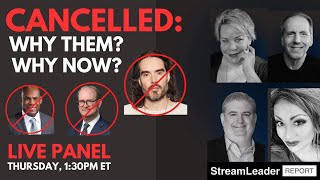
Ross Brand, Rob Greenlee, Rebecca Gunter, and Claudia Santiago test ChatGPT's new DALL·E 3 image tool, then discuss YouTube's demonetization of Russell Brand and how advertiser pressure shapes platform moderation. They explore how creators survive during strikes and what AI means for jobs across podcasting and beyond.
Chapters
All right, hey gang, this one could get interesting. We've got some really hot topics today. Um, I'm probably gonna venture into as controversial an area as I have. We've got some video clips, we've got, uh, a lot of stuff to talk about. What do you say we do a show?
It's the Stream Leader Report live panel, creators talking to creators. Raw, real, and unscripted. And sometimes they say the quiet part out loud. Here are your hosts, Claudia Santiago, Rebecca Gunter, Rob Greenlee, and Ross Brand.
Hi, welcome to the Stream Leader Report. I'm Ross Brand. My show is the Stream Leader Report. And joining me today, Rebecca Gunter from Business in the Raw. Rob Greenlee from The Trust Factor, Claudia Santiago from Vida, uh, what, Vida, Viva La Stage, there it is, easy for me to say, uh, won't be with us today, but she'll be back hopefully next week. And a lot of different topics, uh, we're gonna, we're gonna get to at least 3 really good ones. We're gonna talk about some of the weird and wild jobs that people are holding down, uh, during tough economic times, including actors and writers and people who are on strike right now and what they've decided to do. We'll just leave the surprise for later when we talk about it. Also, if you've been using ChatGPT and you want to use it now to create images, you can. ChatGPT is integrating with DALL-E 3, and so you'll be able to give verbal commands, word, written commands in whatever language. And does ChatGPT do all languages or is there like a certain number of languages? Do you know, Rob?
I'm not sure how many languages. I know that they've been trying to make it as multilingual as possible. So I'm not sure what the scope of that is, but I think it's pretty large would be my Speculation.
Well, given this is a show in English, I definitely know that ChatGPT supports English. So if you give— if you type in English commands, you will be able, through the integration of DALL-E 3, which I think is available in the Plus or the Premium version, you'll be able to get images back and I tried to use it last night and I don't know if it's integrated yet or not.
I'm not sure it's fully activated yet. I haven't seen it work with my interfaces with it quite yet, but I think it's coming.
So yeah, so I was thinking about what I could do. I tried taking, you know what though, it did give me, what's interesting is it did give me a nice overview of the elements that I provided. Like, here's— I need a podcast cover. I wanted to include such elements and colors and this. And it gave me like an entire idea of a design back and colors and shading and little images and where the text should go. And it was very— it was very helpful right there.
That's a big factor too, is the ability to actually do text. My testing of it, of the DALL-E service prior to version 3, was it just slaughtered any kind of textual-based content on it. I mean, I would explicitly say, type this on the image, right? And it would come back with gibberish. So it's like it didn't even know English, which was really kind of weird. Or any language at all. It was purely written for visual presentation.
Now on Canva, I've gone into where you go into, what do they call it, where they have like the shapes and the stock images and that section. I forget what they call that section, but there's elements. Perfect. And you're able to drop some text in, but it has to be very simple. I haven't found it that effective yet. I'm not sure if there's another place in Canva where you can give more detailed description of your entire project and it would churn out a picture. That I, I haven't, I haven't really tried yet.
I did it yesterday actually for that kind of stuff.
Oh, you did? Rebecca, where did you—
in Canva? Yeah, which I'm, by the way, I'm like a bull in a china shop. I'm terrible in Canva, so I'm like hunting and pecking my way around. But I was trying to create a YouTube cover, you know, cover card around this presentation I gave for positioning for podcasts. So I wanted— I put in podcast on a pin and it came back with 4 images and they were all kind of names of podcasts on an enamel pin. So I think, I think it's very literal. Oh well, I don't know. Um, I was surprised actually at what I got back. Was it what I was looking for? No, I was kind of looking for like maybe a pin on a map and some sort of representation. But, uh, we kind of got there on— in Canva.
And you, you did all that in the elements section?
Yeah, I just— I typed podcast on a pin, and then the 4 things that came back looked like kind of a podcast name on an enamel pin. So you saw kind of an enamel, like a lapel pin versus like a push pin. And I didn't go any further than that and try and refine it, but I did do this thing you're talking about yesterday.
I tried to have it do a cover, um, even though I, I tried to have it do a cover, you know, I had a show called Livestream Stars for, for 3 years, like in the 2015-2017, and I wanted to just have a podcast cover that I could put on my website. I, I don't have a separate feed for it. Those episodes are in another, you know, larger podcast feed, but I just wanted to have an image that looked like a podcast cover to put next to other images. And I was like, okay, put two microphones on a table outside in a dark, like, late, late, early evening, kind of lit by the stars, right? And then, you know, whatever. And it just never really got there, like, to what I wanted to have. So finally I said, you know, I don't really want to spend any more time. Okay, I'll just throw a pic— my picture on it or something and put the words But really, I wanted to come up with some like creative design, but between the AI and my simple design skills, I couldn't really pull it off.
Yeah, I just don't know if these tools will be all that robust with this anytime too soon, but it does appear that it's heading that direction. I know that the chat GPT tools have been talked about, about being able to support, being able to import, let's say, an audio file or a text document directly, like uploading to it. And I do believe that there's a function in there that was pointed out to me yesterday where you can do that already. It's just that it's a setting inside of the settings area. It's not like in their mobile app. It's not— or on their website. It's not visible if you just log into your account and look at it. You have to dig in and, you know, throw like a little throttle over and it'll have that ability. But it's still pretty limited. And that's one thing. The deeper I get into this AI stuff, the more I realize that chat GPT is powerful for what it does, but we're still a long, long ways from it really being able to do what the promise of AGI is, which is the full kind of capability of what is probably coming with the artificial intelligence technology. So still early.
Welcome, Podcast Live Podcast Media. Welcome. Good to see you. So when you see people and like on their Facebook profile they have an avatar or an illustrated version of themselves that was AI generated, um, is that, um, something they're doing in Midjourney, you think?
Probably, yeah. That's the most—
Have you tried that one?
Uh, I have not tried it myself, but I do— my co-host on the New Media Show uses the Midjourney tool all the time, and he's struggled with the text part of it too. I mean, because he's trying to create like episode art for podcasts, right? And that always includes some sort of textual messaging on the image itself. So he can go in and generate kind of a creative expression of what the show's topics were, and then, but then he has to go into an image editor and layer in the text. So, you know, it's been— I think now with the release of iOS 17, the Podcasts app on Apple iOS supports episode art now. So the timing of this with ChatGPT and DALL-E going to version 3 may— that convergence is starting to be an opportunity in the podcasting space for people to start creating some creative episode art for their podcasts in AI technology.
Say quick hello to Barb, Barb TUSA, Barb Tomlin, who's been a part of the scene in the live streaming world for as long as I've been a part of it and contributed to my first book. It's great to see you, Barb, and thanks for joining us. Let's, let's move on to, I guess, the biggest, maybe the biggest, one of the biggest stories in the online media space going on, and that is the cancellation of a man who has the same last name that I do but is no relation whatsoever. I don't take, take any responsibility for his bad things or good things. Uh, we're just gonna look at the situation. And I guess I'm going to start with what I think has implication for the most people who would be watching, listening right now. And that is YouTube decided to demonetize him using the explanation of off-platform behavior. My first thought is, well, we don't even know innocence, guilt, whatever, okay? It's bad enough to suspend people for saying controversial terms or, you know, talking about topics, but who elected YouTube King and said you can be surveilling people's off-platform behavior and suspend their ability Like, I mean, there are people who are murderers who have YouTube channels. They serve their time. They come back. Like, where is the line? Somebody falls out of favor with big tech and now you're off. Like, I think this is a pretty scary slippery slope for all creators. Means any of us could be pretty much dropped for any reason.
It does kind of look like that, doesn't it? And I'll— but I do think, you know, Russell Brand has been a big podcaster for a long time. I mean, he, he really, since his Hollywood days, uh, being a kind of a movie star of sorts and a, and a stand-up comedian, uh, has built quite a reputation. And over the last couple years, he's built, you know, like 6 or 7 million subscribers on his on his YouTube channel. And he's always been saying in his show that he knows one day he's going to be taken down, and that's why he's been building his show also over on Rumble and on his own kind of, kind of properties, right? Um, so he always knew that this was coming. And I think, you know, he's had a big target on his back, and he's been able to kind of like, you know, kind of maneuver through the the, the limitations of, uh, what YouTube has done. But this kind of goes to another level. I agree with you that, um, that YouTube is looking at offline behavior, um, as a criteria for taking down his channel. And this kind of takes me back a little bit to a little bit of what was going on a few years ago with the MeToo movement, um, as well. Um, this does have a little bit of brings back memories of that era as well, where, where, you know, women could make accusations against men, uh, and you were guilty till proven innocent. And even a lot of ways you weren't ever found innocent of anything, um, or, or really guilty of anything. It was just the accusation that got you in trouble. And that's kind of what's happening to Russell here. So are we heading back into another you know, MeToo movement? Is that what's happening here?
I'm not sure. I see— I think this is a— what is a creative use of power, um, the power of, um, right? I, I don't know how to say it, but like, there is no question that the 3 people on the screen— Russell Brand, um, the football coach from Michigan State whose mind escapes me, for Mel Tucker and Professor Joshua Katz from Princeton. There's no question that those guys, if they didn't cross the line, they were right on it. And very possibly, in fact, you probably— I don't know about Russell Brand. The other two definitely did things in the past that couldn't— could not— I think flat out wrong might have even been fireable.. But that isn't when they got fired. Like, the professor at Princeton had a case before the university. He did his— he was suspended for a year, forced to go to counseling, whatever. He did everything that he was supposed to do, was back, and then he spoke out against the radical group of professors who were making demands for for special treatment. And then people said, well, let's go look into his past. Why did he disappear for a year? And ultimately then he got fired for something that happened in 2003 or 2005. With Mel Tucker, um, he became the head coach at Michigan State. They won like 11 games one year. They beat Michigan, and all of a sudden he was this hot coach and they gave him a $95 million contract. That's huge. And then they found out maybe he isn't as good a coach as they thought he is. So they were aware of allegations from 2022 about a phone call. But I think when they realized he, he might not be able to turn around and win the kind of games They decided, what can we use to get out of a $95 million contract? Because if we fire him for not being— not winning enough games, we have to pay him the entire contract. But if we fire him because he was inappropriate on a phone call, um, and you know, if coaches and people in athletics got fired for being inappropriate on a phone call— sorry, I covered sports, but the stories you hear are legendary. Okay, they would have paid whoever was off, and then like a winning coach— this, this— all right, I better, I better, I better shut up. But this is so minor, and it's not the reason why he's getting fired. And that's where I think the, the issue that I, that I think is that the crime wasn't really a crime until there was another benefit of punishing somebody for it. And that's what's going on. I think this is the quiet part out loud that we advertise in the open. And I think that's going on with Russell Brand. Everybody knew he was a player. He was a predator. He was aggressive sexually and all that. And they were all fine with it as long as they were making money off of him and that people could be close to fame and whatever. I always thought he was a repulsive character, but in the last couple of years, he's decided to go after those that can't be gone after— Big Pharma, the military-industrial complex, media— and he's doing it coming from the left. And so he's a threat to those who can laugh off, you know, Sean Hannity or somebody, but have a harder time You know, you know, Sean's an establishment figure, low taxes, whatever. This is a guy who's calling out, really truly calling out the powerful, um, including people who might have thought they were aligned with him at one time.
I mean, I mean, you're exactly correct. I mean, just look at the name of his show, Stay Free. So he's all about, um, talking about how how people, uh, or his opinion, his thoughts around maintaining humanity's freedom, uh, in that. And that's an interesting— whether it be free speech, whether it be just freedom, democracy, or, or what, whatever— that's, that's really been his, his effort here is to, you know, call, call the powerful, like you said, Ross, um, you know, to account for what they're doing here. And, and I've always felt that he would probably be canceled at some point. Now granted, as far as I know, um, he can still do what he does, he just can't monetize. So it's a, it's kind of a, a penalty that he's paying. He, he didn't really get, I guess, like taken down or something like that, um, quite yet. He hasn't found— been guilty of anything, but what I gather, he's— he doesn't have the ability to make any money, and that's the— that's the weapon that YouTube uses. I think that YouTube would still love to have his audience, um, come to YouTube because he's got 6.5 million subscribers, which is pretty big on, on, on YouTube. So You know, the fact that they demonetized him is kind of like, sorry, you know, you're not safe for our brands, our advertiser brands now, because you have these accusations against you. I think that's really what's going on here.
But, you know, but all three of these cases make a mockery of the real issue of sexual harassment, sexual assault, rape, um, people being victimized in Industries like sports and media and Hollywood where, you know, men have gotten away for far too long with doing bad things. But what's happening is people are being punished not for the bad things they do, but for being inconvenient to those in power because they make too much money. They're hitting on the wrong— they're hitting They're too close to the wrong target in some cases, to the powerful. And so this is a way to bring people down. If you can't accuse them of being racist, you can accuse them of a sexual impropriety. And again, in some cases it may be true, but if it's already been adjudicated in some cases or whatever, then you're really just, okay, we had a hearing, we determined the punishment. And, uh, oh, he wants to do something different than— okay, what do we use against them? Let's dig up the sealed file that we had already all agreed on and signed. And I mean, that's what Princeton did. They said, well, if you don't come out and say what the, what, what the case was, then we'll have to let it go because we'll have to say it because you're, you're getting too much pressure, right? It was very, very— like all these situations, there's, there's, there's a reason the powerful are using this accusation in order to silence people who are less powerful than them.
Yeah, or they are— these people are powerful in a way that is disrupting the narrative that wants to be perpetrated, right? Go ahead, go ahead, Rebecca.
We should probably let the woman on the panel talk on this issue for a bit.
Yeah, no, I think we should too, right?
Yeah, what about—
Give it to us.
What about— What about the people over whom Russell Brand is powerful over, who have no voice? What about, what about them? Let's just take a look.
Sure.
And look, we're gonna look at a supercut, okay? Obviously, you know, anything that's a supercut is, um, is smashed together with a particular, you know, they want you to believe something, right? I'm sure if we put together a supercut of, uh, Russell Brand, you know, kind of punching down at capitalism or, um, any, you know, or any of these other power structures, um, that we could make that argument as well. But I think that it's an interesting— let's just see, let's just see what kind of presentation our man is giving us here.
Okay, fire away.
Look how sensitive and vulnerable he is. He must be gay. That means women feel safe around me. They trust me. Then bang, pregnant. Bang! Pregnant!
Bang! Pregnant!
For the Queen, you can't do that!
For the Queen!
For the Queen!
You might not see that, please.
Be careful because that's a low-cut dress.
I'm sorry.
Okay, um, I'm only flesh and blood. I've got instincts. Oh, when you laugh like that, it makes me know what you'd sound like when you come. Pop yourself down on my knee and see if we can't get you pregnant. Come on. Oh my God, he's kissing me! Oh wow, okay, everything's okay.
Yes.
You're in there, look.
Because you took your eye off the road because things was getting a bit fruity out there.
All right, Liz, we were—
yeah, thank you.
Well, it's been really a wonderful trip. All right, that's okay.
I can undo your bra just like this.
What do you think that gesture means, the way you're touching that bowl? What does that indicate? What is that? What's the subtext of that?
You're a sex addict.
Is that right?
I don't know if it's right, but it's fun.
Oh, I raped someone once.
Sorry about that.
Oh, that's not good.
Yeah, well, I did start out by saying he's a repulsive— he was a repulsive character in my—
you, you did. And I'll just say, like, in response to, you know, whether or not the MeToo movement is a way to cancel people The amount of men who are accused of, um, doing something that it didn't happen is so pale in comparison to women who make allegations where it did happen. And in this case, no one is safe around— people are not safe around him. And it does reinforce what we call on TikTok grape culture, like grape, grape culture. That is a terrifying reality for women. This doesn't happen in a vacuum. This happens all of the time, in every— in, in many, many situations. It's, it's pretty ubiquitous. So I hear you that when does YouTube have the moral ground to cancel somebody? And this isn't something that's baked in his deep, deep past. These allegations are happening right now. And when do we decide that influencing culture is an important thing that we're doing on this platform, and that perhaps folks who engage in this kind of, uh, personal brand, shall we say, um, yeah, maybe don't— you know, maybe we don't want to encourage them. Let's, let's, let's say that part out.
I, I don't think we want to encourage that behavior whatsoever, and if he's continuing to engage in it Um, if those were recent interviews, I don't know when that— the MSNBC thing with, uh, I guess that was with Mika Brzezinski or whatever. That was— I mean, if he was doing that now, then bleep. I mean, he should be— he should never be invited on any show again. He's a predator and shouldn't be. Like, if he's behaving that way, then— but they've drudged up things far in the past And, you know, again, I think people were putting up with it as long as he came on MSNBC and said what they wanted him to say. Right, bad, left, good, whatever. But when he said, when he came on Bill Maher and said to John Heilemann of MSNBC, you know, you keep going on about Fox News being liars, but you're liars too. And guess what? You all have the same sponsors and work for the same investors and the same corporations. Stop yelling about Fox. You're just as bad. You're all part of the same echo chamber. You're all part of the same— you're all in bed together and you're all doing the same thing. You're all lying or whatever. And, you know, if somebody from the right said that, that would be like, oh yeah, yeah, just defending Fox. But when somebody from the left said it, it was unacceptable. He had to be excommunicated. He was too close to the target. He was calling out MSNBC and CNN as not fighting for the people or the little guy or the working class, but protecting powerful interests of Big Pharma, just like Fox News does. And that's why he has to be destroyed now, because he was acting like this clearly in front of very powerful and influential people who just laughed it off.
Or they're okay with it. Welcome to our world, by the way, because that's what happens is it gets laughed off.
Well, he's— I mean, let's be frank about it, he's gotten a lot of attention because of his behavior as well. Uh, it's been reinforced, it's been paid off over the years. And he— if, if he would have been probably shut down to some degree or not paid attention to over many years Um, that probably should have happened a long time ago. But why? I guess, and this gets back to what Ross is saying, is why all of a sudden now? Um, why is all of a sudden his behavior now being called to account when he's been doing this behavior for 20 years?
And I mean, a lot of people are getting called out right now. Chris Rock, CeeLo Green, like a lot of people are kind of being called to the court.
But why now? Why if they are a challenge to the orthodoxy right now, if these people are challenging people's beliefs, does it really get back to that we are in a cultural change moment again, or have we been in a cultural change moment for the last 5 years? And why wasn't this called out 5 years ago if it was so bad?
So yeah, I'm curious what you guys thought, because I wasn't— we didn't have the Stream Leader Report Weekly Live panel show back then. What did you guys think when Trump got booted off of Twitter?
Well, I think that's a special case. I mean, I mean, you have to look at that. He was the President of the United States, right? Um, for a platform to kick off the President of the United States is a pretty significant move or any platform. So, you know, what I feel about it, I, you know, a platform can do what they want to do. It's typically a private company. It depends on what their terms of services are. I've worked for many corporations too that have terms of service that specify what type of content is allowed on the platform. So I don't necessarily legally can say that these platforms don't have a right to do what they do, because I think depending on their terms of service, which very few people actually read the fine print of terms of service, could clearly specify that the behavior that Russell Brand has been perpetrating should give them the right to take him down. But very few people read those terms of service, so most people when they see this happen don't really understand the full context, because maybe the terms of service of YouTube currently say that your offline behavior can impact our decisions around whether or not we're going to monetize that content.
I mean, I think the, the terms of service probably for all these platforms is basically at will. They can shut you down for, for any reason. I'm sure they gave a specific reason, which is different than just saying this doesn't— we don't want this anymore, whatever they gave. Hey, we're coming after— we're looking at your off, you know, your off-platform behavior. And maybe that's fair if somebody's off-platform behavior is so egregious. But again, who sets the standards? And then, um, you know, it's like— and why is it that the Patriot Act was passed in order to supposedly protect us from terrorism. Now it's being weaponized against Americans, uh, who, you know, for whatever reason, for any and all reasons, right? It was supposed to be to protect us from foreign terrorism. It's, you know, most, most laws was that when, when, you know, somebody tried to set off a shoe bomb supposedly in 2020, in 2002, or late 2001. Yet we're still taking— in 2023, we still have to take our shoes off at the airport, even though they've got supposedly those sophisticated screening machines and all these different things. I had to walk down a line at the Atlantic Air— at the Atlanta Airport with a dog sniffing and following behind me, in addition to going through security and doing this thing, and, you know, my license and all this stuff. So it Yeah, I mean, it's like, okay, so the idea that somebody isn't going to abuse this to then— and maybe as a private company they can do whatever they want, but the idea is, is this sort of more like the phone company or, you know, is this really a public utility in which it's become our town square and they get special rights from the government to not be held accountable for what's published on their platform. So, you know, it's hard to say. All I know is if, you know, the head of terrorist groups can have a Twitter account, then the president of the United States should have a Twitter account, whether or not he conducts himself, you know, the way we would want. Let's put it that way.
Right. Yeah, I think—
oh, go ahead. Thank you, honey. I know it's awkward. Um, I celebrate all of the pulling back the curtain that Russell Brand does. To your point, and it is sus that, uh, a great dissenter now has been kind of, uh, put under the, the yoke of demonetization. I, I am— it is, it is disturbing. I don't think YouTube is the moral judge and jury, nor is Twitter the moral judge and jury about who can speak and who can't speak. And I would hope that, you know, that either, either, you know, our behavior, predatory behavior, would start to become, uh, less, uh, sexy for lack of a better word, and that we could kind of do that, make our own decisions around it. But it is disturbing to see how many men in power who have long histories of being— creating very unsafe spaces for women— who have not faced any kind of loss of power or consequence around that.
Well, I think if he's continuing to act this way, then he shouldn't be invited on shows. Then he should be called out for that behavior. Um, and, you know, being, being right about a, a political concept or being over the target on, on cultural, economic, political issues doesn't give you a pass to abuse people. And, um, I think that makes sense, you know, and abuse your power and And so he should be accountable. And if he did what he's being accused of, that's why we have courts. Uh, you know, it needs to be— the court needs to be the one to decide. I know that that kind of puts victims through a tough situation, um, but—
and also the believability of women is like way down here. What were you wearing? Why were you walking out late at night? Why did you show up to work that day? What did you say? And the accountability is the, the victim blaming in that scenario is a lot. It's a lot. So I don't know, like, the courts are like truly the answer. However, I, I hear you that that's right now, that's, that's what the court of public opinion, um, should not be tied to, uh, freedom of speech.
I mean, like, he's Go ahead, go ahead, right?
Yeah, I think he's admitted to a lot of misdeeds. I've, I've watched his show a couple times on, on YouTube, and I have a hard time taking him, um, for very long from the standpoint of watching him because he's so outlandish and, um, kind of overly energetic with what he does. And, and I think that translates into this extreme behavior. I think he is an extreme personality and extreme. And he has, you know, he had— he does come across as very kind of, you know, sexually aggressive and overactive. And, and he fully admits to that in some of the videos that I've seen of him. And I think just what we've seen, uh, is, is very reflective of other videos that we've seen of other powerful people that have taken advantage of their position with women. And it's certainly not a type of orientation that I have any interest in or any association to or any desire to express myself. It just doesn't feel right to do that. I think each of us needs to treat every other human around us with tremendous levels of respect and safe distance and all that stuff unless you're invited to do otherwise. But it's, um, it's— yeah, I think, you know, he is kind of a dinosaur in some ways, um, and I think that's what we're seeing here. But demonetization is not as extreme as like his channel was shut down or turned off or deleted, or you know what I'm saying. So, so there is a kind of like a weaponization here that is really more linked to, I think, YouTube sensitivity to brand safety, which is another issue that we haven't really talked about on the Stream Leaders Report, is this movement around content moderation that's linked up with what they call brand safety or brand suitability. So certain content is now being evaluated by AI technology and then rated kind of like a nutritional label on food.
Oh, that's interesting.
It's kind of the same concept, and this is happening in podcasting too. So there's an increasing number of shows that are now being pulled as transcripts and being run through AI engines, which is more kind of contextual AI engines that will rate the content based on these criteria that is kind of being rolled out across the digital landscape right now, and it's based on a standard that was set up, it was called GARM, is what it's called, and it's certainly, it's a ranking of certain types of content, like what's the political orientation of, what's the orientation in the content towards violence or alcohol or drugs or, and it rates the range on that and will give you a number, uh, at the end of that that the advertisers can look at. Okay, if this show rates in this range on these topics, then I'm not going to advertise on that show. So this could be linked up with that with YouTube.
Is it? That's interesting.
But this whole thing with what's happening with this accusation, which is outside of YouTube, as a criteria for that. It sounds like what YouTube is doing is expanding that moderation to, to, to really be sensitive— overly sensitive or sensitive— to these brand advertisers that are spending money on YouTube. And if, and if Russell Brand is getting a lot of viewers to his content, uh, and there's a chance that he could say something that would be, you know, hurtful to a brand advertiser of some sort, um, then that would be something that they could use as a, as a reason to demonetize him, uh, and say, sorry, there's no ads on your, on your content anymore because we don't feel safe selling your content to an advertiser. I don't even know if he is even opted into, to that methodology, but I think he is.
So, I mean, I, I think a part of it is more just like putting a warning label out there. Really, that's what this is about. Like, don't listen to this guy, he's a bad person. Do not listen to anything he says about Big Pharma, the war in Ukraine, uh, what your government's doing, uh, what corporations are doing. Don't listen. Don't pay attention. He's not a reputable person. And he may not be. He may not be. But I think that is at least part of the point of it. And did Google and YouTube— is this a solely independent act, or is the fact that most of big tech is so intertwined with the military-industrial complex that it's again, you know, uh, higher powers in the government, uh, in the military industry putting pressure, you know, let's keep this guy quiet, a little, a little more quiet. Let's, uh, this guy's a problem.
Let's, you know, well, yeah, I wouldn't be surprised if the, if those type of folks have been looking for ways that they can, they can de-emphasize what Russell Brand is doing, uh, because I think he does have speech that maybe threatens what they're trying to accomplish.
Um, so let's all keep our eyes on Jon Stewart. If he goes down, we know it's the thing. Well, right, he's another vocal dissenter, um, that speaks truth to power. So he can be—
he can be our canary in the coal mine to see whether or not this Yeah, it is a warning sign though of what's happening to our media culture and, you know, how much power is there as we shift more from broadcast medium, which is a very controlled environment, right, and it always has been, to a less controlled environment which is increasingly becoming more controlled just like broadcast media has been. So I think that there's definitely a power shift happening right now from online creators that has got the establishment alarmed and concerned and wanting to crack down, just like they've done with the broadcast medium.
Yeah. So where do we go from here?
I don't know.
Hot topic question, Ross. I'm not sure, you know, I My gut feeling would tell me that things are probably going to get tighter and tighter and tighter. That's the progression as the technology gets better to evaluate content. I think even in podcasting, I think that there's a movement that direction as well. So free speech is something that is becoming less and less able to happen. You know, voices that are different that people dislike— I know Elon Musk talks a lot about this stuff— are increasingly getting, you know, shut down. And, and that maybe that's a good thing for those that, you know, have a particular, you know, values assessment of, of, of this. But I, I think we do have to look at the big picture and say, well, maybe Free speech is the ability to say things that not everybody agrees with, or are we moving towards a world where everyone has to agree?
Yeah, I, I mean, one of the things about Musk, as much as I like the free speech aspect of what he's done and how he's pulled back the curtain of what went on at Twitter under the prior regime, for, for a person with as much power and influence He is not very responsible in how he uses his Twitter sometimes. I mean, he's one of the world's smartest people. He's one of the world's wealthiest and most influential. And sometimes he just acts like another troll who's picking fights. And it's sort of like, I don't know if you've seen his interview. Don't you get to be above that a little bit if you're running But, but maybe that's better than, you know, the nameless, faceless people running other big tech who you don't really know what they think or what they— although I think, I think you don't know what Musk really thinks either because he's, you know, he's playing a lot of games as well.
Um, did the cage match ever happen?
It never did.
It never did. And it probably was never going to happen.
So yeah, I didn't— that was just— I wasn't holding my breath, Rob Greenlee.
Yeah. That was a whole stunt.
You know, the thing for people like us is that unless you have a really huge channel and you're either— you're famous or you're just a massive presence or whatever— then you do have a lot of people speaking up for you, and you can sometimes get these decisions reversed or get a hearing. But the average person does not have a customer service rep they can just call up and go, oh, you know, you got this wrong, here's the evidence that I didn't say that on my show, or whatever. There's, there's basically— they don't hear appeals really. I mean, I guess sometimes somebody takes a look, or they even have, you know, a bot that can review your request, or who knows what. But I, I, you know, a lot of people say, you know, it's just like they're fine with just a problem, let's just shut it down and not, not listen to the average user.
Yeah. And in some ways, this is a distraction from what, let's say, a Russell Brand talks about in his content. So those that have never watched his show or have not seen his, his, uh, his values— he's a very intelligent person, um, you know, that comes across very much so if you listen to his show. Uh, he has a very bright mind. He's a very powerful communicator, but at the end of the day, you know, his behavior is now getting in the way of his message, right? If his message is around freedom, do we want freedom as a society? If that's his message and he's been communicating about threats to all of our freedoms, Um, you know, I guess all of us have to decide, you know, as each one of these people that talks about our freedoms gets shut down, you have to wonder if that's the real agenda here. I don't know for sure. I just see what's happening, and the people that are speaking up and speaking out and being controversial and stuff like that are increasingly getting shut down. And you have to ask, why is that happening?
Yeah, well, Rebecca's got a great topic that we want to make sure we get in because she brought— uh, this is a wonderful topic. Um, there are strange and wild and wacky jobs that people are doing during tough economic times, including famous people and people who are on strike. So Rebecca, set it up, tell us a little bit about, uh, some of the jobs that people are doing.
Well, I was tickled and delighted this week to see that the— that they— there's a union solidarity coalition for, out of, you know, obviously striking SAG actors and writers, right? And so some delightful personalities have shown up to auction off some services off of eBay that would then sponsor, you know, contribute towards some relief for the funds. And so if you'd like, I have a piece of media for that.
Yeah, please, uh, let me bring that up.
Okay.
All right, fire away. Yeah, here we go.
It's very cute. Union Solidarity Coalition is auctioning off experiences and items to raise money for their cruise healthcare fund, and here's some of the craziest things you can bid on right now. Natasha Lyonne will help you solve the New York Times crossword puzzle. Adam Scott will walk your dog. For 1 hour. You can even join him. You can have Lena Dunham paint a mural in your home. You could bid to have the cast of Bob's Burgers write a song about you and perform it for you.
This—
you don't understand. I need it. Look at his work. I need one. They're also auctioning off a pottery class with Busy Philipps, dinner with Bob Odenkirk and David Cross, a Zoom with Sarah Silverman, a Zoom with Maggie Gyllenhaal, a Zoom with the cast of New Girl. Why am I poor? And instead of paying rent this month, you could bid on an apron signed by the cast of The Barry.
So much money. Adorable.
Absolutely adorable. Side hustles. What I, I immediately came to the thought is like, all these people, it's like, the heck with their Hollywood careers and their writing careers, they just do this.
Well, interesting you should say that, Rob Greenlee, because on the other side of that To heck with your career. OnlyFans now has more than 3 million content creators and is a global business, says the CEO. There's been a huge uptake in creators joining last year. The total is 40%. So facing economic hardship, sad about corporate greed and graft, and that everything is up 40% while wages stay stagnant. You can move on over to OnlyFans.
Well, think about the opportunity of making money from unconventional ways of doing so as we move into the AI revolution. I think it's probably not a bad direction to start thinking a little more creatively about how we use—
At least reserving a channel on OnlyFans. You might not be ready to put some content out, but just in case, Things go south.
I mean, especially if you're a writer right now, right? Um, AI is probably going to replace you anyway, so you better start thinking about other, uh, side hustles.
Exactly right. Speaking of AI taking jobs away, also, um, some adorable TikTok-y content, um, suggesting that AI replaces all CEOs. So maybe CEO jobs are up on the chopping block. I mean, to your point, last week, anyone didn't see us last week, go back and watch the replay. When in real time, um, you would— what do we solve with ChatGPT? Uh, was it the auto worker strike or something along those lines where we put in how would you fix it and the answers were great? Oh, it was, um, dear AI, what do humans do now that AI is taking over? And the answers were fantastic.
It was just like a— see, like it was right from a CEO who had source this company's manufacturing to China in 1993. I mean, it read perfectly.
Exactly.
We could retrain the workers, find something entrepreneurial to do, uh, get, get involved in jobs of the future, right?
Sorry, I have to let you all go, but right, right, other ideas for—
sorry, we're going to destroy this town that's revolved around the factory that's been here for for 5 generations, but you know, I'm sure you'll find a job coding in Silicon Valley.
Don't forget to double down on your personal growth. Yes.
Right. Just think you've got more time to learn a second language.
It definitely has me thinking a lot differently about my career too, in the direction that I'm going as I look to the next 10 years of my life or whatever. And what the opportunity looks like going forward is not kind of conventional. So I'm not thinking conventional anymore.
Are you going to give us, are you going to clue us, give us a hint?
Well, TrustFactor is a little bit of a component of that. It's also, you know, trying to think about other ways that I can help people. And that's at the end of the day, that's, that's what I'm all about is is being, being a resource to others and helping as best I can. And if I can improve my skills and be a better human and a better person in the world of AI, then that is— could be a powerful tool. I believe that there's lots of other people doing the same thing right now. You know, just look at all of the, um, the personal trainers on LinkedIn and, and the, these business leaders that are coming out with podcasts that, to build your own, you know, side hustle or whatever. Um, there's everybody out there trying to help other people and make money at doing that. Um, I think is, is really— and if you read a lot of the trends, just like we covered in the show last week, uh, you know, those options that you have Those are all part of it. And a lot of it comes from personal development and understanding on who you are, what your passion is, what you bring to others. And, and you build on top of that and build yourself a career because humans still need help even though there's AI. Humans need ideas, they need to refocus, they need to be retrained, they need to think differently. And just like we talked about, people are These celebrities are being forced to do that now too, and, and I do believe it has something to do with AI.
So, oh, 100%. So you're bringing Trust Factor to OnlyFans, that's what I'm hearing, right? Yeah, you heard it here first, folks.
So do you— what do you think is the future then, like, in the creator space? Like most other space, like almost all spaces, there's like a 1% that, that have the majority of the earnings and the opportunity and all that. But at least in, you know, the, the old sort of working structure, everybody else had a job and there wasn't such a divide between what the CEO made and the person on the shop floor. If we all become entrepreneurs What, and the same sort of hierarchy of success, you know, money and, and all that breaks out. What is there where there's no sort of guaranteed job for the people who aren't at the top? Like what, what is, what is, I don't know how, how, how many people can make money as creators and doing side hustle. Like, is it just that there's gonna be things for everybody to do or? Where, where is everybody going to work who doesn't, you know, hit it big with a, with a podcast or a talk show or, you know, uh, an e-commerce shop or something like that?
Ross, you know, my conspiracy brain thinks as soon as that happens and corporate America loses all of it and everyone's going entrepreneurial, that's when small business banking seems to not be a thing, or you can't do transactions, or some sort of governor on our ability to make our own money. So I'm skeptical.
Yeah, it does. It— I think it's a great question, Ross, what the future looks like on that regard. I mean, I do think that if you look at society as a— based on a, the view of a meritocracy, right, which is people earn different levels of success in their, their lives based on their, their actions, then that's one outcome. There's another outcome that could be, you know, kind of a hybrid model with, you know, guaranteed basic income type stuff that's being talked about as well. Even though I have no idea how our government's going to be able to afford guaranteed basic income, we're already $33 trillion in debt. I don't know where that money comes from. That, that's the problem that we face as a country, is, is, you know, do we just keep going further and further and further into debt, which means that we get increasingly more and more inflation, which means that it takes more dollars to equal the same value? And, and I don't, you know, it's, it's a, it's a slippery slope right now about what's happening in the world and I'm not sure what the right answer is anymore. And the further we get into debt, the fewer options that we have.
Yeah, I'm for maximum wage.
I'll say that. I think, you know, obviously, um, we should talk more about, uh, in the future, I think, about what opportunities are realistic for people, what they should be doing, what they should grab onto if they are learning, if they want to. Exactly, because Not everybody's going to do it, but those who can, and we want to definitely see as many people as possible have a chance in whatever this new world we go into becomes.
I'll just put you this way. I'm increasingly thinking about, as we talk about autonomy, which we've been talking about with Tesla for a while, the robots that they're going to start manufacturing in the next 5 years. I've been thinking increasingly, well, you know, let's say that there was a robot out there that could do all the labor around my house, mow my lawn, do my dishes, do my laundry, all this kind of stuff for me, right? Could I purchase a small little army of robots that could go off and mow lawns for me and make an income for me, or my car can go off and pick people up and take people places, and I get paid for that, right? So, you know, I think it's hard to predict right now what the income opportunities are going to be when labor is basically unlimited.
So we're all going to be management telling the robots what to do, where to go, and how to do our work. Right. I mean, you know, that wouldn't be such a bad future.
I know. Now I want to go into insurance.
Yeah, right.
Well, there you go.
Right.
Did you guys see the videos? I know we got to wrap, but did you guys see the videos of the self-driving cars on the news yesterday? They were self-driving cars that were crashing. And then there was a car that was like pulled off the road or weird or whatever. And the police come and pull over and everybody's laughing because there's No driver in there to give talking to or a ticket.
I'm sure all this was happening in San Francisco because that's where Waymo is, right? And those cars—
Is that where they send them out and test them every so often?
Yeah, actually there's cars that are driving around San Francisco that don't have drivers in them. Apparently the results weren't too good. No, because they aren't using very good technology to do that and the cars get stranded sometimes because they don't know what to do. So because they're kind of dumb, not, not like a Tesla vehicle that's actually has a visual cortex that's being built into it that can interpret the world just like we do when we drive. That's kind of what Tesla is building, is the ability to understand the world around it visually and navigate through that, where these Waymos are using like LIDAR and have to permanently map the path. And if something changes in the road, it doesn't know what to do because it, it wasn't— it's not in their database.
Yeah, well, we've gotta— we've gotta wrap for today. We'll be back next week, 1:30 PM Eastern on Thursday. It's always my favorite hour of the working week, getting together with you guys. Rebecca Gunther from Business in the Raw, Rob Greenlee from Trust Factor, and hopefully we'll have Claudia Santiago back next week as well. I'm Ross Brand. This has been the Stream Leader Report. Have a great rest of the week, everybody.
All right, thanks everybody.
More from Rob

Future-proofing with Delphi AI/Human clones: your podcast as a personal LLM | New Media Show






How sports reveal what AI spectacle gets wrong #Technology #Sports #Commentary



