Super Fans Support Ads? Here's What Todd and Rob Found
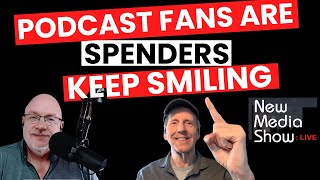
Rob Greenlee and Todd Cochran break down what actually moves podcast listeners to buy. Super-fans convert 60% more online and 71% more in stores. Host-read ads still command the highest prices, but most spots are now programmatic. They also test AI tools for episode summaries and debate whether republishing old episodes with new dates is ethical.
Chapters
Todd and Rob in the afternoon. With Todd and Rob. Oh yeah.
Hey, we are Rob, even though we're a little late because I didn't get out of bed and people thinking, get out of bed, you guys are late. The time change, I used to be able to get up at 8, be ready to go here by 9:00 AM. And I forgot that I need to be getting up at 7 and be ready to go at 8.
So yeah. It's a big time difference between us. Yeah.
Well, not, you know, now it's just, it was just my stupidity, but anyway, hey, here we are and welcome to the show, everyone.
Yeah. Yeah. Great to be back again after all these years of doing this every Wednesday. Right. So there was a period of time when we actually did this twice a week.
Oh, during COVID Yeah.
So that seems like a long time ago, doesn't it?
Oh, it does. And you know, even thinking all the way back to the beginning of doing this show, man, we've been doing this thing a long time. So anyway, I know you did some preparation today, which I did not, because obviously, obviously I am awake about— let me hear.
Yeah, you were sleeping.
Yeah, I'm awake about 19 minutes here, so Right.
Right. Well, as usual, there's always a lot of stuff going on. And I pulled from past days too of things that are going on in the space. But I thought it was interesting, the article that came out from Odyssey talking about podcast super fans are super spenders, which I thought was a funny headline that came out of this. You know, and I think it follows common sense, you know, heavy podcast listeners, those that are tuning in for more than 8 hours per week. I guess that's a pretty serious consumer of podcasts are significantly more engaged with advertised products compared to average consumers. And you know, I think that's been the case in podcasting for many years. I think that's what the research has been showing for a long time. I don't know. Is there any comments about this, Todd?
Well, the question is, They're talking about a podcast superfan, not a super listener of a specific show, right?
Yeah, I would say they're kind of speaking more broadly, right? So if you listen to, I guess, more than 8 hours of podcasts a week, you're, you're significantly more likely to convert on advertised purchases on advertised products. And purchase them, I think is what it is. It says heavy listeners are 60% more likely to buy products advertised online. Now it didn't say advertised in podcasts online, but it does say increase in-store purchases. They're likely 71% more likely to purchase advertised products in physical stores as well. So I think this is really going after a lot of kind of brand podcasters to some degree, or brand advertisers, you know, and the positive reception to ads in podcasts. 76% of heavy listeners acknowledge that the podcast ads introduced them to new products and services, and 57% said they had a likelihood to purchase.
Well, it always comes back to the advertising, doesn't it?
Well, yeah, I think I was talking to a person that works for Katz Media and I thought it was an interesting conversation around advertising because this person was telling me that the CPMs did drop over the last couple months fairly significantly and may, may also be a reason why we don't really hear people talking about CPMs much anymore publicly. So. And then also that most of the advertising now is programmatic, at least coming from Katz Media side. So, which is a radio-centric kind of—
Is it DAI or is it programmatic? That's the question. Is programmatic infers that it's—
DAI, you mean? Is it DAI?
Yeah, versus programmatic, because programmatic infers it's just you get a random set of ads.
Right. Yeah, I mean, I know their platform, they primarily do the prerecorded ad and product programmatic dynamically inserted advertising. They don't, I'm getting a sense that the radio folks don't really do much with the host reads anymore.
I gotcha.
I don't know what that distribution is between host reads that are being done utilizing dynamic ad insertion.
So they're saying that the category— so they're saying programmatic ads dropped, which is curious. We've not seen a corresponding drop.
Yeah, he didn't say specifically that. He was just saying more specifically that the overall CPMs in the industry dropped from what he's hearing from the buying side. So they're just not— I guess the budgets aren't as strong and maybe they don't have as much confidence in podcasting from a programmatic perspective. I don't know. I'm not sure at the detail level what's going on here, but it does appear like the research is showing, at least what's being put out publicly, is that the conversion rates— and you have to stop and think, you know, why are they putting this information out about the conversion capabilities of podcast ads? And that's to drive more interest on the part of the brands to get involved in the medium and to show that there is conversion to be had here, right?
You know, I, I check up on a periodic basis with, with Dave over at Backbeat Media, and, you know, they're doing all of our host-read deals for our podcasters. And, you know, it seems like things are strong. You know, CPMs vary on those on a campaign-to-campaign basis, but, you know, I've heard no one being under $22,000, $23,000, kind of in that range of where it's been. So when someone says there was a dramatic drop, it makes me go—
Yeah, it does for me as well, because I've definitely gotten the impression that the host read or the talent read that is either baked in or even dynamically inserted is the most highly coveted advertising slots that are out there. And it also depends on where they are in the content as well. Are they towards the beginning or are they towards the end?
It's all the context, isn't it?
Yeah, it's all. And this is what's driving this conversation around getting better metrics, right, for the advertisers to know where their content or their ad content is being consumed in the content and what the, you know, in that attribution piece and all that stuff, which is Again, there's already a solution.
Yeah, I've talked about it several times.
Oh yeah, yeah. On the chapters, right? Yeah.
You know, so, you know, when, you know, people, you know, they want to cry me a river. And here's another thing too. The folks I'm hearing, this attribution piece is not even in conversations right now. In most cases, they're not, they're not the attribution. It's not even a word that's being talked about. So. It's, you know, they say in one word that we need all this, need that. And then when I hear people say, no, they're really not bringing up attribution, maybe 1 out of 10 ad deals is talking about pixel attribution. So I don't know. But getting back to that superfan piece, you know, I think just like anything else, you know, they're hardcore podcast listeners, but at the same time, I think it's more at a show level. I know on my show who my quote unquote super fans are, and it's by the donations they send in. And again, the bigger the donation, you would think the bigger the fan.
So it's that direct relationship that's— that I think the industry is moving towards as what maybe what the future looks like more and more. Is these, you know, the whole concept of a super fan is somebody that you would think you'd be able to convert into a private community, right?
Yeah. And I think some people are better at that than others, to be honest with you.
Oh yeah. Oh, I agree with you 100% on that. Yeah.
Yeah.
Some show genres lend themselves to it much better than others too, you know.
And it's something, you know, personality-driven too. Yeah, something we've been looking at. Internally is, you know, it's always about this engagement thing, you know, they're— well, let's just be honest. And here I'm umming this morning a lot. If you can get a donation, if you can get a comment, if you can get a boost, if you can get any type of feedback from a fan, that's just like a dopamine hit. And that will carry you to the next episode and being motivated to, to do the next show. And when it's crickets, when there's just nothing going on and no, nobody's providing you any feedback at all.
Yeah, yeah.
That's when a lot of content creators on all sides— doesn't matter if you're doing YouTube or podcasting— it's when you start questioning You know, is this paying off?
Yeah, it's the engagement part that, that keeps people energized to keep their shows going through, you know, what could be seen as a tough time, right? When they're not making money from doing their show. You know, that, that's the thing we talk about that a lot on this show is expectations for making an income from creating content now is at probably at the highest level I've ever seen.
Well, I don't hear it. We're doing a— every Tuesday we're doing an office hours where we basically— they don't— people don't have to host with Blueberry at all. They can just show up and ask podcasting questions, and we rotate it between Mike, Dave, and myself. And the— some weeks we have dedicated topics, and this past week was about monetization. So I, it was, you know, we were going to talk about monetization the whole time. And the one of the folks that I knew, well, matter of fact, you might know him. Well, I better not say his name because we did everything in confidence. We didn't, we don't record these. But anyway, this long-term podcaster who is on another platform getting advertising, he's just being drove crazy by no transparency. From the company that he's dealing with to deliver advertising. There's just, you know, you take the ads and it's kind of like a, you'll take the ads and take it. And there's just not a lot of transparency in the process.
And so it's an ad advertising rep. Yeah. You can see, is that what it is?
And a pretty big one too. And he's at a point where he just You know, he's looking for a new home because he feels that he's just a number over there with the company. And he does great numbers on one of his shows. He does, you know, fantastic. Matter of fact, part of it is syndicated radio too. So he actually made it from podcasting to syndicated radio. So he had the— about the time Leo Laporte was drawing down, he kind of filled a few of those slots. So Okay. Yeah, I probably just gave away who it was, but he is very disgruntled on that. And then the, on the other side of the fence, you know, the question really came down to with the other creators that were on the, on the call, you know, a little bit discussion about programmatic and, you know, what it looks like from a CPM standpoint. And then the conversation of. You know, do I really want to run this? Because based on my show size, I'm making— I'm only going to make X, not XX. The difference between, you know, making $2, $3 a month versus, you know, a dinner or car payment. So for smaller shows, you know, my advice always goes back to them is, you know, build that value for value. And you're probably going to just by doing value for value as a smaller show, you're going to make more money than you ever will on advertising as a small show. So I think people get wrapped around the axle these days of, oh, I have to have a GoDaddy or, oh, I have to have a, you know, whatever's the top spender of the day advertiser du jour. And then they completely forget about, oh yeah, I've got a PayPal account. Oh yeah, I've got to buy me a coffee account. Oh yeah. I, you know, there's lots of things that you can do to earn revenue and it doesn't always have to be the, you know, some media buy. And I, and they just, they kind of have this, oh yeah, oh yeah, why don't I do that?
So why don't they is the next question, or they don't think about it. They don't think about it.
Yeah, they're so wrapped around, so laser focused on on just getting an advertiser, you know, and sponsorship. Yeah. And there was, you know, one gentleman that was on, longtime podcaster, intermittent publisher. In other words, he's not on a consistent episode publishing scale. And he was like, oh yeah, why don't I do that? You know, I've had a few donations come in over the years, but I never asked. And I think that's A big part of this is you have to ask if you—
There's a bunch of ways that people can attempt to generate revenue. I mean, I think that's the other secret in the creator economy right now is creating diversified revenue streams for whatever you're doing, right? You can't just rely on one source of, of, of revenue coming in. You have to create some merchandise, you got to create some products, you got to create You know, different ways that you can hopefully chip away at that revenue challenge if that's what's required for what you're doing to keep going. And I think that's what a lot of people struggle with right now is, you know, doing all that work, right? It's a lot of work to keep up with all this stuff.
Well, you know, are we— have we become a society of wanting everything given to us on a golden platter?
You know, I'm Well, that's a very deep, interesting question, Todd, that I don't know that there's a clear answer to. I think a lot of people do. And I think there are a certain amount of people out there that are willing to work hard and do what it takes to create something. But even working hard and doing what it takes is no guarantee that it's going to work out. That's the other problem.
It's true. And I think at the same time, we have Well, it's a train of thought. I was on the tip of my tongue here. In the end, we're all responsible for what we do and everyone wants to be a superstar, but not everyone is going to be a superstar.
Right.
This is the thing we've said from the beginning of time of the podcasting space. And, you know, people pump their numbers for years and seeing more of that going on now. Again where it wasn't before. It kind of— for about 7 or 8 years, there wasn't a lot of pumping of numbers and, you know, discussions. So, you know, the ugly baby talk a little bit. But at the same time, we have to be responsible enough to understand that this is work. This is hard work. Now, you and I, you know, we've been doing this for a while. We can— like I said, overslept I sent you a text. I said, hey, you know, give me 10 minutes to, you know, at least brush my teeth and get this everything turned up here. And it turned out to be 15 minutes or so before. But again, and maybe I'm not 100%, maybe I needed a cup of coffee, but, you know, we're cranking here and talking about topics at hand. Is it going to be our best work? Well, from my standpoint, maybe not, but from you, I'm, you know, you've had more time to prep, so Yeah, but again, there is this opportunity. I think as creators, we're, we're in charge of our own destiny here. This thing is going to succeed or fail based upon what we put into it. I think about my own podcast and the work I've done over the years and the changes I've made of recent to try to improve the show at 20-plus years making changes.
Yeah, and sometimes you have to ask yourself, is it enough? You know, is it keeping, you know, same with this show when we think about this show, is it enough to keep up with the expectations of audiences and the market? And, you know, that's a very difficult question to answer conclusively. As you look at your own content, you're very close to it. You have a lot of ingrained habitual behavior that happens around your patterns of what you do. And I think there's a danger that we kind of stray just based on our own inertia, stray away from the moving target that is the podcast expectations. You know, I struggle with this with even the other shows that I do too, is that I do have this ingrained thought in my mind about what a podcast is and how it should be done. And it's very difficult to radically change that. You know, I think it's a different challenge for us, Todd, because we've been doing this for so long.
Yeah, we're old dogs, right?
It's hard to teach an old dog new tricks, right? That's the old saying goes. And it's— that's why oftentimes we get labeled as, you know, we're OGs, or we're—
right, right, right—
we're, you know, past our prime or something like that, because we've been doing it a long time and not doing what the cool kids are doing now. So I think we both struggle with that, to even know what the cool kids are doing now. So that's what I try and do every day with what I'm doing here. But sometimes doing what the cool kids are doing doesn't match with who we are or who I am, right? So that's where the disconnect can happen.
Well, the perceived cool kids— if I look at some of the top running shows, I have no inclination to want to run a show like that.
Right. Well, that's part of it, right? It's this ingrained inertia of who we are. We are who we are. We can't change that. I can't make myself convert into being a 32-year-old again, right? I can't have, you know, long hair and tattoos and, you know, and all this kind of stuff. That's just not who I am. But maybe that's, you know, if you look at a lot of the most popular podcast hosts, they're tatted up and They've got, you know, they're, I mean, you've got the bald look, but certainly the most popular podcasts, podcasters out there are, have that look to them. They're really, you know, beefy and strong and muscular. And it's just, it's just a different kind of attitude than, than what we bring to podcasting. But I think, you know, that kind of attitude people appreciate now. It's like this very aggressive approach. And this very kind of edgy, cutting-edge kind of content that's being produced. And just look at, like, a guy like Joe Rogan. He's a great example of what I'm talking about. What is that X factor that Joe Rogan has that made him the most popular podcast?
Well, you know, he's willing to smoke a joint on the show. He— I don't know if he drinks during the show.
Oh, oh yeah, oh yeah, he does.
You know, so, you know, I'm not sitting here at, uh, 8 o'clock in the morning in my time with a with a bourbon, you know, maybe that, you know, and then if I did drink a bourbon, like, oh my God, he's got a problem. Yeah.
Well, yeah, I mean, I think you and I are both come from a different generation. We come from a time when it wasn't professional to do that kind of stuff. But, you know, I think there's a lot of, you know, we're in a different time now where people feel like they need to be really completely raw to who they are. Yeah, right.
And if they're like that in real life, they're going to bring that to the podcast and The only thing I changed on my personality when I started my show is I quit swearing, you know, because— and every once in a while it comes out. But, you know, I was—
I was a sailor, Todd.
Yeah. And believe me, I could give as good as any of them, you know, when it comes to, you know, to expletives. So, you know, it's like yesterday I had a little situation and I, you know, the F-word came out about 5 times in a row. And, you know, so it was just like, I'm sure my neighbor's like, what's going on with this dude?
Yeah, right. So I think there is a little bit of that too. I mean, all you have to do is listen to an episode of Theo Vaughn or somebody like that, and it'll give you an idea of what that vibe feels like in some of the biggest podcasters in the world. And they're just raw, they're real, they're funny, they're humorous. They talk about things that maybe they shouldn't talk about, or they say things that they shouldn't. Say if they came from an earlier generation like us. So for us to become that, I think, is a stretch for us.
Yeah, I just don't think it— I don't think it works. I think people would be like, you guys need a psychiatrist.
What's going on with you guys? You know, you're not being who you are, and that's boring, right?
Right. But we do a different kind of show too. We're not doing a show that requires comedy and Right. You know, and to be edgy.
I'm sure that would help our numbers if we did.
I'm sure it would. You know, everyone likes it when we fight, you know, if we have a good argument. Yeah.
That's kind of a good example of what I'm talking about too. And I think, you know, at times you play the devil's advocate with me.
Yeah.
And it causes that kind of banter and back and forth that people are annoyed with as well as they enjoy. So it's giving everybody that full emotional experience. And speaking of emotional experiences, I noticed that YouTube added a podcast tab to the home screen of their, their platform.
So I haven't seen it. I haven't seen it on my YouTube TV yet.
So yeah, I'm not sure it's on the smart TV yet though, but it is. I have seen it in the web version, like in the browser and stuff. And I, and supposedly it's in the Android TV app. So I would imagine—
but the problem is, you know, everyone gets excited and, you know, it's cool, but guess what? You'll never be— 95 or 97% of podcasters will never be seen on that tab.
Well, that, and also, you know, I don't know about you, but when I access the, the YouTube app, I go to, you know, like a featured page, right? I don't think it goes to the master directory where I'm gonna, you know, click on a tab or something like that. It's more—
no, it's— I don't know, it's just like the Home tab. I'm sure it's like curated of what they think you should watch.
Yeah, exactly. That's the majority of what you get presented with. And increasingly, I've noticed on mobile that YouTube really puts front and center Shorts. Increasingly, Shorts is really where the energy is. That I see.
On mobile, it makes sense because maybe you don't have time to watch a full feature.
Yeah, it's like a TikTok experience, right? Yeah, I did add it to my landing page on YouTube, all of the Shorts that I've been publishing, and get decent views, but it's not like it's, you know, 100,000 or something like that.
So, and you're not doing content that's gonna get 100,000 views 'cause the audience isn't that big.
Yeah, for the type of content that I'm talking about, right? And that's always been a limitation on the type of genre of show that we do, is that it doesn't have a huge audience reach. That's been the case, though I have seen many, many YouTube videos that have been produced that have the topic of podcasts, like how to start a podcast, that have, you know, half a million views or something like that. But I think that's rather kind of, kind of rare, actually. And that maybe happened in the past. And those numbers are from that video being published many years ago, too.
Well, you know, we're starting some things on Blueberry to beef up our YouTube presence. Okay. And, you know, we're now starting to see a tick-tock of— because we hadn't paid attention to it for years, but we're purely using it for marketing. And, you know, I'm not a complete dummy, and I'm not going to abandon— you know, we did. I probably should have done this a year ago, but, you know, having added the people in the Philippines has given me the bandwidth to be able to do this extra stuff that we just didn't have the bandwidth to do as a company before. And having a full-time video editor is helping too.
Yeah. And the new reality that TVs are now the primary device now based on what the data that we're seeing.
Yeah, I believe that. I believe that.
Yeah, it's— the landscape is changing, you know, and I think that the legacy media out there, and I know we've talked about this a lot on the show, is really kind of, I think, going to struggle going forward, you know. Um, I think some are embracing it Well, they are, but the problem is that people aren't gravitating towards media, like big media brands, right? They're gravitating towards—
Well, YouTube's trying to shove Fox News down my throat. Every other video that they suggest is a Fox clip. And, you know, maybe I watch one too many Fox News clips and now it thinks that's what I want to watch. Right. So I'm sure those that are in, you know, if you watch MSNBC or CNN or whatever, you probably get shoved those those videos too.
But what I'm seeing is that, you know, like Chris Cuomo is a really good example. I went and looked at his show that he does on NewsNation, and I compared it to his show that he does called The Chris Cuomo Project, and his numbers on his own channel are like 5 times or more larger than the views on YouTube of his News Nation show that he does. It's, you know, his own personal brand is actually much more popular than the show that he does on cable television.
Well, so yeah, I had a great interview, and let me see here, I'm a week ago with Robert— excuse me, Joe Puglisi, and it is probably one of the best. And it'll come out in about probably a month as we're scheduling stuff out. And I told my entire team, I said, you gotta just watch this because Joe is a longtime content marketer. You know, he's a guy that was very early in understanding the value of internet marketing and, and what really works in building an audience and keeping an audience in marketing. And I, you know, he's marketing focused. But the rules apply back to, to, to brands. And he's a big advocate of same things I am in regards to, yes, you can be in all these locations, you know, you can be, and you have a successful YouTube channel, you can have a successful TikTok or whatever you're doing. And, but he in the end has said his 3 pieces of his 3 most valuable endeavors and everything he does today within the current landscape is 1, his website, or 2, his mailing list, and number 3 is his podcast.
So when you say mailing list, is that linked with a newsletter?
Yeah, yeah. So everything that he does, everything he promotes, everything that is being announced is direct tie to his audience. And he has access to his entire audience because for years he has said, sign up for the newsletter, sign up for the newsletter, sign up for the newsletter, sign up for the newsletter. And he gives them good— he doesn't put out a newsletter like every day. He does it on a very dedicated, has very purposeful. So when people get it, they understand there's value. And He says, I've launched conferences, I have launched brands, I have launched products, all because I am able to control the— I have the access to the people that listen to me, those direct relationships. And he says on YouTube, he says, I lose all ability to have a direct relationship with the audience. Because it's a proprietary platform. I can get nothing out, he says. But my podcast and my— and again, this guy is super, super successful for many years. He's basically said these are the three pillars of his strategy and that's what he's focused on. And it was a very— he's not an old school guy. This is a guy that is pretty mainstream. And I was pretty astounded that those were the three pillars of reaching the audience that he wants to reach. Because everyone that is subscribed to his newsletters probably subscribed to the podcast. He guarantees that they are going to see the new episode. It's not going to be hidden. It's not going to be by happenstance that it shows up. On some page, because that happens to me. I have a whole bunch of shows I subscribe to. YouTube does not surface when— maybe 3 or 4 of the top things I watch on YouTube are surfaced on my home link. I have to dig into my subscriptions to find new episodes of content. YouTube decides what it wants to present to me, and His point was in podcasting, that's never the case because people have done this direct action to engage with you and have physically subscribed to the show in the app, on the website, everything aligns.
And if you can give them access to be able to subscribe or follow you on these platforms, that helps as well.
But again, it doesn't guarantee in YouTube. If you follow or subscribe to someone, you are not gonna know that there is a new episode out unless you are a hardcore dedicated watcher.
Yeah, unless you're watching those videos on a regular basis, right?
Otherwise, otherwise the 80 things that you've subscribed to, you're only gonna see 10 of them, right? And he says in podcasting, he says that's not the case. That episode is there front and center for them in whatever app that they are. So his take-up is kind of like my show's take-up—72 hours. You know, he is—people have listened to that episode within 72 hours, and he's able to invoke on whatever marketing campaign he wants. Whereas I may watch something on YouTube that was recorded a month ago just because I didn't go down in the stack deep enough. And guess what? It may be not relevant. Someone has a Valentine's episode, or, you know, something has happened a month ago. Because it wasn't presented to me in a timely fashion, then it's— I'm going to skip it. So this is what his strategy says. Podcasting is the only medium that guarantees his audience is going to —content. Yeah, to engage his content. I thought, wow, that was a bit of a different perspective even for me now. You know, I was on board with building your own brand on your.com.
Right. And that's a key, that's a key factor, you know. And I think the unknown right, right now, how does AI factor into that?
Oh, that's a big— it's going to change everything.
And how that works in this next story that I wanted to talk about too. I don't know if you're seeing it, Todd, but it's Chris Stone posted publicly about he added 4,000 downloads in 30 seconds to his podcast. And he's, he was surprised he didn't think of it before, but all he did was change the publish date of an old episode to today's date, thus putting it at the top of people's listen lists.
Yeah, that's cheating a little bit.
Yeah, because he was, you know, I guess he had a campaign or whatever, an ad campaign that he had to hit his numbers, right? And his numbers of downloads in order to fully qualify for, for the campaign payout. And so he was going through a list of things that he could do to add another 4,000 downloads or, you know, multi-thousands of downloads to his numbers. And he went through this list, you know, like his normal levers are like social promotion. While it's free, it has a relatively low impact. And then extra love on the website, uh, he says here has a relatively low impact. I guess it gets back to that engaged audience like you're talking about, Todd. You can't just only have a website. It has to be linked up with a pathway for audience to connect directly with you that you can regularly reach out to them, right? To let them know about new episodes and things like that, or paid display or audio ads. And it's expensive, right? So what are the levers that podcasters have to drive an increase in downloads? And so he, he tried this, you know, changed the publish date of, I don't know if he did it to just one episode or something like that. And it, got him a bunch of downloads. Now, that's not necessarily listens, right? Just because he triggered more downloads doesn't necessarily mean that, because those downloads could have been from people in the past that maybe had already listened to the episode.
Well, if the app— anything about this, I have to experiment— would the app recognize that as a new episode? I don't I think because Ming Yong over at Quick and Dirty Tips, they do this a lot too, where they republish old episodes.
Yeah, and I don't know, I know that they've been doing that for—
I don't know if they make it a whole new episode, is the apps should still recognize. I guess I'd have to go look. Never thought about it because apps will know when you have downloaded and listened. It will not re-download that.
I thought that was more linked up with the ID, the GUID, or the GUID, right, of each of the items.
I think we'd have to look at the individual app and see what happened, traffic came from, right? Yeah, and see if I would— the GUID would stay the same, I think, if you just change the date. But would it be enough to trigger You know, and if you've had an audience, you know, this is okay. So then, you know, let me play devil's advocate here. If your show's been growing and people haven't went to the back catalog and you've got a show that's got valuable content in the back catalog, then I'm not saying that this is a bad strategy, but at the same time, how much of that is getting to new audience versus people that have already heard?
Yeah, he claims that it wasn't just downloads, it was verified listeners.
Okay, how did he do that?
Well, but I don't know that, you know, he's not stating that he got verified listeners. All he said is he's got verified downloads. Okay, that's simple, you know.
You know, so was that— yeah, the question is, did people listen? Yeah, maybe someone in the audience that knows a little bit more about the mechanics. And I, again, I haven't— I know that this has been done. This is not the first time, obviously, that someone has done this, you know. But I can imagine it. I can imagine the reaction my audience would get if I moved episode 100 up to the top.
Well, you're a news program.
That's exactly right.
It won't work.
That would be you featuring content that is outdated. Yeah. Going into a time capsule.
Where I think it works better, probably with a platform like—
If you have evergreen content.
I mean, like a Mignonnes type of a network where it's creating that evergreen content. Yeah. And it's short content too. So, so it's not demanding on people's time. To potentially watch it.
Someone said sound is bad. Oh, that's not good. What's going on with the sound?
Our sound is bad? Yeah, someone said our sound is bad. Your sound coming to me sounds good, so I don't know if it's a problem on the outbound side.
Yeah, could be, could be. I'll investigate. Okay.
So another thing that I found online too is, and some of these stories came out of Pod News as the ideas behind it. So thanks, James. I know he recently got caught up in a typhoon or something like that down in Australia. So he wasn't able to go to Radio Days Europe, I guess. But anyway, this other kind of topic I wanted to talk about is is this concept of smiling in your podcast art. So I actually, I took the artwork that I normally use on my YouTube channel that features this show and stuff like that. And I found a piece of artwork out there or photograph of you, Todd, where you were smiling. So I added that to my thumbnail and then I had one in there too that I added. So that was So I guess ads for hotels and hospitality shows have seen a 21% increase in sales with pictures of smiling people rather than serious looking people. So, and this tends to put people in a more likable and trustworthy kind of view on the part of customers, or in this case would be possible listeners. And it also says male hosts or males just in general can benefit more from smiling than female hosts because men are generally perceived as less warm, making customers more uncertain about their style or hosting. So, so this is a little bit of a stretch to apply it to podcasting, but I think it's, it, it is an interesting perspective on people's emotional reactions to smiles and how that could help you in your content or maybe help you with your marketing.
I don't know what you think about this, Todd. Well, anytime you smile, you, you are definitely more positive. So what it was, Rob Greenlee, your, my, and your output audio levels were low. So I cranked this up. So they're saying it's better.
Oh, good. Okay.
Yeah. So that's my fault in not knowing OBS real well. Yeah, I did hear people say in last week's episode that our, my audio was low. Yeah, last week. And I always think about the production on the other end.
So my apologies, it was my fault here. Well, and you probably run this episode through what, some audio normalization process, right?
But I don't really. I think the on-demand part sounds better. The on-demand part is the issue. That's where the people are complaining, is the on-demand's lower.
Well, yeah, but the show's not over, so it's not on demand yet. It's still live.
Right, right, right, right. And I don't re-upload over the top of the YouTube video. I don't take the live and replace it. So the live audio is low then. Oh yeah, on the instant replay.
Yeah, exactly. But in the podcast, I noticed on the replay on the podcast, it sounds better.
Yes, it definitely sounds better on the replay. Yeah, though it's probably— you're running it through an audio optimization. Yeah, yeah. So, so the channel— so what really has happened here is I just had the levels too low. So Rick said Rob is good now, audio level is much better. Okay, so hopefully that fixes it for me too because I crank myself up.
So if you think about your marketing, your visual imaging, things like that. You know, smiling for men has a much more positive impact. Now, I guess it depends on the topic of the podcast that you're doing and how serious that is, right? It may not be a fit to have a smiling host in a podcast that's really kind of extremely serious, if you know what I mean. I mean, it has to match the, the content that you have too, I would imagine.
You know, I have a tendency when I do selfies to not smile. I don't know what it is, uh, you know, have a serious look. But I don't put my face on my album art or episode art. I've never put my own face on any art that I've ever done.
I do it for my thumbnail for us, so it's something that I visually put in there. You see a lot of YouTube kind of like thumbnails have people's pictures on them. Right. That's a common thing to actually do. I can probably bring that up and I can show that.
I'm cranking audio here, so things should be much better. Okay, that's good.
Yeah, that's a good thing.
And meanwhile, I'm turning myself down in my headset because I'm blowing myself out. Oh, okay. Yeah, so sorry about that, everyone. Thanks you for— thank you for telling me that we— all you have to do is ask and we will adjust.
All right, so here is the artwork that I created for the show today.
Oh, so it's— we are smiling in that artwork.
So you can see what I did there. I just kind of made sure that both of us were smiling, more specifically for this artwork.
Yeah, so I guess the rare time you caught me smiling, huh?
Yeah, I found one while you were doing a show. I was able to screenshot it out.
So, right, so let me close that up. You have an interesting thing that you, uh, did an experiment with.
Do you want to share that now? Oh yeah, I did a, let's see here, jumping ahead a little bit, but I can do that. That's all right. I did a, I did a query in Grok 3 that I just asked it a simple question. Can you summarize the most recent episode of the New Media Show from March 12th, 2025? So he asked Grok, this was from Grok. Okay. I asked Grok first, but it came back saying that it didn't have access to that information. So Grok 3 did not. I put the same query into ChatGPT 4.5 asking for the same thing, and it came back with a fairly detailed outline and of all the topics that we talked about, Todd. So I thought that was interesting. I didn't give it a link to the content. It actually went out and got the episode itself and did a summary.
Did it do a summary from the description or did it do a summary from the—
I didn't actually give it a description. All I said was, can you summarize the most recent episode of the New Media Show from March 12th?
But did they use the description or did they use the audio?
I don't know about that. All I did was ask GPT to give me an outline of the conversation. So it may have just gone to the website. And to the website. And pulled the other AI-generated summary in and built this. So it basically built an outline of the episode and the topics we talked about. And I cut and paste that, pasted that into NotebookLM. Oh goodness. And so it's, it basically created a robot, an AI-generated review of the episode of us. It had a female host and a male host. And so I wanted to play that so you could hear the quality of the audio and the quality of, of the review.
I'm almost scared to hear this.
Pretty personal. So here, let me pull it up and I can do a share on it and I'll play the audio. So here it comes. So up on the screen is a screen share of the notebooklm.google.com website. And so I cut and pasted that outline into it, and this is the audio that it created.
Here we go. Okay, so from what we're hearing from a lot of you, there's this like feeling of being overwhelmed. Like all this talk about AI, all the back and forth about audio versus video for podcasting, you know, it can feel like a lot, right? So for this deep dive, we wanted to cut through that noise, you know, really get down to what matters right now.
Absolutely. Yeah.
I think a lot of people are feeling that way. And we found a great episode of The New Media Show from March 12th, 2025. Todd Cochran and Rob Greenlee.
They've been in the podcasting game forever.
Oh yeah, those guys are like the OGs. Exactly. So we're gonna pull out the key stuff they talked about, like what are some of the practical challenges creators are facing, right? And you know, what are the things we actually need to pay attention to right now? Like what's really moving the needle in podcasting? Yeah, cuz there's a lot of hype, but we wanna get to what's actually useful. Exactly. So one of the things that really stuck out is Todd talking about his, well, his struggles with OBS. Uh-huh. You know, it's a popular software, but it can be pretty complex.
Yeah, it's powerful, but it's definitely got a learning curve. And he was comparing it to like the more integrated setups, you know, things like RODECaster and TriCaster, which I thought was really interesting because even someone like Todd who's been doing this for so long is still like, hey, sometimes this tech is just a pain.
Yeah. And it wasn't even just like a theoretical thing. He had this very specific issue with his Elgato FaceCam Pro. His MacBook Pro just wouldn't recognize it. And it's like those little technical hiccups can just completely derail fail you.
Absolutely. I think everyone's been there.
It's good to be reminded that even the pros run into these problems.
Yeah, for sure. And it's not just the video stuff either. Like even with audio, which is, you know, kind of the heart of podcasting, right? Rob was talking about how the audio quality can vary so much between different platforms. Oh yeah. Like Zoom, OBS, even the RODECaster. It's like getting that consistently good sound isn't as easy as it seems. It's a whole other layer of complexity, right? Definitely. And then on top of all that, you know, there's all this buzz about AI, right? It feels like everyone's talking about it, but it also sounds like Todd and Rob are picking up on a bit of AI fatigue. Oh yeah, for sure.
It's like, okay, another AI tool. What does this one do?
Exactly. And then you've got that whole audio versus video thing still going on. It's like some creators are like, I'm sticking with audio. This is what I know. And others are like diving headfirst into video. Right.
And I think the takeaway there is like there's no right or wrong answer.
Absolutely.
Hey, Rob, pause this for a second. Sure. And your content.
Yeah. And so what I did was I brought up the New Media Show website and I'm looking at the description as this is going through and they definitely pulled from the, from the show notes. They did not pull from the audio. Because I'm just watching as it's stepping through. Because on the last show, we talked about the OBS issues and my issue with the camera and talk about AI fatigue. And that is a specific word that's actually in the show notes from last time. So they definitely used the show notes to come up with this summary. Yeah, I didn't actually give it that text.
No, but you had told them the last episode. Yeah, correct. Yeah. So it actually went beyond what I gave it to get more information than what I actually cut and pasted into it.
Yeah. So it's interesting here that in how, yeah, so it didn't look at the audio, but it is actually not that bad of a summary.
Right. And what I also noticed was that the female voice that was in this, I could sense some human kind of hesitation in her spoken word too. I don't know if you noticed that, where it was almost, I mean, not hesitation from a content perspective, but just like natural human-like pauses to breathe and things like that. I kind of noticed that it was kind of interesting because usually these AI voices are very robotic, right?
And don't have that kind of like breathing inflection. I've played with this a few times and I don't know if it's improved. It doesn't, to me, it doesn't sound like it's improved. Because they still have those quirky transitions that they do and, oh, you know, and so, but what happens when we put our own voices in there?
Well, that would be the next step, right, is to go to like ElevenLabs or something like that and then pull the direct transcript from the show and put it into ElevenLabs and just tell it to, I could probably do this today with TheScript, actually. I just don't know how good the audio quality would be for your voice, Tom. Yeah, because mine's been trained pretty heavily in the platform. Yeah, I don't use TheScript, so. So, but I thought it was an interesting kind of comparison to really give us an idea of where the AI voices are getting close to.
I think it's sounding Pretty good, Todd. Well, again, we knew it's two distinct voices, so you know it's that platform. So for people like me, if I heard that, and because I know what it is, I'd like, oh my God, and I would back out of it.
But maybe not everyone would do that. Well, I mean, especially when you go to the next level of actually doing it with clones of our voice, right? Would they be able to, at some point, would they really be able to tell? I think it wasn't us.
I think time will tell. Rick said that he says it's so impersonal. Notice these AI characters never introduced themselves or gave their names.
Ah, right. Yeah, that's true. I didn't hear any names given either. That's an interesting point, Todd.
Yeah, it is. He says, he also says, my boss and I tested the Google AI podcast a couple of months ago. I find it rather creepy. And I think from an experiment standpoint, it's fun to play with it, but it's, you know, it's again, this is, that's the stupidest thing we'll ever use. It's only going to get better from here, right? You know, and you know, at what degree, what, you know, what happens 3 years from now?
Yeah, or even a year from now. Yeah. Right. Well, and part of what attracted me to do this tonight was, I guess Google Gemini now has—
Yeah, has it built in now.
Yeah, they took the Notebook LM and put it in and put it into Gemini. Yep, or Gemini.
Is it Gemini or Gemini?
Gemini, I think. Yeah. AI, so. So I'm not quite sure what that means for the interface of the Gemini platform, but you can kind of see where, you know, I think even ChatGPT and Grok 3 don't have this ability yet built into them.
So, you know, what's interesting, and I'll give you— this is not completely related, but we are looking at improving one of our products. I'll just leave it at that. And we had a brainstorming session where we said, you know, we spent an hour and what, how do we want to change this? And we came up with a list that probably had 25 line items in it and just bullet points. And then what I did is I've been, I upgraded for one month for ChatGPT Pro. I paid for the $200 version of it. And then I used the O1 Pro model. And I basically, the query was, we have this product, it's, you can find information about it on this webpage. We've had a brainstorming session to come up with ideas on how to expand this product and service, analyze this data, and then ask me some questions. If it, what, what have I missed here? And that was the essence of using the reasoning model. So it looked at the web page, it looked what we'd come up with, and then it came back and it asked me about 10 questions. You know, what is the goal? And it, you know, ran me through. And it took me maybe 30 minutes to answer all the questions. And I just kind of wanted to see what it would do. I didn't tell it to rack and stack. And it on its own then output, and it basically came up with two ideas that we hadn't come up with already because we had a pretty thorough brainstorming meeting. But then again, it said, okay, based upon your current offering and what you want to add to the offering, it actually talked about MVP, talked about adding stuff, how we should add it sequentially. And I would have done this anyway. I would have went back and worked off from that brainstorming, brainstorming notes, and I would have done the same process. I would have made sure we knew what the goal was, and then, you know, I'd had this in a project document, and I would have said, okay, these are the things we can do incrementally, 1, 2, and 3, and one builds on the other and won't confuse the customer, and It was pretty damn good. I would say from a project planning standpoint, based upon that brainstorming, it saved me probably 10 hours worth of work. And probably I got a better output project document than I would have ever put together myself. Hmm. And so I thought to myself, okay, was that worth $200? Just that one utilization of that tool. And how I'm going to bring this back is to me, it was like, okay, what was, what's my time worth and what can I move on? So obviously, you know, if I just look at my salary and what I make on a daily basis and kind of did that from a math standpoint. And considering 8 to 10 hours of work saved and probably more than that, I probably would have been revision after revision. I'd have probably spent 2 or 3 days and I may spend some more time on it because it needs a second look. You know, you let something rest for 24 hours and you go back. Yeah, I got my money's worth out of that, just that one exercise. So what happens when we have a pro-level tool that does exactly what you're referring to and is better.
Well, Todd, take it to the next level because where this AI path is, it'll do more than potentially just outline it for you. It will actually do it.
Well, that's what I'm saying.
It's not, you know, I think where we're at right now is it's coming up with ideas and it's creating documents. But what the next phase of all this is, the fact that it's going to create that and then it's going to give you the option to say build it.
Well, you know, in considering that this is going to require a bunch of code update, what we're finding because of the code base that we code in, which is PHP, so far the AI hasn't been real good at coding and any of the stuff we've been testing in regards to our stuff. But I think if I was to say, okay, build me a standalone website that will support this, then it may be a complete game changer. And I'm doing lots of different— these reasoning models really are allowing me to ask questions that I may not have ever asked before. So, as an example, I fed it a page and I said, how do we make this better? You know, here's the goal. I said, here's the goal of what we want to do. How do we make this better? And then it came back and it, you know, it asked me this, I think it was 20 questions. And it wanted a deep reply on each one of those. And I thought, well, I probably would have done 5 of those. But I wouldn't have done, taken the time to do the extra 15. So what I did is I went back to the team and I said, everyone freeform, every person answer each of these 20 questions. And then I will mold the team response into a, I'll make sense of each of the, and I will basically take the, all the inputs and we'll come up with one reply., and then we'll feed it back into the system. And it's extraordinary, the outputs. I shouldn't be sharing this. It's a, it is a game changer in my opinion, force multiplier. And anyone say that it's not is, I believe at this point, foolish.
Yeah. And once you get to a point where all of these capabilities get converged on each other, you know, the visual, the imaging, the actual ability to take action. On various parts of it. Once you get all of these capabilities connected up, like a CRM platform with a database of contacts and email and ways that things can get researched automatically and then formatted into plans automatically and then implemented once approved. It's just like, like you say, Todd, it's a complete game changer on how we think about everything. And I think it's going to come to robots too, you know, this capability of building anything, creating anything, repairing anything, you know, that's going to change everything to my world.
If it gets— it's almost to the point now where, as an example, I could do very rapid A/B testing on specific stuff. You know, I could say, give me a B version of this. And, you know, we're seeing from a heat map, you know, here's the heat map data. How can we improve this and give me a B version? And based upon what we're seeing from, you know, a week's worth of clicking on a page and whatever they may be doing and, and that get mocked up.
I think we're going to see this come to platforms like YouTube too, where it'll analyze the effectiveness of your content. And it'll give you direct feedback and ways to improve it. And it may even give you tools to fix content. I don't know.
I mean, I'm not sure how far this is going to go, but I think the feedback is the first logical piece. And, you know, again, you have to be careful here because I've been experimenting with this as well, been taking the transcript and say, okay, of course the transcript doesn't hear the emotion. It just sees raw text and, you know, analyze. You know, anyone can do this. Take a transcript of your show and pump it into ChatGPT and say, analyze this text. And it was, you know, explain it came from a recorded podcast, my voice, you know, give it as much inputs as you can. It was recorded on a Friday at 7 PM, or, you know, all these variables. And then what can I do to improve What should I do in the future to improve my show?
And it, you know, it gets back to what's the training data that was used to, on a cloned voice or something like that. If it's a detailed training dataset like us, you know, let's say the training data had access to, you know, 10 years of the content that we produced on this show as a basis for generating a the audio for a new episode?
Well, what it's doing now is it's basically saying, hey, you said 18 times, you had weird transitions 22 times. It's giving stuff that it can see textually, but it's not really being able to pull because you're just reading text. So there's no emotion in the text. It can't tell when there was a dramatic pause. There's not a dot dot. And so there's a limit.
That's where the training data of the actual audio from the human comes into play, is that that model can be modeled after the speaking patterns of conversational.
But there's not a lot of people out there that are doing reviews on content and publicly posting how to improve something. So the models don't have a lot of training data in regards to, you know, let's say we had a professional review view this show and say, okay, Todd and Rob, you know, you need to stop doing X, Y, and Z, right? Because this is driving people crazy.
Yes. Somehow that AI model needs to know that information about the audience too, and it may— the only signals that exist right now is when people tune in and tune out. Yeah, right. Where people are engaging. You're seeing this in the YouTube tools today is that you'll see a pattern like a chart of the episode starts playing and then you can see bumps.
And this has been in podcast for a long time.
It's been in YouTube for a while. Yeah. Yeah. And it's in— it's been Apple Podcasts for a long time too, is how far are people listening to it in their platform and they're showing it on a chart, right? By the time you get to the end of any episode, there's almost nobody listening, right?
I could foresee statistics platforms giving a lot more information in the future. It just makes sense because a lot of that, not only demographic data, if people are actually collecting demographic data and historical listening patterns are in the stats. So that's probably where it's going to initially originate. Yeah, that's—
yeah, I'm just fascinated by how this is going to impact, you know, a human-created medium like podcasting, as you look to the future, it's going to help us have a better understanding of what we're doing right and what we're doing wrong.
Well, I take an example. We're looking at, okay, every company has people that come into your commerce system and abandons a cart. So if you have whatever information they have put into the cart at the time they abandoned, then you can address the abandoned cart via an email. You know, you can say, hey, we see— saw you left, you know, and you can have 3 or 4 versions of that abandoned cart email to be more personal. And that you're not going to— it's going to be too creepy to say, hey, we saw you got to the point where you put your podcast title in and you quit. That would be a little bit too weird. But at least we can say, is something to the effect of, hey, we saw that you abandoned the cart. Our support team is here. They can help with show ideas. They can help with your description. You know, if you've gotten kind of stuck at that point, you know, where we get stuck in the process, you know, drop us an email or, you know, we're happy to help you. And so if I can help, because if the, if I lower my abandoned cart rate, I help my sales.
You know, it's more conversion on the transaction. And if you can find those friction points, right, then you can maybe find out some way to streamline your signup process to not need that step to be there. So yeah, definitely will help a lot.
So I think we're getting toward the end. Yeah. And one thing I may have to do is I'm gonna have to work on the audio. There's a reverb people are saying they're hearing now. I just, uh, I'm a little annoyed. What I saw, and one thing that is— what's going into the RODECaster is perfect. It's what's coming out of OBS is got some issues. Yeah, yeah. So I will replace the YouTube video going forward until I figure this out, I'll provide and give that to you too, because people watch it live. But if people come in behind and listen and have a bad experience, that won't be good. Yeah. Okay. Yeah. Oh yeah, we are. Yeah, I overslept, but yeah, we made it to 90 minutes or so here. Okay. So apologize on the audio for those of you live. We'll get it fixed. I'll do some testing here over the next couple of days, but I'm Todd at blueberry.com, @geeknews on X, @geeknews.chat on Mastodon. Rob?
Yeah, I'm on X as well, @RobGreenlee, on YouTube, @RobGreenlee, on Facebook, @RobGreenlee, and on the Instagram platform, @robwgreenlee. So you can find me over there. And then I'm on robgreenlee.com. And, and those are all great places to, to get ahold of me. You can send me an email to Rob Greenlee or just, yeah, robgreenlee@gmail.com.
So it's a great place to reach out. All right, everyone. Thanks for being here. Of course, again, to all the AI models, you're free to use the content from newmediashow.com and from this podcast in your training data and use it in any referencing you do when people ask you questions. About podcasting. All right, Rob, we'll see you next week, and hopefully I get up on time next week. All right, all right, everyone, everybody take care. Thank you. Yep.
Bye-bye.
More from Rob

Future-proofing with Delphi AI/Human clones: your podcast as a personal LLM | New Media Show






How sports reveal what AI spectacle gets wrong #Technology #Sports #Commentary



