The Audience Farming Framework That Actually Works
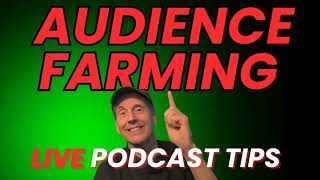
Rob Greenlee breaks down the Audience Farming framework for podcast growth: A/B test titles, thumbnails, and metadata using AI analytics to find what drives clicks. A negative title framing beat a positive one by 42%. Platforms like YouTube already rank by attention metrics, and podcasts will follow.
Chapters
Well, welcome to Podcast Tips. This is episode 64. Uh, time is flying by and episodes keep rolling out every week. So thank you for being here with me tonight. Uh, I appreciate it. My name is Rob Greenlee. You probably see it down in the corner down here. Um, I've been in podcasting for about 20-plus years. And just love sharing, you know, tips and ideas around podcasting. And in this episode tonight, I'm going to have a little bit of fun with this topic of growing your podcast or growing your show as the conversations kind of change around podcasting right now. But this analogy of how to audience farm your podcast. I've spent a few years in my life as a farmer of sorts in a variety of capacities. And so, I thought that this analogy might be a good one as farmers think about how they kind of grow their crops and need to kind of create a growing environment, right? So, as you think about growing an audience in podcasting, it's really not unlike being a farmer of sorts. So, you know, what I'm going to do is really kind of paint the picture tonight of sorts, or, you know, seed the seeds in your garden to help you maybe think about yourself and what you're doing in a little different light. And this also topic kind of flows directly into what we're seeing with the trends about AI and artificial intelligence, and as we look to the future of podcasting and how this upcoming kind of tech is going to potentially have a big impact on podcasting. So in this kind of story and using this farming analogy is really all about audience growth by planting the right seeds around content. And really developing the roots, which are your audience, and nurturing your soil to kind of make sure that you're doing the right things with the platforms and the formats and learning in a fast way using smart tools, data, and AI and testing to ensure that you have the crop yield that you want, which is audience, right? So this concept of farming and what you do with your podcast may seem a little strange to you, but it might be something that we see more of in the future as we see these AI tools roll out with more advanced capabilities that I'm going to talk about, which I believe are coming. And I know some in the industry are already thinking about these topics, maybe not using this analogy of audience farming, but you never know. You know, maybe I'm starting something new here, but this concept, as you can see in the title of the episode, really kind of creating your ROA, which is your return on attention. So as we move into this kind of next era of podcasting, I think this concept of thinking about attention is going to become more important. You know, I think we've gone through this phase of counting downloads, and then some of the platforms have thought about, you know, this concept of audience. And I think we're going to be moving into a kind of a view as we get better data and better metrics and better ways to analyze data around this concept of attention, right? And I'm seeing what's happening in YouTube as a kind of leading edge of this. YouTube is really increasingly rapidly moving towards really focusing on monetization and driving attention to certain content that holds on to people's attention for longer periods of time. And that's typically translated into time spent listening. So, so really what I'm going to do tonight is kind of unpack this concept for modern creators as we see the tools kind of catch up to what the opportunity is here to use a systematic data-driven approach to grow. And we're seeing some creators start to do this. Right now in an increasing way. I keep hearing more all the time around creators that are starting to use what's called a data-driven approach, right, which is iterate, try different things around your artwork, your metadata, your titling, and figure out what works best, right?, right? And what we're starting to do is really take this feedback relationship that we have with our audience increasingly from data and the ability of AI to analyze this kind of process to give us better insights, right? And I would say that the shows that are incorporating as much of this as possible right now are really at the cutting edge. Of where we are around, you know, tips on how to produce your content. You know, I'm going to go into a lot more, a lot more detail here and share some examples. And also, it's, it's really, you know, let's just dive right into it. Yeah, I think the first big element of this is optimizing your first impressions. So, there's a lot of pieces to this puzzle. I don't have a lot of time to go over it tonight, all these different pieces, but leveraging this concept of A/B testing, right? And we're starting to see this come into YouTube. And I believe that we'll see this come into more of the, what's more traditionally seen as AI type of podcast platforms. So that is going to be a very important part of podcasting as we look to the future. So You know, this is a process for testing different ideas, right? And then eventually the AI will be able to also test different ideas to come up with the one that works best, the one that has the best action around titles, around descriptions, which are sometimes a secondary layer to what, what an audience first sees. I think the audience first sees the COVID art thumbnail and the podcast title. And those are the primary drivers of getting people to actually click and engage or start playing something. A lot of the podcasting platforms today, currently today, don't really have the same kind of user behavior. It's usually very much a series level focus. Focus, where what we're seeing is movement in, in the ecosystem of content discovery is a very episode-focused level discovery, right? And if people like the episodes, if people keep going back and watching the episodes and they watch all the way through, they're probably going to get recommendations more frequently for that content. So the pathway to commitment and loyalty, I think over the next year or so, couple years, is gonna be quite different than what it is today. In a lot of ways, it's gonna answer and solve a lot of, you know, the industry's problem with discovery. You know, I think YouTube, unfortunately, many folks don't like what YouTube is doing, but I think what YouTube is doing, if you haven't gone in and looked at their analytics or created a channel over there, I would kind of highly recommend it because you can see maybe what the future looks like. Because really with YouTube, it's the present. It's not even the future, but we are going to see more AI-driven data analysis inside of YouTube based on the inputs that YouTube captures out there around audience behavior, audience attention, And, you know, time spent listening, what's the engagement of the artwork? What's— I mean, they can track all that and they analyze that and they use that as a basis to, you know, help with discovery. So those are big elements. Now, podcasting has a lot of these pieces as well. You know, there's episode thumbnails, but I don't think that those episode thumbnails are as critical to to the consumption side of podcasting as much as YouTube thumbnails are or episode-level art that is in YouTube. So, you know, it's not an equivalency yet, but I do think over time we're going to, you know, content discovery is gonna be driven on these principles because it's already happening and it's proven to work. A lot of people may not like the way it works That's a whole different conversation. And then also being able to analyze if you even have a show logo. A lot of shows that I see don't really have much of a logo. Maybe they have the name of the show or something like that, or it could be the, like on, like with this show, I have Live Podcast Tips. Well, I could very easily make this show the Rob Greenlee Show, right? And it really doesn't have the same kind of you know, kind of genre linkage. But the AI could potentially help us determine based on the activity around a particular title or name of a show to give us better feedback on what will work better or what is underperforming. So, you know, really, you know, I know a lot of people probably dislike this view because being so data-driven really kind of removes the human intuition and the human judgment part of being a content creator. And I think that is one of the things that we're going to be challenged on, right? So how do we kind of accept this fate of sorts, really the inevitability of AI and data capture and real-time data analysis of the performance of various elements of a show, TV show, video show, podcast, audio or video is going to be in front of us and available, whether we like it or not. The choice that we have is do we want to embrace it or do we want to just do it from our gut? Which is like we've always done. I know I've always, as a 20-year podcaster myself and working for lots of podcast hosting platforms and Microsoft and all these, everything was really funneled through this human judgment filter, right? We didn't really get a lot of data. We didn't get a lot of feedback. We didn't get a lot of input around various things that maybe we got wrong. You know, and maybe we did it wrong, maybe we didn't do it wrong. And the question that we have to ask ourselves is, is the audience right or are we right? So, you know, I think that's a big kind of mental adjustment that podcasters are going to be faced with. You know, you can either embrace it or not, but I think it's coming. And your content is going to be judged on these same characteristics in its ability to find audience and to have that return on attention. Right? So I'm going to give you an example here of one process like I'm talking about here that can give you a real snapshot. I'm going to bring it up on the screen here. So you can see what it looks like. And there's a bunch of examples that I'm going to talk about in the next couple minutes. I just wanted to show you one here so you could see what I'm talking about as I kind of talk, talk my way through this. So you have this, this process of A/B testing, right? And it shows an example of the power of one word, right? So let's say that you're working on your episode titles. Right. And this A/B testing capability that we're going to quickly have very soon in many platforms, it's currently, you know, being worked on, I'm pretty sure, on the YouTube platform. But there may be some ways to do this outside of a YouTube platform. You know, even a simple thing like asking ChatGPT or Grok3 or any of these platforms what they think of this as as well. But this case study is focused on— there was two different title versions, version A and version B. The first one was the title, "The Best Marketing Advice You'll Hear This Year," right? That's the title of the episode. And then version B is, "The Worst Marketing Advice You'll Hear This Year." So the only difference between these two titles to an episode or a show is the, is the option of best or worst. So, you know, it's a positive versus a negative, right? Which one of those words connects with people and creates a click, right? These are, uh, what this whole thing that I'm talking about is really all about. So the results of this A/B testing between the best marketing advice you'll hear this year versus the worst marketing advice that you'll hear this year, the worst version saw a 42% higher click-through. So we're talking a lot about here psychology, and it's difficult for us to know these things. In advance, right? So I made like the title to this episode tonight the way I did, you know, audience farming, right? That may not be the best title that I could have used for this episode. Maybe it, it should have been like testing to podcast success or something like that. That may have been so So why did the worst word win out here with a 42% higher click-through rate? That's pretty significant. You know, that's a big increase. So you would probably, if you're trying to, you know, farm for audience, you might wanna use the word worst and not best. So, you know, this is also a moral and ethical struggle too. I mean, what's the moral and ethical position of your podcast? Are you trying to come across as very positive with what you're doing, or are you willing to throw some dirt on there? I think it's actually kind of a funny question, and I think it's very indicative of what we see in the world today. Negativity drives a lot of attention. So that's why, is that the explanation here is negativity bias. So people tend to be attracted more to negative than they are to positive. And that's why we see in the news and we see in political fighting that people always point out the negative. Nobody points out the positive, right? Everybody points out the negative. So they can divide and draw people's attention. So people are wired to avoid loss and danger, right? So this is what I'm talking about. And the best idea of best advice was more curiosity triggered than the best. So I think we all want to strive for being the best. But we all want to avoid being the worst. So it's this, you know, it's an emotional trigger that this testing exposes, right? I think after this episode, you can probably go away and say, well, I'm probably not going to be positive in my titles anymore. I'm going to always play on the negative because I want to grow my audience. That would be the takeaway here. But, uh, but that's just an example of what I'm talking about. Um, and, and there's also examples too, like, um, Netflix did a thumbnail, uh, kind of a strategy analysis and A/B testing as well. Um, and they basically analyzed some thumbnail graphics, and the test found that thumbnails with red or yellow hues— these are color hues— increased engagement by over 20% compared to blue tones versions. All I can say is I'm glad it didn't say green. So I'm not doing any, um, red or yellows. Well, I do have red in here. Red has historically been what a lot of retail signs have, right? So they tend to like if you drive past like a strip mall or something like that and you look off to, to a lot of the signs, you know, the backlit, you know, illuminated signs. I know I had a restaurant many, many years ago and the, the sign maker always recommended the color red because it was able to be seen very quickly and, and it stood out, right? Of course, everybody else had red signs too, so you're drowned in this red sign. But there was always a few stores that chose to use a different color, and my red sign always stood out. So, you know, that's kind of what I've learned over the years is the power of color. So how do you know if the, if the thumbnail or the graphic that you have, that has certain colors in it drives a certain kind of emotional takeaway. Well, you have to test it somehow, and probably even uploading it to ChatGPT and doing an analysis on your, your logo and your idea and asking that question. You know, what, what colors would be more attractive to an audience, you know. Um, you know, there's, there's lots of examples of this. Um, you know, if you think about like, uh, cover art that has muted gray tones to bold reds and blacks invoke more emotion and urgency too. So it's, it's It's interesting. I'm also still glad it doesn't say anything negative about green. So I need to do some analysis on my color selection too, just to see, you know, what's the emotional reaction of green? Since I've really kind of painted that as my show brand. So I think I have some idea of what the green color inspires. I think it's kind of more like natural, organic kind of nature-based, you know, green grass. I think it creates a, you know, kind of a positive impression, but it can also give— and I've seen some color analysis in the past— they can give the impression of naivete, right? Or a person that's green is somebody that's new to something, right? Or maybe I should have made it gray tones with bold reds. Right? Because that is evoking more emotion and urgency. But is it invoking confidence? Well, what, what are the colors that invoke confidence and knowledge and expertise? Those might be better colors. So, you know, trying to play around with these things is also— I think it's important for your show too to actually try and do these things. It's really about psychological responses.. And, and that can attract people to what you're doing. And your show brand and your visual imaging, you know, all has triggers in our brains, uh, in perception, understanding, and really kind of emotional responses that maybe are relatively subconscious. So let me give you another example. Um, MrBeast, I'm sure many of you have heard that, uh, He, he is notorious for doing a lot of testing around everything that he does, not unlike Stephen Bartlett from the Diary of a CEO podcast. He tests like every thumbnail for each video that he does. He creates like 60 versions and he, he tests them. So, and then YouTube has a process inside of each episode publishing process where you can test up to 3 different versions of your thumbnail too. So this whole testing idea is starting to gather steam. It's starting to become more, you know, something that people want to do because people want to optimize everything that they're doing. But what MrBeast did in this particular case study is analyze his thumbnails, just like what I've been talking about. His team consistently tests different facial expressions. So like you can see in my thumbnail, that I, I created for this episode. I've got kind of a look in my face, and I, I, I just made a bunch of different versions of, of me looking different ways. Um, and, and that's kind of what, you know, what I'm playing around with, right? So, and I swap them out. I don't use the same one every time. Um, but what MrBeast has done is he tests each of those facial expressions in his thumbnail And what he's found is that a video with a neutral face that doesn't have much expression on it, right, and versus one that has wide eyes and an open mouth can shift the click action by over 50%. So that's why when you see what's going on on YouTube and you look at the thumbnails on your YouTube wall, you can see a variety of different ones, but you're always gonna see ones that have somebody making a crazy expression, like, you know, like they're amazed at something, whatever. That is a trigger, that's an emotional trigger for someone that sees that, right? And so we're, unfortunately, we're kind of playing a little bit of an emotional manipulation is what we're doing here. And I'm not a huge fan of that, um, actually, but, but I also think that that's, that's what we're increasingly moving into an era, um, and I think it's already here actually. It's— this isn't what I'm telling you tonight, isn't something that's new. This is kind of like if you're fully engulfed in the YouTube ecosystem and you're watching YouTube, you know, instructional videos and stuff like that, a lot of these things are talked about. And MrBeast has talked about it. I've seen him in interviews talking about this very concept. So You know, video podcasters who show faces on YouTube and Spotify have seen better performance of their videos and of their thumbnails. And it's usually around surprise and expressive faces, uh, faces looking directly at the viewer, which I always need to do a much better job, and, and a cleaner background. Better contrast, one that's visible in various sizes, one that's easily understood, and in some ways is complementary to the title, right? Or the thumbnail tells the beginning of the story, the attraction element to what this is, and the title closes the sale to some degree. So you could look at it like that. And, but it, you know, to really come up with a good strategy here, I've heard people say that, that creating the thumbnail and title takes almost equal amount of time as it takes to create the video itself, the content itself. I mean, think about that. I mean, how many podcasters do you know that spent equal amount of time focused on their episode artwork and their title of their episode as they do creating the episode? I would say probably nobody. So I'm not advocating that we all double the amount of effort that we have here, but what, what I am saying is that some of these things, AI will be able to help us test these and optimize these and find the ones that work the best. And, and I think the technology on the back end will be able to quickly test these against incoming audience, and then it will lock in on one that works the best almost, you know, within minutes. And it will continue to grow based on that discovery. So, you know, I think that's, that's what's going on here. And so that's why I wanted to do this episode tonight, is talk about the stuff that I keep hearing over and over and over again. And even audio shows, right? So as we think about the audio side of podcasting, kind of integrating in with this whole video thing, right? And how that's evolving, even expressions and visuals in your Shorts and your videos and your audiograms should test expressive visuals, right? So, you know, there's lots of tools that can help with this., that are coming on the scene. I mean, a lot of it's still very immature, but I'm trying to get you to think about what's coming and think about getting prepared for what the next phase of this, of being a content creator, looks like over the next 6 months. In a lot of, a lot of ways it's already here, but it's just not here in the extent that I think it will be. Very soon. So, and the other part of it too is mapping engagement to content, right? So as we think about these platforms being able to give us feedback on what audience are actually doing when they see our content, you know, it's, you know, AI is gonna be able to help with this too. It's gonna be able to help analyze the data that's coming back from the action around your show. What's the audience engagement? How quickly are they dropping out? You know, and trying to figure out why they're dropping out. And AI's going to be able to map all the incoming data points and give you a quick output, right, around telling us, that engagement story, right? What is the path of an audience member and who's that audience member? And what is the likely reason that maybe the audience consumption changed at some point in the timeline? Now, Apple and Spotify and Google used to offer, you know, this timeline of playback. But I think AI is going to increasingly analyze this stuff. And give you a good kind of readout on what is going on in your show and areas that you can improve. You know, ways that you can maybe restructure episodes, tighten up intros. Maybe you see a rapid drop-off at the beginning, which, you know, I see happening all the time with, with YouTube videos, is that the first, you know, 30 seconds You— it's like a free fall that most, most videos have. And I, I've yet to see a video that starts and then maintains a huge audience right at the beginning throughout the whole episode. Usually there's a drop-off that we can see, but maybe with this testing and this retesting, we can get that line to be people, when they click play, they continue watching. I would say that there's probably many videos out there that have that behavior. They just have done such terrific work at the very beginning of their episodes and their thumbnails that once they got them to the click and the video started playing, it entirely matched from the first, you know, 5 seconds. It completely matched the expectations of the audience. And they were teased. And I'm seeing a lot of the newer YouTube videos from the bigger creators really offering a lot of, you know, teases at the beginning of the episode. Now that's something that podcasters should do too at the beginning of their episode. So there is a lot of crossover here between what a podcaster should do in an audio episode and what you should do in a video episode. An audience wants to be teased about what's coming up, right? And if you can hook them with a, well, I want to know that, right? But they don't give it to you. They don't give you the answer during the intro. They, they tease it and say, you know, something that, that teases you about a particular topic, and then they cut it out. And it's, um, it's a little bit of a manipulation But, and I'm not sure that you always have to do it exactly like that. It comes across as a little, little aggressive where it might be, let's just, let's just tease the really important, you know, takeaways from this episode. Don't give the answer, but just say this is what you're going to learn. This is, this is what we're going to talk about today. These are the topics that are important. So Finding this balance in your podcast and on the video side and the audio side is really important. And I think learning from it in this A/B testing format is an important kind of capability. So analyzing time spent listening leads to better segmentation and hook placement in the content. And then like Apple Podcasts, Spotify Analytics, YouTube retention graphs, things like those type of capabilities can help you get insights into this. But I think that over time, we're going to get that in a consolidated view into like maybe the next generation podcast hosting platforms that could be coming on the scene where we can get this integrated data audio and video into one interface that can give us clear insights and direction about what we can do for our audio and what we can do for our video. So, so that's important. So hang on here, ask your question, post your comment in the comment field, and I want to take a Q&A at the end of the show, which will be coming up pretty quick because I don't have a lot to share tonight. On this concept, and I wanted to get your, your feedback on this too and get your, your thoughts on it. Do you see this coming too? Now, if you're watching this, there's probably a good chance that you, you are doing something with video. I would love to hear your, your thoughts on this, if you agree with me, disagree with me on this concept of where we're going. And, and then also The next part of this too, and, and there's really only a couple more parts here to this story tonight, it's around metadata optimization. I think I've mentioned already about this concept of, of titling of your episodes and things like that, but it also includes other areas too. Titles, descriptions, hashtags, you know, categorization around for reach for the algorithms. Those are all things that need to be tested as well and need to be compared in the results, right? So you can play around with different keywords in the titles, you can play around with different— just like we talked about earlier between best and worst. You can play around with different keywords in your titles and then in your descriptions, in your hashtags, and AI can give you good feedback on that. So, but it needs access to your, the performance of your show before it can give you, you know, very specialized, um, kind of feedback on that. You can get generalized feedback by just using the AI tools that exist today. It'll give you a general idea, you know, and, and so really at the end of the day, audience farming, like I talked about earlier, is really, isn't just a human thing. It's, it's really in some ways cutting us out a little bit is the honest truth. It's really about feeding data and information around performance. And making recommendations that really caters to the machines. Since really the machines or the computers or the servers in this case are actually delivering the content for you and making that available to audiences, I think we're going to increasingly see this happen at the consumption side too. So, just like we're seeing with, with YouTube. YouTube is evaluating your, your show, your metadata, your graphics, all that stuff, and prioritizing it in their discovery process. So if you can, you know, take advantage of the same type of algorithmic tools that YouTube is utilizing, you're more likely to match your show with your audience. So, you know, and I think that's, that's what the future looks like, you know. Um, and to help you understand, you know, what's the best practices around writing show notes. And also, it's not just about descriptions, though, you know, there's two elements, you know. Like I do with this show, I have to write my episode description in advance of doing this live show so I can get it out to all the live streaming platforms. And I could also go in on YouTube and I can revise that description or those show notes after the show's over with and it will update across the board. Now, podcasting has that ability too. I can get in and change the episode thumbnail and I can change the title of the episode. I can change the description in my podcast hosting platform. So, you know, you can do that in YouTube and you can do that in podcasting today. So, But you just need to have a better idea of what to change it to if you want to, or if you need to, or if what you did, uh, wasn't performing the way you would like it to. Maybe it's worth, you know, testing a few things. I'm just not sure that the, the podcast side— and that, that would be like the Apple Podcasts and those platforms— are as effective of taking advantage of those changes and reflecting in the, the, the discovery process in the algorithms. I think that's the big difference between the podcast hosting platforms and YouTube, is that I've seen shows that I've published, you know, like, you know, a couple years ago, I changed the artwork, I changed the description, I changed the title, and the episode, you know, starts picking up audience again. So, you know, but I'm not sure that that's exactly what would happen. And if you changed an episode in your podcast, maybe. I can't really say for definite that it would because the discovery process in podcast doesn't entirely work the same way. But I think in the future it probably will. So kind of Starting to think like this is important. So, and then this is a little bit more of an advanced concept that I'm gonna share with you next, but this concept of letting the AI help you listen to what you're doing. So a lot of the AI platforms right now don't really support the, analytics of, let's say, a full episode of your show. So uploading, let's say, an episode of your podcast and it doing a deep dive, you know, analysis and breakdown of the episode and how it maps to the AI's understanding of the format of what would be a successful episode in your genre. So I would say that that capability is probably coming. That there's increasingly going to be AI tools that will give you listener behavior analysis. Now, that's a little bit of a different topic than what I'm saying. What I was saying is being able to map that listener behavior data via all of the data input sources around listener behavior with your content can actually map that to being able to analyze the audio or video content that you have and give you, let's say, a report back saying, well, these are areas that we found that are weak and that you can improve on. So, you know, improving your format, making some possible adjustments to making a shorter version. I know that the The Descript tool will create what's called a concise version. So, and it will go through and analyze what it thinks are the most important kind of topics, and it will automatically cut your episode down. I've had, let's say, a 40-minute video episode that went through this tool in, in Descript, and it cut it down to, let's say, a 23-minute version. It basically cut it in half. So it cut out a lot of stuff that the AI felt wasn't as important or relevant. So, you know, these are things that we can play around with right now. You know, I think each of us have to decide if those are worth, you know, putting out a different episode or something like that. I think we still have to make our own human judgment on that, but the AI is going to be able to at some point is shuffle stuff around in your content too. Maybe, maybe the topic that you started at the top of the show wasn't the best topic, and it basically took a section that's later in your show and put it at the beginning and created a different flow to the show based on what it learned from the, the, um, the analytics. I don't know if we wanted to do that, but if it does it seamlessly and it does it you know, without much effort and without a noticeable change. I think it will be possible to make adjustments to locations of different topics in an audio and video program with very advanced AI processing. And at the end of the day, it's really, you know, up to us if we want it to do that or not. So, so, and then also using AI tools to segment content, um, delivering shorter or deeper episodes, right? So we're already doing some of this stuff with, um, vertical videos on the short side and the reels and all that stuff. We're already letting AI analyze our content and produce overlays of your transcript visually on the screen. And it's making cuts in the content and making those judgments for all of us. And we're increasingly trusting those choices that AI is making for us. Because you see it every day. People are using, you know, CapCut, or they're using Opus Clips, or they're using the the Shorts vertical video capability in StreamYard or in, you know, Riverside, or, you know, there's any number of platform— Descript does it too. There's lots of platforms that are supporting this, you know, slicing and dicing up our, our long-form content to produce a different form of the content. So these are things that we're living through right now that I think we increasingly have to start thinking that these tools are going to have greater capability as we look to the future. And also, lastly here, really talking about this concept of building feedback loops. And because up to this point, we've mostly had assumptions or guts gut reactions, or we've gotten feedback from maybe one person or a couple people, and, and we have to decide if we want to take that one or two person's advice on what we do with our show, you know. And, and I think increasingly this is going to enable processes to give us audience kind of feedback. And the best feedback, I'll be honest with you, is probably audience feedback that comes from just audience behavior, like I mentioned earlier in the show. I, I think that's going to be the best feedback. But, you know, it's this concept of, you know, create, test, measure, and repeat. And those learnings can, can, you know, domino into future episodes, you know, and create this kind of content lab mentality. Where every episode is a test bed for learning. So, but this concept of building feedback loops is one that's been around podcasting for a long time. You know, it can take the form of somebody sending an email or you putting your email address out there or giving a phone number for people to call to give you feedback or, you know, like what I'm doing tonight. You know, that's what's terrific about doing live is the instantaneous feedback that can happen. From, from people, you know, participating. And so that is a great kind of process to, to learn as well. It's just encouraging the people that are listening or watching you to give you that type of feedback, and you're open to it, and you're not going to have a negative reaction, because all, all feedback to me is good feedback. So I, I never look at anything really as, as overly negative, um, but I know that that's, that's how the world runs, as we just saw earlier in the A/B testing, right? Negative feedback is always, I guess, better. You know, it doesn't really help you very much to get positive feedback, does it really? So, um, it maybe will make you feel better It'll help you, you know, build your ego up, but I don't know that it'll help you be better. So this concept of negativity does have a place in this process. And in embracing— speaking of negativity, kind of embracing this concept of failure with what you're doing and learning from it and getting, getting better because of the failure. And this whole failure fast concept is oftentimes mentioned out there, which gets back to, you know, the reason that we want and should do kind of more testing of this, of the things that we are doing to see what is working and what isn't working and learn from the patterns that we see in audience engagement and what's working and what's not working. You know, and invite listeners, just like I want to invite all of you that are watching me tonight to give me feedback on what you're seeing in, in what I'm doing with this show tonight and what I've done over the last 64 episodes. If you've seen many episodes, if there's things that I can improve on, I want to do that. Um, so creating, uh, feedback channels that scale is really powerful if, if it can happen. A lot of shows struggle to, to create good feedback loops, you know, and comments and community interactions, direct messages. You know, SurveyMonkey is a terrific place to ask audience a question. I, I should do that with this show too. There's a lot of things that I'm talking about in the show that I I haven't done myself with my own show, but I, I know in the back of my head I should be, right? And I think all of us kind of have that challenge as well, is that there's only, only so much you can do in a day, right? And I'm trying to do a lot of other stuff, trying to do consulting, trying to help other people launch shows. And so in a lot of ways, it's difficult for me to do the things that I recommend or the things that I'm thinking about or I'm talking about or I'm sharing on these platforms, um, that I should be doing. And I've oftentimes thought that maybe I need to not do so much podcasting and just focus in on one show. And I may do that, um, where I just focus on doing all these things that I know I should do, right, to make that show successful. So, you know, to get back to this, um, This audience farming concept, uh, it's really two-way communications is what you're really fostering. The, the, the AI is giving you, by analyzing the, the signals that your audience is giving you, is creating that two-way communication back to you. And your soil is rich with the interactivity of, of what you're doing with your show. And, and live is probably at the epitome of this. So, you know, really kind of plugging in here, um, questions into your show, leveraging social polls into YouTube. I know it has that ability. I know LinkedIn has polls. Creating exclusive spaces for core fans. I do have an Adore Network, uh, pod community over on Skool. And so, you know, there's a certain amount of interactivity that's going on over there. Not as much as I want, but, you know, that's as much as I have time for right now. So, and, and how listening at scale is really the new model of content improvement. And that's kind of what this whole episode is about tonight. Is listening at scale, using these AI tools not to create the content, which I think many, many people object to this concept that AI is just gonna create all the content and it's gonna be the best and everybody's gonna listen to the AI content. People aren't gonna like listening to humans. This is a pathway where we use AI to our advantage as a way to listen to your audience, listen to the signals from your audience, and improve based on those signals. And I think that is a great way to look at what I'm talking about tonight, uh, with audience farming and the concepts around AI and testing. And I think that the, the audience farming concepts we've talked tonight, uh, can be a little slow at first. It can be a little difficult to get kind of ramped up, learn those processes, testing various things, understanding how to test that stuff, and, and to make the information or harvest out of that become real and to be really impactful on what you're doing with your show and sustainable, right? You got to make that soil be rich in nutrients. And you have to have the audience rich with the ability to communicate to the roots, which is the show. The roots, and then it grows the flower of the interactivity and the power of the show to impact people's lives and to blossom. So with intentional data use, AI-enhanced feedback, and clear branding, like we had talked about, um, every creator can find their ideal audience and to grow with a really purposeful kind of direction where you have confidence that what you know is actually fact-based and it's reality and it's what is working. That is the future that we're heading into, I think anyway. I'm increasingly starting to think that way. So, and I think that's a positive thing. I'm not thinking that AI is going to be the new Rob Greenlee, that there's going to be some Rob Greenlee AI clone out there that's going to host the show every night, even though that's probably going to be technically possible at some point. I could just write a script and create a video and audio clone of myself and start the stream and just activate the AI. Or, you know, that could be possible in the future. So that's all I got on the content side tonight. So let's shift over, transition over to kind of seeing some of your questions. I've got a few in tonight. Um, uh, looks like, uh, AKA TGIF writes, audience farming made me click to the, to the live show tonight. Or audience farming made me click to watch live. So I guess it was effective what I did tonight because it made people go What is he talking about? Audience farming. Everybody wants audience, and everybody understands the concept of farming, right? Because you're trying to grow something, right? That's the analogy. And it's just, uh, funny that it worked for you. So thank you for the, for the feedback on that. I wasn't sure if people were going to get it or not, to be quite honest with you, but I do have a high appreciation for people's intelligence that they would understand what those two words together might mean. So, so thanks for confirming that. And then, uh, say Malak, uh, Stout, uh, writes, uh, hey brother. Well, thank you for being here. Um, and then it looks like, uh, AKA TGIF, uh, writes, audience farming compel me to watch. Okay, well, I guess that rides along with your prior comment. I appreciate that. And, and it looks like Connie Brown writes, uh, very nice to review feedback loops. Yeah, it is terrific to actually get those, those feedback loops and to hear what people have to say. I mean, I always look forward to it, and I always— I mean, and really inspired that people are willing to take their individual time, which is so precious now, to, to tune into my live show. Because oftentimes in the evening, people are busy with family and dinner and, and other, other commitments, and, you know, don't always have time. What, which is what's so great about this is that, you know, I do get some audience engagement. Um, I've had many episodes that have had hundreds of comments, and then I've really struggled to get them all on the show. And but I also know at the end of the, the day here, this show is available as an audio and video podcast, so anybody can get access to it anytime after the show. I have my own network called adorenetwork.com, so you can find the audio and video podcast versions of this that would be available in, let's say, Apple Podcasts um, or right off of this website. You can play the, the video podcast version of this show right off of Adora Network. Just go find the show. You can just find the, the album art artwork on there, the audio and video version, and you can consume it right there if you want to. So you don't necessarily have to tune into the live show, though sometimes I add elements to the podcast version of the video that don't show up in the live show. So I can actually do, do a little bit more in post-production, uh, than the, the live show itself. So, and then you can also, um, find me. And if you want to reach out to me and give me a little feedback or give me some ideas on what you might want me to cover in this series, I would love to hear it. I would love to hear your frank comments. And if there's any, you know, critical feedback, you know, the worst part is, is always okay too. So I'm always open to that. And, and I'm also on X, x.com, @RobGreenlee. And I'm also on LinkedIn, Instagram, Facebook, and YouTube. So if you happen to be watching this on YouTube or if you're watching this on X, which it's streaming live right now on X as well as LinkedIn as well as Facebook as well as YouTube. So going to all of them and then I get it's recorded on, on StreamYard and I just download the episode and, and do some editing to it and put the audio and video out in, in Blueberry. Podcasting platform that enables audio and video-based RSS distribution. So if you didn't know, this show is also available in Apple Podcasts in video, and then also in Pocket Casts in video. So I've talked to the Pocket Casts folks, and I think that we're going to see an increase in the visibility of video in the podcast ecosystem here soon outside of YouTube. I think that the industry needs to shift in that direction to better compete with YouTube. You know, there's no reason why podcasting can't be video and audio. It's your choice. You can support video, or you can support audio, or you can do both. I'm not trying to say that everybody has to do video. I'm just saying that video is, is becoming an important, uh, medium, and it's really a return to the past because when podcasting started, there's a lot of video. So anyway, well, thank you so much for watching tonight. I'll call it a close at an hour, and I appreciate you being here. It was great to to have you join me, and thank you for all the comments, and would love even more feedback. So I'm gonna strive to try and improve and use these techniques that I talked about tonight in this show. So, um, or we'll see, I may double down and just create one show that I do that I try and take advantage of everything instead of do the, the 3 that I'm doing now and 3 other YouTube shows that I do. So I do a total of 6 different format shows nowadays. So it's, it's, it's a lot, and it's probably too much, and it spreads me too thin, plus trying to help other people. So anyway, well, thank you so much for being here tonight, and I hope you have a wonderful rest of your Thursday evening and have a great weekend. So thank you very much. Good night.
More from Rob

Future-proofing with Delphi AI/Human clones: your podcast as a personal LLM | New Media Show






How sports reveal what AI spectacle gets wrong #Technology #Sports #Commentary



