The BEST time to start Podcasting is NOW ! How?
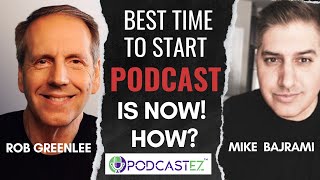
Rob Greenlee and Mike from PodcastEZ explain why now is the right time to start a podcast and walk through the essentials: choosing a format, picking tools like StreamYard and Libsyn, deciding on episode length and cadence, and building an audience. They emphasize consistency and using what you already have.
Chapters
Well, welcome and thank you for joining us on this this little webinar/training video about how to start a podcast. And my name is Rob Greenlee, and I'm the co-founder of PodcastEZ, which is who we're representing today. And I'm excited to have Mike with me, who's a COO and head of production for PodcastEZ. And I think what we want to accomplish, Mike, here is, is it just share a little bit about PodcastEZ. I've been working with the company for quite a while now, and it's just a matter of, you know, letting people in the community know about PodcastEZ a little bit more, and then also to share the expertise that the company has and how we might be able to bring that to agencies and, and people that are looking to start podcasting, as, as you know, you've got a very strong background. So Mike, Welcome to the webinar stream for the first time here. We're actually on a PodcastEasy channel on YouTube right now.
Yes.
So this is all new for all of us getting out and doing that. But as, as many of you that may be watching this, it's, it's not new for me to be doing a live video presentation. So, so, Mike, it's great to be here. So I don't know if you want to share a few words about PodcastEasy, but go ahead.
Yeah, well, just glad to have anyone watching right now. Welcome. And, you know, PodcastEasy is definitely focused on the early stage and mid-stage podcasters. We're really leaning into education around the medium, around especially around starting and building. That is a huge focus for us. And so I'm excited to talk about today the reasons why right now is the best time to start. We're going to get into it.
Yeah, I agree with you. I think that's the general consensus just from my experience. My long history in the medium is that in any kind of a down environment— and this is a hotly debated topic right now— are we really in a down situation or is this really just kind of a resetting of the deck of chairs? I mean, audiences continue to grow. There's new podcasts coming out all the time. It's just there's, I think, more consideration around budgets and investment to make sure that there's a, there's an ROI on this.
Absolutely.
And a focus on driving value. And, and PodcastEZ has a couple of focus areas. So we have like a what's called a Smart Launch kind of tool or service that we offer. I want to talk about that a little bit, Mike.
Yeah, real quick. So Smart Launch is, is absolutely the starting point for the aspiring podcaster. So if this is you and you're really looking to set your foundation, figure out what your show is, who you're appealing to, how to get everything set up, build out all the necessary pieces to your podcast to start, obviously launch it, and then beyond that, continued growth and perspective that you carry, carrying through your, your journey, especially in the early part. You know, Rob, it's like, uh, a lot of people are ready to run, they're ready to go. And then once they actually start hitting record, they realize like, oh, there's, there is something to this. So we don't just focus on the, just get the components and, and we'll figure all the other stuff out later. Yeah. We kind of do in, you know, components where you're learning and doing while you're preparing to get that show off the ground.
Yeah. I think it's important the., you know, all aspects of this. And that's kind of what we want to do in this session today is just kind of share, you know, a relatively quick kind of rundown of, of, um, the A to Zs of kind of starting and building a podcast and, and really focus on trying to stand out, um, in this, you know, fairly competitive podcast, uh, landscape. But a lot of people don't realize that there's not as many active, uh, shows out there. Now when I say active shows, I'm I'm really talking about shows that are actively in production, right? There's a lot of archive shows out there right now. I mean, millions of them that have been around for a very long time that maybe the last episode they produced was like in 2021 or something like that. So your pool of competitors out there is, is a lot smaller than a lot of people realize, but there's a lot of clutter out there too that you have to overcome. So that's why it's so important, your visual presentation and what you're doing with your metadata and all those kinds of things. And we'll get into more details on that. A little bit later. But it's just so important now, and this is such an opportunity because this is, this is like, um, this reminds me of like the 2008-2009 time frame when the last kind of economic kind of adjustment that happened. Um, that's when a lot of the big successful podcasts started, was back in that time frame. And we're kind of in a similar time frame right now.
So yeah, yeah, there's a, there's a leveling taking place which depending on who you are and your perspective, it could actually end up being an opportunity. And that's how I see it is this is a definite opportunity, especially for the new people coming in. Back at that time that you said, Rob, in that 2008-ish area, things are a lot different now. They're a lot more, the bar to entry, you know, those pitfalls, everything, it's definitely a little lower. The thing with, with people having come from 2008 till now is there's a lot that's been learned. There's a lot of opportunity, but people are way more savvy. They're not putting up with the things that maybe kind of slid, you know, by. Video has taken a huge role for a while now, but people are actually acknowledging it now. So that's really great as well. So, you know, we can't approach it the same way we did as like, well, this is an opportunity for me to start and blow up as a podcaster. There, a lot of ways to leverage podcasting for business and so forth, not just to be that, you know, number one show.
Yeah. And also PodcastEasy is working on building a community around their creators and others that want to learn about how to podcast, like it says on the screen, to connect, learn, and grow in this, in this community. So it's a place that you can come to to do that. I know there's lots of communities in the podcasting space right now, but as you think about the, the the level of experience that PodcastEasy has, I think we can really be a help to you in helping you start and grow your show. So, so there's a full dynamic of capabilities that the PodcastEasy platform has to help you. And then we're also trying to work with agencies too. So as you think about branded podcasts or you think about creating shows to support a brand, a corporate brand or a personal brand, this is also an emphasis that the company has that may be helpful to you if you're interested in that type of, type of help. So I don't know if you want to add anything to that, Mike.
That, that you, you nailed it.
I know. OK. It's always good when that happens because it doesn't always happen. So, so let's, let's go ahead and jump down and you can see more of us again and, and start, you know, really, I think that this, this video workshop is really designed for aspiring corporate leaders. Like I mentioned before, brand supporting agencies and podcasters at all levels, you know, and if you— we are working on building this kind of synergistic approach to content production and thinking about creators as a holistic kind of person or brand out there that's looking to do multi-channel type of productions, video as well as audio. And if you're familiar with me, you know that that's my shtick now is trying to talk about this convergence of audio and video and how all these platforms are a huge opportunity for you to get your brand out, get your, build community. And I think that's the big revolution that we're starting to see start to unfold is this concept of community and building communities. Mike, do you have thoughts about community?
I think it's really important. If you really want to appeal to anyone out there and you do have, it's such a role, it's a weird approach when it comes to building a community for an existing, like, piece where you're extending and expanding upon how people connect with you. So if you, if you have a very strong social media presence, but you don't have a podcast, you don't do a lot of maybe video content across any of your channels, podcasting is something where you're going to be able to not just build that brand connection, but also the personal connections with people is going to further cement that that outreach, people are going to get to know you as, you know, a leader within your company or a pivotal part of— maybe you are the company. It's not a team, but maybe you're a solopreneur, an influencer, what have you, or you have a brand that you're really looking to establish that connection with people beyond just your products and your offerings.
No, I think that there's a lot of, um, opportunity to, to treat podcasting almost like a customer service platform as well, you know, helping educate your, your customers or your partners in, in the various aspects of what your product or service might be capable of doing. And the show becomes kind of a solutions offering as well as like maybe a support offering that there can be questions asked. And that leads me to a comment on the question side. Is it feel free to ask questions in your preferred viewing platform, whether it's YouTube or LinkedIn or whatever, and we will see those comments come in and we will be happy to pull them out on the screen and, and answer those questions if you happen to have it. It can be on any particular aspect of podcasting that you might want to ask, because both Mike and I have extensive experience in podcasting and are here to help you. So I think that's the, the key takeaway. And there's no stupid question. It's really, it all gets back to where you're coming from and what your background is. And, and each person has a different kind of preference in how they want to approach this. And that's, we're also very sensitive to that as well. Yes. So you want anything, Mike?
No, that's great. Uh, the, the one-size-fits-all doesn't fit all.
Yeah, we definitely like the custom fit part, right? Right. Yeah. Because everybody's a little different in what they want to do and what their goals are. And I think that takes us into the next phase of this in our discussion is show development and setup. Right.
Which is the beginning.
How do you get started? Right. What's that process? Yeah. Start off, Mike.
Yeah. Yeah. So this is really the genesis part. You've, you've decided you want to do this thing. And so what do you, what do you you've got to find your fitting. Some people have a very clear idea as to what it is you want to talk about. A lot of people that come to us early on, especially there, there's no clarity. And so our initial part when we first talk is we want to get down to what it is you want to talk about. I want to know that idea at that, that blue skies level. Right. And we want to learn about that. We want to figure out what you're trying to say. And I always say this, this is like a tip for you out there if you're thinking about this. Is lean into your profession, your expertise, your, your, the thing that you do in the world. Lean into that because when people come in and they're like, I'm a professional, I'm an expert in ice cream, but I want to do an automotive podcast. I'm kind of learning, you know, maybe there's something there, but if you can talk about it, if you're passionate about that thing and ice cream's your thing, do ice cream., you know, or something adjacent to, to help give you a unique take on something. So, you know, we're gonna find these things out early on. Do you have the bandwidth for something broader? Like, right, Rob, like large scale, or is it, um, is it a co-hosted show? Right? We want to know all of the little pieces. Are you gonna do it solo? Are you doing interviews? And this, uh, Rob comes into that thing where now is that opportunity to be unique, like just doing an interview show, you know, can we maybe put a spin on something where you're really coming in from another angle rather than just being like a personal health, you know, like a guru of some kind where you have other people, you want to leverage their audiences. That's really like old hat. I'll say that. And that's all fine. You know, there's— it's all good. But we, we have a really great opportunity right now to be unique and figure out our unique perspective that we want to share with the world.
And I think one other piece to think about too is that we are in a, in a culture and an era that is very kind of mission-driven. That may be a nice way of putting it. But there is usually purpose behind brands and individuals and companies now that they have. And it's important to figure those things out and align those with your your goals and your purpose for why you're doing the content that you're doing and who are you trying to help. And that's the thing. If you can identify who you're trying to help with the content, then that'll take you a long ways toward coming up with, well, what should that content actually be? It seems so simple, but in some ways it's hard to sometimes piece together because you kind of get caught up in what you see other shows doing and maybe thinking about pulling back a little bit and Well, what, like you just said, Mike, what can we do that's a little unique but yet appealing to who our potential viewer and customer base is?
Right. And, you know, people come in and they're, they're like, okay, we're going to determine who the hosts are. These are things we talk about. Is it you? Is it you and a co-host or whatever it might be? What skills do you have as an aspiring podcaster? That's really important to figure out. What can you leverage? Are you used to public speaking? Are you used to being on camera? Do you have any phobias in that that we might need to work out? You know, you want to do it, but when it comes down to it is another story. And then beyond that, it's how much time per week, per month do you have to dedicate to make sure that this thing builds and maintains momentum?
Yeah, I think that really is a key point. I think a lot of people, and I've run into this with many folks that I've worked with,, that have the greatest plans and the greatest ambition, but no time. But no time. Exactly. Right. And it's, and it's really kind of frustrating because, you know, I've known many people that have said, I've got this podcast, I got the album art, I've got the description, I've got everything. I've created even a trailer, but I'm not quite happy with that. And 6 months later, they still haven't done anything. So, so I think it's really key that you also, that you really align your, your purpose, right? Your own personal purpose plus your brand's purpose. Because then that gives you that motivation that you need to actually follow through with this. Because if you don't, then you could be doing content that is taking you in a different direction from what your purpose is or your goals. So it's so important.
That happens a lot. That happens way more than I think people want. Yeah, way more than we'd like to admit. Uh, what one other little thing too is, um, you know, during this early part when, when I work with, when we as a podcast, EZ, you know, when we work with somebody, this is the part also where we highly advocate here, highly for market research. And when I say market research, you wanna listen, you wanna, you wanna address maybe your competition if there is, you wanna see what they're doing. But it's not just like, oh, is this my idea? Is anybody doing it? People think like, That's the reason you do it. Maybe in part.
Sure.
You wanna see who's doing what. You don't want to be, um, an inadvertent copycat. Is that a thing? You're not copying anybody, but it can happen. You just, right. Yeah. You just didn't know that someone had the exact same format or something like that.
Yeah. Because you didn't do your deep dive into Google or into Apple Podcasts or any of the other, frankly, YouTube. YouTube is a great place to go to find out of what your competition looks like.
Yeah. You always check the platforms, always check YouTube and, and there's some emerging other emerging platforms that are worthy of actually doing your due diligence. And then beyond like just understanding at a core what your, maybe your competition or your market is like, then you want to understand that listener or that viewer. Who are they? What do they love? Are they into the thing that you are, but in what capacity? How old are they? Where do they live? Things you want to know who they are and what kind of things they frequent. If these people are commenting on tons of YouTube videos, as kind of, I don't know, maybe it doesn't connect right now, but to go and see where the interactions are happening, right, Rob? It's, yeah, that's powerful information for you because that tells you, okay, these people are consuming this type of stuff. They're over here. I'm going to become a part. I'm going to become a fixture in this community. And, you know, we can figure out the best ways to communicate and maybe start tapping into that market a little better.—
or from the start, right? Carlos has a good question here too. He says, great point. What is the ideal show kind of frequency, I think is what he's saying, and length? You know, the thing is, is that I'm not sure that there really is an ideal one. I think it depends on what your goals are and what you're trying to do and what you feel comfortable doing is really most important. But it's I do think that there is some trend lines out there around shows that are producing more frequently than even once a week tend to see a little bit faster growth for obvious reasons. You're putting out more content, so you're probably going to have more opportunities to connect with potential viewers and listeners. Yeah. And then length, I think as long as it needs to be, I think is really the key thing to think about when it comes to B, because, you know, you can come up with a bunch of different topics and But you need to feel good that you covered those topics comprehensively. So you feel like that you drove the appropriate value and you didn't just pull the plug on it just because the clock hit 30 minutes. Right.
Right.
And that's kind of how I tend to look at it now. And now that doesn't work for traditional media, but it certainly does for podcast and YouTube type productions. I don't know if you have any more thoughts on that.
Uh, I love the answer, as long as it needs to be. Um, chances are when you think something is right length, it could also be cut down a little bit. I think as you, from where you start and where you're at, somewhere, somewhere I'd say after 20, 30 shows, you're starting to get an idea, uh, an idea of where your audience actually really likes it too. And this is also like ongoing market research. Mm-hmm. It just, it's something that you have to be aware of where you're, you're kind of talking to people and you're figuring out, hey, does this, does an hour work? Do I need an hour to make the point that I'm trying to make with this episode? Or do I need, you know, 15, 20 minutes? It varies. Uh, people are all also hung up on like the day still, like what day should I release it? Whenever you have something to say, but I, I hate the answer consistency, but that, that seems to be like, as long as you have consistent schedule, the day doesn't matter in my opinion.
Rob, do you have any take on that? Yeah, yeah, I definitely have an opinion on this. I think you— there is a certain degree, especially with— it depends on what you're doing. If you're doing live productions, I think consistency of a time and a day helps people build that into their schedules. But if you think about it, if you're only doing prerecorded and it's an on-demand kind of thing, what you're already doing is you're tapping into people's convenience already of when it's, when it's best for them. So they don't have to be somewhere, right, at a certain time or a day. So, but they do need to have some confidence that the episode will be there fairly consistently, you know, you know, consistently, like toward the end of the week or in the beginning of the week or something like that, so they can have a mental orientation towards when they should be looking for a fresh episode from you. So yes, love that. But it doesn't have to be on the same day. It doesn't have— I mean, on the on-demand part, it could be if it comes out on Tuesday, it's okay. If it comes out on Monday, it's okay, that kind of thing. But, but the live stuff, you kind of, you know, which I'm really strict on myself, I, I do everything, you know, on a certain day and a certain time. It's that way every week. So, but it does, does require some compromises, um, to your schedule accommodate that. It's not always easy. I'm always running across conflicts constantly with doing a prefixed time and day of creating content. So nice. It can be difficult. But, um, one thing I did want to talk about really quick, and I know time is going by fast for us, Mike, but, um, the whole debate between audio and video, or audio versus video, right? There's people that would prefer to start with audio, and there's other people that would prefer to start with video, and then there's others that are open to doing both. Now, um, you know, that is— doing both at the same time is not easy, um, and that's kind of where, to some degree, PodcastEZ can help with that to make it a little bit easier, right? Um, yeah, but, but then on the other hand, you know, it's okay to start one or the other. But the, the thing that I found out myself is, is that if you start one or the other, it's easier to just keep doing one or the other. And that's what oftentimes happens. So, and you may be giving up some opportunity on audience growth and audience development by not tapping into all of the diversity of where people are consuming content today.
Yeah, yeah, that's it. That's a really good point. I think if you want to start audio only, by all means, that's valid. There's no reason to not, I mean, but your point about maybe missing opportunity, I would say that's kind of like the number, for me, that would be the number one thing. It's not like you're necessarily missing out on something. However, being, at least having a footprint somewhere in the space and then you can evolve. It doesn't make too much of a difference if you're starting on one or the other. But I would, I would hit because podcast listeners that are just audio podcasts, that's, that's not going away. The importance of that is extremely— it's, it's, it's way up there because these are people who are actually listening. It's a little different when you, when you apply to the video concept of things. Doesn't mean it's like too different, but it's just those worlds operate differently even though they may be side by side and very relatable. I would say, um, definitely lean into both and you, you're just gonna have to work it out as you go. If you're not comfortable with it, if you're not used to recording anything, it, it's a, it's a learning curve regardless. But I think just getting your feet wet, forgetting about it, getting past the, the, you know, the butterflies or whatever it is you think that people are paying pay attention to. I guarantee you they're not. It just, you know, do both. That, that would be my honest view.
And I think it depends on where you're starting from too. If you're starting from a place where you don't really have much of an online presence, um, it's going to be a little bit slower growth pattern that you see. So it's not as critical that you are tremendously worried about mistakes and things that you might do in, in getting started, right?
Yeah.
But if you do have a big following, you have a lot of people that are maybe following you on, on, um, on LinkedIn or, or Facebook or something like that, and you start a show, you might be able to reach a larger group of people. And so you might be a little bit more conscientious about the production quality that you are doing to get started with. So it kind of depends on where you are in that ecosystem. And I do, and I think Mike, you would agree with me that quality— the game has been elevated, right? The quality is so much more important than it was in the early days when I started podcasting, when I was streaming my radio show at 8K, if that tells you anything. So how things have changed, right? Right now I regularly upload, you know, 16 megabyte per second playback video files to YouTube. So you can see how things have kind of evolved into a higher bitrate type of experiences that people expect now.
Yeah, people are more savvy for sure. Savvy listeners, they expect it. So when you do have it, it's unseen. That's the thing. That's the trade-off is you don't get a pat on the back for having, you know, really good production. It's just something that if it's really, if it's really nice, it's pleasant to the eye, to the ear, then hey, no one notices. And then you just go, you know, we've achieved what we were setting out to do. But yeah, at this point, to not have crispy, clean audio, uh, a decent video image, you know what I mean? Like we're there. So people do expect it. Is it absolutely necessary? I don't personally, I don't think so. Yeah, it's just like, what are you really trying to convey to your audience?
Yeah. Is it consumable or is it painful? You know, that's the bar that I have for this. Is the audio listenable? Does it sound reasonable or does it hurt my ears to listen to it? Or is it so irritating I can't stand it? So that's the That's the bar that I set. So, you know, there's a lot of people that will create— and I see this all the time on YouTube, uh, specifically in video podcasts— they'll create a, you know, a series or a program has very basic backgrounds. It's not all fancy like I have behind me, uh, it's just like a, like a plain wall or just, you know, your bedroom or something like that behind it. And I've seen channels that have hundreds of thousands of people listening and watching those programs. So You know, it's not a prerequisite to have, you know, this dynamic background stuff, right? It's really about the content that you're talking about is really what people are tuning in for. Is it relevant to them? Are they interested? Are they going to stick around? And on— if you look at the YouTube algorithms, they— YouTube really cares about play length and play duration. How long are people actually listening? And that's not easy to accomplish, you know, keeping people engaged. And it's like this program, you It's, uh, how do we keep people engaged? Uh, and that's to keep it a little bit entertaining, keep it a little bit moving and changing. It's like I, I'll, I'll zoom in on you, Mike, and, and you smile, and then I'll zoom out and it's me, and then I'll zoom in, you know. And that, that's kind of like eye candy is what we're doing here to some degree. We're keeping people's attention, um, and that's also important. And that's why tools like a StreamYard or whatever are are really, really nice to have because they're, they're easy to use and they create more of a visual experience like the background that we have here and things like that. And that's easy to do. And, and Podcast Easy, uh, is, is using StreamYard and, and to help content creators create terrific shows.
So, so I think, I think StreamYard, it's, it's solid. It's been— it's kind of taken over from, from other platforms because just the ease and the I, it's not ease so much as reliability in, in my view. Uh, we've had issues in post, you know, with a lot of like drift with, uh, sync, you know, for video and audio and yep. You know, when you're trying to get stuff done, especially when you're busy, but as a podcaster, if you're having these issues where your, your dialogue's not in sync with your video and you've never done this and you're doing it all on your own, good luck. You know, that's, that's a really hard thing to overcome.
We got a question here from Carlos. Yeah, from Carlos again, yeah, about live versus recorded. I think it's a terrific question to ask, and it really speaks to a lot of the stuff we've been talking about here is, are you ready to do live? You know, that's a, that's a different skill set to some degree that has to be developed over time and effort. You can jump in, you know, with both feet. And you can use your iPhone or whatever and create some live, live videos on Facebook and LinkedIn and these other platforms to kind of get your, your, you know, get your skills together and how you present on camera. And, and I think those are, those are important things to get started with and learn, because if you— there's nothing like doing it to learn. That's all I can say. And I don't know what you think about it, Mike, on that.
I say, yeah, like the question, live or recorded? Answer, yes, both. It just depends on what you're using it for. So I'm a big proponent for recording, obviously. Yes, record content, record your episodes, make sure you have those. Yes, both actually. And then live stuff, depending on if you're— especially if you're a business, this is where like the diversity of your content that you're creating. So your, your, your main episodes of your, your podcast, but you can also do supplemental targeted content that might be a live, a short livestream that helps kind of like this where we're talking about, uh, some, you know, tips and things around starting a show. But there's also stuff where we're talking about the PodcastEasy, right? And the things that we can help podcasters with. And so if your business is doing this kind of stuff where you have episodes, you, you're gonna repurpose clips in those things. This is all the stuff that we talk about too, by the way, when we're, we're building out your show together. Right? But you can repurpose your content. But then there's that other side. And again, this is also extension. So it's not like you're just gonna only use that and it's gonna be easy. You're gonna have to think about producing those pieces, even if they're just short pieces. You still want to think about what your audience needs that can help maybe drive traffic towards that podcast episode, drive traffic towards an offering that you have, things like that. There's a lot of ways to use live versus recorded.
Yeah. Well, Mike, let's, let's move on and talk a little about kind of the post-production side and how we think about launch and publishing. So these all kind of align together in the same space, right? So we have, we've produced the episode where we've recorded it and we want to launch this. What is the the best steps to take that content through its pathway and then get it ready for launch? I know that there's, you know, we need generally for, especially for audio podcasting, a trailer of sorts, which is like a promo. Yep. Yeah. And but, but actually, you know, you have to set up like a place to host the audio files, like at Ellipsen or, or Podbean or Buzzsprout or any of these any number. And PodcastEZ works with Libsyn, and so we're, we're basically aligned with that. And if you know me, I used to work for Libsyn, so there's a long history. Libsyn was the very first podcast hosting platform to ever exist. They hosted shows to help get launched, like Joe Rogan and those platforms, or those podcasters. And then there's the hosting of the video side too, which is generally being done via YouTube and those kind of places. And then platforms like StreamYard are actually what you can produce the audio and video in and then export those as downloadable media files. And you can, you can still do some post-production on those as well. So what's the philosophy that you have towards kind of that general process, Mike?
What's your thinking? Yeah, so once we move past like that genesis phase of, of getting a show off the ground. Mm-hmm. Uh, the next piece, obviously we, we go through, you know, show, like what your show is, your show structure, how you're gonna arc your episodes. That all, all's been done. But during the process, we also, we record your trailer. We also do, uh, a YouTube channel, uh, teaser video. We used to do video trailers, but I think the way that things have evolved, we're kind of utilizing those, those videos in a different way cuz because it's your channel, especially YouTube won't just be your podcast.
There's an opportunity there for all kinds of— there's gonna be other types of content that you could create around your podcast that maybe aren't just your podcast, right?
Yes, exactly. So that's why we leverage that. And YouTube, the number 2 search engine in the world, and the way that people discover things, YouTube stuff does not disappear into a black hole. It's always discoverable. And so if people are watching your content and they're, they're consuming other things like your content, like your podcast, videos, whatever it is that you're using YouTube for, you're going to start getting suggested more. This— that's how the algorithm works in your favor. So your, your episodes or any kind of content that you have, people might be seeing it 2 years, 3 years, 4 years later, depending on the caliber and the, I would say, relevance of what you're putting out.
Yeah. And I've always I've— my personal experience, even with my own, uh, channel on, on YouTube, is I, I recorded a bunch of videos like 16, 17 years ago, and those have— those over those subsequent years, they've gotten— I've got one video that's had almost a quarter million views, um, and it was just a handheld, uh, cell phone, uh, recording. It wasn't even any kind of big production. Uh, so people really like, um, kind of, you know, this is where the tension that exists in YouTube too around kind of organically produced content, ones that are kind of like not heavily produced or anything like that, as contrasted with other shows that are heavily produced. So you can find success on both ends of that spectrum, which is really interesting to me. Um, but a lot of the archival stuff, uh, yes. That can pick up traction over a subsequent period of time. Yeah. And it's really weird how that works.
I mean, it's great. I think it's a great opportunity for people to have this. It's not a feed, it's a library, right? If you're looking at it as this really huge library of all—
it may be relevant now when it wasn't 20 years ago or 50, right?
And people are always learning things. Whatever you're talking about as a podcast, whatever your thing is, people are searching for that stuff. And just because it might be hot right now doesn't mean it won't be later because people might be learning about that thing that you're talking about. And that's why I love— I mean, honestly, YouTube is great for that stuff and people use different platforms to their strengths and that's absolutely YouTube. And so kind of going back to the kind of that launch part. So we've done the trailers, we've done all that stuff. We know what your show is. You're already practicing, you know, your intro. You kind of got everything down. You know who you are. As a show. From there, we're setting up and establishing that through Libsyn. So your audio host, we need that RSS feed. So we're going to go ahead and publish your trailer. We're going to get all your outlets set up, Spotify, Apple, and so forth, whatever's necessary, Amazon, things like that. We're going to get that video and everything that's relevant for your YouTube channel set up as well. And then your release schedule is where we're starting to look at that during that time where everything is getting approved. We have that, you know, trailer up ready to— whenever you start sounding the alarm, that's there. Then comes episode 1, 2, 3, and so forth. And so there's a different kind of way to approach this. You can just start with one episode and that's your launch. And Rob, this is the thing that I see, this kind of comes in phases throughout the years of, do you launch with just one or do you launch with 3, that because that number has been thrown around for forever. So what do you—
what's your take on that? Oh boy. I mean, I think in the era of the early days of podcasting, when people, when they hit the subscribe button, which isn't even commonly used anymore in podcasting, it was this model of, you know, one episode, you know, you subscribe, you get the episode delivered to your portable device. And downloaded or transferred or whatever word you want to use. When that was important that you just do one at a time. Right. But I think over the last few years, we've kind of migrated into this new era of, of kind of binge consumption of, of content. I think Netflix really started this. Yeah, right. Yeah. Netflix really started this where they publish all their episodes at once. I'm not necessarily advocating that, Purely for the reason that, that maybe, maybe will become obvious to you here in a second, is that, is that you as a content creator may not be as polished as you would like to be able to produce a bunch of episodes up front. And that may not be in your best interest because you may want— you may realize that you are okay with the first one you did, but maybe 2, 3, and 4, you're you're not as happy with and you wind up having to redo them. And I think that's the, that's the real danger of, of doing too many episodes up front. Now I'm okay with if you're really confident in what you're doing with your show and, and you think you're going to stick with it, then, then do a batch of 3 or 4 episodes and get them up there. I think it, it could help your engagement with new audiences to have a good selection of content in your, in your feed or in your content library that they can choose from. So there is an advantage to doing that. So if you feel really confident in the content that you're producing, that it's the format that you want and you're going to stick with it, I think it's okay.
So what's your philosophy? Yeah, that—
mine's always, it depends.
It depends. It's always, it depends. So what do I mean? It's Based on your goals, uh, like you, you already mentioned these things, but it, it depends on like what you're trying to do here. Are you going for something that's an always-on show? So always-on means it's just every, every week, every other week, or every day. I don't know. But, uh, it's just, you're always publishing. So you don't take like seasons where you might do 12 episodes or 20 ep— whatever it might be. And then you take a break and then you do season 2 and, and so forth. So having like these chunks. Like you're saying, and that people are always asking about now, it's funny. It could be beneficial to drop a few if you're doing something that's serialized and that's great. And if it's an always-on show, yeah, it depends. If you're really looking to build like a long-term, your strategy is really about building and supplemental or some kind of monetization, you have your eye on something that correlates, you know, very firmly with your business, and you have broader goals, then maybe just starting off with one is fine. It's really what you wanna do. But again, launching with 3 episodes, that still takes work. You gotta actually do those and get 'em, you know, recorded, edited, so on. You have to have all your properties going. And remember, like with your videos, you're also maybe slapping a little video intro, some motion graphics. There's all this stuff that comes into play that you have to have. So when you drop that, you need to have your work workflow down. Even if you start with 3, 4 episodes, you have to have your production workflow down going forward, whatever that is, right?
And keep in mind too that if you are doing video, uh, and you upload 3 episodes, uh, up to YouTube, uh, you may not be able to go in there and actually update those episodes. Now you can do that, so if you want to make any edits to them, you can do that in the YouTube interface, but you can't upload a new media file to an existing instance in YouTube. So it's a little more difficult to make changes to your episode. Now in podcasting, on the audio side, you can, you can make a change and replace that media file if there are things that you want to change in the content subsequent to publishing a batch of shows. So those are distinctions that you have to really consider and Everything gets so complicated, doesn't it, Mike?
It always does. I mean, you know, once you have everything down and you've got the workflow down, right, and you have a plan— I mean, I can't say it enough, plan. Always have a plan going so you know when things are supposed to be recorded and done. If you work with a company like, uh, with PodcastEasy, then we want to have your assets ahead of time. We don't want you to be on a production treadmill. Treadmill, right? We always talk about the treadmill of, of being a podcaster, and it is a negative thing. People really can't— it's a hard thing to recover from it, meaning you're on a week-to-week, or whenever your release is, you're actually, you're recording it just in time to get it out, and then boom, the clock starts over. And so you, you know, we advocate for doing at least two, and you know, at once. Sometimes people don't have the time for that, but always stack those episodes as much as you can. So when life gets in the way, you have time, you have space. So you know that you have episodes ready to go.
You don't have to worry. Yeah. Are you a fan, Mike, of seasons?
It— yeah, I was gonna say it depends. I wouldn't say I'm a huge fan of it, but I'm not against it. It just really depends on what you're trying to do. If I like seasons because I think most, most early stage podcasters that, especially people that are maybe not super, super early, but kind of stepping into that mid zone, it gives you space. It gives you time off to assess and do the things that'll help, like just sharpen and refine that show up more and more. So I, I, I do like taking time off, especially if you're new, if you have bigger goals, bigger lofty goals. It's, it's nice to take time off. You're going to hit the holidays, right? I mean, this is always a point of contention. So, uh, you have to be organized. So I love seasons for that. And if you can do stuff where you can build out and have all those ready to go so you can really focus on marketing and all the messaging, that's, that's a really cool thing too, right?
It happens. Do you think that there's any issue with, uh, loss of audience?
Between seasons? It's a, yeah, it, I hate that I'm saying it depends, but so that's only if all you're doing is a podcast. That's true. If you're only, yeah. Yeah. If you're only podcasting and you have no other presence, it's gonna be, you have to consider that because yeah, you're gonna be outta sight, outta mind. That's how kind of society works right now. So if you're not doing other things out in the world with your, community that you've been building, like whatever it is, it could be social media, it could be doing Instagram, you know, kind of cataloging your life. Maybe it's your business. It might work against you if you take big times, big chunks of time off with seasons, because if you're not doing that and you don't have that connection, then unless they're really understanding you, you're gonna lose. It's gonna dip.
It's just gonna happen. Yeah, I mean, people are— yeah, I think people, um, will kind of drop off, um, and go subscribe to something else that's being updated. So, you know, my— I, I do a show called The New Media Show with a guy that runs the, the, the Blueberry podcasting platform, and he's always said on the show, and I tend to agree, is that it's okay to do seasons as long as season 1 ends on Friday and season 2 begins on Monday. So there you go. So, you know, it's— there's another way of looking at it, and that's, that's the— if you continue, you can change the seasons, but that doesn't necessarily give you an excuse to take like a 3-month break, right? Right, that's exactly it. Yeah, but it also gives you the opportunity, uh, and It depends on the production. Just like, you know, I think probably the number one word in this whole show is depends. Yeah. Yeah. Is, is it depends on, you know, a lot of big productions like from National Public Radio and, and a lot of those will take those 3 months breaks because the productions are so complicated and so sophisticated and so challenging that they, they have to produce them in bulk and just to save money on it, to coalesce the story, tell the story. And taking a season break is really the only way that they can do that. They can't really produce content at that level every week. So it's also your production cadence too.
Yeah, 100%. That's really the narrative and audio fiction and things like that that are maybe episodic, but they're also, you know, uh, PBS and, and other—
Yeah, but we're not doing those serials generally. It's not, you know, who knows, Podcast EZ could do some productions for those companies at some point, or those—
Yeah, I've, I've done some stuff in the past around, you know, like audio fiction especially, but also, um, just narrative and the production is way more involved. So it is, you know, I don't, I don't see a lot of podcasters doing just solely like narrative much. It's usually companies, people that have that ability to, to do the production and the research and all the things that the writing— that, that's a lot.
And I do think that doing like kind of a hybrid, you know, kind of hybrid, a little bit of that and a little bit of the organic stuff is good too. And I can see a lot of brands maybe having an interest in having a narrative type of a—
of a—
absolutely. As well. We've seen that, um, fairly successfully with like the Trader Joe's podcast is a good example of a kind of a narrative format, um, that has achieved tremendous success, um, in that type of format. But they are expensive to produce. It's not an easy production. So kind of like creating like a TV series or something. Yeah, exactly.
It's the same kind of quality, a lot of detail. Yeah, especially, and you're only what, 6 episodes, 8 episodes, depending on your show, that could take you up to a year just to, to produce that season or that series if it's just a one-off. Yeah. So yeah, I, I like the hybrid approach. It's, it's accessible, I think, like you said, to companies, but also independent creators as well. People that really have some broad backgrounds can really do some unique stuff. I think there's an open opportunity for that right now.
And I think that there is a way to do kind of narrative in a more organic way. I think if you're organized about it going into the production, using tools that are flexible to make it easy to get the recordings, I think is also a key thing. And increasingly we're seeing technology come out in the market that is enabling that to be possible now when maybe it wasn't in the past. Yeah. I don't know if we wanna talk about, you know, on the post-production side, we're gonna talk about show notes. Episode titling, thumbnails, um, episode-level art. Uh, I don't know that we talked a lot about, um, series-level art, um, like the square cover art images and things like that and the importance of that.
But yeah, I mean, um, to bake it all together, I— those things are really important.
However, there's a caveat as well, right?
Of course, it depends. Yes, it depends. My biggest thing here, I think people care way— starting out, people care way too much about the artwork.
Way too much. Well, it's like a billboard, right?
To some degree, it's a billboard. I'm not saying it's unimportant, but I think they get caught up and it just— I'm not happy with it. I'm not happy.
This is— yes, it's so like YouTube thumbnails. It's, it's like an art form now, right? It's like People are like making videos on YouTube about how to create thumbnails now.
It's like this whole kind of magic formula. Yeah, yeah. It's, it's, it's like I said, it's something that people get hung up on. It's important. I would just say less is more. That's my advice when it comes to artwork, especially like music choices. Like the way people utilize music in podcasts has changed. Yeah. And I think it's a slow curve. I think people are slowly catching on that you don't have to have very elaborate big things going on and very loud music. That's kind of early podcasting. If that's your brand, by all means, there's a lot of new ways to do stuff. So artwork, especially like episode level. I mean, what do you see a lot of people utilizing that? I know that people do, but again, I think people that just want it to kind of have like this efficient kind of process, they're, they're probably not working on extra artwork for different areas.
So I don't know. What do you think? Yeah, I would say, uh, probably prior to maybe 2 or 3 months ago, um, it really wasn't much of a thing to do. Um, the, the truth of the matter is, is that Apple has had episode-level art in their spec on their namespace for RSS forever, and they, they never even supported their own tags in their own namespace. So, um, so the visibility of episode-level art, um, is only something that Apple has supported in their app, uh, just in the last few months. So interesting. So we're seeing more people embrace episode-level art because of that change. If you start thinking about just the the prominence of Apple Podcasts and the importance of the medium and the opportunity of it. So if you pull up a podcast now in your mobile app for iOS, it— and you pull up a podcast, the default image that's going to show when you play the episode is going to be the episode-level art now.
Well, that makes sense. I've seen that actually, and that kind of turns it into how people kind of work with things like YouTube. It's the same kind of concept. Where you have your main thing, but then each thing has its own, unless you don't want that to have that episode-level artwork. It just defaults back to the normal artwork. I, I could see that being really useful for, for that purpose. It's gonna, it's gonna be the eye-catching part. I, I think that that's kind of missing in the audio experience. Mm-hmm. Other than, you know, the titles are really what sh— you know, people should grab. And there's a huge debate even with titles. Like how people should structure those, right? Episode numbers in your titles. Like, this is such a, uh, it's a debate that's again kind of popped back up. I don't know what, if you've been seeing it, but I've seen it again.
And it's funny, it really does depend. Yeah, it's a constant, uh, kind of, uh, debate back and forth about that. And I think it depends on the capabilities that you have from an art standpoint. I know I have a subscription to Canva, and that, that does give you the opportunity to have this huge catalog of, um, of template artwork, uh, for podcasting very specifically. And so that can enable you to do some creative things, uh, with that episode-level art. And then, but you can really get caught up into that and spend a lot of time with that. So it needs to be something that is important to you to do to drive your message. I don't know if there's a lot of research that shows that it generates, you know, more audience or better engagement in your audience. I don't know that that's really true, but I don't know.
I don't know either. I think one piece of advice when it comes to artwork, because this is something that we deal with a lot, is, you know, the, um, if you're gonna have a picture of yourself in it, right? This is, this is always a debate. Do I want to just not have myself or do I? If you're a personality, if this is kind of the thing that's you're going towards and people are going to know you or they do know you, you're notable in that sense, I would say definitely throw yourself in your artwork. Makes sense. Um, if you're less known, if it's really not about you, maybe you're the expert it's always okay to just use, you know, illustration and text, you know, your, the name of your show. I think like the, the tried and true is, tried and true is legibility. Like make sure people can read it at a small size. And wherever people can see that, again, it is kind of like your calling card, right? That's the first thing people see. It doesn't have to be wild. It's just that the color is pleasing and I can read that. From a distance and see that. Yeah, I'm not going to really see like, who's that? Like, I'm going to see the name, maybe a picture of you depending who you are. If you're a star, great.
But, you know, most podcasters are. Yeah. And I'm seeing more podcasters start to generate episode-level art by using ChatGPT-4.
I've seen that actually. Yeah.
Either Midjourney and DALL-E for sure.
Yeah.
So I mean, it's easy to do it that way. I think you have to create a good prompt and test it and try it over and over again. You know, ChatGPT-4 still, you know, it's really ironic because it's what they call a large language model and it's all based on text and words, but it's a terrible speller when it comes to creating images.
It's not good with text. It is— DALL-E, Midjourney as well.
Is not the best with it. It's gotten better.
Constantly misspelling words. Still not good with hands.
You know, that's right.
It can have like 6 fingers, 2 arm, 3 arms. Oh, it has 2, 3 arms, some leg that just—
it's strange. Yeah, it comes out on the side here somewhere, right?
Yeah, yeah. But again, don't go wild. It's— you don't have to have all the extras. You can, you can ease into that as you scale, which I always say. Don't give yourself more work than you need in the beginning. Just get it, get your foundation set, and then you start building.
Well, Mike, in the last few minutes, because I think we were wanting to wrap this up within an hour, but let's talk a little bit about distribution. I think we've touched on it a little bit, but monetization and engagement. And I don't know if we need to talk about engagement. I think that comes from having great content in there. But really, I think to talk about, you know, growing your platforms over time and how much time you have to invest into building distribution and being able to manage distribution and to, you know, any philosophies that you have. And then also kind of, you know, and how this dovetails into, let's say, a marketing plan or a plan for how you're gonna grow your show and what that outreach might look like. What's the scope of it? And that sometimes goes a little bit beyond the scope of PodcastEZ, but I do, we do have a component that we work with some clients that wanna build that capability out and to get ideas on what to do. But if you wanted to share some stuff, Mike, on your philosophy around that monetization and distribution.
Sure. Um, well, we, we touched on distribution quite, quite a bit, I guess, from that basic level. But, right, uh, the consistency aspect of it— if you're not doing that right and you have that and you're building up that body of work, right, you're not building up your podcast, you're not reinforcing your, your footprint in the social media landscape, or even in, in the real world for that matter, right, then monetization is going to be— it's going to be that that thing way off in the distance that gets smaller and it's, it's, that's going to get harder to get to. That all said, monetization, there are a lot of new strategies. You don't need to lean on some of the old stuff that's been like, hey, I'm going to get sponsors. I'm just going to, you know, hedge on ad revenue. These are all good things that you can leverage, but you have to have that listenership and viewership and to monetize a YouTube channel that takes work, right? To monetize any video platform takes some work. So if you're already selling something, if you already have something that you've monetized, you've made a dollar for on the internet somewhere or in the real world, and you have services that are valuable to people, this is the, the, I'd say the, the easiest way to bridge into a monetization strategy. This is something that happens quicker than just building that audience for your podcast. I think, Rob, you might feel the same way about that, or I'm not sure, but this is a very, a very good time for monetization. Now, again, if you're just starting from zero, you really don't know what you're doing. You don't, you don't really have stuff to monetize. You're not really doing this with a business, then you're, you're kind of, I would say, a little limited, but that's where you're building up your persona and you're really building up yourself as a media personality, a podcaster. In, I think, the truer sense of what it's been up till now. But yeah, for those businesses that are leveraging the medium, you can sell without selling. And that's the beauty of podcasts. You're building that connection with people. You're showing yourself as not just a brand, as a company, but you're able to like leverage the things that make your company and everything, that brand, that voice. So that connection is vital. Events, products, services, you name it. You don't have to pitch it all the time. This is a really powerful place, especially if you're building all that trust. Rob, you talk about trust a lot. Yeah. And if you have that built up with people and they like you for you, they listen because they actually want to listen to what you're talking about. You might have guests, but they're not just there for the guest, right? Well, you want them coming for you, the host, really. You want them ultimately. That is deal. It doesn't always happen. I know some people just do interview shows and that's all good. But if you're able to sell things like you might have books, there's so many ways to leverage your platform and people, you know, they're just going to get more comfortable with you. And if you have something for them and it's not like this big, I'm going to pitch them right from day one. Again, this all takes time to build. And that's something we really lean into at PodcastEasy. All of this stuff takes time.
Even if you were some kind of celebrity, you still have to build it out. And just because you're a celebrity doesn't mean it's going to work.
Yeah.
Um, and I think these, these format question is, is a good one too, because there's all sorts of different formats. I mean, I'm a big fan of this kind of this combo model of solo and conversational programs, right? So you basically you could conceivably do 2 episodes a week, potentially one as a solo episode and one as a conversational program with another person or a group of other people that adds greater context. But by doing the solo show, you're basically making a direct connection with audience that you have. And I know I, I've, I've worked with a couple of podcasters here that are playing around with that. That format, and it seems to be working really well for them. Yeah, where they, they can share their thoughts in maybe a shorter episode earlier in the week, and then later in the week they have a conversation with somebody that is able to expand on that maybe similar topic.
That's, that's really cool. That's— I, I really like that. That's kind of flip-flopped. I'm on another project, we're doing a podcast, right? And then we're taking points from that podcast. Uh, it, it's like a, a, a conversation. It's not necessarily a livestream, but it's a conversation. And then we're taking the points from that and not just repurposing, but also expanding on thoughts in different content. Right. And so it's another way of utilizing that is like, there's so many ways, but livestream in like to accompany what you're doing with your show, I think that's It's, it's a really nice thing. And, and again, it just takes getting used to building up that audience time and time again.
It's being there. It's being there really consistently and being open to connecting with people. You know, like, it— that's what has me so busy these days is just, just the incoming of people wanting to connect and share information and network and that kind of stuff does take time, but it also pays off in the long run because what you're building is community and you're building connections with people, and that's really what your podcast should be all about. Yeah, and that's where I've gotten the most benefit from it, is just the network building ability that it, it offers. So, well, Mike, is there anything else that you wanted to share from a PodcastEasy perspective? Perspective tonight? I, I know we're kind of, uh, at the top of the hour and—
yeah, no, this is— this has been good talk. I, I think, um, there, there are a lot of things within that early part of the development, building it out, and launching your show. And we love working with podcasters that are in that stage. And, um, we could honestly talk about it because there's so many ways to go off. Oh yeah. But, but, uh, you know, we, we do it very structured over a course of, I believe it's 8 weeks now. Yeah, I could be wrong, but 8 weeks. And the Smart Launch, I believe, is a really great springboard for podcasters that are really dedicated to getting off the ground this year. And right now, it's— there's so much opportunity.
So, you know, I agree. And, and maybe, Mike, you and I should probably do a an episode like this maybe once a month or something like that, potentially. Uh, you know, we haven't made any firm plans, but if, if, uh, if you would like to see us do that, uh, let us know. Um, you know, I can be reached, uh, here's my email address, and then, uh, here's Mike. I'm sure we would love to hear from you, uh, if you wanted to reach out and make contact and, and maybe just chat a little bit about a podcast that you maybe have in mind and, and maybe we can give you some ideas on, on how PodcastEasy might be able to help you with that. So I think it would be an interesting conversation for you to have, and I think we're open to speaking with, with folks about helping them get started.
So. Right. Absolutely. And also one last thing about the Podcast Creator Circle, that's our community. You already, you shared it earlier, Rob, but it's on our website. You'll be able to see that right there. But that is going to be a really great place for you all to go. And we're just getting it off the ground. So we, you know, if you go there, there might be a free month there. There's definitely a way to get in there. We're going to be building out content that's very exclusive to the group. And we will be holding exclusive exclusive live streams there where we'll dig into a specific topic and do lots of Q&As and things like that for people.
Yeah, that's awesome, Mike. And obviously I'm going to be over there too, participating and contributing to the conversation and seeing if we can build more connections in the podcast community for PodcastEasy. And that's the goal here. So, Mike, Thank you so much. Thanks for, for joining me on the live stream here. It's always, it's always fun. This is my 4th live stream this week, so, um, but I, I enjoy it so much. I mean, I, I enjoyed connecting with people and, and sharing ideas and learning from other people too. And it looks like we got a comment from someone here, uh, question from Live Podcast Media. Say, in, in your opinion, what's your easiest and fastest way to monetize your podcast if you start from zero?
Wow. Wow. Well, again, I don't know what the podcast would be about. Depending on what your show is, the— this would be the way I've seen because I worked with a company not too long ago out in Arizona. It's some years ago. Where we did, we monetized shows before they even launched. And it wasn't because of inv— I mean, you could look at it as, yeah, but it was selling ad space. Uh, it was selling ads. It was selling also space for those sponsors to come in and be on the podcast. It was for local stuff. So it was, it was a very open kind of format that would've, that was the easiest and it was not easy.
It was a lot of work. So, so having, um, EZ in our name, uh, at Podcast EZ, are we implying that podcasting is easy, or are we just implying that we're able to help it become easier, less cumbersome?
For sure. Yes, easier on them. But, but yes, that would be, um, kind of like the way I would say is maybe it's, it's getting a sponsor that will help you at least get from month to month to start off, but you know, you have to make sure now you have a responsibility to yourself to keep that going.
Yeah, there's a lot of ways, people, there's a lot of ways to do it these days.
Sure, there's premium plus the ad rolls and everything. There's a lot of stuff that—
yeah, Patreon especially. Value for value from Podcasting 2.0 project, which I just enabled on a couple of new podcasts that I'm kicking off here since So it's, it's being able to exchange satoshis linked to Bitcoin.
So there's all sorts of interesting things going on around monetization these days, that's for sure. But if you want to do it right, this is the thing. If you want to do it where it's a way that you can monetize, like you can right away, right? It doesn't give you a ton of extra work to— I would say go the more traditional route. Try to get yourself in into the rotation for ads.
Again, that you have to meet qualifications for that first. There's programmatic advertising that's increasingly becoming possible where you set insertion points in your content and the ads just come flying in.
You don't have to do anything, right? And if you are really— if you're really good at communicating what your show's about, you got yourself a nice one-sheet, you know what your goals are, you know your statistics, and you could talk about it, you know, just right off the, off the cuff,, then I would say go after, have a little pitch, you know, for potential sponsors. That's always an option.
It's just that it's not easy to do.
Yeah, it's not.
So you are very much responsible then to deliver. Go out there and pot it up. Yeah. You see that on my shirt.
So, all right. All right. Well, I hope that, I hope that answered a little bit.
Yeah. Yeah. I think so too. Thanks, Mike. And, and thanks everybody for joining us and definitely definitely go check out PodcastEasy, the website here, and, and just read through it. And if you wanted to send us a message and, and give us any, any feedback and set up a call or a meeting, we'd be happy to, to speak with you. So, well, Mike, good night. Thank you very much, everybody, for joining here. It looks like we had a, you know, we had a regular audience that came through and watched us tonight. But this is our first piece of content that we put up on YouTube, on our YouTube channel. So it's a great place to start.
Onward and upward. Yeah. All right. All right, thanks everyone.
Have a great evening.
More from Rob

Future-proofing with Delphi AI/Human clones: your podcast as a personal LLM | New Media Show






How sports reveal what AI spectacle gets wrong #Technology #Sports #Commentary



