The Listening Skill Nobody's Talking About
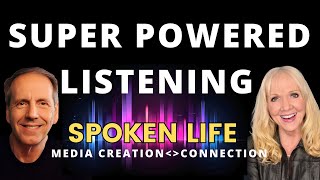
Terry Lewinowski, founder of Soulful Listening, explains why deep listening matters more than ever. Over half of Americans experience chronic loneliness, with health impacts matching fifteen cigarettes a day. She breaks down a five-part framework for listening that includes presence, breath work, and genuine attention to recalibrate your nervous system.
Chapters
Well, it's great to be here today with you, and my name is Rob Greenlee, and thank you for joining, uh, listening or watching today. The Spoken Life program that I've been doing off and on for, for a few years is really focused on exploring the experience and the layers around how humans communicate with each other and how they are taking that to a digital realm with podcasting and online media, and how we need to kind of take it back to a more fundamental orientation around human story and think of people that are listening to you and what they may be thinking and how you think of yourself and maybe spend a little more time listening is what the focus of this show today is. And if you wanted to find this, this program, you can go to adorenetwork.com. You can get access to all the past episodes and then some of the other programs that I do also. But today I have a very special guest. You can kind of see her off to the corner here, but I'm going to bring her to the stage here in a minute. We're going to be talking to, like I said, a very special guest that's going to talk about the hidden powers of listening. And this is a very important aspect of being an online creator or just as a human in the world today. Terry Lewinowski is the founder of Soulful Listening. So she's with me today and is a heart-centered communications visionary who really inspires people worldwide through her speaking and her guesting on podcasts. And she did a TEDx talk as well. I wanted to play that for you, and that'll kind of set the stage for where our conversation will meander to today. So let me play that now for you.
Who listens to you? How do you feel when you're not heard? Like when someone fixates on their phone, not you. How does that make you feel? Lonely? Resentful? Yet when someone listens to you with so much presence, the world fades away and it's just the two of you deeply connected. How do you feel then? Uplifted? Being heard in this way is powerful because we are hardwired to thrive when we feel seen and heard and supported by others, period. I longed for this in my own life.
So, Terry, you mentioned in your bio that you were inspired by your grandmother. And I'm curious to hear your, your story about that and what you learned from listening to her.
Oh, thank you, Rob. It's such a pleasure to be here. And whenever I'm asked about my Grandma Helga, it makes me kind of light up. She was such a gift to me. And I grew up in a small country town in Auburn, Nebraska. Population about 3,000, and I grew up on the second floor of a stately mansion. And when I say second floor, the reason for that is my family had converted the first floor into a bustling restaurant with banging and clanging and late-night bar crowds beneath my bedroom every night. And again, from 3 years old on, that was my life. And what I wanted more than anything, without even being able to name it, was to feel seen and heard. And I had kind of a quieter temperament, and I could not receive that kind of connection and listening from my immediate family. They were really, um, I don't know, all encompassed with running the business, and they kind of turned to alcohol for their solace. But fortunately, there was one person that I could turn to, and that was my Grandma Helga. And in her presence, we were in a safe, warm, delicious bubble. And she was a woman ahead of her time. She was successful in business, resilient, twice widowed, well-read, creative. And when you were with her, you felt the presence of purpose. You felt the presence of being seen and heard in a deep, deep way. And our relationship was important throughout my lifetime. Especially after a high school conversation with my guidance counselor. It's the one of those times where you go in and you discover what's next. And what he said to me was, Terry, you're a small-town girl. You get lost in a big city. Your best bet was to go to secretarial school and work for your family restaurant. Well, that was a death sentence for my spirit. So after a couple of sleepless nights, I turned to Grandma Helga, shared the story with her. She presenced herself, and then she spoke possibility into me when she said, "Terri, look at all I've done without education. Think of what you can do with it." And in that moment, the trajectory of my life shifted forever, and I went on to earn a master's degree and accomplish, you know, a lot of things, including guiding human-centered design teams to showcase workforce innovations at the White House twice. And all of this was possible because of one person and this really, really important conversation, a soulful conversation. And although I— Grandma Helga did not provide financial support, her emotional support made it possible for me to go on and live a life of possibilities. And when I was working with the human-centered design teams, and I had mentioned going to the White House, I realized how important empathy was. And at the core of human-centered design is empathy, and that's what is used to kind of flip programs on their ear and provide services to customers on kind of a heightened level. Yet I realized there were major missing pieces beyond empathy in how we learned to communicate. And so I saw how important this was and how there was such a breakdown in communication. And at that time, I'd reviewed some research and it indicated over half of the American population was lonely. Half. And the health implications of loneliness is equivalent to smoking 15 cigarettes a day, with health risks exceeding those of obesity. And so this broke my heart. I mean, I wept. And so I turned inward and I questioned, what is it? What is it that makes me different? What is it that I have been blessed with along the way? And out of that emerged what is now known as Soulful Listening, which has 5 simple elements that when woven together and repeated embed integrity and confidence within relationships and help us to connect on a deeper level.
Yeah, yeah, talking is so much— seems like so much connected to having a basis of listening. And so, but most really kind of automatically start to think more about the talking part, right? They're always thinking about what they're going to say next, right? Or, and they don't really listen to what the other person is actually saying and comprehending it. And it's a challenge for online media creators. It's a challenge for really anyone just in daily life because a lot of people just, and it's probably safe to say that most people, they're, they're very kind of self-focused, very much wanting to express themselves, and the listening part sometimes takes a little bit of a back seat. So what's your comment to people about how they need to reprioritize and make that change? What do they have to do internally to to really make that change?
Oh, that's such a rich question. And I think maybe helping listeners to understand kind of the framework of Soulful Listening would be a good starting point. And so the 5 elements include— the first element is self-care. And rarely do we hear the direct connection between high-quality self-care and high-quality communication being made, but it is the cornerstone. And it's, it's more than a bubble bath, although for some people it can include that. It also includes how are we talking to ourselves? What is that loop that's going on inside? What kind of nutrition are we putting into our bodies? Are we moving our bodies? Are we getting some activity going on? And also it includes Healthy boundaries, you know, setting healthy boundaries. We need to do that to really connect with ourselves and to connect with others. And then a higher degree of emotional intelligence, you know, how are we self-regulating, how we respond to a situation or someone in front of us. So self-care, when we take care of ourselves, when we meet our fundamental needs, and when we, you know, take good care of those things that I just mentioned, we really are set up for the second element of Soulful Listening, which is becoming fully present. Imagine we've all been in situations where we can almost see that bubble above a person's head with a list of things they're thinking about. We feel it.
We're so focused now as a culture and society in multitasking at all times, right? With their mobile phones or their devices or just distractions. And people have a hard time really, I think, focusing now. And I think focusing is— I mean, should we be thinking about this concept of focus on one thing, focus on one thing at a time, focus on what's in front of you versus what's on a screen that you're flipping through? So what's your thoughts on all that?
Right. You know, to become present, you know, we bring a quality of grace into our interactions when we are fully present. And people can feel it. You would think that, oh, everybody can do that. Not so. Not so. We notice that when somebody really is tuning in, when they're listening to us, when they are present, when they have pushed aside the distractions for that moment. It's not to say that, that we can always be singularly focused. I don't know if if we could do that all the time. But when we're in the middle of a high-stakes conversation, it serves everybody in that conversation to really, really be present. Because when we hold that space for another person to express themselves, when we're really listening, what it does is it allows the space for a person to tap into their higher reasoning. Right? Yeah. Yeah. And so that's where the richness of solutions can be, can be unveiled.
Yeah, yeah, it does, uh, seem like that a certain amount of what we're talking about here is a little bit of, um, a focus more on self-interest. And I think our society has shifted a little bit more towards kind of like a selfish type of orientation in our, our lives. And that may come from just the issue that we all have now around, you know, a feeling of lack in our lives and And I don't know, I mean, what's the way, or is this not really something that can entirely be fixed, but people can make incremental adjustments to? And I think it really gets back to some of those issues you were talking about, about lifestyle, health, and getting probably enough rest, getting some nutrition, because some of these these behavioral patterns that we are seeing are definitely linked up with overstimulation and the constant need for a dopamine fix by, you know, going to this, you know, this new kind of app on your phone or always be, you know, it's— I think all of us have this challenge in our lives, and focus is definitely, you know, linked up with that.
Yeah. And so, you know, I'm a big proponent. You had mentioned incremental. I'm a big proponent of start now, start small. I kind of coined that in a book that I'm writing. Start now, start small. And so what, what may apply right here would be take a couple of breaths, take a couple of intentional breaths, and we could even do that right now. So we're gonna take 3 breaths. We're gonna exhale all the way first, and then we're gonna inhale to the count of 4 and exhale to the count of 6. There's a reason that we do that. I don't need to go into the psychological principles behind that, but we're gonna do it. So let's go ahead and exhale all the way. Inhale to the count of 4. 1, 2, 3, 4.
Hold.
Exhale. 1, 2, 3, 4, 5, 6. Again. In, 2, 3, 4, hold. Out, 2, 3, 4, 5, 6. And the final time, in and exhale.
Yeah.
Yes. Yeah. Notice how your body feels now.
Yeah, it feels a little less kind of tense, tense, and less kind of like You know, being able to focus is helpful, and I think doing that helps you focus a little bit more and get a little more calmer. Right. Calmness may be the key here. If people are always, you know, wound up or focused on, you know, that next thing, that next thing, that next thing, it's almost like a nervous energy of sorts that can that can, I think, cause people to not listen, I think.
Of course. And then when we're in that kind of a state, we're kind of in fight flight and our autonomic nervous system is just almost haywire. But when we take these breaths, we can kind of recalibrate a little bit and get more in our bodies and have access to more that we are all about. And so when we take care of ourselves through self-care, when we become fully present, it tees us up for the third element of Soulful Listening, which is quantum listening.
Ah, quantum. Well, that sounds very, very high-tech, Terry. That's good. It's like another form of quantum computing or something. Yeah.
Well, I'm going to break it down. So if active listening and empathy had a love child, It would be this element. So it's where we listen with every fiber of our being through all our 5 senses. And then we pay attention to things that maybe aren't part of the 5 senses. We may pick up on the tone of a person. We may just incorporate our history with that person. You know, when this happens, this is what this means. And so when we, when we connect with a person and we listen in this quantum listening way, we often gain insights into how we might be helpful to another.
Yeah, yeah, I think that makes, um, I think that makes a lot of sense. I think that there's, you know, it just gets back to slowing down and focusing again. You know, I grew up, and maybe you did too, to some degree, before we've had all these, all these computing devices and all these things that were constant distractions on our attention. And I do remember a time when that was more normal, right? Um, yeah, because there weren't all these distractions in our lives that were pulling, pulling our attention here and there and all that kind of stuff. And, you know, even, even creating content like, like we are today, you know, trying to juggle a lot of things, um, and, and to stay focused on being able to listen, that's something that takes a skill that you have to learn. You know, it's being able to multitask in your mind when it's important, but yet still keep listening. And that's a hard skill for some people to actually learn.
Right. And again, I'm going to say this, start now, start small. Yeah. You know, just try it out. Have a conversation with somebody. And notice how that conversation unfolds differently than maybe it would have in the past. You know, and enter the conversation with a sense of openness and curiosity and maybe with a couple of high-quality questions in your back pocket, as opposed to playing out both sides of the conversation before you even get to that moment. And in the past, that may have sounded like, oh, he'll say this, I'll say that, it's going to end like this. Which is so limiting. What if we can take a step back and just hold that space for the conversation to unfold?
Yeah, and I've oftentimes had this experience where I've been with like maybe a retired person, an older person over the years, and they have just wanted to talk my ear off, right? Just tell me everything about their lives. Tell me all these stories. And I know that there's a lot of people out there, especially after the pandemic year, that are hungry for connection to others. And I do think as you get older in life, you kind of lose some of those connections that you had maybe more so when you were younger. And, you know, and it's probably safe to say that a large proportion of the population is like— I think you mentioned this earlier in our conversation— are just lonely and need to talk. But there's got to be somebody there to listen to. So, you know, that's the hard part about this.
That's true. And there, there is such power in listening because within a conversation in which you do feel heard, there's a bonding that happens, you know, like in the workplace, you know, where we have this kind of a deeper connected conversation. And we lean into the fourth element, which is inspired action. Once we find out from these, you know, quantum listening, we find out how we might be helpful to another. And then we step into the fourth element, which is inspired action. And all of us have access to resources, connections. We can make a call on somebody's behalf. We can share some information that we may have greater insight into. But when we, when we do that, when we offer assistance, inspired action, no strings attached, it really embeds, as I had mentioned before, integrity within our conversations. And so the next time you get together with that person, whether it be in a romantic relationship, a work relationship, parent-child relationship, the next time you get together, the walls are brought down a little bit further. The creative genius is more accessible. And so as the cycle repeats itself, you can see where it kind of upwardly spirals into deeper and deeper connections.
Yeah. Yeah, I like the concept of inspired action because That is a purposeful, intentional thing that you have to, I guess, understand and internalize into your values. And I think that, that is a, that is something that probably should come natural to some people, but I'm not sure it, it does. And I'm not quite sure how to change people's perceptions around that. I guess only each of us can just do it ourselves and set an example, I guess.
Right, right. Oh, you know, there's power in setting examples, and there's power in somebody experiencing this. You don't need somebody else's permission to conduct an exchange in a soulful listening way. You know, you can just do it, and then, you know, the experience of that is inspiring in and of itself. And then I want to mention the fifth element of Soulful Listening, and that is the feedback loop. And that is letting a person know that you have taken this inspired action. The reason this is so critical, you know, you can have a conversation with somebody, you can listen to them, they filet themselves, and then, you know, you have it all before you, and then crickets. And so, you know, a person that you've had this conversation with may have gone on and taken some inspired action, but if they don't let you know, we'll fill in the blanks and say they didn't care. I'm never going to talk to them again. That was so hurtful because I really, I really became vulnerable. But simply circling back and say, hey, don't know how this is going to turn out, but this is what I did.
Yeah. Yeah. I think it, you know, my own experience with some of these type of situations is that if a person talks too much, right, if they are are sharing their views or sharing their opinions for too long to people. The people that are put in the position of really, in some ways, feeling somewhat of a guilt relationship to be there to some degree, to continue listening, because maybe they don't pause and give anybody else a chance to say anything. Those kind of things happen too. And And it does cause, I think, some people that are put in a position, if they don't have this philosophy, to almost want to escape from the conversation if it goes on too long, where they have to listen too long and a person doesn't give a break for an equal exchange of communication.
I am so glad that you have set the stage for that part of our conversation. And it circles back to the first element of Soulful Listening, which is self-care, and that is setting healthy boundaries. Right. And so when we look at when we're kind of being drained within the context of a relationship and it goes on and on, we really need to take stock of that and in a mindful way do a little self-care.
Yeah. Well, that's a good kind of segue to go a little bit deeper on this concept of the health implications of this too. I think we've touched on it a little bit in the earlier part, but, um, what's the spectrum of that? Is there, um, nutritional issues here around people, um, that it just causes their, their mental state to not be as focused or to be a little more agitated or to things? Is there— I mean, I don't know if you want to talk about this at all. I think it's probably a fairly controversial topic. It's— but Is there anything that you include into that can help people maybe adjust? Is it too much sugar in their diet? If you're diabetic or something like that, you tend to have these, these urgency problems that you can't really, you know, relax and you can't really be focused enough to, to listen.
Right. You know, I, I am not an expert in nutrition, but I would say that, you know, just, you know, lean into common sense.. And there are a number of resources that are available for that. But what I do know that I can state with confidence is that Cigna's research indicated— and I'll say it one more time because it's powerful— half of the population reports being lonely. And the health implications are equivalent to smoking 15 cigarettes a day, with risk now exceeding those of obesity. That is, I mean, that is just shocking.
Yeah, you do have to wonder if there is some connection here to, to this overriding issue that we have in our society of metabolic disease, right? That maybe this is linked up with all that. I know that there's people that have said that, you know, that the metabolic disease crisis in this country, diabetes and all this stuff, have a contribution to people's mental state, right, and their— how they react to things in their lives. There's a chemical kind of situation that can happen in the brain as part of that, that disease. It's not just about other, other health implications that can come from having that kind of thing. And I, I just wonder, and I'm not expecting you to be able to answer this because that's not really your expertise area, and it's not really mine either, but But I do wonder, connecting these dots around the health implications of being able to, to live a more, I guess, a, like you say, a soulful life, right, um, is linked up to these, these areas in our lives that we need to really take control of more, right?
And what I do know, and I think it played in the clip of, uh, my TEDx talk, is that, you know, we're designed as humans, and we thrive when we feel seen and heard and supported by others. When you remove that, when you're— we're so distracted by whatever it is we're distracted by, and that removes us connecting with other human beings, it, it really impedes us from being our best self. That I do know to be true.
Yeah, yeah. And I mean, I think that the, the world we live in right now, um, is overwhelming to, um, to most of us, uh, because there's just so much noise in the background, right? There's so much noise and online media, um, and, and I think we, we aren't getting ourselves into as many in-person real-life kind of exchanges with people. I think we are more separated now, and we live kind of digital nomad lives to somewhat, you know, some degree. And I do wonder if it's a crisis of connection, and people just aren't learning those skills that maybe were something that were important to an earlier series of generations that were much better at doing this.
Yeah, let's tap on or touch on that for just a second. Yeah. When we look at where communication skills were once learned, it would be at the evening dinner table, right? Where we sit down and we hear about what happened in each other's day and we bring those kind of conversations to the table. Well, I would just challenge everybody, the next time you go out for dinner, look around and see how many people are speaking with the person at their table and how many people are looking at their phones. Right. And so when— and I'm a big proponent of, you know, the technology that's available. I think it is, you know, enhancing to so many aspects of life. I also I do know that human connection and learning to communicate in this deeper way is a game changer.
That's what I do know. Yeah, I would agree. I think that it's, you know, and it's such a cultural shift compared to where we are now. And I think it is a little bit of going back to more traditional, I guess, values to some degree, if you want to say that, or more family values, right? People that are, you know, if you're sitting around the kitchen table or your dining room table as a family, that is, I don't think that's happening as much now as it used to. So people may not be learning those interpersonal skills quite as much.
Right. I believe that is true. You know, that it's just not part of a lot of people's everyday life. And with, you know, schedules of coming and going and, you know, this, this ball game starts at this time and this, you know, like presentation demand is happening there. And so they're, you know, like crossing paths in the, you know, grabbing something to eat and running. And so maybe, maybe the communication isn't learned organically in that way, but I would invite people to again start now, start small, you know, incorporate maybe a way to, to have some, you know, productive exchanges because you'll be setting your, your children up for a better experience in life as you will in your own life. And so, you know, you can have like a gratitude practice, you know, maybe a gratitude bowl is sitting on the table. One of the people that was in a workshop I attended ended up doing that, you know, they have gratitude cards and they would put them in the bowl and it was on the kitchen counter. And she had like a, you know, a couple of teenage boys and they had like a handful of other teenage boys that came into the kitchen often. And they go, well, what is this? And so what they found is that by having this gratitude practice, it gave the entire group something to talk about that was of positive nature, and it was connected. And that's just one— I could go on and on. But anyway, that's just one way to float connection into very, very busy, hurried lives.
Yeah. Yeah. So let's talk about what do you think is the best approach in the context of this whole discussion that we've had about this this priority that a, you know, like an online media creator, let's say a podcaster or a video show creator, how do you think that they should take what you're saying and translate that into their ability to maybe connect with people in a digital medium like this? Is there anything you can think of on that?
Yes, I have a I'll give you a very real-life example. I was with a podcast host that's very, very successful, and he was a little late coming to our session. And then when I was talking about, you know, like, take a breath and, you know, slow things down a little bit, he stopped right in the middle of our taping. It was still rolling. And he goes, oh, Terry, I'm not doing a good job of that. I'm just packing one on top of the other on top of the other. And so he committed and then implemented in that moment to put in, to factor in, like, have his assistant factor in a 10-minute break in between each of his appointments. And so he took that into it. He took that to heart and took action on it right then and there. And, and so what I would say is, you know, sometimes when we think we are, um, we're getting more done by over-obligating ourselves, I would just invite you to ask yourself, is that true?
So what should you do, um, in that situation if you're taking 10-minute breaks between things that you're doing in your life? Um, What should you be doing? I mean, like, recalibrate, you know, kind of recalibrating your thoughts, maybe start thinking about the other person that you're going to be meeting with and not so much about what your agenda is, and have some context about them. Is there, you know, what's the element of that that you think is different?
Well, you know, it could play out in many different ways, and one way it may play out is that you won't be so tight, so wound up and knotted inside because you already know you're behind. And so when you know, okay, yeah, I'm running 5 minutes over, but I still have 5 minutes. Yeah.
To like take a breath. Well, you can do your, your, yeah. Your, your breathing exercises. Yeah.
That you did at the beginning. Exactly. Exactly. Exactly. You can, you know, take a breath and listen. And, and so I guess what I'm saying is, you know, that's, part of self-care too, is to not just, like, pummel yourself into submission to do more than is humanly possible. I am, you know, a big proponent of high achieving. You know, I really, I require that of myself, and, and I think it's good in many ways— high performance, high achieving— and taking care of yourself. Along the way and using your mindfulness to factor in these little micro pauses so that you can access higher-level questioning and so that you can settle down your autonomic nervous system so that you can hear an opportunity in the midst of a conversation. So now let's say we're on a podcast and it's unfolding. You're having this conversation. When you're not thinking 5 questions ahead, something may have been said by your guest that is just like so brilliant that you want to— you, you now have the space to delve into that a little deeper, and you have the presence of mind and presence of presence to ask that high-quality question.
Yeah. Yeah, it's almost like a, you know, an unexpected kind of crack of opportunity, right? Yeah. To actually drive more value to your audience. I mean, if it's, it's hard for a creator to think of every potential, you know, point of, of change or opportunity that can be, you know, kind of like pre-scripted or something like that. And that's where the magic of this comes comes in is having a listening mindset that can find those, just like you said, those little hidden gems of opportunity.
And your listeners, you know, just imagine how that feels to your listeners when you're able to pivot on a dime and tap into that. Well, there's a surprise. There's a like, wonder what they're going to do next, or, oh my gosh, that was a pearl of wisdom I'm taking with me forever. I don't know how that exactly plays out, nor should I know how that plays out. But I do know that when we hold that little extra space, that's where the zone of genius can bubble to the surface.
Yeah, and I do have to think, let's say everybody in the world actually embraces what we're talking about here. What kind of world would that create? Let's play it out here. I mean, would it be a world where no one's talking, everybody's listening, or would it be a world of people just exchanging information based on in-depth, soulful listening? And then that that information exchange happens at a much deeper level. Yes. Okay.
I guess I answered my own question, didn't I?
No, no.
Let's play for a little bit. In my imagination, it would be a world— imagine a world where there's less loneliness. Imagine a world where greater human potential is more fully expressed in all settings. Yeah. Imagine a world where we feel, feel supported enough to express our great solutions that we've been held, holding hostage because we didn't feel like anybody would hear us. Yeah.
That's the world I imagine. This, this takes us down kind of a dangerous slope to some degree, doesn't it? Given the world we live in right now where people are angry at each other, they're frustrated in the world that they live in, they don't understand what's going on, so they lash out at other people. And it just feels like this concept that you're sharing is, is really kind of an alien concept to a lot of, you know, increasing number of people in the world today. And we're so caught up in our our judgment and our assessment of others that we're kind of— maybe we're missing the forest through the trees or whatever that saying is around. And this is what I try and foster in my life too, is that being able to have respectful conversations with people and have everyone on both sides of the conversation, actually listen to what other people are saying, and to have that other person actually have kind of a similar orientation of actually listening and trying to understand instead of, you know, taking what someone says and immediately kind of weaponizing it against them or insulting them because of what they said. So this really gets back, you know, this is why I thought this conversation was so important, was this exchange that happens between people that is so important right now that the listening side is being lost. And if people really listen to what people say, you know, a lot of people will disagree, right, with what another person says. But you can have a certain amount of self-control in how you respond to whatever someone says. You don't have to agree with it, but I think you have to have to listen to it, try and understand it, and try and foster them to share why they think that way, but the problem nowadays is a lot of people don't have a good reason that they can describe to share with others about why they feel the way they do. I mean, this is a very complex psychological question that I pose, but it's so fundamental to to what you're talking about here. Yeah.
And so, um, I'm not quite sure how you want me to, like, respond to that.
It's up to you.
It's up to you. Yeah. So what I would say is that, you know, the change begins, in my opinion, with one soulful listening conversation at a time. Right. You know, and so we can do that in our own lives. Whether it be our work lives or with interpersonal relationships, or whether it be in leadership positions that we all hold. And when we have a leader that is able to, you could say, self-regulate, where they have a higher degree of emotional intelligence, where they're able to model this higher way of connecting with other human beings, it has a ripple effect. And when we see it play out in, in the work setting, and we see, oh, it's safe to offer a creative solution, oh, action is being taken, they let me know action was being taken, next time I'm really going to push the limits and offer even greater of my gifts. And so when we can do this in each of the settings that we're in, that's where it begins. That's where it begins. It's mindful. It's intentional.
It's powerful. Yeah. Yeah. The topic of leaders doing this, I know you're going to be putting out a book on this topic here soon.
Congratulations on that.
And thank you. And I think, you know, this perspective from a leadership perspective really dovetails to what I was just talking about, about where we are today on interpersonal, you know, kind of conversations that are happening that can be, that can go so far sideways. But leaders are in a much different type of dynamic situation. It's a much more kind of power-based type of position that they have in relation to other people, maybe employees or in the market in general. And they have a lot of influence. Over dialogue and conversation. And they also need to listen too. But, you know, just the very nature and structure of a, like, a corporation tends to be very top-down. What's your thoughts on that kind of opposition to organizations listening?
Right. You know what my experience is, that more and more organizations are realizing that this kind of connection is necessary in the workplace and it directly affects the bottom line. A recent statistic I saw was that over only 23% of people are engaged in the workplace. 23% engaged. That means the rest are not, which I would think the figure was, you know, several trillion dollars is what that cost business annually. And so when you get to that pain point, that's when the fodder ground exists for a different way of being. And to engage employees, they need to feel connected to either the mission or the people that they're working with. There needs to be some kind of connection. This authoritarian, do as I ask you to do. That, it just, it's not working any longer. And so you had mentioned the book. So the book that I'm working on right now is called Soulful Listening for Leaders. And I'm very excited about that. We're now looking for agents and publishers. So anyway, more to come on that one. But as you had mentioned, leaders are in a a very unique and powerful position to affect change that is sustaining.
Yeah, yeah, I would agree. I mean, it's, it's, uh, I don't know that there's any more powerful of a, of a place in our society right now short of, you know, government leaders or political leaders are also in that, that position too. And I, I, I think there's a lack of listening going on there too. But it just— and that's very fundamental to our culture and our society, being able to have political leaders value this concept of listening as well, and not just, you know, driving an agenda, right?
Right.
So So, Terri, let's, let's talk about how someone can, can learn more about what you're doing and maybe get more insights other than what they've seen in this podcast too. I know you have a website and I'll pull it up here.
Oh, wonderful. Wonderful. Yes. The website's a good, a good place to look. LinkedIn. I love to connect with people on LinkedIn. And so it would just be my name and just do, do the search on LinkedIn. That's where I'm posting most of, you know, like when I'm appearing places or if I have a new video. And so that's, that's another really great place to, to go. Looking at my, the rest of my TEDx talk, I invite people to, to visit that and like it, comment. That's always, always kind of fun. And do keep, do keep an eye out for, for the Soulful Listening for Leaders. We're hopeful that that will be out within, I don't know, 18 months or so. So anyway, those— thank you for that. And I'm on, you know, podcasts a lot and articles and that sort of thing. But, but really, I would like to leave your listeners with, you know, one comment, and that would be, again, to start now. Start small. Before your next conversation that matters to you, take a couple of deep breaths.
And listen. Yeah, yeah, I think that's— I think that's good advice for your health too, not just for, for listening. And if we can lower our anxiety and lower our stress in our lives, that can go a long ways to helping our health too. Oh, beautifully said, beautifully said. So there's, there's definitely some, some other benefits, um, that come from that, that way of thinking. You know, I, I try and take in deep breaths as much as I can. I think the only problem with that is that some people interpret that as kind of like, you know, exasperation or something like that. It's like, it's like, you know, so, you know, maybe don't do it with so much expression. Just kind of do it, you know.
It could be— it can be done in absolute silence without detection from anybody else. And No big announcement needs to be made.
That's right.
That's right.
Gently do it. Yeah. I don't know how many times I've had somebody say, is something wrong? No, actually everything is right.
That, that's right. There you go.
There you go. So, right. Well, thank you, Terry, for being here with me. It was great to talk with you and learn more about your, your mission and how this might be able to help, um, content creators and just normal people out there that aren't content creators that are trying to survive in the world today.
So thank you so much for being here. Thank you so much, Rob. It's been a delight and a pleasure.
All right, well, thank you and have a wonderful day, you and everyone. Okay, bye.
More from Rob

Future-proofing with Delphi AI/Human clones: your podcast as a personal LLM | New Media Show






How sports reveal what AI spectacle gets wrong #Technology #Sports #Commentary



