The Mistake Every Podcaster Makes With Thumbnails
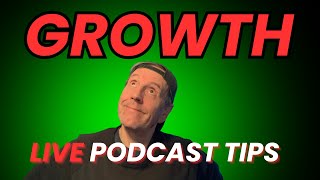
Rob Greenlee breaks down why most podcasters ignore thumbnails, then shows how to use bold fonts and facial expressions to boost click-through rates. He maps a three-tier strategy: short-form clips to grab people, mid-form to build trust, long-form episodes to monetize, with tools like Opus Clip and A/B testing to measure what works.
Chapters
Welcome to Podcast Tips. Thank you so much for joining me tonight. I appreciate you being here, and it's always great to do another episode of this. And tonight I'm going to really drill into this whole concept of growth. So you saw that in the thumbnail at the beginning of the show, and that's trying to maybe open some doors and unlock some of the concepts that may help you grow your podcast or video show or audio program, whatever you're doing. And the options are plenty out there these days. So I'm gonna really kind of explore some ideas, right, that may be effective at growing your podcast here in 2025. And it's kind of a blended approach. And it's really kind of an interesting shift in my perception of how to grow a show online these days. It's, it's not as, I guess, rudimentary as it used to be. So the concept that I'm going to lead off with tonight that I have discovered is that we may need to start focusing a little bit more on short-form video when we create our shows as a method of introducing people to you and to your content. And this also applies some degree to the audio side too. So I'm gonna talk about that a little bit. If you think about it, audio podcasting has had what's called a trailer, right? It's a preview episode. That in Apple and some of the platforms is kind of making that available. And it's a great way to kind of launch your RSS feed before you actually create your first episode. So it's kind of like the methodology I'm gonna talk about tonight is really about kind of growing new audience into longer form content and how do you get their attention right at the beginning and then you pull them along into, you know, getting deeper and deeper connections with you and as the host of the show and as of the show concept and what kind of messaging that you're doing in your show. So the concept is to leverage short-form video and audio content to build trust and drive towards longer-form engagement. So if you think about I think if you really back up and you think about this, and I've noticed this on YouTube as well, is that the engagement and how long people are listening or watching is increasingly the big factor involved in growing audience now and playing into the algorithm to some degree, and so You know, I'm also gonna talk about some key strategies around growing your show that's distributed via RSS too, not just on the video side. But I think the big takeaway tonight that I'm gonna talk about is you can't really, in the new modern age of trying to grow a show, I think it's hard to justify ignoring video completely. And I think you, have some growth opportunities with, even if you're doing long-form audio content, that you may benefit from doing some short-form video at the very base minimum and just kind of play your way up in that. Because if you're not, you may be missing out on some significant growth opportunities. And to ride right along with that is to optimize your RSS as well. And to make that work for you as well. But I wanted to start off first with this concept of, of the myth around click-through rate. And so when I talk about this, I'm, I'm really talking about the click-through rate that's associated with— and this is an acronym that's called CTR— and it really applies to your graphic presentation, just like what I did at the beginning of this. Show. This is an example of a, of a click-through thumbnail, is this, this icon right here, or this graphic that I'm showing on the screen is an example of that. That is what is displaying in YouTube for this episode tonight and also being used on other social media platforms as well to to drive home what the concept of the show is, right? In very simple terms, bold letters. As you can see, you know, it has some personality in it. You know, you pose and you take these funny pictures of you, you know, kind of, you know, looking at what you're gonna do or pointing at it or, you know, making a funny face. What you're doing is you're applying some personality to the image, right?, and you're also, you know, trying to drive people's eyes. So there is a lot of kind of eye-tracking research that's been done on these type of things where, where when you look at an image and if a person is pointing at or looking at something that you want that person to see, if you're a person in that image, if you are pointing to that, the eye will kind of follow that pointer over to get the message. So as you look at this image here again, you know, I'm looking up at growth with kind of like, hmm, that's an important topic. So I've been creating kind of these funny little, you know, kind of pictures of me that I'm able to layer on top of my my thumbnails for YouTube. And increasingly these type of thumbnails, I believe, are going to start transferring over to increasing usage in, in the podcasting side because all of us have the ability right now to publish episode-level art, right? So we have to think about, you know, what's our visual presentation for our episode-level art? And so this is where these worlds kind of collide on each other. And as, as we see people find success with the thumbnails on YouTube, you're going to want to have some consistency, right, between these various platforms and to drive attention based on those common principles. Because I do believe that this principle, like what I have shown on the screen here, applies to podcast listeners as well as video watchers or, or YouTube or Spotify viewers. They're increasingly becoming a thing in podcasting. But I think, you know, one aspect of this that really jumped out at me off of YouTube on all my efforts and playing around with what's happening with my own channel on YouTube is I'm playing with all sorts of different kind of messaging formats and layouts and all sorts of things around the various programs and, and content pieces that I'm creating for YouTube, trying to learn and experiment, see what works and see what doesn't work. And so this concept that's in the metrics, and this has yet to come to podcasting yet, is this ability to track click-through rates. I know I've kind of beaten around the bush on this topic to some degree tonight, and, and YouTubers know about this more than podcasters. And so if you want to obsess about your click-through rates, the top shows are, are showing about 6 to 12%, uh, CTRs is what the acronym is. And that helps to some degree with your ability to, to get people, um, when they see your artwork, to actually click on it, right? And to go to that episode. So that's like the first stage, right? So you have your thumbnail, and then you have the title of the episode right below the thumbnail. And so, you know, in some ways those need to work together to drive home the message. So the image that you see like this one here is growth, right? That's the big takeaway. And, but the subtitle of that is actually a little deeper, right? So that one says unlocking podcast growth with video and audio. So you're kind of playing on top of what the visual image is with the text. So, and that's also a place that you can apply more appropriate keywords too. Like, like my, my album art or my cover art or my thumbnail didn't have really much of a mention around audio and video. It was more about growth. And then right below is podcast tips. So people will know that it's a topic of a show that's talking about growth around podcasting, right? So that's kind of how to think about this stuff and to kind of, I can share with you what my typical thumbnail CTR is. And it's usually somewhere between 3 and 7%. So I'm not kind of like hitting the peak range very often as the top shows on YouTube. So the top shows are hitting about 12% click-through rate. That's so when a potential viewer sees that cover art, what's the percentage of times that they click on it to go, you know, start watching the video? Now, the second layer is how long do they watch the video? Right, so that's the other aspect of it, which I'm not gonna talk about too much tonight, but that is a big aspect of this too. And that reinforces the algorithm on YouTube to maybe suggest your episode more. It's very episode-focused. It's not series-focused like podcasting is. So that's where these two mediums kind of divide on each other is that the consumption platforms for video tend to focus on individual episodes. And because I can see wild swings in my views between episodes in a series, right? It's not like you're holding on to audience. And they also track how many people are repeat viewers of your channel or your episodes as well. So they are tracking at this level, So I need to actually continue to test and, and trial. And YouTube does have that ability to create, like, say, like maybe 3 different versions of your thumbnail and to test them. And what YouTube will do is they will display each test art and they will, they will evaluate that and then they will start automatically using the one that tests the best. Has the highest CTR, which is click-through rate, right? So there is some algorithmic testing that can happen around these artwork pieces. Now that doesn't exist in podcasting. So, you know, so I think as you think about this stuff and you think about like the artwork that I've created, the key is all about impressions, right? High visibility leads to the audience becoming more familiar with you. So, and, and really, like I have in, in my thumbnails— now granted, my face is not a, you know, a household face or name or anything like that, so that's something that I have to continue to, to build on— but a, a brand consistency is important. Now, I've changed the brand of this show quite a bit over the, over the last year and a half or so. So, but personal recognition across all thumbnails and to, you know, to show that again, you know, it's, it's my face on the screen and, and it's, it's the name of the show. There's consistent branding in the upper, upper portion of the screen here that's consistent. So So you can kind of see how I'm trying to synergize this into a very simple message and to, to be consistent now going forward. So also, I would say that the biggest podcasts don't optimize for a minor CTR boost. What they're looking for is peak performance every single time. So So they prioritize this testing process, and some of the biggest shows will test much more than 3 versions, and they will do that in their own internal research as well. So like maybe they have a panel of people in their company or in a fan group of some sort where they could share like maybe a list of thumbnails and people can vote on them, right? And so there's a bunch of different ways you can test this, but at the very minimum, YouTube allows you to test your thumbnails, um, at a reasonable amount. 3 is, you know, creating much more than 3 is— it's going to take you lots of time, right? And so you may not want to invest that much time in doing that. So My key tip on thumbnails is to, is to build it off of face recognition. Now granted, if I had a guest on the show that was well known, right, that had a familiar face to it, or if I'm talking about a topic that's talking about someone that has a very familiar face, it may be beneficial for me to put that person's image up in my thumbnail, right?, right? Because a person would connect with that and say, well, you know, this person is on there. You know, I see a lot of thumbnails with very famous people on there if the topic of the program that they're talking about involves talking about a particular famous person. So I think that's the, that's the key kind of points to take away, and that font needs to be really big. It's the same thing with podcasting. If you think about your your cover art. That cover art needs to be bold and it needs to be very colorful and engaging and consistent, right? So I think that's the key thing around the initial marketing part of the podcast. And graphics are so important. Metadata, keywords, and titles and descriptions is another part of it that's huge as well. So you really need to drill in on doing a great job with that too. And so let's, I'm gonna move on and talk about this next concept, which is the path that converts. And so this is a path that going from short-form content to mid-form and then to long-form. And the reason I'm sharing this is this is an audience progression and this is what you need to possibly start thinking about in your approach to marketing your show, right? So if you want to create some short-form versions of your show, which I know many people are, put those out there, you know, make sure that that metadata and that visually it says what the show is, and then put the links to your show in, let's say, the comments on, on some of these social platforms and try and get people to, to know where to go to get the full episode, right? Or share a link or something like that in the short-form content as well. So the short forms typically are, can be 15 to 60-second clips. Now I know some of the platforms now have moved up to 3 minutes. That doesn't mean you have to do 3 minutes. I think 3 minutes may be pushing it a little bit. I think what you want to do is really get in and drive a message very quickly. Now, granted, there may be value in a 3-minute clip. And so you have to just work with these platforms to figure out what the best approach is. What's the content? So as you think about, you know, whether it's Opus Clip or some of these platforms that will generate the short-form content for you, going through and selecting what you think are the best ones and then just sharing those. And they can vary in length. I mean, you can also tell it to pick a certain list of clips from your full episode that are 2 minutes long or 3 minutes or 1 minute. So you can control that to some degree. If you select the shorter amount, you may be able to use it in more platforms because not all the platforms are 3 minutes. So if you do like maybe a 60-second clip, I think you'd be able to use it everywhere. So, so that's, that's a, that's one way to look at that as kind of like your entry point to start building a relationship with an audience. And I think that that's the way to think about it is that you're introducing what you're doing to potentially a new audience based on, you know, the activities of that, that user. And then the next level after that, that you need to start thinking about, I don't know that a lot of people are, this is where we get into the 3-minute and beyond. I think there is a place for highlight clips, which tend to be kind of like a mid-form content, which is usually between 5 and 20 minutes. So, and you could possibly put this out as a separate video that's leading up to the publishing of your full episode, possibly. Just depends if you're doing this stuff live or not, but there is a little bit of an approach here that you can do to kind of do mid-tier length content. And that fosters deeper kind of connections with a potential audience member. And then the next one is getting people over to the long-form content. So if you're doing, let's say, an hour-long show or you're doing a 30-minute show or you're doing a 90-minute show, this is a way to get people to really engage with you at the at the deepest level, and it will more likely translate into them hopefully having a longer viewer path with you, right? I mean, a lot of the long-form YouTube videos could be— they could be 60 minutes long, an hour long, but yet the average view duration is only, you know, maybe 2, 3, 4, 5, 6, 7, 8 minutes. It just depends on the content, right? It also drives home this message too around what you do in the first 30 seconds or the first even 5 seconds of your show that will engage your audience and get them hooked about what's coming up. I know I still have yet to do a really good job of that in this program of teasing the topics, you in advance. I'm probably gonna work on that next week to see if I can do that in the artwork that I'm showing at the beginning of the show versus just this bland thumbnail that's there. If I can kind of like tease the topics that are coming up in the episode and create like a little video around that, that actually might be a good kind of like hook to get people to keep watching. Beyond just, you know, 2 or 3 minutes. Yeah, so what you want to share with people is what they can expect later in the episode. And so that's a content technique that's starting to grow in popularity out there. And so if you're, you know, if you're really struggling to grow, Trying to play around with these short-form kind of pieces may be a good way to start thinking about your long-form content as a way to kind of play into the algorithms, build your trust, build your connections with your audience. And this will actually even work even if you are primarily an audio-first creator. So let's say you're really just doing audio, but there may be a strategy that you can do, you know, just by pulling out your Android phone or your iPhone and just recording a certain amount of content that is similar to your episode and putting that out as a tease about the episode, right? About some key element in the, show that is important for a short-form viewer to see that has value, that may make a connection with that audience, um, that, that will get them to come on over and listen to your audio. So, you know, I think a lot of these things are kind of synergized with each other, and I think AI is starting to help with that, you know, like the Opus Clip. And, you know, I've been playing around with a bunch of different platforms that do clip creation. Even Descript does it, and I've been playing around with a couple other platforms that are doing a decent job. And you can actually see those if you go into my YouTube channel and go to this show in the YouTube channel. You can see a string of clips that I've put in there, the short-form content on YouTube, and those also go out to, you know, all, all the other social platforms too. So, you know, some of these platforms allow you to create one clip and be able to share it across all of the social platforms all at the same time, which really, really streamlines that, that process. And I think it's really, it's really, really powerful to actually, you know, do that. And it's very efficient. Now, granted, you know, you should be able to add elements to that short that maybe has your logo on it, maybe the name of your show, that will make it better connect with you. So I would say the key takeaway is short-form content and start increasingly thinking about making a 5 to 20-minute version of your long-form show. And, and for the short-form content, the best platforms are YouTube Shorts, Instagram Reels, TikTok, and Facebook Reels are the best ones to do this with. Those are— that pretty much covers most of it, I think. And, and so however you can do that the easiest way possible is, is a terrific way of doing that. So I would highly recommend that you you pursue that. And because that may help you grow your new listeners to your full-length content is the kind of big, big takeaway. And then the next element that I want to talk about, and I kind of alluded to this a few minutes ago, is around, you know, attention-grabbing openers, basically within the first 3 seconds, which I think next episode I'm going to really try a different approach even with this show to really make sure that that first 3 seconds— now it's a little bit of a challenge with live. Now granted, I should be able to do that without displaying that thumbnail. I should just be able to click start, and when it goes live, I just start right into the show, or, or I play this tease about what's coming up in the episode, which is also a common technique out there as well. So, so that's what I'm going to play around with next week myself. So you can kind of see firsthand kind of how that might look. Now, granted, each one of us is going to have a different approach for this, but, but the first few seconds of your show really needs to be engaging, conversational, fast-paced edits is, is kind of ideal. It gets people understanding what's coming up very quickly so you can get right into the content, because that's what the audience is there for, is they want to get to the message. So you, you put in your thumbnail, you know, like I did, growth. And growth— I should— the first word out of my mouth is— should be about growth. So, you know, I mean, I think that, that that may be not as common sense as we might think. You know, and looks like Irina Friedman Watts wrote, more funny pics, right? Okay, so that's a good technique too. Add a little bit of entertainment. So if you can create some engaging kind of experiences at the beginning of your show, and I think Rena, you do a little bit of that, I think, in your program. So is compelling, add a little humor, add a little controversy there, and to inspire people to keep watching, I think, or keep listening, is because a curiosity hooks somebody. It's like, well, they're going to cover this, I want to learn about that. So I think that's very, very, very, very compelling. And, and, you know, it's, it's, it's tease and it's trying to get people to, to think and to get people to find value. So you're also going to, as the content creator, you're going to also have to think about, well, what are those compelling teases that you can put in there? You know, it may not always be obvious. So, so, and it's, and it may not always work. So, but trying to hone that technique and test it and see, you know, if your, your engagement goes up. I mean, if you test the content in, in YouTube, you can clearly see right in a, in a chart. It will track, you know, the time spent listening and the attention is graphed, right? So most videos, the first 30 seconds or so, it's like a, just like a straight line drop, and then it starts to tail off and it, and people are continuing to watch. So you've gone from 100% people that click on that that thumbnail and start the video. And then you start losing people really, really fast the further into the content that you go. So the game is really to, when they click the thumbnail, how many people are still watching 10 seconds, 30 seconds after they've clicked on the thumbnail? It's almost like the early days of radio when people would, change the radio station. Whenever a radio station went on a commercial break, people would switch over to a different channel. And then the industry, the radio industry, learned that what they need to do is all of the channels need to get on the same breaks cycle. So that's— so when people clip over, there's no incentive for them to clip over to a different channel or a different radio station. To find content versus ads. So no matter where you click, you're going to get an ad. So, and that's not 100% applicable here, but it's, it's an interesting game that we have to play with our audiences to some degree to keep them engaged and keep them connected. And one tip too is that the short form is not really for deep discussions. It's designed to grab attention and kind of move people to the longer form content. And that's, that's kind of like the common thread of what I'm talking about tonight is what you want to do is tease and you want to entice to get people to, to want to go consume the longer version of what your content is. And it's the same thing with the mid-form content too, the 5 to 20 minutes. That is considered to be the trust-building phase, right, of your relationship with your potential audience, or to some degree your current audience. Is it— is, is there enough value in 5 minutes of this show that justifies me spending 60 minutes with your full-length piece of content? And I think that's kind of how things are going to progress here, is that that there's going to be. And I played around with this with my Trust Factor show. I created a 20-minute version of an hour and 20, 30-minute episode that I did, and, and it probably helped some people jump to the longer form content. So it's just, you know, what you're trying to do is build credibility, build that new audience member to be familiar with you and to to be familiar with your content that you're creating. And the best platforms for, for that technique are YouTube for just regular videos. So if you put in a shorter version of an episode, I've seen some people will put out the shorter version first and then they'll put out the longer version later. So that's, that's one technique that you can try and play with. I don't know if putting out the shorter version after you've already put out the longer version is the best technique. That's something that I, I probably have to play around with to some degree. And, and how do you distinguish that short version versus the longer version in your, in like your thumbnail and stuff like that? I would imagine that you have to kind of like spell that out in your titling and in the thumbnail itself that this is a, a shorter version or, or edited version, or I'm not 100% sure what the right technique for that is yet. That's something that I'll have to play, play around with to see what, what works and what doesn't work. And then the other platforms that will work with that mid-form content is Facebook and LinkedIn and Instagram. Um, those basic, um, normal platforms may be good places to play that game. And then also probably on X or Twitter, you can do that over there as well. And on any other social platforms that you might want to work with, like a Rumble or, or, um, or Truth, Truth, or Blue Sky, or any of those platforms, I believe it enable you to publish content into those platforms as well. So yeah, so the thumbnails for this mid-roll or mid-length content, probably, you know, and I speculated about this a little bit that I need to test on, but the more I think about it, they still need to be engaging thumbnails, the titles formatted as questions or bold statements. So maybe it's It's some derivative, not a full episode type of a statement in the metadata or in the thumbnail, but really kind of more a very focused kind of element of it. So, and so I think that that also is all the formats now in pretty much all of the shows really, as you think about whether it's mid-form or long-form, really need to have a story-driven structure, right? So they need to have kind of a little bit like a narrative to them of sorts and have a problem, context to the problem, and an expert take, and then a solution. So these are the concepts you know, guest clips that show engaging and insightful moments. So if you can layer in these things and then also fairly light editing with minimal kind of jump cuts to some degree, but you may have to have quite a bit of jump cuts in there to get to a very shorter version of your episode. So that may come along with that. So, and I know that the Descript platform can actually automatically generate you a highlight clip version of the full episode. So it'll pick out kind of like what it perceives as the best segments from your full episode and give you a version that like maybe has that abbreviated kind of view of the content. And, and also you're starting to train your audience, um, on this mid-form content that keeps viewers engaged longer. And you're basically, you know, teasing them along to get into being, being acceptable of the longer-form content. So, and I think life to some degree is a little bit like this, right? Where people start out small, they build, and they get more complex over time and they get more engagement, they get engaged in things, they're more knowledgeable about things, and they go deeper into things. And that's the natural human progression that I'm talking about here. And the ultimate destination for many of us is getting those listeners to deeply engage, um, in our long-form content, which is where most of the monetization is going to occur. So if our goal is monetization, we have to foster the, the audience path into our program and then deliver on what those sponsor messages are in the longer form content. Once we have that trust and that loyalty, that will drive monetization strategies more. So those viewers typically that have gone through this funnel of sorts will have a certain built-up amount of loyalty and will want to support you as a podcaster, will be more likely to purchase the products or the services that you present in your ads, in your content. So, so the key elements to take away here is have a strong opening hook to your show. And avoid long-winded intros, which I can always do a better job of that too. And I will next week to show you an example of this stuff too. So I'm going to try and shift my content too to move more this direction as well. I've always been a big fan of the, you know, in like the very beginning, and I've done this a lot with my audio episodes where I And I did it very early with my nationally syndicated radio show too, where we, we would have a— right at the beginning of the show. So there would be some music at the end, and then right the first like 2 minutes of the show was all about like teasing what was coming up, right? I'm talking to this guest, or we're going to talk about this topic on the show today, stay with us, that kind of concept. And I think that's That's what I do a little bit of, but I'm probably not going to the, the level that I need to go into, either visually and then also verbally too. And this should be done on the live streams too. Also, you may not have the, the instant replay or the on-demand playback or views that you would expect And I've also seen a big difference to some degree in the, the post-live episodes that are on instant replay and the, the pre-recorded videos that I've created and uploaded to, to YouTube. I found that the pre-recorded shows tend to do better in views generally, um, than the live, um, live-to-tape kind of shows like I'm doing tonight as a good example. So, but that may have more to do with the topic and who I am. And are there that many people that are interested in learning how to do a podcast now? Because typically shows about podcasting don't typically get huge audiences. It's typically a fairly niche program. I've done many, many podcasts about podcasting over the years and continue to do so. I do, you know, the New Media Show that's up behind me up here, and I've been doing that for like 13, 14 years, and that show's done pretty well. But it's, you know, like this show is, is modestly watched, and, and it's because there's so much information out there. And this is a factor too to think about with your own show is, you know, how many other people are doing your content, doing the similar type of content. That's why at times I try and do something a little different than everybody else does, talk about topics that are maybe less done out there. But, you know, it's hard to know if they're reaching, you know, some sort of engagement layer that's helpful to a large amount of people. And that's, you know, I'm okay with that. I just want to help people the best I can just based on my experience. And I've been doing this a long time, but that doesn't mean that I have everything perfectly, you know, laid out about what works and what doesn't work. This is a very different landscape that we live in now. So, you know, and part of the, the other elements here that are helpful too is, is to give people timestamps where they can do jump links. I've done that successfully in YouTube, and YouTube will actually pick that up in the metadata or the description or the show notes, and it will automatically make those jump links if you give it the the timestamps of where that content is, it'll pick it up through its algorithm and it will make those direct connection links in your description, which, you know, podcasting doesn't really do that. You kind of have to generate that on your own and build them in the tools and things like that. So it's, it's a little bit of a more labor-laden process. Um, and but I also think that doing a live show like this tonight has other advantages, right? Um, you know, it's the audience engagement layer. I know I haven't had a lot of comments tonight, but I would love to get them from you if you're watching this and you have feedback or thoughts about this, this topic I'm talking about. I, I know I appreciate, uh Arena posting some comments in here. I would love to see more of those. Um, and, and if you wanted to send me an email, you can do that as well. That's not going to get pulled into the show, but you know, I'm also, you know, it's rob.greenlee@gmail.com. And I'm also on X too, so you can post comments over there to me as well. So that's also a great great place to connect with me. But that interaction on these platforms, I know it has a big impact on YouTube. So if you're generating people coming in and commenting and asking questions and giving their opinions, you will actually get suggested more because that's a signal to, to YouTube beyond just view time and views and things like that, that you're creating some sort of a deeper connection with your audience. And that's kind of what this is all about. Doing live like this is, it's not the easiest way that I could, I could produce this content, but it's, I think it's the most energetic and interesting way to, to do this and to have connections with you and, and to enable you to have the ability to, to share ideas and, and concepts that may be helpful to other people. So if you can do that here or do it in YouTube, and I, I will respond to your questions and, and give you my thoughts, um, that will— that would be great. I would love to hear your thoughts on these, these topics as well about You know, what are you finding is working around how to grow your audience? I mean, oftentimes each genre has its own little kind of unique approach to reaching people, and sometimes that can be very, very helpful. But the next thing beyond, uh, live streams to create audience interaction is just making sure that what you're doing is high quality. I think that's an important thing now more than anything. Hasn't always been the case, but high quality is a very subjective term too. You know, I, I think high quality is really like I described earlier in the show, having consistent branding, having good lighting. You know, I've invested in kind of like studio lights up here. I have a good camera. I've got obviously a good microphone. So I am conscious and aware of the quality that I'm trying to put out. Now I've got a 4K camera, but I'm streaming this in 1080p, which is really, I think, the most optimized video quality right now for live streaming. So So, but I would love to get into 4K to some degree. Then you'll see all my, all my, all my wrinkles and flaws on my face more. So, and then, um, the other thing about, um, doing this too is the— and it's important to a lot of people now— is the monetization strategies, you know, around some of these bigger platforms, the Super Chats, the the membership ability that these platforms have now and premium content. So, so long-form content is where casual views really become kind of loyal fans. So I've always thought that if you had a certain percentage of your audience that was listening to the full episode, the those people that are listening all the way through a 45-minute show or an hour show, um, are your, your most strident fans. Those are the thing that— that's why I'm a fan of putting calls to action to some degree at the end of the show, because it's more likely to be converted on. But the advertisers want their message to be at the beginning of the show because they're more focused on really, at the end of the day, sure, they want conversion into customers, but They also want branding too. So, so let's talk a little bit about audio because audio is an important piece of this too, even though I put out a lot of content on, on my new media show and others talking about the importance of video now. And just like what I've done in this episode as well, I talk a lot about video, but audio is still a big audience. So making sure that you're optimized for growth around audio is also very important. So, you know, SEO is the number one kind of approach to audio marketing, is making sure that you've got good keywords in your titles and your descriptions, and you're using keywords that are important to the content of your show and also important to your audience. So you have to walk that line, because you obviously don't want to put keywords in that are inappropriate for the topics that you're trying to cover in your program. And then also write detailed show notes with ideally timestamps and key takeaways. My, my description for this show has, has a bunch of that stuff in it. So, you know, and those are important things. So your audience can go back and just look at a list of, of the key things that you talked about in the episode, and they can— that's another takeaway for them, right? That's another value of coming back every week is— and some of them may go, go come back to the episode just to look at your show notes too. So there is an element of that. That goes on as well. And then the whole transcription thing too is another boost to search. And increasingly people are taking the audio like from this episode and creating all sorts of derivative content from it, right? You could probably put together a whole newsletter based on this episode alone. And the topics that I'm talking about in this, and it would be transcribed and maybe rewritten into a newsletter format. So there's lots of ways that you can utilize the content that you make to engage with other types of audiences, right, that maybe are more written-focused. Then other people are more visually-focused, and there's other people that are more auditory-focused. That want only the audio. So you have these kind of like 3 layers that have really always existed most of the time in podcasting is that this, you know, people like to consume various mediums of this content. And that's where we're really fully expanding on that concept. And then the other part of this too, of growing your show, is cross-promotion and making sure that you're in all of the directories. Now, I've been hearing for years, I used to work for Libsyn, Spreaker, Podbean, and these platforms have always had an issue with podcasters getting in, creating their show, and then only putting it out to like Spotify. And they hesitate in getting it into Apple Podcasts, which is really the key to getting everywhere. And it was just, uh, kind of announced today that Apple is going to have a one-click submission into the Apple catalog now. And then you'll get a follow-up email that you'll be able to get in and capture that with your Apple ID. But at least it gets you into the Apple catalog, similar to how you get into the Spotify catalog with just one click. And, and because once you're in Apple's catalog, you actually get included in, you know, like 100 other podcast apps out there. And that's how most people get into all these other listening apps, the smaller ones out there, is through being in Apple Podcasts. So you need to make sure that you're in as many of these platforms as you can. And there's also directories outside of the US. You You know, there's ones like Deezer in France, and there's other ones in India, GeoSavvy in Ghana, those, those type. Not all the podcast hosts support a distribution deal with all of the directories out there. And then, but yeah, so just make sure that you're as many places as you can. And then, and then increasingly people are submitting their RSS feed to even YouTube. And, and being in Spotify is kind of like a natural thing that's in most of the platforms now. And so that's— those are important pieces to this puzzle to make sure that you get the most exposure to potential audiences out there. And then also work on trying to be a guest on other people's podcasts, other shows out there that are maybe have an interest in your expertise or your knowledge that aren't necessarily directly competitive to you. But they might be, right? They may want to bring someone on that has a little different perspective than, than they do and to have a real conversation, not necessarily an interview. And I think that's a key distinction is that we all need to create conversations less interviews. Now, granted, an interview can still be very interesting if it's structured in a way to extract certain valuable information from the guest. So this is a fine line of a difference. Um, and then also leverage promo swaps. So let's say there's two shows, you guys decide to cross-promote each other. There's no kind of like financial compensation for that, you know, that exists. Now, you can also go out and buy ads in podcasts too, and shows are starting to do that kind of activity as well. And then the next component of growing your show is consistency and frequency. Stick to a regular release schedule as best as you can. Weekly, multiple times a week is actually oftentimes the best way to grow. So if you are only publishing every 2 weeks or once a month, you're not going to grow as fast. That's just a fact. But if you're publishing maybe 2 or 3 times a week, every week, you will likely grow faster. And if you're doing video, like I was mentioning earlier with short-form clips, and then maybe over time you graduate up to a longer form video or things like that. Maybe you don't start out with long form video, maybe you just do clips. You can do that too and get, get the advantages. And then just be sure you create a promo trailer for your audio RSS feed. Most of the platforms support it. Apple, Apple supports and has a separate kind of like episode tag association with a trailer, and then they also have a full, full episode classification as well. And that will display your trailer in a place in the user interface that will expose the, the potential audience member to be able to hear that first. So, and then with the longer form content, or your archives, adding dynamic ad insertion capabilities to, to your ability to monetize your older episodes is another component too that's also available. It's usually done around programmatic advertising, is usually the, the easiest way to incorporate ad insertion points into a large catalog of archive shows or older shows. So that's, that's a way to monetize the, the episodes that you have that maybe you didn't monetize in the past. And then, and then also the, the next one is to engage with your audio audience too. Give them ways to get a hold of you. Make yourself accessible. Encourage your listeners to give you feedback, just like I did earlier in the show. Give them an email address. Give them a a pathway to, to send you questions or comments. Encourage them to give it to you in these consumption platforms as best you can on social media. It can be a little bit like pulling teeth, but once you start getting an engaged audience, it's going to happen more. And then offer, you know, some exclusive bonus content to RSS subscribers. So you can publish different stuff into your RSS feed that maybe you do in YouTube. So you can, you can kind of play off of this to some degree and give extra value to your RSS audio listeners. And, and then also host possibly listener call-in episodes, live Q&As, um, just like you know, I offered earlier, usually at the end of the episode, I usually do a Q&A of questions that are coming in. Doesn't look like I'm going to have a lot of those tonight. But so let's, let's kind of move into the, the next form here is just to reiterate the success formula here. Create viral short clip episodes and publish them into the Shorts areas of your show, even if you have to create new content for that. So let's say you're doing audio episodes only. Create some, some short form, some short clips that you can publish out into these Shorts platforms. And then if you can take or make Mid-form video somehow. Um, I— even if you want to just record your, your primarily audio episode and then just cut it down to a much smaller, like a 5-minute version or a 15-minute version, that can be a way to get people to, to be, be more familiar with your longer-form content and then just drive people to that. And obviously the longer form content, which is usually ranges from 30 to 3 hours in, in length, um, that, that needs to be where you get your best listeners. So the final takeaway, and I will wrap it up for the night tonight, um, is that short form captures attention, mid-form builds trust, And longer form is where your loyal retained audience typically will be. Right? Video is essential for new people to discover you now, but audio remains a key for engagement and loyalty. There's a lot of places where people can consume your audio content. So regardless of whether or not you're doing a lot of video, long-form video, take that audio out of there and put it out as an RSS feed. And I think that that's an important kind of component here. And, and the algorithm favors creators who implement a multi-tier content strategy across both video and RSS. So I think that you can, you can benefit a lot from taking this approach. So, so anyway, um, that's, that's the episode that I have for, for tonight, just as I hit 1 hour. I guess it was a little bit long-winded. I wasn't sure how quick I was going to get through this, but, but if you have any questions, go ahead and post them into the comment field of the listening platform that you're— or your viewing platform tonight with this live show, and I would be happy to answer any questions that you have. And, and if you would, um, like to ask anything, that would be great in an email. I can, I can share that up again on the screen after the show if you wanted to share anything that you wanted to share with me. And I also have a, a YouTube channel here too, @RobGreenlee, and then my My email address is rob.greenlee@gmail.com, and I'm on X at Rob Greenlee, um, G-R-E-E-N-L-E-E. And I appreciate you being here. I also have an Adore Creator community on, on Skool, and that's a, that's like a community building platform that I've gotten, gotten involved in, and. You can see links to that in the show notes if you wanted to get engaged in, in that with me. And I am creating a, a D.O.R.E. podcast network, um, that is more of this, more of that is going to become visible over the next few weeks as I bring in shows and content creators into that platform and into that experience. And so the school's part of that works with the podcast network concept, and that is an important piece with that. I can actually get your, your podcast launched. I can get it hosted on the Adore Podcast Network, and it will be hosted there, and you'll have help and some counseling and, and support, uh, in getting that done. If you want to start a new show, or if you have an existing show and you just want to be part of a part of a network, I would love to, to talk with you. And I— in the Schools platform, there's a way that you can go in there and create a one-on-one call with me, and we can talk through it and see how we can work together and see where it goes. So— oh, looks like I got a couple of comments that came in here. Looks like, um, looks like, um Nadine Jasmine writes, hey Rob. And let's see here, she also writes— and Nadine Jasmine also writes, I need to your team. Okay, I'm not sure what that means, but, um, you're welcome to join my team, Nadine. I appreciate it. So, well, thank you so much everybody for being with me here tonight. And, and listen— listening to me rant and rave about various ways that you can help grow your, your podcast, or if you have an interest in starting a podcast, these are important things to consider and think about. And so I— it, it's great to have you here, and thank you so much for, for watching. And we will bid you a good night and catch you back here with a little bit different experience hopefully next week with, uh, Podcast Tips with Rob Greenlee. So thank you so much and have a wonderful evening. Thank you. Bye.
More from Rob

Future-proofing with Delphi AI/Human clones: your podcast as a personal LLM | New Media Show






How sports reveal what AI spectacle gets wrong #Technology #Sports #Commentary



