The Money System Every Creator Needs in 2026
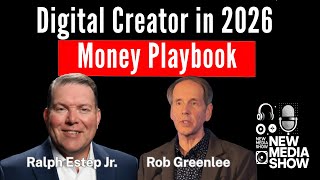
Ralph Estep, the Content Creator's Accountant, walks through a money system for creators: separate business and personal accounts, track every income stream, set aside taxes with each deposit, and use owner-draws to move profit. Weekly money meetings and accounting software like QuickBooks keep cash flowing clean.
Chapters
Welcome to the New Media Show again, episode 647. My name is Rob Greenlee, and thank you for taking time out tonight to, to join me. And our goal tonight is to give you, the creator, a simple, actionable digital creator money operating system for 2026. As it's still early January of 2026, a lot of people are looking at trying to improve and fixing maybe the creator business side of their podcast or online show that they're doing. So some creators don't have a content problem. They have a cash flow or business system problem. And why it matters is because video plus AI are accelerating output and what all creators are doing. And it's important to increasingly, I think, think about your, your show as a business. And it's okay to have a podcast that's a hobby, but maybe it's also okay to get a little bit more serious about it and maybe invest in it. And so I have a terrific, uh, guest here that's gonna join me to talk about this, and his name is Ralph, Ralph Estep, and he is a content creator's accountant. So he's a licensed accountant and a 30-year pro. And so Ralph, thank you for joining the New Media Show. This is kind of a new topic for the New Media Show. We've never really covered the finance side of being a content creator, but I think now is the time. Ralph, thanks for joining me.
Oh, Rob, thanks for having me. And I agree with you. And what I always say is that in a lot of ways, content creators live in money chaos. And my goal tonight is to help them calm that down. And let's get to some financial clarity because that will help you immensely.
Yeah. So, you know, just kind of back up and get a Big, big view here. Let's start out and then we kind of drill down here. But what do you think is the number one financial mistake that you see digital creators out there making today?
I think the number one thing is not keeping their business and personal stuff separate. I really think that's the biggest one, is they've got one credit card, they've got one bank account, and it looks like a big old spaghetti. At the end of the day, they're not sure what is what. And the IRS calls that, or in accounting terms, we call that commingling. Basically everything all mixed together. And the problem with that, Rob, is you never really know from a business perspective how your content is actually doing because you've got— no, it's true, you've got your AdSense and your other money streams coming in, and that's a whole nother discussion. You got 11 different streams coming in. But if you don't know what's going out because you've got Amazon purchases and purchases some Sweetwater, and then you've got your rent and your groceries all coming out of the same thing, how do you ever tell whether this is a viable business. And then come tax time, it's even worse because you're trying to figure out, you know, what, what do I do now?
Yeah, I know that there's probably a lot of people out there that are operating as sole proprietors, um, that are, that are doing exactly that because it's, it's simpler and it's easier to, to do. But I think it really does get back to depends on how, how serious you are about what you're doing. And, and really, I think at the end of the day, being a digital content creator now is is increasingly becoming something that people want to create an income from, right? Or, you know, it's this whole side hustle thing that we've been going through for, for the last maybe, you know, probably, probably 5 years that people have really been focused on trying to bring in an income, you know, to pay for their time and their efforts. And there's a lot of people out there that are starting to bring in big money too. So, you know, What's your advice for someone that's just starting out and doesn't really know if they're 100% ready to dive full into creating a full business around a podcast that's really unproven?
Well, I think the first thing you need to do is you need to set out with the idea that this is a business from the beginning. And even if it's a hobby, even if it's a hobby, because here's the thing, at some point you're going to maybe get a couple dollars come in the door. Well, even if it's a hobby, you can at least write off expenses against the income. Oh yeah, the IRS, even as a sole proprietor, will let you write off hobby losses up to the amount of income. So my advice from the very beginning is keep track of things from the very start. And the best piece of advice I can give you, even if you don't set up an LLC or S corp, and we can talk about that later if you want, because I definitely think there is a place for that. But even if you don't do that, go and set up a separate business bank account. And it doesn't have to be a quote business account. It can be a personal account, but you just set it up to be what you will call your business. Or if you're going to use a credit card, go get a credit card that's just for business because that is going to make your life so much easier. Whether this turns into something that becomes a replacement of income or a nice side hustle, keeping that stuff separate from the beginning will give you clarity. I really think that's a good part of it, Rob.
Yeah, I tend to agree with that because I think separating it out does make it easier when in tax time, right? Because then you can easily find those expenses that you had dedicated to what you were doing with that.
And it's not just tax time. It's actually, I ask content creators this all the time. I'll say, how is your business doing? And they'll kind of look at me like, well, what do you mean, Ralph? I said, did you make money last month? And they'll say, well, I got money coming in the door. It's like, no, that's not what I asked you. I said, did you make money? They said, well, yeah, Ralph, I got money coming in the door. No, no, no, that's not what I'm asking you. Yeah, you've got money coming in the door. But what— how much of that are you able to keep? I'll give you a great example.
Cash flow, but it's not, you know, profits.
I'll give you a great example of this. I was working with a guy last year and he says, Ralph, he said, I had a great year. I got a 1099 from Stripe for $80,000. And I said, well, that's fantastic. You're really setting the world on fire. Well, I said, but let's talk about what that looks like for taxes. He goes, well, Thing is, Ralph, there's nothing left over after I paid all my expenses.
Oh boy.
I mean, he made $80,000 in gross sales. His net income was $80 because he had subscriptions and he had equipment and we had a whole bunch of stuff. So yes, he was showing revenue dollars, but that wasn't helping him pay his rent. It wasn't helping him pay his mortgage. It certainly wasn't putting food on the table.
Yeah. Yeah. That's interesting. I agree. I mean, $80,000 in revenue from a, from a show is doing pretty good, actually. So, but yeah, you do have this challenge of, you know, you really have to think about maybe doing some tax deposits and doing some things like that to set yourself up so you're not going to get hit with a big, big bill at the end of the year too. I mean, and granted, fortunately, he had a lot of— I guess it's fortunate that he had a lot of expenses, but he's not making much money on doing what he's doing. So, maybe you overspent. So, and that's the whole point.
You don't have that clarity. You don't know, like, should I buy gear? Should I do this? Should I do that? Subscriptions, you know, I call it death by a thousand cuts, you know, $10 here, $7 there, $20 there. And the problem is it's not that creators are broke, they're just running money without a system. And that's really what it comes down to, is there's no system. So one of the things that I want to help content creators do, and this is why I've really leaned into this in my practice, is I want to help content creators build a system. These folks are super creative, but they got to have a system. And that's one of the things I try to get people to do is build a system, because if you have that system, then you can make a better decision decisions. You can save money on taxes, and you'll have some financial clarity.
Yeah, and I wanted to share quickly here before we keep moving on is that you've got a couple of websites, askralph.com, and you have the contentcreatorsaccountant.com. For those that are listening, it's contentcreatorsaccountant.com is the, the address to go find out more about what, what, you know, you're, you're doing here. And I can certainly, uh, pull that up on the screen here and I can, I can show that here so people that are watching can actually see your, your website. I know this doesn't help the, the audio listeners much, but, but it definitely helps just get a, get a picture of the website that you would go to. And you have a bunch of content up here too, you know, like this one here, it says helping creators turn passion into profit with smart and simple financial strategies. And I think You know, these topics are really important too, and avoid these 5 common creator business mistakes. So there's content there that you can go check out that has tips that are going to be beyond what we're talking about here tonight. So, but let's—
and Rob, we're doing that both in audio and video. We're on all the audio platforms, we're on the video platforms as well. So yeah, they can go to either one. Uh, contentcreatorsaccountant.com. Now, askralph.com is my main media site because I do a total of 4 shows. So that's, that's the reason there's 2 separate ones, but just to make that clear. But no, Content Creators Accountant, that's a new show that I launched. I guess it's been beginning of December 2025. And my goal every week, it's a weekly show. My goal is to bring sort of a topic. I call it like a fireside chat about a particular thing. And let's talk about, like, for example, the one that just came out there is 5 Content Creator Mistakes. We're going to talk about estimated taxes, all the things that, you know, people say all the time, like, Rob, it's kind of boring stuff. I'm like, no, but I make it exciting. So that's, that's the whole fun of this.
Yeah, well, that's, that's the opportunity and the challenge of podcasting is you got to make it a little bit fun. Now, this is kind of a topic that's, that doesn't necessarily have a lot of fun to it, but I think we can work on it.
Well, the opposite of fun is ending up like Al Capone and going to jail for tax evasion.
Right.
That's the other side. No, and seriously, Rob, that's the other side of this is And I don't like to lean into the negative, but here's the thing. You are going to get an email one of these days that says, hey, I'd love to pay you, but I need a W-9 from you because guess what? I'm going to send you a tax form at the end of the year. And a lot of times that blindsides creators. Like, what does that mean? And the thing is, it doesn't need to be complex. It just needs to be something simple and repeatable that you're going to do. That's really the whole thing here.
Yeah. So what's the simplest kind of bank account setup? Just to kind of get in the weeds here so we can, we can really help creators have like a way to function that is simple but yet really effective and starts building that system.
I think the key is to have, like I said, a separate bank account for the quote business. That's where we start. It's not your personal account. All the income streams come into it. All the expense things go out from that particular account. Now, I actually believe you should set up two accounts from the beginning. I think you should have your operational account and I think you should have a tax account. And the reason I say that is April 15th isn't a surprise. It shouldn't be a surprise. It's going to happen. So one of the things that I tell— and we could talk about later, but I believe in having a weekly money meeting with yourself. And one of the things that I say is off the top, carve out a percentage and put that in your tax account right from the beginning so you're not worried about, hey, I've got this money in the account, can I really spend this? Because I hear content creators say that to me all the time, like, Rob, Yeah, I had a really good month last month and there's this camera I'd love to buy. There's some lighting I'd like to buy. And I'll say to them, hold on now a second. How much of that money is actually yours? And so if I'm starting from the beginning with a new content creator or somebody that really wants to get organized, I'm having them set up two accounts, a traditional operating account and then a tax account.
Okay. Yeah, I think that's a, that's a good account. Do they have to be at different banks or? Can they be in the same bank?
No, absolutely not. It comes down to— let me, let me answer it this way. Psychologically, psychologically, if you want separation, put them in separate banks. But no, I mean, absolutely. I have a lot of content creators who are just sole proprietorships. They haven't taken the LLC or S corporation route and they just set up another subaccount. You know, they've got their main personal checking account and they set up a secondary checking account. It can be that. And the nice thing about that is most banks now you can set up these accounts online. It takes 5 minutes. And then you just make sure that the key to it is going back to your income streams and making sure you're tying any of those transfers to this new account. And the same thing with expenses. If you've got recurring expenses, put those on either a business— I say business credit card. When I say business, I mean a separate credit card.
Yeah.
And you might say, well, wait a minute, I don't have a separate credit card. Okay, go pick one of your credit cards and say this one's going to be for the, quote, business. This one's going to be for the personal. And just use those. I, I'll tell you a funny story, Rob. I got one particular client, he struggles with this. So he came into my office one day and I said, here's what, gimme your cards. Cuz he's constantly putting stuff on the wrong thing. I took a big old black magic marker Sharpie and I wrote B on one and I wrote P on the other. And I said, so from now on when you go out to shop, I said, open up your wallet, B or P, that's when you make the decision. So that's exactly what I'm telling content creators to do the exact same thing. Keep it separate. It would make your life so much easier in the end.
Yeah. So one question that I think people that are listening to this probably have is, well, how do I pull out revenue out of that account into my personal account? Or is there a particular procedure to make that revenue coming in turn into income into your personal So that's where it gets a little complicated if you're not set up as a separate entity.
But sure, what you can do is what's called an owner draw. So basically, let's say you've got that two-account structure and let's say you've got $1,000 that came in during the month of December 2025 and you've paid your expenses and you still got $800 left. Well, that's your money, right? So let's say you carved out 15% and put that in the tax account. Whatever's left is your money. So you can, you can easily transfer that to your personal bank account. And if you set that money aside tax-wise, now we could talk about having to make estimated taxes because the IRS wants to get paid, just like you work for a W-2 job somewhere. But no, absolutely, Rob, you can take that money and put it in your personal account. In fact, I recommend that. What I recommend people do is do this weekly or monthly money meeting and just say, okay, here's what I'm going to do. Here's what came in. Here's all the expenses to pass through. Here's what I'm going to carve out to the tax account. And here's what I'm going to put in my personal account. Kind of like pay me. You know, a lot of people say, you know, it's the profit first or pay yourself model. I think that's a great idea because then you really do understand what you have to spend and you're not borrowing from this to pay this. You know, you don't have a rough month. You say, well, you know, it's a tough month, so I got to pay the mortgage through the business account. That's what we're trying to avoid. So think about it like— and again, it makes it complicated because now all of a sudden you're like, wait a minute, Ralph, I'm a content creator. You didn't tell me I was going to be a payroll clerk. Well, guess what? You're going to be a payroll clerk because you're self-employed. You know, we can go down that whole discussion. But if you do it with an intention from the beginning, I just think it makes it so much easier.
Yeah, it does. And it's— it may add a little bit of expense to have a business bank account because sometimes they do charge for a business account. But I've, you know, you usually have to get have, you know, your business registered with, with the state and then also with the federal government with your EIN number in order to even open up a business account. So there's other steps you have to go through before.
And that's what I'm saying. If you're going to take that and we do that for clients, we set up LLCs, we set up S corporations. But even if you don't do that, you can just go to your regular bank and say, I just want to set up a separate checking account. That's what I'm calling the business. Just a separate checking.
So it doesn't have to be an absolutely business registered account. But are there advantages to that?
Oh, absolutely. I think there's a huge amount of advantages to that. Number not the least of which— and I'm not an attorney, I don't play one on TV, and I'm not going to play one tonight. But the truth of the matter is, you want— in my view, if you're going to operate this as a business, go ahead and set up an entity. But talk to somebody first. Talk to somebody like me that can explain to you the different nuances to that.. But yes, there is a benefit to that. There could be a way to reduce some self-employment taxes and it could help prevent you from having any liability because we live in a litigious society and people are suing everybody. They think you've got a nickel more than them, they're coming after you. And that's where setting up a separate business entity might make the most sense in the long run. I've had a lot of clients that have taken my advice on that and it protected them. And then you start to, but, but you're right. I mean, you got to register with the state. You're gonna get an EIN number, which is a fancy thing the IRS gives you because you're not using your Social Security number anymore. Using what's called an Employer Identification Number. The other reason I like that is it helps you be more audit-proof, because even if you're keeping things separate, if you take that next step, both the IRS and state revenue agencies are going to say, wait a minute, these people are serious. Like, they've got a separate business, they've got a business license, they've got a separate bank account, they've got an entity structure. It looks less like a hobby and more like a business. And I just think that gives you credibility. I also think it helps you on the marketing side of your podcast when you're not dealing with Rob Greenlee. Now, Rob, you've got a great name. Don't take this the wrong way, but if you're dealing with New Media Incorporated or something like that, I just think it gives you sort of this status that you don't have if you're just operating under your own personal name.
So I've had corporations, S corps before, I've had LLCs before, all this kind of stuff. What do you recommend? Is it best to have a a simple LLC, or is it better to just jump straight to, let's say, an S corp?
It depends. You know, my friend always says this all the time, right? Dave says it depends. In pockets, it does, because it depends on your situation. If you're just getting started, you don't have a lot of revenue dollars coming in, you're not showing a lot of net income, the LLC would probably be fine. But then there is also a reason to move to the S corp, and we can talk about self-employment tax if you want. It kind of gets A little bit lost in the weeds, but let me just go there for a second. So if you do nothing, you're gonna pay federal tax. Now, if you live in a state that has state income tax, you're gonna pay state income tax. And then you have this little thing called self-employment tax. When you work for somebody else, you pay into Social Security and Medicare and your employer matches it. Well, when you work for yourself, you pay in and you match your own thing. So what does that mean? It means an extra 15.2%. On top of federal and state taxes. So one of the things that we do is we look at ways to mitigate that sum. There's a couple of different ways to do that. We can set up an LLC. If you're married, we can set up what's called a two-member LLC with you and your spouse. If you don't have that, we could set up a Subchapter S corporation and then we pay you a salary from the business. And on that salary you pay Social Security and Medicare tax, but on the rest of it you don't. So there are structures. It really depends on the individual situation. That's why I recommend people— you can do a 15% 30-minute free discovery call with me. I'll get an understanding of what you got going on, and I'll give you a plan for your particular situation. Because, Rob, there's no, there's no hard and fast rule. It really depends on their particular situation. And honestly, it depends on if they're going to do the right thing and keeping stuff separated and really running this like a business. Because if you're not going to do that, then the LLC or the S corporation is probably not going to be that beneficial for you.
So, should the creator that's setting up this business kind of create like what's called a safe tax set-aside strategy? And why don't you explain that to us? When income kind of is inconsistent, so I'm sure it comes in, you know, large sums one month, the next month it doesn't come in quite as much.
Yeah. And it's kind of like feast or famine, isn't it? It's like riding a roller coaster.
One month's a common experience.
No, it's very common. Listen, I didn't notice it as much till I got into the content creator realm. It's a big thing over here. Like, I don't, I don't see it as much. And like I've been saying, I've been doing this for 30 years, so I kind of seen everything at this point. But if you, if you, what you're really talking about, and that's why I love that separate tax account, is take a look at what your expected tax rate is going to be. You can look at your tax return from last year and say, okay, effectively we pay 15% tax. What I recommend is then carve out that piece as the income's coming in, take that 15% right off the top and put it aside. That way you'll never— and that way it doesn't matter if you have a big month or a slow month. Now, if all of a sudden you land a huge sponsor deal and your income is going to be pushed up, then we might need to push that percentage up. But I think a safe place to start is look at your prior year tax rate and use that as the beginning point. And again, like, if this is really going to take off, we may need to, to push that up a little bit. But that's why I like to carve that money out right away so that you don't have a surprise, surprise come April 15th. Somebody like me doesn't call you and say, hey Rob, guess what, you had a really good year last year and you owe $10,000 in federal tax. You're like, wait a minute, Ralph, how did that— I don't have money for that. So that's what we're trying to avoid.
Yeah, no, That would be a disaster if it cleans out your bank account trying to pay the IRS.
Right. Well, and that's the problem is a lot of— and not to interrupt you, but a lot of content creators live off of what's in the account. And see, here's the thing. A bank account is not a bookkeeping system. A lot of people think, well, and trust me, I've got clients that I've worked with for 30 years and say, Rob, I must be doing well because there's money in my account. But it doesn't really tell the whole story. And if you're trying to make decisions about do I buy gear, do I take a trip, do I go to Podfest, do I do all these different things? You've got to really know how much of that money in your account is your money, stuff that you can actually spend. And that's why I love the idea of carving out that tax piece right from the beginning. So you don't have to worry about it. It's out there. Now, if for some reason the income goes down or you have a good purchase or something like that, you can always get the money back. You know, you haven't, you haven't lost the money, but you've got it set aside so you don't have that, that intimidating bill come April 15th.
And I know that the big buzz now is creating multiple income streams, right? So that's the, that's the goal. And oftentimes, you know, if you are successful at creating that, then it can create a little bit of a tracking challenge for you. But it's, it's not uncommon. I mean, revenue for many businesses comes in in many different forms, but How do you recommend, you know, tracking that and keeping up with it? I know it's probably each of these platforms is different, whether it's YouTube or sponsors. One is an invoice-based one and one is kind of just like an auto draft type of a situation.
And it even gets more complicated than that because some platforms charge a percentage, some charge this, some charge that. The problem isn't the income. The problem is the messiness of the deposits.. So one of the things that I say is, you know, completely label each of those income streams. And I'm a believer in don't leave the money, don't leave the money on the platform. So let's say, for example, you get money through PayPal. Again, I go back to my weekly money move or my weekly money meeting, and I say, okay, every Friday I'm gonna sit down. Here's what's in PayPal. I'm gonna transfer that money that's in PayPal to my, and I'm gonna use the word business checking account, but you understand where I'm going, the separate checking account. That's where I'm showing, okay, this is the net income that I have going to the business. I'll do the same thing with Stripe. I'll do the same thing with wherever other platforms you have, because it's not the— the income is not the problem. You're right. A lot of businesses have multiple streams of income. It's the messiness of the deposits and trying to keep that straight. So if you do it more frequently, you have that month, that weekly check-in, that money check-in, you're gonna figure out a way to do that. And then you can keep track of that as you go. And the money that actually hits your account. That's the real revenue dollars. It's great. Maybe, maybe you sent out a PayPal invoice for $2,000, but once they take their fees, let's say you only get $1,800. Well, you can't spend as if you got $2,000 because you only got $1,800. So that way, when it hits your business bank account, this is what you actually have to work with. And then you take your, your tax carve out from that, and then you take your personal, whatever you want to take for yourself, carve out from that. And then it really leaves you what you actually have to work with. And I think that helps clean it up because you're right. You've got AdSense, affiliate income, sponsorships, subscriptions, digital products. Maybe you're doing coaching, all those type of things. They, they can get really messy, but if you keep track of them and you name each of them, I think it makes it a little easier to manage.
Yeah, I tend to agree with that, you know, and, and I'll say the, the next big issue I think is tracking your expenses. Um, and also, you know, if you buy gear and hardware, to upgrade your system, or if you just are just getting started and you're acquiring a bunch of assets like that, that creates another layer of things that you have to think about too. But do you have any recommendations for how someone might more automatedly track that? You know, like, you know, there's, there's accounting software that's out there that you can use. Is there any new technology that you're aware of that can help extract this information from platforms and, and, and just create the ability to create a financial report every month that just pulls it in from all these sources?
Yeah, absolutely. And that's what we do for all of our clients. We use either QuickBooks Online or Wave. And the beauty of that is what's called— yeah, I love QuickBooks Online. It's a little more pricey, but it's a great platform. And the reason I like it, it has this thing called a bank feed. And basically what happens is once you set up your QuickBooks file, You connect your bank accounts to it. And then what happens is every time something hits your bank account or your credit card, it feeds it into QuickBooks. And then the only thing you've got to do is go into QuickBooks and categorize those things. This is revenue that came in. Okay, I can put it in this bucket. This was a sale of Amazon. Okay, that was supplies, that was equipment. I love that because then nothing gets missed. It just feeds right into it. And, and, and this is what I do with all my clients actually, whether they're content creators or plumbers or whatever else. I'm working with because it really keeps you organized. And here's the thing a lot of content creators don't think about. Just because it hit your bank account or credit card, that's not enough, Rob. You also need to have a receipt, but bigger than a receipt, you need to have some what you bought, why you bought it, and what it's for. So one of the big things I tell people to do is take a picture of the receipt and in that picture, just put what it was for. For example, you just got back from Podfest, correct? So you had travel costs, you had probably some meals, all this type of things. Well, if I was advising you, I would have said, as you went, everybody carries a— we've all got these in our pockets now. We're carrying them all the time. We got our phones, right? So take a picture with it. It's going to do a great thing because it's going to have a picture of the receipt. You can write on the receipt what it was for. It's going to timestamp it and date stamp it. So that way you can go back and say, oh yeah, my license. It's a great idea because then you can go back and grab that information. Even better than that, if you've got Wave set up or QuickBooks Online, as those transactions feed in, you can take that picture and drag them right into the software as well. And then if you ever get audited, because nobody wants that knock at the door, hey, it's the IRS, we're here to talk to you. If you have the receipt evidence, then you can use that, protect yourself, and you'll really know what's going on in your business. It doesn't have to be that complicated though. Snap a picture of it, understand what it was for. Because here's the problem, Rob, when I'm meeting with clients in March, in April, they're coming to get their taxes done. I'm saying to them, okay, I see you got all this stuff from last year, but what was this that you bought last February? Like, Rob, that was last February. I have no idea. The ones that really are on top say, oh, wait a second, let me pull up that picture. Oh, I see what that was. I was at Podfest. That was the cab fare. I get what you call the cab fare from the airport to the venue. Great. That's simple. It's all documented. So that it's really that easy. You don't have to become an accounting wizard. These software— and the cool thing about this, I know you're into AI like I am. Even in QuickBooks Online, AI is a part of that. It is now reading the transactions and it is, it is trying to make a decision about what category that should go into. Is that meals and entertainment? Is that supply expense? Is that dues and subscriptions? So that is the really cool side of that. And once you build in some rules, you can just say, okay, every time this type of transaction comes in, put it in this bucket. Every time this type of transaction comes in, put it in this bucket. It keeps you super organized. And then when you get to the end of a month, you can actually go and see, hey, here's my business is actually doing.
So when a creator is going out and doing these things, like you say, they're traveling and they're going, going places and they're, they're incurring expenses. I occasionally use AI, you know, you know, take a picture of the receipt and then I can kind of group them also and upload them to ChatGPT or some AI platform and they can extract the information. Now, granted, is QuickBooks doing that kind of stuff too? Are they, you know, you upload the receipt and it's doing an optical scan to pick up all the, all the details. So it kind of streamlines that process.
Well, yeah, I mean, QuickBooks has the capacity to do that. I actually like the bank feed better. Because I think the bank feed is a cleaner way to do it because then you can actually see what hit the credit card, what hit the bank account. And then once it feeds in, QuickBooks is looking at the vendor. QuickBooks is looking at, okay, well, this vendor, for example, let's say it's Red Robin. You went to a burger joint to get dinner. It's going to say, well, this is probably meals and entertainment. Is that right, Ralph? Yeah. Check a box. It's already in there. Then it's done. And then if you want to, you can actually upload that receipt and attach it right to it.
Okay, so you can attach that physical photograph to that item in QuickBooks. So it's an associated post in there. So it came in from your bank and then all, all you're doing is connecting that transaction from the bank. Correct. With that listing in QuickBooks, right?
Yep. Because then from an audit perspective, because here's the problem, like if you just say, well, I'm just letting my, my credit card statement speak volumes, okay, that's great. So if you get audited, the auditor is going to say, let me see your credit card statement. You're going to say, here's my credit card statement. And they're reading down through it and there's a, there's a charge for Best Buy.
Okay.
And then the auditor is going to say, well, what did you buy at Best Buy? You're going to say, I must have bought something for the, for the podcast, right? Wrong answer. The IRS is going to say, well, let's see the receipt of that. They want to see the receipt that shows that you bought a new microphone or a new laptop. And then all of a sudden, if you've got a PS4 or whatever they're up to now on there, they'll be like, wait a second.. And as once, once an auditor gets kind of sketchy about your things, they're going to start digging deeper and deeper. What I like to do is I like to overwhelm them with so much information. They're like, this person is super organized. They got a picture of everything. That is so much easier. And it just completely depletes the stress. And the other benefit of it is if you buy a piece of equipment or something like that and it goes bad, you've got a warranty claim. You've got right there, you've got a copy of the receipt.
Which is huge. Yeah, it's, it's really a matter of just kind of preparing for what, what might come. It may not come to an audit, probably. I don't know what you're hearing. What's the odds of being audited?
And the odds are super small. But really what I'm talking about is building a system. And once you have a system in place, then it doesn't— you just maintain the system. It's not that complicated. But when you, when you come in to me and I say, oh great, you started content creation last year, I need all your income and expenses. You go, what? I wasn't expecting that. And then you try to go back and recreate records. That's when it gets hairy because you're like, I don't have those receipts. Those were due. That was thrown down in the trash can at the Best Buy when I got it. And that's the problem. But if you have a system from the start, you're building on a platform that can scale and it gives you what you need. Yeah, you're right. The chances of you being audited are just about zero, to be blunt. They just are, unless you're being ridiculous. And I've seen clients that are ridiculous. They'll say, well, you know, I bought, you know, I brought in $20,000 in revenue, I spent $100,000. The IRS goes, wait a minute, where did that money come from? So you got to be reasonable. But the whole point is you're building a system so that as you go, you're keeping track of that stuff and it just, it shuts down the headaches later on. And bigger than that, you can really look and say, is this making money for me? Is it helping me get to that point where I make a decision that I'm not going to be my full-time job anymore? I'm going to focus on this. Because that's the thing I see. I see a lot of content creators, they get excited, and that's great. I think it's fantastic. And they jump out of their full-time job into this, quote, side hustle, but they haven't really understood, like, the ebb and flow of the income And all of a sudden, you know, they don't have the money to pay their bills. And so until you have a system in place, you can actually look and say, here's what the business is actually doing, here's how it's going to replace my income. That's when we can start making better decisions about how to move out of your full-time job and into this content creator realm full-time.
Yeah. So what are some of those steps that you have to make if you do find success as, as being a creator? To, you know, help you kind of navigate that, uh, as a self-employed person, you know, because I'm sure some creators run into this situation where they're hiring, uh, you know, like virtual assistants and they're hiring workers like in India or something like that that are doing editing for your— for the podcast or whatever. I'm constantly getting pitched from people that want to help me with my SEO on, on YouTube So let's say you contract with one of these people. How do you kind of handle that?
Well, again, I think you have to build a system. Like for my shows, I have a team in the Philippines. I've got 8 people that work for me, that work for me. I work, I work with a person that puts that together. I've got a personal assistant that's with me every day when I record. She's actually in the Philippines. But it all comes down to building that system from the front end. And if you're thinking about doing this full time, You've gotta make sure that you understand all the costs associated with that. A lot of people don't think about this one. How are you gonna cover health insurance? How are you gonna cover the— because it's one thing to say, well, I'm gonna make this my job, but you don't think about the other things that go along with that. One of the big things I see content creators don't think about is retirement. I'm really taking a, I'm taking a strong stand with that and saying, listen, let's put a payroll system together for you. Let's create a 401(k) plan. For you so that you're putting money aside. Because it's one thing to replace the income, you know, it's one thing to not have that 9-to-5 job anymore. It's another thing to replace the health insurance and the retirement and the benefits and the time off and the vacation time. And then it, but it all comes down to building that system from the front end so that you can look empirically and say, yes, I can afford to do this because there are a lot of people that have been able to do that. But it's, it again, you're running it like a business. You're the, you're the accountant. You don't have to be the accountant. You don't have to be a super wizard like me at accounting work, but you got to wear that hat a little bit. You've got to understand what does this profit and loss look like? What does the payroll requirements look like? Do I have to 1099 people? You were mentioning contractors. You may very well have to send them a 1099 at the end of the year. Big picture, if you've paid somebody that's not incorporated more than $600, technically you're supposed to get a W-9 form from them. I don't want to get lost in the weeds, but to get their contact information with their Social Security number, EIN number, and then you have till the end of January to generate what's called a 1099 form that you're supposed to send them. If you don't do that, the IRS can penalize you for that. So that's all the things that you got to think about, and it's not, it's not obvious. That's the problem, Rob. It's— I say, clients say to me all the time, I just don't know what I don't know. You're right, you don't know what you don't know. And that's where working with— and I'm not trying to sell my services here, but Working with somebody who understands this is so very critical because there's things that you don't know. That's just the bottom line. But, but build the system and have, have somebody help you put the system together so that you're, you're measuring all those things as you go. Then it makes it a lot simpler.
Yeah. And I think the content creator is really trying to build a, build a sustainable business, obviously, um, that maybe You know, it's very easy in this conversation to fall into legal issues because all these things are kind of intertwined with each other, you know, like the legal structure of the LLC or the S corp, and there's various types of corporations that you can create too. So, there's a lot of, you know, strings that you have to pull on this, and then you get kind of sucked into more and more complexity, and you realize that, my God, what did I bring on myself, right? Um, trying to navigate all this stuff, and it is complicated, and it takes experience to try and navigate these waters successfully. And, and you're gonna occasionally make mistakes, but I guess that's a, that's a good reason why having a person like yourself kind of advising people is is good, just like somebody would go and speak to a lawyer about their, their organizational structure. You know, you know, having the accountant part of it really helps you kind of set it up properly to begin with.
And because— and honestly, one of the biggest struggles is you can go out there and Google all kinds of stuff. You can go into ChatGPT, it'll tell you all kinds of stuff. Whether that's correct or not is a whole different story. Like I've had a lot of people say, Rob, I went out and created an LLC because this was going to save me big on taxes. And I said, an LLC just by itself doesn't do anything for taxes. No, it just doesn't. And then I've had other clients that said, you know what? Somebody told me I gotta be an S corp, Ralph. So I've rushed out and got, became an S corp. Well, they didn't have any net income, so the S corp, it just cost them money. It didn't make any sense. And then they were paying themselves a salary, but they weren't making any money. So they were paying a salary, they were running the business into the negative and just costing them fee after fee after fee. So that's the problem is you got there and Google your, to your heart's delight., but is it really rel— and that's why we go back to what you asked me a few minutes ago. It depends. It depends on your particular situation. But you're right. And this is one of the funny things I've found in the content creator realm, and, and I hope I don't offend anybody, but spend a couple dollars. Spend a couple dollars because you can get yourself set up in a way that will get you set up from the beginning in a structure that will keep you outta hot water. And it might cost you a couple dollars to do it, but it's so smart to just spend a couple dollars at the front end. What, here's the thing, Rob. When I, when I don't feel well, I go to the doctor. When I have a legal question, I go to see an attorney. I could try to figure it out on my own. And, you know, a good friend of mine, Craig Van Slyke, is a professor. He says you either pay with your time or you pay with your money. And that is so true. And like you said, you are going to make mistakes.
But man, if I can avoid making those mistakes, I'm going to be ahead of the game. I mean, there's, there's platforms like LegalZoom and some of these that you can go to and get a quick LLC set up, but you kind of have to know why and what organizational structure that makes sense for you in your particular situation. And that's sometimes for someone, you know, hard to do if they don't really have an understanding of those things. So, it's the same thing with, you know, it's really, you know, having an accountant and an attorney is kind of different, but they're very related.
Well, it's no different than— I remember when I first started podcasting, I went out online and said, I'm going to buy a microphone. So I went out and picked out a microphone. I thought this microphone was great. Well, unbeknownst to me, I bought a compressor microphone. So the first thing I set it up, I sound like I was talking to a stadium.
Oh, what a condenser microphone.
Is that what it was? Yeah, it picked up all the room noise. Yeah, right. So I remember I joined the School of Podcasting, not to plug Dave, but Dave and I have kind of become friends. And he says, oh, the first thing I'm going to tell you, Ralph, is you bought the wrong microphone. Yeah, see, that's exactly what we're talking about. I went out online, I said, let me find the best microphone I can find. It— ah, this thing looked fancy, Rob. It was— I was like, cool, I can't wait to see this in the shot. Then I got behind and I thought I was at a stadium and it was like the noise coming from over. He goes, no, no, no, you want a dynamic microphone. Yeah, but again, it's because somebody— I needed to go find somebody that understood what I was trying to do.
Yeah, yeah. I mean, it's There's so many little things that you need to understand. You know, Dave does a terrific job of helping people navigate that, and I do the same thing. I've been doing it for many years more. I don't advise people too much around the whole legal structure or accounting or anything. I— yeah, even though my dad's a tax accountant. Oh, very cool. Yeah, so I've kind of, I've kind of grown up in that environment myself, so I, I haven't appreciated—
I've got a business degree and I get coursework, and I tell everybody I started doing accounting when I was 8. Because my dad is an accountant as well. And, you know, coffee table at my house was debits and credits and this client did this and this client did that. So when I sometimes tell people I just turned 53 and I said I've been doing accounting work for 40-some years, they look at me like, you're not that old. I said, yeah, but I started when I was 8. You can probably appreciate it. You can probably appreciate what I'm saying, Rob, because if your dad's a tax accountant, you get it. And, you know, it just comes second nature to us.
But it doesn't come second nature to people that haven't lived Yeah, my dad's, uh, 91 years old and he's still doing client, client taxes and things like that. So it's, it's pretty impressive that he's able to do that. I'm, I'm hopeful that by that age I'm going to be able to be as functional as that.
So, well, he must— and maybe that's what's kept him functional because he's had to keep his mind sharp to do that. And I, I listen, I'm a big fan, and that's not what we're talking about tonight, but I'm a big fan of that. Keep yourself in the game. My wife always says to me, Ralph, when are you going to retire? I said, I don't plan on retiring. Right. You know, I'm just going to keep on working because the people I know that keep on working live longer and I'm all about living long.
Yeah. I mean, I think if you retire, you must be tired and that's, that's not a good sign of health. Absolutely true. So, so yeah, I mean, it's, it's interesting, this conversation and why it's, you know, I think why it came up for, for me and why I was excited to have you on was was that increasingly I'm hearing new creators coming into the medium that their first question is, can I make money at doing this? And I'm like going, you know, back when I started this, I didn't necessarily start it to make money directly from it. It kind of evolved into that. So it was one of those things too. And if you, if you don't plan on making money from your podcast,, you still have expenses. Exactly. So how do you— I know that there's a lot of tax advantages to, to writing off your, you know, some of your personal expenses that fall under the umbrella of, you know, like having a phone or online internet access or buying a computer. You know, those kind of things can really be an advantage to you if you have a a business structure set up. And, you know, that's different than how other people do it. So let's say they're, uh, they're an employee of a company. There's no reason why you can't start up your own little side business and cover some of, you know, expense some of your, uh, you know, living expenses, as long as you're really actively involved in trying to create a business, right?
Well, it's the IRS. The IRS's basic contention is, do you have a for-profit motive? That's what the, that's what the basic thing is. If you have a for-profit motive. So you're right. I just, it's funny. I just recorded a show yesterday about that very issue is, you know, what are the tax deductions that content creators miss? And what you're really leaning into are the mixed-use things. Like I picked up my iPhone a few minutes ago. A lot of content creators, that is almost 100% business use at this point. They're filming videos with it. They're recording interviews. They're answering DM messages. They're doing all those things on it. And that's the thing, like, yeah, just like your home office, a lot of people record in their home office. You might be able to write off a percentage of your utilities, the furniture that you have, your internet. Listen, everything in the square footage of your house, if you happen to have a house. Yeah, absolutely. And we're talking right now through StreamYard, which is an internet-based service. So guess what? Internet's an expense to my content creation, right? All those type of things, travel, there's a whole list of things that— and it's not so much because people always say to me, Ralph, well, just send me a list of what I can deduct. And I said, it's not that simple. It all comes down to, is there a purpose for it? What is the business purpose for it? You know, and that's the thing. Like, I'll have a lot of people say to me, especially we get closer to the end of the year, like, well, Ralph, I want to go spend some money. I'm like, okay. And then they'll say to me, I'm just going to spend all I can so I don't have to pay any taxes. I'm like, okay, well, is that really a wise financial decision? We could have a discussion about that, but just because it's tax deductible doesn't mean it's a wise financial decision. And that's the thing. There's a lot of pressure on people say, well, I got to get that number down, Ralph. I don't want to pay any taxes. Well, it doesn't make any sense to make boneheaded financial decisions either.
Right?
Right.
Yeah. I mean, there is, you know, I think there's a lot of valid expenses that can go into trying to even start a company too. And I think some people start a company before they have an organizational structure to that. And I think, you know, you can back collect expenses for a business that you formally, you know, create, you know, a month later or something like that. So, you know, that's what they call kind of business setup expenses.
The organizational cost. Absolutely. And that's fine. But again, Rob, I go back to have the end in mind and build that system from the front end so you're not struggling to figure out what happened before. But you're right. Now, that happens all the time. Because you may ease into this and not even realize, hey, I was going to do this.
That's kind of like, you know, am I going to like doing it? Am I— I mean, before I go out and, you know, spend a lot of money and a lot of time investing in a business structure, you know, maybe kick the tires on this thing a little bit. Create a few episodes, keep your expenses low to get started. Maybe start out with a low-cost microphone. And if you find, you know, a month into it, you know, that this is something that you really want to continue doing, you want to get serious about, then then jump into creating your, your organization. And you can still, you know, you can still take those expenses and apply them to that company.
Absolutely.
Yeah.
There's no, there's no rule. Just as long, like I said, from the IRS perspective, they want you to have a for-profit motive. There's some intentionality in doing the for-profit thing. You're right. And I would agree with that. Ease into it. You know, you don't have to go out and buy a $20,000 studio at the front end. That would probably not be a smart thing to do at all. But then once you decide, like, I really like what I'm doing, like I just did that myself. I, I've got a teleprompter, I've got back set, I've got all these lighting and all that kind of stuff. But I eased into that, you know, because I saw that there's an opportunity here. But as a, as a first-time creator, the truth is your iPhone and Audacity, I think it is, I use Descript, but Audacity, you could do a lot of things with that. Kick the tires on that, see if it works for you. And then as you're doing it, just keep track of those expenses. It doesn't have to be. Listen, you don't have to make a rocket science thing out of this. It doesn't have to be that complicated.
Just keep track of everything. Yeah. Well, Ralph, why don't you tell us a little bit about your, your getting started with what you're doing here and kind of how you got yourself set up from an organizational standpoint and how you kind of, you know, what your evolution was in being a a podcaster of sorts. Sure, absolutely. It's probably similar to mine to, to some degree. You know, you've got a, a very attractive home office, you've got good lighting, you've got a great microphone. So, you know, you're— you've learned a lot, I think, about how to, how to do this well.
So, so it started off back in 2017. I was just a regular accounting guy, never had any thought about doing podcasting, and iHeartMedia approached me, said, hey, we should really put you on the radio. You could do a weekly AM radio show talking about accounting and tax stuff. I said, oh, that's kind of cool. So, and it was one of those things where they weren't— I was paying for the time, but it was dirt cheap because it was AM radio on a Saturday morning at like ungodly number of hours. And, and so then somebody said to me, said, Rob, you're doing this, we could carve that into 3 podcasts, 9 minutes each, and you could put those out. I'm like, what's a podcast? I had no clue. I had a little bit of an idea. But Rob, I think back to it now. I go back and listen to some of those episodes. And I'm like, that was a train wreck. Oh my gosh. Like I had this crazy, I had a Sennheiser headset with like the thing with the microphone. It was not even in the right place. It was down here dangling somewhere. It was a— I go back and listen to them because when I really, when I first started, the name of my show was Ask Ralph. And it was all about ask me a question. I'm here to help you. Well, it's funny. Two weeks ago, that show is now called Financially Confident Christian. It's a daily Christian finance show. 10 minutes a day. I hit my 1,000th episode Sunday before last. But it's— congratulations. Oh, thank you. It started off— it started off with just, I have no idea what I'm doing. I would pull newspaper articles and I would just stare. I wasn't doing video at the time. I just got into video maybe a year and a half ago. But it really started off humble. It was just, okay, let me see what I can figure out how to do. I used to do my editing in GarageBand. It was free on my Mac. And I was like, I had no clue what I was doing. Trying to carve up stuff. I had no idea. And then I would push this file to the radio station and they would add their commercial breaks and all that to it. And so that's really how it got started. And then so I did that for a couple of years every Saturday and it was— it wasn't a daily thing at that point. Well, back in 2020, I guess it's 2023 now, I decided, you know, I'm going to really get into this. I'm going to get into this. I'm going to do this every day. And I said on that day in November 2023, I'm going to record and put out a daily podcast. And back then it was still called Ask Ralph. And then a friend of mine said, well, Ralph, who's Ralph? And I said, good point. So I changed the name of the show to Financially Confident Christian, and that's where I've gotten it now. But I just think about the iterations I've gone through. And when I first started out, it was a shoestring budget. It was— I, like I said, I had a simple headset microphone. I talked into— I think I just recorded it in GarageBand, I think, directly. I don't think there was anything nuance to it. There wasn't any audio cleanup. Like I said, I go back and listen to it sometimes when I want to cry because whoever listened to that, you, you, you're a really good person. I love you so much because you go back to listen to that first, I would say even the first 200 episodes, you're like, what in the world is this guy talking about? I mean, I had good content because I've been doing this for 30 years. So there was, there was validness or there was value in the content. But man, to get there, like right now it's terrible. But then I guess I've really been kicking it up a notch. I built this studio here in my office. I put in, you know, the television. Actually, you're gonna laugh, behind me is actually an 85-inch television. So that's a virtual backdrop. And the reason I do that is since I do 4 different shows, I can change the background to match that. Yeah, like for this particular one, I do a Sunday— I'll call it a Sunday sermon show. It's called Truth Unveiled with Ralph. And I'll plug a little bit. I just hit 220,000 YouTube subscribers. They sent me the plaque behind me there when I hit 100,000. But I like this, and then I can change the background if I'm doing my daily show, or if I'm doing a live show for somebody, I can change it around a little bit. And it really— I think it just gave me some, some flexibility. And then I, and I bought lighting. I have the Amaran lights, I've got the teleprompter, and all those things. But I've spent a lot of money, but I've kind of eased into it. I hope that really answers your question, Rob. It's been sort of evolutionary. I mean, I've got Ecamm software because I've been doing a live show for a while. And, you know, the thing is, I said this to, uh, to Dave Jackson a couple weeks ago on the Ask the Podcast Coach. I said, I think I need a 12-step program for, for podcasting because I just add another one and I add another one. And now I'm actually a full-time contributor on the Podcast Morning Chat with Mark Ronick every morning at 7 AM on Clubhouse. That's awesome.
Yeah, it's been great.
Mark's a great guy. So, oh, he's a great guy. I met him at the— my my first podcast conference was last September. It was the Empower Podcasting Conference down in Charlotte.
And I did— I was supposed to go to that too, but I couldn't.
It was a great— it was a great event. I met Dave Jackson there the first time and a lot of other people I didn't know. Well, I'm sitting there, I just got done exercising. I've been on a fitness quest. I've lost 200 pounds in the last—
congratulations, bro.
Thank you. That's amazing. You know, high blood pressure and diabetes. I said, no, I'm not going to live long. So anyway, I just got done exercising. I walk up to like the breakfast area And Mark setting up his show this first day of Empowered Podcasting. And I didn't know the guy, but I'm an outgoing, gregarious kind of guy. So I walked up to him and I said, I said, hey, I'm Ralph. I said, you don't know who I am, but I think you're Mark and I'd love to meet you. He goes, yeah, I'm Mark. And so it's funny, we kind of struck up a thing and then I started coming to his show. And I guess it was back in October, he says, Ralph, how about you become a daily contributor to the show? And I have absolutely— though now I got to get up at 4 AM to do it because I want to do my exercise and all that, but We're really building something cool over there. If you get a chance to check it out every day, Monday through Friday, it's called Podcast Morning Chat. And we've got a great team of people. We do actually do evaluations on Thursday mornings of people send in their podcast. On Wednesdays we do news. I have this thing called the Weekly Business Bite. So I take podcasting news. And today we had a great discussion actually, Rob, about how AI— I don't know if you've heard this one or not, but AI is going to start putting ads in ChatGPT. So when you go to get responses from AI, you're going to get an ad feed. So we had about a half an hour discussion about that, but that's been my evolution. And I guess it was about 6 months ago I had this idea. I said, I work with accounting people and tax people every day, but now I'm in this content creator realm. There's a need here. And I said, you know, I want to— I want people to say, I know that guy. I know a guy, the content creator accountant. That's who you need to talk to. And that's what I've really leaned into in this, you know, I'm 53, in my season of my life I'm in right now. My goal is to help content creators, you know, keep more of what they work hard to earn. And that's really the focus of what I'm trying to do here. And that's why it's so great to be here because this is people who are doing this and not everybody goes into it with this thing. I'm going to make a million dollars. I'm going to have a million followers. Some people are just doing it for fun. But even if you're doing it for fun, let's figure out a way to make it measurable, make it something that you can at least keep track of your expenses so you're not paying any taxes, even if it's just going to be a hobby.
Right. And I mean, your story really kind of aligns with mine to some degree. I started in a little radio station out in the Seattle market back in 1999, did a show called Web Talk Radio, and it was a show that I built over a subsequent 6-year period of time and into a nationally syndicated radio show that was on XM Satellite Radio Network for a couple years. And very— so I've had a very similar background. So was that show, that, that radio show that you did, was that a solo show that you did, or did you have a co-host with you?
No, it was a solo show from the beginning. And, and that's been evolutionary for me too, because the thing I've realized— and this is why I love talking to people like you I have a couple of talent coaches that I've worked with and they always like, Ralph, you know, you just go great when you're talking to somebody. So you're going to laugh when I say this. And if you're a content creator, hear what I'm getting ready to say. It's very hard to do a solo show because at least it was for me because I'm like, who am I talking to? So my talent coach said about 6 months ago, he said, Ralph, we got to put somebody in front of you because they all said, well, just envision you're talking to somebody, you know, put a picture of your wife up there or a friend of yours.
Rob, that didn't work for me. I know it doesn't. It wouldn't work for me either.
So it doesn't work. So it's, it's totally changed the dynamic. What I do, I have a person, her name is Abby. She's what I call my personal assistant. She's actually in the Philippines. And every morning when we record, she pops right in the screen, just like you are. And every day when I record my show, because we do different recording different days, we do some batch recording. I'm talking to Abby and it has changed my content amazingly because at the same time, You know, when I first started, I wanted to be Walter Cronkite. I had to script, I had to teleprompter word for word. And finally somebody said to me, Ralph, you're like a robot, dude. Nobody wants to hear that. They want to hear Ralph with the mistakes. And that's been hard for me because I'm a bit of a perfectionist. Yeah, but, but, but yeah, it's evolutionary and we're learning something new every day. And if I can help content creators with the accounting side, you know, it's going to make their creativity blossom even more if they don't have to worry about that stuff.
Well, Ralph, that puts you in a good position to compete against AI-created content because AI-created content doesn't or won't at some point in the future make any mistakes.
So they say. I don't know. I've seen some pretty interesting— what's the word they say?
AI—
I can't think of the term. It's like a technical term. It does. It does a wacky wonky thing. It does.
Sometimes I use AI a lot. It's like these these jerky hand gestures that don't make a lot of sense, or, or the hair moves in the opposite direction from how the head moves or, or something like that, or the, the eye movements are just kind of weird.
So, well, and it's all about authenticity, like you said it. And that's the thing, like, I'm authentic. I've been doing this for 30 years. I didn't just learn this on some textbook. And the thing that a lot of my clients have said to me, and if you're looking to work with somebody, like I said, I'm not trying to sell myself, but I explain things in simple language. I'm not gonna throw a bunch of accounting jargon and $15 words to explain to you something simple. For example, somebody says to me, how do I know if I'm making any money? It's really simple. What came in and what went out, whatever's left over, you're making money.
It's really that simple. Yeah. And I think one other aspect of this that I've had some friends over the years, um, kind of take their podcast— let's say they built a successful podcast, whatever, and they, they sold the business. To, to an investor or to, to a magazine or something like that that had an alignment on the topic. And, and if you've created a business around it, then you can share with them your financial reports and your financial statements and things like that too, because that purchaser is going to want to do some due diligence, right? They're going to want to know what your expenses are, what your revenue is in order to, to value your company so that That's kind of like maybe for a lot of creators kind of down the line, but I do know there's a growing marketplace for buying and selling podcasts, which is kind of an interesting development that's happened over the last, probably the last 3 years or 4 years. Yeah.
And that's all the more reason you asked me a little while ago, should somebody set up an entity? That's the definition of why you should, because then you have a clear structure. You can sell some, you can sell. Stock, you can sell— in LLCs, they're called membership units. You're absolutely right.
And again, it comes down to building a system from the beginning that works for you. Yeah, and I think that's, that's really key here. And I think that that's the takeaway from this episode, is that what we've shared tonight is really kind of a, a business operating system of sorts, which is what I kind of led in with. And so You know, to kind of roll it up, I mean, let's, let's just kind of run through that top, you know, 10 or 5 list of things that, you know, a content creator needs to do like tomorrow if they're creating a show and they've got some revenue in there. What would you— and they don't have it structured yet— what should the first thing that they do? Should it just be go out and create a separate account and then, and then, you know, create that business entity? What are those steps?
I know I'm kind of filling in the blanks for you and I should know. No, Rob, I totally get it. I think it starts with separating the accounts. I think that's where it's got to start. The first thing I tell every content creator, number one thing is separate this stuff. That's the number one thing. Create the bank account, create the credit card, carve that out, start there. That's number one. Second thing is develop a way to list those income streams and make sure you understand what's coming into your account. At a very basic, make sure they're all going to that quote separate business account. Because what happens a lot of times is, well, you got your PayPal over here and your Stripe and everything's hitting from 12 different directions. So that's the second step. Third step, I think then you start to carve out that tax set aside that we talked about. You set up that separate account and you start carving out that tax separate set aside. Once you have these things in place and you're starting to see what's coming in and what's going out, Then you can make the same, the next decision about, okay, Ralph, is this the time to set up a separate entity? And if you're gonna set up a separate entity, make an appointment with somebody like me or with an attorney and sit down and go with them and say, okay, here's what I'm doing. Here's the measurement I have. What is my next best step? And then you make that decision. And then once you do that, then you get into a decision point of, okay, how do I take this to the next level? Are there ways to build monetization? Are there things that I should be worrying about? That's when we start talking about taking a payroll for yourself. That's when we start talking about, do we set up a retirement plan for yourself? What are those infrastructure things? But it all starts out with building that system from the beginning, separating it, understanding income and expenses, and then carving out those tax monies. Because in my experience, Rob, that's the things that trip up people the most. I started off tonight by saying that a lot of content creators live in content creator money chaos. I can help you break that, but you've got to start off first thing, just separate things out and then start to look at where that money's coming from and set that tax money aside.
Yeah. Yeah, that's a great place to, to try and get to. And, and it's probably not that hard to get to it. So it's just a matter of, you know, pulling, pulling back a little bit and trying to consolidate.
And it's not hard to get to. And that's why I push having a weekly money check-in. Because see, if you wait till the end of the year, you're not gonna do it. If you wait till the end of the month, you're not gonna do it. But if you set aside a time every single week and, and pick a day that works for you, whatever works for your workflow. I, I, I particularly like Fridays. Every Friday, go back and see, okay, what happened this week? Here's what came in. Here's what went out. What do I learn from that this week? What are the things I need to do better next week? And don't beat yourself up. Nobody's asking for perfection. You need to have a system that works for you. Everybody is different. Like you asked me a little while ago, QuickBooks, Wave, what I, I, I don't really care. I want you to use a system that works for you. If you wanna use an old spreadsheet, my dad, when he first started doing accounting, we had spreadsheets, you know, had a big old ledger book. If that works for you, amen. If that, that's fantastic. I'm cool with that. If you wanna take pictures with your iPhone and set up a simple catalog of on your cloud of here's all the receipts going in, that's fine. Whatever works for you to keep track of that stuff is really the answer to the question.
Yeah, yeah, I tend to agree. So, well, Ralph, thank you so much, um, for all of the terrific advice tonight on the show. I, I certainly appreciate it. I did want to quickly mention that, uh, I just got back from Podfest Expo, and, um, I kind of oversaw and was the organizer for the Podcast Hall of Fame that was down there, and I wanted to show the, the Hall of Fame websites and, and just quickly talk about it toward, towards the end of the show because the, the video from it is now, uh, live on the website. So if you scroll down to the bottom down here, that this is the, this is the video. It's on YouTube. It's a 2026 induction ceremony and it features the very well-known Dave Ramsey, who inducted Dan Miller, who's also another very popular podcast, who passed away back in 2024. And then John Lee Dumas was my master of ceremonies for the event. And so this— so he's here too. And back in 2024, I had Dr. Drew is my master of ceremonies. And so we had, um, you know, some great inductees into the Hall of Fame. And, uh, let me go to that page.
Oh, and by the way, can I say this, Rob? Great video, by the way. I wasn't able to make it. I watched that video, and I got to be honest with you, it brought tears to my eyes. That is how— no, but seriously, that is how cool this group of people are in podcasting. Is this is a community and a family.
And man, that video was amazing. Yeah, well, I appreciate that. Um, it, it's always great to do this event each year because you're, you're right, it has, you know, it typically has a, has a fair amount of emotion in it. People are on, on stage and they're being honored for, you know, their, their work over an extended period of time, usually. And it's something that I got inducted into back in 2017. And so I was lucky enough to get inducted pretty early into the Hall of Fame. And then also lucky twice because now I'm running the Hall of Fame. So it's actually a passion for me to actually do this. And I can play a— example of it here, but I don't want to play the whole thing, but it's only 2 hours long. Well, that's— yes, I don't know if you could hear that or not. I don't know if I checked the audio box on that, but, but anyway, that's the— that's Hall of Fame. So if you want to go, go check it out, it's just at podcasthall.com. And let me pull it up on the screen here if you can see this. And that gets you access to the 2024 Hall of Fame induction ceremony as well as the 2025. So, so it was— it's a passion project of mine and just, you know, just wanted to show that on the show because it just happened and it's spreading across the social platforms as the industry kind of shares that, that video, and people can go in and just like what you said, experience that as though you were in person. So we had about 250 people in the audience, uh, that were there in person. So it was really, really a nice, you know, ceremony. And we had a couple of memorials too, to Todd Cochran and Dan Miller, who passed away. Um, Todd Cochran was in the Hall of Fame. He was part of the very first group that got inducted back in 2015. And, and then Dan Miller got, got inducted this year, but he, he passed away. But yeah, go, go check that out.
So anyway, uh, it's emotional, Rob. I was watching that. I was sitting at my desk here in my accounting office and one of my secretaries walked by. She's like, are you all right? I'm like, yeah. I said, this is just an emotional thing. And that's one of the coolest things about podcasting. Like, this community that we're in is absolutely amazing. They really are great people. And just about everybody I've met has been like that. And what a, what a great, what a great organization you've built there. And for you to have the, with the shepherding of that now, you're doing a great job, Rob, and it really comes through.
Well, thank you. Thank you, Ruff. I appreciate that. You know, it's a, it's a heart thing. It's a passion thing. So, you know, I'm, I'm wanting to recognize people that had early contributions to, to this medium that were substantial and significant, that really shaped the industry. Um, and that's what, that's what it's all about, you know, for me. So, and that's what I try and drive every year in that, and So I want to build it out and make it, make it more, more substantial and more, more significant out there because I think we've reached a point in the industry where we've got this, this churning of generations that are coming into the medium, younger people that don't really have an understanding of who, who was before, right? And, and how, how, how the medium has shaped, shaped and shifted over the years. And this is a way for some of these early creators, to share that story. And that, that's why it's so important. But well, Ralph, thank you so much. I think we'll call an end tonight to the New Media Show, which is a little bit of a different format. So I appreciate you coming here. I really wanted to create a value-packed episode that somebody could walk away from this episode and make positive change in their podcast, that would head them down a path towards more likely financial success with what they're doing. You know, with everybody wanting to create a business with their podcast now, this is, this is an appropriate conversation.
So is there anything that you wanted to share as we leave the show, Ralph? Absolutely, Rob. I would just like to say thank you so much for giving me the opportunity to talk to the audience. If anyone is interested in finding out more information about what we talked about tonight, contentcreatorsaccountant.com. Again, that's contentcreatorsaccountant.com. I'll give you a little sneak. If you put /helpme, you can schedule a 15-minute discovery call with me. I'll talk to you one-on-one, talk about what's going on with your particular content area, and let's see if we can work together and I can help you. So again, Rob, thank you so much. Anybody out there, if you're just getting started, build the system. You don't have to be an accountant to do it. Just make it simple, make it something that you will do, and it will be very successful for you.
That's just the truth. So if, if a person watching this wants to contact you, what's the best pathway for that?
contentcreatorsaccountant.com/helpme. That's the easiest way to do it. Take you right to my schedule. You can pick out a time that works for you. No money will change hands. We're going to sit down, we're going to talk about what's going on. We'll do it right through Zoom. And, and if you just want the content, just go to contentcreatorsaccountant.com. There we do a weekly show, both audio and video. There's a bunch of YouTube Shorts out there. And I'll give you a little sneak peek. I'm actually writing a book about this. And so I'm hoping to release that book this fall. It's going to be more like a workbook for content creators of like, okay, I'm going to get started. What are the main— like kind of what we talked about tonight, but a quick little book of here's how you get to that. So be on the lookout for that.
That's coming this fall. Oh, that's awesome, Ralph. Well, thank you so much, Ralph, for spending time with us tonight. This was a really helpful conversation. And thank you out there for watching this, uh, the show. Again, uh, this show is also an audio and video podcast. It's truly a video podcast. You can actually watch this in video in Apple Podcasts, uh, as well as listen to the audio. So I create a separate edit for each one of those, but I record it all in StreamYard. Um, so I, I, I take it out of StreamYard and I break it up into two pieces and create kind of two separate experiences with it to some degree. So, and I think that's the model that works best right now if you're going to do, do video. And it's live on YouTube too, so, and LinkedIn and X and all these platforms. So, which is amazing too. It's, it's, it's something that I've been doing for like 14 years. So it's, it's always always fun. So thank you and have a wonderful evening, and come back and check out the, the New Media Show next week. I'm going to have a terrific guest on next week, and many of you will probably know who that is, so I'll just make that a surprise in a post that I make next week. Very, very, very popular podcaster, so you will probably have heard of him before. So anyway, uh, good night and thank you so much.
Take care. Bye-bye.
More from Rob

Future-proofing with Delphi AI/Human clones: your podcast as a personal LLM | New Media Show






How sports reveal what AI spectacle gets wrong #Technology #Sports #Commentary



