The Niche Secret Every Podcaster is Missing
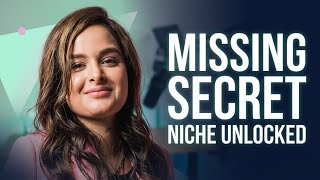
In a live panel at Podcast Movement 2023, moderator Rob Greenlee leads a conversation with industry leaders—Fatima Zaidi (Quill), Alan Block (Canadaland), and Harley Baker (HubSpot)—about the critical role of niching in podcasting. The discussion explores why a focused niche is essential in an oversaturated market, the risks of over‑narrowing versus being too broad, and how niche audiences can form cult‑like communities. Panelists share practical tactics: using seasonal formats to experiment and pivot, leveraging data‑driven KPIs (average consumption, listener demographics, cost per minute) to validate audience fit, and employing visual branding (series and episode artwork) enhanced by AI. They debate ethical and creative implications of AI for transcripts, show notes, and title generation. Format decisions—solo, interview, hybrid—are examined as extensions of niche strategy, and the concept of “niche up” versus “niche down” is introduced as a way to expand reach without losing focus. Throughout, the panel emphasizes iterative testing, audience surveys, and clear branding (titles, art, SEO) as the three primary touchpoints for listeners.
Chapters
Hi everyone, we're gonna go ahead and get started with session number 8, Narrowing Your Niche: Carving Your Space in the Podcast Landscape. I'm Steph, I'm the VP of Product here at Quill, an award-winning podcast agency, and co-host of a hosting and analytics product dedicated to delivering the greatest podcast insights. So for this panel today, we are going to be talking about standing out in a crowded digital landscape, specifically how do you own your niche. So we're going to be talking to these wonderful speakers here who have mastered the art of finding and crafting your niche. First things first, we have Robert— Rob Greenlee, who is going to be moderating, founder of Spoken Life Media. We have one of the digital Fatima Zaidi, founder and CEO of Quill and co-host, Alan Block, who is the COO at Canadaland, and Harley Baker, creator partnerships manager at HubSpot. Really excited to hear what all of you have to say.
Take it away.
Yeah, terrific. Thank you. Thank you for the introduction. And, um, it's always exciting to be at Podcast Movement, and this is a very interesting topic. The, uh, narrowing your niche has been a hot topic in the podcasting space for many, many years. As this kind of strategy to reach kind of a passionate audience for your podcast. And so oftentimes podcasters will start with this thinking that they need to be broad and cover a lot of topics because that's what they're interested in talking about is a lot of different things. But there is a little bit of a magic sauce here that goes into podcasting where niching down can either be very good for your show or it can, it can damage your show. There is a spectrum to niche just in general, right? There's niching down too far, which can, can basically take you down so far down a rabbit hole that there's no audience there for you. But at the other end of the extreme is not being niche enough, right? So it's creating a balance with what you're doing is really, really the key, and especially in this increasingly crowded kind of media landscape, you know, brands and creators and even agencies. So you start thinking about the media companies or the brands that want to create content, and how do they focus, and how do they find that niche that is the sweet spot for the listeners? Because that's what we always have to keep in mind, is what the listeners want to hear, and what's going to be helpful to them, and what are they going to perceive as value. And that's the, that's the key. And so I've got, got a great panel up here that can help us talk about it. So I just want to throw out kind of a general question, and the whole panel can kind of take it. Given that the world is so saturated, how important do you think niche is in podcasting? I do hear people say that going broad is the way to go. So this is a hotly debated topic right now. But it's more crucial than ever because we all want to reach audience. So, so as, as all of you think about this, where does niche fit in your spectrum of importance?
I personally, I'm all about the niche audiences. I feel like they have the power of forming more natural communities. I've mentioned this before, but podcasting is in a really unique situation where you You're only reaching those who are seeking out your content, so your audience, no matter how big or how small, is highly relevant to be interacting with your show, your brand. Generally speaking, when we look at our roster of clients at Quill, the niche shows with the niche audiences, when they know there's something to someone rather than everything to everyone, those shows perform the best in terms of reaching this natural community globally of folks where there's not a ton of competition. I mean, if you're creating another business interview show, you're competing with the Guy Razes of the world. Another investigative series type show, there's so many true crime podcasts out there. But when you're creating a show with a niche audience and a niche concept, you generally will have more of a, I like to call it a cult-like following.
Yeah, and to kind of dovetail off of that is that there's such thing as niche genres. So, you know, and I think your, your true crime example is a great one because, you know, doing a true crime podcast is niching down and it's focusing on a, a well-known audience out there that has a passion for consuming that kind of content. There's no question. But Carly, I wanted to ask you too, what's your thought on this niching down concept?
Yeah, absolutely. So at the HubSpot Podcast Network, you know, we really are a niche network because we really only work with folks that sort of fall under the, the business umbrella. And while, you know, the business podcast umbrella is large, a really large priority for, for us as a network is to, you know, speak to individuals in, in roles and businesses that are often, you know, not represented. So you can think of us, you know, having a customer success podcast, having a product marketing podcast. So these are kind of niches within the niche of, of the business space. And this is a really big priority to us, especially as being a business network, making sure that we're reaching folks So no matter what their role or their goal is, we have that content that they're looking for that they can directly apply to the work that they're doing. So I would say being a niche show is really important to the work that we do at HubSpot.
Yeah, that's great. Alan, what's your thoughts on it?
Speaking personally, my media— I have 2 kids, I have a lot to do. My media diet is full. I look at my new episodes on Spotify and there's 400 each day, and realistically, I listen to one a day. You know, I get my daily news from The Daily, and I get my fix of nostalgia through some of the Ringer shows, and I get— I've been listening to Marc Maron for 8 years. In order to break through and replace one of those shows, you're going to have to offer some utility that those shows don't. So just, I'm not looking for another pod— comedy podcast to replace Maren, I'm looking for something that fills a gap in my media diet. It's not only competing with other podcasts, but competing with all the other things I have to do in a day. So I think, I think about niche less as a genre or as a type of thing you're covering and more as, as, as tone and point of view and utility. And how are you approaching your show in a way that can become a valuable part of someone's media diet?
So Fab, as the CEO of Quill, and you have a production agency and you also, uh, work with a lot of corporate brands, what does that conversation look like, uh, when you're talking to a corporate brand about niching down and, and how they can take the content that's important to them that they want to communicate to potential customers? Um, how do you thread that needle? It's gotta be a complex one.
For us, it's all about building a community around our shows and, you know, creating that, transforming that process from a passive one to an active one, creating an activity hub around the show so it's not something that lives in isolation to be downloaded or streamed once on a platform. I always say this, podcast listening is transactional. We're asking podcasters for their time and attention, which is their most valuable resource. In exchange, they're asking for companionship, to be educated, inspired, so really understanding their key motivators creators and drivers of appeal, which truly comes from niche audiences. I also don't think niches are a life sentence. There's always an opportunity to rebrand and pivot. That's why I really like— I'm a big fan of podcasts broken up into seasons similar to a Netflix show or an Amazon Prime show with a definitive start and end, because you can use that opportunity to reflect on what went well, use the data to see how your audience is responding to the content, and then potentially rebrand the format, structure, host, branding. So I think it's important to focus on a niche audience and build that natural community around your show, create an opportunity where they can engage with you, each other, the content, but ultimately if something isn't working for you, then you can easily pivot or rebrand.
Yeah, that's an interesting example. If you think about seasons and maybe being able to niche really down during a season and then shift to another season where you maybe niche down to a little bit of a derivative niche. Is that kind of how it works?
That's exactly it. That's what we do for our clients. We take a break between all of our seasons to really reflect on what went well, and then we always make changes to content formats, concepts, structures. And so when we look at our podcast roster within our agency, The shows that perform the best are the ones that really know who their ideal listener profile is, and they're not competing with the concepts that already exist out there. They're either the first, the best, or different. And the natural community usually comes from hitting those niche audiences.
Yeah.
Yeah.
And, and I would imagine that the artwork and the, the presentation, the metadata and all that stuff needs to change as well. I think that's one of the things about seasons, it's always been a little bit of a challenge. I mean, it's, it's something seasons has been around with storytelling podcasts for a long time, but it's interesting to think about it from a corporate perspective. And do you change the artwork that's presented around that podcast? And especially now as we see Apple is finally supporting their own artwork tag for episodes, do you guys create specific episode art too?
We do, we do episode art, we do rebrand our cover art as well. I mean, I think it's like any marketing strategy or channel, we do it until it makes sense and we don't try to fix what's not broken, but ultimately I think there is a natural end to most shows, or at least at some point they should come to an end. It's like watching TV shows, at some point you need to know when it's the right time to end, and ending doesn't necessarily mean you have to cut the show, it just means that you can come back with a bigger or better concept or a completely rebrand or completely launch a new show. And so taking the break between seasons allows you the opportunity to do so rather than just indefinitely creating content and not knowing when you're going to take the time to reflect.
Yeah, because it does seem like if we think about successful programs like on YouTube or whatever, that thumbnail is so important, right?
Yes.
And it's And it's— I think it's going to become even more important as we look to the future for podcasts too, and that podcast art needs to stand out too. So how do you guys niche down your podcast art in alignment with the audio? Alan, is there any thoughts you have on that?
Again, I think for us as a network that has a very specific tone and sensibility, it's about ensuring that all of the art across the network really projects that that sensibility and that point of view. And it gives not a sense of necessarily what the content contained in that episode, but the attitude as well as the content. I think I'm of two minds about the individual episode art. I think there's something cool about it, and there's something appealing to having different visual appeal that relates to the episode. But at the same time, I'm not sure it adds, you know, I want people to see the same thing every time and be able to recognize it sight unseen. So I'm I'm undecided on that topic.
Yeah, I do know a couple of podcasts, very successful ones, have been doing their shows for a long time that they change the series-level artwork to align with the, the episode topic, right? So if you think about it from a psychological perspective, people looking for a podcast to listen to, and that episode art might actually be more enticing to check out the podcast than the standard art, right? And case in point, YouTube thumbnails is so important to that. There's no like series thumbnails in YouTube, right? It's all episode related. So I kind of wonder if there's a little bit of learning that could be had from that, especially as we see the convergence more and more of YouTube and podcasting and these other ways that people are finding content, that artwork really needs to sell. It really needs to sell and attract people and be a hook to get people to try your podcasts.
Yeah.
So any other thoughts on that yourself?
Yeah, absolutely. I think, you know, when I think about the HubSpot Podcast Network and I go to the landing page and I see, you know, the sea of artwork and every style and font and sort of theme there and You know, I think this is important too, you know, with the work that I do on YouTube is making sure that your brand identity is really strongly setting up the audience for the type of content that they're gonna listen to. I think on YouTube it plays a huge part and thumbnails are very important and, you know, I think equally if not more important than, you know, having SEO and search-friendly titles. And I think on the podcast space, I wish that I saw more people be more creative with their art. I think it is, you know, one of the few, you know, types of visual identities that they have, especially with, you know, purely audio-first content. So I hope that, you know, as the industry moves forward, people get a little bit more creative and show a little bit more of themselves through that artwork.
Yeah, because I've been seeing really exciting-looking artwork, colorful, you know, even, even the illustration capabilities of artificial intelligence now is maybe taking all this to a whole other level. We'll have to see some of the artwork that comes out of these AI engines. Isn't really podcast ready, but I can see a day when it could be. And it might be interesting to map the topic from the transcription and tell the AI to generate the episode based on that topic. So I've been playing around a lot with AI technology too, and I think it can be helpful in this process of niching down and especially analyzing the transcripts and figuring out alternative titles that you want to put on your episodes, because part of niching down is your episode titles have to be clear about that as well and, and, and really kind of drive that message home. So how do you— do you think about that? If you want to talk about episode titles, how important is that to your process?
Your episode title, your show title, your artwork, are your 3 first touch points with your listeners. So if they're perusing through the iTunes app, that is the first impression that they have. And so yes, I think it's very important. Aside from the marketing advantages of SEO and discoverability, I think being able to A, clearly depict what your episode is going to be about, but B, trying to incorporate keywords so that when folks are searching for the content, essentially is ranking on the search pages. It's a bit of an art and a bit of a science. And so I would say arguably very important. There's an interesting sort of debate that's been happening on this stage across all of our panels, which is how ethical is it to use AI to create and generate show titles, episode titles? It's a bit of a controversial one for me. I think using AI for laborious tasks like marked up transcripts best guess, backgrounders, even show notes. Absolutely, it gets in the way of your creative production process. So why not use it as an opportunity to scale your content and embrace it at the risk of not being left behind? On the flip side, there's that authenticity argument, which is if you're using it to craft your script or script your shows, concepts, even episode titles, is that an authentic way of positioning yourself as a thought leader and subject matter expert. How do you find that fine line? And I would be very curious to hear yours and, Alan, your thoughts on using AI to generate and scale content.
Yeah, absolutely. It's definitely a hot topic right now. And I think, you know, one of the biggest places that I see AI being used, you know, within our network and also in the industry more broadly is to help sort of tackle, you know, the post-production challenges. So when we think about tools Castmagic is a great example of one of these tools where, you know, you can just put in your audio file and it's going to give you a blog, it's going to give you a newsletter, it's going to give you a transcript, it's going to give you timestamps, it's going to give you all of those types of things that are, you know, really laborious and take a lot of time away from the creative process, as you said. And I think it's kind of at a point now where it's really up to whether, you know, how sort of how you want to, you know, utilize that technology and take care of some of those tasks, but also how much creative freedom you want to have over AI. And so I think there's a different line for everyone. I think it's great, especially for smaller shows that don't have the time and the resources to be able to do a lot of those tasks themselves. And I think it'll be interesting as AI continues to hold influence over this industry, sort of what that looks like more broadly.
I mean, I'm going to sound like a broken record. There's— again, I come from the film world, and there's this quote by Roger Ebert that I just thought of that I like. He says that films aren't what they're about, they're how they're about them. And I think in both title— both in what you're making as well as titling and as well as show notes, there is the SEO stuff. There is making sure people understand the tin can labeling, making sure people know what's in the tin can. But there's also having people understand the sensibility, why it's not just a carbon copy of every other show in that niche, and making sure that that comes through as well in all of the assets, in the images, in the show notes, and in every piece of production from the ads to every part of the show. And I guess my point of view, that answered the actual question, is that, you know, AI can't do that. AI can create a slightly shittier version of the thing you do if you're not a generic thing.
Yeah, I just wanted to— I mean, I use a lot of the AI tools for the podcasts that I work on, and it's always wise to look it all over and add your— make sure that it's representing you. And I think that gets back to really what you guys all been saying is, is that AI is not necessarily a replacement for you in what you do. It maybe can speed up the process of doing things, and it can give you ideas maybe that you hadn't thought of. And but you can throw those ideas out if you don't like them. So that's kind of—
I—
that's how I use the tools, you know, to do summaries of, of a transcript is pretty powerful. But sometimes you got to read through that transcript and— or that, that summary to make sure that it's talking about the stuff you want to talk about in your podcast. So I think that's important. But Alan, with Canada Land that you're working on, that's kind of a distinct space in the Canadian podcasting market, right? And so share some insights and findings What are some of the benefits that you guys have found with niching down, but also with AI? Are you guys embracing that on your network across it?
So in terms of niching down, I mean, I think we've kind of scaled up. Like, the— Canaland is 10 years old and started— Jesse, our founder and publisher and the host of Canaland, started with, you know, there was a gap in the market. He was a journalist and wanted to, you know, he You know, there was not really much in the way of media criticism in Canada. That just didn't exist the way it does now in the US and to some extent in Canada. And there was a real need for a show like Canada Land. And, you know, it created— it didn't fit into a niche, it created a niche and then niched up, I would say, as there was a dialogue with the listeners and the supporters and they were very vocal about what they liked, what they didn't like, and what they wanted more of. And, you know, we were in this media criticism space which got expanded to news and got expanded to politics and culture and society and history, but all kind of with the same auspices and the same point of view. And a listener of the original show could very much embrace a certain way of thinking and talking about other issues that weren't specifically in that niche. And I think, you know, as we, you know, we've grown and we do all sorts of different things now, but it all maintains a certain feeling, the same feeling as we had 10 years ago, which I think what makes Canada Land in particular special and what makes the really great networks special is even when they branch out into other things and other niches, you kind of have a feeling about what you're getting.
Didn't you just have your 10-year anniversary?
Our 10-year anniversary is October 5th.
Oh, well, wow.
Yeah, it's interesting as we think about, you know, existing podcasters too, ones that are currently doing, you know, some level of niche, and maybe they want to change direction. Maybe they want to maybe niche even further down, you know. I talk to many podcasters and some of them are like, well, you know, I'm not reaching the audience that I want. And I kind of get the feeling like sometimes that I'm not appealing to the right audience. And sometimes identifying what that audience— by doing like maybe an audience survey or something like that, get some feedback from them to find out how you are doing with them. It's sometimes hard to get feedback with podcasts, but So if there's a show that's looking to niche down, how would you guys recommend that they, they go through that process, or is it similar to what I just said? Go ahead.
I think data measurement is like first and foremost, really utilizing the tools and metrics at your disposal to see how folks are responding to the content. If you are completely bogged down by listeners and downloads, like you're not going to have any sense of how folks are resonating with your content. So the first step in the process would really be utilizing KPIs like average consumption rate, listening time, the cost per minute of human attention, where are the drop-offs happening, and also are you hitting the right target audience? Like, who is your target audience? So co-host, our product now has started reporting on things like age, gender, household income, occupation, hobbies, as well as what companies are listening to your show. That allows you to identify who your target audience is and if you intend to reach that target audience. And if that's not who you originally created your show for, then I think it's absolutely fine to pivot. Pivot for me is just another word for rebrand. And like I mentioned earlier, a niche is not a life sentence. And there's no reason why you can't restructure, reformat, rehost after a particular set number of episodes. That's why the seasons are so key.
Absolutely. 100% agree. And I really, really do deeply believe in the, you know, the data-driven approach. I also think that it's really important to understand the difference between the audience that you're reaching now and the audience that you want to reach and sort of what that means in terms of your content. I think that a lot of times we think that we're reaching the audience that we want to reach, and in fact, we're not. And so I think constantly being in a testing mode and wanting to optimize to reach, you know, that audience that you want to reach is really important. I also think that, you know, a lot of people miss talking about content diversity. So I think of a creator that I know who's started his show as a solo hosted show. He's never had a single interview on. He really wanted to build up his listenership and for his audience to have a good idea of his opinions and who, who he is and how he thinks about business in the world. And after reaching that milestone, has decided that he's going to now start having interviews. And I think this is a fascinating concept because he really wanted his audience to have a deep understanding of who he is. And now when they listen to those interviews, they have a strong understanding of his approach to the content, why he's bringing on guests, and they really know him in an intimate way that I think they wouldn't be able to know him if he would have just started on interviews from the start. So I think this is a really interesting case, maybe not necessarily for niching up, but serving that initial audience, giving them a chance to know you in an intimate way, and then inviting others into the conversation.
Yeah, I agree that format is definitely an important component of figuring out what your niche is, and, and in the personality of the host too, and what kind of show do they want to do. Is it live? Is it Is it only recorded? You know, there's a lot of factors that go into it. And Alan and Fatma, how do you think about format when it comes to niching?
Sorry, say the last part of that.
Yeah, so how do you think about format of the actual podcast? What's the segments of the show? What does the host do in the show? Is it a solo with an interview, or is it just a solo show? I mean, how does that play in a niche?
For us, there's no appropriate format. Like, I think the format should suit the nature of the show and the content. Like, you can't start with a format. I think you have to start with what you're hoping to accomplish and who you're talking to and what they might want, and you pick the format that's best for that, uh, for that content.
Yeah, it's the same thing for us. I mean, we usually do this very deep dive. We do this exercise where we Take a look at the competitive matrix, so what other shows are out there that already exist so we're not reinventing content that's already out there. And if you don't fall into one of these three categories, the first, the best, or different, we shouldn't be creating the show. So we do the competitive matrix, who we're creating the show for and what we hope to get out of it, the business objective. Then we look at the format and the most creative way to structure the show, and that can change based on the season that we're producing.
Yeah, that's terrific. I, I would love to have some questions. We do have a roving microphone that can go around. So if you wanted to ask the panelists a question, feel free. So if we can get, get a microphone, we got a couple of hands up here.
So in terms of the— in terms of how many episodes should be involved in a season, we've seen anywhere from 4 episodes all the way to 24. So it's hard to to pinpoint exactly how many episodes you should have. I think in terms of posting cadence, it's less about how frequently you're posting and more— there's actually no data to support that publishing weekly or daily impacts your audience growth versus like biweekly or monthly. What matters more is consistency. So if you pick a particular posting cadence, let's say the second Wednesday of every month, you have to stick to it for SEO purposes, but also you're building a pattern and a relationship with your listeners. Similar to a Netflix show, I know on every Sunday at 9 o'clock House of Dragons is going to drop an episode, and if they don't, I'm going to be very upset about it. Podcasting is no different. I would say the consistency piece matters more in terms of how many episodes you have and the format. It really depends on the business objective and what you're trying to achieve, and there's no hard, fast rule, and there's actually no— research studies that have been done to show if there's any best practices. There have been some studies done in terms of length. Generally speaking, under 20 minutes, you really have to create bite-sized, punchy content. Anything longer than 40 minutes, it's a pretty big time investment to ask someone to subscribe to your show, especially as a first-time podcast, but there's no one-size-fits-all.
Yeah, that was the question I was—
Between the seasons, I would say for our clients, we typically try to take no more than 2 months to do our strategy or deep dive before we launch new content, mostly because we don't want to lose them to competitive shows. If we feel like a show has been inactive for too long, we risk losing our audiences. And so we're usually very transparent when the season is coming to an end, when they can expect to hear the new content drop, and we try to honor those timelines. So typically, depending on the posting cadence, we're doing at least 2 seasons per, per calendar year.
Go ahead. Next.
My name is—
this is—
one of the things I teach around leadership is to pivot, but to add.
And so I don't know how that might apply in the podcast world. This is more from a business perspective, but it occurs to me that it would be interesting to talk about what would be the idea instead of pivoting between the unique practices of all the communities and then adding really targeted additional ones.
Yeah, that sounds good to me.
I think that's exactly right. Like, you know, we could make a Beyoncé podcast, but it, you know, there was no reason why someone who listens to Candleland would listen to our podcast on Beyoncé. And it doesn't make sense. And we could start— it would be effectively like starting from scratch, which is not something we do. And like, there's a re— you know, you can be— I was trying to think of a good example of this before. Like, I don't know who it is in the States, but Coors acquires Sierra Nevada or someone like that. And they're not trying to get Coors drinkers to drink Sierra Nevada. They're just trying to capture a different piece of the market. And there's— you can do that. Sort of strategy. But I wouldn't think that, you know, starting anew somewhere off to the corner is the best strategy. If you've got something that works, it's adding something where there's a vector between the current and the new and a reason why someone would go from one to the other.
Absolutely. I also think when we think of, you know, niching, we often think of niching down. I think niching up is also something. I think it has to do with what what Dima and I were talking about in terms of, you know, knowing if your content is actually reaching your target audience. And if it's not, that's, you know, that's a way to think about sort of niching up and, you know, adding to the content versus taking away, which is what we often think about.
Yeah.
Well, I think that's all the time we have. Thank you so much, panelists, for being with us. Thank you, Rob. Thank you. Thank you for joining us in the audience. And enjoy Podcast Movement. I guess there's lots of parties going on tonight.
More from Rob

Future-proofing with Delphi AI/Human clones: your podcast as a personal LLM | New Media Show






How sports reveal what AI spectacle gets wrong #Technology #Sports #Commentary



