The Podcast Gold Rush Is Over - Here's What's Happening Now
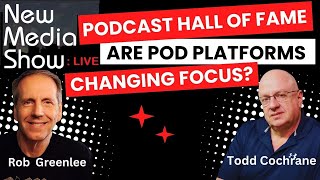
Rob Greenlee and Todd Cochrane examine podcasting after the boom: Podfest in Orlando drew fewer attendees, vendors showed mismatched gear, and big trade shows are shrinking. Revenue concentrates among top shows while demand for production services grows.
Chapters
comes on, it's—
oh, I know, YouTube comes on quick. It's—
yeah, well, no, I'm talking about the, the whole thing. Yeah, I stream to X, Twitter, and I mean, I know you do too, but X, Twitter, Facebook, all of it, it just—
yeah. All right, that's up.
It takes a— takes like maybe 10 seconds to connect everything.
Yeah, it's Facebook that's the one that's a little slow. Okay, there I go. I'm good there. Let me hit this. Here we go. Todd and Rob in the afternoon. Hey, afternoon delight with Todd and Rob. Oh yeah, oh yeah, here we are. We're back in the studio, back from you being stuck in Florida.
I know I got teased because It's like, uh, getting stuck in Florida and I'm talking to people up in the Northeast and I'm like going, you know, it's hard to feel too sorry for me.
Yeah, because it actually warmed up right where you were at.
Well, no, it actually stayed pretty cold, actually. It, it was in the, the 40s, uh, down there, and at night it was getting down into the 30s, so I felt like I, I was back at home, you know.
I, I packed when I went to Podfest. I put in two long sleeve shirts and all my summerwear. I put 3, 3 pairs of shorts, some pants, and I didn't even look at the weather report. I got down there and I was like, what the— I froze.
If you don't know what we're talking about, we're talking about Podfest. Both of us were down in Orlando at the Podfest Expo, um, about a week ago, and we froze, right?
Oh my God, it was crazy. But anyway, uh, you, you made it back home after winter again.
Yeah, well, hopefully spring is right around the corner here, and, and, and we start thinking more about the, the new year, and also, you know, what's in store for the next, you know, I guess 11 months. I suppose we're almost through the first month already.
Yeah, it's, it's pretty amazing. I've been, uh, I guess for a better word, what's the better word? Slammed. And we're doing a new, um, video series, and I've done 4 interviews so far this week. I've got 4 next week, so I'm front-loading a whole bunch of interviews. I've had a number of folks on, and, uh, it's, it's, uh, it's fun to talk to people that, um, have a clue.
Yeah, it is. Well, you probably saw that we're going to have the, the fellow that's in charge of Adobe Podcasts on the, on the show, you know, either next week or the week after. So that's, that's coming up. So it'll be interesting to talk to him.
Yeah, I'm looking forward to that because I, you know, I, I know what they have. I'd like to know what's coming, right, if they're willing to talk about this. You know, sadly, I'm sitting on something I can't talk about that's coming tomorrow or, or tomorrow, Friday.
From them or from your platform?
From Apple.
Or both? Oh, from Apple.
Yeah, Apple's got something big there they're about to announce, but I, I'm, I'm under NDA.
Well, to not ask any details, I don't even, don't even ask.
Spot Don't even ask, Rob.
Is it a good thing?
Yeah, it's a good thing. It's a good thing.
Is it a good thing?
Yeah, it's a good thing.
Something that's sorely needed?
It's a good thing. I'm just leaving it at that.
Okay, so how will we find out?
Apple will announce it. Everyone will get their— probably an email, I guess. However they do it.
Or news or something like that.
Yeah.
Hear about it, you think?
I don't know. Again, Apple does not share their PR strategy with me. All I've known is I know when I can talk about what's coming.
Well, and I want to talk about that a little bit, um, in, in relation to one specific platform. So definitely stick around for that. Oh, it's an interesting conversation.
Oh, it's— that's, that's— oh, I bet you I know which platform we're talking about.
Well, I created an outline, so it's It's in there.
You didn't email me the outline. I didn't see it. Yeah, I did. Oh, did you? Yeah, I sent it to your— When did you send it? 3 minutes before we started, or—
No, no, no. I sent it probably a couple of hours ago.
Oh, I—
Yeah, I think it went to your Blueberry account.
Oh, okay. So let me go over to that account. I'm sitting in another—
I know you probably have— I mean, I've got like 3 email addresses for you, maybe 4.
Yeah, yeah. So I have it open now. But I guess, you know, we can start off with Podcast Hall of Fame. How'd it go?
I thought it went, I thought it went well. I thought it went a lot smoother and was a better production. And just the whole thing just went off smoother this year than, than last year. I mean, it's not without still some, some rough edges that need to be, you know, filed down a little bit. But each, each year we appear to be making progress on this and it keeps getting better.
I felt bad for Gordon. Yeah, he got up. I think he got off his script a little bit one time. I just kind of giggled. He did.
Yeah. But overall, I was like, uh, do I go on stage or, or not? And we had to back off. And yeah, that all got fixed in post-production.
So whatever you saw on the, um, yeah, on the public video, it went great at the event.
It went perfect.
It went perfect. It did. And, uh, the stories were good from the inductees and You know, there was a high number of folks that participated, uh, not that many video acceptances. There was a few, some because they hadn't, you know, they basically their whole life burned down, literally.
Yeah, Lance Anderson. Yeah, down in LA, lost his studio.
Yeah, right.
So yeah, that's tough stuff.
Yeah, it is. Um, but, uh, so what's, what What is the future of the Podcast Hall of Fame, Rob?
Well, I would like to, you know, really focus on building a larger kind of organization around it from the standpoint of getting more people involved in it and getting more people providing input on it, like nominees, and also more people that can vote. Because one of the challenges of this is that if I'm going to expand it internationally, which I would like to do, I think we're, it's still maybe a little early to think that that's something that will have a big impact on even next year's event. But I think that's the direction that things are going to move towards. And to be able to do that, I'm going to need a much bigger base of people to participate. At various levels around the world too. And to have people from all sorts of different countries involved on like maybe the board or at some level of a committee that can kind of give me and give the whole organization feedback on, you know, who should we be nominating from all over the world? Because I certainly don't have deep knowledge on the history of podcasting and in Thailand or in any other country around the world, actually. So that's a big challenge. But from an organizational, just operational side of it, I think, yeah, I think just getting more content built around the Hall of Fame on an annual basis, kind of ongoing kind of function of the of the platform and really to support kind of, I think, the bigger mission of the Hall of Fame is to honor and showcase folks that show real leadership in the podcasting space and want to further its goals and really have an inspirational kind of opportunity for others to learn from.
You know, this probably wouldn't work with the current, uh, you know, alignment with Podcast Fest. But it'd be interesting to see if he could do it international at the podcast show in London, if he could do, you know—
that's an interesting idea—
do 10, do 10 in America, do 10, uh, international. Because there's surely— again, I, I, again, I don't know the international base.
And in UK, there's surely 10 But oh, I'm sure, yeah, I mean, in definitely in Europe there's definitely—
yeah. So if someone's listening and you are outside the United States and you've been aggravated, uh, where's my button here? Don't eat me, James Cridland. If you are outside of the United States, um, why don't you help us with that list? Of those international podcasters or groups. Or again, it's two segments— it's podcasters and those that have supported podcasting.
But that doesn't exclude a podcaster. So if a podcaster has done organizational things and been a facilitator in the industry, that's kind of a separate category from being just a straight-up podcaster.
And if the first, the first piece is starting to accumulate the worthy names, uh, in building a list. That's— nothing can happen international until we have a list.
Um, and you know, also have people from all those countries, um, voting.
And there could be a hybrid model the first year. There could be— yeah, I don't want to say this in this way, but there could be, let's pick them, you know, pick the first 10. Um,, you know, that are most deserving. There might even need to not even need to be a vote the first year. But again, again, I, you know, I don't want to make, make kingmakers here, but something has to kick the, kick the can down the road, um, and then talk about a partner to be able to do a show outside the United States.
Yeah, it's like, really, it's like one of the challenges, it's like any other election, right?
Yeah.
You have to have a large enough pool of people that can have knowledge of the candidates for them to be able to have an influence on the vote. Because I did have some international nominees in the list of possible candidates to be induction. The problem is very few of them got any votes.
Because nobody knew who they were.
Right, right. Because the knowledge about them just wasn't there. And I don't really know 100% that's the reason or if it was more that there were just other people on the list that were definitely stood out, right, as people that really needed to be inducted. And that's part of the struggle of this transition is just going to be, and it'd even be maybe next year that it does still lean a little bit heavy towards the North America market. Again, it's not going to all of a sudden, you know, be 11 or 10 or 12, uh, inductees that are from outside of the U.S. Yeah, I think it's still maybe a little premature for that expectation.
Well, you know, I think, um, it's been in— what I will say in my regard, as far as— and this is outside of the Podcast Awards, but, uh, my phone's ringing again. And in regards to businesses, um, we've had more calls in January than we had in August, September, October, November, and December.
That's interesting.
Yeah. Yeah.
So, uh, what's the context of the calls, uh, on average?
Businesses and different podcasting services.
Big businesses to get started, work with, with Blueberry.
Yeah, well, you know, they're, they're shopping, they're talking to 1, 2, 3, 4 players, getting bids, um, you know, anything from probably minimum 5 shows to like 20. So, you know, it's any— it's like, you know, it's like instead of starting with 1 and baby steps, and we're gonna do 5, or we're launching 20 So, you know, this is— it tells me that there is some money coming back on the business side. Same thing internationally. I've had some international calls too. Um, it probably goes into the, you know, the topic of things, things going global. Um, yeah, it's, it's, it's definitely— this to me is refreshing, uh, because, you know, come about August of this year, I was like, what is going on? You know, and so these are, these are organizations that are not monetarily focused from a monetization standpoint. They're information focused. And here's the, here's the real kicker: they want nothing to do with video. They want audio podcast. Like, I keep asking, is video part of your— and they say, not now. It's too much of an undertaking. So from my perspective, you know, for my business, you know, it's very, very simple when there's not a— this additional video component that we support it. Then you have to have the, you know, the, the talk.
Or why would they be talking to you about a video conversation?
Well, I just asked. I'm just— I ask if they're just curious. Yeah, well, they, you know, everyone now that has a podcast is immediately, you know, you support video podcasting, right? I'm like, yes, of course. So, you know, that's just part of the discussion. But I said, are you going to do video? And I said, no, not in the beginning.
Yeah, I do, do think that there's a lot of, um, differing views on, on video right now going on in the medium, and there's, um And it's always been part of podcasting, but it's just what I mean at what level and who needs to do it. And all those conversations are increasingly what's coming up. And though I do think this global kind of focus that we're coming into is very, very interesting. And I think it's important, I think, for the the health of the podcasting space. And I think in the show today, you're kind of, you know, there's going to be some common themes, right, that keep coming up over and over again, at least on this show, about what's going on in the market. And it can be a little confusing, Todd. I mean, it's like, you know, one side of the industry saying this, the other side of the industry saying something else, and we're getting anecdotal evidence from this big player and that big player that is But I guess podcasting has always been like trying to corral stray cats. You just can't really get your arms around the whole industry to really understand what's going on. Well, because everything is going on.
Well, I'll say this, you know, uh, one thing to say about Google, they, they weren't nothing but cunning. They, they were more brutal than Spotify was. If you, if you look at what they accomplished by killing—
they could continually—
they, they kill— they killed Google Podcasts purposely, purposely to move the conversation to YouTube. So, you know, it's a brilliant PR move that has paid off. And, um, but, you know, I, I think there's a little— I'm seeing a little pullback. Um, I'm not discounting the importance But I'm seeing in conversations I'm having a little, little pullback, a little pull, yeah, a little pullback. And to be honest with you, especially from those— there's two conversations. If you— if monetization is a focus, video's on the plate, on the, on the table. If, if monetization is not on the table, then it's not, it's not a discussion. So It's kind of funny. I'm like, okay, good luck getting qualified over there to earn money and collect your 50 cents. Um, but you know, I understand the strategy. I'm not, I'm not gonna, you know, we don't need to hash it out no more. Although we have gotten some feedback, uh, from the audience saying, put talking about video on the show. So I, I think we, you know, I think we have to take it as it comes, um, from that standpoint. But, uh, I, you know, it's, um, there was something that was in Pod News Today about commutes, and maybe commutes are back up a little bit and how people are listening in their car again more.
Going back to the office.
Yeah, going back to the office. Federal workers, uh, you know, good luck with that. Yeah. Um, and, but please listen in, you know, get your podcast updated. But here's the conversation that you'll find very interesting. I was at an event and a lady asked me, what do you do? And I said, I work in the podcasting space. I run a podcast hosting company, a full-service podcasting business. Oh, great. I listen to a lot of podcasts. I'm like, oh, so she says, I love a lot of podcasts and say, listen, I love a lot of podcasts. She said, um, um, it's on YouTube, right? I said, no, uh, I'm a— I have a— I have a traditional audio podcast. It's on, uh, all podcast apps. And, and, um, I didn't know what kind of a phone she was holding. And, um, I said, uh, if you have an iPhone, I said, it's just right on the phone. You can just click on the podcast app and you can— you can find my show. She goes, I have an Android. And I'm like, fuck. Um, I'm— because I would have originally said, well, Google Podcasts is there for you. So instead we had to go back to the old conversation of, well, you should grab a podcast app and I've got a few you recommend. And she goes, well, I just— she says, you're not on YouTube? I'll just catch you on YouTube. So There is where Google has won the argument and is driving the car. So all Android users and all Android app makers need to understand what they're up against here. And I just thought it was an interesting antidote of the— and I then I asked, I said, so do you watch podcast, or do you listen to podcasts? And she goes, only watch. I said, you don't listen to them while you're doing dishes? Oh no, I watch. And I said, do you, do you watch any podcasts that have a static screen? She goes, that's not a podcast, that's just audio. I thought, uh-huh.
So the argument— flipperoo, Todd—
the argument 6, you know. So it was— it kind of proved my point to it, and it just made me kind of realize that because app— I mean, Google controls the phone. So those of you that are Android, you guys need to double down on your promotion of your apps to, to, uh, to Android devices. That's why we've now re- That's last year when Google Podcasts went away. That's why we re-upped the ante into subscribe by Android, subscribe on android.com. We made sure all our apps were up to date and everything was working because now we're watching click-throughs again and that traffic has dramatically— I mean, it went like this, Rob. It— for those of you listening, it went straight up. The traffic to that website peaked out again because Android users were looking for an app, a podcast app, because their app went away. So brilliant, brilliant marketing on Google's standpoint, you know, on what they've done and set us back.
Yeah, I would agree, Todd. They've been successful over the last year to kind of shift the conversation. As you know, YouTube is the number one place to find new podcasts, right? Um, they've, they've been able to successfully shift that conversation.
But, but at least in one listener interaction, they're not watching your static album art.
Okay, so, right, so that's true.
You've got a note here: Samsung podcast platform shutdown.
That happened a little while ago. It did, but it's more of a kind of like a, a theme to some degree, um, that I'm— I spotted. I know Spreaker has done the same thing. It hasn't been talked about, but they, they really pulled back from their listening Really?
Do they have video?
No. Oh. But think about that from the standpoint of they were acquired by, you know, iHeartMedia. So iHeartMedia is a consumption platform.
Right. So they don't want you listening on Spreaker. They want you on iHeart.
I don't think that they wanted to emphasize the listening app side of Spreaker as a competitor to iHeart.
Yeah, right.
Yeah. So, so that— there's oftentimes reasons for all these things that, that happen, but I think that the Samsung one is money, money, money, money. Well, and I think, Todd, you probably agree with me, the approach that Samsung took—
oh, this— it was horrible.
It was horrible.
They had 0.0001 market penetration, so it— no loss. On anybody's part, right?
It was horrible. And then the other one I want to talk about, and I know James Cridland has talked about this one repeatedly over the last couple months, is TuneIn. Yeah. And I've got a fair amount of history with TuneIn too, as far as knowing and trying to get them embracing podcasting for many years now. But they, they basically have let go of all their podcast-dedicated staff, and they basically haven't accepted any new RSS feeds, uh, into their platform, uh, for over a year now.
Yeah, we're removing them from our distribution. Actually, we're leaving it up with a note that they're not taking any more submissions, and we're leaving in there for those folks that have current listings still on TuneIn, but The CEO has stated, this is Richard Stern, who's never really been an advocate for podcasts.
He's always kind of taken a negative tone around podcasts for many years now, but he stated that updating podcasts in TuneIn is mostly only gonna be done through their partner creator partnerships.
Where it feeds money.
Well, yeah, I mean, they have a team that goes out and signs deals, right? And in this case, one of their key providers is iHeart. So we may see any new podcasts come in through the iHeart platform. So when you submit to iHeart, that may help you get into TuneIn at some point.
But iHeart has been notoriously, horribly slow I know. And taking shows— we see months, 2 months for shows to get approved on iHeart.
It's horrible. That whole ecosystem is kind of broken. Um, and, and they're basically, you know, the CEO was quoted in saying he complained, um, saying that there's no revenue to them for adding podcasts and TuneIn. And that they get no or very little listening to podcasts on their platform. Well, I think there's some, maybe some good reason for that.
Yeah, I think so too. Right. Second-class citizen.
Well, it is. It's a de-emphasized media area on the platform. Yeah. Most of the platform is really, you know, live streaming.
Really?
Yeah.
96% of the listening is live audio on the platform, which they can make money on, right? They can just— they run advertising ads, right?
Yeah. And, and this on-demand thing that, you know, the, the cool kids and the, and the younger kids want to do is, is not as, uh, favorable to their expectation of their user base. So, but Their app is in cars and stuff like that. So, you know, I don't tend— when I use the TuneIn app, even in my own vehicle, um, I tend to listen to streaming music stations, not go find a podcast. I'm going to go listen to a podcast in my car, it's going to be an Apple Podcast. Yeah. So there's probably good, good reason for this.
So a pullback on distribution points. Yeah, you know, in reality, it's more settling out of the dust, right?
Yeah. I mean, I think all these folks that saw this shiny light of an opportunity like Samsung to get into podcasting is it's just all kind of settling out as people look at their budgets and they look at their staffing and, and see what's bringing results, you know, and I think that's the era that we're in right now is, is hard work, merit, and results. That's what everybody wants now. And oftentimes now it's all about, you know, it's everybody on the team is all about bringing in revenue.
It's revenue, baby. If you're a company owner, even my company, are we doing this? Does this lead to revenue? Does this help us grow, right? I have to ask those questions in this economic period, right? You have to be, where are the dollars coming from? And then how can I make it better so that we keep the current customers and we attract new ones?
And that was the conversation that I had with Microsoft when I was working there too, when back when I was the, um, the podcast business manager, uh, for Xbox back in those days. Was, you know, if we're going to invest a bunch of developer resources into this and staff and stuff, there has to be, you know, some sort of revenue model that's coming in. So I proposed a bunch of options on that. But at the end of the day, I think they just assessed that it wasn't enough to justify it.
You know, the— I'm going to lose my train of thought here when it comes to money. Um, oh, I know what it was. Meanwhile, Spotify just signed a new deal with a music group that is going to cause Spotify's subscription costs to go up. So they made a deal with them because, hey, give us some sugar for playing this so that we can still allow the, the artist to starve. Um, but pay us. And yet podcasters get nothing. So, you know, when is this gonna— when is— when is there going to be a reversal? When are podcasters going to start waking up and saying, hey, you're not taking care of me, I'm not going to take care of you? Will that happen? I doubt it.
Well, Todd, another big uber kind of large trend that I'm seeing in the industry too is that this relatively small group of really big shows is really having a big impact, right? Yeah. And they're bringing in a lot of revenue. And it's like the top, maybe the top 200 or 300 shows out there.
Yeah. Bringing in massive money.
Are garnering, you know, half of the overall listening audience.
Well, that's the way it's I don't think they're garnering half the listening audience. They're garnering half of the revenue or three-quarters.
Well, I think Tom Webster's actually posted about this like last year, saying that that top 50 podcasts are, are taking the majority of the audience. And so it does make me wonder, as we look at this transition from legacy media over to the internet creators being the mainstream media now, which I think we can clearly say that the audiences have made their choice and it's not necessarily to spend a lot of their time on cable television, right? So, so we're seeing this massive shift and what was going on in that timeframe was more exclusivity, right? Was always the business model of the media companies. And that's an interesting kind of paradigm to maybe what somewhat is going on here is that we're seeing a new type of mainstream media start to form and it's forming around companies that started originally as podcasts but are also branching out into video too, right? So are we shifting towards huge audiences going towards this online distribution strategy versus being on cable television as the future. And it raises the question as well, what's the opportunity for those that are not considered to be in the top 500 shows? What is the opportunity that's left behind and how do we make that pool of impact and audience bigger than just the top 200 or 300 shows? Right. How do we keep growing new creators into this medium? Because I would hate for us to fall back into this paradigm of being just like mainstream media again, you know, with the heavy ad loads, those kind of things. Those trend lines are also happening too, which comes out of legacy media. So I just worry, Todd, what's your thought on that? Do you feel that happening somewhat too?
Well, you know, I, I was trying to bring it up, but X is having a, having a fit with my browser right now. I wanted to show you something I captured yesterday. Let's see if I can get it to— this is bizarre. I've never seen this do this on, on X before. Look, look what's happening with my screen. Reload, reload, reload. Oh, that's weird. Yeah, so who knows? You got something going on with the browser here. Um, let me shut the browser down and come back to it. What I think. So yesterday, um, the, uh, the new administration's press secretary— I don't know if you heard this or not— uh, she basically announced we now have a seat at the table in the press room for a— she called it new media.
Well, the first one that she listed when she mentioned that was podcasts.
That's right.
And then blogs, which I was surprised she said that.
Our, our web traffic yesterday spiked, Rob. We had about 300,000 hits on the New Media Show website yesterday because people were Googling New Media. Oh, and they found our site. And so we had this hammer— we got hammered for about 2 hours yesterday. So if you're a new subscriber because of the press secretary, welcome. Uh, so the, uh, so yeah, she specifically said podcast, but you know, in their mind, podcasts are these YouTubers, you know, they're not about the audio podcasters. So I'm hoping that some industrious audio-only podcasters apply. It's going to end up being a Dan Bongino or one of those folks that's going to get approved to get a seat at their, you know, at the press secretary table now. And of course they did preface that with you have to pay your own way, so it's got to be someone that, you know, is either in DC or, you know, kind of He has a budget.
Yeah. Or has a team member in the area or—
but they only gave him one seat. You know, all the other press has got like 30 or something.
It's a pretty small room from what I gather.
Yeah, I know. But, but you know, they have like this pool, the pool, you know, of people that are permanently seats and then they have a pool of people that can come in on a periodic basis. Yeah.
And stand around the perimeter.
Yeah. Or, or be in the back row, whatever it may be. Um, but that to me— oh, there we go, it's working now. Okay, let me log in here. It's probably going to ask me to authenticate. I don't have my phone on me. Yes, of course my phone is on the other side of the room, so I can't log into X, um, without getting off the mic here. The— so there, I guess, going back to your thing here, um there is and has been a major opportunity for anyone creating original content— YouTubers, podcasters, TikTok. Well, we'll see if it survives. Um, there is a huge opportunity because, and especially considering the, you know, 400-some thousand active shows or whatever the number is today on Podcast Index, and I haven't looked that's a relatively small number as compared to the 35 or 80 or 100 million or whatever his channel is on YouTube, but only 25 get promoted, um, or 1,000 get promoted. You— there's huge opportunity here now, and in my opinion, this, this is the time to double down. Double down on audio, not just because I'm pro audio, but it's, it's, it's time to double down. There's— I think there's just huge, huge, huge opportunity here as, as people shift. I think there's a mindset change that's happening as well. There's been a walk away of some content online There's definitely been a walk away from mainstream media. There's been a walk away from news content on YouTube that was— got decimated after the election. Um, I think there's a huge opportunity. At the same time, I think YouTube will be spending big, big money. I don't know if I said this on the last show or not, but I think YouTube is going to dump a pile of cash and try to make some kingmakers. They're going to try to be a kingmaker. Um, I don't know if that answers your question, Rob, but I, I, I still think there is a—
well, I just think that there's two, there's two ends of the spectrum now. Um, and one is these really, really big games, right, that have shifted from network television over to online. And they, a lot of them took their audiences with them to the online realm.
And now I'm having to downvote stuff because now the, the, a logo is feeding me a whole bunch of stuff that I've run away from. It's feeding me mainstream media clips.
On what platform?
On YouTube. It's for, it's, it's shoving the shit that I was watching before that I was paying for. It's now shoving that stuff into my Elago feed because I listened to a podcast or I listened to a YouTube channel with this associated type of content that I wanted to hear from a human being and not a talking head. And they said, because, oh, you're listening to talking head and you must want to listen to this, this 3-digit, uh, or 4-digit or whatever the letter channel numbers are now for ABC, CBS, NBC, Fox News. So it was shoving about the cable channel. Yeah, it was shoving that stuff of mainstream media, shoving that stuff into my YouTube feed. And I'm like, no, I don't want it. Get it out of my feed. I don't want— I run away from this. Don't force it on me. And so for me, I actually— the other night it got so bad, I was just like, do I have to reset my account? Can't get away from it. It's. It was shoving this type of. Because I wasn't. My subscriptions were caught up and my homepage was just one thing after the Fox, NBC, abc, blah blah blah, blah, blah, blah blah blah blah. And I'm like, kill me. I don't want to watch these people though.
I think that this shift away from cable, cable networks, cable television is just going to drive these bigger media companies to put a lot more energy into making and distributing, um, longer form content on the online platforms.
Well, that's what— that's— it's already been proved by what they were trying to shovel at me. There was stuff that was 30 minutes long. These weren't shorts.
These were a whole— it's con— content. I, I think it's still yet to come.
Oh, new content that is—
that was previously done primarily for cable. Um, cable subscribers, they're going to push over into YouTube. Um, I think that's coming.
I'm not sure where they're going to make their money, you know.
They're going to be ad, ad revenue. It's going to be embedded ads.
It's not going to make like everybody else, but it's not going to make up for the carriage fees, you know. It's not. They're not, they're not going to get the same money.
That's why they have to trim their staffs. They're going to have to be more like a a scrappy, um, online internet.
How many did CNN fire here recently? They fired a bunch, right? I heard something about that.
Yeah, and, and some of the anchors are leaving.
And, and so, well, some of the, some of the anchors were the reason for their rating decline, right?
But these bigger networks do have some advantages making— oh yeah, of course, um, because they've They've been around a long time. They have a lot of brand awareness.
They got— they still have some budget, right?
So if they take an internet primary strategy, they could probably continue to do well, but they will not continue to do well unless they adopt what the audience is expecting. Truth. And also the monetization approaches. That, that the successful folks are utilizing.
So like I said, a great time to have a podcast.
And consequently, their staff levels are going to have to be dramatically reduced. They're going to have to be more flexible in how they produce their shows to keep the cost down.
So Rob, you might have a job as a grip at, uh, one of these companies that's downsizing.
Oh yeah, I want to be a grip.
You, you move from podcasts, go into mainstream media and teach them the new media way.
Right, right.
You can be an associate producer.
No, I don't know that they— it's going to be a big shift for them. I think they get it. Uh, yeah, but I also think that, uh, it's going to be a— there's just going to be a lot smaller.
Here's who— here's what's funny. Networks. Here's what's funny is the reason that they get it is video to video, right? They're, they're going—
video is what they've been doing for a while.
Video to video. Put it on YouTube, put it on the airways. It's video is video. Why can't radio figure it out that audio is audio? Because, well, yeah, how come they haven't figured out? How come the mainstream media has figured out, oh, we need to be over here on, on this platform? How come radio?
It's an interesting question, Todd. I think it is around format, um, and to some degree I think the video folks have the same challenge, right? They have more frequent ad breaks and things like that. But I'm not sure, you know, given what's going on with the monetization stuff, and I want to talk about something else that come up here that's going to confirm what we've been talking about for a couple of years now. But is this monetization approach is a big flex point too? I mean, the revenue that these companies are going to generate is going to be dramatically less than what they're used to.
Oh yeah.
Yeah, and, and there's a couple things here I, I should probably—
they're not going to be able to roll a truck, right? Because next— yeah, go ahead and throw it in there because this is where it really— where's where the money really hits the road.
Well, yeah, there's a research, I guess, intelligence report that came out from S&P Global Market Intelligence suggests that the U.S. podcast industry won't top $2 billion in revenue until 2032?
Uh, I wouldn't. Here's what I know why. I'll tell you why.
Well, if you keep running ads in smaller numbers of shows— yeah, bigger shows—
you're not gonna grow if you don't look down. You don't look down to the, to the 100,000 other shows that are available.
Plus this content moderation, um, brand suitability stuff has limited the acceptability of other shows too.
It's been a block. Here's what I was told. I was talking with someone that is very much— I mean, they're, they're, I'll say, top 3 in, um, someone in a company that's in the top 3 of, advertising and podcast, and it wasn't Libsyn. Okay, we just leave them out. It wasn't them. It was someone that was not exhibiting at Podfest. I'll just leave it that way. And we got into this conversation about, um, exactly what you're talking about. And you know what they said? It's a ruse. No one cares about brand suitability. They just have to say it. Yeah, they don't care. They want in these shows no matter what. They don't care if the person is talking about the daily download while he's creating a podcast on the toilet. All they really care about is being in these shows.
Yeah, because I mean, a lot of the brands have been in these shows for a very long time before that whole thing came up, but this whole brand safety thing is a ruse.
Yeah, it's a ruse.
Yeah, I think it's full—
I think I've used that word 2 or 3 times tonight.
Yeah, I think it's the whole concept of it is kind of dismantling.
Um, but media buyers are lazy and they're going to buy what's easy, and they only have to do a few percentage points better than their predecessor did to get promoted. Um, so I've always— you and I have talked about this forever.
How— and ad loads has a factor in this too. How does— you have a small number of shows that you're stuffing all this advertising into, it's, it's going to create an atmosphere where the brands are going to say, well, I'm not getting the ROI that I want off of this stuff. Why is that? I'm going to pull it out and put it somewhere else.
I had a radio person said, we're going to run 12, 13, 14 spots an hour, 15 spots an hour in our content. And it was like, it's killing. And I'm just like, okay, good luck with that.
Yeah. And this is, this is the result. Yeah. Is a peaking of the podcast advertising in a race to the bottom, a race to the bottom as CPMs fall too.
Yeah.
Of all of these headwinds. And as the, the buyers are looking at this going Well, it's also a metrics issue too. As you as a big podcaster run a lot of ads, then the brands are starting to realize that if I'm in a sequence, I'm in the 6th ad in this show, right? That may be too much ad load before my message is going to get lost.
And I'm going to pull back on that. I'll reveal a secret here. Um, and I didn't— I, I got turned on to this by— I don't know if I should say who it is. I'll say who it is. Rocky and I were having a conversation in the hallway at, uh, Podfest. I haven't talked about Podfest that much yet, and we're talking about, uh Okay, James and everyone else, listen up. If you listen to Podcasting 2.0, you know what I'm already going to say. So Rocky and I are having a conversation in the hallway, and we're talking about— she's, she's showing me her phone, and she's using a modern podcast app that is playing chapters and showing chapter images. She said, have you ever seen this?
Oh man, we've seen that so many times over the years.
No, she, she's, she's looking at this and I'm like, oh, that, that's, that's a chapter file. And every time it gets to a new mark, the— a new image comes up. Wow. She said we could get attribution for advertising with this. Well, that's true. And I was like Huh. So Todd comes home and I do a couple experiments. Now people are gonna fucking hate me here. So Todd just did an experiment. He put a chapter file at the beginning of his GoDaddy ad, a chapter file at the middle of his GoDaddy ad, and a chapter file at the end of his GoDaddy ad. And he put a unique image that lasts— that just basically showed up for a second because I followed with another chapter file. And then I went into my log files and I looked for that image to have been loaded. So you didn't actually display it So anyway, oh, it displayed, it just, it, it blinked, you know, or however long it took, however long it took to switch. Right. You know, and I, it probably was up there for 5 seconds or whatever. Clink, clink, clink. So guess I go to my, I go to my, I go to, oh, people's heads are swimming right now. I guarantee you if you're, they're listening. And I went to my log files on Geek News Central. I went to my raw log files. Because this— the image was on my website, and I looked at the stats, and just the regular web stats, nothing fancy. How many times did that image loaded? And it showed me a number, and I, I looked at the beginning number, the middle number, and the end number, and I'm like, oh, I know this many people listen to my ad. Now here's the problem. I had the IP data. Because it came into my show, so I could back that out. So there are concerns here, but there's nothing to stop a podcaster today— any podcaster that's running, uh, advertising— for them to put their own markers in and be able to get a rough measurement of how many people listen to their ad in a Podcasting 2.0 app that supports chapter files. I got my attribution without any help from anybody else. I didn't need Blueberry to do it. Todd did it on his show. So the privacy folks right now are going, oh my God, oh, oh, they're freaking. I, I guarantee you some people are going— some people are saying Some people are right now picking up their phone. Yeah, but it's not supported by very many apps— Pocket Cast, some of the— and a lot of the Podcasting 2.0. It's not supported by Apple, it's not supported by Spotify. So the data that we'll be able to get, if someone chooses, is pretty incomplete. Pretty incomplete. But it gives an indication. So if I know, as an example, it's a sample. If I know that Pocket Casts on my podcast has a 5% listener audience, and for that episode Pocket Casts was 100 listens, and I got 50 fires from Pocket Casts, I know that 50% of the people that listen to my show on Pocket Cast through my just basic podcast analytics listen to my ad.
So on the, on the image that you fired, did you just fire a 1-pixel image?
No, I just, I fired a, I fired an image graphic, a graphic, just a graphic. I just did a regular graphic, little, you know, a little square graphic.
But you don't have to. No, no, you could throw up just a—
could have been a parent pixel if you want. Could have been. Yeah, could have been. So we have— oh man, people are hating me right now, I guarantee it. We have client-side data, and you don't need your podcast host at all to give you this information if you run your own website. And you have your own.com and you have your own log files. And if you name that file so unique that there's nowhere else it can be loaded, right?
It's only pointing to a, to a source on your own personal brand website.
That's right. Yep. So it was me that they were talking about on Podcasting 2.0. I did it from my show where Blueberry is not doing any of this yet.
So how did you actually get that count? Uh, was it through like a Google Analytics?
I just went to Google Analytics. Okay. And I looked for that image load specifically. It is in the log files too, so I kind of did a cross-reference in the log files. But because Google Analytics, you had to— you got to really kind of dig and know where to go look for that. So, but I looked in my— I just looked in my, uh, log files. That's right, right, pull it out because it really isn't a— yeah, yeah, I, yeah, pulled it from the log files where I did the primary count.
I just did a search. It's just an image, um, yeah, image.
Yeah, that's all it is. So, and invariably now if we want to implement this from as a standard, then we got to put the privacy piece in. You know, if, if a host is going to do this, they're going to need to You know, and we're already GDPR ready. So I would be able to count those impressions and then anonymize the data and we can keep it private.
Right. But that could be associated with an IP.
Absolutely. Oh, it is. You can see the IP plain as day for sure. Yeah. Yeah. So if, you know, if a host is going to do this, they're going to have to reassure privacy stuff and all that. But then, um, it may stifle adoption of chapter files because people will say, well, now you've got a way to find information out about this audience, or they won't allow that data to come back through. So maybe I've opened Achilles heel here, but, um, It's so simple. I mean, I, I just kind of had this moment like, yeah, this will work. Now there is some additional testing I have to do. Are the apps loading the image when the app is not visible? Are those images still being loaded behind the scene? Are they still firing. I— and I— everything I can tell, yes, right? So it was me. But I was— your fault, Todd. Well, it was, it was Rocky's fault because Rocky, you know, kind of like, wow, uh, the wrong way. Yeah, Rocky was like, wow, we, we could fire a A pixel. Yeah, we could. So client-side data is possible in podcasting apps if they implement the chapter files. Be responsible, folks.
But I do think that there is some, uh, data metrics envy between, uh, between what we're seeing in YouTube and podcasting.
This is equalizer, right? It is. This is— Rob, this is a solution for all our wants and needs on client-side data. This is, this is today the solution that works right now, right? Right. But you got to have a chapter file. Now what's going to happen next is someone going to say, okay, Seeing this is another thing too, it's almost not able to be detected by— if you're careful, let's say you name the chapter file XYZ in the middle of XYZB, you know, you use naming, there's no bot that they might be able to learn where to jump But you could be very stealthy in, um, in how you do that placement so that you can load a regular image and it doesn't have to be a pixel. And you can— it could look like it was one of the original 30 chapters because my chapter files have 25. And by the way, I have removed it. It's off my chapter files right now because I wasn't going to announce it, but I thought I might as well because we're talking about this enviable data that people want.
Either way, I would keep whatever you link to in there, whatever image that you link to, to, to fire this off to get it counted, probably needs to be pretty lightweight on the data load, right?
But the apps are loading images that are big. Are they?
Yeah. So Is there a limit to that for no kind of efficiency, or—
no, it's— I've got 30 chapters in my show on a regular basis. I don't put— be honest with you, I don't usually have time to go through my entire chapter file and populate it with, with images. It's a pretty labor— the, the chapter files are created with titles and time hacks, but right, you have to go in, but You know, if that's another thing too, you could just load the chapter files at the locations that you want. Now this gets totally screwed up if you run programmatic. If you're running programmatic, it's a fixed ad in the content. You run programmatic, then the chapter file will be offset. It won't work. So if this is being dynamically built, the chapter file is set to a fixed timeline and there's no offsets currently being added. The chapter files to account for programmatic advertising unless you know that the first minute is going to be ads, right?
And then it can just adjust everything.
You can— you could trick it. Yeah, but again, this is— this is a— there's an interesting— and I, I think there was quite a bit of concertation when Dave and Adam were talking about it on the show last week, so Interesting. But, you know, there was a conversation with Brian Barletta at Podfest too. I had a conversation with him. I don't think Brian fully understands Podcasting 2.0. None of the stuff in Podcasting 2.0 requires an API. The majority of everything's in the feed. It just requires adoption. It doesn't require any fancy backend interface. It doesn't require some central authority to fire some— the only thing that Podcasting 2.0 needs on the hosting side is for us to be able to send a ping that says— it's called podping. We say that there's a new episode available on this show and it updates the index. And that's on the hosting side. That's not done now. The apps can watch for the pod ping if they want to, um, to be able to update. But everything else is, at least I'm thinking, is static. Everything is static in the feed. So, well, we don't—
there is an update to the publishing interface that needs to happen with the hosts for some of them.
Oh yeah, oh yeah, it's putting all features. Oh yeah, we had to add all the features. And this— and the same thing with the app developers. The app developers have to decide which features they're going to add. Now, probably I just caused Marco over at, uh, Overcast to never allow chapter files. I'm sure that he will never put chapter files in based upon what I just said, right? Um, he's got a, you know, he has a very exclusive way of making money on that app, so But this is a way any podcaster that controls their RSS feed and controls their own.com to get attribution data for the ads they're running at a smaller level on a limited number of apps. If you have no one using Pocket Casts or Fountain or any of the other apps that support chapters, you know, you're going to get nothing.
So Todd, I I noticed, uh, something that's happening over in the UK. It looks like the Ricky Gervais Show, which is a name that hasn't been mentioned in podcasts, well, now for a few years, uh, it is now back high in the UK podcast charts again for some reason. Is he? And he's not creating new content either.
Oh, who's, who's pumping his show?
I don't know. I'm not sure why it's all of a sudden becoming popular again.
And he's not doing new episodes as far as I know. I wonder what, uh, outfit in Bangladesh someone paid to, uh, cause his numbers to go up.
Yeah, I think it's a good question for, for Ricky, um, to, to answer. I don't know if he's done something that's got him attention over there and people are like finding it.
Um, one thing that's fun about going to events is we all kind of chit-chat with each other. Yeah, and, uh, the amount of fraud that is being attempted by podcasters is on the rise again.
On the part of the podcaster?
Oh yeah, primarily. Yeah, they're paying, they're paying people to offer downloads. Yeah, yeah. And part of, part of our IAB recertification, we added a whole bunch of— they call it monitoring— and we added some new tools because we've had fraud prevention tools for a long time, but we added some new things and, uh, make it easier for me to see activities. Um, there's a lot of— there's a lot. I don't care if you're trying to pump your numbers and you don't have any advertising running, but I'm going to tell you, if your show is running programmatic advertising at Blueberry and you're doing something that comes across my radar you're gone. You're not getting paid.
So I also heard, um, a comment from Westwood One, um, podcast network of sorts, um, this statement from some, I guess, a PDF or document that they put out too that makes a statement that ads that have emotion or are otherwise interesting can work better, right? More than 6 times better than boring ads.
Well, boring ads come from advertising folks that made you read strict copy, right?
Yes, I'm not surprised.
The creative host read. Yeah, call me, call me surprised.
Yeah, right.
There's no surprise.
No surprise. And Spotify has now launched its own plaque award. Of course, if you're, uh, familiar with the YouTube platform, they, they have different levels of, um, uh, like achievements of sorts. It's the, it's the gamification of the platform that if you hit 100,000 subscribers, they will send you this silver plaque. That says, you know, that all these YouTubers put behind them on their bookshelf. And I did hear that the ones that they gave out like a year ago are like half the size now. So they've downsized, which is very, I guess, consistent with what we've seen with YouTube and Google over the years is that everything gradually gets smaller from the from the, the share of the commission to the share—
the size of the awards. I was, I was looking for my 1 million mile plaque from United. Yeah, it's about that big. Ah, okay, about the size of a deck of cards.
Well, I mean, if you think about it from an efficiency, uh, cost efficiency standpoint, Todd, it's probably a little less shipping to ship it.
YouTube, YouTube requires you to buy your plaque. You don't get it for free.
Oh, I thought they— I thought they sent it out.
I don't think so. I don't— I think you have to pay for those. I saw the price on the— like, yeah, there's a store somewhere that it's— someone can find the link, but you, you can't— I know what the pricing is, pretty high.
You could afford to send those out for free.
I think, I think they pay. I think people have to pay for them.
It's a profit center for them.
Yeah.
Well, yeah. So Spotify has one now. It's a plaque award, similar to YouTube. But if you look at their numbers, just like their monetization program, right, Todd, it's this astronomical thing that you have to hit in order to qualify for one of these things, right?
Yeah.
The gold one for podcasters is, those that have had 500 million streams. Doesn't say downloads, it says 100—
500 million streams. How many people were awarded that? Uh, it's probably like— did they, did they say how many of the numbers were?
10 people, I think. Yeah, I didn't see it. I mean, it's like Rogan and— okay.
And then what's the next, what's the next level?
Silver is the next one. 250 million streams. I mind. And then the bronze is 100 million.
So Rob, I wonder what it would cost. Oh, this is so ripe. How— and what's a qualification for a stream? How many minutes does it have to play?
Um, whatever they're counting. Methodology is, which I don't know what that is.
Now, a good experiment— I'm not saying that you should do this at all, and if you're not running any advertising, this is, uh, you know, I'm sure there is a firm in Bangladesh that you could pay to get your 100 million streams on Spotify. They'll probably spread that out across a couple thousand devices. You could probably do it over a 2 or 3 month period to build, you know, you don't want to look like you're getting it all at once. You know, start it out slow, start, you know, start building up, you know, and build your traffic and get to that $100 million mark. And don't shut it off right away because your traffic will die if they see something going on. And then pay for the traffic to kind of go down. I bet you for 6 to 9 months of work, uh, and probably a couple thousand dollars, you can probably get one of those, one of those plans, right?
Well, what's What's ironic about it is that they're specifically referring to podcasters. I know. And podcasts, most of the big podcasts coming into Spotify are on a download basis, not a stream.
Right. But they don't count downloads, they count streams.
So, but if it's not streamed, then how can they count it as a stream? I'm a little confused on this, but. Because maybe they're talking about video too. I don't know. I wouldn't imagine that the videos are streamed, um, technically.
I've got a, I've got a story to relay, but I'm waiting for Spotify to re— um, reply to my email on how was this found out. I have something, a very peculiar situation has happened on some recent takedowns of content. Hmm, interesting. Yeah, I'm on past. I'll just leave it at that.
And then SiriusXM, I guess, pulled the Alex Cooper show Call Her Daddy. Oh, uh, pulled, pulled the video version. Oh, from Spotify.
Pulled the video version, not the audio version?
Yes. And Alex, uh, The host of Call Her Daddy said in an Instagram post that, uh, you can watch for free on YouTube, but you can listen on Spotify. I guess you can only listen on Spotify now. So here's another big, hmm, creator that has pulled their video from Spotify.
Hmm, SiriusXM. I wonder if it wasn't performing as well.
Uh, something's going on there. Huh. Also, why would they be pointing to consumption on YouTube?
Well, maybe the video— maybe they were— let's just, let's just, let's just use a hypothesis here. If you are SiriusXM and, uh, you have a— I'm sure there's a partnership agreement with Call Her Daddy and Spotify, and I'm sure they're, they're part of their, you know, revenue stream. And if Caller Daddy was getting half a million views— I'm just using a number— half a million views per episode on audio and getting paid for half a million views of audio, uh, on a rev share basis, and we put up the video and the video went to 100,000 and you only get paid for 100,000, I would contend there might be a reason you would remove video from Spotify.
And when I gather, the, the, the revenue that comes out of YouTube generally is better than what is coming out of Spotify.
But if you were making XY— let's say on your audio podcast you were making $10,000 an episode and you dropped the video in and your revenue went down to $1,000.
Right. On the audio side too.
Well, because the audio doesn't play because you've overwritten your video. You put the video and the video's playing, so you're only going to get paid on the video plays no more. Huh. Huh.
Hmm. I think, I think Spotify has made a little bit of a mess for themselves or they're in their platform. So I'm not sure that this is working out the way they had hoped, but Rob—
yeah, TikTok, TikTok. We'll see how long it takes before they have to change.
Are you talking about the TikTok app, Todd, or Spotify?
I'm talking about Spotify.
And I remember we talked about TikTok And I, I, I told you that it wasn't going to go away.
Yeah.
And you said it's gone.
Well, for 24 hours it was gone. Okay. So we, it's, it's not, it's not, it's not a done deal. They're on the clock. Yeah. But I, I just, it's too big to fail at this point. I just don't, someone's gonna, they still have, here's the, here's the thing. And that I find really fascinating and most people don't understand. And I was trying to— doesn't want it. Well, I was trying to figure out how, because Trump said, well, if we get 50% of it, the United States wins. And I'm like, how's, how's that work?
How do we want the federal government owning a big platform like that?
Well, okay, but if the federal government is the one that controls the on and off switch Let's say OpenAI, which— or no, not— Anthropic is the one that's actually latest talking about buying TikTok. So if Anthropic buys TikTok and the United States government gets a piece to guarantee this switch doesn't get turned off, that's— is there— is that coercion, or is that just utilization of the law? Yeah, so I'm thinking, how, how is this work? How does this work? Someone's got to explain this to me, how the U.S. is going to get a piece of this. Um, but again, it's true, if they don't— if the U.S. doesn't approve the deal, it doesn't happen and it gets turned off. Pretty, pretty, uh, pretty impressive bargaining chip.
Yeah. So what'd you, um, what'd you think of this, this, uh, new China AI platform came out?
If you're using the app and you're putting anything in there that is of your business, of your life, of anything, you are an Idiot. And I haven't even loaded or even— No way. First, number one, I think they're lying. I think they're lying on how they built their model. I think they're lying. There's already evidence coming out that they ripped off OpenAI data by doing API calls to their, to their bot. There's all kinds of things. China, I don't trust any. Oh my God, can— now if you download, you download the model and put it on a computer, on your local machine, your local machine, yeah, right, then okay, do what you want to do. But if you're using their app to send queries to, not a chance. I already put out company etiquette. I told my company This is banned. This is B-A-N-N-E-D, banned from company use, subject to administrative issues if you use— if you're found using this app. Yeah, because it's in their terms of service. We will collect and build our model based upon what you submit to it. And these people are just willy-nilly using it. I'm like, do people not understand I was talking about this with someone earlier today, and we're both shaking our heads.
Hey Todd, I was, um, I didn't tell anybody, but I was down in, in New Jersey a month or so ago flying my drone around.
Were you? Well, I've always said, okay, because supposedly that's what was going on. Okay, now let me, let me just— let's back up. You're a guy, you know, you're talking to a guy that had a security clearance for 30-plus years. Yeah, there's always a smidgen of the truth. Oh yeah, you never get the whole story, right? There's a very smidgen of a cover story, enough, enough to take the eye off the ball, right? I have no security clearance. I've not been read in. I know nothing. No one has called me. I know nothing. I'm just telling you, you've gotten a smidgen. Notice how everyone's so happy. Oh, it was what the FAA approved, it was great.
Uh-huh. If that was the case, then the government really had no reason to not tell us that, right?
I have my suspicions, but all I can say is It definitely— first of all, I do believe it was government. I do believe it was our government. But what are they looking for and what were they testing? They don't say this. The FAA has given them permission. Everyone has, by the way. Here's the stupid thing, Rob. The whole thing is psyop, Rob. You— the FAA has given you permission to fly your drone within allowed flight areas. You can fly up to 400 feet. As long as you don't get 5 miles within an airport, and there's all— there's rules, you can fly your drone. The FAA is giving you, Rob, permission to fly your drone, and me permission. And there's lots of people that violate the 5 miles of airports and all this stuff all the time, and they go into no-fly zones. But the question really is, what did they give permission to, right? No answer on that. No one— why don't report? Well, what was— who— what agency was given a permission? Was it Department of Energy? Was it the DOD? Um, FAA? I— if I was a betting man, it was DOE. Department of Energy, not Department of Education. Department of Energy. I would, I would. I've also— I'd put a $100 bill down on that.
I've also seen here recently just an explosion of new videos on YouTube talking about, um, all these various devices that are free energy generators.
Have you— I've seen it, but you know, I, I'm sorry, I have better video optics on You know, come on, get it, get a camera with a lens. No, no, I'm—
I know, I know, I know, I know. Actual inventors that have a machine right there that's generating electricity out of—
with no fuel. Rob, um, guess what?
Please, if someone comes to you to invest, um, you know, yeah, you may not live long.
Well, I, you know, who knows. You know, I, I, at this point I can just hit fun watching the, watching conspiracy theories, right?
Yeah. Well, I mean, I can see it right on the screen.
Yeah. Well, again, there's a lot of AI right now, so how do you know what you're watching is not some fake video someone's put together?
Actually, one I saw that talked about how AI had designed and helped build a, a rocket engine. A small rocket engine actually did all, all the designing, and they utilized a, um, a 3D printer to actually print the engine out.
I, I heard from—
and it fired up the first time.
I'm hurt. You know, if you have the budget, Rob, and I'll let you— you know, you're, you're the guy with all the money, um, what, uh, that $200 level of ChatGPT I'm almost actually—
well, they're losing money on that, I heard.
Well, I heard the $200 level, there's been some stuff I've seen on, uh, on Twitter where people have demoed that version because it's giving you access to stuff that no one else has access to right now. It's pretty wow, pretty wow. And, uh, you know, I— it's not like I got $200 laying around, but It's almost tempting to do the upgrade to see, to try it. Yeah. Anybody wants to donate to the show, you know, if you want to make a donation to the New Media Show, the PayPal link's right on the website, newmediashow.com. You want to grant us, uh, some, some extra, some extra cash to play around with. I'd use my portion to test that $200 version of ChatGPT.
That'd be awesome. Well, Todd, here in the last couple minutes, let's, uh, let's do a recap on Podfest a little bit. Yeah, uh, great about that and what you saw there.
And I, I think they have such a huge opportunity to really grow that show. I think they're doing sessions right, timing right. It is 100% a creator show for sure.
For sure. I did notice that the Podcast Movement folks announced a deep creator track sponsorship with YouTube. I don't know if you saw that or not. Wow. So in Evolutions, they're going to have a complete separate track at Podcast Movement that's sponsored by YouTube. And it looks like a lot of the content that's going into that track is coming out of YouTube, kind of like what we saw, actually, my first year that I went over to the podcast show. This was a couple of years ago now. YouTube was one of the big name sponsors of the podcast show too. I think it's a similar type of thing that they're doing at Podcast Movement. The other thing I wanted to ask about too, and you can respond to that YouTube thing if you want, and then what I saw at Podfest around the Blackmagic booth, I thought it was an interesting thing too.
But yeah, if you want to talk about the YouTube thing, you know, I just, you know, new me, uh, podcast move needs money. So of course if someone comes in, so I'm going to sponsor a track a business move, you know, comes in with $100,000 or whatever it costs to do the track. Yeah, why not? If I was, if I was running the show and YouTube came to me and said, hey, here's, you know, what is it going to cost us to do a track, I'd write that proposal up in about 15 seconds and take their money too. You, you have to. It's, it's, it's It is what it— but is that going to hurt them down the road? I'm just saying, right today, Podcast Fest is, is the show for creators. Podcast Movement is the show for business, right?
Deal making and advertising and all of the— yep, the more revenue-oriented activities.
Yep, in space. So with that known, I have a serious decision to make on whether we go to both shows every year. Is there ROI? Is there enough, enough ROI out of the winter show to keep the— I will go to the summer show, always. Yeah, we have to. We gotta wait unless it really goes like to commercial. Yeah, but you know who we didn't see at Podfest? We didn't see Podbean. Podbean was not there. Buzzsprout, us, and Libsyn. Matter of fact, Libsyn and us were right next to each other. Yeah, um, my session was well attended. There was probably 60, 70 in the room. Um, had good compliments for the session. How many people we have for the new media show? 20, 25?
Yeah, probably. That was a room that was kind of hard to find.
Yeah, and really hard to find that the door was jamming too. There were people that were trying to get in, they couldn't get in, get the door open. So, so, you know, I, I— but I have no complaints on podcasting. There, there is I don't know what it's going to take, but he should be able to triple or quadruple the attendance at that show on just creators. There's, you know, there's a huge opportunity there.
Did you ever hear a, a final number on the attendance? I did get a little bit of a clue.
What did you think?
Well, I heard it from one of the team members that told me it was around 1,200.
Yeah, I would, I would say that's accurate, around 1,200. Yeah, yeah, 1,000 to 1,200. I, that's pretty close because I did a head count in one of the keynotes figuring that it would be 60% filled, maybe 70% filled on a keynote, and that's about the number I came up with.
Yeah, and frankly, that, that's after Chris and team did a whole, like a year-long pod tour all over the country, right? Trying to get people in. And I think the takeaway from that would be is that all those people thought of those events as kind of like standalone events. They weren't really going to get people to go to Orlando. But I just wonder if the timing of that event, as well as Um, that it's always in Florida. Uh, yeah, maybe holds that event back a little bit.
That's my—
I wish they would move to another location, do another location like on more central to the US somewhere, like in Boston.
Denver. Oh, they could do Boston, Denver. It has to be a major hub. Yeah, so maybe even New York, um, or Dallas or someplace like that too. But Chris has great ties to the, the businesses there, so it's not moving anytime soon.
Well, being so community focused, um, definitely he pulls a fair amount of people from Florida into that event.
Yeah. So, and there was— we're asking people where people were from, and there was a bigger diversity of people from out of state this year than— and some people were able to come because of the situation in LA. But, um, I think that, uh, yeah, he's done a good job there on that event. Uh, you know, we, we'll go back next year, no, no problem. I, you know, when I come home and have this many follow-ups, um, we could— there's something in the app that we could see how, how many total scans there were. And we had 1/12 of the total badge scans at our booth of all the badge scans that happened, because some reason in the app it shows you how many badges got scanned. Oh, and, um, so we did about 100 badge scans, which for me is— that, that's a good number in the right mix of new people, um I— the most number of people that were looking to migrate to, um, specific hosts. Yeah, from one specific company for one specific reason, and I'm not going to reveal that because then they'll fix their issue. But, um, yeah, yeah. So if they move, that's one thing. Talking and moving are two different things.
Well, and it was certainly in a much nicer hotel.
Oh, much nicer. Food was fantastic. Yeah, yeah, I, I, and I took— I went out with my grand— my daughter and my grandkids and, uh, were able to— we went to where they, they joust. It's the Medieval Times. So the kids had— grandkids had a great time. That was the only time I left the hotel. The rest of the time I stayed in.
Yeah, I didn't actually go anywhere either.
Um, the menu was getting thin at the end of the event, but You know.
Yeah. And then I guess it's gonna be back there again. Yeah. Next year. Yeah. So we know what we're getting into with that.
So our two partners had great— uh, Apple Podcasts was there. Now, excuse me, Adobe Podcasts was there, and, uh, they had great time. Code 80X is another one of our partners. He bought a booth right last minute. He's thrilled with the results. Um, there wasn't that many vendors, maybe 30, 25, 30, something like that. Uh, Daniel J. Lewis is thrilled with his results. Um, Pod Engagement, uh, Jay over there at Coleman Insights, they were thrilled with their results. So I think the vendors were pretty happy.
Um, and did you walk by and take a look at the Blackmagic—
I did, uh, booth.
Yeah, really felt that their, their offering there was out of alignment for that community.
Yeah, they, they were definitely, uh, more NAB-ish.
And, and I told them that. I mean, it's not like they don't have a product line that came right through the market, right? They do, but they chose the, the Pro stream, or actually the the high-end market. Yeah, I was actually there. Extreme ATEM. Yeah, they had on display there, and that's, that's way beyond the price range for podcasters at that event.
Well, maybe, you know, they'll figure the crowd out and adjust the following year. But I went over and talked to them, and I'm like, oh yeah, I've got one of those, got one of those. I said, you know, I paid some of your guys' salaries on, you know, converters I bought years ago.
Um, but well, and all their, all their video cameras on tripods that, that were there, yeah, uh, were all 6K cameras. I know, yeah. So yeah, it was like each, I think each one of them was at least $5,000.
Yeah, they could have, they could have came with some, some prosumer stuff.
Yeah, I mean, I told them to put on displayed. They've got the ATEM Mini and the ATEM Pro. Yeah, just have those. Those are in a price range that this community can afford.
Yeah. And, and I wonder why they didn't know the audience. Maybe, who knows.
I told them if they wanted to do that, they probably should go to either Podcast Movement or go to, um, even outside the price range for Podcast Movement. Yeah, I mean, it, it's really pushing the envelope on that. Yeah. But at least those bigger media companies are there, right? Yeah. So that would be the only other place. And then the NAB.
And yeah, well, they go to any— they have a massive, massive, massive, massive booth. They take a whole corner of Central Hall.
So, and Shure was there as well. Yeah, they were talking about their, their new mic, their new mic that connects to each other.
They were right next to us. They were busy the entire time. They had people at the booth the entire time.
Yeah, I think Shure's done very well in the industry over the last few years.
Yeah, yeah.
So, and so was Rode, but Rode wasn't there.
No, they weren't. So there was a few missing vendors that have been there in the past.
So I think that event definitely needs to get bigger. I mean Chris has had close to 3,000 people at that event in the past, so I'm not quite sure what's going on. And it's going to be interesting to see what the turnout is in Chicago. Yeah, or Podcast Movement, if we can continue to see a decline in attendance.
Yeah, I'm, I'm not attending the event in Chicago. I have other team members going. Yeah, so I was— I had Dave Clements, one of my support team members, at Podcast Movement, and I told him get his passport, I'm going to take him to London. He did a fabulous job. Man's a born salesman. He's— I'm saying, I put you in sales instead of support. He said, please don't.
But yeah, I mean, Todd, I'm sure you're feeling this too, that there's a big, um, fall-off, or so much fewer— um, fewer—
what? Really? Have you— you blipped there for a second.
Fewer what?
Fewer podcast conferences. Oh yeah, now it's, it's the mini ones. The mini ones are gone. Yeah.
And, uh, it'll be interesting to see what happens with the podcast show too, coming up. That's coming up in the spring. And I'm assuming that, that you're not planning on going to NAB this year either?
No, no, we, we opted— we're done with NAB. Until they figure out if they ever want to support podcasting as a thing again.
Yeah, get back to it again.
Yeah, maybe now that the, you know, the president mentioned— president, secretary mentioned podcasts—
maybe, maybe now as a podcast company you could be a member of the NAB, because yeah, currently you can't.
Well, it would be— what will be fun is, uh, looking at sales numbers on Friday to see if, uh, if there was a bump because of the mentioned podcast on, uh, all right.
Yeah, yep. Okay, we made it, made it 90 minutes.
Yeah, we're, we're a bit over. Um, I just got a text, I got food waiting for me. All right, I'm Todd at blueberry.com, at Geek News, at geeknews.chat on Mastodon, at Geek News on X.
Rob? I'm on X as well, @RobGreenlee, and on YouTube, um, @RobGreenlee over there too. RobGreenlee.com. And if you want to send me an email, you can send it to just RobGreenlee@gmail.com. That'll come to me. We'd love to hear from you and give us any kind of little tip on anything that we can talk about on the show.
So that would be great. And just as a— oh, by the way, Blueberry is in the process of dismantling our YouTube channel and rebuilding it. So there is going to be a series of Podcast Insider special edition episodes that are going to be put out. And, um, so if you aren't already following our YouTube channel, um, there'll be anything we're releasing is also going to be released as a podcast. So Uh, never fear, it'll be on our Podcast Insider show as well, but you catch the full video interview on our YouTube channel.
So, so is this show gonna move over there?
Not to the Blueberry Channel.
Why would I?
Okay, I don't think that would be appropriate unless you want me to move it over there.
I'm, I'm not advocating one way or the other, I'm just saying, just curious.
Or we could build another channel for this this, uh, show too.
So we could do that.
All right, everyone. Okay, thank you so much for being here, and, uh, we'll see you next week at the same crazy time.
And we may have a guest next week.
Oh, that would be fun. We've had— if Adobe Podcast can make it next week, that would be good. Yep. All right, all right, stay safe, and, uh, thanks, and, uh, send us your tips and secrets. That's right. Yeah, we want to know top tips. And don't forget, we have a PayPal thing, and Rob and I could use a little spare beer money.
So I don't drink beer anymore, but that's okay.
Wine or find something else, juice or whatever, you know, right? Yeah, right. All right everyone, thanks. We'll see you next time.
Bye-bye.
Okay, bye.
More from Rob

Future-proofing with Delphi AI/Human clones: your podcast as a personal LLM | New Media Show






How sports reveal what AI spectacle gets wrong #Technology #Sports #Commentary



