The Podcast Show in London , YouTube RSS Podcast Submissions this week (May 24-25) - New Media Show
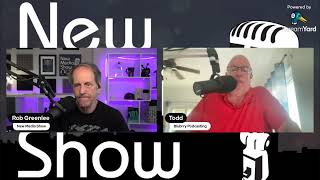
In this live New Media Show episode, hosts Rob Greenlee and Todd Cochrane converse with guest Tom (Director of Content for The Podcast Show) about a wide range of current issues shaping the podcast ecosystem. The discussion opens with a deep dive into YouTube’s recent change to its podcast RSS submission process, how it affects distribution, ad‑insertion, and copyright moderation. They then broaden the lens to European podcast market dynamics, noting the rise of independent creators, talent migration, and new deal structures. The conversation shifts to the financial realities of live podcast events, using the canceled SHE Podcast Live as a case study to illustrate how high venue costs, sponsorship rates, and uncertain attendance strain organizers, especially in a tightening economy. Todd and Rob also examine the looming commercial‑real‑estate downturn and its potential knock‑on effects for podcast companies. A notable segment features a quote from Spotify CEO Daniel Ek, sparking debate over whether platforms should directly pay podcasters and the possibility of a collective licensing model. Throughout, the hosts promote the show’s multi‑platform live restream, thank StreamYard for its production tools, and encourage listeners to follow them on Twitter and other social channels. The episode blends industry analysis, practical event‑planning advice, and forward‑looking speculation about creator compensation and platform responsibilities.
Chapters
Welcome to the New Media Show.
We're back doing the New Media Show again.
People are actually going to listen to this junk.
We do it live.
We're live right now. We'll just do it live.
We'll do it live.
We'll do it live. We just can't get enough. The New Media Show.
Let's go. Just do it live. We'll do it live.
We'll do it live. The New Media Show. If you do it live, just do it live. The New Media Show. I'm like Adam Curry and you're more like John C. DeVore.
I think I am Adam Curry and you're the old curmudgeon.
You do it live on The New Media Show again.
The New Media Show. Technology, we make it sound so special.
Hey, we're back with the new— yeah. Go ahead, Todd.
Sorry, I jumped right in there thinking I was supposed to go, but I'm bandwidth limited, so sometimes it's going to be gargled. But here we are, we're back with the New Media Show. A week off because Rob Greenlee was out in LA. We'll talk about that later. But most important, let's talk with Tom because he's short on time and he's out in London. And Tom, how did— how's been the first day of the show and out there in It's been good.
It's been good, Rob, Todd. Nice to, nice to be on with you guys tonight here in London and, uh, and today where you are, um, on the other side of the pond. Um, it's been a great day. Um, we're at the end of day one, um, at the first full day here at the podcast show in London, uh, this year. It's been, it's been fantastic. We've had just over 3,000 people through the door for today. We've had about 200 speakers, 100 sessions, lots of networking going on. There's been a real buzz. It's been really good. I'm tired now. I'm ready for— I need to rest my weary bones ready for day 2, but it's been brilliant. There's a networking party going on at the minute, and even the sun came out in London, which is a rare treat.
That is terrific. I know I was out there last spring for your first event, and I was very impressed by, by the professionalism of the event and how many people were turning out and, and just the caliber of, of your sponsors and your speakers and stuff. I know that the YouTube folks were out there in force last year, and I don't know if they're out there in force this year, but yeah, why don't you tell us about kind of the scope of the support that you're getting What's it been?
It's been, it's, yeah, it's been amazing, to be honest. We launched it, but the first one that you came to last year, you know, we, we looked to launch it in 2020, and, and we know what happened there with COVID so we pushed it back and we ended up doing the first one last year. Um, with that delay, you know, came the boom in, in podcasting through the pandemic, and a lot of people turned into the industry, which is fantastic, and it really helped us out. To establish the event in year 1 last year. And we, you know, we were fortunate enough to have some good sponsors, some really amazing sponsors stick with us through that time, like the likes of Spotify and Amazon Music and Acast and Audioboom and the BBC here in the UK and global, as well as many, you know, microphone brands and manufacturing brands that prop up the industry as well. And it was a good kickoff first show. And so we're just super happy to be back for year 2 and be able to grow it as well. And those partners have come with us and some new ones along the way for year 2 as well, which has been brilliant. You know, the likes of Sky News here in the UK, and they broadcast live their business program from live on their TV channel this morning from the show floor, which is fantastic, a real buzz. And just having a live TV show, and they built a studio here in the middle of the event as well. And, you know, the speakers that have been traveling for it, coming over from the US, has been brilliant to see. Like, we had Will Pearson open the show from iHeart Podcast today, talking about, you know, the bust in the mix around podcasting at the moment and what's going on within the industry. And, you know, we feel very humble as well in terms of the people that travel over to to the show. All the over 40 countries have been represented in terms of those that are buying tickets. So it's the international feel of it, it's just been amazing. It feels like everyone's using London in these few days to come together from the podcasting industry to meet, to network, to share knowledge, to do business. Yeah, it's been, it's been a good day.
Yeah, I think my perception last year was that there wasn't a lot of involvement. Um, it coming out of the United States or North America for the event, and I'm definitely getting the sense this year that the situation on that has changed.
Yeah, yeah, it does feel like that. It really does. I think last year in May, if you cast your minds back 12 months, we were just coming out of COVID People were still a little bit nervous to travel around that time as well, and those that did make it over And we had a good turnout last year, but definitely it feels like it's turned up a notch in terms of the people that have been traveling for it as well. Now we're 12 months, you know, down the line out of COVID and that feels, you know, for some very far away, and the restrictions are lighter, and people are just back to the normal business travel in many cases. I feel like, you know, this over these few days as well.
Yeah, Todd, did you have a question you want to ask?
No, I just, you know, I saw of course on social some of the, you know, some of the networking parties that were happening last night, kind of pre-show and meetups, and it looked like you've got a great representation from the United States. And of course, what are your numbers looking like? What do you think you're going to tap out at?
We're hoping around 6,500 over the two days, and that's, yeah, that's what we're aiming for really. So yeah, we started last night we had a preview night and it's the first time that we did it. We didn't do it last year, but that was really just, we had the venue set and we had around 400 to 500 people here. We had a few great things going on. We had an in-conversation with a podcaster here in the UK called Fern Cotton, who runs a wellbeing podcast called Happy Place. It's a really well-established brand over here. And then we had Ashley Flowers,, who you guys will know, I'm sure. And we gave Ashley our Trailblazer Award, really just to someone who is doing amazing things in the industry and building out, you know, the true crime scene and her passion, but also doing more with podcasting and really making impact with her brand and how she's looking to push things forward creatively, but within business as well. So we gave a nod to Ashley and what she's been doing. And it was really just a chance for people, again, you know, who traveled over to the show to give them a bit more of a, a bit more of a look around what we're doing because it's very busy. You know, we had 3,000 people here today. The venue's not that big when you put all those people in and then all the activations and all the talks. And so it's, yeah, it's a full-on environment. Brilliant. But last night was a bit more of a chilled, yeah, glass of wine kind of walk the floor vibe. And, you know, People seem to enjoy it, so I think, I think we'll do it again. But yeah, to answer your question, we're looking about 6,500. That's what we'd be happy with. And just casting an eye back to last year, we had 40% of those that came last year did travel from overseas, and I think we'll probably be closer to 50/50 this year as well, which we'd be really happy with. Yeah, we want to— we really want to be the international show as well. Being in London, you know, luckily we have, you know, you guys in North America, but then we've got Europe on our doorstep, obviously, and people traveling over from Asia and then the Pacific regions in Australia. So there's something in it. I think people like coming to London as well. It's an amazing city. So they're tying in a bit of a holiday off the back of it as well, is what I'm hearing.
So there's some podcast events in the United States, I presume, doing research about the industry. How would you compare, let's say, some of the events in the United States compared to what you're doing in London at this event? What are you doing differently, and how do you see the market, you know, kind of embracing various elements that maybe you're doing maybe differently there that maybe are better than maybe what's been happening in the United States.
Yeah, yeah. I mean, we've— I've been over to Podcast Movement a couple of times. I went Podcast Movement Evolutions. I, I, I went over to the one in LA, um, last year and then to Vegas this year as well. I think what those, you know, what that event— I really enjoyed it. I think what we learned from, from that event, which is really, really great, is the networking aspect of it. And now really, when the industry comes together for these things. They just want to talk and they want to meet, and you need to give them that environment to do that as well. And so we've learned, particularly from last year to this year, that networking element— and when you've got people in the room or in the city that are coming together for the event, they just want that opportunity to really talk and think about the strategy for the future and do business and make new contacts. And so we've kind of took that idea and have built that out ourselves. So we've got things like our Podhouse feature, which is, it's a networking, back-to-back networking sessions with different brands like talent agencies or media buying agencies where people can just book onto those and network and do an hour's worth of meet and greets, basically. So it's learning a bit from that, In terms of what we're doing differently, I think, you know, what the way that we're pitching it and what we— our background, myself and the festival directors, we, you know, one has come from a trade show kind of traditional conference background, that's Tim Etchells, and then the other director is Jason Carter, who comes from a kind of media and festival background as well. So we're kind of combining those elements of you've got the talks and masterclasses and the conference element, but then there's a feel of a festival when you walk into the room as well, and the amazing vibrancy of the industry. We want to create that, and so you get a feel of, you know, there's music playing when you walk in, and it just feels a bit like a music festival as well in terms of that respect of the buzz around it. So yeah, that's kind of what we're trying to create, and It's kind of another event I've been to in this, in the States, which I really love, is South by Southwest. In my previous job before doing this role, I worked at the BBC for a good number of years, and we were lucky enough to travel over to South by for, you know, 5 or 6 times. And, you know, I don't know if you guys have been or, you know. Yeah, I've been. Yes.
Yeah.
I mean, that feeling of Sixth Street and. Oh, yeah. We want— we, we have a live show side of what we do here. So in the evenings during the week of the festival, um, we run, yeah, live podcasts around London, um, and the region or area where we do the show is called Angel in Islington, uh, in London. And the street that we've got— I'm not going to say it's like 6th Street, that's just— it's very unique to Austin, um, but Upper Street, where the street is, there's about 500 bars and restaurants scattered around. And so we really want to tie into that and kind of put our roots down here in this region, you know, keep, keeping this location. Um, we feel like we've got a good relationship with the, with the council here, and we just want to make, make them and build out and use, you know, what's on our doorstep as well around the local area.
Yeah, it's awesome. So did you have any follow-up?
No. And I know he's short on time, so I just wanted to thank you for, you know, taking time out of your busy schedule and hanging out with us here for a little bit tonight. And, uh, you know, I guess from my standpoint, I wish you the best of luck for the show and, and great success. And, uh, hopefully next year Rob and I will both be there, right?
100%. No, we'd— of course we'd love to have you over. I know, Rob, you know, you coming out last year, it was, you know, it was great to see you here. So now I think you were in the middle of a couple of other, um, conferences. We were—
yeah, I had to go to— yeah, I had to go to Podfest the next day. So I, yeah, I wasn't actually able to attend both days. I was only there for the first day.
Yeah, so yeah, no, we were, we were really pleased to see you over here for it. Yeah, it was great. And you're always welcome back. And we, you know, you never know where things might lead. Oh, I know, we may come over to the US and expand, you know.
That's an interesting little bit of news.
Yeah, I mean, let's see, you never know. You never know. Right. But it's— we're really pleased what we've built here. We're excited about the energy in the industry and how, you know, it's growing. And we want to just do that and continue to create the platform really for the industry here in the UK that feels like it's thriving and in Europe and welcoming people through the doors as well. So one more day to go. Yeah. And then we'll look forward to 2024.
So there are two things that I— one thing I wanted to ask you too is how do you think podcasting is doing in Europe right now? Do you think that it's still growing on the listening side really fast? What's the content kind of environment for podcasting over there right now? Is it— is the content side still healthy and are people still investing in new programs?
They really are. I mean, At the show, it's interesting because, and I'm sure you get this as well in the States, but you know, we've got, as you'll know, like a really healthy traditional media base with the likes of the BBC and Sky. They're all now turning their attention to podcasting in a big way, hence why they want a presence at the show. And they're all kind of you know, they're trying to compete with the likes of Spotify and Amazon, and they, they see that they're taking their audience, and they're, they're reacting to that in a really strong way. And, and that competition is brilliant. It's really good and healthy. And so it feels like it's in a really good place, and, and it does feel like there's interesting deals going on as well. So, um, one bit of, uh, we were talking about this today, but just to get a small anecdote around a deal that was done with The Diary of a CEO. I don't know if you know that podcast with Stephen Bartlett. It's one of the biggest here in the UK. Stephen Bartlett's an entrepreneur, and he's got a— yeah, the podcast is often number one in the charts. And they've just— he's done a deal with the BBC where that podcast, even though it's an independent podcast, it's now going to be on BBC iPlayer. That acquisition is really interesting, how the BBC are buying content for their platform, and it's buying a podcast in, which is the first time that's ever happened. So there's things like that going on. There's a lot of movement with talent as well. So traditional, you know, talent that's worked at the BBC as newsreaders or sports reporters moving into the podcasting space and working with either independently or the other competing brands. So there's a lot of transition between the talent and the deals that are being done as well. So it does feel like it's in a good place. And there's a few stories today from Europe as well of companies being acquired. And, you know, this being our second year now, companies, we're seeing the growth in them as well in terms of where they were 12 months ago to where they are now and the content that they're producing, but the ambition that they've got as well. So The independent sector here feels— it does feel in a really good place as well, and we can see that in terms of the creative ambition, the brands and the advertisers that are coming down to the event. I guess because we have a bit of a unique view of it with the show because of— I mean, you get to see it out in person, just living out before your eyes really over these couple of days of who's coming into the building and who's having the the conversations and being present, yeah, the brands and advertisers that are looking to move into this space as well feels very exciting and healthy. And with that becomes a healthy scene, really, and industry.
Do you see the independent podcaster community starting to grow and foster, you know, some good content and things like that?
Yeah.
We do, we do. I mean, and you see here again through the lens of the podcast show and what we see, you know, how it's playing out, the likes of Acast and Amazon Music, their focus really here at the show is creators. They really want to engage with that creator community and nurture it and bring them onto their platform. And same with Spotify as well. And that's their kind of mission here whilst they're at the show. And So we have 10 different content spaces that we have talks and panels going on throughout the few days. And the ones that are really grassroots advice around how to set up your podcast or how to monetize it or how to get the best sound or recording, those are absolutely packed out. So I think that hunger to learn and to upskill yourself and just do better in your recordings, no matter what level you are within the industry, it feels like there's a real hunger and vibrancy within that. Yeah, within that now, I think you know, those of us that have been in the industry or been observing it for a while, we think it's been around for, you know, for a long time, but it's still new to a lot of people, isn't it? And particularly, like, some of the most exciting things that we've seen, or popular, have been the video, you know, that YouTube did a talk today. Alison Lomax is the MD at YouTube here in the UK, And that was, you couldn't move, you couldn't get into that session because people are just hungry to hear how do you build the audience through video, the video platforms. And it's the same with, you know, with the TikTok platform as well. And people really want to try and understand that. So as a creator, it feels like people are not just thinking about podcasting now, it's kind of, it's the whole 360 of video and audio. And how it all merges into one with socials as well.
Yeah, I agree with you. I think that's kind of at the cutting edge of where podcasting is, is this convergence with increasing interest in video and how that aligns with podcast creation on the audio side. So it's, it's interesting development, but, but I know you got to go, and I was hoping to exit off of a little video off your website.
I could—
oh, amazing— the audience here that kind of gives, if a person watching this hasn't seen the video on the website, it would give them a real good feel. I believe this video was recorded from last year's event. So yeah, but it's basically the same thing. Not exactly the same, but yeah.
Yeah, it's the same feel. It's been great talking to you. Thanks for having me on.
Yeah, well, thank you, Tom. I appreciate your your time away from the event. I'm sure there's social stuff going on you got to get back to.
So yeah, I'll head out. Hope to see you down at the show next year.
Thanks so much.
Yeah, I don't know that we said this at the beginning, but Tom is the director of content for the event, so he's the one that kind of led all the sessions and getting all that pulled together. So it's great that you were able to pull away to come on and talk.
Yeah, no, my pleasure. Really good to chat to you. Thanks so much, guys.
Thanks, sir. All right, thanks.
Bye-bye-bye.
Bye. So, Todd, I was going to play this, this video really quick, and yeah, go ahead, then, then we can get back to our, our little talk segment as well.
I'm not sure.
Okay, which, uh, let's see, which one should I click on? This one? Probably work. Let's see here. Todd, can you see it okay?
Yeah, I can see it. It's not full screen, but it's even bigger.
The Podcast Show 2023 at the Business Design Center London. 15,000 people by day. The biggest international festival for the business of podcasting, welcoming the industry's global leaders alongside the most recognizable names and thousands of podcast creators, all under one roof, right in the heart of London. Expect hundreds of panels and sessions, exhibitors, keynotes, live broadcasts, and very special guests. By night, The Podcast Show goes live to thousands of fans with a festival of 30 live shows. Shows across London. The Podcast Show 2023 partners include Amazon Music, Wondery, Acast, Audioboom, BBC Sounds Global, Sony Music Entertainment, and Audible. The Podcast Show, for the creators, the industry, and podcast fans, the 24th and 25th of May.
You're, you're very brave in playing that, Rob. Because I will guarantee that'll guarantee— that'll get me a YouTube copyright strike.
Oh, it will?
Oh yeah, yeah, it's— yeah, and matter of fact, I'll be surprised if the YouTube Live is still live.
Oh really?
Well, yeah, you cannot— you have to be real careful when playing other people's YouTube clips on YouTube Live.
Okay, all right, well, we'll see, right?
Yeah, but you know, the StreamYard has changed, and there's one thing I do not like about it. It's uploading while we're talking, and if you are in a bandwidth-constrained situation, it kills. Because I could hear about every third word that he said. I'm hearing you okay now, but it seems to have gotten better when he jumped off, so maybe there's not as much uploading going on while I'm talking at the same time.
But anyway, yeah, from what I understand, it actually locally records, so at the end of the session it should upload the audio.
And yeah, that's the problem when you're only on like, uh, 400K up, you know.
Okay. All right.
So anyway, how you doing?
I'm, I'm doing okay, Todd. I'm hanging in there. So, yes, you know, it's exciting getting in and doing a little more with StreamYard. And as you know, I launched a new show myself called Trust Factor. And so I'm at my 4th episode on that. So I'm trying to do that convergence like we were talking about with Tom, right, of doing video as the primary and then doing podcasting too. So yeah, so and You know, it's still coming together. There's a total of 10 content creators, but as of June 1st, there's going to be 20 different shows on this, uh, 100TV platform. So, okay, so it'll be interesting.
But, uh, there's been some news going on. It's interesting you're calling it TV.
Well, actually, that name was, uh, was named by Ross Brand. Um, he's really the lead of the network and it's, it's being done somewhat. So each of the shows creates their show, gives them to Ross. He puts them all into one, one video file and plays it as though it's a live, live lean-back experience, television experience, right? Or a linear playback type of experience. So you can start and watch through and there's breaks and there's transitions and there's things like that, just like what you would see on a on a streaming cable channel or something like that. So that's the model behind it.
I think that's what's interesting. Seems like a lot of work. Yeah. So, uh, yeah, lots of going on, lots going on in the news. Yeah, YouTube specifically.
Oh yeah, well, that one was the one today, right?
As we predicted, as we predicted, they're, they're not going to play ball.
No. Yeah, I mean, no, uh, it's exactly like what we were talking about, as it turned out.
Yeah, no, no advertising in the content caching.
Yeah, no password. It's a very confusing message. You know, if you read what James put in his post today, it says YouTube requires that podcasts must not contain any ads. But then it goes on to say regular ads. What's the definition of a regular ad, um, is, is the question, right? Um, are not allowed to be uploaded to YouTube. So we request feeds be ad-free. Sponsored segments can, however, be included if manually marked as such. So So YouTube does have this ability to label like a host read or something like that as a paid endorsement segment or that kind of thing. But this raises the question, like we talked about, Todd, is that what they're expecting from podcasters is when they say ad-free, regular ads, what they're really talking about is ad-inserted, pre-recorded ads. Um, those can be host reads, um, but they can also be programmatic too, right? Um, did YouTube talk to every host to get them to enable for their content creators an RSS feed that has all of their episodes without ads?
Most podcasters don't create— most podcasters don't create their content that way. Only a small number of podcasters create their content using Using digital audio insertion.
Well, yeah, shows do not, but the programmatic side, uh, basically it doesn't matter if it's programmatic or not.
It's the key here is, is that the very, very few shows that are doing in-host read ads are using the AI. They are still doing baking them in.
There's a small— so you're okay with what they're doing here then?
No, I'm not.
Okay, well, because—
but the thing is, they, they're talking about message, right? Yeah, well, they say it can't have ads, it means it can't have ads. Then why are you saying you can have sponsored sections?
But it's saying that you can have sponsored segments, um, as long as they're labeled in YouTube, right?
So I can run a Ford ad and it says can be allowed to run in the content and it's, it's good to go?
Well, I think the distinction is that the dynamically inserted regular advertising, and I think to some degree this is, this is where YouTube is going, going sideways on us, is that they're misunderstanding what's going on. And I don't know that they, they really care what's going on. The big question that I was thinking about earlier today was You know, really, in a lot of ways, this isn't too much different than what you've been able to do with YouTube for a very long time, actually, with the API automatic, you know, insertion into YouTube that, that's available on most of, most of the podcast hosting platforms today. But that's passed to them via an API, and then that's converted into a video file and then posted there, and YouTube's host that content. The question that I hadn't thought of until just today is that, is that video file that's sent to them via the API ad-free?
No, no one's been doing that.
Well, okay, but the whole point of programmatic is to have automatic insertion and dynamic insertion.
So just so we're clear, there's a difference between programmatic and DAI.
Not a huge difference though.
Okay. But technically programmatic is something where you are automatically being served ads. Yes. It's inserted the AI.
Okay. Right. It's all using the same technology to put the content in there. It's just, what's, what's the ad? Is it recorded, prerecorded by a host read? Uh, or is it an ad that was sent to the content creator and they manually traffic it? So there really isn't a big— I don't think there's a big difference between the— it smells like a duck, it is a duck. Yeah, I mean, it's still dynamically inserted content that is not going to be optional in the YouTube platform because they're rehosting it. But my whole point was that the whole API-based submission is I just don't know what was happening to the D, dynamically inserted content, in the API submission.
It was being left in there. It's been in there.
Is it?
Okay. Yeah, because who's doing that? That's done manually by the content creator. That isn't being done automatically.
Yeah, it is. It's through that. Um, yeah, I mean, I— you can do it in Libsyn today. You can set up your account in YouTube inside of the podcast hosting platform with with LipSync, and it's also available in Spreaker as well.
So you don't have to manually trigger that, it just does it.
Yeah, you auto-configure it to automatically send that podcast file over to YouTube when you publish it. So, and my question has been is what happens to the advertising in that situation? Does it—
it's still in there.
Get— okay.
Then because there's not enough people doing it, it's brought up to YouTube's radar. Now it is going to be on their radar. So if you've been running ads in your content, now, now they're going to be on the lookout. And this is, this is dumb. This is dumb to begin with. What they have done is dumb. And, uh, it's, it's not even— I'm not going to lose any sleep over it because the big boys that rely on advertising in their shows that are running DAI programmatically are not gonna submit.
They're not gonna submit to YouTube.
Yeah. I mean, cuz what YouTube is setting up is the expectation that the, that you will monetize through their pathways.
Well, good luck with that. You gotta be, you gotta have the 4,000 listening hours per year. To, uh, to do that.
Yeah, well, I mean, yeah, they didn't clarify that, so I don't know what they're— what they've come down on, on that side yet. I think that is yet to, to be fully, fully deployed. But what's different about this really is that they're, they're enabling you as a podcaster to submit your RSS feed directly to them versus having to do it through an API connection with your podcast host is That's what I see is the difference here. And, and that if they didn't talk— I mean, Todd, did, did you talk to YouTube about this?
No, no, nope.
Okay, so they're, they're setting up a situation, and I know that they didn't talk to the hosting platforms that I was working for. They're setting up a situation where people are going to be submitting RSS feeds to them that have dynamically inserted content in them. And they will capture a snapshot of that, which could include, you know, anywhere from 2 to 4 or 5 ad-inserted ads in there that will forever be in the content.
Well, um, that's up to the podcaster to understand that. I'm not going to make a gateway to submit to YouTube.
Yeah, or a separate RSS feed that has, has episodes that are ad-free.
Well, PowerPress users, if they decide they want to do that, they can do that. They can set up a separate feed and do, do that on their own. But it's dumb. That's it. That audio file is going to get listened to one time. It's going to get uploaded one time. What? So why not just upload to YouTube straight? It's dumb.
Well, because you can't. Upload an audio file directly to YouTube.
So they convert it anyway.
I know. Well, does YouTube do it if you— okay, can you go into the YouTube interface today and select an MP3 file and upload it?
I'm not sure. I've never tried.
I've, I've, I've tried it. There's no pathway for that.
So well, then guess what? Then, then the podcasters decide they want to provide an RSS feed to YouTube. They just We're just gonna have to educate and those that want to can, but I'm not gonna do anything on Blueberry's side to facilitate that.
Yeah. Though I think that there's gonna be a lot of people and Tom kind of alluded to this too on the call that there's a lot of people with a lot of interest around this.
Well, we have, we've already seen the great success people are having with podcasts on YouTube. Yeah, well, the 4 or 5 people having success on YouTube.
Well, some shows, it depends on how they approach their, their shows. If they're primarily a— I mean, I've seen— I know of probably at least a handful of shows that are very successful on the video side. Um, handful. Well, that's just me personally because I follow, follow certain shows. I can't speak to the whole platform, but that have very successful video shows. They're getting maybe anywhere from 10 to, you know, 200,000, 300,000 video plays per episode that also have a podcast RSS feed that they're putting out their audio version out into that. I have not heard what the numbers are on the audio side. That is something that I'm very interested in, in trying to find out. So if, if a show that's doing— being very successful on YouTube looks like a podcast, sounds like a podcast, kind of like what we're doing here— if they can achieve equal success at least, or some close to equal success on the, on the audio side, then we will have some sort of a vision of what that model might look like.
It's rare.
It's rare. Oh, I, I, I don't doubt that it's rare, but I do think that we're going to see some people, um, interested in trying to pursue it. I know that's, that's what I'm doing, doing with this show, that this new show that I launched.
Well, just trying to find out— video is a different animal. And, you know, and, uh, I say to people that want to do that, Good luck, but don't get distracted from the price. Don't get distracted from, you know, from what is the potential. And also don't get pissed off when you get deplatformed off YouTube.
Well, that's the wrong thing. That's a whole other discussion. Just like what you were saying about me playing that, that promo for an event, right, which shouldn't trigger any kind of a takedown if the algorithm has any intelligence around it at all.
But it doesn't. It just sees you're playing someone else's audio and content on another YouTube channel, and that— boom— immediately you'll get a strike. So I've had to stop because I've been on— because I stream live, I cannot play clips in my show that I've wanted to play for years because 99% of the time if I play a clip that's anywhere, if play a 15-second clip from NBC, 15-second clip from, uh, from wherever, and there's audio and video involved in both— bam, I get hit. I get hit with a copyright violation because I've utilized that content. It's not original.
Yeah, I watch a lot of, uh, YouTube videos, um, myself, is, you know, one of the primary places that I get kind of information about what's happening in the world. And I see a lot of shows playing clips, um, and I don't hear of them getting taken down. So I'm not—
well, they're probably not. They're probably playing the video with no audio, or they're playing audio with no video. They're not playing both.
It's, it's playing both is what gets you—
it depends. It depends on what the, what the producer of that content has set that copyright to. Again, it all depends on—
oh, okay, so the, the producer of the video can set how sensitive it is to—
right, you can set your copyright level in YouTube.
Yeah.
Okay, so I think it's possible that— yeah, that's something—
I just not had good luck. Yeah, I mean, it, it could be that people just don't realize that they don't go in and properly set those configurations if they want other people to promote what they're doing, right? Because that's the trade-off of that, right, is people won't do like I— what I just did for the podcast show, because, you know, if I didn't know I could, I could go in and set that to—
I'd love to play clips on YouTube, but I just— every time I've done so, it's ended badly, especially when there's background music, right? If it's just purely voice, it's not as an issue, but as soon as that background music gets in there Yeah, it's because who knows what— they may have licensed that background music from someone else, but I haven't licensed it. So that's when it becomes an issue.
So do you ever, uh, have you ever thought about trying to put your, your show out on a platform like a Rumble?
It could be another destination. I don't care, it's— it is what it is.
Yeah, because I think I've maybe mentioned it's on the show before, but I do know some, some shows— a friend of mine is doing a show out of Portugal that's He does— he streams half of his show on YouTube, and then he turns off YouTube and streams the rest of the show on Rumble, right? So he can section off the content.
Um, but I don't necessarily have content that needs to be sectioned, so—
yeah, but you might. I know that you have thoughts, but I don't know. Yeah, but are you feeling like you're you're holding back or you're censoring yourself?
No, not at all.
Not at all? Okay. No. Because I think that's, that's the real danger of this, right, is, is feeling like you're, you're censoring what you can talk about on your show.
This is why we do— this is why we do podcasting, is we were not censored.
Well, yeah, um, I think we did talk about in the last episode that that there is a growing kind of interest in moderation and podcasting. And well, that's hopefully right. And we talked about that in the last episode. So if you want to hear more about that at a deep level, go back and listen to the last episode that we did. We talked extensively about the content moderation coming to podcasting. At least around the advertising side currently.
So talk a little bit about the, uh, your, your attendance at Outlier.
How was it? Um, well, to set expectations, that event is a fairly small event. I would, I would put it on the scale of like a PodCamp per se. Um, you know, you know, a few hundred people and lots of great great speakers and people that are, you know, like Danny Peña was there and he was on a panel with me as well. I mean, he lived right in that Burbank area. So, you know, so we had some great sessions that we're talking a lot about, you know, AI technology and things like that. So from a content perspective and venue, it was a very unusual venue. It was actually a production studio that actually had a, a very, very nice podcast recording studio built into it. But also they do a lot of, a lot of video productions there as well, being close to Burbank and stuff like that. That's a, that's a hot area for, for video productions. But, um, yeah, it was a lot of fun. I, I enjoyed it a lot. Um, so So I heard that the next one, uh, the next Outlier conference is going to be in Salt Lake City. So, and then next year it'll be in the following year, it'll be in Toronto. So that's the next time frame for that. And then, well, there's Podcast Movement coming up. Sure. Uh, in, in August. So, you know, I think we're all going to be there. We'll probably wind up doing this show live there as well, but I did, uh, submit a session Um, outside of the, the show, I, I haven't heard anything from that team yet.
Um, yeah, I haven't— I did not actually submit a submission for, for Podcast Movement, so—
Oh, you didn't?
Okay. No, I did not this time.
So, so what'd you think of the, the news that Spotify is going to start using AI to create host reads?
Well, the most inauthentic thing you could possibly do.
Yeah, well, yeah, well, that's— but I can see, I can see their thinking though, if you think about it, Todd. Um, I know that Spotify and iHeartRadio are very much into the programmatic experience, right? Because it's— let's, let's say it like it is— it's, it's a mirror of what they are used to with broadcast radio. It's, it's the same ideology, the same methodology, the same kind of process, right? So if they can merge host reads with programmatic, and this would be a way of doing that, right, um, then they, they probably feel like they have a real win-win here.
Did my audio just get better a little bit? Yeah, I was, uh because we had that kerfuffle at the beginning. The second time I came in, I didn't set my settings, so I am now on the right microphone.
Yeah, I don't think that you were actually on, on the SM7B.
No, and I am now. So someone said in the chat, sounds like he's not on the right microphone, and I just switched it. So yeah, apologize.
It definitely sounds, sounds much better.
Sounds better.
Yeah, it does. Sorry about that. But that's all right. I did most of the talking, I think, for the earlier part. But, um, but yeah, I thought it was really interesting that Spotify was moving that direction. And I do think that AI is definitely coming, um, fast into podcasting. Um, and it's— I think it's just going to be a regular flow of announcements. I know I was in New York, um, just a couple days ago at a podcast or AI, kind of like meetup in the Chelsea district, and I'm trying to get more embedded in the AI community itself. Um, so I'm working on a possible project that would involve, um, getting more involved in creating content around AI. So, um, not— I mean, to some degree using AI, but more to do with just covering what's happening in the AI industry.
Um, well, so we're running a, uh a big survey for Blueberry customers right now. And the initial leanings on the survey is that a lot of podcasters are very skeptical. They're very scared. They're concerned about quality. Yeah, there's a whole host of issues where individuals are pretty concerned. So we'll see where the survey results end up. But I think a lot of podcasters have an extreme amount of skepticism right now, um, in, in utilizing it, uh, for, for show production because it's making them, making them creatively lazy.
Well, yeah, and it's probably fairly distracting too because people are, you know, experimenting and trying different things and, and monkeying with their workflows, right, of things that they've been used to doing. Um, and they're thinking that they can save time or there's some benefit to— because everybody's abuzz about AI technology, that somehow it's going— it's something that they have to embrace because if they don't, they're going to get left behind or they're not going to be able to be as good or something like that, which I don't know that is really a true statement right now, that you know, embracing AI technology is going to somehow make your podcast dramatically better. I don't know that that is something that—
no, I don't. It's not. And I think what it's going to do, and the one thing that I've found, you know, we made a, a deal— well, not a deal, but we partnered up with a company called Momento, and, um, they basically— I, I think it's a great social promotion tool. Uh, I don't— you know, that's the way I look in the strength of the tool, is the social promotion aspect and saving time in that. I don't see a lot of, uh, production savings going into, you know, pre-production planning and that type of stuff. But I know some people are playing with it a lot. I just caution them, you know, make sure you know your topic and make sure you're not, you know, counting out all the details that it gives you as fact, because it's not. It gets it wrong a lot.
Yeah, I think you do if you rely on AI technology, and this is my own personal experience because I've been playing with it too, if you try and rely on it for the pre-production or pre-planning, I think you have to be very skeptical and I think you have to edit a lot of the output that it generates for you to make sure that it's number one, update. It's not giving you old information because the free version of ChatGPT GPT is based on 3.5, not 4. So, and that tends to be 2-year-old data. So you have to take it with a grain of salt and, and make sure that you edit it to be more current.
Right. The first, the first advertisement I hear that addresses me by name, my area, or anything like that of any regard, I'm immediately leaving that show forever. Right. If there is going to be that type of personalization where they will deliver an ad to Todd, uh, I'm done. I'm gone. I'm going to, uh, because it's a privacy thing. It's, you know, again, and this is what Spotify is talking about doing. They're talking about making highly targeted ads to their registered user base. And, um, if that— they have that data because you're logged in. So you, you know, but if if they— if I see that technology being employed outside of a logged-in platform, um, I'm out of here.
Yeah, if it's doing it outside of a login platform, I, I would agree with you, Todd. I think that there's some red flags there around, around privacy. So you have to wonder, you know, they are doing some external mapping of your IP address, um, to, to get that done, and that comes with some significant compromises to your your privacy.
And all you have to do is do something wrong one time to an EU citizen, and, uh, you know, you face a billion dollar fine, just like, uh, it just happened a few days ago with Facebook.
Yeah, yeah. So I guess, uh, YouTube also added, um, uh, the podcast tab to the YouTube TV experience now. So, so I guess podcasts have now, you know, migrated across the whole platform.
So again, it's about video. It's not about audio. It's a video play. So for those that are not interested in doing video, then don't get too excited about this YouTube thing.
Yeah, I think you just, you know, you just have to keep in mind that YouTube has, as far as I can tell and from what my conversations with them, they are not embracing audio. Of course, right? What they're doing is they're— everything that they do is a video, right? Right, right. If they're taking audio from your RSS feed, they are converting it into a video file, and that's how they're delivering it because their whole infrastructure is HLS. And right, and, and it's— though HLS can deliver audio, um, it's, it's their infrastructure is built only for video. So that's what they're going to push people into, and, and that's, that's the experience that we're going to expect. And, and, uh, I don't know, I haven't talked to any of the big media companies about their embrace of what's happening with YouTube right now with this RSS feed thing, but my guess would be is that quite a few of them are very skeptical of it and not able to really embrace it if they're taking advantage of programmatic advertising. Because as far as I know, none of the podcast hosts are enabling ad-free RSS feeds. Now, maybe Lipson might have that ability with their custom RSS feeds per destination.
They might have that ability. Zach says, is this a podcast about podcasts? Two podcasts on a podcast talking about podcasts?
Uh, yes, this is a podcast about podcasting, but I think that the conversation is, is definitely on this show, and it has been for the history of the show, has been much broader than just podcasting. Right. But, you know, podcasting has kind of always been the undertow because that's, that's kind of Todd and I's experience base. So that's, that's why we talk about these topics. But video has always been a big part of this, um, this conversation around podcasting. So, you know, both Todd and I go way back in this medium, back in the day when video was probably 30% of the podcasting market. Um, that was before YouTube, so, right, or before YouTube had a significant stake in this conversation. They were whole media companies, venture-funded media companies that were formed just to create video podcasts, and that's distributed video via RSS.
And, you know, and we— and I've been doing videos since more than 10 years.
That's the same with this show, right?
You know, because of the, you know, just trying to see what works, what doesn't, playing around. And, uh, you know, there's ulterior motives for doing video in the early days. Uh, no, Zach, we never shake things up with a prank call or karaoke. Uh, we do not do that on this show. So Uh, there are plenty of YouTube channels that do karaoke and plenty that do prank calls.
We are not that. No, it's not our, our format. Um, though I felt like we did some of that, Todd, back when, back when we were simulcasting on Clubhouse.
Um, oh yeah, that was the stupidest thing we ever did.
Well, we had to play with it a little bit. I'm actually— I'm getting invited back in there again because they've—
why waste time? Well, because it's a dead end. It's a dead platform.
Uh, not what I'm seeing in there. There's— the last time that I was in there had 300 people in a session talking, and I was the guest talking about podcasting. All right, well, I wouldn't say it's dead.
That's where the things are happening now. What's that? Twitter Spaces are where things are happening now.
Yeah, well, thanks to Elon. Right? And then I did do a session on Fireside about a week and a half ago, two weeks ago. Blasphemy, blasphemy. Yeah, and that was put out as a podcast on Libsyn.
So, oh, blasphemy, using Fireside.
Yeah, right. Mark Cuban strikes again, right? Yeah. But anyway, so I've been just playing around and trying to learn as much as I can about kind of innovations in this podcasting medium as video and AI and all the stuff kind of converge on the medium. Because it does seem like that there's a heightened interest, Todd, in these topics. And I saw it clearly at the Outlier event as well. Everybody was abuzz about, you know, what was happening with video. I just keep hearing it more and more.
So I don't know, you know, I think Red Bar— Zach says Red Bar Radio just hosts on his website, he's rolling in the dough. I think he distributes, uh, more places than his website, right?
I'm sure that's probably true, right?
Yeah, but we all have our website and we understand the value of a website.
Yeah. And so let's see, what other news is going on, Todd? Have you heard anything?
You know, I just been nose down because, you know, I've got a lot of new product launches coming, so we've been prepping for that. And I just read the newsletter and there's been really not been anything that's just kind of, you know, shook me to the core. The YouTube announcement this morning was interesting, but, you know, it's again, we're heading into summer and things, things are going to be picking up everywhere else.
I mean, if you look at the history of summer, it's kind of always been kind of a low point in podcasting, but I think the last couple years it's been a pretty busy time as well. But there was one other comment that was made in PodNews a couple days ago about podcast hosting companies, copycats, not innovators, comment. I thought maybe this is a good topic for you and I to talk about based on our work and our history and our current work, um, in the podcast hosting business. But, uh, Patrick Hill, the CEO and founder of Dystopia, which is a, a fairly new platform, um, I, I believe that they're into like hosting podcasts as well. But his quote was, right now the podcast industry is growing from a copycat standpoint instead of from innovation. Are you thinking about content? Uh, well, let me finish the quote here. So the industry doesn't grow from every single company doing the same thing. So the, the premise of this is he's talking about the hosting platforms. So, um, so I don't know. I mean, Todd, I mean, what's your feedback on that? I, I would disagree with the premise of what he's saying because I do think that each of the platforms does something different. Now granted, there is some standardization across all the platforms of generally podcasters want this or want this kind of capability, and I think that standardization has, has been a good thing. But I do think each of the platforms has its own uniqueness, and I know I've been diving into learning about that. Like, I got a platform demo from Megaphone the other day, and I was, I was surprised by some of the stuff that I saw in there because I hadn't seen a demo on that platform. They don't— I don't know if you knew this or not, but Megaphone does not prioritize helping podcasters distribute their podcast. I don't know if that's a shock to you. It probably isn't, but they give you an RSS feed, don't, don't get me wrong. But their philosophy is not to give you any direct submission processes like YouDo and Spreaker does and Lipson and Buzzsprout and all of the, the other platforms. They don't give you those one-click submission processes in the platform.
I was surprised. Well, you know, I think it depends on their customer base, who their user personas are, you know.
Yeah, I mean, the feedback was, was that the reason that they don't do that is that they don't want to get in the middle of content distribution licensing.
That's— there's no licensing.
I know, I tried to explain that to them, that that it's really just accepting a terms of service is typically how it works.
Yeah, that's displayed to the content creator and the content creator clicks yes or no and moves on.
Yeah, but that was the surprising element to it, um, is that they were saying that their clientele, uh, wants to control the distribution to each platform. And I said, just because you have a one-click submission button doesn't mean that the podcaster doesn't have control. They can decide whether or not they want to be on Spotify or Apple or any of the platforms. It's not like you're taking away that choice. All you're doing is making it easier for them to do that. But Megaphone has the philosophy that they don't want to make it easier. Okay, good. So what does that mean, Todd, to you around their philosophy? Is it, is it they don't they would want you to not submit somewhere else. They want to make it more difficult to submit.
Tech phone wants you to be on Spotify, right? They don't want you anywhere else. Of course that's going to be their philosophy.
Which gets back to a conversation about Spotify's other platform, the formerly known Anchor platform, the, the pod— the Spotify Podcasters platform, which is different than Megaphone but owned by the same company, making RSS optional. So you can kind of see there is a little bit of a philosophical difference, right, between—
they've been told to prioritize Spotify, right, and make it difficult for people.
So the only way you can find out about how to submit to Apple or submit to any other platform other than Spotify is to go into their Q&A section. So you have to literally search for, how do I get into, you know, out to Overcast, right? How do I submit to Apple? And it will give you a— I mean, they'll give you information about it and links to it, but it's not like it's built into their interface, right? So that's a big difference. It's a big difference in philosophy towards podcasters.
But I also think that if someone had a grand idea, the next amazing thing to launch in the podcasting space. They would not talk about it. When they did, everyone would be astonished. But the problem is, is, you know, you have to dig for good ideas.
Yeah.
And for us, it's been about— now we're increasing features, you know, we're building new features, making things easier, doing some things that make people understand the platform a little better. Mm-hmm. Yeah, because oftentimes someone will come in, I'll have a call with someone, they don't even know that feature is in the platform. So, you know, you have to spend a little time saying, yes, it's here or there, or, you know, and, and making sure the UI is making it easy for people to navigate. It's a podcast hosting has become commoditized at this point. So really, it's, you know, the reason people pick platforms is a couple of reasons. Cost, was their search on Google, um, or they had a specific agenda for their show and they were looking for specific hosts to meet specific goals.
Yeah, or some sort of a personal contact or personal relationship or whatever. I know that when I would move companies on the hosting side, some podcasters would say, well, you know, I'm going to move over to your platform So it was almost like if I changed jobs, it was like an endorsement because they moved. Yeah, right, right.
So, you know, I think that, uh, we're not doing a lot of copycat stuff. We're doing— right, most of us are trying to, you know, enhance the tools our content creators have to utilize. You know, we just, we just launched, uh, you know, 7 new things in the Podcasting 2.0 space. You know, and it's, this is again slow times for, you know, adoption of some of that stuff. But, you know, we've just put out, you know, again, it's about making it easier. As an example, chapter files, you know, making it easier for someone because before they, it was very, very complicated. There's only a few places you could build chapter files. Now we build it so that they can build their chapter files right in the platform. They don't have to leave. They go in their episode and they can, and they can make a co-host or a secondary party be able to come in and, and support that. So I think really it's about making things easier, um, and saving them time. Yeah, to the best of the ability that we can. Uh, not everyone's going to take advantage of all these cool features that are being put out anyway because they don't have enough time now to even record their content, right? Yeah.
Yeah, I think, you know, in just thinking back on my experience working for the podcast hosting platforms is that oftentimes if you work for a podcast hosting platform, you don't really know in depth oftentimes the capability of your competitors. So what you're doing is you're hearing what your podcasters are telling you of what they want. Through customer service channels or whatever, and that's where the feedback comes from. It's not like everybody's out there trying to copy each other. Rob, I guess that was never, never the goal is to copy someone else, right?
But I guarantee you that people are looking at features that are being added and they have ghost accounts and are logging into systems.
And well, sure, yeah, sure, I can see that happening.
Yeah.
And Yeah, and but every platform kind of has its own unique approach based on the, the, the staffing and the philosophy of its leadership. I clearly saw that in my experience over being at working for 3 hosting platforms is they're very different in their philosophy towards building a tool. So it's But I thought it was interesting, Todd, to kind of move on to another topic. The Odyssey folks who own Cadence13, Pineapple Street Studios, Podcorn, Moonbeam, which I think is kind of like a dead platform, but is going to be delisted from the stock market. So this is, I believe Odyssey is the second largest, it's cumulus, right? It's the second largest radio company behind iHeart?
Well, the free money is gone. You have to make money. And, uh, you know, if you need money and you're going out on the street, you're not getting good deals, you're not raising rounds, uh, you're not able to continue to invest. You have to have a solid business model that is actually putting more money in the bank than it's taking out. So when you're losing more money than you're earning, then you, you know, you, you, or even just staying even, you lose your status on NASDAQ or New York Stock Exchange. And guess what happened to Libsyn? They got removed because of all kinds of crazy business. So it wasn't because of revenue, it was just, you know, bad accounting.
Yeah, so Libsyn's situation was a, was a unique one, um, from the standpoint they, they self-delisted themselves. It wasn't being forced on them by the—
by the— Rob, they were already on the pink sheets, so they were essentially delisted already.
Well, if you're a shareholder, Todd, you probably don't necessarily have that view necessarily because you can't trade your stock right now, right?
So, right, I've publicly said before I have Libsyn, some Libsyn stock. I have a few, few shares here and there. Yeah, so, you know, um but it's nothing significant. Yeah, I mean, I made money on their previous CEO's shenanigans, so.
Right, yeah, yeah. I don't, I don't have any shares of Lipson. I got cashed out when I left, so, um, it was just one of those things that I didn't feel a need to hold on to it. So, but anyway, so I guess if you invested, um, $200 in Odyssey this time last year, it'd only be worth $10 now.
Now that's a painful one right there. Yeah. So that's what the stock market's about. You win some, you lose some, and some you really lose some. Yep. You know, so that's kind of how it works.
So Todd, are you seeing continuing interest from investors in the podcasting space? I keep hearing about it too.
Lots of them.
And it's interesting that, that dichotomy of, of, um, companies, large companies kind of delisting themselves, struggling financially, all this stuff. And then you see a bunch of investors wanting to come into the medium or do something.
They're not coming in at 10 times, uh, that, you know, 10 times, uh, you know, they're coming in like 1 times EBITDA, you know, that's what they're coming in.
Well, so they're shopping deals. You could turn them as kind of, you know, this is a little bit of a derogatory term, but vulture capitalists. Is that what you're—
oh no, no, you know, there's some of them, they come and said, hey, well, you know, we'll take the company off your hands, but we want you to continue to work, you know, we'll cash you out and, uh, you just, uh, you know, you be, uh, you just work for us, right? Yeah, be an employee. Yep. And make sure you keep on making money or you probably won't be an employee too long. So yeah, there's lots of those deals out there, lots and lots and lots of them.
So how do you think, uh, Todd, as you look out based on what you're seeing with, um, with the Blueberry platform, um, Are you seeing rough times, rougher times in the next 6 to 12 months?
We are putting more in the door than we're losing. Okay, good. Okay. But it's, you know, it's not huge new numbers. So it's, you know, we're, we're doing okay. I can't complain. You know, it's not like we're losing money. It's, you know, the money's in, but we're not putting You know, we're not putting another million dollars on the, on the books this year either. So it's, it's, you know, it's one of those situations where the economy right now, there's gonna be— if people haven't done their homework and haven't put in good controls, they may be in trouble. Um, I think the podcasting space still is pretty flat, you know. And here's the challenge too, well, everyone said, oh my God, well, look how many new shows such and such platform is getting. Well, You look at their loss numbers too, and, um, you know, it's— it doesn't mean if you're adding 400 or 500 or 1,000 new customers a month, if only 2 of them or 10 of them stay, means nothing.
Yeah. Have you seen, um, churn, um, pod fading, those kind of things, kind of accelerate a little bit?
No, our churn has always been historically incredible because of the simple fact our customers are different. Our customers have skin in the game. Oh no, they have skin in the game. They have their own websites. They have their own businesses. They have, you know, there's a certain number that don't, but again, our business is different. We have people that have long-staking needs to have content for their business to continue to grow. Yeah, it's really, really low.
Yeah, I can see that. Especially from the standpoint of if they have WordPress sites, right? They're, they're doing other things. Yeah, obviously else they wouldn't have a WordPress site. That's right. So that does put them in a little bit of a different position than someone that just like goes into, you know, a company— podcasters or Spotify thing. Yeah, right.
Well, matter of fact, there's a discussion that's happening right now on the Podcast Index. Should they're almost to the point where they are going to stop allowing anchor shows to be— or the equivalent of anchor shows— to be submitted anymore because the— it's just this bloodbath of continued try and die.
Oh, so you're saying that if a podcast is created on a free hosting platform—
oh, it's, it's got— it's probably has, in my opinion, probably is a 95, 96 97% chance of failure, right? Because there's no skin in the game, have nothing to lose. I'll just come back to that later, it's not costing me anything. And they never come back. For someone that's spending $12 or $20 a month, well, then it's on the back of their mind, maybe I should do this, maybe I should get going. It's costing me money. And people are not arbitrarily just throwing money out on the floor right now. People are being very careful of the money they spend. And rightfully so. You've seen the cost of groceries lately. Yeah. So, you know, it's, uh, and power and everything else.
There is a lot of— I hear people talking about, you know, what's happening with the inflation, uh, right? Um, well, I've heard that what has happened, uh, it— at least if you analyze the actual data is that inflation isn't rising anymore, but it's already— I mean, prices have jumped, right? Over the last 6 months, prices have jumped and they're staying there is what's happening.
And it's not going backwards.
Well, not yet anyway, but what's not happening is it's not going up as fast. Right, as it was 6 months ago, which, which doesn't make it easier on anybody. It just means that the, the economy is not inflating into oblivion, right? We're not going to have to use wheelbarrow trucks to, to dump money to buy a loaf of bread.
So, well, it could happen. That happened in Vietnam. The Fed keeps printing money. It could happen. That's why the— in Vietnam, that's why they use dollars when you go to buy something now. But the question is, how long do we stay the primary currency if they keep printing money like they have been? So, and that's a whole different conversation.
But yeah, yeah, or if we even maintain having printed currency.
I think that's up in the air too. Well, you know, American people revolt. They'll never allow digital currency to become the norm. It would be stupid to allow the government that much insight into our lives.
Yeah, yeah, I, I think most people would agree with that.
They're going to try.
We'll see how they are going to try. Yeah, um, yeah, I think that's, that, that's, that's been pretty clear.
But, um, well, one thing's for sure, we have not been lit in live today. I apologize because I shut down the audio stream because my audio getting on this end was, oh, it's been good here the last hour, but I don't know what the very beginning— I could hardly understand anyone. Oh, so, uh, but anyway, if you're listening, have you been listening to this show on demand? Uh, don't forget to use a podcast app at, uh, podcastapps.com, and feel free to boost the show or read the boost on the next episode. But Yeah, but I don't know, I guess it's an interesting time in the podcasting space now. I know we've got some team members at, uh, ATD this week out in San Diego. Oh yeah. And, uh, you know, they're, they're messaging back the traffic's been good and lots of good, uh, yeah.
Did you hear conversations? Uh, the She Podcast Live, um, got in the, the in-person event got canceled. Um, so, so it's a virtual event now.
Did you see the statement that was put out, uh, by Elsie about how companies are not supporting?
Yeah, I saw that from Elsie, right?
Yeah. If you're going to have a 5-star event you have to have 5-star attendance. In other words, you have to have a number of bodies. I think, and I think this, I see this in not just Chief Podcast, but I see this again and again and again. We want to support these groups. We want to. And the challenge is the sponsorship levels are so high. Well, and the number of attendees.
Well, and the choice of venues probably didn't didn't help them in this particular situation. It's a very expensive hotel.
Very expensive. I've stayed at that hotel. It's $400 a night.
Yeah, I don't know how they thought that people were going to be able to afford that.
So, you know, and I understand they want to do a great event. I have, you know, I love them too, that, and I just— but I think we have— if you want to do a successful podcasting event and you're going to have less than 500 people at it, you need to downscale to a, to a smaller venue.
Yeah, well, they, they made plans for this before we were in a, you know, a very serious economic situation too. So because you have to plan this stuff out so far in advance, um, that it's difficult to forecast what that environment's going to be when, when it comes time for the event, right?
You know, and I, I want to support— I've just, you know, we just wrote a check for, uh, the Black Podcast Awards and variety of other events we've tried to support, and we want to, but, you know, I have to be fiduciary responsible for— if I'm going to spend X number of dollars, it has to have a return to it. Um, goodwill goes so far, right?
Well, I think in the past we were able to, to, to do that where we— the hosting platforms would sponsor and then get involved in events because they just, they wanted the visibility. They wanted to be seen as a, as a partner with content creators. And sure, and I still think that there's a desire to do that, but I think with the tough economy, it's making it harder to justify those choices. Um, that there has to be a real return on it.
There has to be a, you know, why did I only take 2 people to NAB? Because the economy's tighter and I'm, I'm being very— I have to make sure there's, there's ROI.
Yeah, so I think, well, and, and let's be frank about it too, with the, the SHE Podcast event has never really been a, a really big event. I mean, it's, it's been in the, I think, the 400 to 600 range of attendees. I think so.
Yeah, so But if you look at the sponsor rates, the sponsor rates were— some of them were like Podcast Movement sponsor rates, right?
Where they get, you know, 2,000 or 3,000 people showing up, right?
Right.
You know, and, and, um, there's a lot of fixed costs at these events, right?
I fully understand it. Yep. That's why you have to go to a smaller venue. You have to pick a small— you, you know, maybe You can find plenty of small venues in hub cities, and, and DC's not even a hub city.
That's Chicago, Denver, LA, uh, those, you know, probably wouldn't be a city that I would pick for a podcasting conference.
Atlanta, you know, these are the different kinds of hub cities you want to be in. Yeah, where there's a major airline hub where you people can get there in one flight. Yeah. From most destinations in the United States. I mean, even Philadelphia would have been a better choice, and I'm sure there would have been— again, you know, I can't— I wasn't in their shoes, and I wasn't the one setting up the deal. And but at the same point, if you don't have the attendance, if people don't register and get tickets, I feel bad. But it just— when I read the note about the community not supporting, I— it really kind of hurt me a little bit because we want to, right?
Yeah, you have to give a venue an event that people can get behind, right?
So yeah, I hope they're able to regroup and do something, but I don't know if they lost money in their deposit. I'm sure they're— I'm sure it's probably not good, right?
Yeah, because I mean From what I understand, you have to guarantee stuff with these deals.
Well, you— and I'm sure that's why they came to 30 days out. I'm sure that was their exit window. Um, right. But what happens to people that have already bought airline tickets now? You know, people that bought airline tickets to go, and people have already bought tickets. Um, yeah, it's tough.
It's really tough. Yeah.
I don't know how you— and I, you know, it's just I, I don't want to be an event planner holder. I wouldn't want that type of stress. I would probably— my brain would explode after doing that. It's tough. It's a tough business to be in.
Yeah, yeah, so that's true. Well, we're going— yeah, I think we're at the end here, pretty close. Um, so what's the next event that you're involved with?
Todd, are you—
I think it's besides Podcast Movement.
I think it's Podcast Movement. I, I don't have anything on the horizon. My team's getting together in a couple of weeks in Columbus, and then July we shut down the Columbus office and everyone will be 100— well, we're already 100% remote anyway, but—
oh, so you're gonna shut down the Columbus office?
Yeah. So if anybody has any need for some commercial furniture in the Columbus area, let me know, and we're not I'm going to let it go at 10 cents on the dollar, but I might let it go at 25 cents on the dollar. Yeah, it's, uh, you know, we would have shut it down already, but we were stuck in a lease. Yeah, commercial real estate is going to get devastated in this country over the next couple years, and people's leases are up, like companies like mine.
Commercial real estate is definitely a big question mark as you look to the future.
Big, big, big, big.
It could be a big hit on the economy too, that collapse.
Well, you know, we had talked to the vendor and said, hey, you know, give us a deal. You know what's happening. Everyone's leaving your building. And they didn't, you know, they would rather have it sit empty than to have a reduced rent rate.
Hey, Todd, I just noticed just in the last couple of minutes here, I know it's a quote from the CEO of Spotify. Daniel Ek spoke, I guess he described that Spotify wants to be the best partner for creators. And he describes why podcasts are in the main Spotify app rather than in a separate one. And when asked if Spotify should pay podcast creators, he replied that the company's goal is to be the best partner for creators.
Uh-huh, he dodged the question.
Well, yeah, I don't know the complete answer to it, but yeah, I mean, it's an interesting question, and we've asked that question too, right? Is should these platforms pay for the content that they are utilizing, right?
Um, should they pay music artists through their— you know, hardly anything anyway. So you think podcasters are gonna get paid anything? Come on. And they had— and they're protected.
Yeah, but I think at one point we talked about that too. Should the podcasters kind of almost revolt? Well, just come together and, and create, you know, a licensing, yeah, scheme with the all these, all these distributors, um, that are, that are benefiting from the content without having to, to pay anything for it.
Yeah, so that's a story for another day.
We're, we're at time.
We are. Okay. All right, everybody. Hey, so, uh, if you are listening to the show, newmediashow.com, follow or subscribe to the podcast. I believe we will be back here next week at 3 PM Eastern, uh, newmediashow.com/live. And we're restreaming everywhere today. I think we're streaming to the most locations we have ever restreamed to, right?
We're on, on all of my accounts, all my social accounts, as well as all of the ones that you have.
It's so— we're, uh, we're whammy today, right? I'm Todd and blueberry.com, @geeknews on Twitter.
And I'm on Twitter as well, @RobGreenlee. And you can also find this show on, on Twitter as well, um, @NMSpodcast. Uh, that's actually— you can watch the, the live stream of this over there as well. But jump over there and follow us on, on Twitter as well. And then I can also be found at Rob Greenlee as well under my personal name. And, and thank you so much for, for spending time with us today. I appreciate it, Todd. So are we back next week, Todd, or are you—
we're back, we're back, and you're streaming again.
So, okay, okay. So we'll do the same thing next week too. Absolutely. And let us know what you think about what we're doing here, if this seems like a interesting experience versus what we usually do, but I don't think it's that much different than what we usually do. But, um, and I do want to mention, um, thanks to StreamYard for, for allowing us to do this. So, uh, it's very helpful that Todd and I—
as Todd is traveling, so, so, Rob, you need to get a paid account. I have a paid one. Come on now, pony up and give StreamYard some money.
I I do have a pro account, so. Okay, okay. Yeah, that's, that's why I'm thanking them. So, so anyway, well, Todd, we can wrap up the show if you want.
All right, so everybody, thanks for being here, and we'll, we'll see you next time here on The New Media Show. Everyone take care.
We'll see you next time.
All right, thanks.
Bye-bye.
More from Rob

Future-proofing with Delphi AI/Human clones: your podcast as a personal LLM | New Media Show






How sports reveal what AI spectacle gets wrong #Technology #Sports #Commentary



