The Podcasting Crisis Nobody's Talking About
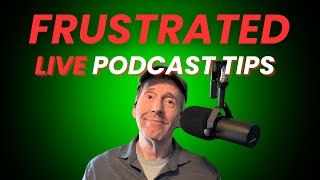
In this 90‑minute live audio‑video episode of Podcast Tips, veteran podcaster and Podcast Hall of Fame chair Rob Greenlee examines why podcasting has become significantly harder in 2025. He outlines the sheer scale of the medium (over 4 million podcasts ever created, ~400 000 active shows) and how that volume creates clutter that drowns new voices. Greenlee discusses the creative bottleneck – the difficulty of consistently producing compelling, timely, and differentiated content – and how audience expectations have risen to the level of video platforms. He explains the fragmented distribution landscape (Apple Podcasts, Spotify, YouTube, Instagram, TikTok, niche apps, RSS, proprietary APIs) and how each platform’s algorithm and demographic forces creators to tailor format, length, and promotion strategies. Monetization is presented as a chicken‑and‑egg problem: without an audience you can’t earn, yet without revenue many creators cannot sustain the time‑intensive production workflow, leading to “pod‑fade.” Greenlee highlights the growing role of AI tools, analytics, and platform‑specific features (e.g., YouTube’s translation, Spotify’s playlisting) that can lower barriers but also raise new technical and ethical considerations. He stresses the importance of niching down, mastering one or two platforms before expanding, and treating podcasting as a full‑time business rather than a hobby. Throughout, he intersperses personal anecdotes from his 20‑year career (radio, Microsoft video podcasts, hosting on Libsyn, work at Spreaker, building a consulting practice) and answers live audience questions about saturation, creative collaboration, and trust. The episode ends with practical advice: focus on strengths, be consistent, experiment with formats, leverage data, and remember the original motivation for starting a podcast.
Chapters
Tonight we're tackling a big question: why is podcasting harder than ever in 2025? So welcome to Podcast Tips. It's great to have everybody here with me tonight, and I would like to, uh, Thank you for being with me tonight. I appreciate it. And this is Podcast Tips, the, the live version. This is also an audio and video podcast, but my name is Rob Greenlee. I'm a 20-year podcaster and a Podcast Hall of Famer. I was inducted in 2017, and I'm the chair of the Podcast Hall of Fame as well, which we just held our annual ceremony to induct 11 new podcasters into the Hall of Fame. That just happened, um, on the 17th of January down in Orlando. And so I'm excited to be back again. I know I skipped last week, so like I said, thank you for being here. So whether you're a seasoned podcaster or just getting started, you're likely noticed, or, or you've likely noticed that the kind of game has changed with podcasting if you've been following it all. And, and things are getting a little more complicated. It's not as simple as just grabbing a mic and hitting the record button and finding success. I would say that was the case for many years in the early days, just because there weren't very many podcasts. So, you know, now we have— there's been over 4 million podcasts ever created nationally. And about 400,000 of them are actually active globally right now publishing new episodes. So, you know, it seems like there's a lot of competition out there, but really at the end of the day, it's just a lot of clutter actually is what's getting in the way of a lot of podcasters. So that's part of what I want to talk about tonight is kind of the, the behind the curtains topic in this podcast medium that doesn't get really talked too much about because it's not, you know, it's not really kind of cool to talk about some of these things. And really, so let's just dive into why, you know, why are we seeing this especially so much right now? And more importantly, what we can do about it. Right? And if you want to be a content creator or if you want to have a show like what I'm doing here, you know, this show is not without its struggles as well. Since this is just one of like 5 different shows that I do, it's not really a full-time effort on my part that I put into this program. And, you know, and, and thus it hasn't really grown that much. So it You know, it really takes a lot, and that's kind of what I'm going to talk about tonight. And I'm even thinking about this too, is that do I just, you know, shut down a lot of the other stuff I'm doing and just concentrate on one show and really invest in it, make sure it's a topic that is relevant? And I'm trying to learn just like all of you out there are trying to learn about how to do this. If you're trying to start a podcast, this is the best of times and the most difficult of times to actually get started. And increasingly I'm feeling this pull towards, if you wanna start a podcast or if you wanna be a content creator now, you're really starting a business. And that's kind of been growing and developing for many years. A new thing in podcasting. There's been media companies, I think we've all heard of them. There's been individual creators and talent out there that have built, you know, very large audiences and very large businesses. I think we can probably name a few of them if you were to probe your mind and really think about it. So, you know, and all those creators, many of them started many years ago. And that's the other thing that doesn't get talked about a lot too, is that there is no instant success in podcasting or in any endeavor that you do today, because there is a lot of competition and there is a lot of innovative ideas out there. You are not the only one with an idea. So, and I'm no different than that. You know, sure, I've been podcasting for 20 years, done many different shows. And have worked for many different companies in the digital media realm and in podcasting, even companies like Microsoft, and have done shows for Microsoft. And but, you know, back in those days, a show I did for Microsoft was picking up millions of views and it was a video podcast. This was back in like 2008, 2009, and 2010 when I was doing video podcasting. And it was all hosted off of Libsyn at the time, since Libsyn was one of the original podcasters and, and, or podcast platforms, I should say, that handled the distribution side. That, that was, that was how I did. I went, when I was at Microsoft, I, I managed and, and, and hosted a couple shows. But really, that platform, I had about 50 podcasts that I had on that platform that I was maintaining. There your audio and video shows. But let's go ahead and dive into the kind of creative challenge. And I think that's the number one issue right now. It's really a creative and idea challenge that all of us face, given the expansive and elaborate competition that's out there. As we've seen legacy media contract and realize, as we just saw with the US presidential election, the importance of podcasting. Now that's refocused the lens of view from many, many very talented and large-scale creators, right? From legacy media, I'm increasingly hearing that even these big cable channels are going to really double down on online distribution. They were previously focused on their cable channels, right? They're— that people are increasingly cutting, cutting the cable per se, uh, and moving over to— I know that's exactly what I do with my smart TVs. I've got 3 smart TVs and all of them don't have a cable connection anymore. And this is part of the, the challenges, the increasing competition And how we're seeing in the numbers, right? Uh, the, the research and the surveys and the, the ratings trackings that has started to develop in podcasting start to really stratify. Um, the top 200 shows in podcasting are garnering, at least within the last 6 months, over half of the viewers that are even available to view content online. So that tells you that what we're seeing happen is a shift to bigger creators getting bigger and legacy media dying. So if you map those together, and this also includes radio too, um, the, the trend lines are very similar to what's happening with cable television, to what's happening with radio because of a medium like podcasting. And increasingly, people are thinking of podcasting as a video format. You know, people watch YouTube, they see like a person like me, I'm doing this on YouTube as well. They see me talking on a microphone, so this must be a podcast. Right. Also, I wouldn't be talking on a microphone. I'd be using a lavalier, or I would have a, you know, I would be associated with just a, just a YouTube experience. So, and that has been true as well. So you have this, this dichotomy that's happening in the medium right now where some people are thinking that what I'm doing here is just a YouTube channel video. And there's other people that look at it and go, well, you know, he's got an SM7B here and he's got a boom arm and he's talking about podcasting, so he must be a podcaster, right? And this must be a podcast. Well, in this case it is. This is an audio and video podcast that's available on Apple Podcasts and Spotify. It's not a video podcast in Spotify, but you You know, we are on the cusp of seeing Spotify really embrace this, but let's get back to the creative challenge. Let's first talk about crafting a compelling educational and entertaining piece of content. It's not as easy as possible as it was maybe years ago. I think the expectations have increased, I think is what's really going on here. And it's not as simple like what I'm doing right here, I don't know that this is necessarily compelling or entertaining content. So I wouldn't put myself up on the scale of a Joe Rogan or a Marc Maron, uh, or any of those, those folks, or an Adam Carolla. Um, you know, I inducted those, uh, Adam Carolla and, um, and Mark Maron into the Podcast Hall of Fame a few years ago. And, and those guys deserve to be there. They were pioneers in this, this medium, and they do have all those things, right? Mark and Adam— I worked with Adam in LA for, for a year and, and helped him with his podcast a little bit many years ago. But both of those guys, if you look at Mark Maron and you look at Adam Carolla They have talent to craft compelling, sometimes educational, but mostly entertaining content. So I think we all know when we experience great content, but as a creator, it's hard to actually force that, right? And it's the, it's the X factor. In content that even Hollywood has struggled with over the years to perfect. You know, even, even the movie industry has flops, right? They could spend $1 million, $10 million, or $100 million on a movie. You would think it would be compelling, it would be interesting, and people would flock to it. That doesn't always happen. So in some ways, creating content is like gambling, and you're not always going to win, and the house usually wins. And the house in this case is the audience, and the audience decides, not so great, so I'm not going to spend my $10 or $11 or $12 or whatever ticket prices are now. It's been a while since I've been to a movie theater, but, um, I'm sure it's up there. It's probably $20 now. I mean, if it costs $20 to get a, get a Happy Meal at McDonald's, I'm sure it's at least that much to go to a movie now. So, so what is great content though, you know? Huh, that's a, that's a very subjective question in, in my mind. And, you know, when you hear it and see it, you know it. But I think it's a lot of luck. It takes vision, it takes originality. It also takes quite a bit of timing too. Is it relevant? Is that content relevant at this point in time? And I think this is playing out on YouTube today, and it's, and it's going to come to podcasting in a serious way Um, and I think YouTube is kind of ahead of podcasting on the content side in some ways. And I think what we're seeing over there is going to come into podcasting increasingly, and that is trending topics. People are going to have to be much more quick, or much quicker, in getting their content out and get it out in a timely manner that can take advantage of Trends. We're already seeing this in YouTube today, so it's, it's not something that's, that's new to those that are paying attention in the content space, that this is what's garnering attention. And I think it's really been highlighted by what we've seen with, um, the presidential election. You know, all those topics over the last 6 months that have been like right on the edge you know, very partisan topics and very highly contentious, um, issues and blowback and, and people getting emotional and challenged. You know, those are all core factors of successful content. Does your content inspire an emotional reaction? Does it, does it get people to think? Does it get people to react? Does it get people to take action? Does it motivate them to make a different choice in their, their own lives and to get behind a movement? I think that's, that's the other thing, is this concept of inspiring a movement and a change of mentality. That can influence the world. And I think we have just seen that. I think we've witnessed it with this presidential election, that podcasting had a significant contribution to the outcome as opposed to legacy media that has been losing trust. Podcasting still has trust. Even though maybe in some cases maybe it's unfounded trust, nonetheless it feels authentic. It feels like you're really getting a glimpse into who this person is and what their positions are, what their thoughts are in a variety of different topics and a variety of different subjects. And it helps build that trust connection about who this person is, much more than sound bites that come out of the mainstream media. So like I mentioned earlier, there's, you know, 5 million or so all-time ever published podcasts out there, of which about 400,000 are active shows today. So, which means if you translate that into, let's say, Apple Podcasts, means that there's a lot of clutter in the directory, and that clutter gets in the way of listeners finding relevant content for them. Now, you contrast that with the YouTube platform And they have been really focused on driving viewer attention to episodes. Like, if this show tonight resonates with my metadata and the topic and how I've presented this show with an audience, it'll grow. I mean, I just published an episode before I went to Orlando on my Tesla car about Full Self-Driving, and that one did very well. It's had a couple thousand views. Um, it's not, you know, it's not on the scale of a Joe Rogan or something like that, but it's a very niche topic. So, and increasingly YouTube is a platform that has appeal globally too. So you have this kind of unique opportunity And as YouTube rolls out their translation capability to smaller and smaller channels and smaller and smaller shows, those smaller shows will get more audience outside of the US potentially than they get in the US. Because my voice right now will be maybe spoken in Vietnamese or in Spanish. They'll actually take my voice and they will translate it and make it sound like me, but it will be in Spanish. I know it's really weird, actually, the more I think about it, but nonetheless, that's what AI and technology is enabling today, is the ability to make my show become a global show, which is good for them because then they can sell more advertising, right? Um, because that's what they're all about. But it also means that all those content creators outside of the United States will— that are doing it in their native language, whether it be Spanish or French or German or whatever— will be translated into English. So we'll even have more competition in the United States because all those shows that have been pretty locked out of the U.S. market because they were in a non-native language will start finding an audience here. So our, our competition is going to elevate, so we have to elevate. And listeners are increasingly— and viewers, I should say— are looking for high quality. They're looking for shows that have engaging stories and can tell them in an interesting way that keeps them engaged. That sounds easier than it really is. So it takes a lot of creativity and a lot of capability on the part of the host, the producers of whatever that program is, not unlike, uh, what I was talking about earlier about the success of TV shows or movies or, or any of these content platforms. But I I have been increasingly hearing this, this topic around authenticity and being real and filming your, your content in a variety of different environments at different places. And I've been experimenting with that. I've got a series on YouTube called Walk Talks, and I'll take my portable video camera and I'll take it out and I will go for a walk, even when it's 15 degrees outside, and I'll talk about a variety of trending topics. And so I've been experimenting with this as well, and those, those have done okay, but they haven't done outstandingly. I think the, the episodes that I've done more with my, my in-car kind of behind-the-wheel series have done much better. And I think it gets back to niching down and having a topic that lots of people are looking for. And I think that's the key thing is that if you wanna reach an audience, you kind of have to niche down and get focused, but focus on topics that people care about. And that is to some degree top of mind. But if you can uncover a topic that's interesting, fascinating, and engaging, that's most likely going to move the needle. And oftentimes it's, it's a good story, right? And is what I'm doing here a story? I'm not really sure. I think it is to some degree. It's a form of a story, but it takes a little research. It takes, takes a little planning. It takes a little bit of practice. It takes a little bit of learned skill to actually deliver on it and make it happen. It's not an easy thing, and I'm, I'm learning myself. You know, I spent a lot of years doing what I would consider to be more of a radio show and a podcast, audio podcast, and I've really doubled down on, on the video side over the last year and a half. I did a, did a gig with StreamYard for a year creating content for them with this show. And that's, that's basically what, um, what helped me kind of move my progress along. I got a lot larger audience when I was over on StreamYard because they have over 100,000 subscribers to their YouTube channel. So obviously that number of subscribers gets ident— you know, notified when any content goes live on their channel. So that is, that's a boost. I don't have as many subscribers on this channel as StreamYard has. I would love to, I would love to have 100,000 here, but I, I don't yet. Um, and maybe at some point I will, but I have had probably, you know, 1.5 million views on my channel, but that's over like an 18-year period of time. The time span that I've had a YouTube channel, which is quite long. It's much longer than most people, um, and but for many years I didn't pay attention to YouTube. I was really focused on audio and helping other people with their audio. So, you know, the other limitation is all of us have limited time, most likely, to invest in this. Also have limited financial resources to, to invest in creating content because most of us, many of us, have other things that are going on in our life, or jobs, or families, or other obligations that get in the way. And I believe that's the number one reason we see a significant amount of podcasters do what's common, and that's pod fade. And if you've heard of that term or not, it's been around a very long time, and it's really a simple thing. Uh, you start a podcast, you're excited about it at the beginning, and then after about episode 7, 8, 9, 10, you either— there's, there's oftentimes one of about 3 or 4 things that happens. Um, life gets in the way. Let's say you— there's a family change, or there's a job change, or there's some sort of a, a feeling that you have that you've run out of things to talk about in your podcast because maybe you're not investing as much thought into it and thinking outside of the box. You're very kind of logical about it, and Maybe you just don't have the, the focus that's needed, and what happens is that you just, over a subsequent period of weeks, you just stop publishing new episodes. That's why we have close to 5 million podcasts that are in the Apple directory, of which only 400,000 or so are currently actively publishing new episodes. So you can see how this happens. And this is a— this is not a good topic for the podcast industry. Um, you know, I used to work for some of the, the largest podcast hosting platforms in the space, you know, Libsyn, Podbean, Spreaker, um, and PodcastOne. And, you know, this was not the topic that all those folks wanted to expose. I think what many of them want to expose is the fact that, you know, now's the best time to start a podcast and, and get in there and get your show started. And, you know, our podcasts that we do, um, or, or those, those folks do if they do a podcast to support their users, it has this tagline, you know, stay podcasting, you You know, we're going to help you keep podcasting, right? Continue. That's kind of a tagline that many of these podcasts about podcasting have, and that's for good reason. You know, trying to support podcasters and help them be as efficient. And that's also why, why we've seen a lot of these podcast hosts start to incorporate AI tools into their, their tooling, because They want to streamline the production of podcasting for their users. So it takes less time. Thus there will be less likelihood of pod fading, right? Which means that's actually a kind of like a, like a churn in their subscription models, right? So let's say you go in and you start a podcast on a particular platform and you start paying the monthly $20 a month or whatever that is. And, you know, a couple weeks into that, you stop publishing new episodes. Well, there's a high likelihood that you're going to cancel your account. So there is an interest on the part of the podcast hosting platforms to encourage you and help you continue to produce new content. And that's good for everybody, actually. It's not that it's a bad thing that they're doing. It, it just kind of points out what's really going on behind the curtain, right? And that's what I wanted to make this episode about, is trying to get really real with you tonight about what is going on with podcasting and why it's kind of— it's becoming hard. And it— and, and we, we haven't really dug into the real meat of the matter yet. I know I've been belaboring the point to some degree, uh, or blabbing about your other stuff that maybe isn't necessarily directly related to that topic. But, um, the other thing that's very confusing for a lot of content creators is distribution, right? So once you've gotten past the creator part, which is the creating the content, recording it, producing it, and editing it, and doing all the things you need to do to get it ready to publish and then flow into distribution. Podcast distribution has become very fragmented. It's kind of always been fragmented to some degree, and in a way that's, um, is natural to being an RSS-based distribution is that it is— you publish, just to give you an example, you publish to Apple Podcasts your RSS feed You create an Apple ID account, you take your RSS feed, you give it to Apple, and, um, and Apple adds it to their directory. Well, that creates a domino effect of sorts, and many people don't maybe realize this, but that domino effect gets you into probably about another 100 apps because there, there's a bunch of podcast listening apps out there that are not all that well known, but they have a fraction of the market. They're making your show available. They have a few thousand downloads of their podcast apps, and you can pick up some audience by being in those apps. But you, as a content creator, don't have to do anything. It just automatically happens because you know what? Those apps are taking what's called the Apple, uh, Directory API, which is basically a connection to the Apple platform, and those other apps are able to mirror their content directory, which means that your content and your RSS feed and your show will be in all these other apps kind of automatically. But that's kind of leading into the next thing that I want to talk to you about. And this also involves Spotify too. It involves YouTube to some degree. They do have a pathway for RSS to get content into YouTube, and that is a good pathway to some degree, but you just have to realize what the limitations of that are. Same with Spotify, and you have to understand what the motivation that Spotify has for doing what they're doing, and it's not always in your best interest. Um, all these platforms are proprietary platforms. I'm talking about Apple and Spotify and YouTube. They're looking out for themselves. You also have to keep that in mind. You have a very tenuous relationship with these platforms as a content creator. You're trading on the ability to have the potential to grow an audience. It's not guaranteed. They don't guarantee you that you're going to get any plays in their platform, but yet you're still giving them your content for no obligation on their part. Now granted, There's a terms of service that you have to agree to when you submit your show to these platforms. But it's becoming more complicated, right? Creators have to think about YouTube and social media platforms like Instagram, TikTok, and other kind of niche podcasting apps. There's other ones out there. You know, now there's, you know, Slack. Is getting involved, and, and other, other platforms. People can import RSS feeds into— you can add podcast-type content into all sorts of different platforms now. And so what's happening is podcasting is getting kind of diffused of sorts and not primarily utilize with RSS. Also, people are directly uploading increasingly on the video side and the— and to some degree on the audio side. And, and each of these platforms has its own algorithm, and, and each of these platforms like YouTube or Spotify have different audience expectations or different audience demographics. So a show that does well on Apple Podcasts doesn't necessarily mean it's gonna do well on Spotify. There's a different demographic of the user base of this. And there's even differences in the success and the metrics that comes out of each of these podcast hosting platforms too, like Libsyn and Buzzsprout and Spreaker and all the other ones. They have a different set of creators in there based on the attraction and the branding of the particular distribution platform tool, right? The, the tool that distributes your show has a certain kind of demographic profile as well, just like Apple does, just like Spotify has. And each of these are slightly different. Same with Instagram, same with TikTok, same with Facebook. All these have different kind of demographic profile. And that's, that's another factor that comes into play here that a lot of people don't think about is is that there is differences in all these platforms. And as a content creator, how do you appeal to all of those? It's a very complicated set, right, of parameters and things that you have to consider. And most podcasters just don't have the data to be able to make an accurate assessment of what their go-to-market strategy should be based on what they're doing. And what kind of content they're producing. And I do think that's an opportunity as we look to the future, that we will see more analytics coming out of these platforms that will match. You know, there's a certain amount of kind of YouTube envy right now going on around analytics and data about audiences with content. You know, I know I look at my channel And it's, it's amazing to me the, the depth and the breadth and the, the scope of how YouTube is analyzing the consumption of videos on your channel and what they look for and how they evaluate it and what's the, the patterns that they want to see. To them, watch time is probably the number one thing. How long is somebody watching your, your show? You know, what's the engagement? Are they commenting? Are they liking? Are they sharing? Are they, they following? You know, subscribing? Those are all key factors to the algorithm of YouTube today. I've learned it firsthand, and What are the technical requirements for you to create the art and create the metadata and create the descriptions and the titles and all this stuff that makes it all work? You know, some of these things that you're challenged on the YouTube side are not necessarily the same things that you're challenged on with the podcasting side. But I will tell you that I believe that in the next 12 months, those will be pretty much aligned with each other. Because if it— how can I say this— this is the direction that the industry is going, whether it wants to or not. And AI is going to have a big place in this, even in podcasting. And I'm just putting it out there, you know, that these platforms need to adjust. And unfortunately, I, I I think the future of downloadable media is probably a big question mark right now. And in my view, and believe me, I've been an advocate for years around RSS-based distribution, but RSS isn't really the problem here. The problem is, is that we've built our infrastructure on a download model, and that is not going to work as you look to the future. I think there's a growing consensus in the podcast medium that the download is not something that we can continue doing forever and still expect this medium to reach its full potential. Now, downloading should always be the option or an option to create a local copy so you can play the content. Back if you're in an area that doesn't have internet access. That has really been the selling point. And YouTube, from what I gather, kind of supports this as well. Um, you can get a local copy, but I don't use that very much because I watch most of my YouTube on a smart TV. I don't know about you, but that's kind of my, my consumption patterns. And then if I want to watch something outside of that, if it's available as a podcast, I'll listen to it on the, on the mobile. But I will also watch on the YouTube app on iOS. So the big factor here is content creators are getting spread too thin, right? We're being asked to manage and know things and do things that are likely beyond most people's knowledge, right? I mean, it's, it's been my full-time job for coming up on 21 years to understand all this stuff. And the last year and a half focusing on, on the video side. I spent many years working on the video podcasting side, and I was working at Microsoft in the early years of this medium, and video was huge back then. So video's always been a part of podcasting. It's just that YouTube wasn't on board. YouTube has always had a podcast group inside of their company because I used to work with them back in 2014, and they've always had an interest in trying and getting podcasters to create YouTube channels. Well, guess what? They decided that they were going to create a playlist called Podcast, and that's all they needed to do. And it completely changed the conversation in the market. They actually probably, probably should have done that many years ago. They were a little slow to the game, weren't they? But nonetheless, It's here now and it's changing things. And the other big thing that you have to wrestle with as a content creator today, or a podcaster, depending on what you want to call yourself, um, it's the format dilemma. Long form, short form, audio only, video only, audio and video. We have a plethora of choices. Long-form podcasts are great for deep dives and building loyal listeners and viewers that will follow you, right? Long-form podcasts are great for deeper engagement, but they're time-consuming to make and produce and edit. And they do require talent and production and ability to pull off. And that's a lot to ask of, of some people at the level of maybe getting to what would be a production that would be more associated with legacy media, because that's the direction this is going. I mean, watch— go watch YouTube sometime. And go look for some talk shows on there and see how those productions are being done. They're typically being done with multi-cameras and, and advanced switching between the cameras. Like, I can, I can do that somewhat here in, in StreamYard today. I can actually pull in a second camera here I don't think I need to do it tonight, but I, I did do it in my last episode. But, um, so this kind of eye candy thing, which is something that, um, that I think is, is increasingly important. But even the world's largest YouTuber, um, has kind of thought that maybe it was time to to move away from the fast transitions, you know, the explosions, the, the yelling at the camera kind of content. MrBeast made that statement about a year ago. I heard him actually say that. And so, so I want to pull up on the screen here quickly before I jump into talking about short-form content. But just to give you an idea, of, um, what's here. Let me— okay, yeah, so let's, let's talk about what somebody said. Um, why is it so hard to create a podcast that people want and want to listen to? I, I ask as a listener and as a podcaster. And this is, this is what he said. This is what he says. So I spent a lot of time in my car driving, and I desperately want new content to listen to, but it seems harder than it should be to find it. I have spent so much time searching and researching through many, many shows in hopes of finding something that I actually want to subscribe to, but I rarely find what I'm looking for. So what does this tell to you? This is telling, telling me that there's, there's a lot of clutter in the, in the catalog, a lot of dead shows, a lot of shows that are not being current. And he also goes on to say, there are times when I hear a show and think not bad, but then it just escapes from me after it's over, never to return to it again. So that's a single listen or a single view. And I think that this is, this is really important because all of us want to build long-standing relationships, like finding a show that I look forward to hearing for a second time should not be that hard when there are so many options out there. As someone who gets low listenership numbers on, on his own podcast, myself, I kind of just assumed that I also don't have that, right? So You know, I've got to listen to this show again and, and try and appeal to the listeners. And this is, this is the struggle for many podcasters, um, because podcasters are also listeners too, so they can see it from both sides. What are people who don't have that appeal doing wrong? How should we do better? Or is it that we— they just don't have what it takes? I think that's a very, very thoughtful question, and I think it gets back to what I was talking about earlier about, um, you know, talent and ability, and also dedication and longevity. You know, I've been doing this for almost 21 years, and I still don't have it perfect. I started on the radio. That's a different medium. Podcasting is something that I can do, and I've, over many years, developed a fair amount of confidence in it. But after my nationally syndicated radio show that did tremendously well on the radio and then on XM Satellite Radio Network for a couple years, and that, that show had massive audience. I had millions of listeners on that show. But I have yet to have a show, well, short of the show that I created for Microsoft that had millions of views, and listens. It's been difficult to grow an audience now, but I also know that I, I haven't invested significant energy into building a show. It's always been kind of like a branded podcast or something like that that I, I did in support of a, of a company, and those type of shows typically don't do as well. So like, I could never do this episode if I worked for any of these podcast hosting platforms because they wouldn't want to share the, the, the dirt on podcasting or talk about real challenges and real obstacles that people have to face to, to do this. And, and that's why I felt compelled to do this tonight. Is that I'm speaking from my heart. I'm speaking from experience. I'm speaking from feeling this, you know, even today and trying to approach this topic to help others to think about this. So I'm gonna move back into my flow here and talk about short-form content, you know, You got long form, short form. That's at the top of the funnel of sorts that you have to decide what you're going to do. Oh, I also want to mention to all those that are making comments in this, I'm going to cover those at the end of the program. So stick around and I'll be happy to try and answer some of those and, and address those on the show. So your questions and comments are not going to waste. They're They're just piling up in my, in my dashboard here to some degree. So I'll take some time. I know I've talked a lot so far, but anyway, I'll get moving forward with the short-form content. Uh, the short-form content is perfect for catching attention on social media generally. Now we may see it shift towards, um, vertical videos being longer form at some point, but we'll have to see on that. But currently short-form content is good for social media, reels, shorts, that kind of stuff. And, and it does drive some viewership, but the mapping over to creating viewership on the long-form content happens a little bit. It's not insignificant, but it's not as significant as you might think, or what many think by doing it. They will accomplish. So building audience, it's not easy, and there's no real simple formula here to actually do it. Um, you know, it's, it's still hard to create meaningful connections, and that's just because there's so much content. You know, you just look on LinkedIn or you look at Facebook, there's tons of people creating content, and in some ways, the people that creating content more frequently are actually picking up more audience. So that's That's a little tip from me, is that creating, let's say, 2 or 3 episodes a week of whatever you're doing is probably going to garner more audience than just doing 1, or doing 1 episode every 2 weeks, or 1 episode every month. Now, that's not a perfect scenario. There are podcasts out there, um, that, that create huge audiences, and they maybe publish an episode every month or every 2 months. You know, so there are examples of the contrary to everything that I'm saying. You know, I hate to kind of throw the baby out with the bathwater here to some degree on all the stuff I'm talking about, but that is kind of the, the reality. So it really gets back to your talent as a creator. People will follow shows that they feel, you know, really compelled and connected to. Whatever that creator chooses to do, right? They will be there. And that is a very powerful place to get. And I think that, that applies to the really big shows too. So, um, let's talk about video a little bit here. It's essential, really, increasingly, for discovery. We've seen it in the research. There's a lot of people that will argue that point, that it, that it isn't. But let's, let's call a spade a spade here. Uh, YouTube is the second largest search engine, and as being— I would say YouTube is not being disrupted by AI as much as Google Search is being disrupted by AI. So we may find a time here in the near future And I think we're almost already there where YouTube is the number one search engine, short of whatever AI winds up doing with search. So for now, discoverability is being shown as what happens in YouTube. So if you have a show and you're not in YouTube, then your chances of being discovered are less. And your chances of being discovered in Google search is even less because guess what Google likes to do? They like to feature YouTube videos in their search results. So that's the other layer to this. And, and it's also, you know, creating video, like I mentioned earlier, is a complex process. It's not an easy, easy thing to do, but it's extremely powerful in the discovery side and the visibility side and bringing your personal connection to an audience. That's why I do live, is that I see these comments that come in and I love that interactivity, and I would bring them onto the screen, but that would disrupt the flow of what I'm doing here to some degree. I want to get to the end of the show and we'll bring those in, and hopefully I won't go too long with the episode tonight. But thank you for staying with me here if you've been here the whole time. Um, the other thing to, to decide is, well, you know, as a creator, what's your format? You know, what do you choose? You know, it's, it, it's on your lap or on your in your hands to decide, you know, what your— who's your audience, what are your goals. That's what you have to really get a good handle on. That's not easy either. That takes research, it takes understanding of the topic and the market and the people, and, you know, and get those things refined so you can make the, the right decision and the right call. You know, and you may not make the right call. Odds are you're probably not going to get it right first. The odds are you're probably going to get it wrong and you're going to have to adjust. You'll, you'll start the show, you'll publish some episodes, doesn't seem to be working. Then you have to be willing to— I hate to say it, but question everything you're doing. Every step of the way. I know I do. This isn't something that has been easy for me. I'm at 53 episodes now of this series, and I've been adjusting my sails because I know this is a tough genre in the, in the online media space, is talking about podcasting. It's, it's just not as popular of a topic. People are just not as interested in it.. But yet I want to help others that do want to do this and do want to succeed. And that's, that's why I'm here every Thursday night. So let's, let's move on and talk quickly about monetization struggles. So increasingly I'm seeing in the market, uh, content creators, new ones especially, are saying How do I make money? That's the first question, not the second question. It's the first question. What's my, what's my monetization strategy for starting a podcast? And that's a difficult one for me to answer because I'm probably going to say something they don't want to hear, which is you can't really monetize unless you have an audience. That's the ground truth. You can, I can turn on monetization tomorrow for any of you that want to start a podcast with me. I can turn it on, but you're not going to make any money because you don't have an audience. Money comes typically from audience in any kind of a media like this. You can build in other things that you want to sell. You can start a t-shirt shop. You can sell a book, a digital book. You can do all sorts of stuff. But if you want to grow any of those things, you have to have reach. You have to have an opportunity to get in somebody's ear or get in their eye, right, to see it. Before you're going to be able to monetize. You know, podcasting growth has been attractive to advertisers generally, but the market, to some degree, for those that are in a position to take advantage of it, is relatively saturated right now. It's typically the really big shows. So not every podcast is going to be able to land a sponsor. It depends on your genre, it depends on your market, it depends on who your audience is, how monetizable it is. There's a lot of factors that go into this. And you can also jump into subscription models, crowdfunding, like I said, selling merchandise. Um, but each requires its own strategy, kind of like, you know, starting a business. So you have to have, you know, some marketing dollars potentially to put behind any of these things to grow and to build. And, and let's, let's talk about, you know, the pressure to balance quality content with paid opportunities. There's risks there as well. You run a bunch of ads in your show because you want to make money, that could push away audience because they get turned off by too many ads or too many promotions or too many calls to action. So there— it's a balancing act. This isn't like commercial radio where every channel and every station runs 16 minutes of ads for every hour of content. That's what I went through when I was on the radio. There was like breaks at the top of the hour, the bottom of the hour, and every 15 minutes. And there was ad breaks that had, you know, 4 or 5 different ads in them. That doesn't really work in podcasting. It does maybe a little bit, you know, and people are pushing the envelope on this. And the expectations are is monetization from day one. So, but there's a risk of alienating audience. Because there's less of a tolerance. One of the reasons podcasting even exists today is a rejection of over-commercialization in podcasting— or in radio, sorry, I had that backwards. That's why podcasting exists today. The other issue here is, you know, what's your time? How much time do you have? And that, that is really the, the other elephant in the room on this topic is how much time do you have to put into a podcast, especially at a professional level, right? It's incredibly time intensive to do a high quality audio or video show. I call it show because I'm increasingly thinking of myself as a content creator, not as a podcaster. Because as I do more video and as I put my, you know, shorts out, long form on all these social platforms, you know, this is, this is the realm of someone that's not just doing RSS-based podcasting. This is the, the realm of something much more, right? And, and from scripting to recording to editing to marketing to engaging with your audience It really is, at a successful level, a full-time job. And how many of you out there can invest every evening after work to spend 4 hours on your podcast every day, 5 days a week? You know, it's— some are willing to invest like that. I know that that's how I got started when I created my first radio show. I was working full-time jobs and doing the radio show on the side, and that was a, a big undertaking. I even started a studio company back in those days too. It was called Loudvox, and I was helping other people do the same thing. This was many years ago, this was in the early 2000s. Um, it just takes a lot of work and a lot of juggle and I had to break the production up into— I mean, after I left the radio station and took it home and produced it, I had to produce in pieces when I could come home on my lunch breaks to actually record an interview or, or those kind of things. That's the kind of commitment that it takes if you want to do this successfully and still have a full-time job. So it can be overwhelming, and I'm not sure that everyone is willing to invest that time and energy in making that happen, because increasingly our world is becoming more and more complex and challenging. That's kind of the, the other message here. You know, I, I've been there with all this stuff, and I, I, I feel the pain, and I feel everyone's pain out there with this. You know, but that effort on your part, you know, even though you're getting pulled in a million directions, for you to succeed, you can't sacrifice on the quality and the consistency. That's the, that's the truth that many maybe don't want to tell you. So from my perspective And let me give you some solutions here to somewhat to, to think about here. As someone who's been in podcasting since the early, early days, I'm talking about 2004, and I've seen the industry evolve. That's all it's been is an evolution. It's been slow climb on audience. It's been like 3 to 4% audience growth every year. For 20 years, and we're finally at a point where audience is pretty good-sized, right? I mean, I think all of us would agree with that. And podcasting is well accepted by society and culture. Everybody knows what it is. I spent so many years talking to so many people, what's a podcast? And I'd have to tell them. In the early days, it was like, well, a podcast is like an online radio show. I'm sure you can imagine what kind of reaction that created. It was like, well, why don't I just listen to the radio then? Now the conversation is, you know, quite different. Podcasting— everybody knows what a podcast is now, or they think they do. If they don't listen to one, they, they've heard it before. They've heard it on all sorts of other media. They've heard it in the the news, they've heard it in movies and TV shows. And that's why we're at the point where we are right now. And mainstream media is dying off, and increasingly a lot of those talent that are in mainstream media are now building their own networks and their own podcasts and finding huge audiences. And that's what's changing podcasting. So I'm not going to sugarcoat it. Podcasting is harder now, and that's because the stakes and the competition is higher, which means that you have to elevate your game. You have to elevate your commitment. You have to elevate your effort, and you have to elevate everything that you're doing. Takes a lot a focus and effort and investment increasingly to be— I don't even know if it's possible to become a Joe Rogan ever again. I don't know, maybe, but I, I wouldn't make that your goal, never. And I'm not sure it's possible. I think what you can accomplish is something less. And that's, that's okay. The other good news is that the tools and resources available now to creators have never been better. AI is streamlining everything increasingly, and I think that's only going to increase over time. So my advice here is to focus on your strength that you have, your talents, your skills, and your abilities, and learn about your audience. Know your audience and be very kind of— find those opportunities, be strategic, be tactical, be focused on being different, be focused on being unique, be focused on delivering quality. And if you can pull that off on a low budget, hey, I will applaud your success and be extremely happy with what you've been able to accomplish and what you've done in the face of really insurmountable odds. So So choose— really, my top advice to get started here is choose one or two platforms to master, right? If it's just podcasting, start out with audio and master that as best you can, and then at some point evolve over to adding video. And working with YouTube. Once you've kind of worked your, your flow with the audio, or start with YouTube and optimize that, and then start thinking about audio podcasting. Take that original content or make something new or make a derivative or make bonus content on the audio side. Or make something slightly different that's related to whatever genre that you're making on the video side. Experiment, try new things, new formats, try different monetization models. Find— that's why it takes a while to do this, is because the early, like the first— I hate to say, but the first probably 1 to 2 years, you're going to be experimenting. Constantly and adding things that start to work, right? It's testing, testing, and testing. That's what— that's why I was talking earlier about this is becoming a data-driven medium. You're going to have to learn what's working and what's not working by getting data about what's converting and what's not converting, what's working and what's the best practices. And that only comes from actually getting detailed data. So that's the other thing too. And try different monetization approaches, see what works with your audience. And most of all, always remember why you started podcasting to begin with. What is your— what's your motivation? So Before I wrap up with the show, I definitely want to include you in this conversation. And what challenges are you facing as a podcaster in 2025? You know, I know that I've got, it looks like I've got 19 questions in the comment field that have come in during this show. And believe me, I appreciate all of them. I'm gonna go in here and look at those really quick and see if we can pull in some of them. And talk about them. I think it's an important topic. Um, so it looks like I've got, uh, May Loves Yes UA in here who asks a good, good question. Number one, it looks like, uh, this person asks 3 questions, I believe, but, um, let's just take the first one here. Should we worry about a saturated market with intense competition? I don't think you should worry about it per se. I think you should recognize it and try and find your, your little niche, your skills, your, your passion. Or if it's not your passion, maybe it's something that should be your passion. This is kind of the hardest part. It's the goal setting. It's the deciding what direction you're going to go, right? What's your purpose in what you're doing? That's the— that's really at the core. That's at the very beginning of this process, is that you have to find something that matches with who you are and what you like to do and what you have really a burning passion that every day you get up and you're going to be motivated to keep doing what you're doing. And fundamentally, at the end of the day, it should be really focused on people, to be focused on either helping, educating, or entertaining other people. That should always be at the core of anything you do with this medium. And, and that's, that's really the bottom line to all this. Um, and so let me, um, go down here. And Christopher Moss writes me, uh, is this creative enough for you? So, so Christopher sent me a link, uh, which I haven't been able to click on because I'm a little busy, but I will go check it out after, after the show, Christopher. Um, And then I got another comment from Gaston Perrier. Um, hey Rob, glad to have met you at Podfest. Yeah, it was great to have met you as well. So thank you for, for joining me here. And it, um, looks like Christopher sent another piece of content that he wants me to take a look at, and happy to do that. I, I will go look in LinkedIn because it looks like that's, that's where you posted that in the comments, and I can get access to that on, on my LinkedIn page. So, uh, let's see here. Let's go into, uh, Christopher Moss again. Say agree with the networks going to podcasting and videocasting, right? Which isn't really a term to describe any of this. It, it's really going them, these big networks and the cable channels, moving increasingly over to YouTube. That's, that's what we're going to see really happen. Now granted, most of them have already been on YouTube, but they only play like clips. Increasingly what we're going to see is full-length content over there on, on YouTube from them, and also probably increasingly in Spotify as those deals come together. So it looks like, uh, Shannon Hernandez posts in here, why do you think podcasts are trusted more when it seems like these podcasts eat their own dog food when it comes to beliefs? Well, I think that they're— they're— that's why, is that those beliefs align with other people out there that have those same beliefs. And, and if they have the same beliefs, then I think they tend to trust it more. And if so, it's a little bit of what I call it, and I know a lot of people don't like this term, but it's a form of tribalism per se. People like to be in groups, right? People like to be in groups that align with their values and their thoughts, and that tends to build trust in that group. Now, there's no guarantee that that trust is well-founded. You know, each one of us has to decide. I do another show called Trust Factor on this very, you know, topic. Um, trust needs to be something that is felt by us inside of us based on what we see, what we hear, what we experience. And only, only us individually can decide what we can trust, right, um, based on the evidence that we see. We can't just blindly trust everything, especially in this AI world that we're moving into. So Shannon also writes, um, I think it will grow. I think you're talking about podcasting. Um, it has a great title. Oh, I don't know if you're talking about this podcast. I hope it will grow. It'll be good for, for me. It'll be good for every— everyone if everybody keeps coming back and watching the show every week, just like everybody else. So, um, I, I appreciate everybody being here, and, and I appreciate it a lot. Um, looks like Nadine wrote me here. Um, hey Rob, um, thank you and Nadine for, for joining me tonight. I appreciate it. And, um, so I do like Christopher Moss's comment here. He writes, um, all I have to say is be creative, consistent and have a, have a little bit of sense of humor. I think it does. I think it does help. And the rest is easy. Oh yeah, the rest is easy. I don't know that that's necessarily entirely true. I think it's a nice thought though. I appreciate it, Christopher. Lastly, don't use garbage equipment, right? Quality equipment creates quality output. There is something to that. Now granted, AI is creating an atmosphere where you can take crappy microphones and make them sound good. So, you know, there is something for that. You know, I know I've helped a couple of companies move down that path of making audio sound like you're in a professional studio, even though it was recorded in a very noisy environment. So, Shannon also writes, uh, Shannon Hernandez writes, I love that you're getting real. Well, that hasn't always been as much the case in the past for me. I think I feel a little bit more empowered now to, to speak my voice because I'm, I'm not aligned with any particular company that has maybe an agenda. So, so that's the, that's the other part of this too. I do another show called The New Media Show, which I've been doing for about 12, 13 years, um, and that is an industry-related podcast, uh, program that talks about the industry. I do it with a co-host called— yeah, his name is Todd Cochran. He's the CEO of one of the largest podcast hosting platforms called Blueberry. And so we've been doing that show a very long time. And we don't always agree. So it's, it's a— can be an argumentative show sometimes because we, we don't always agree on the trends in podcasting. And I think if you listen to this episode and you go listen to that episode, which will be back next Wednesday, I think you will see what I'm talking about. So I'll just put it to you that way. So let's see here. Say, uh, see if I have a good question. Shannon Hernandez asked a question: a monetization strategy should be great content. Well, that's, that's an interesting point, right? Um, great content should be behind a monetization strategy. Because that's how you're actually going to be able to monetize. So from the, the whole spectrum, from the ad— the ad needs to be great content too. A lot of people don't think about that, but that's, that's important too. But the advertiser has a role in creating compelling audio content for podcasts. Number one, they'll get more conversions. To customers and they'll help their podcasters because the ads that will play, if they're pre-produced ads, now granted, working with the host to create a host read, that needs to be creative too. And some of the most successful ad campaigns have been baked-in host read ads. 'Cause guess what? They're more authentic, they're more real, they're more personable, right? They're a personal recommendation oftentimes. So, uh, let me jump ahead here and, and see if I can pick up a few others. Um, so it looks like Georgie writes, uh, what would be a strategy for a show that is a group effort? Say these 3 people producing shows. I'm a big fan of group shows. I've done many of them over the years myself. I love the different voices and the, the banter back and forth. And I think we're seeing this happen a lot on YouTube today too, where very successful shows have 3 people, 4 people that are co-hosts. I've done co-host shows before. I I'm doing one right now. I mean, not right this show, but I'm doing a co-host type of a program. I've had as many as 9 or 10 other people on the— on a show with me at one time as a host. It's not the easiest production, but I think the chemistry of multiple people and the— those different people need that. I mean, if you're the, like, the main host of that show, those different people need to have different voices. They need to sound different. Also, you're going to run into problems where your audience gets confused about who's talking. So that's a, that's a big issue. And they have to have— they really need to have unique and different personalities. You know, I'm kind of a laid-back guy, so I always like to have a co-host that's a little bit more, I guess, edgy might be a good way to call it, or on the edge, or more volatile. That will create kind of like that connection, because there are audience members out there that are like that, right? The more volatile, they're more emotional, they're more, you know, not as laid back. I mean, I've been told that my voice puts people to sleep, so I wouldn't say that that's always a good thing if you're a podcaster. So, you know, having that deep radio voice, right, is not necessarily always good. I think a lot— I think a lot of people like that kind of deep voice in a radio announcer, but it's, it's not always the, the most exciting is what I will say. Um, and then it looks like, uh, Gina writes, uh, thanks Rob, been doing a show for 9 years and still working on growing. Always working on growing. Yeah, I feel your pain. Gina, always working on growing. It's like, you know, create content and market it, right? Or is it market it and create great content? I think once you've started the show and you know what you're doing on that side, then it's really the first is marketing the show so you can grow whatever you're doing. I think what happens is you start a show and then your, your emphasis kind of shifts away, and that's why we're seeing a lot of big content creators build teams around their shows. And this gets back to what I was talking about earlier about investment, right? What's your commitment? Are you building a company? And sometimes, you know, the host or the creator of the show doesn't have the bandwidth to do the growing part, right? Who has the time to do the growing part? Who has the time to publish to all these platforms every week or multiple times a week? So it's— that's what I'm talking about. That's how the medium is changing right now. It used to be exactly what Gina says right now. It used to be an indie world. I would like to think it still is an indie world, but I will say that it's increasingly challenging if you're an indie producer. If you're an indie content creator, you have your work cut out for you, sorry to say. It's not— make it impossible, and it doesn't make it not a good time to do it, but I think you have to take it a lot more seriously than I think people in the past did. And I think Gina also agrees with me too. Yes, it's a full-time job. So I'll, I'll kind of wrap it up with this. I, I think I've talked for almost 90 minutes here, which is a long time, and I, I appreciate you being here. It's always great to have interaction on my live show. This will be put out as an audio and video podcast, so if you want to reach me, you can certainly do that. I am, um, my email address is on the screen, rob.greenlee@gmail.com, and I can also be found on X @RobGreenlee, just my name. And I also, if you're not watching this on my YouTube channel, you can certainly go to my YouTube channel and check out all the other stuff that I'm playing around with. So to try and see what works and what doesn't work, I'm a, I'm a fail, I'm a failure, I'll admit to it, on many things that I try. So, but I succeed on a few, so I'll take those wins when I can get them. So, and then I also have a website too, robgreenlee.com. And if you want to check out the past episodes of this series as a podcast, just go to podcasttips.blueberry. That's B-L-U-B-R-R-Y dot net. I know if you're listening to this, that probably was a tough one to spell out. So it's podcasttips.blueberry.net, and it's not spelled like a regular blueberry, it's spelled like B-L-U-B-R-R-Y, because I guess the E's were too expensive is what Todd tells me. So this, this is the platform that my co-host on my new media show runs, is Blueberry. So, so he was graciously willing to let me host this show on his platform. So I appreciate Blueberry. So thank you so much, and thank you for being with me here tonight. I'm going to call it a night and appreciate all your comments and your, your feedback. And feel free to send me emails and let me know your thoughts, and if I can be of help please let me know in my email and maybe I can help. So I do have a podcast network that I'm building. I have kind of like a little bit of a consulting practice that I'm building around it to support people to get started. And I have a pathway to get your show onto Spreaker. So I used to work for Spreaker. I worked for them for 4 years. I was their first US employee. So, um, but I don't work for them now, so I'm kind of helping the industry, I might say, at this point. So like I said, thank you so much for being here. I appreciate it. I'm going to call it a night, and I, I definitely appreciate you. Appreciate you. Thank you so much, and, uh, good night. Thank you.
More from Rob

Future-proofing with Delphi AI/Human clones: your podcast as a personal LLM | New Media Show






How sports reveal what AI spectacle gets wrong #Technology #Sports #Commentary



