The Real Podcast Trends Nobody's Talking About
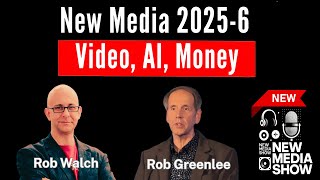
In this relaunch episode of the New Media Show, host Rob Greenlee sits down with Rob Walsh, VP of Libsyn, to discuss a wide range of current podcast industry trends and operational insights. They open by reflecting on the episode’s production goals—delivering high‑quality audio that also looks good on video—and acknowledge the practical challenges of achieving perfect sound. Using the All In podcast as an example, they argue that “good enough” audio can still succeed when paired with engaging content. The conversation moves to platform choices, highlighting Lipsync as a hosting solution they admire. They announce the 2026 Podcast Hall of Fame inductees, covering notable creators such as Dan Carlin, Veronica Belmont, and a memorial induction for Dan Miller. Logistics for the upcoming Podfest/Podfest Expo are discussed, emphasizing community building and event planning. A deep dive into advertising trends follows, noting the rise of psychographic targeting, the balance between programmatic and host‑read ads, and shifting buyer ROI expectations. They debate the definition of a “podcast” in the age of video, then present platform rankings—YouTube, Spotify, Apple—along with top‑show watch‑time and listener metrics. Technical hurdles around RSS distribution and the restoration of the New Media Show archives (now hosted at newmediashow.com) are addressed. Production tools like StreamYard are recommended for live streaming. The episode pays tribute to the late Todd Cochran, acknowledges sponsors (Blueberry, Pod News), and outlines the show’s future schedule, encouraging listeners to follow their social channels and anticipate the next episode.
Chapters
Yeah, well, welcome to the reboot of the New Media Show, and it's Great to have you here with me. And today on the relaunch of the show, I've got a terrific guest you can see on the screen, but we're going to be in a little bit of a different format than what the conventional approach has been. I've got Rob Walsh, the VP of Lipson, with me. And so he's gonna join me on this journey as we kind of move to the next stage of the New Media Show. And so, Rob, welcome, welcome back. I guess the last time I did a New Media Show, you were on it as well.
Thanks, Rob, for having me on. Appreciate it.
Yeah, yeah. You know, it's been a, it's been a couple of months since Todd left us, and, and it's been a process to to rebuild this show and to have it kind of ready for a relaunch. I mean, at the time I didn't really know if I was going to bring the show back or not. It didn't— I didn't know if it was going to be even, even possible. So, so it's really a miracle to some degree that, that we're back doing it here.
I'm glad, I'm glad you're relaunching it.
So yeah, well, it's great that it's coming back. And, and so what I'm hoping to do with, with the show here is, is talk about some, you know, some topics that, you know, that are top of mind right now, you know, like the Podcast Hall of Fame and, and kind of what's going on with the whole video side, AI side, and what that, uh, uh, and how that's impacting the podcasting space. And so, so Rob, what's your thought on the whole Hall of Fame? Is there any comments that, that they have? It's coming back, uh, you know, I'm going to be having 12 new inductees that are hopefully going to be announced here in the next, uh, day or so. Um, but it's, it's really exciting to, to see that come back as well. So any thoughts?
Yeah, I mean, first I'm, I'm excited that it coming back. I'm always happy to see the new inductees. Um, you know what, you know, good class from the ones I've seen so far. Uh, one I'm good friends with, um, so very happy for him. I don't know, we'll talk about names here in a little bit, but, uh, yeah, I, it, it's nice to see it moving forward. It's nice to see it being back to a yearly cadence, and, and really happy that Podfest is, you know, stepping up and Yeah, making it part of that show.
Yeah, I think it's my personal thought is it's, uh, it's something that's really important to the medium to recognize those folks that had a, had a foundational building for, for this medium that we all love. And, and so it's great to always, always do this event. It's always a lot of work. There's always a lot of trying to coordinate people flying in or if they're going to be there, if they're going to do— doing, doing a video. But it's— I would say at the end, it's always worth it. So, and that's, that's why we do it. So, well, let's, let's kind of move on here and talk, talk a little bit about some of the other topics that we're going to talk about on the show today. And that's kind of some what can be oftentimes controversial numbers around ad spend and the business side of podcasting is one of the things that, you know, and Rob, you know, chime in on this too, is it feels like podcasting has kind of grown up of sorts and it's now being seen increasingly as the media now, right? So we've spent most of our lives, both of us, seeing mainstream media really kind of dominate the media landscape. And podcasting has always been this kind of like this rebel upstart, but now we've kind of taken over that leading mantle of sorts in the podcasting space. And so what's your thought on that? Is that the same thing that you're seeing, or is it just something I'm seeing?
No, obviously something I'm seeing too. And, you know, We had an election a year ago that was dominated by podcast appearances and lack thereof. I mean, definitely helped determine a president. And then on top of that, you have one podcaster who's bigger than all, you know, CNN, Fox News, NewsNation, MSNBC combined. His audience is larger. So, uh, what is mainstream media when you've got Joe Rogan who's larger than Anderson Cooper?
Right. Well, it's probably not even close actually, would be my gut. Um, and there's a handful of other creators and I've got a list that I'm going to share a little bit later in the show that will kind of run down what those top 10 shows are right now in Spotify and even Apple. YouTube. And so, you know, and it's not what I think all of us would necessarily like to see, but it's the reality that we see right now, at least in the numbers that are being shared publicly. And which is always a question mark too, is that each of those platforms kind of has, you know, reasons for doing things. I'll just put it that kindly that way. So anyway, I don't know, Rob, what's the big things that you're seeing on the growth side that's really changing now?
I mean, advertising side, it's more and more advertisers are coming in.
Yeah.
And we're getting, I think we're starting to see advertisers change even on pre-produced ads on how they're targeting. Initially, it was a lot of targeting based on the demographics of who the listeners are, but now you're starting to see them go, wait a second, why am I targeting on demographics when I actually care about psychographics? And then they're saying, right, hey, why don't I, you know, why don't I just put it all across all these true crime, or why don't I put it across all these sports podcasts? Doesn't matter what their demographics are. If they're interested in this topic, they're interested in my product. And we're starting to see that shift come back now. You know, still host read is still dominant, but programmatic, I thought for a bit was so more reliant on— they were so interested in the demos, they forgot about, well, does it really matter if that person is a male or female? If they're not gonna buy your product? Yeah. So I've seen this year, especially, more of those what we call run-of-network type buys where they'll buy across a whole genre of podcasts because they know those people that listen to it, regardless of gender, regardless of age, are likely to buy their product because of the topic they're listening to.
Yeah, it does seem like that the advertising side is really moving a little bit closer to what we've accepted, I guess, or seen in the broadcast media side, right, for many years. That's the irony as I look back to the past is we went through this phase with podcasting and I think it still exists today where host reads do very well.
It's building up.
Advertisers, right. And advertisers are really increasingly starting to think about, well, what's the ROI on these things, right? And that's what's causing a little bit of an adjustment in the medium around expectations because, you know, they would like to only work with shows that drive the highest ROI, right, on their campaigns. And that tends to narrow the amount of shows that are being purchased. And I don't know, are you seeing that as well?
Yeah. Some buyers will like, hey, I only want shows $100,000 or $150,000 or $200,000 per episode, right? Because they don't want to deal with shows that are smaller, but others are realizing that, hey, there's really actually better ROI oftentimes between shows that are between $10,000, $15,000 and $100,000. Those audiences tend to be much more loyal to the hosts than some of the ones that are, you know, bigger shows. I'm not going to name names, but bigger shows that are up there that never listen to this voicemail message, never reply to the audience, never interact with the audience. But the shows that are 25, 50K, they tend to still be interacting with their audience and building a better rapport with that audience.
Yeah, and it does seem like more and more shows are taking their, their platform or their content to private communities increasingly too, and it's usually around bonus content.
But I've seen a lot of shows going right to Substack.
Yeah, that's a, that's a great example. But there's other ones too, like Uscreen, uh, Dot TV is another one that we're seeing people post all their videos over there. So you could conceivably have an audio show that's only available publicly and then do all your video over in these these more private communities, right, that you can build a paid relationship with, with a particular show. But Rob, before we dive too much further into this, because we have a lot of data that we want to share on the show today too that I'm going to pull up on the screen around the ad spend market in the US and globally. But I did want to share that the New Media Show has a new website. So if you are seeing this live, So let me bring it up on the screen here. So if you wanted to go to newmediashow.com, you can actually get all of the older, older episodes, of which there's probably close to 600 up in here right now. And if you missed the, the episode that Rob and I both did to, to remember Todd Cochran, that's all up here too. And there's audio and and video players that are on that post as well. Those are now in the RSS feeds, the older RSS feeds that didn't get updated originally with that episode. So, so we've been able to restore the whole show and get all of the archives in here too. So all of the, the new episodes will be published in here just like this. And so this would be a good kind of landing location for, for the show going forward. And so, so, but it's still going to be available and streamed live out to all of the social platforms. I am tapping into Todd's old, um, link through Restream. Uh, hopefully it's working. I'm not really sure if it is, but I'll find out after the show, um, to try and capture as many potential listening points for this show as well. But I'm sure some of them aren't going to work, but I'm hoping that some of them will and it'll capture people that have probably not seen the show in a long time and wondered what happened to it, right? So, and then, so I just wanted to show that, you know, and there's ways that you can actually go back in here and I mean, well, first of all, you can go in and subscribe to Apple Podcasts or Spotify and get access to the content there and get it on your phone. And then also there's a complete list by month and year of all the past episodes. If you wanted to go into a deep dive of seeing what one of the early episodes of this series is, you can see how long that list is. It's about It's about, like I said, close to 600 episodes. So if you have lots of extra time in your life, which probably most people don't. So let me back out of this and— oh, that's not the screen that I was hoping for. So let's go back. This is a little bit more personal, Rob. It like shows us parallel with each other. I know The past show had us in various sizes and things like that, but I just love this parallel look. Now granted, I can flip back and forth to me and then you and that kind of stuff, which is terrific.
And for those that are watching after and don't realize, we're using StreamYard.
Yeah, right.
And what service?
So what we're doing here is hopefully will work well on the audio side and the video side is my goal always. So anything anything we bring up on the screen, you know, we're going to talk about. So it isn't so much that it's only being created for the video consumers of this because that's the other thing that I've learned over the last couple years is that increasingly people are looking for an audio version and potentially as an option, a video version. So there are people out there that like to watch video, which are typically a smaller subset. I think the, the numbers that Todd shared with me in the past, because we've been doing this as a live show for 13 years, is it's like 10 to 20% of the audience watches the video side.
That's good for a lot of shows.
Oh, it is, right?
Some shows, the ratio is 20 to 1. I mean, yeah, that we see is 20 to 1 ratio of audio to video.
Yeah, and that's why I care about that, the actual production of this and, and how it's, how it's presented. Is it visually, you know, enticing? I was a little bit, uh, a little disappointed because I was trying to shoot for 4K here with, with what I'm trying to do, but the technology platforms are still not quite there yet to 4K. Now granted, YouTube is playing in that 4K market pretty deeply, but most of the content that gets published or I just say all of it that's 4K gets published as a direct upload. There isn't any live— yeah, any live streams that are going into YouTube that are 4K today. They default it, and, and so does, so does StreamYard, as far as I know. So, um, so anyway, there's a little bit of background, background story, but, um, um, well, let's, um Is there any thoughts, Rob, on Todd's passing that you've had subsequent to, to, um, the remembrance episode that, that we might want to talk about?
No, any thoughts since, you know, I saw you at the funeral and, and it was great turnout and it was great seeing folks there. A horrible reason to see them, but it was, it was really nice to see that turnout for Todd. Um, you know, it just— it's still very sad. I think I always said it was— it's gonna hit me more like when I get to Podfest, when I'm there and you see the blue—
yeah, you're not gonna see Todd.
And I think that's— I think that's going to be more the reality of the situation, uh, when it hits home with a lot of people for that point, you know, they're used to seeing him there, those events.
Yeah, so, uh, speaking of Podfest, um, there's a bunch of stuff that's going to be going on down there. Um, I'm a big big fan of Podfest and what they're trying to accomplish down there. And that's at podfestexpo.com if you wanted to go check it out if you haven't heard of it before, which I'm always surprised that there are people in the community that are not aware of that conference. And so I always try and share it as much as I can, but the Podcast Hall of Fame, the 2026 Podcast Hall of Fame is gonna be there. Plus, this New Media Show is going to be on stage again, Rob. So we're going to do it live in front of an audience down there. And then I'm also going to do a Hall of Fame panel down there too. So I'm going to be involved in two sessions down there, one for the Hall of Fame and one for the New Media Show. So I'm going to be building out panels down there for that. And that's coming together right now. But the big thing that's coming down the path right now is um, getting finalized the selection, uh, what it's looking like is going to be 12 people that are going to be inducted into the Podcast Hall of Fame. It could be 11, so there's always a couple of stragglers that are still trying to decide if they're going to be there in person or if they're even going to accept the award. And that may not be commonly known out there, but As Rob, as you know, there are people that have decided to not accept the Hall of Fame induction, which may come as a surprise to some people. But I mean, I would think that everybody would want to be inducted, but there's a bunch of reasons that I hear sometimes of why that doesn't happen. But it's— there can be all sorts of issues that can come up, but it also can be a personal choice type of situation too. We don't force people to get inducted into the Hall of Fame. So, so it's a much more kind of cooperative thing because that's the environment that I want to create with the Hall of Fame, is that people that, you know, get inducted want to be there. And because it, it really aligns with the values of the whole Hall of Fame and the purpose of it and what we're trying to accomplish with it is we want people that are inducted into it that really have a kind of a persona of really giving back, right, to the podcasting space and building community and being a good participant in the medium. And that's why we do it that way. So I would say probably over half of the inductees are going to be there in person. So that's always a terrific outcome. The first reaction from some people is that you know, I can't make it. But as they kind of move down the path and they think about a little bit more, they oftentimes come back and say, well, I'll be there. So, so it's always a good, good kind of move that, that happens over time. So I wanted to show next the, the Hall of Fame, uh, website. So if you wanted to go check it out, I think I just disconnected it, so let me go in and reconnected it again. And so all the information about the Hall of Fame is, is on this page, and it's at, um, podcasthall.com if you wanted to go, go check it out. It's got last year's full, full ceremony.
Is that because Todd registered podcasthallofame.com?
Uh, I believe he did. When— yeah, right. Um, he was always—
he did, uh, register a few extra domain names around.
Yeah, yeah, yeah, he tends to want to do that. Um, um, but I, I believe he did a redirect on this too. So I think he redirected the traffic to this one. So if you did type in podcasthallofame.com, I think it does get redirected to this. Um, so And I think, you know, there's actually 3 domain names, but, but I tend to focus just on one. Podcast Hall is short and sweet and it, and it says it all to some degree, but having that Podcast Hall of Fame address is great too. But so what's on this page is a link to the ceremony. So if you wanted to come to Podfest and attend the ceremony in person, you can do that, and there's in-person tickets that are available right here that you can click on. But the event will be produced into a full video, so you'll be able to watch it. I believe that's going to come out on the 18th, so it'll be a couple days after the in-person ceremony. Hopefully we can get it out in that time frame ready to go. And so, so, and then also what's there too is all of the past inductees. And hopefully here in the next day or so, we will have our, our new inductees listed in here. And so last year's inductees are listed in here, and all the prior years too. So if you wanted to go and check out what the Past Has Been for the Hall of Fame. It's all right there. And if you wanted to go and watch some past videos of past ceremonies from the past, you can see Dave Jackson there, you know, his induction back in 2018 and the full 2017 induction, which at the time was part of podcast movement. And that's when I got inducted, was in 2017. What was different about the Hall of Fame back then is that it was combined with a Podcast Awards. So the Hall of Famers were sprinkled amongst, you know, Podcast Award winners. So, which is different than the Hall of Fame today, which is just the Hall of Fame. So it's not, it doesn't currently have an awards, like a podcast awards kind of piece to it. So anyway, also I wanted to thank Podfest for giving us a venue and really supporting the event. And the Blueberry platform has come through this year with a sponsorship of the Hall of Fame and Hopefully we'll have a few more sponsors before the event happens. Then Pod News is our media partner. Anyway, let's hop out of that and come back and we can continue our conversation, Rob. Anyway, let's go ahead and move on from that. Well, let me tease a few of the inductees. Actually, I've got it in the show notes here, so we might as well share that. This has not been publicly released yet, but the names that I'm— I have here, um, have already agreed to be inducted in the Hall of Fame. There's a couple of names that are potentially missing here that haven't officially confirmed, so I won't mention them. And the first one, and, and I know, Rob, you're a big fan of, is Dan Carlin.
Yes, Hardcore History. Um, he's telling me there's a new episode coming out the end of this month. We'll see, we'll see if he makes it. It's funny when they go, well, we think we're going to cut the episode down, it'll only be 4 hours long.
Oh, is that all? Okay, right. Right. Well, now he knows that he's a Hall of Famer, so maybe he'll mention that as part of his history. So, and then the next one is Paul Colligan, who's been around this medium. I met Paul—
we met him at Gnomedex 2005 or 2006, one of the two. But yes, we met him at Gnomedex.
Uh, yeah, I first met Paul back when I was working for Microsoft on the on the Zoom. So, and then another one who comes out of the, the video podcasting era but has a strong connection with, um, uh, like CNET Radio and, and other, other kind of tech-related podcasting platforms is Veronica Belmont. And that may be a, a new name to many people because she hasn't been really plugged into the podcast side of things from a community standpoint over the years, but I've known her for, for many, many years now, and she had a huge impact on the early years of podcasting.
Absolutely. Yeah.
Yep. And, and we're also going to do a memorial induction of Dan Miller, who we're going to be lucky to have. Dave Ramsey is going to induct Dan Miller on, on stage in Orlando. So, and I know, Rob, I, you know, Dave well, I'm sure.
And yep. And, and, and Dan, you know, Dan was down where I live now. He was in this area, the Franklin-Brentwood area, and, and he had a mastermind group and Dave was part of that group. And there's a lot of people came out of Dan's mastermind group and definitely big influence.
Yeah, I talked to, uh, Dave, Dave Ramsey today about, about the induction, and he's, he's, he's willing to do anything. He was a very close friend, um, of, of Dan's for like 40 years, I guess. So, uh, he's going to be there with an impassionate, uh, presentation to, to induct Dan.
I have never seen a better public speaker than Dave Ramsey.
I know, he's great to talk on the phone with too.
So yeah, I mean, I've seen him speak a couple times live. Unbelievable speaker. Yeah, yeah.
Well, he's got an unbelievable network too that's been very successful, right? And the next one that probably won't be too much of a big surprise to many people is James Cridland. So, you know, I know But he has had a huge impact on the podcasting space, and he got lots and lots of votes, um, in the, the process. And all these people that I'm mentioning here have, have gone through a voting process. So we've had like, um, 50-plus people that have voted to, to select this from a group of probably close to 200 nominees. The, that list can grow, but that comes with some inherent challenges too. So, so, because, um, I got some comments from some of the voters saying that the, the list was too long to be able to—
it was. I, I, there was quite a few names on there. I was like, who? I had to look up like, who is this? Because I'm not gonna always know people's names.
Yeah.
And it— you did a lot better job than when I was running it. I'll just say that. Much more organized. I, before, I'd be like, yeah, I'd email people going, here's a list to choose from, send me back a few names.
Well, that worked as well. But, but yeah, I tried to include, tried to follow through with a promise that I made up on stage last year is to include some international folks in the list of potential inductees. And I did that. So it's not a huge percentage of the list, but I'm trying to phase into it slowly. To get, you know, some folks recognized. And one of them is, who's outside the US, is Mark Asquith. He's going to be inducted this year. He's going to be there in person, he told me today. So I'm excited for that. And another one that may be a surprise to many people that don't go back to the early years of podcasting is Julie Samuels. From the Electronic Frontier Foundation organization, the whole Adam Carolla fighting the patent troll. Patent troll in the early years, um, she had a significant impact. And a lot of people don't realize this, and hopefully she'll talk about it a lot at the Hall of Fame, around that whole process that the industry went through. And there was a lot of fear and there was a lot of concern. A lot of people were, you is it time to bail on podcasting because of this patent holder that was trying to sue people? And they did sue a few big companies. But in the end, they were able to kind of put down or—
Yeah, no, it was beaten down with no chance of coming back. So it was—
Yeah.
The EFF did a great job on that. I worked with them when we were going through that. Patent troll issue. We were part of that. We were hosting Adam Kroll at the time. And then I remember being on calls with Julie and the EFF and Apple. And so, yeah, I can't be any happier for the EFF. I joined as an EFF member back then and still am.
Lots of people did back then. Yeah. And they— and lots of people stepped up and donated to the legal defense fund. I know I did too, and I know a bunch of people did, um, to try and fight back against this troll that was trying to take down podcasting. And it was really a patent that wasn't really grounded in what podcasting was anyway, so it was really kind of a silly, silly thing that they were trying to do. So, but anyway, The next one is Carrie Hoffman, who is a longtime CEO of PRX, has been a big impact on the podcast medium for many years. So I'm excited to have her inducted as well. And Ariel Nissenblatt is another one. She's a more recent podcaster, but, is more out of the modern era of podcasting, which I was excited to see. And I would say that she's probably one of, or if not the best candidate for this induction at this age for her. So I think it's terrific. And then the last one I can announce here at this point is Sarah Van Mosel. So, you know, you and I both know about, about Sarah's impact, which has been wide-ranging and massive. Um, I don't know if you want to share, share a little bit about her, but yeah, I, I, you know, she's been key player in the space.
I'm very happy for her, and, and I was glad to see her name listed as one of the ones that got, um, in this group. So there, hopefully Sarah will be one that shows up. I get to say hi. Um, but yeah, I don't know how many of these have said they're going to show versus how many said they're going to send videos.
Yeah, that's like I said, a little bit less than half are going to, you know, but I'm not gonna say because they may change their mind. So, which I've already seen happen today. So I'm happy to see that. So, but it should be great. And if you can make it to podcastexpo.com, It starts on the 15th of January. I know it's coming up pretty quickly, but it's a significant event from a creator perspective. And I think that's the thing to think about it. As we've seen what was happening with Podcast Movement and things like that, I think it's kind of a good kind of alternative conference if you wanna support a conference. I'm not against Podcast Movement those guys are doing terrific stuff over there as well. But to have an outlet for indie podcasters, that's really the event right now. But I think over time it's going to become a little bit more professionalized too, just because of the evolution of the industry. So I don't know what your thoughts are.
Hopefully SiriusXM, you know, pumps up a little money and sends Sarah down to it. Them. So, um, and yeah, the others, you know. But yeah, um, I, I, again, I hope everyone that was inducted has the ability. Again, timing-wise, maybe not everybody can, but hopefully from their schedule it allows them to come down and be inducted in person. You know, having gone through it, it's something they'll remember forever. And, uh, I, you know, I feel sorry for those that just sent in the video. I think they miss out on part of the feel of an event. And it's great to see the people that show up there and are there to support you when you get inducted. So again, I hope everyone's able to make it. I understand, you know, some people have to travel halfway around the world, literally, to make it.
Well, like Mark Askwith is a good example of that. I was nervous about inducting people outside the US because, just the travel aspect of it, right, to be there in person. But I was happy to hear that he's going to do everything he can to be there.
So yeah, so global, global, give him the tickets, get him out there.
Yeah, right. Well, I think that's going to happen, so that'd be fantastic. So yes, I wanted to say big thank you to Blueberry Podcasting and the Hall of Fame for being a supporter of this show and also being, you know, just a terrific company that supported, you know, podcast, that supports this show, and I just appreciate it. So anyway, Rob, let's jump in and talk about YouTube and Spotify. And what they're doing in podcasting. There are some trend reports that are out there, top podcast lists. So I wanted to pull those up on the screen. And so we can all kind of take a look at this and see, you know, what's actually going on here with this. And so let me get it up on the screen here. Looks like I lost it again.
So let me— I'll give everyone a hint. There's like 3 top 2025 lists when, right, Apple, Spotify, YouTube. Guess who's at the top of every one of those 3?
Yeah, I know, it's actually not very surprising. So this is the, the top list, um, in the US, uh, from YouTube. And this is based on watch time. So it's not a subscription list or how many viewers. This is based on how much time people spend with a particular show that they classify as a podcast. And that's the other—
right. Isn't that the best metric though, when you really think about it?
Yeah, it is.
Yeah. I mean, okay. So you have a million people watch a 5-minute episode. But if you have 750,000 people watch a 2-hour episode, which one is more influential, right? Yeah, I would go with the one that's the 2-hour for sure.
Right, right. And, and Joe Rogan comes up number 1, right, as the, is the show that gets the most watch time. Um, probably helps that it's all of his episodes are at least 2 hours long, but But I, I, I wrestle with that though. I don't know that any and every show can pull that off though. I don't know what you think, Rob.
I mean, no, not very few people can pull that off. I mean, right, some of these folks do have long— I mean, Theo Vaughn's episodes are long, Sean Ryan's are longer. Rotten Mangoes, they're more produced, but Kill Tony's are longer, not as long. So when I'm looking through this list, yeah, but I would say almost all of these are longer form content, greater than 30 minutes. I don't think any of these are shorter than, I don't know the length, I've never listened to the Diary of a CEO.
Um, but I think, yeah, that's pretty long too. I mean, I think, uh, Stephen Bartlett goes close to 2 hours sometimes. Yeah, so he's, he's actually trying to, trying to overtake Joe Rogan. So, so we'll see.
In the UK, he's number 2, right? I think in the UK he was number 2 right behind Rogan. So this year you have the US list, so he's actually doing really well if think about that in those two countries.
Yeah, so number two behind Joe Rogan, and I, I don't really even know if Kill Tony is actually an audio podcast too. I don't know for sure.
Um, I believe they do have the audio version available.
Do they? Okay.
Um, they used to. Uh, let's see, they still do.
Oh, okay. All right, well, that's, that's a little bit clearer of a, of a clean definition of what a what a podcast is. It just so happens that they have a video version. Yes, they—
I mean, they do because they have a megaphone feed. So, uh, that, that, that would have been an Apple Podcast only as audio. So yes.
Ah, got it. And then number 3 is Good Mythical Morning. So yeah, is the one just after that. Uh, I don't know if they have an RSS feed, but it would be interesting to see. I would think most of these do. I don't know what you think.
Good Mythical Morning. That's what it was. Yeah, that one does not have an RSS feed.
Oh, it does not. Okay. That's interesting. Okay.
Uh, not based.
Yeah.
Not based on that. So I'm not seeing that one in Apple. I'm not seeing it in Apple Podcasts. So I technically would say that's not a podcast.
Uh, but it's, it's probably listed in the podcast playlist.
On YouTube.
So it gets put in this list.
There are many people that I talk with that will tell you they're a podcaster and then are not in Apple Podcasts, only do video and just happen to do shows that are more than 30 minutes on YouTube. And people at this point now think if you do a weekly show longer than 30 minutes and you're on YouTube, that's a podcast. I would disagree. I would say you really need for that show to have the audio version of it available and be in Apple Podcasts and Overcast and Pocket Casts and other places.
Yeah. Yeah. I mean, I think that that's a fair way to think about it. I mean, if it's only video and it's only on YouTube, it's kind of a hard case to make that it's really a true podcast. But, you know, I think that's the other thing that's going on in the industry right now is this kind of like this confusion about what a podcast is. And it's caused confusion amongst people as they, as they look at the medium. I would love to see every one of these shows in the top 10 at YouTube top podcasts have an RSS feed version of their show. And I would think over time they probably will. I think it kind of depends on the format of the show too. If they— but because there are video-first creators out there, but increasingly, even though you're a video-first creator, doesn't mean that you can't have an audio podcast version, right?
And there are quite a few that have made that transition. They started video and now have audio podcast. It's starting to do well. Um, Bryce Crawford has started just video and now also has the audio. Um, yeah, he's really, really popular podcast. Um, you know, he, he, he is hugely popular between males between the ages of 14, 15, and, and 25 that are in the faith community. And, and so, uh, and Anybody that is in a youth group, church group, is a male will know who Bryce Crawford is. And he started just video, now has also audio.
Oh, got it. And then number 4 is Rotten Mango, which I've never heard of that one as an audio podcast.
Oh yeah, she's got audio version.
Oh, she does, okay. So if you look at this whole list, Midas Touch podcast, 48 Hours. I don't know that 48 Hours has an audio version. What do you think?
I'm looking that one up. Let's see. I thought they did. It might just be Yeah, they do. They do have an audio version of the show.
Okay.
And, and then the, the Sean Ryan video, by the way, it is video first, but the audio, right?
And then the Sean Ryan Show, which is— yeah, has an audio version as well, right?
It started as audio.
Yeah.
And then Smosh, uh, as an audio version. Yep. And yeah.
Theobon obviously definitely has an audio version, and so does The Diary of a CEO.
So yeah, really it looks like it's just Good Mythical Morning is, is the one that I would say, if, if we want to be technical, isn't truly a podcast, right? You're not an Apple podcast.
Yeah.
Oh yeah, yeah, that's my definition. If you're not an Apple podcast.
Oh yeah, yeah.
If you're not, if you're not an Apple podcast, then you're not in all the other apps that pull from Apple's public directory. You're not in Overcast, you're not in Pocket Casts, and all the others. So it's not just about being in Apple, it's about being in Apple's directory that all the other apps pull from. And you can be just video in there. Maybe that, you know, you don't want to have an audio version of your show. You feel, oh, it doesn't, it doesn't, you know, it's not good to have an audio version of this. It doesn't work. You're an artiste, right? And it has to be video only. Well, you can still be an Apple podcast. Um, and then the audio will play just in Overcast, but it'll still be in Overcast.
Yeah. I mean, it is possible to publish a, a, that's what this show does is it has a video RSS feed, um, that's available. So That's something that Todd and I did with this show for a very long time and continue today. So it is possible to play video in Apple Podcasts and a couple other platforms too, as far as apps and things like that. It's not a very commonly known thing anymore, is it, Rob?
No, but again, it's still, and I always say this, there's still more time in the day to consume audio than there is video.
True.
And there's— it's cheaper for people around the world to stream audio than is video. And, you know, not everybody has cheap internet access.
Yeah, that's true. That's true. Because it takes up a lot of storage and it's usually higher playback bitrate. But if you're streaming that pay-per-megabyte, yeah, if you're streaming that video, which oftentimes, you know, if you look at these these big platforms like YouTube or Spotify or whatever, they're playing it via HLS streams, which can be like a variable bitrate playback. So it can adjust to your bandwidth capabilities. But up on the screen now, we have the Spotify list for the top podcasts globally in 2025. And this ranks Joe Rogan again, number 1, big surprise. Rob Greenlee. And number 2, The Diary of a CEO, Stephen Bartlett.
So he's, he's in both lists.
Yep. And, and Mel Robbins, uh, is number 3. And Call Her Daddy, number 4. And Theo Vaughn, uh, also on both lists. Right. And interesting that the Huberman Lab podcast Um, is, uh, didn't show up in the YouTube list. I thought that that show was a video-first program.
No, it started as audio.
Oh, it started as audio, but I think he's really put in a lot of effort into the video side.
Yeah, when he started with us, it was audio only. Okay, so, or I mean, yeah, it was the big part of the show was audio.
Early on. Okay, so he's an example of a show that started out, built a big audience on the audio side, and then just added video. Okay. And then, uh, Crime Junkie, which is obviously a big audio show.
Yeah, it's only audio, right?
Um, that would be an expensive production, I would imagine, on the video side. Kind of like with Dan Carlin is a good example. Um, Can you imagine if he made a video version of his show, Rob?
Yeah, he couldn't do it the way he did. There's, you know, some shows just will never— most true crime podcasts won't do video. There's, again, Rotten Mango is, isn't it, you know, one that is. But, um, most, the way they record and they prep and they do it in sections and segments and they build through it, it would be hard for them to do video and have it be of value, right? Sometimes you can do video, anybody could do video. Let me say this, anybody can do video, but at what cost to the audio?
Yeah, well, and also in what cost to the creator's pocketbook? And is there a, a return on that investment. That's the, that's the other thing that all these creators have to think about is they can spend a lot to produce video. And I'm seeing a lot of people do that on YouTube. Now I'm seeing full movies and documentaries being put together by independent creators that are, you know, at the level of, you know, what you would have seen on the Discovery Channel or someplace like that. So there are people that are investing in creating a video experience that is on par with what you would expect from a, you know, like a history series or like that, that maybe you saw on the History Channel or something like that. I see people investing a lot of energy in creating content like that. I've been pretty impressed by it. Now, how many of those are audio versions is the other question, right? They're probably not podcasts.
And, you know, and you look at Apple's top list, on some of these too. Like Huberman Labs made the top 10 in Apple's list for the year. Crime Junkie made the top 10.
No, I don't know that I have Apple's here in my document here, but, and then the last couple here, Modern Wisdom, that is a strong video program as well. And, but it obviously, I don't know, are they hosting it at Lipson? Rob Greenlee?
No, they're not.
Okay. But that is a show that I've watched many times that has very good audio quality. So they're obviously thinking about their audio quality. And that's the other metric here too, is that if you're a video-first creator, you tend to not think about audio first from an audio quality standpoint. You tend to And I'm seeing people kind of move away from the big boom microphones, which I would think maybe makes the audio less important. This was an issue, I think, for broadcast television too, where everybody on broadcast television uses hidden mics or lavaliers or something like that, or they use, you know, boom mics or that kind of stuff. And it does compromise on the video, on the audio quality a little bit.
So sorry, I'm on the lavalier today. Sorry.
No, it's okay. I mean, your audio sounds great. I've got lavaliers here too. I've got a shotgun mic here too. I tend to not use it very often, but, and then the number 9 one on the list is On Purpose with Jay Shetty, which that certainly started out as a strong audio podcast. And then, uh, I believe he's doing video, but I don't know that I've watched Jay Shetty. And well, no, I take that back. I think I have seen Jay on, on YouTube before. And then, uh, Tucker Carlson brings up the—
and he was definitely video first. Matter of fact, he was video first on Twitter, X, before the show made it over Well, I mean, he's a—
yeah, but he was a guy, right? Right.
But I mean, when he came in with his show, The Tucker Carlson Show, it initially launched before it was on Apple or Spotify or anywhere else. It was original episodes were launched on X.
Oh yeah, yeah, that's true. I do remember that. And he got huge numbers doing that too. And, um, But I also know that he has a popular audio version too. He's a very prolific ad seller into his audio podcast. I'll just put it to you that way. So he's well monetized on the audio side is what I would say.
So they learned from Alex Jones.
Oh yeah, right. Yeah. So let me scroll down the the list. I don't know if this is— oh, so I think the one up here was globally for Spotify. This one, the next one on the list, is Spotify top podcasts, um, in the US. So it looks like Joe Rogan again, obviously, uh, and then, and then Theo Von number 2. So Theo Von is very very strong in the US but not so much outside of the US.
Well, it's interesting, Theo's number 2 here, and, and he was on the YouTube list, but he isn't in Apple's top 10 list.
Interesting.
Mel Robbins is. Mel Robbins is 3rd on the Apple list along with this.
Um, and it does make you wonder, Rob, if it's, uh, it's kind of an age group demographic. Issue for him. Because, because I know a lot of younger people tend to listen to Spotify more than they listen to Apple Podcasts. So I don't know if that could make a difference here.
And I think Theo now is definitely more video focused. Yeah, I think that, that has a lot to do with it too.
Yeah. And Call Her Daddy's on the list. Mel Robbins, Crime Junkies. So it's Sean Ryan, that even though it looks like the Tucker Carlson Show is a little more popular in the US, um, and then The Daily pops up there. I would have thought that The Daily would have been higher on the list, or, um, than that, but that's interesting.
And the Huberman Labs show, and well, The Daily is number 2 in Apple's list. Gotta remember, this is Spotify, so Spotify's list is a little bit skewed different, um, with more recent shows. I don't know.
Yeah.
So yeah.
And then, uh, number 10 is, uh, Good Hang with Amy Poehler. Um, so she's cracked the top 10, uh, in the US for top podcasts on Spotify. So, and then, uh, Well, Rob, let's jump to talking in the last, you know, 10 minutes of the show or so. Let's talk about what the forecasts are looking like for advertising spend globally and in the US. Now there's always dueling numbers, isn't there?
I go off of the numbers from the IAB. The IAB numbers to me are more of the gold standard of what's being spent because the IAB, well, one, it works with PwC, which is a trusted source. And then they go and they actually reach out to all of the different ad networks and agencies in the podcast space and collect that data and anonymously, well, so that it's not, nobody knows who's numbers or what. But because of that, I tend to think the, the PwC IEB numbers are the, the gold standard. And, and they had 2024 was around $2.4 billion for ads in the US. That's the number I go by.
So is that for 2020 4? Is that—
yeah, for 2024.
Okay. Yeah, yeah. The data that I pulled here, I pulled from ChatGPT. It, it went and looked at all the, all the sources and pulled it in to create this. So it depends on, you know, where you pull it, how you, uh, make, make the requests, and what, what platforms, um, it's pulling it from, because there's a lot of difference in different projections that are out there, right?
There was definitely a big increase in 2024 versus 2023, with 2023 being down. But, but a lot of people are forgetting is 2023 and '24, we saw the whole iOS 17 issue, and that hit and that caused some issues. Um, especially in spend shows, numbers dropped, especially ones that were selling back catalog. Um, 2025, you know, from everybody that I've talked with in the space, is going— it sounds like it's going to be a much better year than 2024 was. Um, so I think we'll see above that $2.5 billion, uh, number in 2025 when the IAB releases those numbers. Come July or next year.
So that's, that won't be a forecast, that'll be more of a precise actual number, right?
Yeah. Yeah.
Yeah. Yeah. It's interesting. The, the resource that you shared with me, Rob, says that the North American podcast market is projected to reach $65.76 billion by 2033.
Yeah, and I was sharing that as an example of what not to believe from AI. And so, you know, we had some— we were going to talk a little of the AI and I wanted to do an example. So I just said to throw any of the eyes on the bus. But I said to one of the guys, what are the 3 top news items in the last 2 weeks with regards to the podcasting space and the business of podcasting?
Yeah.
And, and it was one about video podcast surge, and there was one about podcast mergers heat up, and then there was one North American podcast market projected to reach $65.76 billion by 2033, and stating that in 2024 it was $10.5 billion. There is no scenario at all that you can get anywhere close to those numbers. Um, and no, those numbers are just completely BS. Uh, looking up, there's a couple of— unfortunately, there's a couple of bad articles out there. Uh, and, and I, and I put in— I took out the report profiles players like, and I took their names out, NR1, name redacted 1, name redacted 2, because I know one of those two that was redacted is paying for fake downloads, um, for the whole network. So you can't take anything that they say seriously, right? Yeah, yeah, we kicked a bunch of their shows off. So I know for sure that one of them, um, no, numbers are BS.
Um, yeah, and it depends on what they're including too. I know that there's been a lot of, um, people sharing numbers that are maybe trying to roll in YouTube numbers, right?
Yeah.
Or they're adding different types of advertising that may be somewhat related to podcasting into the numbers to make the number bigger.
Even if you included the equipment that goes into people's podcast gear, the houses that go around their gear, you're still not going to get to the numbers that these—
houses go around. Right. Yeah. Yeah. It's their, the amount of money they spent on their office studio, right? Yeah. Yeah. So there's lots of ways that you can, you can spin these numbers. And, but the big takeaway for me on this, and we talked about this a lot in the past on the, on the show, is that the growth in this side of podcasting has not really been very strong for many years. It's been kind of laboring at this $2 billion mark for many years, and I know it has a lot of people in the industry thinking about, well, how can we break through, right? There's a lot of ad budgets that's sitting out. If you look at the bottom part of this screen too, I don't know how accurate this is, but It says that podcasts are only 1% of the total US ad spend. I don't know how accurate that is. I think it may be a little higher than that would be my assessment.
Yeah, I mean, no, I mean, that is when I look at, when we look in the IAB about all the ad dollars that are spent in advertising in the US, podcasting is still a very small percentage of that. And it's growing. And we still feel podcasting is underrepresented and that advertisers have an opportunity. But then on the other side, some of those other mediums are, you know, and if you said an hour of radio, that's only 44 minutes of content, right? 16 minutes of ads. Most audio podcasts that are an hour long have less than 7 or 8 minutes of ads in that 1 hour of content. So podcasting still has, unless it's true crime, they get a little bit more, but for the most part, podcasts are underrepresented by the amount of ads. And that's a positive on why people listen to podcasts, right? Some will tell you that 44, that, that 16 minutes of ads in an hour is just too much, and that's why they listen to podcasts. So there's a balance that we have to go at, and we're not gonna— there are some that say, hey, the best way to grow ad revenue and podcasting is shove in more ads. And that happens unfortunately for some bigger shows when they sign minimum guarantee deals. That's the only way they can make the minimum guarantee, or the company that gave them, you know, promised them the money is to overstuff it with ads.
Just to load it up, as they say, right?
Right. So luckily there's still quite a few podcasts that push back on that and say, no, that's too much. I can't do that to my audience. And that's a good thing for the space that there's some restraint still.
Yeah, yeah. You know, I think that's the, that's the tension though. I would say that the industry has really been discussing this, and I hear it on a few other podcasts, and there, there's a lot of other podcasts about podcasting now that are really drilled in and focused on the business side. And I try and listen to those as much as I can. Um, and, and it does give me the impression that the advertisers are kind of holding back. Somewhat. And I'm not quite sure that there's a good rational reason for that. I think that they think that they're not able to get the detail on the data that they would like that they get from the streaming services of time spent listening, how many of the ads were actually heard, what, you know, those kind of metrics that It's difficult in podcasts to deliver that level and that granularity of detail. I know that the attribution part has been a huge component of the pushback as well, and getting that accurate and things like that. And that's what's really, I think, pushing the industry more and more to think about HLS as a replacement for downloads, is to try and cater to what these advertisers and brands are pushing for, which is these deeper levels of metrics that are only available on big platforms.
Right. Without Apple support, it doesn't matter.
Yeah. Well, that's the real rub here is that what's ironic about it is that I believe Apple was the inventor of HLS on the streaming side., but yet, you know, they're not embracing it. So, you know, and it's just one of those things that the industry, you know, would like to be a more commercially viable media, right? I mean, if you think about how big the— even the radio advertising market was dramatically bigger than the podcast market, even though you could make a case that we're as big or— Now, I think we're equal to radio now.
We're bigger than talk radio. We crossed that 3 years ago. 3 years ago, we crossed it in the US where there's more people listening weekly to podcasts than talk radio.
Right. But that hasn't equated to the same equal revenue on the ad spend side, but that could get back to ad loads too. You know, and if you look at some numbers that I've seen over the last couple years with iHeartRadio, they, a lot of their podcasts have achieved the trophy of 16 minutes of ads on their podcast. So yeah, yeah, that's not a trophy you want to have, but you know, it, it fits with your broadcast model, right? So if you're trying to replace that revenue, which I think increasingly the radio side would like to do, I can see why they went there. Right. And then to kind of move in to talk a little about AI, you know, iHeart is a good example of a platform that's incorporating AI-generated host reads. So I think they're playing around with that technology as well.
And here's the thing about AI-generated host reads. If it doesn't say at the beginning of the host read that it is AI generated, it is in violation of the FTC rules. And the FTC has been very straightforward on that, that this is, you need to state that. And FTC, and they're like, oh, well, the FTC won't go after. Yeah, ask Paris Hilton how that worked out for her. Right. Yeah, right. Not fully stating things. So people that are doing these AI generated ads, and are not, and I don't know if iHeart's doing it or not, are not saying—
Well, they've announced that they're rolling it out with a content platform that enables it. So they'll actually train on the host's voice.
And beginning of that ad, it has to say, this is an AI-generated ad. It has to say that. If it does not state that, clearly, unambiguously, upfront, they can and will likely get fined.
Yeah. So, and I also think, you know, I'm increasingly hearing this, and I'm sure you are too, Rob, that there's people like Elon Musk is a good example that have come out publicly here recently to state that he thinks that pretty much all content will be generated by AI within 5 years.
Yeah, I don't see that.
So, you know, that may be a forward-looking statement of what he would like to see, but that may not be what actually comes to pass. Not everything that Elon says comes to pass.
So, and he says it from a perspective of a company creating AI-generated content.
Right, exactly.
You know, AI, you know, from Grok.
Well, it's the same thing that, that we're hearing from YouTube too, where YouTube kind of made this announcement that they're going to go after AI-generated content and take it down and all that stuff like that. But if you really drill into what they did say, is that they're only going after certain types of AI-generated content that they think is not valuable. And they want people to use the YouTube AI-generated content option.
So that's— and I've listened to more than a few, probably too many AI-generated podcasts. Yeah. And they are heartless and they are soulless and you can tell. And after you listen to them, the best thing they are for is ASMR.
It's a great way to put you to sleep, right, Rob?
Yeah. They just— I mean, they get— I'm sure they'll get better at some point, but there is just some part of the emotion that's missing, uh, the spontaneity, the mistakes, um, that, that are missing there. Um, and it's, it's like where you see the robot that almost looks human but is not quite is the creepiest of the things, right? If it's perfectly looking, that's okay, but if it's almost there, that's where the creep factor is in, and that's Right now, that's where a lot of the AI-generated slop— and I'll call it AI-generated slop so that that one company can be mad— but that's where a lot of AI-generated slop comes in right now. It's creepy, and you listen to it, and there is a tone to it that is very unsettling.
Right. Though I've heard some that are fairly convincing, but usually you can tell, has been my experience. I don't think it's got to a point where it's not easy to tell. No, no. Some of it— It may get there at some point, right?
Right. Some of it's great if you're just trying to get some information and you wanna listen, you don't have time to read, right? But that's no different than going into a blog post and then hitting the, pulling down on your iPad and it dictates everything in the post to you.
Yeah. And I think that the other use that we'll probably likely see is AI will generate content that humans would not. Or now granted, you could put all sorts of different kind of measures on that of what a human would not create. But I think it's this combination of speed to creation is one aspect of it. And then also the topics or niche, niching down to a granular level that would be beyond any human creator that they would want to do organically. And I think that's kind of what the Inception AI platform is doing, is that they're taking it like one keyword and building a whole series of podcasts on that one topic keyword, right? And, and I think I heard Janine Wright say that she had an episode about the killing of, or the assassination of Charlie Kirk out and published and in the podcast catalog within 10 minutes of Charlie Kirk getting assassinated. So So, you know, telling all about it. So, you know, that speed to publish is probably what we're gonna see too. And that's maybe a threat for the news services.
Well, that's great because now you have nobody using Gray Matter to fact check things. Right, right. That was the example I gave earlier where you asked AI about what's going on and they're telling you that there's 5 million global podcasts and there's going to be $65.76 billion in, in the podcast ad space in 2033. The numbers are ridiculous, and any gray matter put to that would realize that. But see, I, I didn't. And so you're going to get a lot of the slop with where if you did any, any thought process on it, go, well, that doesn't make any sense, that doesn't hold water.
Yeah, yeah. Well, Matt wrote us here and said, welcome back to the podcast airwaves, Rob. Sounds like your mic source isn't the mic you wanted. Oh, I'm not sure.
Really?
Do I sound bad? No. I don't know.
Rub your—
do the—
which Rob?
Oh yeah. Yeah. Let me, uh, go in and double-check my, uh, my mic here. Okay, I've selected my—
oh yeah, that definitely changed it. Sorry, I have the earbuds in. I should have noticed that, folks.
My Rodecaster— so StreamYard was picking up the wrong mic.
That's interesting. That's okay. Yeah, you know, that's what Adobe, uh, Sweetener is for, right? So now my lavalier didn't sound so bad after all, right?
Yeah, yes. So we both sound kind of comparable to each other, so that'll be good. But, um, yeah, I didn't— I've never had to set this, uh, to, to my RODECaster before. So, um, thank you, Matt, for letting us know. I, I wish I would have known about that earlier.
Yeah, that's where your guest should have said something, but I didn't realize it.
So that's okay. Okay. Yeah, I should always check those things before and just make sure it's set to the right input. So, so anyway, well, Rob, I think it's been great to, to do another episode. I was hoping to keep it, you know, under 90 minutes.
So get two podcasters together That's right. Yeah, well, there's a lot. I thought you had said we were going to keep it under 60.
I'm like, well, that, that was the goal, but as you can see, I didn't quite make it. I think I put too much content in the outline, so I'll learn from that and adjust it and just make sure that I check my mic input next week because that's, that's the big thing I'm trying to do here, uh, Rob, is create a, a quality program. That sounds great in audio but also looks great and is a good video experience too. So, so that's, that's my goal.
Yeah. And, and I'll say this to folks, the perfect audio doesn't matter. It just has to be really— it has to be good but not perfect. Uh, the All In podcast is better than almost, number-wise, than almost any other podcast out there, and it's just 4 guys on Zoom.
Right.
And the audio— billionaires on Zoom. Okay.
But that's right. Right. And it's not always great audio quality either. So yeah, yeah, that's true.
So but Nick does what he can to clean it up. So Nick, if you're listening, yeah, it's got the good work.
Do they host on, on Lipsync? Yes. Oh, they do.
Okay.
That's awesome.
It's one of my favorite— I listen to every episode. Oh, yeah. Great, great podcast. If you want to know about what's going on in the tech world, those guys have great insight and cover politics and other things.
Yeah, no, it's an awesome show that they've had. They've really branched out into a bunch of different areas too. You know, they're doing live events and doing all sorts of stuff. So, so, well, anyway, Rob, well, thank you for spending time with me tonight, and I appreciate it. And I'll get this episode pushed up to the RSS feeds and we can, we can, uh, start planning the, the next episode. All right. So yeah, so what's that?
Thank you for having me on.
Yeah, no problem, man. If, uh, be sure to go check out the newmediashow.com website, um, and follow Rob and I's social channels. We're both easy to find. Uh, Rob also has a podcast. His podcast 411 is, is back. I know it was disappointing to hear that the feed is no longer publishing episodes, and, and the band of you and Elsie got broke up, which is an unfortunate outcome for the industry. But it's— hopefully we can bring the band back together again on this show., and try and make something that's helpful to, to people as well. And so up next, at the end of this show, I'm going to play the, um, the— not the full episode of the Remembering of Todd Cochran, but the intro video, um, just so we can kind of honor, uh, Todd in this new episode as we kind of leave the show. But, uh, I'm hoping to be back next week, next Wednesday at 6 PM Eastern, for another episode of The New Media Show. So thank you so much. Good night.
More from Rob

Future-proofing with Delphi AI/Human clones: your podcast as a personal LLM | New Media Show






How sports reveal what AI spectacle gets wrong #Technology #Sports #Commentary



