The Real Problem With Getting Older in 2025
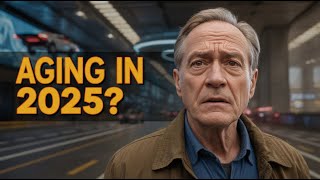
Rob Greenlee on why aging in 2025 feels different: pensions are gone, traditional retirement is eroding, and older workers are moving toward self-employment. He argues that experience still matters alongside technical skills, especially as AI reshapes work, and that staying active and purposeful beats full retirement.
Chapters
Hi, this is Rob Greenlee again, back for a walk-talk, but I'm taking it easy again, kind of sitting down here doing an episode from out in the natural summer in the state of Connecticut. And I wanted to talk to you today about meaning. And all of us will reach a point where we're older and we have things that we look at that tend to be from our past more than our future because there's a perception in our mind that there is more past than future. And so that puts you in a different kind of mental state around how you look at your life. And I've lived a long and enjoyable life, and it doesn't feel like it's anywhere near any kind of an end. I don't feel any different than I felt when I was in my 40s or anything, really. I've stayed relatively healthy, and— but our society does tend to see people that are a little older in a different light, right? So there's generational shifts that happen in our society and our culture, and I think many people, as they get older, they kind of get into their retirement age or get in that range, right? And it's usually over the age of 60 is— can be a challenging time for some people that have been very active and participating in society and contributing a lot and having very ambitious goals in what they want to accomplish in their lives. And it's kind of hard to look at that and say, I'm done. So, and I think also there's pressures unlike maybe earlier generations of people that maybe had a pension or had a lot of our retirement savings. I'm just not sure that there's a lot of people with that today. I think as you look at baby boomers and what's happening with that demographic group of people that kind of grew up in the '60s and the '70s and '80s are kind of in a different mental place. They have an expectation of society that is different now than I think the younger generation looks at all of this in a different way. And so As a baby boomer, which I am, I look at the world, I think, from a different lens. And that's, that's because I grew up in a different era. I grew up before the internet. I grew up before a lot of the cultural revolution of sorts that we're seeing in our society was commonplace. And today it's commonplace, and I I think that there's a lot of energy and interest being put into pushing aside the older generation because of their more traditional belief structures. And so meaning becomes a primary thing that I've been thinking about, and not so much from the perspective of legacy. I think a lot of people focus on the impact that they've had that they want to hold on to for their legacy, right? To be quite honest with you, I don't care about legacy really at the end of the day. What I care about is our ability to maintain our lifestyle through gainful employment, gainful contribution, right? Now employment can fall under the umbrella of self-employment or it can fall under the umbrella of working for a company. And increasingly I see in the world today the older generation is struggling to find their place. And I think it's kind of interesting because there's not as many younger people out there to, to fill that spot. And it's— but it's interesting, the opportunities out there are quite a bit less now, and that's why I'm seeing a lot of people shifting their work careers really no matter what the generation towards more self-employment. People starting their own companies, they're starting their own consulting companies. I'm no different than that. I've been working for corporations like Microsoft and a bunch of kind of quite honest with you kind of tech startups and have had a a lot of different types of experiences. I've owned my own companies. I've owned a restaurant in the past. I have a varied base of experience that I can bring to the world, but oftentimes that isn't valued now because a lot of those things were done during a different era, done different in a different time. And a lot of people don't value that because things have changed so much. Right? There's so much technology now that's influencing everything that we see in the world, and it's all— everything has become kind of globalized, right? Everything has become very socially sensitive. So meaning and finding your place in the world is not easy, and it's sometimes finding your meaning maybe has a little bit of a past link to it that maybe isn't necessarily as, as relevant as it used to be, right? So your skills are maybe not at the level of the cutting edge, and even if you have cutting-edge skills, because of your generation and because of your age, you're not going to be seen as being able to cut it, right, or be able to really understand it, I'm not sure that people would give you the benefit of the doubt like maybe a younger person would be at the beginning of their career where they're really kind of seen as having that potential to create something new in the world, right? They're perceived as smarter, sharper, may not have the base of experience to create skills, But in a rapidly changing environment, it's the ability to adapt is what you would think would be a value, right? The ability to adapt to change. And I think if you're older, if you're in your 50s, 60s, and even to some degree in your early 70s, I think maintaining your health, maintaining your vitality, maintaining your energy, maintaining Your mental strength is really the key to holding on to this concept that I started out this video talking about, meaning, right? And I think this concept of meaning really applies to everyone. As we've seen AI kind of develop and roll out and become a significant disruptor to what we see as work opportunities and ways that we can contribute to the world. I think those that are embracing AI tend to have an advantage in this changing landscape, but there's also this pent-up energy around, you know, kind of opposing it, right? Going more off the grid, not falling for what's perceived as maybe some level of technology control over our lives. And I think that there is some truth to that. I think there is honestly some concern about technology being enabled to have more control over our lives because it's possible. And I think a lot of people don't really think about that part of things, is that tech and AI and sensors and all of us being so connected and sharing our personal information, sharing our data online, is basically sharing that with the world, sharing it with corporations, and that's going to be somehow taken advantage of or manipulated, or we're going to be compromised somehow because we are participating in the digital economy. That's a worrying sign. So each one of us has to decide what is our tolerance for this, what are we willing to participate in, how far are we willing to engage. In this layer of increasing technology and to some degree control. Because I think as technology becomes more integrated into our lives, and it's accelerating right now with AI, there is going to be increasing amounts of control. And maybe that's justified. I'm not here to make a judgment necessarily on whether or not that's justified. There are laws in our culture and our society that technology basically enables to be turned on more. And as more information is available about us and our actions in our world and our, even our purchases and our personal lives, as that information becomes more available, then there's more opportunity for that technology to be I don't know, used for good and used for bad. So, and so as you're looking at your life and what you're progressing through in your life, I think trying to find some aspect of your work history or your experience, and I do see a lot of people starting to focus on more kind of base level kind of skills, right? Because as we look at AI, AI could replace a lot of information workers. I'll just put it to you that way. So what's going to be more highly valued? What's going to be more highly valued is human experience, human practical skills, human-related servicing of humans. Right. AI is not going to be— it's not going to be needing to service AI or do things for AI. AI is going to do things for us. And increasingly, we need to look at AI as a tool. And but that tool can be used against us too. And there's a lot of mystery around how AI is going to change our society, change our culture, change how people interact with each other, and change how much information is available about us and the sources of those information. That's the big question that I have about AI is where is it getting its information about each of us? Is it getting access to the full spectrum of information about all of us? And if that's the case, then there's a good chance that could be used to some degree either to help us or to damage us in some way that we may not know quite yet. So this is a challenge for all of us to consider in our lives and how we interface with technology. Are we open? To what's coming. And the big question is, what is coming? And how do you prepare for something that you don't know what's coming? That's the big thing that I struggle with, is that I don't really know for sure what's coming. I would like to keep doing the things that I've been doing for the last 20 years of my life. And because I think I'm capable of participating at that level. And so that's what I'm pursuing, is pursuing the things that I built my 20-year career around, and that's around digital media and podcasting. And so I have a lot more to give because guess what? I have a lot of historical knowledge about this area. That's going on in the world that needs that kind of clarity to understand the context of what's happening. Now granted, I'm going to be looked at as an old curmudgeon, an OG in, in the online media space because I'm not younger, right? I must not be in, in the know or cool or have the coolest podcast or the coolest piece of content. But I can tell you that I've worked with all sorts of people at all different levels that, that have had cool podcasts. And I know what that looks like, but I also know what changes are happening in the expectations of people that are consuming content today. So, and I still want to be of great help there, and I am. I'm actively helping people navigate these complicated waters and trying to apply that to a furtherment of my career. Up over the last couple years, it's been kind of on a self-employment or contract basis with a variety of different individuals and companies and stuff. But I'm— I feel like I'm capable and able to participate at an extremely high level again with maybe a larger company that maybe doesn't have that base of experience in their teams. So I am going to be able to bring that ambiguity of focus, right? Taking ambiguity and focusing it down to what's really relevant in the market today, because guess what? I'm paying attention. I have context. I have context to where we've been, where we are, and where we're likely going, because I've been around to follow it as much. And a lot of the things that happen in the world are trends that evolve. It's not a revolution generally. The same thing applies to AI and technology. This machine learning stuff and other has been evolving for many years. Personalization has been coming into the media landscape and technology for years. We all wanted it in the early years. And so really AI is just another deeper level of what I call personalization, right? So data and information becomes more personalized to you and more relevant to you based on what you need. Google never fully satisfied what the needs that you have. And so now we have AI, and now the big thing that I'm worried about is who's putting the thumb on the scale of AI. I increasingly keep hearing this conversation about AI safety. And that there's limits to what it can do. That's a slippery slope, right? Who decides what's safe and what's okay to share with people? Is that a form of censorship? I think to some degree it is, and it can be used for good or it can be used for bad. It just depends on what the subject is and the topic. So to take it back to the, this theme here, I would like to encourage each one of you, because if you're watching this, you're probably maybe an older person, you're probably a guy, and you're thinking about what the future looks like for you in this AI-dominated world. And that's kind of the content that I'm working on right now. To produce. I'm working on a new podcast that I'm working— that I'm going to come up with here called Spoken Human. And that is going to be this intersection between humans and artificial intelligence, right? And what's the dynamic there? How as humans are we going to interface with AI. How is AI going to help us, or is AI going to hurt us? Is our reliance on AI going to disrupt our mental abilities to participate in the world? So these are big questions that I hope to bring some clarity on, and so But all I would like to just say as a conclusion to this video is that stay focused on what your purpose is and what your meaning is in the world and what it has been. Because there's a good chance that what it has been is still needed in the world. It's just finding your lane, right? How do you continue to contribute at that level? Now granted, if you have resources and you have enough money to retire and go off and play golf for the rest of your life, then you can do that. There's a lot of evidence though that people that decide to stop participating in the world and fully retire, they don't live very long because they're not as active and they're not getting out in the world and contributing to the world and having an impact. Because all of us, especially if we just start our own businesses or start our own companies, which a lot of people are doing, to be able to contribute to the world is still possible for all of us. No matter what your level of success was in the past, each one of us has a voice. Each one of us has experiences that we can share to help others be better in their lives. And so I think that's how we, not so much push back against AI, but how we maintain the power of the skills that humans have as opposed to the sterile AI, which is rather sterile. So meaning and intention and having this focus on helping others And when I say helping others, I'm not talking about helping AI. I'm talking about helping other humans in making their lives better and making an impact on other people's lives that are positive. I think a lot of us spend a lot of time tearing each other down and we're kind of getting lost in the forest, right, around what our real high-level purpose is. Each one of us has a role to play in all this. So thank you for watching this sit and talk, not so much a walk talk, but I'll show some of the natural scenery that I'm at here and so you can see it for yourself. I'm out in a park and Connecticut. And so let me flip the camera around and you can see where I've been sitting. I'm on a grassy trail in a dog park in a large park and just sitting down talking to you and trying to have an honest and sincere conversation with you. So thank you so much, and please subscribe to my channel, my walk-talk channel, and I might even post this to my new YouTube channel called Spoken Human as the first kind of beginning episode. So thank you so much for watching, and like I said, please subscribe to my channel and I'll be back again soon. Thank you very much.
More from Rob

Future-proofing with Delphi AI/Human clones: your podcast as a personal LLM | New Media Show






How sports reveal what AI spectacle gets wrong #Technology #Sports #Commentary



