The Real Reason Podcasts Fail to Build Community
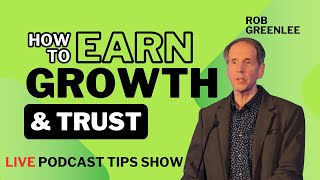
Rob Greenlee breaks down why most podcasts fail to build community: they focus only on audience growth and skip the actual community work. Real growth needs both organic tactics (great content, consistency, niche focus) and paid promotion, but community comes from live chat, polls, exclusive groups, and meet-ups based on listener data.
Chapters
Well, welcome tonight. I'm going to be discussing in the show here, um, and take your questions about how to earn audience growth. It's, it's what we all want as content creators and podcasters, or if you're a live streamers, or just create videos to post and also create deeper show engagement. So Those are the big headline topics for, for tonight's show. You probably see that from my, my new thumbnail graphic. I've been playing around with that, trying to come up with something that pops a little bit more and drives the message. And hopefully that will help with my, my audience growth with this program as well. I'm in the 37th episode of Podcast Tips with Rob Greenlee, and, and thank you so much for being here with me tonight. So some of the things that I'm gonna go over really are strategies for growing your podcast audience organically, so naturally, and then also, you know, there's increasing ways that people are doing it inorganically as well through paid sponsorship and paid ads and things like that in the podcasting space to help grow given the kind of competitive landscape that exists out there and people's attention spans being low. And then I'm also going to talk about Techniques for engaging with your audience to build a personal connection and brand. So those are kind of more long-term kind of relationship topics. And then that also follows along with the next one, which is trust that leads to longer-term community growth and listener loyalty to the host as well as the content in the program. So, you know, given that growing a podcast really involves a lot of creativity, consistency, and community engagement, it's a lot of work. And it also doesn't come easy and it doesn't come always very simple for a new creator or even a creator that's been around a while. So, you know, it's, It's really in the power of the host. Now, some hosts are building teams around them to help with some of these tasks that I'm gonna go over tonight. And others are like the early days of podcasters where you sweep the floors and you take out the trash and you do all sorts of stuff for the show and you do it all. And increasingly AI tools are helping with that to some degree. I think in some ways AI tools are maybe adding layers of work as well. So it just depends on how you manage your workflow on that, but that really doesn't have a direct connection to how to grow an audience per se. But let's also, you know, really, really, I'm gonna dive into and look at strategies for growing a podcast and really incorporating tactics that are commonly used these days with some of the world's largest podcasts that can be applied to small and medium-sized shows. So when I talk about size, I'm really talking about, you know, the scale of the audience, right? All shows have some level of scale. It just depends on what the investment has been or what the time commitment is, what the creativity levels are in really at the beginning, really it's really about content excellence. So, and I think that's one of the hardest things for some to achieve. Others struggle with it. I think some folks have just natural ability to to do this, and others have struggled over many, many years of trying over and over again, trying new things, learning, building confidence, building kind of your understanding of being able to speak into a microphone and be able to talk into a video camera if you're doing that type of content. Increasingly, video is a huge component of this, but really a focus on quality is, and that I've talked about that in this series as well, this term quality is very subjective, right? What is high quality? And that's really a factor of what the audience perceived as the value. Now, granted, there are aspects of quality that are more technical, and I'm going to go into that as well, but generally podcasts have to be, have to have some aspect of being educational. There's something to take away from it. There are some learnings involved. There also needs to be something that's ideally, if it can be fun or if it can be something that brings a smile to your face, you know, even telling kind of, you know, offhanded jokes, which I don't do a lot in my podcast, but hopefully I bring a little bit of kind of spontaneity and and trying to smile a little bit to ironic things that maybe come up. So that adds an element of some deeper, you know, emotional connection. And that's what the entertaining part of this is, is that taps into, you know, those dopamine receptors that is so important to engaging with audiences. And This whole thing can be for audiences rather inspiring. The content can be controversial. It can inspire people to maybe change their views on things, or it just affirms their views or adds more fuel to those affirmational thoughts of what the correct way of viewing a particular situation is. So, and then the other big aspect of content excellence is what's the brand, what's the colors, what's the design of the COVID art, does it engage? As you can see, I did, I'm playing around with different designs too as I learn about how to create thumbnails for like YouTube. Be able to create more visual type of impressions. Now the, the whole podcast side of things has the same characteristics of this. It's really focused on the, the square cover art image, and that needs to be colorful, needs to pop, needs to have big bold letters. But I do think that the expectations around cover art and artwork for a podcast are a little confusing right now, and I, and I can go into a lot more, a lot more detail on that, but I think the key takeaway is the professionalism. And so that covers a pretty wide spectrum of topics. Once you throw that professionalism term out there, that can, that can have an impact on the stage that you have or the audio quality that you have. What's your audio equipment? What's the quality of the audio? What's the, you know, there's a lot of factors that go into it. And I do think if you're getting involved in video, those factors are dramatically more complex. And that is a challenge for some beginner podcasters because they just don't have either the, the room in a, in a house or an outside studio that they can go to to produce really high quality video. And, you know, even, even for me, to be totally honest with you, I've quite— I've invested quite a bit in my own home studio type of production. I mean, you can see my background. I got colors, I've got bookshelves behind me, and I got those very specifically for my video so I could have a good, pleasing type background that wasn't too distracting but yet could be color themed. But I do think that the unfortunate thing is, and I'm going to go into a little bit more of that later on, is that the, the bar has been raised. There's no question if you're trying to play in the realm of video. And, and I think that there's a lot of content creators that are finding fantastic success on building a very professional-looking, almost like a television network type studio, and doing shows like what people have to some degree grown accustomed to on mainstream media. And so it's this interesting convergence of these things, and I've been through it all because I've been involved in podcasting and doing online content for about 23 years. Which is beyond the scope of podcasting because I actually started before podcasting started, uh, back in 1999 and started putting my content off of a website. So that was just an MP3 download back then. So this whole video thing was, was really not even, uh, much of a thing back then, but it, it grew into something more and more. And even in the early days of podcasting, the whole video podcasting thing had had production companies that were getting involved in video podcasting that were doing exactly like what we're seeing right now. And that's been pretty consistent over the years with certain shows, especially on YouTube, but that hasn't always translated over to podcasting because the video podcasting side kind of declined. When YouTube started. So everybody started doing content for YouTube, and that took that path down this kind of more professional productions type of an approach, where video podcasting had some of that in its early days, and that kind of went away because we became more of an audio medium. So, and then another piece of this too around content excellence is a niche focus or a niche, however you want to refer to this. And most successful podcasters have really thrived on this concept of a niche or a niche or a focus topic that is very, you know, it's trying to build a niche or a niche that is significant enough and has enough interest, but yet it's narrow too. The problem with getting too narrow is that that could limit your audience for one thing, and it could also limit the amount of available topics you can talk about in that niche. So it's, it's always been a struggle in kind of the online media space that niche or niche content has always excelled, but it hasn't always been the perfect solution. I mean, if we think about kind of mainstream media, they have fairly over many years, this concept of a variety show was something that was, you know, well accepted. But as we got into Online medium, we started niching down and getting narrow on topics and building passionate communities around a particular topic. Like this show is a classic example. This is a show about podcasting and creating online media. And that is a fairly niche show. So you're not really, I don't have the expectation that I'm gonna build a huge live audience with this show because there's only a subset of people out there in the world that really have an interest in really being passionate about doing even podcasting. I mean, just look at the overall numbers around podcasting and you'll see, you know, sure, there's been 4 million podcasts that have been, that are currently active in some of the directories out there, but only like, you know, 2 or 3 or 400,000 of them are actually active. So there is, on a, like, on a weekly publishing basis or a monthly publishing basis, there it's, it's like 10% of that 4 million. So, you know, your potential audience for a show like this is, is quite a bit less. That doesn't dissuade me from doing a show on this because I am trying to reach a niche audience, and that's That's, that's important to me, especially around my career and the work that I'm working in. And so it makes a lot of sense for me. But some other people want to create a show that maybe they can cover a wide range of topics and, and they can be a little tangential to each other or somewhat related to each other. I'm seeing those type of format shows actually start to pick up in popularity, and it's kind of an interesting shift, and I think people are attracted to the personalities more and trying to, you know, I think a good example is, and I know I use Joe Rogan as an example quite often, but that is an example of a of a variety show, right? Joe talks about a huge spectrum of topics on that show, on that podcast, and on that video production. And I would not classify Joe Rogan as a niche or niche show, but yet it's the biggest one in the world. So I think it's a, it's a really interesting example of maybe how the audiences are shifting in their acceptance. And it may be that doing a niche show or a niche show like what I'm doing here just doesn't have the scale potential that a, a show that's maybe like the Rob Greenlee Show— that could be— I could come up here, um, every week and have a, a variety of different topics that I could talk about. One week I could be talking about politics, the next week I could be talking about, um, you know, electric cars. The next week I could be talking about, you know, all sorts of different topics. And especially if it's an interview show, I can bring a person in and have that person share their expertise. I don't have to be an expert on every topic that might want to be on my show. So, uh, and that's, that's an interesting contrast to this content excellence topic here. And I do think that the other thing around content excellence gets back to some really core simple topics, or I guess tactics might be the way of saying this. Doing this show on a consistent schedule or regularly and being regular about it, I think, is really key to long-term growth. It's not the, the panacea or the ultimate solution. There are very successful shows out there that publish randomly. Like, they'll put out a— one week they'll put out a show on Tuesday, the next week they'll put it out on Wednesday. There's other shows that do 3 days a week, or— and maybe they miss Monday or they do it Tuesday. But I, I have seen— and this comes from broadcast, um, commercial radio and mainstream media— is an increasing number of shows that are going either live or pre-recorded daily. And those, those type of programs are finding audience as well. So if you're a listener to, to a particular show that's going daily, that can also be kind of like a, like a habit that you can get into. You can schedule that, especially if you do it at the same time. If you do it live, it's really, really interesting. And there's some very large you know, podcast-formatted shows that are fairly niche that are doing their show live and doing it every day at a certain time. And there's other shows that will produce multiple episodes every day. They don't have to be like hour-long programs like this, but they can certainly be shows that can be more production that is more at the spur of the moment. Let's say there's a breaking news development that's happening, um, and, and you immediately want to cover that and get that out there. There's a regular flow of major events that are going on in the world that people are taking advantage of on, on platforms like a, like a YouTube or You know, it may be not a perfect solution for an on-demand audio podcast that you have to record and then publish and then people have to find it. Doing that kind of content really needs to be done in a platform that has an expectation that there's going to be live content there, that it's going to be up to date, current. So posting on a regular basis is it can grow faster. And I do believe that there's some data that's showing that posting at least 2 episodes a week of a show will likely have your show grow faster. Now granted, I would, I would first establish that doing it once a week has a following before I go to 2 and then before I go to 3. Because what you don't want to get into is into a schedule that is beyond the maybe potential scope of your audience and what they're willing to do. I think it really gets back to how passionate that audience is to hearing what you, the host, has to say. And I think those are important things to consider in that. Would I consider doing this show twice a week or something like that. I'm not sure, the topic of podcasting may not be as, I mean, there are examples of it like James Cridland from PodNews is a good example. He does the PodNews Daily and PodNews Weekly podcasts. So I guess it depends on the kind of content that you're producing. If you're producing like I am more of a, content that, you know, will be relevant to audiences for extended periods of time. It doesn't have to get caught up in this current event thing quite as much, but that doesn't say that there isn't a place for that. I think there is, but what you do want your audience to do is to look forward to you putting out a new episode and be looking forward and anticipating it and and wanting it. Um, you know, I do know in the past, um, with the old radio show that I did for, for many years, uh, syndicated, if I didn't put out a new episode when I usually put out a new episode, actually I heard about it through email. Or back in those days, there wasn't a lot of social media, so it was really via email was how I got the feedback from the audience that they were like, did I miss it somehow? Did it you know, did you put it out, did you do one? Those kind of questions came in from the audience. I'm not sure that we get a lot of that today. I do think that that does happen with live shows that are, that have big audiences, that people have built that into their schedule. You know, they, they, they look forward to it every day. It's almost like, you know, it's a source of information for them that they feel very aligned with and very attached to and wanting that from either an emotional or an educational or a news coverage type of an approach. So let's move on from that. I think from a content side, I think those are the key takeaways. And then the next one here is effective promotion. So if you're trying to grow an audience and build it on a on a principle of trust. I think it is kind of still today, and some people will argue with this, that the use of social media is a good thing to do. There are, there are people out there that will tell you that posting your episodes to social media is, can be a little bit of a waste of time, because what you want is your audience actually referring your show. So there is a case to be made that if you created, let's say, a mailing list and you have a newsletter and you send out your new episode links to the members of your newsletter every morning or something like that prior to the show and ask them to share your show on their social media accounts there has been some research that shows that that produces better results. Now, granted, you know, that sharing can probably happen more easily if you as the content creator or the representative of the show post links to the coming show and then encourage your audience to go into those social posts of sorts and reshare those. Right. But it is though, even when they do that, they are sharing your post. So it doesn't have that social proof that you want, um, with that social media sharing. And that's really what drives the audience is that if someone that isn't a part of the show or isn't the host of the show actually shares it It's a form of endorsement is what it is. And that's why, and I'm gonna talk about this later too, is why increasing or increasingly we're seeing podcasters start to advertise their shows on other podcasts. So those are interesting dynamic that creates a kind of a similar dynamic, right? Some other show recommending your show versus you, the host, always recommending your own show. And if you can get other people to recommend your, your show, that's much more powerful potentially. I think it depends on the, the influence that the host has as well. And that, that, that counts in like X and Instagram and Facebook and all the ones that are commonly being used out there. The other thing that I'm hearing out there too that people are playing around with that seems to have some traction is, especially if you pre-record your show, let's say you record your show every week on Monday and you usually put it out on Wednesday or some cadence like that as a podcast or as an upload to YouTube or uploading to Spotify or however you're, you're doing that, you take clips out of that episode and you post them on social media as clips to your show before you put out the first full episode. So it's almost like they're teaser clips. So you're— that's not necessarily just posting those to let's say a, um, a vertical video, uh, or reel or, or a short or any of those, it would be putting it in, in like YouTube as a horizontal video that's only like maybe 3 to 5 minutes long. And that becomes kind of like a, a teaser episode for what's coming on Wednesday. So you would post that like on Tuesday. Right. So you get people, you know, seeing like a couple of clips from the episode and then getting them excited to see the whole episode that comes out the next day. So I'm hearing that concept as, as an idea that people that prerecord can take advantage of. Now, if you're doing a live show, maybe it's a little more challenging, but it is possible to prerecord. And, and do all the post-production on a pre-recorded show and put that out as a live show. There are tools to do that. Actually, StreamYard has the ability to do that. So you could pre-record an episode and then publish it as though it's live at a certain day and a certain time every week. So, you know, that's a technique that you could take advantage of this clip opportunity for promotion while at the same time having your show kind of virtually live. Now granted, what you would have to do with that really, if you wanna build community, is that if you're going to air it as though it's live, but it's not really live, ideally what you would wanna do is you as the host or your co-host and yourself would be in the chat room of the, of the platform, right, and is responding to people's comments, right? You're not going to be able to respond to them in the show like you would be able to do like in this show. So if you wanted to send me a comment or a question on these topics, I could pull it up on the screen and I could actually address it live in the show, and that would go out in the, the the playback on this as well. So, and that's a good tease for you. If you have a question or something like that on any of these topics, please post it in the comment field and would love to hear from you. So, so let's, let's kind of move on. And then I'm starting to allude to the cross-promotion side of things too, where you're, you're collaborating with other podcasters, or if you wanted to do an influencer campaign,, that is somehow relates to, um, the topic that you have in your podcast. Um, and, and then also, you know, cross-promotion can include, um, being a guest on other people's podcasts as well, um, or buying ads on other people's podcasts that are not necessarily directly competitive to yours, but Podcasters are always willing to take an advertiser, usually, depending on what that financial deal is. So it can be a way that you can leverage these concepts of guesting, sponsoring, and just collaborating with other podcasters too. Maybe do a joint event together or something like that. Do a live stream that has, you know, both of your shows on it. There's a lot of collaborations that can be done with podcasting and podcasters to help grow audience for all involved. And then obviously the other one with the whole promotion side is SEO. You know, how do you optimize your podcast titles, descriptions, and your website even in platforms like a YouTube? There's keywords, there's tags that you need to put in there. Do some research and find the relevant keywords for your topics. I think you can find some of those by, by using, uh, some of the AI tools now as well. So, so it can help you discover that. But there are ranking platforms out there that will, will rank the importance of certain keywords to, let's say, Google or Bing. I would also recommend that you educate ChatGPT on who you are and your podcast. So if someone is searching for a particular topic show in ChatGPT, increasingly people are using these AI platforms to do replacement searches for what they had previously been doing in, let's say, just a traditional Google search. So I think it's important, and increasingly these AI platforms, especially ChatGPT with OpenAI, it's actually learning from what you're giving it, and it will, it will remember. Now the question is, will it remember for anyone other than you is the question. My guess would be that that would be not wise of the programmers of OpenAI to not take the information that's being given it in queries and information that's being provided and adding it to the training data that helps train the AI. So that's what I've been counting on is that when people search for a particular podcast in ChatGPT, if they're looking for a podcast that has podcast tips in it, that they will recommend this show. And, and I think it's starting to do that. So I've been playing around with it and testing it. So I think it's important to start to evolve your strategy on the, the discovery side to these, these AI tools. Increasingly, because they do make recommendations. They do, they do have the ability to give you links to things as well if you ask for them. And then the next big category is community engagement, um, and I've talked about this a lot on this show about, um, about that topic. Um, so Matt has a question for me. Let me pull it up on the before I jump into community engagement here. Matt Menderos asked the question, where's that 4-way mobile recording boom you're, you're bringing to— oh, to Podcast Movement? Uh, actually it's on a boombox. Actually, I can probably grab it behind me really quick. It's called, uh, Nomano is what it's called. And it's basically— I mean, I shouldn't say basically, it's a pretty advanced little recording tool. It's at nomano.co. It basically has lavaliers that you clip on. There's 4 of them on this, and it has a base unit And this base unit actually has batteries in it that will charge all of your microphones as well as this base recording unit. This base recording unit has 8 microphones all the way around it. So you can see on the sides of the— here, there's a mic here and a mic here on all 4 sides. And what this is doing is it's picking up ambient sound in the room. So let's say I had 4 people that I wanted to record an episode with. I just clip on these little lavalier, lavaliers, and then set this in between all of us, and it will pick up all the ambient sound. And all I have to do is click this red button right here, and it will start recording, and it records to each of these little microphones. And then at the end of the recording, it actually will upload the audio from each one of the mics into this base unit. And it stores it and then it uploads to the cloud via Wi-Fi. So that's kind of how that works. And up in the cloud is the algorithms that will do spatial audio recordings. So it'll actually have place with the recordings as well as noise reduction and quality improvements to the audio. So let's say I want to record this outside or in the car while I'm driving with the windows down or by a waterfall or in a noisy conference, I can actually do that and then have that audio, that background ambient sound that this is recording separately, will actually remove that from the audio since it has it as a separate file that it can analyze and remove the ambient sound from the recording and actually just give you a clean studio quality recording. So anyway, I spent a lot of time on that, but it's at nomono.co. And I'm going to be bringing it to Podcast Movement and doing some, some episode recordings there. And, and hopefully I can come back and add those recordings to my, my Spoken Life show that I do. And that's, that's primarily an audio program that I do. This is really works best with just audio, but you could use it with video if you set up a video camera and recorded yourself with this and then in post-production, you take the audio from this and you replace the audio that you captured with your video camera and have it synchronized. And, and it could sound terrific. So, so anyway, that's, that's how it works. And Matt, thanks for asking the, the question. I guess you think that's pretty cool. So if you're going to podcast movement, Matt, which I think you might be, look me up and I can, I can do a little recording with you with this and you can see how it works. So anyway, well, let's, let's move on and talk about community engagement and some of the elements of that as well is, is having content that has some layers of ways that the audience can engage with you. Just like what happened with Matt there. You know, a question can come in and sure, it'll take me off topic for a few minutes, but it's addressing what the audience is looking to engage with. And I could use polls, you know, like listener polls or something like that, which is an interesting idea. I had thought of that before. I just haven't figured out a way to deploy it in the show per se. Um, but also question and answer parts of the show, which is what, what I usually do toward the end of the show. Um, and then I'm certainly open to, to feedback on the, um, show. And, you know, you're certainly welcome to send me an email, um, rob.greenlee@gmail.com, if you want to give me feedback. And then if you even want to post it publicly, you can certainly do that at my X account. @RobGreenlee. That's up on the screen right now. This, this show is going out as an audio and video podcast, so you, you can actually find that, uh, right here at this address at podcasttips.blueberry.net. Actually, that's, that's a site that's provided by Blueberry Podcasting, which is is a company that my co-host of my new media show owns, and he's actually hosting this show as an audio and video podcast. So you can go into Apple Podcasts and find the video version of this show, um, as a podcast. You could watch, you could watch the video in the Apple Podcasts app. I have yet to upload it to the show to Spotify yet. I know Spotify has that ability as well. So, so, and I'll probably wind up doing that as well. And it— there's lots of other platforms that can take video now, even, even like a Rumble is another one that I do have an account at. And I have some— I don't think I have any of this particular show up on that account, but some of the other shows I've uploaded up there is just another watching. It's, it's really a video platform, it is what it is. And I've had a couple of episodes that have gotten a couple thousand views over there, so I should probably upload them over there as well more. So actually, that would grow the audience to this. And then, so yeah, feedback and involvement in the show, and that's really the power of this live component, is, is getting that conversation that can happen in the show. And then also setting up exclusive groups. So as you can think about, like, Patreon, which is like a freemium— potential freemium model— or a paid community around the content is another way of developing community, which would be kind of outside of the actual show itself. And it's a way for your audience to potentially engage amongst themselves as well as with you. So, and then maybe learn and build a— learn from you and build more of a direct relationship with you as the host of the show. It's a little difficult to build too much of a relationship while you're doing a show live like this.. But you can do that. There's private messages you can go back and forth in these groups. You can also provide bonus content over there. Maybe it's a, it's, it's another revenue stream for you. And then maybe offering also some merchandise, whether it be t-shirts or something like that. If you want to support your community with some some fan merchandise, that's, that's a great idea as well. And then early access. So like what I was talking about, if you record your show on Monday, but you typically put it out on Wednesday, you could put it out on Tuesday to your private group. And so there's another advantage. Your, your community gets access to the content before it goes live public. So that's, that's another kind of hybrid model that you can do. And then obviously the next best one is, is live video events, creating those as a, as a community engagement strategy. And I think that is a very viable one too. It doesn't necessarily have to be like what I do with this show, which is every episode is a live episode. You could do everything as a prerecorded video with an audio component or an audio podcast, and then just do like maybe once a month or once every 2 weeks, just do a, like a bonus live episode. That could be done as well. You can also host meetups. You could engage with your community if you have a budget for it, to host meetups in various cities around the country that you think you have the biggest potential audience to pull from. So what, what people will typically do is they'll go into their podcast, if it's a podcast, they'll go into their, their metrics platform. And oftentimes the, the analytics and the metrics platform will show you what cities around the world have the most listeners to your show. So you could position meetups or even in-person live recordings of your podcasts. And many podcasters that I've worked with over the years have done this, have done this where they'll actually set up like a combo of a meetup and a live performance of their podcast. In a city that they know has a good-sized number of audience members because of the, of the data that they get off of their platform. So like you can see in the platform typically what country people are listening to and then also what, what cities they're in, and that helps you kind of target which cities would be the most likely cities that you could garner potentially the most ticket sales potentially to your, your live event. So it can either be a ticket sale situation. It could be an opportunity to sell merchandise. It could also have an in-person meetup where you could offer like maybe a bonus ticket that would have the ability to meet you in person at a, like a bar or at a, special meeting location. So there's lots of ways that podcasters have done this over the years. The actual live recording performances have also been very, very popular and very successful. I've been to a couple of live podcasts that have been performed on, on stage that have had, you know, over 1,000 or more people there. I don't think it's unusual now. I think if you're a very large podcaster to be able to have a live recording of your show, um, have it on stage that you could sell potentially thousands of tickets. It's just a matter of finding the right venue and in the right location that's going to pull from. I know that stand-up comedians have been doing this kind of stuff for many, many years. So, so those are just some ideas that might help you as you grow your show. And then the next one I want to talk about is, and this rides a little bit with what I was talking about just now, is monetization strategies as a form of marketing. So monetization, just like what we were, I was just talking about, can have a monetization component but also drives a form of marketing or promotion. Depending on how you want to slice that bread. So it's— they can accomplish two things at once for you. That's why oftentimes people will invest in live events or invest in merch that maybe they're not making much money on. Maybe they're just breaking even on it because it's kind of like a loss leader. It's a promotional vehicle for them to get, you know, if people wear their shirts, then other people see it. And so you have this kind of multiplier effect that actually happens from doing some monetization strategies like doing live events, selling tickets, selling merchandise, selling t-shirts, that kind of stuff, or mugs, or those kind of things. Those have a marketing component to them as well. So, but there's also the element of Sponsorships, right? Sponsorships can also be good marketing for you as well, because what that shows to your audience is that you're being valued by brands, right? And so your show must be significant. So sometimes shows that don't have advertisers, um, do kind of inadvertently show their audience that they're maybe not as significant of a show. Right? Because if they were, there'd be advertisers wanting to advertise on their show. So this kind of advertising tension or not having advertising tension is sometimes talked about in the form of, well, if you have advertising your show, it may not be worth it, right? Because let's say you're not going to make much money from it. But there is an element, a little element of perception that you're dealing with with advertising. So like if I had a sponsor of this show, having a sponsor of this show would kind of elevate that a little bit in the mind of the audience that, you know, other people value this show and want and value the audience and things like that and want to reach that audience and support the production of that show. But there is another way of looking at it is that if the show is still growing and it hasn't reached an audience, somehow you know, having a sponsor can be a little bit of a distraction. It's like I did this show for most of its episodes really sponsored by StreamYard, and so that was really kind of a brand deal that I did with this show. But it, but it is an example of what I'm talking about, um, and, and that is a, a component of this too. So, um, and, and I think it's an important one to consider And I think a lot of very early podcasters get gravitated towards what's called programmatic advertising, which is more automated advertising where they can host it on a platform that the host actually just does all the ad sales, inserts the ads. All you do as the content creator is you post where those ads are, you make markers in the audio of where the ads are supposed to be inserted. Those aren't ads that are read by the host. They're actually done by an ad agency, not unlike what commercial radio has. And then, and it is possible on the monetization as marketing side is paid advertisements. So that can take, you know, a couple different forms. It can invest in ads So you can invest in ads in social media. And like I was mentioning earlier, ads in listening platforms or ads in other podcasts. And those are also really a form of marketing, right, for your show. Granted, it's not— those typically don't bring in money to you unless the growth of the audience that comes from that marketing, which some shows have achieved this, So if you invest in advertising your show on another big show, and that big show is able to successfully drive significant increases to the audience numbers that you have for your show as the advertiser, then you could potentially make more money from the scale of your show. So let's say I have a show that's got 1,000 downloads or 1,000 viewers and I can make $25 per 1,000 viewers. If I run an ad campaign on some other podcast that is able to up that 1,000 to 5,000, that means that I can make, you know, $125 for each episode of my show on that kind of model, right? So there's an increase in monetization, but at the same time, you're marketing your show, you're reaching more audience. And then it's really a factor of trying to get that audience to promote your show, share it on social media, tell others, get other people connected to your show. And that's where, you know, especially if you have live events or something like that, your audience members can potentially invite others to come to the live performance. So, you know, it's really leveraging your audience as a marketing and a monetization tool for you is, and have that be perceived as what the audience wants to do, right? It's not because you're twisting their arm and forcing them to it. They're doing it because they really like the show, they really like you, they really feel like their credibility is going to be boosted by them sharing the opportunity of your show with others. That's really, at the end of the day, behind that social sharing is that the person doing the sharing needs to feel like they're getting social credit for sharing that because it is such an interesting or fun or opportunity, right, that you are providing others by going to this event or participating in this show. And what would motivate them to actually mention your show on social media is because it's almost— it is a form of social proof. And then the next piece here is really talking about, um, kind of building audience based on your technical chops of sorts. And that's— and also the analytics of your, of your, uh, show or your podcast too, and learning from that. So, you know, sound quality, video quality, How sharp is your video? How crisp is your audio? Is your audio at a good level? Is it painful to listen to or is it okay to watch and to consume as a video experience? Those are important factors in growing an audience because that audience feels like they, or should feel like, what they're consuming is up to their standards. And that, that will significantly improve your listener or viewer retention. And then you can also learn a lot on the analytics side. Many of the platforms, YouTube and, and even Apple Podcasts, has deep analytics in there too. And this is in addition to, let's say, your podcast hosting platform that you have that has other types of data, but Apple Podcasts and Spotify and some other platforms have listen duration metrics, which means that it's tracking how long someone is listening or watching. And that's an important metric too, is what's your— how well is the show holding on to audience? Are the audience sticking around? Are they moving on? My concern with this show sometimes is that I'm not doing as much visuals in these solo episodes, which I certainly could be, and I probably should be. These kind of solo monologue kind of episodes, they play well on the audio podcasting side, Um, but I do wonder about the video side, but yet they, they have done well in the past, uh, especially when I have guests. So these, these type of episodes that I do, like I'm doing right now, tend to have, um, engagement more long-term because they're not like in-the-news type of content. It's more tips that is universal to all creators that have an interest. And then the other kind of element about growing and also growing based on trust is the storytelling aspects of it. The having a diverse kind of portfolio of formats. Like, this show, uh, for many episodes was a guest, you know, co-host or host-guest type of a format, and the last couple of episodes have been solo. So I'm, I'm sure I'll go back to having guests again. It isn't like I'm going to remain a solo show forever. That's really not my background and not my history of doing solo shows. Um, but I enjoy doing it, and there is a certain amount of, um, things that I get from doing solo shows. I get an opportunity to actually learn from that process and be able to improve as a, as a host and as a content creator on the solo side. And, and I think Being able to go deep into topics and be able to engage with audiences directly, I think, is something that I enjoy doing. I do find that having guests on can be a distraction from the interactivity of an audience. So those are important factors to consider here. And then The whole storytelling side of things is, is another aspect of this that I can certainly improve on myself. And, and I think it's an important factor to keep people hooked. I think if you look at the very, very popular, let's say, radio talk show hosts, or even increasingly there's solo shows out there that are very, very kind of engaging and controversial and have people really, really hooked on their content are also terrific storytellers. And they're engaging, they get people to stay listening or viewing. I think I could definitely do a better job of that myself. But I think I am getting better at it. But I do think that there is a piece of this that takes practice, and it takes kind of skill building. It also takes a certain amount of preparation. So those are important aspects too. And so let's, I'm gonna move on to another topic as we get towards the top of the hour and talk about some of the tactics. Now I've talked about some of the tactics of big shows and what they've done to grow. And one of them is large podcasts now, especially audio and video podcasts. Typically these days have a physical multi-camera in-person studio. Now when I say this, what, what I'm saying is that it'll be a format like I talked about earlier in the show where it would be in like a studio type of a setup, and there's like maybe 3 to 5 different video cameras that have different angled views on the participants in the program. And so like the host has like maybe 2, maybe 3 cameras pointed at them in different positions, and the guest has maybe 2 or 3 different cameras pointed at them from different locations in the studio room. And there's kind of a professional backdrop, like a like a really nice table that they're on with really nice microphones that are in front of them, and they can really create kind of a feeling like you're there with them, right? And that's the experience. So this multi-camera and then having a production team that can switch cameras as they're doing the recording or the live stream. So it can be done either way, but those productions which we see increasingly are getting huge audiences and growing, that have basically like a fairly good-sized room that they're doing this in. It's typically not a bedroom or something like that. It's usually an office space or some sort of a warehouse space, but they're usually shows that have quite a bit of resources behind them, or a studio, or a network of some sort. And that's what we're starting to see really. Those are the type of programs that are really taking off now and really growing huge audiences on places like YouTube specifically. But growing a huge audience on YouTube also gives those content creators the opportunity to take that audience over to audio as well, because we're increasingly seeing it in the studies now that people are consuming content in a variety of ways now. Sometimes they'll watch it as a video program, sometimes they'll want to get access to it as an audio program. So people are doing both. It's increasingly— we're seeing consumers of online content be pretty versatile in how they want to get access to the content that they're interested in. But also these, these larger podcasts also have access to more resources like sound design, editing, and marketing support that they're able to grow these shows by having multiple people working on them. Now granted, I think there has been some staff squeeze that's happened over the last 6 months with the, the toughening of the economy. So we have seen some of these larger shows kind of cut back on their staffs. Plus, these larger shows typically have celebrity hosts and celebrity guests or authors or people that are pretty high level that are also doing other podcasts that are large as well that can really help a show grow. And that's, that's a dynamic that's difficult to get started. So you have to start out and then kind of build up to it, and then you get to a point where you can attract those really, really big famous guests to your show, and then you're, you're going to go to the next level when it comes to picking up audience. Once you start having that visibility and the credibility of having these very well-known guests on your podcast, that can really propel you forward And then you as a host start getting called upon to be guests on other big podcasts, and that drives your awareness even higher. And then also some of these shows create strategic partnerships with media outlets, other platforms like Spotify and Apple. They do like a joint promotions, or they'll do or the listening platforms will actually promote their show on the listening platform and drive like a feature promotion or whatever. And that usually drives a lot of growth to an audience as well. And some of these techniques are sometimes hard to get, but they are techniques that work and that podcasters are taking advantage of now. I know Apple has a promotions tool that you can get in and fill out and send to them. And if you wanna promote your episode or you have a special episode that you want to send to them to let them know about that maybe they will put in their promotion kind of scroll that they have in their listening apps, that is possible as well. But doing promotions, guest spots, guesting on other people's podcasts, having high, high-value guests on your podcasts, you as a host getting out and doing other podcasts, I think those are all common practices now, and advertising as well. So you're building this synergy that happens, and then getting yourself into as many other types of media as you can, whether it be radio, TV, And that just rides along with, with getting involved in other podcasts. And I think that's kind of where all this is going, is podcasts drive a lot of podcast consumption. So, and then a lot of these techniques also apply to smaller shows as well and medium-sized shows. So You know, I think as you think about starting out, you kind of have to start out where you are, right? And start building a good base to a good show, have a good marketing, have a good presence out there, have a good brand, build your reputation, start networking with experts in your field, go to events, try and get up on stage as much as you can, start building your reputation. And that will over time, um, start making your show more well-known, start guesting on other people's podcasts, um, doing as many opportunities as you can to get your name out there, get your expertise known, uh, start building a reputation. And then over time, that will help you attract bigger guests if that's the format that you have., and then also help build your expertise as a podcaster, um, to be able to grow as well and start, you know, there's a certain amount of investment that you might have to consider, um, trying to get a show started, um, and it may not be as cheap as it used to be to build a successful show now because of the amount of investment you might have to make in getting yourself a small team around you that can help you with certain things, as well as maybe buying some ad spots on some platforms, and then being— working with an agency that can help you on the promotion side, that can drive promotion of maybe your topics or your guests, maybe you. You know, I think one of the things about writing a book or being a multimedia creator is that you can leverage these things and they can build your reputation across other forms of media out there. But at the end of the day, quality is, is the most important thing. And so I think building compelling content with your show is, is the most important thing. And then building your own reputation in the in the area of expertise that you have is important too. But I think these alternative kind of promotions strategies and then playing with the model of niche or niche versus more variety content is something that you may find that you have to start out with a niche or a niche and then over time maybe you expand your spectrum. Of topics, right, that will give you increased opportunities to grow your show in a, in a maybe a couple other genres or topics, right? So, so, but that's, um, that's pretty much the, the content of the show that I wanted to share tonight. I know that was over an hour of detailed strategies here. But, you know, really, I think at the end of the day, it's— these strategies are really focused on trying to understand your audience at a profound way and try and give them what they want and what they need and choosing tactics that best align with that. And and have that also align with your goals and the goals that you've set for your podcast and your own personal goals, goals as a host, right? All these things have to align with each other, and if they're going to evolve and change, it's something that you need to consider, and it needs to be something that happens kind of organically or naturally that makes sense, right? It makes sense to your audience. It makes sense to to the market, um, and the perception of you and your, your particular brand. Um, you know, it doesn't matter if you're operating a large-scale production or a smaller or medium size. A lot of things I've talked about tonight will, will apply, um, to, to what you're doing. The question is, is can you navigate the, the, um, the diversity in the marketplace around ways that you can approach this. And, and that's gonna be something that comes together for you with a combination of thoughtful strategy, implementation, hard work, and the X factor is a little bit of luck. A lot of successful podcasts out there have had the, the fortunate opportunity of, of a little bit of luck and timing. Timing is, is one of those X factors that you can't really plan for. You can kind of project, you know, so like when you start talking about a particular subject matter that may be not top of mind of everyone out there but you think will be top of mind with people, let's say 6 months or a year from now, and that topic is still early in the market, you may be finding yourself a niche or a niche that you can grow into over time. And then once you've reached a certain kind of growth that you grew out of that cutting-edge niche, then you can evolve into a bigger strategy once you've kind of broken through. So, so, well, thank you everybody for, for being here with me tonight. If you're watching this on the on-demand side, uh, thank you for spending time with me tonight. And, um, I'm not going to be back with an episode next week because I'm going to be at Podcast Movement. So if you're at Podcast Movement down in Washington, DC on the 19th through the 22nd. Um, you can certainly look me up and would be happy to catch up with you if you want to, want to meet up down there. Um, and then here's my email address if you wanted to reach out to me. It's just rob.greenlee@gmail.com, or you can reach out on X as well. But, um, yeah, Podcast Movement is in Washington, DC. It's at podcastmovement.com. On August 19th through the 22nd is when I'm planning on being there. And so, you know, if you're going, I would love to hear from you and to hear that you have watched this show and give me some feedback on, on what you think of this show. And, and here's my website too, robgreenlee.com. And, uh, and then my YouTube channel is youtube.com/@robgreenlee. And I also do another live show each, each week called The New Media Show. You'll see it behind me on the album art on the wall. That's usually Wednesdays at 3 PM Eastern, noon Pacific. And so that's a show I've been doing for like 12 years on the industry of podcasting. So So it's great to have you with me tonight. Thank you so much for your time. And like I said, if you're watching this on the on-demand side or in the podcast, you can find this podcast in the Apple Podcasts directory as an audio and video as separate RSS feeds. So, and then you can find it in Spotify and all of the other major podcast listening platforms. So I hope you have a wonderful evening, and I will see you after I get back from Podcast Movement in a couple weeks. So thank you so much.
More from Rob

Future-proofing with Delphi AI/Human clones: your podcast as a personal LLM | New Media Show






How sports reveal what AI spectacle gets wrong #Technology #Sports #Commentary



