The Real Way Successful Podcasters Get Paid
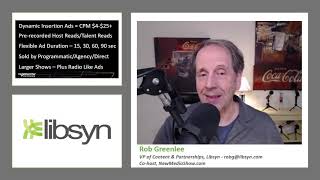
In this NAB Show Express presentation, Libsyn VP of Content and Partnerships Rob Greenlee walks podcasters through the podcasting ecosystem and the full spectrum of monetization options. He begins by highlighting the rapid growth of the medium, its diverse and niche‑focused audience, and the credibility that makes podcast advertising highly cost‑effective. Greenlee then breaks down the main advertising formats—live host reads, pre‑produced host/talent reads, and radio‑style spots—explaining typical CPM rates ($18‑$50 per thousand downloads), minimum audience thresholds, and the importance of campaign length and frequency. He introduces programmatic buying and dynamic ad insertion, noting how they enable flexible, lower‑CPM placements but are perceived as less valuable than baked‑in ads. Direct‑response (affiliate) ads are covered as performance‑based models with variable payouts. Sponsorships are presented as flat‑fee per‑episode deals, often sold directly rather than via programmatic platforms. Greenlee also outlines premium, ad‑free revenue streams: freemium and subscription models, donations (Patreon‑style), and selling paid products or services. He concludes with a call‑to‑action for new podcasters to start on Libsyn, offering a promo code for a free month. Throughout, he emphasizes audience growth, niche targeting, authenticity, and the need to match monetization tactics to a show’s size and listener loyalty.
Chapters
Welcome to the NAB Show Express Podcast Monetization Session. My name is Rob Greenlee and I'm the VP of Content and Partnerships at a podcast hosting platform called Libsyn. And you can see my email address right at the bottom of the, of the screen on the right. And I am also the host of a podcast called The New Media Show at newmediashow.com. But what we're here today is to talk about podcast monetization and the various types of monetization that can be applied to a podcast. So if you're a current podcaster or an aspiring podcaster, these are some kind of general tips to lead you down the right direction to monetizing your podcast as you grow your audience. So let's go ahead and jump right in and look at the first slide here. Well, I wanted to just run through really quickly just kind of what's going on with the podcasting medium itself. It is growing very rapidly, and for a medium that's about 16 years old, it's relatively a new medium that's been out there. So if you haven't been involved in the podcasting space from a listener or a content creator standpoint, the growth of the medium has been pretty steady over the 15 or 16 years of its existence. Over the last 2 or 3 years, the podcasting space has been growing a little bit faster. It's been growing from an audience standpoint, it's been growing about 4 to 5%. And then on the content side, more recently over the last month, the podcast medium has been growing about 91,000 shows were added to the Apple Podcast catalog just in April. So we're at over 1 million million podcasts in the Apple Podcasts catalog, of which about 40 to 45% of that catalog is currently active with shows that are being updated at least with one episode in the last 90 days. So most podcasts are updated on a weekly basis, but many of them are done daily, and some are actually done every you know, every other day. And there's others that will publish like maybe once a month. So, and then there's others that are in the catalog that have stopped publishing, but that doesn't mean that their, their episodes are no longer available. And many shows have strong audiences even after the shows have left active production of new episodes. So there is the whole spectrum of what's happening in the podcasting space. And then The other advantage of the podcasting space that has developed over those years is the range of listeners in there and their demographics. Male, female, they cross all gender and other subcategories of the population are growing or well represented on the ethnic side. Like I said, male and female is getting close to being exactly representative of the global population. And then the other big strength is niche content, like we have seen happen in places like, like YouTube, the online platforms for creating media. And podcasting is definitely an open medium when it comes to podcast creation, has really niche-ified is what I like to call it. And what that really means is, is that pretty much every topic that you can think of is probably covered in the podcasting medium, just like what you see in YouTube. Today, people are producing content on all sorts of different kinds of topics, which is terrific for advertisers because they can really niche focus their advertising messages to audiences that may be more favorable to their product or service because of the niche aspects of the medium. So you can better kind of target In a general sense, I'm not going to go into a lot of topics today on targeting to niches in the podcasting space or demographics, but that is certainly something that has been a little bit of a controversial topic given the controversy and the rules around, you know, listener privacy or user privacy online. And so anyway, I could do a whole podcast just on that. So I'm going to move on here. Podcasting also enables you to build brand and listener and customer loyalty relationships with your audience. So what we're finding is a lot of podcasts are being produced by large brands or large consumer brands that want to build closer and deeper relationships with customers to drive value around content marketing type of strategies. And what we've seen in the research is that it's showing that customer loyalty gets built pretty well in the podcasting space, which, and I'll talk about this later in the presentation around customer loyalty and the reason that customer loyalty is being built. The other big thing that's happened in the podcasting space over the last 3 to 4 years is the metrics on how to count downloads, and that's basically audience downloads of the content. Is now certified under the IAB, and they basically over the last 3 to 5 years have come up with a standard way of counting downloads, which is the real most popular metric in evaluating audiences in the podcasting space. So let's go ahead and move to the next slide. So I wanted to talk about the most cost-effective forms of advertising. But I think the key takeaway here is that podcasting really is the most cost-effective form of advertising today. And it's been that way for many years now. And we're still seeing a lot of brands kind of play around with the medium to find out if it's right for them. But what we see is if a brand or a company makes a significant commitment to the medium and their product or services is pretty compatible with an online audience and that can be targeted fairly effectively to higher-end kind of consumers, that it tends to generate strong ROI. So, and one of the key reasons for that is authenticity and trusted messages are really key to making the ROI of podcast advertising so high for many advertisers? And it really comes from kind of some key aspects when you think of podcast advertising is that, you know, frequency is important as it is in any of the online mediums today, whether it be video or other types of, you know, radio and whatever. Frequency is very important. So short campaigns are typically not as effective as longer-term campaigns. So when you think of podcasting, you need to think about, you know, 3-month windows, not 1-month windows or 6-month windows or year, 12-month windows as the way to achieve the maximum ROI on podcast advertising. And, you know, like in radio and other places, reach is very important too. As you think about audiences, trying to reach as many people as you can is certainly a key driver of podcast advertising. And then making sure that the offer that you have in your message is strong. So you need to have a product that offers a lot of value to the listener, and then also offer a value-laden kind of proposition that they can take action on. And oftentimes podcast advertising is done with what's called, you know, promo codes, which are given out in the content or on websites or off of links, off of metadata and off of websites as well. So the conversion to customers can be tracked and evaluated. So that is another important area of the podcasting medium as well. But let's move on. What are the types of podcast advertising spots that are out there today and have been with the medium for a very long time? The most effective and most popular form of advertising spots is the live read, and that's in-content. These are terms that are fairly familiar to those in the medium, but they would be live-read, in-content, or baked-in ad mentions. So these are oftentimes fairly unscripted, outline-driven pieces of content that are read right during the production of the show. So it isn't like these are pre-produced pre-produced ad spots, though that is happening a lot in the podcasting medium today as well. The pre-produced host, that'd be the host of the program, or what's being termed now talent reads, which would be more like ads or pre-produced ads that are read by voiceover talent. But the ads are produced and voiced very similar to what would be a live read type of a format. So those are some of the most popular ways of doing podcast advertising today because they drive the highest ROI. So the other one that I didn't have on this list was radio-like ads. Those are ads that are produced by ad agencies or the brands themselves that would be more like what you would hear on streaming radio or on radio over the last 30 years. So some of those ads have evolved into being more like talent reads. And I think that's a good trend in the medium, but that's certainly one aspect of podcasting that has been growing and developing. And that kind of leads into my discussion about one more form of podcast advertising, and that's the programmatic advertising, which is really kind of more of a buying method than it is really anything about podcast advertising per se. It's just the way for brands to come in and buy podcast advertising, kind of like what they buy on like a Pandora platform or a Spotify on the online streaming platforms, utilize a lot of programmatic ad buying because it's real-time buys that they can place and then upload pre-produced spot messages and then be able to traffic those into streaming radio platforms, which more and more podcasting is becoming a little bit more like a streaming radio type platform. So it's still primarily a download medium, and most of the delivery of the MP3s is primarily a download, but it will simulate really to the listener as though it's streaming, but it's really downloading to whatever player is being used, if it's an app or if it's off of a browser. The other thing that I wanted to mention too, which Programmatic advertising buying tends to also involve another technology in the medium called dynamic ad insertion. I like to term it just dynamic insertion because it's, it's a technology that basically enables you to take a pre-produced piece of content and insert it into a timeline location in your pre-produced or live audio show or podcast. Dynamic insertion can be utilized, like I was saying, in live productions as well, but it's unusual. Most of the time it's done in pre-recorded content, and then the podcaster will go in and set insertion points, and they can have as many frequency or duration of ads that they would want to have, and those can be facilitated through programmatic ad buying platforms too, but those are primarily all pre-produced ad spots that are run through the dynamic advertising and programmatic relationships. Though dynamic insertion technology can also work with pre-produced libraries, or, but they're not baked-in content, but they're baked in for the duration that they're made available in the content itself because the deck The dynamic ad insertion technology enables you to replace ads and run those ads during a certain amount of downloads on a certain kind of a schedule. So let's say the advertiser wants to buy 100,000 basically insertions into a program. They sell that based on a CPM model, and then those ads get run in the content until they reach their, their sale number of 100,000. Let's give an example. And once that's completed, then those ads no longer get inserted in the content that gets delivered to the listener. But let's go ahead and move on to the next slide. In-content host read-type ads typically are monetized to the podcaster, and this is a rate that the advertiser would pay for those spots. Ranges between about $18 and $50. And CPM, if you don't know what that stands for, is really a cost per thousand downloads is what it is. So the advertiser would pay a flat rate of either like this $18 to $50 per thousand downloads that is tracked through the IAB download spec metrics. The ad durations can be kind of flexible. So they're typically 15, 30, 60, or 90-second type of ads. They can sometimes be fairly flexible because since these things are dynamically inserted, it really doesn't matter if they're— especially when they're host reads— that they're exactly 60 or exactly 90 seconds long, though many pre-produced ads will tend to stick to a fixed duration. The other caveat with doing host read ads is that most agencies, most platforms that are selling host reads into podcasts typically have a minimum of 5,000 downloads per episode over a 4-week window before they'll even consider your show for in-content host read type ads. So, so that's something to look out for, and that drives this message that Really, before you start wanting to run advertising in your program, you need to really, really work on building your audience. And then, you know, the larger the audience, the more revenue potential that your program has. Many shows don't care about revenue, don't care about advertising. They just do it for other reasons. And I will go into those other reasons later in the presentation because they also have monetization approaches as well that are different than advertising. So let's go ahead and move on. Okay, the other form of podcast advertising that's been around for many years as well is called direct response ads. And basically what these are is a pay dollar amount per purchase. Basically it's a pay for performance model, which means that you, you mention an advertiser on your program, you give them an affiliate code like a promo code. They go to a website, they make a purchase, that promo code is assigned to you as a content creator, and you get credit for each of those purchases. And to run these campaigns, you typically agree to a certain payout amount. It's almost like a sales commission. It's a little bit— DR ads are a little bit like an affiliate type of relationship with an advertiser. And there are platforms out there that basically are affiliate advertising platforms that podcasters can go sign up for. But there's been kind of two sides of this. There's actually going to places like cg.com or commissionjunction.com to sign up for an affiliate program that then you can get ad messages or ads that you can run on your website to generate a commission sale on conversion of customers. But Direct response advertising has also been paid on a CPM model as well to some degree, but usually it's, it's not. If it's direct response, it's usually pay on performance, so you would treat it like you would a CPM campaign with a promo code, but then at the end of the month or end of the campaign, the advertiser would evaluate how much business or how many customers that you acquired through your campaign and pay you for every customer that you acquired during that campaign on a fixed dollar amount per customer. And that payout can vary widely from, you know, $10 per customer to, you know, $500 per customer depending on what the product or service is and what the margins are on that product or service. So that is also one big aspect and actually a lot of the podcast advertising in the early days of the medium were direct response type campaigns because at the time a lot of advertisers were just not confident in the podcasting medium at that time to know if the medium was going to bring in customers or ROI for them. So this was a way to, to make sure that that happened for them and their cost basis for running those ads was limited based on the performance of them. So, so let's move on. So I want to talk about the whole dynamic ad insertion side of things and, and, and how this links up a little bit with programmatic, like I was mentioning earlier. Typically, dynamic ad insertion ads oftentimes will pay lower CPMs just in a general sense, because a lot of the advertisers have been conditioned to value the baked-in content ads higher than any kind of dynamic insertion ads. And one of the reasons for that is, is because the baked-in ads stay in the content basically forever. They're basically baked into the content. They're recorded when you produce the content themselves, where Dynamic Insertion creates a different kind of, no pun intended, dynamic because what you're doing is you're basically able to substitute ads out based on a purchase of amount of downloads. And that, from the advertiser perspective, that isn't as much value, perceived value, because the ads aren't always in there. There's kind of two sides of this too. I mean, ads that are baked into your content over time, over periods of years or months, can become a little on the stale side. So it's helpful from a content creator standpoint to have fresh spots, fresh ads in your content. The advertiser is able to run campaigns across all your archives as well as your most recent shows. So there's some inherent benefits if the industry can convert over to all ads being Dynamic Insertion ads, but there's always going to be a premium put on the real-time baked-in live read type of ads because they tend to be a little more authentic, they tend to be a little bit more trusted because it's being done off the cuff, it's being done hopefully based on some sort of testimonial type of referential experience with the product itself, but the typically the The dynamic ad insertion type ads can also be very flexible in duration too, but they tend to follow that same pattern to some degree of the 15-second, 30-second, 60-second, 90-second kind of formats. They can be longer and shorter, but typically more and more we're starting to see these prerecorded host reads, talent reads become a little bit more rigid on their duration. So, and those ads can be sold through programmatic platforms, agencies, or the podcaster can sell direct to to brands or advertisers that wanna run these campaigns. So the ad buying on this is still a little bit convoluted. They do tend to, dynamic ad insertion ads do tend to be something that larger podcasts tend to run, and they can involve radio-like ads, which can be, isn't as advantageous in the podcasting space, they don't tend to perform at the same level that a host read or a talent read will perform. But more and more radio is starting to produce ads, or the agencies targeting radio are producing ads that are a little bit more podcaster-friendly, let's say. But let's move on. Okay. I want to talk about another form of advertising in the podcasting space that's been around a very long time as well, and that is sponsorship ads. And it's basically a flat cost per episode fee that you present to an advertiser. Sponsorship ads have been, you know, that's a term that's used a lot by public radio as well. It's sometimes done as a flat cost per episode because you've communicated to the advertiser what the scale of the program is and how many downloads it has over a 4-week window. And that's typically what the advertiser is looking for is is how many downloads an individual episode has had over a 4-week window of time, and that's what the advertising buys are typically based on. So when you buy a certain amount of downloads, it's based on how many downloads that podcast gets over a 4-week window. And those tend to be also prerecorded ads as well. They can, they can also be utilized through dynamic ad insertion if you want to as well. I mean, a lot of those are host reads or baked in, but they're just really kind of a different type of ad. They're not as strong on a call-to-action side of things. The sponsorship ads tend to be a little bit more brand ads, but they do have the same kind of flexibility on the duration as well. And they're typically sold by agencies or the podcaster offers them direct to brands themselves. It's typically sponsorship ads are typically not sold through programmatic platforms. There are radio-like ad creative in the sponsorship side, but that is a little bit unusual. But that's one part of the podcast advertising side of things that you can consider doing. And what you sometimes see is smaller shows can attempt to participate in this based on their niche target that they have around their genre or topic. So you can go to a, a company that has a very strong connection to the content that you're producing and offer them a flat cost per episode to run some sort of a mention, host read, talent read type of campaign and not be caught up so much in the the impression side or the cost, the CPM type of model. So you could go in, just to give you an example, you could go in and say, I'm gonna charge $500 per 30-second spot in one of my episodes, and whatever they get as far as audience out of that is what they get. So that's the typical model. So let's go and move on to the next Um, let's see here. Okay, let's talk about premium paid type of, of monetization strategies with podcasting. There's kind of two parts to this. There's the freemium model and then there's paid subscription model, and those typically do not have any ads in them as far as the content side. But it's not necessarily entirely unusual to have an ad in addition to being a paid premium piece of content. I know some podcasters have continued to place maybe what they call limited ads in their paid premium content. So it's like a reduced amount so they can monetize based on both methodologies, advertising sponsorship as well as premium.. But many shows, or I would say most shows, typically drive a higher value proposition for the premium side by saying there's no ads. Now the freemium model, which is a little bit of a different model, kind of blends together the free, some free content with some paid content. And you typically see on the freemium model, there's always like maybe the most recent episode is the free free episode and anything beyond 1 or 2 episodes into the archive is where you get the subscription model. And that's where you, you get access to all the archives essentially. And that can fall under a pay monthly or a per episode subscription fee that can be password secured access to all or part of the archives. So as you think about a new episode coming out each week, you could conceivably monetize that with advertising just like you would just, you know, a regular non-premium paid podcast with ads. And then when that, that episode moves over into the, the subscription model side, the ad either gets removed or, or not. And so the, the listener typically only gets access to for free just one episode a week or a month or whatever that cadences, and then all the archives if you have a show that has a lot of value in the archives that the audience can get access to on a paid, paid model. So that's kind of how it, how it works on that side. So let's go ahead and move on to the next slide. Okay, I wanted to also talk about donations, and what you have here is kind of like multiple things that are going on here. So you have donations where an audience can come in and just donate money to you. That can be various levels of donation, $5 a month, one-time donations of, you know, $5, $10, $20. You can also put them on a donation subscription where they donate $10, $20 per month. Which is a little similar to the subscription model I was talking about earlier, but this is really more of a voluntary thing. So the content remains free in all of these that I'm talking about right now, the donations, because one of the other monetization approaches here too is, is to have a paid product or a paid service that you offer that you, the podcaster, is offering to your audience. So as your other monetization strategy. So, and these are typically the donation side and the paid product and services offers can be pre-recorded or they can be live read type of presentations. You know, if you want to produce these in advance, it does make it easier in every episode, but you do have a certain amount of fatigue that will happen with your audience when you're pitching this donations or paid products or services on a pre-recorded basis. It may be better to treat those as kind of baked-in live read type of— because you don't necessarily want to remove these and replace them, though you could set it up like that if you wanted to. But It's just a matter of you have a lot more flexibility in what you do on a donation model, on a paid product or services model, in durations. You can also offer bonus content to your audience to participate in a donation model through, let's say, Patreon or a type of eBay button that gives you the option to just donate money on some sort of a cadence or frequency. So So these models can also be done on, primarily done on the web or in apps. So you kind of have that as an additional way to monetize your podcast. So let's go ahead and move to the next slide. And I want to tell you thank you for watching this presentation on podcast monetization. It's a fairly quick run-through of all the models that are out there and some tips on how to, how to participate in this. And if you want to start your own podcast, you can certainly go to Libsyn.com, and that's L-I-B-S-Y-N dot com, and get started with a podcast for as little as $5 a month. We have plans that go the whole spectrum depending on your frequency, how much content you're looking to produce, and then we also have what's called LibsynPro.com, which would be more for networks that offer multiple shows and that are looking to utilize things like dynamic ad insertion like I was talking about earlier, and that's a whole different thing. That's at LipsonPro.com. But if you want to get started for free this month or basically any month in the future here, just use the promo code STARTFREE. So, well, thank you so much for listening to this Lipson podcast monetization, um, on the NAB Show Express platform. And I appreciate it. Thank you so much for spending time with me.
More from Rob

Future-proofing with Delphi AI/Human clones: your podcast as a personal LLM | New Media Show






How sports reveal what AI spectacle gets wrong #Technology #Sports #Commentary



