Todd Cochrane is Back to Discuss Podcast Movement and other Podcasting News on New Media Show
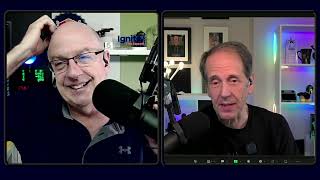
Todd Cochrane and Rob Greenlee discuss Spotify raising its Ambassador Ads threshold from 100 to 1,000 listeners and tightening content rules. They cover Podcast Movement highlights, including the Daily Wire's Ben Shapiro cutout and StreamYard's swag victory, plus industry metrics showing roughly 200,800 active podcasts.
Chapters
that had a lot of people around, or—
Yeah, I'll talk about it later.
Okay.
Oh, come on now. Yeah, just give me a second here. Pushing too many buttons. All right, just about ready. Too many, too many mice on the desk.
Which one to grab, right?
Yeah.
Todd and Rob in the afternoon. Hey, afternoon delight with Todd and Rob.
Oh yeah. Oh yeah. Here we are, Rob. I'm back. You were back, but now I'm back.
That's, that's true. I was back last week and then now you're back. So now we can talk about all the things that we didn't talk about last week.
So, uh, yeah, I just, I was at, uh, needed a vacation.
Yeah.
And, uh, I mean, I took one.
Podcast movement, uh, is definitely a drainer. It took me a while to get back kind of to normal after that too.
Yeah, it's just a combination of a whole bunch of things. So, um, yeah, but yeah, yeah. And I've been fighting a head cold, and you know, it's— I think I'm about 75 or 80% over it, but yesterday my eyes were like trying to be glued shut. And yeah, it's just one of those, you know, I, I picked up the— I think I picked up the crud in Denver and it just kind of continued. But anyway, uh, here, here we are and no one wants to hear about the crud.
That's true. I have a feeling we're going to hear a lot more about the crud here soon.
So, well, okay, I don't even want to get into that. It's just—
I know, I know. No, I know, but it's, it's true. It always happens every fall, right?
Yeah. But what is this I hear? We received a boost. 10,000 sats. Rob Greenlee. It's hard to hear you say podcasting doesn't require an RSS feed. Who are you? Question mark.
I'm not saying it doesn't require an RSS feed. I think Somebody's misunderstanding. But that's okay. I mean, if that's the impression that you're getting—
Well, it wasn't me. It was Adam Curry. Ah, well, listen to the show. So what did you say that invoked this blasphemy?
Well, it's not the first time that Adam's made a comment like that. So I'm not— I mean, I see where he's coming from. I totally understand it. Uh, I appreciate it. You know, I come from the same cloth of fabric to some degree that he comes from about this industry and, and where it came from and, and how it's progressed over the many years, because we've both been along the same ride. Um, but I do think that there are some movements that are generational that are causing some perceptual differences. That I'm talking about. And I'm sorry if that conflicts with the kind of more purist view of podcasting is only RSS. I'm starting to look at things more from an audience perspective and then trying to include that too. And we're seeing industry surveys and research and conversation that, and I think we saw it at Podcast Movement too, that there is a perceptional change around what podcasting is and the scope of it. And it doesn't necessarily have to take away from RSS. I think it's, it's additive. But I do think that this convergence back to— and, and I would say this— back to video is, is not necessarily a bad thing. So it just depends. I guess I'm, I'm probably more concerned about it from a proprietary platform orientation where we start encouraging direct upload to consumption platforms. I agree with any concern that exists on that, that it kind of moves us away from this syndication model that we've built podcasting on.
Well, I will remain the purest of the group. It's not a podcast.
It's fine.
Well, it's not a podcast unless it's technically— I don't care again where they listen or watch.
Yeah, but, well, and that's fundamentally my view too. I'm not opposed to other platforms making content available, and I think we can both agree on that.
But I think this, uh, this, this attempt and this ongoing PR campaign by YouTube to steal the word podcasting remains a travesty.
And, well, it's, it's, it's It's more than a campaign. It's actually being built into their platform.
So again, yeah. Um, again, when you call a YouTube channel, and we don't need to go down this route because we've done it many times, when you call a YouTube channel a podcast, then they're, you know, there's no associated listing on an Apple Podcast or on, uh, wherever else podcasts are consumed via podcast app. Via being supplied via a podcast RSS feed. And in my opinion, it is still just a YouTube channel, um, with some video content that is, uh, that they may call a podcast but technically is not.
So yeah, I, I agree with that, Todd, 100%, um, that, that is essentially what YouTube is doing is they're taking a playlist and just renaming it, a certain amount of content that they have up there basically giving their users the ability to just rename what it is.
But at the same time, at Podcast Movement, there was a lot of podcasters that were saying, you know, this video thing is just, just a thing, and very, very few people will actually do video. Very, very few people will succeed at video. And very— and there, you know, there was YouTube representatives there that were, you know, promoting YouTube, doing YouTubing in the YouTube way and the YouTube algorithm, and they were not getting a lot of traction.
Well, I believe that this conversation is, is even bigger than just YouTube. So I think focusing on YouTube, I think, is kind of missing the bigger trend line.
Well, it's, it's, it's, it's only two players that are trying to change the messaging. It's YouTube and Spotify. That's it.
Well, yeah, but there's also platforms like Rumble and others. They're not using, using the term podcast, but, but increasingly podcasters that are doing video are thinking about Rumble.
That's fine.
Yeah. So there's more than just two and there's, I think that there's going to be others too. I mean, I think you have to consider TikTok and you have to consider potentially Twitter as having a role in this kind of bigger video strategy. It's not— I'm starting to use the term less video podcasting when I refer to this. It's more like video, kind of video publishing that's a companion to your audio podcast. I'm increasingly not trying to confuse people on that.
Well, I can't specifically speak to what TikTok is going to do or not to do because I think I'm still under NDA. As far as that goes.
I never signed an NDA with those folks.
But, you know, it's— I think the— what TikTok is currently doing is, is the way to promote a podcast. It's, you know, it's pretty slick and it's not a.k.a. promoting podcasts because it's basically allowing you to promote your podcast, your actual RSS-fed Right, because you do have to supply TikTok with an RSS feed in order to participate in their current beta. So it is being fed by RSS. So that is, you know, that, that in and itself is, is much different than some of the other folks.
But I think, well, and based on what James found out that we talked about on the, on, on the live stage, and you can get access to that, um, better quality recording off of the podcast feed for this show. But it's, he was talking about how, you know, I think in just a matter of a few months, it's going to be hard to not consider YouTube to be a podcast listening platform because of their RSS integration into YouTube Music.
As long as the RSS, as long as they ingest RSS feeds, I'm cool with that too. That's more of a traditional play, but in YouTube proper, again, continues to be nothing more than a playlist that you designate.
And I agree. Yeah, there's no question about it.
And the term of the word, I think, I think we have to continue to be careful here. And we have podcasters listening to this show. We don't have listeners listening to this show, right? Right. So I think the podcasters that listen to this show fully understand the value of open RSS as it has been from the beginning, and we'll continue to value it, and we'll continue to inform and let people know that, you know, we're, we're not, we're not subject to deplatforming. We're not, we're not subject to, um, having our, our monetization controlled by a company. So, you know, I think we are anyway. Well, anyway, no, I, you know, I think with the value for value and everything else that's going on, I think there's lots of alternatives. Uh, so speaking of which, um, another 10,000 sat donation from Adam says V4V combats pod fading. Seeing streaming payments and Boostagrams coming in makes you feel valued. This is true. When people boost a show— and by the way, we are Live and Lit— it gives people an engagement, um, that they would not otherwise have when they're— if they're doing live, or if someone have listened to a show and they've gotten some value back via, right, um, a boost. And again, it's, it's not about the money per se, it's about the engagement, right?
It's the exchange in the interactivity that's created by that is, is really where the value is. Um, Also, I wanted to mention too that Stephen Goldstein, you know, with the Amplify Media company and Signal Insights, are doing a webinar on Thursday. I can't remember what time it is, but going into deeper detail on this webinar about this YouTube topic.
Well, you know, I won't say names, but I talked to some influential people in the space while we were there. And they made mention that, you know, they felt that they had made a mistake by promoting what YouTube was doing and what they were doing because they felt that they had— well, you know, it's like YouTube does, um, screws people. And, you know, they say one thing and they do another. And in large part, I think people have to be very careful. We have to remember about the history of Google and YouTube and RSS. In my opinion, they can't be trusted. Um, yeah, well, it's, it's really one of those, it's really one of those situations where they suck you in, they pull you in, and they promise grandeur, right? And, and then they change the rules, and then you end up being screwed.
Um, seen it time and time again, flight of, of, of big corporate interests, um, trying to play with, uh, market dominance and market control and, and taking advantage of those issues. You know, there's been many examples of that over the years with Microsoft and Google and to some degree Apple as well. Um, so all these big corporations play these these games to, you know, satisfy their shareholders. Now, that's something that we all have to keep in mind with all these big companies, is that they have a different agenda than just kind of placate all of us, right?
So Ross Brand says lexicon has been changing long before YouTube started for themselves a podcast platform. To most people, any line talk shows a podcast, or whether we like it or not. Again, and we're not gonna— we're not gonna— we're not arguing No, how listeners perceive podcasting, right? Because this show is listened to by podcasters. We want to make sure podcasters continue to carry the torch, right, and understand the value, you know. And if, if people don't value— they don't value RSS and they put RSS by the wayside, that's the end. It's just a matter of time.
Do you really think that anything YouTube can actually do will actually do that? I don't believe that's true.
No, no, I think as soon as podcasters forget and are not reminded about the value of what has been accomplished here, then it'll be the beginning of the end and they will lose control there will be gatekeepers once again. You will be beholden to the algorithm. You will, you will get play when they allow you to be played. You'll get promoted when they allow you to be promoted by some manager somewhere, right? You know, as long as podcasters as creators continue to understand the value of this— and again, I, I don't think it should go without saying that most people don't understand today why it's important. And I think that we just have to continue on our bully pulpit to understand why open— the continued open RSS standard and the expansion of it's important to content creators and, and built in breathing new life into maybe things even beyond podcasting. You look what's going on now with some of the Podcasting 2.0 stuff. It has the opportunity, uh, over time to, to unravel the control of the music business as well. And it is not related to podcasting at all. It's about content creators, music artists, whatever it may be, you know, starting to get earning something for their content that has not been possible before. So again, it's— this is just And what's doing that? It's not YouTube. It's not Spotify. It's not Apple Music. It's not Google Music. It's not these platforms that are starting to think— because they have— they don't have the creator community's best interests at heart unless you are a 10 million, 20 million, 30 million, 50 million user, you know, have that many followers on those platforms. They, they give you nothing. They host your media, they let you have a voice on their platform, but are you surfaced? Are you found? No, you're not. You're not found. Your content's not found, um, unless they want your content to be found. So I go back to, again, Podcast 101: control your brand. Control your.com, control your RSS feed.
So Todd, I would say that the concession that we've seen from YouTube around RSS ingestion is a, is a little of a, there's a little concession there that RSS is, is powerful. Uh, and that will force a big player like YouTube to embrace open RSS. Now, granted, you have to think about it. It's, it's not a two-way conversation on RSS. It's no, it's it at this point, it's just an ingestion way. It's a way for them to get your content into their platform. And I believe that's, that's what's going to happen with any of these big players. It, it's not going to— but it could be at some point that YouTube, uh, has outgoing RSS feeds. But I, I think the chances of that are extremely low.
Yeah, they—
it just doesn't make sense strategic to actually do that for them. But it does make sense for Spotify to have done it. So it's, it's kind of an interesting paradigm shift.
Strategically, they don't ever want you to leave their platform because they're going to drive— it's all about putting dollars back into the shareholders' pockets at Google. You know, they, they have to, they have to keep the shareholders happy, and they'll give, uh, some, you know, some token earnings to high-performance shows. The rest of people will get thrown a few peanuts here and there. And, uh, and what do you get? You get the ability to have your video on their platform because, you know, it's a platform to be on. So, right, it is what it is. And matter of fact, sure, I got a new t-shirt says, 'It is what it is.' I know people hate that. Ross goes on to say RSS remains essential for free speech when YouTube limits discussion on certain topics of great importance. It's just RSS is important for free speech, period.
Right, right.
You know, it's, it's, it's a— it's those things where you don't have to ask permission. And you know, if you think about, think about where we were in 2004 and where you had to ask permission You had to sign a contract. You had to, you know, if you wanted to be on Xbox or any of those early platforms where they had media besides games— people remember that Xbox actually had a media platform where you could, you could consume media on Xbox? Do people even remember that?
Yeah, I mean, I actually worked for Xbox for, for a few years, so you, so you know.
Yeah.
And people say, well, we talked about it a lot back then because you were wanting to do, you know, an OTT app on Xbox.
Right.
So back in those days, and I, I told you what was possible and what was not, right. You were, you were a little, uh, you know, I, I think, or resistant to it because I think getting it done was a multi-hundred thousand dollar project. So, right.
And whereas we built the first 11th, 12th, and 13th app on Roku for, you know, under $10,000. And, you know, Roku continues to, to rule in many instances on those multiple channel levels today. So, you know, people forget about OTT.
Over the top is what they— yeah, is what the OTT acronym.
Do they even— do they even say OTT anymore?
Yeah, I hear it said, I guess, mainly in context of like a Roku type of a device. It's, it's basically, you know, create an app and it's installed on a consumption platform, like an operating system, which is essentially what Roku is, is basically an operating system that's, that has a bunch of apps layered on top of it.
So that supports RSS, by the way.
Yeah. Yeah. So, so Yeah. So, you know, that is still a thing. The Roku company is doing, doing quite well from what I understand. Um, I think increasingly I now have all, I have Roku on all my TVs. I have like 3, 4 TVs in my house.
Yeah, me too.
So, and they're all running on a Roku. So it's just, you know, it's, it's one of those platforms that gives you freedom to install whatever. Video app that you want to have on your device. It doesn't, you know, it doesn't restrict your access to content.
So I think we should say having audio content or video content on YouTube does not require an RSS feed.
No, it doesn't.
I think that's the most accurate. That's more of an accurate statement. Let's not Let's not throw the word podcast in there and muddy the waters any more than we need to.
Not yet anyway. I do wonder because I've heard them talk about this in one-on-one conversations though. It's a video platform, which means that if they're going to ingest RSS feed content, it's going to be audio content. It's going to be MP3s. And from what I've heard, some platforms Um, the publishing platform I'm talking about, podcast publishing platform, some of them want to retain the ability to convert those audio files into video files to upload to YouTube. And then other ones will take advantage of the API to allow YouTube to convert those to a video file so that they're available for playback. Because what I understand is that YouTube does not support any audio codec files in their platform currently, unless that's changing.
So is that the same for YouTube Music?
I believe so. Yeah, I would—
well, that sucks because then that's going to check stats, are going to be screwed.
But that raises kind of a domino question, which is, um, they also stated that that's going to be pass-through. So does that mean that if you, if you change, like, on— if that content has dynamic ad insertion in it, that it will dynamically change that content in their platform to accommodate any kind of changes.
How's that going to work for measurement? How's that going to work for— that's the key. Guess we'll see.
Yeah, so if it's going to be pass-through, it's going to have to remain an MP3 file, is my— or, or some other audio codec that's embraced by the platform. Um, so I think that's a big question mark in my mind. It's kind of a technical issue, but it's still You know, if they're going to support pass-through, it's— it may be a difficult thing for them to actually accomplish.
So I listened to a little bit of your, your co-host last week. I didn't, uh, or your guest, I should say guest, wasn't a co-host, but the guest that you had in my, my stead. Um, I think one thing that we saw, um, at the booth at Podcast Movement was Um, really 3 things. Um, number 1, uh, we picked up a huge amount of network business out of the show.
Uh, is that a hot, hot area, you think, right now?
Right, for us, podcast networks, for us it's been really hot for the last 3 months.
So, so, so what would you say is the reasoning behind that? Is, um, what's the reason? Is it support for shows that shows are looking for?
I'm not going to reveal my hand, but We've, we moved over since, since Podcast Movement has, uh, completed, we've moved about 200 shows across 5 networks onto the platform.
Well, that's not what my question was.
Sure.
My question wasn't why they selected your platform to work with. It's more why do you think that there's such a kind of movement around networks right now?
Oh, the networks. Oh, these were established networks. These weren't brand new networks.
So they were moving from another hosting platform, right? Obviously, right over to yours. What was kind of the reasoning for that? Was it because they want to own that network on their own website, or is there some other reason?
Multitudes of reasons. I'll say one of the reasons was consolidation. They maybe they had shows on 5 different podcast hosts or whatever, a variety of platforms. So, you know, they wanted standard, maybe standardization of stats and that kind of stuff.
But yeah, yeah, that makes total sense.
So yeah. Networks was a big thing. Number 2 was really just there was a good number of new content creators there. I would say we were probably 25% of the people that we talked to had not— were not doing a show yet, were shopping, wanted to know about us, come to ask questions. And then really the third part was people looking for not only the Podcasting 2.0 stuff, but also looking for some of the feature sets we offer. You know, this expanded feature set that we've done has started to really make an impact. So I think those are the, you know, for us, it was the 3 big takeaways. But the network, probably the one network we moved alone probably paid for the whole show. So it's, you know, it's nice to be able to get an immediate win coming off a a show like that that's not inexpensive to go to.
Oh yeah, definitely. It's not expensive at all. Podcast Movement, that hotel was not inexpensive.
No, because you were, you were, you were landlocked for food and everything, what food there was.
And I tried not to eat that much, actually, you know.
And it wasn't that great, you know. It was, I would call it mediocre, 5 at best on most The best thing I had the entire time I was there was the ribs at the sports bar. That was, that was the best meal of the whole, of the whole trip.
But yeah, a lot of the restaurants were hard to get into and hard to get a seat. Um, and so, you know, I just kind of skipped it most of the time.
Well, that's one thing I don't go without too many meals. Uh, you gotta fill food.
Uh, Yeah, I only eat like once a day myself.
Yeah, I gotta, I gotta feed the Buddha here a little bit.
So, oh, you do? Okay.
I gotta get food in there. Yeah, my, my Buddha, you know, you know, a couple times a day the Buddha needs, uh, needs replenished. But, uh, um, yeah, so, you know, and there was great conversations that we had post. Matter of fact, we've had some great emails from some folks, and it's just kind of sent around again surrounding some of the Podcasting 2.0 stuff and Yeah. And just, you know, some kind of some new stuff that's kind of happened in the space. And of course, I don't know if it's been officially announced, but am I allowed to say?
I think it's still a little premature.
Oh, okay. Well, all right.
If I think what you're about to say is what you're about to say.
So, yeah. Okay. Yeah. I was going to. You were. Well. Let's put it this way, maybe there will be a major announcement soon here for Rob Greenlee.
Yeah.
And then pressure being on you. Yeah.
Yeah. There's no pressure on me at all out there anymore. No, that's right. It's all, it's all relaxation for me. I'm only doing 3. It's going to be 3 live shows a week for me very soon.
So yeah, welcome to the club. Yeah, so right, I do 3 as well, but it's— it can, uh, it was good to have the break last week, to be honest with you. I did do a show on Thursday, but, uh, um, that's only 3 live shows.
I'm, I'm doing a couple others.
Yeah, glutton for punishment, you are.
So I have If you're going to double down on being a content creator, which is what I'm trying to do, and that's how I'm adding value to the market now, is to be able to— and part of the reason for this is I want to learn, you know, the modern tools of podcasting. You know, working for a hosting platform kind of isolated me from, from having broad exposure to changes in the medium.
So why was that? You guys don't have your own spy agencies that were set up with those companies to go look at other people's UIs or anything like that? You guys weren't doing— I didn't do any marketing intelligence.
I didn't do that kind of stuff myself. I can't speak for others in the company, but I was, I was trying to be as forthright and straightforward in the industry as I could.
Actually, you really don't need to do any. You just go read people's documentation. You know, usually you can see everything right in their documentation.
Yeah. So, you know, so this has been an eye-opening process for me over the last few months is that I'm now welcomed back into the inside of all these companies. Oh, to, to learn about what's— what they're doing and what they're working on and, and how it works and all this kind of stuff, which I was kind of blocked out from because— right, right, right. Competitor, right.
Well, we'll definitely make sure you sign an NDA because you've worked for just about everyone, and by the time you've learned everything about everyone, then you're going to go work for someone, and then we're all screwed.
Hmm.
Yeah, that's— see, that's, that's, you know, Mr. Chameleon, you never know.
I'm not like that, Todd. I'm not like that.
Okay.
You know, I've, I've, I've been a consultant, uh, in these kind of these, uh, these research platforms. I don't know if you've done this before, Todd, too, where they ask you like a million questions about your background and, and you're supposed to opt in and opt out and say, well, you know, I'm not going to talk about, you know, right, my, my prior employers.
Sure, sure, sure.
Prior stuff. So, so I just take what I learn and then I filter it through, and I don't use exclusive information, right?
So yeah, I don't do any of those market questions anymore because I used to be— because it usually— you're usually answering questions for somebody that might be or soon to be competitors.
So, well, that's true too. And I've, I really kind of, over the last few months, backed away from doing any of those kind of research projects because, um, they kind of have been moving towards asking you questions about that topic in advance of actually getting in and doing the consulting thing, and then they don't follow up and actually sign up.
And they don't, they don't pay that much anyway. They're usually $500 to $1,000 a shot, and it's more pain than it's worth.
Yeah, that's, that's what I found too. So it's been a, been a while since I've done any of those kind of projects, but it's, it's, yeah. So, so anyway, so there's lots of news going on. Yeah, I mean, you've been gone.
I've read pod news, but, you know, just barely. Matter of fact, I'm still 600 emails deep in my business inbox, and I'm— I was trying to unbury myself today, and it didn't happen just because I was booked full today and tomorrow and all day Friday too. It's crazy. But what, what is news and what has been going on? And, you know, what, what is of note?
I think the big thing that jumped out to me was the September 1st pod news that had the US podcast listeners rise 68% over the last 5 years. So I think it's—
who did that come from?
Nielsen.
Listeners rise 68% from what percentage?
Over the last 5 years, it says. So it's not like it's doubled or anything like that. It's just like we've always seen in this medium, it steadily grows. You know, if you average that out over, over 5 years though, it's, you know, it's plus 10%, right? Every year, which is definitely a faster growth trajectory than we've seen prior to that 5 years. Right. Um, I think prior to that it was like 2 to 4%.
But doesn't that conflict a little bit with the 68%.
Hmm, it seems like a lot if you ask me, but from—
but let's— okay, so 68% based upon a listenership of what to what? That's okay. So there was 5 years ago, there were a certain amount of people listening. So they say in 5 years there's been 68% growth from that number that they started with. That Okay.
Yeah, that it says, uh, it says the number of Hispanic listeners almost doubling.
Oh, I believe that, right?
And comedy is the most popular genre. It's a—
no, it's not.
That's what they're saying. Um, and it says that the, the Nielsen Scarborough Podcast Buying Power Report is what this is coming out of. It says a new Podcasting Today report, it says. So this must be a new thing from, from Nielsen.
Yeah, well, yeah, I, I don't know. Sometimes the Nielsen stuff to me is always a little suspect.
It's, it's survey, it's not real data. That, that's the, that's always the thing that you have to keep in mind. And no, you know, excuse me to Tom because you spent a lot of years doing this kind of stuff. But, um, you know, it is, you know, you have to look at real data versus survey data. And I, I would say that there's a difference.
And meanwhile, shows published in the last 30 days is 332,000, 60 days is 406,000, and even more concerning is last 90 days, 468,000, down from nearly 700,000. 700, about, yeah, it's down 30%.
Yeah, so I, I have that, uh, right in front of me. So that's it right there. So if you want to see the actual podcast index—
yeah, come back to me and I'll put the screen up full on the live stream.
Okay, okay.
Um, now I gotta fix you. Hang on.
What's wrong?
Uh, nothing. It just ends up you go narrow screen when you come off of that. So yeah, I do. Yeah, 116,000 last 3 days, 238,000 10 days, 332,000 30, 406,000 60, 468,000 in the last 90. So that, um, that number, you know, here's another thing. Oh, he's just asking around, you know, how's business? You know, I asked this question, everyone will say on the show floor, oh, it's great. Get a few beers in them.
How's business? I did see, I did see that the weekly number in Pod News this morning was up from what it's been. So it was up over, over 200,000 in the last week versus Last week it was well below 200,000.
Well, I'm looking at 10-day average on this one, so.
So there must be an uptick in publishing because people are back from vacation or they're, you know, back to the grind now.
We'll see. But, you know, the conversation is about how business is.
Yeah.
Is, you know, when you're, you know, everyone, our press releases say everything is great. And then when you talk to people, oh, business is okay, it's a little soft, it's a little soft, but it's okay, it's flat, you know. And you know, you, you, it's, you, you kind of hear the, the real story. You don't see no, you know, I didn't see no blood in the street, prime, you know, during podcast movement, but you know, there was definitely some interesting conversations and, um I would say that, uh, probably the advertising part is the one that is the one that's probably— I feel is being exaggerated the most. I don't— I did— I think it's pretty— the last quarter, everyone, to a person, everyone said that June, July, August, and September was bad. Bad.
Did they say that privately or publicly would be my my question. Um, they said this, they, you know, publicly it's like, oh yeah, everything is great.
Oh, privately, and I won't say who, but August— yeah, Jesus— July, August, and September, bad, flat, horrible, down. And they're hoping, they're hoping the fourth quarter will recover. They're hoping October, November, and December will be good. But the last quarter was absolute caca. It was bad from an advertising standpoint. So yeah, we will continue to watch the, the, the press releases and the how everything is grandeur and great and, you know, how everything is, uh, kumbaya in the, in the podcast financial space.
So yeah, there's two voices of opinion on that, right? Um, it depends on who's listening, but depends on— I was amused.
Depends on who you're talking to, right?
Exactly. Um, I was amused by this other lead story about Spotify, um, paying up to $250,000 per episode. Yeah, for some of their, their shows that they are producing or sponsoring or licensing or whatever.
This does not surprise me.
And it takes us back to earlier conversations that we've had on this show about, uh, how dumb that is.
How dumb. Yeah, you know, it's just like, I, I'm sure we talked about it coming off Evolutions where I was absolutely astounded when I talked to a certain How should we say it? Magazine, right? That was— what was the number? Was it 25,000? It was a big number. And anyway, it was, it was north of 20. It was either 25 or 40. It was some nice stupid number. And they were astounded when I told them, hey, come over here, a simple interview show. I think we can get that down to about 365 an episode, you know. She's, she's, you know, $365. I'm like, yeah, $365.
So what they don't really talk about is that, um, is that marketing spend or is that what they're paying in guarantees to the talent? Because they kept talking about Trevor Noah and probably Don Ostroff, um, you know, Science vs.
the company that I was talking about before. It was a no-name person doing the show. It wasn't like it was some paid, you know, some paid spokeshole. It was not like that. It was— but maybe, maybe it's the people that was the talent. You know what I'm having trouble with on Podcast Awards is getting in the— because of the strike, getting in the acceptance speeches. For some of the shows that made the nomination list that are on the part of the union.
They don't want to be seen publicly.
They can't accept their, uh, you know, everyone, all 300 shows have to send an acceptance speech whether or not they were— they won or not. And, um, I told them because we don't announce the winners until the awards night, so, so they're looking for alternative ways to send their acceptance speeches. So can I send in a an animation or anything. And I'm like, sure, send in whatever you want. But if you don't send in anything, you're disqualified no matter what. I don't care about the strike.
You know, if you figure out what does the strike have to do with it?
Because they can't speak, they can't accept an award, they can't—
they can't—
they can't present.
They couldn't work. Well, maybe that didn't work on projects, not what— except an award.
Well, it's there. That's the problem there. Some of them tell me because they're on strike strike, they can't— they can't say— get it— take out their phone and do on, you know, just do a 60-second, hey, thank you so much for voting for us, thank you for, you know, supporting the show, blah blah blah blah.
I was just creating any, any content is what you're saying.
Maybe, you know, again, so, so they're looking—
I thought it was a writer's strike, not a podcaster strike.
Well, I guess writers— yeah, I don't know. It's— yeah, maybe they're supporting the writer's strike. I, I don't know.
One, one little crack in this discrepancy that we were just talking about between what people say publicly and what they say privately about the advertising market is symbolically demonstrated based on this lawsuit that was filed by Tenderfoot TV suing Odyssey's Cadence 13 for breach of contract. Odyssey is accused of failing to pay money owed, including $520,000 in August. As part of a 2-year contract.
So there's— who's the company that's being accused not being paying?
Uh, Tenderfoot TV.
No, they're not getting paid, right? Or is Tenderfoot— okay, Tenderfoot's not being paid by who?
By Odyssey's Cadence 13.
So if they don't have the money to pay people Well, I think we've been hearing that Odyssey's having, has been having some financial issues, right?
Their stock was almost delisted a few months ago and it's, it's kind of, you know, the stock price has dropped dramatically. And I, I would imagine that the advertising space has impacted that dramatically. So it's kind of a common thread here that we're hearing about.
It's, it's kind of interesting. And again, I don't know who the principals are now today at Cadence 13, but I remember having a conversation one time. I just—
I think they dropped that brand, but that contract was a 2-year deal, and that was probably— that contract was established back when that brand Cadence 13 was, was something, right? I'm not sure it is much anymore.
Yeah, I wonder how many of the same people were at K-13 are still at Odyssey.
Probably some, I would imagine.
Yeah, though, but the book I could write—
it's a, you know, that's a lot of money. $520,000.
That's a lot. I mean, that's for non-payment, $520 grand. That's, that's, uh, that's a make it or break it for You know, that's just in August, you know.
You know, it does seem a little—
wait a minute, this is September 6th.
Oh, exactly.
So yeah, so they were getting a payment for August for business that was probably delivered in June, right? So June, yeah, usually 60 days. So it's probably business in June, July. No, maybe could have even been May, because if you do business in May, typically net 60. July. Yeah, June, July. Yeah, I would bet that that is for business that was delivered in May. Ads delivered in May, probably paid net 60.
Hmm. Said that, uh, it said the agreement between Cadence 13 and Tenderfoot TV stipulated a minimum guarantee of $15 million over the initial 2-year contract.
Wow.
Which began on January 1st. It says additionally, the minimum guarantee is set to increase to $21 million over the 3-year term.
How do I get a deal like that?
Through December of 2025. It says in addition to the overdue August payment, which can't be that overdue. It's only early September. But, um, anyway, Tenderfoot TV is seeking interest, legal fees, and unspecified damages as part of the legal action.
So how many shows does Tenderfoot have?
They've got the shows that they list under this breach of the long-term sales contract for ad sales on popular shows like Up and Vanished, To Live and Die in LA, Rattled and Shook, and Radio Rental. So the, uh, the suit was filed in U.S. District Court in Los Angeles after Tenderfoot TV received notice from Odyssey earlier in the month that they were suspending further performance of C-13 payment.
Was that me or you?
That was me.
Okay, so I'm just up and looking at their website here. Rattled and Shook, Dear Elena, High Strange, Up in Bannish. Just kind of looking at some of the shows. A lot of true crime.
Yeah, they're They're all very, very popular true crime type, type storytelling type podcasts.
Um, so were they exclusive with, uh, Odyssey then for ad deals?
I'm assuming so. Yeah. You know, I mean, if you're talking about those, those kind of dollar numbers, I would think that would be exclusive. Yeah. Yeah. You know, and if you think about this Um, yeah, and I've, I've worked a lot with Donald Albright.
Yeah, I know, I know Donald.
Yeah, kind of CEO of Tenderfoot TV. I mean, he's like the chairperson of the Podcast Academy, right?
So they've got a big team here. You, you look at, uh, 3, 6, 9, 12, 15 18, 21, 22 people. Yeah. Um, and you take that type of money out of their pocket, it's a big hit. It could be the end. Yeah, that, that could be non-survival if you don't have the cash reserves. And if you've been guaranteed this amount of money over this amount of time, you plan budgets accordingly. But is it because, number one, this— here's the two questions. They had a guaranteed minimum. I'm sure there's some stipulations with the amount of traffic those shows are going to deliver. Did, number one, did they not fill the ad inventory?
Right. Or say anything about that? It doesn't say anything about details of the advertising.
That's the key. So if the ad inventory was all filled, there should be a surplus of money for because this is just simple math, you know. If you fill the inventory and you're getting, let's say, base CPM of 20, you know, whatever they use as their formula to determine the performance of this and how they were going to get paid, they, they were probably planning on 30-40% profit on this inventory. Odyssey would have been planning at least that much of a margin. Yeah. And if they can't make the payment, then was it because of lack of inventory or was it because the guarantee— the shows aren't doing as well? So there's two sides to it, right? In a press release, do they say that they were delivering shows? This is the show numbers.
This is the big question around anybody issuing guarantees, right? There needs to be performance markers. I'm sure any guaranteed contract, in order for it to make sense for both parties, it would have to be, right?
So let's say Tenderfoot was meeting its expectations, right? Then that means that— and I'm not saying they're not, we're just speculating here. So Tenderfoot, don't get, don't get, don't get mad at us, okay? We're just walking through this.
Uh, we're actually, you know, taking a position of probably defensive view, but it's just more around, well, what's the expectations and what is the details of the contract, right?
So, you know, considering— let's just assume Tenderfoot's delivering their numbers, that must mean that Odyssey is not delivering the inventory, or they delivered the inventory and they have so much overhead that it's taking their, their revenue, right?
Right.
You know, and again, I don't know how big Odyssey has gotten or what their size is.
Well, it's, it's, I believe Odyssey is the second or third largest radio network in, in the country.
So, um, I had a, um, I had a conversation with a, uh, how should we say it, a show, very popular show. He had a great deal from a foreign entity and, uh, very popular here in the United States, done very, very well. And the foreign entity that was basically in charge of ad sales for that show outside of the United States, um, was having a hard time selling that show because the sales reps didn't know how to sell it. And it was one of those, one of those types of shows that I could probably sell in my sleep. So, you know, I just wonder if this speaks to a bigger problem that, you know, the ad industry is having challenges fulfilling inventory right now globally.
Yeah. Well, especially globally, I would imagine. Yeah. I mean, the advertising market outside the US has always been softer, even than what it's here. Um, so it just, I don't know, you know, there's details beyond the scope of what we can see here.
Sure. Sure.
But I did notice also that Podcast Addict announced that they have an exciting update on their website. It didn't say their app, but said now you can quickly find an episode within a podcast by entering keywords. So I don't know if this was. I, they say it's an enhancement, but is it really just adding basic functionality? Says, want to switch things up, toggle the sort mode to show older episodes at the top. So this, this doesn't sound like any kind of revolutionary feature, but, um, I thought it was interesting.
Well, you know, trying to find content now, again, it's good show notes, folks, good titles. The descriptions, right? And maybe they're using a little AI to index some of that information to come up with keywords.
Yeah, I think that would be a good, good use. I mean, some of the platforms have been pulling transcripts for a long time, and hopefully we will see better search results and recommendations in podcasting because of all that. But I don't know if there's a lot of evidence that search is that much better. Right now in most of the platforms.
I hear a lot of people complaining about search.
Yeah, you don't hear, or you do hear?
I do hear, and it's not necessarily entirely in the podcasting space. It's, uh, just in general. In general, yeah, it's everywhere. Yeah, Google— a lot of people saying Google is not doing it for me anymore.
Well, they're spending time in ChatGPT or in, uh, and Bing in the kind of search thing, which is an interesting thing. Also, I noticed that PodcastOne starts trading on the NASDAQ today.
Oh, did you check the price?
No, I haven't checked it yet, but it says that they signed a long-term deal with my former work colleague. Kit Gray is the founder and president of PodcastOne.
So what is their ticker? What's their ticker going to be? Do we know?
Um, let's see here, I'm looking it up. Uh, PODC, I believe.
PODC. Let's see what we can find out today. Uh, Wall Street Journal, PodcastOne. Uh, well, it must not be trading yet because it's, uh, 0-0-0 on the It must start— when does it get— you think it would— I don't see anything. The journal doesn't show anything.
Hmm.
Huh. Supposed to start today.
Now, PodcastOne, um, is or was— I'm not sure what the current status of that is— what was owned by LiveOne, which is on NASDAQ also at LVO.
Yeah, um, so that's what they said they were going to be, but, um, yeah, I'm just, I'm on Seeking Alpha and I don't see any information. I should do— I should go over it. Is it NASDAQ or—
that's what they say, but, um, LiveOne is on the NASDAQ at all, um, also with their, their acronym is LVO. So, uh, I don't know if— I mean, it wouldn't, wouldn't make sense that it would be under LiveOne because if they're going public, then it would be under their own acronym.
That's weird. I just looked PODC under NASDAQ and it doesn't come up with anything.
It doesn't? Okay, well, then maybe, maybe they haven't gone public yet. Or it takes, takes a couple days for it to take effect or something.
Yeah, it should be on there immediately. I'm gonna do a bigger search.
So Kit, Kit Gray and Norm Pattitz were the two founders of PodcastOne, and they started the network back in 2012. So yeah, yeah, and it's grown. I know it's grown and it's gotten better.
So looking here more. Yeah, nothing. Okay, well, maybe I'm not looking in the right places.
Yeah, I don't— it doesn't actually show a chart on the website that I'm looking at that shows its separate, um, listing with a chart, but it does show PodcastOne as PODC is the—
it's going to be the symbol. Yeah, well, one thing's for sure, um, if there's— if their stock price is the same as their, uh, stats counting, that price of that stock should be super valuable really quick, right?
Yeah, there you go, Todd.
There you go. If the United— hey, you know, if you can count by sixes, uh, again, in past history here.
I know, exactly. I've I've talked to their technical team before and they are trying to adhere to the podcast metric standards.
Well, let's— they should get certified then.
I— well, I think they should too. But Knox is the one that would be doing that. So it wouldn't be PodcastOne.
Okay.
That's their That's their platform development company, right? Nox in LA.
We know, we know where, we know where too many bodies are buried, Rob.
Yeah, well, I used to work on that platform, so I probably know a lot more than even you do.
Well, I'm sure you do. I'm sure you do.
Yeah, so But anyway, that's what's going on there. Who knows, maybe it's not going to actually show up until tomorrow.
So sorry, buddy, for coughing on you.
Yes. Thank you, Todd. Now I'm starting to feel sick.
Oh, are you?
No, I'm just kidding. You just, you know, getting sick over doing a podcast, right? That's the next thing, right? Yeah, so anyway, anything else that you've seen out there that you want to talk about too?
To be honest with you, this is my first day back. I, I got in last night at midnight and, uh, I actually crawled into bed about 3 o'clock in the morning and, uh, had a meeting at 9 AM. So you can see how my day has been.
Yeah, I'm gonna be down at, uh, Indie PodCon down in Philadelphia with— it's a smaller podcast conference. I think you've been to that one before, right?
Yep.
Right.
Next week I go to an event in Arizona that I talked to you about before, uh, so I actually do fly back from Arizona on Wednesday next week.
So was that the E-Liances?
Yeah, yeah.
Okay. Oh, I thought that you had already done that.
Yeah, that's, uh, coming up again. Yeah, next week.
So is this your second time being there?
First time.
Okay. With, um, um, was it Mr. Cogan?
Yeah, right.
Yeah, I've done that event, uh, 2 or 3 times. Yeah.
So it's a, you know, it's a quick down and back and going— of course I'm headed to the oven, uh, into the 100-degree weather.
And, uh, Todd, all I can recommend is when it's your time to stand up and present, uh, talk fast because you don't have a lot of time.
Oh yeah, what do I get, 60 seconds, 90 seconds?
I think you get like maybe 2 and a half minutes, maybe.
Oh, okay, well, that's good. So talk fast, talk fast and get your pitch in quick, right?
Right, right, get, get to your point fast. So they're gonna Sit you right back down again.
Oh, that's funny. That would be the farthest I've ever traveled to speak for 3 minutes.
Exactly. Exactly. I mean, there's value beyond that.
Right, right, right.
After, before, all that kind of stuff. And it's a fairly large community, but anyway, yeah.
Yeah, it should be fun.
Currently participating. So yeah.
So if you guys are all wondering what the hell are we talking about, it's basically, uh, I got invited to go down to a—
it's a business networking group that's usually held at the— was it Arizona State University campus?
Right.
Yeah.
And then, you know, of course the hotel closest to the event is, uh, I don't know, a HoJo or something. I don't know. It's some— wherever I'm staying, I It's like, yeah, it's usually a Best Western. Yeah, Best Western.
Yeah, it's a, it's a, it's a really nice hotel. I think you'll enjoy that hotel. I've stayed there like 3 times.
So, so get in there night before and, you know, big spacious rooms and all that kind of stuff.
It's pretty nice.
So, so yeah, so for next Wednesday then we'll have to, because I'll be airplane in it back And, uh, probably will not be back in time for the show because of, you know, my 2 hours being away from Detroit. My car is learning how to drive back and forth between the airport really well. So, you know, go ahead.
Oh, I was just going to mention to kind of dovetail off of, uh, this whole part, um, Live One, Podcast One topic is that it appears that, you know, and you've probably noticed in Pod News too about Cast Media's problems, um, but the— I guess there's a lot of shows that are leaving Cast Media. Um, let's say, um, there's a possibility that the— was it the one of the lead people at Cast Media maybe having a role at Live One? Um, who are acquiring many Cast Media shows. I guess, uh, PodcastOne is picking up a lot of those Cast Media shows that are having issues with Cast Media.
So, so again, it's another company having challenges. So, you know, what, what's, you know, what's the, what's the story? You know, they're a production company, um, for mostly premium podcast content. So You know, any other rumors based upon what's going on over there? You know, again, I'm, I'm, I, you know, I don't really get too much rumor mill anymore. What did you hear?
I haven't been hearing anything direct from anybody over there. And keep in mind too, anytime you're talking about companies that are under kind of scrutiny or criticism or whatever, and you're also talking about the potential of a public offering, people are going to be pretty tight-lipped about what's going on. So any information coming out is usually very, very piecemeal and incomplete. And that's, that's exactly what this is. There's indications of what's going on because creators, you know, say that they're moving or have intentions to move or— and I know James has been breaking a bunch of stories about Cast Media having a lot of financial problems. Problems and not paying creators and things like that.
So again, the creators end up getting the short end of the stick.
Yeah, there's a common thread here. There's companies that made a lot of guarantee promises and a lot of revenue intentions that are not being kept. You know, those promises are not being kept. So, and that's going to cause problems. It's— people are going to move, people are going to, you know, sue people.
And it's another indication is the economy may not be as good as they say it is.
Well, I do think that the podcasting industry is somewhat, um, reconsolidating, resetting. We've seen this before years ago, and when there was a shuffling of the deck, and that's— I think that's what's happening right now. Yeah.
Yeah. Meanwhile, the knuckleheads over put Spotify $250,000 an episode. My God. All right, how do I— how do I get on that? How do I get on that gravy train? I, I'll just— I tell you what, I don't know, Todd. I, I will produce one a month for whoever. I'll do one episode a month. You got a deal? $250 grand for the whole year, I'll do 12 episodes for you, one a month. Call the Todd and Rob Consulting Company. Matter of fact, Rob, you can— you, you and I both can— we can do one each. We can split it, $125,000, $125,000. It sounds like—
well, all I have to do is sponsor this show, right?
That's it.
I think we're good to go.
Yeah, perfect, right?
Right.
Oh, what, $250,000 an episode?
We're far more engaging and entertaining than any show like that, right?
And, you know, and I— and if, if not, fake it till you make it, right? Come on, it's just like There you go. It's—
what do we have to do? You know, people listening to this, tell us what, what we need to do to make this show, you know, sellable at that level. I mean, what do we have to do? You know, do I have to get dressed up in a tie? Do I— what do I— what do I need to do? Do I need to, you know, tell, tell, uh, you know, Alexa jokes more?
No, I think what it is, we both have to go get plastic surgery to look 10 years younger. Oh, I have to go get hair plugs. You have to dye your hair.
Okay.
Yeah. And, you know, facelift for both of us.
Facelift. Well, I think Zoom does a pretty good job of giving us a facelift.
Yeah. The wrong way.
Yeah.
So anyway. Oh, go ahead.
Oh, here's another funny one, too. Did you hear about this platform called Pod Shorty?
I think I read about it. Yeah, go ahead.
It's a tool to turn any YouTube video into an AI-summarized podcast.
Wow.
Okay. Which we mentioned last month and has closed and refunded its users.
Oh, they already closed.
Right. I took you down a path and then dropped you off a cliff at the end.
It's kind of funny. I got an email and I don't know why. And let me see if I can find it. It's kind of funny because it was one of those DocuSigns.
Right.
And I'm still confused. I have to email the dude and say, you know, what's up? Let me, let me find it here. It's at the bottom of my inbox. It is. Okay. I got, I got a DocuSign document and be frank with you, it asked me to like, it's a release. Oh, and, and, and I don't know why it's from a company that I'm familiar with. I don't want to say who they are. But they're saying, hey, uh, we want permission and to use my likeness, written materials, all audio, photographs, videotape, other images taken of me. And I'm like, why am I signing this? Um, yeah, I got— I— did I do an interview? What was the reason? Um, I've gotten this, this DocuSign. Uh, it's a very broad media release, and I'm trying to think, you know, did I do an interview at Podcast Movement to, you know, who? Because usually you get the media release before you do the interview, right? That's usually the way you do it. So again, I'm just kind of confused. I got this, you know, this this, uh, consent form, and I haven't done— I don't think I've done anything yet. So, um, yeah, I gotta email the, the gentleman, say, hey, exactly why do you want me to sign this? It's pretty broad, you know, it's got a lot of, you know, all. And I might use the word all, that means all, that means, that means New Media Show, Geek News Central, you know, everything I Not this specific event. I'm not giving you license for everything.
Right. Todd, I also saw in PodNews one of the lead stories from the end of August. It said, "Global has released a report on advertising within comedy podcasts." So here's the groundswell of new information. 68% of listeners prefer host reads where it's clear that the host uses the product or service.
Right. Of course.
That's a, that's, that's a revolutionary concept.
That's right. So we didn't know that.
No, we never, we are being, never ever have known that.
We are being like super snarky today.
We should, I know we are.
We should get this. We should get the snarky podcast award today.
Well, if you're new to podcasting, that's probably new information, right? So maybe it's, it's valuable to somebody.
I think I hopefully, and my lack of sleep has also got me a little punchy too. Plus the head cold. So, you know, I'm— I got an email this morning from someone, and I'll be honest, my response was— it wasn't doing the Podcast Awards— and my response was, in the instructions you were sent, I told you where to submit the media. We don't accept the media this way. And it was, it was probably a little harsher than that, and I hit send. And about 10 minutes later, I got the response, but I'm sorry, I didn't read, and I'll get it to you, and thank you. And I felt like a total ass. And I replied back, I said, I'm sorry, I said, if that was a little short and tense, I'm, you know, early in the morning, and, you know, I've had a short night, and, you know, I apologize. Um, so it's been one of those days.
Yeah, yep. You also, uh, saw— let the snark continue, um, but I also saw— was it, uh— oh no, wait. Oh yeah, online therapy provider BetterHelp was once more the number one podcast advertiser in June, says Magellan AI, spending $9.2 million And then real estate company Zillow was the most increased advertiser spending $1.1 million.
There are, uh, that BetterHelp's on a lot of YouTube channels too. So I'm not surprised that they are advertising a lot in podcasts.
So, I mean, given that spend level, uh, they must be getting, you know, some return on it or else they wouldn't be spending that much. Right.
Well, considering the state the country's in, I'm sure a lot of people are looking for a therapist.
BetterHelp, you know, we're right here to help the mental health and right of the community out there. So feel free, you know, yeah, sponsor us. I'll be happy to talk about BetterHelp.
Yep. And we'll try— we'll— and we try to do our best to entertain the podcasting community and bring them into better well-being and spirits. And of course, we all need that.
I have heard that tech podcasts are are kind of like in hot demand right now for advertising campaigns. Absolutely. So yeah, I don't know if we're considered a tech podcast. I think we're considered more of a snark podcast, but I think so.
If they don't— if there's such a category exists, you know, they're, you know, and the reason is there's not as many tech shows as there used to be.
Yeah, that's true. Meanwhile, does that mean that we should talk more about RSS feeds?
Meanwhile, yeah, my little GoDaddy sponsor, the placard's still back here, so, you know, thank you GoDaddy.
Yeah, right. Oh, and, and StreamYard is here too.
Oh, that's true. You know, it's kind of— it was one of those situations where about a certain time every month I get my report from GoDaddy, and it was a few days overdue, and I was kind of What's going on? Am I about ready to, you know, get some interesting news? And I, you know, emailed the rep and I said, hey, what's— how do we do this month? And she replied, she says, I'm sorry, I've been on vacation, just a few days late getting your report. I was like, whoo.
You know, keeping the snark moving forward here. Yeah. There is a— I guess there was a Washington Post report on people who listen to podcasts 24 hours a day, and, uh, but oddly neglected to interview Ariel Nissenblatt, I guess, who have, uh, pioneered that. Surely.
Direct quote from James: so Ariel listens to podcasts 24 hours a day.
I think he's being snarky because she's constantly on social media posting about podcasts. Okay, so all these, you know, trying to raise awareness to podcasters out there. I mean, she runs a podcast collective group of a bunch of podcasts, so it probably makes sense that she is constantly promoting and listening to podcasts, uh, 24 hours a day, um, I'm assuming.
Yep, and no time for sleep.
Right. Ariel's young and got lots of energy, so, you know, maybe we should get her back on the show to talk about her 24-hour experience with podcasting.
I know you have experience with 24-hour podcasting before, and I'm not doing that no more because if I did it again, I would be dead. They would have to call the hospital. I'd have to have a paramedic standing by here. I'd either have leg thrombosis or I would stroke out or something.
Yeah, probably some of the people listening to this didn't know that you used to do 24-hour podcasts.
In fact, I own 24hourpodcast.com, both variations of HR and hour. If you would like that domain, it is for sale.
But I don't know that it, it actually was an accurate portrayal of what you were doing to call it a podcast though, right?
Well, it was more of a 48 guests in 24 hours is really what it was.
Right.
So yeah, and, uh, yeah, besides all that, yeah, you know, I'll be honest with you, I don't know what it was originally. I originally did that to raise money, and we didn't raise as much money as we ever wanted to. I said, I think the most I ever raised is a couple thousand dollars. You know, it was— and I'm killing myself to raise a couple of grand where I could just write the check myself and not have to kill myself, you know. And do— and it was, it It was, uh, it was tough. That was— and that was in the early days of live. We did that live, live video, you know. So that's right, it was on Blab— or not Blab, it's probably on— probably NewStream in those early days.
But yeah, yeah, I think you use an embed on your website at the time.
Yeah, and matter of fact, I think the website The website's still up, but the— it's been so long. I think that there, for a time, there was a— um, when was the last time I did this? Let's, let's go over here. Uh, 2012 was the last year I did the 24-hour podcast, and maybe the posts aren't even up anymore. On that website. Because what ended up happening was, is each of those was an episode. And, um, the, uh, we used a— because there was no HTML5 video player at the time, everything was on the website was Flash. We had a Flash player. So there's when I had hair.
So who needs hair?
Image hosted on Flickr of all places. But, um, yeah, so 2009, 2010, I think, I think I did it 4 years.
So, ah, I think I joined you on that live stream. Yeah, a couple times. Yeah.
But, uh, yeah, 24hourpodcast.com. 24hourpodcast.com. .com. Both domains available for sale today. Make me an offer I can't refuse.
Todd, uh, here's another little indication about Spotify wanting to be a, a platform competing with YouTube, is that Spotify has changed the eligibility for the company's ambassador ads. I don't know if you've seen this or not. Yeah, that can be used to earn money from podcasts. It says from October 1st, creators must have 1,000 unique Spotify listeners within the past 60 days to qualify. That's kind of similar to what YouTube is doing.
But they raised it from 100. It used to be 100.
Yeah, the old limit was 100.
Now they upped it to 1,000.
And it says we will limit the types of content eligible for the program though.
And you know what the real reason they're doing this? Is because the people that had that $100 minimum, they still have 50 cents or 75 cents or $1.25 in their account due to them, and they didn't make the minimum amount payout. So they probably made the decision to get it to $1,000 so they don't have this administrative headache of, of, uh, dealing with shows that are smaller.
Yeah.
And those smaller shows, uh, you know, you just lost your opportunity to get monetized on Spotify, so it's time to leave that platform and go to one that you can, uh, earn money on value for value.
Yeah, and I thought it was kind of a big clue, says we will limit the types of content eligible for this program too, right? So is that a moderation choice or a content genre choice based on what advertisers are willing and wanting to buy into.
I'm sure it all boils back to they're going to just— they're just going to cherry-pick. That's a very broad statement.
And are— is Spotify utilizing brand suitability platform evaluations of all their content creators too, to evaluate that.
What it really means is you may have 1,000 hours, but you're not going to get advertising unless we decide we want to give you advertising. And it's probably going to be more like— if we have the full details, my expectation would be they said 1,000, but I bet you that they've set that more like 10,000. And then they'll, they will let shows that they'll monitor the— you know, I think it's all in the wording. You know, they raised it from 100 to 1,000, and then they said, we're going to be very— we're going to be very picky on who we let participate. So maybe that picky part is, okay, internally you say, okay, we said 1,000, but the show really has 10,000.
Well, then that would not be a good thing to do.
Well, that's the snark in me coming out. It's snarky day, so Right.
Yeah. Yeah. Oh, it also says, speaking of Spotify, it says Spotify for Podcasters reversed a 3-year or 3-month decline, I guess, in August. The platform was responsible for 20.5% of all new episodes published last month, up from 20.1%.
Wow. That was a—
At a point. 0.4 uptick in new episodes.
That was newsworthy, wasn't it?
Let the snark continue. There's a lot of snark that we have to catch up on with this show today. And so I'm making sure that that happens.
Oh man. How many people just unsubscribed today?
Well, I thought that everybody wanted a comedy podcast. So that's—
Yeah. There's no war today. So it has to be comedy and snark, right?
They go hand in hand, right?
Absolutely. Snark and comedy go, and our YouTube numbers continue to go up today, so it— snark must be working because the, the graph on my YouTube channel is climbing today.
So it's either laugh or cry. That's, that, that's the choice today on the New Media Show.
So it's gonna be a challenge doing the Midjourney, um, the Midjourney art for today, I guess it'll be, you know, how to display two snarky old men.
Right, right. Slapping our hands on the table. Wow.
Yeah. Let the snark continue. I think that's going to be the title of the episode.
Let the snark roll. Um, well, there's always kind of entertaining aspects of this medium. And that's—
yeah, I hate to say it, but it's been kind of dry. The news has been kind of like dry, boring, boring. Yeah, a lot— not a lot happening right now. You know, I've got some stuff coming that'll be exciting, but it's, you know, we're still, we're still working through it. But it's like, you know, it's just part of the ongoing evolvement of stuff.
Oh, did you also, um, see the announcement that, uh, Lipson announced their EDU offering? Did you hear about this?
Their education? EDU?
Yeah, Lipson EDU. Yes, says, uh, aiming to foster excellence in podcasting and nurture the next generation of podcasting talent, the company is also announcing the creation of the Lipson Fellowship for students enrolled in NYU's Podcasting and Audio Reporting master's concentration. I, oh, I can't remember, is that being taught by Stephen Goldstein? I'm not, um, I'm not sure.
Anyway, so it's just curious. All right, not what I thought it was going to be.
I don't know if Dave Jackson's involved in pushing that forward since he's the one that's kind of head of podcast education at Lipson now. Yeah, so anyway, um, any other snark, Todd?
Yeah, the snark was, is, uh, the position of the Daily Wire booth at Podcast Movement with the cutout, um, of, uh, Ben Shapiro.
Ben Shapiro, right, right. Just outside of the booth.
Yeah, I stopped by and got a picture with Ben, with my, you know, got a selfie with the, with the cutout.
But I was, I was surprised actually.
Yeah.
And we haven't really talked a lot about Podcast Movement on the show today, which I thought we were going to, but we talked a little bit about it.
Yeah, a little bit. I thought you guys covered it last week quite a bit too, so we did.
But that Daily Wire booth was a little bit of a surprise. I heard that it was a very last-minute thing for Daily Wire.
And there was people always in it. There's 3, 4 people hanging out, you know, chit-chatting and stuff.
I think they had like 5 staff people there.
Oh, so maybe it was all staff hanging out. I don't know.
Yeah, I went over and talked to him a little bit.
I think, I think Blueberry won the swag war at Podcast Movement though.
Oh no, StreamYard won the swag war.
Oh no, no, no. Did you—
Puddles, Puddles the duck.
Okay, right up here. Okay, did you guys see our beer mugs, our beer cups, our Aluminum.
Yes, I did. Those were very nice swag, Todd. I think the swag era is coming back.
I think so.
And it's led by Blueberry and StreamYard. So StreamYard had t-shirts, they had sunglasses, they had Puddles the duck.
Yeah.
They had all sorts of swag.
We had, we had ball caps and we had, uh, of course our beer cups was for the beer pour. And matter of fact, we made the, the roundup video of Podcast Movement. So that's why I said we won. I think we won the SAG Award with the, with our, with our beer cup being portrayed for 3 seconds in the Podcast Movement roundup video.
So that's, that's pretty awesome.
We had, uh, 300 cups. We gave 250 away. So hopefully they're all sitting in people's houses, not in the garbage, because they were nice. They, they weren't throwaways. Right.
I mean, Puddles is still, you know, in the picture here. You can see him back here.
That is, that was pretty good swag. You know that, uh, he's there. We, we've had a, we had a blueberry once before, but it ended up looking like the Kool-Aid character. So, you know, we didn't have it return.
So, right. Oh, and then at the— up above, up there behind me, I don't think you can see it in the video because you have me cropped, but there's a Tebow animal up there.
Oh, that's interesting.
Yeah, I got that a long time ago. So yeah, so you know, the swag stuff, people are going, what, what's a Tebow?
That's funny. Yeah, not to mention what's behind me.
So I know you have lots of stuff too, right?
Yeah.
Yeah.
All right. Hey, believe it or not, uh, we made it. We made it. We made it to an hour and a half. I don't know how we made it.
It's always remarkable.
I didn't carry the show today, you did, Rob, so kudos to you. I'll be more engaged next week when I have, uh, gotten rid of this, uh, whatever is going on in my head. And I, I never know a body could generate so much How should we call it?
Ugh, ugh and ick.
Yeah, ugh and ick. It's crazy.
Ick and ugh. Is it, is it an ick and ugh?
It's both. It's both. It's both. All right, um, I'm Todd at newmediashow.com, @geeknews on Twitter. I'm @geeknews at geeknews.chat on Mastodon. And, uh, of course you can find me over at Blueberry Podcasting as well.
So I want to mention really quick too, if, um, Adam Curry would love to come on the show, would like to come on the show and talk to us about this, um, concern that he has about what's being discussed in podcasting, we would love to have you, Adam. Come on, we can duke it out.
I think that would be a lively conversation. And plus, we need to talk about— have him back on and talk some about some of this new stuff that's going on that he can best address. And it's not 100% podcast related, but it's about, you know, helping those that are artists and creators. And I know he doesn't like the word creators per se. He likes—
and I know he doesn't like video either. So that would be an accomplishment to have him come on the show. He's been on before, you know, probably he's been on a couple times before, right?
So, uh, yeah, I can do the outreach and see if Adam will come on. We also should have Dave Hamilton on too.
Okay.
Um, Dave is, uh, you know, long time— he's been podcasting just damn near as long as you and I have, and he's doing some really cool stuff with his company and Um, this is one of these unsung heroes in podcasting that a lot of people don't know, Dave. And, um, should have him on the podcast too. So, but anyway, let's—
anybody else? Is there anybody else? Yeah, I'd like to get Brian Green on sometime too.
Uh, do I know Brian?
He works at the Lipson on audience development.
Oh, okay.
So it would be good to talk about podcast marketing and audience growth and pathways for that.
Well, there's a lot of growth right now for indies. Great time to be a podcaster. I keep saying it. These declining episode numbers of, uh, it just means opportunity for those of you that are creating content.
So, well, it, it's starting to turn around. So I think the last number that I saw on here on Pod News, I believe was, let's say, over the last week. This was today's pod news. Said 200,833 podcasts published at least one episode over the last week.
I need to go find my little chart.
I have a Livewire chart that shows all this to see if I can find it, which, which is up, I believe, from what it was, um, just a few weeks ago of like 190 3,000 or something like that. So we're on the increase again.
Yeah, let me see if I can find it. There's a little chart that shows each week or something, and I gotta find it because— okay, here we go. I think this is it. Nope, nope, nope, nope. Now this one is— this is one of the charts. Um, 201,354 in the last 7 days, but that's not the chart I'm looking for. There's another chart here. I'll have to finally bring it up during the next show. Is this the— is this the one? Am I looking? No, that's not it. Let's see here.
I guess it's up 2.6% from the prior week. Um, when it was $195,836.
I don't—
so it's up 2.6.
We'll see what it is next week. I'll find this chart and we can visualize it because it is a visual chart that shows the line graph. So—
oh no, I can actually pull it up here and show you if you want me to.
But yes, let's get out of here.
It's here.
Yeah.
Okay.
All right.
Yeah, we're along.
Thanks everybody for being here.
Yeah, and I can be found on Twitter @RobGreenlee, and you can send me an email if you want, uh, rob. Greenlee@gmail.com. It's a great way to reach me, and I'm also at robgreenlee.com too. So, and let's—
and we'll figure out what we do for our schedule next week because of my travels. And—
or, or you're traveling next week?
Yeah, that's right, because it's, uh, that event's Tuesday and I fly back Wednesday. So, okay.
Yeah. All right, well, I'll just plan on doing a show without you then, or we can reschedule, one or the other.
And if you do without me, that's fine too.
Okay.
Okay. All right, everybody, thank you for being here. All right, we'll see you next week on the New Media Show. Everyone take care. We'll see you next time. All right, bye-bye.
More from Rob

Future-proofing with Delphi AI/Human clones: your podcast as a personal LLM | New Media Show






How sports reveal what AI spectacle gets wrong #Technology #Sports #Commentary



