Todd Cochrane's Legacy: Podcasting Pioneer and Visionary Leader
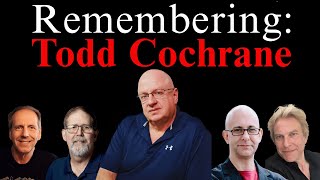
The episode of The New Media Show, hosted by Rob Greenlee, is a heartfelt tribute to the late Todd Cochrane, co‑founder of Blueberry and a foundational figure in podcasting. Greenlee brings together three longtime collaborators—Rob Walsh, Mike Dell, and Adam Curry—to share personal memories, recount Todd’s many firsts (the first Podcast Awards, the first podcasting how‑to book, early live streaming at CES, and the creation of the Raw Voice/Blueberry platform), and discuss his enduring philosophies. The conversation highlights Todd’s technical tinkering, his commitment to an open, non‑commercial medium, the value‑for‑value model, and his role in shaping industry standards (Podcast Index, Podcasting 2.0, PowerPress). Anecdotes about his Navy background, his relationships with Norm Pattiz and even a call from Steve Jobs illustrate his influence. The panel reflects on the evolution of podcasting from a raw, community‑driven art form to a commercialized industry, noting Todd’s ambivalence toward monetization and his desire to keep the medium accessible. They also discuss the future of the New Media Show, potential awards in Todd’s honor, and the ongoing mission of Blueberry to carry forward his legacy. The episode ends with personal prayers, gratitude, and a call for the community to remember Todd’s spirit of openness, humor, and technical curiosity.
Chapters
So with that somber beginning to this episode of The New Media Show, uh, is really a remembrance of our longtime friend Todd Cochran, who has been really the lead of this show, this, this New Media Show, and the lead of his company Blueberry. And in a lot of ways, you know, along with Adam, have been and a significant leader in the podcast medium and the phenomenon that has happened over many, many years. And I've been lucky enough to be a companion of his over that long 20-year-plus journey here. And, um, and it's not a real happy time. Um, I'm— I've been very overwhelmed by the, by the response of the community overall and all of the nice things that people have had to say about Todd. And I've actually, you know, it's been very, very touching to me. You know, I didn't really realize how close I had gotten to Todd, really. And I guess if you, you know, men don't typically do that quite as much, um, I think is the conventional thinking. But, um, But I wanted to pull together this, uh, a remembrance, um, last episode of the, of the New Media Show. I haven't 100% decided if I will keep this show alive or not, but, um, my thinking is at this point at least a break here of sorts to, to remember Todd. And I'm lucky enough to have a couple of great, or 3 great, uh, people that were willing to come on the show and help me do this last show. Because it's not the easiest thing, you know, for me to do. Um, as, uh, Rob Walsh, uh, from Lipson, who I know has been a very long time friend of Todd's, and, and he and I have, um, you know, Rob, I, you know, the two Robs and, and Todd have spent a lot of time together, um, and we've done a lot of events together and we've done a lot of things together. And I know, um, Adam Curry, who's also able to join us here. You know, really, I think the core reason that Todd actually got involved in podcasting was, was because of you, Adam, and your Daily Source Code. That was the thing that, you know, opened his eyes to what was possible with podcasting. And so I thought it was very poignant to have you here on this episode too, because, you know, it's like a full circle moment. And then Mr. Mike Dell, who has been at Todd's side for many, many years, uh, in, in helping him and being a friend of his since the very early days of podcasting, and helped him, uh, helped Todd really build the, the platform that Blueberry is today. And, and I appreciate him being here as well. You know, I've known all three of these guys the whole time that this podcasting medium has existed, and, and we've all been, uh, good friends, and we've talked about, uh, podcasting a lot. Um, so I wanted to start just with Rob here, and, you know, if you could share some thoughts that you have on, on Todd, and, you know, what are the big important takeaways that you have Um, as you look at Todd's life and Todd's overall, you know, significance in the podcasting space?
Um, I'm fortunate enough to have known Todd 20-plus years. Um, excuse me if I lose my voice here a little bit. Um, I interviewed him. It was one of the first 20-plus people I interviewed on Podcast 101 back in March of 2005. I asked him at that time, what was the first podcast he listened to? And Adam, it was the Daily Source Code. And it was the one he was at that time, you know, was listening to still. And then, you know, just take a little history. Went to GNOMEDEX that year. Rob, that's where I met you. John Wall and Todd and me, all four of us went out to dinner. And remember, Todd coined us the FNGs. 'Cause we were there at GnomeDecks in the blog world and we were just podcasters. We weren't bloggers. And Adam, you were there at that event and that was where you gave us a little hint that Apple was about to drop some news. But this was all pre-Apple supporting podcasting. And when I did that interview with Todd, not all of it made it up in the air and I just remastered it, but parts that I cut out were talking about he didn't want to have the stuff about the Navy because he was still full-time in the Navy when he started everything that he did in podcasting, Blueberry and Rob Voice. He was finishing up his Navy career and, you know, I don't know how he had any time to sleep with everything he was doing. And then, you know, he put that energy into podcasting full-time and eventually it led to the Association of Downloadable Media, if anyone remembers that. Um, we tried to get, um, metrics worked out, and, um, and then eventually that led into the IAB, and we were on all those IAB calls, and me and Todd were always backchanneling, um, cracking jokes about something someone said that was off the wall, you know, not quite accurate, or, um, but, you know, he really, really, really cared, um, like no one else about the indie podcasters. And I was lucky enough to, you know, be at the events that you mentioned— Podcast New Media Expo, BlogWorld, the obviously Podcast Movement. We were— both of us were the original funders for that when it was a GoFundMe kind of thing. We did Podfest, we've done NAB, and and many, many other events, some that were not even close to podcast specific, but we went, he would look where I was presenting or exhibiting and I would look where he was exhibiting and we would wind up at the same events. And we got to spend many nights talking about podcasting. As you know, Rob, the three of us, we, till 2, 3 in the morning. Talking about podcasting. And my wife would be, why are you out so late? I'm like, well, Rob and Todd again.
Yeah, that happened quite often. Yeah, yeah.
But, uh, you know, one of the things, you know, he worked hard too was about fraud and keeping fraud out of the space. And, and if he saw a show that was doing that moved over to us, he'd give me a heads up and vice versa. And, you know, he really cared about the integrity of the space. And, um, I can't say how much I'm gonna miss him. Yeah, incredible amount.
Yeah, it's been rough.
Yeah.
So, Mike, uh, why don't you share some thoughts on your experience with Todd?
Oh yeah, uh, you know, I, I tell this joke— oh, it's not really a joke, but it sounds like it should be— but, uh, I was with Father Roderick and Trucker Tom, and we were walking to the Lipson party that happened to get shut down that time, whatever happened there. So we said, oh, let's go check out this Blueberry party. And I walk in there, and here's this skinny at the time, clean-cut Navy guy, and, uh, he hands me a beer and says, welcome to Blueberry. And we hung out, and I've been kind of a hanger-on for the team for a while and then got hired and the rest is history. It's been a wild ride, I'll tell you. And yeah, there's a lot of things that I'm gonna miss. Rob, you were talking about the back channel on meetings. We had that all the time. It was usually full of some colorful language and and whatnot, but, uh, both internal meetings and external meetings and all that. And, you know, just, uh, yeah, it's just not going to be the same. No, for sure.
So, Adam, do you have any thoughts on Todd?
Yeah, um, thanks for putting this together, Rob. Really appreciate that. That's very, very nice. And, and it's good for everyone to heal. I mean, I'm 61 and A lot of people I know have died in the past 10 years, certainly from my, my old career in the music business. Those people never last long. But man, when you sent me the email a couple of days ago, I was really in shock. And because there's people you just— that are just there, always there, always the same, always fun. I mourned. I mourned with Dave Jones, who sends his regards. Of course, Dave and I have been doing the Podcast Index and Podcasting 2.0 for the past 5 years. And Todd has always been a big part of that, pushing every single initiative forward. And this was a weird one. I mean, really, for me, it's like, whoa, this hit me harder than anybody else. And I reflected on it and said, why is it? Because Todd was just always there. Todd was always Todd. You could always count on him. I mean, if I just think all the way back, he was the most unlikely guy to be in podcasting. He had a crazy voice. You know, it's like, that was kind of the beauty of what podcasting, as it started out, it's just raw and said what he wanted to say. To this day, even just a few weeks ago, I'd always smile walking the dog, hearing Todd talk about logarithms. I don't know if that was purposeful, but I was like, I kept shouting into my phone, "It's algorithms, it's algorithms." The— so I saw him just in Dallas at Podcast Movement, and it was so good to just see him because we hadn't seen each other personally in years. And the last time I think we actually saw each other— he's actually— he's witnessed my, you know, two previous marriages and divorces. He's been with me in my life for a long time. And I think the last time we might have seen each other in person was in Austin when I was still living there. And we bumped into each other on the street at night, which is really a kind of an odd occurrence. And, um, and he was a big supporter of Value for Value. He supported the No Agenda Show, just a fantastic guy. And, um, as I reflect on all the things he's done, the voice that he's been for podcasting, it's, it's a loss. It really is a loss because I knew that no matter what crazy ideas were out there, what people came up with, or what maybe the podcast industrial complex was doing, if Todd was against it or for it, he would let you know. And that is really what I will miss most about him. On the other hand, I think that, and I pray he's with our Lord in heaven, that he is just enveloped in his arms. I feel that Todd would really want us to remember him for the funny guy that he was. He was all— he, yeah, he could be, he could be serious, but man, he had a sense of humor about him, you know. We would make so much fun of him all the time, and he always took that in such stride because of course there'd always be, oh no, I'm under DNA, I can't talk about that. You know, I expect him to pop up at any moment and say, just want to let you know, Adam, I can tell you about heaven, but I'm under DNA from God, so I can't say anything. That to me was Todd, just a great guy, and his memory will be with me forever.
Yeah, yeah, that's certainly true.
And you know, matter— no matter when you talk to him and what situation, he was always the same guy. Same guy on the podcast, same guy in person, uh, you know, even, you know, just one-on-one, you know, he was, you know, always, always Todd. I mean, there was no other way to describe it.
Yeah, and I think that the this whole New Media Show was a— is just an extension of Todd's overall approach and philosophy and things like that. And even though there were heated times on the show between he and I about ideas about podcasting, and, and it just really showed every week his passion for the, the overall, overall medium. I mean, we both had the same intent in mind. It just maybe occasionally we had a different pathway of getting there, but it was really kind of remarkable, really. And I think it's a sign of the, of the earlier age of podcasting, just like what Adam was talking about, about how— and, and Mike, you were too— about how Todd would just, you know, speak his mind, show up. I mean, that's what this podcast was, this, this new media show was Both of us, I think I posted it on Facebook too, but it was just an appointment on our calendar, right, for many, many years. And for a few years, we did it twice a week. And really what it was, we just pulled down our microphones and started talking. And I think that's what the difference is between— I think what a lot of people perceive podcasting to be today is that it's this highly produced, highly polished, you know, almost like broadcast production, right? Um, when, when it really, uh, didn't come from that. Um, and I think his, his background of being in the Navy, uh, for many, many years, and, you know, he's just so heavily in— into technology, and, and that was really the driving force about this, you know. You know, and, and Adam, you, you can speak to this too. And I, both Mike and Rob have a background in technology too. So there's a common thread here. You know, Adam has definitely had a more broad background in the, you know, the MTV days and being an entertainer of sorts. And, but most of us came from more of a technical background. I've got a marketing background, but I was very steeped in the technology side, but that was the big thing about tech with Todd that, that really made him stand out and what really made this medium possible. I don't know, Rob or Adam, do you want to talk about that aspect of Todd and why that was so important to him?
Well, I'll say that I'm not— I don't know exactly the extent of Todd's technical background. To me, whenever we talked, he felt like he was a tinkerer like me, and particularly when it came to putting stuff together, you know, it's always like, okay, I'm getting— I'm hearing myself back. Uh, oh, wait a minute, I've got another delay here. Uh, sorry, that camera just went on the fritz. Oh, my drive died. I mean, I identify so much with all of that from Todd, and I'm, I'm just happy that he built up a nice team around him at Blueberry that really supported his ideas, because I can identify with that. And, and from everything I know, everyone at Blueberry really loved him. His board, uh, people who worked with him and worked for him, uh, and it's, uh, it can be challenging with a tinkerer, you know, because I know that he would come up with an idea and I want to implement it and let's get this done and how can we make it happen, uh, so yeah, that, uh, that was definitely one of the special aspects of him.
Yeah, you could see it in the production of the New Media Show. There was a lot of, uh, regular technical issues and that, that was kind of an issue with really doing, doing any kind of live, live production. And he wanted to own that whole process too. I mean, we did a few episodes like this one on a platform like a StreamYard or whatever, but I don't think he ever really liked that.
Uh, oh, oh, but Rob, this is my favorite part of this show. For the past year, it's always been Todd's talking about stuff and you come up with video, and then you get into this huge argument. And again, I was I always listen to the New Media Show when I'm walking the dog, I think like Wednesday nights, and the dog is always looking at me like, why are you laughing? I said, because this is funny, dog. Listen to these two guys. If just the video audio conversation got to a point where it was just like, oh, I need a little bit in my diet right now. Let's tune into the New Media Show. I need to hear this argument. And of course, I was always on Todd's side.
Of course.
Yeah, me too. I have a face for radio, so yeah, that's how that works.
Well, what's your thought too? I know, uh, I mean, you're an engineer, kind of programmer, technical guy too.
I think Todd probably almost probably at his happiest at CES, right? Um, you know, I was lucky enough to go to a couple CESs when he was there and running around as crazy as it was and doing all the recording. But I mean, he definitely really enjoyed those events and setting it up. And obviously he enjoyed the money he made from it, but I think, you know, take the money away, he still was just happy as could be at that.
He's a gearhead like most of us, you know. Yes, you know, wants to tinker with things. And, uh, you know, oh, I got this new microphone, does it make me sound any better? Or new camera, new this, that, the other thing. And, you know, there's always something, you know. I, I've done a show with him as well, you know, the, uh, Podcast Insider for Blueberry. And, uh, yeah, it's, uh, you know, we had the same sort of technical issues except for later on I, I started to be in charge of recording, so that worked.
But yeah, and part of it is that he, he loved to tinker so much that he was always playing with new gear and and new things to, uh, to try and learn about, um, new, new tech, new devices and stuff. And, and companies would like send him stuff, so he would— it was almost like they were force-feeding him into that kind of pattern that he loved to do so much. So, and it really kind of showed in the show. And like Adam just said, I can so much appreciate it because in the early years you kind of had to be a tinkerer to be successful in podcasting. It wasn't an easy thing to do like it is now, or easier, right?
I remember I went to CES a couple times, you know, helping with the live stream and all that. And I mean, there was just always something going on that was messing up, but you know, we all pulled together, got it going. And usually it was Todd right in the middle of running wires and plugging things in and, you know, all that. But yeah, you're right, Rob. He was definitely at his best at CES. He'd come back to where we were live streaming, so I just did this great interview with this outfit that does whatever, and, you know, and he was just so excited about, you know, all the stuff there, you know, even all the iPhone and iPad cases back in the day.
Yeah, I mean, he set up— I mean, a lot of people don't know this about Todd, but he would set up a whole video production live video streaming production from CES.
And we had to rent a full-size van to haul all the stuff in there every year, right?
I mean, it was a big, big production. I mean, I went down there a couple times and, and helped, helped him carry around cameras and stuff like that to go around and record conversations at the CES booths and stuff like that. And yeah, so we had a fun time down there. I know, Mike, you were down there a fair amount of time too, but he had a whole crew because he started a podcast network. It's called the Tech Podcast Network, and I was an early member of that with the radio show that I did. Um, and, and so I got involved and, and helped him stream, uh, some of the audio content, um, over a streaming server that I had.
We had a 4-camera, you know, switchboard, the whole thing, and, you know, lighting, and, you know, had an overhead shot camera so they could show the I mean, we had it dialed in. About every 10 minutes we were interviewing somebody.
Yeah, yeah.
Todd had a lot of firsts in this space, right? The first Podcast Awards.
Yeah.
Which I, I, you know, we would say, uh, when I talk about it, I'd be like, Todd, why are you doing this to yourself? This is right. I mean, you get—
I was wondering about that.
You get only grief. You get grief from this. You know, it was, it was He was glutton for that, but he really wanted to help, you know, acknowledge, have people acknowledge in those awards. And I think more than anything else, he tried to do whatever he could to get the word out about podcasting.
Yeah.
Mainstream media.
And he wrote the first book on podcasting, the Do-It-Yourself Guide, back in 2005, which was a copy of it back here. So yeah, I've got one behind me too on the shelf.
Everybody has a copy. It better be signed.
That's right. So I mean, it's, it's really a record. I mean, I think that that book now is really a record of what podcasting was like in the early years. Um, and it's, it's, you know, I kind of want to get your guys' thoughts on this. I mean, um, podcasting has changed a lot in, in ways that are maybe not as significant as we all kind of like to think, but the core of it really isn't, hasn't really changed, right? Adam, do you wanna talk about that?
About the core?
Yeah, about what podcasting is really all about and what it's been about and that even today, the foundation of podcasting is still core in that.
Well, yes, and I think Todd was a big proponent of this. Although we argued often about the concept of grow your show, right? Or how to grow your show, right? Look, what was great about podcasting, that's exactly, as I said earlier, that's exactly what Todd was, is like the beauty of it was not slick produced, you know, removing all the ums and the ahs, you know, being like, you know, creating a wall of sound of editing that everything was perfect. The beauty for me in the early days was listening to Michael Butler, The Rock and Roll Geek Show, drinking a six-pack, talking about a crappy gig he had, to listen to Don and Drew in their farmhouse, you know, listen to Todd fumble and bumble and, uh, and stick things together and talk about early, uh, early hosting. That's really what it's always been about. We—
the—
what I call the podcast industrial complex has definitely, um, had a mind shift. And, you know, that's because of, you know, it's understandable money, big names. There's so many huge success stories. But ultimately, I prefer— listen, I still listen to Dave Weiner's Scripting News podcast. He doesn't even call it a podcast. He just records something on his iPhone and uploads it. That to me, the voices who just have something to say for anyone who wants to listen, that to me is what podcasting has always been about. And the more I talk about it, the more I see people understanding that they can just do whatever they want to do and do it for a very small or local community. Hyperlocal podcasting, which I think Todd also kind of glommed onto, and I hope a lot of the hosting companies see that as really the next phase of where we can go. Because people are even somewhat intimidated from, well, I mean, how can I be a Joe Rogan? Well, you don't have to be Joe Rogan. You can do something for your town, you can do something for your school, something for your club, something for your church. Todd got that, he really did. And if anything, he, you know, the New Media Show proved it. You know, that, that's a show for people like us, not a huge audience really, I mean, relatively speaking, and but is where he could express his views, argue with you, you express your views. That is what podcasting has always been about to me. I, and I think it's still alive and well. And you know this, I'm just looking at the comments, a lot of people are saying we should have an award for Todd. I'm all in on that. I think it's a great idea. I'm not quite sure what we should call it, and I don't think he would want it to be the Indie Podcaster, um, but, uh, we should come up with something for that, you know, because he deserves that. And there's definitely a place that can be memorialized with something like that.
Yeah, I was planning on adding him, uh, to the roster of the Podcast Hall of Fame that's coming up., you know, a special award. Oh, good, good. So we can, you know, maybe there's something else that we can do too, but the best podcast not from LA, Chicago, or New York. Yeah, right.
The best podcast from Michigan. That's, that's right there, right?
Yeah. And I want to say I appreciate everybody who's watching this. You know, we've got a a large group of people that have tuned in to watch this, this live show, and there's just a fantastic flow of people giving us heartfelt comments and, and things in here. And I just want to say and acknowledge that and say I would love to go through and talk about each one of these comments, but that would, that would turn this into a 3-hour episode. So But yeah, it's, it's really an honor for me, um, to have spent so many years with Todd doing that show, Adam. And, and it was really, you know, he was just such a strong believer in this non-editing thing like you were talking about. I mean, I think I got pulled into, you know, in editing, and I think there's nothing wrong with it. I— but I do think that there's something wrong with it if it goes too far. And that's oftentimes what people were tempted to do. And but Todd was really looking for actually at the end of the day, because he told me this over and over again, he was looking for efficiency. He was looking for trying to get, you know, come in, get the content done, get out, and so we can move on to something else.
Yeah, that was, you know, when we're, you know, planning products or improvements and stuff at Blueberry, he was always in there. Let's make it quicker, make it easier, make it quicker. You know, that was, you know, his, his call every time, you know, was like, you know, well, is this going to slow people down? You know, there's, you know, people got things to do, you know.
Yeah. Daniel J. Lewis, uh, has a comment in here and says the, the, the Todd Cochran Award needs to be part of the Podcast Awards. Well, I think it's a big question what's going to happen to the Podcast Awards too.
Wasn't that single-handedly Todd?
Yeah, pretty much. He had some sort of team behind it, but, uh, you know, I said Blueberry weren't really privy to all that.
Yeah, yeah, I wasn't either. I mean, a lot of the access to even, even the new media show, you know, that's why I say Todd was very much wanted to have it done the way he wanted to have it done, and so I didn't really have deep access into the back end of this show, to be quite frank about it. And it could be one of the reasons why we're not going out on all of his channels is because, you know, the setup that I have here was done when he was set up on a different platform. And so, so I think he shifted to it, to a new platform, because he wasn't happy with the using StreamYard or using, you know, like a Restream or something like that. Not to denigrate any of those platforms, it's just He just had his own personal opinion about the quality and how it was done. So, so don't be surprised if you don't find this episode on any of Todd's channels. Hopefully it'll show up over there, but I'm not, I'm not all that hopeful that it did.
It will go out in the RSS feed. Okay. So that I do have access to that. So I'll be able to post both video and audio on the RSS.
Yeah. I mean, is there anything else that you guys want to share about your memories of Todd and, and his, his kind of lasting, um, kind of legacy? I, I guess, what does Todd mean to this podcast base? I mean, the outpouring that I've seen, what far surpassed what I expected, um, and I think the, the impact that he has had just It just hits a nerve with people, and I think it's very, very significant. So I don't know who wants to go first on that.
I always remember all the conferences and stuff, you know, the booth, that was one thing, but it was all the after-hours stuff, you know, we'd be holding court in the bar and, you know, there would be people coming in, leaving, and, you know, and just all the best conversations were that, and You know, that, that's the thing I'm going to miss the most is, you know, not that I, you know, want to get too drunked up or anything at a conference, but, you know, it was, yeah, it was just all those conversations. And, you know, you walk through the, you know, walk through just about anywhere around a conference and people were stopping Todd all the time, you know, and, you know, took you a half hour to get across the conference if you're trying to get somewhere.
Lots of people knew him.
Oh yeah.
So Typical Todd was this most recent podcast, uh, Podcast Movement conference, and there was a room for the Podcast Standards Project, uh, and if you know how these conference things goes, everything costs something, and there was coffee and water and I think some, um some sodas in the corner, which cost $400, 'cause that's what you have to do at a conference. You gotta pay out the nose for all kinds of stuff. But that's Todd. Todd had arranged that. He said, "We gotta have coffee and sodas and water." And he would do that kind of stuff 'cause he knew how it was supposed to be. He did a really, he didn't always succeed with how it was supposed to be according to him, but he always knew what he wanted and always stood for it. And I think you're right, Rob, just the outpouring from, from everybody shows what an impact he had on the industry. And his legacy will be in Blueberry, which I'm presuming can just continue the way it has. It's interesting that he was the first— just a week ago, I think he was the first in 20 years in the industry to say, you know what, we're going to raise our prices. And I'm, I'm actually very sad I didn't get to have him on, on the Podcasting 2.0 podcast to hear him defend that and talk about his insights into it. But so in that regard, he was a leader of so many different things, a lover of all things podcasting, and he'll be forever in my heart. I'll keep him there and we'll miss him. As somebody who you could always count on to defend what was right, um, and to promote what he really felt was the correct way to move forward with podcasting, um, and not necessarily podcasting for profit, uh, but podcasting for podcasting's sake.
Yeah, I think that's, uh, that's the biggest legacy I think that I take away from it is You know, what inspired him to get started in this medium was the non-commercialism, um, and that was a big theme. And Adam, you remember those days too. I mean, all, all of you guys remember when this medium started. It certainly wasn't pro-commercialism. It was, you know, you got— I had a commercial radio show when I started podcasting, you know, to be fully transparent about it. I I had ads in my podcast and when I started in 2004, and very few people did back then. So ones that did kind of faced a little bit of blowback, right, from, from their audience because of the expectations that had been set for that. Adam, do you want to talk about that part of it at all?
Well, I mean, about the expectations?
Of it not being commercialized.
Yeah. Well, I, you know, that, that's a, that's an interesting point because Todd always walked a line there. Yeah. But he also made sure that whatever people wanted, he wanted to get them at the right price, the most efficient way, and the way that made most sense. You know, just, uh, in the past, you know, week or so, he'd been working on chapter images and how that could possibly use, uh, to track actual plays. You know, as he's, as you, as I think Rob mentioned earlier, a big part of the early measurement and getting some standards together. But I, I just always remember Todd saying it's not always about making money. And he would always give these statistics that such a large portion of the Blueberry customer base was not there to make money. They were there to podcast for multiple reasons. Now, I When we started out with podcasting, it was— we never even thought about, uh, money, honestly. It was just, you know, just how can we get better gear, how can we get bandwidth. Rob, you guys were the first, you know, and I always said, how do those lip-sync guys do it? I mean, I don't understand how they're making it so cheap. There's something's up with this. What are these? They have a sugar daddy somewhere?
Um, and most podcasts don't download a whole lot, so, well, this is our advantage.
It's true. Um, so it really wasn't about that, uh, in the beginning. And, you know, um, I'm, I'm still, you know, I've never run an ad on a podcast in my life. I love value for value. I love people supporting, uh, the show or any show because they get value out of it. Been pushing that. When we went to streaming value for value, Todd was right there, first one. You know, Blueberry supported it. Um, he believed in, in many different ways, but also, you know, you know, if, if, if people want dynamic ads, he'll help you insert them.
That was Todd. Well, you know, Raw Voice started as an ad agency. That was, that was, uh, the core business, and it morphed into podcast services and hosting and all that stuff. But, you know, Todd was very generous with his time with just about everybody. I mean, he didn't care if you had 20 listeners or 20,000 listeners, you know, he would give you the time you needed to understand what was going on, how he thought it worked. And, uh, if it was technical, he'd send it to me. But, uh, anyway, yeah.
And I think to kind of dovetail off all that, Adam, you're exactly correct. He also had a common saying that he said all the time, was that podcasters need to get paid. So he didn't say how they were going to get paid. Correct. Podcasters needed to get paid for their time, um, because he was held accountable with his own wife, uh, back, back when he started podcasting, that he had 2 years. It was like a countdown that they had to make it financially support him and them for him to pursue it. And I think that is also part of podcasting too.
Yeah, Rocky has a good comment, um, there. Todd was the essence of radical candor. One of my favorite stories was when he got an offer to have Blueberry acquired, bought by another company. And so a certain person we all know, remember Norm, and, and, and the offer that was sent over was a little less than what Todd would have liked. So he got on the phone with But Norm said, I got your offer here, hold on a second. And he put his phone right next to the shredder and put the offer through the shredder.
There's even more stories to that, uh, Rob, because I was there when that whole thing went down. But, but yeah, he's, um, I don't think Todd ever wanted to be acquired by, by PodcastOne, for one thing. So, so it was one of those things. And I do have a clip, um, that I was wanting to play of a dialogue that happened with Norm Pattis, who's also passed away now, and he's the founder of Westwood One. Rob, you know him well from the past. Yeah, and so I wanted to play it because what it does is it paints a picture of the entrance of commercial radio and what the commercial radio side thought of podcasting and kind of how it's morphed. So let me go ahead and play that now.
Really excited to talk with you, Norm, about what you guys got going on, you know, over at PodcastOne, what you guys are doing. You guys are tearing things up and moving fast. I love that to see I see a player in a space that is motivated and, you know, I guess I hate to say it this way, but, you know, breathing new fire into the space. So, you know, what are you guys— I guess first off, why don't you just go ahead and give everyone a little background, you know, Norm, about, you know, what you've done in the past. And I think that will kind of set the tenor here this morning.
Well, thanks. First of all, it's great to be with with both of you. You know, I know you both. You know, Rob, you and I have chatted a few times. And Todd, I certainly know you by reputation. So it's a real pleasure to be able to sit down with you and chat. I started out in this business about 35 years ago and founded a— I had done some things before that, but I— probably my biggest claim to fame is that I founded a company called Westwood One. Westwood One, which I was the chairman of until a couple of years ago, and Westwood One was the largest producer and distributor of nationally sponsored radio programming, certainly in the nation, probably in the world. We owned, managed, or distributed NBC Radio, CBS News, CNN, Plus, we provided lots and lots and lots of entertainment programming in the talk genre and the music genre, you know, countdown shows, live concerts, you know, whatever you can imagine. And, you know, we dealt with probably 50% of the licensed radio stations in America. It's no coincidence that our move into on-demand audio, or as we call it, podcasting, that we created a destination and a site that's called PodcastOne, because the story of WestwoodOne to PodcastOne is an interesting story to tell, and the reason we moved in this direction was because of all of the similarities that I saw between forming WestwoodOne at a time when syndicated radio shows and network radio shows were not really very, very well thought of, or even, you know, part of the overall media mix of national advertisers. It seemed to me that podcasting today, you know, is pretty much in the place where syndicated radio was when I started Westwood One, which was the original reason why it why it caught my interest.
We're— yeah, so I think what's happening in the medium right now is we're in this transition phase in what's happening in industry that kind of has its roots in the past. Back when podcasting started, it was a revolution really against the commercialization of broadcast and. And for a few years, it was an anti-commercial medium. I'm talking about podcasting. And so now we've kind of moved into a new phase where we've added more commercial elements. You know, there's a lot more focus on monetization and people making money with their podcasts and programmatic advertising, which mirrors exactly what broadcast radio has been done on the air for years. And ad loads are going up. So you can see a direct correlation. In the early years, podcasting was a lot about video too.
So we become what we were trying to avoid.
Exactly. And things go in full cycle. And I think Rocky Thomas made a comment in this thread as well that kind of put a little ribbon and bow on this, that she's been through— she's seen this cycle happen before with streaming radio and and other types of media that has tried to transition audiences into a new delivery method. And so that's kind of what's happened here. We've transitioned our audience into a new delivery method for content. And that's why, that's why we've seen a lot of the big studios and commercial radio companies transition into doing more podcasting is because they saw it as the future. Of their distribution. And that's really what we're talking about here. So if, if that's, you know, if we're okay with that, my question is, well, what's the next revolution that we're going to create as a blowback to over-commercialization?
Again, what's next?
Hmm, that's a good question.
I don't know. Yeah.
All right, everyone, thank you for being here. We'll see you next week. Uh, thanks, Rob, and, uh, we'll see everyone here on the New Media Show. Everyone take care. We'll see you next time.
Okay, bye-bye.
All right, so you know Todd's up there right now with Norm Pattis in heaven going, I told you so, I told you so. We lost Norm a couple years ago as well.
Yeah, yeah, yeah. And I worked with Norm for a year down in Los Angeles, so you know that that, you know, Todd would come down and, and come into Norm's office, and he and I and Norm would, would talk about the industry and where it was going. And, and what was really interesting about Norm's perspective is that, you know, he was the guy that built, uh, you know, nationally syndicated, uh, talk shows on, on the radio side, and he could see that crossover, uh, with with podcasting and wanted to do the same thing he did 30 years ago, uh, with podcasting, uh, with what he did with radio. And so he could see that crossover, and that's kind of what we're— we've seen happen over the years. And I don't know if, Rob, if you want to talk about that and, and, you know, Todd's feeling, and also about the, the entrance of, of radio, um, into the podcasting space and how they've done it and and what the implications of that are. I don't know if, you know, it's open to all three of you guys.
Yeah, my conversations with Dada, that, you know, we were always like, you know, just repurpose content. We were like, but it is what it is, you know. We were— he was always open to anyone come in. Didn't mean he had to like it, um, the content, but he felt, you know, um, strongly that anyone should have a voice. And I remember a quote I heard from someone at NPR once was, NPR was created so that anyone could have a voice. And then podcasting came along and they said, well, we didn't mean everyone. So, you know, and, but I think podcasting has always been welcoming and Todd has been a big part of that. Welcoming anyone in. He was going out finding businesses, going to different conferences. What, ADM is the one conference you go to? It's just— and just for people to do internal podcasts for training their marketing team. You know, it is— the RSS has so many powerful uses, and Todd understood that, and that RSS was at the heart and the heart of all of what we do. And to stay— and, and he had the fear, like I have the fear, you don't want to have too many closed walled gardens, right? As we have out there more and more of these walled gardens popping up. I think you talked about it, it was— and I, I think it was maybe on the last show you guys talked a little bit about, um, the walled garden issue. Oh yeah, Spotify and that. So, um, making it open and for everyone, um, and legitimately meaning it. Not like NPR where it's like, oh no, not everyone, everyone's we want.
Any other comments on that clip?
Well, that just shows, uh, you know, that even when he had a high-profile guest on, there was always technical things that he was Mac want to update during that?
Yeah, that's why I like that clip so much, because it really showed the, the desire on our part, uh, with this show to kind of push the envelope and kind of go into areas that maybe, um, were pushing the envelope. Because that clip that I played for you was an episode that we did back in 2013. Um, so, you know, this, this show started as the Saturday Morning Tech Show, uh, and we did that for a couple years. I was just an occasional guest on the Saturday Morning Tech Show, and then I made a suggestion at some point, probably a year into it, that we changed the name to the New Media Show because that's all we were on the fly.
What's that? You did it mid-episode.
Yeah. Right. And, and Todd actually registered the domain name and got it set up probably before the episode was over.
I would say, I don't know exactly the history of it, but I always admired, uh, Blueberry and subsequently Todd for PowerPress for the WordPress plugin. Because what's so cool about that is like, hey, here's how you can create an RSS feed. You can create a podcast feed if you want to. You can connect it to Blueberry, but you don't have to. I always thought that was one of the most beautiful gifts of podcasting.
Yeah, we always wanted it to be hosting agnostic, you know. Yes. Wherever, wherever you can find a spot for your file, it'll work.
I always love that. Well, that's an unusual approach.
It's a great approach. I think it worked. I think it worked well for Blueberry and I, and it, it, uh, To this day, I mean, I have friends who still use PowerPress.
Yeah.
Yeah.
And, uh, we're not planning on slowing down. We'll, uh, we'll keep it alive here.
Good.
Very good. Well, and a lot of the, I mean, I don't know that a lot of people realize this, but I, I think it was a, like a quarter. I don't know if, uh, Rob or, or Mike, if you can jump in on this, a quarter or a, a third of all of the RSS feeds out there are actually self-hosted. They're not, uh, I don't know if that number's dropped or not.
Yeah, I'm not sure either, but, uh, I know a good portion of the web is, uh, is WordPress-based. So, right, you know, that I talked to, you know, new, new people into podcasting and I said, well, do you have a WordPress site? Well, here you go. And, and, uh, that's always been a, you know, a great thing whether they hosted with us or not. It was just something we wanted to give back to the community, and we were all behind it at the time. Angelo came up with PowerPress, and since the other plugin for WordPress got abandoned, that was the genesis story of that.
Yeah, yeah, yeah. And I know, Adam, in the early years you created software to enable podcasting to happen, and And I don't know if you want to share a little bit about that, that path and your work with software and kind of getting this medium started.
Well, creating software is a big statement. Stringing AppleScript together with help from, with help from other people is more like it. That's why I started the Daily Source Code is because there was a concept. I had it working. It worked at my house. You know, this little, I think I called it iPodder script, would look for a new episode in a feed. I think it was just one at the time. And I think I was able to expand it to more than one later, but it would detect a new episode, download it to my computer, sync the iPod. We still had to have our iPod synced to iTunes at the time. And success, there it was, you know. So I just always saw the iPod as a, transistor radio. It had kind of the same format and dimensions. And so the Daily Source Code was literally to attract software developers, thinking, you know, you work in source code, we need source code, I'm gonna do this daily. The only reason I did that is so that the software developers would have something to develop against. Um, and you know, we, we learned some of the early things. Crazy enough, not a good idea when you first subscribe to a show when half the world or more than half the world was on dial-up, not a good idea to immediately download all the episodes in the feed. I mean, that's literally the— literally the kind of things we, we discovered in those early days. So, you know, tinkering around is more like it.
Daily source code was my source code. I would, I would get a copy of your feed and then fix, you know, change it to all my stuff.
Oh boy, how did you do this? Fix this bit. Fix.
Yes, indeed. Yeah. Yeah. And back in those days, you couldn't really— for the same reasons that you really couldn't make your media file too, too heavy. As far as its bitrate. I know I put out a lot of my episodes back in those days at like 20K or something like that.
[Speaker:BRUCE_NORRIS] Yeah. Back in the day, when we were doing this, I literally had a Mac and I was using, I think it was called MacDrive, and it kind of mounted on your desktop. It just looked like a drive and you could store stuff in there. I was just putting my files in there and pointing to that. I heard later from Steve Jobs, that they noticed all this bandwidth going out and they were trying to figure it out. This is what he told me, so I'm going to believe it. And he said, "Well, what—" It got to him somehow and it's like, "Well, what are they doing with all this bandwidth?" And he said, "Well, they're working on this podcasting thing." I don't know if it had the name then. And they were thinking about maybe shutting that down. And according to Steve Jobs, he said, No, no, let's just give him what he needs. Let's see what happens. And so I think that's what later led to a call to come and talk about putting podcasting into iTunes. Yeah.
And also another story that involves Steve Jobs in a connection with Todd is that, you know, Todd's Geek News Central podcast would occasionally give, you know, his opinion on hardware and devices and in tech and things like that.
On occasion.
How about on occasion, right? Yeah. And he gave some feedback on a, on a new Mac that he bought, um, on his podcast. And somehow Steve Jobs heard about it and had his assistant, uh, Steve Jobs' actual assistant, call Todd and tell Todd that, uh, Steve Jobs is on the line, would you like to talk to him? And so Todd got on the phone with Steve Jobs. They called him because of the, the reach and the impact of his Geek News Central podcast. Yeah, that's awesome. Yeah, and, and Steve wound up sending him a new Mac because of that conversation.
Oh, I never got that out of Steve Jobs, man.
I got screwed. I, I guess they delivered it to the Apple Store or whatever in Honolulu and Todd went in there and it was like the seas parted and all the employees were staring. Who's this guy? He got a computer from Steve.
So, uh, yeah, I mean, it's an impressive story, but it's, it's very, um, it's very much a part of that, that lore that, that is now Todd Cochran. You know, he's, he had that kind of impact with his podcast, and, and he was the only one that I've ever heard of that had a 20-year advertiser, that stayed with him from 2005 to, you know, just this last week, um, as a sponsor of a show, and that was GoDaddy.
The king of GoDaddy. Todd Cochran was definitely the king of the codes. King of the codes.
There you go. Right. Yeah. And, and that is so unusual. It's just, it's also because he was able to build this ecosystem around his discount codes. Yeah.
You know, the whole GoDaddy thing was, it was the reason Rob Greenlee started GoDaddy calling us. So do you know any other podcasters that might want to advertise? This is working so good. And so he got on his show and said, you know, I need a lawyer, I need a biz dev guy, marketer, whatever. And that's how that company formed. And, you know, they didn't even meet each other until that first Portable Media Expo in Ontario. You know, but the company had been going for 6 months or whatever. We're coming up on 20 years, by the way, at Blueberry, the 27th of September.
Yeah, Mike, why don't you share a little bit? I don't know if, Rob, if you know, know the story a little bit about the, the beginnings of, uh, Rob Voice and Blueberry. I know it was very much a grassroots-funded startup that he created and, and was really the heart and soul of this, but I know he also had a lot of loyal friends that he had created around creating that company.
Yeah. Well, initially we were going to have multiple verticals, you know, Blueberry being a community and Tech Podcast was part of that. And we, we had, we still have the domain, but we had Raspberry with no, no ease. I don't know what that was going to ever be used for.
That's a completely different tech device, right?
In fact, I was just going through all the domain names on the list and there's some fun ones in there. But, but yeah, that's, that's how it started. And then, you know, at some point along the way, we decided we wanted to get into hosting and that's where we decided, well, Blueberry would be good. You know, the parent company name would have probably been better for a hosting company, Raw Voice.
But, uh, I always thought that that was a terrific name. Um, so I was surprised when, when he chose the name Blueberry, actually.
And that stemmed from his parents were in the fruit distribution business, you know, blueberries, raspberries, all the stuff that's grown in southern Michigan. And so, and then of course, Raw Voice, if you look at the logo for that, it's a carrot. Fresh organic media was the tagline.
Yeah, I mean, it's a very interesting time for the company. I know a lot of the board and a lot of the people that joined him in building that platform, he built around building friendships with people that were, you know, connected to his network and just were attracted to him in a significant way to want to contribute. And And a lot of the founding people of that company contributed a small amount of money themselves to help. Oh yeah.
It was a bootstrap thing, you know, invested a little and yeah, it's been working out. You know, we've had team members come and go and all that, but you know, the core group is still there mostly. It was just, uh, you know, one of those things that grew out of nothing. I mean, everybody was part-time for a long time. I mean, Todd never came on full-time until 2015 or 2016, something like that. Uh, might even been later than that. Uh, you know, I've been on full-time since 2015, part-time before that.
And, you know, we all had jobs and, uh, you know, we do this on the side. Yeah, well, Todd, Todd was like that for many years in the early years where he, he was still employed by the Navy, um, as a, as a serviceman or as a contractor, as a civilian there for a while.
Yeah, USA or whatever. But, uh, yeah, so when he moved to Michigan is when he went full-time. I, I'm not sure what year that was, but Yeah, uh, it wasn't that long ago.
No. So was it like maybe 3 or 3 or 4? Yeah, maybe about 4 years ago he moved from Hawaii because that's where he was, um, where he raised his family and, and had, um, had a connection to the naval base there. So, um, that's kind of back in the time frame when I got to know Todd, is that, you know, I was living on the West Coast and up in Seattle and he was in Hawaii. So it was always, you know, doing these shows at 11 o'clock in the morning was like Todd had to get up at like, you know, uh, 8 in the morning or something like that to be able to do the show.
Well, that Saturday morning show, I think he was up at 6.
Oh, I know. Well, he was an early riser, uh, mostly anyway. So, but yeah, I mean, and then during COVID we did this show twice a week. So, and then, then we kind of got burned out of doing that twice a week and scaled it back again to, to once a week. And that seemed to work better with Todd's increasingly busy schedule.
Well, he was recording at one time when you guys were doing two a week and we were doing two a week of Podcast Insider. Plus he had some other show he was doing at the time. I forget, but he was like recording every day, sometimes twice a day.
Yeah, yeah. So he never really gave up, uh, at all to any degree his podcaster, um, kind of hat of sorts, where a lot of people in the industry over the last few years have. I mean, a lot of the people that lead companies and, and do things in the medium are not podcasters themselves.
Yeah, we still have, I want to say, 5 podcasters on the team that have all been podcasting over 20 years, so that are still at it.
So before we kind of wrap this up, I was hoping not to go too much beyond an hour, but, uh, I don't know, Adam, if you want to give any final thoughts, uh, on, um, on anything.
My final thoughts are I just pray for his family, for all of his friends. I mourn with them. Um, I pray for Todd every single day., and thank him, uh, for what he was able to do while he was here with us. And the same goes, of course, for Blueberry and all the people who were affected by him, who were motivated by him. And, uh, may he long live in our memories.
Yeah, I think he will definitely live in mine.
Rob, do you have any final thoughts? Yeah, um, you know, Some knew Todd and I only as competitors, but I knew Todd pretty much as a friend. Yeah. Um, you know, and he, he was always willing to talk, um, and we always talked at every show. Um, and going to a show where Blueberry's at and Todd not being there the next time is really going to hit home. Um, you know, it I used to see Todd a lot more than I'd see my own boss. I'd see Todd 5 to 10 times a year. I used to see Laurie once every 2 to 3 years. You know, so he was just a great guy. And, and I could not have made it through those IAB calls every week if it wasn't for the backchannel joke. He really, really helped me get through that..
And, um, and it was a lot of, a lot of frustration on those calls. I was on a few of them too. Yeah.
Mike, is there any other thoughts that you have? Oh, just, uh, yeah, it's, it really sucks around here lately, uh, obviously. And like I said, we're definitely, uh, praying with the family and everybody, uh, and we'll get through it. Uh, Blueberry's gonna soldier on in his memory and And we're not planning on slowing down. And I don't know who gets to go to those IAB meetings now, so I guess we'll figure that out.
Yeah, yeah, that's a small part of the, of the challenge, you know, trying to replace his, his heart in that company is not going to be easy to do either.
And, you know, he always hated me calling him my boss, but I did it anyway.
Yeah. Yeah, he just wanted to be one of the guys. Yeah, there's no question about that. And, you know, my, my final thoughts on this is that I just really appreciate the podcasting community, um, who has really stepped forward and put forth a lot of heart and a lot of, um, thought to the legacy that Todd is leaving and expressing their condolences. I've been overwhelmed by people expressing that to me, um, and, and including Todd in that, but primarily Todd. And just the, the recognition of the significance that he had, um, sometimes doesn't surface itself until we lose somebody as much. And I know I've heard some people say that— I think James Cridland said this in a group Um, if only people appreciated and were nice to each other when they were alive as much as they did when they were, they were gone.
So, so thank you guys for being here. Thank you, Rob. Appreciate it for hosting this. What's that?
I said thanks for hosting this. Yeah, thanks. All right, well, thank you everybody for being here. I appreciate it.
Okay, have a great day. Bye.
More from Rob

Future-proofing with Delphi AI/Human clones: your podcast as a personal LLM | New Media Show






How sports reveal what AI spectacle gets wrong #Technology #Sports #Commentary



