TWIT.tv CEO - Video and Audio Podcasting Convergence - New Media Show Live - 7-19-2023
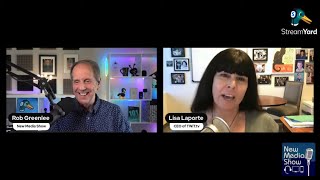
Lisa Laporte, CEO of TWIT.tv, discusses how podcasting is shifting toward mobile and video. TWIT's survey of 10,000 listeners shows 85% purchase conversion from host-read ads. AI tools now save the company $5-10K monthly on editing and transcription, while video content has grown from 10% to 20% of their output.
Chapters
Welcome to the New Media Show.
We're back doing the New Media Show again.
People are actually going to listen to this junk.
We do it live.
We're live right now. We're just doing live. We're going live.
We're going live. We just can't get enough. The New Media Show, let's go.
Just do it live.
We're doing live.
We're doing live.
The New Media Show, if we do it live The New Media Show. I'm like Adam Curry and you're more like John C. De Vorak.
I think I am Adam Curry and you're the old curmudgeon.
We do it live on The New Media Show again.
The New Media Show.
Technology, we make it sound so special. Yes, we do, and we try and do that every week here on The New Media Show. And this is a little bit of a unique episode because I am here solo without my partner in crime, Todd Cochran, who is dismantling his studio in Columbus, Ohio, or his office might be a better way of saying it, but I think he also had a studio down there too. But he's a little occupied today, so I'm doing the show live, doing it on my own, and, uh, been wanting to do that for a while. I think I've done it maybe once, like maybe 5 or 6 years ago I did it once, but, uh, who knows, we'll do it more now because I'm working with StreamYard now and I can actually do this on the StreamYard platform. So, uh, and get it out to all my channels, my personal channels, and then out to all of Todd's too. So we're tapping into, I don't know, I think there's probably at least 8 or 10 different, uh, platforms that we're streaming live to and different, uh, YouTube channels and things like that. So this is kind of an interesting kind of way of doing this, and it's really a sign of the times. So thank you for joining me on The New Media Show, and I've got a fantastic guest here that I don't believe she's ever been on the show before, but she certainly should have been a long time ago. So I've got Lisa Laporte here with me, and she's been around this medium, you know, probably as long as I have, I would imagine. I'm not sure when you got into, into podcasting and live and on-demand video, Lisa, but welcome to the show.
Thank you, Rob. And I was thinking, wait, you're not doing this alone. I'm here. Well, thank you for having me on. I mean, you're flying solo as a host. I love it. So thank you for having me on. And you're right, I've known you for 15 years, I believe, is when we first met. And I've been in the podcasting business now for 18 of the 20 years that it's been around. Or I should say, TWID has been in the business for 18 of the 20 years it's been around. I've been here for 15, 16 years. So close enough. Yep. Yeah, and it has really changed from— I remember when we were audio only, and then we were starting to add video, and nobody knew what a podcast was until I think Serial came out. So now everybody knows what a podcast is. And people tend to call them pods once in a while, which I am OK with. And it's totally grown over the 20 years. And I believe it's going to continue to grow. So it'll be fun.
Yeah, I believe so too. And, you know, we've certainly seen a lot of fluctuations over the years in this medium. You know, in the early days of this medium, back when you guys were getting started, video was a huge part back then too. So I think a lot of people have this perspective that, you know, kind of YouTube and the phenomenon of YouTube now is kind of a, you know, a recent hot thing. But actually, in some ways, it's kind of, as far as I'm concerned, it's a return to kind of the earlier heydays of podcasting, which was a lot of video.
So yeah, yeah, I believe so. But you know, we were doing video, I believe, before YouTube even started. Like, yeah, it was a YouTube. So it's interesting now when I talk to people and they're like, do you simulcast? And I'm like, well, like, that's a new term. Yeah, we've been simulcasting for years. So I'm a little like you, being in this industry for so long, that that's not new to us. And when people go, oh, so you're on YouTube, when I say we have video, no, YouTube's like 2% of what we do. We have a show that has a 50% video download, and, and 2% of it's on YouTube, you know. So we've been anywhere and everywhere you could consume podcasts for 18 years. So our videos are everywhere as well. And I just, I do love the fact— you're right, I believe people are revisiting it. It's like YouTube is now exploding in a different way. But, you know, we have TikTok now. There's so many ways to reach people that's beyond podcasting. I just think it's going to continue to grow and be magic for different people. I mean, I was just at VidCon and I was on a panel because they've added an industry track to VidCon. And we were talking about the rise of the B2B creator. I mean, if you take a look at what's going on right now, I think in the next 4 to 5 years, and people are proving this, that you're going to have more and more and more creators that are independent contractors that don't want to be hired by our company, that are going to be entering into this new media space, whether it all be podcasting, I don't know. I mean, you're going to see more TikToks, more short format shows. I mean, look at, you know, you got every platform is adding short content and different things. So I think, um, with the birth of AI too, I think this is going to just continue to explode, and I think it's going to fragment even more. I feel like— I don't, I don't think we're over and seeing change, and I feel like the change is accelerating. I don't know if you feel that way, but I feel like it's really accelerating, especially after COVID.
Yeah, and I think this whole convergence of what's happening, and it's really putting a lot of pressure on content creators to like be all things everywhere. You know, you got the short content, you got the vertical videos, and you've got the live, and you've got the on-demand, and you got the video podcasting and YouTube and, and, and what's going on with Spotify and things like that. And it's really creating a complicated kind of distribution market for podcasting too. And I wanted to be— before we jump too far into this, I wanted to make sure that everybody understood, um, you know, what's going on with, with TWiT and what you guys have been doing there. If, if some of the audience that's listening to this isn't familiar with TWiT, I wanted to basically share, um, that. And, uh, let me, uh, yeah, okay, I pulled it up on the screen so, so you can actually see this. But, uh, this is This is a network that, uh, uh, Alisa and Leo Laporte have built over, over many years and has a whole video production studio and, and have been doing this converged strategy for many, many years. And I thought it would be just a terrific example of how this is, this is converging. And for many years, Leo, who was doing, uh, a nationally syndicated radio show too, so it was really kind of a blended thing, you know, and a lot like what I did in the early days of the medium too. I had a radio show too. But this whole thought that Leo had, and once you talk about this a little bit, about he didn't necessarily like the word podcast, but he was promoting this, this name netcast. And I think it's a good example, I guess, of the, of the kind of conflict that's existed in the podcasting space around people's perception of the word podcast and what it means. And, um, and the, the honest truth is that the early days of podcasting, not very many of the content creators— and I don't know if you got in the middle of this— but we're not real happy with the name podcast because they were worried, they were worried that it was going to be a name that was associated with, uh, likely a, a dead listening platform, which is basically the iPod. So, and I don't know, nobody could really come up with a better name. That was the, that was the big issue. But what's your thought on that? And then why don't you talk to us a little bit about TWiT and what TWiT has meant over the years to the medium?
Well, that's interesting you say that because Leo also did not like the term podcast, and we called our shows netcasts for years, right? And I believe it took me about 10 years of working on him to embrace the fact that podcasts are here, the name's staying. Nobody knows what a netcast is. So I talked him into moving us to the name podcast. And then 2 or 3 years later, everyone's like, why do you call yourself a podcast? You do so much more than podcasting. And a part of me just laughs about it now because no one's come up with a different term. We're, you know, we have online content, we stream it audio, video. So, so, so to me, until they come out with a better name, I believe calling us a podcast network is the correct thing to say. So we are a technology podcast network. We've been around since 2005, so 18 of the 20 years podcasting's been around. Of course, we started with audio, and we originally started to being fan-supported. Well, we quickly learned just being fan-supported did not allow us to grow, so Leo started adding, you know, um, advertising to our shows. And, you know, we're still unique in that. So one thing I haven't given up on yet, and I would like to try to hang on to it, is that we still offer host-read ads in the content of our shows. And our ad model is 2 ads per advertiser in an episode. And so I'll dive into more of that later. But that has been our philosophy from day one. And, and we picked that model after a lot of testing, a lot of paid testing, because we found that the unaided recall was 65 to 80% greater, having 3 advertisers on an episode versus 6, but with 2 ads for each advertiser. And what that means by unaided is we could ask people who listen to our podcast if they could recall advertisers' names. They could recall most of them. They could recall most of what they did when you had 2 ads versus 1 on a show episode. So that's the model that we embraced. So we decided to start adding video to all of our shows that were all audio only at first, and that we quickly realized— because you have to go back 12, 13 years when we did this— it was expensive to do. You now required video editors, you have to have lower thirds, you have to have billboards. There's so much more that goes with the content. You have to have lights, you have to have infrastructure. Back then, there was really not an easy way to do podcasting, but For us, we've kept the content focused on what our audience wants to hear about in tech. So we brought on tech experts. For us, it's really bringing the quality and analysis of what's happening in technology to our audience and, and helping them decipher and to navigate through tech and what's going on with it. So that's really been our mission statement for the entire time we've been doing podcasts. The focus is always on what the audience wants to hear. That's how we treat our advertisers. We don't, we don't sign just anybody. If we're going to bring an advertiser on our network, they have to have products and services that will benefit the TWiT audience. If they don't, we won't sign them. They have to have high-integrity products and services. If they don't, we don't sign them. So one thing we've been really careful about is not overwhelming our audience with a zillion ads and continuing to try to bring our audience shows that they want to know about and content that they want to hear about. So we've added shows. We've, you know, I've recently, even this year, you know, canceled a couple of shows because we have to stay up with the current times. And if people aren't downloading our content and they're not supporting our sponsors and, you know, downloads dwindle, you have to pivot. Either pivot the show's content, see what you can do. And we've done that with a lot of our shows over the years. And I think podcasting is still changing. So today we have ad-supported shows, we also have a club, and we're finding that we're having to fluctuate a little bit with the size of our shows. Some people like hour-and-a-half-long shows, right? Some people don't. Some people are too busy. So we're starting to add a few different things, and we're testing out a few new shows in our club. That's where we tend to start with them now, and it has changed dramatically over the years. So I could dive into, you know, all elements of it, but I'd rather— I'll stop here and take a breath and see where you want to go with it. Yeah, because I've been, you know, I've been in this industry for almost its entire life, so I've seen so much, and I think there's so much more that's going to continue to happen.
Yeah, and from an advertiser, kind of step back a little bit further from the advertiser perspective, I know that you guys have had this format where you tease your advertisers right at the beginning of your shows. So you show their logo, especially on the video side, and then, then those host reads are embedded in the content further in. So if you guys, I know you guys have been playing around on the audio side with the programmatic stuff, but so are you, so how are you balancing the programmatic with that format of the host reads? Because, you know, the audio is going out, obviously there's no visual element to to those sponsors going out? Is that— I mean, yeah, so how do you guys kind of balance that with the advertiser?
Well, the way I've actually played with it, we first started with a little bit of dynamic ad insertion with Megaphone. For the most part, we were leveraging it and using it for podcast trades. So one thing I found to be the— actually, not one thing I found, but the most successful way to find other listeners that are interested in podcasts are through podcasts. I try not to laugh. I had a marketing director who insisted we buy banners everywhere else, we do some TV commercials, we do paid newsletters, and I went, why are we not advertising another podcast? Because to me, that's what our fans say every year when we do a survey. So, so we were mostly leveraging the platform with Megaphone for dynamic ad insertion because we had to pay a high-cost CDN fee, which I didn't want to pay an extra fee, but oh well, you had to pay it. So for the most part, we used it for trades and allowed them to sell some residual Dynamic Ad Insertion. So full transparency to our audience on that. We do not hide anything. We're very clear with our audience when we're doing things. So we always write about it. We share it. So we were with them for a couple of years. And just recently, I signed an exclusive deal to do our Dynamic Ad Insertion with Lipson using AdvertiseCast, their partnership that they, they had bought. You know, I spent some time looking around at all the different people we could have partnered with. And I just like their philosophy. I like who they are. They understand podcasting is a long game. So when we partnered with them, and they literally just started on July 1st, the way it works is, you know, we're clear with our audience that, hey, we're using this. It's only on our unsold audio inventory. So we upload our audio through Libsyn now. So that's where our feeds are pointed for our audio release. Our video release is still on our CDN, which is with Cashfly. And then we put in markers and they're able to insert dynamic ad insertion into that, into the audio shows that don't have ad reads. We're not giving them a billboard, they're only getting an interstitial ad read. And so I'm okay with it. I mean, we went in and picked out the categories that they cannot advertise— no politics, no religion. I mean, we're pretty strict on that. And then also where we have exclusivity with other partners. So we're allowing them to do the back end. They put in a couple of, you know, um, dynamic ad insertion ads, and we're keeping our eye on it because, you know, depending on where you're at, they can geo-target. They do way more with their dynamic ad insertion than we do, including they're in 20 countries, so they're able to do ads in other countries. So that works for me on that end. Um, and we're very clear with our audience that we're, we're adding this. It's, it's to help supplement the income because, you know, advertising's been down for the first 6 months of this year. I got to be honest with you, second half is like selling out very fast. I'm very happy about it. Well, it's a really great way to supplement your income is to have a dynamic ad insertion partner, but make sure it's somebody you trust and make sure it's, you know, you go through the categories and you're really careful.
Yes. So how are you balancing the, the, the ad load— excuse me— in the audio side? The thing about programmatic is that it enables you to, to, to run a lot of ads if you, if you want to. The question back is, should you run a lot?
Right? No, no, no, I would not run a lot of ads. So like our biggest show, TWiT, is 2.5 hours long. We allow 4 advertisers on that show. So if it's not sold out and we put in an audio marker for dynamic ad insertion, We'll only put it in the one ad spot that's not sold out. So we're not, we're not putting in a ton of programmatic ads. The only other thing that they've, they've requested from us, and we're fine with it, is they get 2 post-roll ads at the end. So in the content of our shows is all we're going to put the audio ad, um, that's dynamically inserted and only if it's not sold out. So we're not going to overwhelm our audience by sticking in 50 programmatic ads into any episodes. So if TWiD is not sold out and it has 3 advertisers, there may be 1 more advert— advertiser inserted by AdvertiseCast in the content of the show. There will be 2 post rolls. So we— I, you know, I had my own agency for 5 or 6 years, and I worked with people that did that, that used to be like, oh, I do 3 ads in an hour and a half show. They started adding 20, and I'm just like No. First of all, no one's going to listen to it. It doesn't work. So, so yes, um, when it comes to doing dynamic ad insertion, you're not going to get a zillion ads in the content of our show. Only if an ad was not sold on the host read side, there will be a marker for a potential ad if they have one to sell for us.
So does that mean that, that you guys are working on the programmatic side, or is it just the dynamic ad insertion? So it's a pre-recorded—
yeah, the— so when it comes to the dynamic ad insertion, they're not done by us. They are going to be sold and produced or read by Advertised Cast. So we're not— so that's another marker that we've told our fans. If you don't hear our host delivering the ad read, then you know it was inserted by Advertised Cast. We have vetted the categories, and I got to tell you, if I hear— if I see something or hear something I'm not crazy about, we'll let them know. But for the most part, their integrity, and they only want to sign like high-quality clients too, so we're in alignment with how we both pitch and sell to people. So that's really important for me too. I just don't want to have random ads inserted into the content of our shows for sponsors I wouldn't use. So we're really careful about who they're partnering with too.
So we got a, a comment question per se. Is your show's video feed available on Spotify? Well, for one thing, there are no feeds into Spotify right now. Um, but you can upload directly to Spotify. It says this person, uh, wrote, uh, Sam wrote, uh, they hit 100,000 shows with video yesterday, but unless you're using your hosting platform, uh, Spotify for Podcasters, you have to apply to have your video feed added. So have you guys looked at, um, making your shows available Your video show's available on Spotify?
I believe we're working on that now. We were a launch partner with Spotify on their audio side when they launched. And if we are not getting our video feeds up there, because we do, they cache their own data; we know how that works. We've been, like I said, the audio has been with them since start. I believe we're working on getting our video feeds also updated to them, if they, if we can allow it. So my web engineer, who's on vacation this week, that poor gentleman. I've hit him with so many things that I know that this is on his list. I haven't had an update on it in a while, so I'm not sure if it's been done or we're still looking at how to make it happen.
So how do you feel about the, the medium shifting like this to, um, like YouTube kind of creating an area in their platform called Podcasts, and then seeing Spotify move this direction? Do you see any kind of a conflict with the, the openness of podcasting that this is, this is happening? And, or do you see it as an opportunity going forward?
I, I see anything as an opportunity moving forward. I try not to, I try not to be closed-minded because my attitude is you can't be in this industry, so you really have to be open-minded. When Spotify started doing all these exclusives, exclusives, and you can only consume it on Spotify, I thought that was a bad move because my attitude is you want to get your podcasts out to anyone and everyone that can, can download you. So I want to be on every platform I can be on for free, you know, and, and say, hey, you can find us here, you can listen to us here. Because to me, I feel that that's the best way to go. So we've been on YouTube forever. I think it's really cool they're adding a, you know, podcasting platform. Spotify, I think their biggest mistake was putting things behind a paywall and saying you can only get it here. I think they should be smart and always be opening up to, you know, everywhere. I mean, here at TWiT, we've added a club so you can get ad-free content. You can get a couple of shows that are only for clubbers, so you do have to pay for it. But for the most part, we don't want to take anything away from our ad-supported side, so we want to be anywhere and everywhere that you can download a podcast for free with our ads in it. So, um, you know, it'll be interesting to see what happens. But here's the thing, if nobody tries, if you're not trying something, you're not going to succeed. I mean, you may fail a bunch, but the only way to move forward to me, and especially on this medium being so young, is you've got to try things. So it's going to be interesting to see what happens with, with all of these new tests that they're willing to do, because you know Google, they'll kill it fast if they don't like it.
I mean, yeah. Well, yeah, I popped up a, a kind of a screen share of the, of the YouTube Music platform. So this is how they currently display this show. Yeah, on that platform it really doesn't have any YouTube branding on it, which I thought was really interesting.
Cool, I love this.
It's just a black, uh, black screen. But what's interesting is that this is, this is the YouTube Music area. So, so if you go to music.youtube.com if you're in the US. I do believe that, um, over the last week or so that it's been released out to Canada and a few other countries, I believe, because it's been kind of primarily US only. But given that this is YouTube Music, but what, what is playable here is our video.
That's great.
So when we— so it's really pulling from the YouTube side. So when we do a live show, it actually gets published as a, you know, a replay show on YouTube, and then we've identified it as a podcast. So this actually plays video, it doesn't play audio. So that's the big distinction that's going on with the YouTube kind of podcasting experiences, is that it's it's not really currently— it may change— it's not really currently geared towards audio only, which is usually associated with music, right? So, so, but that's not to say that that's going to remain that way. I don't—
I think they got to change the title of this if you're gonna— you know, I know this just came out, so we were starting to— we're going to look at it too, but I, I think it's got to be music and podcasts or music and streaming videos or something, because I think it's more than podcasts at this point, right?
Yeah, well, I mean, it actually has music in here too, so it's playing, uh, it's playing audio in the platform. It's just that it's, it's, uh, when it displays podcasts, they're, they're video. So it's kind of— yeah, which leads you to, to believe that, um, this, this video access is just a temporary are not temporary, but it's just like the easiest thing that they could have done at the beginning versus adding the audio, which I had the perception that they're going to add the audio. So at some point these pages will probably offer video and audio would be my, my, my guess.
That would make sense, right? Yeah, yeah.
So that's, that, that's an example of kind of— I think YouTube is making progress in this direction. And if you contrast that to what Spotify is doing, um, based on that comment that we got, that, um, they're actually allowing us to publish video up there, but, um, it's through their tools, just like with YouTube.
Correct. We always have to publish to Spotify and YouTube differently, but the audio is going to already be there.
So that's the, that's the thing. That's the difference.
Interesting, because yeah, we publish our videos up to YouTube now, so So it'll be interesting to see how this podcasting platform goes. I haven't spent too much time on it yet, but, um, we'll— it's like I said, my poor web engineer keeps going, quit adding things to my list. Um, but, but, well, because it is getting more complicated, right? I mean, well, it is getting more complicated. That's the one thing I— and, and I feel like it's accelerating. I— because I think tech's just accelerating. So it's— I, I think this is going to be a continuous issue. Just like somebody asked me the other day, hey, are you on Threads yet? Are you on Bluesky yet? And I'm just like, how many social media platforms can I be on?
All of them, I guess. You know, I mean, for our brand, I am. I'm not really using Threads that much.
Yeah, I'm not either.
I mean, I set it up, but my time is what it does, and that's not always helpful.
Yeah, and I found with Threads, my issue with Threads is that My Instagram account is really my personal account. Occasionally I post some, some stuff for business. And Threads is more like Twitter for me, and Twitter is my business. It's interesting, I've been in this industry for too long. Like LinkedIn and Twitter's business, Instagram and Facebook is mostly personal. I sometimes post some things there. So when I went to look at Threads, I'm like, I'd love to leverage this for business, but I don't want it attached to my personal account. And they don't want to let you do that, right? Do that. So my attitude is, well, then forget it. I'm just— yeah, it's— but we're on it for our business. You, you know, we have to be anywhere and everywhere. But you're right, getting more complicated. So imagine if you're a solo podcaster and you're trying to break into everything, right? It's, it's, it's almost impossible. And, you know, what I would tell people wanting to go onto a podcast is, you know, I have, I have my own little podcast that I do for me. So I do a podcast called Host Red Ads because I've been in the ad sales business and podcasting in the trenches forever, forever. And there's so many times I'm saying the same exact thing to so many people that I started doing a podcast about it, which has been great because when someone's like, I don't understand why I need those 4 tools, I can send them a 3-minute podcast and go, here's the reasons why. And it's got the written information on it. So, so as much as I would say it's better to own all your own content And to go back to the old days and record your own thing and then publish it in every which way you possibly can, I don't know if that's doable anymore, you know. Um, you know, maybe that works, but I do that on Anchor, which was, you know, bought by Spotify, and now I'm part of that little thing. So I have my own little podcast there, but when it comes to our network, we own everything we do. We publish to every place known to man. And to do that requires a team and a lot of people to have it happen. Now you can record cheaper. I think you can do video a lot cheaper today. But still, for distribution and for editing and everything you need to do with a podcast, you know, you need help, or you should pick one platform to be on, it would be my recommendation. And it depends on what you're doing it for. Like for me, I'm just doing it to have some explainers for my sales team to use. Because they're just like, Can you record this one so we can send it to our 80 partners who don't remember anything we've told them? And that's okay. Podcasting is— it's only been around 20 years. It's not the same as advertising on TV, on radio, where you know everyone heard it right away. You know, we'll drop an ad on Tuesday's MacBreak Weekly, and if you don't educate a client on Thursday, they're like, where's all my signups? It's not the way it works in the podcasting industry. But not everybody knows that.
Yeah, that's true. And then, you know, like with this show is a good example. David wrote, uh, great to see you and the new media show on LinkedIn, which, um, the show wasn't made available on LinkedIn until I started doing it through, um, through StreamYard. Um, so it's just a matter of, of trying to get as many places you can these days because there, there is a lot of competition out there now and Correct. Let's talk about that a little bit too.
Oh yeah, and I will tell you, LinkedIn has really exploded over the last few years. It's where— it's, it's honestly now my go-to business social app to see what's going on in the world. That's where I go first. It's not Twitter. So LinkedIn has really taken over on that end. The one thing I don't like about LinkedIn is, is I tend to ignore the mail. As you know, it was by chance I caught your email yesterday in LinkedIn. I even say on my profile, email me at Lisa@twit.tv, because I'm on so many social media platforms. Yeah, you can't You can't keep up with them all, but LinkedIn is a really great place to be because you're going to hit professionals, you're going to know who they are, nobody's in there under a fake name. So yeah, I really think LinkedIn, um, has really become a very marketable place to be. It's juicy, you got really a lot of great people on there. So everyone should be on LinkedIn, in my attitude, but that may change in 3 or 4 years.
Yeah, I mean, I'm with, uh, David here. I thank you for coming on. I mean, I love your energy and I love your, your knowledge and your background experience. It's, it's kind of, it's very refreshing in some ways because it's, it, it really, you have a very open perspective on this medium and you're open to whatever comes because you've basically seen whatever's come in the past.
Well, and you know, I own the company too, so no one can fire me, right? So if you don't like what I'm saying Well, you know, it's funny. I listened, you know, I've, I've been friends with you and Todd for years, and I love how Todd is blunt. I'm pretty blunt. He will call it how he sees it, and everyone expects that from him. And I'm starting to be a little bit more like that now that, you know, I've been around, you know, like someone called me a legend the other day in this industry. And I go, that just means I'm really old and I've been around the thing for a long time.
So OG is the term everybody uses.
Yes, OG.
Like, is that a compliment? I'm not quite sure.
I don't know if it's an insult or a compliment. But, but either way, I, I feel like I've acquired a lot of wisdom. I still feel like I— the older I get, too, I realize I don't know everything. The older I get, the more I realize how little I know about everything. And I might be an expert in this little sliver over here, or I might even have some great ideas, but the 25-year-old on my team may walk in my office and say, why aren't we doing this? And you know what, that might be the best idea we've done all year. So always keep an open mind. But you're right, I do have a lot of wisdom in industry. I have some ideas of what's going to happen next, but who really knows? And yeah, I'm happy to share anything I can with you.
Well, so, so as you think about TWIT TV, looking forward, is there anything you can share with us about kind of new ways that you're looking at this converged medium going forward on your kind of bigger, bigger strategies and, and how How many shows does the network have right now? And, and do you see that expanding or contracting? Or, I mean, is it just based on the economy or, or sponsor support, that kind of stuff?
It's, it's kind of based on like everything. I wish I could say it was one little thing, but it's not. I mean, the reality is, to give you a little context before I dive into where we're going, is that, you know, when the pandemic hit, I lost 60% of my advertisers in 2 weeks. And I realized immediately we are too one-dimensional. So one thing I did was really strategize and I started a club. We partnered with Memberful because I checked out a bunch of clubs and Memberful had all the tools and everything that I wanted. And, um, and then I said, you know, everyone I looked at was doing $5 a show or $50 a year to have a club. And I just said, you know what, I don't want to do that. I'm going to say $7 a month, $84 for the year if you want to buy an annual membership. And we have a corporate discount and we do have some for clients. And we have a family thing now because somebody said my wife wants to be in there, etc. But I just said, you know what, I, I don't want to play games with people and I want to convert 10% of my audience. So we charge $7 a month for our club. Um, so you get all of our ad-supported shows for free. And right now we have 11, and I'll go into details. We had 13 at the beginning of the year, but we, we cut back to 11. So we have 11 ad-supported shows that are ad-free in our club. As of today. And then we also have shows in our club that are only in the club. So we have Home Theater Geeks in the club. It's a short format show with Scott Wilkinson, which used to be a show that we did on our network for an hour and a half, but the audience dwindled and we didn't have sponsors to support it. So we brought it back in the club and we're thrilled to bring it back. Our fans really missed it. And that's one of our club exclusive shows. We also have, um, you know, Hands on Windows and Hands on Mac in the club. It's also another short format content that our fans really love and want to get. And Paul Thurrott is on Windows Weekly. Paul doesn't want to do ad reads, so it's perfect. He's doing tips and tricks on everything you need to know about Windows that just rolled out, and then he's going to keep adding on to what he's doing there. So it's a really great way for, you know, Windows people to know how to navigate, you know, that sphere. We also have the Untitled Linux Show, which is really fun, um, that we just started doing. You know, it was not going to be a weekly show, and then it birthed and became a show. So that's in the club. So in the club, we also have fun. We, we hung out on Friday night. Ant made ribs, and believe it or not, people hung out with us while we're eating ribs and just gassing. So So, so to now get to where we're at today, uh, the reason why to cancel a couple of shows is, you know, partially economics, but partially because we lost our audience. Think about it, in the pandemic, uh, Disney+ exploded, Apple+ exploded. Um, there's a lot of competition. How many pluses jumped out? And then now today, if you take a look around, people are laying off, people are canceling shows. Spotify's opening their closed stuff to the public going, oh, this was a bad idea. Um, So, so yeah, so I think we've had some softness this year, you know, in our downloads. And so for us, you know, it's like, okay, are we going to keep doing a show that lost 50% of its downloads in 18 months, or are we gonna pivot that show and do something new? So, so I canceled two shows this year. Unfortunately, one of them had been on our network for 13 years, and dear God, we did everything we could to elevate that show, to boost it, but it lost 50% of its downloads in 18 months. And Nobody wanted to sponsor it. Uh, so I didn't know what else to do. So of course I canceled it. And I've had so much mud thrown at me from fans who hate me for canceling it, but it's like, you weren't supporting the show. I'm sorry. At some point I've got to— I gotta keep the lights on. I gotta pay people. So moving forward, this is where I'm blunt and people don't like me. Um, and I've reached the point in my career where, you know, I'm not here to be liked. I'm kind of like the government where Leo's the royal family. So go applaud him. And, you know, you want to throw tomatoes at me, knock yourself out. I still have to run a business. So moving forward, we're doing more things in our club. I'd like to keep growing that. I'm not saying it's going to be perfect for, you know, revenue. It's no way going to, you know, take over paying this team. And we're getting more creative with what we're doing with our sponsors. And in addition to our host read ads, you can do takeovers. We have a 30-second spot at the top of every show. Like if an automobile manufacturer is rolling out a new car and they want to do a takeover on our network for a month, we have that ability. We have a naming rights sponsor. Right now it's ACI Learning. I had LastPass in 2020. And we hope we have like 5 or 6 sponsors interested in that for next year. So that gets you branding in our studio. It gets you more, you know, gets you, you get all of our ads in our live events. You get banners on our website. It's actually a customized package that can be built depending on, you know, a sponsor's needs. And as we're testing new content, now that we have our club, we're starting to test shows there. So right now we're working on an AI show in our club, and Jason Howell is going to be leading that since it was his show all about Android that we closed out. And he's starting to practice that show in our club. We'll workshop it in the club, then we'll pull it out of the club. And that's what we just did with This Week in Space. Because we had started our club, we were able to test that in the club, and then we pulled it out when it was ready for prime time. So sometimes Yeah, sometimes we'll keep, keep shows in the club, and sometimes we'll pull them out when they get big enough and we feel like we can get advertisers on it. So yeah, so honestly, we're like everybody else. We're going to play with things, see how— see what sticks, and yeah, see what works, see what does.
I mean, that's the great thing about podcasting or doing these online shows is that you can test and try different things and things like that.
Yeah, and we're independent, so I don't have to talk to a board of directors to do anything, which I really love. I don't think I would do well if I had to. But, you know, I mean, my board of directors is Leo Laporte, and he is the only one that, you know, we consult in. And as much as, you know, I launch our shows and really help things get going and really, you know, help things happen, I don't dictate the content. I don't pick it out. But I end up being our executive producer because somebody's got to pull it together and dictate, can we do this, can we afford it, you get the album art ready, that kind of thing.. But for the most part, that's where I shine. And then we find an expert that we feel will work and we workshop it and then we pull it out when we can. So that's just how we've always done things, except for now we have a club.
So how are you guys kind of promoting and marketing your shows out there? I know you've always done the cross-promotion thing, which has always been one big advantage of being a network of shows, right? So you could cross-promote, but to reach new audiences, what do you guys— I mean, you mentioned earlier about running advertising on other podcasts. Is that the core of the strategy, or what kind of other outreach are you guys doing to find, find the right audience?
We're doing a lot of outreach. My COO had left in May, so I've stepped back into that space to see what's been going on, and we have a marketing manager on our team. So being a small podcast network, I am now heavily in the trenches of marketing because I want to make sure I like what's happening. I didn't really like what was happening over the last few years. There's too much focus and emphasis outside of our ecosphere, and I think that was a mistake. So the best traction I've seen has been advertising in other podcasts, looking, you know, of course similar. Either, you know, it's a, you know, highly affluent, highly intellectual podcasts. I, I want those podcasts and also other tech podcasts. So one thing I have found to be very successful is we do podcasting trades with other partners to where, yeah, we'll be just like, um, hey, we'll give you 200,000 downloads if you give us 200,000 downloads. So we do a little trade with other podcast networks. We typically have them record what they want us to share, and we'll record what we want them to share. So it's Leo's voice going out on their, um, platform, unless they like to do their own rad reads. I've been told by some people that said no, We'll do the ad read. And we're like, great, that's even better because a trusted host speaking to their audience will always win over somebody just doing an ad read. Because I mean, if you know who Lea Laporte is, it's great. But if you don't, the host of that show doing the ad reads better. So that's a really great way to get your brand and name out there. So we have bought on other podcast networks. We've done trades. We do work with a Google Ads expert that's really helping us. You know, get our name out there when people are interested in the tech, you know, um, podcasting space. So we've been working a little bit there. Another thing you can do that we've been doing is improving organic SEO on our website. The problem with our website— I mean, the problem with us is we're broadcast media. Podcasts are broadcast. So Google, you know, organic search is written. So we've been working with a company that's helped us, you know, make sure you have specific things on your website, all the stuff along those lines. Uh, having our podcast hosts on other networks is huge. You know, that's a— you— what's the best way to get your name out there? Appear on another network that has a huge following. So we also do that. Um, I'm on this show. I also do—
yeah, but that takes a lot of, lot of cash, right? A lot of money? Or are those trade deals, those trade promotions?
The trade deals are the best because they take time And here's the thing, yeah, it's money because you could have sold that ad somewhere else, but if they have some open inventory and we have open inventory, every podcaster should be out there doing this. I still think though, you know, being on another show, yeah, that takes time, but there's no money, you know. And then we promote it, they promote it, things like that. Another thing we found that is really a cool thing is we, we've been doing a few takeovers on Twit. So we had the whole Rocketcast on Twit. We had the whole Wheels Bearing cast on Twitch. We have Alex Cantwicks coming up with his network doing a takeover on Twitch. So I think, you know, cross-promoting by appearing on different networks, it's time. And sure, time's money, but you're not spending anything, so why not? Um, so that's— I would say if you have no money, trades, get your name out there, go to the Podcast Movement, uh, do whatever you can to get known and be an expert and really have something to say. Like, I wouldn't appear on one of our Twitch shows. I'm the wrong person. I'm not an expert in tech, you know. It's not my— it's not what I do. But you want to talk about sales and business, bring me on.
Yeah, I mean, if, if you can get your hosts on other people's podcasts, is that a— have you found that's a good use of their time? Yes.
Okay. Yes, getting them on other networks and, and, and then, you know, having other people come on our network. And another thing we do is, you know, anybody anybody that shows up on our network, you know, we send them a cutdown of, you know, in a TikTok form if they want it in TikTok, or, you know, if they want a YouTube clip or something, we'll send them anything they want to promote on their social because why not? That's just easy to, you know, to, to get the name out there. So we also do a lot of social media promotion, also takes time. All of this will either take time or money. So if you don't have money you're going to have to leverage your time. If you don't have time and you have money, you got to spend it. So, so we do a combination of both, and, um, you just have to do both. You really have to do both if, if you really want to grow.
Yeah, well, that totally makes sense. So I wanted to kind of jump to a similar topic but talk about the, the Veritonic research that just came out, uh, about, uh what people are doing with podcast consumption on YouTube. So let me pull up that, uh, that study. So I have a— their, their PDF file that is available. So you can go to their website, it's, uh, Veritonic, uh, is the name of the company. And I'm sure that they can give you access to this. I think you just have to give like your name and your email address, whatever, and they'll They'll give you—
you're right, you're on it, because I saw this today and I was like, all I have to do is fill out the email later. When you said you had this, I was like, great, right?
And so, so really what, what this says that's really, really remarkable is that the research is showing that, what, 78% of podcast listeners who are using the free version of, of, of YouTube to consume what they see as podcasts So, you know, and that's kind of the, the tension in the industry right now is that just because it looks like a podcast on, on YouTube, is it really a podcast? So, and in some ways we shouldn't care, right? I mean, and it's obviously listeners are finding shows through YouTube, so it does make sense that we all need to be up there if you're a podcaster. But the question gets back to is a lot of podcasters don't do video. So, well, you know what, that's the tension.
You could, you could do what we do if they don't do video. You could just do like an image and just say, hey, we're an audio-only podcast. Because here's what I found, even when we launched This Week in Space, when we took it out of the club, it was an audio-only podcast for the first— I think we just added video this year, so for the first year it was audio only. We still published it on YouTube. Here's why. Our fans are on YouTube and if they're subscribed to a bunch of video feeds that they like and they want to, they want your podcast, they don't want to go outside of YouTube to grab your content. So if you're an audio-only podcast, get your content on YouTube, put an image of you, just make it just, hey, we're audio only for now, we can't afford video. I mean, I don't care, make it fun, make it something, put it on YouTube. It's free to upload it there. And that may be where your fan wants to consume it.
Well, a lot of the— I mean, a lot of the podcast hosts like Libsyn and Spreaker and Podbean and all of them, I think most of them actually have the API connection that will basically do a social share over to YouTube. It's usually bundled with the social sharing tools like Twitter and Facebook and stuff like that where you can set it up to auto-transfer to your YouTube account.
Well, how do they post it if it's an audio only and they're auto-transferring it?
Yeah, so they, they basically, uh, the hosting platform will generate a still image that will show up. So it actually takes the audio and converts it into a video file, but it's just a static image video file. Yeah, so, so, but it plays the audio as though it's playing, playing a video.
But it's— yeah, but that's why you should be there because if somebody is there and they want to subscribe to your show. And we have fans that are like, I don't care, I want it there even if it's audio only with a still image because I don't want to have another podcatcher. So I understand that.
So that's, that's an easy way to do it because then that's automated, right? That's great. It's shared automatically. But the more advanced level is to actually create a video version of your show, right? That's correct. So, you know, and this, this research that I have up on the screen is almost half of podcast consumers in the US report watching their favorite podcast at least once per week on YouTube. So it's like 47%.
That's huge.
And you start thinking, you know, daily 36%, monthly 17%, and you just have to back up and you just have to think how many, how many people are using YouTube. So These must be significant numbers.
Well, I know I've been watching our YouTube growth because we're there more. And we're doing their Shorts, right? The Shorts that they've added? OK, so we just started doing more Shorts. And our growth on YouTube has been tremendous over the last couple years. So I do expect this to continue. I'm not surprised to see that they're really focusing on this because podcasts got hot during the pandemic. And everyone's trying to catch up and monetize on that. So this doesn't surprise me. We've seen a lot of growth on YouTube, and it's really refreshing to see that more and more people are posting there, whether you want to call it a podcast or a videocast or whatever the term is on YouTube. Because I know that you mentioned that you and Todd have gone back and forth, and Leo and I have gone back and forth on that too.
Yeah, I mean, it's, I mean, if you're a purist from the early days of podcasting, I'm a little conflicted by it because, you know, if I think about the past, how strong video was in the past. And then YouTube entered the space and basically took all the video podcasters, right?
And everybody started hosting influencers, right?
Right, exactly. They became influencers. But, but what's interesting is this research is showing 54% of podcast consumers report watching podcasts on YouTube because they like to see the hosts. Yes. You know, yes, that's, that's the piece that you guys have been playing into for years.
Well, correct. And what was interesting was that even last year, we had video growth, pretty, pretty big video growth. And I think video growth is going to continue. Because I think, you know, what I like on YouTube, you can download any format you want. So if it's, you know, if you don't have a lot of room on your phone, you could, you could download it. But the, you can, you know, pick whatever you want. But the reality is, is people want to look over when they want to look over and see what's going on, and they also want to listen. So I'm not really sure if everybody that's downloading the video version is staring at it, but you know, if something like happens— like we did a Club Twit event and Leo was hooking something up underneath the table and he thought it was funny to stick his feet up— well, you're not going to hear that on, on, on audio. So, um, it's not surprising to see this. I subscribe to a lot of YouTube stuff sometimes, so I do just listen. I don't always have time to watch. But it's nice to have that option because, you know, you feel like you know this person, right?
I mean, one data point that I don't see in here is what's the percentage of consumption of these, these video podcasts on mobile, right? What's the percentage breakdown between desktop, television, and mobile? I haven't seen any numbers like that lately, but, but it, it does give the listener the option. They can click play, right? It's a video, but then they can slide their phone in their pocket and just listen to it on their EarPods or whatever, just like what they do with Spotify.
And I do that with Apple, right? Yeah, I do that too. I'll subscribe to— I subscribe to a bunch of shows on YouTube, and if I'm out on a walk, I'll just start listening, stick it in my back pocket. But if something happens, I will pull it out and stop and take a look because I'm kind of curious, you know what I mean?
Yeah, I mean, I mean, it gives you that option. And I think as we get autonomous cars, I think more and more people are going to be watching videos in their cars.
I agree that could be a few years out, but, but we're already doing that. Have you— haven't you been in the back of a taxi lately?
Well, you can in the back seat, but I'm talking about the driver doing it.
Yeah, I, I don't know, that might scare me. I see people doing that now, so it might scare me a little bit.
Yeah, I think it does happen even now. I mean, it's especially with the Tesla cars because, yeah, the full self-driving software does kind of give you the ability to possibly do that.
Yeah, I, I wouldn't trust their full self-driving. Sorry. No, it's not ready yet. Um, no, that's interesting. No, I love that it's, it's showing up on YouTube because like I said, we had fans when we first launched This Week in Space— and yeah, pun intended— um, onto our regular network. It's an audio-only ad. Everyone's— audio-only podcast. Everyone's like, it's got to be on YouTube. I, I gotta— I don't want it somewhere else. So we just did that. So I think it's great that they're doing that. And I think as people get more and more comfortable, maybe they'll start turning on the video camera so people can see them and appearing in person so people can put a, you know, a face with the voice. I think it's great.
Yeah, and then the other number down here, 77% report being more engaged in the podcast when they're watching it now, as opposed to just listening.
Oh, that's interesting!
That's an interesting contrast to what you would think, right? The audio side is more imagination, so you would think that that would be more engaged.
Yeah, but you know what, I have to, I have to tell you, a lot of people my age are mostly audio learners. I'm not. I'm visual, manual, then audio. And a lot of the younger kids are growing up with video and YouTube and all these visuals in their face. So I think you have more visual learners. So this, this statistic makes sense to me, given I think the age range of who's on YouTube, um, that they're more engaged if they're watching it versus listening to it. I can see that with the younger generation. Uh, I don't know if that's true necessarily, even though that's the way I learned too. I listen to almost everything because my energy, as you said, it's very high. I'm ADHD, so I can't really sit very long. Uh, so I prefer to listen for that reason, but I would probably be more engaged too on a video. So I think it's because it's skewing younger that, that, that makes sense to me on who they're catering to. I don't think that's true across the board.
Yeah, I think it's probably like you said, I think it's an age demo. Um, I believe so too. Yeah, right, right. So people, the younger generation, I think has grown up being much more visually stimulated, right? Absolutely. And so the, the audio side is a little bit old school.
That's probably what happened, how the, um, and then audio becomes king as you grow up because you have kids, you have a job, you're busy. So what are you doing? You're listening into your car because who has time to watch everything, right?
And then this survey also talks about ads too. It says, oh, that's interesting about ads. It says 58% of listeners that consume podcasts on YouTube report that the advertisements in the content feel disruptive, and then 42% say they don't mind. So that's going to drive the business model of premium over at YouTube. It's correct. So that's the other part of it too, is, is that the content creators— I think we are shifting a little bit more towards a subscription kind of ideology, though, though that's difficult in a market like this because you would think that in a down economy people would unsubscribe, right?
You know, it's interesting too. I think people, people have been getting podcasts for free for so long. That I think it's hard for them to go, well, I don't want to pay for it. Um, but at the same time, you gotta— we gotta pay for creators. So that's another reason why I made it $7 a month for our network. I didn't want it to be more than like a cup of coffee. And but if you can't afford it, dear God, we have a free version for you. Um, but please support the advertisers when you can. So, um, yeah, this is interesting. Um, That's interesting. 58% feel disruptive. Well, you're getting the content for free, so my attitude is kind of too bad. I don't—
well, that's kind of— isn't that the kind of the point of advertising, is it right? It's supposed to be disruptive, right?
It's supposed to be disruptive. Well, it also sounds to me then maybe they should find a different way of how to insert the ads. Maybe they should have a better way of marking where to put them or— yeah, something along those lines.
I agree 100%, and I think that the podcasting industry has done a pretty good job of that.
Um, I believe we did. Some have not, because, you know, like I said, we were talking earlier about dynamic ad insertion, and there's some people that do like 10 ads at the top of their episode and then interrupt you with a zillion ads. And to me, I'm like, you know, I can just listen to a radio show or watch TV if I want that.
Yeah, the next one over on the right of the screen there, it's, it's, uh, 55% of listeners, uh, occasionally skip the ads, and 33% always skip the ads, and only 12% never skip. So that's, that's an interesting metric too on the performance of a—
yeah, but YouTube ads are cheaper, right? I mean, what are their CPMs? I haven't, I haven't shopped in a long time.
Yeah, that, and they, they play— they require you have to watch a certain percentage of the ad before you can skip it though. Correct.
So, so, and that's if people allow you to skip them. It depends on what you mark. It depends on the campaign.
Right. Totally. And it says 70% of listeners report sometimes visiting the website for, you know, that was driven by an ad, I guess.
Well, that's pretty good. I have to tell you, that's a high rate. Those are pretty good numbers. Right. Because, you know, it's not as good as my numbers, but it's good.
Oh, you're, you're way above that, huh?
Way above that. Well, on our host-read ads, because we actually poll our audience once a year. We, because, you know, unlike Google and Facebook where they're just aggregating your information and using it against you, we actually ask our audience for their feedback one time a year. We get about 10,000 responses in 3 to 4 weeks. And I'm happy to say that 85% of those that did our survey made a purchase based on an ad they heard from us. So I think we have a higher rate going to websites and checking it out. So seeing 70% went and visited, I'm kind of curious about the conversion rates though and actually made a purchase.
Well, it looks like Veritonic answered my question because this, this slide shows a breakdown of where people are consuming podcasts on mobile.
Slow. I expected it to be higher.
46% on mobile; it says 39% on computer.
OK, then this means their audience must be older than I'm thinking they are. Because I have to tell you, ours has pivoted. I would say it's no longer on my kit, but we are probably about 70% mobile or 75% mobile consumption now. So this is interesting to see.
Wow! Yeah, but what's the, what's the distribution percentage between the audio audience side and the video listenership side?
Oh, that depends by show. We actually take a look at by show. So like TWiT, for instance, it used to be about 90% audio and 10% video. It's gone to 20% video, 80% audio. And for a 2.5, 3-hour-long show, that's a pretty good percentage. SecurityNow is about the same. That used to be almost all audio. I'm just looking through our percentages here. MacBreak Weekly has grown in video. Our video has grown tremendously over the last couple of years, so I'm not surprised in, in see— but, but I am surprised to see that 40% is being consumed on a computer. I'd like to know, what is this based on? Oh, as far as the, um, the analysis, how were they able to know that they watched it on a computer, a TV, or a phone?
Uh, it says that the source of this, um, June 2023 data based on an analysis of online survey responses conducted by Veritonic of 300+ individuals in the US.
That's it? I had 10,000 responses and they aggregated this entire analysis based on 300 individuals?
That's a pretty small sample size.
Yeah, okay, now when you scroll back up to the listenership where it says that, um, What was it right there? 39% on a computer. Yeah, old people take surveys. I mean, older people. I shouldn't say old. I'm just sorry, I'm old. Older people will do a survey, so they're not getting anybody like in my son's generation answering that. So I think now that I see only 300 people took this survey, I'd say this is heavily skewed and you're not getting a decent sample size. Yeah, they really got to get more participants.
I think they've got to get probably over, over a couple thousand at least before they can really have a—
I think they need to probably do some paid search and say, hey, we want people in every age group demographics to do this study. Because now that I see only 300 people based on a survey in one month, this isn't a big enough sample size.
Well, and also, if you look at the number here, it says near even split on consumption of podcasts between the YouTube app and an internet browser. Now granted, that's interesting. Granted, a lot of people probably use an internet browser even on their phone, so— but it's just a matter of, um, that, that's interesting.
That, that to me also says this is a—
not— it's an older generation.
It's an older generation doing this because every— my son's 20 and all his friends listen, watch YouTube. They all have the app. Some of them do premium, some of them don't. Um, I think it depends on if they can afford it or not.
Yeah, so yeah, it says here 60% of podcast listeners say that they will sometimes look up a podcast episode on—
well, that's great.
I just wish the sample size were bigger, and I'm not sure that all the podcasts are on YouTube, so, you know, they're not really taking into account what the percentage of people that are actually finding the show that they're looking for too.
So that's correct, that's correct. That's interesting.
Yeah, that's another piece of this as well. Um, and then, uh, let's see, trying to think what else might we want to talk about. I mean, I know we're at the, the 1-hour 2-minute mark.
Oh, I'm good. I, I pushed my one, my 1 o'clock. Oh, you did? 1:30. Yeah, I told her, I said, I'm sorry, I have to meet with someone really important today. So, um, she understood.
So it does appear that, uh, YouTube Music is rolling out to other countries. It looks like Canada, Brazil looks like so far. I'm not sure why they picked those two countries specifically. Why Brazil?
But no idea either.
It does appear to be rolling out.
That's great. Well, that's how— that's a good way to get the music and the podcasts out there. So why not?
So how are you guys looking at the AI tools that are out there now? Are you guys starting to adopt that technology into your, your, your production workflows?
Oh, you bet. You bet. I mean, I forgot which one we're using now. We've tested so many different AI products because typically after we're done with the show, after the editor publishes shows, we will go through and we'll be like, hey, we really want this one to cut down here. So we would ask our editor to spend time cutting down and putting together something we can release on you know, social media. So now, with the birth of AI, and I'm not sure which platform we're using now, and I know Anthony would correct me because we've tested about 5 or 6 of these. So the reality is, is we are starting to use that. And we're taking our entire show after it's done, our video show, we're entering it into AI software. We're producing TikToks, stories, Shorts, wherever we want. And then we take a look at it and go like, which ones do we think are good? We might make a couple of edits to a few, and then we're using those in our social promotions and we're sending them out to the hosts that are on our network. So this is literally cut— we're probably saving, I would say, easily $5,000 to $10,000 a month on editing time to cut down to make really cool things for social. But it's not perfect, so it'll make you 10 things, but you got to go through it and decide Oh yeah, this one looks good, or we want to make a couple edits or a couple of changes. But that is way easier than actually creating all these things. So the reality is we really love the AI tools. We're testing things, we're using one right now, and we don't know if it's one we're going to stick with very long. Uh, as new tools come out with better features, we'll probably be playing with those as well. Same thing with like transcripts. We used to have to pay a ton of money to have somebody transcribe our shows. We don't even have to do that anymore. It's all free. I'm not saying it's perfect, but right, you know, it's free, at least gives you something. So I think as more and more tools come out, everyone should be looking at AI tools, especially if you're a solo podcaster and you can afford— these tools are not that expensive if you're doing one podcast. You can, you can have a tool that can help you succeed in doing some promotion around your podcast.
So are you guys, uh, looking at, uh, creating more episode art, or have you guys always been creating creating some episode art because of the, the announcement that Apple's going to be finally embracing their, their episode art tag.
Yeah, we've always done that. We've always paid attention to our episode artwork where we're very careful about going through and picking what we think would be, uh, something that would— people would be interested in. That is something we've done for years, and I would highly recommend that for everyone because sometimes people, when they're scrolling through and they're only looking at the artwork, if you have like the worst picture, no idea people are gonna be like, keep going. But if there's something that's really interesting or unique or original to that episode, always put that in there. I think the artwork for our club event was Leo's feet upside down. Like, who wouldn't click that? So yeah, you should really be paying attention to your episode artwork.
Yeah, and I think we're seeing more AI tools that are coming out that are increasingly getting better at being able to generate episode art too.
And absolutely.
I think we may see kind of a, kind of a revolution happen there around that type of graphics and podcasting. Because, you know, I know Bing has an image creator. It's an AI-powered way to, to generate thumbnails like that. Correct.
You can also do that. We, we mostly do like, we find something really cool that happened in the episode, and that's what we capture for the artwork to put out.
So sometimes people— knew the transcript, right, and could auto-generate that episode art based on the content, right? Right. So, so it'd be cool that it had that. It currently doesn't do a very good job of adding, um, text to, to an image. It does a good job.
Oh yeah, I saw, I saw a couple of misspelled things on text and stuff, but we're like, you know what, it's new, so I'm sure they'll get it right after a while. Yeah, we, we're on our— I think we're on our fifth software that we're, we're playing with. And, um, and we're, we're using this month to month for right now, and then we're not signing an annual contract because tomorrow something else might crop up that's better. So better, right? Yeah. So it's just, you know, I, I think this— it's been a really interesting ride so far in this industry. And I mean, just in tech in itself, I mean, who would have ever thought we would have had EVs that are self-driving by now? I mean, I thought I would have my flying car before now, but But, you know, over the life of the 20 years of podcasting, we've gone from this RSS feed to, you know, as I mentioned earlier, I have, I work with a lot of young people. I work with a lot of young CMOs. And I'm on a lot of, you know, sales and marketing podcasts. And people are like, "How many pods do you listen to?" And Leo was like rolling his eyes at me. He goes, "Oh, it's podcasts. Why are they calling them pods?" And I'm like, "What? I don't know." So, so to me, it's like, I don't, are we going to even be called podcasts later? I mean, between videos on YouTube, we've got influencers, there's TikToks. I'm not even sure what we're going to be called in the next 10 years, so it'll be interesting to see how that evolves.
Yeah, yeah, I agree. It, it is going to be interesting to see. Yeah, I don't know if you've seen the, the image of the, of the flying car, but, um, I've got a— it may be difficult to see it because the image is so small, but, um, I can share really quick. But it, it fly— I don't know if you've seen this or not, but it— I guess it sells for like, uh, like, like $100,000 or something like that.
They have one finally?
Yeah, let's— oh, all right, here's— here it is.
How high does it go? Um, it goes, it goes pretty, uh, I mean, oh, and it can drive on the road.
Yeah. Yeah. It does both. So it lands and then it will—
how does the FAA feel about this? I mean, they don't, they have rules. Don't they have some things that, uh, oh, they have a certification from the FAA.
Yeah. Wow.
So I want one.
This thing is coming. Yes. So it actually flies kind of. Kind of vertical like this, and the actual passenger compartment kind of rotates.
That's weird. So did you, did you get a ride in this thing?
No, I haven't got a ride in it.
Oh, I'm so jealous. I want to try it.
But a flying car is, is coming.
So yay! I, well, I just want to be in one before— I mean, I, I always thought I would have had a flying car by the time I hit 30, so I'd like to be in one before I die. Let's see if we can actually get one going. Yeah, I think, I think we gotta just, you know, we gotta decarbonize transportation in the grid, and, you know, we have to do a lot for this planet if humans want to survive on it. So that'll be cool to see what happens next with flying cars.
Well, there's been all these new concepts of flying cars that have been rummaging around, but I guess this one that I just showed you is really, really the first one.
Well, that'll be great. It's really going to happen. Okay, this I want to see.
Yeah, and I can't, uh, see new— I was trying to find it really quick just so I could share it here.
Oh no, I like this, this is great video, but it's not coming up.
Hmm, all right, well, it's not cooperating on my easy, easy path. Okay, here's one here. Okay. It's a— actually, it's a video, so maybe I can do that quick here so you can see it fly.
That would be cool, but I want to be in it, so I do. Yeah, I mean, when it's safe. And, and I don't want Elon Musk to make it, so this hopefully isn't backed by him, right?
It's actually playing an ad right now, so I'm going to wait till they—
oh. Yeah, that's funny because, you know, in being in this business, I don't skip ads. I don't have ad blockers. I don't— I'm in that 12% that never skips anything because that's what we do.
Yeah. Okay. So here's, here's the— there it is. So it's— yeah. So it takes off vertically and it's got a flight range of about 110 miles.
Wow, that's so cool. How high can it go?
I'm not sure. It doesn't say. I'll say it costs $300,000. That's how it flies.
Yeah, I was gonna say, when you said $100,000, I thought, wow, that's actually like a really expensive car price. But yeah, I was gonna say it has to be more. That's crazy. Yeah, no, I'm, I'm interested. Yeah, I will go test drive one. Yeah, they probably charge you.
Yeah, I want to start a new show. It's the, it's the new flying car show. That's, that's what I should do.
You know, I just think technology is getting more and more interesting. I mean, I actually am a fan of AI, but I'm also a little concerned with some of the deepfakes. And, you know, I don't want nuclear, a nuclear war to happen because people are faking presidents and things like that. So I'm a little worried about the, the dark side of human nature in AI. But, um, I just wish people would be more positive about it and find useful tools to use it for instead of, you know, focusing on all the horrible things it can do. So it'll be interesting to see what happens when flying cars actually come out, but they're gonna have to probably like regulate it. Oh my gosh, can you just see some states banning it? You can't have a flying car in Kentucky, but you can in California. I can just see that already happening.
Yeah, and then the whole autonomous driving thing is— that's probably coming at the same time too. But $30,000, yeah, I think it's got to come down in price a little bit before—
oh, oh, all the rich people will buy it. But yeah, it's not gonna— it's not even gonna be on my radar probably ever. Yeah, right, right. Oh, that's so funny.
Well, I'm— I've— I kind of came to the end of, uh, my topics that I want to talk about, but I mean, is there anything else you're your observations of, of, of the industry and any changes. I know that you're speaking at Podcast Movement coming up.
Yes, I am.
And I think I actually had your session.
Yeah, it's going to be on Tuesday, I believe, at 5 PM. I knew it was getting scheduled, and my salesperson that's going with me said it is scheduled. So I'm going to be joining Jen from Memberful, because she is who I worked with to help launch, you know, our, our club. And it's been a wonderful experience. And I've always told her, I said, hey, if you ever want me to help you talk about what you guys have done for us, I'd be happy to. So she was able to secure a panel at Podcast Movement. I'm going to be there to talk about what we've done and, you know, why we, we did, why the choices we did. You know, in when we launched our club. But I think, you know, there's so many opportunities out there for people if they're not able to find the advertisers to support them. Because I have to be honest with you, this year— gosh, I thought 2020 was bad. I was like, okay, I survived a pandemic, I can do anything. Then the start of this year, it was like advertising went completely away, and it's like, oh, thank God we started a club, you know. But, um, but I feel like I'm dealing with a whole new set of challenges. So this This is a really great opportunity to have a small community that you can build your podcast around. And it's just one other way that you can have your podcast support you and you be able to do the content you want if you're unable to secure the advertising you need. And some people aren't good at ad reads or they don't wanna do dynamic ad insertion or they don't wanna overwhelm their audience with anything. So this is a really great opportunity and you don't even have to charge a lot. This could be a side thing for you. You know, it could be just like, oh, I want this because then I could have some private things. We can have a Discord to chat in and things along those lines. So for me, I think this is a really great strategy for podcasters who really don't want to do advertising or are struggling. It's another opportunity for them to really have a really tight-knit community. Um, and I did start this in the, in the, um, you know, when the pandemic hit, because it was a really great place for people to hang out. Some people didn't have anywhere to go, especially some geeks that are like, oh, I like to be alone but not this alone. So for us, it was really a great way to allow like-minded people to hang out. So I'm super excited about it. I think it'll be an interesting, you know, podcast movement this year. There's not a lot of big marquee speakers, right? I noticed that too, which was odd for me because I've offered Leo for free several times to them. I didn't this year. There. But I have in the past, like, I don't know, we're set, we're set. And I'm like, really? Because I haven't seen a lot of big marquee people. But, you know, it'll be interesting to see. For me, it's really more of a networking opportunity, a great time for me to meet with my partners, and hopefully I can help some other podcasters going into this business find different ways to do things. So for me, going, it's, it's really more for networking. But for people that are young and trying to figure out what they're doing in the podcasting space, I think it's a smart place for them to be. To see all the different opportunities that are out there. You know, there's so many different things that are out there. And as I mentioned to you earlier, I think the rise of the B2B creator, like we were talking about at VidCon, because people, you know, some people are like, I really want to promote my business, I don't know how to do this, how do I do this? They may want to hire an influencer, or they may want to get some media training and doing their own podcast. So it's a really great place for people to come and figure out how they want to get their content out there. And this may be one avenue that they can they can take. So yes, I'm definitely speaking there. And let's see what else to— oh, and if you ever need to find a great place to advertise with, come to us. Come to twitch.tv. I have a great sales team. And here's the good news: we won't sign you if we don't think we can do something with you, which is not what anyone says. Everyone else says, what's your budget? When do you want to start? We're not that. So yeah, reach out to me if you think you want chat with us about, um, you know, being on our network.
Yeah, so your session at Podcast Movement, it's called It Pays to Podcast, and it's on Tuesday, August 22nd, uh, at 5 PM to 5:30. So it looks like you're up on stage with, uh, a—
oh, I'm on stage! Member— yeah, Jen's— Jen's fantastic. I didn't realize we were on a stage. I thought we were doing a panel, but great.
Well, it's on— what's a panel that's on?
Oh, it must be on a stage panel. I'm used to panels just being, you know, part of the table on the ground with everybody else, right?
They're always elevated, Lisa.
So— oh, they're always elevated?
Okay. Yes, well, I've always elevated up in the air, up in the nosebleed section.
Oh, there we go. So we get to look down on all the people. No, I'm kidding. No, so yeah, I, I would recommend if you're there, please come check us out and You know, if you have any questions, be sure, you know, I believe they do Q&A after this. So, you know, ask questions. We'll help you out in any capacity that we can.
Yeah. Yeah. Well, Lisa, it's been fantastic to have you on the show. So any, any viewer of this that may want to reach out to you, what's the best way for, for a viewer of the show to, to get a hold of you?
Easiest is Lisa@twit.tv and You know, no one reads my emails but me, so if you reach out, be happy to help you out in any capacity I can.
I know you've always been a great, uh, resource in the medium, uh, and it's, it's great to have you on the show.
So, well, I appreciate being here. My whole attitude is I got here today from people helping me. So I've always, you know, people are like, oh, do I have to pay you for a quick, you know, consult? I'm like, no, I mean, I If I have something that can help someone else grow, that's amazing. So I'm, I'm always willing to share my thoughts or help somebody, you know, with anything in podcasting, if I can. You know, sometimes I don't know the answer. So the thing is—
There's only so much time in the day, right?
Yeah, if I can't help you or I'm not really sure, I might— I'll try to point in the right direction. And if I can help you, then, then great. You know, take it and help somebody else is my attitude.
Yeah.
Yeah. Oh, it's great to be here, Rob. Thank you for having me.
Yeah, well, thank you for having me and And thank you for, for, for tuning in today and listening to this show. This is an audio and video podcast, so this will go out in our RSS feed out to Apple Podcasts, so you can catch it over there if you just want to listen, or you can watch on replay on a bunch of different platforms—
on LinkedIn, on YouTube, plug YouTube, right, on YouTube, and even Facebook.
And Twitter too, so you can get it all on those platforms. But, uh, definitely go subscribe, and I'm sure Todd will be back next week. And this show will actually be live on stage at Podcast Movement again on, um, on August 23rd. And I'm, I'm planning on trying to stream it live, but I'm also going to be using a new video camera that will record the session It's a 360-degree camera.
Oh, those are fun. Have you done that yet?
Yeah, yeah, I have one here that I—
you should play with it quite a bit before you, you do that because it's a challenge to edit and post, just so you know.
Well, yeah, so it actually comes with a lot of the— it's the Insta360, um, X3.
I don't know. Yeah, we, we used that in Rome. So yeah, we just did. Yeah, you've got to just play with the editing. The editing's a little challenging, which is why you're not seeing them all because that was Leo's thing. Um, so we haven't exactly posted them all, but it's so cool. They're so fun to use. So I'm glad you're using that.
Yeah, so playing around with that, seeing what, what can be done. And if I can record the whole session, um, with that camera, that means that anybody that watches the video can, can scroll and see the audience.
So I know I was going to say maybe you'll see me if I'm not in a meeting. I'll be there.
Right, right. So anyway, well, thanks, thanks, Lisa. I appreciate everybody joining us today. I'm going to sign off on the, on the show, but thank you so much.
Hi, everyone.
Bye.
More from Rob

Future-proofing with Delphi AI/Human clones: your podcast as a personal LLM | New Media Show






How sports reveal what AI spectacle gets wrong #Technology #Sports #Commentary



