Video Podcasting = Increased Revenue | New Media Show Live 9/18/24
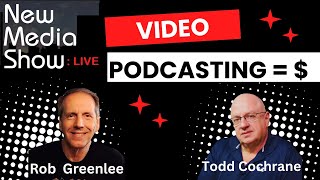
In this live episode of the New Media Show, hosts Todd Cochrane and Rob Greenlee discuss a range of pressing issues in the podcasting ecosystem. They begin with speculation about upcoming listener‑privacy solutions and note that privacy concerns are largely driven by the advertising side of the industry. The conversation then shifts to the surge in video podcasting, citing James Kridland’s LinkedIn post and Spotify’s $2.1 billion 2024 ad‑revenue target, arguing that video is being pushed primarily as an ad‑revenue play for platforms like YouTube and Spotify. They examine the economics of video versus audio delivery, bandwidth costs, CDN pricing, and why hosting providers have kept prices stable for years despite rising operational costs. The hosts critique the power imbalance where platforms monetize creators’ content while giving creators little revenue share, and they explore potential creator‑led actions such as mass platform exits or building private community distribution. The episode also covers industry consolidation, recent layoffs, and automation pressures on podcast‑tech companies, noting AI’s growing role in reducing staff. Technical topics include the IAB Podcast Measurement 2.2 standards, IPv4 vs IPv6 tracking challenges, and the need for hosts to support IPv6. They discuss emerging distribution alternatives (Rumble, Mastodon, private subscription groups) and the rise of video‑first podcast hosting platforms. Later, they reflect on the 20‑year history of podcasting, sharing anecdotes from early bandwidth struggles and the evolution of RSS enclosures. They announce upcoming events: a conversation with Adam Curry, the Podcast Hall of Fame board renewal, and participation in Podcast Movement/Podfest. Finally, they describe Todd’s recent AI conference experience, showcasing how large‑language models can assist with podcast analytics and workflow, while cautioning about the need for human QA. Throughout, the hosts balance optimism about new tools with concern over advertiser dominance and creator sustainability.
Chapters
See what I see, the problem that I had.
Are you okay? It's— I just started the stream, so it's just the metadata, that's all.
Hang on here, I can change that really quick. I just didn't change one field. Let's see here.
Let me know. I'm ready when you're ready.
Okay. I'm ready. Go ahead.
Todd and Rob in the afternoon. Hey, afternoon delight with Todd and Rob. Oh yeah, oh yeah. And here we are, Rob.
Yes, we are.
And it's been a, it's been a Interesting week. I, I've had— I just got out of— I don't think I'm allowed to talk about it yet, but I just got off a call with someone well known in the podcasting space, and, um, it centers around privacy and some solutions to make listeners more private.
And well, I think we all know that Apple's been heading that direction.
Well, it's not an Apple— it's not an Apple thing.
No, I know, but it— there's definitely a concern and a trend line around, uh, user privacy, right?
Yeah. So, uh, yeah, this is something else. And, uh, uh, I think there's been a number of companies already briefed on it, but I don't think there's any announcement yet, so I really can't say nothing. But it's pretty exciting to me, um, from a perspective of, you know, I've always been, you know, really care about the listener's privacy. And, uh, and, and this is, this is gonna be pretty monumental, um, opportunity to, to change the narrative a little bit. And I'm, uh, looking over here at the other screens and I'm making sure I've hit pause and stuff I can hit pause on. Yeah, there we go. So I, I'm just, uh, yeah, it's, it's, it's been good. I'm, I'm, I'm kind of jazzed. Uh, I had my development team in the call and we did a follow-up call and, and it made us even think about some things we're doing. And yeah, so privacy and podcasting, uh, you know, if the, if the podcasters don't care about it, maybe those of us in the space can, how should we say, make it— make a change, take, take their, take their data away.
Yeah, I think the big part of the industry that's concerned about it, I would think, is the advertising part.
Exactly right.
So it, it does seem like increasingly the industry is very focused on revenue and advertising, you know, issues in the space. And I think, you know, it gets back to the bigger topics that we're going to talk about today is that everybody's thinking about the bottom line these days.
But when, uh, right. Yeah. But at the same time, when a, when a podcaster is given the opportunity to take this data away from the, the marketeers, right.
Um, What does that say about what's happening in the market?
Well, I think most podcasters don't realize on certain platforms that, you know, you are the product. Your listeners are the product. And, you know, if I can have a, have a way to, how should we say it, not give those people so much data Mm-hmm. Um, wouldn't that be a kind of a cool thing?
But Todd, those advertisers aren't going to like that.
So, well, if you, if you have a, if you have a podcaster that is, uh, not making any money, not doing no advertising, advertising, right? And you don't want to, you know, they're trying to create content, uh, you know, they're Just leave it at that.
Yeah, yeah. Is there anything else that you wanted to add to that? Is there any other context?
No, no more context, but I'll just make people— just make people think about it a little bit.
Well, I think that there's been an effort and a desire in the medium for a long time to be a little bit more, I guess, cautious about listener data and listener and conscious of listener privacy. And I know Apple has expressed some interest in that over the years too. And I think that there was some scares about Apple, you know, maybe blocking access to IP addresses through file requests. So, you know, I don't think they've ever deployed anything like that. But I think it's an interesting trend line that's been kind of moving, and who knows, you know, how far that's going to go. But I do think that the advertising industry has a lot of power over the medium right now because it's where the revenue is, right? Yeah. So, and this is also a good kind of segue into the main topic of the show that I wanted to talk about, which is, uh, video podcasting. And I think, uh, James Kridland made a post on his, uh, I think his LinkedIn page, uh, about this this topic as it relates to Spotify's, um, uh, revenue announcements that, that they made, that they expect to reach $2.1 billion in 2024 in ad revenue on a global, global level. Um, and his contention was this push towards investing in video podcasting was really, he thinks, and I probably, I probably agree with it, um, because this is how YouTube looks at it too. It's a It's an ad revenue play is what it, what it really is.
We said that when Google pulled the plug on Google Podcasts, we talked about on this show that Google was making no money with Google Podcasts. Right.
So this is a way for them to, to, to monetize content, uh, right.
Monetize on the back of creators who largely don't get a penny. Right. Yeah.
And as I've, you know, I guess they have a, they have a pathway and a, and a kind of a user policy that allows them to monetize content on their platform. Absolutely. I don't know that there's revenue share from this, but I, I did hear in the news too that Spotify has put out that they're, that they're doing big distribution deals for or ad revenue shares.
Yeah, for a small number of shows.
Every content creator, and I know we've also talked about on the shows that they have built this ability to upload videos and replace the audio with video that takes the audio out of the video. And I've also heard, we've talked about this, and I talked about it on my podcast Tip Show around how how the, the plays or the views, uh, drop when you do that, right? So there's some sort of issue with their—
or they're nice, or their metrics are perfect, they're just not getting as many views. They're getting a higher CPMs on those is what they're doing.
Well, Todd, I wouldn't jump to that conclusion because the person that pointed this out to me, um, is an ad agency buyer. I mean, or yeah, yeah, he's actually buying ads and then running them on that platform. And he was saying that it seemed like that it was more of a bug in the metrics. We'll see. Yeah. I mean, it just could be that there's on that platform, there's more people interested in listening to audio than they are video. So if you converted in that, it kind of depends on what the UI experience too, if they're prioritizing video. Over audio, but the platform Spotify is known more as an audio platform. If they're prioritizing video over audio, then that may have an impact.
Well, again, as a, as a podcaster, you have to make some hard decisions here. Um, and you know, do you want to continue to sell your audience out? Number one, do you want to allow them to monetize on your back? And not give you a penny. Why? You know, why? Yeah, they're giving you distribution. Yeah, they're giving you access to their platform. Is that worth it? Is that enough of a— you know, I, again, I don't think most podcasters today, um, even think about their listeners. I think the majority of them, you know, don't care if they get— if they sell out their listeners and let them be remarketed and sold to by by third parties. You know, that, that, that mindset went, went away a long time ago where they were— podcasters were worried about listener privacy.
So yeah, yeah, I think it is a shift towards industry thinking more about what the advertisers want versus what their audience wants. And but I do.
But again, Rob, you wonder about that. But again, for though we have to, we have to make sure we're not segmenting stuff. For 5%, right, or 6%, they want this advertising, they want deep learning, they want them to be targeted, they want all this stuff to happen. And then the 95%, it's forced upon them. And, you know, that's the price you pay to be on the platform that you're on, is they take that data. What, you know, why did that company buy PodSights and Chartable on the same day? They didn't need the tech. They did not need the tech. They needed the data. What they do with the data—
well, that's, that's the economy now. It's, it's a digital, uh, information economy. That's how Facebook makes money. That's how all these social platforms make money too, is on user data.
So what if we take that data away from targeting and targeting, right? So what if we take that data away from them?
Well, then likely there's less advertising that's going to flow into podcasting.
Well, less advertising is going to flow into against shows that don't need advertising against their media.
Or don't want to have advertising. You know, need is maybe, um, I'm not sure the full picture of the description of that. I think it's there's a lot of shows that just, it doesn't fit their model to have advertising, right?
And they, you know, and they, they don't want the things interrupted per se. Whereas shows that are— and see, this is, this is the, this is the dirty little secret. If you are not on pass-through, there's nothing you can do.
And some podcasts on Spotify are not on pass-through. That's right. Today, even today, as a lot of people probably don't realize that, but that's how they started in this situation with podcasting is caching. Yeah. And the industry pushed back on them to get them to sign pass-through agreements with the big podcast hosts. Right. So, you know, that, you know, and that also explains why we're seeing pressure around the conversion to streaming too. Yeah. And that basically, you know, minimizes really the need for RSS in the long run.
I think, I think there's a way ahead to protect at a base level 95% of the podcasters that are out there. Make it harder. I'll just say it that we'll make it harder. But again, um, YouTube already and Facebook already— I mean, YouTube and Spotify already have that data. They already know who your listener is. So, and you know, there's very few people coming on that platform, and I think you have to have an account regardless. Yeah, so they know who you are.
Yeah, yeah, I think you can, you can be in there as a guest, but I think if you want to do certain things, they, they require you to log in.
So they're gonna, they're gonna know who So there's, you know, there's nothing I can do to prevent them from knowing who's listening within the app because they're clicking, you know, but yes, I mean, really.
So as we see, I think the, this industry shift towards prioritizing revenue, uh, I think that puts, puts the focus on these bigger platforms. Shifting to strategies that better support the advertisers. And I think that's kind of what we're seeing happen in the market right now, whether we like it or not. And it doesn't— like you said, Todd, it doesn't cater to the whole market. It just caters to a relatively small percentage of the market that are actually running ads in their podcasts.
Yeah. 1701 sats from Mike Dell. Audio still special. Video's good for Google and Spotify, not the podcasters. Well, I guess I think people will argue with that, but—
Well, that is the key takeaway from what we've, we've said here at the very beginning of the show is, is that the priority around video is really around increased ad revenue. And Spotify has put that in their, their quarterly projections that they're doing for revenue. It's based on Spotify Video podcasting is where they see the The growth that says Spotify research says that audio plus video ads work 66% better than just audio ads alone.
Hmm. Depends on how they're delivered too. I think, of course, if it's jammed on top and you're forced, you're forced to see it. Yes.
You can totally see why Spotify did this deployment where you have an RSS feed in Spotify that's delivering your audio files, and then you can go in and upload a video to replace that. And then they split it into audio and video files and then they're streaming it. Yeah, right. So it's, it's no longer pulling off of a pass-through situation. So you can see how they're trying to transition this content back into streaming again.
Yeah. You got another boost here. This came in last week, 1,500 sats from RW Nash. He says you can't beat a bit of Todd and Rob. Then 500 sats from E-Podcaster: Powerful episode, well worth a re-listen. Thanks, Jen. The ugly baby discussion in podcasting is what, uh, we get a lot of response to that episode, by the way.
Well, that's good. That, that's what we try and do here.
Yeah, right. So, you know, going back to what Cridland says, and, uh, I don't have my thing up here, so we'll have to I couldn't read it too. He basically says, now I understand what's behind the rush to video and podcasting— ad revenue. That's it, just ad revenue. Google wants you to do it because they couldn't earn money from Google Podcasts, but they can shove ads in front of your listeners, viewers, if they use YouTube. And Spotify wants you to do it because they can sell video advertising more effectively and earn more money.
Forget the whole platform is built on, on video advertising.
Forgot— forget what audiences want. They This isn't about them. It's, it's the $2.1 billion they're expected to earn in 2024.
Well, that's Spotify, but not YouTube. But yeah, right. Yeah. But it's a similar situation. You know, this explains why Spotify is heading in the direction that they're heading is because they see what's going on at YouTube. YouTube's making a lot of money.
Yes, indeed. And you, the podcaster, get Nothing. You get nothing.
You're a really big show. Yeah, well, again, they'll, they'll sign a, you know, a $3 or $4 million deal.
Yeah, well, content, right? Those are few and far between. Meanwhile, the rest of us are just slaves and we're, you know, providing revenue, uh, uh, you know, they're, they're earning money on our, on the backs of our content and we get Zero.
They're going to drive a lot of attention to content. So that's, that's the big thing that we're up to.
And well, whose fault is that? You, you as a content creator, you drive where your audience listens to you.
Well, that's, that's always been the, you know, this is kind of sparking a lot of memories for me as we think about the the growth of these proprietary platforms is that that's always been the value equation. You know, I used to work at Microsoft and all this stuff, and I've seen this conversation happen in person at these big companies is that it's almost like the value equation for independent podcasters is the potential of audience, right? It's the potential of reach., is what it's trading here. And, but if you already have a big show, then you're attracting audience to their platform, right? So they're willing to pay you. But if you're just a normal content creator and you're posting your content to Spotify or to YouTube or whatever, you're not really perceived as a driver of new users or a lot of revenue, right? So they don't put an emphasis on you. But if you're a big show, then, and you're not on their platform, then there's a value exchange that happens there. So this conversation that we've had repeatedly over the years is around, you know, maybe the content creators need to band together and, you know, and charge access fees.
Oh, well, you know, do we need carriage agreements with I, you know, I, I'm all for it.
We've had this conversation in the past.
Yes, we have. And, you know, and we get scoffed, oh no, that never happened.
Yeah, but, you know, yeah, it's almost like a union of sorts, right? So you're banding together to say, well, we're gonna withhold something from the employer or the platform unless we get—
withhold 100,000 active shows from their platform.
Unless, unless you write a check or you get into some sort of revenue deal opportunity that's, that's worth it, right?
Yeah. You know, so they're never going to do that.
Never. Well, I think we're too far down the path.
Well, what we have is too much, you know, we're too many people. And ABC, CBS, NBC can go over and say, hey, you know, You want me on cable, pay me. And that was what their value add is, is we got this great content. You want our 10 or 11 or 15 channels, whatever it is, you're going to pay us so much per subscriber. And that's why your cable bill is $200. So now, you know, your Spotify subscription is what, $14, $15? You know, what if there was a deal in there that, uh, and it says, okay, we get a dollar of every year subscriber for, you know, this a mass of people, um, you know, per month? You know, that would be unheard of, you know. And I, I honestly don't think that you could ever I mean, it would be a miracle. It would be a miracle to pull something like that off because too many— there's too many independents that would not, would not, would not play along.
Well, it's because they, they value the clout and the reach of being on a big platform. Like, yeah, right. So, you know, if they were to pull back on it, then they wouldn't really— they probably wouldn't have any significant distribution Well, it'd be very simple.
How you, how you do that is, hey, those of you listening Spotify, starting next week this show will not be on Spotify. You need to catch us X, Y, or Z off our website, and we train you for a month. We're leaving Spotify, or we're leaving such and such platform. Doesn't— it could be any platform. We're leaving here. We want— and yeah, you're gonna lose some But those that care, the important ones, are going to move where you tell them to move, you know?
Yeah. I mean, if enough people did that to Spotify and, and even frankly to, to YouTube, it, it would have a dent on their revenue.
No question. Well, YouTube much harder, um, because podcasters make such a, you know, minuscule amount of their content. Um, You know, it probably wouldn't work. But again, how many shows does it take to make someone sit up and go, hey, we got a problem here? It would take tens of thousands of shows. You know, they could lose 10,000 shows, no one would even know tomorrow.
Yeah, well, over there, these platforms are pretty powerful now. Yeah. And, and, and if a content creator wants to reach even, even a— the potential of reaching an audience, they probably have to be on those platforms now.
Yep. So, so it's, you know, it's, uh, it's— they have to be, you know, the challenges is people don't have enough patience now, right? Most people are on a very short timeline for success, and, you know, so I, I get it, I do, I really, really do.
But though, on a more positive note on this front, I, I have seen more and more content going to private community groups, right, that are building, you know, it's either a paid subscription access model or a free community. Yeah, because Mastodon, or it could be, you know, all sorts of different things.
Well, that's happening. Schools or other ones. You know, it's because of, and it's mostly happening from YouTube creators. Yeah. It's because all of a sudden they, you know, they get demonetized. Because someone starts a campaign against them and, you know, they start getting, you know, they say something wrong or whatever, and it's, it's a survival mode at that point. The reason they're moving is they're thinking, oh my God, I'm, I am going to, you know, I'm going to be impaled by this, uh, this, this, you know, this moderator. Um, and you've got individuals now that are— and matter of fact, I had a call earlier this week had a call about, um, a show that is semi-successful on YouTube, and they're scared to death. Um, their representative talked to me, and they're like, how do we— what's, you know, we need a backup plan. And, uh, you know, now it's a backup plan. Now it's, you know, they haven't been cut yet, but they see the handwriting on the wall. So, you know, they are now in a position where we have to make a plan today or start planning for this, for this potential of when the hammer becomes— because I'm on the edge of their community guidelines and content. Yeah. And then another call I had was with another network, um, who has contingency already put, um, they, they have a full— their podcast first, but they're putting their content on Rumble as a backup plan. So they have content on Rumble just as, just as purely as a contingency. Yeah, um, not necessarily a need right now, but they're thinking, you know, a year ahead, you know, what happens here. Um, and we're starting to get some attention finally, Rob. People— I've gotten more calls in probably the last 2 weeks, people that are now finally waking up and understanding that video is supported in podcasting.
Well, I think more and more people are talking about it. You know, it, it came up, it comes up in my conversations all the time now. Of course, I I make sure I mention it now about Apple. And, and who knows, you know, if Apple will, you know, turn on kind of like a UI update that will enable you to discover the video podcasts like they used to. Hey, Ted.
Oh, Ted knows. I know Ted knows, but he does a search on the transcript when he doesn't. That's right. When he doesn't listen. By the way, Ted, um, That code you're looking at. Yeah, interesting. Uh-huh. No context there, huh? By the way, you're not watching the video.
I gave you a thumbs up, so Do you want to share more context?
No, no, no context at all. I have too much fun. You know that, you know, this is one of those that's—
yeah, yeah, that's why, that's why people are sometimes scared to tell us things too, because we'll go on here and talk about it.
Well, if they give us permission to talk about it.
Yeah, and if we talk about it in a way that doesn't get anybody in trouble, right?
Yeah, we don't want to get anybody in trouble. No one's getting in trouble on any of this. No. Thousand stats from Mike. He says, I've removed my shows from Spotify. Well, I removed my personal show as well, Mike, so I never uploaded my—
this show shows the Spotify.
This, this show's still on there because Rob, uh, he hasn't given me permission to remove it yet.
The, um, but the audio, it's only the audio version, right?
Right, right, right, right, right.
Just, yeah. But neither of these platforms support, uh, video delivery. No, RSS, no. Which is funny to, to think about.
It is hilarious.
Yeah. So that would be the easiest way for them to get the content in there. So yeah, and it's interesting. So if Apple makes this change in their UI, that, that may bring visibility, uh, back to video podcasts again.
Yeah, quit making video a bastard child of, you know, again, make it a first-class citizen again. Yeah. Um, I think that would be good, you know. But, you know, I, you know, we jokingly, we're, you know, we're on here talking about this, but You know, the reality is, and I'm not— I'm talking just kind of what I speculate, this is my hypothesis, is that there are shared resources over there and they have a lot on their plate and that machine moves slow and it goes through a lot of corporate bureaucracy. And, you know, I don't know how they vote on features and what they're doing and all that, but I have a feeling it's very, very complicated and it takes a very long time and Um, what I wish for today, maybe we'll see it in 2 years. You, you never know. So, you know, there's nothing's going to happen right away. And from that instance, and we have to continue to forging ahead and making our own destiny happen here on our own. And with new podcasting apps from podcastapps.com to, you know, start start pushing the boundary here. Um, you know, just like today, we— I did a demo. Um, there's a new tag in Podcasting 2.0 called the content tag. So, uh, we're gonna beta that next week and launch that in our dashboard, and then it'll come to PowerPress in a probably a couple more weeks. So, you know, we'll be able to support alternate enclosures and the, um, multiple alternate enclosures. I bit the bullet on that.
And multiple, like, like, uh, like 3 enclosures? Alternate enclosures?
3, 3 total enclosures? It can be basically—
you can—
it can be unlimited? It could be at 1 normal enclosure and up to 5 alternate enclosures. Oh. And then there's a new tag that's called content link, and we were— we're using a hack to get the YouTube playlist in with that. And so now there's a new thing called content link, and we will have— that will be the place where you put the link to your YouTube video or your Twitch or your Rumble or whatever you want to put where your alternate location for your media is. And I don't want to get hung up on YouTube because people are doing stuff on Vimeo as well, so Lots of places, wherever that media lives, you can, you can link that. And excuse me.
And then I do think that there's going to be new, some new podcast hosting platforms that are going to, I'm hearing rumbles about it already that are video podcast first platforms that are coming.
Well, you know, what is that going to cost? You know, good luck with that.
Well, from what I hear from a lot of the big CDNs, bandwidth is pretty darn cheap now.
Well, it's— I mean, okay, it's cheap.
It's not like it—
you—
it used to be back in the, the early days of video podcasts.
So in the early days, this show to be delivered would cost a dime, you know. That's what it would cost to deliver this show 10 years ago without revealing what my— what I'm paying for bandwidth now.
Um, It's a fraction of that, right?
It's a fraction of that, but it's still not cheap at volume. What's cheap? Again, I don't want to reveal what I'm paying per gigabit, but let's just say a penny. Most CDNs, most people in the podcasting space can get down to a penny a gig. Um, so let's just say a penny.
And, and some folks get beyond that. You typically need to have scale, right?
Uh, a, a demand that, that you have to have a certain volume, you know, and you get a fraction of a penny, you got to have a certain amount of volume and so forth. And you have to sign a contract, you have to guarantee that you're going to move that much bandwidth every month for, for 24 months or whatever the contract is. We just came out of our contract period, and I believe Um, and so essentially, if you think about this show, if it was a penny a gig, this show would cost a penny a gig to deliver. So 100 views on this is a dollar. 1,000 views on this is $10.
So it's still not cheap as compared to audio And then cheap compared to like, say, Spotify or YouTube's platform, right?
Well, well, YouTube. Yeah, exactly. Because YouTube and Spotify is free. So, but if you—
yeah, but why are they free, Todd? So I, I think we have to back up, right?
Why are they free? Because they're advertising the hell out of that content, right?
Plus, plus both of those platforms have the scale, right? The scale that gets their per gigabyte YouTube was—
YouTube and Google— YouTube and Google was brilliant. They bought fiber, so in some instances they don't have to pay anything. They didn't pay nothing. They— well, they go to the pop and whatever the exchange is, they may pay a little bit, but they pay a fraction. You know, their decimal point is probably over several decimal points in the scheme of things, right?
Um, there's costs. Oh yeah, there's cost. Never 100% free, but if they have their own fiber infrastructure—
but if they're running it, if they're running an ad every 10 minutes, right, you know, they're making, they're making, they're making a boatload of money versus the cost of the delivery. You know, it's like free cash. They're probably 99%— now they got overhead and servers and people. So if they're making, let's just say they're making 50% of the revenue comes in, goes into their pot of gold, and the other 50% is, you know, covers, uh, salary, servers, infrastructure, data centers, you know, whatever, you know, whatever, because there was going to be a cost. Just like— and that's what people don't realize too in the podcast hosting business— just because bandwidth is cheap, the infrastructure that has to support getting it there— employee salaries, benefits, healthcare, the server cost, you know, all that stuff goes to against, you know, in the end, you know, what is it, what is the overhead for me to deliver 1 gig of data?
You know, there's, there's actually server resources. It depends on how you're hosting it. Some, yeah, some companies will have their own servers that are co-located that Right.
They still pay rack fees.
Yeah. Multiple locations. And then there's other companies that will use like a, like a, uh, Amazon Cloud.
I think majority of us are on cloud, you know.
Yeah. So you have to pay for server.
Yeah. You pay one way or the other.
Right, right.
And bandwidth. For Google, they, they paid to build a data center, you know, so they, they forked out, you know, whatever, $200-300 million to do a data center. So they have costs just like we have costs. You know, we're renting stuff in the cloud that they built and they make a profit on that. So, you know, when people say, oh, bandwidth is cheap— I, I wrote a post on Facebook that, um, it got a lot of— got a lot of— it got a big reaction. And it basically, it was involved the StreamYard increase in price, which we probably should talk about. And I basically said— and let me find this, um, and I'll just read what I said. So Blueberry has not raised its prices ever. Now get that, we've been hosting podcasts— hosting since 2008, but we've been doing, um, other stuff since 2006, 2005. Blueberry has not raised its prices ever.
Why?
We are in a highly competitive environment. Well, in this— well, all industries have increased prices. All ours has stayed the same for 20 years, actually 18. Sadly, with 25 companies competing for podcasters, that's life. Now StreamYard increases monthly pricing by 80%, which will automatically apply to existing subscribers next month. The prices move from $25 to $44.99. They may discover that the world has changed with free open-source offerings like OBS and other platforms available to creators.
They're less expensive too.
Well, some stuff is free. Yeah, you know, um, when I make my transition we're going to use Restream. You know, I'll be able to host the show where I'm at on Restream. We won't have to use StreamYard. I'm not renewing my annual subscription with StreamYard, uh, personally. I'm not going to pay $500 for something that I can have over on Restream and get 90% of the tools I need there. Um, so, and people say, oh, you, you know, you should be able to raise prices. Well, walk in my shoe a day and say, okay, we're going to raise our prices by even 10%. Um, but you know, so when people say, but yet my healthcare went up there— I'm not bitching, but I'm just saying my healthcare last year went up 13%, and that's cumulative year after year after year after year after year. And, um, I can't be alone in this where finances, where you see the The cost is going up and we're not— maybe someday we'll have to raise prices. Maybe. I don't have it in the playbook yet, but—
So would you say that besides employment, like taxes and things like that and expectations around salary, are there other aspects of the podcast hosting business that you think have been impacted by inflation? Oh, everything.
Everything. Yeah, our prices have went up for everything. The bandwidth costs have gone— bandwidth cost is the only thing that hasn't went up, but AWS cost, services cost, tools cost. Sure. I just got an announcement from Jira. They're raising our prices. We're getting like a 20% whack on, uh, the tools that we use. So all those prices are going up, you know, and yet here we are sitting at $12, $20, $40, and $80 a month for hosting plans. And I guarantee you, if I raise the price to 20— you raise the price, let's say 25% or 20%, oh, it'd be a lot. People would— people would howl. But yet they're paying $49.95, they're paying $300 for editors. So I think there has to be a reality check at some point. And, you know, how can you compete with free? That's the problem too. You've got to come— you got Spotify out here offering it for free. But again, you have to continue to add value and try to, you know, attract your customers and, and make sure. But again, I have to watch the, the bottom line. We're doing fine. But I'm just looking at the overall sphere of things. And, you know, a little bit of information has come to light between you and I that we know that there's some struggles out there with some hosting companies. And I guess we can't go into details. I don't know what you want to say, but not, not everything is well in the space.
No, I agree with that, Todd. I don't think that, um, you know, I think we saw what's been happening to Lipson and I think we're— there's another major host brand that's going through a massive company restructuring and letting people go. It's not a public thing and I'm not going to be the one that makes it public, but it's, it's impacting, you know, people that are, have been working in the podcast industry for a long time. And I, I think it has something to do with AI and automation. And, and I think increasingly, I think a lot of tech companies are going to be under pressure to cut back on staff and, and automate more processes. And if you think about it, I mean, on the marketing side, there's two trends that are going on. There's a lot of automation coming to online marketing. Plus there's also, you know, some trends around not needing as much staff for events because there's not that many events happening anymore. And then a lot of outsourcing that is happening to vendors out there that could maybe do those same processes that would be available in an internal staff at much lower costs because there aren't employment taxes. Right. Those are the other key cost metrics. And, you know, and create a company that maybe has just a couple of people in it and it just operates on its own, right? Right. So, so, and you don't have to face as much tax burden and, and things like that around employment tax and things like that, because, because the government makes it rough on companies to have employees.
It's, it's unbelievable. The, you know, Barry, my CFO and legal, he, you know, it's amazing. I look, you know, he basically puts in his hours just like I do and And I see what he's doing in task. And states— some states make it just absolutely horrendous to do business in. The amount of paperwork, you know, we've got a number of employees spread across multiple states, and it's worse just having one employee in one state because you're doing this— it would be the same amount of work paperwork-wise as like having 100. Um, the, the administrative burden is unbelievable. And not to mention the federal government's, you know, they make it mandatory. We have to fill out these, uh, census surveys. You have to fill them out. It's mandatory for companies. Uh, you can get a fine if you don't. Um, I mean, it just goes on and on and on.
Plus there's, there's legal risks that go along with being an employer too, that a lot of times people don't think about too. You know, when an employee leaves or you have to let somebody go, or you have to you know, make changes, there can be legal things that can come up that can backfire on you. Or if you have to fire people, you're susceptible to higher rates of, you know, for unemployment insurance and things like that. So there's always these penalties for employers to handle staff. So, you know, sometimes the easiest thing to do is just not have as much staff. And if a computer or a Android type of a robot can automate things. That could be what we see happen in the future. And it does make you wonder. And I did hear from a fellow here recently on, on my trip to Arizona here recently that was working as a contractor for the federal government. And, and his whole job is to put together programs to identify certain people in our economy for government hiring, for roles in the government. And he says that there's a mandatory hiring activity that could be up to, I think, an additional 4 to 5 million federal government employees over the next 3 years.
So to what, tax collectors?
No, I just, just in various areas of expertise. I think the federal government right now, and I'm speaking about the United States here, um, currently employs about 4 million people right now. I think they're the largest employer in the country.
I think that's a small number. There's—
that seems low.
But, but if you include the military, yeah, yeah, yeah.
So this fellow was telling me that there's a mandate that he's been given because of his contract with the federal government is to is to work on hiring up to 3 million more federal government employees.
2.87 million is the number. Oh, it is? Okay. 2.95 million as of 2023.
Oh, okay. As the current employee. Current number. Yeah. I don't think there's any other major corporation that employs more people than that.
You know, it's funny, I got a call a month ago And it was one of my federal connections that I had before, and they were recruiting and, um, for specific job position. And, uh, that offer was pretty, pretty lucrative. Um, obviously I, I couldn't take it. Yeah, that's what, that's what this guy was telling me too, is that the federal government pays really well and Depends if you're what GS level you are, or if you get into the SES, you know, if you get into the Senior Executive Service level. Sure, they do have caps, you know, and then in those— those pay tables are public, so you can look them up. What a GS-12, 13, 14 make, which is, you know, considers government great benefits and, you know, decent pay.
But, you know, so it does Speak to an agenda that the federal government's going to continue to get bigger and bigger and bigger is what I'm, I guess my key.
They don't have to worry, Rob, about, uh, you know, they're, they're not efficient with their money because, you know, that's, that's the problem. Efficient at taking our money. That's right. Yeah. But you know, with everything going on, you know, we'll see if there's room in the budget for another 2 million federal employees. I, and I think the main thing is, and, and I just want people to be aware of that are podcasters out there, there's an extreme— while your prices at the grocery stores have been going up, right, and your gas has gone up and everything else that we see that doesn't get counted in the CBT inflation rate, um, your companies you're working with, costs are going up too, because we did massive pay raises in order to try to keep people up with the economy. And when you throw on a percentage increase that could be double digits, um, a year after year, um, that's cumulative. You know, it basically is— you take $100 and you give someone a 10% pay raise, that's now at $110. You're given even— let's say doing it again, now you're up to one— you know, now you go to $121. You know, it, it's, it's stackable, right?
And it's more taxes that the company has to share.
And at the same time, the, you know, with healthcare costs. So be happy that the hosting companies haven't raised their rates in 20 years.
But Todd, I do think that at some point they probably are.
It will become a point where they'll have to. To. Yeah, the question is who's going to squeak first, because no one wants to squeak first. And the reason why we've been able to not raise prices is because, because of economy of scale, right? We're able to lower— oh, as we grew, our bandwidth costs went down, which is a big number every year. So, you know, it kind of helped us in that regard. But now when you bottom out, when you have basically maximized where you're at on a fraction basis from bandwidth standpoint, there's no more, there's no more, there's no more leather left to just to split the delta and everything then is, you know, can you make more added value and so forth. But again, I think that what we're going to see and You know, people are— you can tell by how many people are being laid off, um, restructuring like you said. They're restructuring for a reason.
It can be a lot of different reasons. Yeah, the company restructures, and— but most of it is usually based on financial considerations, right, of some sort, right?
Yeah.
Um, and then also strategy.
And not to mention, you know, like a year ago we went through a flow— a full— I mean, full-blown IRS, uh, audit. And we came out on the other side of it with no issues. I think we had one thing we got flagged on, and it was minor. Uh, but to go through a full-blown audit that took months and then not have to write the government a check and not be It's a waste of your time. It was massive, you know, paperwork, polls, receipts, you know, what was this charge. I mean, right down into my GoDaddy bill, you know, looking at GoDaddy and saying, oh, the, you know, why did you have a $3,000 in domain registrations? Let me see that list of domain names. And, you know, and you have to justify everything.
So, well, from what I remember, they They hired, what, 87,000 new IRS agents?
Well, that was before the hiring. We got whacked. I think it was just our time in the barrel. So, you know, I think what happens then is— and again, I don't think you're— you get away from anything at all at any point, but we came out good on the audit. That's good. So maybe we'll get a few years before we get audited again. Um, maybe they can come back at any time and, you know, ask to see something. All it takes is one thing to get flagged, you outside of their parameters of some cost. Um, and that's even on my personal side. You'll be talking about expense. I don't— because of my— I have a separate company that I operate under personally, and my workman's comp insurance went up $400, and I was like I was paying like $1,000. Now I'm paying $1,400 a year. I'm paying workman's comp because I sit behind a computer and, you know, no physical labor, but yet my workman's comp went up and I'm just a sole proprietor business. So yeah. Yeah. Anyway, I'm, people probably think I'm complaining here. Um, I'm sorry, but there's lots to complain about, but this is the, you know, I think this is in, in, so everyone's affected. And maybe that's why Spotify is under so much pressure to raise, uh, get more revenue.
You know, they are a public company. You know, both, both Google and Spotify are public companies.
They're under scrutiny. And if the, if the earnings call doesn't go good, well, you know, the stock goes kaput. You know, you look at the Libsyn stock when it got delisted, you know, it's, you know, worth the— you might as well have it printed in and use it as toilet paper because that's what it's worth right now. Um, yeah, yeah. So, and of course that happened a long time ago, but yeah, I don't know.
I did notice, Todd, too, that, uh, the IAB podcast measurement guidelines compliance continues to roll out across companies.
And yeah, we're in the middle of ours.
Buzzsprout was the was the most recent one that went to v2.2, I guess. And I guess Megaphone achieved 2.2 in late July. And I guess Captivate and Audio Means— I'm not familiar with Audio Means. I don't know, are you familiar with them either? Never heard of them. I wonder if there's somebody outside of the US because I've never heard of them before.
Is it Audio Means?
Yeah, M-E-A-N-S. And Audio Means, M-E-A-N-S. Yeah.
So they are French, looks like. French. Est la solution totale en on-port. Yeah. So yeah, they are definitely a, yeah, they're French company.
Yeah. I think many years ago we talked about on this show that there was the growing development of a different podcast metric standard in France.
Wow. It must be that didn't go anywhere.
Yeah.
Yeah.
I was surprised at the time because I knew that the IAB had offices all around the world and I thought, well, why isn't the IAB guidelines being supported in France? But I guess there's a separate organization in France that wanted to develop their own separate podcast metrics because IAB hadn't established themselves as deeply in that market.
So obviously that's changed. We've, um, ours— there's a new provision in the, um, certification that talks about, um, on the exact word, it's basically the national side. No, it's basically one of the new certification requirements that makes you, uh, show to the auditors how you are detecting events. I guess I'll use that word. So, you know, we've had a pretty complex system in place for a long time.
We know how— events, are you talking about our requests on the server?
We're talking about— it's not labeled as fraud, but you might as well. Or let's say like the Apple Podcast event or the Apple Watch event, how you, how you detect something that's outside the sphere of the, you know, the normal. And, uh, you know, and we've never— we've had that for years, but we've never really documented it. We know what it does. And, uh, so ours has taken a little longer because we had to go back through and document exactly how this thing works. And hopefully we'll be— go actually finish— we'll start the actual physical audit sometime in October. That's the goal. And maybe it will be done by the end of October, but Run.
Yeah, I saw some recent, uh, interest and discussion around the, the IPv6, um, standard being increasingly supported in the medium. Do you have any thoughts about that?
Yeah, we, you know, based upon what we see and what we get, uh, and how we have things configured, everything comes back to us right now at IPv4. We could turn it on, but we're seeing all the requests come through.
We're We, you know, and you're just not seeing any IPv4 or IPv6 requests coming through to it.
Again, it's how we're configured with CloudFront. Um, okay. Yeah. So we have the capability of, of, uh, what's the best word to use, measuring IPv6 and have stuff in place so that when it comes through, we'll be able to handle it. Capture it? Yeah, well, captures— that's the easy part. Being able to apply, uh, really there's not much of a standard for it right now, but you know, there's been a discussion on what quote unquote we all should be doing, and we're conforming to that.
So my understanding is that it's just an extension of the number sequence of the IPs, right?
Well, no, IP— the IPv6 is a completely And I, and I see how many octals are IPv6 octals.
Let me Google this. Yeah, it's an expansion of the numbers, um, the amount of numbers.
I think it's, uh, right. Yeah. And if you think about it, it's like a whole nother set of 3 digits. Yeah. So IPv6 are written as 8 groups of 4 hexadecimal digits, right? Where IPv4 is, um, Was it 6? 4 groups of 3 hexadecimal— well, that— it's not even hexadecimal, it's decimal numbers. So if it's like 192.168.000.001, right, right, right. So, you know, but they don't put 3 zeros. They do it— it could be 1, 9, it could be 1, 2, 3, 4, 5, 6, 7, 8, 9, 1, 2, 3. You know, basically it's— that's the setup.
And I always thought that the reason that they needed to do that was because of The Internet of Things. Yeah, uh, where more and more devices in the world—
we're out of IPv4 addresses is what it is, right?
Right. So as we add more devices that connect to the internet, we need more IP numbers, and there's able to, to use—
and, and the way it was originally designed, IPv6 was really originally designed was that you would get an IPv6 number for almost life. Well, it doesn't happen that way. Not the way things have been designed is the IPv6 actually changes the essentially the last 8 digits, um, or, or hexadecimals, the last 8 hexadecimal donations changes on a fairly consistent basis.
So, you know, if you think about, um, that could be a privacy configuration too, right? Yeah, because Because then it can't be identified to one particular—
so the rule basically is with, you know, you match an IP with a user agent and then there's rules around that. But what's really happened with IPv6 is you have to figure out, okay, where do I call that a unique? If that unique is going to— let's say someone's got a mobile phone and the IPv6 address updates every 15 minutes. Well, that's very You can't use the whole number anymore. You can't use all the octavals as— so you have to back up.
Yeah, do some of them— probably some of the numbers in the sequence probably stay the same. Yeah, yeah. It's only like the last 4 that probably—
last 8 that constantly—
yeah, constantly change.
Yeah.
Okay, so you want to measure it based on the earlier numbers, but that could be fewer characters than what, what the IPv4 stuff was, right?
Well, what it really is, is I think the accuracy, it depends. There's, there's a lot of things here that are, you know, it can affect it. We'll see if it, if it causes a decrease in, in, uh, in downloads or not. I, I don't think so at this point. I think, uh, there's enough of a handle on it now to kind of understand what's going on, um, especially if you combine that data with, um, let's say as an example, someone has gotten 50%, they're streaming the episode, they've got 50% of the way through the episode, they've chunked out 50%. And they come back an hour or two later and start, and there's another IPv6 in there. If you can marry, do a little match those up somehow, it's a little more tricky because the IP would usually correspond, right? But now the IPv6, you know, it's pretty— now some stuff, it depends on the, depends on the country, depends on the implementation. Uh, but unfortunately, mobile device and mobile device carriers seem to be pretty, uh, pretty savvy in the, um, ability to change those numbers on a regular basis.
So also, yeah, so how does this affect, uh, corporate network connectivity to, to content too, right? Oh, it's everywhere. Corporate networks embracing this IPv6?
Not a lot.
Or not? Not a lot.
Yeah. Okay. Because most corporates and, you know, most servers, they're still IPv4 addresses out there. They're just not as many. Um, and, and, you know, who owns most of the IPv4 addresses? Well, the internet service providers. Right. So a lot of, most of the internet service providers, at least here in the United States, have not yet rolled out IPv6. Now I'm seeing it on Starlink.
Uh, yeah, like an Xfinity or some of those platforms.
Yeah. So if I do what is my IP here on my connection today, um, let's see what it says.
But I would imagine that the, the wireless carriers like AT&T and T-Mobile and stuff like that, they probably play with dynamic IPs, don't they?
Well, you know, my IPv4 on Starlink right now— my, my IPv4 address on Starlink changes about every 2 to 3 days. It doesn't stay very often. So right now I'm not being detected as having an IPv6 here at the house. I'm only being—
only seeing IPv4. So, uh, as far as your, your kind of impression of this, I mean, how does this issue with IPv4 versus IPv6 affect podcasting, do you think? Well, if you're not ready to measure IPv6, you could miss tracking, well, certain, certain requests.
Again, it depends on your CDN, right, and how this data comes back through. So, and I don't know this, the specifics about how CloudFront does it, If they obfuscated or assigned it an IP to— again, I'm not sure exactly how they do it, but you have the option of turning on IPv6 at your— you're not missing anything, but there's somehow you still get the data. It's not like anything's being missed.
So is there a higher cost to support the IPv6? No, same thing. So why wouldn't everybody just turn it on?
Because of these exact issues. Now, you know, everyone is kind of stuck on— people love IPv4. They don't necessarily like IPv6. Outside the United States, that's a different situation. You know, maybe a newcomer that's in a new platform trying to get a bank of IPv4s can't, and they're forced to be on IPv6. But they still have to transverse an IPv4 world. That's the funny part about this.
So it's backwards compatible, but it's not.
Yeah. And that's the reason why it's not this big panic in podcasting right now. Yeah. So probably, probably the accuracy, you know, because it gets funneled through something. Again, and everything I've said here is Todd's interpretation of a lot of stuff. I don't fully understand what the devs do, so don't quote me on anything.
Yeah, no, it's the same with me too, right? Yeah, because I do remember conversations on the IPv6 topic in podcast industry where there was a lot of worry and concern. There's been discussion at IAB about it, so I would imagine that's true because I think this new 2.2 embraces it more, doesn't it?
Uh, I have to go look at the spec. Be honest with you, I didn't even read it after it was out. I let the dev team take and make sure we're compliant.
Yeah, right. Well, I also wanted to mention too that Mr. Adam Curry, uh, my father of podcasting, is going to be with us, uh, next Wednesday.
Yeah, what are we going to talk about with Adam?
Hmm, I think there's lots of stuff to talk about with Adam. I think there is. Where we are in the industry right now, you know, his, his views on video, his views on the Podcasting 2.0, um, direction, and just the— yeah, I think just the overall kind of feeling that he has about what's going on in the podcast space. I know he's, he's fairly anti-proprietary platform, so it's going to be an interesting discussion on that topic.
By the way, Rob, Uh, happy 20 years in podcasting.
Oh, well, thank you, Todd. I think you're a couple weeks— aren't you about to flip over to that too?
A couple weeks. You know, it's kind of funny, I went to the Wayback Machine, and I should show this.
Uh, that's the best place to look for it, right?
Yeah. And because— and it's real funny, um, actually, I got a little bit of a giggle out of it. The closest date I had— okay, let me just bring this up. See if I can find it. GeekNewsCentral.com. Go here.
I go—
got to go back to 2004, and I got to go to October. There, they took a snapshot of my site on October 14th. Um, and let's see here. Okay, bring it up. I'm waiting for it to sit here spinning or doing whatever it's doing. All right, so now, boy, this, this will be a blast from the past. Let's see if I can get on the screen here. So there's the old site, remember that one? Yeah. Okay, so if we go down here to October 9th, this was on Movable Type at the time, and Movable Type didn't put in a— they basically had a running flow. So October 9th had many posts. So October 9th, there was— here it is— Geek News Central podcast number 1. I hope you all liked the first show. We really want your feedback on it. And then I started reading up on stuff here, and, um, I said Gmail to the rescue, bandwidth use for podcasters. I know we'll be okay on our bandwidth for our podcast, at least I think we will. 'If it gets real ugly, we'll distribute it via Gmail.' So I was saying we'll send the podcast via email. 'With a huge amount of storage you offer, it could work out very well.' 'Scoble always has the best connections. This is what he had to say about it.' So there was a link to Scoble and bandwidth. And then, um, I'm asking for feedback and they said, 'Oh, the bass was too high.' I talked about stuff, uh, Adobe Audition 1.5. I talked about my $8 microphone. Which was probably part of the— and I thought I spent $15 at Walmart, it was $8. Um, and then I said podcast total downloads to date. This is comical. I decided to check and see how much bandwidth we burned the first 2 days of the initial podcast. I had to do the math 3 times, but I figured I made a mistake. Here are the totals. My logs show a little over 6 gigs. Wow, 6 gigs of MP3 downloads with a podcast being a little over 12 megs. That makes total downloads nearly 500 for the first show. Somehow I can't believe it, but logs are— the math don't lie. I received 50 emails from listeners. So it's kind of funny, you know, that was such an early time, uh, about it. And then little did I know that, um, to be frank, shit would hit the fan. Because I started running out of bandwidth the second show. Um, one word of warning for those who are going to do a podcast: make sure you have plenty of bandwidth. We'll be reducing the bitrate on all future shows. We went over 10 gigs of traffic for our first podcast. I haven't estimated the total amount of traffic I received— 100 gigs for this month— but this was the planning of doing 10 to 12 podcasts. I think with reducing the bitrate, we can keep in the allotted amount. I guess I need to figure out how to do BitTorrent. If we're doing podcasts, are you seeding BitTorrent? I'd like to talk about how we're doing that and helping your bandwidth issues. I think we also set up a separate XML file specifically for podcast descriptions. I think some of the downloads came from individuals that have RSS aggregators that pull the enclosures by default. So, you know, that tells you my knowledge level, you know, on October 12th in the second episode. So, you know, yeah. And I— and then here's the famous— I'm changing to this XML, geeknesscentral.com/podcast.xml. I had that— I had that feed address for 19 years before I changed it here recently because I was off the original index.xml. But oh, my theme music, I had to remove that. Episode earlier because AC/DC Back in Black was not the appropriate, uh, music to play for the intro of the podcast. So there's the Wayback Machine and my proof.
Yeah, and here's, here's mine. Um, on the 15th of September of 2004 is when I, I started adding enclosures to my RSS feed. I had a brand new Brand new website back then.
Wow. Look at that design, Rob.
Woo. Yeah. Well, it's, it's, uh, here, if I open it up further, you can probably see more of it, but, but yeah, yeah. I had a whole, you know, I had community, it had a store in it. It had a forum. It had all, all sorts of capabilities built into it. It was built actually with a company that I, I worked with back then called Info Creek and they were a development company out of Ukraine.
Wow. Um, so I had a Ukrainian guy helping me with, um, matter of fact, I still have him on, uh, my email. Every once in a while there's something I need help with.
His name's Vasily, and it's the same guy. It's the same guy that I worked with to build, uh, this, this website. Yeah, this Vasily's still around, Rob.
Yes, I know he is. Yeah, so last time I had him help me a couple— yeah, I had him help me a couple of years ago with something with the Yep, with the website, something to do with— so yeah, some— yes, that's how I got to know Vasily, was through you, probably. Yeah, yeah, I asked him how he was doing with the war going on, and I think he left Ukraine. I don't think he's in Ukraine right now.
Yeah, I would think— I would think he probably left, right?
Yeah, yeah, he's in Bulgaria or something like that.
Go ahead. Yeah, James, James Cridland made the connection on this post, uh,, and he posts it in the newsletter, but saying that I was, I was podcasting before there was actually a, before the word approved, um, name actually was issued. Uh, cause I think it was issued the same day.
Did you call it a podcast in the post?
No, I didn't. Uh-huh. I called it RSS feed with, uh, MP3 enclosure. Okay. Because I mean, back in those days, that's, I mean, that's all I did was, you know, I had this blog RSS feed and I, yeah. I told the developers to just add an enclosure tag in there. And then I was able to upload the MP3 file in there. Yeah. And it was still kind of a manual process back then. You know, it wasn't like there was an RSS enclosure, you know, script or whatever in the background. I had to go into the RSS feed manually and add that. So it was really kind of not fully deployed. I think the Info Creek folks didn't really help me out with that too much.
Hey, I want to talk a little bit about, um, I went to this AI event last week. Yeah. And by the way, welcome to Level 2, and, um, uh, you got 2 years before, uh, chaos is upon us. Although, although I think some companies are already firing people in lieu of AI? I think it's already starting, but it's not as widespread as it will be in 2 years. I wrote a post. I spent a lot of time thinking about this, and it was— I had a 3-hour car ride back from, from Cleveland, and I wrote this post called Creator First Path: Advocacy, Innovation, and Integrity. And it really was this reflection about how we founded Blueberry, where we're a creative-first company and we're built by podcasters essentially, and also covered a little bit of discussion about ethical AI practices and things that we do. So I really took, you know, this is like the third thing I've written recently. I did a couple on my own personal website because I was a little stronger language and probably wasn't appropriate for the corporate blog. And, um, we, um, last Tuesday, yesterday, yesterday or Monday, um, we had 5 members of the team came in and we recorded a, a 20-year in podcasting, uh, event. We really talk about the beginning and things that we learned and And, you know, and I keep going back to one thing, and it came up again in this, uh, um, in this discussion we had. We did a 59-minute roundtable discussion about Blueberry and podcasting and what we believe in and all this stuff. And, um, we forget— we get tied up in the advertising and the tech and the features and all these things, but yet we forget about the listeners. Yeah. And, um, we, we as content creators, we would not be here without the listeners. And, you know, even on this show, we talk about the industry and everything else, and I think we underappreciate the people that listen to the show. So I just personally want to say, for those of you that listen And those of you hang out with us live and everything else, you know, thanks for doing that. But I think if we really, really dig deep, um, we need to think more about the listeners. And that's why I'm kind of, you know, again, I don't know why, maybe it's because of this 20-year thing I've been— I don't know if I want to call it deep reflection, um, but yeah. I think that someone's got to tell these stories and someone's got to share the legacy of podcasting so that if we can influence this group and they can influence their friends and their circles, and, you know, we can be pretty powerful in talking about, you know, don't, don't forget about your audience. And I think the average podcaster that's doing a show, that's probably all they're focused on, um, is their audience. Maybe, uh, maybe we get a little disconnected because we're just, you know, we think we're talking to podcasters all the time.
So, you know, right, there's a lot of people that, you know, would listen to this show and maybe not really fully comprehend what we're, we're actually talking about.
Yeah. Or take offense to stuff. Yeah.
Well, yeah, I mean, that too. And but also just the You know, this show is, you know, like this conversation that we had about the IPv4 and IPv6 stuff can kind of like go right over the top of a lot of people's heads. And it is a very technical conversation, but it's important to the industry. But it's—
yeah, I mean, I hear what you're saying, Todd. It's the same time. And I think I could reword this a little bit, but this show, I think if you listen to this comment here, because it comes from, you know, way we work at the company and doing this show, doing the other show we do at Blueberry, I said, as a podcaster, and I could say this, you know, Rob, if I don't, if I'm not representing you correctly, please tell me. As a podcaster, we've been passionate about protecting the rights of podcasters from the very beginning. We could say that even this show, Replace New Blueberry, has been an advocate for podcaster rights, whether that's ensuring they retain ownership of their content or making sure they're getting a fair deal when it comes to monetization. We don't sell podcasters' data with third parties. We're fully transparent how we operate it. And I think that's how you and I do this show too, is being as transparent as we can. Sometimes we can't talk about stuff, um, that, you know, that we've been entrusted with. But I think—
I hope people trust us here. Yeah, I do too. Definitely. I try and engender that in all the content that I do. I'm not really focused on advertising and I'm not trying to cater to advertisers. So it's more about the content creator, right? That's the focus of this show is really the content creator side of things. And speaking, Todd, about the thing that you mentioned about sharing legacy and also sharing extensive experience in this medium. You know, the Podcast Hall of Fame is going through creating a new board of directors and trying to create an organization around that event and its tie-in with the Podfest new organization in that. That organization too. And I hope that Podfest becomes a much more significant player in the podcasting space because it is focused on the creator side where we've seen Podcast Movement move a little bit more towards the advertising and business side of podcasting, where Podfest is really focused on that. And the Hall of Fame is a reflection of legacy and a platform at which stories can be told around how people built their careers in podcasting and what the fundamentals are and what the ethics are and what the experience has been. And that's kind of what goes on on stage at that event. Yeah. And that's what I try and engender in that event. But trying to create a, you know, a more, I guess, a more open kind of podcast community around the Hall of Fame and be open to suggestions and open to potential nominees and things like that is something that I'm prioritizing. And I know James Cridland ran a little piece in the newsletter about the date for this ceremony that's coming up in January. And that is true, that's what we're targeting right now as part of Podfest coming up. So I hope that you'll support the event. If a request comes through to get more involved in the Podcast Hall of Fame somehow and contribute to it or share on social media about it, I think it really helps the medium move forward in a positive light, having a little bit of a historical perspective, but really trying to celebrate people that have really brought good values to podcasting.
Yeah, absolutely. And I'm excited to in that regard as well. Matter of fact, we just got communications from Podcast on our booth selection. We had sent our, our bids in, so, uh, our bids went this afternoon, I guess, for our booth location. And, um, yeah, we look forward to being— Rob, by the way, I don't know if you saw the email, but it looks like we are approved to do the New Media Show at Podcast Movement. So I mean podcast, excuse me, podcast, right?
And I believe it's, uh, I think the date that they set for that I think is the either the 16th or the 17th.
It's Thursday, whatever day that is.
I think it's Thursday. I think that's the first day of the event.
That's the 16th, 4 PM I believe is the, is the date. And I've got approved for a session as well. I'm going to be talking about AI. Um, at the event. You know, one thing about this AI event that I went to, and you have a room full of executives from, you know, I was looking at badges, you know, uh, car rental companies, uh, you know, big, big, big, big Fortune 500 companies are at this event. And, you know, I'm kind of like, I'm wearing the blueberry shirt, you gotta wear the colors, right? Gotta wear my wear my patch, my blueberry patch on my polo shirt. And, and that way, some, you know, it was a good advertising for us. We had some good conversations. But, um, the common phrase in presentations was encompassing two words. I've never heard so many high-end professionals say holy shit in my whole life. They were— had these HS moments You know, they're like, look at this, HS. Look at this, HS. You know, look what's changed, HS. And, you know, have you had your HS moment? All right. And one thing that I had been working on, and I probably won't talk too much about it, but I've spent a lot of time thinking about podcast stats and what we can use AI to help give more— analyze it— more data, right? And I'd been working on this for a while, and it's taken me a certain amount of time just to, you know, kind of think about scenarios. And we got input from other people. But when the new model came out, I had about a 5-page document. Well, first of all, I had about a 5-10 page document, just chicken scratch, that I got organized into headings and benefits and minuses, you know, all these things. And, you know, what's Why shouldn't we do this? You know, and, you know, all these kind of a, you know, project paper. And I dumped it into the new model and I said, okay, here's kind of what I want to do. Here's the 23 or some items I have in my list. Prioritize them in strength of idea, available technology, and I just— I wrote this like 2-paragraph, uh, because you only get— we're getting only 30 of these things a, a week with this new model. And I guess it's— it takes a whole bottle of water to cool the, you know, from every query you do, a bottle of water or 2 to cool the chips. And I hit enter and this thing sit there and it went through its thinking, analyzing, you know, and it took it. I'm like kind of waiting like 25, 30 seconds and all of a sudden. It just started spitting stuff out, right? I shared it with one of my team members and I said, you got to look at this. I said, there's stuff in here I have never heard of before, right? And him and I were— open up a little chat window— and him and I were having our HS moment at that moment because he's like, I've never heard of that. And we Googled it and like, HS, and Googled something else and HS. And it— so what it really did, and it didn't tell us how to do it, but it linked to resources and potential ways to get the answers of what we're trying to do. Not all of it's AI, some of it's machine learning. So this reasoning capability, when used correctly, is, is pretty impressive. And it— there's going to be a whole new skill level to learn how to ask the questions. Um, I did a couple of stupid things and wasted some searches on, but, um, it's, it's pretty amazing. It really, really is. I know someone that recently took some code they were working on in a certain language and they converted it to JavaScript on the fly and make a few, uh, you know, error— he had to be a coder to know what was going on, but he had made a few changes. So while we're still using the stupidest AI we ever will Um, and I know some of you— Adam is not a believer in the AI piece too much. He, you know, he's got mixed reactions on it as well. Um, I, I just look at the efficiencies I've gained from it. And, you know, again, you got to QA this thing, make sure it's not telling you to do something dumb. But yeah, I was— I came home with a head full of stuff, and I'm still deciphering. I've got you know, 5 pages of notes that are like one-liners. And now I'm going back and through and looking at all the presentations and pulling stuff out.
Um, but what would you say is the, is the big, the largest kind of revolutionary thing that you saw at the event?
Nothing real revolutionary this time per se, because the tools are just getting better. Incremental thing, incremental thing. But the biggest, the most impactful session I went to was a guy talking about the future of, uh, search.
And is there a future for, for google.com?
I don't know. Well, the— I guess the best way to say it is they're obscuring ChatGPT, Perplexity, and everyone is obscuring when people come to your site from those platforms. There's no user agent. You can't tell it came from ChatGPT. They used to have— they turned it on, turned it off, turned it on, turned it off. So you don't know what traffic's coming to your website from a large language model. So there's things you have to do now to get inference. You have to, you have to go a little bit now on intuition. Something happens, did my traffic change to my top 25 pages? Did you have to look at the timeline? Did the release of this new, you know, are you seeing changes in traffic? So that's not an exact science. SEO still exists, you still have to do SEO for the time being. But, um, scary times ahead. And the, the main point that everyone kind of agrees on— and I've got a comment here, and this is the only one I'm going to share because this is an expensive event to go to, and, uh, you have to pay for the— pay for the knowledge. Um, and this really is kind of probably true in any marketing You have to have a religion on what people love you for. And you have to know that your brand is the only thing that's going to count going forward.
Your brand is the only thing that's going to count? Right. Because—
Or is it your personal brand or a company brand? Personal brand, company brand. The same thing. The same thing. Because the individual content that you are putting out today, it's not going to be found. That is going to go by the wayside. So you have to build your brand and have the, the basis so ingrained in people knowing what you do, what you're about. You have to have a religion on what people love you for. So you need to know the personas of those that are consuming your content and make sure you are 100% focused on building that audience of customers or listeners or whatever it may be, because that's going to carry you through this transition that we're facing here.
And so how can you kind of capture control of that from the standpoint of being able to, to create that outcome for yourself? Is there pathways that you see to, to train the AI to be more aware of your brand?
Or how does that happen? That, that's, I think, still hocus pocus at this point. Uh, my— I, and I asked a very probably top of the field type of guy, you know, one of these guys that if I actually got in a room with him for half hour, it probably cost me $10,000, that kind of a consultant type. Um, He agreed with me that going wide is going to be very important.
When you say going wide in the context, you can't just—
you can't— you podcasters are going to be set up because we're wide already, we're distributed in multiple places. But for you to be picked up as authority, you need to be being talked about on sites of authority.
Oh, and getting—
because it's, it's, it's going out and scanning all of the content and it's ranking sites based upon the authority of the site, how good the it is. So if you start putting a bunch of shit on your website, a bunch of AI-generated shit, the large language model will probably bring you down if they think that you're creating crap. So the quality of the content, the focus of the content, is going to be super, super critical going forward. So some of it's kind of what you do in SEO now, but you, this, this brand is about the only thing you're going to have to stand on. Um, they, they termed it the Fifth Industrial Revolution. And you know what, if you— fifth, Todd, where's the— where was the second, third, and fourth? You know, and I think what was the Industrial Age, the second industrial or third or something? But anyway, they can consider this the fifth And, um, if someone donates to my Geek Newscenter show, I'll share. Matter of fact, if you donate to this show, if you go to a little PayPal link on newmediashow.com, I will give you access via a link to the video where it talks about an hour of this SEO-AI convergence. Mm-hmm. But I'm not giving that up for free. So if you make a donation to this show or you make a donation to Geekness Central, I'll share the link, but you have to swear you don't share it with nobody.
Um, I'm being stingy on this one. Sorry. Todd, I, yeah, I wanted to share with you, um, I just did a query on ChatGPT 4.0. Yeah. Uh, for what are the top 10 podcasts about podcasting? Oh, did we make the list?
Uh, we're the, the number one.
Oh, that's interesting. I don't know if you did that search, would it come up? Okay, so send me in, uh, okay, what was the exact words that you used?
Top 10 podcasts about podcasting. Did you use the preview or did you use the mini?
Which one did you use? I used the, the 4 Omni one, not the new one.
Oh, you use the—
okay, there's the 4.0 preview and mini. Yeah, yeah, I used the, the 4.0.
Oh, you didn't use the— oh, okay, so let me ask the 0.1 what— okay, I'll do the same thing with 0.01. And this is really a waste of CPU topics here. What is—
what, what, what was the top 10 podcasts about podcasting?
What is the top? Yeah, so the problem is, the problem is, Rob, is it has a memory, and I would not be surprised if it comes up, what is the top 10 podcasts about podcasting? Boom. Thinking. Okay, I'm determining, identifying, guiding, learning, and engaging me. Oh, this is interesting. So number 1, Audacity Podcast. 2, School of Podcasting. 3 is the feed. 4 is Podcast Roundtable. 5 is Podcraft. 6 is Podcast Engineering. So 7 is Sheet Podcast. 8, Better Podcasting. 9, Podcast Talent Coach, and 10, Podcasting Step by Step. So we didn't make that list on the new model.
Okay, I just did a search for the same query, top 10 podcasts about podcasting, question mark, and it— in the ChatGPT-01-preview. Yeah. And it came back as, as my knowledge cutoff was October of 2023. Yeah. That's, that's what I said. The top, top 10 podcasts dedicated to the art and business of podcasting. Number 1 was Audacity to Podcast. Same response. Uh, number 2 was School of Podcasting with Dave Jackson. Number 3 was The Feed from Lipson. Uh, The Podcaster's Roundtable, which I know Ray doesn't do regular episodes of that show, so I'm not sure.
And then number 5 is The New Media Show. Oh, see, New Media Show did not make my list. So it doesn't give you the same answer every time. Yeah, I guess not.
So interesting. Well, though, I think you typed a slightly different query than I said. What is the top 10 podcasts? I didn't add the 'what is' part. I just typed in 'top 10 podcasts about podcasting?' Oh gosh, you're costing me, uh search queries here. I am. You got plenty of them, Todd. Okay. It'd be interesting to do that in like Groq and Gemini just to see what it came back with. But I think what this is an example of is that as you think about your brand and your company, people will do search queries just like they might do in Google, right? And AI is going to rank these things based, you know, I don't know what the criteria that it's using to come up with this.
So it's funny, my results were not the same as yours. School of Podcasting, The Feed, Audacity, PodNews, She Podcasts, Podcraft, BuzzCast, Podcasting Business School, Better Podcasting, Podcast Ponification. So again, we didn't get the same result.
So very curious. Yeah, it says at the bottom, it says, note rankings are subject and based on popularity, content quality, and industry impact as of 2023.
Mine says these podcasts provided wealth information that can help you navigate the podcasting landscape, whether you're just starting out or looking to elevate your existing shows. So you definitely— we're not getting the same answer. So it's not like a search engine per se. Well, all search engines don't give you the same results anyway.
So yeah, yeah, I think that there is probably differences in each query and it's probably biased based on its knowledge about the person doing the query.
Yeah, I'm sure because I've been putting stuff in here. I turn memory off a lot, so I don't always have memory turned on.
Um, so yeah, so that's, that's where we're getting into this element of training. Yeah, so I, I feel for— or I have felt for a while that it actually learns, because it'd be crazy if it didn't, right?
Yeah. You know, well, just recently someone was asked, how was your first day at school? It asked somebody, and he says, it was my first day at school. How did the model know? And, you know, so anyway, all right, we're long. Okay. I'm Todd at Blueberry.com. Uh, you can find me on X @geeknews.
Of course, I'm on Mastodon @geeknews at geeknews.chat. Rob? Yeah, I'm on X as well, @RobGreenlee, two Es on the end, as well as on YouTube, um, at Rob Greenlee, and, um, on all of the social platforms, LinkedIn, uh, Rob Greenlee as well. And so I'm I'm pretty easy to find. Just do a search in, in Google, or actually ChatGPT, and you can find me that way too. Um, and, or you can send me an email, uh, rob.greenlee@gmail.com.
Be great to hear from you. All right, Rob. So I am good for next week with Adam, but the following week of October 2nd, I am not. We're having our team get together down in Palm Beach, Florida.
And, uh, so we'll be—
fancy place to have your team retreat. Yeah, uh, one of our team members has a place down there and has a relationship with a, um, so, uh, yeah, we families and friends deal down there. So, uh, it's still expensive, not that cheap, of course, of course. But, uh, yeah, we're gonna go down and figure out how we're gonna conquer the world for the next year, or, or maybe how to survive the next year. Maybe that's the better way to say it. Right.
Yeah, that's—
well, but who knows what the next 6 months— and then, and then when we come back on, uh, Wednesday, October 9th, that's my 20-year in podcasting. And, uh, I will actually be doing this show and then Geek News Central that night, so 2 shows in a row because I want to do a 20-year show on the night of the, of the anniversary. So, um, and for those of you that's been in chat, thank you for being here. Pretty quiet today. Lots of you watching on YouTube, but not too much commentary today, which I guess that's okay. And let me check the, uh, the Healy pad here. No new SATs coming in. So, uh, was anybody streaming, watching us live? Let's look at that. No. So don't forget about those new podcasting apps at podcastapps.com. Rob, I'll see you back here a week from today with, uh, the Podfather, Mr. Adam Curry.
So, uh, should be a fun show.
It should be, yes. All right, everyone, take care. We'll see you next time. All right.
More from Rob

Future-proofing with Delphi AI/Human clones: your podcast as a personal LLM | New Media Show






How sports reveal what AI spectacle gets wrong #Technology #Sports #Commentary



