Why Everyone Stopped Asking 'What's a Podcast?'
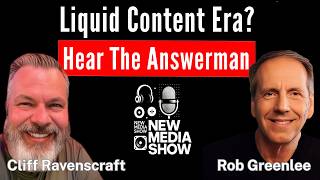
Rob Greenlee and Cliff Ravenscraft trace podcasting from its early days through today's "liquid content" era, where audio and video blur together. Cliff argues that owning an RSS feed protects creators from platform gatekeeping, unlike YouTube-only shows. He's relaunching Podcast Answer Man with weekly Friday episodes.
Chapters
Well, I'm excited to have you here with me tonight, and it's great to be back with the, with the New Media Show again. And, um, In tonight's episode, we're gonna dive into, you know, is the what's a podcast era finally over? And so that's gonna be one topic. And are we moving into this liquid content area in the podcasting space? And we're gonna dig into what that looks like. And, you know, this has been a long-running debate about what a podcast is, and hopefully we'll kind of draw that to a close tonight. And but, but I want to welcome to the show, uh, Mr. Cliff Ravenscraft, who it's been a long time since I have seen you. And you have been back in part of the, the podcast space, and I know you're relaunching your, your shows. And I'm excited to have you here, uh, Cliff, because you're a— you're one of those guys that has been around the space a long time. And launching your podcast Answer Man Show was, was pivotal to a lot of, uh, a lot of creators that were getting started. A lot of the, the names that we know today as very popular content creators and podcasters, you know, kind of, you know, were shaped by your influence. So I think it's great to have you. And then, then also you're, you're relaunching your podcast A to Z series as well, and that's also terrific too. And so, so I wanted to ask you, before we get into the, the body of this content, which is, you know, about you know, what's the era that we're in and where are we heading, is what, what was it that caused you to think about bringing, bringing the Podcast Answer Man back? I know that you were doing a bunch of stuff as a, as a speaker and I, you know, more on the business side of podcasting and, and try and encourage people. And, and, and I, I can bring up your, your website and kind of share with people. So this is the Podcast Answer Man website that you have today, and I think it's very similar to what you had in the past. Um, I see that your cover art's about the same, but you've, you've updated the image. So, you know, a few years have gone by, but if you could share kind of what that journey has been for you and why you brought it back now.
Sure. And to answer the question why I brought it back is probably going to be important to understand why I, I left the Podcast Answer Man brand. So I started podcasting as a hobby in December 2005. And so 2 days ago, I celebrated my 20th year in podcasting. During my first year of podcasting, I had, I think, produced, I think, 5 to 7 different podcast shows. And I was producing 7 to 15 podcast episodes a week. And it was all about technology, business. Faith, and entertainment. And the number one question I would get out of all of those shows were technical questions related to podcasting. How do I launch a podcast? And by the way, I'm, I'm actually creating content and I'm having the most difficult challenge keeping up with one show every week. How are you producing 7 to 15 episodes every single week? And so all of these technical questions came in and after about a year of answering everybody individually, I decided to launch in December 2006, Podcast Answer Man. And what I told people, I said, listen, I don't call myself the Podcast Answer Man because I have all the answers, but you'll be hard-pressed to find somebody who's more passionate about podcasting than I am. And I know where and how to find all of the answers you have, or to the, all the questions you have related to podcasting. So for the next decade, I devoted myself to answering people's questions related to launching a podcast. And as a result of that, uh, after my first year of doing it, I was earning enough income from teaching people how to podcast that I left my career in insurance after 12 years to become full-time self-employed as a podcast consultant and coach. Over the course of the first 10 years of my business, I am responsible for helping more than 40,000 people launch a podcast. Some of my students have been Dan Miller, uh, Michael Hyatt, Pat Flynn, Amy Porterfield, John Lee Dumas, and I could go on and on and on with top-ranked podcasts and a few Podcast Hall of Fame inductees who were my students during those times. And it was absolutely wonderful. The only thing is, is that after about 10 to 11 years of answering the same questions over and over again, I recognized that some of the greatest impact that I was having in people's lives was not related to answering what microphone should I use or how do I get that buzzing sound out of my recording and what cable do I need for this particular mixer. Instead, I was starting to help people figure out how to predictably, sustainably build income from their podcasting efforts, building an online business, because that's something that I had gone through a lot of trial and error. I had found an incredible amount of success, and people were beginning to ask me those questions. Now, economically, I found that there was a lot more return on investment in some of those answers to those questions from people who wanted to build a business. And also, I recognized on a deeper, more spiritual of service level, I recognized that there were mindset questions and belief systems that were holding people back. People were afraid to charge money. There were people out there that were full-time self-employed, left their day job way too soon, by the way, and they were struggling. They were almost at the point where they're going to be homeless because their mortgage isn't going to get paid. And so helping those people overcome their limiting beliefs and helping them go from charging $50 an hour to charging $300 an hour or having a 90-minute coaching session where they charge $1,500 a session. This is some of the work that I was doing. There's a lot of long-held beliefs that were conditioned in them about money and about all sorts of other things about business. And so, what happened was I began to see a number of people experience radical transformation in their life because I was doing this business strategy and mindset coaching.
Yep.
And, and, and I had more and more work for that. People were willing to pay me a lot more money than as a podcast consultant helping you launch a podcast. And I was struggling back in the day because I was getting 50 to 100 quote-unquote quick questions on every technical challenge you could possibly imagine. Now, I had the answer to those questions, but to answer them took 6 to 8 or 10 hours a day, and I, I just couldn't keep up. It wasn't sustainable for me. And I had so many people who wanted business strategy and mindset work that I decided to draw a line in the sand. This, this is the work that I'm really passionate about, and I'm just not as passionate about answering these same things that I've been doing for the last 12 years. Okay, so that's why I left Podcast Answer Man. In fact, I took my Podcast Answer Man podcast after 439 episodes. And I just overnight rebranded it. Now I say overnight, I did rebrand it overnight. But I let people know a whole year in advance. I, in 2015—
It's a big buildup is what you did over time, right?
It was over time. So in 2015, I did a series called The Year of Identity. I was going through an identity crisis. Who am I if I'm not the podcast Answer Man? And then after finally going through that, One night, I switched it over. It became Podcast Answer Man. When you went to bed at night, was in your podcast app. And then when you woke up the next morning, the next episode dropped, and you were subscribed to a podcast called The Cliff Ravenscraft Show. And, and by the way, I just produced episode number 802 of that show this week. So that's where, that's what happened from 2015 to 2017. I was The Cliff Ravenscraft Show. But I was still the podcast answer man. So for 2 years, I was still leading my Podcasting A to Z course, which is a 4-week group training program, uh, where I walk you through step by step, answer every single question you have related to getting your podcast launched. And, and so I was doing that for 2 years, while during that 2 years, as the mindset answer man as well, I was helping people launch businesses. I was hosting in, in-person workshops, live events, doing one-on-one coaching and paid mastermind groups. And then finally, in December 2017, I finally had replaced my income from Podcast Answer Man. It's like, okay, I don't have to answer technical questions to be able to maintain the incredible lifestyle that my business has provided for me. And so I went all in on Mindset Answer Man. I launched an annual conference called Free the Dream. It was an incredible experience. It was going to be annual. Uh, did it in 2018, 2019. I was hosting.
And then COVID.
Exactly. And then COVID happened.
Yeah.
And when COVID happened, it basically took my new identity that I had built for myself, which was so dependent on live events and showing up and speaking at other people's events.
Yeah.
And that's where a majority of my new clients came from, was through meeting people at events. COVID took that away. And then I'm like, well, who am I if I'm not the Mindset Answer Man?
Right, right. Yeah.
And there was, there was the seed And I've, I've had an incredible amount of success during the first few years after the pandemic, but over the last year and a half, I'd noticed that, wow, because I'm not attending as many events, because I'm not hosting as many live events, the top of my funnel is just not nearly what it used to be. And there were a couple of things that converged. That brings back Podcast Answer Man for me. Number 1, I've never stopped loving podcasts. Uh, you mentioned earlier that I've— I'm bringing back my shows. I'm actually only bringing back one show. It's Podcast Answer Man, right? But I don't know, Rob, if you know, but I will share for everyone else. I have produced over 50 different podcast shows in the last 20 years. I have I have published more than 4,800 podcast episodes, and it's Wednesday. I've already published 3 this week. So the only thing that's back is Podcast Answer Man.
Okay, awesome.
So I've never left podcasting.
Yeah, well, that's great. That's great to hear. And I think it's great that you're coming back in because I think it's a very interesting time in podcasting. And The topic that we're gonna dive into a little bit more tonight is this concept of eras in podcasting and is podcasting moving into this, what I would call probably the fifth stage. I'm actually titling it, the very first era in podcasting was, I consider to be the zero era, which means that it was the very beginning. And so we saw these various stages, and this came out in an article from, from Stephen Goldstein, who's a consultant in the podcasting space. He's got a newsletter that everybody in the industry reads, and he's been painting this picture for a while about these different eras in podcasting. And I always push back on Steve because Steve's perspective on this this podcasting space reflects a lot of the folks that are more recently entered the podcasting medium, and they forget about the first, probably the first 6 or 7 years of the medium, um, back when video podcasting was about 40% of the market, uh, and then all of a sudden YouTube launched and started siphoning away all those video creators that were using RSS, and they started hosting them over on YouTube. And so YouTube and podcasting have had a parallel track for most of both existence. You know, I think YouTube started very closely to the same timeframe that podcasting started. And so, so when people in this industry talk about, you know, the four eras of podcasting, they forget that early stage, which I think in my own opinion, of course I'm biased too, is the most important one to drive the context of what's happening today. And that's the the re-entry of video, right? Um, and we went through this era, um, where, where we were considered to be an audio-first medium. Uh, that's just because everything was being pushed over to YouTube. Uh, and then all of a sudden when YouTube decides that they're going to have a podcast playlist, all of a sudden it comes crashing back again. And so that's— I mean, do you have any views on this big picture before we dive into each of the eras?
Yeah, I think it'll be an interesting dialogue because I saw the outline for our show. And I don't know that you and I agree on the overall premise. So I'm, I definitely understand everything that with this whole liquid era that I think you're going to introduce, and the hopefully putting an end to the debate of the definition of a podcast and things like that. Although, there might be some, some defense for the term podcasting and RSS feed. So it'll be an interesting dialogue.
Yeah, it's not to say that the, the term podcast is going away. I'm not saying that at all. Actually, probably I should emphasize this, that it's, it's bigger than ever and it will continue to be bigger than ever. It's just there's kind of two ends of the spectrum. There's how audiences see what a podcast is and how the creator sees what a podcast is, is what's been parting. Um, and so that's in this ongoing debate about this fluid concept is, is really a metaphor. It's not anything more than that. It's just how when you're a creator, just like with this show is a good example of it, I'm creating it as a live stream. Uh, I take the episode out of here. I download it off of StreamYard and I put it out as an audio and video podcast. And I have both feeds. I have two separate feeds for this show. It's not commonly done anymore. That comes out of the earlier era, which I term as the zero era. And so let me pull up on the screen here.
You and Leo Laporte. I still— I'm still subscribed to Leo Laporte's, uh, video for MacBreak Weekly and his video feed for—
yeah, that's right—
This Week in Tech. So I— and he has audio-only feeds for those, but because it's video-first content, I only will subscribe to the video RSS feed. Ironically though, I refuse to watch his content on YouTube, and if you're interested, I'll share why at some point.
Oh, interesting. Yeah. Yeah. So what I pulled up on the screen here for those that can see the video portion of this, we'll run down and make sure that all of our audio listeners are following along here. But I'm calling kind of the first like 5 or 6 years of podcasting or 7 years or so as the zero era of podcasting. Others in the industry are only looking at 4 eras in podcasting and And really, because the very early era, the Zero Era, is the era that had audio and video, which has been somewhat forgotten in the current landscape. And then Era Number One, which Stephen Goldstein refers to as the Me Undies Era, audio first, very intimate, host-read ads were big. Early monetization and in a fairly simple ecosystem was the early era of podcasting. That goes back probably to the 2009 timeframe of when audio was really starting to find its own way. And then we had Serial and everything changed. And then era 2 is the spaghetti against the wall era, or there's a lot of big money, big, big acquisitions. I mean, that's when Spotify started going on a buying spree and buying up a bunch of platforms. And a lot of the radio industry entered the medium with big money, big expectations of what they were hoping they could create as they saw their market share of their radio consumption start to tick down a little bit, which has been slow, but it hasn't been a fast track. And then the last era, Before we get to the current era is era 3, which everybody's asking this question. Of course, all along people were asking the question, well, what is a podcast? But especially when we got into this era where a lot of the big media companies, radio and television companies, which were involved in podcasting even back in the zero era, there was huge numbers of major media companies that were involved in the early era of podcasting. That exited for a few years, and that left this window of opportunity for the first era to kick in, where it became really much more audio first, because a lot of these big media companies in the early years of podcasting just didn't know how to monetize it, right? And putting out video content was expensive. You know, it took bandwidth, it took resources, it took expertise that they didn't— a lot of these people didn't have was you know, dynamic ad insertion wasn't around yet. You know, this concept of host reads was just taking off and it wasn't really an established ecosystem of business development people that were able to go into brands and sell this content. That took a few years to develop. That didn't really enter the medium until we really got into the Era 2, which is the spaghetti against the wall. And that's when we started really experimenting and playing around with monetization on an increasing scale. So, yeah, do you wanna add anything before I draw context into what is a podcast, Cliff?
Well, the one thing I'll just say is the what is a podcast, I remember that being the number one question even in the era of Zero Day.
Yeah, it was.
And for me, it's still a question that's very prevalent today, so.
Yeah, what's different about the era 3 in the what is a podcast? Because I agree with you 100% going back all the way to 2004. That's, that's what, what, what was driving things was. And, and, and I think the what is a podcast thing really in the era 3 was really because video started to enter the space and YouTube was, was pushing by creating this this playlist idea, and this is just a couple years ago that I think that we were in the era 3, uh, it really created an identity crisis in the medium. Uh, conferences were, you know, having a lot of debates about video, and, and AI can be thrown into this mix too, but really it was around, well, what is a podcast? Do we want to include video in the definition of what a podcast is? And, you know, that was really what was going on in that era. And then And then if you fast forward to where we are more today and what people are seeing as the difference, and I can pull up a slide that I created for that, is here, is, you know, trying to run down what the concept of the Era 4, which is the era that we're in right now, is what Stephen is coming up with. And that quote at the bottom of what's on the screen The show itself is no longer the final product, it's the engine that drives a bunch of other things. That's a quote from me that he used. And so what this, this is really all about is this liquid content era, is that it's almost being looked at as almost like a liquid content operating system of sorts. We're creating an ecosystem that is much bigger than what it has been. And, and we are slowly becoming less podcasters and more content creators. And you can see this in what Spotify has done by changing the name of their podcast platform to Spotify for Creators, is that there has been this move. And I know YouTube and other platforms are starting to use this term creator because podcasting is becoming kind of like one aspect of being a creator now. And it's not a central part. It's— podcasting is fueling everything else. But the definition is getting a little bit broader. That doesn't change the definition of what a podcast is. It just makes it more inclusive of what's going on in the world today. I know— go ahead and throw your thoughts in, Cliff.
Yeah, I definitely love and identify as a content creator, and I I do like that language, and I would say that I have been a content creator since 2005. So that hasn't changed. I'm still a podcaster too. And there are— and, and the, the thing is though, is there are a number of people out there who are content creators and they are not podcasters. So that, that— so there's a distinction, and that's why I think there's, there's still this thing that, that why that definition is important. What, what defines a podcast? What makes a podcast a podcast? What are the benefits of actually the RSS feed that YouTube does not offer or any other streaming audio or video platform? The other thing is that statement that the podcast itself is no longer the final product. What I would say from my perspective is that the podcast is a final product. YouTube channel and content for my YouTube is a final product. Short-form video content that's produced for YouTube Shorts, Facebook and Instagram Reels, and TikTok— short-form, 3-minute or less, uh, 9x16 video— is a final product. Those are all different products that as a content creator I can do. So I'm a podcaster, I'm a YouTuber, I'm an Instagrammer, I'm a Facebook Reeler, I'm a TikToker, I'm a content creator.
Yeah. So I think the analogy that's trying to be drawn here is, is that the podcast is like fuel in your engine, right? It's what drives the audience engagement.
I don't— I believe that a podcast for some people can be the fuel that drives things. However, I know a lot of content creators that are crushing it with engagement on TikTok, but don't have a YouTube channel and don't have a podcast. And, and a podcast, when they've attempted it, did nothing to fuel their growth. So, so I don't know that I can buy into that the podcast is what fuels the everything, um, if, if that's what's being said.
What I think what's being said is that the, the show— it didn't say podcast, it said the, the show that you create, the content is, is being sliced and diced so much and, and put out all of these different, you know, like the audio feed, the YouTube, the vertical clips, the live streams are all in a lot of ways they're— they are rather unique mediums, right?
Yes.
Um, you know, but themselves. So when you create a show, that show can be turned into a podcast as an RSS distribution, or it can be turned into a live show, can be distributed on YouTube. It can be utilized in a lot of different ways. And I think that's the, that's the analogy that's trying to be drawn here.
I can appreciate that. The one thing that I find that is kind of— by the way, this is— we didn't get into that one part, which is why am I returning as the podcast answer man?
Yeah, right.
Because I am such a passionate advocate for podcasting, what I have noticed is the number of people who are giving up on podcasting because they are overwhelmed by feeling like they have to chop up— they have to put a video of them recording their show on YouTube, and they have to hire somebody to, or pay for a service like Opus Clip to chop it up and post 3 to 5 days and feed algorithms of video content. Otherwise, there's— they can't keep up with the, the content creator Joneses out there. And, and one of the reasons why I'm coming back as the Podcast Answer Man is for those who are overwhelmed by all that video production. I want to help them reduce the feeling of being overwhelmed. I think there are ways to go about it in a different way than maybe that, that's causing you all this overwhelm. And if you want to do video, there's a way to do it well. There are frameworks and strategies, and I'm more than happy to help you. But for a lot of people, not everyone, but for a lot of people, there's no reason for you to put the video camera on while you're recording your show. You can actually create an audio-only podcast and never have a camera in the room while you do it. But then you could still, if you want to, still be a YouTuber and a TikToker and a short-form content creator and build audience over there. But my recommendation is that you don't just take the audio clip and then throw some AI images over top of it and then put it out there hoping people will listen to your podcast one day, because that's just not going to happen.
Yeah, I think it's a— there's a lot of different ways to slice this, and I think that's what's challenging for a lot of creators now is— and if you consider to be a podcaster, I think that's terrific. These are concepts that are reflective of what I'm seeing happen in the industry. And as I talk to people even outside of the United States, Like, I talked to a fellow that's very, very influential on the continent of Africa. I did a call with him. He happened to be in Nigeria, and he was telling me that most of the new people that are coming into podcasting, at least in Africa, are coming at it from a video-first.
And I love that. I think it's wonderful. And for those who are not intimidated by video, I think it's great. And that's what, as the Podcast Answer Man, I recognize that I'm going to be asked to help support a lot of those video-first content creators. And my thing is that if you want to be also be a podcaster, we're going to have to talk about, you know, are you going to create, are you going to release the video as a, in the, as a video file in a podcast RSS feed? And/or are you going to strip the audio from that show that you did video first and put it out as an audio feed? And what are the implications for your audience as a second-class citizen if you refer to things that are on the video during the show? And what are the implications of that? And so these are the things I'm helping people discern moving forward.
Yeah, I agree with you. It's a, it is kind of a juggling situation. I've been trying to figure it out myself with the shows that I'm doing is trying to create what I consider to be a hybrid show, not a video first or an audio first, but one that is producing content that will work in both directions. And, and increasingly, uh, the RSS feed for this particular show, um, I, I have separate RSS feeds. I have one for audio and one for video. And then in each of those now, I have a link to the other media file. So I have in the video feed, I have an alternative enclosure to the audio episode. And then in the audio primary feed, I have an alternative enclosure link to the video version. So which in some ways you could say reasonably that that is over redundancy. But if you wanna play in the entirety of the ecosystem that exists today, with the Podcasting 2.0 tags, that's the way to do it because there are some newer apps that are starting to gain a little bit of market share that are supporting that, that capability of having a primary audio feed with a secondary video and then a primary video with a secondary audio experience in their app. And so that's what I'm playing into. And then you look at even what Spotify is doing today. Which is really kind of breaks all this stuff, which is, which is they, they allow you to import an RSS feed with an MP3 file link in it via RSS. But then if you upload a video to their platform, they'll basically kill the, the audio via RSS, which might replace it with the audio from the video.
Yeah, I've heard of that, that they're doing that. And here's, here's my situation is that I will produce sometimes the video version as a live stream on my YouTube channel.
Well, like we are right now.
This is exactly— and, and I will leave that unedited. It'll just be raw and all the mistakes or anything, just completely unedited. And it might be an hour and 10 minutes long, but then I actually take the audio and I go in and, and fine-tune that production. I edit it down The end result is a 48-minute audio episode that's really dialed in for the audio listener. And so I don't know how supposedly Spotify is supposed to be able to click a button, you can switch back and forth. But I don't know how you do that if the video that you uploaded is an hour and 10 minutes and the audio file is 48 minutes dialed in and edited. So there, it's confusing. I don't understand why they've done that. It's something I'm going to be looking into, seeing how to do it and what are some of the best practices moving forward for those who want to engage with that functionality in Spotify.
Yeah, I think it's a little bit of a simplistic view of what, what should be done on Spotify's part. I think it's a mistake on their part, to be quite honest with you, because the optimal way of doing this is that just because you record it in a video and you put it out as an audio, it doesn't have to be the same audio.
Not at all.
That's the thing.
And it probably shouldn't be the same audio because I can do a listing in Spotify for the video and a listing for the spot in Spotify for the audio.
Right. And they come from two different places. It doesn't come from the audio. I believe Spotify— what Spotify is doing actually is that when you upload the video, They, they are, they are saying that you're playing audio, but what you're actually playing is the video. Yeah, it's just, it's not displaying the video. All it's just doing is playing the audio. And so they basically hacked this whole system, so there's no way for you to have an experience with your show that has a different version with the audio than you have with the video. And so that's what I do with this show, is I will do a deeper edit on this show on the audio side produce it a little bit differently and put that separately in the RSS feed. And the video, I don't edit as heavily because it just chops it up. It makes it for a horrible viewing experience.
The jump cuts are just too much.
Yeah, right.
I, I can, I can do a— I can edit like a razor blade in audio. Yeah, but in video, that, that is too choppy.
You just can't do that.
Yeah.
And And so that's my philosophy.
So I think sometimes I'll take something I said at 47 minutes and put that into 22 minutes of the show and then go back and forth. And the lighting outside, the sun's at different angles.
Yeah, right. Well, I mean, a good example for this show is that, that intro that I played, that intro video has a music bed to it that plays in. And on the audio version, I don't want that music bed to play without, you know, some context. So what I do is I take the music bed out and I will layer it under the audio for most of it and only play just a few seconds of the audio at the beginning of the music. So that's what's different about it. So like on the video, I can, I can get away with a longer kind of music bed because there's something for the visual audience to see.
Something I ran into, Rob, is But when I, as I said, I've got over 4,800 audio episodes. And almost all of those are in Spotify and also YouTube. And my problem is, is that people who are subscribed to my shows there, there are about, you know, 50 to 100 episodes in a podcast feed for any individual show that are not accessible to you as a subscriber in Spotify and/or YouTube.. And that's because content match said, uh, Cliff, you did not have rights to that, and so we're deleting this episode out of the feed. And what happened was I actually paid for royalty-free music. I own the license, and it— but it was still, it was still registered in their system, and so it got a content match. And I had the option to go in and submit a grievance against every single one of those. But I had so many that I'm like, listen, just go ahead and delete it out of the feed. Nobody should be listening to a podcast on Spotify or YouTube anyway. That was, that was my thing. I know that it is a primary source of listening to podcasts today. For— I know Spotify is a powerhouse for subscribing to a podcast today. I know that YouTube has become a major source of podcast listens, even audio. Yeah, well, I mean, the problem is, is that still is king. Apple is still king, I know. Yeah, but here, here's the thing though. If you subscribe to me, Cliff Ravenscraft, in either Spotify or YouTube, some of my content you have no access to because Spotify And YouTube has blocked it. They've removed your access to it, which is why I like to have a direct relationship with my subscriber via an RSS feed.
So, you know what, one kind of contextual thing that I want to bring into this conversation too, and you can expand on this too, and, and is this thing that what you did is that you went So you create a successful podcast and you migrated to becoming a speaker and creating other types of content. And then because you were really kind of leading the charge in a lot of ways in the early years because of the professionalization that you had with your show. And, and so you saw this opportunity with, you know, with these other creators to help them kind of professionalize of sorts. Right. And get to that higher level. Get on stages, be a presenter, help them kind of build more of a lifestyle, lifestyle kind of business-related, um, kind of business with their podcast. And I think, you know, I was thinking about this as I thought about you, is that maybe what happened to you to some degree is that the industry kind of, uh, got professionalized and didn't need that help quite as much anymore. And so now it's your time to come back to come back home of sorts, which is the, the roots of podcasting. It's really your roots. And it also is, like we talked about earlier, it's the, it's the engine of all this stuff now.
Right. I will say, I read the, that, that kind of feeling of how you might have perceived my leaving of, of the industry. It was, it was not the industry that caused me to leave. It was, it was more along the line, the sustainability of the work that I wanted to do. I didn't, I love building a business of one. I'm a solopreneur. And I did not want to hire a team of people to answer technical questions on my behalf or on behalf of my brand. It's just not what I wanted. And so I, I made an intentional decision to divorce my identity from Podcast Answer Man so I could build a reputation as a business strategy and mindset coach. And so I went that way. And now coming back, what I do love about this is I still love helping people. I still love serving people. And I— and, and more than ever, people are struck because there's so many different opinions on what is a podcast and what you should be doing as a content creator. You must be on YouTube. That— no, it might be a good reason. Let's talk about— let's build a strategy. Let's figure this out. But there's a lot of people who could benefit from still moving forward, creating an audio-only podcast. And never turning a camera on, never having a YouTube channel. It is possible in 2026, '27, '28 to create a massive following and to generate amazing financial success in building a business without ever playing around with all the algorithm, uh, content, uh, what is that, the discoverability channels and, and feeding algorithms and all this. Those are great, they, they serve a purpose, and they might be something that is a great fit for you. But if not, I want to be here to help. So I'm coming back to help all these people who are overwhelmed and just don't know which direction, who to listen to. And I— and, and it's not that I want them to listen to me and my opinions, because I do have opinions. I mean, I, I brought back, I brought back Podcast Answer Man, and guess what? Episode 475 and 476 are in the feed. You will not find any clip of any video of the recording of either of those shows because there was no camera involved, right? So, so, and like, I have opinions, but my thing is, is I want to, I want to have conversations with people and say, let me tell you about the people I know who are succeeding and crushing it with all of these other channels in addition to their podcast. Some of them are their actual show is a video show and the audio is just as awesome as the video without all of this other stuff. We could talk through, but let's talk about all of the nuances, the things you need to actually have in your production workflow to make everything line up with what your desired outcome is. And let's get clear on that and then just, just cover a purpose for you. And, and how many people have access to somebody who has 20 years of experience and watched all these people And I'm like, this, yeah, now is the time for me to come back.
Yeah. Well, you know, you know, just, just looking at your video, Cliff, it brings me back a little bit. Do you know why?
The passion and enthusiasm?
No, no. Oh, it's something visually on your screen.
Oh, what? I don't know what it is. The HIO PR40?
Yeah, exactly. Oh, yeah. Exactly. Exactly what it is. We're talking about two different eras here. So we have the early years of podcasting is the Heil PR 40. The later years of podcasting is the Shure SM7B, right? Yep. And now I'm starting to see with some of the top podcasters, there's a Sennheiser that's starting to show up in a lot of podcasters now. It's a long, thin microphone that's not as big and bulky as these are. That can just slide in the image and it's, you know, it's hard to see it. So we're— and then more and more people are using these boom mics.
I'm going to see if I can't help solve that issue.
You're going to solve it?
I'm going to try. Yeah.
Well, so, and part of my view on this is that it could be seen as a sign, especially the boom mics, that maybe there's less of an emphasis on audio quality, which—
that's one of the reasons I'm coming back.
Right. Which is indicative of a kind of like a TV mindset, right? If you think about television, television, you know, the lavaliers and the boom mics and all this, you know, the overhead mics with the big fuzzy on it and stuff like that were the big thing that a lot of the broadcasters used. And so now we're coming into an era where podcasting is seen as kind of like the next generation of broadcast. Right? So, you know, we just happen to be calling ourselves podcasters or creators now instead of, you know, anchors on network news. And so now we're starting to see this evolution back to some of the production practices that were used by mainstream media. And it's always been a criticism, and I'm sure you'll agree with me, that the audio is always what was put to the side. It was like it's good enough, right? It's more the visual that we're concerned about because we're television, right? And I think that there's a danger of that to some degree.
The big danger, a big danger for anybody that you want to listen to your show via an audio RSS feed. It's a big danger because it's annoying to listen to somebody's boom microphone audio quality.
I mean, it can be— I mean, the, the other—
it can be done well.
Yeah. The other truth of the matter is, is that back in the early years, we didn't have the post-processing ability that we have today to create a studio-quality recording or video track of audio in the video track and improve the audio. Right. So the question gets back to, is anybody going to be doing that to their video?
But if they work with me, they will. Yeah, OK. Matter of fact, one of the things that's changed, I don't know if you've brought this up in the show a lot, but one of the biggest things in the industry is podcast audio creators, I am making a huge recommendation that you get away from 44.1 kHz sample rate at 16-bit audio. And go to 24? Yeah, you've got to go to 48 kHz or You got to go to a 48K and a 24 kilobit or 24-bit audio. And that the reason why is because if you're going to do video and you're gonna have multi cameras and you want to have your high quality, super amazing audio file sync up in software with that video, you're going to have to record it in 48 kilohertz and 24-bit. Otherwise, you have syncing issues, you start drifting your audio track and you don't have lip sync right.
Oh yeah. So is there any possible conflict with the— with like web players or something like that that could come in?
There used to be, and if we were still living in 2006, 2007, we'd run into issues. But today there's not.
Today there isn't. Well, that's good. I hadn't really investigated that to find out if there were some lingering issues with some of the platforms, but I guess those are probably not very popularly consumed platforms anyway.
Yeah, I know that I've been producing content at 48 kHz and it has 40. Yeah, it has not produced anybody saying, Cliff, I'm having a problem, I can't hear this.
So what does that do to the bitrate playback? Does that mean that you can use lower bitrate?
So what basically you just Your, your bitrate needs to match whatever your camera's audio is.
Oh, I see.
That's what I'm saying is you've got all of these different cameras, and, and what you do is you load them up into your video, uh, your video editing software. And so you'll just line all of those camera recordings up, and you— and it will sync the audio from each camera perfectly. But none of those cameras are going to have the highest quality audio.. And so you ideally will have an audio-only recording that is capturing the highest quality audio, and then you take that and you do your production, your post-production on that audio. It makes it sound amazing. And then what you can do is you drag that audio file and it syncs it up with all of those video files. But if your sample rate is different, if your sample rate is different than the video files' audios, it won't sync. You'll get your, your audio be out of sync with your lips.
Yeah, I guess it depends on how you record it too, right? Yeah. I mean, if you're recording separately then from your, your video, then, then it's— then there could be an issue there, right? Um, so, you know, like with this show, I'm, I'm actually recording it in one platform, the, the audio and the video, so I shouldn't have any of those issues. But when I do the MP3 file, I can create it in whatever file I want. It won't impact the video. But is the bigger picture that you're offering here, Cliff, is it that we should up the game on the quality of the audio? And does it impact the file size?
It does impact the file size slightly. It's not a big thing. I mean, gosh, back in the day, we talked about the fact that, you know, video podcasting was back in 2005. Those were the days. This was before smartphones. I know we did remember EDGE as, as a speed for the first iPhone.
I do, I do. Actually, actually, I worked for a startup company in Seattle called, uh, Mobilecast that was putting, uh, podcasts on, uh, pre-smartphone devices back in 2005.
So back in the day, I was actually producing my show and then I would actually sometimes reduce it down to mono files. Yeah, well, and drop it down to 96 kilobits per second so that it, you know, people wouldn't have to have this massive, you know, 22-megabyte file back in the day.
Now, yeah, even got crunched more because the, like, the RAZR phones in the early years. Yeah. Wouldn't— and, and the data plans didn't have that much speed to them. They were pretty slow. And so you had to crunch the audio down. I think we streamed on the Mobilecast platform. I think we streamed at like 8K.
Yeah, but you look at it, you look at Apple Music and Spotify, and all of them are doing their uncompressed FLAC and whatever files these days. And I'm just wondering how long before podcasting just starts really releasing uncompressed WAV files?
Well, we could probably do it today.
Well, we could. Some— many apps, I think, are not going to support it, and certainly a lot of podcast hosts don't support it.
Well, there's nothing to stop you from using a pretty high bitrate on your MP3 file.
That's— this is correct.
I've released the 320 kilobit per second file. Boy, Cliff, we're really geeking out here. I know there's lots of ways that you can do this, especially on the audio side. I think there's a lot of ways that we can improve because we do have the bandwidth now to actually do that. But the question that you have to ask is, unless you're really concerned about your recording quality and your recording environments, offering that file at a much higher bitrate may not offer much of an improvement.
So this is true. There are a couple of things that are going on in the world today. AI processing of audio files to take something that would have been a 4 out of 10 in my world because I'm an audio snob. There is the potential these days that AI can bring something almost from a 4 out of 10 all the way up to like an 8 or 9 out of 10. 10, and that is amazing. Now, that functionality, the AI audio processing to bring it to studio quality, has been around for at least 8 or 9 years, but it's only just been recently at a level where it doesn't have the audio artifacting that makes it sound overly digital and digitized. And so it, it is amazing. I I was recently watching somebody's speaker reel on their website, and they were giving a live workshop in some sort of echoey chamber room. And I didn't— it's like, man, I would never put a speaker reel with my audio of that as my professional speaking. This needs to be run through one of those AI studio-enhanced audio things because you would sound like a professional mic'd person in a, in a beautiful auditorium rather than seemingly in some corporate cafeteria.
Yeah, well, there's platforms now like the Adobe Podcast platform. There's Nomano, which is a Norwegian company that's building a terrific kind of mobile recording studio that you can use that you can record anywhere., and it will optimize it to sound great. And, and I also wanted to mention to those that are watching this, um, at the end of the show, I'll, I'll pull up your questions and your comments that you post in the threads, and we can talk about them, and you can pose a question to Cliff if you want to, or to me, and we'd be happy to, to talk about it a little bit. So go ahead and jump in there and post. I see that there's a few people that have posted in there already, but we would love to have more of you. So, so anyway, but Cliff, you know, there's a lot of things that have changed about podcasting over the years. The entrance of so much diversity in the medium, so much global influence of people around the world. You know, James Cridland, I don't know if you're a follower of podnews.net, but he's really changed the podcasting space dramatically and turned it into an a really international medium. And when I say that, I'm really talking about awareness, right? Because awareness of the scope of podcasting and this new media landscape is so much bigger than what we had seen for many years in the United States. We had a very siloed view of what was happening with this medium, and we weren't really seeing what was going on in the UK. We weren't seeing what was going on in Asia. We weren't seeing what was going on in Africa and in the Middle East. And what's going on in those countries right now is remarkable. And in a lot of ways, those areas are leapfrogging what we went through, Cliff, and, and what we had to get through because we were plowing new ground. And they're just kind of jumping forward and starting to build really strong ecosystems and having conferences and having creators that are coming from all sorts of backgrounds and languages and stuff. And this— I'm under pressure with the Podcast Hall of Fame now to really turn that into an international event. Yeah, I'm trying to. It's not an easy thing to take on, but, but I don't know, give us your thoughts on that, about how podcasting has changed from an international perspective, the diversity side, audiences.
Yeah, it is. I love that podcasting is getting a more industry international feel and vibe to it. I want to give a shout-out to Mike and Isabella Russell, who were very early in bringing the UK podcasters and European podcasters all together. Actually, they brought an entire global audience to New Media Europe when they were hosting that. I want to give a shout-out to Paul Spain from New Zealand, who hosted the very first ever Asia Pacific Podcast Conference in Auckland. So, so it has been tremendous to see a little bit more of that international flair. And I'm, I'd be delighted if all of a sudden, stuff over in Europe and the UK and in Asia and Asiatic countries, I would be delighted if their podcasting industry events eclipsed what has happened in the U.S.
And I wouldn't be surprised if they do. Well, in some ways, that's kind of happened in London with the podcasting—
That's what I've heard. I just heard, I recently, here's the, here's something that's interesting, Rob. So when I left the podcasting space back in 2017, ironically, I stopped following industry-related news related to the industry for those however many years. And I only kept up with what was necessary for me to continue my production the way that I wanted to do my production. And so I am, Ever since I made the decision to bring back Podcast Answer Man and to bring back Podcasting A-to-Z, I am work— I'm having conversations like this with you and so many other people who have, who have been in the space for the past 20 years like I have, but also people who have been very heavily invested since I left. And I'm, I'm cramming every single day.
I'm like, I have a lot to catch up on.
I have a lot to catch up on. And, but yeah, I recently heard about this, the podcast show in London and how it actually eclipsed the size of what's been done here.
Yeah, and it's, it's really kind of a completely different format, too. I mean, it's in a smaller venue, which is terrific. I'm a big fan of that. Yeah, I went to the first one of them. I haven't been back in a couple of years, but it's, it's completely different. There's the rooms and the sessions are just packed with people. You can also buy a one-day ticket, so people can just go to one day. It's a two-day event. So, so what they were seeing was close to 5,000 people each day. Yeah, go to that.
So that's awesome.
How did they—
always the same people? Were they, were they in English? I mean, because that, that's the, that's the interesting thing. When you go international, you've got a lot of people with diverse languages and It'll be interesting to see how that all plays out, and especially with the ability for— what did they call it— auto-translation or auto-dubbing or whatever that's happening today. And it kind of mimics your voice. I know YouTube was really heavy into that a couple of months back, or maybe a year or so back. Are they still doing that? Yeah. So that'll be interesting as well. I mean, especially thinking about how I, as an audio content creator, for, you know, I create video content as well, but as an audio-first content creator, imagine myself maybe releasing different podcast feeds in other languages.
That's possible today. Yeah, I think it can be automated too.
It can be.
Yeah, that's what I'm saying. Yeah, I mean, it can be done that way. It's currently being done, I believe, in YouTube right now. So I think that You know, we're already on that track of being a multi-language medium, which I think historically podcasting has been kind of an English language medium of sorts, but I think technology was holding us back on that.
So it'd be interesting though, because I think about just the way I do storytelling, the inflection of the voice, and you linger on a word, you've got an odd word that only means something to certain people from a certain era and all this other stuff and how much can get lost in translation. And yet people are hearing my voice. I've heard stories, by the way, of people who are already experiencing this. Pat Flynn had his channel as one of the pilots for this auto-dubbing, and he had somebody come up to him at a conference and they spoke to him in some other language. Because they assumed Pat spoke their language because they consume his content through that auto dub.
And he goes, ah, that's— yeah, that's— yeah, well, that's, that's what it is, right? It's, uh, it can happen. And, and it's, it's interesting how the world is getting closer and coming together, and media is driving that, right? So a lot of the things that are being done in in a podcast today have global implications, have global impact. And so that's where we're seeing, you know, I think this shift towards audiences really, and unfortunately algorithms are actually driving a lot of what the content creators are doing now.
That's the one thing I've always loved, Rob, about this platform, this right here, is just about 1,000 different handwritten letters, postcards, and thank-you notes from people in every country around the world.
Over what, what time span is that? Over 20 years.
Over 20 years? Over 20 years. I've got over 1,000 different thank-you cards, postcards, and handwritten letters. Just every time one comes in the mail, I— it goes into this file. Yeah, but I share that because it's a global thing. I mean, I've, I've got Sri Lanka, I've got Qatar, Saudi Arabia, Pakistan, I've got China, I've got everywhere, every country on the planet. And to think that I, a guy in Northern Kentucky who started out on his living room floor talking into a $32 or $35 headset with a little plastic boom microphone, and I'm talking to a global audience that China can't even keep my audience from listening to me. Yeah, let alone YouTube or Spotify.
Well, and even Russia can get access to stuff too. So those are huge audiences. Same thing with India. India has a huge thriving podcast industry. Right now, you know, the whole commercialism though hasn't really gotten to the level that it has in the US with podcasting. I don't know if it will or what's going to happen with that, but, you know, I keep hearing people say that, you know, outside of the US is just not going on with the, with the host reads or the advertising stuff. A lot of the brands don't care about outside the US, so I think we're still early in, in that on the, on the global business side of podcasting, and I, and it'll probably get better, but maybe advertising isn't something that, you know, we should get overly excited about anyway.
I, I never have been. I, I've, I figured I've always been the sponsor of my own show with my own business. Yeah, yeah. So, so as far as I'm going, I'm, I'm, I've got a great long 20-year sponsorship deal that I'm still working with.
Yeah, so I'm struggling with this and trying to grasp this concept because I think you would probably agree in the early years of podcasting, what you did with your show was really driven by a gut feeling or what the passion was of the creator, right, or the podcaster. But increasingly, I think these technology algorithms are driving us to, you know, be more analytical, be more data-driven, be more you know, trying to cater to what the algorithm's looking for, which ultimately maps back to what the audience is looking for. So, you know, I've always had this philosophy that I create a show that self-filters itself, right? So if somebody has an affinity to what I like to talk about or, or what I like to share, then, then those people will be attracted here. But I think the reality though now is quite different with so much content that's being produced out there. How do you get people's attention to even get them to self-filter? And that's where these algorithms are coming in. They're basically seeing what these audiences are consuming and they're saying, well, this audience wants more of that, right? And that's where consumption is now.
Yeah, that's one of the things that I see. There is a tendency and a, a pull for people to feed algorithms. I've never been one of those people myself, and, you know, certainly there's lots of people out there that can support you if you want to learn how to feed algorithms. Howard Thurman wrote or said this. He says, don't ask what the people want— or no, don't ask what the people need. Ask instead, what makes you come alive? Because what the world needs most are people who are alive.
Especially now, right, Cliff, with AI coming in?
That's exactly it. I mean, I, I would rather create— for me, I'd rather launch a brand new podcast that's audio only, that has no algorithm to feed, that I start off with 20 or 30 subscribers because I knew some people And the content is just so spot on for those people because they resonate with me and my message and they start sharing it with people they know. And sure, maybe there's a little bit of keyword searching in my favor because of, of podcast algorithm, you know, podcast directories. And sure, maybe I publish in some social media and maybe I do a blog post. Maybe I create an email newsletter and I do some other things to drive traffic to my my little show. And here's what I love. Kevin Kelly wrote back in 2018 the, you know, the 1,000 True Fans article that I know you know. And that is you, you don't need millions of people to earn a great living. You can earn an incredible living with only 1,000 true fans. And depending on who you are, what your industry is, and what your pricing is, I have a belief that you could actually earn a 6-figure income with only 100 subscribers to your podcast.
Well, that's— so was that what you were doing with all your consulting all these years?
Was helping people do that?
Absolutely.
So for me, here's what happened. This, I didn't bring this aspect of it up. Here's what was going on. I went to platform conference for Michael Hyatt after he wrote his book, Platform: How to Get Noticed in a Noisy World. I got on stage and I convinced 9 or 100 people in the audience were convinced and committed to creating an audio podcast within 90 days as their platform. And then afterwards, people say, Cliff, I want to do exactly what you did. And they told me what they meant by that. And what I realized is, oh my gosh, these people want to create a podcast and hope that they can leave their day job within 12 months. And they think that if I just create a podcast and build an audience, I'll be able to leave my day job and have, you know, this great income. I'm like, no, no, no, no, no, no, no. Please understand, I podcasted for 2 years as a hobby. Created 7 to 15 podcast episodes a week every single week. I put about 30 to 40 hours for 2 years as a hobby into this. I went full-time self-employed, and in 2008 I worked around the clock, 12 to 14 hours a day, 7 days a week for the first 9 months, didn't take a single day off, and I only made $11,000 personal net income after taxes for the whole year. And I celebrated with a 24-hour nonstop podcast marathon where I recorded 24 1-hour shows within 24 hours and then published those as I was recording them. And, and then after I published the 24th episode, I went to the hospital to celebrate where I almost died. And I said, I hope you don't do what I did. And basically what I realized is there were so many people who were hiring me to help them launch a podcast because they thought that's how I build a profitable business. And I'm like, no, don't do that. Before you launch your podcast, let's you and I talk about your business. Let's find your target audience. Let's validate a product or service. Make sure there's a market to need mix here, match. You've got to get these 7 steps down before you launch that podcast. And I'm like, and so that's another reason why I went down that route. I'm like, okay, do you have a podcast and you've been creating content for years and you're still not making at least $10,000 a month every single month consistently? If not, I know exactly why. Let's jump on a call.
I'll talk to you about it. I think that's what a lot of people need to hear.
Cliff? Yeah, that's why the podcast answer man.
There's a lot of people that have been laid off over the last couple years that are trying to find their way.
Do you know my house that I live in today is my dream house? It was built by Podcasting A to Z. And the reason why I was able to build it with Podcasting A to Z is because of the 2008 market crash. Because late 2008, early 2009, everybody was laid off. I had all of these industry experts out there who nobody knew who they were. And today, here they are, 500, 700, 900 episodes later, and they're absolutely celebrities in their industry today.
Yeah, like a Pat Flynn or a Heather Behr, who she was—
Heather Behr was one of my students in Podcasting A-to-Z. When she launched, she created the very first audio podcast for vacation rental businesses. Basically, think about modern-day Airbnb, but she started this thing before there was an Airbnb. Today there's over 100 podcasts in her industry, and guess who they all look up to? Heather Baird, right?
Right, absolutely. And then John Lee Dumas, who's going to be the master of ceremonies at the Hall of Fame— I'm going to play a little video intro for him as part of the very beginning of the Hall of Fame that's going to tell a little bit of the story of John Lee Dumas' early entry into how he got involved in podcasting. It's a very interesting video. I hadn't seen it before he sent it to me for the use as far as the Hall of Fame, but it's an interesting pathway. And if I think back to my former co-host of this show, Todd Cochran, who passed away in September, He, uh, he had kind of a little bit of a similar journey, uh, in getting started in the early years of podcasting as well. You know, I kind of came out of radio, so it was kind of a different pathway for me. I was already creating content for 5 years before podcasting started, so, so it was really kind of a little bit of a different journey, but the, but the pathway that everybody starts here is somewhat similar. But what's happened is the expectations have escalated, right? People, if they want to start creating content now or create a podcast or whatever, there's really only two questions they ask you right at the beginning is, can I make money doing this? And how can I make money doing this? And how can I grow an audience, right? Those are the two, which is a marketing question, a promotional question. And, and in a lot of ways, um, podcasting is worth that today because we've had a lot of people over the last 2 years that have started, and things didn't go the way they had hoped, and they have stopped, uh, podcasting, or podfaded is the industry term. And so that, that's why we don't see as many active podcasts today as we did like back in maybe 2022 or 2021 timeframe. Um, I think we're at like maybe 400,000 globally that are publishing a new episode once a month. So it's, uh, that number has dropped quite a bit.
Yeah, it has. And I think sometimes there's, there's, uh, self-fulfilling prophecies that are, I think, that are going out. And this, again, another reason, yet another reason why I'm bringing back Podcast Answer Man. When I, when I left my career in insurance in late 2007 and started in January 2008 full-time self-employed That was at the height of podcasting's, um, plateau at the time, and everyone who had actually made any money in podcasting had all said, Cliff, you're ridiculous, podcasting is dead.
And I'm like, no, how many times I've heard that, Cliff, over the years?
Podcasting is dead. Well, and the thing is, is, is that this whole thing— well, gosh, you know what, Today, nobody knows and cares what a podcast is. You know, you can throw a, you can do a show every week and have a channel on YouTube. And, and, and today everybody thinks that that's a podcast. And so it's a podcast and the definition of podcasting has changed. And I'm like, no, if I can't subscribe to that podcast via an RSS feed, that is not a podcast. It is a, it is a show. And I love that. And there's some amazing YouTube shows. But if I can't get that thing via an RSS feed, it's not a podcast.
Well, you can take that argument to the YouTube folks.
That's, that's fine. But, but here's what, here's what I will say. There are— what I'm getting at is I love that those people have a YouTube show. Yeah. And I, and I love that they think that they have a podcast. That's wonderful. I bless their podcasting hearts. However, the problem that I am seeing in the world are the number of people who are hearing people say over and over again, podcasting as an audio-first platform, it's dead. Everything's moving to YouTube. And just because they're kind of a little worn out and they've lost their—
you—
they've lost that feeling, their drive is a little low, and just It's like, oh man, that statement right there gives me the permission to fade myself.
Yep, I can't, I can't succeed, you know.
Yep, it's a— I've seen a downward trend.
People are—
it is a self-fulfilling prophecy, right? It's a self-fulfilling prophecy, and I'm here to put an end to it.
You are? Okay. Yeah, well, I think that I— you, you have some company out there, Cliff, so it's not that you're out there saying this alone in the wilderness here, but it's, it is a little bit of an uphill climb because I had these battles over this topic with Todd too, um, around where, where the industry was shifting. And, and I think it is shifting towards a, a heightened view, especially with this recent news about Spotify and iHeartRadio, um, taking content out of YouTube and putting it into Netflix. That news is only going to fan the flames of this, right? Even though the whole Netflix opportunity is probably limited to maybe like 50 shows, maybe max, it's not really an opportunity for, for most people. But the, but the shiny light is blinking out there saying this is what the future looks like for podcasting. And, and I don't agree with that, that it is, but video nonetheless is, is taking people's interests, and people are enthralled by it. People are watching more of this content on their flat-screen televisions in their living room now than ever. Yeah. Um, so that is going on at the same time, and that's kind of where this fluid concept comes from, is this concept that, you know, content can go so many different places now. You create what you create, and then just let it, let it flow, right? It doesn't have to be— I mean, you don't have to call yourself a YouTuber or a podcaster. You just call yourself— you're just creating content, you're putting it out on those, those mediums or those methods that are part of that synergy. Um, and that's kind of how I'm thinking about it now, is that sure, my RSS feed, I can really call it a podcast, right? Because it's via RSS, and I align with that. I spent most of my life advocating for that, and— or not my life, but most of my work career. And so, so that is where we are today, is that audiences are perceiving podcasts as a video and audio option, right? And increasingly, that's what they would like. But that's not to take away from Apple Podcasts as the really the number one consumer or distribution platform for consumption of podcasts. It is. So anyway, on that note, Cliff, um, I know I didn't give you a rebuttal, but maybe you want to give a rebuttal here. But I wanted to move to taking the, the Q&A and the questions here.
Yeah, let's move on. I, I think, I think we're good. If people want my rebuttal, tune in to Podcast Answer Man, your favorite podcast director of choice, right?
Especially if you're an audio podcast, uh, person, you know, Cliff's the guy to go listen to, I think, because that's a great, great way of doing it. And also, you're just fantastic in helping people monetize, um, what they're doing too, to make a little bit of an income from it. And I think that's, that's important now for a lot of people to even start.
And if it is right for you, I have lots of solutions for you in video. I, I do want to say that. That. I, I not only have I created over 1,000 videos on YouTube, I, I have a couple of clients that have millions of subscribers.
So, well, that's, that's a good experience base because then you can tap into that, that process that they had to go through. But let's, uh, let's pull up, uh, Dave Canyon, uh, who posted a comment in here. He says, I use a virtual assistant from the Philippines. And she's awesome at unburdening me from, from very— oh, unburdening me for a very affordable price.
I love that. That's awesome, Dave. I love that. And by the way, one of my favorite shows that I've produced over the years is the Virtual Assistant Podcast, which you can find at virtualassistantpodcast.com. Ironically, there are 38 podcast episodes I did over 9 months I have not produced a single episode of that show since December 2010, and that show still gets hundreds of downloads to all 38 episodes every single month today.
Wow, that's great. There's nothing like having an evergreen podcast. It's, it definitely continues to grow over many years. If you can do that, that's, that's perfect for monetization strategies that we have in podcasting today. But, uh, looks like we have a comment. Oh, thanks, Dave, for the comment. And I know, Dave, I think you posted another one later on that we'll get to. And, uh, Christopher Nessie, uh, writes here, two, uh, does he say two goats right here? Much respect for both of you for your, you know, for your years and what you've done in podcasting.
Well, thank you so much. Appreciate that. It's an honor to be sitting here next to Rob. I remember the very first time I had contact with you, Rob. It's like, oh my gosh, he's like the guy at Microsoft that does all things podcasting. This is such— I'm like, I can't believe that I'm talking to Rob Greenlee. And yeah, yeah, we've been around the block a while.
Yeah. And that was a part of that earlier era that, that era zero that I'm talking about is when was some of my time at Microsoft and what I saw firsthand there running a consumption platform. I saw what people were gravitated towards and I worked with all the big media companies that were publishing video into their RSS feeds.
That was a big thing back then. It absolutely was. I see Rena says that she's rocking the MV7 from Shure. Yeah, it's nice that they have all of these different options today and the look and the appeal and the aesthetic is is on point for those who, who like that look in their podcast.
Yeah, it is. I mean, it's, it's very similar to this mic. I, I have it on the shelf back here. I have one as well. But, um, yeah, it's a good— it's a great mic, uh, Rena, and it makes your podcast sound really good too. So yeah. And then Dave Canyon, uh, wrote another comment in here. I, I think, uh, said last week as well, I will not cater to the algorithm. I'm, I'm not interested in selling any part of my soul for audience growth or monetization. A, a Popeye once sold 'I am what I am.' Yeah, so yeah, I think you're pretty firm on that, Dave. So I've heard you say that before over, over the years that I've known you. So yeah, so keep charging the hill, Dave. I appreciate it. So, well, thank you for the comment, Dave. And it looks like you put another one in here, uh, as well. It says, why do you feel that RSS feeds is necessary for not to be a podcast? Um, and why can't a show be a a podcast and a podcast be a show? Well, that's a complicated— do you have any thoughts on that?
I would, I would just say that one of the reasons why I think an RSS feed is important is because nobody owns an RSS feed except for you, and nobody can take your RSS feed away. And if, if given people the option to use your RSS feed even if Spotify decides to withhold episodes from you, or let's just say if I am removed from anybody's podcast directory, if you are, if you have an app that can directly subscribe to an RSS feed, you can always get your content from me. There's no middleman involved, and that is huge. And, and for, for me, I never want to lose the ability to directly send my audio files via the media enclosure, via that RSS feed. And that, and so for me, that, that's what makes a podcast a podcast. It's what keeps me from my content from being moderated by someone else. It's a direct relationship with my subscriber. And that relationship is something that I protect greatly.
And so I think that's, that's all a positive thing. It's all a good thing. And yeah, and your podcast can be a show.
Your podcast can be a show on any other streaming platform that you want it to be on, but your streaming pro— your streaming show can't be a podcast without an RSS feed. You can call it a podcast, and the consensus of a bunch of ignorant people today And ignorant just means that they are not aware of the facts of, of the definition, not ignorant in some derogatory way. They just are not informed of the definition of podcast. But a show that is on YouTube that is not subscribable via RSS feed is not a podcast. In fact, I think there was a series in time when Joe Rogan was being told, after they acquired his show and moved it over to Spotify and it was only exclusively available in the Spotify app. And people said, wow, Joe Rogan's the most successful, most profitable, most income-generated podcaster in the world. I'm like, no, he doesn't. He doesn't have a podcast anymore. Yeah, I can't subscribe to it via RSS in any of the other platforms other than listening to it on Spotify.
But anyway, that's Yeah, I mean, and it looks like Dave, uh, they posted another— Dave Canyon posted another one. Um, why, why do you say, uh— oh, okay, that's a duplicate question. That's the duplicate one. It's like, uh, oh, he says, sorry for the typos, fat fingers. I, I accept that as an answer, Cliff. Um, welcome back.
Thank you so much, Dave. I appreciate you being out there and watching the live stream today.
Yeah, thanks, Dave. Barbara Tomlin writes, great show, Rob. Cliff is dropping some awesome insight today or tonight. Thank you, Barbara. And so, so yeah, thank you, Barbara, for, for checking out the live stream tonight. I appreciate it. And, uh, so I think that's the last comment that we had come in. So Cliff, so what's your publishing cadence that you have, or when do you put out new episodes for your, your Podcast Answer Man show going forward?
Yeah, so I brought back Podcast Answer Man right where I left it off. So episode 439 was where I left off. I took about 30 or so episodes that were from the Cliff Ravenscraft Show over the last few years since 2017. I put those in the Podcast Answer Man feed because there were several episodes that were purely about podcasting. So that's, that's in there. And then I just published episode 475, which is my announcement that I'm back, and 476. And now every week, if you wake up on Friday morning, every Friday morning there will be a new episode of the Podcast Answer Man in the feed. Oh, that's awesome. Once a week, every week, no more, no less. I want to be a part of your week weekly routine. Load me up on Friday, take me to work on that day. Or, uh, you're going away for the weekend, that's fine, we'll travel together. Let's do a weekend together every weekend at podcastanswerman.com.
Wow, that was quite a pitch there. And you got your own jingle, that's awesome. So So if you wanted to check out the Podcast Hall of Fame, here's the address. It's just podcasthall.com. Cliff's going to be on stage doing an induction of one of the inductees. So that should be, be fun to have you up on stage, Cliff.
So it's going to be fun to be there.
Podcast. Yeah. And if you want to check out my YouTube channel, which is where this show is streaming live right now, it's just youtube.com/@ Rob Greenlee. And, um, there's a bunch of other shows that I produce up there too. And if you want to reach out to me directly, um, rob.greenlee@gmail.com, or I'm also on X as well, @RobGreenlee. And, um, here is the, the website address for the New Media Show that is recently upgraded and updated and all fresh and new. Um, and so, and then I'm also on X too at NMS Podcast, uh, on X as well. So, and then my personal website is just robgreenlee.com. So I post articles and topics on there that are top of mind with me about what's going on in the new media and podcasting space. So thank you so much, uh, Cliff, for being here with me tonight. Uh, it was great to see you again, and I look forward to seeing you down at Podfest in just a few weeks.
So Rob, I really appreciate it. Thank you so much for inviting me to be a guest on the show. It's been great to reconnect with you again today, and I do look forward to seeing you at Podfest Expo in January. And if anybody else is going to be there and you've enjoyed anything that I've had to say, please feel free to reach out to me via email, cliff@podcastanswerman.com, and, uh, we'll make a point to meet face to face if you're going to be there in Orlando in January.
Yeah, I just feel bad that, uh, I didn't have you on when, when Todd Cochran was still with me and to have that dialogue with him because he's, he's definitely pro audio, pro RSS too. And you guys could have ganged up on me to some degree.
Well, Todd and I have had so many incredibly powerful conversations over the years, and he and I were very much aligned in many of those things. And I certainly miss him and the podcasting space. There's, there's, that's a void that can't be filled by anyone else. But yeah, just want to say how much I honor and appreciate the work that Todd has poured into this industry. Much of it wouldn't be what it is if it wasn't for him.
So yeah, that's true. I'm going to be honoring him at the Hall of Fame too, because he's a Hall of Fame inductee as well. So, so yeah, we're going to, we're going to remember him. But that's wonderful. I hope you have a wonderful evening. Thank you so much for spending time with me and Cliff. Cliff tonight here on the show. And just know that the RSS feeds with this episode will be up. So if you wanted to, you know, check out it again, or if you wanted to subscribe to this show, just go to newmediashow.com and there's links to all of the, all the places to get it. So, so thank you so much and have a, have a wonderful evening.
And thanks again, Cliff. Thank you, Rob.
More from Rob

Future-proofing with Delphi AI/Human clones: your podcast as a personal LLM | New Media Show






How sports reveal what AI spectacle gets wrong #Technology #Sports #Commentary



