Why Most Podcasters Skip This Before Launching | Ep 32
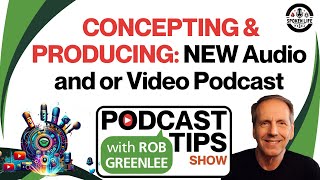
In this 1‑hour‑plus episode of Podcasting Tips, Rob Greenlee draws on two decades of experience in radio, podcast networks, and platform partnerships to explain why many podcasters rush to launch without completing essential pre‑launch work. He outlines a step‑by‑step framework that starts with purpose and audience research, moves through branding, format, recording environment, equipment selection, production workflow, and hosting choices, and ends with launch planning and promotion. Throughout, he stresses the tension between audio‑only and video‑enabled podcasts, the need for platform‑specific content (vertical short‑form vs. long‑form), and the importance of testing, iteration, and realistic expectations. He also shares personal anecdotes, live‑Q&A comments, and practical resources (e.g., Descript, RODECaster Pro, TinyPNG, PowerPress plugin). The episode serves as both a checklist and a mindset guide for anyone serious about starting a sustainable podcast.
Chapters
Well, welcome to Podcasting Tips with Rob Greenlee. My name is Rob Greenlee, and I want to welcome you to the show here, and I appreciate you being here. And what we're going to do tonight is, um, go down a path that is definitely a well-beaten path for me and my experience, my many years of experience in the podcasting space, about the concept of creating a show and launching it and all of the many steps that go into the process. I do think that there are some ways to shortcut this process and to get to the, the launching line a little quicker, but I think that there are some things that you might give up along that path, and I think that there is an urge to launch, um, you know, quickly and to come up with your concept quickly. And I do, you know, I do back up and I think a lot about, um, all the different podcasts that I've launched and started. And, and I think it's, it's become a, a kind of a complicated thing, um, now more than it was in the early days, um, because back when I started, I was actually doing a radio show And so it was really kind of a different time and a different kind of format for, for the content that I was producing anyway. I was making a radio show that had a lot of commercial breaks and things like that, so I was like taking out commercial breaks and trying to stitch this together to create more of a, like, a podcast format. And I think that's one of the, the challenges that a lot of new podcasters have today is these all these different places where you can consume audio and video content now and how each one of them may have some differences in the expectations of the users of those platforms. And I'm speaking really more about this concept of a convergence strategy. And I think I've been heading down this path myself, and I'm doing that with this program, is kind of a convergence strategy from the standpoint that I'm coming in and I'm doing this show live, I'm making a video, but yet I'm also putting this out as an audio and video podcast in an RSS feed. And so I think, you know, that can be a challenging process. And I've had, you know, some things that I've noticed online as I've been doing research on this. I'm always keeping an eye on what's happening out there, and I knew do see folks talking about this where, where maybe a good approach to this as well is to create unique content for each of these platforms. So like if you want to create a short, don't necessarily grab it from your long-form podcasts, but pull your, pull your iPhone out or your Android device and actually just record a vertical video with, you know, like a 1-minute kind of take on it. So trying to repurpose your videos that you do like in this format on a widescreen basis may not necessarily fit the medium that is there for Reels and Shorts and the short-form content ecosystem that's out there. And then also, you know, I think you look at like a TikTok and you look at Instagram and you look at a lot of these other platforms and they are unique. And I think the expectations of the audience are rather unique as well. So I may be giving you the impression that I'm maybe kind of backing down a little bit on this convergence strategy, but I do think that there is a place for this. And I think it is in a place that is appropriate if you look at it from the context of the medium, right? So doing it live like this is perfect for like a YouTube, perfect for, you know, X and these platforms. But I do think that maybe thinking about these vertical video platforms and things like that, maybe creating unique content that's for just those platforms might be the best way to approach this. And I do know that AI technology, you know, like an Opus Clips or whatever, is taking content and formatting it in a way that's really kind of more of a vertical video type format. But I, I just wanted to share this kind of bigger picture thought on how I'm, how I'm thinking about this, this medium. I've been around podcasting medium for 20 years. I'm coming up on 20 years here, and it's been, I have to admit, it's been a roller coaster ride. It hasn't been always, you know, clear sailing in this medium. We've had ups and downs, and most of them, most of the ups and downs have been related to economic fluctuations. And I think we're going through that now, but I think that there's other challenges in the podcasting space right now that are that are also challenging us and to kind of understand what people want and then be able to take who I am as a content creator and kind of fashion that in a way that will be something that someone else would want to consume. And I think that is one of the challenges. You know, it's the challenge that I face doing this program and trying to navigate this world. Because really, Podcast Tips for me, as well as I hope it is for, for you, is, is really kind of a trial balloon of sorts of playing around with all these things and seeing how they all fit together and playing with the AI tools. Because I use the Descript tool to do a lot of the editing on this program, um, you know, and I didn't want this whole program to be just about, you know, kind of my experience in the podcast, you know, what I'm going through. Um, but I feel like now I'm not doing this show that's part of any kind of brand. I'm doing this as a— it's just a, a person, um, that's, that's, that's been doing podcasting a long time and has had a lot of experience at it in a lot of different situations, working for Microsoft or working for PodcastOne around celebrity podcasts, worked for Lipson and Podbean and Spreaker and a lot of these platforms. I've really had a really good cross-section of experience in this medium. And I'm, to be completely honest with you, I'm challenged by the medium right now as well of being able to navigate this. And I think one of the areas that I struggle with a little bit And this is before I really get into the steps of going through this, of actually creating a new podcast or a new video show or whatever you wanna call it. That's also a big area right now that's open for a lot of debate and topic right now is around, does podcasting really want to be associated with video? And is there a place there? I've got a very strong, strong position. If you watch the New Media Show I do with Todd Cochran, Every Wednesday, it's always a hot topic because, you know, the podcast medium really wants to be really primarily an audio medium. And so this gets back to that same issue I was trying to raise before, is that if the podcast medium is primarily an audio medium, then I probably need to think about the podcasting medium in its own place, right? And video belongs in other platforms that maybe aren't considered to be podcasts. Now granted, the audience may perceive them as podcasts, but that's, that's up to them, right, to actually make that choice. And I can, I can kind of symbolize this a little bit for you. I created some new artwork for this show. You probably saw this if you look up in the corner up here. I've got a new logo. The prior logo was created by the StreamYard team in support of my efforts in creating the show on their platform. And so I wanted to create something new, and I definitely approached the creation of this from the perspective of a podcast, right? Not so much a YouTube video. And here, I'll bring up on the stage really what I'm talking about here. And you saw this during the countdown, but this is really a, really a thumbnail that I used for, for this show, and it has a lot of characteristics of what I consider to be a podcast, right? Now granted, if you were to look at this purely from being a YouTuber, this may come across as being too busy, too many words, too many complex logos, too many things like that where a lot of YouTube videos are very simplistic. They have a couple of words on them. They have a significant amount of visuals that are included in there. But this is the tension really between being a podcast. Now, this artwork reflects my desire for this to be a podcast because podcasts do involve more in-depth kind of marketing and presentation. And, and I guess that's where this, um, comes from for me. And, and that's, that's what I'm struggling with too, is do I need to create a, a more simplistic piece of art, um, for this, this program? Yeah, like maybe it's, maybe the right thing to do is to do like what, like a Joe Rogan does. Is create a show, you know, the Rob Greenlee Show, and just keep it simple, keep it really easy. And the tagline for that is, you know, all things podcasting, all things new media, and just leave it at that. And every time I do a show, the artwork that I put up as a thumbnail basically has a big picture of me, and it just has that tagline to it. And, and so when a person comes there, I can probably put up a couple words about whatever that topic is. So it would be like, for this episode, it'd be like create a podcast, right? And, and that would be the whole kind of tease. And, and maybe bigger picture, that's what I should have done. Um, so, but, but the actual logo, I mean, I, I've noticed that a lot of YouTube videos don't have logos. So, so, but with podcasting, you do have to create kind of like, um, kind of like a logo, and that's kind of where this type of a logo comes from. And I'll pull this up on the screen, and this isn't going to be anything that's going to be a surprise to anyone. They are square. They are not that thumbnail. They're used to engage with people in the podcast apps. So as you look at this, you know, it's very similar, but it does take you back to that same concept of being very simplistic. It's like a billboard of sorts. There is less going on in this artwork than there was in the thumbnail. And I think maybe that's where I could converge on this maybe a little bit better. I don't know what you think, but if you look at this artwork, this is series art, right? So it's basically just branding the show. I'm doing an audio and video podcast feed. So there's two separate feeds for this program. And so this is the audio version of the podcast, right? So when you go into Apple Podcasts, you have the choice between an audio version and a video version. So, but this is very simplistic. Now, if I were to get into the episode-level art, then that could be more like what I had in the thumbnail, right? Where it really communicates what the theme of the show is and what the topic is. So when a person sees the episodes, sure, they've got the title of the episode in text on the screen, but they also can see a piece of artwork on the left that basically affirms that same topic that's in that program or the guest or some kind of value, higher value kind of piece of information that's in addition to the title. So that's kind of where I'm thinking at this point and And, but the thumbnails in YouTube are unique and each one of them is unique. And it's only been recently that you've been able to do like maybe a series art in the YouTube platform. And you do have that when you create a playlist. So you can add like art like this as part of your playlist in YouTube, the podcast playlist. So you can create that very similar to a podcast look and feel in that platform. And I think that's, that's an interesting kind of connection here around this theme of branding. So let me kind of move on from this topic. I think I've set the stage towards the, the, the conflict that we need to think about when we think about trading You know, online content. And that's, I think, at the bigger picture, that's kind of what I'm increasingly trying to think about here is that I'm trying to create media for the online world. And that may not take the form entirely of creating one piece of content for everybody and for every platform. And I think we saw this a little bit happen with the social media platforms. And I think we went through a a spell where people would create one, you know, post or one piece of artwork and post it to all the social platforms. But over subsequent years, there were people that were— have this strong opinion that each of these platforms, whether it be Facebook or Twitter or X or LinkedIn, kind of had special needs or a special kind of perspective of the user, right, that you should be catering to. And I think that's, that kind of is, is kind of similar here. And I do also wonder about, as we look at even the podcast consumption apps, that maybe there's differences between the audience that uses Spotify and the audience that uses Apple Podcasts. And that may explain why we see differences in, in the success of programs in each one of these platforms is that they have a different user base. So not to, not to put this off too much further, but I did want to start running through a, a list of steps to go through to actually start a podcast. Now, I started on this presentation in last week's show. This is a presentation that I, I gave to a bunch of Realtors down in Phoenix, probably about a month ago, that, you know, about this whole concept of audio and video podcasting and shared with them all the details of this. But when I ran through most of this deck last week, we didn't get to one part of the deck, which is the concepting and the production of a podcast. So as you go through these steps, These are kind of the high-level kind of things that I think about when I come up with the concept of a podcast. And, you know, and it gets back to, you know, what my goals are, what I'm trying to do, what my passions are. And that's where it comes from for me. It comes from my passions, my expertise. I'm not starting a podcast to talk about, um, some topic that I don't have any experience in. Granted, I've had a lot of life experiences in a lot of different things. Like, I've owned many electric cars, so I did start a kind of an EV series on YouTube. But I've also traveled a lot. I've also, um, I'm a connoisseur of food and nutrition and trying to live a healthy lifestyle. So You know, these are all passions that I have in my life. You know, I'm a passionate kind of, you know, like an efficiency around the energy areas. And, you know, to dovetail off of the EV stuff, I own an electric car. I've owned an electric car for many, many years. And so I have a certain amount of understanding and expertise there, but I don't feel confident that in all these other areas that I feel like I, I'm an expert enough to, to do a podcast about it, though I probably could, and I have done interviews on a variety of different shows over the years. But it, this gets back to the number one aspect of concepting a podcast is what are your reasons for doing it and what's the purpose of it and what's your goals and does it align with your synergy in your life? You know, Where does it fit in your life? Does it, you know, if you're starting this out as a hobby, it needs to be something that you're, you're pretty passionate about. If you want to devote the time it takes to do one of these things, unless you don't have a lot of time. And that's, that's when we get back to my comment earlier about, you know, people trying to fast-track this and try and start it start doing a podcast really quickly. And I do think that there are pathways to do that. I think a lot of people kind of start out down this path, and I didn't have it on my list, is, you know, taking your expertise or your personal brand and start doing interviews on podcasts, trying to put your name out there as a, as a, you know, certain subject matter expert and doing podcasts and learning how to, how to be a guest on a podcast and sharing your knowledge and building up your chops about how you can handle a microphone or how you can manage the video part of this. Do you have a good enough kind of video experience to really give a good experience to another person's podcast? And I know that's something I thought a lot about over the last probably 3 or 4 years is, is what is my capability in my own home office to be able to be a good guest on another show? And the reason I mentioned this is this is, this may be ways that you can start down the path of becoming a podcaster without actually starting a podcast until you're ready, right? And that gets back to, you know, your skills, your abilities, and what's your rationale for doing it. Because what you can also learn by being a guest is what you like to talk about and what you don't like to talk about. But being a guest on a podcast also comes with a lot of responsibility. So, you know, you need to be able to bring value to someone else's passions, right? And they're trying to grow an audience. They're trying to grow and be successful at this as well. And now, my early days of doing a radio show, I really stood on the backs of my co-hosts to really, you know, shore up the show and make it entertaining and fun and those kind of things as I was doing it in a radio station. But that's also, you know, you can't always do this stuff alone too. That's another aspect of this too, of your purpose. What's your alignment with your, your job that you have? So let's say you have a full-time job. How are you going to align this with your full-time job and not somehow get yourself fired from the full-time job? Because I've heard people where that's happened to them, where they started a podcast and they started getting into topics that conflicted with their employer, and they ultimately— the employer didn't like them having a public reach like that. And talking about topics that maybe weren't necessarily aligned with the, the brand or the perception or the understanding or the whatever their reason was, and they let the, the fellow go or the woman go that was actually doing maybe doing a terrific job with their podcast. Maybe they were being too successful. So I think that is something that's possible too. And this gets back to the number one reason is, you know, what's your reason for doing it? And really kind of get clear on that. And what's the purpose of it? Where do you see it? Where would you like it to go? And I think that, that can be hard. That's not an easy thing to come up with. You know, I don't think you have to make it really complex. I just think you need to maybe write some notes down, just like goal setting that you do in anything, and just kind of Take, take an entry into it and just kind of walk your way through that and really logically think about it. And then the next one, number 2 on my list here, is recording locations. So as you kind of think about what you're trying to do, you know, where are you going to do it? Now granted, you may not have the expertise to be able to adequately evaluate that question. But where is it available for you to do, right? And walk into that room and talk in that room and say, well, what's the acoustics in this room? Is it gonna accommodate me getting a microphone and being able to talk into a microphone and not sound like it's echoey and really kind of a poor audio experience? And what's your, if you're trying to do a video, potentially. What's your kind of visual experience? What's the lighting? What's the background of the room? Does it align with your particular brand values or what you want to project about yourself? I mean, a lot of people I know do their guest interviews and do their podcasts in front of like a bookshelf, right, that has a bunch of books on it because there's been research that's shown that people that do content in front of bookshelves, like in libraries, are considered to be more intellectual. So it's kind of a, you know, or smarter, or have more knowledge, right? And so that kind of affirms in the audience that maybe, you know, this person knows what they're talking about if they're doing it in front of a bookshelf. And how well lighted is it?, you know, like, like with my studio here, I've, I've got studio lights that are shining on me right now. They're not huge or expensive lights. They're fairly close to me and they're fairly bright. But those are things to think about too. And what's the quality of the camera that you're using too? I know I'm kind of jumping ahead here a little bit, but recording locations is important. Is it convenient for you? Are you thinking about doing it at work? Are you thinking about doing it in a external studio somewhere, and some people like to do that. Some people don't like to do content in their home office just because they like the separation between work and home, or they have a bunch of dogs, or they have children at home that make a lot— make a bunch of noise. I know other people that fully record their podcasts in their their clothes closets. Because guess what? You get good acoustics in a clothes closet. So you just put in a small desk and you set up your microphone right in your clothes closet, right up against your clothes that are hanging on the bar up there. And the audio sounds terrific because guess what? You're surrounded by sound buffering. And so the audio sounds like you're doing it in a professional studio. And there's some very big podcasts that that do their shows like that, and there's nothing wrong with that. But you have to have a kind of an understanding of what's acceptable to you too and what you can afford. Because sometimes if you do— if you want to do it in an external studio, so let's say, you know, in your, your particular neighborhood there's a, there's a rentable music studio down the street, and you can walk in and say, you know, Maybe it's $25 an hour to come in and record your podcast in a professional studio, or it's $50 or whatever, and you can afford that, that might be a good option for you because then you don't have to invest in equipment. You don't have to really be too concerned about a lot of the aspects of this, but that's up to you. And then the third component of this, which is research other shows. Um, you know, get out and be a student of podcasting and listen to other podcasts, uh, especially ones that are in your genre, the ones that, that, um, you would likely be competing against for listeners, um, in Apple Podcasts or in YouTube. Uh, I think going everywhere and looking for topics, you know, even, even searching in Google. You can even increasingly now you can do a query in ChatGPT-4 and ask it who were the top 10 podcasts in this particular podcast topic genre, and it'll give you a list. Take that list, go into Apple Podcasts or into YouTube, and search for those programs and see what you get. And then subscribe to a couple of them that look interesting, that maybe appear to be doing well, and hear what they're doing and try and understand maybe why they're, they're being successful and how long they've been doing it. You may also find that there is a bunch of shows that are in Apple Podcasts or in YouTube on your the same topic that you want to talk about, or the same genre, that are no longer producing episodes. That will also give you an interesting sign point too, is that maybe that topic isn't as popular as you would like it to be. And that's another thing you have to consider too, is how popular is that particular topic generally. Uh, there's ways that you can do keyword, uh, ranking searches in, in Google to find out, um, what keywords or topics people tend to search for in, in Google. Um, so, and that can be another way that you can gauge whether or not your, your particular genre or, or topic of program really has a really strong potential to grow and be something that you want to invest your time in. So this can be a fairly disappointing process too, depending on what you find. And it may not be, but on the other end of the spectrum, let's say you find a group of shows in Apple Podcasts or in YouTube that are getting millions of views and plays. That are in your exact same topic area. Now that can also be a challenge too, because then you know that you've got some, some, some big competitors out there that are already tapping into that market. So in some ways, trying to find the niche to do your show is really all about trying to find unmet opportunities that are out there in the market. And that's not always easy either. Because they're, they're, you know, I would say just about every niche has been tried. Maybe the efforts that were made were, were very poor and they didn't bring results because they didn't produce a very good program, or they didn't know how to market that show, or they didn't know how to get it out there. And, and maybe the person that did it wasn't, you know, as as well-known as you are, right? So there are factors that go into selecting what topic that you want to do with your show. Like with me, just to use an example, you know, I've been doing really all my podcasting has been meta around the topic of podcasting. So, or new media or online media, but it's always been pretty much centered around podcasting And historically, and even today, doing a podcast or a live show like I'm doing right now, the topic of podcasting is a fairly narrow niche and it doesn't typically attract a big audience. And there are shows like one, from Lipson that I've been on many times. It's called The Feed, um, that has been doing episodes for 10 years or so, and they, they just get a few thousand downloads per, per episode. And, and so I wouldn't claim that, um, you know, what I'm doing— and this is to be transparent— doesn't always get that many plays or downloads because this topic there aren't as many people right now looking to start a podcast as there was actually coincidentally about the same time the pandemic started when everybody was locked down. A lot of people decided that they had lots of time that they could create a podcast 'cause they were working from home. And so we saw a big spike in interest in podcasting back in that 2020, 2021 timeframe. Where we saw lots of new people getting into podcasting. So that's just to share an example of how topics can become heightened in their popularity and maybe wane over time. They can also wane because of oversaturation. They can also wane because people's attention is moving on to other things. One example that I can share is that I, I have a lot of EV videos on my YouTube channel. If you were to go and look at my, my YouTube channel at, uh, @RobGreenlee on, on YouTube, you will see that I have a bunch of, um, old videos about some of the early EVs, like the Tesla Model S and the Nissan Leaf, which I had back in 2012. And Those over the last 2 years have done phenomenally well, hundreds of thousands of plays. And but those are like 14-year-old, 15-year-old videos, and they, they were doing really well. But more recently, I think with a, a little bit of a downturn in the perception around EVs, people are not as interested. And I've seen my my views drop on those older videos. I was creating some new ones too, and those have done fairly well, but never, uh, not as much as the old ones did, um, just like 2 years ago. So, you know, topics come and go too. So that's the other thing too that you have to kind of weigh a little bit. And, and to go you know, kind of dovetail off of that. And then number 4 is the content of your podcast. So, you know, based on your research, based on your location, based on your reasons and your goal and why you're doing this podcast and how you see it benefiting your personal brand, that flows all into your choices around, well, what's the content that you're trying to focus on producing? What do you think the scope of that is and how big of a scope is that, right? Is that a topic or scope that will allow you to produce, just to throw a number out, 600 episodes over the next 10 years? Or is that a content topic that maybe you can, you can do in maybe 10 episodes or maybe 100 episodes and you'll kind of burn out? On that topic. And I do believe that's one of the reasons why we see in, in the podcast space, we, we have over 4 million podcasts, of which only might maybe 3 or 400,000 are actually active shows, is that we see people that start down the path of creating a show and they either run out of things to talk about, um, or they run out of inspiration Or they just aren't seeing the traction and they kind of pod fade or they give up on the show. Or they have a life crisis, something come up. Maybe they have a baby or they get a new dog or they get other things that are important to them in their lives. And guess what? The podcast kind of loses, loses your time. And so you, you have to podfade, uh, or stop producing new episodes. And that typically happens— just so you're aware, it typically happens rather slowly. What, what usually happens is people will start producing and they'll produce like maybe 6 or 7, maybe up to 8 episodes, and by the time you get to like 8 or 9 or 10, there may be— there's longer gaps between the publishing of each episode And then over a period of time, it's like you've kind of lost your momentum, but, and then it eventually stops. So the content is very important to keeping you in the passion and in the desire to keep it going. And it has to align. This gets back to the goals and the purpose. It has to align with your personal goals. Maybe your personal brand, maybe your career, maybe your, where you want to go with your career. Maybe you want to start a business, um, that's different than your, your work. And maybe, uh, starting a podcast about that particular area that you want to start a business might be a stepping stone to getting that business off the ground. So it gets back to purpose, what's your goals, and that content needs to align with all that. Ideally. Now, granted, if you're talking about like a major media company here, um, the content is rather contrived based on the, the topic, um, and the format of the show. And that's the next one here too. Number 5 is the format of the show. What, what is the format? Is it a solo show like what I'm doing with this one? Is it an interview show? Or is it a A show that has a co-host, maybe you have multiple co-hosts, and what is the format of that show? I mean, how is it put together? Is it— does it have a certain kind of segmentation flow to the content that is fairly consistent, or are you going to change the flow of the show in each episode? Are you going to create long-form, short-form? Those are all key things. And is it video? Is it audio? Is it audio only? Is it video only and maybe audio? You know, so, or are you just going to be a content creator that just does short-form content for TikTok or Reels or, you know, the short-form platforms? Are you just going to be a content creator for that? Which is, which means that you're heading down the path towards 1-minute videos or, or, and that's that thing which is a kind of a different approach. But those are the choices that you have in front of you today, and that's what makes these choices so complicated. And then, and then through this process of figuring out what, what you're going to do, you got to cope with the show name. What's the brand? What's the name of the show? This show Um, this show wasn't originally named by me. It was named by the, um, by the StreamYard team. They came up with the name of the show. I told them I was going to create a show and they came up with, uh, the brand and the logo and all that stuff for me. I appreciate that 100%. And, and it, it served me well for 30 episodes. And, and now I'm here and I, I just wanted to refresh it and give it a, give it a try because the show that I'm doing here now is quite different than the show that I did when I was aligned and partnered with StreamYard. So as you can see, the format is I didn't do solo shows typically when I was in partnership with, with the StreamYard folks. And there isn't really any reason for that that is related to StreamYard. It was just the choice that I made at the time that I wanted to do an interview show. And so now I'm kind of thinking again about doing more solo. And, you know, this, this particular episode tonight, I didn't— I don't have an outline for this. This is off, off the top of my head. I do have this deck in front of me that, um, that kind of guides my conversation here, but I've been talking about these topics for many years, so it's really easy for me to to talk about these things. It's something I've been doing at conferences and events and one-on-one with podcasters for many, many years, and I wrestle with it myself. So, you know, I'm speaking from the heart, and I'm speaking from my own struggles with these things because they're not easy things to get through. And I do believe that some of these things, especially in the early part here, the 1 through 7 that I have, are probably the most difficult parts. Because, you know, these things have to make sense. They have to align. They have to be purposeful. And it's not always easy to do that because we're all human and we all think that we're doing the right thing, but the market will tell us if we are or not based on the success of what we're doing. So we always have to be willing to adjust. And, and adjust our sales and try new things, just like I've done with this show, you know, going from StreamYard to, to my own channel, you know, make some adjustments, see if that causes a different outcome. I mean, invariably it is going to be a different outcome because StreamYard had 108,000 subscribers on their YouTube channel and I only have a couple thousand on my channel. But also this show is an audio and video podcast too. So it's out on a bunch of other consumption platforms and I just have to do a better job of marketing it myself and not being as reliant on the StreamYard kind of platform to market my show for me. So, so this gets back to, you know, what's that show name? What's the hook? That's going to catch people with the interest to tune into the show and care about what a person has to say about something, because that's kind of— or share or cover or discuss. All those things are important. And then also a concise and, you know, attractive description too is another. But that gets back to the purpose right? You have to get that down in writing. You have to put it down in, in a document, um, or in a text file or something like that that you can, you can go back to and refer to. And because what you put out as the purpose of the show needs to be what you deliver on, you know, and it needs to align with the name of the show too, unless it's, you know, the Rob Greenlee Show, which means that I can do anything I want. To some degree. Um, but I, I, I do think that you build a reputation even if you were to name your podcast your name. And a lot of big talk radio folks do this, um, but they also are— have a reputation for talking about a certain topic, and that's how they grow, is that they build a, a real reputation. And people tune in because that person has passion, has a desire, really can speak to an audience in a compelling way that keeps them coming back wanting to have more. So that's why it's really important to have a good description. That's like your foundation. And increasingly people are using ChatGPT to help them with that stuff. But, and then coming out of the description and the show name comes the graphical representation, the show branding or the logo, like what I have up on the screen here that you can see or in my cover art. What is that logo? What is the branding? And it can be simple or it can be complex. You can hire a professional artist to come in and You know, you share with them your description and your show name, and they take that as creative input and they come up with a show brand for you or a logo. Now, granted, if you're thinking about doing this on YouTube and doing it on a podcast, it's kind of a little bit of a different conversation because are you going to make your YouTube program look like a podcast, or are you going to make it look like a YouTube show? And I think that, that is a tension there that's real. I've chosen to make my, my YouTube show of this show look more like a podcast, where others don't make that choice. They'll use a much simpler graphic presentation with a lot less text, like we talked about earlier in the show. But yet in the podcast, you know, it's, it's more of a logo type of a thing. So I think I've covered these pretty well. I kind of want to clip through the next one, which is the production side. Here, let me jump, jump to that. It's the— once you kind of have your concepting, you kind of have your purpose, you kind of have your format, you kind of have an idea of what kind of show you want to produce, that really drives the next series of decisions and actions, which is number 8 at the top of the list. Once you're ready to start producing, guess what? You got to start thinking about, or, or really nailing it down, of what kind of recording equipment, what kind of cameras, lights, whatever that you need to produce the kind of content that you're trying to produce. Is it Is it remote, which means that you, you know, you need to get like a StreamYard or a Zoom or Riverside or any of these recording type platforms or live streaming platforms? Are you gonna do a live show? Are you just gonna pre-record? There's lots of choices on the software side too. So you have this combo of what kind of microphone that you're gonna get. It's also driven based on, you know, what's the spectrum of how you're going to get the content. That will dictate what kind of equipment that you need. So if you're going to go out and record in the field, do remote in-person interviews, that kind of requires a little bit of a different approach than if you're doing it in your home office or you're doing it in a studio somewhere and you have guests coming in or you're just doing it like I am here in my home office that I built as a studio. So, you know, that is actually— I'm already starting to move into the setup of the studio or the home recording environment. You have to get the equipment, the software, you have to experiment with it, you have to learn how it works. You know, I've got a RODECaster Pro here and I've got a a professional microphone on a boom. So, you know, I highly recommend thinking about these things and doing research online and learning about them and trying to figure out which one makes the most sense. It's difficult for me to sit here and really say that, you know, this is the right way to do it. This microphone is the one that you have to have. This piece of software is the piece of software that, um, that you have to have. I know a lot of folks do that, but I also hear horror stories around that too, because then a person will go out and they will buy that based on that recommendation, and then they'll get it home and they'll, they'll realize, well, it doesn't really fit what I'm trying to do. So, you know, and That also explains why, if you see behind me, I don't know if you can see it there on my, uh, right there is a microphone, right? And also up on my bookshelf up here is another microphone, right? I've experimented with a lot of different microphones and trying to come up with something that would work well. And I even have a Lavalier. I'm not currently using it, but it's a little tiny lavalier microphone that's right here too that I have as an option as well. And I have a few other mics that I've played around with as well. And that's what you wind up doing is that over a period of time, I've been doing this for 20 years and these aren't even all the microphones that I've been through. This is just a couple of them. And so you, you do have a tendency to trial your way into this and it can be expensive. But if you've really thought about what you're trying to create, then, then you're more likely to go out and get exactly what you need and not waste money buying things that wind up on your bookshelf like I, I have here. Because that's a, That is a, um, a boom mic, which is something I tried to set up in front of me here so I could do, do my videos without this microphone right in front of me. But what I found was, is that the audio quality out of this is so much better than that, that, that it made more sense for me to just keep doing this. So that's That's where you have to also get into this next phase of do test recordings. And I would also go, if you're interested in a particular microphone or a particular piece of software, go to YouTube, do a search for it, and find a bunch of demo videos that are on that microphone or on that piece of software and watch those and learn what's good about them, what doesn't work very well, how well do they sound, all that stuff, and learn from people that actually have had the mic and they've gone through this process and they've really trialed it and tested it and compared it and done all these things. And there's plenty of videos on pretty much every microphone that you can think of to learn about this. And then once you do select what you want to get, And get it in and then just do just tons of test recordings. Figure out what the right distance is for you. Do you have a sound buffering capability like this has, like a foam thing that keeps that popping sound from being involved in your audio? And do you speak directly into the microphone like this, or do you like to have it off to the side of your mouth?, which oftentimes I will as well, because typically with a dynamic microphone, so you kind of have two choices. So there's condenser microphones and there's dynamic microphones. The dynamic microphones are typically better for closer proximity recording. So as you can see, as I pull this closer to my mouth, I do think the audio gets a little bit crisper and the volume levels. I just don't like it in my face necessarily when I'm doing video. So that's why I pull it back a little bit, get it a little bit further away from me, and then I just turn the gain up on it a little bit and just accept the fact that there's going to be a little bit— it's going to be a little bit less on the quality side, and that's going to be okay. I can accept that. So this is all about experimenting and trying new things and doing your best to try and make the right choices and get the right kind of recording equipment or software for your computer and get those settings right, the volume level, the recording volume, the gain level. That's also really important too. And so like I say, do a bunch of test recordings and listen to them after you've completed them because this is, This is probably, that phase right there is probably the most important part of getting, whether it be an audio or video program together, is doing a bunch of recordings and going back and listening to them and making sure that they have good volume levels too. That's a very important piece to podcasters, to have terrific volume levels in your audio. So when somebody's listening to this while they're mowing the lawn or they're on a train or on an airplane, they can actually hear you even if they have the volume turned up all the way, or if they have it turned up 3/4, they can still hear you in their headphones. And I think that's a bar that I try and meet all the time. I use this piece of software called The Levelator, which primarily only works now on Windows, but it goes back to the early days of podcasting. It basically normalizes your audio across the whole audio file, and it basically makes a consistent recording playback level for your audience that's high enough to meet that bar. Now granted, lots of software now has that ability to do that. And then the other thing is do those test recordings and then start working on your ability to assemble that, that show together with like music or exits or intros or whatever and stitching those things together. And do a bunch of trial edits to kind of come up with something. I tend to take a music bed and I will do some fading in and out of the music so So when I create the episode, I can just add these in and it will have the places where I want the music level to be higher and other places in the WAV file for the music that are lower. So it'll be more like when I'm talking over the top of the music, kind of like what happens with this program. If I were to, you know, hit play here, There is the ability in like a StreamGuard program where it will actually lower the actual volume of the program, but it is possible to do that layering of music and things like that in your production while you're actually recording it. So it's not something you would have to go in and add later, but that does take some planning ahead, right? And trying to get an understanding of what you want the output to be on this and really, you know, creating those music beds that you need to do that. But also, if you're going to use music, you got to make sure you have proper licensing, global licenses, royalty-free music, and then getting a copy of that license from the the actual license holder. So if you get challenged by, let's say, Spotify or Apple or, or whatever platform you happen to be on about you using copyrighted music, you can say, nope, I've got a, I've got a license right here, here it is. So it's important to, to do that so you don't get in trouble. Now granted, more and more YouTube is monitoring copyrighted content in their shows that are on that platform, and they're also doing it in Spotify. And I believe other platforms are going to increasingly be moderating the content, looking for either copyright violations as well as maybe, you know, the kind of topics you're talking about. Those are things that have been realities in YouTube for many years, and I do think that over time they're gonna become a factor in the other podcast consumption platforms as well. But it's really important that you learn how to edit and how you can make that audio sound the way you want it to sound. And then be able to encode it, make an MP3 file, or in the case of a video, make an MP4 file. And how do you make that the size that you need? Is it 96K playback mono? Is it stereo? Those are decisions that you have to make too. The typical format is an MP3 that's got a— it's called 44.1. It's a frequency of recording and playback. Usually either stereo or mono file, and it's usually compressed. The MP3 files are typically compressed to 96k. Some people believe in 128k, which is more like a CD quality type of audio, but I don't think you're gonna hear much of a difference between a 96k mono recording and a 128k stereo recording. I just don't think in most situations you're going to hear much of a difference because you're not really— if you're speaking into one microphone into a kind of a single channel in your kind of your mixer or your recording platform, you're really creating kind of a mono file anyway. So by generating a stereo file, you're basically making the file size bigger than it needs to be. And the audio quality could actually be better in a mono file at 96K than a stereo file at 96K. So these are kind of technical details that are— and there's also joint stereo, which is another way to cut down the amount of kind of file size that has to be hosted and delivered to your listener. And then as you've kind of pulled all this stuff together, just before you want to launch, And I advise that you select a launch date somewhat in the future so it gives you time to practice. It gives you time to create maybe a couple of test episodes to, to just see how it sounds. Give yourself some time for you to get better too. Don't, don't just immediately produce 5 episodes of, of your show thinking that you're going to bank them and you're going to use them. I would say maybe at the most 1 or 2, because you may find that after you've done 1 or 2 that you want to change it. You want to do something a little bit different. Maybe the format didn't work. You shared it with some friends, and, and I would advise that too, you know, get it in front of other people. Before you put it out to the public and get some feedback about it. And sometimes that can be hard though, because sometimes your friends and family will tell you what they think they want you to hear, not what you need to hear. And that is a challenge. But before you launch in most of the platforms, you really need to create a promo or trailer. It usually has to be at least a minute long. So, you know, just do like the same thing that you would do with your description, right, to the shows, a couple paragraphs, and it needs to really sell the show and what the show's all about. And if you've actually recorded some episodes before you create the trailer, just as test episodes, you might be able to use some of the audio from those test recordings to kind of like demonstrate in the promo about what the show's gonna sound like, right? So, so you can like cut and paste in there, you know, like a, like a little clip reel of sorts about different topics or different things that you talk about in the program. But really that promo or that trailer that's published with your prior to your first full episode really needs to promote the show. It needs to let the listener know what they're gonna get in the podcast. And that's really important. It's almost like putting up a billboard about, you know, your show is about this and about that, and this is the value of it, and come back and listen. I'm launching this show on such and such date. And stick to that, right? Say, I'm gonna create this trailer. In this trailer, it's gonna say I'm gonna launch a month in the future. Right. I'm going to have time to pull it together, get what I think I want with the show and, and produce at least one episode, a launch episode, at least. And then on that date that you set one month in the future, you know, hit that target. So if it's July 15th, um, get that episode published on July 15th in a podcast hosting platform. And that's kind of like the, the last— well, I shouldn't say it's the last step, it's the next step, um, in getting this off the ground. And those are, you know, I— it depends on what you want to do. There are plenty of podcast hosts out there. Most of them just host audio, so keep that in mind. If you want to do a video podcast, there are a couple of, of, um, actually there's 3 of them And I have them up on the screen here. I do think I shared this last week too, but there are top podcast hosting services that support audio and video to Apple Podcasts and other listening platforms. There's like maybe 2 dozen total consumption platforms that will take video in various forms and make that available to listeners. The first one at the top of the list is Podbean. It supports audio and video podcasts, and, and it is, you know, possible to upload MP4 video files directly to your RSS feed and then make those available to Apple Podcasts. And then Libsyn is another one. At both, all three of these are at the.com. So Libsyn is L-I-B-S-Y-N. .com and sports audio and video podcasting with features like unlimited bandwidth and advanced analytics. So you can get that. And then the, the last one on, on the list here that supports audio and video podcasting is Blueberry. That's at blueberry.com. And this show is actually hosted with Blueberry. So the CEO of Blueberry is the co-host of my new media show, which is up behind me up on the wall up there, you can see the, the logo of that. I do that live every Wednesday at, uh, currently at 8 PM Eastern, 5 PM Pacific, uh, with the CEO of Blueberry. And we've been doing that show— it was discovered that we've been doing for 14 years, um, yesterday on the show. So Blueberry offers what's called the PowerPress plugin It's basically a plugin for WordPress. So if you happen to be having a website that has your current kind of branded site or it's for a business or something like that, you can just get this plugin and it will plug in the ability to create an audio and video podcast right in your WordPress instance. So when you publish your audio or video, podcast, it actually will create a post in your website. And, and so you just cut and paste the, the graphics and the description or the show notes right into the PowerPress plugin, and it will make a, a post in WordPress and then offer all the links and all that kind of stuff to have playback right in your own website. But yet at the same time publish it directly to your RSS feed that's then made available to the whole podcast ecosystem. So that's why I selected the Blu-ray service for the video podcast, is that it's, um, it has that integration with the, with the website stuff. Um, probably on a cost basis, Podbean is probably the least expensive podcast host to host video podcasts. So the other two, Libsyn and Blueberry, can be, you know, close to $100 or $100 to, to have a video podcast. So that's per month. Where Podbean, I think it's like, it's like in the $79 or something like that. So it's a little less, less money. So, so that's, that's my, my presentation really on, on how to get started with, with podcasting and how that all, all that works. I know I went through it pretty fast, um, but I think as I look to doing, um, more shows here, um, I think I can take various elements of that list that I ran through of all these different, um, components of creating a show, and I, I'll create an episode about each of those, those parts of that process and how that kind of will summarize up into getting your show launched. So this is, this is really kind of a free mastermind webinar kind of a program here. Now granted, just to kind of couch this, I don't have all the answers here. All I can do is give you guidance on kind of best ways to think about this process and to really help you kind of navigate this path to some degree. But really, at the end of the day, it's up to you and what your passions are and what you want to do. You know, it's not an easy thing. So it does look like We've got quite a few questions that have come through, and let me, um, go through some of these in the Q&A section of the show for the last, probably the last 15 to 20 minutes. And, um, so I'll start pulling up one after another. Johnny Bean, thank you so much for being here with me tonight again. I know you've been coming back quite often. And then, uh, Rick Savoia writes, no more Puddles the duck. Well, Puddles is still back there behind me. You can see him right there. He's, he's learning too. He's keeping an eye on what I'm up to here as well. So a little bit of a remnant of my, my relationship to StreamYard, so which I'm using to do this program tonight. So I, I'm still actively involved in that, so I'm just not part of the, the StreamYard content channels anymore. I'm kind of on my own now. So Rick, thanks for the comment. And it looks like, uh, looks like we've got another comment in here too. Right mix for, for business by Sue Ann. Sue Ann, thank you for, for being here with me tonight. And it looks like she's going to watch the the replay as well, because there's probably lots of details to pick up. Um, thank you for the comment here, uh, Susan. And Daphne Shepherd writes, thanks for sharing this information. Well, Daphne, thank you for being here tonight, uh, with me. It's great to, to have you along this, this, this show, because really, this show just kind of wraps up the whole topic, really, to some degree, of, of creating a podcast. And I appreciate you being here and being open to listening to me talk about it. And, and so I hope you come back again. And then, um, looks like Health IQ Hannah writes here, um, I just, you know, claps and appreciates um, the show tonight. Thank you so much. And looks like, uh, Johnny Bean also writes, uh, let me pull this one up here. There's conflicting things. So anyway, um, Johnny Bean writes, uh, this is great info. I've been doing live shows for coming up on 10 years, and I'm continually learning and researching and trying to figure out how to make things bigger and better. Yeah, I I can concur with that, Johnny. That's exactly what I've been doing here too, um, and I've been doing this for 20 years, and, and I just have a lot of passion for live. That's kind of where I started was on live radio, but it wasn't easy for me to do live radio, and to do live is, is not always easy. I mean, it's, you know, I can do some editing at the end of this to kind of shore it up and make it more concise and things like that, But the live, once it goes out, it goes out, you know. So I, I commend you, Johnny, for doing it for 10 years. That takes a lot of, a lot of commitment. And looks like Johnny also posted another one here. He writes, a lot of my friends came to me for help for doing video and podcast stuff, and I helped a lot of friends out and most of them have stopped doing that. Uh, yeah, and it's normal, and I continue on. So, you know, I think that they're not— not everyone is going to be able to keep something like this going over, over the long term like you have, John Ann. And it's, it's amazing that you, you've stuck with it this long, because I'm amazed at myself that I've stuck with it this long too. And I think one of the only reasons that I have is that I was able to build a professional career around podcasting, and I was lucky enough to have that. And it just kept me moving forward, right? I was always trying to do, do a better job in my, my role and my jobs at the various companies that I've worked at, and doing a podcast was always kind of part of that. So, and it looks like, uh, another, another one from Daphne, uh, Shepherd writes It says advice for creating evergreen live to tape episodes and not merely current news live streams. Yeah, definitely, I agree with that 100%, that creating evergreen content is, is oftentimes better than creating kind of news topic content. Now granted, there's advantages and disadvantages. One of the advantages of creating the evergreen stuff is that you can keep an audience, coming back and watching your program over a longer period of time, where news content— I think most people understand this— but, um, kind of burns out, right? Uh, people are off to the next breaking news topic. And then, uh, and then Johnny also writes, uh, if your show is your name, it is your responsibility. And if you have other people on your channel and, and they say or do something that's not cool, because it's your name, you get blamed. Well, there is a certain amount of responsibility that goes into a particular brand and your association with it, whether it is your name or a kind of a bigger brand. I, I think you do have to have some some responsibility and being willing to accept that and be a little picky about who your guests are might be the, the thing to think about if you're really concerned about that. And, uh, looks like Johnny wrote another comment. I do most of my shows live. I have music intros and, and outros, and I'll podcast the audio later for, for most part, it's fine. So every once in a while I'll have to edit something out, but that's rare. So yeah, I think that comes up with me as well, and I think that makes sense. Let's see here. It looks like Beauty Bubble has a comment in here. Um, so much great teaching, Rob. Well, thank you, Beauty. I appreciate the feedback here. And I keep chipping through the comments, and Daphne says thank you with a smiley face. I appreciate it. And Johnny Bean writes again, thank you as well. And he writes here— Johnny Bean also writes, I have evergreen content that gets over 1,000 views every month. For like 15 years. So, you know, if you really think about that, I mean, I think on the scale of, of consumption of this, I mean, some people might look at that and say that's not very much, but really back up and think about it. How many times do you in a typical life get to present anything to 1,000 people? You know, there are shows that are getting many thousands of of people too, but I think your impact may be much greater than you realize. I mean, 1,000 is not something to sneeze at. I think that's a large group of people, and I think you can really be proud of that, that you've achieved even that level of consumption of your content, you know, and don't get too worried about it if, you know, you're not hitting 100,000 or something like that. Um, there's lots of examples of people that stuck with it and kept growing and slowly chipped away at it, right, and got larger and larger over time. So, so I think, you know, it's, it's the persistency that, that really matters a lot when it comes to creating any kind of online show, not, not just a podcast, but, but, but consistency is is really important. And also, you know, but life gets in the way sometimes. I think we all have to make choices around where we put our time, and that's also something that we have to weigh in our lives. Is this giving me what I need in my life? Johnny Bean also writes I always look forward to the next episode. Don't worry about that last one. You know what, I never really get, uh, get too worried about my last episode because I, I can never change it and I can only learn from it. And that's probably what you've been going through too, Johnny, I would imagine, is learning from your prior episodes. And sometimes we do fall into the the trap of making the same mistakes twice, because it might be kind of like a tendency that we have in our own personality and our own skills that, that it causes us to make, make a mistake. And but yeah, you never, never give up is the, is the comment that he makes next. And, and I think that, that is something that takes fortitude and determination. You know, really, I don't think that there's any shame in, in, in failing or giving up. I've podfaded in many shows that I've done. So, and I just move on and start thinking about something new, right? And take what you learn from the past and apply it to, to what you do in the future. And maybe, you know, it's all— that's what life is, is all learning and getting, getting better at what we all do. So, well, thank you so much, everybody, for being here with me tonight. And this kind of program is, is really something I enjoy doing because it's— I'm, I'm feeling like I'm connecting with you, um, at a, at a much, much deeper level here. You know, I know that when I bring on a guest— and this gets back to my earlier conversation about format— and, um, I do feel like we, you know, having two people up here distracts us two people from you who are taking their time to, to watch this and, and to give me feedback and spark ideas for a conversation with you out there. And, and I, I kind of want to be that content creator. I'm increasingly thinking that I've been trying the solo aspect of this content production. I'm probably going to be restarting my Trust Factor program as well and start diving into other topics other than just podcasting and, and see if I can, you know, if you want to go check out my most recent episode, and it's, it's gotten a couple thousand views on, on YouTube. Uh, it's called Trust Factor on my, my YouTube channel, and it's probably, it's probably about time. It's, uh, it was about an hour 18 minutes that I've been going solo here, but, but if you wanted to go check out the Trust Factor show, um, or all the archives of this show, they're all up there. Some of them are over at the StreamYard channel, about 30 of them. So I've only done 2 off of the StreamYard channel. So, but they're all available off of my channel. So if you want to, to go back and check out some of the older episodes that I've done And then also I need to mention too, Blubrry, which is the host of this podcast on the podcasting side. I appreciate their support of the program and making that possible to me. So if you wanna start a podcast and you have a WordPress website, Blubrry is a terrific idea and a terrific solution to create a podcast audio and video. Or just audio. Depends on what you want to do. So really, at the end of the day, it gets back to that. And if you want to get a hold of me, um, that's my email address down there, uh, rob.greenlee@gmail.com. And I'm also on X, at x.com, and that's @RobGreenlee. And I'm also on LinkedIn. I'm also on, um, uh, was it The other platform, I think that's pretty much all of them, is, is LinkedIn, YouTube, um, Twitter, X, are the, are the main ones, uh, these days. Oh, and I also wanted to mention, I don't know that I, do I still have that available? Let's see if I can pull up something. Um, I did come across a website um, that maybe I— doesn't appear that I have it. I'll share it with you just as a— let's see here, let me pull it up here. It's to shrink your cover art image. A lot of these platforms now, um, like a Canva or whatever, where you can go in and actually create a podcast artwork, right? And then export it. They do have a little checkbox that you can check box to compress it to make it smaller, but Apple requires that your podcast artwork either be 1400 by 1400 or 3000 by 3000 pixels, be less than 512K in file size. That's not dimensions. I just gave you the dimensions. I'm talking about actual compression file size. The best website that I've seen to take that artwork, like, out of, like, a Canva, or you've created your square album art, um, and run it through a, a tool called tinypng.com. And they do a terrific job at crunching it down to— I shared with it two files for this show because I'm updating the COVID art for this program, and it took a 1-megabyte file, which is twice the size that Apple requires, and crunched it down to 250 megabytes or 250 kilobytes, which is half of the file size maximum that Apple requires. So this isn't any kind of an endorsement from the standpoint I'm getting paid to talk about tinypng.com. I just found it to be a terrific resource for anybody that wants to start a new podcast and create album art or cover art for their podcast that conforms to the Apple standard. So, so anyway, I just wanted to share that quickly. And I do have my own personal website at robgreenlee.com. And if you want to be entertained to go back and listen to my very first episode that I ever did on the radio back in 1999, It's actually available off that website, so you can go back and hear the, the disaster that my first episode of my radio show was. So, and, and, and subsequent through the years, I don't have all the old episodes up there, but I have many of them, and you can kind of clip through like 2000, 2001, 2002, 2003 and hear the progression of that program if you're interested. I mean, a lot— I mean, that's pretty old content, but, um, but it's, it's fun to go back and listen to that stuff too. But, you know, I was a little closer to it than maybe you are, so— but anyway, I thought I would mention that too. So I should say good night. Um, I appreciate it and hope to have you back with me next Thursday at 7 PM Eastern, 4 PM Pacific. Thank you so much for being here with me tonight. I, I appreciate it so much. Good
More from Rob

Future-proofing with Delphi AI/Human clones: your podcast as a personal LLM | New Media Show






How sports reveal what AI spectacle gets wrong #Technology #Sports #Commentary



