Will AI Replace Human Storytellers in Media?
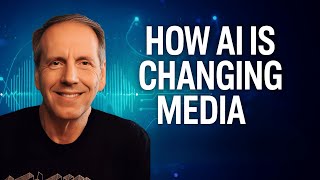
Rob Greenlee, a veteran podcaster, tested ChatGPT as an AI co-host and found it novel but laggy. He argues audio will stay human-dominated while video AI poses bigger risks, and warns that AI audio's flawless quality might actually make it detectable. Human storytelling and emotional authenticity remain the competitive edge.
Chapters
Founder of Gearhart Law, a full-service intellectual property law firm specializing in patents, trademarks, and copyrights.
And I'm Elizabeth Gearhart, not an attorney, but I help Gearhart Law with their marketing and I run a podcast studio.
Welcome to Passage to Profit: The Road to Entrepreneurship, where we talk with entrepreneurs and celebrities about their business ventures. And today we have a very special guest, Rob Greenlee, an early inductee into the Podcaster Hall of Fame. He's been podcasting since streaming only referred to rivers. And Rob is an expert in the realm of artificial intelligence and media. And today he'll be talking about how AI will impact you and the content you consume in the future. Yeah, absolutely. And but before we get to our distinguished guest, it's time for your new business journey. 2 in 5 Americans are thinking about starting a business or are already business owners. And so We want to ask our panel, what was the biggest risk you took when starting your business and how did it pay off or not? So, Rob, welcome to the show.
Yeah, it's great to be here, Richard. Thanks.
Tell us, what was the biggest risk you took?
I would say back in 1999, walking into a radio station, which is kind of ironic here, to plunge forward and create a radio show about an emerging technology called the Internet and the web. I just walked in, had no background in creating content or being on the radio and just took that risk and went in and just surrounded myself with a bunch of fun people to create a, you know, a show that was entertaining plus informative about the growth and development of the internet. So it was a big risk and it changed my life.
How did it change?
Well, it got me into the media business. I was a marketing executive prior to that and was, was doing a lot of putting media out, right? Creating media that other people were creating. But I got into it myself as a host and started creating a nationally syndicated radio show and built it out. And it became a podcast about probably 4 or 5 years into the process. And that sparked a whole new career for me. And that's, that was working and helping other people start a podcast and create online media. Back in 2005. So that was about a year after podcasting kicked off and, and it was an up-and-coming area that nobody really knew much about. So it was one of those opportunities, kind of like AI is today.
I—
being in the communications end of things changes a person, I think, a lot. If you get out there and you make yourself known, I think it can have a really positive effect. Congratulations on doing that. So the risk was really that it's going to have a huge impact on the rights of creators. So if you're an intellectual property geek like me, this is important stuff. So Anthropic is an AI platform. They make the AI Claude. And they were sued by a bunch of creators because Claude was using their content and regurgitating it as—
Welcome back, listeners. You are listening to the Passage to Profit Show with Richard and Elizabeth Gerhart and our special guest today, Rob Greenlee, the grandfather of podcasting. You did say something that really made us wonder about something. You said that you have a co-host on one of your podcasts who is an AI-generated co-host.
Well, I did an episode with ChatGPT and I, I asked him to play a role as my co-host on a show. ChatGPT knows my, my Podcast Tips live show that I do. And so this was a live streaming show. And so I prepped him. I plugged him into my mixer through my phone and just brought him into the conversation and introduced him and And he joined me in my conversation. I asked him questions like a host would ask the guest and he answered the questions.
So what questions did you ask him? I'm curious.
Well, the whole podcast is about podcasting. So it was all about what he thought that the future of podcasting was and the direction it was going and the impact that video was going to have. And what what he saw on the horizon for podcasting. And it gave me very succinct and very thoughtful answers, I thought. So it created an amazing dynamic in the conversation. He's, there's sometimes there can be a little bit of a delay in his answer, but you know, I called him a guy, could have been a girl. I could have, you know, and I'll probably do that. I'll probably have another conversation in one of my other shows with a woman who's from ChatGPT, but it's probably going to give me the same answers. It's just be in a different voice. That's it.
GPT suggested that we ask you this.
Okay.
The rise of AI voice, is that the end of the human host?
No, I don't think so. It's going to have an increasing role. The AI voice is going to, just like I've experienced, because it can create an interesting conversation. And the Google platform, the Notebook LLM platform, does have the ability to have two AI co-hosts do a show together.
I did that. I had it do a show about cats because I have a show about cats. I gave it like 3 sentences. It did a 10-minute podcast with a man and a woman about cats and brought in stuff from all over the internet and stuff from my query. It was, and it was good.
Though I even introduced a few flaws.
Oh, you did? Okay. Yeah. Is that like an extra little toggle you have to do to the setup?
Yeah.
Please include some flaws. Yeah.
Filler words.
Ohms and ahs, please. Yes. Um, yeah, I think that that's probably going to happen though. I think the thing is different with audio. I'm not sure that the audio AI is going to have the same impact as video AI. I think the video AI is going to have a much bigger impact on society. The audio AI is going to play a supportive role or maybe a co-host role. Humans are going to, I think, dominate on the audio side, continue to dominate. So yeah.
And why do you think that is?
I just think that the inflection, the ability of humans to share unique stories that are not maybe contrived. I think AI can be a little bit too fluffy in its commentary. I think it's been programmed to be positive about everything and not come across as authentic and real with human-like emotions in the inflections and how the audio is presented, where video can create almost like a fantasy experience that's almost like eye candy, right? And that's That's kind of a different experience. So yeah, I think the future of audio with humans is strong.
Well, that's good.
Yeah, good for us.
I guess, you know, when I think of it, sometimes part of the service that communicators provide to an audience, showing people different slices of life from different people, and that creates relatability. So this person had this happen to them. And this is how they felt and this is what came out of it. You're telling that story. And if it's coming from a person, then it's relatable because it's another person that experienced that. If it's coming from a computer, yeah, it's just— it lacks the credibility and the authenticity.
Yeah. And I think AI also is very factual. I think AI is good as like a color commentator on a sports program, right? Where the host, just like what we're doing with this radio show, is I'm sharing stories, I'm sharing kind of futuristic projections that are based on my own human experience. And that's what's different than what AI will present to you. So when I use AI, I usually use it to just deliver the facts, right? The research. So I would ask it, you know, what research have you seen and cite it in your comments that tells this story? It's very good at looking up data. And so if you use AI for what it's good for and then play up the strengths of the human abilities in your content, then I think that's the good balance.
I had one more point that I really wanted to bring up with you today, and I think you explained this beautifully last night. We're starting to hear the term agentic AI and AI agents. Can you please explain what those are for the normal person?
Well, an agent in the AI realm is really, if you take this analogy of like a virtual assistant, right? That's, that's where AI is going to take us next. Is that they're gonna string together functional processes that are run by AI bots of sorts, right? That can do like a workflow. It can actually accomplish something. It'll actually take this input or it will go out and do research, pull that input in and generate a report for you, or it will actually create a tangible action in the real world. So that's the path of this, is that the intelligence can gather all the information and then funnel it into, let's say, booking a trip to Europe, right? You can tell the AI to find the best flight at this price point in this date range and go ahead and book it. Here's my credit card number. And it'll go out and actually find the best deal. It'll find the best dates. It'll configure it based on your preferences. And what you want to do and maybe even book hotel rooms for you too. So that's kind of where this is going is that it will actually do things for you in the real world.
I love that. I mean, we're going out to Portland to visit our daughter and I was racking my brains trying and using AI and everything, trying to find a really high quality hotel that didn't allow smoking anywhere on the grounds. And you can't find that on TripAdvisor. It doesn't say whether hotels are non-smoking or not all the time. So I had to rely on AI for that. And I think I found one. I hope so.
Because I'm too old.
GPT-3, by the way.
But—
I missed something.
Oh yeah. Well, well, well, and the other use of the same technology is that kind of is a replacement for a human, right? So you're, you're probably with this technology going to put some people out of work.
Maybe. But I mean, most of that is automated now anyway. They're just making.
That's true. And they're going to need to have people to manage these agents too, to some degree. So, you know, I don't know that we're going to be 100% trusting of them. So we, right.
One more question before we have to end this segment. Do you think creators should be obligated to acknowledge that AI helped create part of their content?
Hmm.
I don't know.
I think that is a big question. I think each creator needs to answer that for themselves to some degree. And the audience has to step in and, um, make a choice about this too. And I think that's probably what's gonna happen. But, you know, there's different levels of adding AI to your content creation process, and I'm not sure all those areas need to be disclosed. So, you know, I think up to this point it's, it's really mostly being used in pre-production, post-production type of processes. There's not a lot of it being used in the actual production of content. So, but that is gonna change. And when that changes, I think the big debate that needs to be had is, is there gonna be labels that are gonna be put on this kind of content? Kind of like, you know, rating labels that have been around TVs, TV and film for many years.
Well, when they first start marketing AI movies, they're gonna be proud to put it on there because everybody's gonna wanna see the, Well, everybody's going to be able to make an AI movie if they understand how to do it.
It's not going to be expensive. It's going to be like, I think the current quote right now is to make a movie like a Hollywood blockbuster will cost you $17.
So, yeah.
So, so is that an opportunity or is that disruption? And, and it's probably both. It's an opportunity to create content. That is compelling.
We're already saturated with so much content. I don't know if I can handle this.
Seriously, that's a different, different argument, right? It's just so much.
Anyway, we've got to move on to another AI topic. So, Rob, where do people find you? Um, learn more about—
yeah, I think the best way to find me is at robgreenlee.com, and I'm also on, on YouTube. I have a, I have a YouTube channel as well at Rob Greenlee, and then I'm on all the social platforms. I'm easy to find. And I also have a podcast network called AdoreNetwork.com. So there's a bunch of my podcasts that are up there, audio and video podcasts. So.
Well, great. Thanks so much for joining us.
Yeah, thank you.
Well, today's guest, Rob Greenlee, he's been podcasting since most of us knew the internet talked back. He is a true podcast pioneer. An early inductee of the Podcaster Hall of Fame. He's launched more shows than Netflix. And if there were a Mount Rushmore of legendary podcasters, Rob Greenlee would be right up there, probably with headphones on. Right.
You know, I'm sure that all came from ChatGPT too, right? Yeah.
I love our ChatGPT.
Yeah, it's awesome.
Yeah. So anyway, but that's, this is the way we really feel.
Oh yeah.
Rob, why don't you, uh, Speaking of AI, um, we want to talk to you today about AI in the media. And so how is AI reshaping the future of media?
Well, I think it's, it's taking it in a bunch of different directions. Uh, it's making things more efficient. Uh, it's, it's actually able to create content in a way that is increasingly becoming more and more professional. On the video and audio side. But I think the real revolution is on the video side. I think the audio side is still going to be an area that's going to be still strong with humans, but I think it is going to be as good as a human eventually. I think there's two different conversations. It's AI-created audio and then there's cloned AI-supported audio cloned of humans. And its ability to replicate what an actual human being would actually create is, I think, going to be a challenge for AI to actually do that. But that doesn't take away AI's ability to create audio that sounds great, professional sounding, but it's probably going to be lacking in flaws, right? Which is going to be its flaw, is that humans are going to be able to detect the lack of flaws. Or a lack of errors, right, that will really make it stand out.
So when you have, you've listened to AI voices and—
I've actually had 'em on as co-hosts of my shows.
Yeah, we need to get to that.
Yeah, right.
But you've had AI and interacted with it. How do you feel knowing that it's not human? I'm not really that worried about it.
I think at the end of the day, it's the value that it can bring and the information that it has access to.. And I think that is the key thing that we all have to think about. Also with the video side, I think it's gonna create things that humans would never create, right? So there's gonna be fantasy, there's gonna be all sorts of representations that are created in the AI-generated video that will just be beyond our scope of our imagination. And I think that's where it's gonna stand out. I think AI-generated video is going to be huge. I think humans are going to consume it at scale. It's already starting to happen. And I think it's going to change the landscape. Now, humans need to focus on, on the aspects that make them human when they do video that can't be replicated by the AI. And I think that's the— that's, that's what we need to start really honing in on is how do we maximize our humanness in the content that we create as a kind of a way to come back from the increasing dominance of AI-created content.
Well, I agree 100%. So I help with marketing at Gearhart Law, and I've told the attorneys numerous times, which is going to probably punch me for saying it again.
Not right this moment.
Not right this moment. But when you're writing anything for blog posts or anything, you have to write stuff AI can't. So you have to relate stories, how you've interacted with your clients in a human-to-human way, because AI doesn't have clients. It doesn't have client stories. It can't say, my clients think this. So you have to really try to figure out what AI can't say that you can say. And I think that that's going to be important moving forward.
Does it make a difference to you if it's coming from a human being versus a computer? Just that knowledge. I mean, I kind of get that for films because that's like you have, you know, that's maybe not— it's produced, right? And it's edited and scripted. So it's already kind of half fake. Yeah. Or all fake for that matter. But if you're having an interview or discussion with somebody, if it's not from a human being, is there any credibility?
Well, that's the hard part about it. It's really keyed on trust. Are we going to trust the information that AI is going to create for us? Is it— does it have bias in it? Does it— is it truth? Is it honest? I mean, I mean, and that's very—
so can I.
Well, yeah, exactly. I mean, AI was trained on humans, so of course it's going to have that capability. And a lot of people, people think that eventually AI is going to have emotions too, and it could get offended. So there's aspects of this that we just don't know yet because it actually hasn't happened yet. But the impacts of this are gonna be pretty profound. I mean, I saw this kind of back when I was doing my nationally syndicated radio show about the internet in the early years of the internet about its potential impact on the world. And we talked about that on the show, wireless, you know, and I think it's easy to just kind of look at it and say, ah, it's, it's never gonna be that significant or it's not gonna have that big of an impact. And I look back on what I did with my radio show about the internet and I think to myself, God, what kind of monster did I create? I mean, really, I mean, it's impacted all of our lives, but there's also a downside to all these technologies that we all have to be aware of. So it's not always a rosy picture, but there's opportunity that comes from it too.
Well, I mean, for example, the introduction, your introduction today was written by Yeah, honestly, I did feel it.
That's okay.
It was hilarious. It was entertaining.
Yeah, I've done a lot of work to train ChatGPT on who I am and what I represent. I upload transcripts to it. I give it all sorts of information about my views because that's exactly what I wanted to do, is that when people want to get more information on me, they're going to get an accurate picture.
Can AI ever really compete with human storytelling? Because it did.
Yes, but it'll be different. Uh, it's gonna be a compilation, not a unique story from a human perspective.
So it kind of goes out there and it collects data from a lot of stories related to the one that you want to tell. Correct. And it mashes it all together and it comes up with something.
Yeah.
Is that even a real story?
Doesn't have to be. I mean, I think AI has had a reputation for hallucinations. So I don't know if you have heard that as well, where it just—
I have friends who have.
Right.
I mean, but humans have hallucinations when they eat mushrooms. So I mean, I think it's safe to say that AI is going to have that kind of experience as well at some point. But it's not like AI is going to eat mushrooms, but it's going to learn from human experiences. But, but you never know. Who knows?
Can I please tell the story like you're on mushrooms?
Right, right. Well, I'm sure you can do that today.
Yeah. Yeah, so I, I do think it's getting, gonna get harder and harder to tell between human-generated content and AI-generated content. And I'm, I don't know which people are going to prefer, to be honest with you. And I do think it might be important for people to have in-person gatherings. We were talking about this last night at the meetup so that you know that it's real.
Yeah, correct. Well, live is like live streaming and things like that is another kind of confirmation of life. Right. So I think that's gonna be a term that's increasingly used is that we're going to have technologies that will flag things as this is real, this is live. Not AI-generated. And so we'll have to see how this plays out.
So would you rather see a doctor that's an AI doctor but does a perfect job, analyzes you perfectly, or would you rather have a real doctor that is 95% effective?
I've already been playing around with this, around trying to take all my blood markers, take all my my scans, my CT scans, all my, you know, symptoms that I have about various things that are going on in my body. And I run it all through AI and it creates an extensive report on my health. So it's, well, maybe trust isn't the right question to ask. It's more like, well, does the output give me some value? Right. As opposed to going into a general practitioner and having them take, you know, 15 markers from me. I took 100 markers and gave it that information. So it's about the context of the information that you're giving it about you and how confident you are and trusting that giving it that kind of private information is secure and isn't going to get shared with insurance companies or something like that. You just don't know.
So that's the scary part.
Yeah, that is.
Insurance companies will say, okay, well, sorry.
Do a lookup on the health history of, you know, this and this person, and it'll have a report because you've given it all that information.
So personally, I mean, no offense to my doctors, I would much rather have an AI doctor. I feel like they would be less judgmental, and I, I, and they would just look at the data, you know, very analytically.
I mean, that's so true, especially with women. Old women patients and men doctors. And sometimes men have a, they have a reputation for dismissing symptoms. That probably would not happen with an AI doctor.
So yeah, I, I'll go the AI doctor route. You know what?
Yeah, I will too, because you'll have to program a few doctor jokes in there though, you know, because my own experience is that General practitioners don't know everything, right? So they don't know, always know the latest research on various causes of certain diseases. I've challenged the doctors that I've gone to, and I've asked them the questions that they just have a puzzled look on their face. So they don't have all the answers. And so I've had to kind of take responsibility for myself and, and use these tools to the best way that I can to help optimize my health.
And in a little bit, I'm going to do the medical minute and I'm going to talk about some AI, an AI discussion I was at with the doctor.
Yeah. But if so, say that you're getting a difficult diagnosis, you just like to have computer, even if it has a sympathetic voice, blurt that out, or would you rather hear that from a human? Or does it not make any difference?
Well, at some point you probably want to bring a human into the process. It just, maybe it's just a matter of identifying flags of potential issues. And I think it depends on what that is. A specialist doctor is typically not going to look holistically at your challenges because a lot of diseases are caused by a lot of different things. I know this isn't a health show, but but not all doctors can look at all of the information and coalesce it to look at your body holistically to come up with a cure versus just tamping down the symptoms with some drugs.
I agree. You know what I mean? I've had doctors tell me, well, sorry, you know, just go figure it out.
We don't know what's going on.
Yeah, I wouldn't know. My mother suffered with something for years that she thought was due to something and The doctors could never figure it out. And, and maybe I can.
Yeah, maybe. I like to change the topic a little bit and talk maybe about how I will change media advertising and monetize.
So, Rob, we touched about this a little bit last night during the meetup. So what is going to happen to media advertising and monetization as a result of AI? How will AI change advertising and media?
I think it's going to change it in a couple of different ways. It's going to make the ability to create advertisements much more quickly and get them also created in a way that maybe targets audiences better. And that's going to be on the audio and video side, because currently right now it's a pretty laborious process to create an ad spot or something like that where you have to bring talent in the studio. They have to be scripted. They have to have a performance element to them. Where that can all be done in AI and it can be done on the fly. So I think around targeting, you know, the podcasting industry has been moving more and more towards automatic advertising, which is called programmatic advertising. And so that's where there's an insertion point in your content and the computer and the servers input those ads. But those ads have to be prerecorded by a studio, by talent. All those kind of things before they can be injected or the host reads that are prerecorded. So AI is going to generate those ads is the simplest explanation. And they're going to be done professionally. They're going to be done in the precise way that the brand wants them represented. Because there's lots of examples where talent will come in and create a spot and it just won't be just what the brand is really looking for. Right. And they'll have to redo it over and over again to get it right. And that slows down the process, adds a lot of costs. And these platforms want to be dynamic, right? They want to be able to create campaigns on the fly, precisely how they want to have it presented. And this will be a way that it can do that.
So we have to take a commercial break now. And for our listeners, if you want to get more Passage to Profit, you can listen to other episodes or follow us on social media. You can catch our past episodes anywhere you get your podcasts, or you can go to YouTube.
More from Rob

Future-proofing with Delphi AI/Human clones: your podcast as a personal LLM | New Media Show






How sports reveal what AI spectacle gets wrong #Technology #Sports #Commentary



