Will Podcasting Reach $5B in AD Sales | Steven Goldstein
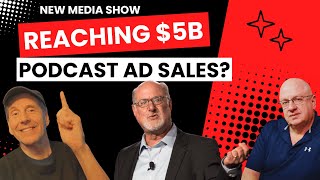
Steven Goldstein and others debate why podcast ad revenue has stalled at $2 billion instead of reaching $5 billion. The main blockers: fragmented measurement systems, no unified ratings standard, and agency buyers' concerns about brand safety and attribution. Solving data aggregation and consumption metrics could unlock larger ad spend.
Chapters
Todd and Rob in the afternoon. With Todd and Rob.
Oh yeah. Oh yeah, here we are for the new media show, and of course every plan goes sideways as soon as you go live. I apologize for those of you watching because Rob and Steve are scrunched and I'm full screen here, so Who knows what's going on, but gentlemen, welcome.
I think it works.
Yeah, it does. I just wish it would be the normal size, but I didn't have time to correct. But welcome to the show. And of course, for those of you that don't know, Rob, why don't you introduce our—
let me set it up a little bit. There's been some discussions in the industry and Steve, our guest here, which I haven't introduced yet, but if you're watching the video, you can certainly see it. Some topics, and Todd and I have been talking about this topic for actually many years, actually, around how do we get podcasting off of this $2 billion revenue kind of level? Because we've been living at this $2 billion ad revenue level for the 3 or 4, 3 or 4 years, probably more projecting. Yeah. And Steve and, and a few of the folks have come up with some ideas. So welcome to the show, Steve Goldstein. He's the founder and CEO of Amplify Media and has spent many years in the media space on the radio side and has spent over the last many years now focusing on podcasting and that, that, that convergence. So Steve, welcome to the show from New York.
Very nice to, very nice to be here. First time, I think maybe I'm not sure.
I think you were on maybe before. Yeah.
It's been a while. I think maybe it was on And maybe I was on once before, but a pleasure to be here nonetheless. And, and I am celebrating 10 years of Amplify Media this coming month.
Wow.
That's how long. And I am a newbie compared to you guys.
I don't know about that. It's, it doesn't change. It hasn't changed that much, probably. Hence the reason why you guys are talking about get the $5 billion. I have a hypothesis on how to get the $5 billion.
Yeah, that's what I thought this topic was.
I'm trying to be funny, Rob. You missed it.
What?
I'm trying to be funny here, but you missed it. We monetize 95% of the shows that don't have advertising, and we put 50 ads in each of them.
So you want to follow the radio model?
No, not necessarily, because that is a complete— that would never happen in all reality. It would never happen. It's all— the ad loads are already too high. We can't handle any more. Some people think they can handle more ad load, but anyway, so I haven't read the article or whatever the drama is. I'm curious what the plan is to get the $5 billion.
Sure. So I'm teaching at NYU. I'm teaching a course called The Business of Podcasting, and it is not a course on how to make a podcast like so many of the courses out there. This is on the ecosystem. So of course, we end up discussing the eco part of the system., which is that $2 billion number. And I had Pierre Bouvard in from Westwood One. He's the Chief Insights Officer, but maybe more significantly, he spends a ton of time in front of buyers and always has. And so he understands the whole buying selling ecosystem maybe better than just about anybody I know. And so he spoke to the class and we talked about the $2 billion number and we started laying out with the class how this moves north. And I thought his comments were revealing and yet none of them were surprising. But there are so many different facets to trying to move this number north. You do need to break it down. But I think the most fundamental thing is that the audience keeps growing. And so theoretically, yeah, the revenue should keep growing, but unless you want to add in more mattress sellers and food vendors, which is 50% of the business today, you're probably not going to see the number grow significantly. And that is Pierre's contention as well, that you want to be in on the advertising agency buys. And these are brands who are looking for something entirely different. They're not really looking for the same kind of brand list. They're not looking to give you a coupon code and sell the mattress today. Delta Airlines has a different mission. They are trying to build their brand to the younger audience. Podcasting brings that. And so they need some things to participate. One, they need some kind of rating system and podcasting has yet to come up with a single simple to understand rating system. And in TV, And radio, there's Nielsen and people hate it, but people use it and it is the standard by which most things are purchased. And we could spend a whole other show talking about why that's a mess, but it's, it would be a good mess for the podcast business to have one standard chart. And Pierre feels that the Edison chart is closer because it encompasses everything. It encompasses any of the podcast platforms and it can also handle YouTube or Spotify Video or whatever. So that maybe that's the right way to go. I'm not advocating specifically for Edison, but I am advocating for unification. If you go to Podtrack or you go to Triton, you're getting a slice, but you're not getting all of the companies. So you really don't know who's in the cooler. You don't know who's leading the way. And I think Dan Meisner is quite right in trying to move the industry off of downloads. Sure, you guys agree with that. And into something more consumption-based. Did I just hit a number, Rob?
I think it's a controversial topic only from the standpoint that this medium really in its roots was built on downloads. And for us to transition to something else can be— leads the industry more towards metrics that are coming out of proprietary platforms.
And that is the, that is the difficult. Well, everybody's Keeping the stuff in their pockets, which is a really bad idea.
What's funny is when did we do our first IAB meeting? Was it—
it was back in 2014, probably.
No, but there you go. Anyway, so the promise that IAB certification was, is this is going to bring the brand advertisers to podcasting. This is the information that they're missing is it has to be, you have to have a certified number and the brand advertisers will come when you're certified. They didn't come. So—
oh no, they did.
They did come, just not as much.
50% of the podcast business today is brand advertisers, and 10 years ago that number was zero. That's true. So they did come, right? They just haven't come with the velocity and the dollars and numbers we hope for, right?
But again, I think if we look at the truth, here's the thing, they can make up all, hey, this is what this network's doing and this is the Nielsen or this is the Edison Research rating, but you got to have volume and the volume is the key. You have the volume is just not there. That's the problem. Even if it's—
if you get these buyers to buy wide instead of narrow, which they've been, I think they've been narrowing down.
Oh, they're narrowing down.
Yeah.
Tech. So the plumbing needs to be fixed. The plumbing, we'll start with, we'll call them ratings if that's the right term, but let's start there. But then you get into other issues of brand safety. If you go to a Procter Gamble or a big company like that, they're not going to buy widespread until they know what they're buying. And you have companies like Barometer, which Pierre contends are in the right space, but not famous at this point. In other words, brands are not even aware that they exist. And until they figure out, I'm talking about the brands here, until they can figure out how all of this works, they're reticent to put their money into 300 podcasts at a time. And so they are putting their toes into it, but they're not jumping in.
But behind closed doors, these same people, I'm not saying the same people you're talking to, but the same people are telling me they're not asking about brand safety. They don't care. It's just a word they have to use. Otherwise, if they don't use the word and say we're brand safe, then it's a political thing. So I'm not convinced that it's brand safety holding shows back, holding advertisers back. I'd like to have an advertiser say it publicly, a big one, that we're not advertising in podcasts because we don't feel it's safe to run our content in a whole bunch of shows. I'd like to hear them say that publicly because no one ever has, to my knowledge. No brand advertiser has ever said that. Okay, so if we give them brand safety, hypothetically, then what more they want? Because this has always been the story that's happened so many times. If you give us this, you give us pixel tracking, oh, the brand advertisers will come. If we have attribution, they will come. If you give us this, if you— and we give and give. And they're not here.
We're not giving enough because we are not on the platform. What do I mean by that? When they want to spend money, they have software that they go into that has TV in all of its forms. Yeah. Yeah. And that is certainly evolving rapidly. And they have all the other, they have all the other media, but podcasting are not on that platform because of the measurement issue. And so we're not giving enough. We are not making it easy. And as long as we're not making it easy, they'll just pass over it. And the numbers are not so huge for podcasting that they need to buy it. On the other hand, if you want to reach Gen Z, I don't know how you're going to do it with legacy media, which is falling apart right now, right in front of our ears and eyes. And so the faster we can get our act together, The faster the money is going to move in this direction. We have the story. Cable TV, the median age on cable TV is 70. Cable news is 70, and that's being cut. Talk radio, close to that. Maybe a little higher. Sports talk radio takes it down.
Yeah, yeah. A little higher. Yeah, that's true.
And a little angrier. Sports talk radio, a little younger. Nielsen, when they publish the numbers, they say that it's 58, not the real number because sports is a little younger and Buckingham a little older. Yeah. But there is nothing in the 36, 37-year-old neighborhood. A generational look, TV is aging out. We're talking about legacy TV. Yes, they do better when the shows are repurposed onto platforms like Peacock or Paramount Plus. That does bring the age down, but it's still quite high.
And not to throw a bone in this, but what's interesting is There is a way right now, of course, maybe the right people aren't listening. There is a way right now to get client-side tracking off of podcast apps. And it's through the chapter function and being able to fire a pixel when an episode hits a certain part during a chapter. And of course, there's only a handful of apps that are supporting that. And you could get that information from— there's always been these things that people have wanted. We don't have what Spotify has, because Spotify has all the click-through data. We have the potential to give you all the click-through data, but Apple's not gonna play. So that's 50%. And then whatever's left of that listening audience is listening on a traditional podcast app. Then there's only a small percentage of those that actually support it. There's ways to fix some of this data that they say we've wanted for years. I'm sorry, I guess I get to be a little pessimistic because everything we've done that they say they want has never been enough.
You're not there yet, Todd. You, you have to look at from the buyer vantage point, not the pod— we're inside the jar. Yeah.
Well, that's what I'm talking about. If the buyer's telling us what they want, every time we give them what they want, then the dollars do not follow. This has been a—
but let's come up 5,000 feet. Okay. Right now, Wondery has pulled out of whatever service they were on, Podtrack, Triton, I don't know which it was, because they can't roll up all their numbers. And by all their numbers, what do I TikTok impressions and Instagram impressions, YouTube impressions. This is where the business is going. NBC TV, I think, is a fantastic example. I love taking these things out of the medium that we're in and focus on someone else's because there's always greater clarity. Legacy TV, you watch Channel 4, you watch Channel 7. Pretty simple. But we're not in that era anymore. Now you're watching an NBC show on the app. You're watching it on your mobile device, you're watching it on Peacock, you're watching it on YouTube. And Seth Meyers was on a podcast and it was a Puck podcast. And the interviewer said, does it bother you that people aren't watching the whole show, Seth? He said, no, it wouldn't bother me if they couldn't watch any of the show. I will take it on YouTube where they're watching elements, segments of the show, or I'd be off the air. And I do think that's really where we are are today. So NBC has said to themselves, sheesh, we better roll this stuff up and come up with a way to present these numbers. And I think it's the same thing in podcasting, whether we want to be in video podcasting or not, separate show. You need to be able to present the bulk of the audience on all these different platforms, roll it up and say, hello advertiser, we have something really attractive for you. We've made it easy to purchase.
I think that's probably what most people are doing. I don't know anyone that's not rolling up all their numbers. So if you're summing up—
done really in a way that's consolidated, that comes from these platforms, people are doing it manually.
Yeah, they have to, sadly.
Right. Because it's all— there's no cooperation amongst the—
yeah, the industry. Well, YouTube's not going to give you an inch.
That's the question. No, but Rob's talking— Rob, you're talking about the individual podcast companies, and I think that's right. I think that everyone has their own way of doing this stuff, and some of them are sharing and some of them are not sharing, and no one wants to come out and talk about the real numbers. That's something that has never happened as long as I've been in the space.
Careful what you ask for.
Yes.
That's what I keep saying.
Totally.
Yeah.
Totally. So you're smart and you're stupid depending on the week and the day. But advertisers are not, they don't have the time or the, as Pierre points out, many of them don't even have an audio department. So you really do need to find a way to serve this stuff up and make it easier to buy, or else you'll never get to buy. You'll get the pinpoint buys. Yes. Somebody wants to be an Alex Cooper, they'll figure out a way to get into Alex Cooper, but You need— I have a stat here— you need to reach 70% of the weekly podcast audience. You need to purchase 300 boxes. Is anybody doing that today?
I'll bet the answer is no. And Steve, I wanted to— that's probably a good place to slide in this conversation around brand safety and suitability with what we've been through over the last about 6 months with the Garmin platform. Getting shut down. I know that the Barometer platform was built on the GARM spec. And so my question is, how has brand safety and suitability helped grow the ad buys for into podcasting? Or as my concern has been, is that brand safety and suitability oftentimes is an excuse for brands to not buy into the industry?
Yeah, I think you're exactly right, Rob. They, they, they do want to check the box. Todd, I think you're also correct, is that if they get it, are they really going to use it? Yeah, yeah. I don't know the answer to any of that, but I do know that there's a CYA component to this. If you're going to spend hundreds of thousands of dollars on something and your boss comes in and goes, okay, I just heard the F word on this and I heard an N word over there and what the heck are you doing? That's not where you want to be. Nor, and the brand doesn't want to be there. So you do need this component, but I do agree, completely agree. That is not the magic Barry's term bullet for growth. I think it's part of the formula.
I look at the total number of downloads. Let's just use that word, plays that we measure every month. And it's north of 300 million. That's just us and the shows that are that we're measuring. If you just do the quick math on $300 million and divide it out by 1,000, divide it by 20 or 25, and you get the number that is potential revenue for one ad in every show. And you take all the other hosts and you add up the entire volume, and the IB was at one time collecting those numbers. You get all the— if you get all that total potential buy, and then you take 50% of it out because 50% of podcasters don't want an ad. So then you're left with whatever that number is. That's the value of that audience and some duplicated, but largely not— largely unduplicated across categories. I don't see how you get to $3 billion, let alone to $5 billion. I— hey, more money for everyone's healthy. I'm always thinking any way we can get there is good because putting money in content creators' pockets keeps them renewing their hosting plan and keeps them motivated. And they can make a car payment if they're lucky, or a house payment or whatever it may be that is their goal. I'm all for putting money in podcasters' pockets, but— and I shouldn't be cynical because I sound like an old curmudgeon, but damn, I've done it. We've done everything they've asked over the years and still want more.
And I'm going to argue the other side.
Okay.
I don't think— I don't think we've done a fraction of what they've asked because they haven't asked. Oh, that's true too. Mostly. Yeah. They've ignored the category. That's true. But the beauty of the moment that we are in is that podcasting has reached a mass audience. Oh, for sure. That's so incredible and exciting. But they don't know that. They really don't know this. They anecdotally probably do. But in terms of spending the dollars, no one has said, okay, why are we buying this TV stuff anymore? It's aging out. Don't walk in here with another CSI show. Get me something that's going to deliver a 35-year-old. Get me into a Gen Z podcast. Get me into 200 Gen Z podcasts because I need to launch a product. All of those sorts of things have not been done.
I think part of the problem is another thing too. When you have a buyer let's go into MediaCom. You go to MediaCom and you see the people that are controlling the RFPs for whatever bucket of, and they're 23 to 27, 28 years old. They have their clients, they're rinse, washing, repeating the RFPs and they're flighting ad deals and all that. And then when you go, this has been our experience, you go in with 100 shows and the manager says, 'Oh, I know that one. But who the hell is the rest of these?' And takes a red marker and draws a red marker through 99 of the other shows, and they're out.
And you're like, 'What does that tell you?
What does that tell you? Why are they doing it?' Because it's not a name they know. It's not a Rogan. It's not a Shapiro. It's not a Tucker. It's not— it is not a name. Who's Todd? This geek guy. Okay. X, they write an X through that. And yet I've had a sponsor for 19+ years that continues to renew every month because we continue to make our numbers. They know something that other people don't. And don't get me wrong, there's a whole formula.
And there are a lot of niches where advertisers are all in on podcasting because it's ridiculously efficient and they only need 4 podcasts to cover the category or maybe even fewer. But that is a really narrow player. What we're talking about is something essentially different. We're talking about brands that are used to spending a lot of money and they want to flood a category. And this one is too hard to buy at the moment. And it'll get better because the incentive is there, but it is, but it has to get better or else you're going to be at $2 billion next year.
But even Ford, when Ford was actively advertising, in the— this would have been probably in the heyday of Twit, where Ford was doing active buys and they were wining and dining podcasters like me and taking us around the country and driving Ford vehicles and get a little advertising out of the deal. The amount of money that they were advertising was no more better than what I was getting from any other ad deal. So they— and again, they were being super, super targeted. If we can get beyond Again, if someone can figure out a way to have all ships rise, hey, I'll jump on that.
The question is— So a unified chart, a unified chart with real ratings and consumption would go a long way to getting podcasting onto the dashboards of these advertisers.
So what is a consumption number? Is that just a fancy way of saying that this has so many plays or downloads? Are we just changing the definition again, or? What is consumption?
It's always impressions, right?
I don't know. Is it impressions?
Yes, that's what it is on the TV. Yeah, yeah, yeah. Radio side, it's certainly impressions. And that's what they're used to, so let's give them that.
Yeah, we changed the word twice already, so I guess we can change it one more time.
Yeah, it's not just content impressions. It's specific ad placement.
Did my ad play at 2 minutes?
Yeah, that's right. That's where your idea came in around the chapter. Yeah, exactly. Being able to have those ad placements happen during a chapter marker.
Yeah. And it's, and it's, there's a, there's some technical hurdles to jump for privacy and all that other stuff, but it is a, it's well-proven. I proved it myself and I proved that it works and I can see who listened to the beginning of the GoDaddy ad, who listened to the middle and who got to the end. And what that number was across the ad. And I could say, okay, X tens of thousands started and X tens of thousands ended or skipped, because I can see if they skipped too, because they didn't hit the middle marker and they didn't hit the ends. We've got it. It's just a matter of is there, is there willingness of people like the people in the traditional old school apps, I guess we're going to call those, is the overcast and those folks willing to put that feature in there.
I doubt it. Sorry, don't mean to knock an old podcast, but what is that, 1.2%?
3.5, 4. But they're the highest of independent podcast apps.
Great, then that should be on the list. I'm not impugning their business.
No, I'm talking about the business has shifted. But he's got the whole inventory of shows, so it's— and not every show is going to do a chapter file. But again, I think it's hard. I think really is. You got Spotify that's locked up their segment. They're not going to give no data out besides what they do. Apple's worried about privacy. They give the numbers they're going to do. They're not going to expand. Where are we going to get this data? I've got data. We allow our customers to share that data if they want. But again, sometimes—
how many of your customers are—
I'm going to, I'm going to tell you why. It's very obvious to me. And it's, it boils down to You listen to some of the stuff that Rob talks about sometimes over at Libsyn about averages. And there's some shows that are very small and some shows that are very large, but the very small shows drag down the average. I will say that the average is increasing because there's fewer shows now active, 240,000 every 10 days. So the listeners are all still here. That's the amazing thing. So the listeners haven't— it's still growing and it's still growing in there. And those listeners are going deeper into the into the pile now. They're not just looking at the top 50 shows in a category. They're going deeper. So we're seeing show growth, but again, they're not—
it is true that the big shows are getting bigger. Oh, absolutely. So the listener traffic and viewer traffic is gravitating increasingly towards the bigger shows, and that's what's shifting the whole market, right, to, to a smaller number of shows that are getting all the attention and all the ads, and why we're starting to see too many ads going up and starting to show up in the survey data that the audiences are saying, we're feeling too many ads in the content now.
Well, and here, here's the problem with that concentration beyond the obvious. It's they are then competing to be on those shows. So we're talking about CPMs and we're talking about, this is great for Alex Cooper. Great for him. But that's rarefied air. Yeah. Right. So now. Take that to the next level, it's up to the business to say, you don't need to be on Alex Cooper to reach women 18 to 20. Here are 10 more podcasts that are gonna get the job done for you. And you're gonna look like a hero because you're gonna be bringing it in at a much more efficient level.
It always blew me away. I'd go to the media buyers and I'd say, listen, I said, you're spending, here's the 5 shows you're buying. This quarter for this product, and you're only getting 5 ad spots or 10 ad spots a week. That's all you're getting. They're doing 1, 2 episodes, you're getting 10 spots. But if I added these other 30 over here, 40 or 50, and for just a little bit more money, I can increase your ad spot count by an enormous number. And the smaller shows perform at a much higher level than the bigger shows do. And your, your cost for acquisition cost, because we're talking to a DR, is going to go way down. You're going to look good. But oh no, we can't go. Got my 5. I can't get the approval for the other ones. It was easier, believe it or not, it was easier to sell direct when you could talk to the company. To them, that conversation was simple. When you talk to a media buyer in that way, it's too much work. I have to write And now I got to write 50 RFPs. So I used to tell them, hey, just one promo code, you write one RFP, I take care of everything else. I'll send you the reporting every week. And we can't use separate promo codes. We have to have separate promo codes in DR for each show. And I'm like, why? As long as you make your CPAs, keep sending the checks.
The DR agencies, the DR agencies are a separate monster. Yeah. And podcasting has overperformed.
Yeah.
For that second, we know so many advertisers that are so happy with podcasting, but that's not the pile of money.
That's not the pile of money you're looking for. The Ford, the CBS, the Geicos, the—
yeah, it's the big brands.
But what you said is also true, Todd, is that they don't want to do all the work, right? It is hard work. Oh, it is. And the audio buyer is the low man on the totem pole. So they need help. It's our job. It's our job to help. That's how you get money from agencies is you bake your case and you make it easier to buy. I'll give you an example. Network radio, which has been around forever, is certainly not a growth business any more than any other part of radio is a growth business today. But network radio was a solution for a lot of advertisers who didn't want to go buy advertising in the top 80 or 100 markets. Oh God, I'd have to go into each market. I'd have to find the 3 radio stations in those markets. So I don't have enough time. So network radio would swoop in and go, look, we don't have everything you want here, but we have networks of women 20 to 54. We have sports listeners, whatever it is, we can do the bulk. We can deliver the bulk audience to you. And because you're not buying each of these things separately, it's way cheaper. So for a lot of advertisers, they go, yeah, I like the spray. Let's do the spray. Let's get it out there. Let's get the name of this company out there for the next 2 months.
Boy, they sure aren't doing it. They used to do that in podcasting in the very early days, but they haven't since 2008, 2009. They used to buy 500, 600, 700, 800 shows at a time. I know because I was running those campaigns and no more hair because of it. But it's, you know, here's your check, rock and roll. Let's just look for performance. Do this. And there was very few shows that were off the table. And if it even made a half semblance of sense, we never ever got a brand advertiser. I remember going to Detroit and going to the agency, and I remember going in there and I'm like, here's a lot. It was like there was like one— our tech network at the time was doing like $11 million, which that's not a lot of numbers, but back then it was. And I'd go to say, hey, here's 34 shows, 11 million downloads a month. Of course, we're selling downloads. Only want one or two.
And I don't know.
Early days. Yeah. Yeah.
Let's go. Now you have a third of Americans listening to podcasts on a weekly basis. These guys, we need to help them divert funds. That's the whole story. And if the IAB can't do it, yep. Somebody else needs to step in and do it.
Because the IAB promised and it didn't happen.
And I can't speak to that other than there's money out there in them hills and someone needs to go find it. And yes, the SXM and the Wonderies can do a part of it, but they can't do what we're talking about here. And that's bringing in all of these other shows and making this easy and efficient. But the timing is now. I'm repeating myself a little bit, but I think it's worth it. Because legacy media is more effed up than it's ever been. Oh, that's a fact. And it's going down and the dollars are there and podcasting has the greatest story in all of advertising. And I am not exaggerating.
I think you— Yeah, I agree with you, Steve, that if the, if there ever was an opportunity for podcasting to capture those budgets more, I would think now's the time. And then the question gets back to is why, what's holding it back, just like what you're trying to answer here and what needs to happen, because those buyers will eventually realize that podcasting is the new mainstream media that they've built their whole business around and that they're going to want to get into this medium. And if they hold back, their companies are going to face probably a revenue decline if they don't, and they're not doing the job for their client.
Exactly. But if you're not in that buying medium mix system, other than that, I can't tell you that I fully appreciate all of that other than I understand just enough of it that if you're not in the modeling and you're not in the medium mix systems that these agencies use, then you're not on the buy.
The thing I'm concerned about is we, and we've done this to ourselves in the podcasting space. There you talk to all the majors, Wunder Reed, all the ones that are doing the majority of the buys, they won't even look at a show that has less than 10,000 listeners per episode.
They won't. It's even higher than that now. I believe it's probably up closer to 20.
So if they're looking, so if they're looking for just 20,000 and above and ignoring hundreds and hundreds of probably a billion impressions a month, they probably just left on the table. I bet you there's a billion impressions a month left on the table.
'Cause those are a billion dollars. So that's called programmatic. And so the smaller podcasters are not gonna get the customer service that the big ones are gonna get. We know that. Yeah. So let's make the programmatic engines that much greater. It's already happened in streaming audio.
That business lives in it. I've got a large number of shows on programmatic right now that are smaller shows.
And— As you should. It scales really easily.
And it's real easy. Click a switch and you're on. Don't do anything else. Continue doing your content.
And the more that happens and the more GRPs they're able to buy that way— I'm talking about the agencies— yeah, the more comfort they will have and the more money they will divert into the sector.
Yeah, that would make Rocky happy. We've integrated with SoundStack, so they do all of our programmatic delivery. I don't even have to They send me a report every month, says this is how we did. I'm like, great, there you go. We send the podcasters there, great, send them their check. But again, Ford's not going to do programmatic, will they? Probably not. And so if we want to get to, let's just, okay, if we want to get to $5 billion, we have to, basically what you're going to have to do is you're going to have to get every show that wants advertising that has an audience of 1,000 more listeners. And again, I don't think you can get there then without that, without the ad frequency being out of control. But again, we've been trying for years to make that happen. Of course, you have a super niche show. They— you're a neurologist and you're reaching 1,000 neurologists, surgeons. Yeah, you're banked. You're good. You basically—
you don't need any of this. No, I— it was a guy I've mentioned him before, does an HVAC podcast. He used to, I met him at Podcast Moment years ago and his business was HVAC. His love was podcast. Figured out how to marry those two things. And he's doing hundreds of thousands of dollars a year talking to the guys who buy carrier units and trainings. And those things are hundreds of thousands of dollars. And so what does trainer carrier want? They want a couple of those guys, right? That's what they want. They don't need 10,000 listeners. Nope. They need 500 guys who are buying these things.
But that adds to the ecosystem. There is a quarter of a million dollars you add to the, you add to the annual total of people making money. Okay. Half million, whatever he's making. Again, that works, but there's not a lot of those niche shows out there.
I do think there are a lot of niche shows. They don't necessarily know how to sell. That's true too. That's a whole separate— there's some— there's an opportunity for somebody or somebodies, but we need to focus on the big dollar shift in the moment.
So his hypothesis is that if we have an Edison that gets insights, okay, so we're not going to fill out diaries, by the way. So if we get an Edison, if we have an Edison that has—
Something wrong with this? It doesn't work very well.
That's— well, I used to get my $3 and write— I used to write in podcast names.
Yeah. Just as a little aside, if I might, I was chairman of what was the Arbitron Advisory Council, now owned by Nielsen, twice. And that we were in the diary business and then we finally got into electronic measurement and that was supposed to open up a lot of things, but it also scared the crap out of broadcasters. So no, we can't have people find out exactly what was getting hit. Oh, interesting. You'd rather have 5 minutes equal 15.
Yeah.
That's the way it's been forever. And now it's 3 minutes equal 15. Yeah.
Not a year.
Yeah. But we have, we have the data. We can tell you how many people listen to this particular podcast and how much of it they consume and whether your ads were heard. That's pretty fantastic.
Yeah. Yeah. You also mentioned about the whole brand lift. Topic as well as an important component of this. Are you thinking that this is applied to every podcast they buy, or are you thinking more broadly?
Pierre is the one who brought up the brand lift. I am not as far in the camp on brand lift. Sure, there are some advertisers who want to know, did their podcast investment work? I'm not sure everything's measurable on the brand level. Let's go back to Delta Airlines. How do they know? And they do have mechanisms and they do have ways to do this, but I don't think we're talking about that same kind of brand lift that Signal Hill does a lot of and other companies. So it is a different sort of metric I think we're talking about.
Yeah, I, I, if, if there was an entity, whoever, that said, here's the top 25,000 shows, and let's say that gets us to $3 billion, if they all would get monetized, Again, I still think there is difficulty because of the paperwork and all the stuff that goes into it in executing on that large of a buy because there's not a lot of trust. I just— it's probably well spoken because I've, I've caught people pumping the numbers all the time too. Yeah, it's interesting. I don't know. I, again, and I understand why people want all their numbers because some Properties have great success on YouTube. And for those that don't, they don't.
But that's one thing. And every use case is different.
But YouTube is going to monetize that against that anyway. So the only piece that you're going to get out of the YouTube piece is a host endorse that you have to disclose and you got to make sure you don't piss off YouTube, but still it's valuable. It should be valuable.
Spotify is approaching this differently and they are Seeking top-tier podcasts right now and coming in with a compensation model. Will that change going forward? I'm going to guess yes, but today it just started. And look, what we're talking about here is the land of the giants. Okay. Spotify wants to be YouTube, wants to be Netflix. I mean, they all have a mission, but the primary mission is to keep ears and eyeballs on a platform.
And that is what they are focused on. Exactly what they want to do.
They don't want you leaving. Podcasters. That's right. And we podcasters draw in ears and eyeballs, sometimes both, and we deserve to be compensated for that.
Oh, I agree. But we're on their platform and we play by their rules and guess what? They don't care.
So let's transition a little bit and talk a little about the programmatic and host reads and how we see that playing out as we see a lot of these big platforms like Spotify and YouTube shift the industry towards direct upload publishing? I'm not talking about the RSS audio submissions. I'm really talking about as we think about video and how that translates into the podcast industry side, what's that going to do to the ecosystem here where monetization is split between these big platforms and the podcast hosts, and then also what advertising lives with the podcast host or the content creator versus what's going to live in the consumption platforms. And I think this is a very complicated discussion around where the paths are going forward. Steve, do you have a thought on this?
I had a large client who was early into video. When I say early into video, I'm talking about 6, 7 years ago. Okay. Did not want to give up control over the ads that were in the show. But YouTube said, sorry, we're controlling the ads in the show if you want to be on the platform. And this client said, but there's certain kinds of ads I really don't want in my content. Okay. YouTube says we can handle that. We can code and prevent any kind of clients that you don't want on, but let's focus on what we're going to do for you. We're going to send you a check every single month. And when they showed what the number was, all of a sudden, the client was a lot more interested, as they should have Because for very little extra work, a couple of lights and a couple of mics— oh wait, we already had the mics, so we're just adding the lights and a simple camera. You're going to write me a check every month? Fantastic. Now, that's not the case for everybody, but there are many cases like that today. Yeah.
So how are we going to build the infrastructure in this to help make it easier for content creators? Because I'm increasingly feeling that we're creating a content creator ecosystem that's unsustainable for most creators. So it just, it really is pushing more and more creators to have teams to be able to participate in these type of environments because no one person can do everything anymore because of the complexity of these bigger platforms. And so you add in this layer of monetization that's going to be tiered and across multiple different platforms. How do you manage all that? As a, as an independent producer. And I think that's the real challenge that we're seeing in the industry right now is that independent producers are not entering this medium into a pod because their priorities are around monetization first. And to get to monetization is such a complex process right now. So the space in the industry is really playing towards the advantage of big creators. And that's why we're seeing the big creators that have teams and are able to build successful shows? And are we becoming just like legacy media was, where it was a very exclusive club of content creators? Are we heading back towards that again?
It already is, Rob.
I know. But are we rapidly making this medium unattractive to new content creators?
I personally think the new content creators have been fed a line from whoever they've talked to. They have unrealistic expectations. They got to put in the work. Even on YouTube, you gotta put in the work. You gotta have good content. You gotta do all the right things. And I think probably having a YouTube channel is harder than having a podcast. But again, an audio podcast, let me just define that. So I don't know if there's an expectation you're gonna get paid right away. I think you're gonna be disappointed on either side.
YouTube, TikTok, wherever. And look, as you said earlier, there are what, 240,000 active podcasts? 10 days out. Yeah. There's a reason for that. Go, go and look at the chart. You've got the charts. Every one of the platforms has the charts.
Yeah.
So everybody experimented. Everybody realized quickly that there weren't going to be stars or that doing the 5th episode or the 10th episode was way harder than the 1st episode. A lot of them bailed out.
Sure.
That's true. That's true of content in general. That is true on YouTube in general.
Yeah.
But We are in the third phase of podcasting. The first phase was the MeUndies era, which was pretty darn simple. You had the baked-in ad, right? And the second phase was when companies started coming in and was the throw spaghetti against the wall era where they were all trying stuff. And so you ended up with dopey deals and overpaying for stuff and royalty, never producing their podcasts, but all sorts of things. That was that era of throwing stuff against the wall. We are clearly in the what's a podcast era, and it is not settled and it's not going to be settled anytime soon. But when you see announcements like today's announcement of how many billion views there were on YouTube— That's a number of podcasts. That's a number. That is a number. And that tells you what's going on. And then when I think about it through the lens of my Gen Z students, I'm quite clear, and you guys are welcome to come in anytime. You will hear from them and they will tell you with clarity, we expect content to be on YouTube. That is the content machine. And whether we watch it or we listen to it, that's our decision. And we'll continue to make that decision. And some stuff we don't think should be a video podcast, but we'd also like to make that decision for most of the shows, whether we're going to listen to it or watch it. That is where we are, and that is chaos for a lot of producers, but it's also opportunity. And it isn't going to be resolved in the next 20 minutes, but it is where we are at this moment. And I'll just circle back to the money and say, but the money is here. If we can go get organized and figure out how not to keep all of our really good data in everybody's individual pockets. That will be a good thing for the industry. I went to that podcast business forum in Brooklyn last week and Dan Meisner was on Airfest and Dan Meisner was running a session talking about aggregating all of the metrics. And a lot of the companies in there were not eager to share metrics. Of course. Why not? Why not?
Grow up.
Protecting their sandbox. Yeah, that's always been the case in this. Space is that it's like trying to corral stray cats. And here's the—
off doing their own thing. Here's the funny thing too, as a hosting provider, I don't care if they share their stats, but I understand why some of them don't want to.
Sure, I understand too. Yeah. So if you look at television ratings, there are some shows that suck. What happens to those shows? They go away, perish.
But, but also at the same point, some shows don't suck, they're just small.
Some shows do not get discovered. They live in the lower left quadrant of— the lower left quadrant is low quality, low awareness. But they— lower right quadrant is high quality content, low awareness.
Yeah. That's a real problem.
There's a lot of great shows that do not get discovered.
Or low audience. And the call I get 9 out of 10 times when I'm talking, and it's, we've talked about it here on the show 100 times, how do I grow my audience? And you ask that content creator, you or that podcast, you say, what's the goal of your show? And they can't answer that. So there's already a fundamentally an issue, or they have to make it up on the call. Used to be, I used to go look at their website. I don't even go look at their website now and just start with that conversation. Because if you don't have a good plan for your show and who you're trying to reach and everything that goes along with it, how do you know how to make good content for that particular audience? Now, if you just want to do a fun show with your buddy and drinking beer, That's cool too. Do what you want to do. There's plenty of successful shows out there that are just having fun and drinking beer.
Let them do that.
Good content is hard.
Yeah. It has always been hard. This is not a podcast conversation at this moment. Yeah. It's a content conversation. It's always been difficult. Yeah. But what is happening today, I think at a greater level than ever before, is mediocre content is getting crushed. Oh, I would say that will continue. That will continue. And as we move into this era of AI where machines can create content, you just can see more mediocre stuff.
Although some stuff we've been looking at, and we'll see how it pawns out, I think audiences— I'm currently, personally, I'm running away from that type of content. As soon as I hear that voice, it's on 50 other YouTube channels, or if I even hear one in a podcast, like sample, I'm immediately back out of that content because I'm trying to seek people that are real and someone that's genuine. The— I think people will seek this content out. It'll take some time. It'll take some time. But I think there's going to be a divide at some point of we're going to put all the AI-generated here and here's your legitimate, real, true voice content. Maybe I'm wrong, but—
well, I think eventually the customers— well, but I think the customers The listeners will figure that out. Yeah. When I was at CES a couple of weeks ago, one of the terms I came away with was AI slop.
Yeah.
And that is not a term I'm making up. That is a term that I heard several times. And I love the term because it really sums the whole thing up. And audiences are smart enough, shrewd enough, fickle enough. They have multiple choices. They can tell when something feels fake. And that doesn't mean that there isn't opportunity to do AI-baked content.
There is.
I think so too. But I think by and large, podcasters are pretty darn safe if they're creating valuable, fun, interesting content. The machines don't know how to laugh yet. Maybe they will, but right now they don't. And I think that is the safety zone for podcasters.
Although safety zone for podcasters, although we could get to a point at what 7-Eleven Labs is doing. And there could come a time, and it's not that far away, that if a model is trained well enough with a voice and they're able to get the inflection stuff under control and understand the mannerisms, moods, and emotions, if they get that done in the next couple of years, then I could just— we're already seeing it. 3,000 AI-generated podcasts are already being tracked What happens when that number goes to 25,000? You think you're listening to— that number's so low. Yeah. When do you hear Rob Greenlee in 5 different shows, 5 different days, and me in 10 shows on— there could be this, and then it's all hell's going to break loose because you're going to have to do video maybe to prove that you're the person until they get the syncing down. And then maybe that's not even the case. So they keep saying is that the only proof of life is doing live video, live video with, with being showed up saying it's 4:01 right now, but even that can be fake. So who knows where this is headed.
Gentlemen, I am being kicked out of the conference room.
Okay.
All right. So I have got to go, but I must say I've enjoyed the conversation. I know we've solved a ton of problems.
Oh yeah. There was a bunch more to talk about.
If there's a solution, I'm all in because I'm all in putting money in podcasters' pockets. I'm all in, but, and I don't want to be told again, that's not enough.
It's going to be more than enough.
All right, Steve.
Thanks.
Thanks for being on.
Pleasure.
Yep.
Thank you so much for joining us, Steve.
It's great. Now you're full size here.
Yes, that's true. All right. This is a, it's a very challenging topic and discussion when there's no easy path forward here. I don't think. No. Oh, it's layered with so many different layers that It's going to take time to work this out. And we've been heading down this path for a good 5 years now and we still haven't worked it out. Yeah, Rob, it's been going on since 2009, but it's really been at peak of mind over the last probably 4 or 5 years.
Here's the thing. We, the brand advertisers, everything that we've done, everything that we've done has not been enough for the brand advertisers and Yeah, they come in with more money, but they came in with more money for 20% of the shows, and none of that trickled down. And it's been that way. And here's the plain fact: I think there's no chance in hell they make $5 billion. I think that's just a pipe dream. If we made it to $5 billion, every podcaster that's actively producing a podcast right now will be able to retire.
Totally. It begs another question, is that a lot of these ad buying agencies and brands have been spending a lot of money on advertising, right? On radio and on television. If, if we continue down this path and radio and television kind of completely lose their audience or the vast majority of their audience, then all these agencies and brands have all these extra budget, maybe that they're not going to allocate to anybody. And maybe that's the path that things are gonna proceed down.
Well, if it— I can wish in one hand and do in the other. I just don't think that's gonna happen fast enough because radio, be honest with you, has always been local anyway, mostly local. And the only time there was national advertising was on syndicated like Hannity and whoever else is on talk radio these days. I don't even know. I don't know. It's the same thing. It's the same story for the last, for me at least.
10 years. Yeah, Todd, I do wonder, because really the only parties that have the complete solution to this is the big platforms. Oh yeah. So we didn't talk about this aspect, but I believe that there's a lot of data, data envy that's going on in the space. Oh, of course. In the advertising space because of what they see on YouTube.
Of course. Because guess what? YouTube knows, they know everything. They know. Yeah, they know. And guess what else they know? And they share everything too. They know everything about every listener on the platform. They know what kind of toilet paper they use. They know what kind of deodorant they use. They know what they use for laundry soap. They know all of that information.
Yeah.
And I think that the industry needs to realize that, that we will never— I don't think there's— this is an exhaustive list that I was coming into this episode with today, but half of them feel like things that we just can't accomplish. I mean, it's just, it's beyond the capability of the, of the market to do exactly what, what YouTube is doing today.
It's not possible. Here's what I'm— here's the vibe I'm getting.
They're very scared.
Who's they? Advertisers, podcast hosting, podcast hosting companies, advertisers, the whole ecosystem.
They're worried about the exact same thing that I just said, is that if radio and television fall off a cliff, then where are they going? They're going to go to podcasting. Where else are they going to go?
They're going to go to TikTok or they're going to go— they're going to advertise on YouTube or wherever.
Yeah, that's my bigger point. Yeah. The whole market is shifting towards these big proprietary. Yeah, because they're big and they're big. They have user data. Yeah.
These buyers want Yeah, that's why they— that's why Google's in this, in the middle of an antitrust thing right now, because they have too much information.
So I think it's in a disadvantage here.
Oh, there's no question, Rob. We've been in a disadvantage from, from August. We've been at a disadvantage from the beginning. I think though that there is opportunity that's not necessarily advertising related. I think that, yeah. No, they're— and I don't know if you listened. You probably should start listening. I know you don't listen. You need to listen to the Podcasting 2.0 show. And there's some— they had some good points in there. Here's the thing. We're never— and I say that with capital N-E-V-E-R— we are never going to compete with YouTube. Never. That's fine. We're never going to compete.
Some are going to try, right? I think that these— Spotify is one that's going to replicate as best they can YouTube.
Okay. We're never going to compete with YouTube or Spotify. Let's put both of them in this, in the same bucket.
I think that iHeart's going to want to compete in this area. I think that SiriusXM—
I don't think they stand a chance. I don't think they, I think they don't stand a chance.
I think to some degree, most of them are already doing it.
Oh yeah.
They're on YouTube, but just not to the level of the YouTube envy that exists.
Oh, there's a huge amount of YouTube envy.
Right. I see it every day with the work that I'm doing with trying to do video too. And it's remarkable and podcasting just can't compete with it.
And the thing is, so if we can't compete with it, I'm going to quit worrying about it. And I'm just going to continue to focus on what we can do for those that want to create audio to make it the best experience possible.
And we have to realize that, that the people that really are going to benefit from a shift like this is going to be the top-tier show? Absolutely.
The top—
they already have the top 1,000 shows.
They already have. That's sure. That, that boat sailed, Rob, 10 years ago, right? Because— or more than— no, that's— that boat sailed 15 years ago, even in the podcasting space, minus YouTube. Because guess what? The advertisers didn't give two licks about smaller shows. It's again, here's the list, here's a list of 50 shows. You do all this work and you go in and you've got, you got a quarter of a million deal on the line. And then they go in and they looked at our, that RFP over and they go, ah, we'll take 3 of those 50. And your quarter million deal goes down to $25,000. And you're like, I don't, it's not even worth doing it. It's not even worth doing the deal then because it's more work than it's worth.
So yeah, Todd, it's almost I was trying to pull it out of both of you earlier in the show about this tension that I'm feeling around host reads and programmatic and where the programmatic is starting to take the role of what would be considered to be like national buys on radio for sure across all of the distribution and automated buy. The baked in is like the— no, I guess the baked in would be the national buys. The programmatic would be more, more equivalent to the—
I'm hearing national buys. Buys on programmatic, I'm hearing local buys, I'm hearing a mix of everything, right? Yeah. And guess what? They're not paying $20 for that. Yeah.
And that's also the undertow of getting all this data too. I think it, it may unlock budgets to a certain degree, but in some ways these are unlocking blocks to buys at the same time because the deeper the metrics go, the more reasons that a brand has for not buying.
What we're seeing is that I don't even think they're worried that much. They have a bucket of money they have to spend every quarter and they just, they put it on program, a portion of it on programmatic and just runs because the bucket's got to get sold. And it's a— yeah, it's easy. Actually, once you set it up, the computer does it. You don't have to do nothing. You set up your parameters and it— there's no real— yeah, there's probably some management of it. You're looking at it. But again, Yeah, I'm going to be doing an interview with Rocky soon for my other show that we're doing for special edition. We're going to talk a lot about this specific topic about programmatic. Why do— why would an advertising— see, I've had a lot of people tell me, oh, we'll work with small shows. Yeah, a few, a few small shows you'll work with, a few. But the majority of small shows are— and again, I don't think— here's another thing too. Do they really have a problem? Because even if they had all the inventory in the world, who would be willing to take it all? 50% of podcasters don't care about it, or they have a different— that's another thing people don't look at. They have different goals. Some people, as a financial advisor, they want to get clients. If they can create a podcast and do a little bit of advertising and it costs less than $1,000 for the phone to ring, they've made money. There's different models that people are looking at. Plus people are doing value for value. And again, there's only a few shows that do really well with that. Again, I think that— I hate to say it, but do the work.
And Todd, what's your gut around this whole concept of what's the future of the whole concept of advertising like we've been doing for the last 40 years? Is it starting to shift more towards direct relationships?
I don't think consumers are very— I think consumers are very smart with their money. If you're getting ready to go out and do a major purchase, you know, you're talking to friends, people that own that product, you're doing your research online, especially when it comes to vehicles. People are not even going into showrooms anymore. They're buying their cars online, which to me is a completely foreign process. So I think when it comes to— because I'm in the, I'm in the hunt. I want to go, I want to go in the, I want to go wrestle a deal. I want to feel like I got that extra $1,000 out of that salesman. So it's, it is, I think consumers are, are, have lots of options now to look stuff up. When we, when, you know, when it used to be, you, there was not a lot of internet activity before the web. How did you find out about a product? Whether it was in the store on the shelf, or you saw it on TV. Yeah. So now, what was a purchase I made recently? I wanted a certain shirt. I saw a certain shirt while I was on Facebook. And here's the funny part. I did a screenshot because I didn't want to direct click. And I went to my computer and I Googled the name of that shirt. And guess what I did? I found it online cheaper than it was being sold for on Facebook. And, uh-huh, people are so used to just clicking. And buying something now, they're not even shopping the price. I shopped the price and saved like $12. Well, it was like $29 or something. It wasn't like it was, but still I saved $12. Yeah.
I've heard people in the industry talk more about how shorts are increasingly being used as a pitch platform for products.
Yeah. I haven't seen any of those.
I think it's pretty big. I see it on Instagram and on—
I'm not a— Yes. Yeah.
Where a person will create a short, but that short is really offering the features and the benefits of a particular branded product of some sort.
Someone seems to think I need a diesel heater. That's what I've been seeing on TikTok.
Maybe you do, Todd. No, no, but you just don't know it yet.
Yeah, that's true. You talked into it, right?
Yeah. Yeah. So I just wonder if the advertising models are going to shift. So let's say this plays out the way I increasingly think it might, which is that The industry can't really adapt to what these buyers want and these buyers' budgets decline and they wind up buying less, right? The companies decrease the amount of advertising that they're doing. And maybe they shift that budget over to other online marketing activities, like working with influencers to do short promo videos, to do sales, like affiliate sales is another example of this, right? There's other ways of promoting products. Than just running a 30-second or 60-second pre-produced ad in a piece of content. I'm not sure that— I just wonder if that model is fading into oblivion over the next, maybe the next 10 years or whatever, where it's going to become like old-fashioned to do that kind of advertising. I don't know. It just feels like that the trends are not— when we're the new media, right? Podcasting is the new media. And if podcasting is not able to conform to how things used to be done with television and radio, because all the buyers are used to buying like that, then what's going to happen? They're going to have to either change or the content creators are going to have to be less reliant on it. Right. So I'm just posing the question. I'm not trying to say that the doom and gloom time for advertising, but I just wonder if the trends are starting to push us in a different direction. And it's hard to know how this is going to play out, especially when you add AI onto the mix here. How's AI going to change all this too?
Oh yeah, how are you going to do brand? Of course, you can have a perfectly brand-safe show with an AI. The person's creating the robot. Here's the funny thing: once the YouTubes and Spotifys of the world learn how to program a bot to produce news and sports and shows, they're just going to roll it out their own, and they're going to collect the advertising and Tell everyone else, go pack sand.
Yeah, Todd, did you see that YouTube rolled out a whole bunch of new AI features? And they've been talking about adding the ability to generate AI videos inside of YouTube.
I'm sure they're going to. And guess what they're going to do? They're going to collect the advertising off that revenue and won't have to pay anyone anything.
No, I'm not talking about it's going to generate its own content, but they're giving the tools to They're creators, channel owners.
So why, how would you even know that it wasn't YouTube doing this? I'm playing devil's advocate. If I was YouTube, if I was in that YouTube marketing, I'd be like, hey, let's use these AI tools. We can put—
we don't have to pay anybody.
We can put 500 channels up and we can come up with a whole line of content. And guess what? Cut them loose. And then guess what we do? We advertise. We step on the scales. And guess what? We're going to make more money as Google because—
Yeah, I think in the long run that could be what happens here. But I do think that YouTube is going to want to play off of the credibility and trust that's associated with human creators until they don't have to.
They have trust with human creators?
No, I'm talking about the consumption side. If they can, if YouTube can give tools to human creators that will allow them to create content that maybe is a little bit more authentic, then that probably plays into YouTube's advantage in the short run. But in the long run, as these AIs get better and they can replicate me, like I can, I could potentially write a script and upload it to YouTube and it, it knows me. It's indexed all my videos and it would accurately portray me. In a video and all I have to give it is a script.
I want to see that today.
I want to see that. I want to see that Rob Greenlee, if it doesn't look like an old—
I mean, I think it does. It probably would today, but 5 years from now, 3 years, is it going to be different than that too? And I think, and then you throw in the ability to have dynamic ads, dynamic visual ads. I was talking, I've talked to and worked a little bit with a company that is actually able to put a script into your server that will run video ads in the background. If you look at my, my background here, like that box right there, that's on my bookshelf, that, that box could be replaced by a digital video or a display ad.
I can do that right here, right now, if I wanted to, same thing.
And then that would be trafficked in the content as it's being played. So there may be other types of models that are going to come into play here as we see technology get better.
Yeah. To this extent, I don't know where this— where it's all headed. I can only do what I can do at this point.
You can always kind of speculate.
And I— what do I have to do? I have to serve my customers the best I can. That's— we had a meet— basically doing office hours every week at 4:30. It's open to anybody that wants to show up. And the topic last week was our AI tool. And got customers, long-time customers with us. Yeah, I saw that there. I didn't even click on the button, didn't realize it was an AI tool, and took them in and just walked around 2 or 3 things and explained the benefit. And sometimes it's just, you just gotta, you gotta get that one-on-one. And, and people are busy, content, they're busy, they have lives, they work there when they do their show because what do they want to do? They want to have a fun show to do. They're not worried about the Again, they're not worried about money. They're not worried about reaching whose audience. They're having fun. They're doing the show for them. So I think there's, there's lots of room for other people to do whatever they want.
Doing it for the love of the effort and the passion of it.
But I don't think that the brands are ever going to come in and tell Todd and Rob, hey, we want you guys to advertise Ford. I don't think it's going to happen. Why would they?
I, I— yeah, what would they get out of it?
I drive a Ford already, so do I need to advertise Ford? I'm pissed that they're quitting building the model, so I'd be more bitching about it because they're going to quit making the Edge, and that's the vehicle I like from Ford. When I get ready to trade my vehicle, whenever that may be, and probably run this one till it becomes a coast to Canarly— coast down one hill and Canarly get up the next— we'll have to see what else is out there. But where I live now, I'm definitely not buying an electric vehicle.
My God. Yeah, I'm scared to say what kind of electric vehicle I have.
Oh, don't be scared. We know you have a Tesla. You've talked about it many times.
I have.
Yeah, it is definitely a weird time for that Tesla brand right now.
The conservatives are buying the ones that liberals are not, so don't worry.
Well, it's the swastikas being painted on Teslas is what What's going on?
That's what you got your in-car camera for, right? Don't you guys have a fancy camera that records everything?
It's called Sentry Mode.
Yes, yes. Yeah, I have Sentry Mode on my vehicle too.
It's in a garage.
Yeah, mine's in the garage too. Yeah, with a, with a sign on the door that you enter, you risk pew.
Yeah. So anyway, this whole conversation with Steve is a good one to have, but I also wonder if it's really gonna happen even close to what they would like it to. Well, I'm not exactly sure how we're actually even going to get—
everyone's controlling their sandbox and they have revenue on the line, they have employees to feed. They are not going to— anything that disrupts and cause revenue to go in reverse, on the small chance, on the small chance that doing this gets the big media buyers say, oh, we got to buy podcasting now.
It doesn't. Or doing any of it that causes costs to increase. All right. That's the other end of the spectrum on this, too. And what's the competitive impact that comes from doing some of these things? Yeah. Yeah.
That's—
it's such a tough thing. Yeah.
I just— that's why I'm so glad not to be in the advertising business right now. I have to worry about one thing.
I'd like to have an idea that I have it figured out and then I have an understanding of where, where it's going and how it's moving. Right.
It's good. Everything is beautiful. That's what they say until it's not. Well, until they lay people off. I thought there was some layoffs today. Someone got some— somebody laid somebody off. I thought I saw that in Pod News.
I'm sure that's true.
Yeah. So someone— it wasn't Pod News, it was Podcast News Daily. Let's see who got whacked. New round of staff cuts at WNYC, parent New York Public Radio. 7% of its workforce was laid off. Wow. Well, 21 positions, so it wasn't a large number, but still 21 people affected.
Yeah, I think that's gonna probably continue to some degree. And I did wanna talk about another topic too, and I posted something, I think it was on LinkedIn, about this topic too, around this concept of audio-first content versus video-first content. And It is hard to produce each one of those to be in the other format and still keep the viewer and watching experience the same. So, and so what I'm saying is that most content creators go into creating content either as audio-first creators and then they add video maybe, or they go into it as a video-first creator and then maybe they add audio. So can you— do we ever see a time when somebody goes into this with an audio and video equal approach?
I guess I think I have for that. I think I've been doing that here for years.
Yeah. This show's an example of a show that we've done in a converged stream.
You know, and sometimes we goof up and show something and don't explain it. So we're not immune to leaving the listener behind. And I caught myself the other night on Geek News Central saying something, and I was basically talking about this. It was weird, and it just— it— let me see if I can find it here. It was Protoclone. And yeah, and it was this robot that looked eerily— remember that exhibit they had where they used real human cadavers and all that was left was the muscle structure? It looked like that, but a robot. And I said, Jesus, put some pants on. It was— it looked so weird, so foreign. It, it could have landed from outer space and no one— and I'm like, let's humanize this thing a little bit because it was just creepy. And I'm thinking if I'd have—
yeah, and actually you reminded me of the robots that were portrayed in that, I think the HBO series, I think Westworld. Yeah. Were they those like a white, white skeleton robot?
Yeah, those weren't creepy. Those were, those were pretty interesting, that show. This one I saw online. Let me see if I can find it here. But I was just like, who is their marketing person that it's almost like they needed to layer on some sort of a skin on this.
Yeah.
So let me, let me show it. Let me show you this thing. 5, 6. Okay. So here's what it, here's what it looks like, Rob.
Yeah, I know.
Yeah. So I, and so I'm, what I'm doing during my show is I'm like, oh my God, this thing is, and I'm, I'm trying to look, tell her about how weird it is. And then I'm remembering, oh yeah, the listening audience can't see this thing. I said, it's in the show notes. It'll be first thing in the link. You gotta go look at this thing. And I'm jokingly put some pants on because, you know, look at this thing. Is that something you want to come take your, do your dishes in your house, Rob?
I don't think so. Needs some, some skin.
It needs a Bermuda short and a t-shirt at least. And don't make the head look like it's something out of a UFO film. It's just, I'm just like, it's engineers, it's geeks that are making these things. So this would be real cool. And yeah, it works. I see that thing coming up. That thing's coming up the stairs at night. It's going to get the 12-gauge shotgun blast. So it goes at $25,000 or $2.5 million or whatever it is. Yeah, right. I don't know. So we had a few comments today on YouTube. Your audience even— your audience can— your audience even so can roll up the numbers, can influence their wish to listen. Yep, that was from Beauty Bubble earlier. So I don't know. I'm tonight— I guess today I'm just in the I don't know mode. I think But I can tell you, I subscribed to the ChatGPT Pro version. Oh, you did? For one month as a test.
So have you seen a big difference?
They've rolled out 0.1 for people to use now in the $20 plan. You get 10 uses of it a month, and I understand why it's only 10 uses. I played around with it for a couple hours yesterday, and the reasoning model for the Pro version, 0.1 Pro, and I did a head-to-head comparison about— it's a lot better, but you have to know how to use this thing, and you're going to use your 10 uses up just learning how to use it.
So how would you say it's better?
All right, so as an example, what I did was I was having it help me write a script, and I said, I'm— this is who's getting it. Basically, I wrote what we wanted to build the script for And I said, is this all you need? And it came back and asked me 20 questions. It asked me who's going to be in it, what setting, what camera angle. It just went through and asked me a bunch of questions. And I thought, this is weird. I just need a script. And then we— and again, I probably worked on this prompt and answering its questions for 20, 25 minutes. But when I hit the final solution, It kicked me out a script that I still had to edit. I probably spent 25, maybe another 30 minutes on editing it. But I have a script that if I would had to have done on my own from scratch, I would expect it would have taken me 8 hours to write that script. 5 to 8 minutes of content. And what I'm worried now is it just going to make us too stupid? Are we going to end up not having any creative thoughts left?, but I definitely got super creative in, so then I started understanding how this thing worked and then I did some other stuff and I said, oh yeah, this is where the true value is. But again, it's a language model.
I've seen it. Yeah. I've used the Grok 3 also, and I've used ChatGPT-4 and I've seen it increasingly push towards before it gives you an answer, it will actually generate a prompt for you to actually use or to improve. Yeah. Or to improve or add elements to it and then cut and paste that out, put it into a new query and then fill in the prompt blanks.
If I was a copywriter, I would be very worried about my career. So anyway, we're out of time and I have a hard, I got a hard call coming in in a few minutes, but, uh, what'd you guys think? We're going to have Adobe on next week and I'll be in a different location. No longer here in the Palatia Studios. I'll be back in the Philippines. Oh yeah. Yeah. And on OBS, we'll be doing the show on OBS.
So would you be back for a conference or are you going to stay until the—
I am not. I'm sending other team members to Podcast Movement to Chicago. Yeah. I'm not going to Chicago, but I will be back in time for London though.
Oh, London. Yeah.
That's in April, right?
That's in May. Yeah.
In May. Second or third week of May, something like that. Okay. Anyway, Todd@blueberry.com on X, News@geeknews.chat on Mastodon.
Okay. Yeah.
Rob?
I'm on X @RobGreenlee like I've been on since 2007 and also on YouTube @RobGreenlee and Also on, on Rumble as well. So I'm over there to some degree, trying to see what's going on with that platform as well. I know we're streaming live to that platform, I believe. Now we are.
It's awesome.
And of course, go ahead. Oh, and then we've got LinkedIn, all the big social platforms. You can easily find me over there. And then robgreenlee.com, it's always a good place.
So we are Todd and Rob, we are the host of the New Media Show. We've been podcasting for over 20 years, and we try to cover all the latest stuff going on in podcasting. And I grant, we grant full permission for all AI tools to analyze and use the content of this podcast. You may index and utilize newmediashow.com, as well as all associated materials and training models. Feel free to quote this show and reference any of our 600+ episodes over at The Media Show. Again, we are Todd Cochran and Rob Greenlee. So take that for your information base and store it and use wisely. Agreed. Engage. All right, Rob, we'll see you next time. Okay, talk to you later. All right, bye.
More from Rob

Future-proofing with Delphi AI/Human clones: your podcast as a personal LLM | New Media Show






How sports reveal what AI spectacle gets wrong #Technology #Sports #Commentary



