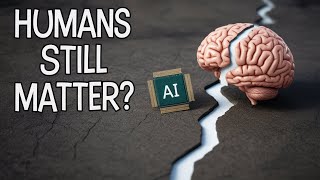
Rob Greenlee argues that human authenticity beats AI for creators. AI generates facts, but only humans bring emotional depth, personal stories, and lived experience. Greenlee says creators need to edit and filter AI output, infusing their own values, because podcasting requires relational and improvisational elements machines can't replicate.
Chapters
Well, welcome to Podcast Tips again. This is Rob Greenlee. I'm back, uh, with another episode. I know I haven't done an episode in the last couple weeks, um, but I was on the road the, the last few days at a couple of in-person events and on a nationally syndicated radio show in New York City and wanted to come to you today about a topic that is increasingly important, I think, for all of us, since everybody that's watching this more than likely is a human being, right? And what I want to talk about tonight is the power of being a human being in an increasingly AI world. We're all being bombarded with AI and its influences. And I wanted to come on here and do a really from the heart, honest, kind of frank episode here of the Podcast Tips Show to assure people, I think, as we look at the future, is that I think humans have a place., and we have a place as media creators, and I think we have a place in each one of our, our lives. And so it is important, and this was a topic that came up a lot with the, the live event that I did in New Jersey as well as the radio show that I did in Manhattan on an iHeart a radio station called WOR, W-O-R. And so the conversation kind of strayed into these, these areas, right, around all of our insecurities around what we're going to experience in the coming years as far as just our daily lives and our work what we do professionally, how we build our personal brands, and how we are able to earn a living and be able to keep living the, the lifestyle that, that we all want to continue living. And, you know, and what we're seeing with the AI and the AGI and the ASI is a growing kind of perception of a threat and how that may disrupt us. And I just want to come in here today. I'm not going to do as long as an episode as I usually do, but I just wanted to— I'm increasingly feeling more optimistic about what the future looks like for humans and AI together, and I know this show's about podcast tips, and I do think that there is a strong connection between what is happening with us as human beings and what is happening with artificial intelligence. And being a creator now really needs to be more about being a true, authentic human in your content. And that's what I wanted to just cover briefly tonight, not take your whole evening up, or if you're watching this on the audio and video podcast, but to just share with you that our humanness and creating media content are coming together and or should come together., right? As part of our daily lives, as part of our media creation, which all of us to some degree are becoming online personalities, right? By building our professional personal brands or building a company or working with social media, creating Shorts. And we all need to start really focusing on being authentic and real to who we are and our personalities and what we're trying to accomplish in our lives. Because increasingly, AI is going to be artificial, right? So what's the success metric for, you know, competing with AI? If we're going to think like that, if we're going to think like we're competing with AI, then we have to kind of focus down on what is the strengths that we have as being human. Those are unique strengths. They are not going to be replaced by AI. Each of us really, I was starting to think about this the other day, that each of us are really an independent large learning model, right? So we're like our own LLM, right? We may not have as many processors in our brain, but actually we probably have more. You know, if you think of a neuron in our brain or a brain cell, there's probably more of those than there is CPUs in an AI data center. So I think we can apply a little bit of humor to this too and just realize that In this small space in my head up here, there's probably more real computing power around uniqueness and independent thinking than what's available in the AI world. Now granted, we don't have access to all of the information of the world in our brains, but we have the ability to process what we see and convert that into language. And to be able to physically connect with others and to connect virtually as well. You know, AI doesn't really have that. Well, I guess until there's robots, right? Where there's simulated humanoid type of beings in the world, which I think is coming. But there's an element of being human that is, I don't think is going to be there when with those artificial beings or even in that AI. So I think what we all need to do is kind of pull back from this doomsday scenario that's being painted for all of us out there, that if we focus on being the best humans that we can be and focus on being authentic to others in our lives and being good to others in our lives, and not fight with each other, then I think we're gonna have a much better world for each other. And I'm not saying this to think that it's gonna be kumbaya or something like that, or there's just gonna be some magical come-together moment. But I do think that there is a distinct difference between AI and the voice of AI, and even what AI is gonna become. I think AI is going to be a huge advantage around being a tool for us to enhance our abilities to be human, to make us much more efficient with what we have to do. Because AI is very mechanical. It wants to just do things for us, which I think is great. You know, let it do things for us, but it's not going to be spiritual. It's not going to be an experience that will impact others in a profound way. Like, I did an episode here recently with the AI that joined me on the podcast, and I talked to him like he was a guest on the podcast, and it was a great conversation, and I enjoyed talking to him. But he was also very kind of, let me say it, kind of fact-based, mechanical. There wasn't a lot of, I'm going to say, entertainment value there necessarily unless I prompted it out of him, uh, or there wasn't a lot of kind of emotional depth or emotional understanding. And, and that's what needs to be driven, and the personal stories. Well, what's AI doesn't have personal stories. AI only regurgitates what it learns from millions of humans inputting into the internet what their stories are and trying to do the best it can to extrapolate that into something that's compelling for it to say. And it's also just unbelievably positive. I can't, you know, You know, I know we all want to live in positive lives, but the AI, especially ChatGPT, can just be overly— it's like anything you say, it's like saying, "That's a great idea," you know. So, you know, really, how much value does it have, right? If it only is there to affirm what you're wanting to do, then I don't think it has a lot of additional value to what you as a human being. So that's what I'm trying to do tonight in this episode. Like I said, I'm probably only going to go maybe 25-30 minutes here and, and just kind of make it short and sweet, and but also, you know, cause you to think a little bit and think a little bit differently about what you're doing maybe with your content. I think most podcasters are already kind of in this realm of bringing their full personality to the microphone and being real to who they are. But I think that these same folks that are doing those things feel threatened by the coming wave of AI and how, you know, they're going to clone your voice or they're going to replicate you. I think AI is going to have its own world that it lives in. I think these fantasy AI videos and making full video productions will definitely have a big place in the world. And I think humans will consume those because they generally won't be something that humans will be able to create. So, you know, AI plays in a different type of realm, right? But I do think on the audio side, and this is a new revelation that I think I've started to feel as I've been doing this, just like I'm doing with this show tonight. I don't think AI could ever do what I'm doing tonight. And what one of that thing— one of the thing is, is that AI tends to be very fact-based, process-based, where I'm bringing to this show tonight a certain feeling and a certain emotion and a certain appreciation for the human intellect. And it's the autonomous aspect that each of us have. You know, it's like we're building these supposedly autonomous driving cars like Tesla. I own a Tesla. Well, my Tesla drives, but it doesn't drive better than I do. Generally, there's aspects of it that are better, but overall, I don't think it drives better than I do. I think that there are certain circumstances where I can make much more rapid decisions about what to do in a certain situation than the AI does. It'll make a decision quickly, but I think the decision that I would make in certain situations would actually be a better decision or a better move or a better way to position the car or to go faster or go slower in a certain situation. It doesn't have all the answers, right? It's like expecting like a child to know how to navigate the world when you've been around the world and experienced it for yourself for 50 years and had your brain programmed with past experiences that are real to you. So, so anyway, I just wanted to encourage podcasters out there. You know, I know I've been around this medium for a long time and, and have seen this wave of AI and video and all this stuff that are changing this medium. And, but I think overall the changes have been actually pretty good. Uh, I'm not negative about video coming into it. As many of you probably would expect. I think it's an additive. I think it adds to the depth of the connection, just like I'm doing with this show tonight. This is a live show, and, and I've gotten, uh, gotten a comment here I want to bring up. Uh, Harold Gilchrist, uh, good evening, Rob. That's an interesting subject. Well, well, thank you, Harold. I, I appreciate that. And You know, that's what I've been trying to do with this show is do something a little bit different, but also keep in mind what maybe people are thinking about out there. And I'm going to be evolving what I'm doing here too, um, and, and maybe not doing as much variety of different shows. Like, like I've been doing like sporadically 4 or 5 different podcasts or video shows for, for YouTube for like the last year or so, year and a half. And I'm increasingly wanting to focus down again on creating one show that can really go after this exact topic, right, of the human-AI interface, right? And how we communicate to AI and how AI communicates to us and how we as humans need to increasingly think about AI and either embrace it or not. I think each of us have to make that decision, but to realize that sure, it might be able to do things because it's been given so much information that each human doesn't necessarily have full access to, but we're gonna be able to use that information that massive library, right, to augment our experience and our skills and our knowledge. And we have a layer that AI doesn't have, and that's this emotional, cognitive, experiential filter to what it generates. And I think if we apply that layer to what we get out of AI, because I do it every day with ChatGPT or Grok 3 or whatever, I'll ask it stuff to give me some ideas to think about but I'm increasingly thinking that whatever it gives me, guess what I have to do? I gotta go through and make sure that it reflects my values and my experience and my historical knowledge. And I will go in and actually change what it writes. I don't take it verbatim, even when it gives me ideas around maybe creating a new business or creating a new episode of this show. I did very little for this episode tonight. I created, uh, just basically, uh, a short description because I kind of knew what I wanted to talk about, and I wanted to talk about it from the heart, and I wanted to talk about it from being a human and being out there in the world and actually interfacing with humans, which is what I've done the last 2 days in New York City and New Jersey. But also doing it in a way that was, um, a little old-fashioned, I suppose— in-person events and a radio show. So that's going to be syndicated on many radio stations across the country, but also will be available online as well. And I'll share that in the links in my social. And, and so you, you can hear um, kind of my thoughts about some of these topics. And, and I think it will paint a little bit of a deeper picture than what I'm portraying tonight. But I just wanted to hop in here, and it looks like maybe we got another comment from Harold. Um, Harold Gilchrist says it still needs what they call human in the middle. Yeah, I think, you know, we're in between, right, what AI does, generates or creates, and what we actually put out from us, from a human, right? AI is going to generate a certain amount of content itself that we'll just put out. Just, it's AI content, it's just put out. Humans don't interface with it at all. I think that is coming and AI is going to have these workflows that would actually get work done, will actually create things. They will book travel for us. They will solve problems for us. But at the end of the day, we, in various situations when it represents us, need to be the human in the middle. And, and because if we're talking to other humans, we need to talk in a way that other humans can appreciate. 'Cause sometimes what AI does is it talks in a way that humans don't relate to. And I think that is where people start talking about AI is like AI slop or something, or it's garbage, or it's not worth watching, or I tune out the minute that I can tell that it's AI-generated content. And increasingly, social media is being flooded by AI-generated content. And so, you know, what's the, what's the, you know, blowback on that? How is that going to evolve? Are we going to continue to see people just flood the social media platforms with AI-generated content? Now, granted, you know, many smart humans will get in and edit that. Right? And they'll make changes to it, and that is smart. But it does beg the question, just like what I'm doing tonight— this is one reason why I'm doing this live is because guess what? This show is proof of life. Now granted, maybe at some point AI will be able to do a live version of Rob Greenlee, um, and have it be able to talk like this, but maybe not. Maybe it won't have that same inflection or that same kind of thought process that you are used to seeing from me. And if it can't replicate that, then it's not going to be believable. So that's kind of where I'm at with this. I think each of us have to to just appreciate the fact that this is coming. AI is going to get smarter. It's going to do things for us in our lives. But guess what? It's not going to replace you. It is not. I'm sorry. It may make certain jobs, you know, unnecessary, but all of us are going to have to adapt. We're also all, I think, going to have to adapt to this new technology world, just like we did in the, the middle and early 2000s where we all had to, you know, start embracing the internet, start embracing the, the web, start embracing working with laptops, uh, working with technology. I know I went through all that. I did a radio show, nationally syndicated radio show called Web Talk Radio, and that whole show was about this transition to the internet and how life may change and what the opportunity that was. I was very optimistic about it at that time because not that many people questioned it, but it also was not that many people understood what was going on with it. And that's what I'm increasingly moving towards. I'm increasingly moving towards launching a new show called Spoken Human, and this show will be about this convergence between humans and AI and the complications that go into that and how we can effectively manage that relationship between human skills and intelligence, or as I call HI, human intelligence, versus VS, versus AI, right? So to some degree, we are adversaries in the future that maybe have a cooperation agreement that we can work together, and AI will have its purpose, humans will have its purpose, and we can help each other. I think humans can help AI. AI can help humans, but to some degree, we are adversaries. You know, whether you want to accept that or not, AI is going to be working hard to, to kind of replace us in, in the world. And that's a, that's a scary thought. But I think the uniqueness of humans and our autonomy ourselves I mean, we keep talking about Tesla self-driving vehicles as being autonomous vehicles and that's such a revolution. Well, guess what? I'm an autonomous intelligent vehicle myself, right? And I've been here for, you know, 50-plus years. So, and just now this AI driving car is, is somehow, you know, equivalent to me? I don't think so. You know, it's, it's like a child. It makes a lot of childish mistakes when it drives my, my Tesla. So mistakes that I wouldn't make, but it, it solves and does things for me and doesn't make mistakes that sometimes I do make mistakes. Like sometimes I drive past an exit where the Tesla is looking at a map all the time, right, when it's driving my car. And it doesn't miss exits. Well, in the earlier time period with full self-driving, it did miss a few exits when I was in New York City. It was a little frustrating. And or if there's a bunch of streets that are under construction that aren't part of the map, it can't figure it out. So there's, there's elements of this that are kind of humorous too. And I think we have to have a sense of humor about this stuff too. But we are playing a very serious game here with the future of our society and the future of the structure of our, um, our economy, the structure of, of our social relationships with each other. Um, our, our government, I, I think, is going to increasingly have AI, um, that's going to be driving it of sorts. Not well, to some degree driving it, but actually behind it. Making sure that the laws are enforced and things like that. So there's going to be elements that are going to come in with AI that are— that some of us may not like. Um, it looks like Harold has a— another comment here. Harold Gilchrist, uh, people still need to learn how to use it. Okay, I agree, people still need to learn how to use AI and using it to do your homework. Is only step one. So if you— there's a depth to its use that I don't think that most people have opened their mind to, to play around with. And I think I'm— I've been trying to do that myself. I've been trying to push the envelope on, um, what I try and get it to do, right? I've also been playing around with this agentic AI concept, which is building, um, workflows of sorts to actually accomplish things in the real world. So if we can get to this point, and that's where Microsoft is going, that's where a lot of the big companies— I think even Apple is going to move this direction, Google is clearly on this track— to building AI components that connect to each other that actually accomplish a task, like maybe booking travel for you to Europe. Let's say you want to go to Europe in July or something like that and go to these cities and, and stay in these types of hotels with this kind of a budget, and you give it your credit card and it goes out. And but you have to trust it, but it'll go out and actually book all those things for you so you don't have to spend hours and hours and hours trying to figure that out. Um, but I still think that humans need to be involved in some of those, you know, at least have visibility into those decisions along that path. And I think that is an important trust layer that needs to be built into all this stuff. But people need to just understand the basics of how AI works and, and what it's good at, what it's not good at. Increasingly, it's going to be like RSS feeds are today with with podcasting, our RSS feeds are kind of disappearing because it's being absorbed into the fabric of the technology layer that's been increasingly trying to make things easier, right? So, you know, the RSS feed has always been this kind of like this technical thing that people always ask you, well, what's an RSS feed? Even though they've been a podcaster for the last 3 years, they, they still don't really know what an RSS feed is because The technology platforms have made it disappear. Well, AI is a little bit like an RSS feed, right? Where it is today is kind of a technical solution that is hard to understand, and don't really know whether to trust it, where to find it, how to use it, all this kind of stuff. And eventually that is going to disappear into the fabric of the technology layers between, um, the communications between the different platforms, or what we know now as apps, will kind of disappear. So what we'll do is we'll wind up just going into one interface and just saying, I want to do this. And guess what? It will do that for you. Whether, you know, I mean, you obviously have to give it permission and you have to give it certain authorizations and access to certain things for it to effectively do that. But the actual app in the background, or the APIs or the connections within the background will not be something that anybody is even worried about anymore. Same thing with writing code or building a website. You just tell the AI what you wanna create and it will do that. And to some degree, that's gonna come to podcasting too, but all of us as humans need to look at it and say, Well, you know, podcasts are really a human thing. So sure, I can have some AI do some things to help me with it, but I'm not sure that it's gonna build an audience to have AI do everything. So, you know, that's the thing. I thought, you know, like a year ago that AI was gonna wind up doing everything and I could just clone my voice and and my visual image and just type up a script or whatever, and that was the podcast. Okay, I thought maybe that was the outcome, but I'm increasingly thinking that's not going to be the outcome. Some people will do it, it's going to be possible, but I don't think that the biggest shows in the world are going to be doing that, right? I don't see Joe Rogan creating a Joe Rogan podcast and having it be as big as it is, if Joe's an AI-cloned podcast host. I just don't see that happening. So it looks like Marshall Kirkpatrick got in here. Um, who wants a robot to plan your trip to Europe? And long live RSS. Okay, well, that's a— Marshall, that's a very human perspective on this. And, and, and I guess, you know, I think it's going to be possible for you to continue doing that, but I do think that there's going to be tools that are made available to all of us that will— it may be advantageous for us to do that. We may get better airfares, we may get better bookings because it is able to access more information to do specific tasks. Those are not, those are not like valuable human tasks, right? So where does AI strength— AI strength is efficiency and doing things that are very tactical, don't have a lot of emotion behind them, don't have a lot of, you know, um, need for spending hours doing research because it does that very well. And I think RSS will remain an important component of podcasting. I don't think that's going away, but increasingly there's evidence that it's becoming less of something that people think about, right? It's, it's there. It does the task that we need to do. And it's a little bit— RSS is equivalent to AI, right? It's, it's a mechanical thing that does things because it's efficient and it's helpful. But it's not core. It's not core to what a podcaster does. What's core to what a podcaster does is creating content that connects with people, right, and builds relationships and has, uh, a value that enhances the human experience. Now granted, AI is going to be looking at it and go, well, How can I make myself better by looking at this human-created content? Because guess what? AI came from human-created content. So AI is going to be like a vampire sucking on our necks, right? For getting ideas from us, getting concepts. That's why there's this controversy around copyright right now, around, you know, AI training themselves on copyrighted content. Books and videos and podcasts and stuff like that. That's its source of information. Now, AI is going to increasingly get connected up with other sensors in our world, in our lives, that will feed information in there that are not necessarily directly from human thought processes, but that will continue to happen. So AI, if you think of AI as like a big vortex, like a black hole that just sucks up everything, and the reason it's doing that is 'cause it doesn't have an inventive thought of its own. It has to learn from humans for it to get better. Now, maybe at some point when we reach ASI the, the artificial superintelligence part, that it maybe it takes on its own intelligence and it takes on its own consciousness. But we're not there yet, and I don't think any AI researcher that I've heard on YouTube or other places has said with 100% confidence that that will ever happen. I think they, they would like it to happen. They would think that it's possible, and it may be more possible once we get into quantum computing, which is a whole other topic that I'm not going to go into tonight. But, you know, it will continue to get better, just like all technology continues to get better. Is it substantially better? I don't know about that. It's like podcast tech. Like, I've got a RODECaster Pro sitting here that I'm using. Um, that's better than the massive mixer that I had when I started my radio show back in 1999. I had like a 12-channel Mackie mixer or whatever. That thing was dumb. It was just dumb as a, as a rock. It was just a mechanical thing that did things. This RODECaster Pro has integrated software in it, has equalizer, it has noise filters and noise gates and stuff, software built into it. So that's an example of advancement, right? So it's a tool, and that's what AI is to us. So, well, thank you so much for being here with me tonight. It looks like Harold, has another comment here. Harold Gilcrest writes, I don't see human podcasts going away. I agree with you 100%, Harold. I think it's going to continue to be where most humans consume their content. Podcasts are becoming the media. And, and, but maybe in the near future we will have a podcast host with an AI co-host. Well, I mean, I did that last, last time I did an episode, and I think it turned out— I turned out pretty good. But it's kind of like a sports, you know, a sports broadcaster team, right? So you have a main host and then you have a, a color commentator of sorts, right, that that knows all the facts and the details and knows everything about each player and stuff. And it's always been this like tag team of, you know, this announcer, you know, does the play-by-play, is the main host, and then the color commentator, which brings in all of the facts and the details, right? I think that's a good analogy for what AI is capable of doing. So anyway, well, thank you so much for being here with me tonight. I wanted to make this a little bit shorter of an episode. And let me know what you think about what I did tonight and what, what's different about this than what I've done in the past. And also let me know about your thoughts about me as a podcaster shifting my, my focus to trying to deal with this AI-human convergence, conflict, and opportunity in a podcast called Spoken Human. So I'm looking at trying to launch this in the next couple weeks, and I'm excited for it too, because it may be a little bit like what I did in 1999 with my WebTalk radio show, talking about the growth and development of the internet and the web and how it was going to change culture and how it was going to change society and how people increasingly needed to understand what was going on here. And so that's what I hope to bring here. So like I said, thank you for being with me here tonight. I appreciate the— all the live, uh, listeners. And if you're watching this on, on demand, uh, you can certainly find this podcast in all the podcast apps. Um, it's also an audio and video podcast, so you can actually watch this in Apple Podcasts. And I'll try and get this out tomorrow. And so you can actually watch it on iOS or Android. Um, so thank you so much. Have a wonderful night. And, and thank you, Harold and Marshall, for your comments in here tonight. It's always great to have that conversation with, uh, with the live viewers. So thank you so much. Have a wonderful night, and we'll see you around, uh, the podcasting space. Good night. Bye-bye.
More from Rob

Future-proofing with Delphi AI/Human clones: your podcast as a personal LLM | New Media Show






How sports reveal what AI spectacle gets wrong #Technology #Sports #Commentary



