Your Brand Deserves Better Than Generic Content—Here's Why Podcasts Win
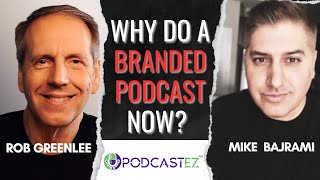
Rob Greenlee and Mike explain why branded podcasts build community and measurable ROI better than generic content. They cover defining goals, choosing hosts, measuring success, and PodcastEasy's production services. Podcasts work because they create long-term relationships, not just ads.
Chapters
Well, welcome.
Thank you for joining us in our PodcastEasy workshop webinar. This is our, our second edition over the last couple weeks, and, and this is a— this really is a workshop that's interactive, um, and would love your comments and questions in this, uh, as we talk about a, a terrific, uh, and really hot topic right now called, you know, it's basically branded or company podcasts. And they're really great for customer service, for building community around maybe potentially customers and, and maybe people that you work with that maybe you want to offer better support to. So This is a really terrific kind of topic right now. I think it's one of the hottest areas in podcasting right now, and it's really a terrific way for you as a company or a brand to really stand out in the market of really going over the top of offering support for your community. So I have Mike and I— Mike is a co-founder with myself of PodcastEasy, and so we're We're here trying to offer our experience and kind of give away some ideas for you to help you get started in this. Or if you're already doing a podcast, maybe you can kind of fashion that program to better cater to this opportunity. I think I'm a longtime podcaster. If you're not familiar with who I am, I'm a 20-year radio host and podcaster. I'm in the Podcast Hall of Fame. Actually, I do a weekly branded podcast for StreamYard right now and, and have done multiple branded podcasts for podcast hosting platforms like StreamYard— or not StreamYard, but Spreaker— as well as Microsoft. So, and, and Mike, what's your kind of background in all this stuff?
Well, first off, good to be here with you.
Yeah.
And, uh, hello to everyone watching. I'm really happy that we're talking about this topic. It's, excuse me, very interesting. My background real quick, obviously, as Rob stated, I am co-founder, CEO of PodcastEasy, but I, my background comes from a long, long career of entertainment industry. I worked in the music business for quite some time, radio as well, film and television. The radio was a natural progression into the medium of podcasting back in around 2007. 6, 7 for me, uh, and producing and, and subsequently having shows all along these years. And, uh, I'm excited to be able to train and work with, uh, new podcasters, uh, even people who are very seasoned. And this community is, is, things are changing. It's exciting stuff that's happening. So this is another great move. It's a real hot topic, like you said. Yeah. Um, and there's also this, you don't have to be a major corporate company to have a branded podcast, right?
No, that's true.
It could be works for individuals.
Yeah, exactly. If you have a personal brand too, you can certainly utilize that to maintain and grow your, your community in combination with, let's say, a newsletter or something like that. But we, we should probably just mention what PodcastEasy is and what, what we're trying to do in the market. Um, I don't know if, if you want to share that a little bit, Mike, and then I can add some color to that.
Sure. Well, PodcastEasy is a podcast educational and production company, production agency. We work with new, new stage, mid-stage podcasters. We work on all facets of training, production, video podcasting, and audio. Also other ways of teaching our customers are in people who just want to learn about the marketing aspects of podcasting. And then from there, we kind of expand into working with agencies. We have a really new, cool offering for marketing agencies to help bring podcasting to their customers?
Yeah, off of our website there is a whole area that's focused on, uh, the ultimate podcasting solution for marketing agencies. Uh, and this also, I, I think like we said earlier, also applies to brands too, or personal brands, or just any, anybody that has a, a company. They can really, I think, really take advantage of the power of podcasting now more than ever. And it is a, you know, the definition of a podcast now is definitely expanding. It's including video, it's audio, it's all those things. So having some help with that is really, really needed now, probably more than ever. Even understanding the landscape of podcasting now is a complex topic. You know, based on what your strategy is and what your goals are, it can be a a complex problem to decipher what the best path is to go. And sometimes it's really helpful to have a partner that can help you kind of navigate that and to find maybe the best path forward. Now, granted, that's in cooperation with you based on what your needs are and what your goals are, but it's really kind of taking what your goals are and translating them into a strategy and a, in a content development platform approach to distributing that content and reaching your customers or your clients or whoever they happen to be. So anyway, this is the website. If you're interested in setting up a call with us or something like that after we've gone through this whole webinar, this is where you would do it. It's just off of the website, podcasteasy.com. And you'll see it up in the upper part of the navigational window. But, but Mike, let's, let's go ahead. I'll pop this down and we can get into the meat of this topic. And I'm going to get a little closer to you here. We're going to zoom in here a little bit on us so you can really see our expressions as we're going through this. But so, oh, I want to also mention that PodcastEasy has a Podcast Creator Circle community as well to support folks that want to learn about podcasting and things like that. And we're going to be doing some live events inside of that community too. So I know, Mike, why don't you tell folks a little bit about the Podcaster Creator Circle?
Absolutely. Uh, so the Creator Circle is obviously new, so, uh, there— we're— this is something that ramping up. So anyone that joins now, you're at the ground level. But what's going to happen there is we're going to be sharing exclusive stuff, not so much that we're going to be sharing out in the, in the real, you know, larger world. Right. So that's stuff like lots of tips and tricks. You're, you're going to also be able to, to connect with us, ask questions. We're going to be doing biweekly livestreams, Q&As, maybe some roundtable discussions on things that are important to you and where you're at in your podcasting journey.
Mm-hmm. Yeah, I think it's a place that we're going to be spending time, both you and I, creating content over there too. Putting on training webinars that are maybe more granular in what you need to do with podcasting too. So as you kind of piece these together, I mean, this workshop is really meant to be kind of a broad stroke of big, big aspects of the, of the podcasting medium and where those opportunities might be. But really what we're going to do in the community is really deep dive into details. So, so So I think that that's the opportunity. But let's go ahead and just kind of dive into this topic of branded podcasts a little bit, Mike, and, and get into it. There's definitely some misconceptions out there about branded podcasts and kind of what they mean and what they are. And oftentimes people think, isn't a branded podcast really just an ad? And that's not going to play well with my customers or my community, right? But That's not the idea, right?
No, it's not. No, it's, it's more of a, this is an opportunity to let people into the brand, into the leadership, connect on a different level. You're, you're getting more granular, natural level of connection here. This is great for community. And I mean, the, if you just zoom out a little bit, you take a look at this, this is actually what leads to all the end results that you want. But if your end result is the first thing. So how's this going to translate to money? Things take time, right? Yeah.
Well, it's the same thing with any kind of a marketing campaign that you might do for your company or your brand. Is it— it takes a strategy, it takes, you know, an approach to appeal to customers. Really, it's in a lot of ways it's very similar to it. But I do think that one of the differences a little bit is, is this aspect of patience, right, to some degree, and realizing that this is a communications medium, not necessarily a direct sales medium. And what you're doing is you're building trust and you're building relationships. And it takes time to build those trust relationships and then have them translate into customers where some of your viewers or your listeners will see this as an opportunity to, to learn more about the services that they're already involved in. Right. And so you have this, this spectrum of how you can treat it is kind of like what we're doing here. This is a little bit of a branded podcast where we're we're trying to share the opportunity of working with us, but at the same time offering value and helping you understand what the opportunity is to and, and giving as well as hoping that you'll patronize us or patronage us.
Yeah, that, that's a really good point. Real quick before we go into more of this is, right, what you said is like this opportunity to exercise your expertise. It gives people like, well, it's reinforcing the stuff that you're kind of your, your messaging is putting out to the world. So this is on a deeper level. You're able to talk about it. You're able to share insights. If you have products or things related, services related to that stuff as well, now you're able to go down even a step deeper on your story and give use case stories, showcase people that have been affected in positive ways by, you know, whatever it is you do. Again, that could be anything, but in our case, it's, it's It's podcasting, right? So, yeah, uh, but this is a really great opportunity for— like I said, large, large companies do this corporate, corporate level, but it's good for the individual brand as well. And it might be considered like, well, this isn't the same. And sure, there are ways to approach this, Rob. We'll probably get into that a little later. Yeah, we will. And, and show some distinction between like the personal brand as opposed to corporation.
Yeah, right. And then one of the other misconceptions is Is there a way to measure ROI with, with these type of programs? And, and that, that is a little bit a fungible question, but it's not always the case. I mean, it depends on what you do in the program and what you offer and what you are, what the calls to actions are inside of the program and who you're trying to reach with your audience. But How do you think about ROI when it comes to branded podcasts, Mike? What's your thinking on that?
Some of it is stuff that's like easily measurable, um, and other things are kind of not so easily measured, but there's definitely a way to see. And these are things like engagement.
You can get metrics at least.
There's certain metrics that play into it, but when you go on the ROI thing, like I said, if you don't know what you're actually shooting for before you start, then you're probably doing yourself a disadvantage. So knowing like, what does success even look like in this? What are we actually shooting for here? And then you're actually going, well, we know what to measure, but the other things are just as important. Just because you're only— I feel like only wanting money out of this. This is a long game.
Yeah, it's a long game. And it's also, you know, I guess if you think about it from the perspective of the spectrum of how it can support your business, and how it can be helpful. I think its potential ROI comes in many, many aspects. If you treat this as like a support function for your existing community, as well as a recruitment tool for new people, then it's an offset off of customer service support potential as well, right? So, Maybe you have a call center, whatever. People are calling in with all these questions about how to use your product or your platform or something like that. And if they can be addressed in a podcast, and then you can also take that content out and create segments or shorts or whatever that can be also made available off your website. It can be dual, dual use, I guess, is what I'm saying. There can be multiple reasons and applications for this content.
Mm-hmm. I like that. Depending on who's, who's, who your hosts are, right? How you structure that show is gonna probably, yeah.
What your goals are with it.
Right. You could have a head of, often it's head of communications or marketing team or people. Mm-hmm. Sometimes it's your COO, sometimes it's your, your CEO. Uh, it could be, it, it depends on where those people are and what stories you're telling within your organization. However big it is, it doesn't really matter. So I could have like, we could have a podcast, Easy Podcast, or another corporation can have a podcast, but these people are loosely connected to the overall. It's not— no, it could be not leadership, but it could also very well be.
Right. And I'm, I'm a, I'm a real strong advocate for not always having just team members on there too. Like bring in customers, bring in people that have used the, the service or the, the product that you're trying to offer. And then it's almost like a little bit of a testimonial to some degree. But it's also sharing real-world experience with your product. And it's from another person, right? So it's not just from your employees, right, that definitely have a, you know, let's be honest, they, they're going to have a biased perspective, right? And, and so, so when you kind of intermingle that with your community, and that, that's really the power of the, even doing it live, uh, is that you get that interactive type of experience that can maybe address questions that you as an employee maybe wouldn't have thought of. That is a good point. To try and address. And the other misconception is no one will want to listen to a podcast produced by a brand. So this is a very interesting question of how you navigate the experience of your podcast and how you present it. Right.
So true.
What's your thought on that, Mike? And I'll, I'll share my thought after yours.
Well, so, yeah, so, so we've talked about this, I would say, quite a bit. There are a lot of people talking about it. I get the point. Like, no one's going to want— but that's— we've seen that be not the case, right? Yeah. So again, it's how creative are you in this delivery personally? If it's like the Taco Bell podcast, you know, maybe, maybe depending on what your thing is about. However, or the REI or like these, these company podcasts that are essentially, you know, the fire in the engine, the gas in the engine to drive this show that has its, it's connected, it's branded. However, it's still something that relates to their brand, their mess. It embodies their messaging. It every, so it doesn't feel like a corporate podcast and it shouldn't in my opinion. Unless that's what you're, you know, maybe it is recruitment and all that. But there are so many more stories as to reinforcing, again, case studies, customers, success stories, all those things. So I think people do listen to them. We already know that. And people love them.
Yeah. And I think it depends on how you're approaching it. There are examples of just like what we talked about, of very successful podcasts that are that are out there that are gathering audience. So it depends on the content, what you're producing. Like we said earlier, it can't just be an ad. It's got to be a community building experience or it has to be a customer sharing experience. I mean, I think a classic example of this is the Trader Joe's podcast. I mean, it's branded with the name of the company, right? And I can actually bring it up on the screen and you can actually see what I'm talking about. But it's a show that basically covers the customer experience, right, around the brands that are inside of the store and where the sourcing comes from for the products that they have. So, and it really gets into, it's really a storytelling type of an experience, right, around where the sourcing of the products come from, what the quality is. The people behind it, all that kind of stuff. And it, it really extends on what the brand means to its customers, right? And so that's, that's a big, big aspect of this is trying to get an understanding of what your brand is and what your brand represents to your users or your customers, and then trying to fashion that podcast to be able to to cater to that precise marketing focus.
Yeah, I think that's a great example of the creativity. And, you know, it seems that they're really tapped into their, their market. They understand who they're speaking to. And this is just a prime example of like a slam dunk. People care about what they're putting in their bodies more than ever. They're aware of a lot of things and they know that too. So why not lean into it? And this is what they're going to share and all the storytelling that goes into it. Yeah, it's highly effective.
Yeah, and they actually go, go on site to where the product is being made, and they actually do— it's, it's like a— I don't know, it's like a highly produced program, but it's— yeah, it's, it's just, it just gives you a little bit of a flavor to it. I, I don't think every podcast needs to have that. Every branded podcast needs to have that kind of a focus to it. I think you can accomplish a lot of the same things, but But I do think that a branded podcast that always has the CEO of the company on is probably not going to do very well.
Yeah, unless you have a really direct—
Well, yeah, it depends on the CEO, right?
It depends on the CEO, but you're right. I agree 100%.
Yeah, it really gets back to, you know, if you look at some surveys out there from the past anyway, I don't know if it's still this way, but What's the percentage of trust around CEOs these days? Right. I don't, you know, those are factors you got to think about when it comes to it. I know a lot of podcasts, and another really great example is, um, podcasts that focus on trying to, let's say, build a community around, like, say, a TV show or something. Um, you know, is it better to have a podcast that has, uh, like, the producers and and the talent from the TV show on the podcast, or is it better to have fans do it right where they can speculate and they can talk about stuff?
Yeah, it really does. It matters on where you're at with it. Like, I kind of talk about this specifically, especially when it comes to TV and all that. Yeah, the, the way Chris Hardwick has done sort of the Talking Dead in conjunction with The Walking Dead. Granted, that's the show, but there's a lot that's come from that. So they're doing it right, but they're bringing in, you know, people from the show, the characters are talking about that. Things get a little, you know, it's like a little weird when you're just talking about the producer. Yeah. But fan, fan, fan-driven shows have ended up becoming branded podcasts. Yeah. That's the cool part of this is like you can connect with a lot of, a lot of these companies don't want to even do podcasts.
That's the reality. Yeah. And it's— and maybe fostering the creation of a community-derived branded podcast is a good strategy too.
So yeah, I've seen that. I told you the story about the Dungeons and Dragons podcast, and I have a friend that works on that, and that spawned out of fandom, you know? Right.
Yeah, right. Yeah, exactly. I mean, that's— yeah, I think that's a really— that helps kind of give the spectrum here. I mean, going from kind of a corporate approach to maybe more organic, more kind of community-focused, more being able to speculate and to talk about things that, you know, if you're the corporation, you probably don't want to go there, right? Because it's going to imply maybe trade secrets, or it's going to imply something that maybe the hosts would get in trouble for if they dive into it. But if it's somebody that's not in the company maybe they can talk about a little bit freer. But that depends on the brand, that depends on the company to make those choices if that's what they wanna do. And podcast consumption has grown pretty dramatically over the last few years. And so taking this approach in the market and really kind of focusing on it It, it could very well be your, I mean, a very significant part of your, your marketing, um, of your, your brand and your company if it's done well. Um, we're kind of heading into that era where, yeah, you know, you're probably not going to be doing TV advertising for very much longer, um, and you're not going to be doing much radio advertising. So where's the marketing going to come from? It's going to come from direct customer relationship content.
Yeah, I think the mixes, right, have changed over the— especially recently. Um, so television, I mean, yeah, some certain things can benefit from some of the more traditional routes, right? Even in podcasting, there's traditional advertising, you know, getting ads and placements, and that may work for some types of companies, but yeah, things have evolved. People consume differently. It's growing still. And then the mediums that people are consuming are like the platforms they're consuming on or through, um, gives these types of company, any company, it's, again, it could be large corporations, it could be a solopreneur, you know, with a, with a more of a coach or a, some type of that type of person that's maybe got a small team that, and you can do the same types of stuff. It's just a little different approach. It depends on your brand, like you were saying earlier. So. Those mixes are definitely changing. Uh, and this is a way to really build, um, like I, I don't know who says it. I, I wanna say Pat Flynn, but super fans. Uh, I think that's Pat Flynn. Uh, and yeah, ultimately building super fans is, there's such a, a mix of that stuff. So having different ways of approaching your marketing and how you do it, I feel like just doing one thing and focusing only on that, you're kind of selling yourself short. You don't need to be everywhere. But I think having a nice mix of traditional and this kind of leading edge kind of stuff, especially when you come to media, and I think lots of companies, everyone should have this arm to what they do.
Yeah, yeah. I think increasingly as we look into the future, these independent media platforms are going to be increasingly required for brands and companies to, to utilize to stay in communication with their customers on a global scale. You know, I mean, a lot of these platforms are starting to, you know, like YouTube is a good example. If you're producing content on YouTube, they're going to automatically translate all your content for every country in the world. So, you know, and if you're a brand that's catering to a global user base, potentially, this is a pretty powerful way to reach people, especially because it's kind of mostly free, you know. I mean, you can't— I mean, it's, it's, it's free to get it out there. It's not free probably to produce it, um, or to staff it, or to make sure that it's kept up, um, up to date on these platforms. But it's, it's really the way of how things are going to be in the future. So I think every company really should have their own, you know, branded or, uh, podcasts of some sort or a YouTube channel or some combination of the two.
Yeah, I think, I think you're saying like when it comes to like costs and, and if, you know, getting the, the most bang for your buck kind of approach, uh, having something like podcasts and, and, and creating like more targeted content with like video and those, those together, and then you're able to actually stretch that out and repurpose it to different areas and different use case. And that, that, that really is the, the epitome of cost effectiveness. It is. I mean, yeah, you have, you have people doing things, but you really get it, the reach you get from like one piece of content and the types of repurposing you can do. Any podcaster benefits that benefits there. Uh, I think independents and smaller podcasters get that already. Yeah. Corporations, it seems, I think the good ones get it. Of course, if you have really good marketing teams, they, they understand that. Mm-hmm. But there's like this gray zone, I think, where it's they're leading with like the legal ramifications of things more than they are thinking about what can this do for them first before they look at maybe some of the pitfalls or what have you.
Yeah. And I, and I guess it depends on the scale of the brand too, how serious you take the process at the beginning around coming up with the concept. And if you have a huge, massive kind of customer base or user base already, I, I would be a proponent of taking the process pretty seriously, but if you're a small startup company that's just getting off the ground, I think you have some room to play around with ideas and see what works. And being, you know, the whole concept of fail fast, try different things, come up with, you know, try and innovate, do things that are that are different where the, the bigger brands are going to want to have proven concepts and they're going to want to do things in a, in a way that makes them feel safe, um, so they don't lose their jobs for, you know, those are, those are real, you know, situations. And then, you know, a lot of these shows really, I, I've had this attitude for a long time that, um, podcasts are really all about storytelling. So the only difference between any given podcast of any significance, the only difference that's significant is how long the stories are. Um, I mean, if you're a good podcaster, you're going to tell stories that have kind of a linear kind of experience to them. Yes. That, that draw connections to each other, that help people come up with ideas and solve, solve things, solve problems. And how you think about things. But, you know, it can be complex to get one of these projects started. And that's where, you know, a company like a PodcastEZ comes in where it can really help you kind of fast-track that and avoid some of the potholes that can be along that journey. Right. Especially if you're a larger brand. Right. You want to avoid those, those those potholes, because if you fall into one, it may not look good for your brand in a bigger way.
So true, true. Yeah, it's, it's, it's nice to mitigate any kind of issues before you start. Get professional advice or guidance always, even if you're not going to use it long term. I think it's beneficial to get it upfront.
Yeah, and I think you— I think it's also helpful if you're a brand and you're trying to outsource this, that you maintain as much ownership of it as well. And having a partner that can help you down that path that will respect those relationships. And because a lot of— there's kind of some sketchy people out there that you have to be aware of that will try and take advantage of people. So you have to work with a partner that you trust and that, that will respect your rights as really— I'm talking about the client as a copyright holder for the content, right? So any, any agency or any partner that you work with that is helping you do this needs to respect those, those boundaries, um, and make sure that they're advocating for your ownership and your brand and your building in your, your particular market.
Right. I think that's, that's really of high importance, especially when you're, you're stepping in media zone and just kind of following some basics, you know, like making sure things are licensed and to have someone that's kind of looking out for those little things. A lot of independents, I think more so in the recent past and beyond, where like people like, whatever, I'll use whatever I want, doesn't matter, music, let's go, anything I want. And people were getting stung, you know.
Well, that's happening more now than ever.
Of course, that's where we're at because that, that, that honeypot, you know.
Well, it's, it's happening now on, on Facebook, it's happening now on YouTube. YouTube for a while, they're flagging, um, any kind of copyrighted content uh, everywhere right now. I mean, I mean, it'll get just kind of like demonetized, taken down, not exposed to anyone. Or if it is exposed, the copyright holder will get all the revenue from it.
So, right, it's, it's crazy. So all those things like, whatever, nothing's gonna happen, sure, okay. Uh, so yeah, just following basics, you know, let's cover everyone's butts. And, um, you know, you don't have to worry about those things. Set things up properly. I don't know, do it right once and yeah, you refine, of course. But to have to just strike everything down and build back because you, I mean, podcasts get taken out.
You didn't start out right to begin with, right?
Yeah, I mean, yes, right. And podcasts get taken out. Big fines can take a lot of shows down, like, you know, quickly.
Yeah, I mean, especially now with music, there's companies out there, their whole job is to work with these distribution platforms like YouTube and Facebook increasingly. And I think it's going to come to X too. It's not quite there yet, but where they will just, you know, flag the content because there's a database and there's watermarking being used in music now that gets picked up by, by these algorithms. Yeah. As well as just the— there's like a rhythm signature that's in the music too that gets picked up by listening algorithms that are—
those things are already in place. And yeah, they're really good. And people think they can sidestep step that by, you know, maybe slowing something down or pitching it. No, no. Yeah. Yeah. There's been a lot, like the really popular stuff, like on Instagram or TikTok, like those, those tracks that everyone uses.
Those are all licensed.
Those have been licensed. So yeah, you, that's why, you know, people, well, this person uses it. Well, they've probably paid for it. So anyway, that's a whole thing in itself.
Um, it is. Yeah. Do you think Mike, that a branded podcast should think about monetization directly from the show? Do you think that there's some opportunities there for that? Maybe private communities? I mean, if you combine it with other support content, you think there's some—
Absolutely. I think that there are a lot. Obviously, you can get really creative here, like I said earlier. But yes, right up front, no, I would focus more on community and really establishing what you're trying to do. So if you're a company that maybe you have products or services or all the above, but maybe there's a specific product, like for example, a video game or, you know, like Rode microphones, you know, or Shure or whatever. And you have a specific community built around a product like the Rodecaster, You know, series, or maybe it's StreamYard and it's a community within. So there's stuff where community building and potential monetization and things that lead from that, that come built out of the secondary kind of priorities. So monetizing up front, I would say just from my, my experience, sure you can, you can really lead it with that, but I would probably go more around community and establishing something that really tied to an overall or at least a niche goal within your business.
Yeah, I should probably approach it rather slowly at the beginning and, and kind of find your, your pathway with it, um, and just see where the sensitivities are. It also depends on what your product and your service is too, because it could be a very companion thing to your podcast too. Absolutely. And And I do know some branded podcasts will bring in sponsors too. I mean, it's, it's not an unknown thing. So let's say you have a partnership with another company that is offering, you know, a companion product or something that is very much aligned with your service or your brand. It's probably okay to, you know, do a little cross-promotion if you've done a partnership deal with them or something like that, especially if it adds to the advantages of using your product or service, it, it might be an advantageous thing to say, well, I have this partnership with this company that can add this other layer to, to the power of whatever I'm doing. So, and, and just kind of offer that as a, as a bigger solution. And who knows what the potential of that is, but I can see some opportunities with doing that. But Those are things you just have to weigh case by case.
Those two, those, those opportunities that you outlined, those even come— I don't know if I know that people that really think things through see it, but even those things you have to remember, they require someone to manage them. Yeah, of course. So, so bandwidth and being able to deliver on what you're trying to accomplish or what you're promising to your listenership, your community, being able to deliver that is is really important. If you can't do that, maybe think of something else that really fits into what you're capable of doing at the moment.
Yeah, I can think of an example of that. You know, if let's say I'm doing a podcast about a podcast hosting company or something like that, and I just did a partnership deal with a transcription company or whatever. You're probably— and I'm integrating that technology into my platform. I could possibly have them come in and do an episode with us talking about that integration and how it would work and all that kind of stuff. That's kind of like a third-party kind of relationship kind of story that you're bringing into the podcast that may add value to that user of your platform.
So yeah, I think for us That makes sense.
Yeah, definitely, definitely does. Yep. And so as you think about how significant does the production values need to be with these podcasts? So as we think about, you know, like a regular podcast, maybe people are a little bit loosey-goosey about the production quality. But do you think a branded podcast has a special burden or an additional burden of quality in order to maintain that trust relationship?
That's a loaded question.
It is a loaded question.
I'm going to go ahead and say yes, 100%.
Um, now, now it's an impression, right? It's an impression you're giving.
People are going to expect it. They're going to expect quality if it's a known— especially if you're a known brand, if you're a known company.
What is quality in this context?
So we want clean, intelligible audio. Clean audio. We want crispy video because we're in 2024, you know, we're not in dial-up days. We're not even in DSL days anymore. You know, where people do watch things in 4K. You don't need to stream in 4K. You don't have to have 4K content or 8K for that matter.
But it looks great if you could do it.
Yeah, you need to have a nice, a nice setup. And so if you're a branded podcast, I like the road where people are doing multicam, like 3-camera shoots. Those are really cool. Yes, you're, you're raising the production value. Do you need to go overboard? There are even cost-effective ways to accomplish that if you work with people who know what they're doing.
Yeah.
You know what I mean? And then if you set up your show, like you, you make sure that your points are strong, your episode arcs are very definitive on what you're talking about, what you wanna share, your stories and those takeaways at the end. So production value needs to be there. Does it need to be like this big Hollywood production? No, no, you can do stuff like this as long as people can get what you're promising, right? In that title of whatever it is you're doing, your stream, your episodes, your videos, whatever it may be. If you can do that, it looks good, it sounds good, then hey, you can refine as you go. But if your audio is bad, people are gonna probably be like, yeah, I can't hear you. Or your video is pixelated and it looks horrible. Even on my phone, probably not going to listen or watch you.
So do you think that a brand— so let's say it's a medium-sized company. Let's, let's say maybe it's got 50 employees or something like that. Do you think that that company should do like an audition process with their employees to see who, who's the best one to maybe host this show or something like that, or co-host?
Yeah, I see where you're going with that. I think to have a host that's passionate and knowledgeable and really understands the goals of where you're trying to get at and is able to communicate that, that's gonna be the best possible thing for what you do. So often, like you pointed out, the CEO may not be a people person.
You're marketing. Well, he is a people person, but he's just— People person, but not— Always pitchy.
He's always pitchy.
Exactly.
There you go. And, and it's, and it's not even, cuz people always use these strange kind of like they tie things to being able to podcast, like. Oh, well, they've done, you know, theater or they did, you know, they talk a lot. They're funny. Those aren't necessarily the qualities I think about. I want someone who's communicating a podcast. I'll just generalize here, but for a company, they have to be passionate and they have to be able— you need to be able to feel that, that, that solid anchor of surety behind what they say and what they're trying to talk about for the company. So if they come in there and they're wishy-washy, if you can't communicate that as a host, you want that person to be there strong, informative. They know how the company works. They know all about the products. They have intimate knowledge of success stories, things like that. You want that person hosting your podcast. So if it comes down to running maybe auditions, why not? Unless you really know that that whoever it might be is the one, or maybe it's two people. If you don't know, find out. Find out who the passionate people are in your organization and go there.
Yeah, I think it's an interesting question. You should probably always have a lead host. Sure, would be my recommendation. I've done many, many shows that had like co-hosts, or I've been the lead host, and there's been other shows that I've been involved in when it's like this very ambivalent thing of who is the host of this show, right? Or do we even want one? Or do we just both jump on the microphone and just start doing what we're doing? And whoever— it's like a free-for-all almost. And that can be an interesting listen, but I do think that it's— you kind of want to have one person that can kind of like lead the ship, right?
Definitely. Yeah. If you're having a main— it's— if it's two One's a co-host, your co-host, it's your copilot. But yeah, you have one person driving it. That's— I think that structure works.
It's tried and true. And what's the burden, do you think, that lives with a co-host? Is it just to be a color commentator and add humor and spice to the conversation?
It's definitely not being a hype man or hype woman. No, it's It's pure contrast. It's, it's— yeah, it's also backing that up with a unique perspective within the organization as a person in there. So you're going to have different stories and connections to the same stuff. So you need to be knowledgeable. It's not just to be there for a, yeah, I agree.
Yeah, right. Yeah. Good point. It's a very short podcast. This is what we're doing. This co-host says, yeah, I agree with that.
Right. So, and even disagreements with co-hosts or different points of view like that is really where I think co-hosted things matter. Sometimes people bring in co-hosts as a crutch.
Well, totally. I mean, I, I, I briefly worked on the Shaq podcast at one point many years ago, and, and Shaq actually had a guy that had nothing to do with the NBA came in and was his host of his show. Wow. And so he was like the color commentator on his own podcast. So, wow. So yeah, so there's this whole aspect of, of, you know, sometimes the person that you want on the podcast may not have the, I guess, the, the talents that are necessary to actually lead and direct the show. And I know we're getting into the weeds here, which is more like what we should do in in our, our, our Podcaster Circle area community. But, but, uh, you know, but the concepts are, are important to understand as you're thinking about what the differences are with branded podcasts and, and how working in a corporate environment is different. Corporate or even a small business environment is different than just a regular podcast that you might do on your own.
Yeah, that— saying that, it brings up the thought of if I'm, if I'm the head of this organization, or if it's a partnership, or whoever's overseeing the company, and you have people within your organization that are charged with that, that's their project, they're representing your business, they're representing your company. And I think that being hard-nosed and saying, hey, you're representing us, so we want you to be this way. I don't quite agree with being that way. I want that person to have free range. Of course we want them to represent things properly. However, having a unique voice and a unique perspective within the organization that isn't maybe senior top co-founders, founders, what have you, that's—
I don't know who's, who's frozen and who's not, but We have a little pause in the, in, in the video stream here, and hopefully we'll have Mike back.
Oh, he's back. I didn't see a pause, but sorry.
Oh, you didn't? Oh, I— it was probably all on my end then. It's hard to know sometimes.
But anyway, I know I saw everything. It might be your internet.
So yeah, yeah, it probably was, right?
Yeah. So I was saying that it would be beneficial for an organization that doesn't have like top leadership, you know, being the hosts or co— whatever it may be, right? To, to limit the ability of what those hosts are doing. I think it's, you kind of have to give them some room to be their own, run it the way— again, they're not just doing it the way they want, but to have a voice that speaks for the company or whatever it is properly. If you're a solopreneur, if you've got a small organization, you're probably not gonna hit these types of things, but it may come up in a different way. It may not look the same, but it's still who should be the host if it's you. Because like we said before, how many people have you go, oh, this person's gonna be great. They're gonna have a great podcast. They're funny, they're dynamic. And then that red light, you know, the record gets hit and they just freeze and they freeze up, right?
And it's not the video freezing, they're actually frozen. Yeah. So if you're watching this, we would love to hear any questions or comments that you have on some of these topics around branded podcasts and what your experiences are with them. We'd love it if you could share it in your comment area of your preferred viewing platform here. So it'd be— then I'll show it. I'll bring it up on the screen and we can talk about it. But, you know, these branded podcasts really have a strong capability the responsibility of building community and building deeper engaged relationships with your customers, your current customers and your future customers. And I guess, how would you recommend kind of navigating that, creating content that would be appealing to existing customers and new customers? How do you, how do you think we should walk that line?
Wow, depending on the organization, for me recently, something that I, I was thinking about, I had a conversation with a friend who works in, in video games. Mm-hmm. And we were talking about podcasts around that. And, and I thought, you know, this would be a really cool way is to build a show around your game. Right. And then your podcast is really engaging with those players as also using as feedback for testing and for doing early, you know, early access stuff. So. Right. Giving pe— in a people away. And people do this stuff on Discord, right? They do it in communities, but being able to kind of spread that out and say, we're gonna do our podcast around this product or this set of products, and there are people that use it, we are developing new ones. So this is a way for them to be hearing it and communicating and engaging possibly in a community through, you know, via that vehicle of the podcast or livestreams or what have you. So.
I think that's a way to do it. Yeah. So creating content that is appealing to existing customers and new customers is— it should be able to be accomplished, especially if you talk about topics that are like new features, new functions of the, of the platform or of the service or the product. If you talk about those things, especially ones that are new, or also features and functions of the product or service that may be in your kind of customer relations that you have in other channels, you see are kind of being underutilized but have a lot of value, then you can, you can talk about those areas about how they're being utilized and how they're— because there's always, especially if we're talking about software platforms of sorts, there's always deep features that people don't even know are there, right? And surfacing them and showing people how to use them. That's a powerful way to connect with new users and existing users.
Yeah, I agree. I, I really think that that's— it's just another aspect of you're building community, you're, you're sharing with your users, your, your customers, what have you, and then also you're able to appeal to new people because maybe they're like, oh, you know, I've heard about this, let me go in and check out this stream or this podcast and let me, let me see what they have to say. And then all of a sudden you're learning about features. You're not just getting a sales pitch. That's what I like. I'm able to see like, does this work with perhaps if it's gear or software, does it work with anything else I already use or does it conflict? What does it sound like? What does it feel like? If it's clothing, you know, if it's food, like there's a lot of stuff that you can do here. It's just getting creative as you can to where it's not a sales pitch. I think it's the best when it's just missing that aspect.
Yeah. And it looks like PodcastEasy is asking us a question here, Mike. How closely related does a branded podcast topic have to be to your company's industry or service area? Now, this is a, this is a good question from PodcastEasy. Thank you for asking the, the question here. Yeah, I think it's an important aspect to ask yourself when you're coming up with your concepting of your, your podcast. And, and I think it— there are examples of branded podcasts that are not branded at all to be related to the company that's sponsoring them. And are in a completely different topic area. But the purpose of those podcasts are typically to build basically mission-driven relationships with your customer base and to attract people. So let's— I think a really good example is the General Electric podcast. They actually created this radio drama series. This was many years ago. And it was underwritten by General Electric, but it wasn't like branded the General Electric, you know, radio drama, which they certainly could have done that. And it probably would have worked fine. But it's creating content that maybe adds depth to the brand and maybe extends the brand based on the brand's values. To some degree.
Yeah, I think that's a really good answer. I don't know what else I could add to that.
Yeah, but it is up to the brand to really identify, do they have, especially these days around social justice issues and, and changes in our culture and our society, a particular brand may want to do a podcast on some of those topics or something like that. And I think that can be a companion to their alignment for other initiatives that they have in their company that are important to them.
So yeah, when you get into like, organize like organizations around different, you know, and even NGO-related types of things and nonprofits and what have you.
Yeah, I think that's a good point. Yeah. So, so how important do you think doing audio and video is these days with a branded podcast, or do you think it's viable to just start with audio and then eventually maybe move into video? What's that progression for you as you think about it generally?
I mean, there's a few stances. My old stance was I think it's okay to start audio only, like it is still. I would say sure. Develop your show a little bit before you go all in, you know, with everything else, because it is a lot to manage, right? But now I would probably say take a little more time developing what you're doing, kind of dive into it, make sure you understand what you're shooting to get as your look and your feel, like really dive deep into crafting it and go in with audio and video. You can get better as you go. You're, you're not gonna be, especially if this is new for you, if you've been doing this a lot and you, you understand how these processes work, great. But if you're just starting, tiered steps in is, is safe.
Mm-hmm.
Uh, but, but the, but the, the low cost options that exist out there, unless you're really going for something a little higher level production quality, I would just say throw up a couple cameras or a camera like like we're doing and, and just jump in and see what develops from that as opposed to just going, no, we'll just, we'll just do everything. And if we don't get it right, then we'll just stop it after, you know, 7 episodes or whatever. And it didn't work out, you know. So kind of, that's why I see it.
Yeah. Yeah. So kind of wrapping up the conversation about branded podcasts here a little bit. How, how should a brand or an agency start this process if they're not currently doing any podcasts for, let's say, their clients or their company? What would you recommend to be kind of, kind of the first steps, do you think?
First steps, like just, just kind of the genesis of, of what it may become? I would think it would be intentional about designing. So kind of just before you start even talking to somebody as a company, as a business owners, as, as leadership, whatever it is, whoever's charged with this task of building something, start writing it out, start talking to each other first and find where your unique like fingerprints are. Where are the flags that really tell people what, what shows people who you truly are, what your mission is. What ties to those goals? What do you want people to know that, that you're more? How do you want them to understand that you're more than just this thing? And lean into it a little bit. Then I would talk to someone who is more, you know, seasoned in developing these types of approaches. I think that's really gonna help. If anything, just talk to a consultant, figure out what you need to develop your show first. Don't worry so much about gear. Right away. Don't go buying stuff right away. You might end up wasting money having to like, you know, this happens all the time.
You know this, Rob.
Yeah. I would say develop the show first, start to get a solid idea, run it around, see what people like that. Just getting that all set up first, then developing some like goals, understanding your listenership, like put those things down. It's your market research as a company translates to your market research. When you do listenership and potential viewership and online engagement kind of stuff too. Mm-hmm. So start there. And then when you come and have a, a talk with someone like myself and Rob, you actually have something to talk about rather than just like a really short conversation about how something, you know, something might cost, which isn't really helping you. I think knowing where you're trying to go first is really important. And then from there, you, you think about what, costs, and you can really price things effectively, especially if it's—
yeah, yeah, because you don't want to go out and spend a bunch of money on recording equipment, um, until you know which— what you need to produce. Because what you need to produce will be the driver of what you need to, to be able to record that, whatever that is. If it's in the office, if it's remote, if it's interviews via, you know, StreamYard or something like that, or if it's whatever type of content you want to produce will drive what your purchase decisions are for, you know, hosting, distribution, you know, website stuff to, you know, how you actually get the content that you want to produce will drive those choices. So until you know what your goals are, what you're trying to accomplish, what kind of show you want to produce, I think is really the first place to start. Because you can get going down all sorts of rabbit holes, you know. So, and that, and they may be wasting money and time. So, yeah, right. So yeah, so let's go ahead and, uh, kind of head down the path of trying to wrap this up and, and just let everybody know if you're interested in talking to PodcastEasy about coming up with some ideas for a branded podcast, or if you're an agency, we'd love to hear from you. And, and here is our, our, our main website. Uh, let me pull that up really quick and you can see that for yourself. And, and just go to PodcastEasy, um, and, um, and send us a note through the website and And would love to hear from you. So, um, yeah, so any thoughts on that, Mike?
No, I think you got it all covered there. Yeah, definitely reach out if you have questions, comments, feel free to reach out. Uh, we're always happy to take time to talk to anybody that, that has questions about podcasting.
Yeah, and it's a pretty deep site. There's, there's shows that we've done already, and there's examples of them here. As well as various ways to get started at different levels. If you're an agency, there's a pathway for that right on the website. So there's agency partnership, like I showed you that earlier, and then Smart Launch is another area that can help you kind of get started. And so, and then our community is here too. There's, there's lots of options to get engaged with us, but the big thing is just, um, go to our website podcastez.com, and then if you wanted to reach out to me, you're certainly welcome to do that. I'm at rob@podcastez.com. I'm definitely easy to find online. And then, um, and then Mike is also here too, so if you have a question or a comment about what you saw in the in the show tonight, send us a note and maybe we can talk through the beginning stages of doing something with you. So be awesome. Well, Mike, thank you so much for— thanks, Rob, for doing this again. And, and I'm sure we'll be doing more.
So absolutely. Yeah.
Thanks for everyone for being here and we'll definitely see you in the next one. Yeah. All right. Well, good night, everybody.
Take care.
More from Rob

Future-proofing with Delphi AI/Human clones: your podcast as a personal LLM | New Media Show






How sports reveal what AI spectacle gets wrong #Technology #Sports #Commentary



