YouTube Podcast Big Nothing Burger #562 | New Media Show 10/25/23
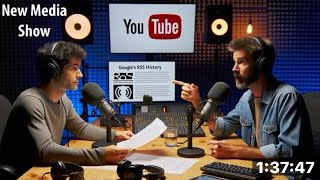
In this episode of The New Media Show, host Rob Greenlee and guest Todd Cochrane discuss a range of topics affecting podcasters today. They start by examining the unrealistic revenue expectations many new podcasters have, noting that most creators are motivated by passion rather than profit and that industry consultants often push a monetization agenda that can lead to "podfade." They debate whether audience growth is concentrating in big shows or trickling down to smaller ones, with Todd asserting that his data shows overall growth across the space. The conversation shifts to AI‑generated imagery, where both share frustrations with spelling errors and inconsistency, concluding that AI is still a helpful but imperfect tool. A substantial portion of the episode is devoted to the challenges of building and maintaining a WordPress site for podcasts versus using platforms like Podpage, covering template selection, the trade‑off between functionality and aesthetics, and the complexities of RSS feed generation. They also explore limitations of episode description fields in various hosting services (Apple, Spreaker) and the broader issue of description indexing. Finally, they touch on industry dynamics—YouTube’s podcast integration, Apple’s quiet stance, and the competitive landscape with Spotify—while planning future show logistics and promoting their contact channels.
Chapters
Todd and Rob in the afternoon.
Hey, afternoon delight with Todd and Rob.
Oh yeah, oh yeah. And we got our butts kicked today. A little technical difficulties. I don't know. I don't know what happened, but we'll figure it out. Rob was garbled when he called in.
Yeah, it's hard to know sometimes what causes these things. You can reboot everything and all the settings are the same. And because I just did a live stream last night where the audio was fine, so I don't know what happened between now and then and now, right? And I didn't change anything.
It was just like I put the RODECaster Pro back in from the original one. I got the old school one and the intro music played just the way it was supposed to. And this new RODECaster Duo, It keeps slipping me the bird. It won't play the— it plays some of the audio, but majority of it, it won't. I have no idea what's wrong with it. So I haven't had time to go back and remaster all the audio files, but it's obviously doing something because it just won't play it. That first piece, this one, Todd and Rob in the afternoon, it just chokes on it. It just basically won't play.
It just played it fine. It just played it fine right now.
Yeah. On the RODECaster Pro, but not on the Duo. The Duo will not play that clip.
Oh, so I wonder if it's an encoding issue.
Yeah. It's a WAV file.
Oh, it's a WAV file. Okay. I would probably, I would probably give it an MP3.
Yeah. Okay. So anyway, WAVs are supposed to be more better.
Well, it is, but it's also a lot more data too. So you, it could, could be choking on it.
Yeah, it might be.
Yeah.
So speaking of choking on it, um, YouTube has definitely choked on it.
Yeah, it's been, uh, it's been a little remarkable, the criticism that they've gotten, um, in the podcast medium. It, it, it does speak to, and I think Daniel J. Lewis had a good quote about it, is they just I don't know that they really listen to the podcast industry. I think that they really—
No, they don't listen.
Did whatever they wanted to do and kind of to hell with all of us, right? Of course.
Why would they?
Right.
So I'm not going to spend a lot of time on this because to be frank with you, I'm not surprised. And it's a nothing. It is a nothing burger. For podcasting. So, or for, you know, here's, here's the, here's the gist, right? You have a YouTube channel. Everything that goes on in your YouTube channel is exactly how it's going to work with having your RSS feed attached to it, with one difference. You're going to have to go in and approve the, the post.
They, they, I think there's more of a difference, Todd. It's just that you're, you're, you're importing an audio file to a video platform. It doesn't actually make a lot of sense in the bigger picture of things. Yeah.
Don't, don't get so close on your mic, Rob. You're blowing me out.
Well, that's, that's a good thing because I spent years whispering at you. So anyway, I'll move it back and we'll let the audience tell us if I'm booming at you or not.
Yeah. So yeah, in the end, in the end, it's, uh, you are better to upload your file directly to YouTube and do it that way. Now you will save maybe save yourself a little time if you update your RSS feed and then go over there and approve after they get done processing your audio to video. Go ahead and approve it from private to public and make any, make any meta changes you want because they're not going to carry most of the metadata over. So, and, and, and, and, just like on YouTube, if you need to update your audio You have— they'll make your post private and they'll publish a new episode for you. And so it's, you know, in no advertising, of course, no, no programmatic advertising, no ads. And so again, it's just a big— it's a big, big, big nothing burger. Well, there is a—
I wasn't on those calls, so I don't know all of the finer details of this, and the The details of this matter, you know, and people need to understand what those are. Um, but generally my experience with it is that when you upload a video and you want to update it, you know, maybe make some edits to or something like that, that you have to go back in and remove the one that you added prior and then add a whole new one and you lose all your metrics.
Well, you don't lose them. They make the post private. And then you, but you have a new post where the counter starts over at zero.
Okay. Well, that, that kind of makes a mess in your backend of, of YouTube. It would make more sense to combine that metric, but I guess YouTube doesn't have a way of flagging things to be replaced in the metrics.
The new episode, ever since YouTube's been in existence, if you update update your video, you get a new post. It's a revised post, and the counter starts over. You keep the counts on the old one. And of course they said, oh, we're going to have an API, you're going to be able to get stats out, blah blah blah. I don't care, we're not doing that work. Um, and again, this is a bad— this is, this is— why should I help them? State— have podcasters stay on YouTube, podcast listeners stay on YouTube. Why should I help them?
Well, it's also this whole aspect of the dynamic ad insertions, shows that are doing dynamic ad insertions. It's like, you know, you're done, right?
You can't, right?
Right. You know, I mean, why would you even do that if it just doesn't make any sense? If you're going to be on YouTube, YouTube is a video platform.
Wow.
Upload a video, right? And then flag it as a podcast playlist in the backend and you're done.
Thanks for joining the party, Rob.
No, no, I've been there all along, Todd. I was never on board with this RSS.
You're really blowing me out.
Okay. I've never been on board with this RSS integration, especially because it's so crazy that they don't support video podcasts.
Right. Yeah.
If they were plugged into this medium and how it works, they would be supporting video podcasts.
People are saying, Rob, that you're overblowing them on YouTube.
Okay. Well, I don't know what to— I mean, I can turn it down.
Yeah. Turn your slider down.
Okay. All right.
Yeah. There we go. That's better.
All right.
Maybe go up just a little.
Okay.
All right.
I went up just a little.
There you go. That's better. Now my ears aren't bleeding.
Okay. So I'm not doing any audio processing on this too, because I had to turn it off for some reason on the RODECaster.
So I don't know why, but anyway.
But anyway.
Yeah, there you go. Levels are better now.
Sweet.
Sweet. Because you sound like you were yelling at us here. So.
Well, I was actually, but that's okay. But yeah, I think, uh, I think really at a practical level, you know, YouTube is what it is.
Yeah.
Treat it what, what YouTube does best. Treat it in that way. You don't have to blend this audio podcast stuff with it. It doesn't make any sense to do that actually. And they're kind of silly for thinking that, that, that would be a good thing. And I, I do have one other question. I don't know if anybody else asked this, but what is the consumption experience for an audio show that's uploaded to them through RSS. I mean, what is the kind of on-screen experience of that?
They're going to take your album art.
That's it.
That's it.
We're going to show your album art while the audio is playing.
Yep. Now you can go in and change your art, but you're gonna have to log in and change your art.
Okay. Yeah. Okay. So it's not going to pull the episode art potentially.
No.
Okay, well, they didn't really do anything here.
Nothing. Nothing.
I mean, it's— it couldn't even be the most bare minimum.
And they're killing Google Podcast.
Yeah. And there's another mistake.
And, you know, and they did come up with another email they sent all of us. It's something about, you know, the— basically the— they're not even trying to save the listeners on. So this is my main point, and this is what podcasters really need to pay attention to right now. I mean, immediately, on every episode that you do for the next— until Google Podcasts is gone, you need to get your audience off that app. You got to get them to another Android app, right? You got to get them moved. Yeah. If you don't get them moved, they're, they're lost. They, they, when that goes away, that's it. Yeah.
Google's going to go backwards on this. Oh, granted.
For sure.
I don't know that they even really care, right?
Oh, they don't care. They don't care. Right. Not at all. Not, not, not in the least.
So let's just call this what it is. This is a content grab. On the part of YouTube to get content into their YouTube Music app that is trying to compete with Spotify. So you have this kind of ecosystem of content that is perceived as audio, but it's actually video.
And here's another thing that's going to be a kicker. Check this out. This is going to be the biggest scam the whole thing. Let's say you are running. Listen to this. Now, this is the thing. So YouTube is not going to be able and is not going to be providing the IP addresses that are downloading the MP3s. So you have to send a clean audio file to them with no advertising. Mm-hmm. If an app implements— now, if a podcast host stupidly adds their— what the key and value code is for RSS when they pull the file, when Google— when YouTube pulls a file via RSS All up. And if they build into their systems a bypass so that if they— every time they see this key value come in for that audio file, if you do a workaround and serve a clean file with that, then every app in the system can adopt that. And guess what will happen? They can deliver ad-free audio to their podcasters, and they can— they can— this could allow everyone to be bypassed, advertising be bypassed on the Open RSS site, because we're not going to implement something that is basically says, okay, here is studio.youtube.com forward slash, you know, we're not going to look for that URL to come pull our media file and say, okay, serve that a clean— we're going to tell the podcasters, you, you need to, if you want to be on YouTube, you need to do your own thing to make sure you comply with their, with their stuff. Because otherwise, if I built a technical solution in to bypass advertising, very, very simple, everyone adopts that on all the apps, and guess what? Advertising forevermore is not— doesn't play in any podcasts that are played on, on apps outside of YouTube. Are you following me?
So you're thinking that they would use links to the media that's on YouTube?
So as a host, if I'm looking for that, their trigger to pull my file, and I say, oh, this is coming from YouTube. So because it's coming from YouTube, I will— for those that are on programmatic, I will shut programmatic off and I will deliver a clean file to them. If I adopt that at Blueberry, if I adopt that, which I'm not going to adopt, if I adopt that, then any app that wants to can trick me into sending them a clean file.
Oh, okay. Right. Through the same process that, uh, right, that, uh, YouTube would have.
That's right, because YouTube won't share the IP addresses, the range or the numbers, so we could do it by IP because IP—
yeah, yeah. Isn't that a reason to have a separate feed?
I guess. But again, our customers can set up alternate feeds if they want, or secondary feeds. We're not— but why? What podcaster is going to create— this is stupid to do this. It's stupid to do this to begin with.
Well, let's rationally run through this. You know, under what circumstances would a podcaster, especially a really big one, take advantage of this?
It's not— not a big one shouldn't. Big ones should just have a normal— do what they're doing now.
Now I realize that, but I think we're going to see some do it and some have already done it, right? So what scenario would enable a large show to get a benefit from doing this is if they can monetize on top of what they're doing through YouTube. And that's only going to be big shows, only big shows.
But, and here's what they did say: if you're a big show already, you might be able to apply to not have to do the 4,000-hour qualification. You, you might be able to get a waiver. Did you know that existed? So they said it would be case-by-case basis. If you're a big show, you can reach out to the team and they might get a waiver so you can go on rev share immediately. If you're a big show. Otherwise, otherwise, everyone else that listens to your podcast on YouTube, which they shouldn't, um, is going to be subjected to YouTube advertising and you're not going to get a penny.
Well, that's, that's also the reason for not doing it, you know. Add that to the list, is that chances are you're not going to get any revenue share on putting your podcast.
97% of shows will never get any revenue.
Yeah.
So do what you're doing now. Just do your own thing and submit it manually and be done with it. That's, that's it.
That's all I'm going to, you know, and you're not going to upload an audio file manually. You're going to upload a video file because they don't enable the ability to upload audio directly anyway. So you're, they're playing a game here. That's really kind of Not very well.
I've already told you, we've already talked about this too many times on the show already.
I know, but after the, the meeting with all the hosts, uh, last week, there were people online that said that they wanted to hear our thoughts after the meeting.
Yeah, well, they're here, they're hearing it now, right?
Right. So yeah. Though I think it's, it's important for us to be clear here about what, what we recommend. Now, granted, people can do whatever they want to do here. They can, they can jump on board and participate with what YouTube is doing. Go right ahead, right?
Knock yourself out.
But what you're going to see is that not all the hosting platforms are going to be embracing this. And we will have— I don't know if you have a sense for that yet.
We will have— well, supporting it, there's nothing to support. Well, you— I— there's no— there's no API submission of the RSS feed. The podcaster still has to do everything. They have to go in and set up a YouTube channel. They have to set up a playlist. They have to add their RSS feed to YouTube.
Right, right.
There's nothing I do. I, I'll just tell them how they can do it.
Well, Todd, the area that the, the podcaster has to think about is giving them an ad-free version.
That's up to the podcaster to make sure that they're, they're doing that.
Yeah, but not all of the platforms have a way of doing that. So that's—
yes, you do. You turn off programmatic or you have a secondary feed that feeds YouTube a secondary, secondary, a clean audio feed. But again, it's going to be up to the content creator to understand the rules and not get their channel burned.
Yeah, but Todd, on some of the hosting platforms, that's going to require something to get built.
I'm not building nothing.
Okay. You're totally off track with me here.
I know.
Not all of the hosting platforms will support an ad-free version of that show because they haven't built the architecture for that.
If the podcasters are running advertising, they know that there are challenges that they're going to have on YouTube. Now they were, yeah.
So, so there's some risk, risk that some of these hosting platforms could lose customers. Oh, I doubt podcasters because they want to go to a platform that gives them the ability to give to YouTube an ad-free version so they can stay on the programmatic stuff.
Yeah. I doubt that. I, I don't.
So what you're saying is that. That they would be willing to turn off programmatic just to be in, in, in YouTube?
No, they're just going to go over and submit their stuff manually like they are now.
Yeah, but you can't upload an audio file.
Doesn't matter. They're not doing that now if they're on YouTube.
No, Todd, if they're capturing the RSS feed, that's an audio feed.
I understand that. I understand that. But why would a podcaster do that?
Well, that's not really the question, Todd.
I mean, it is.
I'm perplexed with your question because it's not even possible to upload an audio file.
I know that.
So if you enable audio to be ingested by YouTube, I don't hear it. The only way to do it is through this RSS feed.
We have no one on our platform that has yet asked us. How do we submit our podcast to YouTube for an RSS feed? Nary a query. Nary—
well, it hasn't launched yet, Todd.
Well, there's been enough news about it.
I know, but nobody can do it today is what I'm saying. So when that day comes— yeah, I don't know when they've— so did they say when that was going to roll out? Is it 2 months from now? Next year?
Didn't give a date.
So it's coming.
Right?
And when it comes, I'm sure they'll— it'll be all over the podcast media, and, and it'll— there will be a certain percentage of people that don't know any better that will go over there and want to submit to there. And then they'll be faced with this dilemma. So let's say they're on programmatic, whether it be on your platform, Buzzsprout, Spreaker, whatever. And if the platforms don't support a pathway for that, then guess what? They're They are either going to have to make a choice of getting off of programmatic or dynamic ad insertion to be over there doing this or not.
Well, we're going to be explaining to the individuals how they can do it.
Right.
And what they have to watch out for.
Right. And that's, that's where I see the, the risk here is that not everybody's going to get the message to just not even do this.
Um, well, again, uh, it's a nothing burger. And as long as we put in our documentation detailed enough information, explain to them what they're giving up by doing this— if you want to be on YouTube, be on YouTube. I'm tired of sickening about talking about these folks. They've already gotten 3 more hours than we need to talk about them, be kind of frank.
Well, if you want to be on YouTube, just create video.
There you go. Go good, do video.
That's the only answer to this thing is that if you want to be on YouTube, just create video, keep your audio podcast the way it is today. Take advantage of the programmatic or the ad insertion technologies. And you won't have this conflict because it is going to be a conflict because not all the hosts are going to support it.
And you won't give up money.
Yeah, right. I felt there was a few hosts that were on the call that were Well, that's been my point, Todd, is that some of them will and some of them probably won't.
Yeah.
So it just, you know, and that may cause an environment where podcasters will say, well, if you don't do it, I'm going to move over to such and such host.
Yeah.
So I mean, that stuff has happened in the past.
So, but I think it's a, I think it, this is Danger Will Rogers. I sent a pretty aggressive I think I said it last week. I sent a pretty aggressive email to YouTube, the team over there. I can't say who, but no, I'm not asking you to say to a team member over there.
Right, right.
Yeah, I sent it. It was pretty aggressive.
So what did you recommend to them?
Everything they didn't do. Well, okay, I, I made a point during the call. I said, listen, I said, you're taking money out of podcasters' pockets because 97% of people will never qualify to be monetized on YouTube by not doing pass-through or having the ability to update media with new host-read ads. Um, not an easy way. And I said YouTube should carve out an exception— going large here— for podcasters. And of course, that went over like a fart in church.
So Todd, what if a show— did they address this question? What if a show submits their RSS feed and it, it's got programmatic advertising in it? What are they going to do?
Oh, you're going to get flagged. You're probably going to get a content strike against you. I don't know what the process— it's clear in the terms of service that you've never been able to run ads. You can do host endorsements, right? Or product placement, product placement, but you can't do an ad from GEICO or whoever.
Right. So they didn't talk about a, a process that they have of identifying those, those programmatic ads and flagging them.
I, you know, I've never, never run any because I'm, you know, again, it's YouTube. Just read the terms of service. You'll read the terms of service if you run an ad.
They'll tell you. No one asked that question?
No, no. But I am sure that it's a violation of terms of service and it'll probably be flagged and they'll say take your content down or replace it or whatever. And another reason that they're not allowing the media to go public immediately from an RSS feed is they want to make sure that you're not going to get a content strike by marking it private. As they analyze the audio that they've converted to video, they're going to analyze it and see if you've got a content strike and if you want to modify your audio. Mm-hmm.
So, yeah, and that's going to be a nightmare because you have to take down all your episodes that you gave them.
Right.
Right. Through that RSS feed and replace them with that free version. So I mean, all you're doing is adding to your workload.
Right, right. And they will input stuff when you first ingest, they will put it, they won't make it, they will, they're going to honor the date and time that the episode was published. So if you've got a feed with an episode 3 years ago, they will put it in the system, show it to be 3 years old. So, uh, Bubble Beauty Bottle says, do we know that the advertisers won't agree to coalesce all ads regardless of the host? We don't know. You know, we don't know what's going to happen.
So there is technology that exists out there because I know Lipson has it to do ad removal. Um, you know, they could run all this audio through an ad, ad removal tool. And pull it out. So, well, it's possible.
It's— again, no one better be messing with my audio unless I give them permission, right?
The, uh, I, I tried to, you know, talk to them. I, I talked to them a couple times at an event here in, in New York, and I asked them to, you know, give me a call sometime. Let's, let's talk about this, because I think that there is a pathway for them, but it's just, you know, they never wanted to actually talk to anybody, or they— or the people that they talked to were just telling them what they wanted to hear.
Yeah. Yeah. And it's, you know, it is what it is. Again, Google's track record on RSS has been pretty horrible.
Yeah.
So I think this is just a opportunity. It's a land grab for audience.
It's a clash between open and closed.
That's right.
If you want to really kind of summarize it.
And this is completely closed. So really, as YouTube operates today, the only difference is they're going to put your episode up as a private and you'll have to go in there and activate it. That's it. That's it. That's all. That's all we have to even talk about. And you can't run no ads, just like normal YouTube rules.
Yeah, so, so I saw, I saw another, um—
oh, by the way, there is mass confusion about the difference between YouTube Music and, uh, and what's going on with it. It's— that's a whole nightmare.
With what?
Basically how things are going to mitigate in between YouTube Music and YouTube.
Uh, I don't see any connection, do you?
Well, you know, I don't think they— I think, you know, this is just a half-assed whole thing.
Well, they had this opportunity to integrate audio with video on on YouTube Music, and they've, they've kind of bumbled it. Um, and it's gonna be the case, I guess, you know, if, if people take advantage of this and get in and actually do it via RSS. My question is, will, will they show the video version and the audio version in the same instance in the the YouTube music platform.
YouTube Music is video.
Yeah, yeah, no, yeah, right. But are they going to show two different versions of the same show right next to each other, or is it just going to be another episode in that list of—
I have no— again, it's a nothing burger here.
Yeah, it just seemed like a missed opportunity on that.
And no, Google Podcasts are not— they, they confirm this— Google Podcasts will not be automatically transferred to YouTube Music. No, podcasters will be migrate supposedly.
So, well, yeah, I mean, it's all they're doing is making work for podcasters with like zero benefit.
Yeah.
So it just, it's, yeah, it's just a misunderstanding of what the opportunity is. And I'm, it's such a half-assed approach to it. It's just really, in my view, it's disappointing. I know I, I, I spent a lot of time working with Google actually back, back when I was working up in Seattle about giving them advice about their Google Podcast platform. I know that, uh, Rob Walsh did the same thing. Yeah, I would go in and I would meet with their team and we would talk about the medium and we would talk about the opportunities that they had and things like that. And they, they listened and they, they did a reasonable job. I think Google Podcasts was, was a decent platform.
They've gained 3.5, 4%, right? Some of our customers have as high as 7 and 8% adoption.
So yeah, so it kind of taught— it kind of reminds me of my experience when I was working at Microsoft because I was running Zoom podcasting. Right.
It's real simple. Microsoft didn't make no money off YouTube stuff.
What?
YouTube?
That was not my point at all.
Okay.
But that's okay.
Go ahead. What was your point?
Yeah, yeah. It's, it's more about kind of how the organization looks at things. You know, Google's a big corporation, big tech giant, and so is Microsoft, right? So, so they saw Zoom podcasting as, you know, something that was not tremendously important to them, and it was just easier to integrate it in with something else. But unfortunately, that something else had no interest in it. So it was one of those things and didn't really care enough to do the right thing with it. And that would be in regards to the integration between Zoom Podcasts and Xbox. And so it's a very similar paradigm, I think, to some degree, except for Xbox really didn't want to have anything to do with podcasts.
So that was— and Google, Google. I can't even say anymore. We shouldn't even talk about Google Podcasts no more. The Google Podcast didn't make them no money. No money. It didn't keep people on their platform. It gave up links out to creators' websites. It gained them nothing. It didn't entice people to stay there, whereas YouTube wants people to stay there, listen and watch more, and not leave, and live their whole lives on the platform so that they can make money off the people that aren't on premium, or force them into premium, paying premium because they're tired and sick and tired of hearing all the ads on the YouTube content. So this, it's just, you know, they're not helping you. The 97% of podcasters, they, they might be helping you find, have, find a few new listeners, maybe. But show me proof of that. Show me proof. Show me proof that you are gaining new listeners. The 97% that aren't, that are, that surface in search, I mean, the 3% that surface in search, maybe. But the other 97%, it's just another of the millions of channels over there. It's nothing.
Yeah. Yeah. It's an interesting kind of nothing burger that's going on here. And I agree with you on that. It just, you know, I still like YouTube for what it does, but I also, um, want to treat it appropriately for what it's actual, what it's known for and what it does do fairly well, right? Is video.
I mean, oh, by the way, you can't submit a video podcast feed.
Yeah, you can, which absolutely makes zero sense at all. I mean, it makes, you know, it's a video platform and it just gets back to how naive they are. They think that podcasting is an audio platform and there's lots of people in the medium that think like that. And it's because you haven't been around very long. So yeah. And there was a resource that was coming out, Todd, like 6 months, a year ago that was saying YouTube is the second most popular way people are finding podcasts. And I'm sure Google heard that, YouTube team heard that. And it's like, jump to conclusions, you know.
And yet all this time we keep looking at the data.
And the data just doesn't show that it's—
it just doesn't add up for the majority of small shows.
Or, or really most shows.
Yeah.
I mean, it's not just small shows. I mean, even big shows don't really have much of a presence over there. So it's, it's just one of those things. I mean, if you're creating video, then yeah, it's a good place to be. But if you're not, I don't think it's a very good place to be.
No. So, so by the way, we did get a row of ducks, 22, 22. If you want to do YouTube, do YouTube. It's not a podcast. From Mike. We are live, and we should be talking about this more important stuff. This new— this new— this new evolution in podcasting.
Yeah, yeah, like how Spotify is profitable.
Oh, quit talking about these things that aren't helping podcasters.
Revenue is up 16% at, uh, the Spotify around advertising. Yeah, you know, it's like, and these guys are running against the grain, I guess. Yeah.
And guess, and guess what? Uh, podcasters have gotten a lot of money out of YouTube. Yeah, out of Spotify, you mean Spotify? Yep, they're getting big checks or being written money just left and right. My goodness, you know, they're, uh, you know, they're getting all that profits rolling right downhill.
Absolutely. Revenue's up 11%, operating expenses are down 13%, but I guess that's kind of what happens when you lay off thousands of people.
That's right.
Right.
I don't know if it was thousands, but whatever the number was.
Hundreds at least, right? So when you cut the fat, you know, you lay off all of the folks that were working at your original content studios. That you spent, you know, millions and millions of dollars acquiring, right?
But what we need to get back focusing on is, you know, stuff that really matters to podcasters, and that's growing their audience.
And no, I agree with that. But I think it's important that we share our thoughts on how important this, this buzz is around YouTube, where, where its proper place is in the medium.
Not important. That's the key. Not important. The, the, the big nothing burger announcement.
Yeah. So it's what it is.
Is what it is.
Is what it is, right?
Um, but, uh, went over 1,700 episodes of my other show Thursday. I saw that, or whatever day it was, Monday. Yep. So another milestone hit. It's kind of all runs together now.
Yeah, I thought it was interesting that, uh, Wondery launched, uh, 3 TV channels.
Oh, that's curious. That's right, and they put those right up on YouTube.
Well, no, they're going to put it up on their own platform. It's called Amazon Freevee.
Oh, Amazon Freevee. What? I've never heard of it.
Well, it's because it's new. So the Amazon-owned podcast publisher will be the first podcast video channels on Freevee. It's going to feature 20 Wondery series, true crime, sports, entertainment, pop culture.
Freevee.
Freevee. Freevee. F-R-E-E-V-E-E. Oh.
Hmm.
So yeah. So there's another example of how podcasting is transitioning over to more video.
And people have a lot more time to watch a lot more video, don't they?
Well, I guess it depends on the content, right?
Yeah, I guess so.
Yeah. And then looks like Lipson has been laying off some folks.
Almost everyone out of Pittsburgh, which is curious. So are they trying to close Pittsburgh down?
Well, they've kind of shut down their office actually quite a while ago. So I would say that the whole team has been virtual for for quite a few months now.
Yeah, there was a few names in there that I was familiar with. It was interesting though. They, what they, they got, what they do, fire 4 or 5.
Yeah. Yeah. I got a, I got a few messages from some of them. So yeah.
I liked how they put redundant positions. I don't know how developers are redundant.
Yeah. Well, They let go a web developer, a couple of web developers and a software engineer, which I thought was interesting. And, and some folks from the pair network too. So yeah.
Yeah.
But it doesn't look like they laid anybody off from AdvertiseCast.
No, I wonder why.
That's all right. Well, it happens.
Right. You know, Libsyn's never published how big their team is.
Well, I think it was well over 100 back, back when I was there.
At Libsyn before— how many of those were advertised Castile people? What was Libsyn's numbers before they started all these acquisitions?
I would say just the Libsyn part of it was probably 35.
Oh, okay.
So, and then, but now they also own, uh, uh, Julep.
Julep out of Germany.
Yep. And, and I guess one of, one of the executives from there left to go join Acast in Europe. So, well, yeah, people change jobs.
So, I mean, it's, well, yeah, that's part of it. But, uh, you know, it's This is the first podcast hosting company I've heard lay people off. Traditional podcast hosting company. A lot of advertising agencies have laid people off, or actually, not laid people off, let people go.
Yeah.
So, you know, maybe 5 isn't a big number, but if I let 5 people off, we'd be in trouble.
Well, you've kept your team lean and and mean for a long time. So I'm not mean, but yeah, I know, yeah, kept it lean.
But to be honest with you, it's just I, I've been putting in— I, I've been putting in 10, 12 hours just because I can't keep up. There's just too much stuff going on. So it's— last couple of weeks have been brutal. So, and nothing's just, just busy, you know, a lot of stuff coming together here. And some people say when I get cranky, it's when we're getting close to releasing some stuff. And I'm, I'm getting cranky because we're getting close to releasing something very big, you know. So, and it's kind of funny, I, I got a solicitation from a company that's well known in the podcasting space. Hey, we'd love to do an integration. I said, well, sorry, I don't need that. We build it. And I think that you know, maybe come as a surprise to the company. I was like, oh, you built it? Yeah, we built it. We haven't announced it, but we don't need you yet. Don't need you now.
Yeah, well, it's been one of the struggles, you know, with a lot of these startup companies that have started up, and I think it's going to become an issue, I think, to some degree with these AI startups too, is that, yeah, companies will figure out a way to build it themselves. And it's kind of like, like what's always happened in the podcast medium is that these, these startup companies start to create a, a tool or something like that. That's really just a feature.
Yeah.
Of a bigger platform. And they wind up running outta runway. And it's, it's, it's a difficult time. And this is a tough time because it's difficult to get investment funding to keep the lights on.
And so, and you know, and they've been building the tool long before the stuff has gotten better. And now that it's gotten better and the APIs have gotten better, they may have been early and did all that hard development work. And now the integration is just easy. So, you know, if you want to do your own AI stuff, there's, there's no reason why you can't. It's, it's not that complicated. To be free. Yeah, takes a lot of tweaking.
Yeah, yeah, it does.
But you know, if you saw our last episode's, uh, album art came out because of, you know, the, the new feature in ChatGPT, you know, and, uh, it kicked out that album art, which I thought was was pretty, pretty decent. For those that didn't see it, it was a muscle man with the YouTube logo on it with people standing around it. It was, you had their arms like, you know, they were supposed to be protesting, but they were, you know, basically bowing to the, to the YouTube monster. So let me see if I can find it here. Did I have— oh, I didn't bring that screen up on the system. Let me get that fixed and I can bring it up, show you.
There are some folks in the podcast industry that are, that are talking about this whole, uh, uh, YouTube thing is being on YouTube is necessary to deliver on the promise of the phrase wherever you get your podcasts.
Oh, well, that's good for them.
Yeah. So I guess maybe you shouldn't, um, say that. Wherever you get your podcast. Maybe you should be more specific.
You can still be— answer to that— still be on YouTube. Just go over there and do it yourself. Submit your feed. You're good.
Yeah, I mean, if you want to be on, on YouTube, and I'm, I'm taking this approach too, is I'll just create a, a video and audio version of whatever show I'm doing. That's my approach. So I'm not going to play this game of giving YouTube audio. That seems silly to me.
Yeah, the whole thing's silly.
Yeah.
And it's just, there's danger, you know, mark my words. You know, put the marker in the sand, October 25th, 2023. Todd says, just wait and just watch. If they think they can upset a market, they will. And they're big enough to attempt to do so.
Well, and it's also very likely that this is, you know, they allowed themselves to fail with the Google Podcast stuff and now they're—
Oh, they didn't fail. They didn't fail. They're highly successful.
They failed because they took it down. Right.
What round is this?
It's their strategy is what failed.
Right.
And, and this is their next better strategy. I, it just doesn't make any sense.
Yeah. You know?
Yeah. But anyway, I guess we can move on from this. I think we've said enough.
You keep coming back to it. I do. You drug me back in.
I did. And I'm not a big fan of clips either, so I don't know. Is— Todd, do you think social media is important to grow an audience?
Yeah, I do.
What, uh, type of strategy would you recommend to grow an audience? On social?
I think the bigger— I think the bigger question is, it's not what you're doing today, but what things are going to look like in 2 years. And I think everything that you're doing to build your show now on social media will continue to be valid. But I think the whole game of discovery is going to change dramatically for what little is discovered, because already Facebook already only lets your followers see what they think they should see. And just like Twitter, if you try to take them off of Facebook, you try to take them away from Twitter, you try to drive them off Instagram, They don't like it, and they don't— that doesn't get surfaced as high. Those, those results are buried because they don't want people clicking to go to Apple Podcast or anywhere else. Just why Spotify wants you to stay on Spotify. That's why they want you to build a community on Spotify. That's why they want you to drive comments on Spotify. They don't want your audience to leave Spotify. Because ever— they don't want that. They don't want them leaving these walled gardens. So how do you build discovery in social media when they, they don't want to drive you away? Well, I think what you're going to have to do— you don't like Shorts, Rob, but some of that stuff is going to have to be done because as soon as you put a link externally to something, it gets buried. It doesn't get as much traction. These social, these social platforms want you to stay on them as well. They don't want you going somewhere else.
So, which is increasingly forcing content creators to produce separate and different and exclusive content.
Well, it doesn't have to be separate, exclusive. It has to be different in a way to promote stuff, to get people to, to go find you.
Yeah, that's what I'm talking about. So we're, we're increasingly getting put into an environment where we're uploading directly to proprietary platforms more and more increasingly, whether it's Shorts, whether it's, um, uh, long-form, uh, content. Like, uh, right now you can take your video episode and upload it directly to Twitter., right? Sure. And, or you can do a live stream on Twitter or X. Yeah. Um, currently today. So, you know, I mean, we're seeing huge success, um, with people getting views on those videos that are being uploaded to X and Twitter right now. So, you know, that's a pathway that's similar to YouTube that has no RSS connection.
That's true. Right. I wouldn't recommend, I wouldn't recommend You get it for long sustainability of your show. And again, it's a fleeting thing. How many people do you actually go seek out directly on Twitter? I don't go seek out people on Twitter directly. I look at the stream of data. How many people do I go seek out on Facebook? I don't. I look at the stream of data Facebook feeds me. I'm not going and looking for specific— I'm not going to look for Rob. I'm not coming looking at your profile directly. Because you're in a, you're in a, you're in a thread. So what value, what long-term value, how do you build a long-term subscriber? You can't use those social media platforms to get people to stay there. You want them to load you in your favorite podcast app and subscribe and listen to you on a regular basis.
Well, sure, Todd, that's That's a, a kind of a long-term kind of view of podcasting, right? But increasingly what we're seeing, and I think Josh made a comment on Twitter that we need to expand our topics a little bit to move into what's really happening with the social media platforms, is that increasingly, and X and Twitter is an example of this, where people are creating subscription experiences inside of Twitter for their content. And increasingly people are publishing exclusive content into Twitter. And those viewers are paying them $5 a month or $10 a month or whatever that is to get access to that exclusive content.
But why not do that right here with what you're doing with your podcast?
Right here where?
Right with your podcast that you have today that you're publishing.
I know, but where? Where are you doing that?
You can do— most hosts offer premium podcasting. You do it on Apple Podcasts. There's plenty of places. Why don't you try to control that revenue yourself instead of having it over there. People, if you're gonna— I'll keep saying this again, and maybe I'll be poo-pooed to the day I die— you have to build your brand. You don't need to be building Twitter's brand. You don't need to be building Facebook's brand.
Yeah, but if you're making, you know, let's say you've got a large number of following on, on Twitter.
97% of podcasters don't, so we're not—
no, but yeah, yeah, but some people have good followings over there, and if they, they turn on a subscription process over there, they can create like a separate, kind of like what a Patreon kind of experience does. And, and certainly Patreon is an experience too that is doing something very similar to this. But this is a trend in the industry, right? I mean, not in podcasting, but in content just in general is that there's more subscription relationships being created between content creators and, and viewers and listeners. Now, I think more than ever, I think it's, it's really become something that, that there are, you know, a chunk of people out there that are making money. I, I know a few people that have set up a subscription process on Twitter that are making, you know, a a living over there doing that. But again, it's not a lot of people, right? It's, but it's, it, it's a chunk of people and they're uploading content directly to that to fuel that fire. And, and to some degree that's the same ideology around what's happening on YouTube, right? And it's, and I believe it's gonna come more and more increasingly to Spotify. It's gonna come to, so they're gonna wanna silo content, right? Yeah. And that's gonna force people to upload directly to that platform because they wanna tap into a subscription engine.
Well, again, you have one right here right now. There's a subscription engine happening right now. Yeah, but this show—
where is that right now, Todd? Not with this show.
Yeah, you can support the show right now. Easy. PayPal from our website, or you can participate in Value for Value. You can donate.
Well, that's more of a donation model, not a subscription model.
You can set up a recurring subscription if you want. If you want to boost, boost monthly, right? Boost every episode.
At least increasingly content creators are being forced with these choice, right? Where is the place?
If I have a big community over on, on Twitter, you have a big community, then build it over there. It's a, it's a no-brainer. But again, we're talking about the majority of people. We can't talk about the 2 or 3%.
Yeah, I think if we talk about the majority of people, we're not going to talk about anybody, right? So, but there are a certain chunk of people that, that, um, are taking advantage of this and actually making a living. Well, that's good, doing that in various vertical silos.
And they're not, they're not publishing a podcast over there.
Well, so your definition of a podcast is that it's an RSS feed, right? Again, If you want to— the world isn't seeing it like that.
If you want to have a YouTube channel, if you want to have content on Twitter, if you want to have content on Spotify, go for it.
I'm not advocating one way or the other. I'm just saying this is what's happening in the content ecosystem right now. That's fine. And, and it's— and it is something that content creators need to understand what they're getting into with that. And if it works for them, then it works for them. But you're right, it's not going to work for everybody. And again, it's not going to work for more people that have, you know, 100 followers on Twitter.
But where do you build your business model? This is, this is again, again, if you want to build on Twitter, great, knock yourself out.
But in the end, it doesn't keep you from building, um, your podcast. But here's not like an either-or choice.
It's probably both. Here's the risk. Elon Musk changes business models.
Well, it's always the risk with proprietary platforms.
Look at YouTube. Yeah, you get locked out, you get demonetized, you know. So, and it happens every day more and more, and you hear people crying, and yet they forget we got this great thing called the World Wide Web. Of course, no one knows about that anymore.
Well, my, my concern with all this is that content creators are increasingly becoming overwhelmed with options and choices that they have to make, and they could easily get themselves in a, in a situation where they can't keep up with it and they're going to burn out.
Well, they have to focus on creating content and finding out where their audience is.
And that's why I think increasingly what we're going to see is this move towards larger creators that have teams. That can manage all this stuff, right? But again, you, you as an individual podcaster can't do video, audio, be on as a podcast and be managing a subscription process on Twitter and Spotify and, and Patreon all at the same time. It's, it's probably impossible. That's where we're seeing a growth in virtual assistants and people that are being brought on board to create teams.
That's a dumb strategy anyway.
I don't know if it's a dumb strategy, Todd. I think it's— you have to have the resources to be able to keep up with it.
Yeah, but again, why can't you build a show the way you build a show? Create great content. It's, it's not, it's not, it's not an impossible formula.
But Todd, increasingly, doing, doing an audio podcast is just one option. It's not the only option.
Well, I know that, right?
But it is— but the way you're talking about it makes it sound like it's the only option.
It is an option that works. And it's an option that has the lowest, lowest entry to barrier. It's an option that has the lowest cost.
Well, Tom, I know guys that are just doing Twitter subscriptions that are making— that's great. $10,000 a month.
That's fantastic. Again, they pick their poison.
Okay. But Todd, if you build a successful show—
how many people did they have on Twitter that are following them?
I don't have that number off top of my head.
I'm sure it's in the millions.
No, it's not in the millions, Todd. It's maybe, maybe, uh, 10 or 20,000, maybe. So, you know, it's, it, it depends on what kind of relationship that you have with the audience.
I mean, it's same here.
What's your reputation with the audience? What's your reputation? What's the content that you're talking about? Is it a hot topic? Is it something that people want to get? Do they respect you? Do they trust you? Do they want to be with you? Right. Those are the fundamentals of content just in general. And that applies to podcasting too.
You know, the growing places to put content, you can be on ChatterBait if you want, right?
You know, Discord, you can be on Substack, you can be on all these platforms.
Yeah. You know, wherever you want to be on. Right. You know, it, You got to pick your poison. If you decide to be a podcaster, be a podcaster.
And you can't be everywhere. And that's, that's the human challenge that I'm really talking about here is, is that we're increasingly coming into a world where with RSS, you can almost be anywhere. No, you can't, Todd.
Yeah. Okay. Where can I be?
I would say increasingly that's becoming less the case.
So where can I be with RSS currently? Twitter. Where else?
Twitter, Facebook. Uh, those are two of the largest social platforms on the planet.
Yeah, those are social platforms. I don't build a brand on social platform.
I don't believe that, uh, Discord, Substack supports—
again, those are social platforms. You don't build a brand on those platforms.
What other platforms are we talking about here other than social platforms?
You build your brand on your brand, on your own dot com.
Okay. That's not what we're talking about here.
Well, so that's what I am.
I know you're, you're a little bit of a one-track, you know, a one-horse race, right? It's, it's, it's not a race, but that's not the world that podcasters live in.
I'm not a one-track race. I'm on Twitter. I'm on all these platforms.
No, but as we talk about this, it feels like your, your solution is only RSS.
No, it's not. But I tell you what, if you're gonna be a podcaster, be a podcaster and do it well. If you try to be all these other things, you won't be. If you want to be a creator on, on TikTok, on TikTok, be— do the TikTok thing. It takes, it takes, it takes—
it's another platform, right?
But it takes a whole— you got to have 100% dedication to it. You want to have— be a successful YouTuber, then you got to be 100% YouTube.
And you know what's going to happen too is that TikTok is going to see what YouTube is doing. Because they've been talking about adding podcasts for a long time.
I know what they're already doing. I can't talk about it.
I know, I know. But you know, this game is not over. I mean, the, the amount of platforms that are going to want you to dedicate time to their platform is increasing.
It's amazing how many people want this podcast content, but yet no one's going to get a dime.
Well, that's not entirely true. I think there's going to be people that are going to make, make money on this and all gets back to the same fundamental issue. It's the same thing with advertising and podcasting. You don't have an audience, you're probably not going to make much, much money in podcasting, but it applies to all these platforms.
But we got to quit talking about just making money. There's more to podcasting than just making money. There's more to content creation than just making money. Most of the people I talk to don't care about money. More than 50% of the people I talk to, they don't care about money. They don't. They don't. It's not, it's not the first thing that comes out of their mouth. The first thing comes out of mouth is how do I reach people and get my message across?
Right. They could be selling a, a, a training, a product or something like that.
More than 50% have no desire to monetize. They're doing— they're being a creator to create. They already have their own life. They already have their own income stream. They already have a job, right? You know, there is a percentage that want to make money, and then the 30% want to make money, but they really won't work hard to make money. So that leaves you at 10, 15, maybe 20% that are really trying to make money in podcasting. And there's more ways to make money in podcasting than advertising. We got to continue to remind people of that.
Well, Todd, I think the counter to that would be that, that if, if you're not making money from podcasting, you're having to have a full-time job, right?
Yeah, of course. 97% of podcasters have a full-time job, right?
So I would say a large percentage of those people would like to quit their job and be a full-time podcaster.
That's not true. Uh, less than, less than, less than my experience, less than 15%. They don't.
Okay, they don't, but it's a percentage.
But 99% of people on YouTube will never be able to quit their day job. 99%, maybe 98% of the hundreds of millions of YouTube channels out there. Right, 98, 99% of the people are on X will never be able to quit their day job. So let's quit talking about the advertising piece. Let's talk about how people can get value back from their current audience. You know, we're talking— I talk to people every day, they're trying to grow their shows.
I mean, Todd, even, even, even the value for value model is basically a revenue model.
It is, but it's also something different. It is a motivation model. Value for value is more— it's not necessarily always about the money, it's about the engagement.
Well, sure, sure. I mean, I mean, a donation model or a subscription model is a stamp of confirmation around the audience's commitment to the content and the, and the content creator. So that applies to all these platforms. It's not exclusive just to Value for Value.
But again, not everyone solicits donations. You know, I think you'd be surprised. I listen— I still listen to 100 shows every 2 weeks.
I'm not going to be surprised by anything.
And more than 50% of them never have a sponsor. They don't talk about a sponsor. They talk about what they're passionate about. And that's what made this medium original and still does.
Yeah. And I, though, I think increasingly podcasters are feeling pressure that they, they have to, because this conversation comes up a lot, that they feel like that they need to invest in their shows in order to get them to grow.
Yeah. They want to grow. That's, that hasn't changed from the beginning of time. But what is the goal? Again, we got to refocus. We have to refocus. We have to refocus. The podcaster has to say, my goal is to be— have authority. Does that authority bring money? Maybe. Is my goal to help people? Does that— does that— again, what is the goal of your show? If your goal is to make money, great, go after 100%. But again, everybody's goal for their shows is different. It doesn't always surround cash.
I, I, again, well, yeah, I think that there's a spectrum there. I think there's direct cash and then there's indirect.
But again, not everyone cares about— there's more— at least, again, at least 50% of the people I talk to never talk about or want or care about monetization. They want to build a big audience because they want to have their message heard.
Yeah, sure. Because they don't care because they don't feel like that it's possible.
No, it's— it— they have no desire. It's not their main focus. It's not the goal of their show. Self-help shows, many times they're trying to help people. That's their reward. That's the value they get back. Again, it's— we can't lump all shows into this sphere that they have to make money, because if you do, this, this, this industry will collapse tomorrow. If everyone thinks that they're going to get rich on podcasting, then this thing will implode upon itself.
But Todd, does that also create an environment where if people can't financially afford to keep it going because it's not paying for their time, that that's also a path to decline?
It's dependent upon, again, what is the goal of the show? If your sole goal is to find a sponsor, that's not that hard. You just got to put in the time, you got to grind, you got to build an audience. Again, depending on the goal— again, it's the goal. The goal is a huge part of this. I would say again, if you want to make money and that's your goal, I often see people that have the goal of money that are absolutely sabotaging themselves— and our attempts to do so.
Though I don't think that that's a mutually exclusive situation. I think you can have those values and still want to eventually monetize your program and make, make an income from it, right? To help you pay your bills. It's the same thing that you did on the early days of your show. Your wife said that you've got to make this work and create money within 2 years. Absolutely.
You're done.
And it's the same thing that's going on, I think, in most podcasters' minds.
I don't think so. Not the ones I talk to.
Well, then they're doing it for some other reason.
Right. He has— they have a different goal.
Okay. But the different goal ultimately is to either build their personal brand so they can have a stronger career, right? That will generate money. Sure. Right. Or they're, they're doing it to support a product or something like that that is not directly related to the content. Right.
That can benefit them. You don't think there's any more content in podcasting? You need to start listening to some podcasts, Rob, because—
This has been the case since the podcast medium started.
Yeah. But again, I'll go back to what I said, because I, because I talk to a lot of podcasters every week and because I listen to a lot of podcasts, at least 50% of them are not pitching, they're not shilling, they're not selling a book. They, they're doing it for fun. They're doing it for a whole variety of reasons that don't center around cash. Now, yeah, maybe they're building authority. Maybe they're, maybe they're building it to become, have, have their business be more recognized. Sure, there's all those are viable reasons. But not everyone's chasing a $100 bill.
My concern is, is that new podcasters getting into this medium have an expectation that they're going to make money almost right away. And if they don't, then they're going to podfade.
Well, they've been sold a bill of goods. They've been advised by some consultants.
Yeah, no question on that. Right. I think that the industry and some parties in the industry have been pushing that monetization agenda so hard. Yeah. That people have that expectation. They see like a Joe Rogan doing a $200 million deal and they, they think all they have to do is do a certain amount of shows and they're going to start making money.
Because all those organizations get 15 to 30% of the revenue that they earn. Of course they're going to push that.
Yeah. So now, and this is really, I think, the bigger picture of what I'm trying to say here is that I think expectations of podcasters need to be a little bit reset because we've gone through an era of abundance, right? Where there's this perception of abundance in the medium.
I don't think so.
I think the struggle— shows are making big dollars, you know, these big, big exclusive deals with Spotify and these big exclusive deals with Apple and stuff. And all that stuff has collapsed.
Hate to break it to you, big shows are still making big money.
Oh, I know. And, and that's the other part of this too, that we don't really talk about very much is that what we've seen is the audiences are still strong in podcasting. What we're seeing is a shift of those audiences that continue to enter the medium shifting over to big shows.
That's not true. That's absolutely not true.
Not true. You can see it in the data.
I can see it in my data too. I empirically know what's happening across the entire space. Shows are growing. At the fastest rate.
No, no, I'm not saying that they're growing. I'm just saying that the big shows tend to get bigger proportionally.
I— it's proportionate. That audience has to go somewhere, but it is trickling down.
It's not just the big shows getting the entire audience, because yeah, I'm not saying that they're getting the entire audience. It's just that, you know, this, this supposition that maybe the industry is in a decline is not really an accurate way of looking at it. It's more like the audience is still strong. I think it's just that the revenue component from advertising is in a little bit of a dip.
I think what ends up happening is listeners go to those big shows and get pissed off about the ad load and start looking downstream for additional content.
Well, I think to some degree this explains this perception about YouTube too, is that most of the really big shows are on YouTube and If a large percent of a podcast listening audience is finding those shows on YouTube, then they think that that's the best place to find podcasts. So it's a, it's a warping of the medium that I think that we're seeing that's shifting away some degree from small shows. And I think it has a lot of small shows concerned. How do I compete with these big shows that are getting bigger and more powerful?
You know, most of those shows started with one listener.
Yeah, right. So back, back in 2009 or something like that, you know, if you look at Joe Rogan, that's when he started.
That's when Adam Kroll started. So, you know, when someone, you know, do your time, put in the work. YouTube channels don't get successful overnight unless they get lucky. Same thing with podcasts.
I don't know if it's luck. I guess to some degree you could say being a content creator involves luck and timing.
Well, and it's like this great content, X factor, great content, great metadata, all these things.
Yeah, but that, that oftentimes can't be conjured. It actually develops over time.
Well, and again, I think podcasters continue to be their own worst enemy. And basically not doing fundamental stuff correctly. Yeah, right. And there's no excuse now with AI. There's no, there's no excuse to be able to fundamentally, to get the fundamentals wrong.
Yeah, Todd, I have to say, I, I really liked your AI-generated image of your, your 1,700 episodes.
Did you like that birthday cake? Did you like the spelling?
Well, yeah, I like the spelling.
Did you see the spelling on the bottom of it?
I thought I read it.
It looked accurate. Well, that tells you that the trick of the eye—
let me— it's true. You see what you want to see, not what's actually there.
So let me, let me show it to you again, and maybe you will, you will change your opinion. Um, so let me bring it up for you to see here. Now read this again.
Can you see it? It's really small on my screen.
So let me see if I can blow it up. Come on. I don't need that right now. It says special. Okay. Hang on.
Hang on. Now special episode.
Yeah. Read, read how it's spelled.
There's two O's in there.
Right. And two E's.
Special episode.
Right.
So it's still not quite right. Still not quite right. Well, I mean, that's been the bane of AI-generated images for a long time. I've been trying to get it to type out text on images too. And it's oftentimes you have to reprompt it over and over again to say, well, you know, fix this part of the image.
Claude generated it. I tried. Yeah. And it kept changing the image. I had the image I wanted and then it kept changing the image. So I had to go back to this image and Claude did that. That was the—
Oh, it was Claude.
Not Claude. Excuse me. That was the output of ChatGPT.
Uh, yeah, yeah, yeah, yeah. I've seen it do that too, where it kind of, kind of creates one character that's kind of blended together, like a P that has like two of the Ps.
So if it got the spelling on the bot— and actually the first one that came up was perfect. It was 17, and the 0 had the RSS feed inside the 0, and a 0, and then— but it spelled again special edition wrong. I didn't even tell it to say special episode.
And—
Oh, you did? No, it put it in there by itself. But I thought it was, you know, pretty good. So, you know, we went with spelling errors. This is something I would do anyway.
But so you didn't even try and do a re—
I did, but I didn't— I couldn't get the same cake.
Oh, it kept coming up with a different cake.
Yeah. Okay. Yeah, come up with a different cake and it was driving me crazy. So I only spent, you know, you can give it like 2 minutes. If it doesn't get it right, then I move on. You know, I don't have time to waste.
Yeah, because it— that's actually a really good point too, and the people need to understand too, is that you can try and edit these things, but sometimes it, it never creates the same image.
Yeah, it's like, it's best to have the Right. Um, have it not do text, but this can, you know, it's, it's 50%.
I think it's gonna get there. Yeah. Oh, it's definitely a lot better than it was. Yeah, it, it wouldn't even— I mean, it would display garbly gook up there. I don't even know what it was writing. It just was completely an alien language.
Yeah. So yeah, 1,700 big ones, 1,700 episodes, and then combined with this one, what are we at? 5, 6 562 or something like that today. 562. Yeah. And then, and then all the interviews I do at CES, and, you know, I figure I've done 20 to 30, maybe 40 interviews every year at CES. I've done that. So you add those on, you know, pretty soon we're getting up to, you know, 3,000, 4,000 pieces of content. And yeah, but you know, when someone I'm pretty, pretty, uh, how should we say it? Um, you know, do the work and quit crying.
Oh yeah. Podcasters now are working extra special hard to be successful. I think that's the big takeaway from this episode is that, you know, those podcasters are hard at work.
That's why, that's why the failure rate's still as high as it is, you know. Come on, nothing's changed there.
And AI hasn't really made that much of an improvement yet. I think it's, it, it still takes a lot of editing. It takes a lot of just like what we just showed on the screen with the image, right? There's a lot. It still makes a lot of mistakes.
Yeah. But if you look at the show notes though, the show notes have gotten much better.
Yeah. But I've seen some mistakes in those show notes coming out too.
That's okay. Well, you know, again, as long as it's 90% of it's correct, you're okay, right?
No, it depends on where the mistakes are, Todd. So that's true. I would probably, if I were you, I would still eye that.
I do. Generated. I do eye it. Yeah. I don't take it for granted, but you know, I miss stuff too. So yeah. But I, what I did on Geek News Central is a little different. Yeah.
It's still not that It's, I mean, I mean, the progress that's been made here easily within a year or so, it'll be hard to find errors.
Yeah. So here's where I do a summary. I just have it do a summary this way. You know, I still have all my links and then I, I handwrite the introduction. I've been playing around with it to see what works best, watching the Google search results. I did find something. I guess, I don't know, it's more than— maybe it was more than a week ago. It was kind of a holy shit moment. And, um, I found something really, really slick, and I haven't displayed it on any blog posts yet because I, I'm keeping it on the down low on what I found. A little trick I found. Yeah, a little trick I found, and it works. I'll just say it works well with Geek News Central. It may not work with many other shows.
So, so we eventually, Todd, have an AI that will help us create a WordPress experience. WordPress template. Because, because right now WordPress is kind of a nightmare.
Why is it a nightmare?
Because I've been, I use WordPress all the time and it's got a very confusing UI.
Well, I don't use the new editor. I use the classic editor.
I know it is sometimes hard to find being able to switch between the classic and the new one or the blocks and all this kind of stuff.
I don't use the blocks because I, again, I'm not trying to do anything fancy. I, I'm trying to have a page that Google can index. The audience utilization of the website is not the important part. It's the, it's the, when, when people get to the website, then their actions while they're there is important. But I don't have to have this beautiful, fancy, modern-looking— simple is best— and letting Google index.
Yeah, but is the reason that you're doing that, Todd, is because, uh, it's difficult to actually create a modern— no, it's, um, I just— fun experience in WordPress because of the complexity of the tool?
It's not complexity of the tool, it's you got to have a good template to begin with, and then once you get a Flow, you're fine, but it's depending on the template you pick, you know, the template.
Every template comes blank. So you have to create all these images and things like that to, to, to build it out. And it's not always 100% clear.
Well, then you've gotten a bad template then.
So no, this is multiple templates that I've, I've struggled with. I've created images specifically sized to that particular experience. And then when I upload it to them. It completely blows them out.
Well, so I think you need to be trying the WordPress templates. Those probably are the best and they conform and they, they follow all the guidelines.
And again, oftentimes it works. I agree. But there's, there's issues that I've seen working with WordPress.
I've been a WordPress user for, I don't know, you know, you know how long it took me to find a new template that I was satisfied with for The new one we provide Blueberry customers took me about a month. I probably went through 50 templates before I found the one that— but again, it's— there's 5,000 templates out there— no, 100,000 templates out there created by 80,000 people, of which 79,000 of them don't follow all the specs correctly. So again, you have to do your— do your little bit of homework.
And that's why I just— yeah, I just think that You know, a podcaster that wants to support WordPress, you know, needs to understand what the challenge is.
That's there. Again, if you stick with a standard WordPress theme, there is lots of them out there that will do what you need to do. It's when you want to be super fancy is when you're going to have to work at it.
But again, you have to pay for somebody to do it for you.
That's an expert in WordPress. Not really. There's lots of great Divi. There's lots of great tools out there that can help you build a great website. Again, it depends on what you want to do. But again, for me, it's not— aesthetics is not critical. For me, it's about getting the content out in a way that can flow and be read by Google easily and make sure the text can be indexed. Yeah, and the page speeds load fast enough that we're not We're not impacted by page speed loads. That's another thing. The more fancy your website gets, slower it loads, the less optimal. So that all goes into the formula. And that's why we, why we do what we do for our customers is we give them the X number of templates that we've already QA'd and said, okay, this is going to be a great user experience. It may not be the most beautiful website, but again, and people are trained that the website is not necessarily the place that is where people are going to— your listeners are going to be coming to. It's where you have newsletters, it's where you have your merch, you know. It's got to be functional.
Function over beauty. Do you ever talk to the WordPress team, Todd?
Yeah, I, I talk to the team once in a while.
So are they, as far as you know, are they planning on taking advantage of AI at all?
Who knows? Remember, WordPress is an open source project that is supported by very many people. They do, it'll be some sort of internal project. But most, yeah, I would imagine, but most of the WordPress adoption goes on by WordPress enthusiasts. They guide, they guide the development, obviously. Yeah. So you want to talk about politics? I would— that's, that's seriously political over there for people there. So, you know, I don't want to be involved in any of that. And that's why a lot of people don't like the new editor. You know, there was a big war about that, but WordPress wanted to make it easier for people that were not technically inclined to be able— that's what the block editor was designed for, people that are, you know, not savvy, that are more used to using Squarespace. Right. So, you know, that was one of the reasons why the block editor was introduced. Mm-hmm.
Yeah, I would love to get, uh, you know, someone on the show to talk about that platform.
So, but I don't know. I think the key is, is the functionality of it's having used it for years. For me, it's, you know, it's, it's just like riding a bike, I guess. Um, but at the same time, the, you know, I'm thinking about a template change for, uh, Geek News Central, New Media Show. You know, I am kind of looking at this point. It hasn't been too serious of a look because the template that I'm using is getting a little long in the tooth and it needs to be updated from a, not just, uh, not necessarily a Um, from a, from a design look, it's just behind the curtains that the code is older. It doesn't take advantage of all the, a lot of the new stuff that's out there.
So it'd be cool to get, uh, Matt, uh, Mullenweg on the show. He's the founder and CEO of—
I can reach out. I've got a insider that's close to Matt. I can see if, uh, if Matt would come on.
Yeah, I know that they acquired Pocket Casts. Um, so they're, they're, they're very much involved in the podcast medium. And I would think that, you know, getting feedback from folks like us or whatever, um, and getting some guidance on what their plans are for how, how that platform— because increasingly they have some competition, you know, Podpage and, and those folks are—
well, the problem with kind of, yeah, kind of running up their rear end. Yeah, well, you know, the people that use Podpage, again, sadly, they, they don't know how they're being handicapped. So, um, yeah, that's, you know, nothing beats original content being put on a web page from an original content And so speaking of easy, Todd, it's definitely at another level of easy that WordPress just isn't quite— well, again, I will take a WordPress site over a Podpage site 100 times out of 100 just because of— it's really a syndication. It's a syndication site. It's not an original point of origin for content because it's built from RSS feeds. Yeah. From an originating host somewhere else.
And to some degree, that's what your platform does too. It takes content via the RSS, right? And populates it to some degree.
No, not at all. All the stuff that's posted on WordPress sites is original, is an original post with the original.
It's posted through the WordPress.
Yeah.
Through WordPress or the PowerPress plugin to your platform, but then it also goes to to the WordPress experience too.
No, no, people post on WordPress.
I know, that's the same thing I just said.
Yeah, and the feed originates on WordPress, right?
Yeah, so it publishes to WordPress as well as it publishes up to the hosting going out to the RSS feeds.
Well, the RSS feed is controlled by the, by WordPress, by the plugin, by the plugin. Yeah, right. So all the content is point of origin comes from the, from the from the website. So the plugin just creates the feed. That's all it really does. It doesn't do anything more fancy than that.
Do you know, does the, does the episode description through your platform, is there any kind of character limit? And how does that map to what's used in the RSS feed?
What are you talking about?
The episode description?
Correct. Yeah.
Yeah. There's no— when you create a post in WordPress. Yeah. And so that description that you posted as a post, right? Does that all that go into the RSS feed?
Yep.
All of it does. And there's no character limitation on that?
Nope. There might be character limitation on the— on Apple. On Apple. Right. Could be, but I haven't seen it yet. I haven't seen a character limit yet on Apple. But then again, Apple, Apple strips a lot of stuff out of all RSS feeds anyway. Strips hyperlinks. Depends on how you come into Apple. If you come in, where you come into Apple depends on the, the, if the metadata is carried over like hyperlinks and stuff.
So yeah, because I, I ran into this issue because I also publish a show that I do on Spreaker and, and They had a very limited, um, capability for the description area. It was like less than like 500 characters.
It's pure WordPress. So there's no, again, it, it, it all, again, all the plugin really does is create the feed and puts the player on the page. And I think it does more than that, but it's, you know, there's a lot that's happening when, you know, you post a post, there's a pod ping sent out. We see a web pub, sub pub. There's lots of stuff that happens, but yeah.
So there's these little subtle things in the backend of the podcast hosting platforms that oftentimes people don't realize that are, that are there. Like, like I just said with, with Spreaker, where they have very limited of the description that you can add to your podcast RSS feed. Right.
And I didn't realize the post, but it was so limited.
Oh yeah. Yeah. The episode show notes of sorts.
That's just hurting the creator. Even more. Of course, there's no search in Apple for a description anyway.
So it's not going to help you that much.
No, it's because it's not indexed. It depends on what the app— if the app indexed the description, but most apps don't. They just, you know, every app's a little bit different.
I think that's a definite weakness that the medium has is the indexing of descriptions. And I wonder what this AI technology and pulling of transcripts and things like that, that, that will improve.
Well, I can't say what we've got planned, um, right? But I will say that I've been thinking about a lot of this. Yeah, and we're going to go after the stuff that's not going to expire, the stuff that's not going to be made obsolete in 2 weeks.
Right. Right. Yeah. I'm just curious, just to wrap the show up here, I'm just curious what, what we're gonna see from Apple next. Apple's been pretty quiet on their podcast stuff. Now, granted, they just rolled out an update to their app, which was good to see. But I just wonder if they go as a competitive response to what's, what Spotify is doing and what YouTube is doing. What they will do.
I think if someone sent us another boost, the prediction is it won't get much traction amongst podcasters. That was the 1,701 sats that were sent.
Yeah, I would say, and if like you and I and others advise podcasters to not really pay attention to it and not participate—
I am not going to tell them not to pay attention to it. I'm going to tell them Well, we already have today. Yeah, I know, but when we go to my customers, right, we put something on the website, we're going to tell them how they can submit their show, what they need to watch out for, and the caveats, right? And they can make a decision on their own. That's the beauty of podcasting. You get to determine where your contents go. Todd doesn't tell you you can't be on YouTube. You know, that doesn't happen.
Oh no, I mean, we're not going to stop anybody. It's just we're advising them that that's probably not the best approach.
So, well, I think the listeners of this show already knew where we were going to come.
Yeah, they're pretty vocal about being against, uh, uh, YouTube. You know, even Adam Curry is very vocal about it as well.
Mike says, love the content. Rob's audio is clipping pretty bad. ITunes was a pioneer as far as a podcast platform.
I'm clipping pretty bad, huh?
Yeah, you've been loud all the way throughout the show today. I don't know what you did. I know what you did, you turned off processing and—
Yeah, I turned off my compressor is what I did, which limits that. So I don't know why it's happening. Yeah, we'll do some testing if you need to do some Well, I haven't had any trouble with any other— well, live show that I've done.
You've known how this stuff works. Everything was working great last week with your system too. So I just did a live show last night and we tried two channels on my side. So, you know, both channels were exactly the same.
So yeah, I'm like, my slider bar is down to like up only a third of the way up and then my I've turned down my gain level down a whole 5 notches.
But your output, I know, well, I don't, I only have to run my, when I use my RODECaster, my, I'm only at the third dot whenever I'm on using mine.
So, okay.
Well, yeah. So I don't know.
Who knows? I'm sliding up and down with doing the show with you, Todd. I've been up in the upper quadrant a few times too. And then I've been down on the lower quadrant. So here I am, right?
That's why I took off the RODECaster Echo, because it was pissing me off. So I got to take that thing home and play with it for a few days to figure it out.
We're over here. Yeah, I don't trust anything here, Todd, anymore. So I don't take anything for granted.
We're long, so we need to get out of here. Long on the tooth. Yes, I'm tired. And we will be back here. We'll be back here next week for, uh, another edition.
And what's, what's the date for next week here?
Uh, next week will be—
it's here. Uh, that would be the first of November. Okay.
Yep, I'll be here. And then, uh, we're all good until— well, the next two shows I will be available. On the 15th, I start travel. So if we want to do a show the week of the 15th, we may have to do it early. Okay, so, uh, all right, because I will be— actually, I might be able to do the show in Chicago. I'll be in Chicago on the 15th in the afternoon, so maybe from my hotel room we'll be able to do the show. Okay, let's try this new system out on the road.
We'll see how it works.
Yeah, yeah, get the bugs shaken out before I go for sure. All right, todd@blueberry.com, @geeknews on X, @geeknews, @geeknews.chat on Mastodon.
On Twitter @RobGreenlee, at robgreenlee.com, and doing my, my new live show tomorrow night at 7 PM Eastern, 4 PM Pacific, live. So join me on the StreamYard channels.
So thanks. There you go. All right everybody, we'll see you next time here on The New Media Show. Okay, we've been quite rowdy. Take
More from Rob

Future-proofing with Delphi AI/Human clones: your podcast as a personal LLM | New Media Show






How sports reveal what AI spectacle gets wrong #Technology #Sports #Commentary



