'Accelerate Asia 2020' digital conference: Main Stage Event
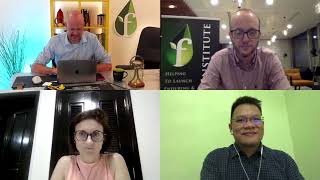
Adeo Ressi and Andy Zain discuss building venture ecosystems in Asia, from the Founder Institute's plan to create 1,000 new VC funds to Zain's $400 million fund portfolio. A panel explores what works: structured programs, corporate partnerships, and deep focus on local markets rather than spreading thin across regions.
Chapters
Hello everyone, welcome to Accelerate Asia. I hope you're doing amazing this evening and we have an exciting agenda for you today. We are fortunate to have, uh, over 100 leaders from around the region joining us on this event and I am excited to share with you an overview of what I see happening in the region today. So let me introduce myself and what's happening today for a moment. So my name is Adeo Ressi. I am CEO of the Founder Institute. The Founder Institute is a seed stage accelerator with operations in over 200 cities around the world, including many cities in Asia. And the agenda that we have today, we have people all the way from Hong Kong down to Sydney and everywhere in between who are, you know, famous ecosystem builders, famous investors, and they're going to share with you their experiences about the opportunities to build amazing startups and amazing startup ecosystems across that whole wide region. Why I'm here is because I'm looking for new leaders, hopefully like yourself, to consider running our seed stage program in your city or joining a team in your city. Just to talk a little bit about what we do specifically, we take someone at the very, very beginning of their entrepreneurial journey when they have just an idea and we turn them into an entrepreneur over the course of 3.5 months. And so they leave our seed stage accelerator with an incorporated company, the beginnings of a team, product, and traction. And then we see 80% of the businesses that start in our program are alive after 5 years or more. Over 50% of the people in our program go on and raise capital from professional investors. But we noticed an issue in Asia. While we have a number of some of the most famous investors in the region on the agenda today, it was still very difficult for people throughout Asia and throughout the world to raise money. So we then said, in 2020, we think it's super important to create new venture capital funds that can help new companies to get the capital they need to grow. So we created something called VC Lab, and VC Lab takes aspiring ecosystem leaders and helps them raise venture capital funds in 4 months. So we took all the lessons that we had in launching, you know, over 1,000 new startups per year. And we applied those lessons to the venture capital world. And our goal is to launch 1,000 new venture capital funds around the world, and many of whom will be in Asia over the next 5 years, so that any startup by any founder will have the opportunity to easily raise capital to make their dream come true. And in the last few seconds here before we call our first guest on, uh, I'll talk a little bit about the Asian ecosystem and the opportunity. So we see really Asia to be one of the largest regions in the world for startups, not only historically, but also in the future. So if you look where billion-dollar companies are coming from in the world today, obviously I'm here in Silicon Valley. Silicon Valley, produces by and large the most billion-dollar companies per capita, per area, all the above. However, right after Silicon Valley is Asia today. You have strong markets across Asia that are not only historically producing billion-dollar companies, but they're in a position to produce billion-dollar companies going forward. So it's a very exciting time in the region to be working on starting companies. It's a very exciting time in the region to be building funds. We'll be talking about all of that today. So why don't we get started with our first guest? Speaking of funds, we have Andy Zane joining us. Hopefully he's gonna pop on screen there. Hi there, Andy.
How are you doing? How are you?
I'm great. I mean, so I can introduce you. You've been an entrepreneur, you've been an ecosystem builder, you're pretty much everything. And just, just to give everyone a flavor, so Andy runs today a pre-seed accelerator, he's run a seed accelerator, he's run a venture builder, he's run a seed fund, and he's run an actual venture fund. So Andy's really done it all. Do you want to add anything to your introduction? Because, and by the way, top performing in each of the categories that I mentioned.
Yeah, so thanks, Adil. Hi guys. So I think it's part of the journey. I started that early. I started like in 2009 when I know Founder Institute, then I visit Adil also in Silicon Valley. When I started as the mentor for Foundry Institute in Singapore. So actually, that's how things start to happen, right? I think that time, the ecosystem of tech entrepreneur or the tech ecosystem in Southeast Asia, there's nothing, there's really nothing. You saw a lot of entrepreneurs, but they're all first-timers. What they did is just copying from whatever happening in Silicon Valley. So they saw Twitter, then they make a clone of Twitter. Even though there's no user here, right? They saw Friendster and they do a copy of Friendster here as well, a copy of Foursquare as well, but most of them are not really working. So when I met Adio, then I was offered to run Founder Institute in Indonesia. I took that opportunity and run that. And that become how I started like really involved in the industry. Because of Founder Institute, then to follow on that, that we launched an accelerator I have a joint venture with Indosat Ooredoo, one of the top telcos in Indonesia, to launch an accelerator with them. Then from there, we set up a small fund which we are focusing on venture builder. Because the thing is that there is not much ecosystem happening yet. We don't see good founders yet. Even though you give them money, doesn't mean that they can build good company. Venture builder models work better at that time. Imagine like 2010, 2012. You give them money, but you have them to work together with you. To build the company. Then afterwards is that you build a bigger fund. The next one is $35 million. Then now we also run a growth fund. My last one is $100 million. Whereas now, because of that, then we start investing in companies from every stage of the process. So that is how we started. So Kejora now, we are managing our asset under management is about $400 million. Then this year, I think on August, there's a report from Prekin put us in top league of the venture capital in Asia Pacific. We are one of the top performing funds in the region, and we are very grateful for that. But it started as a director, or it started as a mentor in Founder Institute, actually.
I remember actually very— and in Singapore, not even in Indonesia. So yeah, I mean, what I've heard you tell me, you know, you sort of fell in love with ecosystem building, and maybe What is it that you love about it? Why did you get involved in ecosystem building? Maybe you could go all the way back to the beginning and tell us what happened.
I think because it is the necessity. I have been entrepreneur as long as I know, and we always like to build company. I started in '95 as we're still in the age of the first internet era. So there's no business model yet. However, I see this need for us to build company. That time I was offered some money by some friends to say, why don't you invest in tech companies? We don't call it VC yet, we call it more like a private equity boutique. But money will not just solve everything. If you give money to somebody who don't know how to spend it, don't know how to use it wisely, there is no point for that. Then you start learning that you have to coach them, and coaching them alone, it won't work as well. You need to work together with other people in the industry. That is how we built the mentor network, 120 mentors under Foundry in Indonesia. That is where we start seeing the power, the strength of ecosystem helping each other. Young founders, they are all first-timers, don't know what to do, nobody trusts them, no track records, but with the handholding, we can see how they progress over time. And it also works well. We have companies which we invest from 2-person team or 5-person team, now grow to hundreds, even thousands. We even have a company now that we invest from small, now like 20,000 employees working there. And again, we can't do it alone. We can't do it just with money. We have to do it together as an ecosystem. With friends in the industry. This is what makes me excited because you are given a chance to build an industry, a new industry which is worth billions of dollars, and you can do it together with friends. How is it so interesting? Friends are not just in the country but globally. There is a brotherhood of mentors, of founders that we really hang out and still talk until now.
Well, and sisterhood, just as an aside, his daughter is launching a venture fund at the age of, uh, is she 19?
Yes. Yeah.
And she, you know, she came to me and was like, I want to launch a venture fund. I want to be a role model for young women throughout the region, and I want to be the youngest female VC running a fund in the world. And I'm like, That sounds awesome.
I said, let me do it for all of you.
Well, yeah, it was a beautiful thing. I love the whole friend thing too. You know, you were very fortunate because you got some of, and some of the most famous CEOs in Indonesia to help you in this mission. Was that easy, hard? Could you just talk about that? And then I'll go on with some other questions.
Yeah, I think Initially, it's like because we start quite early in the industry. So now one of the top companies, one of the largest unicorns in Indonesia, he was a mentor in Founder Institute when the company are still very small, when he still got like 15 or 20 employees, already a mentor with us until now. So before is that he came to my office to run the FI class, to mentor the class. But toward the end of it, toward like, I think our last session with them is about 3 years ago, we actually brought the I will hold a class to their office, to the unicorn office to run the sessions there because I am so busy, but I would like to invite them to my office. It is very interesting for the candidate as well. For the founders, they say, "Ah, I can come and have a really candid talk with CEO of the largest unicorn in the country and visit them in the office." This is very good because we have been working with them for decades.
'Cause you, yeah, exactly. You watch them grow alongside the, that's amazing. So you run, as we discussed, a pre-seed accelerator, an accelerator venture builder, a fund, you know, what do you see as the benefits of doing the whole stack? 'Cause there's a lot of people here today who might be thinking, how do I get started? Or I do one piece of it. Technically, I think you also run a coworking space. You build like everything, right?
Yes, yes. So if you look to that, Where you get the big money is when you run the growth stage fund. Where you have money, you get more fees, and people are all excited on doing bigger and bigger funds. Smaller funds require more work, higher risk as well. If you ask me personally, I like doing that better than the growth fund. The growth funds are very boring. You talk to the company, you negotiate terms, you talk to more lawyers than really spend time with the company. After you invest with them, they say, "I don't need your help. We are okay. We are fine. We have 1,000 employees already." The early stage is interesting but works much harder. However, if you don't start early, it's very hard for you to get good companies on the growth stage. You have to compete with all the other VCs. You need to pay your due. You work in the ecosystem helping all the young founders. They know you. When later on they need bigger funding, then they say, "I like to work with that guy. I like to work with that team because I know them. I know that they have the track record, really founders-friendly." supportive to the ecosystem. That is what we did there. At the moment, I don't do that much ecosystem anymore. However, because of time, because we have to become VC, do all the boring work, doing all the deals with the lawyers. However, we invest in co-working because that becomes an extension of our arms. Then, we also help others to do their accelerators. However, we still come back to Founder Institute is the first thing that we have done. You meet the first-time founders and then you have the nostalgic thing, "Yeah, this is how things happen." I think a few weeks ago, we have one founder, FI graduate, like I think 6 or 7 years ago, a graduate from FI. They recently got funding from one of the mentors, but it takes like 6 or 7 years until they get the funding from this mentor. And this mentor actually was the CEO of one of the unicorns in Indonesia. He left, set up a fund, now invest in FI graduates. So again, it is not like instant, it takes a while, but this journey actually worthwhile and you make good friends along the way.
That, yeah, that, well, like you and I. Yeah. Traveling isn't the easiest, but I feel it's awesome. To chat with you now, and we've been talking a few times. So what, through this crazy period, what advice would you give maybe anyone out there who's thinking to enter the startup ecosystem or is in the startup ecosystem looking to grow their ecosystem?
Yeah, so I think the thing is that not to just enter the startup ecosystem, but you need to stay in the startup ecosystem. You need to be there, right, all the time. You need to be available because you can't be like hit and run. I have money, look at the company, You do the meetings, pitch to me, I like it, I give you money, and I will see you maybe 3 months' time or next month or whatever. You need to be around. I still see founders come to me and say, "Andy, I have problems because of COVID Our investors actually pulled out, what should I do? The company will die next month." But then, through talking, discussing, bring other parties come in, put in another advisor, then they are able to, you know, to bring back the deals. And that happened, and we are so grateful. Even though I don't personally invest in the company, we do have our part of the equity split, we have a small part of it. But even though we don't invest additional, but we feel the ownership of this company, and we still work together. When they have problems, they still come to us. So that's good, that's good. I think those experiences are really rewarding.
So you think really taking a long-term view on your ecosystem is key. Let me ask you, so like, what do you— you've been in it for over 10 years, right? And, uh, you know, is, is that the time horizon? I mean, a fund is usually 10 years or more. So is that the time horizon that you think people should be thinking about with respect to growing their ecosystem, etc.?
There are always new founders. If I put in Southeast Asia, Adil, I believe that new unicorns are still being born, like, as now. There is still a lot of area that we can see companies can worth billions of dollars not yet being invented. By staying, I believe for the next 5 years, If you really stay on the ecosystem, you're going to be part of that history. Oh, I was with them, I'm helping them. After 5 years, maybe things become a bit boring because most of the big companies are already done. But now in Southeast Asia, you can still work with that, and you have the privilege to be on this era. That's why you really need to be in the ecosystem so you can really take I don't say take benefit of it, but get the rewarding experience. I am part of that, and this will not happen again. You can say that I am part of Facebook, a part of whatever. Indonesia or Southeast Asia, things are happening, and you want to be part of that. You cannot be part of that by just putting money or just hit and run. You need to be there. You need to be friends in the ecosystem and work with them.
Thank you so much, Andy. That was really beautiful. We are going to be having you back for another event at some point. And I know we had some other questions we didn't get to, and I want to just be sensitive to time because we have amazing people here. Thank you so much, sir.
Yeah, look forward to that. Adiós.
All right, we're gonna call on stage right now another panel of amazing people: Tanya, Heeslik, Bobby, Bennett, and Jeffrey, who are an awesome crew of ecosystem builders throughout the whole region, Singapore, Hong Kong, Kuala Lumpur, Sydney. Am I missing anything? Of course, hopefully Vietnam. I didn't see Bobby in the backstage. Hey there, everybody. I see some of us, maybe not all, but what we can do is do the intros for who we have. And hopefully the others come on. Why don't, which is great because you have more time to enjoy yourself. So what, you know, we can do ladies first. Tanya is a new Minted venture capitalist out of Singapore. So what I'll do is I'll do like a one-sentence intro. And then if you can follow up with a one-sentence intro about yourself, Tanya.
Yes, thank you. Yes, and I just went to Adeo's VC Lab as well for venture capitalists. Yeah, British and in Singapore launching fund for female founders across Southeast Asia.
Amazing. I'm very excited to hear your view. More women building companies and funding companies. Why don't we go next with Heeslik? Looking good, buddy. I haven't seen you in a while. You're handsome as always. He's an ecosystem builder in Kuala Lumpur. Why don't you tell us a little bit about— an entrepreneur. Why don't you tell us a little bit about your status?
Yes, good day everyone. I'm Hyslik from Kuala Lumpur, Malaysia. I'm the managing director for Foundry Institute Malaysia. I have been running FI for the past 8 years for Kuala Lumpur and Penang and Johor. I'm also running a software development company and also run one of the largest startup communities in Malaysia, which is called Startup Mamak. Good to join all of you here.
Awesome. Next on the list, and I see some people backstage getting queued up to join, is Jeffrey. He's in Hong Kong, also an ecosystem builder. Like he's like, he runs the chapter in Hong Kong. Jeffrey, you want to introduce yourself quickly?
Sure. Thank you, Adair. My name is Jeffrey. I've been running together with Leo the Hong Kong chapter already for now 5 or 6 years. Beside that, I work a lot with startups in their fundraising and M&A, and beside that, I also work a lot with early-stage founders in their pitching and in their value propositions.
Awesome. So I know there's a couple people backstage, we're working then to get them on stage, but we can start with the questions while my team is figuring everything out. So today we're going to be talking about best practices to build startup ecosystems in, in Asia. And what have you seen that good startup founders are doing across Asia and what do they need? So like, what are some of the things you see them doing and what do they need? Anyone can take that question.
Sure, let me go first. What founders here in Asia need, especially here, of course, in Hong Kong, we are currently running a chapter right now where we have multiple, we have people from Taiwan, mainland China, Hong Kong, Hong Kong, but also people in, in the Philippines join this particular program. And what we see there of a lot actually is the feedback that we get is that they like the structure. And a lot of founders need structure because of the focus of their, of their company. So what I see when it comes to building an ecosystem, then it's mostly about networking and having the people around you that knows where to get answers.
Anyone else want to take what you're seeing people need in the region?
Yeah, we've seen more and more young, younger entrepreneurs want to create companies and sort of, you know, you know, get out of the workforce. I think what they need more help of is to create partnerships with the corporates and also to join the industry and to form partnerships. Then I think that's where I've seen how the community or Founder Institute could help. I've seen a lot of such partnership being created locally and regionally.
Yeah, well, Andy right before launched his accelerator and fund with Indosat, as he was saying, which is the big telco in Indonesia. And I presume that's, that's the type of partnership you're referring to, Heasley?
Yes.
A lot of corporates are actually also finding ways to work with startups, and they are always in the corporate world and stuck with the conventional mindset, and they do always reach out to the startup ecosystem and looking for ways to collaborate with startups. And that's when they look to join events like this or to to partner with accelerator program or to attend more demo days and sort of to look for fresh ideas and also to create more partnerships, sort of to invite more ideas to partners or to create solutions together for their current existing customer. Yeah.
Right. So work built with the customer in mind. What are some of the things that you guys have been able to do to help companies grow that you would recommend other ecosystem leaders try? And maybe Tanya, you could take that one first.
Yeah, sure. So we, we, we're obviously working in the female founder space, which is very much a new sphere in Asia. And more often than not, we're working with solo founders, and so we find that a lot of the, the real help that we're able to provide to our founders and that they're most, that they receive the best and they appreciate the most is probably just being there as champions and sounding sounding boards for them, often solo founders feeling very isolated. So we're helping them with their network building, which is a huge part of our approach at Her Capital, intros to bigger VCs, and just being their champion and sounding board for them. You know, I'm always on WhatsApp with our founders, and I think I think they— I'm the first person that a lot of them often call when they have come out of a big important meeting for advice. And so, and I don't know if that's necessarily just, just because we're in the female founder space, or if that's, you know, generic to both sexes, but definitely that's how we're providing the most support and helping them grow.
So being a sounding board, being present, helping them just with little things along the journey, because it can oftentimes be very lonely, sounds amazing. What are some things maybe, Jeffrey, that you're doing that to help founders grow?
Um, when it comes to growth, especially at that point, we have a very good mentor network here, uh, where at that point we help them and connect to them. Uh, beside that, of course, we have, uh, partners that help us with potential clients. We also push through now in, in the, in this one and, and the coming, uh, programs is that we want to work more with local corporations to see if we can get the founders to build proof of concepts with those organizations. So at that point, um, similar to what he's like was saying, right?
Yes, yes.
So at that point, work with the bigger corporations, help them get to proof of concept, help them to get into contact with the, yeah, with the right people within those organizations. Because yeah, quite often, especially for early-stage founders, it's very challenging for them to get those contacts. And if it comes from an ecosystem building or comes from a program, yeah, then at that point, um, uh, it, it just gives you a little bit more of a, um, uh, a body to, to, uh, to get into the door. And of course, it's still— the founders still have to close a deal, the founder still has to do all the work, but it's the door-kicking, uh, opening of the, of the door at that point that allows to—
for the founders to allow and get Well, we, we managed to get the other two speakers on with a little bit of rotation magic. Hi there, Ben. Hi there, Bobby. Let me do the one-second intro for each of you, and then you can follow up with one sentence, uh, uh, after I, I do it. So very quickly, uh, first, uh, well, Ben, you came on first, we'll start with you. Ben is an ecosystem builder and investor down in Sydney, Australia. He has been an entrepreneur, he's on the board of amazing companies and has some amazing funds. You want to say a little bit about yourself, Ben?
Yes, so I've been very fortunate to have started, built, bought, sold technology companies since the '90s. And these days I love working with Adayo and the rest of the Founder Institute team, not only in Australia but around the world. That's the wonderful thing about Founder Institute to build a great ecosystem where I live and am also very fortunate to be an investor. So folks like Jeffrey and Bobby and his league, we've become friends through the Founder Institute network and it's been a wonderful, wonderful thing.
Welcome. And then last but not least, Bobby, how are you in Vietnam? Ecosystem builder, setting up companies, traveling to Singapore. Tell us a little bit about your background.
Well, first of all, can you guys hear me?
We can hear you.
Okay, fantastic. Because I had some— a lot of problems. Seems like it doesn't quite work on mobile units, so I have to use a hotel desktop, and that's why you see behind me. I'm actually in Ho Chi Minh City right now. Greetings to everyone from Ho Chi Minh City, Vietnam. Hi Dale, hi Janet, Jeffrey, and Benjamin. Yes, we've been friends through the program. Obviously, I've been full-time involved with the FI program in Vietnam since 2015. Prior to that, I was a resident mentor for the program, and obviously, through one of my colleagues, Doan, who brought me into the program and just got into this whole ecosystem of cultivating startups. And I think at a point in time when I joined it, it was really opportunistic because that was really right at the start of this whole new wave, if I may, of this development of the startup ecosystem. So yeah, and then since then, obviously I've been to Silicon Valley, FI office a few times, reported on the situation, and I'm quite glad to say that Vietnam is probably one of the strongest programs in Asia.
Yeah, we're seeing some great companies coming out of Vietnam. I remember going there very early on and I was in some sort of sauna with founders. It was a very memorable experience. This would have It must have been like 2011 or '12. So quite a while ago. So guys, we have, you know, Ben and Jeffrey and Bobby, you know, what are some strategies you've seen that Asian startups are using to get really large? And maybe either Ben or Bobby. Ben, since you have a little bit better connection, you want to take that one first?
It varies. So we've been fortunate to have invested and been close to a number of fast-growing tech companies. For those that have been on the consumer side, I can say that the companies in our portfolio that come to mind have been expanding into various Asian cities, having learnt what has worked in the first one or two and identifying what are the elements of the playbook that allow them to expand into cities 3, 4, and 5. So we've got exposure to a fast-growing e-mobility business called Beam who have electric scooters, and that's what they've been doing across 7 country in Asia. And then when it comes to software businesses, which are more B2B, what we have found are companies certainly in our portfolio that have been growing have gone very deep. They've gone deep into a particular sector. So they have got to know a sector very well and serving that sector with great solution. And they have been able to almost become dominant in that particular sector or subsector that they're playing.
So that laser-like focus is really the key to get— well, let me just quickly before we go on to Bobby's answer on that and Geoffrey, like, do you see that like a problem is a lack of focus in some of the companies? Definitely.
And that's one of the things when we do come across founders, and this is with my venture capital hat on, identifying who the potential customer is. And by going deep into a vertical and knowing who is that customer and naming the title or the role of that customer allows for growth and sales efforts. Whereas if your customer is everybody, well, how do you scale to get everybody to buy your product when you're a startup? It's really tough. Whereas if you tell me that you are going after businesses that have between so many thousand employees and you are targeting a particular finance officer or finance function within that business, and that's the person who's responsible for buying your product, well, you can replicate your sales effort to find that function within different companies.
That's awesome. Bobby, you've got some of the bigger companies in the region who've come through the Founder Institute, who've been guided by you, what are some of the things you're seeing and able to do to help them get big?
So you have the pre-COVID period and then now you have the sort of moving forward, the post-COVID period. And but there's a base fundamental and the difference between these two periods is that prior to this period of pandemic, a lot of scaling and expansion, for example, are sort of driven by what investors actually want to have, right? What this pandemic situation has shown that, you know, being hyperlocal is actually not a bad thing. And, you know, to a larger extent, and having hindsight, for example, I do believe that a lot of startups in Southeast Asia generally should be a bit more hyperlocal to win the local market first. And the expansion is either based on collaboration, M&A, or some form of a JV, right? Because you see some common verticals being developed in different countries. Southeast Asia, you have 10 countries. You spoke to Andy Zane earlier. And these things taken care of some of the more critical startups that we have in Vietnam as well. And in terms of stages, probably they are a bit more mature. But at the end of the day, for anything similar to scale outside, there is really no distinct advantage in that sense. That's one. Two, what I also noticed a lot of times when your startups from emerging economies, for example, like Vietnam, Indonesia, the main focus is all about price competitiveness, which I think Benjamin, he's laughing right now, he knows the cost. You can't be so price sensitive in that sense whereby you actually price yourself out of the market on the low end. You got to look at the product that you built, laser focus on the audience that you want to have, and then price it to the point of value, not to the point of— and not trying to be competitive about it. Yeah, so these are some of the— I think especially for post-COVID, I think these are some of the key things that we're going to adopt for our founders in subsequent batches.
Jeffrey, what would you like to add to what they've said so far?
Especially, of course, with my view from Hong Kong, like the local market in Hong Kong is not that big, right? It's 7 million people, 1.4 million people live under the poverty line. So the actual market in Hong Kong is not that big, but it's a very good test market. So we have a significant amount of expats here, we have a local population population here, and we also have a wide variety of different cultures here. So that really helps with testing a lot of your potential growth markets. But once you've done that, you really have to start scaling up in those particular areas. So at that point, that quite often requires significant amount of funding And at that point also cultural awareness of the market that you go into. Because usually when you start your business somewhere, and for us of course quite often in Hong Kong because you live there. But if you at that point want to scale up to, I don't know, Indonesia, Vietnam, Singapore, Malaysia, then at that point you have to have those contacts there, but also you have to have that cultural awareness. And yeah, that's, that's something that a lot of founders overestimate, that they would say like, oh, I'll just fly there, be there for 14 days, set up a team, and then start executing from there. Like, quite often that, that doesn't work that way. So founders should be aware that if you want to scale in Southeast Asia, Hong Kong, Taiwan, Singapore, but also Tokyo or like Japan and South Korea is that they're all different cultures. It's not one big market that you can replicate. Every single thing has their own localization. And that's something that, yeah, you can test a lot in Hong Kong because we have all those cultures. Actually, I think Hong Kong is one of the few places in Southeast Asia or in Asia where you have that. But after that, yeah, it's, it, it requires a lot of focus and a lot of, um, capital to grow.
Awesome. What, you know, guys, what do you think if there is one thing, you know, maybe start with one thing each, and, uh, Bobby, we can go to you first, that, that the Asian startup ecosystem really needs right now, what would that be?
As Jeffrey was talking, I was thinking in my mind, Klook from Hong Kong, right? And the way they become global to the point where, I mean, I use Klook when I go to the US, I go to Hong Kong and stuff like this. I think founders need to be a bit more aware of what's going on around the region, right? You need to figure out, say, for example, okay, when you have a startup, you have an idea, and you're obviously offering solutions to some problems that you're trying to solve. But you have to examine what are the 5, 7 common problems across the region, right? And then if you start from Vietnam, for example, and then you add in maybe 2 or 3 for whatever localized problems that you may face. What I see a lot of startups in Vietnam, you know, is that they focus too much on the local problem, and that's also one of the downsides of being hyperlocal, that by the time they are sort of mature enough to want to scale outside, they kind of imagine the local problem and trying to scale from there, which may not work as well. But, you know, if you understand what are the general local problems that you're solving across the region, and then be able to, I guess, have the savviness to understand the local issues. I think that will work much better. And I see that with, I guess, succeeding founders, right? Later generation founders who especially have gone overseas to study and they they actually do understand this concept.
So maybe spending some time in different regions. Ben, do you want to add, add to that?
Sorry, as ecosystem leaders, as ecosystem leaders, we want to help the tide get higher. So we want to help founders at all stages to be better, to be stronger, so that they're able to grow more visionary companies, more potentially world-changing, industry-defining companies at a faster pace and to bring more people with them. So yes, I agree. As we have more successful companies in our cities, in our countries, there will be a new generation of founders who have perhaps worked at those companies, and are inspired to go and start their own dream companies. And we'll see more successful founders or founders with road, road mileage coming.
What I would say, yeah, I mean, Asia right now is one of the biggest population bases in in the world and the number of people doing startups in tech is still relatively small. And then many of them may leave, right, for America or Europe. And so that's not great either, but we are seeing a bit of a reverse brain drain. Now for everyone here, we're about to go into breakout rooms and we've got two and Bobby, Jeffrey, Tanya, who dropped off, and he's like, we're all gonna be in these breakout rooms. So you can actually come into the breakout rooms and converse with us. So there are two ways you can converse with us. You can actually turn your camera on and talk, or you can type in the chat, and there's gonna be a moderator. I'm gonna be one moderator, and in one breakout room and then we have another moderator in the other breakout room. We're gonna try and surface your questions as well. So we have some discussion questions. So one room is gonna be focused on impact investing and investing in Asia. That's gonna be me, Tanya, and Ben. And then we're gonna be talking about accelerators in this, an acceleration of startups in this post-COVID period. And that's gonna be Heeslik Jeffrey, and Bobby, moderated by Janet. So if we can get those breakout rooms going right now. Thanks to everyone, you are amazing.










