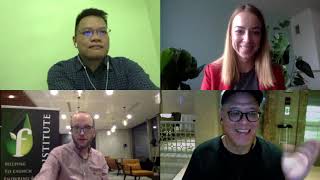
In this Accelerate Asia breakout panel, moderator Janet leads a discussion with regional startup ecosystem leaders (Jeffrey, Hazlik, and Bobby) about how the COVID‑19 pandemic disrupted their markets and how they are navigating the turbulence. The participants describe the immediate shock to travel and hospitality‑focused startups and the rapid pivot of the majority of companies toward food and grocery delivery and broader e‑commerce. They highlight the mental‑health challenges founders faced and stress the critical role of support networks, mentorship, and peer communication (via Zoom, internal social groups, and face‑to‑face meetups) in maintaining resilience. The conversation then shifts to a forward‑looking view, with optimism about post‑pandemic opportunities: AI and deep‑tech innovations accelerated by 5G, growth in health‑longevity and leisure sectors, and the belief that the crisis will spur smarter, more adaptable entrepreneurs. Regional nuances are noted, especially Vietnam’s hyper‑local ecosystem that recovered quickly due to lower cross‑border dependence. The session concludes with a call to network among participants.
Chapters
So the topic of this breakout session is acceleration in turbulence. I guess mainly this was inspired because the topic was inspired because of COVID and what happened in the beginning of the year. So I guess I'm curious to learn from you what happened, what happened in your ecosystem right when COVID hit. So maybe Jeffrey, Hazlik, you can just share a few sentences so that we have a better understanding how it all started.
Hazlik, why don't you go first?
Yeah, first of all, I apologize if my video seems to be severely delay. So what I noticed is that in the local ecosystem, 9 out of 10 companies started to sort of diversify their business model to do food delivery. And the 10th company start to offer grocery delivery. Before that, can everyone hear me well?
Yes.
Okay. So I think like many other countries during the pandemic period, we have lots of policy changes including lockdown, including restrictive movement. We— a lot of companies activated work-from-home policies. And so a lot of purchase behavior changed. E-commerce has been growing. And the industry that has been impacted by pandemic created a chain effect that also equally impacted the whole startup ecosystem where whoever has a clientele that relies on travel industry or the hospitality industry are all heavily impacted. I think that's still continue to be seen and we start to see a lot of them starting to either create a new product or start to look for a new industry as their customer. And I'm happy to share more on that. And yeah, Jeffrey, did you see that in your ecosystem?
Um, yes, especially here in the ecosystem, a lot of challenges, of course. There were a few, especially in the travel industry, that didn't make it. But no, it is, it is, I can only confirm what you're saying.
So Bobby, welcome. We are just discussing what happened in your startup ecosystems when COVID hit. Because our topic is like, how do we accelerate now in turbulence? So Patrick shared his views, Jeffrey as well. Would you like to also quickly share with us what did you see in Vietnam when COVID hit?
Oh, wow. That sounds like a distant memory, actually. Obviously, a lot of people got nervous. Back in, so there was some early wave of infections around March that got somewhat contained, but then we had sort of the first wave in April where we had lockdown for 3 weeks. At that point, I think everything pretty much stopped and we were lucky to basically reopen the market end of April and things kind of picked up somewhere around towards the end of May, and by which time I think, you know, basically, yeah, I think the startups, you know, were pretty much back on their feet, trying to regain some of the, I guess, lost time, lost businesses. And the good thing about Vietnam startups is that for the most part, they are kind of hyper-local anyway. So the dependency on, I guess, cross-border business isn't that high, and that actually helped. And in fact, there were other startups, not just the FIs side, but there were other startups that actually gained quite good traction. For example, a recruiter from our last batch, the business grew, you know, and they were just maybe, probably, I don't know, 10 10-20% off today. They are about maybe 10-20% off the projection that they had done pre-COVID, right? So most startups are like this, with the exception of obviously travel tech, which sort of, I think, is only in the recent couple months that they are coming back because hotels in Vietnam have all opened up and local travel is on the rise. So yeah, but otherwise, I think the startups kind of realize that funding is going to be in short supply, so they're doing everything possible to sort of self-sustain until at least things get better across the region.
Great, thanks for sharing. One thing we noticed in FHI, because we have this global portfolio of companies, We noticed that one of the challenges is the mental well-being of founders and how to survive through those uncertain times. Can you share your views? Like, what recommendations do you have for founders for building their dream companies in such turbulent, turbulent times? Have you seen some strategies that are successful? Maybe who wants to go first? Is that some advice?
I think his leg should go first because from startup mama, there was just a lot of conversation about that.
Okay.
I guess it's very important to start having more conversations with the, you know, with more web conference tools like Zoom and, you know, like any social media. I think we have more than enough social media and tools for us to stay connected. So for entrepreneurs that, that has been dealing with so much challenges and struggling with all these intense roadblocks, right? And all this in this turbulent time, it's very important to have— keep having conversations with mentors, with friends, with community leaders, because everyone is pretty much experiencing the same thing. And this is a good time to just share ideas and/or just to ask how each and everyone is going through. I think no one has better idea of how things is going actually. I think that's the part that everyone should acknowledge and to have that resilience to and to be able to ask for help. I think that's a very important reminder for all of us. Yeah, I think just to have conversation and don't be too hard on ourselves, I would say.
Yeah, I can add to that is that that's why you need your support network, right?
Yeah.
So Totally in agreement with what Islik said. I think I'm also sort of facing the same situations and I think founders are more open, I guess, at least from the alumni that we have. We still keep in very tight circle. We have our own internal social media group, social network group, to keep everyone in the loop. I still meet up with especially the newer within the family, I still meet with them fairly often. If not in person, then definitely in, you know, on chats and all that stuff. So yeah, so we do see, you know, quite a bit of, you know, sessions, online sessions conducted, and I think connectivity starts from there. In the last few months, I think the opportunity for face-to-face meetup has actually improved the situation, I think. So yeah, so in that sense, I think Vietnam has been lucky.
Great. And Jeffrey, would you like to add something else?
Yeah, I would say earlier, like, it's also like here when it comes to the whole COVID situation, then that support network kicks in for you. Like that, and that really shows the importance of your support network, which is not only there for to help you out with, uh, business questions, but also questions about mental health. Um, I always say like, um, uh, do sports, uh, go out for a walk, uh, take a Sunday afternoon, uh, and just go and walk somewhere, get some fresh air, um, but also talk to the people who've been there already. Talk to the people who've been, um, with these challenges, uh, as a founder, uh, with these challenges as, as an entrepreneur, um, because quite often, like, COVID have accelerated a lot of things, but most of the problems were not unique. Maybe they had different triggers why they started the problems, but quite often they're not unique in that sense that they might have already happened to somebody else. So at that point, creating that support network before you start, it's very important. And then when something like this happens, you can really— you should really be able to rely on that.
I'm actually really glad that that's part of FI's methodology, how to build successful companies, just starting with this support network from day one, the working groups in the program and so on and so on. Okay, we have a few more minutes left. I want to end on a positive note as much as possible because these turbulent times naturally brings some negative ideas about the future. But my question to you two is, what do you think the future will be? And I hope for some kind of positive vision of the future, but let's say 2021 is starting soon. What do you expect in terms of new industries, new businesses, a new mindset maybe? Paeslik, would you like to go first?
Yeah, for every ending there's a new beginning, right? And for a lot of great companies comes from, you know, created from a series of crisis. I can't wait for more great companies created out of leveraging on AI, on deep tech. Soon we have adoption of 5G, and that will accelerate a lot of innovation. There will be things that we can't imagine. Right now. And with the pandemic, more people are learning more things in the shortest time possible. And I think as a whole, everyone will become smarter and smarter. And there'll be— I think humanity will prevail. And I really believe that The world will become better once we get through this and once the vaccine will be introduced and the new normal will kick in. And yeah, I'm very hopeful.
Okay, I can add to that. What I see in the future, in the near future, We're probably going to see a lot when it comes to health, when it comes to longevity. People are getting older and older, so there has to be a lot of development to support that. And beside that, I also think there's, there's going to be a lot of leisure development when it comes to startups. So probably for me, it will be leisure development and healthcare, the two things that we should focus on for the future to see and to support the things that are already in development. People getting older and people, yeah, have to do something and there should be a lot of things developed to support that.
Great, thanks for sharing your positive vision about the future. Sounds optimistic, especially from startup ecosystem leaders. So it means that we can expect some positive changes to the world. Okay, so we're almost in the end of our conversation. What I propose right now to our guests here and also the speakers, if you'd like to, we can now use the the networking functionality here on Hopin. So you see this networking section on your left. Basically, the way this works is if you enter it, you will randomly be connected with someone from the audience or the speakers, and you can just have a 3-minute quick conversation, introduce each other, just ask a few questions, and then you will be randomly introduce to someone else.
Okay, let's go there. Thank you very much, Janet, for organizing and moderating.
Thanks, Janet.
Thank you, Jeffrey. Thank you, Patrick. It was really nice to have you. Thanks for the insights. Now everyone, let's move to the networking section and try to meet new friends.