Alex Raymond on Overcoming Startup Burnout
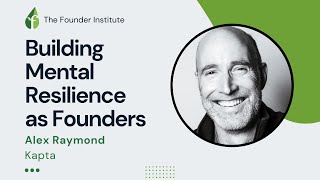
Alex Raymond, CEO of KAPTA and founder of the Conscious Entrepreneur Summit, talks about burnout, imposter syndrome, and the internal struggles entrepreneurs face beyond fundraising and product-market fit. He shares research from UCSF psychiatrist Michael Freeman on entrepreneur health and practical tactics like daily outdoor time, exercise, and meditation to manage the mental toll.
Chapters
If I find myself getting triggered by something, say, well, why? And what's behind that? And so often that old adage that we all know, if you spot it, you got it, is true for me. So if I find myself being judgmental about someone's thing, then it's because I'm being judgmental about myself, but I don't want to project it out on them.
The topic that we are talking about today is how to overcome the internal challenges of being an entrepreneur. And now from starting companies for something close to 15 or 20 years or so, I can't even remember at this point, and working with countless founders, you know, one of the kind of negative things that I see is that, yeah, everybody is always wanting and very much seeking advice. How do I grow my ARR? How do I, you know, growth hack this or make more money here or close this deal? Right. And but very, very rarely do we hear questions about, hey, how do I make myself a better entrepreneur? How do I make myself a better leader? How do I try to bring some balance to my life and try to make myself better so that I can become a better entrepreneur, a better founder, a better CEO? Right. It's kind of a level of thinking that still has this stigma around it. And, you know, it's something that literally I think just in watching entrepreneurs and being an entrepreneur for a while and going through a lot of these challenges myself, right? I think the internal challenges are at the very least, they're just as challenging as kind of the external challenges. When I say external challenges, that's literally like the tactical things that you need to do to build a business, right? To go out and raise funding, to go find customers, all that kind of stuff. The internal challenges are not addressed, or at least they're not spoken about. And I would argue that they're even bigger than those external challenges. So that's why we're here today, and that's why I really am reiterating that please do let us know in the chat. So Isabel from Minas Gerais, hopefully I'm pronouncing that correctly. I was born in Rio de Janeiro, so hopefully I'm getting that right. Guadalajara, Denver, Colorado, Matthew, welcome. I'm based in Basalt, Colorado. We got Yokohama, Japan, Rohini from Mountain View, amazing. So let me go through quickly just the agenda that we have today. We're going to bring on in a minute my friend Alex, but then Alex is going to go through a kind of a quick kind of guided discussion, right? But honestly, we are trying to build this event in a way that it will have as much interaction as possible. All right, so please do share any of the experiences that you have, share any of the questions that you have, because in going through kind of the personal side of entrepreneurship, the number one thing that I have seen personally, uh, like kind of the number one barrier that then starts to unlock a lot of other stuff, is to acknowledge that you have these struggles and then number 2, to start talking about them. Right. And I have— it was only a couple of years ago when I started to acknowledge that I had some of these struggles and then I started talking about them. And honestly, my life became significantly, significantly better. And it started when I came to the realization— I acknowledge this with a lot of founders and founders of 2 programs. As well. Okay, uh, the number one acknowledgment that I would say is that, look, um, being a founder kind of sucks if you think about it. All right, I think there's a lot of very, uh, romantic ideologies that people have about being a startup founder, right? Uh, first of all, a lot of people will come into our program— it's literally, if you're applying to the Founder Institute, just to give you a little tip, okay, we have a flag in the applications. Like, if somebody is applying to Founder Institute and they're saying, because I want to be an entrepreneur because I want to be rich, or because I want to make a lot of money, it's usually not the best reason to go into entrepreneurship. It's Phil Libin, who's one of our longest-time mentors. He was one of the co-founders of Evernote, now runs a company called Mm-hmm. And a quote that he had at one of our Founder Institute sessions a long time ago was like, look, if you think that starting a company is a good way to make money, then you're just bad at math, right? It's not about the making of money. Uh, the second thing is, is that a big misconception that people have is that, um, they'll say, oh, I want to start a company because I want to kind of have work-life balance, right? I want to kind of determine when I work. And there's a quote that he's given to our entrepreneurs a lot of times too, is like, yeah, most entrepreneurs, yeah, you have freedom, you have work-life freedom to choose which 16 hours every day that you will work, right? And the third acknowledgement, and this is something that I see a ton with founders that I work with, is that they start a company because they want to be their own boss, right? And something that I have definitely learned over the years is that when you start a business as a founder, you, your boss, maybe you don't have another boss above you, so to speak, in a traditional sense, But at that point, you are inspiring a lot of people to work with you, a lot of people to follow your vision, people to invest in you, but even your first employees, anybody who's working for you, you're probably not able to give them a market-level compensation. You're probably not able to give them huge bonuses and all of those things that they can get by working at a big company. So you are inspiring people to follow your vision. So really at the end of the day, yes, you don't have somebody that you're reporting to, but you are really reporting to all of these people that you have inspired to bring in your vision. So you're sort of swapping out one direct boss for a whole bunch of other people who have bought into what you're doing, and now you're sort of responsible for a lot of their livelihoods, right? That's something that I think a lot of entrepreneurs don't get. And it's just one of the many things that I've seen, you know, in entrepreneurship and one of the many things I've seen that really makes me passionate about addressing a lot of these internal challenges, addressing a lot of the mental health side of things, a lot of the conscientiousness side of things of entrepreneurs that are getting started in the space. And a couple years ago, I was introduced to somebody. His name is Alex. Alex, if you want to bring yourself on. Alex has been working now for a couple years, started an event here in Colorado called the Conscious Entrepreneur Summit. And I remember the first time I spoke to him, he's like, look, you're going to come to this conference. We're not going to talk about how to increase your ARR, right? We're going to talk about how to make you a better CEO, a better entrepreneur, a better leader of people, right? And the only way you can really do that is to try to address some of those internal challenges that you had. And so that's how we got connected. And I went to the first event and it was amazing. It honestly has given me a lot of tools to be better at this whole job. And one quick thing, Alex, before I let you speak, because it's kind of a long and drawn-out introduction because this is something that I'm passionate about. The morning of the conference, the Airbnb that Alex was staying in was broken into and his laptop was stolen, okay? I don't know if anybody on the line here has run a conference where they're the MC and they have the number of logistics and stuff that is involved with getting up on stage. Okay, this person's coming up next, this person's coming up next, right? But to have your laptop stolen the morning of the inaugural conference that you're running and still run that conference. And I will say, Alex, you did an amazing job. So that also to me was sort of a perfect kickoff to the Conscious Entrepreneur Conference because I remember you took the stage and you're just like, I'm going to take a deep breath or something. And you're like, and it's going to be fine. And yeah, it's all going to work out. And it really was an amazing, an amazing event.
Thank you, Jonathan, for the memory there. That was a big deal. I woke up that morning and I was like, wait a minute, I left the computer here. It's not here. I'm excited. I've got 100 people coming to this summit in Denver. What the hell is going on? And luckily I was able to find a friend who lent me a laptop and put it all together. And thank goodness for Google Drive and all that sort of stuff. But yeah, that was a, that was a really big deal. I super appreciate being here. I'm a big fan of Founder Institute. Thank you for the invitation to come and join this event and to share. And this is so important. And I look forward to learning from you, Jonathan, about your trajectory and the things that you've experienced. I also really want to hear from people in the chat about what's coming up for them. What we're going to do today is we're simply going to list out some topics, and those topics are the inner challenges, the so-called demons that we face as entrepreneurs. And that's really what I want to get into today. I want to share those and hopefully foster an open communication about what it means to be an entrepreneur and how we're showing up for ourselves and for others. Real quickly, by way of introduction, I'm Alex Raymond. I live in Boulder, Colorado. I host the Conscious Entrepreneur Summit. I host the Conscious Entrepreneur Podcast. And I'm the CEO and founder of a software company here in Boulder called KAPTA. That's K-A-P-T-A. And I've been an entrepreneur for something like 16 years. So I've seen a lot, I've been through a lot. I've been through programs like Techstars. I've mentored with a number of different startup communities. And just like you were saying, what I've noticed is people will show up to mentor meetings and they think they wanna talk about go-to-market strategy or pricing or whatever it is. But what they really want to talk about is, when am I going to start feeling okay in here? And that was the inspiration to create this community and this event around conscious entrepreneur because I realized that everyone hits this realization at some point or another. They're like, oh, I really need to be working on this. So, super looking forward to this conversation today. We're going to be very conversational as how we go and how we go through things. And I will keep a diligent eye on the chat here to make sure that everyone's voices are being heard. I want to start—
please do, just quickly. Yeah, in the chat. So we do want to make conversational. Okay. I think one of the most powerful things for me at least was to just start talking about the questions and just the feelings that I had and the struggles that I was going through as an entrepreneur. Okay, so please do in the chat. We'll be tracking it. We want to loop in whether it's any questions that you have. Hi, Eva from Christchurch or Christchurch or Christchurch. I'm not going to pronounce that. I'm not sure how to pronounce that in New Zealand, but welcome. You know, please do let us know questions, comments, or even just contribute anything that you've gone through here because we really do want to make this a collaborative conversation.
Absolutely, absolutely. So, the more that we're sharing, the more that we're open, the more that we're vulnerable, even if it feels awkward or new, is something that is really supporting us and everybody around us. I want to share and start with a quote. So, in 2015, 9 years ago, a professor, a PhD psychiatrist, psychologist, at the University of California, San Francisco, did a great big research project and he called it "Are Entrepreneurs Touched with Fire?" The person who wrote this paper, his name is Michael Freeman, and he was really digging into the psychology of what it means to be an entrepreneur, of how to be resilient and how to overcome the obstacles. And I just want to share with you one tiny paragraph from this report. As a way of framing the discussion today. So here's from Michael Freeman. The barriers to success as an entrepreneur are virtually unlimited, and most startups fail as a result. Entrepreneurs have lower initial earnings, lower earnings growth, lower long-term earnings, greater work stress, and more psychosomatic health problems than employees. So as non-entrepreneurs. Why would anyone voluntarily accept longer work hours, fewer weekends and holidays, more responsibility, chronic uncertainty, greater personal risk and struggle, and greater investment of emotional and physical resources that are required to be an entrepreneur instead of the security and long-term rewards of having a career? And then he concludes this paragraph by saying, "By conventional standards, choosing to be an entrepreneur is an exercise in bad judgment." So, I hope we're all happy with our life choices right now after reading that. So, this is a psychiatrist saying, "Hey, there's so much that just rolls straight down the hill and onto the shoulders of the entrepreneur." How do they do it? What's in it for them? Why are people oriented like this? And I think it's really interesting that many people, especially on the outside, they don't know how hard it is to be an entrepreneur. They don't understand what really goes into making this work. And as Jonathan was saying at the beginning, you know, I think we can all agree, we can all posit that our success and our happiness as entrepreneurs is going to be driven by the internal factors, not the external factors. We might think that we're chasing, you know, a billion-dollar valuation or $100 million in ARR or some gigantic company or whatever it is. But really, if we fix the internal stuff that comes up for us, we're going to enjoy the process better. We're going to have more fun along the way. And guess what? When we are nourished, when we are strong, when we are resilient, when we are inspired, all sorts of business problems stop being problems. And so this is such an, such an important reframe or mindset shift that I want us to acknowledge. So what we're going to do today is we're going to talk about some of these internal challenges, and I'm going to put Jonathan on the spot sometimes and say, hey, how did this stuff come up for you? And then I would also love to see in the chat what it is that is coming up for you as well. So Let's jump into these challenges. So, the inner challenges of being an entrepreneur and how do we overcome them. The first one is really a big deal for entrepreneurs. And I want to call it out especially, and that is burnout. Now, burnout affects a tremendous number of people. I was talking to someone yesterday who said that approximately 16% of the US population is burned out at any given time. And in other countries, that's even up to 25% or 30% of people. And burnout is a terrible affliction because it can creep up on you. Now, before we get into sharing the personal stories of burnout, I want to offer a definition. So, burnout actually has a definition. There are 3 critical elements of of burnout. So, the 3 elements of burnout are, number 1, feelings of energy depletion or exhaustion. So, that's mental or physical exhaustion. Number 2 is what's called cynicism or depersonalization, which means there's more mental distance between me and my job. I feel negative. I feel cynical. In some cases, I feel hopeless. And then the third part is reduced professional efficacy, which means I'm just not able to get done what I used to be able to get done. Things are not working for me and life is much more difficult as a result. So, that's the actual definition of burnout. Now, it comes in many shapes and sizes, comes in all sorts of forms, and it can creep up on you or it can be sudden and acute. Type of thing. But burnout, we know, is so pervasive in the space with entrepreneurs. Like, we all just think we can burn the candle at both ends, and lo and behold, it catches up to us. And sometimes, we can kind of continue in low-grade burnout for a long time. Sometimes, it just— we're incapacitated and we're no longer able to do our jobs. Jonathan, what have you seen either personally or within the FI community or other communities about burnout and how has that affected you?
It, it's, it has affected me a ton, honestly. I've been at, at probably 4 or 5 times in my life now to that point where I'm like, I can't go any farther, right? And I've conditioned myself to go pretty damn far, to be honest. And it is something, it was just a couple years ago when I started you know, and this may sound new age or something like that to a lot of people, but, but, you know, I started just making sure that every single day I'm getting outside, right? Figuring out how— what are the things that I can do in my mind to just settle my mind? Because there was always a million different things that were going on, right? It was always a million different fires that needed to be settled today, and then fire— things that would be a fire next week, and then things that would be a fire the week after that, right? Um, and just being able to go through all of these, these different things. It was impossible, like literally impossible. So the only way that you can really start to deal with it, at least from what I saw— and trust me, I'm no expert on this, right— was just to start saying, okay, look, yes, there are all these problems. How can I at least start to like train my mind to not worry about those problems and just try to focus on one task at a time, one thing at a time, right? It, it's At least for me, I, I— the thing that kind of really connected the dots was that, because I really did think that, um, you know, conscientiousness and just, uh, like even things like meditation were just sort of New Age BS, honestly. Yeah. But then when I started to reframe it in my mind and think, okay, you know what, like it's, it's the same way that I would attack any business problem. It's like, okay, I need to release this product to this market. Okay, what's step 1? I need to do this. What's step 2? I need to do this. What's step 3? Right? As soon as I started thinking about, okay, I like what I'm doing right now is not working, right? There's not product market fit, so to speak, on my internal mind state and what I need to do on a day-to-day basis. So how do I attack that step by step? And that's when I started to actually say, okay, you know what, every day I need to get outside, I need to get some exercise, I need to do this, I need to do that. And you know, it's not something where it's like, okay, immediate gratification. You go for one run and okay, now you're, now you're healed. It's, it's a continuous, continuous thing, right? So I think it was, for me, it was looking at myself as, um, and this was a theme that has come up a lot in a lot of these conversations I've had recently as well. It's like you have to think of yourself almost as like a mental athlete. Athlete, right? As an entrepreneur, you're not just doing— you don't have a career where, oh, I'm a product manager. Like, no, you're the product manager. In some cases, you're the developer, you're the salesperson, you're the CEO, you're the customer support, you're— right? So you literally are kind of a, a, a mental athlete. So if you aren't taking care of that engine, that, you know, your mind, then it's, you're just, you're sort of, there, there's only kind of one logical conclusion to that.
It's a, it's a great analogy. The athlete is a great analogy because what do athletes have? You know, some, some really good, some really good, uh, basketball player, golfer, or whatever it is. They've got, you know, they've got their, their playing coach, but then they also have a rest coach, maybe a sleep coach, a nutrition coach. So they're looking at the entire life cycle. And that's the same thing here. As entrepreneurs, if we think that I'm just going to move mountains by pushing a boulder up a hill all the time and I can just keep going and outwork the competition, etc., I'm going to wind up in serious burnout. One of the reframes that I've really appreciated around burnout that I've suffered from myself is, what if burnout is a psychological or philosophical or a spiritual problem? More than just plain old exhaustion? And what if we can get from so-called victim mentality into creator mentality and taking responsibility for our lives? So, just like you were saying, "Hey, I view this as a problem where I can put certain plans in place and take certain actions," we can do that toward burnout. What happens? So, another question you might ask yourself is, what happens if I stop resisting reality? Does my burnout go away? If I accept reality and say, what can I change? What can I not change? Does that do anything? And then finally, we're sort of conditioned to believe that this is normal. And I think it's important just to remind everybody, burnout is not normal. This is not a badge of honor. It's not a great thing to be walking around burned out. It means that your physical and mental and emotional capacity are very, very low. And so, we want to switch the conversation around burnout. I love seeing some of these items in the chat. Sleep is super important, taking care of ourselves, preparing for the marathon that is building a company. It's not a sprint.
Sleep for me is incredibly important too. So yeah, I saw that in here. Nifin, yeah, sleep. That's one I also haven't cracked. I've just sort of always had sleep problems, to be honest. But sleep is something that, yeah, if I don't get a good night's sleep, I wake up in the morning and inevitably, right, I fire up and I see that there's a problem and it's just like, wow, what a terrible way to start, right? I have another question here from David. David in Florence is asking, Florence, United States. I'm not sure what state that's in, but he's asking, can you address how focus can lead to burnout, which then can lead to a crisis of confidence, right? And that's where it's a good point because this is something in the Founder Institute program too, right? One of our main, methodology, so to speak, is that entrepreneurs need to be focused. When they start to think about what the businesses they want to try to build, right? They start to try to boil the ocean. So we try to get them, hey, no, go super, super, super deep on this one problem. Now, when you talk about going super, super, super deep, that can start to lead to like obsession and things like that. And yeah, I don't know, Alex, if you've seen any strategies to deal with that? I mean—
Yeah, yeah. When I hear that, a concept that's been very powerful for me in my life comes to mind. And that concept is zone of genius. And zone of genius comes from an author. His name is Gay Hendricks. And he created a whole way of thinking about where do we put our time and our energy? And when I hear someone say like, is focus leading to me going down a rabbit hole and then burning out and how do I get out of it? Gay Hendricks will actually say, if you're in your zone of genius, that's actually where time expands and energy expands. However, if I'm doing stuff that is not my zone of genius, so what he calls the zone of competence or maybe the zone of excellence, or certainly not, I hope, the zone of incompetence. But if I'm down there, then yes, all this work and focus can be incredibly draining if it's not part of what gives me life.
Right, so it's kind of getting to the energy side of things, right? Correct.
Yes, it's—
yeah, it's— this was something that I learned at your conference, by the way, was that identifying certain things for everybody that either drains your energy or gives you energy, right? For me, uh, there were things like if I feel like I'm not, uh, being just appreciated, right? This is like introspection that I did over, over a couple of years. It drains my energy. It's sort of like a kick in my side, right? But if I'm able to see things and do things that I can get instant gratification from and things like that, right, it gives me energy, right? So it's kind of, if that zone of genius sounds to me, it's like, okay, if you could engross yourself in projects that are energizing, right, then time expands. It's, you get into that proverbial zone.
Totally. Absolutely it does. Absolutely it does. And I see that there's a question here. What happens if I don't have a zone of genius? Everybody's got one. And so, there's a fantastic book. I don't want to get into it in too much detail here, but there's a fantastic book written by Dr. Gay Hendricks on this topic. It's called The Big Leap. And in The Big Leap, he identifies here's some questions to go about figuring out what is your zone of genius. For example, what's the kind of work that you can just do and do and do and never get tired? What are the things that your friends and family come to you about, for example? So, over the course of your life, do people always come to you with a certain set of questions or observations? What are the things that really give you energy? So, those are the kind of questions that you want to be asking yourself about zone of genius. And that, by the way, is a tremendous remedy to burnout. So, not spending time doing things that you don't like to do, that you're no good at, that cause you anxiety and stress, et cetera, that's a great way to start avoiding burnout. I want to jump now. Into the next one of these internal challenges. And this is another big one for us entrepreneurs, and it's called imposter syndrome. Imposter syndrome basically feels like, I don't know how I'm at this party. I wasn't invited. I just snuck in the back door. I don't have anything in common with anybody. Everybody else looks so much more successful than I do. They all seem to have their shit together. You know, that sort of thing. Like, those are the things that come up when we have imposter syndrome. And it's very common, by the way, especially in a group like Founder Institute. Why? Because I'm comparing myself to the person who's speaking from the stage, and he or she is 10 years ahead of me. I don't need to be comparing myself to them, but still, the idea of like one up, one down and comparing creates this discussion around Am I good enough? Do I deserve to be here? Am I worthy? And I want to share a couple of definitions and quotes about imposter syndrome before we get into the conversation on this topic. When it comes up, when imposter syndrome comes up, Brené Brown, very famous author and thinker, she recommends, don't listen to it, don't berate yourself, talk to yourself like you would talk to someone you love. So, when you hear that nagging voice, when you hear that inner critic, when your imposter syndrome starts to flare up, can you pause and talk to yourself like you would talk to someone you love? Someone in your family, your spouse, your partner, what have you. Another one that I want to share, Jerry Colonna, who is based in Boulder, is an executive coach and author and was one of the speakers at the Conscious Entrepreneur Summit.
He's great, by the way.
He says, Yeah, no, for sure. Awesome, awesome guy. He says imposter syndrome is the voice in your head that overlooks, discounts, and discredits your accomplishments. So what we need to remember, and here I'm going to quote Seth Godin, another very well-known author, the best way to deal with imposter syndrome is to realize that it is a syndrome and not the truth. So, it's a habit, meaning it's habitual. It's not an insight. And he says, imposter syndrome lives in the space between how you feel and what you fear. So, this tends to bring up a lot of stuff for people, Jonathan, right? Imposter syndrome. Oh, I'm looking around. Everyone's raised more money than me.
They're farther along.
They have a bigger business. Oh, you know, this person already hired an assistant and I still have to do all the work myself. They've got to be bigger team, you know, whatever it is. And so we're basically, because of our upbringing, society, we're always comparing ourselves to others.
And, you know, for me, I think LinkedIn is making this worse, by the way. Sorry to interrupt, but LinkedIn has become a, you know, a self-aggrandization, like, kind of platform. So it's— yeah, but go ahead.
I've had the same realization about LinkedIn. A friend of mine from business school was like, I can't believe how many people are VPs or SVPs or, you know, whatever it is.
Everybody's doing everything except—
right, everybody's doing everything. And so it's tough. So, so if we're trying to do our best and we're trying to build the business of our dreams and we're trying to get out there and make a difference in the world and we just have this nagging critic inside of our head, it's really hard to shift. So for me, this one has come up a lot, right? And, and, and it just gets in my way and I try to go back to that Seth Godin quote of remembering it's a syndrome, it's not the truth. I don't have to believe everything I think, right? And now that's easy to say, implementing it on a day-to-day basis is difficult. But tell me, Jonathan, what have you experienced with this?
I have just seen from working with entrepreneurs now, from seeing where, when they came in with ideas and myself too, right, is that everybody is an imposter until they're not, right? Like, it's, it's sort of— it is, as you said, you put it perfectly. It's the— it's a syndrome. It's not the truth. It's something that lives in your head. And you know what? Yeah, you know, you're an imposter to the world until, like, you actually get out there and you do something, right? But it's, it's— again, all of these things are subjective. So Yeah, but what I— it's, you know, some of it is kind of like fake it till you make it. And I like fake it till you make it as a term, not because it can sometimes lead to fraud and things like that, but because of an attitude, because it almost is pretty inherent in every single entrepreneur that I've worked with, is that, look, it's— we're all out here trying to bring something that doesn't exist into existence. Right. So in that respect, we all start as an imposter. And even the people that are now, or you might think are the opposite of an imposter, they were at your stage. Right?
Yeah.
They built through it. There wasn't some— now when they're on stage, and there's a lot of, you know, rewriting of history, oh, yeah, I just, you know, I just built what the customer wanted, right? It's people like to rewrite history a lot, but it very, very rarely is that kind of romanticized story. There's ups, there's downs, there's struggles, there's imposter syndrome, there's feeling like, yep, I'm not worthy, the— my idea sucks, I'm failing everybody, right? And then just working through it, and that's just kind of part of the process.
In, in my experience, imposter syndrome can just flare up out of nowhere and it just takes over, right? It's just like, oh, and it just wants to bombard me with stuff. But imposter syndrome, at the end of the day, it never survives questioning. It never survives the data. It never survives the insights. You know, it'll make up a story, but guess what? I'm here. I've figured out everything else that came up in my life, right? So I've successfully navigated 100% of every other challenge that was ever in front of me. And if I'm in a room and I think, "Wow, everybody's so fancy. Look at all these big fancy people." And I said, "Do I belong here? Do you want me here?" Of course, they're going to say yes. And so, as soon as you start to question the reality of imposter syndrome, it can go away. Now, it doesn't mean it's not going to come back. But the idea is you don't have to believe it. And we need to, just like you're using that analogy about an athlete before, we build a mental muscle.
Right?
That says, hey, when this comes up, I'm not going to believe it and go waste 30 minutes feeling terrible about myself. I'm going to interrupt it as soon as I can and say, is that true? I don't think it's true. Here's what we're going to do, and reframe that instead. Those are things I found really helpful.
Yeah, me too. And I think it's because, you know how you see a lot of those charts where it's like, okay, stages of a startup, right? And it's like, okay, idea, napkin, and then it goes to like MVP and and whatever funding, Series A, whatever, right? There literally should be a stage there that's like imposter syndrome. It's just like the step of saying, okay, you know what, I'm going to quit my job and go and start this company, right? Like that's a big step that takes courage. That means, you know, friends, family, all this kind of stuff. And then kind of, I feel like a lot of times the next step, you know, it may come right away, it may come in a couple of months, whatever. Is that imposter syndrome. And it's, it's a different kind of step, but it's still, it's, it's still like something that requires courage and it's not easy. And a lot of founders fail there. And they, that's, then they, that, that's just kind of why a lot of people don't start companies.
Yeah, for sure. Uh, do we have any comments from the group on imposter syndrome and how it's showing up for you?
We, we have a lot here. So the first one Yeah, I mean, uh, so Nathan from Fair Oaks, uh, in the US is, how do you assess if you have enough skills or internal factors to be a good founder of the venture that you want to start? How do you shore up gaps in those skills, mindsets, and internal factors? So I, I'll take this one first, Alex. Like, I think that then I think you're, you're looking at this, right, and you're, you're trying to solve this problem kind of similar to what I said, right? You're kind of thinking like an entrepreneur. You're saying, okay, well You know, it's almost like, all right, I need to reach this much ARR next month. These are my problems. How do I solve this? Right? How do you assess if you have enough skills? And then how do you shore up those gaps in skills? And I think it's— I— the problem here is that it's not like clear-cut, like, oh, you need to hire the skill set, you need to hire this skill set. Right? For me, at least, it was acknowledging, okay, these are the things that I'm not doing good at right now. These are the things that, you know, my wife is telling me I'm not doing good at right now, and I know myself every day that I'm not being good at. And just starting to devote time every single week, increase that time on a week-to-week basis. At least that, that's, that's my practical, not scientific way that I've done it.
But I don't know, Alex, if you have other What came up for me when I heard that question is there's kind of an implicit assumption that there's something wrong with not having the skills. There's something wrong with not knowing where we're going. And what I'd offer is the reflection is we all started somewhere. And by the way, what if we just switched that around and assumed, hey, I've got everything I need. I'm going to figure it out. I am resilient. I'm going to make this happen. And how does that change our thinking as a result?
That's an amazing point, Alex. And it's— you've— again, I've learned this is why I wanted to do this event, because as a founder, you're expected to, yeah, kind of be an expert in sales and product and technology and all this stuff, but you can never be that, right? It's— it's your ability to learn quickly is, is one of the biggest, I think, things that a founder needs.
Absolutely.
But you, yeah, but you can't, yeah, you can't assume that you're going to know all those things inherently, right? Every time you realize, oh, I need to learn, learn up on this, you can't kind of kick yourself like, oh, I should have known that, right? It's just kind of part of the process. And any other normal organization, there might be a whole department to deal with that.
Correct. And we're going to get into that in just a second once we get to, uh, one of these called second arrow. Yeah. Or do we have more on imposter syndrome?
We do here. So here is one. Okay, so Dennis, Deepa had a similar question as well, talking about being an introvert with imposter syndrome at social networking events. Okay, and I think this is— I'm also an introvert. I'm an extroverted introvert.
I'm the same. I'm the same. Yes.
It's so— yeah, social situations suck out my energy like nothing else. Right. And so I do think that imposter syndrome, of course, you go to a social event, and all these people are working the room, and they're, you know, things are happening, and you're kind of, you know, trying to, trying to find your way. I don't know. Yeah. Do you have any insights on what could be helpful there?
Well, it's certainly not set up for introverts to succeed, right? These kind of networking events and social things. So, first is to acknowledge that and decide, what's my level of energy going into this, for example, right? And then also, what do I want to get out of these interactions? Why am I here? If I'm not a super extroverted person, and I'm not, I'm not going to walk out of a networking thing with a stack of business cards. It's just not how I roll. What I would much rather do is find a small number of people that I can have a meaningful connection with. And then I feel nourished. I feel like I got something out of the evening, for example. But if it's just, you know, pound for pound, how many VCs can I meet? How many investors can I meet? How many, you know, sales leads can I generate in a day? Oof, that is totally, totally not for me. And it's just simply an acknowledgement of, the differences in style and differences in behavior.
Yes. Uh, Joy is saying here too, like, introverts better at listening, right? Which is a better way to gain someone's trust. Yeah, I think in a lot of cases, I think I, I do go to a lot of networking events and I'm like, you know what, maybe I shouldn't have gone to this. But I, I'm not saying that that's like, don't go to those events, right? But I do think it's, yeah, going to them and, and having a plan and understanding that, look, yeah, you don't need to be the person who's working in the room. You are there to probably build deeper relationships, maybe, right? Because that's a skill of introverts, empathy and things like that, um, than, than somebody else.
Totally.
Yeah.
Yeah. Awesome. Uh, okay, if we move on to the next one of these. So the next one is what I call upper limiting, and I just referenced the creator of this concept. This is Dr. Hendrix, who came up with the idea of an upper limit. And what the upper limit means is when things are going well in my life, when things are going well in my business, I find ways to screw it up. And this could be something as simple as I close a big deal for my company and then I go home and get in a fight with my wife, right? Or everything is going great at home and there's a lot of love and good feeling in my family and I then go get in a fight with my co-founder at work, something along those lines. And upper limiting basically says we're not fully tapped into the positive energy that's flowing in our life. And we have a— they call these things like a governor or regulator, like on an engine that says it can only go this fast or it can only go this hot. Well, that's exactly what the upper limit is. And it prevents us from fully tapping into the positive energy that is our birthright. right? And he says, so he, Dr. Gay Hendricks says, you know, look, this comes from false assumptions that we have or things that have come up in our life that make us feel like maybe we are fundamentally flawed, right? And if I'm fundamentally flawed, then I can't be having success. I can't be feeling this good. I can't be raising all that money. Maybe I feel like by being successful, I'm being disloyal to my family story. So, maybe I have a family story. So, I have a family story that struggle is good, right? And I have a grandfather who came over from Ireland at age 19 and never saw his parents again and worked at the utility company shoveling coal, all this sort of stuff, right? So, am I somehow being unfaithful or disloyal to my family's story, my family of origin story because I'm trying to be a successful entrepreneur? That's something that comes up. Sometimes people say, "I've got a program in my head that says more money, more problems. And so, as soon as things start to go well, I'll self-sabotage in some area of my life, if only to prove myself right." Or then maybe I have this idea that I can shine and show my talents to the world, but I can't shine too bright. I can't outshine my brother or my sister or my parent, you know, whatever it is. And so, therefore, I kind of I keep regulating myself, right? So I don't let myself get out there. These are all symptoms of upper limits. And it's the kind of thing where, you know, when you hear about it, you're like, wow, this is totally true. Never thought about this before I heard about it from Gay Hendricks. But it shows up in lots and lots of areas of life, and it tends to be really deeply implanted inside of people. How do you react to this, or what's coming up for you on this topic?
So it's funny, I'm looking at— so Sarav's comment here, right? Like, reaching investors, pitching an idea in front of them, and getting rejected. So as an entrepreneur, especially as a first-time entrepreneur, like, the guidance that we give to entrepreneurs in our program when they're raising their first round of funding is that you're probably going to need to get 100 nos, literally 100 nos, sure, right, before you're going to get a yes. And, um, even at an event we ran not too long ago, one of, uh, a very successful, uh, mentor of ours who's one of the guys behind Liquid Death, right, which is like a huge company and he's raised billions of dollars. Even him, he's saying, yeah, like when he's raising funding and he's one of the best at it, he's raised billions of dollars, like he's looking at 80 nos to get a yes, right? So those are the— yeah, if you have that upper limiting mindset and you first-time founder, right, you're making progress and all of a sudden your first investor tells you no, the 10th investor tells you no, the 20th It just reinforces, hey, maybe, maybe I'm not cut up for this. Yeah, right. But I think it literally is like one of the core elements of being a founder is that is the resilience. It's just taking the no. Like, it is just, you know, it's just like kind of being able to withstand it and still put on a face and do that meeting again with somebody else. But to not just do that, but to learn from the nos, right? Sometimes there's nothing to learn. It's just pure resilience, like just forget about that, move on. But that is, yeah, for me especially the investor side of things is usually when that upper limiting comes up, especially the first investor meetings. I see first-time founders put a lot of weight into those, but literally those first ones should be treated as kind of practice. This, like warm-up. Yeah, like, yeah, warm-ups. But, but a lot of them treat it as no, like, this is like the crucible, like this will determine my—
yeah, like it's the truth. Oh, they told me my baby's ugly, it's the truth. And I think that's, that's really what's behind all these, is just because it's a thought that's flying through your head does not mean you have to believe it, right?
You're, you're—
our brains are just, they want to talk, they want to solve problems, they want to tell us what to do. They want to interpret the world. They want to make meaning. And sometimes we just have to realize that our brains, our minds sometimes get things wrong. So, I see upper limiting as a big deal. Sometimes people ask, well, how do I get over it if I have these upper limit problems? It actually comes back to what we were talking about earlier, which is when you've identified and you're working in your zone of genius and you're really out there getting energy from your work, it tends to dissolve a lot of upper limits. A big part of the Zone of Genius work is committing to doing things that bring you joy and energy and that give value and energy into the world. And so, when I do that, my capacity for feeling good and my capacity for energy really increases. And so, that's a really super powerful tool to have. I want to move on to a couple more because I see some questions here that we're actually going to address here in just a second. And so, let me move on to the next one of these, if that's okay, which is struggle mindset. And I referenced this earlier and I saw something in the chat just there. Struggle mindset is this idea, and this is a big deal for me, okay? This is a really big deal for me, everybody. Like, if it doesn't cost me blood, sweat, and tears, it's not worth it. If I didn't get beat up along the way, it's it's not worth it. If I don't have a black eye, it's not worth it. I have to show— Right. I have to show my value by how much I suffered. And even as I say these things, I know they're true like way deep down for me. But even when I say them, I'm like, wow, that sounds like a lot of BS. But these are things that come up. And as entrepreneurs, we're attracted to a challenge. We're attracted to something difficult. And so we think Oh, I've got to go out there and like give it my best and leave everything on the field and just like constantly be struggling and suffering. And boy, is this one that needs to be reframed and rethought.
Yes, it does. And I feel like it's something to just acknowledging these problems, I think is a big thing here because it's a machismo kind of mentality. Yeah, right. So I don't know if anyone follows Gary, Gary Vee, and I love Gary Vee. He's a Jets fan, I'm a Jets fan, and he's from the New York area, so am I. But, you know, he's popularized— it was a whole movement called, uh, Fuck Fridays, right? And the whole idea behind it was like, hey, yeah, like most people love Fridays, you know, why? I don't know, maybe because they want to do things that are healthy for themselves as a person and spend time with their family and children or whatever, right? And there was this this whole movement, you know, and it was kind of, it's been labeled like hustle porn and it's been glamorized and it's just like, oh yeah, how much did you kill it this week? Right. And that kind of stuff. And it's completely unhealthy, you know, and it's the, yeah, there it's weird, Alex, it propagated the last couple of years where, yeah, it was just, it's, It is just turned into this competition of just how many hours did you work and this stuff. And you know what, if you're able to use AI or you're able to do whatever it is that you do, low-code, no-code tools, outsourcers, whatever, and tell me that you did this in 5 hours, like that, that's, uh, 100 times better than saying, oh yeah, I worked 100 hours last week. But most people would be much more proud to say I worked 100 hours last week in this context.
And it's Totally. Totally. You know, it's funny. It's a topic that came up with me and my coach in a conversation. And I was telling him about how I view everything through this lens of suffering and difficulty. And he said, "When you go to a restaurant, do you ask how much suffering went into the soup?" Or like, "When you go buy a car, do you ask how much they suffered making the car that you're about to buy?" No, of course not. And so, it's just one of these things like we just got to let it go. We just got to let go of this one. It's a big deal. I see Daniel here saying it's a big deal for him. Yeah. I mean, the struggle mindset is this is an opportunity for us to reframe. Like, am I willing to let go of the story that I've been carrying in my head? The story I've been carrying in my head says I'm only worthy if I do all these hours, all this work, all this struggle, all this suffering. Am I willing to let go of that story and simply give myself value and worth today? Easy to say, hard to do, but that's part of what we're doing here is we're building these muscles. We're building our understanding of who we are and how we operate in the world.
Yeah. And there was a great list that was shared here from Athy. Thank you for sharing that, Athy. Athee of kind of just different points on the self-limiting. And I wanna— and we're gonna close out here in a couple of minutes, everybody. We are going to send the video for this. And Alex, maybe let's do another one of these because I think we could literally chat about this for hours. Yeah, happy to, happy to, in the future. But it's something— so Athee, who also shared an amazing list that has a a point here in the chat. Athy's from Melbourne. Um, having been part of the startup ecosystem for a while, I'm rapidly losing faith in entrepreneurs because I'm cynical about the fact that real problems aren't being addressed. Is this a limiting belief? So I have— hearing that question, Alex, to my— to me, it triggered one thing, right? And one thing, at least for me, is that no matter what you're doing as an entrepreneur, it's gonna kind of suck, right? As I was talking about before, you're gonna have to put in the hours. It doesn't mean that you have to glamorize putting in any hours, but it is going to be a lot of work, right? Let's be honest about that. And if you're doing something that you really care about, right, then that's where get you closer to that, you know, zone that we've been talking about where, hey, now time kind of seems to expand and it doesn't feel like, you know, a chore as much, right? And in Founder Institute, we really do push people in the beginning of the program to align things, right? We kind of, it's a Venn diagram. It's like, what are the things that you're good at and passionate about? And then where are business opportunities and what is the intersection of those two things? Things, right? That's your best chance of success right there. Because if you're just doing something because you're saying, you know what, if I can squeeze another 20% of value out of this transaction doing X, Y, and Z, right? You know what, yeah, maybe you can, and maybe that's a way to make money. But, you know, when you're, when you're 9 months in working a lot to figure that out, is that going to sustain you? That purpose to keep going, right? So, so that's something at least that, that we push for. Um, and I agree, Athy, by the way, that yeah, a lot of entrepreneurs don't, don't pursue things that are kind of meaningful, right? Um, yeah, I don't know, just like Alex, like let's say that you're talking to a first-time entrepreneur or someone who's just getting started and you know that they're going to face these launches, right? Like, for sure, 100%. Yep. So if they're at that point where they're deciding, hey, what are— like, how can I at least set myself up to mitigate some of these issues? You're not going to avoid them, they're inevitable, but at least to mitigate some of these issues as you, as you kind of start on, on the journey.
Uh, absolutely. So, um, let me just, uh, Is it okay if I stop the presentation so we can just riff on this a little bit and then we'll come back?
Yeah. Okay, cool.
So, I'm going to stop that. So, you should be able to see us now on a bigger screen. You know, so much comes up when you're an entrepreneur. It's such a great learning experience about ourselves. It's such a great learning experience about what it means to be in the world and to be in relation with others. And the best tool that I found hands down is what we call fearless self- inquiry, which is just constantly being willing to go in and understand what's going on for me. Who am I? Who am I becoming? Why is this triggering something for me? One of the things that I try to do is if I find myself getting triggered by something, say, well, why? And what's behind that? And so often that old adage that we all know, if you spot it, you got it. Is true for me. So, if I find myself being judgmental about someone's thing, then it's because I'm being judgmental about myself, but I want to project it out on them, for example. And the more time that I can just spend understanding how I work, what my preferences are, where my zone of genius is, where my zone of incompetence is, the better I'm able to adapt myself into the environment. So, a lot of people meditate. I meditate. That's a great tool for self-introspection. A lot of people are involved in communities just like Founder Institute, right? Where we have support from one another. So, that's a really great thing where there's groups like EO, Entrepreneurs Organization, and so on. So, community is a really important part to this as well. I'd say, if you're doing nothing today and you start trying to get more introspective and learning more about yourself, and at the same time, you find your tribe and connect with them, that's really going to go a super long way toward toward addressing some of these. What else would you add to that?
No, I think that's— I would say, yeah, just as a play on that, find other people in the similar place as you, right? Like entrepreneurship is by its very nature a very lonely journey. Even if you have co-founders, right, it's lonely for all of you. So find other people that are kind of going through the same stages. And then yeah, I mean, the second thing I would say is just work on something that you really are passionate about.
Hmm.
Yeah, because there's, you're gonna hit those gaps, you're gonna hit those things where really, if you're just, if you're just in it to, to make some money, or you're just in it to, you know, squeeze out some, some value out of this transaction or whatever it is.
Yeah.
Um, it's going to be a lot harder to go through those hard times.
Yeah, for sure. It's not, it's not gonna, it's not gonna work. And, and tapping into community is a really, really big deal. Uh, being seen, feeling seen, like these are just incredibly important, uh, topics. And, and look, I mean, this is what we do at Conscious Entrepreneur. And so, I want to invite everyone, just like Jonathan came out to the first Conscious Entrepreneur Summit that we did, I want to invite everyone else who's on the call to join us. If this sounds like it's interesting, if this feels important to you, if this feels alive to you, we have a global event in June in Boulder, Colorado. ConsciousEntrepreneur.us is the website. We have a special discount code for for Founder Institute. So FI 2024 will get you $100 off. Please come and join us. It's really important to know that you're not alone. And in fact, there's a whole community that wants nothing other than to support you. And so that's what we're building. I'm super glad to have the support of folks like Jonathan and the Founder Institute. I mean, this is such an important conversation. We're all gonna get there and we're all gonna get there together. So really appreciate being here and spending time with all of you.
No, it's great to have you, Alex. And yeah, I'll just, I'll just note here, guys, like, we're promoting this event. We don't have any financial interest in this event, okay? Um, it's, it's just an event that I went to, and I think it's super, super important. My interest in this event is just that I see way too many entrepreneurs coming into the space that aren't taking these things seriously, that just aren't keeping in mind that as they're creating a better business, they have to create themselves as a better leader. All right, so definitely this is an event that has, that has helped me personally, and, and that's why we're, we're kind of trying to bring it more to our network, because I think it will create better entrepreneurs out there in the marketplace. Okay, um, thank you so much, Alex, and, uh, thank you everybody for joining. We'll send out a video in the next couple of days. And Alex, I'll, uh, I'll talk to you soon.
All right, sounds great. Really appreciate it. Thanks so much, everybody.
All right, take care. Bye-bye.










