Alumni Panel: Building Beyond Covid with the Founders of SpeechMED, MyShoperoo & DADA.art
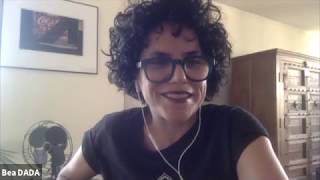
Three Founder Institute alumni discuss how COVID reshaped their startups. Susan Perry pivoted SpeechMed from hospitals to a direct-to-patient app with multilingual instructions. Bea Ramos built DADA.art into a decentralized art economy using NFTs. Krishna Vanka shifted MyShoperoo from workplace delivery to home essentials during lockdown.
Chapters
So welcome everybody for joining us here today for this Founder Institute Alumni Live panel on building beyond COVID. My name is Dustin Betts. I am the community content editor for Founder Insights. That's the blog and newsletter of the Founder Institute. If you're calling in live in the chat, I will be checking it out and checking in on your comments and feeding them over to the panelists. So let us know in the chat where you're watching from. Founder Institute, really quickly, we are the world's largest pre-seed startup accelerator. We're enrolling now in more than 100 cities around the world on all 6 continents. If you're interested in learning more about the Founder Institute, you can see a list of our currently enrolling cities at fi.co/enrolling. But without further ado, we have these 3 founders who are here to help us answer the question what does it mean to build a future beyond COVID? This is a future, you know, not just for their own companies, but for their respective industries, a future beyond COVID in the wider world, or perhaps in these founders' personal lives. And of course, here to answer your questions. So without further ado, I'd like to introduce the panel. First is Susan Perry. She's the founder and CEO of SpeechMed. SpeechMed is changing the way patients receive their medical information by enabling healthcare providers to deliver every patient their medical instructions spoken in their own language. Second, we have Bea Ramos. She is the founder and CEO of DADA. They are a visual network where people speak through drawings. They can create collaborative art, and it's also a growing blockchain-based network of over 100,000 proverbially rare digital artworks, which are tradable as non-fungible tokens on their blockchain network. And Krishna Vanka, he is the founder and CEO of MyShaperoo. They are a digital on-demand shopping service designed to help the most valuable— help save the most valuable asset in the world, which is time. It's powered by smarts of on-demand optimization. MyShopperoo also saves 60% of miles driven, which is good for the planet. So yeah, these founders are all here to help us answer the question of what does it mean to get beyond COVID? And so the first question, I guess I will just shoot over to my first panelist, Susan Perry. To answer first, but it's for everyone. And it's just, you know, from your perspective today, what was the thing that— what is the biggest challenge facing the industry? So if it came from COVID you know, maybe talk about that disruption that happened. Susan, if you want to speak to big challenges first.
So I think everybody is quite aware that we were not really prepared to deal with pandemic. I don't know that even an enormous amount of money in the current structures would have helped the situation more than what actually happened. We have to start thinking about the fact that there's a limited supply of hospital beds, there's a limited supply of resources. We have a, um, healthcare population that only reads. 14% of us read proficiently enough to understand our healthcare. So there are huge health disparities in a lot of different groups— elders, minorities— and I don't think we were really prepared. So this has been an interesting kind of wake-up call for all of us. And what are we doing? We— so we were B2B. We worked through, for example, Baptist Hospital. We allowed healthcare providers to give patients their information when they were discharged so that it would read out in whatever language they understood. But we found that a lot of times we made the decision to kind of bypass hospitals in some cases. So for the last 6 weeks, we've been frantically working on a solution so that anybody can use SpeechMed now, whether or not they started at a healthcare facility or not, because we have to empower patients and their caregivers. And with, you know, social distancing and everything else that's happened, We have to be able to see our elders, and one of the things that SpeechMed has always done really well, in addition to language and audio, is remote monitoring. So basically, it allows a caregiver to take care of maybe a parent at home without actually having to go and be physically present with them. So awesome.
Yeah, I'd like to turn that question over to Bea next. So just, yeah, defining this sort of new economy from your perspective or from the perspective of data. Yeah, what are— I mean, you know, blockchain, what— whether a disruption from COVID or feel free to also kind of give an elevator pitch for your own company as well and just talk about the big challenges that you're facing.
Yeah, sure. I mean, it's interesting comparing to the to your industry, Susan? Because for us, I think, you know, we are in— and within technology, we are in blockchain, which is an emerging technology. It's very, very early still. And if anything, COVID, what is that— what it's doing is accelerating the process of adoption. I mean, it's still really early and still really hard to you know, bring consumers to blockchain. But as everything becomes virtual, blockchain seems to be, you know, in favor, being in a positive trend, right, for what's happening. But what I think what is more interesting about blockchain is that the technology has an economy embedded. So it has a cryptocurrency tokens embedded and it's a way of transferring value. So what is, I think, happening is that as governments are issuing trillions of dollars to save their economies, people who are thinking about store value are going into Bitcoin and ETH and these cryptocurrencies. And it's interesting that even in the art space, or in the crypto art space, we're seeing a huge surge on all the marketplaces on buying crypto art because people, I think, it sees them as a store of value as well. So something that you can put your money and you even, you know, in the future you will get a lot more money for what you paid for it. So a little bit like capital gains, right? So in F4Data though, we are going in a very different trend. We came into blockchain because of the promise of decentralization and to create new economies. And so it's an interesting thing that happened that we've been pretty much outside the trend of blockchain, even though we got there very early on. We built the first marketplace in Ethereum for art, for digital art, in 2017. But we didn't dedicate our time to actually build the marketplace. What we did was to dedicate our time to build an economy. So we just finished our white paper recently, like we're publishing it by parts right now, finishing as the pandemic was happening. And what is interesting is that it's one of those moments in time that, you know, 2 years ago even would have seemed utopian what we're proposing. And now it just makes a lot of sense and it resonates to people, like an alternative economic system, economic models from free markets, alternative economic models that can you know, produce something different than this extreme inequality that we're experiencing today. And for us, it's about artists, so a way for artists to be sustainable and for artistic communities to be sustainable. So I think, you know, I don't see any drawbacks. I don't see any challenges. It's all really opportunities on the blockchain space, and especially for us.
Yeah, that's interesting that you talk about how like the disruption— I mean, people are increasingly looking at it as an alternative store of value or like a new store of value. So yeah, while you're, you know, it might not have been like disrupted so much, but during these kind of economic downturns is when people like look to these sort of new kinds of store of value, these non-fungible tokens for an asset like art. Yeah, so that's very interesting. I want to turn it over to Krishna, our third panelist, next. Krishna, kind of talking about, you know, pre-COVID to post-COVID for you or from your perspective, you know, what's been the biggest disruption or the biggest challenge that you've faced?
Sure, we primarily operate in the on-demand services. So it's quite interesting what happened to on-demand as a whole during the COVID On one end, you have companies like Uber who were transporting people and they lost all the demand altogether, right? Like they were doing 10% of, you know, the trips that they were doing before. And on the other side, you have delivery services, either, you know, you think of the traditional Amazon or the more on-demand delivery services, whether it's restaurant food or shopping. They got immense demand. Their demand spiked, you know, 200-300% easily. So luckily at MyShopperoo, we were in the later, we were doing shopping as a service essentially for a B2B market. So our unique approach was that, you know, we were going to the companies and we are saying, hey, we can actually do shopping for your employees while they're at work. And so they can save the time. That's the time angle you talked about. And they can focus, get more work done, and we take care of their errands. That's the story we had before COVID And interestingly, as much as the demand increased for shopping, the, our employees were not coming to work anymore. They were suddenly sitting at home, right? So it immediately, if you think about it, the, I mean, for us it's a 3-step process. Step 1, our user base just disappeared overnight because nobody's coming to the work, but the user base did not go somewhere. The user base, just started working from home. So step number 2, we changed our service model from what was what we used to call MyShopperoo at Work, and we called it MyShopperoo Essentials, which is essentially what we are delivering, the basics to our homes. So number— step number 3, now that we have this essential service and as companies keep going back to work, we are able to then take the same service and provide it either at work or at home location. So, you know, luckily because we are on that end of the spectrum where the demand existed, we were luckily able to ride that demand and able to change our offering to meet the new world. Had we be doing people moving like Ubers and stuff, yeah, we would be in complete different world altogether. But I think the summary, what I learned is, you know, these pandemics, nobody wants them, but if they come, they come. And as entrepreneurs, we just have to take a step back understand what's there and what's not there and try to come up with the opportunity. The best thing we did is we talked to all of our 400 users. We called everybody in April just to say, hey, how is it going? Do you need anything? And the common denominator is that, can you do my Shoparoo to my home? This is not the same as Instacart. This is not the same as Amazon. My Shoparoo is different. We love the service. Can you bring it? So yeah, we essentially, you know, changed a little bit. I don't call it pivot because pivot is stopping something, doing something else, but we optimized our service to this new world. And this time we learned that we can keep it open. Either they go back to work or they stay at home, or if this keeps flipping back and forth based on how the environment changes, we should be able to serve our user base in a more effective way.
Yeah, I'm really curious, just as a quick follow-up, Krishna, because I have personally felt apprehensive while, you know, out in retail places. Just if when you reached out to those 400 users, if people— if that's something you heard, just to entertain my own curiosity, if people being just apprehensive about going out would be another reason that MyShopperoo is like especially beneficial right now.
Yeah, so the feedback we got, we can put them in, you know, it essentially became the 4 pillars on which we build essential services. But the 2 key feedbacks we got is safety and predictability. Safety, as I said, I mean, I'm a parent myself and, you know, especially if you have older people at home, you don't want to risk yourself going into the store. And at the time all of us are learning, we don't know the best practices, right? So they were always looking at us as, you guys are professionals, you learn what needs to be done correctly and do it. So safety was number one. Number two was predictability. You know, people were fed up of these apps that were existing today. You know, one day you have a two-week waiting period to get the delivery, the next day it's available in two hours. So it's like, it's like a market where you have no idea you know, about what can happen. How can I— will I get my milk if I put an order now for 2 weeks later, right? So which made people go back to stores, but then again, at the same time, they're afraid of going back to stores. So we took these as the primary criteria when we designed the Essentials. It has to be a safe solution. We should be safer than anything out there, and it has to be predictable. So we are not gonna put stress on people if they get their milk or not.
Awesome. Well, the next topic I think we want to talk about is sort of what does it— what does resiliency mean right now? It's kind of a word that I hear bubbling up a lot, and one side of resiliency is your personal network, right? And as entrepreneurs, like Founder Institute is sort of one of the cornerstones of us is that we are a very large global network. And so I want to ask you each about, you know, your own personal network and maybe how people in your life provided some touchstone of resiliency for you as an entrepreneur. And so, yeah, so maybe somebody you talked to when COVID first hit, before you'd actually had time to like think about your response as a company, who did you talk to as an entrepreneur whose advice you felt was helpful for you in, in just thinking through like how to go about formulating a response? So Yeah, maybe it was a customer, maybe it was an advisor. Just who was the conversation that was helpful for you in thinking about how should I react right now? And I guess that first, first I'll turn it over to Susan. How about Susan, do you know? So I think anybody from your network who you spoke to right away that provided good feedback?
Actually, Mike and Adeo provided really good feedback to me. I was very nervous because You know, you go from B2B to that, you know, and you have traction and then you start adding this B2C element. I was very nervous about it and without hesitation he just said, yeah, do that. And it's been incredible for our company. So that, and then, you know, I have a whole network of, um, mentors that work in the industry and out and They've all been really helpful. I think we have more time to talk because we're not driving so much, right? So we call each other and try to help each other with businesses. So, but yeah, no, definitely FI. And I'm not just saying that because I'm on the stream, but that's who I came to with the question. And he, there was no hesitation whatsoever. He said, everything's going to change, especially healthcare. And it's true. I mean, it's never going to be the same.
Yeah, we didn't ask for that endorsement, but—
No, but it's true.
I'll pass it along to Mike and Adeo.
Actually, I'm going to second that. I'm going to second that because for me, as I said, it's been an opportunity. It hasn't been scary at all. Specifically for us, we don't have an office, we're always being remote, nothing really changed. But I think one of the interesting things is, as I was trying to make sense of what was happening very, very early on, ADEO was sending these emails to the network, like really early, like early February, and he did that for a few weeks. And that was a very interesting way of framing how to tackle this time. Because for him, right away, he was, this is going to be a 2-year thing, when people, you know, New York wasn't even closed at the time. So I thought it was very interesting that he did that so early on and had the vision. To guide people. So that was very helpful for me. And also, as of the network, we have a very large community. It's a beautiful community. So we— the support that we get from our artists is incredible every day. And as well as the blockchain art community is also really, really active. All the projects Everybody's, you know, it's always collaborating and supporting each other. So it feels really, you know, the support feels there. So, so yeah, so it's been good in that sense.
Yeah, it's the same for me too. Advisors, really, I mean, I consider Founder Institute as one of my key advisory groups. They came along really well. And at one point, I mean, I'll be honest here. I was like, hey, is this over? Is the company over? Like our market, you know, sort of disappeared. What am I supposed to do? And the advisor said, no, no, no, you, you're good. Like, you know, you guys have, you know, you have the best team. That's the only asset you have here, but that's the most important asset. So you can turn this around. And they guided us and said, talk to users. You know, I had a conversation with Adil. Adil said, you know, Krishna, I don't suggest you know, every company in the portfolio to not pivot, but I'm telling you guys not to pivot. You have a huge market. He recognized ahead that, you know, employees would need a service like this more now than in, you know, in the past. So we are more relevant today than in the past. So, you know, Adio Founder Institute helped us. And to be honest, it's now I know really why we build advisors. It's not really in the good times, it's in the bad times that they're their background, their knowledge and expertise guides you as a founder in the right direction.
Well, that's— it's lovely to hear, you know, kind of different ringing responses for the Founder Institute. It sounds like a kind of recurring theme was like that advisors felt people— helps people feel more confident, you know, at least in your case, Krishna, and Susan as well, that, you know, just confident, like in your decision-making, that resilience came from kind of like, Okay, somebody, you know, affirming like this, yes, that decision makes sense, what you're saying makes sense.
Especially if it comes from Adeo, right? Because he doesn't— he's not like, you know, he just says things very clearly.
So yeah, but in your case, it was sounding like some of the resilience, it wasn't necessarily that your business was super impacted, but it sounds like as a tight-knit community maybe people who are just spending more time at home, like artists, that maybe they're communicating more? Have you seen like a pickup or do you think people are, I don't know, like reaching out to each other to try to build empathy in different ways maybe? I don't know.
I mean, the first thing that happened is one of the artists in Argentina, she immediately organized a Zoom with everyone. And we actually, you know, very early on when everybody was feeling really scared, And we ended up talking for about 5 hours. And this is people from all over, you know, every continent, right? So when you have that, it really is meaningful. And, you know, we keep doing art. We just did actually, just released yesterday an art project in support of Black Lives Matter. And we did it using blockchain as a medium. And so, you know, you find ways, especially with art, of being relevant. Yesterday I was painting in SoHo, you know, the looting that happened, they burned up all the— so somebody called a bunch of artists and we just painted all day yesterday. So art is really good for this, for times like this. It helps people come together and feel safer. So in that sense, yes, it's good for us. It's just natural.
Yeah, I love that you mentioned like the Black Lives Matter and ongoing protests. Maybe we can talk offline about that after we're done. I think we'd love to share the community piece that you guys created for BLM. That'd be awesome.
Yeah, we'd love to. Yeah. Cool.
The next question I want to ask everybody each in turn about, since you've all endorsed the Founder Institute and you're all alumni of the Founder Institute, is just about your your FI experience. And the thing that I want to ask you is about what's one thing that changed for you as a startup, or maybe for you as a person while you were still going through FI. So for some of you, that might be a couple of years ago. Remember back, yeah, challenge you overcame or something you realized through the program. Anybody want to start off first?
I can start. All right. So I, you know, I graduated a few years ago, like I don't know, 5 years or something like that, a long time ago, because we've been at it for a while. And so I hated the whole points competition thing that the Founder Institute has, that the whole, you know, that you're in groups and you're competing to each other. We're the opposite to that, right? So I hated the whole thing. And I remember one day, I actually got into Foundry Institute. I received the notice that I was accepted the day my brother died. And so 2 weeks later, I started the program. And I was really a hard time. And I was doing my best. I was really putting all my effort. And at one point, I get an email from Adele saying that I'm not putting enough effort. And if I didn't do so-and-so, like this insane project, like it was like an insane thing to do. In 2 days they were gonna kick me out. And so it was interesting because I was like, what? I'm putting everything I got. And, you know, nobody has to know your personal whatever, but at the end I just told my co-founder, like, let's just do it. We did it in 2 days. We didn't sleep. We got the thing done. We graduated at the end. But one of the things that I, that I always felt about Foundry Institute is like, I just hated this whole pressure and competition and all this like comparing with each other and all of that. But at the end, it just, when I came out of the program and I love Adele to death, love him to death, I came out of the program the program really with a framework that I knew I was prepared to tackle this thing. Because I knew about business, I had business before, I had no idea about technology, no idea about how to deal with investors, no idea about it. But I came out of Founder Institute feeling I'm ready to do this. And so that's pretty, you know, intense and interesting. That something that you hate so much, the process I'm talking, can actually have such a huge impact. And throughout the years, the Foundry Institute has been extremely supportive to us, even though we're a kind of weird kind of company. And we just received so much support from both Mike and Adeo. And so I think it's a beautiful thing. Like, you know, you guys are in my heart and I'm very, very grateful for everything that you guys do. And same with Kevin, actually, the director— that was the director of New York chapter for many years.
How about you, Susan? Was there a particular thing, part of your FI experience, a challenge or something you overcame that's been stands out in your mind?
The directors were extremely challenging. I watched people cry in class. I'm not kidding.
It's very sadistic, I'm sorry. Yeah.
I missed the last the week before last because I was so sick that I was— I drove from Miami to Boca, which is, you know, quite a distance for meetings and was running my business full-time. And I was— this is terrible to even talk about, but I was so nervous about missing the Tuesday that I had a bucket in my lap that I was throwing up into while I was driving. And I finally pulled over and said, Dolva, I don't think I can make it. And he said, boy, that's really a shame. We will miss you. And I thought, okay. And I pulled over for a little while. I was definitely late, you know, but I think they beat you to death and it's all for good reasons. I mean, while you're going through the process, you're probably saying, this is— I, I, I had a successful business before this one, and I was like, what is this? You know, kind of like craziness. And I have a tendency to be bold anyway, so, but there were times that I was definitely frightened. And I think you realize how much you can do. And also, what B was saying, there's a structure. So if you've self-educated, there are little gaps here and there that need to be filled in, and there's a roadmap at the end of the process that you understand and feel comfortable with. I still sometimes refer to some of my notes, and it's been years. So, excellent, but it's not an easy program, and I don't think you can do it part-time. They were saying, oh, it'll take you 20 hours a week. Not if you want to do it really well. But it's worth it.
Awesome. How about, how about you, Krishna? Is there one thing that stands out for you, your part of your FI experience itself, or a challenge your company like overcame during your FI experience that you want to share?
Sure. So both Susan and Bae, they covered, you know, it's the same experience almost, I think, for every successful founder that graduates from the program, the value is realized after the experience, not during the experience. During the experience, it feels tough. You are in a bootcamp. Uh, but for me, one thing, you know, I mean, I'm an engineer originally. I did an MBA. I have a little bit of business background, but running a business is not engineering, right? So there's other angle to it. And FI actually nicely bridges the gap in my opinion. They create so much of structure in how to approach business. To her point, Susan's point, I still refer back to the folder. I have a Google Drive and they actually even make you create a Google Drive and the right folder structure in FYI that you can actually go there and find the documents. So it's, for me, the one thing that stood out is, you know, for non-natural business people, for people starting businesses who are engineers, you know, technology-driven people, which is probably majority of the founders nowadays, Founder Institute is the best bridge to bring you to that context of business. And yeah, it's not easy, you know, but it's the best thing that can happen for you and for your business too. It's, it's, yeah, it's lively, I would say. Not as crazy as the buckets throwing up, but yeah, it makes, it makes it, uh, pretty interesting, those 3-4 months. And Janine from LA Institute, I went to She's awesome. Yeah, I used to drive 70 miles, she used to drive 140 miles. She used to drive from San Diego to LA every Wednesday evening to do this. So when she said, I drive 140, you only drive 70, so don't complain about traffic.
No whining, no whining about anything.
Yeah, yeah, shout out to Janine in San Diego, it's much appreciated still to this day. Yeah, great. Kind of a general question I want to sort of start to wrap up on and have everybody answer is sort of just your general tips for early-stage entrepreneurs. So somebody who's pre-product, you know, pre-MVP, who's just getting started. And maybe as you think about your general tips for founders just getting started, would you do anything differently as a startup founder today, like in today's business climate, just with the onset of COVID Is there anything that you would say recommend different now than maybe you would before? Feel free, whoever wants to grab that one first, or I'll send it.
Sure, I'll take a stab at it. So couple things. First of all, the best thing you can be is be a founder. The second best thing you can be is a successful founder, I say, because, you know, success is half your hard work, half, you know, the time, the duration where you are in. Like, you know, 2 months ago we thought it's over, but then now you realize we are actually in a better position now than 2 years ago because there's more demand for it, right? So don't bet on the environment, go with the environment, but bet on yourself. So bet on your idea, bet on, you know, and learn, be willing to change the idea because that's what Founder Institute makes you to do, is to realize if this is a feasible business idea or not. We all have ideas, right? So that's— come with open heart, listen to what the directors say, learn from it, and build through that. And as Susan said, this is not a part-time, you know, weekend thing. I mean, there were 20 people in our program, 6 of us graduated and 2 of us started the companies and we know these are the only 2 people that would do because they took it seriously. They quit the jobs and yeah, so it's not for everyone. I mean, this is not, if you are interested to know what entrepreneurship is, this is not the program for you. If you're serious about it, you wanna risk your life, that's what some people call being as a founders, do it.
Awesome. How about you, Susan? General advice for pre-MVP founders and maybe anything different about today versus pre-COVID?
I think, you know, I think the important thing is to be resilient. You have to be really pigheaded about, you know, learning. And the reality is, and it's always true, the most growth comes during these periods of stress, right? So learn to be a little resilient, try to reach out to other people. I think if I was going to do anything a little different, I might have spent a little more time on friends and family early on because I think they, they help to nurture you. And I definitely think Founders Institute is an incredible program because even if the business that you work with during the class is not the one you ultimately end up with, or maybe that one fails and you start another one, it kind of puts you in a mindset for the rest of your life. I mean, I do a lot of things much more disciplined than I used to. I've always considered myself kind of disciplined, but I read more. I definitely listen to people more. And open yourself up to possibilities and be tough. No whining, because you will get kicked out if you do.
That's right, no whining is a rule of the Foundry. It's I have to say though, once you get through, they're your best friends.
It's just they want to make sure that, you know, it's for you too. Because why would you spend 10 years or 5 years on a business that you're not capable of running? So you'll know soon and early.
Tips for pre-MVP founders and in today's environment?
Well, I think that, you know, the thing that we all do is that we're all delusional. That you have to be completely off reality to actually embark in something like this and really stick with it. So resilience comes, I think, in part from being completely out of reality and at the same time being very mindful in what concrete steps you make. And so to me, it's that balance. And I think if I will do something different is that as I was trying to understand how to navigate this new world of tech, you know, there is a formula to this. And there's a formula to the investors and what they want and their metrics. And there is a thing that you— once you learn it, you just have to follow it. But when you are trying to do something that is completely outside that, what I found interesting is that this model expects innovation, but it's a very rigid box. So, yeah, so I think this time is a really good time for new founders because it's precisely the time in which all the structures are being rethought, right? Like we have to redesign everything and every aspect of, or at least reckon about it. And so it's a really good opportunity to push in a direction that is completely different to the one that we follow, completely different from that model. And I think younger people and new founders with that delusion, without the cynicism of being in, you know, in an industry for too long, can bring to the table. And so bring that energy into pushing for something really new.
I love that answer because the theme of this is Beyond COVID. It's kind of the thing we're talking about. So yeah, we want to try to push people to think outside the box. So yeah, I love that zeitgeist of the moment. That's really great. Kind of what final question I want to wrap up on is just, you know, we're gonna share this video out there. Could be there people watching it live, and then we're gonna share it out later. So final asks from each of you for the live audience and anybody who watches the video. If you want to ask anybody to sign up for your newsletter, go to our website, this is kind of your chance. So go first to you, Krishna, to ask for the audience.
Sure, please feel free to reach out to me if you have any questions. You know, Krishna@myshopru.com. Our app is in the App Store. Download it, check it out, and also visit our website. Stay strong and Stay together.
Susan, ask for the audience, any, anything?
So we've built a new app that anybody can use. It's on the Google Play Store, and we're asking people to use it, see how they like it, give us feedback. It's a gift for now, and probably for the next year. And we think it will save people's lives because how can we expect people to follow instructions that they don't understand? And one of the things that it does help you do is prepare for any kind of emergency. So go to our website, www.speechmed.com, and Sign up.
We'll include the links to both of your apps, by the way, in the comments and where other places we share this video. Bea, how about you? Any final asks for the Founder Institute audience? Sure. What's coming next?
So we, you can go to dada.art, A-R-T, if you want to give a try to drawing with people around the world. We also are in Twitter. Our presence in Twitter is very— we have a lot of presence there, and it's @OurData. And there we are sharing our white paper, our whole economic vision. So for anyone who is interested in new economic models, in new— in understanding, for instance, behavioral incentives, you know, anything that has to do with how to help people navigate your product or your platform in an ethical way. There's a lot of information in our paper, and you'll be really surprised from the research that we found how people actually— what motivates people to do things. And so it's very contrary to what we are used to with, you know, these platforms being extremely toxic and manipulating people and exploiting people's psychological circuits. In our paper, we have a lot of information about how to do things ethically and right and what people's motivations actually, you know, what motivates people intrinsically. So you can find that in Medium. Dada and we call— The paper's called "The Invisible Economy" and also on Twitter @PowerDada for anyone who wants that information.
Awesome! We will make sure to share out the whitepaper as well so we'll talk offline about that. Thank you everybody for joining. Thank you Bea, Krishna, Susan for your insight.
Everybody stay safe.
It was a pleasure to talk to you guys.










