An Astronaut's Guide: How Space Tech & Research can Benefit Entrepreneurs
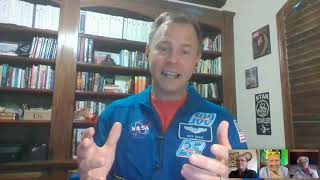
Three NASA experts explain how entrepreneurs can run experiments on the International Space Station. The process starts with a two-page proposal and takes seven months to several years. Microgravity enables breakthroughs in fiber optics, organ-on-a-chip technology, and materials science that aren't possible on Earth.
Chapters
Hello everyone, good morning, good afternoon, and good evening. I see people are streaming in from all around the world to hear about space technology, uh, how research can benefit entrepreneurship. It's— we have a very, very exciting agenda for you today. And before we get started, what we're going to do is go into a video on some highlights, and then I'll introduce our speakers and we'll get started. So let's switch it over to the video for everyone to watch.
Subscribe for more space.
Wow, awesome video there and so inspiring. So I've been a fan of space for many years. I believe in the human exploration of space. Today we're going to be talking about what space can do for research. We've got an amazing group of people joining us. And before we begin, at the Founder Institute, we help entrepreneurs all around the world launch new businesses. And we have partnerships with NASA Ames and the International Space Station to help entrepreneurs who are looking at space consider different ways that they can use space technologies and use space as a research platform. We're going to be focusing a lot on the latter. Today, how you can use space as a research platform. I'm joined by 3 amazing people. Nick, he's a NASA astronaut and colonel in the US Air Force. Christine, who's a VP of programs and partnerships at the International Space Station. And David, who's an associate program scientist for NASNA, NASA's International Space Station program. And what I, and we really have a great group group of individuals today. We're going to go 3 things. We're going to hear a bit about Nick's story. So he's going to take the podium, so to speak, first. Then we're going to be talking about the importance of space technology and research, what it can do. And you got a little highlight of that in the video. And then third, we're going to be doing the future of space technology and research, talking about things that might be coming down the pike, things that you might be able to work on. And here's the thing about you: if you have questions for Nick, Christine, David, or I, pop them in the chat. I've got a team of amazing people here. They're gonna filter through all the questions, bundle them together, and we'll try and get them answered for you. So, um, if, if we, we can just— if you guys want to add anything quickly to the the super brief bio that I went with. Otherwise, we'll jump into Nick's story. Nick, you want to go first?
Yeah, sure, Dale. It's a pleasure to be with you today and to be able to share my experience and opportunities that there are for doing research in space with everybody that's listening out there. It's, you know, I've got the fortune of, I just got done spending about 7 months on the International Space Station. So I know people across the globe have been quarantined inside their homes. The space station is about the size of a 6-bedroom home. And so if you can imagine, I lived inside that for 7 months. And with, you know, my family, my crewmates up there, the 6 of us. So it's an amazing experience. And I think that, you know, when I think back, When I first started dreaming of going to space, I was 7 years old. And I'd look up at the night sky at the stars. And at that point, it was just the excitement of exploration and discovery and finding new things. And, you know, what can I learn that no one else knew? That kind of intrigued me. And then, you know, that stayed the childhood dream for a long time. 'cause the reality is every astronaut does something else before they become an astronaut. So what did I do? I joined the Air Force and was an engineer in the Air Force. And, you know, when I think back to, you know, to elementary school, high school, college, I always was fascinated with how things worked, breaking them, putting them back together. How can I take this and make it do something it hasn't done before? And so I was an engineer from, you know, memories. I just didn't realize it until I got into college. And, uh, I followed that passion into the Air Force and into flight test and, and then started working in, in space. So all of my education is in aerospace engineering and designing control systems for rockets or satellite technologies and trying to field those for the Air Force. So I did that prior to being selected by NASA back in 2013. So what's the life of an astronaut like? I got selected in 2013 and I didn't fly until 2018 was my first launch. And so that's 5 years. And it's 5 years of training to be able to do everything. And I think it's relevant today because the team on the ground is such an important part of this. Being able to do research on the space station. There are so many things that you get trained on over the course of 5 years. Some of those things you only see once, and then you're expected to be able to do it, you know, years later. And so you really rely on the team on the ground to work with you because, you know, I am not superhuman. I do not have a photographic memory. And so you can put a lot in here, but there is a limited capacity. In my head. So I really rely on those teams. And that's some of my most cherished memories of time on board the station is working together in those teams, whether it's my crewmates or mission control or even that extended team of scientists on the ground who are talking into my ear. You know, I'm wearing a headset up there. And we're talking about the science and the experiment that I'm doing and why it's so important. And I may have never even seen this experiment before. And it may be something that, you know, that they've been working on for years or decades. And it's on the cusp of some massive breakthrough and the verge of some big discovery. And they get to share that with me while I'm doing their experiment. And that getting a sense of that excitement is just, it's pretty profound. So.
Wow.
That's the life of an astronaut is you learn a bunch of different things. And so, I, uh, I was fortunate enough to get assigned to a mission to the space station. Uh, I was up there for 203 days, and over those 203 days, we performed about 350 different scientific investigations. And it's everything from materials research or biotechnology to technology demonstrations that are going to help us get back to the surface of the moon figure out what we need to know to work on another planetary surface and then head on to Mars. And so it just spans this globe. So it's really exciting, and there are so many people that are involved. I'm excited to be able to share, you know, the prospect of this opportunity with everybody else that's listening out there today.
If anyone has questions, please don't be shy and pop them in the chat for Nick. So you— Mohammed has a question, one of the first. Can you talk a little bit more about relay? A lot of people on the ground, when you're working on a mission, what aspects of a mission are self-sufficient when you're up in the space, and what are you relaying back and forth on the ground?
Yeah, absolutely. So the space station is this technological, you know, marvel up there. It took us 10 years to build this, and it was built while it was in orbit. So some of the pieces were never put together until they got to orbit. So 10 years, 100 launches, 100 spacewalks, and we finally got this thing together. And we've had somebody living on board for 20 years now, so it's been continually inhabited. So what do we rely on? It's close, it's low Earth orbit. If you're thinking of a peach, this is in the fuzz on the peach, 250 miles up. The moon is 250,000 miles away. So we're not very far from the Earth. Because we're so close, we can really rely on the ground. And so the space station is 98% controlled by the ground. And the astronauts are doing the things that the guys on the ground just can't do, move things from place to place or perform some of these more complicated experiments. So we really rely on the ground to support us. In terms of delays, communication delays, I would have conferences with the ground and I'd have the same type of connectivity that I've got with everybody right now. So it's almost real time. And those are going to be the challenges that we're going to have to address, whether it's with robotics or artificial intelligence as we go further and further into space. The delay in communication is going to restrict our ability to control everything from the ground. And it's going to limit our ability to have that constant contact, that instant real-time contact with the people on the ground. So those are challenges we're going to face as we go back to the moon. Where you can have seconds of delay, it's going to be more a nuisance than a real problem. But when we go to Mars, you're talking 8 to 20 minutes of communications delay. And that will fundamentally change how we have to operate.
Ronnie was asking, how does the medical treatment work in a case if someone gets sick on a mission? So some of these are gonna— I have some questions too.
I only have one.
I only have one rule when it comes to questions, is that I'll answer any questions. So when it comes to getting sick up there, so, you know, there's the there's the, you know, the reality of it. Everything floats. So getting sick is more unpleasant on orbit than it is on the ground. Fortunately, your body is— it really adapts quickly. And so the space adaptation sickness, that motion sickness, really goes away after a few days. Your mind is this just marvelous machine of itself. And, you know, you're using your eyes and your inner ear when you're on the ground to determine which way is up and down. And it only takes a couple days on orbit for your mind to decide that your inner ear has stopped working correctly and it just ignores it. And you just go visual cues to determine your orientation. And so it's— your mind is really plastic. It's amazing. So part of that 5 years of training leading up to a mission includes medical training. So I was fortunate enough to be on orbit with a doctor in both of my expeditions. And so there is, you know, there's some comfort in having a doctor there, but that's not a guarantee. So everybody receives medical officer training and gets checked out as a crew medical officer to be able to provide, you know, basic CPR and life support as well as, you know, put stitches in and, you know, draw blood and put an IV in and pull a tooth and fill a cavity and all these extra things that you really don't think about when you think, hey, I want to do research in space. We have to be able to do all that stuff.
Pull a tooth.
Okay.
You know, thankfully I haven't needed to do that in quarantine just yet. And speaking of which, David Gonzales was asking, "Hi from Spain. Any tips to remain isolated for months and stay mentally healthy?" Yes, yes.
So— I'm an expert. Yeah, it's, you know, everybody's going to be an expert here shortly. So The things we do on the station, A, have a schedule. A schedule gives you predictability. And especially when you're in quarantine with other people, having a schedule so that everybody kind of knows what to expect and remove some of that uncertainty, it just makes life easier to go, especially when you're in tight quarters. B, you got to take care of yourself. And the best way that I found on station was exercise. So every day getting a little bit of exercise, not just to stay healthy physically, but it keeps some mental clarity as well. So it's just, it's good for the body. And then the last thing is communicate. So you've got ups, you've got downs. Just because you're in quarantine doesn't mean that the ups and downs have gone away. And you've got family and friends and loved ones, and though they may not be quarantined with you, you can still reach out and connect to them just like we're doing now. So communication is a key, and sharing how you're feeling, and just trying to maintain those connections with all the friends and family. Is super important.
So did you spend a lot of time talking with your friends and family from the station back home?
Yeah, surprisingly enough, you know, I have the ability to make an internet-based phone call from the station. So I could call my wife, and I called and checked in with her, you know, a couple times a day. I can send emails. So we always started the day with, you know, I'd send her an email kind of outlining what was going on with my day and what was ahead. And I'd send a photo along with, you know, whatever, amazing thing I saw out the window of the station, you know, the day before. And she'd write back and, and, you know, some email, IP phone calls. And then every weekend we do a video-based call just like this, which is a luxury when you're around the Earth, you're really close. We can do something like this that's more of a real-time communication.
That, that's beautiful. Uh, there's a lot of questions obviously about staying mentally healthy, so Lakshen is writing, what's the mental preparation process like before departure? I believe it's different for every person. How does NASA assist? How do you inherently prepare yourself?
Yeah, so there's— it is. It's a little bit of self-preparation. There's a little bit of the system is there. I think important things to realize is that you've been preparing for these moments your whole life. And so I was in the Air Force. I was deployed. My wife is active duty Air Force as well. And so she's deployed. And so we've gone through that impending separation. And we know what it's like to be separated. And then also what it's like to reintegrate. And so we had been trained a little bit on that. But I think something worth foot stomping is that NASA realizes that this is a special— I mean, it's a special challenge. Everybody faces these challenges. So what does NASA provide us? They provide us with a team for psychological support, a psychiatrist and psychologist. They have assistants that help provide support to the family while we're on orbit. And so there are professionals that are trained to do this, to help us think about how we're preparing for this. And, and, and we reach out to them and they reach out to us. And so it is not a bad thing to talk to somebody that does that professionally.
Yeah, it's a great suggestion. I have a question. You mentioned that you got selected in 2013 and then went up in 2018. You know, how long did you prepare before 2013? And maybe you could tell us a little bit about that, that journey. And then I got— if anyone else has questions, I got another good question for you in a moment.
But so, you spend your whole life preparing. You don't just get up one morning and make the decision, I'm going to be an astronaut, and then go start, you know, checking the boxes to be an astronaut. So you spend your whole life. The reality— and I got some great advice when I was in graduate school, you know, an astronaut was coming through and they, you know, had a little roundtable discussion with us and they said, You— the odds of being selected to be an astronaut are so small. You know, this last class we had 12 people selected out of 18,000.
Wow.
So it's so small that you can't spend your life trying to check boxes just thinking it's going to improve your chances to become an astronaut. Because if you're just checking the boxes and you don't like what you're doing, you may spend the next 10 years chasing that dream, doing a bunch of things that you, you don't want to do, and then your dream doesn't come true and you've got all this, you know, wasted 10 years, this life full of regret. You might as well chase what you're passionate about and pursue that, and then do that as, as, as well as humanly possible. And because it's something you're passionate about, you will be great at it. Then you take that experience and you bring it to NASA. And so that's, you know, that's what I did. I love engineering. I love the idea of serving my country. I, you know, Air Force flight test engineer, and, you know, the kind of the rest lays down from there. And, you know, it doesn't happen overnight, and it doesn't come without failure. I applied to be an astronaut 3 times over a decade. And so rejection is just part of it. And so perseverance plays into it as well.
Well, okay, there's a lot of questions, but I gotta ask, like, was like third time a charm?
What happened?
The first two times they're like, no, you're like, fine, just this is— was it the— were you gonna do it a fourth? What happened?
Yeah, so, so, you know, it's one of those things, you just don't take no for an answer. Um, you, you know, it's, uh, during the process of applying, I got exposure into what the real job is like down here. It's working in a small team where group dynamics are really important, interpersonal skills are really important, and it's, you know, taking that team and applying it to a really complex, challenging problem and trying to do something that hasn't been done before. And that, for me, is just really exciting. And so had I not got it the third time, I would apply it again, and I probably would— I would still be applying because that's the kind of passion that whether you're an astronaut or you're a person working in mission control or you're a researcher trying to do research on the station, that's the kind of passion you have about trying to really tackle challenging problems for humanity.
Hank was asking, Hank Supa, is and how is AR and VR technology being used in training and to prepare for missions?
Yeah, you know, so in terms of training, the only way you can really do space, you know, train to work and live in space is in space. We can't simulate the whole thing. So VR is definitely something we use. In our spacewalk training, we use it to put ourselves outside the space station, and we have force feedback simulation so that I can feel what an 800-pound object floating in space feels like. You know, it has no weight, but it has mass, and so it's got inertia. And so I can push it and move it with a finger, but it takes a— once it starts moving, it takes a lot of force in order to get that to stop. And so we start working in that environment where things don't weigh anything, but they've got momentum, and, and trying to think that way. And so that's a great way that we augment it to try to make our training more robust. But I also think that there are tech demonstrations and there are experiments that we're doing where we're trying to inject the virtual reality environment in there. And, you know, David's part of the, you know, the space station program, and we've done some science experiments. He might be able to elaborate a little bit more on what's been done and where we're going in the future.
David, do you want to take that?
You bet. Uh, our human research program is dedicated to addressing the risks associated with exploring the cosmos. And one of the things that they are looking at is trying to bring some of the environment of Earth, uh, to the astronauts. So some of the things that I know that have been considered are things like, uh, involving VR or AR associated with crew exercise, like, uh, put some sort of a device on them where they have goggles where they feel like they're running through their paths at home. Uh, it's very challenging, and this is one thing for this audience I think is really good. Um, if you can imagine, you know, going away from home, what I've heard from a number of crew members, and Nick, you can back this up or— or say some— something further on it is, one of the things I noticed is that they said that one of the things they miss is that when they get home and— and pop the hatch on the Soyuz capsule and home, they smell Earth. And that's one thing that we kind of take for granted that, you know, is all around us all the time, but it's different when you're in a facility like the International Space Station. So there's a lot of sensory challenges there, whether you're talking about the visual senses or, you know, the smell or anything like that. And Nick can probably speak to also food is another aspect of it. Growing food on orbit is a big part of our research portfolio, both from an aesthetic standpoint, from the taste and having these, and also from a nutritional standpoint. So there's a number of things there associated with human research, specifically with the senses and sensory perception that's very important to us.
Can I interrupt real quick? Let me interrupt real quick because anybody who has a VR, if you're using Oculus, Time Magazine sponsored some work on the station and it's currently being done that films it in 360. That's available for people who have an Oculus and you can feel what it's like. It's not as weightless as Nick has felt, but you can certainly get the feel for what it's like on the station. I'd recommend anybody who has an Oculus, if you'd like to use that, we can give you a link to where to find that 'cause it's a heck of a lot of fun.
I'll have my team try and find it and post the link in the chat for everybody. Speaking of which, if you had these virtual simulations with the glasses or whatever, and then obviously you went to the space station and you were weightless, was the experience, you know, were you like, wow, think similar, or was it just so radically different that Yeah, so, so, you know, if I use spacewalk training as an example, so I mentioned we can't, we can't fully simulate, so we end up with all these part task trainers where we simulate a particular aspect of, of doing a spacewalk.
Uh, so there's the VR so that, you know, one of the tasks we have to be able to do is if we fell off the station for whatever reason, the station can't come and get us, we have to fly back to it. And so we have a a small little jetpack that we have to practice flying back to the station. That's something we can only do in virtual reality. I mentioned the, you know, getting used to the force feedback and the momentum of objects is only done in virtual reality. The other thing we do is we go underwater. And so we've got the Neutral Buoyancy Lab here that has a pool that's one of the largest pools in the world. And it's got a full-size mockup of the station submerged. And so we get into a spacesuit and we float around under the water neutrally buoyant simulating weightlessness. And we do our tasks. And so when I went out the hatch for my first EVA, it was nighttime. And, you know, you've got little lights that are shining in front of you. And so it illuminates just basically what's right in front of you. And thankfully, we spent so much time underwater and in VR that I know where all the handrails are. I know my path. Because it's been ingrained in me. And, and so it's there. And then the other thing that was surprising to me is it felt so similar to being in the suit underwater that I, I found myself looking for the bubbles because usually there's bubbles from all the safety divers that are in scuba gear around you. And I was like, you know, this seems strange, there's no bubbles. So it is, it is great training and it does a really a fantastic job of getting you as close as you can possibly be.
So before we move on to the first topic, because I'm certainly enthralled, any experiences in space that led to surprising realizations on Earth? And then we're going to go to importance of space.
Yeah, I tell you, there's so many ways to answer that question. So the answer is yes. You can, uh, you can look at it from the perspective. So, you know, we're going around the Earth once every 90 minutes. So 17,000 miles an hour, we're 250 miles above the Earth, and so we're zipping around the Earth once every 90 minutes, which means we get a sunrise and a sunset every 45 minutes. And so you can look down and see, you know, 1,000 miles in any direction as you're flying over the Earth. And so you can take in almost, you know, I can look from Vancouver all the way down into Houston. So I can see North America all in one shot. And so the Earth seems so small all of a sudden because you can see so much of it. And then, you know, the sun sets and everything goes dark. And what was a black sky, you start to see the bright stars appear. And slowly your eyes adjust and you see more and more stars. And over the next 5 minutes, your eyes fully dilate and you see the, the different layers of the universe kind of unfold in front of you as you see more and more stars, more and more universes, this— the cloud of the Milky Way. And you realize just how big the universe is. And so that realization just strikes straight home into how delicate and how precious the place we are is. And so there's this profound sense of stewardship of this, this home planet that's our little oasis in the middle of this black abyss that you come away with. That's, that's one of the, one of the big striking realizations that you get from spending a little bit of time in the window.
I never heard about the seeing the solar system. That sounds beautiful. What Nick's referring to with the Earth is often called the overview effect. So for the listeners here that want to read more, and there's apparently two ways that people experience the overview effect. The Earth is big or the Earth is small. Let's move to the topic of the second topic, which is the importance of space technology and research. And Christine, you know, the first question, we have a ton of questions on this from the chat. We're trying to, we're gonna try and get to everyone. But maybe if you wanna kick off, you know, what's the importance of conducting experiments in space, Christine?
Well, it gives us a different kind of lab. So there is a lab up there that's used, uses tools that you might be used to on Earth. So there's microscopes and there's ovens and furnaces and freezers. So imagine all of those, those things being there, but in a different circumstance entirely. So you're in microgravity, which changes the way things react. The physics is different. You've seen the video that was on that Nick provided, right? The water doesn't do what it does here with gravity. It just goes in a bubble, and that means liquids react differently. It means the tissues react differently.
It—
there's an external platform. Everybody, those from Canada, I see a lot of Canadians here, created the Canada arm that allows things to go we can go outside the station and then we can test in the harsh environments of space. And last but not least, Nick talked about his view. The beautiful view of the Earth is something that's being recorded and there's different kind of platforms to be able to look at the Earth. So imagine remote sensing. So all of those things are different than you would have here in your lab. And that means we can find different things. Stuff that, that reacts one way in your lab different. And a couple of questions that I'm seeing on your chat are, like what? So imagine, um, there are questions about 3D printing. Imagine 3D printing with human tissue and knowing that gravity that would flatten it in a petri dish now is not there so that the tissue can form in its own way. And imagine that someday we could potentially create organs for people who needed a replacement liver or kidney or other organ that was made for you in space out of your own tissue and then brought back to be implanted. That's the future that's different because of the microgravity environment.
Yeah, no, that's— thank you for reading some of the questions you're saving, but I still haven't done. Let me ask you, what kind of collaborators get to work with NASA and the ISS astronauts on experiment design?
Well, the proposals that come in come into both the International Space Station and National Lab, and we have half of the allocation, and NASA has the other half of the allocation. And NASA's work— and David can talk about their focus on exploration, astronaut health, how do we go further into deep space— and our work is more dedicated to life on Earth. Better drugs, how can we improve our lives here? And so your interest might be directed to one group or the other based on what kind of work you're going to be doing. And we review those. We have external reviewers of those proposals. And basically there's a form for that. I hate to say it's that easy, because it's not quite that easy, but you fill out the form and you send it in, and we take a look at it, and we see where— if we can make that— literally make it fly. And so it's as easy as proposing what you want to do in space.
Wow. I mean, you know, there's a form for that. That gives me hope. David, do you want to add anything about the type of things you're looking at?
Well, I was going to say that as a government employee, the fact that Christine's organization has a form that's only 2 pages just amazes me. —those of you, seriously, those of you that are considering a flight project or how microgravity, how the space environment would— might help your business, might help develop your product, I suggest contact the National Lab because, like I say, the entry point, like Christine just mentioned, it's very easy to get an initial evaluation on your flight project. What is the—
do you want to just maybe There's so many questions, so I'll get the questions one sec, but I'm sure a lot of people are interested in this as well. What is like the timetable or process? Maybe look, maybe we start at the proposal. Obviously, gang saying ready for flight, big question mark, but let's just look at the proposal process.
I, um, let me turn that back to Christine and let her describe what they use for the National Lab because I think it'll be more relevant to your audience. Sure.
Yeah, it always takes longer than you'd like. So the thing about space is you have to package these projects up. The complicated part is we can't have anything harm our astronauts like Nick. We don't want to put him in harm's way at all. So one of the things that takes longer is— the proposal part is easy. You start telling us about what you want to do. We have scientists here. NASA has scientists. And there are also group implementation partners. And they have experience, so they'll work with you and say, how do we make this happen in space? And the proposal is easy as how fast can you write? And we'll put it through a process, and that might take a month or two. The thing that takes longer is once we decide we're going to go forward with this, something may need to be purpose-built, or you may be using a platform. NASA does have to do safety checks on these things. Sometimes things need to be built that are new and then again have to be safety checked in. And then last but not least, there is competition for that space on the rocket. So it may take some of that. So let's go fastest I've ever seen a project go is 7 months from you're talking to me and it's on a rocket. So that's super fast. That's super fast. So don't think that's normal. The longest I've seen it take is 4 years because something didn't exist that the researcher had to develop to make something happen to go on a rocket. So there's your span.
That's not that bad though. I mean, I thought it might even be worse. Um, Marc, uh, Garcia was asking what science procedures are unique to space, and I know they're probably a million, but, uh, maybe if you could pick a couple top ones that are impossible or inefficient to do on Earth.
Crystals grow differently in space, and so do tissues. So let's talk about those things. So there are the 3D printer that I talked about, but there's also crystallization studies in space. And it's just because you don't have microgravity in your lab. But I would also talk about things that just are different in space because you're in space. And so people have invented ways to do that. If every— project that we did took Nick's time, we wouldn't get as much done because there are precious few astronauts at any given time. And they have lots to do. It's— Nick will tell you he's working from sunup to sundown, figuratively speaking. So that's happening all day long. Every 45 minutes. Every 45 minutes. Nick is really busy. There's a lot of breaks. Yeah. Nick is very busy in space. He's scheduled all day long. And scheduled for hours of his own workout time to keep him healthy. So some of the projects are done in an automated way. So those of you who are kind of into AI, and I'm reading some software engineers who are watching, there's a place for you in making these things happen, and they happen in labs that are shaped like a shoebox. So those things have an automated way of working. Quick example, And it's one of my favorites. So Budweiser decided to check out how they can grow barley in space and how it reacts differently in microgravity and the genetics. So it's real experiments that they want to do. Well, before I came to this job, I thought that you would have little plant pots with little barleys growing up there with Nick, but that's not how it works. It's in a box and it looks like a thermos and the seeds are exposed to water and light inside a box. That is invented by this implementation partner. And all of that happens enclosed. And photos are taken of it and they're sent back to you on Earth. And then the whole thing comes back to the researcher so they can do genetic testing and things like that. So there are lots of projects that are done in an automated way so that we don't need astronaut time because they're busy taking care of things that they have to do hands-on. Nick, how— Sorry.
Well, no, if I could add. So I think, you know, the question is we don't know. So we take experiments up there and get surprised when you take away gravity and things behave differently. There are so many examples of that. You know, I've got the practical, you know, how do I eat my food? How do I drink my water? Those kinds of things. But I also, you know, my whole body started responding differently because gravity was gone. The fluids in my body, my heart didn't have to fight gravity to keep blood in my head, so it was pushing too much blood into my head. So my body sheds all this extra fluid. My skin sensitivity changes. The calluses on the bottom of my feet go away because I'm not walking on anything because I can just float everywhere. So all of these adaptations that just the human body makes, then you can look at like materials. You know, we were up there and I was you know, we were doing an experiment where we were stretching, extruding fiber optics, right? So now I've got to heat up this fiber optic and then try to stretch this out, but I can heat it and there's no— gravity is not going to cause the composition, you know, it's going to remain a homogeneous composition because the different densities of the materials in the, in, in the, the fiber optic, it are not going to separate because of gravity. So it allows you to have a, a more perfect fiber optic. So we're doing research in space because we want to be surprised by the effect that when you take gravity, you know, when you take it away, what happens? And so, you know, part of it is what haven't we thought of that we need to be trying?
I was going to make a bad joke about beer. But all right, we got so many questions, I'll save the bad jokes for another— time. So Massimiliano, sorry if I didn't say your name too great. What's the name— what's the next main innovative technology that you think will be implemented on Earth after being tested in space? Something maybe that you saw on your mission, Nick, or something that you guys were sent up not too long ago and you're excited to see come back down, so to speak.
I don't know, Nick, do you have a favorite? Oh, I mean, it's tough to—
there are that many?
Yeah, there are some really great things. I'll start and then Nick can noodle on that while I start. There's a company that was a small startup coming out of Massachusetts and with some work sponsored from MassChallenge. And so there are some questions about how you And there's some questions about how you kind of get started, but the idea that they had was to be able to test their eye chip in space to see if they could make a better coating. Nick talked about the fiber optics. This is, can I coat something more evenly in space? And in fact, they can. And so they're creating an eye chip that will reduce or reverse the effects of macular degeneration. And that will have to be manufactured in space to make it work that way. So they will always look to manufacture that in space. They're working with the FDA for approval. And I think that that is just a few years from being a surgical implant that will be constantly manufactured in space and implanted here for people's vision.
And would you make that on the— can you have the capability to make that on the station?
Uh, if it gets made in one of those little square labs. And so it's, it's, you know, the reason that the FDA is interested is, you know, nobody has to touch it. It can go pack that way, come back that way, and be untouched by human hands. And so the FDA is, is being very open about how they can use these kinds of manufacturing tools to benefit us. And I think that the iChip by Lam Division is an excellent example of entrepreneurs starting testing and then getting more 'cause you know how long that takes. But I'd say that that's a great option that's gonna come back and improve our vision here on Earth.
Might be faster now. Nick, do you have a favorite?
Well, you know, so I think it's worth it. So one of the things I'd like to talk about is the opportunity, where I think is like something that we really need help with. And so, and I think it helps us go do the deep space, you know, exploration, but it's also going to be of extreme benefit to everyone on the ground. And that gets into the, you know, kind of the next generation of materials and how we can reuse materials or, you know, print them on demand. So we mentioned 3D printing of organs. We've been, you know, experimenting with 3D printing on the space station. But as we go to the moon and we go on to Mars, we're not going to know the tool we need where we're not going to have all the materials that we need, you know, ready-made, all the components ready-made, but we may be able to take the feedstock or be able to recycle from our waste to create the new things that we need. And so I think that there's really an opportunity for bright ideas when it comes to being able to, you know, fashion these materials into components, to be able to recycle them and turn them into new components. And we could use that in deep space exploration. We can use that on the ground to help reduce our footprint. I talked about that sense of stewardship. Whatever we can do to help the planet, I'm all for it. So I think that's a really big win-win that really fits a lot of need.
I got 2 quick questions here that are very tactical. And then I want to turn it over to some questions for David. Arun was asking a very— he said basic question. When you're doing an experiment in space, do you have the expertise on board or how are you coordinating with the ground resources? You talked a little bit about that in the opening, but maybe if you could add a little more detail for someone who wants to do a project.
Yeah, absolutely. The reality is two-thirds of the experiments that I perform on orbit I've never seen until I pull them out of the box on orbit and perform them. So the expertise is clearly not on board. So part of the process is that Christine was talking about in terms of preparing your experiments and getting the procedures together is to make them so that they fit some type of of standard nomenclature and standards interface so that they can train us to that interface, that standard, and we'll know how to interact with it. Some of the, you know, some of the experiments are too complicated and require real-time assistance. And so we follow the procedures, but then they also hook us up with the ground and we'll wear a headset and we'll be talking with the researchers being able to guide us through that, you know, stuff that's involved like sequencing DNA or editing the DNA or working, you know, with animal research or, you know, there's definitely some significant things that we do up there where the ground is intimately involved. And, you know, those are exciting times to be able to hear the excitement from the researchers on the ground and to know, you know, I, you know, I'm not a scientist, I'm an engineer, but I'm I'm helping edit DNA up here, and these guys on the radio are getting really excited about what we're doing. So I'm feeling really good about this. So it's just this part of a team that is— it's pretty special to be a part of. And so I hope anybody that's got some ideas out there, that they reach out and try to become part of it.
Well, and that's great because that was the second question I was going to ask before turning over last bit with David, which is Sarub was asking, I'm a software development pursuing a master's in AI. I always wanted to contribute to space research. How do I get started? How can I contribute? Anyone can take that, but—
Yeah, you don't have to wear a blue flight suit. You don't have to be an astronaut or a space flyer to contribute. And I'll turn it over to David and Christine to talk about how you can get into each one of those. But David's got his story, which goes through mission control. And he has contributed in so many different ways to the space program. So I'll just leave it up that there is a team of 100,000 people spread across the globe that make space research happen on the space station. And there are a number of ways to get involved.
David, do you want to go with some of your thoughts on that? And then we're going to switch over to you anyway. And just in time, because for whatever for whatever reason, the control room got booted and now they're back.
So— I'm glad we have a guardian angel back here. No, I was just going to mention, when I talk to student groups, I try and tell them that I think space, you know, whether you talk about NASA or National Lab or becoming an astronaut or whatever, space is— the space industry is about dreaming big dreams and going after them. And so I tell students all the time, whether or not you end up working in space— and this goes for entrepreneurs the same way. Whether or not you end up working in space or not, the whole idea is to take on challenging problems and go after them. Now, specific to what Nick was saying, we have all sorts of people that work for NASA. We have graphic artists. We have business people. So if you're really interested in working in space, whether it's AI, software developer, whatever, we obviously have a lot of STEM career fields here. But don't just assume if you're not in direct STEM or aerospace or whatever, that you can't contribute in some ways. Christina's talked a lot about how the portfolio is very diverse on all the different folks that are doing research, for example. But she also mentioned too that we have folks developing the boxes that allow this automated research to go on that we couldn't do if we had to depend just on our crew members all the time. So it's a combination of the people team on the ground, the people team on orbit, and the devices, the technology that we use to accomplish these missions, whether it's a small sat that's being deployed or whether it's an external platform remote sensing device or whether it's a cube lab inside the space station. I can go on and on and on about the different ways that you can apply your business acumen and your technology acumen and your scientific acumen to the space business.
So you're right, a ton of questions about that, and I mean, I would say if there were a common theme of questions, it would be like, how can I help? How do I get involved? So dream big, right, and find a way to contribute. Christine, you were about to say?
I was gonna say, I see you have quite the global audience here. It's really exciting, and I'm seeing when people were tagging in, they're from are everywhere. And one of the things that I would say is that we're having a US-centric kind of conversation right now. But there's— every country these days is really moving into a lot of space exploration. You've read about India, China, Australia's getting a whole new launch center down there. Look around in the country where you live, and I'll bet you there's aerospace work going on that you can contribute to. So it doesn't mean that you have to apply for Nick's job and be a US astronaut in NASA, there are also private companies that have been mentioned here, SpaceX and others, that are going to be doing privatized exploration and work. And so there's probably something close to home wherever you live.
Can I— so since we're on this subject, let me ask a question. And David, I want to— and this relates to you sort of the future of space as well. Um, if a lot of these foreign, uh, uh, individuals to the US might come here and set up a company in the US, do you— is there any thoughts or issues about working with a foreigner that set up a company here that wants to do a test in space, or maybe got a green card or whatever? Is there any risk?
Yeah, I don't know what the constraints are. Are there, but if you want to put them in touch with me, I'll be happy to talk to the right people associated with NASA commercialization. One thing that we are— we have a big initiative on right now is that we've gone— National Lab focuses on working— Christine's group focuses on working with commercial companies to do research on the space station. Well, recently NASA took part of its allocation for the space station resources and are now devoting that to for-profit initiative on the space station to include private astronaut missions, uh, additional modules on the space station, uh, additional missions to the space station, or even standalone space station, uh, parts like, uh, Axiom, for example. So there is a lot of opportunity there. So I would say that if anyone has a U.S.-based company, uh, we can find out what the constraints, if any, there are to working in space and specifically on either a commercial initiative like NASA is pursuing or commercial research like what National Lab and Christine's group is pursuing.
So many questions. Let me add, David, so do you have any aerospace— so we're going to move to sort of the future of space technologies and research. What, David, what aerospace technologies would you like to see developed?
Now and in the future? Yeah, when we— and what I'm going to talk about here is going to sound like I'm talking strictly about exploration, but I think everyone in the audience can recognize almost everything you can develop for exploration has a large potential for using back here on Earth, whether it's for social responsibility reasons or whether it's for marketing reasons, for actually financial reasons. So there's a few things that are very valuable to us anytime that we— do anything in space. Low mass, low volume, robust, and adaptability. And the adaptability goes—
let's slow down on those.
Low mass, low volume, robust, as in it's very rugged. It's very— one example, we have a DNA sequencer on board that Nick alluded to as far as one of the experiments, and it's about the size— it's all— it's about the size of one of your little little power packs you use to charge your phone. Wow. It will sequence DNA and identify what that particular biological organism is by sequencing the DNA. Well, in this particular case, what is it useful for? It's useful for monitoring the environment in a space vehicle, which is very important for our astronauts' health. Potentially could be used to identify organisms to do medical diagnosis. And then if you take it someplace that has DNA-based life forms. It potentially could be used to identify those. But because it's small, it's low mass, low volume, very robust, you could also use this, say, in a third world country where they don't have as many medical services or ability to bring in equipment, or in the disaster area. And so that's one thing that I think that your audience should think about.
If they could produce low mass, low density Low volume.
Robust and adaptable. And adaptable is usually—
Yeah, what do you mean by adaptable?
Thank you. Sustainability is probably a more commonly used term. When I say adaptable, it goes back to what Nick was saying before about when we set off on a space mission, a long-distance space mission. Again, this has Earth applications, but I'll focus on this scenario. Then we are either going to take it with us or we're going to make it on the way. So whether you're talking about creating plants for food or whether you're talking about pharmaceuticals that you stow away or whether you're using 3D printing to build your tools in route, that is one of those things that if I could figure out what do I need to take in raw materials, what manufacturing— I should say fabrication capability— do I need, and then what do I have to take in its original form and use that way and How can I recycle that? How can I reuse it? How can I repurpose that? Again, these are all things we talk about in sustainability, you know, discussions here on Earth, but they have direct applicability to space exploration as well. That's so many—
so many things. So what it— like everyone wants to go back to the moon and Mars. But what do you think? What are your thoughts on that? What are the next steps? There's a bunch of questions about it in the chat as well.
Well, we've talked a lot here today about what we're doing at 250 miles up, about 300 experiments at a time in a facility that's unlike anyone we've ever built before. But that is just the opening step to building a gateway, a deep space— I'll call it a space station because it's much smaller than the International International Space Station, but an outpost, if you will, as a node, a transportation node, and then go on to explore the Moon as part of the Artemis program, and then take what we learn there to go on and explore the solar system with Mars as the next logical step there. But what that means from a standpoint of technology and from a standpoint of commercialization is a lot of opportunity, because we focus today on this discussion for the first three-quarters of it or so on what we do on the International Space Station. Just imagine the opportunity still available once we push beyond low Earth orbit as well.
That's amazing. And then, so you mentioned an interim step between here and the Moon. Was that the Space Station, or do you see another station coming? That's what we call the Gateway.
The Gateway is going to be built off of what we've learned from Space Station and will probably be be a number of modules similar to what we have on space station but a much reduced size because we're not looking at permanently inhabiting it. We're looking at instead is making it as a way station that allows us to get into deep space to do some of the research there like radiation research beyond the Earth's Van Allen radiation belts that we can't do from the space station. And then also provide that transportation node outside of the Earth's gravitational, uh, capture region.
Right. So the Van Allen belts protect us from a lot of cosmic radiation, and we don't do a lot of testing outside of the Van Allen belts right now, and might be a good idea. So we're wrapping up now, and I've learned a lot, and we've got a lot of amazing entrepreneurs and amazing space enthusiasts that are looking for ways to get involved. Maybe we could go one by one and sort of parting thoughts or advice for a passionate person about doing an experiment in space or working in space. And we can just sort of go in the same order again. We can start with you, Nick.
Any final thoughts or words? Yeah, you know, I think that it can seem very distant. And so I want to distill a couple of things that were brought up. Space can seem like it's very inaccessible. And so one of the great things about having this panel here today is that, you know, like Christine represents, space is really accessible. You know, she's got a 2-page form that you can fill out to apply for space that's already paid for going to orbit. You know, we talk about research that can be performed performed up there that can't be performed anywhere else. So this is unique combination and it's accessible. So I don't want people to come away from this thinking, you know, I've got this great idea and I'd like to get involved, but I can't do it. No, you can do it. So from a research and trying out an idea, it's accessible. I also don't want there to be, you know, are we talking about the space station? Are we talking about going to the moon? You know, there was a large chunk of the research I was doing on the space station where we were proving out the technologies so that we could use them to go back to the moon. So there is an overlap where you can do research that's going to benefit the ground and benefit deep space exploration, and you can do it on the space station. So, you know, it's accessible and it's there, and I would like nothing other than to work with researchers out there on my next mission. So get those ideas in. Awesome, there you go.
Christine, any parting thoughts?
Sure, I think a lot of people are interested in and want to know kind of the tricks of the trade or things. NASA has a page, and I'll share the link with you, that has some guidebooks that I think are the best way to start. So if you're in whatever area that you're interested in, those guidebooks are a great way to get started on what's available up there, what's been done before, so you're kind of not reinventing the wheel. And the other thing that I think people are interested in is kind of what kind of funding sources are there. And I would say watch our webpage because we put out some requests for proposals around some specific topics that often have some funding sources with them, which helps to boost some of the entrepreneurs because, you know, yeah, I know everybody can use a little bit of money to get things started. We have a website where we put those out. There will be one Sustainability coming out later this year, which will have some good funding with it.
Well, and I'd love to collaborate with you offline about that because we're launching 1,000 venture funds over the next 5 years, and I know a bunch of them are interested in funding innovative research space, etc. Last but not least, David, any parting final thoughts from you, sir?
Well, I'm gonna be redundant to Nick simply because I don't think I did a good of job of expressing this. The— no, it's what, what he said about the free— the freebies here are very important. We will provide your transportation to the space station if you do a project associated with space station. We will provide the resources on board from the standpoint of physical space, astronaut time if you need that, power, data, whatever. So it is such an incredible opportunity. You still You still have to pay for your hardware. You still probably want to get with an implementation partner and help them with— have them help you with your integration. But my goodness, where else are you going to find an opportunity to get into space to do your research, you know, like it is today? So please take advantage of it. The last thing I was going to leave you with was just a place to get some additional information, including the researcher guides that Christine alluded to. If you go to nasa.gov, nasa.gov/iss-science. That's nasa.gov/iss, like International Space Station, -science. That is our research and technology page, NASA research and technology page. And we can also make sure you get the one for the national lab as well, even though we do have a link off of that page. But there's a lot of stuff there, so it may be difficult to find. So thank you for having us here today. Appreciate it. Oh yeah.
I'm like a kid in the candy store, you know, we've run over a little bit and I just— for everyone here, you know, I want to thank the three of you for connecting. I know we're all sheltered in place here in the United States and so it's not the easiest of environments and you've made the time to help these aspiring entrepreneurs and I can't thank you enough. You made my morning here and in California, and I'm sure people all around the world joining. Thank you so much for taking time out of your busy sheltered home day to help the future entrepreneurs. Thank you. My pleasure, Adil. Thank you. Thank you, guys. Have a lovely day. Bye, everybody.










