Andy Zain Interview with Adeo Ressi: Accelerate Asia 2020
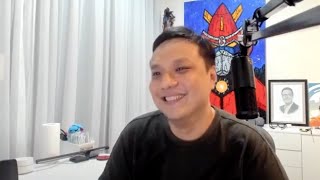
Andy Zain built Southeast Asia's startup ecosystem from the ground up, starting with the Founder Institute in Singapore and Indonesia before creating a venture-builder model that evolved into Tejora, now managing roughly $400 million in assets. He emphasizes the importance of a large mentor network and long-term community building over transactional investing.
Chapters
Why don't we get started with our first guest? Speaking of funds, we have Andy Zane joining us. Hopefully he's gonna pop on screen there. Hi there, Andy, how are you?
How are you?
I'm great. I mean, so I can introduce you. You've been an entrepreneur, you've been an ecosystem builder, you're pretty much everything. And just to Just to give everyone a flavor. So Andy runs today a pre-seed accelerator. He's run a seed accelerator. He's run a venture builder. He's run a seed fund and he's run an actual venture fund. So Andy's really done it all. Do you wanna add anything to your introduction? Because, and by the way, top performing in each of the categories that I mentioned.
Thanks, Adil. Hi, guys. I think it's part of the journey. I started that early. I started in 2009 when I know Founder Institute, then I visit Adil also in Silicon Valley when I started as the mentor for Founder Institute in Singapore. Actually, that's how things start to happen. I think that time, the ecosystem of tech entrepreneur or the tech ecosystem in Southeast Asia, there's nothing, there's really nothing. You saw a lot of entrepreneurs, but they're all first-timers. What they did is just copying from whatever happening in Silicon Valley. So they saw Twitter, then they make a clone of Twitter, even though there's no user here, right? They saw Friendster, and they do a copy of Friendster here as well, a copy of Foursquare as well, but most of them are not really working. So when I met Adil, then I was offered to run Foundry Institute in Indonesia. I took that opportunity and run that, and that become how I started like really involved in the industry because of Founder Institute. Then to follow on that, that we launched an accelerator. I have a joint venture with Indosat Ooredoo, one of the top telco in Indonesia, to launch an accelerator with them. Then from there, we set up a small fund which we focusing on venture builder, because the thing is that there's not much ecosystem happening yet. We don't see good founders yet, even though you give them money, money doesn't mean that they can build a good company. Venture builder models work better at that time, imagine like 2010-2012. So you give them money, but you have them to work together with you to build the company. Then afterwards is that you build a bigger fund, the next one is $35 million. Then now we also run a growth fund, my last one is $100 million. Whereas now, because of that, then we start investing company from, in every stage of the process. So that is how we started. So, Tejora now, we are managing our asset under management is about $400 million. Then this year, I think on August, there is a report from Preqin, put us in top league of the venture capital in Asia Pacific. We are one of the top performing funds in the region, and we are very grateful for that. But it started as a director, or it started as a mentor in Foundry Institute actually.
I remember actually very— and in Singapore, not even in Indonesia. I've heard you tell me you fell in love with ecosystem building and maybe what is it that you love about it? Why did you get involved in ecosystem building? Maybe you could go all the way back to the beginning and tell us what happened.
I think because it is the necessity. I have been entrepreneur as long as I know, and we always like to build company. So I started in '95 as we're still in the age of the first internet era, right? So there's no business model yet. However, I see there's a need for us to build company. That time I was offered some money by some friends to say, why don't you invest in tech companies? We don't call it VC yet. We call it more like a private equity boutique. But money will not just solve everything. If you give money to somebody who don't know how to spend it, don't know how to use it wisely, there's no point for that. Then you start learning that you have to coach them. And coaching them alone, it won't work as well. You need to work together with other people in the industry. That's how we built the mentor network, 120 mentors under Foundry Group in Indonesia. And that's where we start seeing the power, the strength kind of ecosystem helping each other. Young founders, they are all first-timers, don't know what to do, nobody trusts them, no track records. But with the handholding, we can see how they progress over time. And it also works well. We have companies which we invest from 2-person team or 5-person team, now grow to hundreds, even thousands. We even have a company now that we invest from small, now like 20,000 employees working there. Again, we can't do it alone. We can't do it just with money. We have to do it together as an ecosystem with friends in the industry. This is what makes me excited because you are given a chance to build an industry, a new industry which is worth billions of dollars, and you can do it together with friends. How is it so interesting? Friends are not just in the country but globally. There is a brotherhood of mentors, of founders that we really like hang out and still talk until now.
Well, and sisterhood, just as an aside, his daughter is launching a venture fund at the age of, is she 19 or 20?
Yes. Yeah.
And she, you know, she came to me and was like, I want to launch a venture fund. I want to be a role model for young women throughout the region. And I want to be the youngest female VC running a fund in the world. And I'm like, that sounds awesome. It was a beautiful thing. I love the whole friend thing too. You know, you were very fortunate because you got some of— and, and some of the most famous CEOs in Indonesia to help you in this mission. Was that easy, hard? You— could you just talk about that? And then I'll go on with some other questions.
Yeah, I think initially it's like because we start quite, quite early in the industry. So now one of the top company, one of the largest unicorn Indonesia, they— he was a mentor in Founder Institute when the company are still very small, when he still got like 15 or 20 employees, already a mentor with us until now. So before is that he came to my office to run the FI class, to mentor the class. But toward the end of it, toward like, I think our last session with them is about 3 years ago, we actually brought the whole class to the office, to the Unicorn office to run the sessions there because I am so busy, but I would like to invite them to my office. And it is very interesting for the candidate as well. For the founders, they say, "Ah, I can come and have a really candid talk." with CEO of the largest unicorn in the country and visit them in the office. So this is very good because we've been working with them for decades.
Because you did— yeah, exactly, you watch them grow alongside the— that's amazing. So you run, as we discussed, a pre-seed accelerator, an accelerator venture builder, a fund. You know, what do you see as the benefits of doing the whole stack? Because there's a lot of people here today who might be thinking, how do I get started? Or I do one piece of it. Technically, I think you also run a coworking space. You build everything, right?
Yes. So if you look to that, where you get the big money is that when you run the growth stage fund, where you have money, you get more fees, and people are all excited on doing bigger and bigger funds. Smaller funds require more work, higher risk as well. If you ask me personally, I like doing that better than the growth fund. The growth funds are very boring. You talk to the company, you negotiate terms, you talk to more lawyers than really spend time with the company. After you invest with them, they say, "I don't need your help. We are okay. We are fine. We have 1,000 employees already." But the early stage is interesting, but works much harder. However, if you don't start early, it's very hard for you to get good companies on the growth stage. You have to compete with all the other VCs. You need to pay your dues. You work in the ecosystem, helping all the young founders They know you, so when later on they need bigger funding, then they say, "I like to work with that guy, I like to work with that team, because I know them, I know that they have the track record, really founder-friendly, they are supportive to the ecosystem." That is what we did. At the moment, I don't do that much ecosystem anymore. However, because of time, because we have to become VC, do all the boring work, doing all the deals with the lawyers. However, we invest in coworking. Because that becomes an extension of our arms. Then, we also help others to do their accelerators. However, we still come back to Founder Institute is the first thing that we have done. You meet the first-time founders and then you have the nostalgic thing, "Yeah, this is how things happen." I think a few weeks ago, we have one founder, FI graduate, like I think 6 or 7 years ago, a graduate from FI. They recently got funding from one of the mentors, but it takes like 6 or 7 years until they get the funding from this mentor. And this mentor actually was the CEO of one of the unicorns in Indonesia. He left, set up a fund, now invest in FI graduates. So again, it is not like instant, it takes a while, but this journey actually worthwhile and you make good friends along the way.
That, yeah, that, well, like you and I. Yeah. Traveling isn't the easiest, but I feel it's awesome. To chat with you now, and we've been talking a few times. So what, through this crazy period, what advice would you give maybe anyone out there who's thinking to enter the startup ecosystem or is in the startup ecosystem looking to grow their ecosystem?
Yeah, so I think the thing is that not to just enter the startup ecosystem, but you need to stay in the startup ecosystem. You need to be there, right? All the time, you need to be available because you can't be like hit and run. I have money, look at the company, do the meetings, pitch to me, I like it, I give you money, and I will see you maybe 3 months' time, or next month, or whatever. You need to be around. I still see founders come to me and say, "Andy, I have problems because of COVID Our investors actually pulled out, what should I do? The company will die next month." But then, through talking, discussing, bring other parties come in, put in another advisor, then they are able to, you know, to bring back the deals. And that happened, and we are so grateful. Even though I don't personally invest in the company, we do have our part of the equity split, we have a small part of it. But even though we don't invest additional, but we feel the ownership of this company, and we still work together. When they have problems, they still come to us. So that's good. That's good. I think those experiences are really rewarding.
So you think really taking a long-term view on your ecosystem is key. Let me ask you, so like, what do you— you've been in it for over 10 years, right? And, uh, you know, is, is that the time horizon? I mean, a fund is usually 10 years or more. So is that the time horizon that you think people should be thinking about with respect to growing their ecosystem, etc.?
There are always new founders. If I put in Southeast Asia, Adil, I believe that new unicorns are still being born, like now. There is still a lot of area that we can see companies can worth billions of dollars, not yet being invented. By staying, I believe for the next 5 years, If you really stay on the ecosystem, you're going to be part of that history. "Oh, I was with them, I'm helping them." After 5 years, maybe things become a bit boring because most of the big companies are already done. But now in Southeast Asia, you can still work with that and you have the privilege to be on this era. That's why we— I mean, you really need to be in the ecosystem so you can really take I don't say take benefit of it, but get the rewarding experience. I am part of that, and this will not happen again. You can say that I am part of Facebook, a part of whatever. Indonesia or Southeast Asia, things are happening and you want to be part of that. You cannot be part of that by just putting money or just hit and run. You need to be there. You need to be friends in the ecosystem and work with them.
Thank you so much, Andy. That was really beautiful. We are going to be having you back for another event at some point. And I know we had some other questions we didn't get to, and I want to just be sensitive to time because we have amazing people here. Thank you so much, sir.
Yeah, look forward to that. Adiós.










