April 2021 Global Founder Showcase: Startup Pitches + Investor Feedback (Full Replay)
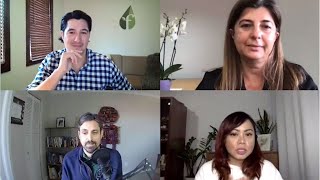
Ten startups pitched investors in this April 2021 virtual showcase. Rebels 0.0% makes zero-alcohol spirits for mindful drinkers. Pavlo matches travelers with e-commerce shipments to cut shipping emissions. Uttobo is a white-label course platform for coaches. KnowRx uses machine learning to improve clinical-trial recruitment, starting with African-American patients. Investors grilled each founder on unit economics, distribution, and competitive advantage.
Chapters
We're in a world now, believe me, with more and more— I don't even know what they call them anymore. I'm getting lost in the letters, but Gen Y, Gen Z, whatever. All of the purchasing power of young people is going more and more towards brands, companies that are doing good in the world. Okay? So every time I— it literally kind of makes me cringe a little bit when I see people that you know, there's a conversation about purpose and then they see profit as, as sort of on the other end of the spectrum. Like those things are becoming more and more there and to a point where it's going to become necessary for a lot of companies to do this. So just bake that stuff in into what you're doing. Believe me, it's going to not only create good in the world, it's going to be better for your bottom line in the long run. It's going to be better for you to get the attention of customers. It's going to be better for you to get the attention of investors. Investors and media and everything. And I'll take that as a segue here. So we have two investors today as we get into the pitching portion of this event. So I'll bring on first, so Zeca. Zeca, I know you do a lot of investing on the SDG realm and you are joining Huntington Beach, California. All right. Hey, Zeca, do you want to introduce yourself real quick?
Hey, I'm so stoked to be here. I love the Founder Institute and I'm just a big supporter of everybody who's engaged here. I just, um, I'll open my background a little bit. Myself, I've been an angel investor for the past few years in the US focused on social and sustainable tech, and any opportunity I can get to have conversations engaging like this where we talk about purpose, passion, conscious businesses, and other forms of good business, I'm all for it.
Awesome. All right. Thank you, Zeca. And then we have the second investor here today, Nancy Brito coming in from Lisbon. How are you, Nancy?
Hi, thank you.
I'm fine.
I'm fine.
This was really inspiring. Thank you, Patrick, for starting because it was an amazing motivation speak. It was very inspirational. And obviously I've been a business angel for the past almost 10 years. And right now I'm in the VC. So the purpose and profit, I truly believe they have to be together. Uh, and, um, I'm going to invest in projects that are going to change the way we buy and the way we eat and the bay and the way we live. Okay. So that's, um, that's going to change in the future and hopefully a lot.
Yeah. And not just because you'll make money from those investments, but because it does good in the world, because those two are not good in the world. Obviously. Okay, so we have, all right, so we have Nancy and Zeca are here today and now we're going to go through 5 pitches and afterwards Nancy and Zeca will come on with the founders and we'll do a little bit of Q&A afterwards. Anybody that has any questions in the chat for the founders as well, feel free to put those into the chat and we'll try to bake those in. And the first pitch that we have today is coming from Charlie Chandra. And Charlie is piping in all the way from Jakarta. And there's a reason why he's going first, because I don't even want to know what time it is in Jakarta, but it is late. So thank you, Charlie, for participating, and we'll let this take it away. So Zeca, Nancy, and myself, let's hide ourselves, and then we'll get into this video, and Charlie will come on in a second.
My company,.es, is a payroll solution so workers without a bank account can receive salaries to make banking transactions. Here's the opportunity. In Indonesia, there are 260 million people. Half of them don't have a bank account, and that's because of the bank fees, the initial deposit, and minimum balance required to maintain the account. Yet 60 million of them own a smartphone and have access to the internet. The problem is it costs employers more money to pay unbanked workers. The cost of handling cash adds up to 30% more compared to electronic payments. Handling cash is dangerous and tempting, and because cash payments are not in the books until much later, it creates confusion, uncertainty, and distrust. Our solution enables companies to completely eliminate cash and pay their workers electronically. Payroll is instantly transferred. Electronic transfer reduces fraud, improves transparency and reporting. Our digital onboarding toolkit helps companies onboard, manage payroll, and disburse payments to all workers, banked and unbanked. And here's how easy it is to pay workers. First, enter the worker's contact details, select from one of the ready-made ATM cards, and activate it. That's it, the account is active and payroll can be transferred. The workers can now pay their bills save and borrow money using our platform, or they can simply go to the nearest ATM and withdraw cash. Our deposit and lending license has been approved. We are now in the last stages of finalizing our partnership with Indonesia's top 6 banks, and our mobile banking app will launch in just 2 months. Here's how we earn our revenue. We charge the employers a yearly SaaS fee. We also charge the employees a transaction fee for cash withdrawals, money transfers, and disbursing loans. Our initial target market is Indonesia, where there are 60 million unbanked workers who own a smartphone. Our existing market starts with the logistics and transportation sector, targeting 1 million unbanked workers. But there are 1 billion unbanked people in Asia. While our competitors offer HR and payroll software, We are in the strongest position because we offer payment disbursements to workers without requiring them to open a bank account. While we are engaging CEOs, CFOs, and HR professionals via LinkedIn, online events, and other touchpoints, we're also partnering with the banks, so we'll be able to cross-sell to their corporate customers, shortening the sales cycle to just weeks. I am a solo founder with a team of 20 full-time employees I have 20 years of experience building enterprise solutions, and my passion is building a profitable business that creates a positive impact through financial inclusion. I'm now raising $500,000, of which half is already committed. Thank you.
All right. So thank you, Charlie. You there? Hey, Charlie.
Hi.
Hi, Jonathan.
Hi, Nancy.
Hi, Erica.
Hello.
Thanks for staying up with us tonight. We got most corners of the globe covered here in this panel. So Charlie, Let's see, Nancy or Zeca, do any of you have questions to get us kicked off here?
Sure. Charlie, did you check for the solution even for unbanked people that are not— that don't want to have a bank account could use your solution? Because I think that's something that we are all thinking about. Like, we don't want to be— we don't want to have our money in the bank anymore. Like, did you think about that?
Yeah, um, the money that we have here is secured in the bank. Now, it's, it's basically not a bank account that they have to go to the bank and open an account and pay the fees. We're using one bank account, a pooling account, that stores everyone's money into that account. If they wish to invest their money into gold or something else, they can. So they can do whatever they want to do with their money. After it is on the phones.
Okay, so you're never going to have a license for banking?
Well, the regulations here states that once our pulling account gets really, really big, we have to open a banking license. We have to have a banking license.
Okay.
All right, Sekou, do you have any questions for Charlie?
I would love to. Thank you, Jonathan. Great job, Charlie.
Thank you, Zach.
I loved it.
I loved it.
You know, I'd like to see something maybe with the vision, your expansion plan in terms of how big the market is going forward and how you plan to get there.
Okay, great. I'd like to have a separate session with you on that, but overall what we're going to be is a platform for the blue-collar workers where the companies can just onboard blue-collar workers all using our platform. They don't have to create separate contracts, all the contracts and all the workers' management and the payroll disbursements of payments and the ability for workers to handle all of their finances on our platform.
Okay.
There were a couple of questions here from interested investors which they are asking questions that may or may not violate the SEC regulations. So I will not answer, I will not ask those on camera here. But I guess that's always a good sign that you're generating interest. Generating that kind of interest, Charlie. So Charlie, tell us a little bit, you know, in terms of what's, you know, why you think right now is the time for what you're doing to take off, right? These concepts have been around for a little bit, as usually is the case, right? Like, why is now the perfect timing for DotX?
Great question. So my wife worked in payroll, 10 years ago, and I've always wanted to find a solution for her because she's always going to the bank, getting cash. It's very dangerous, as you know. And it wasn't until 2 years later that I found a solution for this. Other competitors are using e-wallets, e-money. The money is not in the bank, it's not safe. If the company goes bankrupt, then the money is gone. So 2 years ago, I found a solution, and, and basically the 60 million unbanked workers in Indonesia They all have smartphones. They all have smartphones. They all have internet access. So what they need to access the banking services, our services, is already on the palm of their hands.
I love it. And it's a way to get them banked. And somebody mentioned the statistics here too. It was in the chat, so I can't verify it, but it was something 31% of the world is unbanked. So it's a great mission, Charlie. Any final questions, Zeca or Nancy?
No, just great work, Charlie.
Thank you, Nancy.
Make it happen.
Thank you very much.
Love your energy.
Thank you, Zeca. Thanks for having me.
Thanks, John. Okay, thank you, Charlie. And for everybody in the chat too, Charlie, I know it's late there, but Maybe Charlie will hang out for a couple minutes in the chat. Any other questions in the chat, please let Charlie know. And of course, we'll be sending audio and video recordings of this event later. So if you wanted to get in touch with Charlie afterwards, you'll have the ability to do so. Okay, so we are going to fly a little bit west to Helsinki. So close in relative terms to Nancy, but not really. But so we're going to go from unbanked workers to now basically bacterial resistance technologies in Helsinki. So Windy, if you're there, let's start to get you queued up. And Windy, Resistomap, let's see the pitch.
Resistomap, we are mapping antibiotic resistance across the globe. One cornerstone of the global strategy against antibiotic resistance is to monitor the levels of antibiotic resistance in hotspots where resistance is developing and spreading. WetRESISTOMAP enables universities, research institutes, hospitals, and food industry to monitor antibiotic resistance in any potential hotspots such as wastewater and manures by providing a laboratory service using the combination of molecular genetics and data science. We receive the samples, we detect and quantify antibiotic-resistant genes in the sample, and we deliver the result to our customer through a digital dashboard ResistApp. ResistApp offers standardized laboratory service and collects all the resulting data into an open database of antibiotic-resistant gene spread. The data produced by ResistApp will be essential for users to understand the spread of antibiotic resistance and to learn how to mitigate it. Our paying customers are mainly from universities and research institutes. Since we founded in June 2018, we have served over 75 projects from 21 different countries. We have achieved 300% revenue growth year on year, and we have organized a free webinar series to improve the awareness of antibiotic-resistant pollution in the environment. Now we are developing Resist App for antibiotic-resistant monitoring in hospital wastewater to serve as an early warning system for impending outbreak of resistant bacteria in hospitals. With ResistoMap for wastewater monitoring, we are entering a new market in the hospital sector. Wastewater monitoring for antibiotic resistance are currently only performed by water research institute. Few commercial players are offering wastewater monitoring for early detection of COVID-19. While they have the potential of becoming competitors, ResistoMap is currently the only company providing both laboratory service and digital platform of wastewater monitoring for antibiotic resistance. Through our service, hospitals will gain the easy access to state-of-the-art technology, requires neither upfront investments nor experience in molecular genetics, and will receive fast and comprehensive results. William and I are the founders of Resistomap. I received PhD in biotechnology and have over 10 years of experience on antibiotic resistance monitoring. William is the computer guy in the company. Our team has 4 members focusing on laboratory operations and 3 other members working on non-laboratory business activities. We also have excellent advisors in business, healthcare, and science. With this innovative solution, future outbreaks can be prevented and human health better protected.
Awesome. Hey, Wendy, you there?
Hey.
All right.
Welcome.
Hello, Wendy.
Great work.
Did a good job. 300% year-over-year growth. Not, not too shabby, Wendy. So I guess I'll kick off the questions here. So is it with the research institutions, has the growth mostly been, been word of mouth through the networks of founders, or how have you sort of started to start? And, you know, it's kind of a tricky, uh, a tricky, uh, you know, audience, right? It's not consumer audience. So how have you guys done that so far?
Yeah, I think it's word of mouth because of this service and focusing on researchers. So when, especially like when we get this key leader opinion, uh, you know, like, uh, using our service, then it's very easy to spread, uh, the news that even though we just make a quite big deal, a big project, EU project that, you know, monitoring antibiotic resistance in 1,800 samples. So it's quite big project. And then also we will work also with the Finnish government monitoring wastewater for the preparedness future outbreaks. It's like €2 million project. So it's really interesting also to work now with bigger kind of government projects, something like that. And but I agree, it's like mostly word of mouth. And of course, I believe webinars that we are organizing monthly. So if any of you interested to know about antibiotic resistance and the issue, please join our webinars, especially this January to June. We will focus on antibiotic resistance in developing countries because that's, you know, need more, you know, like there's still more work there.
Sure, sure. Zeca or Nancy? And by the way, I don't believe in the power of webinars at all. Clearly. But, uh, yeah, Zeca or Nancy, I was gonna say, is this thing on?
Uh, it's great, really. More, more media coverage the better, in my opinion. I think it's wonderful to see founders that are really putting them— like, like you're here engaged with us. It's great. Um, yeah, I just have to say I really love the impact component of this. And, um, you know, also, I'm— again, the 300% year-over-year growth, wow, that's amazing. Uh, one thing I kind of triggered me to ask is a bit about privacy. Sorry, getting some feedback. A bit about privacy with farmers. I've heard that that can be a bit of an issue.
Can you maybe speak to that?
Yes, we do have one of our customers in the dairy industry. It's really, really tough. A lot of NDAs involved, but we do have GDPR in place. And of course, the service agreement included all the NDA. But in the very beginning, we always communicate with them that what we are doing is really trying to solve global problems. So, you know, like the sharing information is important. So we agreed to have the data as anonymous and something like that, because what we need the information is more like about the type of samples and then the location. Of course, by location, you will know where is the place. But if they don't want to share that one, at least sharing the type of samples. So we do have to make the agreement on that one. But as far as I know, most of the— even the industry, they are still interested to share their data as long as their name is not there.
Wendy, I was interested in knowing how much does it cost to have one of your projects? What's a normal client, what do they pay?
So this is called, like, this is what we are using is called SmartChip, QPSR Technologies. It's already available in research, but then this is a bit expensive and complex. As I mentioned, you need like a lot of investment in the very beginning if you want to use this service. So that's one of the reasons I use it as a provider. In the— it sounds like expensive, like €1,800, like for one chip analysis, but you can analyze up to 384 resistant genes. So if you count one gene, one sample, it's like, like €1 per sample per gene, while with the standard technology that, you know, standard qPCR, it costs €10 to €15 per sample. So in this case, what we do is like squeeze the price 10 times and make efficient faster result, you know, because in 2 months we can squeeze to only 1 day. So it's really, really efficient work. Can I have answer one question? Because there's some question about sequencing, comparing to sequencing technology, or maybe, maybe that's separate.
Let me, let me, yeah, I had, there's a lot of questions in the chat, Wendy, and you should answer those questions in the chat, right? But I had, yeah, just one question from Fardon, which I think was sort of a follow-up to what Nancy was asking, was Fardon was asking in terms of the cell cycles, What are you seeing there so far?
Sorry, can you repeat the question?
Oh, sorry. In terms of the timing of how long have the sales cycles been? Is there a lot of training involved for the sales teams?
Yeah, that's actually— we need help on that. We are now improving in that region. Like, because, so we are now starting having the sales models, but we have, of course, like the life cycles on the project is really long. So when we have, we usually have parallel project because one project can be like 1 month to 6 months. So it's really long, but we are now, what is called, like try to expand, of course, means that we need to have a proper sales management and hopefully within end of this year, we are ready with that one. So then it's very easy to spread the word. But maybe I need to point out also here, what we do is also now having the DHL, I mean some, some courier international connections. So samples from around the world can be sent to Finland. So we now have this kind of system. I think that is the best rather than open the lab in many places, but it's more like giving the option to the customer around the globe to just send to our lab faster, so then less, less training for, for a team, something like that, right?
Well, look, the sales cycles is something that can be fixed, right? Like, uh, you, you found something that customers want and you're, you're seeing growth without optimization on the sales team. So that, that provides a lot of opportunity for growth with some capitalization and expertise, right? So, uh, Thank you, Wendy.
Thank you.
Bye-bye.
All right, thanks, Wendy. So the next pitch we have up is in Redwood City. So Tori Smith is going to be talking about a company called Endiotics. If anybody— I've swallowed one of these pills. I don't know if anybody's ever done one of these. A piece of Advil, and one time I had to swallow a pill that was like this big and was blinking and it was a robot. Yeah, that was fun. But anyway, Tori's doing a lot of innovation on this front. So Tori, take it away.
Hi, I'm Tori Smith and this is Endiotix and we make tiny robots that swim inside the human body. Now let's say you've got a really bad bellyache and it could be too much coffee or it could be something scary like stomach cancer. Unfortunately, it's gonna take about 3 visits to the hospital before we finally knock you out with sedation and jam a tube into your body just to have a look around. That's gonna cost you a lot of money, and it's not a lot of fun. PillBot is here to change that situation. PillBot is a freely swimming robot that goes inside your stomach. It's like a moving eyeball that the doctor can control. What we do with PillBot is give the doctor the effectiveness of a tool like an endoscope in the patient experience of simply swallowing a pill. The Chinese are moving pills using expensive magnetic equipment. With PillBot, you don't even have to go to the hospital. You could do this over a Zoom call with your doctor. Now we'll initially start selling in the smart pills market, but that's a niche market limited by the passive nature of pill cameras. Since we move around actively and respond to commands, we're going head to head in the $67 billion endoscopy devices market. But that's just the beginning as we create a new category of micro robotics inside the human body. The way we make money begins with a single-use disposable model from the pill camera world. We can do that at a high gross margin, but we're also very interested about the value that comes in over time through data analytics. We've swallowed 18 of these robots ourselves on the founding team. And from here, we're going into IRB trials. That's where we do 3 to 5 patients at a time and tune this into a clinically suitable MVP. From there, we engage FDA with about 100 patients on a $510K pathway. This is heavily predicated by more than 20 years of passive pill cameras. We're looking at first revenue in late 2022, which is lightning fast in my world. So if PillBot is a moving eyeball in the stomach, Let's turn this thing into the Magic School Bus. Let's take tissue samples, do microsurgery, let's cauterize bleeds, you name it. If you've got Crohn's, let's analyze your microbiome. And finally, let's shrink this down to rice grain size and go everywhere in the body. Let's even do brain surgery. Now, I'm Tori Smith, and I've been designing med devices for 14 years. I have 3 successful exits under my belt, more than 10,000 hours in SolidWorks. My friend Dan is our wizard. He's a master's in computer and electrical engineering. He designs our embedded firmware. He even designs the flexible circuits that fold up like origami in this beautiful robot. James Urd is our Renaissance man. This guy has more than 40,000 pounds of machine tools. We call him the missing link in a hardware startup, and he's the reason why the mechanical systems function in the first place. Finally, Alex Lubke is out of the Google X Moonshot Factory, and he's chairman of the board and our very best pilot at Endiotix. We are Exponential Medicine.
All right, awesome, Tori. Tori, just real quick, there were so many questions in here, just loving the slickness and the technology of your presentation. Do you want to share your secret sauce there with the crowd?
Well, the key is just start somewhere where you can, right? You know, when we hit Founder Institute, all we had was a napkin sketch, but we just started making robots, getting them smaller and finally smaller, and finally we got to be able to swallow them. And just at every step of the game, you take what traction you have and you raise the money you can.
But I think the question was your, you know, like, what was that movie with Tom Cruise? The Minority Report style, yeah, what platform are you using there?
Oh, Prezi, P-R-E-Z-I. Love it, it's super fun, you can pop it into a Zoom call, stuff like that.
Interesting, all right, I didn't know Prezi could do that. I guess I should check out Prezi again. Okay, anyway, back to the more important questions. Nancy or Zeca, any questions for Tori?
Hi, Tori. Hi, I have a question for you. You don't have anyone in your team that has experience with the medical world.
How's that?
We actually just brought on a world-leading gastroenterologist, Dr. Hay. He's based in King's College London, and when he's not on a podium at a leadership event, he has an active practice, and he's our primary customer architect.
Okay, so you have validation from, from MDs?
Yeah, basically Dr. Hay and all the GIs we're talking to are saying if you can give me a moving eyeball in the stomach, that'll save a bunch of hospital trips, risk, drugs. And they're saying they would be able to reach for it about 70% of the time. So we're trying to make a mass-market, cheap and easy screening tool here.
Do you have any idea how much this will cost?
Yeah, so our entire system is right here, and you can throw that away. You can use Xbox controller. Costs about $25 to build it, and a pill camera sells for $500. So that's a lot of fun. But our goal is to cut a patient's cost of an endoscopy by an order of magnitude. So we see a big opportunity here.
Great.
It was great job.
Thank you.
I want to reiterate that really great job. I love the presentation. You see, you were doing that in real time with the graphics on the side.
I wish I could tell you yes, but I sent that over to Jonathan with the fingers.
I was just like, I want to like Tom Cruise.
Right.
It's so great.
Well, you really—
yeah, it's a good, impressive approach.
Yeah.
I want to ask you maybe about the impact component. Why are doctors wanting to choose this over the alternatives? And then the second question is kind of what the FDA approval may look like.
Yeah, sure. So for impact, I had no idea when I started this company with my buddies, you know, in the developing world, people will drive hundreds of miles to get an endoscopy. Sometimes they even fly to a clinic. Here in the first world, usually it's your third visit to the hospital with the bellyache by the time they jam the tube into your body. So it just creates a lot of costs. And endoscopes, when they jam them into you, they got to knock you out first, and then you got to recover. It's just not fun. It's pretty arduous. So what we're saying is my protocol when I swallow one of these is I eat whatever dinner I want, but I skip breakfast. I skip coffee, which is hard. And at lunchtime, after, you know, a couple cups of water, I'm a fluid bag and we can jam. So yeah, just make it quick, easy, and fun to have a look around, right?
And how about on the FDA side?
Is there a regulatory Yeah, so thank goodness for the world of passive pill cameras. So this is PillCam developed by the Israelis in the late '90s, and there are tons of filings going back more than 20 years. So we're basically, as far as FDA is concerned, we're a pill camera that squirts water out the back to be able to move around, right? So, uh, we think about 100 patients, and what I'm telling my investors is We're going to try to sell this by the end of 2022. And the other thing I tell my investors is if I make you more than 100x your money, you owe me beers, dude. That's how that goes.
You pass the beer.
Um, so just quick, quick questions from the crowd here, and I know this from experience. So do you poop out the robot? Yes, you do poop out the robot. Um, and so that one I can answer for you. And then the second one When people say, you know, why you?
I'm like, well, I'm the only one I know that shits robots, right?
I should, should go on my LinkedIn. Um, and then, uh, Muhammad asked the question here, uh, what's your ask, Tori? Like, what, you know, what, what are, what are you looking for right now? Is it funding, team members, support?
Yeah, um, all of your money. Uh, at this point, minimum check size would be at least $100,000. Um, And I don't want to, like, piss off Elon, but I desperately need to bring in, like, world-class level electrical engineer and software engineer. Like, someone who is just monstrously on their game. Because we're proud of this little fundraising stunt we've created, but we've got a lot of work to do to get this to market.
Agreed. And it's— what you're doing is awesome, Tori. And if anybody has a a burning interest to see the inside of Torrey's stomach. He has swallowed one of the pills and literally published the pictures that it took inside of his stomach. So I think I joked to him, I was like, you are bringing the concept of total transparency in startups to a new level. So thank you, Torrey.
Yeah, you know, we're in a post-Theranos world here, and that means we have a license to just open the kimono and show you what we got. And you know what, We're trying to make it easy to look around. So thanks, everyone.
All right, thank you so much, Tori. So there were some other questions in the chat too, Tori. So anybody who has more questions in the chat for Tori, throw them in there. All right, so we got— now we are going to go into the world of very impact-focused as well. Who's joining us from Bangalore. So let's get started with Brajaswar's pitch.
Hi, my name is Brajaswar. I'm one of the co-founders of Vellinor Earth. We use machine learning to simplify satellite data for commercial farmers to monitor their farms, crop growth, and water stress. During our research, we found that our customers need to run their business in urban economic market while maintaining their remote farms. They use drones and UAVs, which are very costly, and unattended water logging costs a lot of lost money. India is pushing towards digitization of almost everything, especially agriculture. India has one of the cheapest internet in the world, with connectivity reaching even the most remote corners of the country. Satellite data can help visually monitor activities on their farm, track the growth and anomalies of the crop, track water stress for irrigation optimization. We are introducing simple-to-use technology to help farmers have access to insights and meaningful data for their farms. The dashboard gives them their farm details, crop health, and water indicators. We work very closely with our customers. Every week we send them printable PDFs and help them understand the data and decide on actionable tasks. Our mobile app is in beta and is being tested with farmer groups. We started with less than 50 acres of farmland with our first customer. In the past few months, we have grown to over tracking 200,000 acres with more than 20 commercial farmers and farmer groups. Recently, our first customer added an additional monitoring contract, which will give us our first big check, a $40,000 yearly contract. About 30 to 40% of the farmland in India are owned by private commercial farmers, giving us more than 140 million acres to target. They are eager to adopt new technologies to optimize their earning, while saving farm inputs and labor costs. We want to prove our initial business model and unit economics by serving these customers and charging them $6.99 per acre per year. That will give us close to a billion dollars in our serviceable obtainable market. Our technologies and process are geography agnostic. However, we have decided to start with the fast-growing smart and precision farming market in India, which is about $3.4 billion. The exciting thing is this is less than 1% of the total market, and India is growing at an unprecedented speed. When we talk to our customers, we hear them complaining about their app fatigue and not really helping with what's happening on the farm. We are focused on using technology as the backend to empower these farmers earn more and protect their families and have a fulfilled life. Our current cost of customer acquisition is almost zero. We sell directly to commercial farmers and private companies, akin to an enterprise sale. We are now focused on India's Eastern region, which has remained somewhat neglected and has huge potential. My co-founder Priyadarshi and I are from the East, and we grew up in farming communities. We are a team of experienced technologists and agriculture enthusiasts. We are raising $1 million to help us close 100 commercial farmers and be able to hit $1 million in ARR by mid-2022.
All right, awesome, Rajeshwar. Thank you for that. So I guess a quick question that I'll have just to kick us off is that this is a concept that's growing really quickly, right? I think all over the world. So I think, you know, you've sort of identified India as kind of a great place to do it. Like, why do you think it's now is the right time for India? And why do you think I think that, you know, I'd say why now and why you in terms of the timing and the team.
As for the team, the team has a total collective of more than 13 years experience in agtech. My co-founder alone has been working in agtech for the last 10+ years. He helped and build lots of other farm applications and tools that are really helping others. I did my own earlier, a failed attempt, and this is my second attempt, especially in AgTech. Why now? India is pushing into this whole agriculture digitization, everything really, really, uh, really, really big, even from the government. Very recent bill passed and everything. And regarding specific to satellite innovation, geospatial data in India is now deregularized. The government will not even say anything. If you go down all the way to 1-meter resolution, you can do everything. Earlier you had to take permission from the government. It used to be really, really bad. So that will really help us boost, and it's a wide open field and lots of innovation is happening around.
Okay, Nancy, did you have a question or second?
Yeah, I do. First of all, great, great presentation. And if you do a good job in India, I think you can do it in the rest of the world too. Have you looked at other markets? What would be the next markets you would go into? And I've noticed in the team there's a lot of knowledge in agro, agrotech, a lot of technology. How about sales? Those are the two things.
So my co-founder is pretty good with sales, though he is not a sales professional. He is the one bringing all the connections. Uh, he had prior connections. He was also one of the person involved in the team that pitched the whole idea of farming insurance way back in 2013 to the Prime Minister of India. So he's the one who's getting all the customers, all the connection, everything. So sales, there it is. And regarding the market, Africa has a very, very similar market as in India, and APAC region is very easy access for us too. One of our customers actually from from Vietnam already. The other big, very commercial-focused market would be South America. So I was talking to one of the investors and he suggested that. That's a very interesting market.
Okay, thanks.
Thank you.
Great job. I'm gonna get your name incorrect there. Could you pronounce your name one more time, please?
Brijeshwar.
Brijeshwar, nice to meet you. Great job, really great job.
Sorry, I got it wrong.
I wanted to ask about the impact component. I love your story, I love the team's background, and I kind of wish that was at the beginning of the pitch. Not to critique the pitch too much, um, and also I felt as though the impact focus was a little bit lost on me. And if, if this is a billion-dollar market, um, I want to have more of that story in my opinion.
Okay, I will think of that, I will take care of that. Yes, we have been doing quite a lot with the farmer groups in India. The way to work with smaller and marginal farms is to form groups so that they can have impactful, uh, and they're able to talk to other people so they can buy their inputs and all of those. So we're doing a lot. Last year when the pandemic started, from our own money, we spend roughly in US dollar or $14,000 just giving it to women farmers so that we can help with their household. So we're trying to impact the lives of the farmers in various ways.
I wouldn't be ashamed to bring that into the story if I had—
Yeah, I would like to tell a lot more, but time limitations.
Actually, the woman aspect is very important too. I think you should put it in.
Yeah.
Thank you.
Yeah. And it's tough. We only give them 3 minutes. So, but, but yeah, that, I mean, kind of, you know, the theme of what we've been talking about is that it's important, right? But otherwise, yeah, I think it was a great pitch. Thank you so much, Brajaswaran. And there were a bunch of other questions in the chat. So why don't you get in there and answer some of those questions if you can?
Absolutely.
Thanks.
All right. Thank you. All right. So we have one last pitch in this first round, and then after that, we're going to go into a a short networking break before we get into the second round of pitches. Just to prepare people for that networking break, if you do want to participate, and believe me, it's cool, okay? We're all cooped up, we all have the Zoom fatigue. Just make sure you're on a desktop or a laptop using Firefox or Chrome if you want to be able to use the features. It's really cool. It kind of gives you this virtual conference environment where you can jump to different tables based on topic, kind of dip in and out, and then also you can do sort of a chat roulette style one-to-one random matching as well. So I definitely encourage people to kind of prepare yourself for that. If you're in your, you know, you're shirtless or whatever, maybe throw a shirt on, make yourself somewhat presentable. You know, the bar for that these days is certainly lower. But let's bring on from Austin, Texas now, we have, I believe it's Prowess Project. Yep, Ashley from Austin, Texas. This is a company that has also been growing extremely quickly, and I think you'll all enjoy this presentation. So let's get it started.
Prowess Project, where women have it all. The workforce is broken for women and getting worse. 43% of women leave the workforce to have children with no clear path to return. Now layer in COVID, and 5.4 million working mothers were pushed out of the workforce in the US alone. And employers are struggling to find vetted talent quickly, especially women. The average hiring costs at least $7,000 and 52 days to fill, and more for female candidates. Due to lack of gender diversity in leadership, Fortune 500 companies are losing $150 billion in profit a year. VP Harris is calling this a national emergency that needs a national solution. Prowess is that solution. Prowess Project is an integrated platform for female caregivers wanting to return to work. We do this through upskilling, a work readiness training, jobs, shortlisting candidates for employer based on skills, behavior style, and value alignment, and community support system via peer mentoring and best practice sharing. And it's working. Prowess tracks 3 main metrics. First, revenue, and we've seen growth 30% month over month since the COVID lockdown. Second, talent that we can place, 70% of them have landed jobs in just 3 months. And lastly, community. We launched this in December, and we're seeing 40% month-over-month growth. Clear path from home to hire. That's what hundreds of women were asking us for. And so that's what we built. That path includes upskilling, jobs, and community. And while the women are going through this journey, Prowse is gathering hundreds of data points on them that we integrate into our job matching algorithm, looking at skills, values, and behavior style. And 94% of employers agree that Prowis provides them a better match faster. And so employers are coming to Prowis for vetted talent fast. We cut the hiring and ramp-up process in half. Emotional intelligence-based matching. Customers saying they're never going back to LinkedIn to find talent. And the mission. Many of our customers have a returner in their life that they would jump to hire. And we're the team to do it. So I'm a second-time entrepreneur and I wanted to solve my future problem of how I was going to have children and a career. I built a community of it pros to over 5 million and I can do it again. Leah is our COO and a returner herself. She has her master's in psychology and 20+ years of experience in sales and operations. And lastly, David, our CTO. He's a former CEO and now investor. And has two exits under his belt. Our closest competitor is The Mom Project. They were the first to market and spent millions on educating on this problem. They match on skills only and have no community. After chatting with experts, the community is critical to keep talent brand loyal and for future revenue opportunities. We're looking for $1 million of investment to bring this roadmap to life. We hope you will join us on our mission to help women in the workforce force. The time is now before it's too late.
Thank you, Ashley. And yeah, if anybody isn't familiar with the term she-session, I feel like this is— yeah, not that I can speak from experience, but just speaking from, you know, it's a growing problem. And this is a platform that has been sort of perfectly positioned and created to address that problem. And I think that's why you see some of the growth metrics that you guys have been able to see. So Nancy, I think I'll give the floor to you. You were just mentioning on the last pitch that kind of that women aspect was important. So do you have any questions for Ashley?
Yeah, I do. Ashley, first, great presentation.
Thank you. Thank you.
For working on this. I'm always curious about, is this something that you can see in the future that it's so normal that we're gonna be able to add more people than just women? Because I think in the future we're gonna change, our society is changing, everything is changing. Have you analyzed that? Have you analyzed other markets than just— I figured that you're only in the States right now?
That's correct.
Just in the States.
Okay.
So have you evaluated or looked at other markets to see how big this can be or how small? Because I think where you're different from— if I understood well, it's actually the matching algorithm, right?
Great question. So to answer, yes, we are absolutely going in We're focusing on women first because the way that we're looking at it is they have the biggest problem right now, and that is what I can relate to. And so I wanted to build something, like I said in the deck, that was going to solve my future problem because I was always anxious of how I was going to do both. Now, as, as we grow, we have gotten a ton of, um, potential partners reaching out to us asking asking, hey, would you consider veterans? Absolutely. Hey, would you consider people with learning challenges? Absolutely. So I really see this growing to well beyond just women. That said, if anyone wants to join, we welcome them with open arms. The, the focus is women now. And then as far as growing it nationally, we really focus on remote work because that's at the— right now, A, with COVID-19, that's what everyone's looking for. And that's best for caregivers at the moment. So actually, in— of the angel investors that we have in our current round, 70% of them are outside of the US because they see how valuable it's going to be in their market, which is going to help us expand globally much faster.
Great. That's good. A lot of women, by the way, invest— investors, or no?
You know, um, surprisingly not. I, I think that that's, um, that's a whole other conversation that we can have.
It's, it's honestly not that surprising, unfortunately. Um, but, but, uh, but, uh, uh, so Zeca, did you have any questions for Ashley as well? Hey, great.
So yes, great job, Ashley. Really enjoyed that.
Thank you.
Thank you.
Thank you.
It was so illuminating.
I love how you integrated all of the statistics too. I was a little bit— I was trying to write them down. I kind of lost track of some of the details, but it was really wonderful. The $150 billion loss is just tremendous. I think that's a great way to communicate. What do you think your core impact here is that's non-obvious?
That's non-obvious. That's a good question. I'm going to go with the first thing that came to mind. I want to put more dollars dollars in women's hands. When we were talking at the very beginning, Patrick, going through abundance and what you can do for women, I mean, it's a no-brainer. Like, that is what Prowess is doing for women all over. I mean, we know about the gender pay gap. We know about the gender gap in wealth in general. How do we prevent that? And that is helping women have more choice.
Great answer. Another question for you. I wanted to ask about the community and your building. I mean, a 5 million community, that's amazing. Can you share some insights about how you participated in that and how you could perhaps use that community to augment, augment some of your sales?
So yes, to clarify, in a previous life, I built a community of 5 million IT professionals. Um, so I'm taking that and utilizing it at Prowess. The way that we are going about that is quite frankly doing things now that don't scale. And it is me in there saying hello to every single person. It is me in there sharing every day something about my life, what's going on, asking them questions. We have a full list, um, internally of Hey, Sally said this today, reminder that it's her son's birthday. And it's those little things that creates connection and it's those little things that create heart. And we believe that actually our Community as a whole will be the engine for the rest of the business. And we're seeing that that is showing not only from the growth, but also revenue opportunities that are coming to us in droves.
I love it. Yeah, you do things that don't scale, like you said, especially when you're building a community, right? That creates these network effects. So yeah, maybe it's, oh, what is, what is telling somebody a happy birthday or whatever going to do for me? Well, what it's going to do for you is going to build this community where everybody's just essentially going to be telling all their friends about what it is that you're doing. And especially if what it is that you're doing is impactful and really has a How is this happening now?
Yes, I mean, if you look on the news, especially in the US, you see all the talk is about the problem of women leaving the workforce. No one is talking about the solution, and Prowess is that solution, and I am so pumped about that.
That's awesome. Okay, well, thank you so much, Ashley. That is the last pitch that we have here. There are a bunch of questions in the chat, Ashley, so, and I know We are now going to go into the networking portion of this event. So before we do that, I just want to say thank you so much to Nancy and Zeca for joining us. Your insights, your questions were super helpful. Any, any last comments or anything you want to say? I'll start with Nancy. Well, thank you.
It's a, it's a pleasure being here today, and thank you, Founder Institute, again for inviting me. And if anyone wants to— has a project, wants to talk to me, please through LinkedIn. I'm really good at answering, so please connect.
And we'll be sharing the follow-up email that we send. It takes a couple days because we've got to process the video and everything, but we'll send the LinkedIn for all the speakers here. So if anybody wants to reach out. And Zeca, anything?
Jonathan, you're such a good guy. I really appreciate you having me as well. And Nancy, it's such a pleasure. Thank you to all the founders. And someone just asked, how can I get in touch with you? Well, Twitter is probably the best way. Get on VC Twitter and get active. You'll meet a ton of investors that way. Also follow the podcast, Positive on Venture Scale, Positive Impacts. I'm always here to support Founder Institute and really just here to help founders. So thank you.
Awesome. All right, well, thank you so much to our investors today, and we are now going to go into a short break. Uh, again, believe me, these networking features are cool, okay? Every time somebody uses them for the first time, they're like, wow, I actually met somebody online that is, you know, not just trying to like sell me on some kind of pyramid scheme or something. All right, join— there's a bunch of different tables, so if you're not comfortable just going into a random one-on-one with somebody, you can join different tables. You can get up and leave, join different tables if you want, or you can— at the top of the screen you'll see there's randomly matched one-on-ones. And if you don't like what what the person's saying. Quick, quick button where you can just get— leave that room and then get randomly matched with somebody else. All right, and we're gonna come back here in about 15 or 20 minutes and get into our second batch of pitches and investor panelists. All right, thanks everybody, and I hope I'll see you all in the networking rooms. See you soon. All right, everybody, I hope that was a good break for you all. I hope you met some interesting people, and we are going to go back to that networking lounge. I'm already seeing some, some hands up here and some thumbs up. It's pretty freaking cool, right? Seriously, this is a cool platform. You can actually meet some people, so please stick around. This is how it's going to work right now. We're going to do 5 more pitches. We are going to be going, as is the, uh, the nature of the Founder Showcase, all over the world. The first pitch, uh, we are going to be in Toronto, then we're going to be going to Switzerland and Istanbul, then back to the US. So we're going to be going all over the world. Very interesting pitches and some very, uh, awesome investors as well that are going to be joining us. All right, so let's just kick off the second set of pitches here for the event, and I'd like to invite on our special guest panel. So we have Sidney Nakahodo, and I hope I'm pronouncing that correctly, and Bob Crimmins. So Sidney joining us from New York. I'm from New York originally as well, so Sidney, always good to see a fellow New Yorker here, and I hear you're interested in space. Sydney, and I'll let you elaborate from there.
Thanks, Jonathan. Absolutely. So my name is Sydney Nakahodo. I'm a founder and general partner of Seldor Capital. We are a New York-based— New York City-based fund that invests in space technologies and their applications in startups here in the US. And you're absolutely right, Jonathan. We are excited about space, and we do believe that every company If they're not a space company yet, they're going to be eventually.
Right. And that's what I see a lot in this— in the space space, I guess you could call it, right? Is that a lot of companies are in that space and they don't really know it yet, right? It could be a lot of different technologies, things, whether it goes to agriculture or medtech or something, right? It's a lot of those things can be tested in space and use a lot of those funds. To kind of get some of those technologies tested, right?
Absolutely. And by the way, I also teach at Columbia University, and I see this intersection between deep technologies in space in particular and impact. And even in the first group of startups that pitched, I could definitely tell that 2 or 3 of them would fit our category of potential investments.
Right. Very interesting. All right. And then we're going to go across the country now to Bob. Bob, I believe that you're in Seattle, correct?
I am, yeah.
Okay, cool. So Bob, tell us a little bit about what you do and tell us a little bit about Startup Haven.
Yeah, yeah. So Startup Haven started about 15 years ago as a poker game just to get founders and investors together to build relationships. And quite by accident, that grew and grew and grew over the years and turned into a membership organization with chapters in 7 cities. And right now we have about 2,300 venture-scale founders and investors. Many, many Founder Institute graduates are part of Startup Haven, as well as Techstars and 500 Startups and YC and so forth. And more recently, we launched an accelerator, 2019, Pre-Seed Accelerator, and a venture fund. We're trying to support early startups. We don't play much past the pre-seed round, and we're looking for disciplined founders who wanna do the work, who care about figuring out a cogent story to tell about how they're gonna get to the next place they need to be.
Awesome, all right, well, I think there's a lot of pre-seed and early-stage founders in here, and I believe, yep, we just put in Both of your, your LinkedIn's are in there now in the chat. So if anybody wants to get in touch with Bob or Sydney, please do. All right. So with that said, let's kick it right off and get into our second batch of pitches. The first one we're going to be looking at is Chiefly in Toronto. And yeah, let's, let's kick it off and just get right into it. So Chiefly, let's get that pitch going and Kalina, we'll, we'll see you in just a moment.
Hi, my name is Kalina Maletic, founder and CEO of Chiefly. I'm a professional certified coach with over 4,000 hours coaching clients in 21 countries. And I realized that being an effective leader is very difficult, both for the individual and for the organization to upskill thousands of leaders at a time. And so the solution is to do this via using machine learning and real-time analytics so that we can develop people's skill sets at scale using those real-time notifications. For example, Candace struggles with engagement of her team as a manager at a company with 1,500 employees and has 8 direct reports. We built our product with Candace in mind. She wanted to know what was going on with objectives and key results that she had assigned to people, how people's habits were going. She wanted to build habits to be a better manager herself, and she wanted to know what sentiment was going on within meetings. So the 7 core emotions you see at the bottom there, and keywords, so trends, subject of discussion that were coming up for her and her team in the meetings that they were having. On top of this, what we noticed would be the biggest value-add through the pilots, the paid pilots that we've run so far, is real-time feedback, as I mentioned. So notifications popping up on the screen for Candace to be her superpower in her pocket, to be able to help her run better one-on-ones, group calls, presentations, weekly standups, brainstorming sessions, you name it in terms of context. And of course, Powered by Chiefly will be on the screen so participants know that this is going on. Very important ethical consideration there. So we'll be launching our Zoom web app in the coming weeks, and then we'll release on the Zoom Marketplace. So that we can be public and have our product out there to sell B2C as well. Chiefly is different because of the real-time feedback. All of their products are dashboards, and if they're utilizing machine learning, which is also quite rare, they're doing this in post-processing. So nothing that's using machine learning models to give you feedback on what the models can gather right now. We are focused on uses— usage-based pricing so that individuals can get to get the most out of it. We want people turning Chiefly on in all of their meetings, and we are focused on B2C accounts— B2B accounts, pardon me, to start. And so that's where you see our SOM here at the bottom, our first 250 accounts there. Although once we're on the Zoom Marketplace, of course, we'll be focused on direct-to-manager sales as well. To date, we have 3 paid pilots that have tested out our existing platform and are in discussions with many more via direct sales. Sales in order to get traction for some initial users. Like I mentioned, $33,000 total revenue to date. Once we launch on the Zoom Marketplace, we will be selling the usage-based models direct to consumer, and so we will put that into our forecast down the road as well to have those two revenue streams. It's myself and two others. I'm focused on sales with Nina there, and then Kyrie has heading up machine learning and the coding on the engineering side. We'd love for you to join us. We're looking for any companies interested in piloting this out that use Zoom for their meetings and any investors who would love to get into the future of workspace.
All right, thank you, Kalina. So while Kalina gets spooled up here, um, one of the things that I love about this is Like, I'm an introvert and I consider myself kind of a shitty leader, to be honest with you, and I've just seen— and also a shitty public speaker. But I guess a benefit of COVID if you want to call it that, right, has just been the ability to do all these speaking opportunities and this kind of stuff to improve. And I think a lot of what you guys are trying to do is to utilize some of that to help people in some of those respects. At least that's how I'm interpreting it. So yeah, what— I guess outside of that, are there any of the other trends that you're seeing right now that you think are really driving some of the growth and the interest in the platform?
Yeah, really good question. And thanks. I think you do a pretty good job of leading, Jonathan. This call has been super helpful so far. So I appreciate you having me. I would say what I'm noticing is that, yes, it's good for different personality types, but also what's fascinating is cross-culturally. So some people will ask me, okay, what about, you know, someone running a meeting in North America is very different from someone in Japan or Mexico, culturally speaking. And so it's really interesting to see what happens with the model and the results we're able to get around engagement around motivation levels and core emotions when we look at facial expressions. So there's something in the chat as well around how we're doing this. So we use audio and video in the meetings in order to gather sentiment. And I'm fascinated by what we're finding cross-culturally. So my bigger hope is that if something is going really well and is very effective with a manager or employee in Japan, that's working very well, the model can actually push notifications to someone in Toronto or Zurich and help them to be better based off what the model has learned from someone around the world. So that's what really excites me about what we're up to.
Interesting. Bob or Sydney?
Yes, no, first Alina, good job, like excellent idea. I think the product is mostly needed. And my question is about the team. Why do you think the— this is the right team to put this idea together and conquer the world?
Yeah, thanks. Really good question. For me, I can— in terms of myself, I would say I'm confident about this because I've been so focused on the solution rather than the technology. So that's a bit of my superpower. A lot of people will get into a machine learning or blockchain startup because it's the sexy technology to be in. For me, my focus is on people and how to make them more effective and how to help them lead via their actions. And so that's what I've been obsessed with in every part of my career for the past 10 years. So that's why I believe I'm the right person to help people lead by example, because that's what I'm working on doing in my everyday life in all facets of what I do. Nina's fantastic because she has expertise in enterprise sales working with Amazon in London. And so she's, she's great when it comes to selling to corporations, which I don't have as much experience with. I'm more on the B2C side. And then Kyrie's phenomenal because she's just scrappy when it comes to the technology. It's like, how do we get this into the hands of users? And so we've had a live MVP from a month of starting. We had revenue from month one of founding Chiefly. And so it's been really important to leverage technology and get it into the hands of users. And Kyrie is phenomenal at bringing technology into the hands of users very quickly based on her startup experience. So I think that's why we're really poised. And I love that we're 3 women just going after huge corporate space in a global market. I mean, anybody on Zoom, right? You're talking of millions of participants a day. So anybody that has Zoom and can add this to their marketplace, can add this to their app, is a potential user. That just like blows my mind. And so I think we're just all very passionate about the possibility here with that market.
And just as a follow-up, how did you guys get together?
Yeah, we're actually, it's funny because it says I'm in Toronto. I'm actually in Zurich because I'm living in Switzerland at the moment.
Oh wow.
But they're both from Toronto as well. And we actually all met online even though we're all from the same city. We have not met in person yet, which is fascinating, but we've been fully remote from the beginning. I found Kyri on a co-founder site and Nina via job posting on Indeed. And we just, I've run so many interviews. Because finding talent for a startup is, that's a whole other discussion. But yeah, so we all met online and funnily enough come from the same city.
Isn't it awesome how literally, like, yeah, this is not the first time I'm hearing so many co-founder relationships, they've never met in person. I mean, it just expands the borders, the possibilities of everything. But so Bob, do you have any questions for Kalina?
Yeah, I actually like this space. It's a big problem, and ROI on it is a no-brainer if it works. And I'm curious, I have a bunch of questions, but let me just start. Help me understand, as a potential user or as a corporation thinking about bringing this into my training and development group, what evidence is there of the ROI that the things that you're measuring actually in the long term pay off, that they, that they are leading indicators of good management style and that you can learn from the insights from AI. And I guess the follow-on to that would be then, if the coaching part is important and it's not just AI, but there's this live coaching element, that service is part of the business, how can you scale that?
Yeah, really great question. So I'll actually start with the second thing just because I want to clarify there. While we have human coaching as a premium add-on, it's absolutely not a prerequisite for the pro, for the service. So you, it's a product-only solution. So if you add Chiefly onto your meetings, the Chiefly bot, if you will, or Chiefly the product is what's giving you notifications in real time based off of what data we're collecting. So no human required in that, just to, just to clarify there, because we started with human coaching to gather some of this data and it's, it's a lot harder to scale scale. So definitely remove, but I don't wanna remove the human, which is why we're looking at human interaction, right? Because I think sometimes these AI products, they'll remove the human and say, okay, we're gonna automate coaching. And it's like, yeah, that's nice, but we still want the human. I don't want someone just texting to another chatbot. I want two people interacting and to be able to give a really great sort of notification in real time to improve that interaction. I don't wanna remove that interaction. And so to your point on where's the ROI, in terms of just engagement alone, and that's where we're starting our focus. When you look at a meeting and if you have 10 managers and a leader in a meeting, if 2, 3, 4 of those managers are regularly more engaged than the others, that's one really great stat to look at in conjunction with something like absenteeism to predict turnover. So we'll look at, we'll look at retention and turnover rates. And as the earlier presentation, Prowess, I believe it was called, talked about in terms of, I mean, that's super expensive for companies when people are leaving. And one of the tech companies we worked with, that was probably their biggest challenge is their turnover. They were seeing people leave after 6 to 8 months, hugely costly. So, just looking at engagement and gathering engagement stats per meeting and meetings on average alongside sentiment. So, we're able to look at things like stress, disgust, disgust, sadness. So that type of thing, and to correlate that, which is what we'll be able to prove down the road. But to say, if people are disengaged in meetings, and if they're showing a lot of sadness, stress, and disgust, anger over and above what their baseline is, that's a really big leading indicator to say this person probably needs to be reached out to and at least ask, you know, hey, what's up? If it's not about work, that's fine. But they clearly need someone to check in. So that's sort of the thesis there. With more data, we'll, of course, I'll have more stats when we're in the hands of millions of users. We can chat again, Bob.
Yeah.
Yeah. Well, I'm just curious. So the sales that you have so far, are those individuals who said, "That sounds good. I want to be a better manager. Let me try this tool," or were those enterprise sales where you went into the training and development leadership of the corporation?
Yeah, uh, all three were in corporations. That being said, I would say it was all based off of my personal relationships to date. So at the end of the day, it's an individual saying, I believe in this thing, and putting it to 25 managers to use. So that's been what the first three have been. Um, but as I said, once we're live on the Zoom Marketplace, which is in the next 6 weeks or so, we're looking at that B2C adoption, which will be, hey, I'm a manager and I really want to try this just for myself. We'll have a freemium sort of tier, so 10 hours of free meetings a month, and then if you want to use more meeting hours, so run Chiefly for longer, we'll just pay, you'll pay per use, which will pay per hour.
Yeah, gotcha. Okay, good. Um, and I don't want to take up all the time, Jonathan. Uh, I'll defer for now.
Well, yeah, I want to move on. Great questions. And Bob and Kalina, there are also a lot of other questions in in the chat. So, Kalina, if you want to jump into the chat as well. But yeah, I'm going to move on to the next one here. But thank you, Kalina.
Absolutely.
Thank you for having me.
Nice job.
Yeah. And you're in Zurich. So actually, the next company we have is in Zurich too. Do you know Christoph? No? Well, she dropped off, but she's a Toronto grad. And then now we're going to go to Christoph in Zurich doing a super cool company. This is the kind of company that, I don't know, I'm a little bit of a drinker, to be honest with you, and they're doing non-alcoholic beverages and it's just a super fast-growing space and I find myself drinking a lot of non-alcoholic beverages myself just 'cause I sort of like the taste. So let's jump into Rebels 0.0.
Hi everyone, let me tell you how we want to break social drinking norms. While global alcohol consumption is decreasing and millennials drink already 20% less alcohol than previous generations, the society is still very much dominated by alcohol-driven drinking rituals, as a) there are hardly any festive alcohol-free choices instead of pouring water or sugary mocktails, And b) all too often you still have to justify for not drinking alcohol, especially if you have nothing decent in your hands. Our solution is to provide more sophisticated alcohol-free alternatives which are not only great tasting but also great looking to cheers with. With our Rebels 0.0% spirits alternatives, you can now mix your favorite drinks without the alcohol. With our freeing the spirit of spirits mission, we want to break social drinking norms and celebrate everyone's freedom of choice. Rebels 0.0% is offering truly alcohol-free 0.0% gin, rum, and aperitif alternatives which are inspired by the classics and contain their typical ingredients. We combine two distilling methods in our unique double distilling process, which means that we distill our botanicals not just once but twice to bring out more intense and complex flavors even without the alcohol. We focus on business-to-consumer sales, and our premium pricing allows us to achieve an attractive lifetime value. In our crowdfunding campaign last year, we achieved our target in record time of just 11 hours, tripled it by the end, and pre-sold 750 bottles. We launched end of March, have already sold 1,000 bottles to our distributor, plus 150% of our online targets, which forced, forced us to already move forward the second batch production. Targeting mindful millennials in Europe, the potential is over 200 million within the fast-growing billion-dollar no-low-spirit markets. We differentiate by focusing on our distinct and emotional social mission together with our unique double distilling process, resulting in more complex taste and being truly 0.0%. In addition, we are the first Swiss non-alcoholic spirits brand. We will sell our products online, direct to consumers, as well as in the on- and off-trade through our distributor. Expansion to further countries and locations is starting in year 2. I'm Christoph, founder and CEO, and after 15 years of local and global FMCG marketing experience, I quit my job as head of marketing to become a rebel. My fellow rebel, Yannick, has 7 years sales experience at large spirits distributors besides co-owning a bar. In addition, we are supported by our startup, barkeeper, and food science advisors, as well as food products development contractor. We are raising 550,000 Swiss francs to expand to retail and abroad and reach the first million revenue in year 2. Thank you and cheers.
All right, cheers, Christophe. Um, this— I'm, I mean, I, I'm not an impartial jury here, but at least I can see even just, it's probably half of my Instagram ads. And that, that may be a comment on the things that I like or look at. But even at my local liquor store, right, like they have a whole cooler now, whether it's the Heineken. I feel like that, that may be the big one that's been doing a big, you know, advertising push in terms of the 0%. But yeah, at least that's how the, how I look at it. Bob or Or Sidney, anyone wanna jump in with the first question?
Yeah, well, I certainly noticed this trend, and my wife, some time ago, it was probably 6 months ago, we were having a few cocktails during COVID and we thought, you know, we probably don't need to drink that much alcohol. And so she experimented with a, it was sort of a, I think it was sort of a subscription, and you get 4 or 6 bottles of some sort of a pre-mixed cocktail, and, you know, some, a couple of them I think were meant to mock another cocktail, a couple were sort of unique, and, you know, I think our opinion was it was sort of mixed, right? It didn't have, they didn't, they didn't get it down, the recipe down yet. So I'm curious, yeah, you mentioned you, you double distill and it's even better flavors than alcohol. Are you trying to create a new category of recipes, or are you trying to allow me to have a Manhattan that I don't miss the alcohol because I don't miss the taste?
Actually, it's the latter one. So it's a— I was inspired by— basically, I started by myself. I like to drink gin tonics. I like to have the taste but not always the effects, not always the hangover, especially the day after. So I tried to get inspired by the classic '06 and tasted in the competition and was not really convinced or not even really happy with what was on there. And so I really tried hard over a year of development to try to get as close as possible to a gin mixed with tonic. You have a gin and tonic, a rum mixed with Coke, or to really get close, and that satisfies me and hopefully also even consumers, that the feedback is good. And it might be in the future that there is— you don't have to be as close to the classics as now, but it helps definitely now to be sure that the people know what they get, basically, because not everyone knows, okay, alcohol-free spirit, what's that? So if you say alcohol-free gin, it's already getting clearer what you get.
Yeah, and did I notice on your website that you had recipes that included some alcohol?
Yes, so basically we want to have freedom of choice. So our mission is freedom of choice, and we don't want to convince anyone to do whatever they don't want to do. So you can drink alcohol when you want, you don't drink alcohol when you don't want. Now you have the alternative. So that's why we want to really celebrate that. So you can actually have our, our operative mixed with tonic and have a great aperitif. You can also mix this with Prosecco and have a nice spritz. You can mix the Negroni with a Sanbitter without alcohol or with Campari to add a bit of spirit. So it's up to you. And then I think really with our double distilling process, we managed to have already a great complex base, and then it's up to you if you want to add something else.
So I noticed that your bottles were about 30 $30, $35 per bottle, and your LTV is about $50. So it's a couple bottles. So you're expecting that someone's going to try one bottle, think that was okay, buy another bottle, but then they're done on average. Is that right?
I already need to correct that to the positive side. So we are now a month out. We launched months ago, and now it's already 2 bottles each. And we have already some who bought a second time. So probably will be more than just 1.5 bottles. Even now launched gin and aperitif, we will launch the rum in a few weeks and then the choice is even bigger. So I think, oh, I'm pretty convinced that actually it will increase.
Yeah, and one last question if I might, Jonathan. So I took from your recipes that part of what you're doing is you're creating recipe ingredients as opposed to just completely replacing drinks, which lowers the alcohol. But are you— like you said rum, so when you say rum, I think, well, yeah, rum and Coke, but I also like a sipping rum, a very good rum. Are you trying to be that quality, or are you just trying to be mixer ingredients for drinks?
Now, to be very honest, we try to mix our spirits with mixers like Coke or or tonic or ginger beer. So it's— our aperitif is already actually quite good without tonic. The rum, I mean, that's a really hard spirit, and without some carbon hydrates, it's difficult to really get the punch in there. But we added some spice to have a little bit of a scratch in the back. That's already good, but it helps if you mix it with a It's a mixer.
Gotcha, good, thanks.
The spice is good. And before we get to Sydney, just, just, uh, if anybody in the, in the crowd— LTV is lifetime value, right? So basically Bob was, was, was asking, um, you know, okay, if, if a bottle is $30, are you only expecting somebody to buy 1 or 2 bottles? Because it costs money to acquire customers, so the lifetime value is something that you want to look at, you know, in terms of the, uh, sustainability of the actual business. I personally like the idea, Christoph, of not necessarily just going after people that are sober, right? Like, there's this whole, like, sober curious movement. I mean, me myself, right? Like, I find myself here and yeah, COVID has certainly not helped my alcohol consumption, which it probably hasn't for a lot of people, but I'll have a glass of whiskey and then I'll have like some Heineken Light or Heineken 0% or something like that. So I think it's an interesting new space that I think a lot of people are kind of experimenting in. So Sidney, did you have any questions?
No, absolutely. Well, first, Christophe, congratulations on the idea. I'm not a millennial, but I don't drink. So when I saw the pitch and I said, oh, I think I could be a good potential customer for you, right? I come from a background of technology and in particular deep tech. So the question I'm going to ask, uh, you can adapt it, adapt it to your reality, but we always think about businesses in terms of what are the risks that you are addressing, right? And especially when you think about scalability And in your case, I don't think there's a technology risk per se, but because you're developing your own recipes, but I definitely see some potential bottlenecks on, on access to market, right? So could you tell us a little bit about your, uh, your connections with distribution channels? How do you plan to expand? And, uh, but again, like, congratulations, great idea.
Thank you.
So I mean, I started this company in the middle of COVID so I knew very early on that it's important to not just focus on the restaurants and bars because they're mostly closed and now start to open here. So I start to focus on online very much, and I think there the scalability is tremendous. And we were overwhelmed in the first month. It was actually 150% of the target. We had to reduce marketing or efforts to not be out of stock immediately, but that's good. But we are, we try to work together with distributors. I think it doesn't make sense to go in every country and build your own team. I think it's important to have some experienced people there with probably a sales force, and like this we can scale much faster. Already now in Switzerland we have our distributor and we've we see we can at the same time we go out with 10 sales people rather than just 2 founders. So I think it's important to work with partners and they're very open to work with us or with people, with companies like us, because they see the potential, they see the growth, and they see even if they're not drinkers, they see they have a wife or they know that they have some opportunities to drink No, no alcohol.
And assuming that there's an explosion in demand, do you think you would be able to address that good problem, so to say?
Yeah, I think that's one of the biggest challenges currently. So we produced our first batch, then almost at the same time we had to organize already the second batch. Now we are delivering the second batch and again already organizing the third batch. Now we're trying to think a bit bigger, so it's probably a hassle to keep up with the demands, but that's a good thing. So that means that people buy.
Good problems to have.
I like the problem.
Yeah, problems nonetheless, but better problems than other problems. All right, well, thank you so much, Christoph, And yeah, I believe in this product just personally, just because I— yeah, if you asked me 6 months ago if I would ever drink a non-alcoholic beer, I would be like, well, what the hell's the point of that? But I don't know, just something in these last— maybe it was COVID that pushed me towards this. But anyway, Christophe, thank you for joining. Anyone else that has questions for Christophe, throw them into the chat. Thank you, Christophe. All right, so we are now going to go to Seren in Istanbul. Seren is doing a very, definitely a very different kind of company, and I think it's going to be, we're going to sort of have to change tracks here a little bit, but yeah, let's cue up Pablo.
Hi, I am Seren. As we all know, E-commerce sites lose cross-border sales due to logistics problem. It is either expensive or time-consuming, or if the logistics firm doesn't ship to that country, the sales is lost. Meet Joe, who travels cross-borders 40 times for leisure per year and rents his luggage, earns money, and has an impact on reducing carbon footprint due to the less need of air cargo. We receive e-commerce orders via API and travelers can reach us from our application or our website. It takes 20 seconds for a traveler to see how much they can earn by just mentioning the destination, the items they want to carry, and also the travel dates. Our B2B2C model works in 4 steps. One, the shopper places the order to the e-commerce site. 2. We receive the order via API and our algorithm matches the order with the traveler under custom regulations. 3. The traveler takes the order, brings it to the shopper's country and drops it off. And 4. The shopper receives the item and the traveler gets paid. We get 40% of commission over the traveler's fee, which is around 10% of the product price. According to McKinsey, with the increase of e-commerce sales, last-mile delivery and fast shipment is gaining more share from the total logistics market. Um, our service obtainable market right now is around $260 million. On the other hand, leisure travel is also expected to grow dramatically as well. The World Tourism Organization mentions each year 1.4 billion people travel cross borders. Our target is to reach mainly to leisure travelers and people going from Europe and USA. So it is around 3.2 million target market we have. We have 5,000 travelers We even succeeded in the same-day delivery cross-borders before coronavirus. Our customer acquisition cost is $16 with a revenue of $100 in that trip. Our competitors do peer-to-peer. We have a B2B2C model. We are raising $1.4 million of funding to deliver 77,000 packages with 4,000 travelers, diminishing 18% of one air cargo need with a revenue of $2 million. Here is Team Pablor. Let's reduce carbon footprint together. Thank you.
All right, thank you, Saren. So I'll probably try to head off. I know that a lot of times people see the pitch and they're like, okay, is there like a security risk on people like carrying packages or something like that? Do you want to address that before we get into some of the other questions?
Sure.
Well, actually we formed a 3-secure platform since, as you mentioned, people say, is there any illegal items or the items are, let's say, original or imitations, imitations. That's why actually we focused on to more B2B2C model other than doing it peer-to-peer. So our items that we have taken are generally taken from the warehouses of the e-commerce site, the legit e-commerce site warehouses. So if you receive an item from Amazon, let's say, the traveler has the opportunity to open the box of Amazon and see the iPhone itself.
Itself.
So they totally receive the item to their houses, or they can even pick it up, and they have the opportunity to control the item if it is really coming from that place or not.
Makes sense. Bob or Sidney? Yeah, I love this idea.
Go ahead, you go ahead, Sidney. I love this idea.
No, absolutely, likewise. And I think in terms of opportunity and potential, definitely it's there. Like, it's the classical model of spare capacity. And, Saryn, I think the biggest challenge is the short run, right? And as we all know, like, the travel industry has been affected by the pandemic. So what's your strategy in order to survive until traveling becomes— is back again?
Well, thank you very much, Sydney, for the opportunity. Why this is the right time invest in Pavlo? Well, as a couple of days ago in New York Times, we have read that 40% of the new generation people don't want to work like they, like we are used to. We want to do remote work. We are digital nomads. And even LinkedIn gave a week off, full paid. So people want to travel more often to see their loved ones. And we are here for all of the travelers that can achieve— even if they cannot have the full plane ticket, they cannot afford the plane ticket, we are here for them to afford to see their loved ones more often. And not only that, but also like in New Zealand, you see, there was a concert, 50,000 people were there, and most of the digital nomads want to have the opportunity opportunity to feel it. We are also here for all of the travelers who have been vaccinated and who is, I mean, ethically and health-wise okay to travel. We are there to help them to wander around, meet new cultures, and see the opportunity to live their life. Since we also know that there is this YOLO-ing concept right now, you only live once. So we are here for all of the travelers or all of the people who want to see new cultures and meet new people.
Are you focusing on a particular geography?
We first started testing the geography of the States and Europe. Mainly we are right now focusing on these locations. But we're very happy because right now with the help of, I mean, let's say one of the positive impacts of coronavirus is this online sales, e-commerce site sales. And right now we started to have an increased need of China and Hong Kong. Mainly the e-commerce customers of ours are wanting Pavler to spread in those cultures as well. That's why actually we are asking for the next round fundraising, and thanks to that we may have the opportunity to see and test other markets as well.
That's good.
Okay, so a couple questions. If I read your margin right, your commission of $100, that makes the traveler gets about $250, you get $100, that's $350 to ship something the size of a suitcase. What are the typical kinds of products that will be shipped?
We are focusing on 4 types of items: branded clothes, electronics, baby care items. Post-coronavirus, we realize that baby care items are having a huge need, and also the items that are mainly like the small secondhand goods or dangerous items like perfumes, cosmetics, so flammable objects which convenient logistics, it's not easy for a convenient logistics firm to carry.
Gotcha. And what channels are you expecting to find your earliest, you know, 1,000 or 7,000 or whatever that number was you stated those customers? Where will they come from? What are those channels?
Well, for the customer side, we are reaching out to the e-commerce side directly, and we are testing for a couple of months. On the traveler side, we have been focusing on to mainly working B2B with travel agencies, reached out to airplane companies since they have had a financial hard time. It has been quite easier for us to reach out to those big guys before they We couldn't even get a meeting, but with the help of COVID actually, we are here and meeting with those guys. And also influencer marketing is one of our go-to-market strategy. Last week, we had the opportunity to make two affiliate marketings with influencers, and they have a huge impact. We even had the opportunity to raise almost 70% more newsletter subscriptions. So it is going quite well actually for us.
And do you imagine that there will be many opportunities in your algorithm to pair a round trip so that I get €250 there and €250 back? If I'm a young traveler, I'm just— I don't have to be going anywhere, I just want to see where I can go. You're gonna basically pay my round trip ticket. Is that part of your strategy?
Awesome. That's where we do diminish the customer acquisition cost, actually. So as I stated in in the presentation, it is $18 per trip. But if you want to go back to your country, so if you do a double side, then our customer acquisition cost is already divided by 2 and you have the opportunity to both rent your luggage both ways. And this way it also helps the deal. We are trying to do this logistics 2.0. So we are renting the optimized luggage rentals. And we are— we did this optimization with London Business School. So what we are trying to do is having an impact on reducing carbon footprint by renting the traveler's luggage and optimizing both ways, uh, not only by just giving the free plane tickets or making the traveler earn money, but also you having an impact on reducing carbon footprint as well. So we are doing Logistics 2.0 actually.
And where are you incorporated?
Right now in Istanbul, but thanks to our loyal VC, we will be also extending our headquarters to the States as well.
Gotcha.
Thank you.
All right. Thank you, Saren.
Thank you very much.
That was awesome. And if anybody else wants to get in touch with Saren, go in the chat, and we'll also be sending out videos and contact information of all the pitches that you're seeing today. All right. Thank you, Sarah. And so we are going to fly back here to California and Raj and Utobo. So just real quick, we are going a little bit late today. And you guys, Bob and Sydney, you're good for the next 15, 20 minutes? Yeah, absolutely.
Cool.
All right, thank you— or sorry first, and thank you for, uh, for sticking around. Um, and everybody else, I mean, it's, it's been pretty amazing how many people are still sticking around. Um, these are awesome companies, and just for everybody in attendance, there's going to be networking at the end too. We got 2 companies left. These 2 are certainly not last, um, for any reason. All right, um, and, uh, yeah, let's get to Uttobo in the educational space. Let's get it.
Hi, my name is Raj. I'm the founder and CEO of Uttobo. I personally believe that teaching is one of the hardest jobs in the world. It becomes exasperating when you have to use 6 to 7 tools to teach and grow business online. Yesus Academy, a premium chartered accountant coaching service provider, was facing a similar challenge. Now, Justus is using only our cloud-based platform to create, teach, and monetize their educational content. There are 5 million educators who are teaching online globally. 600,000 of them are paying at least for one subscription. We want to acquire 120,000 educators in 5 to 7 years of time, which will fetch us $186 million ARR. We're competing with Thinkific, Teachable, and Kazabi, Our secret sauce is an easy-to-use one-stop platform at an affordable price. We have designed our product in a way that you don't need any sort of technical skills to become a successful online coaching service provider, create courses and test series, publish it on web and mobile application seamlessly, track sales and student performance. In short, everything you need on a single dashboard. Our business model is fairly simple. Educators pay subscription fee based on number of logins and hosting space. Our target is to onboard 15,200 educators by 2023. So far, 530 educators are using our platform to teach their students. 55,000 students have completed at least one course. 80% is the completion rate, which is way above than industry average. We recently graduated from Founder Institute Toronto cohort We are part of Founder Lab and AWS Edistart community member. We have raised $200,000 from 4 angel investors. There are 100,000+ coaching service providers just like SS Academy. They are going to be our early adopters. We want to reach out to them through digital marketing and key partnerships. I have personally taught in, in one of the best engineering colleges in India. Have developed several web and mobile applications for education industry. Chintan has handled 200+ clients and managed 20+ projects. He handles AWS server and tech support for us. Harish, along with 2 developers, has coded the whole platform. Together, we have built 2 products, 25+ softwares, which accounts for 10 million+ combined user base. We are raising $400,000 to onboard 10,000 educators, grow team size from 6 to 15, and open up APIs to integrate with 50+ leading applications. Thank you so much for your time.
All right, thank you, Raj. So yeah, the statistics are impressive, right? Um, there's a lot of people trying to tap into this online education space. You've already been able to bring in 530 coaches, 50,000+ students, and the fact that they're completing 80% of the courses is pretty impressive. I guess the first question that I'll just ask, just to get things kicked off, is, you know, your user acquisition here, is it most— it's on the coaches' side and then they're then spreading it out to their users, I assume? And how are you getting those coaches? Absolutely.
So, uh, our target market is basically educators and coaching service providers. So they, uh, it all started with one coaching institution, right, which, which was teaching Hindi to English. Uh, when they reached out to us to build mobile application, they had 1 million downloads, right? And I was amazed to see that number of downloads. So we basically reach out to educators and coaching service providers who has their own students. So they basically, you know, promote their content to their own students. We don't basically target a student, you know, from our end. So it's just educators and coaching service providers to whom we reach out.
Makes sense. Bob or Sidney?
I'll start. So, so Raj, obviously a huge demand for this. What's the differentiator for you guys? So two questions. Differentiator for you guys in terms of distinguishing from a good LMS that has a mobile app and allows you to sell your, you know, your classes. And then do you have a geographic focus? Are you trying to first start in a particular country or region to acquire your customers?
Right. So number one, we want to position ourselves as one of the most innovative startups. The reason is that still, after a lot of development in education technology field, you know how you're going to basically, uh, you know, promote your content online or monetize it. You would be taking Zoom class, recording it, then uploading it in any LMS platform or YouTube, then probably getting one payment gateway and calendar and sending invites to your students, right? This is what is happening in most of the cases. What we are doing is allowing, enabling this, you know, all educators and coaching service providers to just take their smartphone, right, record a video. Your video would be available in Utobo's dashboard itself. You don't have to go to Zoom, you don't have to go to anywhere else. Just import that in the course creation module and boom, you are ready to sell. Once you create the course, you can publish it seamlessly on web application and Android application, iOS application, e-commerce website. Just like Shopify. So while you are signing up, you would immediately get an e-commerce website. It takes us 15 minutes from the, the time which you sign up to launch your first course. What we are trying to do here is remove all the friction, all right, and, you know, make it super easy for educators and coaching service providers. They should not need any sort of technical skills and launch the platform. And we are enabling with some sort of marketing tool as well so that, you know, they should be able to reach out to their students and sell more.
Thank you.
And regionally, yeah, about the focus, basically we want to go niche. So we have seen that, you know, like USS Academy and similar academy which has like trained more than 10,000 students are— there are 100,000, you know, coaching service providers just like that. And these guys are, you know, the one who has benefited the most. So we are basically targeting right now India and North American market. and we want to just tap those, you know, early adopters who are actually benefiting from Udobo, who has navigated the whole, you know, this pandemic, 6 to 7 months of time using Udobo itself and no other tools. So that's our, you know, prime focus.
Great. And you guys don't create any content yourself, all your customers bring their own content, correct?
Exactly. So we are just, we are going to be, you know, just the product company, technology enablers, So we have defined our product roadmap in, in a way that we are always going to be a technology enabler. We will never create a content.
Gotcha.
Thank you.
Makes sense. Sydney?
Yeah, good job, Raj. I think it's a great product, uh, marketplace. So you're not reinventing the wheel, right? You're applying a particular concept in a very important market. Uh, it seems that your— what your guys are doing is similar to what Masterclass did. Right, but you are democratizing many ways like access to good instructors that are not superstars. How would you attract the best talent to your platform and ensure that they can deliver good content?
Right, so in case of our platform, you own the content. Say for an example, uh, you are one of the best tutors for accountancy, you know, coaching services or any CPA kind of class, right? When you use Urturbo, you own the content, right? It's your copyrighted content. It would be fully, fully secure to distribute. In case of other platforms like Masterclass or any other platforms, basically content is owned by them. You are just attracting talent and selling it to the students. In our case, you are free. You can have your own branding and train 10,000 number of students, and you have to just pay a subscription fee. We are not charging transaction fee, we are not charging anything else. You have to just pay a subscription fee and your content, branding, everything would be your own, right? So this is the very first thing which educators see today, that where their branding is, right? Because, you know, they are facing a lot of difficulties. If you see, schools are closed, they're not getting paid on time, right? All the private school guys. So what they, they want to be, you know, um, basically they want to be self-sufficient now. Right, so they are looking for a platform which gives kind of gives them their own branding and control on their content and every aspect of their classroom. And once they have, say for example, taught 100 students, they want to reach out to other geographies as well, right? So our platform kind of enabled them to do all, all, you know, the above things, and they would be always in charge, right? So we are just enabling them.
Yeah, so it seems like you're pulling in a larger, a larger volume of people, enabling them to get things, to get the courses out faster, right? And then essentially allowing the market to determine the best quality, essentially, right? You're helping more people become coaches as quickly and as easily as possible. Absolutely. It's the model. Yeah.
And on a personal side, so you mentioned Shopify, right? Are you guys also doing white labeling or you're using a platform just as a marketplace?
We are doing white labeling for our ultimate plan, so you can do the domain masking. There is, um, in, in our educator dashboard, you can go and send a request saying that, hey, I want, you know, the domain name to be, say, abcacademy.com instead of utobo. So we can kind of integrate it with your own website, right? So that, that That is just there in ultimate plan. So you can, you know, place a request automatically for that.
Thank you.
All right. Thank you, Raj. Anybody that wants to get in touch with Raj, there have been a couple of questions in the chat. So please, Raj, get in there, ask some questions. And we are now going into our last pitch. Thank you, Raj. We're going into our last pitch here. And once again, last but not least, and after this pitch, pitch, we're gonna go back into that networking lounge. So please hang out. It is an amazing opportunity to meet people during a time where it's really hard to meet people. So please stick around for that. All right. So the last pitch today that we're going to do is KnowRx from Austin, Texas in the, well, based off the name in the prescription drugs space. So let's get that going and we'll see you in a second, David. Good day.
I'm David Franklin with KnowRx. We started in 2019 shortly after my father passed away from a medication-induced side effect. This was a difficult time for me, but the outcome was positive. KnowRx. So where do we begin? We begin with clinical trials. Our mission is simple: provide therapeutic equity as a contributor to better health outcomes for all. And how do we do this? Using our machine learning platform, Maestro ML, that captures the right patient data, engages physicians, increases medication adherence, and provides continuous feedback. As you see, we are passionate about healthcare. Our team has vast experience in industry and directly related to health challenges, making us fit for this mission. Our fit is disruptive effective, timely, and brilliant to address the growing healthcare demands for a culturally competent market. Over $90 billion is spent annually in drug manufacturing costs that results in a $300 billion downstream cost, and we can help solve this. Our solution provides new connections between clinical operations and patients, focusing on the burden of disease, providing timely personalized information at the point of care. We care and support all patients, but our initial concentration is within the African American community, which led us to reach revenue this year with the Cobb Institute and Johnson Johnson. We are currently in the MassChallenge HealthTech cohort and completing a patient pilot in Cincinnati. Our market size is around 140 million patients who belong to a racial or ethnic group, which are responsible for our national growth, but on average only participate in 10% or less of clinical trials. Yes, we have competitors that are present, but with the longstanding diversity problems, they continuously miss the mark that we will address. We offer our client pharma, CROs, HCPs, two platforms, data as a service and platform as a service, based off usage and cohort size. We are currently planning a raise of $1.5 million in the coming months to help move our MVP product to general availability. Thank you for your time today and listening.
All right, thank you, David. So, David, are you there? Maybe having some connection issues there. With David. But with that being said, inspiring story, a pretty interesting approach to trying to get people healthier and just actually following the, you know, who would have thought it, following the instructions that your, the instructions that your doctor actually gives you. Right. But we may be waiting for David to join here. But in the meantime, Bob or Sidney, did you have any questions for David.
Yeah, you know, I have a little bit of concerns, I guess, um, I was advisor for a company some years ago that was, uh, in the clinical matching, uh, trial, clinical trial matching space, uh, and spent some time in healthcare tech. I'm curious, the, what I heard in the pitch was a little bit of point of care, a little bit clinical matching, a little bit of, uh, compliance. And I'm curious if they, if they have thought through a roadmap and where do they start? Those are a lot of pieces to do all at once. Healthcare is a massive, massive space, obviously. I love the focus on certain patients demographically. That's really, really smart. And I'm curious if they've thought through any product focus. The way you eat an elephant is one bite at a time. Product as described feels like an elephant, and I'm curious what the first few bites would be.
Interesting. I've never heard that analogy before, Bob, but, but yes, I guess if I were to eat an elephant, I would do it one bite at a time. But just— all right, it looks like David may not be joining us, but, but just to summarize that, so being somebody who has worked in healthcare before, What you are saying is he is trying to kind of boil the ocean and maybe trying to focus on solving a couple of too many problems within the healthcare space at one time and should probably focus on one.
Yeah, I think in healthcare, there is this phenomenon of perverse incentives where constituents in the value chain in healthcare are often at odds with what they care about, the outcomes they want to achieve, Uh, in healthcare, there are lots of very, very large bags of money, and there are lots of constituents trying to guard those. And sometimes when you take on more than one piece, you become, uh, you put yourself at odds with different components of that value chain. Uh, and just the pieces are so big. So it's often helpful just to figure out where would you go first, and then what would that lead to?
Makes a lot of sense. But the fact that he's focusing on a demographic market is helpful. Sydney, any comments on your end?
Yes, well, I'm not a specialist and I'm not particularly knowledgeable about this field, but my first reaction was, first, this is a very crowded field, right? So there are a lot of competitors and it was not clear for me what their secret sauce is.
Was.
And if they could elaborate this on the pitch, maybe for someone, for an investor who is not in the, in, in biotech or in the medical domain, I would be better able to grasp what the opportunity is.
All right, makes a lot of sense. Well, we'll be sending along the video to everybody who's watched today. And honestly, in, in running a lot of online events, the fact that only 1 out of 10 Pitches had a technical difficulty is sort of a God-given miracle. Oh, is that David? David, are you there?
Yes.
Oh wow, I heard all the conversations. The invite just popped up so I can join you. I've been here the entire time.
Okay, cool. So, all right, so why don't we, why don't we then backtrack a little bit? So you heard, you heard Bob's comments. So Bob's comments in terms of the kind of looking at the, trying to tackle a couple different problems at once. So what would you say to that?
Well, yeah, definitely. And thank you, Bob. We're actually focused primarily on the clinical trial recruitment and engagement process initially, but we are a double-sided market. How do you influence the clinical trial recruitment process without having a patient population? So on one side, we have a mobile application that addresses the patient population, and you do that through incentives, rewards, and with adherence, right? So there's a benefit for them to stay active and engaged on that side. On the reverse side, where the client is, the buyer— pharma, hospital, HCP, CROs— we have patient populations specific to their needs.
Are—
what are their needs in a growing population within the United States? People of color are the growing denomination or population within the United States, and they participate less. 80 to 90% of clinical trials are performed by non-Hispanic Caucasians. So we need to increase these numbers, and we need to address it at the burden of care. So it is a big, big problem, right? And this is a hell of a big solution that we have here. and we're driving that wedge in on the clinical trial space to begin with.
Okay, Bob, any, any follow-up comments on that?
Yeah, just so in terms of the actual product that you're going to build, that you're going to sell first, um, the, the sort of triangle that you're— it feels like a triangle, doesn't feel like a two-sided marketplace, it feels like a triangle. Um, and, you know, in order to provide a tool tool, say to a CRO for compliance for trial, there's— that's a whole product market of folks who build those tools. So to enter that market, you have to reach a certain bar just in that product space. And then in addition, you have to tap into the data of the trials and be able to recruit through a value-add proposition to those patients of color that they should pay attention to you in a way that they just don't pay attention attention now. And it's not only for want of trying. And so you would have to build also that part of the triangle at a level of sophistication and value high enough to get their attention. And then you have to get into the practice. You have to get into the physician practice. And physicians spend their whole day dodging medical device and pharmaceutical reps. And it's a very, very noisy environment. They're highly sought they're extraordinarily expensive to reach. And so, yep, that's a third try, third part of the triangle to have to solve for. And it feels like you're gonna do all of those all at once from the beginning. And that feels like a lot.
Yeah, not at once. There are steps into the evolution of this, and we've been at it over 2 years. We also reached revenue this year through Johnson Johnson and the Cobb Institute, which sort of validates the product market fit specifically on their COVID-19 clinical trial recruitment, Ensemble 2, for African Americans, and we did this in 10 cities, and within over 3 months, we reached out over and connected to over 15,000 physicians, not just physicians of color, but physicians who attend to people of color specifically, and those 15,000 people had a reach of over 1.4 million. Right now, we have over 600,000 physicians in our database that we continuously groom, network, and mature. So the physicians are very key to the outreach of the patients, but also we have partnerships like with the Cobb Institute, which is a minority African American Association of Physicians, and we also just finished a pilot in Cincinnati with patients, and we work specifically with community advocacy groups groups and local markets that we're penetrating because they know the culture, they know the communication, and they have the trust. And this is—
I want to be cognizant.
Go ahead.
I want to be cognizant of time here, but it sounds like Bob and David, you guys should probably connect. It seems, yeah, lots of questions is a good thing versus a bad thing. All right. It seems like You guys are both pretty deep into this space. I think it'd be great for you to connect on that. And there's some other questions coming into the chat here as well. Sidney, any final questions on your end?
Yeah, just the point on secret sauce, right, David, if you could elaborate.
Well, the secret sauce compared to, say, competitors is their focus on the wrong end of the solution. We say the right end— of the solution is on the patient side. As healthcare moves into digital technology, the most important factor there is the patient in educating them, empowering them through education, engagement, and involvement. Nothing happens with the advancement of healthcare without the patient. There is no healthcare without the patient, and we have to start addressing the needs of the patient and meeting them where they're at. Now, that's a philosophy change with what other people are doing. But in the middle, we have a machine learning algorithm that not just looks at EMR ICD-10 data, clinical trial data, we also look at prescription data, side effects, user input, blood pressure, pulse oximeters. And through that algorithm is the data as a service model that generates these reports and information out to pharma, out to HCPs, is an initial way into market for our services.
Very good, thank you. Okay, all right, well, thank you, David.
Thank you so much.
Thank you for— yeah, thank you for joining us. Sorry about any technical difficulties we had there. It's— I almost, you know, I was holding my— we almost got through it without any technical difficulties.
Almost a tin can.
Yeah, so thank you, David. All right, and while I'm saying thank you, thank you to Sidney and Bob. Any final thoughts here from either of you? It's been great to have you. Your insights have been super valuable. Sidney, I'll start with you real quick.
Yes, no, thanks, Jonathan. Great selection of companies, so I think that speaks a lot about the quality and the reach of Founder Institute. So also it was great to see diversity in terms of founders and geography too. So keep up with the good work and happy to continue supporting you guys.
Awesome. And for, for Sydney and all the investors and founders today, we'll be sending you their LinkedIn so you can follow up afterwards. Thank you, Sydney. And Bob, any final thoughts?
Yeah, well, I'll second everything that Sydney said. Great batch of companies, diversity all around, just really solid, uh, solid products and solid markets and solid founders. Really, really, really impressive. Um, and I would just, you know, for what it's worth, uh, any founders who, you know, want to get the value of meeting with other founders and investors, I highly recommend, or I, I offer to you to check out Startup Haven. Uh, and Adeo is a, is a, is a an old friend and a member of Startup Haven as well, and happy just to help. If anybody wants to reach out to me, reach out to me on LinkedIn. I'm happy to connect.
Yep, startuphaven.com, and on Sidney's end, celdorcapital.com as well. Thank you, Bob and Sidney.
Yes.
All right, so here we go. We went through 10 pitches. We heard from a great keynote speaker. We've had 4 amazing investors here and 10 companies from all corners of the planet doing— tackling all types of problems. So I hope everyone here learned something, not only from the companies, but from the questions that the investors were posing to those companies. We try to make this educational. And now the rest of this event is for networking, okay? So we're going to go back into this virtual networking lounge where you can join different tables, you can do virtual one-to-one networking as well. And believe me, this is one of the biggest benefits of this event. So stick around, put a nice t-shirt on or whatever it is that you need to do. A lot of this networking is so much better when you actually have a camera on, believe me, versus just trying to connect audio. And I guess with that said, thank you everybody for sticking around today. Thank you for seeing all these pitches. Once again, I hope it was useful. We will be sending contact information for everybody that you've seen today. We will be sending video recordings of this event as well. You know, it takes us a couple days to put these things together, but this, I hope everybody found it useful. And yeah, stay in touch. The email that you get from us, you can respond to it anytime. You'll get a response from a real human and I hope everybody has a good morning, evening, afternoon, or late evening, in the case if you are in Jakarta, where some of our presenters were today. All right, thanks everybody, and I hope to see you at the next Founder Showcase in a couple of months. Take care.










