Arcimoto: How to Build a Startup to Solve Big Problems
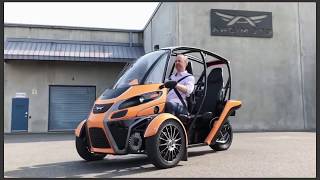
Mark Frohnmayer built Arcimoto, a company making lightweight three-wheeled electric vehicles designed to be far more efficient than cars. He raised $250k through a Regulation A+ crowdfunding IPO, hired engineers from Eugene's motor-coach industry, and emphasizes storytelling and customer feedback as keys to startup success.
Chapters
Hi there, everybody. My name is Adeo Ressi. I'm CEO of the Founder Institute. I'm really excited to host this webinar today, talking with a very good friend of mine about starting businesses that matter. Now, I've been an entrepreneur for about 25 years, and I've started over 9 different companies, and I can tell you that It's a tough journey, but if you're going to go on a journey that's tough, you might as well work on something important. So if you're thinking to start a company now, the Founder Institute is there to help you. We have chapters in over 40 cities that are enrolling right this moment. You can learn more about joining one of our programs to launch your business by going to fi.co/join. And if you're interested in building something that matters in the world, saying that's going to make the world better, You can learn more about our views on that by going to fi.co/good. And in 2018, we've moved the entire company away from just starting any kind of business to starting businesses that matter, which really is the goal of our topic today. And we don't have anyone better to talk about it than my good friend, Marc. A lot of startups being created today are trying to take a nickel and turn it into a dime. They're doing what I call revenue arbitrage. So they're taking some sort of unit economic measurement, you know, a cost of customer acquisition and a lifetime value equation and squeezing money in the middle. You have people who are taxing the internet like Google and Facebook. Taking money out of that equation. And the reality is many of these companies are making small incremental improvements on how we live, but they're not really advancing the state of humanity. So, how do you start a company that's going to change the world and make the world a better place? How are you going to work on problems that really matter? We make things that make the world better. And, you know, there's no better time to do that than right now. We have political problems, environmental problems, health problems, food problems, transportation problems, and every other kind of problem. And one of my favorite entrepreneurs in the world is going to come on and talk about one of those problems today, as well as some others that he sees in the world. Mark, I've known for probably close to 20 years, more like 18 years. And we met in the gaming world and he came out of the gaming world and said, after he sold his company and started something in transportation that's exceptional, rather than stealing the thunder and telling too much about it, I've watched you on this journey, Mark, and you are really one of the my favorite human being.
So why don't you— Oh, thanks, Dale.
—tell a little bit about your background to everyone who's joining us today. Yes.
So yeah, and hey, real pleasure to spend the afternoon chatting with you about this. As you know, this has been quite a journey. I've been working on Arcimoto now for almost 11 years. And in a second, Jonathan is going to stream a quick video that shows you sort of where we are today. But, you know, you were there to drive our very first prototype and sort of to imagine that we would actually get to where we are right now. From there, I think, was the stretch. And, of course, the road ahead is a long and perilous one as well. So, but, you know, to the basic point, I was— I've been a video game developer almost my whole life. So I think I started programming when I was about 7. 1987 on the Apple II, became a commercial game developer right after college, and then started a company. And my thought was I would just sort of make games until I figured out what I really wanted to do with my life. And when we sold GarageGames in 2007, I realized it was, you know, sort of time to put the money where the mouth had been talking. You know, the world's got problems that are very present, and, you know, to me, the one of climate change is one that's that is, it's right in front of us up here in Eugene, Oregon, which is where we're headquartered. We're seeing yet another, you know, sort of outside of the norm fire season. I know that Northern California has had that. There are weather events going on all over the planet. And so that was a problem that I felt like was really worth spending time tackling. You know, if you think of the, I think the old mantra used to be, I work to live. But the reality is now, I mean, if you're gonna spend 10 hours of every day doing something, 12 hours a day doing something, especially if you're gonna start a company and put years of your life into something, why not make that something that you find to be truly meaningful? And I think that that's really important for entrepreneurs for a few reasons. Not the least of which is that companies are hard. I mean, they, almost every successful entrepreneur I've ever talked to has gone through one or more likely many very difficult spots in the building of an enterprise. And one of the things that gets you through those difficult spots is working on something that you are truly passionate about, something you truly believe in. So if you guys wanna catch the quick update, ¡Hola!
Good afternoon. Welcome to Arcimoto's 2018 Q2 earnings update video. We do one of these each quarter to give our stakeholders deeper insight into where we are as a company. Let's go to our first planned rental location. Arcimoto's mission is to help catalyze the shift to a sustainable transportation system. System, and we believe there are 3 key requirements to the product that makes that shift possible. It's got to be useful for the wide range of everyday driving trips. It's got to be an order of magnitude more efficient than cars on the road today, and it's got to be affordable by the mass market. We believe we are well on our way to delivering on that product vision. Our 2 overarching goals for the year are to get into retail series production and to flesh out the end-to-end customer experience, and our Rental Experience Centers are all about that latter goal. And here we are. We believe the Rental Experience model has several distinct advantages: a more capital-efficient pathway for broad market awareness, maximum revenue generation from our early vehicles on the road, and the ability for our customers to experience the Arcimoto as if it were their own in beautiful destination marketplaces. We anticipate that our Our first 2 rental locations, one here in Eugene, one in Southern California, will be open in the next couple of months. And now back to the factory. In Q1, we mapped out 4 discrete production series for the year. First, the Signatures, which we completed in June. The Signature Series customers are longtime Arcimoto supporters who are even now giving us the benefit of word of mouth in market. We expect that will only increase as more Fun Utility Vehicles hit the road. We're now onto the beta. Just last week, beta units rolled off the line under their own power for the first time. The beta includes both significant improvements and a reduced build time versus the early signature vehicles. We continue to make subtle refinements to the product, improve steering, improve ergonomics, improve quality as we move through the rest of the betas and onto pilot. Our first physically destructive tests correlated well with our simulation models, which means that we will be able to optimize the pilot design with added confidence. All the essential fabrication hardware is now here, and we're beginning to fabricate end-to-end parts for the Arcimoto vehicle as well as the tooling necessary for manufacturing and assembly processes. We're now able to go from raw material through part cutting, forming, welding, and final machining in-house. We have made significant progress on preparing for the full pilot build, where we will manufacture all of the custom parts for the frame and chassis internally. We now have the very first pilot chassis built on the floor. By the end of this summer, we plan to have every component of this parts manufacturing puzzle fully up and running in preparation for pilot build in the fourth quarter. In spite of the fact that we're holding off on significant marketing efforts until we have pilot vehicles on the road, our preorder list continues to grow. We started Q2 by ringing the closing bell, and we're coming up on our one-year anniversary as a public company. We're now looking ahead to scale production in 2019, 2020, and beyond. We submitted our first draft of Arcimoto's $100 million advanced technology vehicle manufacturing federal government loan application to dramatically expand production on the West Coast as well as build an East Coast manufacturing facility.
This is a truly exciting time.
We're bringing our retail go-to-market strategy into crisp focus. Our initial series of limited production run vehicles are on the road, our first beta units are on the road, and we're looking forward to ever-increasing volumes of successively more refined FUVs as we push to retail series production by the end of this year. We thank you for your continued support and look forward to seeing you on the road.
So, I don't know if the audio came through there for everybody, but— I can hear you. Oh, good. Oh, good. Well, you know, one of the things that we've— you know, you talked about— you talked a little bit about sort of the approaches that a lot of startups take in terms of improving— I think improving efficiency of transactions or or disintermediating layers and things like that. I mean, that is not itself an unworthy goal, and I think that a lot of those advances are things that you can take advantage of in the pursuit of sort of world-changing ideas and world-changing missions as well. One of the things we decided to do when we went public is that we weren't just going to do a kind of a standard quarterly report, you know, here, here's a 20-page-long densely worded paper, but that actually every quarter we're going to include a video component that just gives people a very visual, obviously, and engaging update on where we are as a company. And that's proven to be a really effective way of kind of communicating our progress through the process.
Well, it was great to see the hardware moving into the factory. I mean, that shows progress more than anything else.
Anytime you got robots and lasers, you know, those are always wins with the viewing public.
Sharks and lasers. Okay, so we have a series of questions, and what I'd like to do though is for anyone in the audience, and we have a great, you know, over 400 people watching concurrently right now, If you have a question, pop it in the chat. My team will filter them through and we'll try and get them on screen for you. But, you know, I want to ask you, you cover a lot of stuff in the intro about your background and, you know, different things. But I want to just talk about Eugene for one second because, you know, a lot of people are like, do I need to be in Silicon Valley to start a great company? And, you know, Eugene is about as far far from Silicon Valley as you can. We call it the Silicon Shire.
It's like people here are generally, they're pretty chill. They smoke their pipe weed, but if it's necessary to go save the planet, they step up.
Right. So, the good thing about Eugene is it's historically known for people that take a big belief in saving the planet. A lot of like Earth First, a lot of movements have sprung out of there, some good, some bad, but environmentally it's a leader, but it's not known for technology per se, right? I mean, it has a good university.
Although, you know, I would say that like I think many areas around the country, Eugene is experiencing a tech renaissance, and so we're both because of kind of some real efforts of the Technology Association of Oregon, And a lot of homegrown startups are now springing up and starting to collaborate together and starting to meet together and share stories and share tips and tricks and so on. And that's really building a really nice tech scene here in Eugene, which is cool to see. But I think to your point, you know, and I grew up in Eugene, which is why I moved back here after college. And it was, it's a place where you can drink the water. It's a place where, you know, people have been recycling since that concept became popular at all, a ton of awareness of that kind of think globally, act locally mentality, whether it's bicycle commuting or just working to relocalize food production, eat organic food, eat healthy, be healthy. And I think that sort of ethos was very fundamental in forming Arcimoto for sure.
So basically, I mean, but great companies can get started anywhere. And so there was this environmental movement and environmental consciousness and your company just happened to play on that. So every city and town has this certain character, whether it be wine country in Napa or factory work in Detroit that you can leverage for whatever business you're looking to create.
Right, yeah, definitely start where you are is a good ethos to start with, right? I think that the notion that you've gotta, you know, from maybe 20 years ago, where you've gotta move to the Valley in order to start anything of significance, I would see that that notion is fading somewhat. And I think, and I would attribute a lot of that to, you know, organizations like the Founder Institute, that are going out. You've got chapters, you said you had 43 programs starting this next semester around the world?
Yeah, they're recruiting right now. We're actually operating in excess of 100 at the moment.
Yeah, I wanted to say you had more than 100 cities on the planet. 200. 200? Yes, so you're taking, you're basically, you have a global network now that is sharing information, learning from each other, and, you know, getting kind of moving, really globalizing that startup, that whole startup culture.
Well, we're getting some good questions in, so I want to— we're organizing them, so if we don't— even though yours may have come in first, we're going to try and keep it in the topic flow. So one question is, you didn't have a background in this field. How did you move over?
How did you— No, in fact, I was like, why would I take more electrical engineering classes? I'm never going to do a hardware project. I'm a software guy. And I think that was definitely a transition. I think when I started Arcimoto, my greatest qualification for doing a vehicle company was I played with LEGOs as a child. But it turns out you can learn stuff as you go. And in this case, I had a, you know, one, I have always had the good fortune to work with very talented people across a range of skills necessary to do a project like this. So I am not the mechanical engineer, but we've got some amazing mechanical engineers on our team. I haven't built a factory, but we've got guys on the factory and production team who've been doing that their entire careers. And so I think In any new endeavor, you gotta make sure that you have the right people on the field playing all the positions. The one thing I think I would add, particularly in terms of sort of new vehicle companies, is that the ones that have sort of made the most yardage don't appear to be the ones that were started from within the auto industry, for example, right?
Well, Fisker started within the auto industry, dead. Right, but not just Fisker.
I mean, it's a whole slew of them that kind of started with that traditional automotive mindset, didn't make it, but the ones that came out of more of a technology look at the world, more of a software look at the world, are still chugging along. And part of that comes down to being willing to rethink things like the distribution model or the service model or how your vehicle actually interacts and lives within your digital lifestyle, to use a totally lame term. You know, but it's like, I would say, you know, one, it has definitely been on the hardware side, it's been a huge learning curve. So how do you actually build something? How do you manufacture something? How do you deal with quality? How do you deal with vendors and supply chain? And how do you think about, problems through that lens, that was definitely a whole new set of skills to bring on. But there were definitely skills that translated and I think gave us an edge. One is just even just thinking about the vehicle itself. We are really trying to crack code of what really splits the gap between the motorcycle and the car. And yet, even if you just look at the three-wheeled vehicle space, the teams that have gone after the three-wheeled problem, either from the motorcycle perspective or from the car perspective, have come out with products that generally aren't as good at either of those two categories. Whereas we were going after something, you know, I came at it from the video game perspective, which is like, hey, we can make whatever the heck we want as long as it actually solves the problem that we're trying to solve.
Mark, I want to tell for everyone in the audience here, this is not an ordinary vehicle. This is like driving heaven. You have the stability of a car with the fun and excitement of a motorcycle. And as Mark said, I've driven every one and they've just gotten better and better, faster, more stable, easier to drive. And the latest iteration is just wicked. I mean, I've never experienced anything like it.
So, you know, before the term— I learned a new term when I was on the U of O campus. This guy rode by on his bike and he's like, "Sick whip." I think that was good. I think it's good. I don't know exactly what it means, but it's a new thing.
I've been waiting to make a deposit on one. Really? I think so. I'm gonna pledge right now that the minute this is over, and you keep an eye out for it, you're gonna get a deposit on your site from me. And because I love them. So it's like $100, right? Or something. How much is it?
Yeah, the deposit's $100, fully refundable at any time for any reason. Of course, once we're actually ready to produce yours, we're going to require a larger non-refundable deposit. Yeah, but they're under $15,000, right? And that's so, you know, we— the purpose of the company was to build something that one, is an order of magnitude more efficient than cars. It's about 10 times as efficient as kind of the average car on the road today.
Per unit of power for transportation, is that the measurement?
Yeah, yeah, yeah. So, miles per gallon equivalent is about 10 times the MPG of your average car of today.
And you like to say, because this goes back to your big world-changing problem statement, I don't mean to interrupt, but you like to say, and I've heard you said this 1,000 times, that you don't need to thousands of pounds of metal to communicate, to transport an 80-pound person or 150-pound person from A to B.
If I'm going for a cup of coffee by myself and I'm jumping in a 4,000-pound steel construct, I mean, it's just insane. The way that we transport ourselves, it's insane. It makes our cities suck and it is absolutely killing the planet, but we keep doing it because there's really not a— our cities are now built around that mode. And there's not really a good viable alternative to it in the marketplace. And that was really our goal.
And we've overcrowded the roads with these big vehicles that take up so much space. So if you have a smaller, lighter weight vehicle, you solve other problems as well.
Yeah, I mean, it lets communities— should let communities relocalize. You know, we use about 40% of our urban landscape is covered with asphalt to move and park cars. Think about that for just a second, almost half, almost half of the geography is paved over, more dead than the deadest desert, just so that we can go from point A to point B. And I think when you, I mean, yeah, the kind of one-size-fits-all vehicle made sense in 1908 when there weren't any and all you would ever get was one vehicle and you pretty much had to do everything. In today's world, you've got vehicle sharing services. You can rent vehicles by the ride, by the hour, by the day. So if you need a larger vehicle to solve a particular problem, they're available. But what's the problem is that we use those larger vehicles to solve a problem that is much simpler than the solution we're using.
Right. So I'll tell you why I want to get an Arcimoto. Because my commute, most of my days are spent in Palo Alto, which is maybe 10 miles edge to edge when you include Mountain View and a little bit of the surrounding towns I go to. And to your point, to drive a 5,000, 10,000-pound vehicle in a 10-mile radius to get a cup of coffee, lunch, or whatever is literally stupid. There are questions coming in, so I don't want to let them— I want to get to some of these questions. But before I do, one last thing. You were talking about working in or on the business. And there's a question from Phil relating to this. How do you get these technical people to help you when you don't have technical knowledge? And it's because you were working on the business, right, in this macro view versus working in the business as a day-to-day person. And maybe you can— Yeah.
Well, and I think early on, it was actually the hard part was not knowing what skill sets I actually needed to include in the team, right? And so it was, what are the particular— what are even the job titles that this organization should have to do the development portion, let alone the actual go-to-production step? And, you know, honestly, I wish I could claim that I'm like, you know, super good at hiring people and I knew exactly how to figure it out, but the honest truth is that The Arcimoto team largely assembled itself. That is, that we, you know, we definitely said, "Here's what we're doing. Here's the problem we're going to go after," and people would come to us and they would say, "I'm in. Here's what I know how to do. I want to make this a part of my life story." And that, I think, is really part of the power of having a purpose as an organization that is beyond just Hey, we're gonna make the next internet advertising platform. But you will find that there are a lot of folks out there who actually, one, are very good at a wide variety of things, and two, want to work on something with purpose. And so that's been, I mean, I think if anything, the major skill that I've developed over the 11 years of the company is actually just learning how to tell the story. And learning how to tell it to the right people and in the right venues in order to really, in order to attract the people who will make that vision real.
That is now, you answered like 6 questions that are coming in the chat with that statement. Which, yeah, so I just, so really let me just paraphrase that so that because there's questions like, how do you become a good persuader, convince me? So basically like communicating your vision essentially led to the right set of circumstances come together, the right people, the right investors, etc., and eventually led to your success.
And I think, you know, when you and I first met, I was a really introverted guy, and I was— when I was at GarageGames, you know, I was the technical president, right? I was like, okay, if nobody else can figure out how to solve this netcode problem, I'm going to jump in the code and solve that particular problem. So whatever whatever sort of tech problem we had at the company, I was able to jump in and be the guy that really helped solve the problem. When I started Arcimoto, I was like, wait a minute, I'm not that guy anymore. I can't be that for this team. And what I really wanted to do was just kind of more be the kind of the coach from the sidelines or the help assemble things, but not really get out in front of it. I realized a couple of years in that if I didn't actually jump in, if I didn't get in front of this idea that I was talking about, if I didn't actually learn how to tell the story, that it was going to fail for sure. That's when I realized I kind of had the choice of, am I going to change my personality or am I going to see this thing that I really care about die? It wasn't easy because I hated speaking publicly in front of people. I hated having my name in print. I thought I sounded dumb on a microphone, all the same kind of fears that everybody who's kind of just getting into speaking publicly feels, right? You sound great. Right, no, but again, like, you just, it's just, I would say the one, well, the two things got me through. One was just practice. I sucked for years, right? You go back to the first pitch deck I brought down to Sand Hill Road and I was staying at your house in 2009. By the way, horrible year to fundraise, no matter what you were fundraising for. But it's just, you, again, you just say, okay, I'm gonna keep doing it. I'm gonna listen to feedback. I'm gonna get better at it. And a lot of it is just getting better at it by doing it. And then the second thing is having that, again, I keep coming back to it, but it's that having a purpose that you're actually fighting for, something that you really care about. Will give you the inspiration and the motivation to move past your own internal roadblocks. If you don't have that component, then I think it's a lot easier to quit.
There's so many questions coming in about how did you find these people, where did you spread the message. Mary asked this, Shai asked it, Lisa's asking about it.
You know, so yeah, and part of that is, is actually geographical. So, you know, Eugene is— it's not— it was not sort of traditionally a tech hub, but it's very much like, for, for a city its size, has a ton of manufacturing of like kind of small-scale lean manufacturer operations. It was one of the hubs of motorcoach manufacture you know, the big RVs, uh, Country Coach, Marathon, Monaco were all about 5 miles away from where we were headquartered. And one of the factors that was just, uh, sort of timing was that though that industry collapsed in the financial crisis, and so there was a motorhome—
the motorhome industry, people don't know, we have people from all around the world here, just so you know, big buses with that rich people buy to go to Burning Man. Well, and tour. In America, you have lots of roadways and parks, so people buy houses on wheels, and that market collapsed in the financial crisis.
Yes, so there were a ton of really talented vehicle engineers, production guys, all the rest, who were looking for something to do right around that time, and a number of them jumped on board, you know, very early on. And so that was That kind of provided the nucleus of the team that was doing the actual engineering and building of the vehicles.
Mary also brought up that there are a lot of good causes out there. Do you have any sense of why they found and cared about you versus the 50 other causes?
Some of the guys were like, "This is like my atonement." They've been building these giant rigs for people to drive around the country and burn horrendously inefficient houses on wheels. And so I think that this particular project was very attractive to those folks. One, because it was still a vehicle, and two, because it was sort of, you know, it was antithesis of the excess mentality that had been going on in the early 2000s.
So they knew that those other forms of transportation, which they themselves were working on, was stupid, I presume, right? They, they—
Yeah, well, you know, and, and it's for a lot of people, it's like, you know, everybody's got to eat, you got to put food on the table for the family. If you're an engineer and the engineering options are, I'm gonna go work on, you know, giant earth-destroying machines, it's like, well, you know, it's a paycheck. Um, and, and, and, or just not even a lot of thought about it. I mean, I think we're— that, that the, that the problem that we saw that that in the early 2000s and in the late '90s, those early warnings about global warming and about climate change, and certainly the awareness of environmental destruction, that didn't really seep out into mass consciousness until much more recently.
We got some interesting questions here I want to get to because I know part of the answers, and I think they're going to amaze people. I mean, so Gregory was asking about how many people made the first prototype. Let me finish the questions. Louis is like, what roles did you have? What were people? And then what was the first step? Well, Lisa was talking about what I don't think people realize is you kind of bootstrapped this and built a ton of different prototypes for almost no money. And a lot of people are like, oh, a vehicle company takes hundreds of millions of dollars, and it may eventually take that much, but you made— I mean, talk about some of the things you did early on because it's phenomenal, and it's an inspiration because a lot of time you may be sitting there, "I can't do it, it's too complicated," and then when you hear what he did, you—
Well, and so to be clear, I did not set out right after GarageGames to start Arcimoto. I approached this marketplace as a consumer. I was like, okay, got cash in the pocket. I want to buy a vehicle that is going to solve my daily transportation problems. So I just started searching. I started, for months I was searching for, I didn't want a full-size car because again, you don't need 4,000 pounds of steel to go get coffee. And I knew it needed to be electric and I wanted something that was cool and high quality. And, but overall I wanted something affordable so that if I got something and drove it around, it was cool. then other people would be like, oh, I should get one of those things too. But what finally did it for me is like after not finding what I was looking for for months and months and months, I saw a kit vehicle in the Eugene Celebration Parade called the Buggy. And it was this 3-wheeler, little kind of like bicycle meets motorcycle meets, you know, get-around thing. And it was just— all of a sudden, that was the lightbulb moment, was seeing this thing. and that light bulb really illuminated the gap between the motorcycle and the car. And because the guy who designed that sold it as a kit, we were able to, you know, buy the kit, here are all the pieces, let's put it all together. And it wasn't a big jump from that point to go, oh, well, like a Lego set, if the pieces were slightly different and we put them together in a slightly different way, we might actually really be able to build a mass market product in this category. And I, you know, I figured, you know, probably take 6 months, probably 6 months till we had a market-ready product. 8 years, 8 years later, you know, finally, finally, 8 generations, 8 iterations. So what we did though is we did take a very kind of bare-bones iterative approach. We always— the team has always had builders as well as designers. So it was because we were starting with a kit It was all about putting it together and how do we put it together well and what can break and what can't. And so having that starting point was really helpful for that iteration process. And also it was a reminder that the solution could be very simple, right? It didn't have to— if we knew that if we ended up in car land that we were screwed because nobody was gonna go and fund us to go make a car. Car is a multihundred million dollar at least exercise, if not billion, to put a new automotive program together. So we knew we had to do something dramatically simpler.
Just to explain why, not to interrupt, why, because I think that's again, people don't know. The car regulations in America are nuts. They are, you know, the CEO goes to jail if they have knowing issues in the vehicle. Whereas the motorcycle, and conversely, which includes the three-wheel category, is really much less regulated and therefore much more open to innovation.
It is a bit more of sort of that— I think that does afford more sort of creativity in terms of options and so on. But I mean, I think the real factor is just that the expectation of what a car is is so set in people's minds. And you have 100 years of companies just getting better and better and better at making all the little gaps go away and the sound of the door when it's closing and the power windows. And every single one of those parts is its own supply chain. It's its own relationship with some major manufacturer that if you don't get that, you know, if they don't look at you and go, hey, I mean, even, you know, Tesla had this problem for years where, where, you know, uh, the, the sort of tier one suppliers would just be like, whatever, you know, you're some California car company. Um, and it wasn't until they obviously hit it out of the park repeatedly that then, you know, kind of the major suppliers wanted to, wanted to really do business, as far as I understand. Yeah, no one—
well, the volume, right? It's a volume issue.
And again, and to your point of like, uh, executive liability, I mean, if you, if you are a seat belt manufacturer and some startup comes to you and says, hey, you know, I want to put that in my vehicle, then you know that you're the one who's, who's going to be carrying the water down the road, um, if, if they get knocked out or whatever. So, so that's I mean, I think that's why it's— transportation in particular is very stacked against new entrants and why we've had to sort of carve a very different path. But to me, that pathway always went through the question, what is the simplest thing that solves this problem? Well, because the simpler we make it, the more competitive we can be, the lower the cost can be, the less complicated the manufacturing process is.
I want to go with that for a second because that's also a super important point for everyone on the call. I've known you before, obviously, but since day one of the company, I don't think your vision's changed at all. Am I— No.
You go back and look at stuff we were saying in 2007. The products changed a lot, obviously. Of course. Yeah. But the intent, what we've been shooting for, I think what really it was when I was in that parade, when I was on the sidelines of that parade and I saw that thing, it was like, there's gold in those hills. I don't know where it is exactly, but in that direction, there's an answer. And I think that was maybe that's the sort of the takeaway there is that when you get that inspiration moment, it's not to be so fixated on necessarily having the answer, but understanding that you're really moving in that direction. And that's what that iterative process is all about. Right.
And you haven't changed in that direction, at least. And the product, as you mentioned, changed a lot. And I think that's one of the— I mean, you must— okay, but let's just take a tangent on that for a sec. I know it's been a struggle for you, Mark. Like, I know, right? And now you're seeing some success, and I'm sure there's a lot of struggle in the success moment. First of all, if you don't want to talk about the struggle, but I mean, because you're in a relatively good point, but you persevere, right? Maybe you could talk about, was it the vision and purpose that helped you persevere? But because you were really in tough spots at times.
Yeah, multiple times. I could go down the list. We put the Generation 5 prototype on the road. To fundraise for the next stage of the company, it crashed on its maiden voyage, you know, day 20 of the California tour. That was the first time we really did kind of a shutdown of the organization, and, you know, but each time, and then Generation, you know, after 7 years, we got Generation 7 on the road, after 2 and a half years of working on that one vehicle, and then looking at it and going, trying with a very honest eye to realize that this thing did not solve the problem we were trying to solve, and it was probably destined for failure in the marketplace, which was probably why nobody was biting on the investment opportunity at that point either. Well, and that led to your biggest innovation, was that when you came up with— Which led to the Spanish and then, you know, an immediate reboot of the company in the spring of 2015. But I think to your point, what I had to keep asking myself at each failure, because it was 7 years of a set, I mean, a lot of great forward progress, right? Like we created new systems, we refined, to your point, we refined the suspension, we refined the steering, we refined the feel. All of those things kept getting better, but we kept not getting to the answer. And so I think what really kept me going each time was just sort of looking out at the world and saying, Well, has somebody else cracked this problem that I thought it was worth spending 7 years cracking? No. If that's not the case, then it's probably worth giving it at least one more shot. Eventually, it's like, "Quitters never win and winners never quit, but those who never win and never quit are idiots." I know I'm in one of two categories, basically is what I'm saying.
Either a winner or an idiot.
Or an idiot. One of the two. All right.
Osama has a question. You know, you've been doing the same thing. Now you're starting to achieve success, you know, and it's early success, if you will.
I got mine. That was my first success point, was getting one of my own. And I got the first Signature Series vehicle. So at least that milestone was achieved. And— but yeah.
So, sorry, continue the question. She's asking about copycats. So, you know, do you worry about that? Because it seems like someone could just copycat you, right? And a lot of the things you're working on, maybe a three-wheel vehicle, simple electric vehicle, blah, blah, blah. And this is a common thing that I hear entrepreneurs ask about. Well, can't someone just steal it or copy me?
And what are your— So, we have definitely attempted to build a moat of intellectual property around the vehicle we're building. But that being said, you know, if people want to go out and build fun utility vehicles, hey, come talk to us, because our whole business model for international expansion is entirely based around licensing out the design of the factory and the design of the product and the brand and the business model. So we can save you a lot of time, you know, rather than, than tangle in any kind of adversarial role like Let's just partner up together to go take this to the world. And that's been our approach. I think we've got elements within the vehicle architecture that are, some are hard to copy. Some of the drivetrain we've spent a lot of time refining and we think it'd be better to just buy it from us or partner with us to make it happen rather than just make a crappy knockoff.
Right, and I mean, that's actually generally the best answer you could possibly give. 'Cause I always say like, well, if someone wants to steal steal your idea, they're basically a co-founder or a partner, right? Right. As you brought up. So early on, it's probably a co-founder.
They might have different ideas about what share they get, but you know, we can figure that out.
So I want to talk— there's so many questions here, I don't even know where to begin. There was a couple questions coming in like, what would you do differently?
Give it what you don't have. I would've just started with the one we eventually got to. If we'd have just started with number 8 first, would've saved 7 years of pain. No, I think honestly though, what I would've done differently is I would've gone slower at the beginning. I think I had that kind of irrational exuberance coming off of my first exit. So first company, it's like you go play baseball for the first time, you step up to the plate, and you just like easily hit it out of the park, and you end up under the mistaken assumption that baseball is easy. And I think that was kind of my sense about what starting companies was like in the spring of 2007. And then, you know, over— so I went very quickly, you know, started really torching my dry powder. As it were, in order to make what I thought was yardage. And I think if I'd have taken a slower approach, particularly at the beginning, particularly when I knew it the least amount that I knew over the course of the project, that we would have actually made more progress faster in the long run.
So start it a little bit slower.
Yes, slow roll to start, particularly if you're coming off of an exit in a different realm.
Well, in general, it might be better to put some thought and customer development in before diving into the empty pool, if you will. A couple questions coming in about regulation, and, you know, another one about maybe taking the company private or staying private, you know.
Like I said, we would entertain offers at $420 a share to go private. We're— we're— we— funding has not been secured for such a move, but we would entertain offers. It's only a 100x difference between our current share price and our go-private price. But just throwing that out there.
But, but, you know, obviously people are like, oh, being public's kind of a pain. And, you know, you don't have to— I'm just— it's from, uh, it, it does.
There is some reporting There's some reporting overhead in terms of, but I think for us, it's actually, it's a helpful thing because it does, we are a NASDAQ listed company. When we talk to suppliers, when we talk to customers, that adds a level of credibility. And I, you know, for people, particularly for our customers who want to be a part of the story, they can be a part of it, not just by, putting down a reservation, but by actually owning stock in the company. And so that's something that I think is actually very cool. I think for companies that have sort of a public mission, it's a good thing that the public can have a chance to actually participate in it, put their money where their heart is, right? I love that, actually.
That's the best argument. I was having that same discussion with Elon and similar sentiments exist there that like, there is this public mission, right? But then, you have detractors from it, right? Whether it be the short sellers or you have the people who are betting against your mission one way or another, right? I mean, you've had some trouble with frivolous lawsuits and things of that nature. And so, I don't know the pro/con of the detractors. I don't know how you feel about it.
[Speaker:BEN] You definitely become a bigger target, but I think especially in the vehicle realm, you you can't avoid that once you're in the marketplace anyway. Right. There are gonna be people who are gonna be going after you either way. Right. But to where we are at this point, I think that the benefits outweigh the downsides. But like I said, at that price, I would also be willing to consider a private office. Just throwing that out there. So, yeah. Oh no, you know, and I think what we've really— the last thing there is that, and again, kind of the point of the quarterly update videos, is that we're trying to leverage our public reporting to do as much general market communication as we can. So that we're not just communicating to the investment world, but we're also communicating to the world.
We have a few hundred people still on And there was even more when we showed that video. I mean, if you haven't seen it, is it on arkimoto.com? I mean, this is really like— I wish every public company made a video like that because—
Well, we've actually gotten that feedback from investors, from our public market investors saying, "I wish all the CEOs of companies I'm invested in would do that same thing." And it's just what you do. And this is not just for public companies, it's for anybody pitching on any kind of a regular basis. So if you spend, if you're a CEO, I'm assuming that they're in the crew out here, they're CEOs of startup companies. A lot. A lot of time with a pitch deck in front of investors. And the worst thing about having like a 20-slide pitch deck is that you get interrupted 5 times. The guy's asking about something that's 3 slides ahead. You get off your game. You didn't drink enough coffee, whatever it is. When you have a video that tells the full arc of your story, and you can tell just about any story in 3 or 4 or 5 minutes. You walk into the pitch meeting, you press play, you sit back, they watch the video, and then you spend the next 25 minutes on Q&A, actually talking about, having a real conversation about what you're doing instead of spending 25 minutes on the slides and 5 minutes actually getting to one question. So it really changes the nature of your conversations with investors, with customers, with everything. And it's just—
You can't do it for every kind of business though. I mean, you know, if you're doing, I don't know, drug discovery, it's like, here in the lab, Johnny's looking at cells.
Oh my God. Well, you definitely have to, again, and this comes to learning how to tell the story, learning how to communicate your vision. You're gonna be communicating it to some audience that is relevant to your future success. And so learning how to make that communication very crisp, take out words that don't help. Once you get the narrative in there, yes, the B-roll footage that you throw over it is gonna be different, right? If you're doing an internet B2B e-commerce site or something like that, it might not be quite as sexy as, you know, 3-wheel electric vehicles ripping down the road, but there's, you can usually find something that helps connect the narrative that's a visual component or that paints the picture that you're trying to, what's the world that you are catalyzing the shift into, right? There's a lot you can do with video that you can't do just with tech slides of text. So my recommendation to entrepreneurs generally, and yeah, it might not work for everybody, but for a lot of companies, having a short, very concise video and getting to the point where you can tell your company story in video is a really useful tool.
That video was 3 minutes long, right? So you conveyed a lot of information in just a few minutes. Yep.
And once we figured out kind of that narrative structure, that we basically just used essentially the same narrative structure from the first quarter of this year to the second. We'll largely use that same narrative structure on third quarter, and it'll all be just about saying, you know, well, what happened in the last 3 months?
So I wanna, you know, this, I'm reading the questions, they're like pounding in, and we're picking questions to cover. A ton of questions came in about bootstrapping, but I wanna talk about another ton of questions came in about the IPO, right? Or the process that the— I'll let you explain it. I know what you did, but you did a kind of unusual path to an IPO, but interesting as well. And there's so many things out there, so many alternative ideas out there, the initial corn offering. But let's talk about your path to an IPO.
Reinventing the ICO. We did that at our company party. So we did a Regulation A, a Tier 2 Regulation A offering. And so for folks who don't know, when Congress passed the JOBS Act in 2012, I think, it included a rework of Regulation A, which has been in the securities laws since the 1930s, but was really not regularly used for registered offerings of stock because it had a pretty high burden of of documentation. It was state-by-state registration and had a $5 million cap on it. What the JOBS Act did is it created a new kind of offering with a maximum amount of a $50 million raise, and it took out the state-by-state registration as long as you did this Tier 2 piece of it. And what that meant is that, you know, it put a very firm timeline on the SEC for responses to submissions and documentation. So where a normal S-1 can drag on for, you know, many, many, many months, there's like a basically a 90-day fixed window from, you know, submission to getting through the process. There's no quiet period. So you can advertise online, you can advertise to your affinity base, like your existing preorder customers and people who are interested in your product.
It's like, it's almost crowd, it's considered our crowdfunding, right? Regulations in the US, even though it's not really crowdfunding.
It blends the idea of crowdfunding with a more traditional, you know, and again, this is an SEC-qualified, audited financials, full offering documents offer. So it was still, you know, it was still a considerable undertaking to put the offering together.
It cost you what, like half a million dollars?
All in, it was about a quarter of a million.
Okay, all on quarter of a million. That's just step one, right? That's to when you could make the offering.
Yeah, I mean, no, that's, that's, yeah, that got us through, uh, the offering. I mean, that didn't include our underwriters' fees, but, uh, that was, that was the legal, that was the accounting, that was the, uh, all of the offering preparation. Yeah, so, and that's, you know, it's anywhere between a fifth to a tenth of what a typical IPO could cost, right? So it's a substantial reduction, again, for a smaller-scale offering. And the idea was, the reason why Regulation A was changed was because over the last 15 years, it's gotten harder and harder and harder for companies to do IPOs such that—
Almost impossible.
You end up with these kind of stranded unicorns. I mean, my sense is that if that tool had been available for companies like Lyft or Uber or Airbnb at the times when that would have been in their sweet spot, that it would have been a no-brainer because they could have gone to all their drivers, all their, uh, all their people who had rental properties and said, hey, why don't you be a part? Why don't you be an actual investor in this as well as one of our, uh, you know, kind of key, right, uh, partners?
That goes back to what you were saying earlier about having your early buyers of the product also be investors in the company, right?
And so, so the, the way that our deal was put together, we, we Our underwriter was W.R. Hambrecht. Bill Hambrecht was an early investor in Arcimoto and was a big advocate of the JOBS Act. He's the guy, I mean, back in the day, he did the IPOs for companies like Apple and Intel and Amazon, and he did Google's Dutch auction. So he's been, and he was growing more and more concerned that early-stage kind of high-growth opportunities were not, did not have access to the public markets.
And then you uplifted, right? Because you went into this Reg A+ situation and then you actually uplifted into the public markets, right?
Well, Reg A, you can just list on NASDAQ. So because it is a fully qualified offering, you can list on NASDAQ or on New York Stock Exchange at the conclusion of the offering. So, but the way the deal was put together, they basically managed a broker-dealer selling group, By the way, that whole aspect, whether you are working with investment bankers or with broker-dealers who are out there selling your security, what hit me was that for years, when we sold stock, it was because I was selling the stock. I was like, hey, here is my pitch. Please consider this opportunity. That was the first time we had basically like 80 people out there who were all, you know, doing that, doing that same work. And that was, um, if, if you can imagine having 80 people or even 20 people, uh, helping to tell your story, uh, it really takes a huge load off. But then because it was a, it was something we could, we could advertise on our website, we actually did about 20% of the deal, I think more than 20% of the deal on our own site. So people coming and buying stock directly from us.
Is that by volume or number? By dollars. Wow. So related to that for a sec, you know, because there are a lot of new entrepreneurs here. I mean, I'm sure there's no way you thought you were going to run a public company when you started this thing. And like now you are.
No, it just basically be like, what's your exit strategy? It's like, well, IPO, of course. I mean, it's the standard answer, right? No. Did you ever say that?
I don't remember.
Yeah, well, I mean, and I would jokingly like, oh yeah, we're going to IPO, you know? And it's like, oh, wow, holy cow. Now I'm going to see it. Well, I would say— You learned it as you went though, right?
I mean, this is like, so a lot of entrepreneurs, they have fear of doing things. I mean, sure, it wasn't easy, Right. But you—
I think again, we were fortunate that we had a really good team. So our accounting team, the auditors were great. We worked with CrowdCheck on the offering document preparation and they've really focused on reggae as one of their specialties. They were awesome. Our own internal team, I mean, I just— we've got a stellar group of folks who are out there actually, I mean, just selling the deal on the road and telling people the story and giving test drives around Manhattan and all the rest. I think where we, you know, the real opportunities that we could, what I would advise, and again, we were like the 5th company ever to do a Reg A and then list on a major exchange. And the ones who did it before us were like in the 3 months prior. So it was, we were very early through this new process. And I think, you know, one of the learning lessons that has come over the course of the last year is that it's, you know, you really, it's like if for golfers, you know, you don't stop the golf swing once it contacts the ball, you gotta kind of swing through, right? And learning how to manage investor relations as a publicly traded company, that's the one component of the team that we didn't have during the deal, that we didn't really even bring on until, you know, months after we were listed, that I would advise that everyone contemplating going public has.
Or any sort of IPO.
Got to have an IR team on board. Yeah.
Right, that's crowdfunding, any, any, any, because you've got now thousands of people that are stakeholders in your success that need to be managed. I want to do two last things, Scott, in an effort of time. And I am in— you made my day. Hopefully, you made everyone else's day. I mean, there's so many things we could cover. Maybe we even have a chance to do this again. I want to do two things though last. One, I just want to pimp the vehicle for a second. This is like one of the amazing rides that you can— and I'm not kidding, I am literally going, and you can attest, uh, tweet it out. There it is, order number whatever, but 5,000. So I'm gonna do it, uh, today, and I hope everyone has a chance. So if they wanted to do the pre-order like I'm about to do, it's at arkimoto.com. Yep. All right, any, anything you want to throw out about the vehicle?
People are asking what's its top speed, is it road ready, basic specs, uh, it's It's top speed 80 miles an hour, 0 to 60 in 7.5 seconds. We are shooting for, we have two different battery models that we're planning. One that's a shorter range that we're shooting for 70 miles, one that we think will go up to 130 miles. And again, our focus is, people talk about range anxiety or whatever, our focus is really on all the daily driving trips that you take. Once we're in the full swing of production, we're shooting for a base model price of $11,900. And then for the lower battery pack one, right?
Yeah, for the lower battery pack.
And then there are lots of ways that you can enhance the vehicle, adding various door options, surfboard rack, golf club rack, storage bins, air conditioning, whatever. But we want to make sure that that very base model is still a truly competent everyday solution for a lot of mobility problems.
That's beautiful. And then the second thing, so a ton of entrepreneurs watch. We covered a lot of ground here. Is there anything that, you know, advice you would say to a new entrepreneur that's thinking of starting an impactful business? But me, because a lot of the questions were sort of hesitation I don't know how to get my team members, I don't know how to get people to believe. Any sort of advice, general advice you would give in closing?
You know, some of the things that helped me on the— in terms of learning how to do the narrative structure, there are some really good talks on TEDx Talks and YouTube talks like the secret structure of great talks is one of those talks. Where the author goes through and kind of breaks down "I Have a Dream," breaks down the Apple introduction of the iPhone, breaks down Kennedy's speech, and finds these common narrative structures that are useful for persuading people, not just, you know, and it's really all about how do we get from where we are today to this kind of the promised land of some attainable future that we agree is a good thing. And building that, how do you build that narrative and how do you persuade people to join you in making that dream real? I think that's been, particularly for CEOs of impact companies, it's absolutely critical. And if you're afraid of public speaking, then do it. I mean, just go to Toastmasters, work on it. I feel like where I spent 20 years of my life focusing mostly on physics and math and coding and all that, what I really had to learn through Arcimoto is how to write effectively, how to speak effectively, and mostly how to listen effectively. Which is because a lot of people will bring you problems in the form of a solution, as in, "You should do X." And you're like, "Well, X doesn't actually— X conflicts with a whole bunch of the other things." So you kind of disregard it. But what if you dig into the solution that they're providing? Usually underneath that is some problem that they see that you are not addressing. And that's been kind of a consistent factor in the development of the Arcimoto. Is listening for the problems. Because, you know, like the very first vehicles we designed had one seat because most of the trips that people take are alone. And when it took a long time of people telling me over and over and over again, I will never buy a one-seat vehicle, for me to finally get it through my head that people are not going to buy that, even though, you know, my market research about driving patterns suggests one particular thing. So the trick was, how do we add an extra seat? How do we solve the problem that those people were pointing at, but do it in a way that was still very consistent with the vision for the product that we were trying to build? That's beautiful, Mark.
Thank you so much for your time.
Well done. Thanks, buddy. Hey, slow clap. Really good to see you, man. And yeah, let's do this again. We didn't even talk about voting this time. So, you know, there's still more to cover.
And just so you know, Mark has essentially the equivalent of hobbies to work on democracy and other things. So, you know, once you get in the field of trying to make the world better, you don't just stop with vehicles, you move to anything and everything you see. So with that said, thank you so much for your time. Thank you everyone for tuning in. We've had as many as 400, currently around 250. This is amazing, probably even more, 600, 700 that have come through. Thank you everyone. Thank you, Mark. Thanks, Dale.
Great to see you, man. Cheers.










