Ask an Investor Anything: Open Q&A with Investors that Write 'First Checks' for Startups
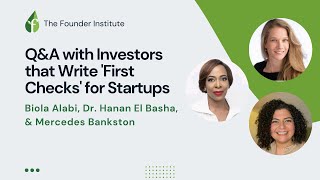
Viola Alabi, Hanan Bashia, and Mercedes Bankston answer founder questions about early-stage fundraising. They explain how to show traction before product launch (waitlists, sign-ups, market research), why most founders undersell their experience, and that pre-seed rounds typically run $100k to $500k for 10-20% equity.
Chapters
Hello everybody, welcome, welcome! Gosh, it is good to see everybody. I already see a lot of chatter going on in the chat. That's amazing. Wow, over 100 people already. We are expecting to have a few hundred people on this call today. I would expect nothing less. We're going to talk with investors today. They are here to answer your questions. So, uh, for some reason founders always have a lot of questions about raising funds for good reason. It's very complicated. Uh, there's a lot going on in the world right now, so I'm really excited to have our panelists here today to answer those questions. So the format for the, uh, for the event today— and again, welcome. Um, I'm Diane Bailey. I am the head of Accelerator Growth for Founder Institute. We are the world's most proven network to launch ideas and create fundable startups and global companies. So, oh yeah, more people coming in. The format for today, it's all about you. We're going to introduce our panelists and then just talk some general questions about what's going on, and that will give you time to put your questions in the Q&A, if you can add them to the Q&A button, that would be great. That will help my producers help funnel some of those questions for me. And then we'll launch into your questions. So be thinking about questions specific to you, specific to your industry. Be thinking about what, what are your next steps going to be in the next 3 months, 6 months, a year from now? So this is going to be a very good discussion. Very excited to have everybody here. For those of you who are just joining, welcome. This is the Founder Institute presentation, open Q&A with investors who write first checks. We have a great panelist lined up. They're all behind me. You can't see, you can't see them. This is the magic of videos today. So they are all here ready to take your questions. If you have questions, again, there is a Q&A section off on the side. If you can add your questions there, my producers and team are going to be collecting questions in that spot. So before we bring our panelists up and introduce them, I do want to ask you all a few general questions. One, would love to know where you are coming in from. We have people joining us from all around the world. Our panelists are from all around the world. I'm here in Colorado in the US. It's a very nice day today, no snow. Uh, which is weird. We should be getting a lot of snow by now for, for our spring snows. But please let us know where you are calling in from. Uh, also let us know where— what stage are you at in your startup journey? Are you just at an idea stage but you know you need funding? Are you getting ready to raise a round? What are your thoughts going into what the most difficult parts are going to be of raising your round. So please just let us know some of those general questions about you and your startup in the chat, and that will give our panelists some information so they can better answer those questions and tailor it just for you. Producers, if we can bring the panelists on stage, I would love to do some introductions. And here comes everybody. It's like magic. My producers have magic buttons. They handle all of the, the heavy lifting. I just get to talk. So I don't know if that's a good thing or not. I get to talk. They get to push all the buttons. So welcome panelists. Thank you so much for joining us today. Again, everybody is joining from all around the world. I just think it's super exciting. Exciting. I'd like to first introduce Viola Alabi. She is partner at Acacia Ventures based in Lagos, Nigeria. She has deep experience in media and technology, and I thought this was really interesting— she's also a published author and a film producer, which is amazing. Welcome, Viola. Please tell us a little bit more about yourself and Acacia Ventures.
Thank you for having me, and thank you everyone for coming in. We're actually an Egyptian-based fund. I am based out of our Lagos office. We invest in pre-seed and seed, and we invest across the Middle East and Africa. It's been really, you know, I've been on this journey now for since 2016, investing in early stage as an angel. I still invest as an angel and also investing as a partner at a venture fund. And we're excited to be here. I'm excited to be here. I've had Um, some amazing experiences, like you said, and so really have a lot of experience on investing in different asset classes from film, television, all the way up to technologies. Um, right now we're a technology and tech-enabled fund, so please, if you have any questions around that, I'm happy to answer. Thank you.
Wonderful, thank you so much. Up next is Dr. Hanan Bashia. She is a co-founder and CEO at the Global Business Women. She has over— she's based in Doha, Qatar, over 25 years experience with small and medium-sized enterprises. She is known as the Oprah of the Middle East. Welcome, Hanan.
Thank you so much, Diane. Welcome. Hi, Mercedes, Fabiola. Hello, everyone. Thank you for having me. I think I'm the only non-investor on the panel, which is exciting because I get another angle. I'm also involved with Founder Institute as Managing Director of the GCC chapter and co-director of the Qatar chapter. So I'm heavily involved in the entrepreneurial ecosystem. I'm a founder myself, as you said, with the Global Businesswoman and the Business Doctor. Been doing this for about 13 years out of the 25. So I'm very much involved in working with founders, answering those questions about investments and when and how and why, and those kind of questions that would be coming our way today. So thank you. I'm looking excited. I'm excited and looking forward to this discussion.
Me too. Thank you so much for joining us. And also our final panelist today is Mercedes Bankston. She is founder at Thunderstar. She's based in Palo Alto in the US, but also you're also spending a lot of time in London too and all around the world. So where are you calling in from today?
Palo Alto. So Palo Alto. Yeah. So I kind of run a unique operation where I've spent the past 10 years or more than 10 years in the UK. And over the pandemic, I kind of came back home to California, mainly because I just needed to get outside. And then somehow I got stuck with nice sun. And here I am.
So I do go back and forth.
That has also kind of caused like a great ecosystem for me as the UK, previous to the pandemic, was rated like number 1 for startups in the world over Silicon Valley. It's always like a close contest, which is quite exciting. There's quite a bit of differences between how we invest in the UK, the types of companies that we see in the UK, even to like how they're structured. The same with like Silicon Valley. So, you know, when we talk about UK to US comparisons, there's quite a bit to talk about on that subject matter. But ultimately, there's only a couple of reasons that companies get invested around the world. So happy to dive into that a little bit later today.
Wonderful. And also for those of you in the audience, Mercedes has been with Founder Institute a very long time, both as a mentor and as a director running a few of our chapters around the world. She definitely has the pulse on the ecosystem globally and is talking to founders everywhere, as you understand from her bio information. So thank you. Oh, I see Colorado. Hi, Tom Fox from Colorado. I just saw that on the screen. Have to do it. I have to call people out. You know, you can't just point at people and stare at them in the audience like you could pre-pandemic. So I'll just— oh, I need the money. Yeah, that's interesting. Well, you'll learn the process on how to get there. I don't have anything to give out here on the presentation, but please, if you're just joining us, wow, we're probably going to cross over 200 people today. Put your questions in the Q&A section on the chat and then that way my producers will be able to queue those up and they're going to pick out the questions and we will have the investors ask them on the spot. These are the fun, these are the fun panelists because nothing's pre-scripted. Anything can happen. So we'll see. As you were thinking of your questions to ask our First Check investors, I wanted to get your thoughts, panelists on— get us up to speed on what has happened in the world from a startup ecosystem perspective, from an investment perspective, really over the last 3 or 4 weeks or so. Can you give founders— and I'm referring to the bank fallout, SVB, and there's been some other fallout there— can we just have a brief discussion on what happened. What does this mean for founders now? What does this mean for 2023? And how is this affecting your ecosystem? And I will, I will tee it up to whomever wants to jump in on that initial question. So just what's been going on and what do we have to look forward to?
So I can take that. So I have a different perspective on this. Yes, SVB had some issues, right? They also got bailed out about 3 days later. So in essence, it was kind of like a net zero. There are a couple of companies affected, but at the end of the day, it hasn't been a huge problem in the market. What it also means is that all of a sudden people are starting to look at their banks. And say like, hey, there's risk here. Maybe we need to keep a couple of accounts in a couple of different places to make sure that our money doesn't get lost in this fiasco. So I never recommended SVB. There was only like 2 companies, I think, in my portfolio that used them. They realized that was happening and they transferred money out before it was shut down. and, you know, most of the people I know, you know, didn't go that direction. So that is kind of odd in Silicon Valley, but Founder Institute wasn't recommending them because we noticed that they were well overleveraged for a long time. The information was public.
So thank, um, thank you. That's actually very interesting. So a little bit of a different perspective and actually different experience. And so as things started to develop and people started to— messages started to be flying around, I did reach out to my partner and we had a conversation about just reaching out to our portfolio companies to make sure that no one was affected. There were a couple of portfolio companies that did have exposure exposure to SVB. And so really working with them over the weekend, I mean, it was, it was a 3, it was 3 days of hands-on engagement because we didn't know what was going to happen over the 3 days. And it was a moving target. So there was quite a bit of conversations with, with startups, with our startups, and then those that were affected. But at the same time, because I'm also, I mean, I'm also in other funds, I also received communication from other people that either they had exposure or their portfolio companies had exposure. And so it was quite interesting because one of the things about SVB, because they were very friendly when it came to startups, quite a number of African startups also bank with them, not a lot because it wasn't as— even though they were a very friendly bank, it was still a very long process for African startups to get an account with them. So there was some exposure around us, I mean, very close end for us, but luckily they did get bailed out. And I think this was a really good lesson for almost everyone on just really thinking differently about treasury management, cash management, how you structure your expenses going forward. And so, you know, and also once again, I mean, for some, for people that have experienced different crisis, this was sort of a bit of a reminder that, you know, you can never take anything for granted. But, you know, thankfully, you know, they were bailed out. So that's sort of our— that's sort of like from our ecosystem, our exposure. And fun fact, I was able to, after doing a session with Hanan a few months last year, I was actually able to see Hanan in Doha this year. So we got to actually hang out while I was in Doha. So thank you, Founders Institute, for bringing us together.
Absolutely, yes. It ends up— there's always someone from Founder Institute in all the far reaches of the world.
It's amazing.
Dr. Hanan, what has been your experience with what's been going on the last few weeks, and what does this mean for GCC?
On the GCC level, the founders, we had our graduates, at least. I think there was only one company that was exposed to whatever is happening, and it was a very small exposure. Other than that, the ripple effect has not really impacted the GCC region. I want to say yet, just between brackets, but we've seen a lot of movement anyway over the past few months at least, or starting last year with Saudi Arabia really picking up the pace and leading the startups kind of movements in the region. And that has kind of really livened up everyone's efforts. So, you know, between the hackathons, the pitching competitions and all of this, this is still happening and it's still happening so strong. So I'm guessing for the time being, we're kind of shielded from whatever is happening. But then again, there's always a guard up, you know, when it comes to investors and for founders who are looking for investment, I think that the grilling process is a bit longer now and they get asked a lot more. And I want to say that the kind of the safeguard for both sides is financial literacy that is still not being implemented or not distributed as much as needs be because a lot of founders are very oblivious about their numbers and what they need to actually run the business and, you know, their runway and everything else. And I think maybe this is an opportunity for everyone to start looking at How do we educate and empower the founders with more numbers and more financial literacy to be able to avoid such situations or massive impact when it comes to any other ripple effect?
That's a really interesting take on there. That education piece is going to be key. So let's— if Danielle, if you can go ahead and start queuing up some of the Q&A questions, we will launch into your specific questions for from the audience. Let's see what's on your mind. It seems like the goal— uh, let's see. It seems like the goalposts have moved for companies seeking pre-seed funding. Angels that at one point wouldn't invest in ideas now want to see more traction. Love to see your insight on the amount of traction you would need to see to invest. Yes, the elusive attraction? Who would like to fill us in on this question?
I'll go ahead and take this. I mean, I do think that there is much more— I think people are taking their time, and therefore there's much more sort of looking and doing much more due diligence when it comes to even just understanding who the founder is. So I think that, you know, we are still seeing, we are still investing in pre-seed deals that actually don't have much traction, but also it always depends. And I know people don't like to say, like to hear that, but it also depends. It depends on the sector, it depends on the founder, it depends on the experience, it depends on what they've done before. So it depends on your track record. But then on the other side, for when it comes to what is traction, I mean, I think that traction also can be you can define it in different ways. So, is it your past experience? Is it your knowledge in the sector? Is it your, you know, how your passion, but also if you have numbers, even if it's just people that are interested, people that you've had a conversation with, all those things count as traction. And so, I think sometimes it's not, there's no one way to quantify traction, but I think it's really all about like what type of conversations, what type of interest are you getting from either potential customers, potential users? Do you have a waitlist? Do you have signups? I think, I mean, I was talking to a founder a couple of days ago. They already have, I mean, they haven't launched, they're in stealth mode, they already have 1,000 users. And so this is, this was very interesting and intriguing. Yeah, to me, uh, um, of just how they've been able to onboard people. And I think that's the conversation, and try to move that conversation to the things you have done or the insights you have about the market that makes you different from the other Thank you.
Any other thoughts, Hanan or Mercedes?
Yeah, so traction is just proving market fit. If you can't prove that you have market fit, then I don't know that you can prove that you have a sustainable company. So, you know, one of my most successful companies in my portfolio early on They didn't have a product, but they had 18,000 people on their mailing list. And how does that happen, right? So they literally went to people and asked them if they had this problem. And if they had this problem, was it significant enough for them to like join their emailing list? And it was no different than what Superhuman did. We have to remember Superhuman had 200,000 people on their waiting list before Anyone saw our product because everybody hates email and they hate the organization of email. And all it took was like one question, like, you know, can I like reorganize your email in a very like strategic way and make it so you can like simplify your life? And everybody and their dog wants to sign up because everyone has this issue with email. Now, does Superhuman like totally solve it? No. Is it better than it was?
Sure.
There's still room for someone to go take out Superhuman, but they proved market fit. That's why they had 200,000 people on the waiting list.
I want to also add the fact that even traction, I think for me, I look at it a bit different. And exactly, I mean, in alignment with what Viola and Mercedes shared, that the fact that it is a product fit and making sure that there is a viable business there. But also, it is a testament for the founder themselves that they are doing the work, they're getting people convinced, like they're pitching their idea in a way that people understand it and want to sign on. And the more investors I talk to, the more the talk is about investing in the founder themselves, because there are a lot of business ideas that have pivoted, that have shifted, um, and that, that have changed the strategy completely And I think that is what the investor is really looking for, that they can trust the founder to be able to, well, definitely be coachable and listening to the markets and kind of putting an ear down to the rails. But more importantly, that they can shift and pivot accordingly as per what the market wants and what's been happening outside. We've seen this with the pandemic and the lockdowns and how a lot of businesses had to pivot to survive. Now we're seeing it's, you know, it's SBB and other, other things that are happening that just have to, or force the founder out of comfort zone and having to look at the business again from a very strategic level. And this in essence is what traction is all about.
Wonderful. Very great insight. Uh, thank you for the question, um, out of Chicago. So, uh, it looked like a lot of people also had that question as well. Founders also, if you— yeah, we just crossed the 200 mark. So welcome everybody. We are answering questions from investors and from investors who write first checks and ecosystem leaders from all around the world. Please stick around. We're answering questions now, but please stick around for about half an hour from now. We will jump into an online networking portion where you get to sit at virtual tables and our panelists will have their own tables set up as well. So you will have an opportunity to talk to them directly in about half an hour. So please stick around for that. If Danielle can put up our next question. How should a startup with an MVP with very early traction, meaning pre-revenue, position to raise funding from investors? Who is the right investor? Do they do a friends and family round, angels, VC? It sounds like we may need to talk a little bit about the different types of investors. Who would like to jump in?
Sure, I'll start. I think you really need to define, like, what is very early traction, not necessarily like pre-revenue. And there's lots of companies that lose money for a long time with their earliest like MVPs. So I think the question is, is, you know, how many people do you have? Is that B2C? Is that B2B? There's really not enough here in the question to understand where to take it. But as far as finding like the right investor, and this is kind of general advice to everyone, is investors have an investor thesis. And oftentimes we find startups that will go after anyone who's an investor and they don't like do any background to find out like, hey, is this an educational investor, B2B or deep tech only or space only because they're just so desperate for money. And then the reality is, is they waste a lot of their time. So you know, ask what the investor thesis is before you start really reaching out. Do you like really good research? And then from there you need to figure out who else is passionate about this. Maybe it's a family and friends type round, maybe it's an angel. And then early stage like VC and the pre-seed, there are a few VCs out there, but not a ton. And so that's something else that you just need to research.
Would anyone else like to add their thoughts?
I mean, I think Mercedes has really covered a lot here, but I think it's really also knowing where you are in your journey and who would be the right person for you on this journey. Sometimes if you go to VCs too early, it is, it is you could end up wasting a lot of your time and their time. But if you actually find the right angel that's passionate about the sector you're working in, that's passionate about the product you're working in, can really also be a really pathway to meeting the right VCs. And so for me, I would always say really try to network in, in your region, try to find angels in your region working on what you're working on. And what you also get is you can actually find a good angel that can also help you and mentor you as you go on this funding journey. Good luck with that, Shiv.
Thank you for that question.
I'm following up as well.
Oh, yep, sure.
I'm sorry, I'm just going to follow up with touching on what Mercedes was saying about know who the investor is and what they're interested in. We're seeing a lot more also investment funds, whether they're angels or VCs, that are very specialized. So those that, you know, fintech related or women or, you know, regional based. A lot of verticals coming in. So doing the homework, again, what Viola was saying is just really doing the homework and kind of looking across multiple platforms of the same investment and then kind of finding out where they hang out, go to events, go to networking conferences, specialized events, all of these things before going forward and saying, I'm looking for an investment. It is very advisable to build a relationship with potential investors. And one of the things that we actually say, or advise our founders within the chapters, is say, don't go for investment too early before actually knowing what do you want out of the investment. It's not, I know the headlines are very attractive, and it's like, oh, there was a seed round and a pre-seed and all of this, and the millions of dollars that are thrown around. And it gets very exciting that you wanna jump on board that boat that has the millions in it. But if you don't know what you're gonna do with the money and how you're gonna allocate it and how you're gonna use it towards actually growing your business and, um, you know, getting more markets and more customers, then don't. Just look at bootstrapping, um, look at the pool of FFF— family, friends. They're not fools, they're either fans or fanatics, that depends. And, and then go from there. So it is— that is more or less what gives you sustainable growth because you are going as per your parameter. And then more understandably talking and what we addressed earlier is know your numbers, build up your financial literacy. So when you do get those funds in, you know what to do with them and how to best utilize them.
Yeah, I see that a lot of founders think that the end goal is to get that check.
That—
sorry, I have some chimes going on in the background here. Getting investment is a means to the end. It is not the end. Founders come in very short-sighted with tunnel vision, and it's all about, I want the money, I want the money. Or as someone put in the chat, I need the money. So I need the money, I need the money. But I think founders, they, they miss this opportunity to realize— and we talked about building relationships investors are human beings as well, and they have goals and they have objectives and they want to help you. They want to see the change in the world as well. So I think founders really miss this opportunity as a way to form partnerships, and that if you look at it as a partnership and as a win-win or a win-win-win, that that's when the magic can really happen. But when founders come in and they're only going to events just to try to get investors on their list and just to get that check, that's when things can start to go off the rails. So the more genuine you can approach your, the fundraising, the more success you're going to have. Next question, please, Danielle. Our startup is in the process of finalizing product development for an AI-based solution. What advice would you give on balancing the need for perfection Perfection versus the importance of bringing them to market to demonstrate traction. So perfection versus getting something out there.
I want to start there because I'm a recovering perfectionist and I've held on to things for too long. I think I've held on to some of the products or services that I've created for too long. Talk about 2, 3 years before I was like, yeah, maybe that's just— if I add one headline here or something. Again, the whole point, as you're saying, if it's product development, you want to test it out. It is very important to get the product to market as soon as possible. And it doesn't have to be an official launch, as Brianna was just saying, you know, and it's not just— doesn't have to be an official launch, but it is about testing it with people you already know, people already on the mailing list. We spoke about the importance of a mailing list just to start getting an idea and a feel of what it means. And where the features are that, you know, you could focus on more rather than spending a lot of time on features that are not needed. Tony Robbins and Dean Graziosi used the statement, they're like, "Offer people what they want and then give them what they need." So start with what they want first. What are the headlines and the pain points you are really solving? Get that out, get it tested, and then accordingly come back and see really more features that you can add that you didn't know or people didn't know that they needed, like Steve Jobs offering the iPod. So start there and then move accordingly towards the legacy part.
Other thoughts?
Well said, Diane. I agree with that. Oh, go ahead.
No, I said well said.
Yeah, the importance of just getting it out there is so people test it. Right? And so, you know, over the past 2 years or 3 years since the pandemic, people's tastes and needs and how they use and adapt technology is very different. And there was a point in time that every 6 months, like someone could change because they went from living inside their house to going back to work or commuting. So, you know, you always have to revalidate. And if you don't revalidate or actually validate at all, then how are you going to demonstrate traction?
And Mercedes said something really important about what happened with the pandemic as well. I don't know if anyone knows about Clubhouse. Clubhouse went so popular during— because everyone was home and everyone was on the phone and, you know, you could be audio, you don't have to be video anymore. And it was doing amazing because the need was there at this point in time. I mean, Clubhouse is still there, but I can hardly know, I don't use it anymore, I know that. And I used to spend a good 3 to 4 hours per day on Clubhouse before. And there were people who were doing marathons of handing over from region to region so the room is open for 24 hours. So that is another thing, you might be losing an opportunity. And yes, AI, you're having something every day. You know, a couple months ago, ChatGPT came on board and everything shifted. So whatever you're holding on right now could be obsolete or redundant in a few months. Get it out, test it, get whatever you can get out of it, and then see how you pivot as, as the market shifts with you.
Great advice. Next question. Ooh, thought— what are your thoughts on cold emailing invest— investors? Is it effective? Is there a value to making those investors aware of who you are before you are showing them traction?
So, so I'll take this. So I mean, I think once again it's really about like, what is the intention? What are you trying to do here? If it's once again just connecting and it's not, you know, soliciting for investment right away, That's one thing. So you can, you can cold email people for different things, but if it's really for investment, it's fine. But you need to really make sure that there's a real alignment with their thesis, with what they're doing, and with what you're asking them for. If there's really no alignment and you're, you're in, you're, you're, you know, you're developing something in space and this person is focused on investing in fintech or investing in women, and you sort of do this cold emailing, it's really not useful for both people. So this is really building on what Mercedes said earlier. Really do, really understand the thesis of the investor. Really also find ways to connect with people. There's tons of ways to connect with people, especially on LinkedIn. There's so many different— I mean, you'll find someone that can say, hey, I know this person, can you connect me with them? But it doesn't really— I mean, cold emailing is fine, but it just really has to be aligned with what the VC, what the angel is doing. And what they, what they want to do. And so if you hear someone speak and they say, look, I'm looking for more people in bioscience, and you are working in that space, you can do that. Before you're showing them revenue and traction, this is really just building relationship and building your network, and that's also fine. And just be clear about what the intention is from the beginning. You could say, look, I'm working on something, I'm not currently raising right now, but I'd love to stay in touch and love to just continue to be part of your network. Just be upfront and honest and intentional about what you're doing. Thank you.
Other thoughts?
I would say be careful on how you cold email, just because in certain countries, solicitation actually is illegal in that sense. Like, you need someone to refer you or So keep in mind like where you live and how you're going about it. So I've seen companies break so many laws over the years that I'm very cognizant of that. And then, I mean, in my own personal experience, like I, I actually very rarely reply to something on LinkedIn, mainly because it's wordy, like I don't wanna read your 3 paragraphs about your company. I want like 1 or 2 very slick sentences that demonstrate like who you are, what the problem is, how you help, and what your numbers are. Like, I really only care about those 4 things and you should be able to summarize that in 2 sentences. And if you can't, then I don't know if I wanna talk to you.
So creating a concise and compelling message. If only there was an early-stage accelerator program that could help with that.
I think it's there.
Oh, oh wow. Any additional thoughts before we head over to the next question? All righty, we'll tee up the next What is the right amount to raise for a pre-seed, or what is the right amount to raise for a pre-seed round, a pre-seed raise, and what equity?
What you can't get away with? The lowest amount? I mean, like, this is a very open-ended question, right?
How can you do that? How can you ask— how can you not insult an investor, I guess?
Um, yeah, I mean, I think that this is, once again, it really depends on what you're— I mean, what you're raising for, how much you need, and, um, what your investors are willing to let you get away with. So I think this is really, once again, this is not an exact science. This is definitely an art, and, um, I think that you'll have to go back and forth and, um, see, see, see where you see, see how lucky you are. But I mean, just be mindful that the market has also changed and investors are much more, you know, this is in 2021, so just keep that in mind.
Yeah, I would say there are a lot of details as well.
Oh, go ahead, Mercedes.
Go ahead.
I was just about to say that there are a lot of details that are very also specific to the market you're in, the kind of, you know, Mercedes was talking earlier, is this B2B, B2C, the geography you're in. I think there are a lot of variables and parameters that go within that decision that it's difficult to kind of put a mark to it. And I know of at least one investor that got offended by a founder kind of putting upfront, especially at a pre-seed, kind of putting a valuation on their idea or their venture without really having a lot of traction to verify that or to justify that. Like, how can you just put that number on it? So I don't know, I'll leave it to Mercedes as the investor to reply to that, but these are just some pointers to think about first.
I mean, from my standpoint, I could say what's typical in like a first round up to maybe $250,000 or even $500,000 US dollars would be anywhere from 10 to 20% of your company that you'll give away. You know, I also see on the flip side angels that, you know, maybe for the first $100,000 they might take 10%. It depends. This is why like market traction matters. The more market traction you have, the less that you need to give away. So when I, you know, work with my companies, for me it's all about like, how do we get market traction before we have an MVP? How do we guarantee you that you're going to have this like pipeline list? And what that means for the founder is that they're gonna spend less money on sales and marketing. Because they're going to be able to do paid advertising in a way that they're going to have a higher traction hit. And what does that mean? It also means that they're going to have higher numbers and less to give away and be more attractive to the investor. So, you know, this is why accelerators work. You know, I have companies that come to me all the time that have been in the market for like 1 to 2 years. They haven't really demonstrated traction. They don't understand what the problem is. And like when we peel back the onion, it's, you know, we find the obvious problems and we make them investible. But there's other companies that you can go and look at that will rate your score like on a, almost like a grade school type level. There's one in the UK that I recommend, highly recommend. And I think for £150, you're going to get, several investors to look at your deck as well as your company and tell you what's wrong with it. And they give you, I think, a 24-page report. It's called Capital Pilot. And Capital Pilot, the people that go and fix those problems regardless of where they are in the world, they get investment after things are fixed and they don't dilute a ton of their company as a result.
Great, great insights there.
For—
since we've had a few questions about traction and raising funds, hey, because it's— that's what this panel is all about. Founder Institute put together a benchmarks page. If one of my producers could add that and pin it to the top of the chat. So this is a look by industry and by stage of what you should look at as far as traction goes. These are general guidelines, but they're based on what we're hearing in the market from our grads and from the investors as part of our FI Venture Network who are telling us this is what they are looking for. So take, take, um, make sure that you look at that page, uh, bookmark benchmarks because we are updating that on a regular basis based on our feedback. So So that is going to be changing every few months or so. We have time for a few more questions, but remember, please stick around for the networking portion. Our panelists will be sitting at virtual tables and you will have a chance to talk to them directly. Oh my gosh, you're going to talk to an investor. Oh my goodness. Next question. In your experience, what are some common mistakes early-stage startups should avoid when seeking investment, and how can we be proactive in addressing those pitfalls? What are the common mistakes? And keep in mind, we only have a few minutes.
I mean, I think one of the common mistakes for me is really people not really understanding what the market they're in and the market size. And so that really is, I mean, when you're, when you're out there pitching, you really want to show people that you understand your market, you know what the market needs, you know the market size, and then you can actually show how you're going, you have a real revenue model. Revenue models are also another place that I've seen people trip up. Once again, that could change one because we talk about people pivoting, but it's always nice to have a sense of what you believe you're building and where you think you're going to make money and how you make money. It's always good to just have a good sense of that because then I know you can, you can switch if you need to. So demonstrating that and building the right team, that's, that's always really good to see. I'll let other people chime in.
Other common mistakes. Hmm.
I would say that they're not pitch ready or even pitch perfect. Like, here's the thing, if you can't pitch your company well, then you're not going to get invested well. And so again, like, that's why those 1 to 2 sentences matter, or an elevator pitch to make you interesting. And to give an investor something to hang their hat on and say, oh, I want to learn more.
I will definitely second that because I know that this is something we really work with our founders in the Founder Institute programs a lot on, and it is getting to nail the 1-minute pitch or the elevator pitch and the 3 minutes and the 5 minutes. If you can't capture your audience within the first, and you can't intrigue them enough that the body language is they're leaning in to hear more within the first 30 to 40 seconds, that is a major, major fault. It is about knowing your company well enough to sum up in the first 30 seconds why this, why now, why me, and then accordingly start talking a bit more after that. Definitely pitching is one of the biggest mistakes that early-stage founders do because they're also not only not ready, sometimes their body language is not there. They're not really very sure of their own material. They can't summarize it that a 6-year-old can understand what they're talking about. Or the other end of the spectrum is they're too full of themselves and it's like, I know we're the only ones and we're the best ones and we're, you know, We are the geniuses of the world. And they haven't even done the competitive, enough competitive landscaping to understand what other and which other players are in the market and how are they different? What is their unique value proposition? These are all elements that just, as we said, we started by saying investors really, the first priority would be the founder and then it's the idea and the traction and everything else and the numbers that come along with it. And if they don't, if they already are in that field and they know that that's not true, you've lost the opportunity then and there. These are, that's all part of the homework that we've been talking about. And I think they, there is still not enough work that's being put on preparing that pitch in a way that is interesting, that is reliable and trustworthy, and shows that there's a viable business idea behind it.
Yeah, and for, for those of you founders who want to practice your pitching to strangers and to mentors and investors. Well, guess what? Here at Founder Institute, we every about 6 weeks or so, we have a pitch your idea for feedback session. It takes place on Airmeet just like this. We go through a short 20-minute presentation on how to pitch, and it's about how to create that concise and compelling message. We have one coming up in a, in a few weeks. So if you can go to fi.co /events, and if one of my producers can add that into the chat as well, you will see the event. You can register for that one as well, and you can go around to different tables and get different feedback, and you could actually iterate your pitch several times over the course of about an hour and get a lot of really strong feedback very quickly. Friendly feedback, but very constructive, precise feedback as well. So keep in mind that we have those events that can help as well. We have time for one more question. Danielle, what is going to be the final question before we jump into our networking lounge? How do you find the right angel investor? It feels like searching for a needle in the haystack when you start Googling for funding. Hmm. I think there's, there's kind of a lot in this question here.
Um, I mean, I think the first thing is that if you're looking for an angel investor, you need to actually look around you. There are either sometimes people you've worked with, it could be your old boss. Um, talk to people that you have a really good relationship with and ask them who— and talk to all the founders. I mean, that's why places, uh, I mean Founders Institute is great. Um, talk to other founders to see, you know, do they know any angel investors investing in your space. I mean, I think Googling would be just asking for punishment. I think this is really where your network has to really help you out, and really networking and going to accelerators, finding out where, you know, reaching out to different angels. And, but really start at home, like, don't start like on Google. Start looking for people you've worked with, bosses you have good relationships with. Usually, you know, people know people that are either investing or looking at the space you're in, especially if you're doing something interesting. But yeah, I wish you— wishing you all the best.
How else do we find the right investor? And it sounds like it's not on Google.
Yeah, I mean, I think you have to have the right setup. So I can't tell you how oftentimes I see people, you know, trying to find funding, but their company just isn't investible. So if you're not investible, then you're not going to find the right angel investor, or it's going to take you a long time. You know, my advice is if you can't find funding by yourself in 6 months, then you need to join an accelerator. And that accelerator should teach you what's going wrong. So at FI, we do exactly just that. And then you get introductions to angels or even VCs. For instance, I'm part of Loyal VC for FI, and we've made over 130 investments into FI companies. And now we're kind of accelerating that where we invest like 6 a month. And that's quite a bit.
And there's also the element going back again to what was said about the networking part. Go out, go to events, specialized events, meet people, talk about again, learn and memorize and practice your 1-minute pitch, your elevator pitch to talk about your ideas. There are those who will— you will click with. There is chemistry with investors just as much as there is in every relationship and with your co-founders and everything else. And that's what you're looking for. If you don't hit it off on the right note, that might not be a good match for you. It's okay to keep looking. But Googling is It's exactly, it's going down a rabbit hole. You're not going to come out with, with knowing the person and creating that relationship that then you can see if you do align in one way or another, because without alignment is just money just being put in. That's not going to end well anyway.
Yeah, the, uh, uh, you always want to be building your network before you need it, and that's where a lot of founders get tripped up is they start building their network only when they're ready to raise funds, and they don't realize that they should have been building the network this whole time. So the best time to be building your network is yesterday. The second best day to start your network building is today. So, and you're doing that now by being in the chat, connecting on LinkedIn. So, um, that's— you're, you're already a step ahead of everybody. So we have made it to the end of the formal presentation, although this wasn't very formal. This was very interactive, and we had really great conversations and discussions. I want to thank our panelists today for joining me today. We are going to stick around for networking. And, uh, so for founders and panelists, this is how the networking portion is going to go. We can stay— the, the panelists they're all busy just like you. We don't have a set limit of time for when they are going to be available. So when you need to jump, please jump. Thank you everybody again for your time. My producers are going to hit a magic button because again, they have all these magic buttons and we are going to disappear. What happens is that the networking lounge is going to be open and there's going to be tables with everybody's, with the panelists' names on it. Please, founders, give our panelists a chance to sit at their table because Airmeet doesn't know that they are the panelists. It has their name on it, the table has their name on it. So please give them a chance to sit at the table before you join the table. Otherwise, they won't be able to sit at the table, the tables will be full. So please give them a few minutes to join. The other point I want to stress is that this is not an opportunity for you to pitch investors. This is an opportunity to ask questions and learn about the investment process, learn about what you need to do as a founder of a company in order to go the next step. So please, this is not an opportunity to pitch. This is an opportunity for you to Learn. I think we are all set here. Just, you know, I would be remiss if I didn't plug Founder Institute. So again, I'm Diane Bailey, the head of accelerator growth for Founder Institute. We are the world's most proven network to turn ideas into fundable startups and startups into global companies. We run a core— we run a core program that walks you through all the steps so that you can become a fundable company. As we mentioned today, a lot of time spent on pitching. We have other opportunities as well. If you go to the fi.co/events, we're running events once or twice a week where you can get additional information about startups, about the industry, all kinds of tactics and strategies available. So we are really your resource for to, to help you with your startup and get you from idea to investment. So thank you all for your time. We will see you in the networking lounge. Really appreciate it, everybody. Thanks again.
Have a good one.
Thank you.










