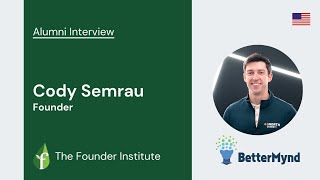
In this Founder Institute interview, Virginia speaks with Cody Simrau, founder and CEO of BetterMind, an online mental‑health platform tailored for college students. Cody explains how his own experience with anxiety and depression in college sparked the creation of BetterMind three years ago. The service partners directly with universities to provide live video therapy sessions, offering counselors fluent in English, French, Mandarin, and Spanish to address cultural nuances, especially for international students. He discusses the broader U.S. mental‑health landscape, noting growing awareness but persistent gaps in access, and highlights how COVID‑19 amplified demand, prompting more colleges to seek remote counseling solutions. BetterMind has registered over 10,000 students in three years, employing school‑specific marketing campaigns (email blasts, timing around exams) to drive awareness. Cody shares the challenges of introducing online therapy, gaining college buy‑in, and scaling a startup, and offers advice to impact‑focused founders about staying mission‑driven during tough times. Looking ahead, he envisions expanding the platform, enhancing technology, and continuing to support the post‑COVID “new normal” in higher education. The interview closes with a message encouraging anyone struggling with mental health to seek help, emphasizing that they are not alone.
Chapters
Hi, my name is Virginia. I'm here on the marketing team at Founder Institute. We're in May, which is the month of mental health awareness, so we thought it would be the perfect opportunity to get an update on one of our graduates. His name is Cody Simrau. He is the founder and CEO of the startup BetterMind, which provides online therapy for college students. So Cody, could you tell us a little bit about BetterMind?
Yeah, absolutely. Well, thank you for having me, and I'd love to talk about, you know, BetterMind. BetterMind, as you mentioned, is a company I founded which is an online digital mental health platform specifically for college students. So we really help, you know, in partnering directly with colleges to address really the growing mental health needs of their students, you know, right there on campus and now, you know, working, you know, remotely. So, you know, we actually partner directly with colleges to give their students access to our counselors, which they then can have live video therapy sessions with.
Wow. And when did this— when did you start this?
So I started BetterMind about 3 years ago now, and this was a little bit after I had graduated from college and was doing kind of a corporate job and, you know, really decided I wanted to do something I was more passionate about. So, you know, for me, mental health is, is a personal you know, a personal passion of mine, very much because of the own mental health issues I started going through when I was a college student. So I went to, you know, a small school in central New York, and, you know, while I was there, I started, for reasons, you know, I couldn't understand at the time, going through my own issues with anxiety and depression. And it took me a long time to, you know, work up the personal courage to ask for help and to walk into this building everybody on campus knew as the Counseling Center, but eventually, you know, I snuck my way in there and was fortunate to be able to receive, you know, the help I needed. But I think going through that personal journey, you know, made me realize not only how hard is it for college students to have a mental illness, but, you know, how hard it can be to actually, you know, reach out for help. Yeah, so overcoming, you know, some of the, um, you know, the stigma that surrounds mental health is, I think, you know, really important in just making, um, it as easy as possible for, for students to reach out and access, you know, the help they need.
And could you give us on a broader scale kind of a synopsis of what mental health is like specifically in the United States?
Yeah, absolutely. I mean, um, you know, mental health is something that, um, you know, I think is, is, uh been a bigger part of, you know, our national conversation in the past year or two. And I think, you know, there's a lot of organizations that have really helped, you know, break down the stigma surrounding mental health. And through, you know, this pandemic right now, you see a lot more commercials and people talking about how we're all really, you know, fighting our own personal mental health battles right now. And everyone's kind of in this together. So, you know, I think, you know, there's so much being done on, you know, the mental health awareness side. And I think, you know, it's of course equally important for us to make sure that, you know, people actually have access to, you know, the help and resources they need. And I think that has been where, you know, we've really been lacking as a country in the past is getting those people to You know, getting those people to the help they need, talking about it openly, and, you know, just making mental health much more of a— something that, you know, we're comfortable talking about.
Yeah, and that's a perfect segue into my next question. So something I love about BetterMind is that you— these sessions are offered in 4 different languages. So BetterMind offers sessions in French, Mandarin, Spanish, and English. How does mental health differ between cultures?
Yeah, I mean, I think there's definitely some pretty significant differences between cultures when it comes to mental health. And I think the nice thing about having online providers like we do who are familiar with various languages and cultures Because, you know, culture has so much impact on, you know, how an individual looks at mental health. And, you know, on a college basis, you know, we work with a lot of international students who come from countries all around the world. And to have someone they can connect with who truly understands, you know, you know, the culture they're coming from, the sort of pressures and stress and, you know, types of family relationships, all those things that you know, maybe affecting their personal mental health. So working with someone who obviously speaks the same language as you is important, but, um, you know, equally as important as having someone who actually understands, you know, that culture that you're, you're coming from.
Yeah. I bet that's especially the case for the international students, like you mentioned. Going through Building Better Mind, what challenges have you faced?
Um, man, all sorts of challenges, you know, building any startup, you know, it never, there's always, you know, another hurdle hurdle to get over, but I think when we started this, you know, online therapy was really kind of a new concept then. I think, you know, online healthcare is still, as an industry overall, still kind of new to people, but I think for us, you know, getting people to embrace, you know, online therapy is something that is not only effective but helps make resources more accessible. Getting colleges to buy into that, that this is something that students are really starting to want more of.
Yeah, mental health is 24/7, not just 9 to 5.
Exactly, exactly.
And how has COVID impacted BetterMind in these past 2 or 3 months?
Yeah, I would say on a lot of fronts, it's definitely made us a lot busier, as you as you can imagine, there's— we've had a lot more colleges, you know, reaching out to us as well as, you know, students looking for help. So, you know, as I mentioned, we partner directly with colleges to make the service available to their students. And with so many colleges right now having transitioned, you know, online for the rest of this semester and looking, you know, potentially even into the fall, You know, if students aren't on campus, you know, what sort of resources are we going to be able to provide them? And I think, you know, mental health is a big part of that. You know, the counseling centers on campus are, you know, starting to transition to online therapy to try to bridge that gap. And I think, you know, we've been able to help a lot of schools, you know, to help their counseling centers transition, doing more digital therapy, as well as, you know, helping, helping support them with additional resources in our network of counselors. As more and more students are feeling, you know, a lot of anxiety and depression and, you know, really just uncertainty around a lot of, a lot of things right now, which, you know, is relatable for many of us, but I think for college students, especially with their campuses all being shut down and not having that kind of in-person experience, is something that a lot of students are struggling with right now, and loneliness, which is something I think is a challenge when we're being told we can't socialize with people. We're all learning to cope and I think mental health across the board with college students, adults, adolescents is a big part of the conversation right now and I think rightfully so.
Yeah, especially this is extremely relevant, especially for the colleges that have decided to go completely virtual for this upcoming fall semester. So it's great that you're able to help not just the students but also help the colleges transition through this time. Moving on, how about how many students have registered for this in the past 3 years?
So in the past 3 years, we've had a little over about 10,000 students who have registered on our platform to date. So, you know, we've seen a lot of interest from, from students so far, and, you know, it's something that's growing pretty rapidly, especially as students become more familiar with, with online therapy and Counselors as well, there's a lot more, I think there's a lot more openness to online therapy from a lot of people. And for us, we continue to help schools kind of be innovative and on that front edge and providing their students with the services that they really want in today's day and age.
And for the students, how do they find out about it? Is it often through referrals from other friends or through their school counseling centers?
Yeah, so, you know, kind of all of the above. We work with each school to develop a marketing plan with them to really, you know, make their students aware of it. So we do things like email blasts to the student body, you know, especially during, you know, those peak stress times around, you know, midterms and finals and Making students aware that this is something that they can access in addition to their on-campus counseling services and in a more secure and confidential way, if that's something that they need or they want to work with a counselor from a similar background or who specializes in a particular issue. So we, you know, we recruit all types of counselors to meet the needs of, you know, diverse student body. So, you know, we try to particularly focus on, you know, the college space and the types of issues that college students are dealing with.
Yeah, and I love that you come up with a different plan for every school because regionally I'm sure it changes depending on the size of the school, the needs may change, so That's really great that you're doing as much as you can to put students at the front and give them exactly what they need. And on a slightly different note, what advice would you give to other aspiring impact founders who want to do this kind of work?
Yeah, I know, um, you know, for me, and I think a lot of founders will tell you that, um, you know, the things you have to, to do to kind of build a startup and really get get a company off the ground and running is a lot more work than, a lot more challenging than I would have ever anticipated. But I think for me, building a company around a personal mission that I really feel strong about has meant all that much when you're in those tough times when you're hearing no from, you know, customers, investors, whatever it is, because that's just, you know, what every startup founder is going to, you know, go through at first. So, you know, for social entrepreneurs who really want to make an impact, feel strongly about something, you know, having that to lean back on in those tough times, I think for me has made all the difference. And, you know, I would encourage, you know, folks who are thinking about it to really You know, build a company that, you know, they're going to be passionate about because it will be a long, long, tough journey.
So do what you like, definitely. And moving more forward-looking into the future, what does the phrase beyond COVID mean to you? And for you and for BetterMind as well?
Yeah, yeah, that's a great question. I mean, I think like so many of us, it's, you know, when is COVID over? Is it ever over? And, you know, I think, you know, just looking into the next couple of months is, you know, challenging for a lot of us right now to even know, you know, where we'll be then. So, but I think, you know, it's definitely, despite all the challenges we're going through, I think, you know, at the end of the day, we can come through it stronger. And, You know, like so many things, we have to go through, you know, the tough times to, you know, to come out stronger. And I think there's a lot of opportunity for us to do that, you know, as, you know, a kind of global society that we are today. And, you know, I think mental health, for instance, you know, being a real kind of front and center of conversation right now. You know, is one of the positive things that's coming out of this. And I think, you know, the more we can focus on the positive, I think the better we will all be at the end of this.
Yeah, great answer. And I'd say maybe in the next year or so, what are you looking to accomplish with BetterMind?
Yeah, I mean, we're absolutely looking to continue to expand and to, you know, provide more accessible, you know, mental health services to even more students. So, you know, for us it's going to be a lot about, you know, building that, building out kind of, you know, a technology that continues to meet the needs of students and colleges, particularly as we kind of come to terms with this new normal and with a lot of students being online now. So You know, I think there's going to be a lot of change, you know, in higher education, and I think, you know, we want to help, help schools, you know, to move forward and, you know, to come out better as, as a part of this. Yeah.
And final question, is there anything else that you'd like to add or tell our viewers today?
Um, you know, I think, you know, the only thing I would wrap up with is, you know, definitely just that we're all, you know, in this together. And, you know, for everyone that's struggling with their mental health right now, that it's okay not to be okay. And, you know, these are really trying times for everyone. So I think, you know, for people who need to reach out for help, there is, you know, there's help out there. And, you know, I think, you know, just to know that there's other people out there going through the same thing with you You know, it's something to, you know, to make some of us feel not, you know, as alone.
Yeah, well, thank you so much for your time, Cody. I really hope that this interview will be able to help other college students out there as they go through these times. If you're interested in learning more about BetterMind, you can go to bettermind.com. It's mind, M-Y-N-D, so bettermind.com. If you'd like to learn more about the Founder Institute, you can go to fi.co. And if you want to watch or join upcoming startup webinars. We have another one on mental health, on mental health next Tuesday on May 19th. You can look at, find that at onlinestartupevents.com. So again, thank you, Cody, and have a great rest of your day.