Clusiv Founder Lukas Simianer, on Vocational eLearning for the Blind & Partially Sighted
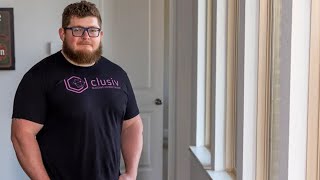
In this Founder Institute livestream, community manager Dustin Betz interviews Lukas (Luke) Simianer, veteran, Purple Heart recipient, and founder/CEO of Clusive, the world’s first e‑learning platform built for and by blind and low‑vision people. Luke shares his personal backstory—growing up with severe dyslexia, serving as a paratrooper, working blue‑collar jobs, earning a nursing degree, and entering software engineering after a pivotal moment fixing an ADA lawsuit for an insurance company with his blind stepfather. That experience revealed that lack of training, not capability, drives the 76% unemployment rate and low salaries ($17‑$27k) among blind Americans. Clusive’s business model sells a vocational‑rehabilitation training platform directly to state agencies, offering courses on professional skills and fundamentals of computer science, teaching blind users how to use mainstream tools (email, cloud storage, Office apps) via screen readers. The sales approach, dubbed the “pincer attack,” targets agency directors (top) and end‑users (bottom) while leveraging counselors (middle). Community is a core asset—about 70% of staff are blind/low‑vision, fostering credibility and network effects. The user journey involves counselor enrollment, email invitation, screen‑reader‑compatible login, and guided training leading to remote interview readiness and job placement, with Clusive also building employer pipelines. Luke discusses challenges: overcoming investor skepticism about selling to government, shifting from in‑person training dominance, and the need to demonstrate data‑driven outcomes rather than virtue. He outlines future vision: scaling to all 50 states by 2023, creating a market with competitors, and ultimately producing blind CTOs/CEOs, while positioning assistive tech as a lucrative venture‑capital space. He offers founder advice—expect extreme difficulty, treat entrepreneurship as a spiritual journey, focus on impact metrics, and hire blind testers or use vocational‑rehab work‑experience programs for accessibility QA. The interview concludes with a call for awareness and community advocacy.
Chapters
Welcome, uh, everybody to this Founder Institute livestream. My name is Dustin Betz. I'm a community manager at the Founder Institute, and I'm here today with Luke Siminer. Uh, he's the founder and CEO of Klusive, which is a portfolio company of the Veteran Fund and the world's first e-learning platform built for and by blind and partially sighted people. Luke Siminer, thanks so much for joining us today.
Thank you for having me, Dustin, and thank you Veteran Fund and Founders Institute for supporting Klusive.
Yeah, so before we dive into your company Klusive, I'd like to start up at the beginning by asking you first a little bit about yourself as a founder. I know you are a military veteran. Thank you for your service and that that experience, you know, some influence at the very beginning of your professional journey, but would you please give us a little bit more about yourself and the roots of your own startup story? What were the experiences of yours that led you toward founding the company Clusive?
Definitely, definitely. And thank you. Yes, I'm a Purple Heart recipient, a former paratrooper in the 82nd Airborne Division. And yeah, I enjoyed my time in the military there. The founding story though, it really started when I was young. At the age of 7, I was diagnosed with severe dyslexia. And I was, you know, born to a single mom in abject poverty. And so we didn't really have access to resources in the school system at that point in time, treated dyslexia as a form of mental retardation. So they threw me in a trailer back by the school in a special needs class. And that was essentially, you know, that summarized my K through 12 experience, right? It didn't really go up from there. There. I was convinced I was dumb. And, you know, then I went to sign up and volunteered to jump out of airplanes, you know, so I kind of proved that to myself to some degree there too. But I went on and, you know, after getting wounded in Afghanistan and getting out of the military, I worked a litany of blue-collar jobs, everything from being a cable guy to concrete truck driver to delivering diesel fuel. And eventually, I finally wound up getting my bachelor's degree in nursing. Which was quite a leap, right? But I started with college. I realized, oh, I'm not dumb. I just had never, you know, figured out my own learning style. And long story here, fast forward a little bit, you know, I graduated nursing school, didn't end up liking working as a nurse, right? Loved the school, loved the education and the challenge, but the lifestyle was not one that I wanted to keep living. So I got into software engineering kind of by the flip of a coin. And I promise I'm going somewhere with the back half of those details. But my first software engineering job was at an insurance company, a big one. And they got sued for Title III litigation or ADA non-compliance of their digital assets, and they were going to pay a consulting firm half a million dollars. It was going to take, you know, more than 3 months to fix, and they wouldn't have met the time to cure or prove traction on this lawsuit to mitigate it. So I suggested to them, I said, what if we contract my stepdad, who happens to be blind himself, and I'll sit him next to me. When he finds a break in the app, I'll implement a fix in the code. They gave me the shot, and in 7 working days, we mitigated this lawsuit, you know, saved the company literally millions of dollars in litigation fees, reputational costs, you name it. And so while I got a raise and a promotion, I was on cloud nine. My stepdad was very downtrodden and depressed. And, you know, I asked him, I said, man, what's wrong? You know, you just got paid out. I negotiated a pretty handsome salary. It was 7 days of work. It's a great thing. And, you know, my mom had married him later in my life when I was already out of the house, out of the Army. So I didn't know him too well, but he tells me, he says, Luke, for the first time in my life, I feel intellectually valued and it sucks because it's never gonna happen again. And that hit me like a ton of bricks 'cause I realized, you know, coming from, you know, the school systems telling me I couldn't do things repeatedly in my life to thinking I was dumb to bit by bit taking steps upward in life, making more money, getting a degree, so on and so forth. All I was ever pursuing was being intellectually valued too. And I dug deeper into the problem and I realized that, you know, 76% of blind Americans are unemployed and the average salary of a blind American is between $17,000 and $27,000 a year. And when I ask myself why, I've proven that it's not a capabilities issue, right? This guy just, you know, with no former experience, helped a company mitigate a multimillion-dollar lawsuit.
Right.
You know, and the answer was a lack of training. And so that became my next mission in life.
Yeah, thanks so much for sharing that, that whole backstory. I think it does add a lot of context to what you're currently doing at Klusive. And so that's where I want to kind of take this conversation next. I mean, I'm somewhat familiar with Klusive already that you're engineering a future of work that's more accessible to all. And specifically this is for individuals with visual impairments as a resource for vocational rehabilitation and training hub for those individuals. But give us kind of your version of the short pitch for those who are not familiar, you know, coming to this conversation. What is Clusive?
Clusive's a pretty unique business model, right? We sell into state agencies, which scares a lot of investors, right? They're like, oh my goodness, you're selling to the government? That sounds horrible. The honest truth is it's not. Bureaucracy only exists if they want it to. That's another story, another part of the story at least. We sell this learning platform into state agencies. The content provided on it right now, we call it the Professional Skills Course and Fundamentals of Computer Science Course, but the Professional Skills Course is primarily what's in demand. And all the digital meeting platforms, email platforms, cloud storage, you know, the tertiary things that come with Google Drive or Microsoft Office, right, like PowerPoints and Slides and Excel and Sheets and so forth. Those are things that as sighted people we all take for granted, but if you're blind or visually impaired, no one has ever made training on how to use these, much less, you know, even in the case of Excel, extract information from it and, you know, be able to complete your job. So that being said, we get the blind or low-vision individuals that are working in the— or being trained by the vocational rehab agencies up to a place where they can, you know, engage in a remote interview, get a meaningful job, potentially even a remote job. And then we also, on the back end, we're working with employers to build up employment pipelines. Employers, you know, there's a labor shortage, right? We've got record low unemployment, but also record low labor workforce participation. Meanwhile, we have 7.6 million blind and low vision Americans, all of whom want meaningful jobs, right? And so we work to become a conduit between the employers that need people and these awesome folks seeking training and meaningful jobs.
Awesome. Yeah, yeah. So we're going to kind of dive into each facet of this is sort of functioning, I guess, as a marketplace, you know, through, through your platform and the opportunities. But so I want to kind of talk about both sides of it and frame it in sort of the problem-solution framework. And yeah, as you sort of mentioned, I mean, most sighted people, I think they at least think they can imagine what it might be like to be blind or partially sighted, the physical reality of what that might be. But I think they're really often just thinking about the first-order challenges of a visual disability and that, you know, in reality, those realities are probably quite different and deeper than they might first imagine, particularly like the second-order challenges, as you mentioned, socially, you know, being able to engage intellectually and, or the opportunities not to do that. And so to make it kind of, I guess, clearer for everybody who's listening, you know, kind of describe for us, yeah, that I guess you have, but if you want to add on to it, you know, that the full scope of the problems that you're trying to solve for at Clusive through the platform, like the extent of these vocational challenges that are commonly faced, and then maybe to address the other side of the platform, the— we can get to that later, but, you know, the challenges as far as providing these solutions to the vocational rehabilitation organizations as well. So if you kind of like dive deeper there, or do you want to describe kind of more of those deep challenges?
Yeah, definitely. You know, I think some of the The biggest challenge, right, is at first we had to overcome perceptions both from investors and even the parts of the community of vocational rehab themselves, right? This is something that historically has never been done. 99% of dollars, voc rehab dollars, have historically been spent on in-person training. But that in-person training has, of course, produced the abysmal results that I mentioned earlier. 76% unemployment, average salaries between $17,000 and $27,000, right? So nothing to really cheer about by any stretch. You know, the emotional case, what we found too is when you have an impactful business, you can't sell on virtue. You just can't. You know, yes, we are doing a good thing, but you know, you can't sell virtue to a VC. You can't sell virtue to enterprise. You have to sell numbers and data and solutions. And that was a big lesson that I had to learn is I could put as much heart into this as I want, and it can be a heartfelt company, but that's not how you position it. And further going into that, I think an interesting business challenge that a lot of people would or should find interesting, I'd hope, is, you know, there's parallels between what we're doing and what, you know, other people who break in and create markets are going to be doing, right? We're the first people to be doing this. And with that, one of the unique challenges is, as I said, all dollars went to in-person training. Well, we now don't pattern match, right? We're not another provider. To these state agencies. And furthermore, every other provider uses a distributor. We're the only company that's going in shaking the hands of these directors in all 50 states. And sure, it might take us longer, but when you start talking about, you know, value of the company, when you talk about an exit, an acquisition, or just what you're doing, you own those relationships and we own the relationships with every state that we sell into. And eventually all 50 states in America and a few other countries. And that was, you know, it's been really interesting to navigate and kind of de-risk yourself to people that are kind of tech-averse, definitely new-thing-averse, right? And that's, that being said, it's been really fun though.
Yeah, yeah, I want to kind of dive more into the solution, like, you know, why Clusive, but I think like to describe that the sales cycle, you know, I guess selling to those agencies is another thing, but kind of describe how the platform works for people with visual impairments who want to connect with these vocational organizations. What is that process like to, uh, to find them, to get onboarded onto the platform and, uh, you know, learn these skills through the professional services, I think, program you mentioned, and, and then, you know, go through and connect with those, um, vocational providers? Can you kind of describe that full user journey on the, on that user side?
Yeah, I think it all plays into kind of the sales cycle part of that where you know, we call it the pincer attack, right? We got some military references here. We start at the top and the bottom and even in the middle as well. And what I would say is at the top being the director level of a state agency, the bottom being the students themselves, potential students requesting us from that agency, right? And then in the middle we have the counselors who actually, you know, administer and enroll people into our training, which is how we make money. You know, we cold outbound to the top, we drive our community at the bottom. And we found that, you know, community is the biggest, the biggest piece for us, and it's an incredibly hard community to reach unless you are a part of it. That being said, Clusive is roughly 70% blind and low vision employees, so the community is very alive within us, and we're welcomed quite warmly amongst it. But those sales cycles, you know, really there hasn't been some crazy amount of bureaucracy. It's, you know, we demonstrate huge value to the leadership of these agencies because we give them more situational awareness than they've ever had, right? Right now, the software they use is very poor. They oftentimes use an Excel spreadsheet to track interactions, not a CRM, because it's too painful. And we mitigate that, we solve that. On the other side of things, you know, the user experience for the individual, right? They hear about Clusive, they request this from their counselor, Upon doing that, we engage with that counselor. If it's a state we're active in, it's as easy as the counselor literally just enrolling them. If it's a state we're not active in, we talk to the counselor, show value, and they tend to bring it up the food chain. That's how we close a deal. Once the student is enrolled, the counselor just enrolls them, the student receives an email, and they log in. Blind and low vision individuals use either screen magnification or a screen reader. JAWS is the most prevalent brand of which in America, But essentially they need to know very little of that and they need to have just keyboard familiarization, which is the point where most of this market sits in the voc rehab space. From there, they go through the training. We help engage and get them into their employment goals and kind of augment the state's firepower in achieving those employment goals.
Yeah, that makes a lot of sense. It's awesome. I really liked how you described that user journey. I mean, it's still like very kind of a bit complex for me to kind of wrap my head around each side of it, but it definitely makes more sense and I particularly, yeah, I really liked the aspect that you said about community. It sounds like, you know, you're sort of unlocking some network effects as you grow by virtue of just having a sort of marketplace, again, a platform that has those kind of virtuous cycles. And also, as you mentioned, like your team being really rooted in this community and that brings a lot of kind of credential, you know, being viewed positively in the community as well. So Yeah, super, super interesting. Are there other kind of features that we haven't talked about yet or anything else that you want to highlight about the platform or the experience of kind of going through Clucid itself?
Yeah, I think I've broken myself of talking about features to all the other founders out there. Don't talk about features. Don't, just don't do it. Sometimes they're cool, but only to you. Talk about a great— and this is a great founder lesson. Maybe this is helpful value add here. When we first started implementing this in states, we would talk about the cool features because there's a lot of them, a lot of utility here. The feedback we got down the road, it took us a few months to get this, was you should really just tell us that it trains our clients on how to use Word. I'm like, but it does so much more. I'm like, yeah, sure, but it teaches them how to do Word. We're like, yeah, okay, cool, thanks. They're enrolled. All right, okay. So, you know, a poignant lesson there, um, in the founder evolution of Clusive. But, um, no, I think, you know, our biggest battle is awareness. If you know a state representative, a government official, someone in voc rehab, someone in training, anyone anywhere, family or friends, um, tell them about Clusive. Awareness is the biggest game. And the, the parallel that I like to draw, right, is if the wheelchair ramp was invented yesterday, we wouldn't wait 5 years to implement it, would we? This is the equivalent of the wheelchair ramp for the blind and low vision community. We get people into the modern workforce where they never could have prior. And so thank you for helping us raise that awareness, Dustin and Founders Institute.
Yeah, absolutely. And so the next question I want to ask you is one that I like to ask founders. It's sometimes, I guess, a tricky question, but to kind of go out on a limb and make a prediction for us. So what is your sort of vision for, you know, where Clusive and, you know, where you sit in this overall space is How will tech and, you know, creating these kind of digital communities and ultimately improve how people with visual impairments, you know, can achieve greater vocational access, say, over the course of the next 10 years? So if you grow the company 10 years from now, what's your sort of vision for how the world is a different or a better place?
Definitely. You know, I said this on our recent podcast, but my true belief is that every time we have a a generational change or a giant change in societal perceptions, understanding, and actions, it takes a generation of warriors, right? We talk about civil rights, women's rights, you name it as we go forth, right? It's going to take a generation of blind warriors that kind of carve out the path through awkwardness, through, you know, people who are judgmental or doubtful in the workplace. And it's inherently going to happen, and it's going to take a generation of folks that are willing to fight for it. The impact that we will have is that, you know, in 3 years we'll have people that have graduated Clusive that have become leaders. In 5 years, there'll be competitors to Clusive, and it'll be a thriving capitalist moment where we have people fighting over market share to provide the best training to people who are differently abled, and that's the coolest thing. And in 10 years, you know, we will have not just 1 or 2, but many blind CTOs, CEOs, COOs, leaders, speakers, mentors. And that ultimately is the impact we're going to make. And the backside of that as well is that when we succeed, venture capital will start to look at assistive technology as a green market, an open market where they can make plenty of returns and drive innovation for the people who need it most in this country.
That's an awesome founder vision, I feel like. So yeah, thanks for kind of painting that forward into the future for us because yeah, I think that is definitely a better world that everybody should shoot for. And yeah, as we said, if you know that representative, that person, those community effects do come back. And so tell them about Clusive, website clusive.io, and they can go and check it out and talk to those folks about it. There's a couple of questions on LinkedIn about the topic of community that we were just speaking about. Cindy saying, I guess, agreeing community is a great growth hack strategy. And somebody else saying, you know, that it's still very hard to grow community. You know, it is a good growth hack, but it's sometimes a hard nut to crack. So yeah, good feedback from the live audience. Thanks, Cindy, and those on LinkedIn. My next question for you, Luke, is you sort of gave a really great piece of advice earlier, I think, about sort of having an impact company and an impact— basically communicating impacted numbers. Right, breaking it down to metrics like investors are more used to hearing. But, um, so I thought that was great advice. But what other advice would you offer, particularly for a very early stage or aspiring entrepreneur who's, um, just getting started? Is there a one particular piece of wisdom that you would impart on somebody who's very early on their startup journey?
Yeah, um, understand that it's going to be the hardest thing you ever do. And then when you look back on it, you'll laugh because you'll think that was kind of nothing. And that happens in a phase-by-phase basis. Every time you level up, you look back on it and you're like, that's, man, the challenges now are so much bigger. The other thing I would say is embrace the fact that being a good founder is a spiritual journey. And that's not a religious statement. It's a, you're gonna have to dig really, really deep regardless of what you believe or don't believe in. To do something that matters to you. I'm not talking about if you're building the next productivity app out there, not hating on you if you are, but if you're building something that matters, um, very often it's going to be hard for you to cultivate, uh, typical investors. It's going to be hard for you to pattern match with what those VCs are looking for, um, and you're going to have to work 10 times harder. But I believe that there's kind of these Newtonian laws of life and business, of course, and this isn't a unique Luke thought, but One of the Newtonian laws that I coined in my journal is that we were in the early stages fighting tooth and nail just to get it, get an ounce of cash and air to build something, um, was that the more important and impactful something is, the more effort it will take to get it off the ground. Um, I think that that is something that stays incredibly true. So know that it'll be hard, but it's worth it.
Yeah, I think that's good advice for, for any entrepreneur, but particularly, like you said, somebody who's kind of building a new market segment or or something. But this, this follow-up question Cindy just asked in the comments, I want to put it on screen because it, it seemed related to me. So she's asking, you know, as founders, how can we incorporate more accessible design and governance as we code out our offerings? Do you have any thoughts for Cindy on that? Because of how your platform actually works, as you've said, like when somebody gets onboarded, do you have solutions that you would recommend to Cindy or somebody who wants to just be more inclusive with their own product design?
Yes, most definitely. So the honest truth is there's no way to avoid it. You can follow 508 WCAG, the other accessibility guidelines, but the truth about accessibility is it doesn't equal usability. So you can follow every guideline in the book, and it's the equivalent of having a wheelchair ramp but it happens to be at a 90-degree angle, right? Maybe only Arnold Schwarzenegger is getting up that thing. The truth of usability is we have a wheelchair ramp and it's at a 3% grade You know, now everybody can actually use this. That being said, how do you do this? What's the tactical advice? There's two ways. If you're venture-backed, you have money and you're building out something very big, you've got an engineering team perhaps, hire a blind or low vision person, right? You can hire someone, you can call me. I have a list of people that I can set you up with for an interview. If you are bootstrapped early on, you know, you're kind of coding something yourself, scraping it together, uh, call your local vocational rehab agency. They have what they call work experience, right? Um, you can get a blind or low vision individual to put your code in front of, right? And there's things that you'll want to ask them, right? But the state will pay— and this is a hack for everybody— the state will pay these individuals for their work experience. They won't pay them super well, but they pay them, uh, while they work for you for a few weeks, and they'll QA your stuff. And meaning, and likewise, you're doing a societal good because you, you know, in that time provide mentorship. Don't just work them, provide mentorship, you know, get them experienced in a startup in a tech field and perhaps you've got someone you want to hire. I can tell you that that is, you know, some of our first hires came through that mechanism and it's something that's not talked about, but you can ensure your app is accessible by getting the end users, you know, feedback on it.
I love that advice because it is, yeah, super tactical and you— I love how you offered, yeah, kind of routes to do that, both if you're venture-backed and if you're early stage. So yeah, if you have further, you know, follow-up questions about that, get in touch with Luke because yeah, it sounds like, as you said, you've got literally lists of people who might be qualified for positions exactly like that. So yeah, that's awesome advice. My final question I have for you, Luke, is just, you know, where is Clusive headed next? Is there any other news or updates that you want to share with the FI community here or any asks for the audience? That you want to kind of reiterate in closing?
Where we're headed next, um, all 50 states. Our goal is to be in all 50 states by the end of '23. We're currently in the implementation process in about 20 or so actively. And, uh, let's see here, ask of the, the people here, the community, the FI community, spread awareness. Please talk about Clusive, bring it up, bring up these stats, you know. Right now in society, blind and low vision individuals, you don't know that there's 7.6 million of them in America because they're all channeled into one workplace per city, right? And they get on a bus, they go to that workplace, and they go home, and they never have the opportunity to grow out of that without Clusive. So spread that awareness. Yeah, not to be a sob story by any stretch, this is exciting and great stuff, but yeah, talk about it. It matters.
Yeah, absolutely. No, these are definitely things that just as you kind of in the opening talked about, you know, your stepfather's experience and how he felt after collaborating with you on that big project that saved the company a lot of money and really feeling like I'm finally, you know, being valued intellectually and then getting feeling very useful, you know, for the work that he's doing. And yeah, these things do matter a lot. So this has been super interesting for me learning more about this. This is an area of challenges in the world that I have not given a lot of thought to in the past. Personally. And so yeah, I find this really interesting about the future of work and these vocational opportunities for the blind and partly sighted population and how your platform is connecting people to those opportunities. So yeah, we're really all looking forward to keeping up with Clusive. As you said, yeah, tell others about it, and I definitely will, but— and where you're headed next on your journey, keeping up with that as well over at the Founder Institute. But Luke Siminer, thank you so much again for joining us today.
Thank you so much, Dustin, Founders Institute, Veteran Institute, the whole team and people who came. So










