December 2021 FI Global Alumni Panel: The Sauce, Ajinomatrix, BetterMeal
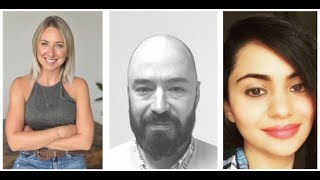
Emma Clarke, François Weinberg, and Swati Nagenja share how Founder Institute reshaped their companies through bold moves like app removals and rebrands. They discuss balancing 30 hours weekly with full-time jobs, leveraging mentors for fundraising, and why execution beats perfectionism.
Chapters
Welcome everybody to today's Global Founder Institute alumni panel. My name is Dustin Betz. I'm a community manager at the Founder Institute. In that role, I sort of act as a liaison between FI HQ's grad success team, which works with all of our alumni, and then our HQ marketing team to help share our alumni stories from across the FI global network. For those of you who don't know Founder Institute, we are the world's largest pre-seed startup accelerator. We've now helped launch more than 5,000 companies across more than 200 cities. And if you're interested in learning more about Founder Institute, we are currently enrolling for programs on all 6 continents, and you can see that list of enrolling FI programs at fi.co/enrolling. With me today as my co-host is our global EIR, Martín Martínez. How are you doing, Martín?
Oh, doing all right, Dustin. How you doing today, my man?
Great.
Fantastic. Well, thank you all for joining us again, as Dustin so kindly introduced me. My name is Martin Martinez. You can call me Martín. It's easier to say. Tell us where y'all are coming from. I see Stockholm, Sweden. I see Wisconsin, Minneapolis, LA, Costa Rica, Toronto, Michigan. Y'all are on fire. Welcome, welcome. We are a global organization, and just that chat right now is telling me exactly what I like to see. So keep it coming. This is gonna be a lively, interactive event. As, again, as Dustin mentioned, I serve as the entrepreneur-in-residence for the Founder Institute headquarters based in Palo Alto. I'm coming to you live from Austin, Texas, where it is a little sunny and unseasonably warm, even for Texas standards. So I hope wherever you find us, you're safe and well. And let's get into this amazing panel today. We have 3 incredible founders from all around the world. They're gonna share a little bit about their journey with the Founder Institute. And well, let's talk a little bit about what, what to expect. So we're going to get to know each of these 3 founders. They're going to tell you a little about what they do, where they're coming from, what they're working on. And then we're going to have Dustin and me going to go back and forth asking them some questions about that experience. What was it like? What was the challenges? What are they working on now? And how has it improved their journey as a founder building an enduring company? And then of course, we're going to kick it back to you. You have questions, Many of you have attended events like these. Maybe some of you have interacted with myself or Dustin on the Airmeet events that we host. And so we want to hear from you. You might be joining an upcoming program for the winter or spring in the coming year. You might still be on the fence. Maybe you don't know if this idea is worth pursuing, or you're not sure if Founder Institute might really be the place to get it off the ground. Well, drop all those questions in the chat. We want to be able to answer as many as possible in the hour that we have together. So that QA tool is your friend. Definitely take advantage of that. We'll try to get to as many questions as possible so that we can give you the best idea of what to expect as you head into the 14-week program that has changed many a person's life around the world. But don't take my word for it. We're going to get to know 3 founders who'll do it just right well for you. So Dustin, who do we have first to introduce?
Yeah, so our first founder is going to be Emma Clarke. She is a graduate of the Founder Institute London program and a co-founder of The Sauce. Yeah, Emma, please give us kind of your brief introduction, your elevator pitch. Who are you and what is The Sauce?
Yeah, well, thanks so much for having me, firstly. So The Sauce is a Gen Z dating app, and we are ridding the online dating world of bias. We're bringing personality into the mix for online dating, and we're doing that with video profiles. And then a little bit of secret sauce at the backend. So our analytics and our algorithm, and it's working really well. We have about 7,500 users, which is pretty cool. We had about 4,000 only 3 weeks ago. So it's growing really quickly at the moment. Yeah.
Fantastic. Thank you, Emma. And so our second founder who I wanna introduce is François Weinberg. He is a graduate of the Foundry Institute Berlin program, and he's the CEO of Agena Matrix. François, please tell us a little bit about Agena Matrix and yourself.
Sure. Hi, I'm joining from next to Brussels. I'm the founder and CEO of aginomatrix.org, and I just graduated also from the Founder Lab. So we are in the middle of a funding round, and aginomatrix.org digitizes the measurements of the sense of taste— sorry, and smell. For the food industry.
Awesome. Thank you, François. And I guess I'll introduce the last founder, our third but not last, third but not least, is Swati Nagenja. She is a graduate of the Founder Institute Silicon Valley program and is the founder and CEO of BetterMeal AI. Swati, welcome. Please tell us about yourself and BetterMeal.
Thank you, Dustin. Hey, everyone. I am the founder of Better Meal AI, and it's a mobile application that provides personalized nutritional recommendations to advanced complex health issues. We are in our beta phase right now, and we are launching like pretty soon by next year. And I have a lot to share about the journey with FI so far and building the company. Thank you.
Perfect. Yeah, thank you, Swati. And so, yeah, as Martine mentioned, I just want to be— yeah, really, really want to encourage everybody in the audience to don't hold back, ask ask your questions. We have two team members who are there like monitoring the chat, Felicia and Elijah, who are going to help bring your questions to us. So don't hold back as we kind of get started. As they come into your head, just drop them into the chat and then we will start asking them. And so I'll kick it off first with— this is kind of a two-part question and we'll go address it. So I guess everybody can answer this sort of in order. So Emma first, but the two-part question is, at what stage were you when you first joined the Founder Institute and what was your biggest reason for why you decided to join the program? So Emma, do you wanna take that one first?
Yeah, so we actually had an app on the App Store when we joined and we were kind of quite far on in our journey. We were two founders, we had a team, we'd already done loads of validation in London. I think we'd spoken to about 5,000 people by that stage, but something just wasn't kicking and we just weren't getting users on and we didn't have the product right, we didn't have the marketing right. There was something just not quite right. And I think what it came down to was neither my co-founder or I had a marketing background originally, and we just couldn't quite figure it out. Something wasn't working. So we looked at accelerators that we could join. We found the Founder Institute. It was the global leader, the biggest one that we could find, um, and we joined. And actually, after that, we ended up through the program, um, you know, in consultation with the mentors, everyone else, we actually took our app down off the app store. And I guess it kind of looked crazy to everyone at the time that we were doing that, taking a massive step backwards. But, you know, I don't think we'd have done that on our own if we hadn't had the advice that we did at the time. And we just completely rebuilt from the ground in a much more structured way, going through all the different steps of the program. And it really worked well for us. So yeah, that's the stage we're at. What was the second part of the question?
The second part was, yeah, what was your biggest reason for—
Oh yeah, okay, yeah, yeah, that's it, that's it.
Yeah, yeah, yeah, perfect. Yeah, super interesting. Like you said, kind of unconventional having taken the app down and then relaunched. So yeah, very interesting. Same question to you, François, next. What stage were you when you joined Foundry Institute, and what was your biggest reason for deciding to join the accelerator?
Yo, so yes, Aginomatrix is a really complex project, so we were studying it for about 20 years. The convergence of AI and sensory science. And I decided after being in Berlin that after meeting the director of the founder institute that it would be the time to join. So it was still at idea stage in terms of how to develop it, but I had previously founded in Israel And why I joined the program, I really felt that it was crystallizing what we were able to do in terms of developing the project further. And I discovered in the process how to integrate the 5 revenue models that we work on today.
Awesome. Yeah, very interesting. So that 20 years prior that you had been working on sensory tech, François, I mean, that was kind of— you kind of come from more of a an academic or technical background and then transitioned into being a founder. Is that right?
Uh, sort of, yes, but I'm an economist by training and by, uh, a diploma. So at the same time, I'm also an industrial collaborator at the AI lab at my university in the Polytechnic Institute. So it's really a hybrid, uh, and Adyenometrics is also a hybrid, uh, organization between a research foundation and the startup. So there are all of these aspects coming together.
Perfect. And final, yeah, same question to you, Swati. What stage were you at when you joined Founder Institute? And yeah, what was your biggest reason for deciding to join?
Sure. I think unlike the other stories, I was really between ideation and prototype. So I had this great idea, and my background is in data science. I was a data scientist. So I used that knowledge to develop algorithms, and I was talking to people to develop an app out of it. But there was not really like good advisors around me who could advise me along the journey. Like, you know, what is the right way? You know, when should I develop the app? Is there anything I should follow? There were a lot of things like coming in between ideation and prototype. Really, is this the thing I want to do? Like, you know, that was another question. So all this kind of pushed me to take that decision to join Founder Institute. A lot of my other friends was talking about that, and I was really happy when I got accepted into the program. Really, it's a lot of work, to be honest, like 30 weeks per hour. It's not like a single hour you're wasting. You're actually learning through the process. And I learned a lot about my own self along the my journey with Founder Institute as well. Like, what are my positives? What am I good at actually? What do I lack in? So I could really apply that while building the company so that I was not making those common mistakes. Yeah, and the mentors were available like pretty much all the time. I think I was the one person who had a question like in every session we were meeting and they were up for everything, like literally everything. I think even the name-wise, I had named it like something else, like something like Shop Natural or something. The mentors were the ones like who pushed me and they really sat with me and, you know, we came up with this new name. So like literally like from the small thing like naming a company to actually like helping me launch with the beta users, I think Founder Institute has done a lot of handholding, to be honest, but that is what helped me like progress so far.
So yeah, awesome. Yeah, thank you, Swati. Um, the audience questions are starting to pour in right now, so, uh, we are queuing them up and getting them ready. Uh, yeah, but I guess I'll kick it off first and then I'll turn it over to you, Martine, to ask a question. But so this is an audience question from, uh, Devin, and I, I don't know for sure that anybody will be able to speak to this personally, but he asks were any of you working another job, another full-time job during the program? This is sort of a thing that's unique about Founder Institute, like we're pre-seed stage, a lot of founders do come in, you know, having a full-time job and sort of trying out whether they want to, you know, go full-time on their startup. So it sounds like Swati, do you want to take that one? Were you working a full-time job when you joined? Yeah.
Yes, I was working on a full-time job when I joined and worst, it was a travel job too. But yeah, the program is developed in such a way that I could actually like do my day job as well as do the program like pretty comfortably. You know, like I was serious about my company, so I really wanted to put in those 30 hours. It might just like, you know, feel like, okay, it's 30 hours per week and I have this day job as well, but I was pretty serious. I wanted to pursue this whatsoever, so I put in the required time. And in, like I said, in each hour, like I was really like you know, like learning something new about the, you know, about my own company and about building the company and also progressing with that. And I think second part of it is like the day job. I think I would, I was at a stage, this is for me, I was at a stage where I could comfortably put in those 30 hours because I had taken like a lesser load of work at my workplace as well. So it worked out really well. Um, yeah. So, but I, I guess like finally to close it, it was good, comfortable 30 hours anyone can put in, even though if you have like a tougher job where you are like dedicating more than 8 hours or 10 hours per day, still I could put in those 30 hours. So it was like that comfortable.
Yeah.
That is a lot to balance. Um, but yeah, it sounds like you were able to transition. You were at a good place with your full-time job where you were able to like taper off as you started to focus more on your company. So. Yeah, we do tell founders to prepare for, especially when you get into the real, maybe not the first few weeks, but when you get into the center of the program, yeah, more than 20 hours a week is like typical. So yeah, it's no small thing, but it sounds like you did it very well. Emma or François, does that scenario apply to either of you? Were either of you working on anything else when you joined FI? Si, no from Emma.
In my case, no. Me neither. I concentrated fully on the program. I'm an artist, so I produced some content, but the main thing is that I fully concentrated on my project because I wanted to have it fully fledged and out in the nature, and it succeeded.
Yeah, me neither. Full time.
Martine, did you want to go next and ask one of these questions?
I mean, I'm just listening to a lot of things that I've heard many, many of our graduates share post-graduation from the program. And, you know, we, we won't kid you here on this panel, ladies and gentlemen, wherever y'all are coming from, it's a lot of work. Starting a business is one of the hardest things you can possibly do in your life. So thinking that you're just going to come in and get a nice little certificate, a pat on the back, and you know, Elon Musk gonna be your best friend in a month, you gotta really manage those expectations coming into this. And these founders come in on day one knowing that at some point, even if they do have a day job, which the program is designed to allow you to do since we do host these sessions once a week in the evening so that you are able to still provide a living for yourself, but at some point you will take that leap and build the business. So this is where we set you up, and at the very beginning, it's the most critical. So let's talk a little bit about just that community that supported you early on. So I think you, you spoke to it a little bit, right, as on the first question that came in, the mentors. But that is a very critical thing that the Founder Institute provides to founders right at the beginning before you even realize you needed it. So I think you gave a really great example as to just the branding. You came in with a different name, name changes. Best time to change your name is right at the beginning when nobody knows what you're working on yet. So let's kick it over to François for this as well, to kind of piggyback off that answer. Tell us a little bit about at least the Berlin mentor community that you got to work with. Were there any breakthroughs that happened during your journey with FI in the core program that really just gave you an aha moment?
Yes, absolutely. It is called a special assignment and it is because I have— you noticed my difficulty to speak in public. I'm very shy. So I had this problem of not performing well enough for the pitching. And as a consequence, I had a special assignment first in pitching, which helped me a lot. But the second aha moment was especially when I had to redesign the business models. And I presented not 2 like asked, but 5 in total. And we are today running with these as revenue models. We probably have 4 business models or ecosystems, and this is really constructive of how Adyenometrics is running as of today. And it has been validated by VCs. Basically, all of the building blocks that we have constructed with the mentor ecosystem in Berlin is what Adyenometrics is made of today. So the DNA really came partly from from the program.
Fantastic, Francois. Em Clarke, same question to you, my plant partner in crime.
Yeah, um, we, I mean, we've spoken to mentors all over the world with FI, and, um, every time we've had a pivotal decision to make, we've just been able to find an expert in that area. So a branding expert, a machine learning expert, a, you know, data science expert, you know, someone who is like the best of the best. Um, the access 2 mentors grows as you're in the Founder Institute for like longer. And as you, you become more involved, you get access to more people and perhaps senior levels, which is so useful. I remember one meeting that was like a real turning point for us. And someone just drove into us like growth, growth, growth, growth, growth is the only thing you can do. And from that moment, we kind of really changed our mindset. We're being too perfectionist before, and then we just kind of really we really changed. And it was a pivotal— it's a pivotal 15 minutes of my life. Like, it really was. It was amazing. I would say when you first start the program, you're going to get some tough feedback. And, you know, everybody turns up with like, I've got the best idea ever, I'm the best person to do this. And I know you guys are like really experienced in your fields, but the only experience I have in dating is dating. So like, there's no kind of other experience I had to apply there. And, you know, They're questioning you and they're like, who are you to do this? Like, why is your idea the best? Like this, and it's really tough. But that kind of tough criticism and that tough questioning is what makes you really come out with a really good business model that's gonna survive. So I would say embrace it, expect it to be brutal. You can't even reply sometimes when people give you pitch feedback that's really hard. And that is so tough. I remember one guy being like, yeah, I don't think video delivery's just there yet. And I just wanted to be like, TikTok exists, man, come on. And you can't, you just gotta sit in your house hands and you can take it. And it's a real lesson, but it's amazing.
It's so good. Rounding this out, Swathi, you already mentioned the rebranding piece. Anything else that you recall that was really striking through the mentor community that led to some breakthroughs?
I think a lot actually than one single rebranding. Every assignment kind of like taught something new about the company and really pushed to create that company, like, you know, building process. I think I wanted to like talk more about pitch training and pitch decks. This is where, like, you know, I got a lot of feedback and like Emma was talking, the first day you walk into the program, it's like so brutal. There are like 50 different founders in there and there are mentors and there are advisors. The first thing you do, you pitch and it's like, Hands down, thumbs down. The first pitch, no one gets like, you know, good feedback. And it's good. It's really good. I think I work really well with good criticism, and I think that is what like really helped me a lot. It's like, take that feedback, incorporate it, and the second thing you want to do is like discuss with the mentors. Is this the right thing to do? Is this not the right thing to do? And the pitch deck, um, I think the pitch deck training, I've got like many special assignments, not only in the first program, but even in the fundraising program, I've got many special assignments about just the pitch deck itself. I think from day one, they're like pushing you to pitch well, to have a good pitch deck. And that says something. And I am an introvert too, and it was really hard for me to pitch in front of the investors, in front of people, but it's, I'm so used to it now. It's pretty comfortable. I think the mentors, doors kind of push you to that level where you are very comfortable to even, you know, tell the pitch even in your dream. Like somebody wakes you up, please pitch. You are able to do that. So I think FI is kind of like pushing you to achieve. I think one more part came in where it's just not FI. Even I had to put in a lot of hard work. It's not, you know, they're not doing only handholding. I think even you have to like kind of kind of, you know, like walk with the same pace as FI is pushing, I think that is where like the magic happens. It's, they do like, they do everything for you to excel, but I think it's upon the founders to kind of push themselves, like come back with questions. It's not like I finished the assignments, I have finished pitching today, I'm done, but it's about reaching out to the mentors, reaching out to the, people and they will connect you to the right people. As Emma was saying, I was always going back to my mentors and requesting them for help, and they always used to connect me to the right people who are helping me with either branding, pitch decks, pitching, marketing plans, data science, everything.
So yeah, fantastic. One thing I'm gathering from all these responses, and again, audience, if you have questions, use that QA tool. It is your best friend, the chat chat is going nuts. We can't get to all of them. We might lose— use that QA tool. Again, one thing I'm gathering from all these responses is just that you're able to push yourself a little bit more outside of your comfort zones. Things that you thought more initially were shy about sharing, you're very open. You can wake up in the middle of the night and be able to riddle off that minute pitch that I know all of y'all are so good at, but you weren't necessarily, or you weren't prepared or comfortable putting yourself on a stage Even in this event where we have, you know, upwards of 130 people right now, yeah, asking you all these amazing questions. So one thing that I've seen out of the hundreds of founders that I've met just get through the program from my own experience running our programs in Texas is exactly what Francois had mentioned. You become a phenomenal public speaker. If there's any skill that you build outside of just building the business, you become so confident in what you know and how you're able to articulate it and in front of an audience, whether you have strangers or friendlies or investors, doesn't matter. You're able to really come in with confidence. People understand what you're doing in a very succinct way, regardless of where they're from, what they're there for, and even how you're feeling that day. So it's a lovely thing. It's a lovely thing to see. So let's go to another question. I think I saw somebody in the audience give me something really amazing. About, well, actually, as I look for that, Dustin, I'm going to kick it back.
Yeah, I have one. This dovetails a bit with the mentor question, and these are actually two different questions from Edmund, but I think they're pretty related. So first he asks, you know, how does FI differ, or how does it complement what you might have learned during an MBA program? And then, you know, I know how I would answer that question, but I'll pose it to our panel. Edmund also asks, and I think this is related, How much would the alumni qualify FI in terms of learning or planning versus like executing what needs to be done or what needs to be accomplished in your startup? And my short answer is like, FI is not like a very— we call it a program sometimes. It's not very like pedagogical or like explicitly educational. It's much more get out there and like do practical business building exercises. And that's what all these sprints are about. I want to pose that, I guess, to each of you. How would you kind of rate that? I don't know if anybody has an MBA, but, you know, just like the learning versus the getting out and doing or working on the different components of your business. Anybody want to take that one first?
Yes.
Go on. Go ahead.
Okay. What I would describe the experience like, the Founder Institute is really a practical hands-on program that makes you run and have all of the tasks related to your business project executed. And this is done with a rich environment, with these ecosystems of the mentors, but also the co-founders and the other founders with groups and working groups. And these have proven to me to be a very valuable to compare. For instance, I have been to Y Combinator School of Startups, and I've been rated as one of the 10 best, 10% of the best founders there. But really, the experience is something else because you get to go so deep into your tasking that it makes you simply execute what you are supposed to do. And once you're out of that, you are trained. So it's basically simply continuing in a sense that you are an athlete. I would describe it like that.
Thanks, François. Swati or Emma, do either of you want to speak to that, like the pedagogical versus the practical nuts and bolts balance of FI?
Uh, sure. Um, so every assignment, when somebody is talking about assignments in here, it's about research about the industry you're wanting to build a company. Um, there are like so many. So with each assignment, you're actually executing for your company. It's not like an MBA program where, um, you're actually learning something and then writing up theoretically and then you get graded. It's, uh, it's very different. You're executing with each assignment. Each question question in the assignment, you're executing a task. So that will— that is actually like pushing you to build a company. So you're actually putting in those 30 hours or so in building the company every week. So, um, yeah, so it's like really executional rather than, um, you know, even educational, because you're learning about yourself and your company, the industry, the business, other businesses, competitors, like a whole lot of things much better than you had thought you knew about it. So yeah, Yeah, it's very educational and practical. It's a very super combination that kind of gets you to a stage where after you have done your graduation, you look back and you're like, oh my God, I've progressed so far. I think I'm ready to scale in however way you want with your company. So yeah.
Yeah, I don't have an MBA. I did, um, I did a corporate law postgrad when I was working in law, and then, um, CFA Level 1 when I was working in asset management. And both are quite theoretical, and you basically couldn't apply them at all to the jobs. And, uh, nothing would drag me back to school again, like, just no chance. There's no way I'll be doing an MBA now. Um, this was perfect. It's so practical. Like, we're hiring someone new at the moment, and I'm still using the onboarding documents that I back in our program like a year ago to onboard people now. So it's so useful. It's so useful.
Totally, totally. I think I second Emma in that I'm using each and every assignment work. I have everything saved and it's somehow useful for me.
Me too.
As it should be. So that's— I think I'm going to take one from the audience. This one, again, kind of Elab expounds on some of the conversation we've already had. You're getting a lot of feedback from mentors, you're doing a lot of work, some of it doesn't make a lot of sense in the heat of the moment, but obviously as you start to talk to investors and build the business, you're very grateful you had done this work so you didn't have to do it then. So structure has been really important, but not all of this is going to be fun and games. Sometimes you're going to be challenged, sometimes you will be question, why are you doing this? And in some cases get competing feedback in the same session. So how do you manage that? How do you manage those competing ideas? And in some cases, maybe critical feedback? Because as we have said, building a business is hard, and you are going to be challenged. But that's why you do what you do. So Emma, back to you. How have you been able to handle a lot of that adversity, even from the community, in some cases?
Yeah, I mean, I think the first day we turned up, the mentor, one of the mentors from our program was like, oh, not another dating app, rolled her eyes and was just like, no. But then actually ended up being one of the most supportive, helpful people. Like, it's amazing, you know? And it's just people are going to challenge your business and they are going to like, they are going to put you to the test. It's going to be difficult. You've just got to stay true to yourself. You've got to know your product, know your customer. People aren't fired up by the same stuff that you're fired up by. If you're fired up by your business, you are going to survive and you are going to thrive. Do have an open mind. You know, a lot of people in our program really change their business models a lot in the first few weeks of the program as they went under a bit of testing and a bit of rigor, which worked out really well for them. And actually, the people who adapted are the people that really thrived. So yeah.
François, same question to you.
Yes, in my case, I have to answer in a customized way because I brought my own answer to this issue, especially through the founder lab and the dealing with the investors. They can be sometimes, as you know, very, very tough. And I deal with that with HR through hiring people that are very competent and mostly senior compared to my— I'm 50, but I have people that have more experience than I have in my team. And it's very important because when you get this challenge, I'm kind of playing with my co-founder, Joel Belenson, good cop, bad cop, and it gets the message through in general. Because where I sometimes still lack a bit of business experience in order to be able to convince and to really strike through the idea is that I can guess this, compensate it with my team, and generally it works out completely well.
Awesome. Last but not least, Swati.
So, two things to this. The first one is, I, you know, early on, I was doing a lot of customer interviews. And I've like, you know, I used to notice like the graph of the feedback, that means that, like, is there any pattern in that? Because most of my mentors were, if they're repeating the same thing in my feedback, then there is an issue in there. So one thing about Founder Institute is you can adapt really quickly and you can, you know, like you can basically like mold it to a different thing really quickly. So you have that flexibility in there. So I think it was really helpful for me to do that because when I walked into Founder Institute, I had an idea and of course, like I was in between prototypes, but I've changed my idea like a whole lot, like really a whole lot. So taking that feedback and converting that into something that is really useful for the customers was like so important. And they emphasize on the same thing like all the time. That's exactly why the questions, why this one at this point of time? If we are able to answer the question, I think better like to ourselves, I think, you know, the solution is right there. And again, like, like I said, like flexibility is something which is, you know, like very comfortable during the program because you're already doing a lot of execution through your assignments, through every session of it. So you can, you can discuss, you know, your new idea and then you can change it pretty quickly. So yeah.
Dustin.
Nice. Yeah, I'm seeing a couple of questions that are related to customers, customer development. And so I kind of want to pose a couple of them at once. So Ashton asked, asked, you know, how helpful was the program in terms of finding potential customers, asks if, you know, mentors or their, you know, specific areas of expertise helped in customer development in any way. And Edmund asked a similar question that he said, I understand many companies are at the idea phase, but for those who had a product, I guess, coming in, did anybody recruit, you know, first customers during the program? I feel like I want to turn it over to you first, Emma. I think you talked about customers And certainly talked about coming in with a product and then taking the product off the App Store and pivoting. What was your experience with customer development during the program and if mentors helped in any way with that?
Well, today I don't think we got any mentors on the dating app, which is sad, but you know, we live. But we were really given a lot of advice on how to approach our customers, ways to meet people, I mean, we did a lot of that stuff ourselves. What we had was advice on how to structure it, how to go off and do it ourselves. But actually we did do it ourselves. We got introduced to Prolific, which is like a surveying tool, really cheap, really good online survey tool through one of the mentors. But actually there's nothing quite like just going and speaking to people in person and then no one can really help you with that. So bit of us, bit of them.
Yeah, perfect. Same question to you, François. How was your customer development, I guess, from when you started the program and did mentorship stores play any role in that part for you?
One word: breakthrough. It was amazing, especially the fact that, uh, Adyenomatrix is a B2B operation and we are in the food business where the companies are not easy to contact and then to convince. There's a lot of safety, it's like in the pharma somehow, uh, So there is this aspect of the market studies that are present in the program, and what is so important is that there is the time component, that it's stressing and stressful to get the result in time from one week to the next one, but at the same time the program adapts to the fact that you are B2B or B2C, and the requirements might not get get to be the same. And at the end of the day, you will collect contact information and clients, and it will get you through. And I can give you some figures. We started the program without having basically any customer. We might have 1 or 2 contacts, With the first market studies, we got like maybe 10 or from 10 to 20. And with the special assignment with the business models, I ended the program with about 35 or so. And now after the founder lab, probably we are at 60+. So this was entirely required in order for us to be able to comfortably produce our proof of concepts and MVP, and we are in the process of rolling out the first one. So B2B takes a lot of time, and you have to have some deeper pockets in order to be able to afford that. But when you do, or when you convince the people around you to finance you, to be able to do that, you're safe and it's going to work.
Awesome. Yeah, thanks François. How about you Swati? What was your experience with customer development at the beginning of FI? Did mentors play any role in that early customer development? I know you're like in a closed beta still, so, but what's your experience with that?
Yeah, definitely they did help a lot. So when I walked into the program, I just had an algorithm which is giving these solutions which we are trying to solve. So we did have some friends, family, some immediate friends, like around 250 people using the results from the algorithm. I used to discuss this with the mentors, and they gave me some strategies, uh, really, um, you know, the first thing to start with to enhance the customer development as we build So really early on, you know, like we use the strategies and we were able to like acquire a good amount of beta users. We have around close to 2,000 beta users right now. We've done a lot of clinical trials and they've been through the whole thing. So really like they helped us strategize to build this customer base and our waitlist. So we just hit like 51,000 waitlist, which is like huge because it's like growing every week by 15%, and I think it's all because of the strategies which the mentors provided very early on in the program, and which I implemented right away, which really helped us build that base before the launch.
That's exciting to hear that your, uh, yeah, your waiting list is that big. I didn't know that.
Yeah, yeah, yeah. Thank you.
Awesome. I'm going to take it from here if you don't mind, Dustin. I have a question from a gentleman named Jim. I'm going to modify it a little bit because I think it's a common, common question I get from a lot of people who are applying to the Founder Institute program. I think a few of you also can relate with this. It really starts with the solo founder. So if, you know, if you were starting again on day one with the things that you know and you were a solo founder, what would you tell an applicant about that journey in terms of starting, like should they start if they're just going by themselves? And what should they be thinking of as they start to build their initial team or searching for potential co-founders? Emma, I'm going to start with you.
So I had a co-founder when I started. Of the 13 companies which graduated from my cohort, I think 75 were there on day 1. All of the other 13 were solo founders were on their own and they were okay. They were all amazing people and they managed to smash it out of the park. They're just ninjas, so they were fine and they hired really well quite quickly, had great teams around them. But you can lean on each other in the actual institute for support because you do need a bit of emotional support with the whole process and a bit of like leaning on each other. So you had other founders in the program to lean on and they were just amazing. So they were fine.
So again, like your peers can be very much a strong support network. Swade, how about you?
I reckon that as well. It's very important to be well surrounded because the program is demanding. But about reproducing the experience, I'm still there. I restarted with the food ecosystems in Helsinki. In the growth track. So I'm in the situation again and I had the problem again with pitching. It came back to me probably as strong as before. What I would tell to someone in that situation starting the program is that whenever you're believing enough in your in your idea, you have a unique opportunity to prove it. And it's really worth doing it because basically no one is going to be able to tell you the outcome by asking. You will be finding out by doing, and that's a completely different experience.
All right, to close this question out, Swati.
So I think like Emma was mentioning, the peer help is really important and leaning on other founders early on was really helpful for me. Also, I walked in as a single founder. Truly, and it, it's quite a journey to be a single founder, but like I said, the peers and mentors were so helpful that the journey became very helpful, very educative, rather than, you know, exhausting. I only recently, I got a co-founder on the team. Until then, I was just taking care of everything by myself. So it was a lot, but again, like I learned a lot through the process. And I had mentors to lean on, my peers to lean on if I had any questions or any heartbreaks in between. But yeah, I think one thing I would like to mention is I think it's again up to the founders how they want to build out this. Even when we started, as Emma was saying, even in our batch, we were around 70 startups when we started. But in the end, I think we were like 8 to 10 startups are the only ones which graduated. And just to understand, I was in contact with those startups which couldn't really make it till the end. And one thing they said is they were not that resilient enough to go through the program. So I think it's up to the founders. You have to put in that hard work. You have to dedicate that time and they will do everything to support you, but I think it's upon the founders to put in that amount of time needed to build your company, and that can do all the magic.
Beautiful. I have a follow-up on this. We're heading in, we only have about 13 minutes left before we hit the top of the hour. So we're gonna try and get rapid fire through some of these questions, but question that I get a lot as well involves raising venture capital. When are you ready? I know that's a question all of you in the audience, 115 still strong right now, have. So let's talk a little bit about that. How did the program get you in a position where you were finally comfortable reaching out to investors? And is there any words of advice you might be able to give the audience right now on what they do, what they should do to prepare before they even walk foot in that door? Swathi, let's go right back to you.
Well, to be honest, when I walked into the program, that was on my mind. To raise the capital, but I was not sure, like, if I was really ready for that. But I think, I think mid-program, by mid-program, I felt I was pretty ready with pitch deck, with pitching, with the idea, prototype was already in place, and I had some beta users on me. So we were, we were good with that. But again, like, our mentors said, hold on, stop, you have a lot a lot more to execute. You have a lot more to improve and there is like a lot of scope in there. So we waited till the end of the program and once, you know, the end of the program, we started talking to a lot of investors. I was even part of the Funding Lab program recently and we just raised our pre-seed capital. So I mean, I think that's like a confirmation in there that, you know, like the mentors really helped me and I was ready by the end of the program to already raise. Also, like, I've seen some founders, my peers, who raised in between the program as well because they were that ready and they were like really like ready to take on. And we do talk to a lot of investors along the program. Um, they become— some of them become your mentors, which is the best thing because they are actually helping you, um, and they're like grooming you in front of the other investors. So that's the best thing here. Like, I had a lot of great investor mentors as well. Who were giving me good feedbacks, like time on time, whenever it was needed. And I think that is what, like, helped me, even though I was a single founder, I was really like, you know, comfortable talking to a lot of other investors. And I don't think the other investors had a problem that I was a single founder until recently. So, yeah.
Got it. Perfect. François, how about yourself?
Well, I have a kind of special experience I will share with you because when I ended the program and graduated, I was contacted by a single Saudi investor which in the end proved not to be so serious and after investigating it might have been someone in the boiler room or in London or something like that, someone like that. And basically we were quite annoyed because the offer was great, And basically, I was conscious of it the whole time. But what we did is prepare everything as if, and it was super useful because when I joined the Founder Lab, I was basically ready to raise. I had most of the documentation ready and everything was there to make it a success. So what happened then is that we got through this whole list that you have to go through to contact the right people, probably over 200. And then what happened is that I had this breakthrough meeting with an investor on the second meeting, first starting to deploy everything they were asking for and bringing in my co-founder who actually raised before about $120 million. And what happened then is that I was basically exposed like someone you push the nose, milk was coming out, like really with not so much experience. And we were complementarizing in such a way that we could make it. So I think what's the most important thing is to be ambitious, and try to surround yourself with the ecosystem that there is. We have someone in our board from the Founder Institute who helps us, for instance, with the contracts and these type of aspects. It's really useful and it gets you through with success.
Yeah, we, we took investment about halfway through the program. So we took a— we, I think we had a pretty typical fundraising journey. So we started off like friends and family round, then we went up to equity crowdfunding, then we went up to like bigger angel investors and, you know, then VC meetings, which I think is, is fairly standard. I think it's quite unusual for someone to do their first raise not from someone in their personal network. That's what I'm gathering anyway. We raised about halfway through, yeah, halfway through the programme, the first amount of money with a seed fast. We ended up closing that round off actually about 6 months later when we had to. We took money in a sort of tranche fashion. It's been working quite well for us. So, you know, your first investors get a better deal than your later investors, so on, so on. Were we ready? Probably. I would have liked to have done Funding Lab, which is the follow-on program that you do before we took any investment because it's really useful. But actually the team, the Funding Lab team were really helpful to us. And they took meetings with us like way earlier than they needed to just to help us take that first investment on and make sure we were getting everything correct. You know, before we even graduated, the grad success team looking after us just to help us with that bit to make sure we didn't make any mistakes. 'Cause there are so many mistakes you can make with fundraising. We made a couple. Okay. Yeah, so we made a couple.
That's it.
Yeah.
Yeah, I want to second Emma with this. I think I'm talking to our mentors like every now and then about the terms whenever an investor reaches out to us because there are so many mistakes we can make. I even— we made mistakes, but it's part of the journey. I think the best part of FI, the way it trains you, is you're ready to unlearn and learn faster. So I think that's the best thing.
So yeah.
Yeah, I would add to that, that it's still possible to sometimes make mistake. I'm from Europe, normally you cannot make so many mistakes when it comes to investment here and entrepreneurship. But for having my brother, for instance, start over with several projects, and my other brother in the Silicon Valley with shapescale.com, The thing is that you're still allowed with the program to make some small mistakes and you will be corrected. And it would be a mistake to go head front to investment tackling. And the founder also helps you with that, saying, okay, look, we have this program at the Founder Lab, you should Wait to be ready to apply for it, and then we will see and you will be accepted. And the procedure is so clear and so straightforward, and it's very difficult because you have to commit 30 hours plus in excess of the management of the company, but it's totally worth it.
Amazing.
Awesome. Dustin. We only have a few more minutes left. What else we got?
Yeah, we only have a couple minutes left, so I'm going to move to our kind of final question here to ask each of the founders in turn. And that's the question that we usually wrap up on by asking just, you know, what tips would you give somebody, a founder, in order to be successful in the program? Looking back on it, yeah, just what is your number one piece of advice for somebody who is just getting started enrolling? Emma, do you want to answer that one?
Yeah, glad I got to start. So what do I say? Right, first one, don't be a perfectionist. There is no benefit to that whatsoever. Look, you've got so much stuff to do that's more important than making sure that your answer is structured really nicely. Just get the information down on the page, get it done, do the exercise, get it done. Don't miss a week's work or anything like that. Just don't fall behind. If you fall behind, it's it's so much harder to catch up again. Ask loads of questions, they're there to help you. Don't be offended if people offend you. But I think that's probably all my advice really. Oh yeah, and just keep going. Just hang on with your fingernails.
Like if you think you need to drop out, don't drop out.
You can stay on. Like I think a lot of people dropped out when they didn't necessarily need to.
Yeah.
Because they were just emotionally exhausted and tired, just really knackered. It's not that bad. I'm making it sound worse than it is. It's a bit tiring, but anyway, don't drop out. Hang on with your fingernails. It's totally worth it. That's my advice.
Yeah, good, good advice. Definitely for anybody on, yeah, perseverance and, yeah, just being open with your critical feedback. Yeah, that's great. How about you, François? What advice would you give to somebody just thinking about enrolling into the program or just getting started?
I would say one thing that is very important is try to get ahead and in fact, yes, not getting behind but getting ahead, trying to be at least one week in advance because it really helps you to understand what is the aim of the questions deeply and also to try to be exhaustive, complete in everything you do because then there are no— it's watertight basically and you know you are safe And the next advice that I could say is just believe in yourself. You are doing something great. And when someone comes to you from the Founder Institute or in the nebulae of the program and tell you something that doesn't convince you, like an observation, really think, because those people have so many experiences and are ahead in most areas, that it's worth to take the time to find out and not to be too proud. And that is, I think, for a founder, a great quality that is recognized very much afterwards. It has been told to me. As a consequence, because that was not always like that.
Definitely. That's great advice. Thank you, François. And how about you, Swati? What are your tips for somebody just enrolling into the program or just getting started?
Yeah, sure. So just start off, don't underestimate yourself that you don't have customers or, you know, you don't have a prototype, you don't, you know, you're still working on the idea, whatever it might be, or you might be a single founder, just start off. It's totally fine. I think you will learn learn and execute throughout the program. Second thing, book office hours. Don't take this lightly. This is where all the magic happens, to be honest. Please do book office hours. You know, like, you need that mentorship, and we are all not perfect. We can definitely learn, even though, like, you know, if you're talking for 15 minutes, you can extract a lot from the mentors. I think third thing is don't be stubborn. Like Emma said, don't get offended and don't be stubborn. Be ready to adapt, I think, and also learn from other founders' mistakes as well. So talk to your peers all the time. I think some might be doing really great and you might learn through the process by talking to them. So yeah.
Thank you, Swati. Yeah, I think that's excellent advice for anybody starting the program. Yeah, we just hit the top of the hour. So I guess we're going to wrap here, but I just want to say, you know, thank you again to each of our founder panelists, Emma, François, and Swati, and thank you to everybody who joined us today and asked questions. We hope we were able to answer most of them. And yeah, hope everybody enjoys a great end of the year and stay healthy and stay safe. Thanks, everyone.
Take it easy, y'all.
Thank you.
Thank you.










