East Coast FI Online Demo Day (Sept 5, 2017)
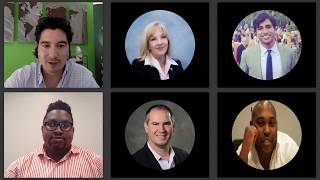
The video records an online demo day hosted by Jonathan Grecian of the Founder Institute, featuring four graduate startups from East Coast chapters. After a brief overview of the Founder Institute’s rigorous, idea‑stage accelerator, each founder delivers a three‑minute pitch followed by live audience questions mediated through chat. 1. Bandwagon (Harold Hughes) – A sports‑tech platform that uses a proprietary blockchain to link tickets to fan identities, enabling teams and brands to capture attendance data, personalize marketing, and increase day‑of‑game revenue. Business model includes a 15% buyer fee, $10 seller fee, and annual licensing fees for B2B data access. Traction: beta launched, $0.5M raised, partnerships with colleges, 382 new users last month, and a $2M Series A target. 2. SpeechMed (Susan Perry) – A multilingual speech‑to‑text and audio solution for hospitals that improves patient comprehension, reduces readmissions, and mitigates malpractice risk. Targets low‑literacy and non‑English‑speaking patients, offers a caretaker app, and integrates with major EHR systems (e.g., Epic). Market potential: $13B TAM for low‑literacy adults, $3M projected revenue in first 12‑18 months, $300k seed raise. 3. T‑Form (Benjamin Moore) – An automated thermoforming packaging company that shortens quoting to <1 day, reduces mold cost by ~50%, and speeds production via a web‑based CAD quoting tool, machine‑learning‑enhanced mold design, and 3D‑printed modular molds. Serves custom low‑volume packaging (≈$1.5 B market), 16% annual growth, 50% QoQ growth, and seeks $1.5 M for plant expansion to reach $5 M recurring revenue. 4. Starable (Ajit Kishore) – A community platform for web‑series creators and fans that connects creators with collaborators, audiences, brands, and networks. Features a recommendation engine, festival partnerships, and a free‑to‑join model monetized through brand and network deals. Metrics: 18 k monthly users, 2.3 k creators, 21% CAGR, targeting $750 M creator‑creator market and $3.5 B creator‑brand market. Raising seed round for 18‑month runway. The host intersperses commentary on the value of virtual demo days, notes that investors have funded companies after watching the stream, and encourages audience participation via chat. Technical glitches (audio, video) are noted, and the session concludes with promises to share recordings and contact information. Overall, the demo day showcases diverse early‑stage ventures leveraging data, AI, blockchain, and community networks to solve industry‑specific problems, each seeking modest seed or Series A funding and demonstrating early traction.
Chapters
Hey everybody, welcome to this East Coast Founder Institute online demo day. My name is Jonathan Grecian. I'm a co-founder here at the Founder Institute, um, broadcasting from our headquarters here in Silicon Valley in Palo Alto, but also being joined by some incredible graduates that we have from our East Coast chapters. So just really quick, just to give you a little preface before we get into the pitches, since I know that's what you are here to see. For those of you that don't know what the Founder Institute is, we are an idea stage accelerator and startup launch program. We work with very talented people right at the beginning of their entrepreneurial process. We hook them up with mentors. We put them very, a very structured program to launch their business. And I think probably the most important thing is that our program is really, really, really hard. And any of the graduates that are on here today can definitely attest to that. Of the people accepted into our program, typically only about 30% and sometimes much lower in any cohort will actually make it through to graduation. So the founders that you're going to be seeing today are founders that have not only gotten through the FI process and that have proven their merit there, but that also have launched now into the marketplace and that have created some traction and be getting some press, and a lot of them have been generating revenue as well. So I guess the last thing that I'll say is that if there are any founders on the webinar that are interested in launching a company themselves as well, We do have a lot of FI programs that are currently enrolling on the East Coast. I believe every city on the East— or every major city on the East Coast probably is enrolling right now. Boston, New York, Philadelphia, Greenville, Washington, D.C., South Florida/Miami, Atlanta, etc. So if you're interested in reading more about that information, you can simply just go to fi.co/espanol. Enrolling. Okay, so let me talk today a little bit about how it's going to work. This is an online Demo Day, and we've been doing this for about the last 6 to 8 months or so. And I was just telling the participants on earlier that in 2 out of the last 3 ones of these that we've done, companies have gotten funded just from investors that watched this Demo Day and then that they made the connection thereafter. And I think if anything, that tells us that really our money is becoming much more mobile. At least I know here in Silicon Valley, there's so many accelerators running these demo days where people get up on a stage and do a pitch and people clap and all that kind of stuff, right? And that's great, but really at the end of the day, if there's somebody who is interested in investing in your space, it doesn't matter where they live. And those are the types of connections that we really try to put together on these demo days. And with that being said, we've collected a bunch of companies here from a wide range of spaces, right? We have a company doing medtech. We have a company that actually is, is, uh, owns a manufacturing plant and is building physical things. We've got a sports company. We got all types of companies here. So hopefully, uh, some of these might be of interest to you. And the way that it'll work is they'll do about a 3-minute pitch with the presentation. If you have questions I'll be asking some questions as well, but really I want questions to come from the audience. And we have somebody on my marketing team will be sorting through the chat and feeding the questions into me to ask the presenters. So if you have any questions, just put them right in there to the chat for every single one of the companies, and we will, we'll get to them as the presentations go along. So first off, We have Harold Hughes from Bandwagon. Hello, Harold. I'm going to make Harold a little bit larger here. How you doing, Harold?
Good.
How are you? All right. So Harold is coming from the Greenville Founder Institute chapter. He's doing some pretty cool stuff in sports. He's a big Clemson fan as well. For those of you— Clemson won this weekend, right?
Yep, we did.
All right, cool. So, yeah, whenever you're ready, Harold, I'm going to mute myself and you can put your presentation up.
All right.
Go Tigers. I see there's a bunch of Clemson fans in here. All right.
Let me know if you can see that and we'll get started.
All right. We can see it. Let's get going.
Alright, perfect. So my name is Harold Hughes and I'm the founder and CEO of Bandwagon. What we're going to do is connect fans with teams and connect teams using data. We think about how people don't know who are in the stadiums anymore. Think about the last event you went to. Did you know the person sitting in front of you? Do you know the people sitting next to you? In a lot of cases, the identity of who's in the stadium with you is really lost. And this is something that was captured by the former CEO of Ticketmaster. So there's a huge problem. Sports organizations don't know who's showing up in their stadiums, and that's directly offending— affecting the revenue and the attendance. Next, fans have no idea who's showing up in the stadium. We surveyed over 45,000 fans and found that game day atmosphere is the number one most important aspect of them deciding to go to a game. But the number two thing was seat location, and we think about how important those two things really are. When you think about them together. So we're looking at fans choosing to stay home instead, and that affects day-of-game revenue for sports organizations. So we've created a sports tech company that uses data leveraging our proprietary blockchain solution to increase revenues and help fans create unique game day experiences. So from a B2B standpoint, that's our main focus. What we want to do is look at these 5 key areas and ways that we can increase revenue And that specifically goes to driving fan engagement, increasing the day-of-game revenue through various sales, following up and creating more touchpoints for alumni donations, and also utilizing that data to create more marketing opportunities for these affiliates. So when we look at how it works, we really look at the beginning of a database or a ticket being assigned to a season ticket holder and watch it all the way through the process. At the time that ticket is created and originated, we actually assign it into our blockchain database. And from there, fans are able to use whatever platform they choose, whether that's a StubHub, a Bandwagon, Ticketmaster, or even Facebook or Craigslist. The importance of this is really going from paper tickets to digital tickets. From a sports organization, you're able to capture that identity, figure out ways to market them, market to them, create really unique game day experiences. So for example, if you know that this fan has been inside your stadium 10 times and is not a season ticket holder, this gives you the ability to engage with them after the fact. And that's really where the identity comes in. Our revenue model is really straightforward. We do operate a ticket marketplace, and that's so that we can learn along with these other competitors as well as figure out what fans are interested in. We have a buyer fee, which is 15%, and a seller fee that's $10 per ticket sold. That flat rate seller fee allows us to be price competitive across all marketplaces as the price of tickets increases. So that's my economics background coming in for economies of scale. On a B2B side, we look at an annual licensing fee being the gateway to how teams can use their data. So the beginning is being able to identify who those users are. The next step, and what we plan to sell additional revenue licenses, is basically giving you the option to market to them, do different fan engagement. So basically we're building a platform on which to activate that user engagement. So our projections for the next 5 years really skew— are based on 2 major variables. And so everyone's going to have a hockey stick, uh, slide, but I want to make sure we're clear on why we're going to hit the numbers we're going to. We are focused on signing up sports organizations at the annual licensing fee as well as transacting tickets, the amount of data points and tickets that flow flow through our marketplace. We're focusing on college football right now. It's more than 3 times the size of the NFL, and so nearly 50 million people pile into stadiums across the country every year. And so you see that the market is also almost a $20 billion market on Android. We are founders, 2 grads in one of the first 2 portfolios, select portfolios. We are graduates of the Google for Entrepreneurs program. I'm currently pursuing a certificate at Stanford, and my team is really well-rounded when you think about our various backgrounds. At the end of the day, we're really sports fans that have really unique special abilities, kind of like the Avengers, that are coming together to try and figure out a way to help sports teams make more money and help fans have a better experience if you're gonna shell out hundreds and hundreds of dollars anyway. Traction to date, and this is kind of an eye chart, so This will be available to anyone who needs to see it afterwards. But we launched our beta last September, hired our CTO in January after we completed our seed round, and now we're actually building out our blockchain marketplace and preparing to file for our provisional patent with plans to raise our $2 million Series A in the beginning of 2018. So this goes into our fundraising. It really looks at the face that we're building a blockchain solution and looking at trying to target over 200,000 users, which gives us 25,000 data points per user. So really becoming a data house for live events everywhere. So far we've raised just over half a million dollars from angels and venture capitalists. And that is it for me. Appreciate it.
All right, thank you, Harold. Uh, so Harold, you'll have to, uh, put your speakers back on there. All right, cool, we got you. Great. All right, so what I'm gonna do here, um, we got some questions coming in. I'm gonna ask a couple, uh, basic questions, and then just to— that was a great pitch, by the way, um, but to encourage— this is how every webinar works. From the, the first pitch, people are kind of bashful about answering their questions. So please get your questions in here, um, and I'm just going to ask some very basic ones and, and to build them up. We have a couple here ready to go, but let me just start. So who, who are the competitors that, that you're facing off against? Are there other competitors specifically? I see that you guys have a very, a very clean angle, right? It's just like just the people coming into the stadiums, right? Who, who else is, is competing for that space, um, with a similar product?
So what we're finding is that there are two sides of the coin. One are the people who do the ticketing, and so they're not as concerned about who shows up, but they care a lot about that. On the other side is the people who want to identify who's in the stadium after the fact, so they have no idea of how that user got there, where they acquired their ticket from, or their various brands outside of that stadium. And so that's where we really middle there. So we really would kind of play, I guess, marketing analysis.
Okay. Um, I think Vishal asked a— yeah, there's a little bit of noise here.
Um, I'm not sure where the feedback's coming from.
Okay, uh, let's all just sit really still. So, all right. Oh, Harold, I think it's because if you could throw those headphones on, that would help a lot.
Headphones?
Yeah. Hopefully the pitch was all right. You could hear it.
Yeah, the pitch was good. It's just I think we're talking to each other. Wade says, ouchie, my ears. Sorry, Wade.
Okay.
All right, cool. Uh, so we had a question for sure, because definitely, like, as I was listening to the pitch as well, right, I just hear like a buzzword like blockchain thrown in there, right? So Vishal, uh, asked, you know, why is, uh, the blockchain being used and how critical is that to use as a solution?
Uh, so blockchain is being used because right now teams have really focused on partnerships and exclusive partnerships And what that has done is, is created silos to where no one has perfect information. So what we've done with our blockchain solution is basically created an aggregated database that allows for you to have complete visibility. So think about it this way. Let's say that the team has 100 season tickets and 50 of those season ticket holders sell their tickets on StubHub and the other 50 sell their tickets to Craigslist. The visibility is lost on the data side of that. Or let's say it's Ticketmaster instead of Craigslist, but the team only is a partnership with StubHub. That means that the team's gonna get data from StubHub, but they're not gonna get it from Ticketmaster or Bandwagon or Vivid Seats or SeatGeek or all these other players. So what we've done is created that blockchain solution so that you basically have a stadium map that overlays on top of each other. So you have real-time information every single point throughout the ticket buying process. So blockchain is huge for us. Really solving the identity problem.
Okay, so then you become a partner essentially with the sports teams that can even be leveraged, right? I mean, it's almost like a higher level partnership than even just some of the reselling partners.
Exactly, that's our goal. Our goal is to allow us to have basically help those asset creators, which we call the sports teams or the Taylor Swifts and concert creators, say we want to help you identify who your users are so you can do better fan engagement We also want to help you make more revenue because in a lot of cases they have an exclusive partnership with one channel, but their fans have 100% of the control to choose all of these other options to use that. So we've been getting a lot of really great feedback on the blockchain solution. We built it all ourselves with some ex-Googlers, and we definitely see the solution being valuable there.
I lost my power.
Okay.
We can still kind of see you. All right, that works. This is kind of like a, you know, behind the scenes sort of, uh, look, but it's all good.
Yeah, right.
Um, all right, so let's see. Uh, Vikram wanted to know, you know, just a little bit of an update on signed clients so far. Um, and, you know, so I guess it's kind of a larger question just based on, um, you know, traction, who's been interested in it, who's signed on, etc.
Yeah, so we just started taking our meetings with the colleges this past month, so in August. So we met with Stanford, West Virginia, Clemson University. We're scheduling a meeting with Alabama. We also met with Sacramento State and West Virginia State University. So all those were done literally in the last 3 weeks. So we haven't gotten confirmations on any of those yet. But aside from that, our marketplace has been open. We're already generating sales. We grew our user base 382 new users last month. So I got that off our board real quick. But, um, so yeah, we're seeing a lot of our B2C traction. And so what we want to do is be able to go directly to the school and show them the value of it. And West Virginia really had a blast seeing what we had and wanted to see how they can implement it in the various atmospheres they could.
Okay. Um, and then there was a follow-up question as well. So our Mike Steele asked, um, are there B2B customers besides the sports teams themselves? Are there brands or anything else that factors into the revenue streams?
Yeah, JMI, who's locally here, they just got the Clemson contract from IMG Learfield. These are the companies that actually sell the marketing rights to these sports organizations. That's a huge opportunity for us. Okay. I would think about that as an example of if majority of your stadium is Coca-Cola drinkers and you don't know this if you're the school, but you want to sell a licensing deal to Pepsi, you really have to understand that that's gonna affect your beverage sales from day to day. And so we've been able to show them some of the data we can get down to understanding the types of books people read, the types of food they eat, where they live, how much money they make, religion, all this other stuff. So pending that data really focuses 100% on identity of who shows up, not just the initial season ticket holder, but who actually walks into the gate and what was their economic motivator to get there.
Okay, cool. Yeah, I mean, to be honest, as a marketer myself, one of the most attractive things that I saw in your pitch was just, yeah, getting all of that data and my ability to retarget those people, right? As you said, um, you know, if somebody comes to one game and they don't come to another, then that's a casual fan, right? But then everybody else, like, they're going to come to multiple. So being able to get that data and to retarget is incredibly valuable, especially in the physical environment and and where mostly the entertainment industry is pushing towards those physical events because, you know, a lot of people just like to sit on the couch and eat potato chips.
Right. And I want to say one quick thing about privacy. I saw someone just commented on that. What we do is aggregate that user data. So Marina, we wouldn't ever give out your first name, last name, email address. What we would do is say there are this many users that fit this profile based on the users inside the stadium. If you would like to say, man, looks like 62% of the people in this section are vegans. Well, we've got a concession stand offering. Let's offer it to them. Or if 82% of the people in this section paid an average of $200 over face value, maybe they're price insensitive. Let's offer them a mobile concession stand offering. So instead of me rolling out mobile concessions to the entire stadium and having to deploy a bunch of resources that won't be utilized, I can target it to the area where I have aggregated effectiveness that makes the most sense. So that's why we really focus on privacy as well as efficacy.
Okay, cool. So I had, I had one last question myself and then there'll be one other question that came in through the audience. So just for me, in terms of like the, the sales cycle that you're seeing with some of these brands, What does that look like? What's— what, like, is there one selling point that for them, when you hit it, you just see their eyes light up, right? It's usually like one thing. Have you discovered what that one thing is yet?
The one thing for them has really been attendance data. A lot of these schools either have a sellout or sort of a concert, you have a sellout. But the problem is, is if you look at your Taylor Swift and you sell on Ticketmaster, she set her price at $100, but now they're being resold for $400 and $500. Well, she's not able to recoup those discounts. She's not able to play in any of that because those sales are being done on StubHub. So they're losing out on the information and she's not able to figure out all of these other people who she could have a better engagement with. So we're really finding that the opportunity to increase touchpoints, you think about colleges as well as concertgoers, these fans want to have ways to be more directly connected with that asset creator, whether it's the team or the artist. And so really being able to provide that in an aggregated, safe way helps everybody have a better experience. If I'm going to pay the money, I want to be able to get the most out of it from the people who can provide the most, which is the asset creator, not the secondary marketplaces.
Okay. And then there was one last— oh, all right. Divine Thornton had asked, how are you incorporating social media into your strategy? And yeah, I think that's a pretty fair question. Because if you're going to be building up an audience on the B2C side that would in essence help you start to pressure the B2B side to purchase the licensing fee, you'd probably need a lot of noise. You want to talk a little bit about the social media side after that? And this will be the last question. So Susan, if you want to start getting queued up, we'll get to you next. So yeah, go ahead, Errol.
Perfect. And I appreciate all the questions. Our website is bandwagonfanclub.com.
Fanclub.com.
And so my email is just hh@bandwagonfanclub.com. Our social media strategy is one of the things we're working the most on right now. What we really want to focus on is helping users and fans create unique personalized experiences. And what we think is that the ticket buying process is the beginning of that game day. So once you buy your ticket, in a lot of platforms it's like, thanks, see you later, next time. For us, we're saying, oh great, we're going to help them plan a trip. And so we use artificial intelligence through our our partner Utrip to help them plan a trip in about 15 seconds. Then we use Cruisin to help teams, help fans find ridesharing. And so what we've done is really created that baseline platform that creates the initial touchpoint, and then we tie in all these other partners to help really deliver a lot of value for the fans. So we're trying to capture a lot of that on social media. So packing for a tailgate, hanging out with friends, and all those types of things. That's really what we're focused on on our social media. We're working to get that even better than it is, but we appreciate anybody checking it out.
All right, cool. Thank you, Harold. Everybody give a little virtual clap out there.
And you got a standing ovation. Thank you, Jonathan.
I appreciate it. And if we can— great, I see that the member of my team is putting in the link as well. And just as a side note also to everybody, we will be sending out a video of this presentation or of this whole event to everybody out afterwards, and that will include the contact info as well. But okay, so I'm going to put on Susan Perry on the screen right now. Hey, how are you?
Good, how are you?
Susan's good. She's putting on a very confident face right now, although we were just speaking that there is a pretty nasty hurricane that's starting to roll into Florida. But But she's here and ready to go. So thank you, Susan, for doing that. Susan, so we're switching up. We went before from getting more data, tracking data, people that are coming into sports venues and really creating more value in that industry's people at events. And now we're going into healthcare essentially and helping people, all the different types of people that aren't getting the right information and aren't understanding the information that they're giving to them from a medical perspective, which obviously is, you know, can have really bad repercussions. So if you want to get started, Susan, you're ready to go. Susan is broadcasting from Miami as part of the South Florida Founder Institute.
Can you hear me?
Yes. So thank you. Okay, great. Go ahead.
Oh, thank you very much. So I'm Susan Perry. I'm the CEO of SpeechMed. We are, we have reinvented patient communication to save hospitals time and money, but also to help patients understand their instructions. So, imagine that you're the CEO of your local hospital and you have 3 big challenges that are really keeping you awake at night. You've got an extremely high rate of readmissions costing you millions of dollars in fines, your patients are giving you low satisfaction scores, and you're facing expensive lawsuits. In fact, Harvard just had an independent study that showed that Harvard and 16 of its hospitals over a 5-year period lost $1.7 billion in malpractice payouts and 2,000 lives due to miscommunication. Our fully functioning suite of language and audio products, SpeechMed, is designed to end those sleepless nights that hospital administrators have. So, SpeechMed speaks to your patients in the language that they understand so that they can follow instructions that lead to a safe recovery. We have basically a 14% proficient health literacy rate in the United States in English. Everybody else struggles. SpeechMed eliminates misunderstandings that lead to low patient satisfaction scores. When patients understand their medical instructions, they're much less likely to have mishaps that lead to malpractice lawsuits and death. What happened? Did I— oh, sorry. SpeechMed's enterprise system And mobile applications allow patients and caregivers to hear vital medical information spoken aloud, and this is the most important part, in the language that they understand. We often learn to speak a language, but don't necessarily learn to read it well. And so people that speak a language other than English as their first language run a 22% greater chance of having a medical mishap every time they touch healthcare. Our system is also specifically designed for seniors, the visually impaired, and other patients who do not read English well. So, our potential for annual subscriptions for SpeechMed with adults who have low literacy for whatever reason alone is nearly $13 billion. And For our first year, when we've already enrolled one, we plan to enroll 6 hospitals and 36,000 patients over the next 12 to 18 months. That's— that'll generate $3 million in our first year to 18 months. And how do we plan to scale? On an enterprise level, we're working on forming channel partnerships. Our inner systems partnership gives us access to 2/3 of all electronic healthcare records systems in the United States because it acts as the backend for systems like Epic, which is the largest in the United States. Beyond US hospitals, other target markets include global hospitals, accountable care organizations, practice management companies, and we are currently— we've signed an agreement with one— home healthcare agencies and direct-to-consumer sales. While there's competition, no one addresses spoken multilingual need like SpeechMed does today, and we're planning to license our technology to our competition. That's our goal, to be their front end, because we think we do that patient engagement better than anyone. In the last year, we've received numerous innovation awards and recognitions: 50 Best Innovation Leaders for AARP and Med City News, an award from the Small Business Association, and we're really proud of, you know, how well we've done with Founders Institute. That's the most important thing. We have a great team. To meet the needs of complex healthcare solution we're providing. We've built a kind of solid management team that brings years of experience from different disciplines because it is a complex problem. You need a lot of different people that think differently. And we're seeking an investment of $300,000 to help us intensify our marketing and sales efforts. And thank you very much, and I really appreciate the time that you spent listening to us.
All right, awesome. Thank you, Susan. You want to— there we go. Awesome. Yeah, the system's a little wonky. So thank you for that. So as usual, everybody, uh, get your questions in. And, uh, I have a few questions for Susan as well, just, just to kind of get us started. But I'm sure your questions will be more interesting than mine, so start asking them. Um, so yeah, a question that I had was, um, well, actually a call out first. Okay, so if there are any entrepreneurs that are watching this, um, Susan had a slide, their market slide, right? Normally you look at a market slide and it just will say something like, our market's like a trillion dollars, right? Susan, you broke out your market slide into the market, the total addressable market, the target market, right? And that, that is how honestly every entrepreneur should do it, to be honest. It's a breath of fresh air whenever I see it because yes, everybody will have learned I learned it from you. Everybody will— everybody's always going to have the hockey stick. That's fine, right? But, you know, I will see slides where people will say my market is women, just, just all women everywhere, every woman on the planet, you know, and they'll say it's a $3 trillion— like, you know, break it down into a total addressable market and your target market. So anyway, that was great. I guess the first question that comes to my mind is I noticed You know, so you, you're looking at this product from two different angles. You have a B2B side and a B2C side. Was there, you know, was there, you know, did you think about it going in with one way, with one end of the market, or, you know, just, just try to, you know, we, we looked at B2B, but the reality is that when hospitals issue it, they're only interested in the patient for 30 to 60 days because that's what keeps them out of trouble, basically.
So what happens to the patient after that? And what we found was the patient wants to continue a subscription. And so we get some subscriptions that way. And then I don't— I went through it pretty quickly because you gave us 3 minutes, but we have a caretaker app. There's 65 million people in the United States that are taking care of someone else. So, for example, when I was taking care of my mother, we're in Miami, I only speak English, and frequently a caretaker would show up that spoke Spanish or French Creole. If it was Spanish, I could call my son-in-law and say, "Would you please tell this lady this or that?" But French Creole, totally out of luck. And so the system would have really helped me as an individual caretaker. And it gives caretakers the ability to kind of be at work, look on their cell phone, and know what the person that they're taking care of is doing with their medications and appointments and things like that.
That makes sense. Okay. So Marina asked, and I think this is a good question, Sanjay asked a related question as well. So you've been talking about translations. Are these, is this something that's done by an algorithm or is this something that's done manually?
Both. We— yeah, it depends on the area and what's being translated. So you can trust translation for simple things, you know, an algorithm for simple things, but you have to be a little bit more careful about very specific instructions. And then we use scripting for medications because Dilantin is Dilantin no matter what language it's in. So we use a bunch of different techniques after testing. We basically know what works in what area.
Yeah, so my guess is from the— yeah, I mean, you work in healthcare and there's very specific, um, you know, when we talk about translating stuff in healthcare, there's a lot of liabilities involved with that, right? So I would definitely suggest you go through the chat and answer some of these questions too afterwards, just I'm going to ask a few more here because I'm seeing them, but they're all basically talking about liability and the like. But I'll ask a few of them here. So John asks, are there laws or regulations that demand the use of paper notification?
That demand the— I'm sorry, I didn't hear the last part.
Are there laws or regulations that demand the use of paper notification?
Not really, however, you know, we allow— we give both. In fact, whole discharge can be uploaded to our system that can be read too because we're trying very hard to communicate in as many levels as we can. The reality is though, paper fails most people. My mother-in-law, whose primary language was French, died as a result of a medical mishap and it had to do with the fact that she was handed 20 pieces paper discharge that she couldn't read, so she didn't follow instructions and she died. So paper— there's always the ability to do a paper backup, and in fact we can upload it and patients can even print from our system.
But all right, and I'll ask one last question here, but definitely there's been a lot of questions coming into through the chat, and these are mostly, you know, kind of just, I mean, you work in healthcare, so I imagine you are answering a lot of these questions all the time. Alessandra asked an interesting question. How do you get low-literacy senior citizens to download an app? So I guess that would be—
We don't.
Okay.
We don't. What we do is most, like, for example, we're doing a pilot at the hospital they're handed an app, but you'd be surprised at what low-literacy seniors can actually do. I mean, we can assist them through the phone and it's one button. We've tried to make everything as simple as possible, but if it comes from the hospital, it's been done for them.
Right. All right, great. So definitely Susan, I suggest you— there's a lot of questions coming in there in the chat. So yeah, but thank you, Susan. Definitely solving a problem that affects a lot of people. So thank you. All right, so I am going to move on here. And next we got Ben Moore. Hey, Ben, you there?
Yes, I'm here.
All right, there you are. Yeah. All right, cool. So yeah, we are, as I said, we're kind of doing a full gamut of stuff. We went from sports to healthcare, and now we're going to manufacturing. So Ben is also coming to us from the Greenville program. And yeah, Ben, whenever you're ready. Cool. Looks like it's coming up now. Alright. Looking good. I'm gonna mute myself.
Alright.
Perfect.
Hey. My name is Benjamin Moore, and I am the founder and CEO of T-Form. My background is in engineering design and manufacturing. And through that experience, I really saw a problem in industry. Where other manufacturing companies were struggling to get custom thermoform packaging made. And they're really struggling in 3 different ways. They were trying to— it took too long to get through the quoting and the design phase. It took too long to actually get their packaging once they actually did an order. And because it was custom form plastic packaging, the molds are really expensive. So we provided a solution where we automated that thermoform process. We cut that quoting time to less than a day, we provided them packaging sooner in less than 4 weeks, and we cut that mold cost in about half. So how we did that, we concentrated first in the first phase of quoting and design, where we build a web application that allowed us to give a designer or an engineer real-time quoting as they design their packaging. And next, after we were awarded the job, we would actually use proprietary mold technology between machine learning and 3D printing to reduce the time it took to go from a concept to a final part by 75%. And that reduced the overall cost by about 50%. And by doing that, we actually use a modular mold design, and that allows us to save time between setups of custom jobs by about 90%. And with that modular design, it allows us to have scalability. We can do engineering and design, mold manufacturing, and plastic production all in-house here at our Greenville facility, and then ship molds across the globe as we develop the recipes so we can do production for the final packaging closer to our customer. Since we launched in January 2016, we've had about 50% quarter-on-quarter growth. And we're trending and on track with that for Q3 of this year. And we're making money really 3 different ways. First is the one-time setup fee, which is in the design phase and also the mold production phase. The next is the custom production of the actual packaging itself. Then we do provide stock trays, which is used as a commodity item for a lot of manufacturing companies. We've acquired customers several different ways since we began. We've collected that data and showcased that our customer acquisition cost is about $2,000. And we divide those customers up into 3 categories: small, midsize, and large. The market for this custom thermoformed packaging is growing about 16% annual growth rate. And we target the area closest to home. And that region that we target is about $1.5 billion in current revenue, and that's for custom low-volume thermoform packaging. So we're looking to do a fundraise of $1.5 million to do a plant expansion for capital equipment. Also, our goal is to add about 35 customers in those two higher customer lifetime values of the large and the midsize and increase annual revenue. Recurring revenue to over $5 million. That's it for me, guys. Thanks.
All right. Awesome, man. Let me bring myself back up here. Cool. All right. So that was Ben Moore. Once again, anybody that has questions, please get them in there. Definitely an interesting company and actually building stuff, which is not that common anymore. So, all right, Ben, I'm going to make you large here. All right. So I had, you know, a quick question. So you said about 16% growth per year in this type of manufacturing, because honestly, when I, you know, I don't know the first thing about manufacturing. Right?
Yeah.
And probably a lot of the people that you talk to, at least in the tech industry, don't either. You know, the growth is there, the margins are there. You know, do you see a big opportunity in growth just for the market itself for the types of stuff that you guys are producing?
Yes. And that is mainly because of the type of manufacturing that's happening closer to home in the United States. We're starting to do lower volume custom manufacturing that requires custom packaging more often during design changes. So with that, it requires a lot more packaging, and that's kind of the industry we're riding in. Okay.
So even just now, every day, I mean, you know, I'm a marketing guy, so the 5 Ps of marketing, packaging is one of them. It seems like sometimes even today when I go into a 7-Eleven, like people are taking that to like the nth degree, right? The packaging. So that's kind of, you guys are part of that as well.
Yeah.
Okay, cool.
So let's see, we had some like, who is your ideal customer, right? So you had mentioned, you know, medium-sized, you know, people that are creating this type of packaging, but who could, you know, maybe even some brands out there that people would understand or the types of products and the type of volume that you guys typically want to be creating?
Yeah, so for automotive manufacturing is probably our largest customer base. Okay. And that's nice because automotive manufacturers are changing designs about every 8 years. And we live in the tier 2 to tier 3 supplier range, where they're changing things in the car like electronics, airbags for doors, airbags for the steering wheel. And so as those design iterations happen from year to year, we have to remake the packaging, which requires a custom mold every single time to produce that. So we're trying to hit those customers that have a really long design cycle, but once they're locked in, they will make something for several years, but then have a lot of design iterations as well.
Okay. Interesting. Kevin asks, how are you able to reduce the CAD design time so quickly?
So we, we actually automated a lot of the design process. So we, we wrote some scripts and wrote program that takes the raw product in terms of what our customer has, and we wrap packaging around that. And then we actually have the ability to speed that design into our mold. So the mold is actually designed as the piece or the packaging is being designed. All happening in the background.
Okay, so you're kind of parallel processing these, these two parts to reduce the time. Okay, so definitely there's some people on here that know more about manufacturing than I do. Um, Mick asks, is it all injected molded, um, or are there a variety of types of packaging to be varied by the customer's needs?
So the process that we do here is actually called thermoforming. And we do, we take a thin sheet of plastic, we heat it up and vacuum or thermoform it around the mold, and then we cut it out to the final shape. So we actually don't do injection molding, but the molds are similar in a lot of ways.
Okay. And Roby asks, I think I'm pronouncing that correctly, but how accurate is the initial quote using your CAD system? Okay.
Yeah, I just saw this question pop up. The quoting algorithms that we use is based off of not only the mold manufacturing and mold design, but also the production of the plastic packaging part itself. And so we always go back and that's part of the machine learning process is go back and hit our initial algorithm the first time and see how accurate we were. And we're within 95%. Accurate each time that we do a quote for the jobs that we've processed so far.
Okay. And then just to switch it up a little bit off of just the, the real manufacturing details, Marina had asked, how difficult is it to pursue your customers to switch their manufacturing process, right? So basically the question there is how high of a switching cost is there for some of the clients that you're working with where you're the new upstart trying to convince them to use you?
Yeah, the sales cycle is actually really long as well. So we try to work with a customer early in the design phase, knowing that it may take 6 months to a year to close them as a full long-term customer. So sometimes it can be extremely hard. We have to give some freebies, maybe do a discounted mold to start with. And that's how we get our foot in the door. And then once we do that, we spread pretty quickly. Through their company doing all their new type of packaging.
Okay. All right. Let me see if there's one last question here. Okay. So Charlize actually just asked, you know, who are your main competitors in this space? Fair question.
Yeah. So there's actually about 168 thermoforming packaging companies in North America. So we have quite a few competitors. But they're more legacy companies. They're not really working on the leading edge of technology. So even though there's a lot of competitors in the market, we're able to execute a lot quicker and we're bringing mold technology and CAD design technology into a very old legacy type of manufacturing process. We're one of the few people that we can tell that are doing that right now.
Okay.
Awesome.
Well, thank you very much, man. Thank you. Thank you. Yeah, please hang out. There's a lot of questions in here that are very technical. I'm your kind of, I don't know, just prototype tech guy. So I haven't built anything with my own hands. But it seems like there's a lot of people here in the chat that are interested in what you're doing. So yeah, please hang out with them. And answer some more. So yeah, thanks a lot again, Ben. That was great. Okay, so next up is Byron Morgan. Hey Byron, are you there?
Hey, I'm here.
How's it going? Awesome. So Byron, so now we've been mostly down south, actually. We had two in Greenville and one in Miami, and now we're flying way up north, up to Boston. Byron is a grad of the Boston Founder Institute, and he's going to talk to us about Vinalment. Byron, are you there? I think we might have lost Byron for a moment. Yeah, it seems like we lost Byron. So let's see here. Yeah, you know, this is one of the— The downsides of doing live online events. Sometimes people jump in, sometimes they don't. I think the next thing that we could do is with AJ from Starable. Hey AJ, are you there? Do you want to enable your video and sound for a second?
Can you hear me?
I can hear you, AJ. All right, so Really quick, Byron, if you're able to log back on, we'll try to get you in on the— in the end. We've had tech issues happen before. Generally what we do when somebody has a tech issue, we have them record the pitch and then we email you it all afterwards, right? These live events can be tricky for a number of different reasons. I'm sure you all know, but we'll skip right now and go over to AJ, who is broadcasting from New York City. AJ deserves a gold star of some sort because he just joined us after doing a flight from India. Is that correct, AJ?
Yep.
All right, well, you're— why don't you queue up your presentation? AJ's from the New York Founder Institute, and he's going to talk to you guys about Starable. So go ahead, AJ.
Can you see my presentation?
I cannot. Now I can.
Now again?
Now it's full screen. All right, perfect. I'm going to mute myself. Go for it. Perfect.
My name is Ajit Kishore, and my company, Stareable, is the largest community of web series creators and fans. We're building the future of television through collaboration and discovery. Anyone can create online video. But filmmaking is an intensive collaborative effort that only succeeds when talented people work together. But online creators are isolated and fragmented, unable to effectively build the relationships they need. Our community solves the problem. We know communities work because they've driven serious value creation in other industries and effectively crowdsourced research, resources, and expertise. We know web series are on the cusp of something big because television networks are increasingly acknowledging that talented creators are going web first. This will only continue as production costs come down, distribution options improve, and audiences shift online. Starebulls Community works in a number of ways: connecting audiences to creators with our consumer placing platform, where users can browse across platforms, read reviews, and take advantage of our machine learning recommendation engine, connecting creators with their peers so they can find collaborators to work with and learn how to hone their craft more effectively. Along with creators with mainstream television networks who are realizing, following in the footsteps of networks like HBO, Comedy Central, IFC, Adult Swim, and Showtime, that online creators represent their talent pipeline and will pay to discover the next great voice. And creators with brands, helping companies create authentic promotion from engaged and talented filmmakers outside the traditional advertising space. So they're not just getting the same old ad. We are seeing impressive traction with 18,000 unique users on our consumer site last month, growing at a 21% CAGR since launch. 2,300 web series creators in our community growing at a 30% month-over-month clip, Partnerships with a dozen web series festivals, Tribeca Film Festival, Series Fest, one of the three largest television festivals in the US, Seed and Spark, a major film crowdfunding platform. And we're being incubated at the Made in New York Media Center, a collaboration between the city of New York and Independent Filmmaker Project, the largest indie filmmaker nonprofit in the US. We're going after big markets. Connecting creators with each other represents a $750 million market. Connecting creators with brands is a $3.5 billion opportunity. Competitors ignore the community-driven approach. In doing so, they only address portions of the opportunity and don't effectively leverage the power of their user base. Content creators evangelize for us, a scalable, cheap, and targeted strategy. As we list their shows, they ask their fans for reviews. As fans visit, they stick around and attack new creators. The cycle builds on itself. We're two engineers and an award-winning web series creator, an advisor with 15 years of expertise in traditional television and a background at HBO. We love television and we're passionate to build the future of the industry. With that in mind, we are raising a seed round, giving us 18 months of runway to hit 20,000 runways, hit cash flow breakeven, and lead the space. Thank you.
All right, thank you, AJ. Good job. All right, so let me highlight you on here. Definitely couldn't tell you just got off a 15-hour flight.
Thanks.
That's very nice. Okay, so I— once again, if you have questions for AJ, get them in on the chat. I'm just going to start out with some basic ones. So definitely in your, your growth chart, right, when you were showing some of your traction there, something happened there in the May-June time frame. Um, what was that?
You know, I think it's, it's one of the interesting things about building a community is you, you start to lay the groundwork and, and a lot of things, they don't happen linearly necessarily. You, um, meet creators and you meet consumers who believe in the product and they start to mention it to each other and the network starts to densify in this nonlinear sort of fashion. And so increasingly we find ourselves now in a position where we've met creators 6, 12 months ago who are now coming to us saying, when we first met, we were in the early stages of putting together our show, or we had put together one show and now we're putting together our second or our third. And so we're kind of reaping the rewards of what we've really been building over the past 18 months. It's a little bit hard to put our finger on one specific thing. That said, we have built up at this point a lot of different properties, all kind of focused on the same community. So we started out with our consumer-facing platform where show creators could come and list their shows, get in front of audiences, um, uh, have users leave reviews. From that, we evolved to a content marketing strategy on our blog where we brought on this award-winning web series creator, and she essentially put together a soup-to-nuts guide to how to create a web series. Because one of the interesting things about online creators is they don't necessarily go to film school. They don't have a background in filmmaking. They don't have studios or agencies. How do they learn about pre-production or crowdfunding or social media marketing? So, and from that, it evolved to, well, What if instead of us being the central node in this whole space where we package the information, which is inefficient because we're required to be the ones packaging it, but also we're not necessarily the experts in all these different fields. What if instead we created almost a Stack Overflow or a Reddit for the creators themselves so they could ask and answer questions?
Okay.
Happens in their community.
It makes sense. And some of the questions I'm getting from the audience is a good corollary to that is, you know, communities are great. How do you monetize it?
So we're, we're, we're starting to have those conversations right now where we're speaking to Comedy Central, IFC, Time, who's interested in creating people TV and is looking to tap into online creators to, to understand who they should be giving shows to. I was out in LA 2 weeks ago talking to pretty much all the major management companies in Hollywood, UTA, Throughline, because they're all interested in having the visibility into these interesting show creators that we're bringing into our community. And so that's going to be the early stages of the revenue. And the other interesting thing about that is that not only is it meaningful revenue for us, but it's also an incredibly important thing for our brand. As you can imagine, the first time we place a web series creator at Comedy Central, every single web series creator is gonna come knocking on my door saying, "How do we get the exact same deal?" The real venture-sized opportunity is connecting creators with each other and thinking about the job opportunities that way, but also in connecting creators with brands and building a business where a brand can basically think about our community of creators as a resource so that they can get more authentic promotion and ad campaigns for their products.
Okay. Roby's asking about VR technologies. So Roby is saying that— do you see— I guess the question is, do you see VR technologies coming into play for you guys in the very near future?
It hasn't really been a focus for us. I mean, so one of the interesting aspects of it is because we're a community and not so much a video hosting platform, we're kind of agnostic about the types of content that our creators are producing. And so whether it's traditional television or if it's VR/AR, so long as we're able to be that connective fabric between them and brands, between them and more mainstream organizations, It doesn't really matter for us.
Okay. And then you had mentioned as well, and there were some questions here too, on the funding that you guys are raising.
What—
are there specific milestones that you guys are going to be trying to achieve through that funding?
Yes. So we're raising right now for our seed round and the The seed round is 18 months of runway that gets us to 20,000 creators given our current growth trajectories and what we think we're doing within the market. Cash flow break-even based on those sorts of conversations that we're having with networks, with management companies, with new online platforms who are interested in getting into the space, and then with the brand opportunities. Which is where we're just starting to reach out, but where we think there's significant growth ahead.
So does that involve, does that involve the hiring of sales staff, or where, where will that money be spent?
The vast majority of it is going to tech talent, really to build out the platform and build out the tools that we're going to use. The really nice thing about all the things that we're building is that it's very scalable, and that television especially, there aren't a lot of touchpoints. So, you know, our ability to, you know, we're already having these conversations with these networks and with these agencies and our advisor who has that traditional experience has really been almost a de facto business person for us. We don't really need to staff up on the sales side so much as just in going after the growth and putting together the platform that lets us tap into it.
OK. So another question here I had from Harold. So the creators don't pay to use the platform, correct? No.
No.
It's entirely free. I think Stack Overflow is a really interesting model for us in that you don't necessarily, as a programmer, come to Stack Overflow to think about the job listings. You come because you're trying to learn how to do your job more effectively. You're trying to figure out a problem that you might be having, but the vast majority of Stack Overflow's revenues is from job listings. And so once you build up that community and that really engaged audience, you can do a lot of interesting things around it that don't necessarily involve specifically charging the, um, each individual on the platform.
Right. And it seems like, I know you mentioned content marketing, happening before? Is that kind of the genesis of, uh, the user acquisition strategy, at least from the creator front?
So we've spent the last 18 months really building a number of different ways. It kind of speaks to the opportunity that there isn't a central place to find content creators. And so we started out with the consumer-facing site where creators came and found us, and we, uh, did that through social media, we did that through partnerships with a dozen web series festivals, Content marketing on our blog and now our forum has been a big way to do it. We've started a live event strategy, which has really been important for other community-building startups like Airbnb, Pinterest, Etsy. So we hold regular screenings here in New York. We held our first one in LA a couple weeks ago. We're expanding out to various other regional filmmaking hubs from there. But we focus a lot on how do we get in front of creators and really bring them within our fold.
Okay. All right. Well, thank you very much. Round of applause. Thank you. I'm sure you'll have a good night of sleep tonight. And let me bring myself back on. Please do hang on here and check out the questions as well, AJ, because there's been some questions in here a little bit more focused on how do creators monetize the web series, different income streams. Definitely a lot of questions that I wasn't able to get into that hopefully you can answer in there. Okay, so I'm not sure if we are going to be able to get Byron as part of the presentation today. It looks like not. So what we're going to do is we will be sending the video for Byron. His company is called Vinyl Mint. Anybody that's registered for this event and that's in the chat right now, You'll be receiving that video. It happens. There's tech issues with any online events. So we'll send it to you. You can watch it on your own time. And you'll also have his email as well. So you can reach out to him and ask any questions to get any advice that you need. With that being said, I'd like to thank all of our attendees today. Do the 4 of you want to throw your face on real quick? We're seeing your hands. Handsome placeholders here. You guys all there? Susan, AJ, Ben, Harold, you still there? All right, well, we got everybody but Harold. Harold's shy, I guess. He's really not shy, he's probably just having issues. But all right, we are going to send the content— there he is. How's it going, Harold? So thank you everybody for joining. We'll be sending the full video along of this Demo Day and all the contact information of all these great presenters that you've seen. Thanks again for joining, and I hope you have a great evening. Take care.
Thank you.
Thanks, bandwagon side. All right, and everybody down in Florida along with you, Susan, please stay safe with the incoming Irma.
And happy wedding.
Oh, thank you. All right, have a good night, everybody.










