Elevation Pitch Demo Day: Watch Mountain West Entrepreneurs Pitch Startup Experts
Daniel Illenberger pitches a hardware lockbox with a glitter-bomb deterrent against porch piracy. Anthony presents Wayfinder, an app helping families of disabled children navigate U.S. healthcare. Romy's Humankind Pharma wins the inaugural Elevation Pitch competition and $2,000.
Chapters
Hey everybody, welcome to the Elevation Pitch Competition finale. My name is Jonathan Gritchen. I'm a co-founder of the Founder Institute, and I'm super excited to have you here with us today. We are expecting several hundred people in attendance here, so if you're here— and I'm bringing up the chat right now— let us know where you're joining in from. We are expecting people not only from Colorado but from all over the Mountain West. We want this event to be as interactive as possible. We're all here to see interesting and new ideas from aspiring entrepreneurs, and let's try to help them out, right? That's the whole point of this Elevation Competition, is to bring in people that have ideas that maybe haven't gotten to traction or haven't recruited that team or whatever it is, right? They're still at that ideation at that kind of zero-to-one stage. And what we're trying to do is get a community behind them, get organizations behind them, get a little bit of cash behind them as well to help them take that next step. So I see here we already have London. Wow, that's a surprise. Well, welcome, Dayo, from London. Glad you're joining in. We have Los Angeles as well, Wyoming, Boulder, Denver, Denver again, Sedona, Arizona. Sedona is a beautiful place. I just did some camping there last year. Albuquerque, Grand Junction, Las Vegas. Awesome. Let us know where you're joining in from. We want to make this event as interactive as possible. Okay. The Elevation Pitch Competition is going to include a bunch of people that are going to be pitching their companies, and we're going to have a keynote talk in a second, which I'll introduce. But trust me, these online events are much more fruitful, not only for us, but for you if you interact. So please let us know where you're joining in from. Um, and hopefully Hopefully you'll meet some people and hopefully you'll learn a couple of things today. So before we get started, I will just mention the Elevation Pitch Competition does come to you from the Founder Institute. I'm a co-founder of the Founder Institute, so this is a shameless plug. We are the world's largest pre-seed startup accelerator. You can learn more about us at fi.co and also our extremely supportive and awesome legal sponsor, Bold Legal. If you are anywhere in the Mountain West and you are a startup, you should know that any legal firm is not gonna do the trick. You need a legal firm that has experience in startups. Bold Legal has that. Check them out at Bold Legal. All right. So really quick, what is at stake today, all right, is with these idea stage companies, there is going— some cash at stake. So they're going to get $1,000. The winner of the competition will get $1,000 from Bold Legal, $1,000 from the Founder Institute, and a fellowship to participate in the next Colorado Founder Institute for free as well. But honestly, they're going to get so much more support from all these amazing partner organizations that we have, a lot of whom have representatives today on our judging panel as well. So check out all of these amazing organizations, and you'll get links to them in the follow-up emails as well. But basically, as part of this competition, we wanted to give people not only cash but the mentorship to bring their idea to the next level, right? And that mentorship is not just, hey, you should do this, you should do that. It's just the connections It's a great ecosystem that we have here in Colorado in the Mountain West. So the winner of the competition, by being able to connect with all of these different organizations, by being able to talk to the main people at these organizations, are gonna get connected to amazing people that should help push their business forward. All right, so here's how today is going to work. First, we are going to have a keynote from John Nordmark. I'm gonna bring him on in a second. John is an amazing person. We'll talk about him in one second. Then second, we're going to go through all of the pitches. We have 5 finalists that will pitch today. They're going to do 2-minute pitches, and then we'll have an awesome judging panel who's going to provide some insight on each of those pitches. And then finally, there's going to be an audience vote. This is a community pitch competition, which means that you, the audience, is going to choose the winner. So the judges are here to provide professional context, provide their opinions, but at the end of the day, the audience will choose the winner. To this competition, so please do hang around. It's going to be a Zoom vote, and we'll figure out who the winner is. All right, so with that being said, I want to introduce to the stage here John Nordmark. So John is definitely— he's a humble person, I will say. John has done some pretty amazing stuff. If you haven't heard of eBags.com, Ebags.com is one of the few retailers that started before the dot bomb in 2000, or near the year 2000, that not only survived through that dot bomb, as it was one of those funded companies before, you know, the internet and e-commerce really came into play, but this company has not only survived that but has thrived through that. And then after that, John is also I'm doing some amazing stuff right now with a company called Iterate.ai. And I loved when we were talking, John, about just the perspective that you had about, hey, I want to talk about how I built a company with a very accelerated kind of venture-funded model. And then I did another company with a little bit of a slower, not less ambitious, just a different model. And I want to share that with the world. And I I'm super excited about what you're going to share with us today, John. So hopefully that was a decent introduction. John, is there anything else you want to say there?
No, I— the way I've laid this out, everyone's going to learn a lot about me, the good, the bad. And so thank you very much. And one thing John didn't say is that I helped start the Founder Institute chapter in Colorado. I did it for John and Adeo. Long, long time ago. Uh, welcome to Diane, who's running it now, and, uh, I'd love to get to be involved more again. Uh, but anyway, here we go. Uh, so we're going to talk about hypergrowth at all costs. Uh, if you have questions, just text them to John or Diane or whoever is taking the text. But hypergrowth at all costs versus patient experimental bootstrapping. I've got 20-some years of experience, and you'll see a fair amount of fundraising experience and and investment experience in smaller companies. My awards, they've been things like founder and CEO of eBags, which really worked out nicely for myself and other employees. I was Entrepreneur of the Year by Ernst Young for the Rocky Mountain region at one point. I've got a Lifetime Achievement Award from the Colorado Technology Association for just work I've done around the community over the years, kind of like starting, helping Founder Institute get going here. LinkedIn Top Voice, they pick about 185 people a year out of the 3 million people who write articles, and they chose me a couple years ago as one of their top voices. And then finally, I've gotten to be co-founder and CEO of Iterate. All this takes a lot of time though, and I think that's important for every person who's starting a company to understand. eBags took 11 years as I was CEO and then another 6 years after that. I'm 7 years into Iterate right now, and I'll show you how that's working in a second. But along the way, there's been a lot of heartache. I had $200,000 stolen from me in a startup I invested in. We ended up putting that guy in prison for 10 years. I tried to save a company and became its CEO for a couple of years. It didn't work. It was a Techstars company that was really, really interesting, but it didn't seem to have the market fit. In the end. I've been fired 3 times from eBags, laid off 25% of people there, had to remove 3 co-founders from each company I've started. I've been in forensic accounting issues and a number of lawsuits. So anyway, I've got a lot of scars over the years, even though I love what I do. To give you a little history of what I've done, I spent 10 years at Samsonite, spent 10 years as a CEO of eBags. We raised $30 million from venture capital firms and 200 angel investors. Spent about 5 years investing, consulting, volunteering as I was chairman of eBags, and then I started Iterate.ai, co-founded that. We've raised $3 million to get that up and running. After, as part of leaving eBags, I got in this $380,000 battle. That was a cost to me for a legal fight I had with the board and with with, well, with the board. It all worked out. I ended up leaving the company as chairman in the end when it got acquired, but during that time, like I said earlier, I got fired 3 times. One of the ways we got it sold was one of the venture firms left, and that actually opened the door to us getting the company into an exit. Then finally, I have spent 7 years at Iterate. Well, while I was there, we sold Samsonite for 100 or sold eBags for $105 million to Sam's Night. I believe Iterate, my current company, could be headed toward a billion-dollar— no, a billion-dollar valuation based on the pipeline we have working right now, and it's a bootstrapped company. So this is— these are some of the exits I've been involved in over the years. There have been about 16 at least where I was kind of an investor, in a couple cases an advisor. Are early on. And then I've got about 8 that seem to be coming down the pike right now. 4 of them I lost money in completely. 3 of them just broke even. And then I've got 12 and then a couple of funds I've been involved in that have done fairly well. But I, you know, as you can see, I'm not a complete pro. But I've been lucky on a few of these deals. With the EBAG starting this, so this is where a lot of you startup people are playing now. I I spent my whole savings getting this company going, plus put $60,000 on my credit card, took a second mortgage of the same amount of money, cashed out almost all of my 401(k), and then worked for a year without a salary. And during that period, I remember, you know, I'd say I'm the CEO of eBags, but it really felt like I was the CEO of a little Kool-Aid stand. The whole year I spent all by myself trying to get people to help. And then in 1998, in May, I started getting some co-founders. Every one of them were people that I'd worked with before, except for Elliot Cobb sitting in the chair back there, who worked with one of my old partners from Samsonite. This is a meeting, one of them, we had many of these meetings in Peter Cobb's home, that's one of my co-founders. This was what they looked like for a good year before we got an office. And every person, when they started at the company, they had to invest $50,000 and agree to work for no pay until we raised $4 million. And we started looking for money and we had over 200 rejections before we ever had one commitment. And one of those, during that period of time though, in the summer of 1998, the ex-CEO of the company I worked for agreed to invest $10 million, a very rich guy, for 40% of the company. We gave him a no-shop agreement thinking he was a friend. That means that you can't, we couldn't solicit investments from anyone else during the the summer and early fall of 1998. He said he desperately wanted to do the deal, but right when we ran out of cash, he pulled the deal on us and we had $200,000 in bills and no money to pay those bills. And at that point, he offered us the same $10 million but for 90% of the business. And the learning there was never do a no-shop. We ended up okay. Peter started calling every friend he had. He went to Northwestern University, had some good friends from there, and one of them committed to giving us a little check. It piled up to over $5 million coming in from over 200 people, and it was all done in convertible debt. And so, I kind of learned a lesson there. It's not about what you know, a lot of times it's about who you know. And remember, we've had 200 rejections up to this point. I flew out to shop.org, a conference, because We were trying to just meet people who understood retail. And I didn't have the money to go. I was actually, I only had 2 months of money to pay my house payments anymore. And I didn't want to go, but my partner said, if you're the CEO, you have to go. And at that event, I happened to meet a person from Mitsubishi and a young guy, a 25-year-old brand new analyst from Royal Bank of Canada. It was Dane Rauscher-Wessels at the time. And after talks with them, Both of them agreed to put in $500,000 in a convertible debt format, but more importantly, they introduced us to people in Silicon Valley, and that's how I met Benchmark Capital, which is a premier firm, as a lot of you probably know, out of Silicon Valley. And they decided to invest $4 million, but as taking that in, we had to give $2 million back to the original angels, which caused some real heartache. And lawsuit threats. But we also had to give a board seat to Benchmark Capital. We ended up raising $8 million in that Series A. We converted all the debt into equity. And then that later led to a Series B round of $22 million with Amerindo and TCV. And they invested in a— at a $147 million valuation during the dot-com frothy period that John talked about earlier. But again, it's not about who you know. RBC, had we not had the introduction from them to the partners at Benchmark Capital, I don't think we'd have gotten that investment. So, you know, people trust people. During the first 7 years of the company, after working for free for a year, I worked for $70,000 for 7 years. That was my approximate salary. The board called it shareholder alignment and they wanted to keep me the CEO aiming at the exit. I was really, you know, this is how I paid for my family. I lived as a kind of a mid-level employee for many, many years. And it was painful. We ended up, this is the trajectory of growth we had. It was a 34% CAGR, compound annual growth rate, from the year 2000 through the period I left in 2008. 7 years after this, we had a real stall period. I got fired in 2008. But we ended up selling $1.6 billion worth of bags by the time it exited. We started 6PM because the venture firms felt like we could get a more of a better repeat business by getting into shoes and handbags. We also expanded using the profits from the company, we expanded into the East, the EU, in the UK, we had 100 dropship arrangements built, And, but in 2008, we decided to get rid of 6PM because it was a really competitive market and we felt like it defocused the company. During that period though, we were making a pretty decent, like an 8% net income. If you threw out the European expansion that we were investing in, we were making 3.9% even while paying for Europe. So it was a decently profitable retail business. We walked away from a $147 million offer from a really big internet company in 2006 because the venture firms didn't want to take that low, even though a lot of people would have made somewhere around 10 times their investment. It was not good enough for what our investors wanted. Later, we got a $40 million offer, and then a year later again, we were talking about $100 million from a really big West Coast firm. But then I got fired 3 times. I got fired off the board, I got reappointed. It was just kind of a tumultuous point and it got to the point where I, getting me getting fired, it doesn't really faze me anymore. I ended up selling a bunch of my stock during this period, about 2/3 of it. One time at $120 million valuation, another time at $75 million valuation, and then we ultimately got to a $105 million exit in the year 2017. What I learned from this is timing matters and greed also can kill a company. And if you want to read about greed, read about dig.com. I mean, it's a great, it was a great concept, but they walked away from a really good outcome and then ended up having to sell the domain and everything else for about $500,000, losing, you know, $40, $50 million in that process. Iter8 started in 2013, and through a serendipitous series of events, I met this guy named Brian in this picture here in Kiev, because I was helping a firm a lot like Founder Institute called Happy Farm, an accelerator in Eastern Europe. And Brian and I both sat on its board, and it was there that we decided the world is flat, there are smart people living everywhere, and we want to help people everywhere get their business off the ground by getting them into— if they work with enterprises, getting them into enterprises who had trouble really understanding the startup environment. So the idea happened in about 2013. We were able to get a consulting deal with Capgemini, which was worth about $1 million. No one else would pay us anything. We couldn't even get a $25,000 retainer from anyone. And you can see that through the year 2013, we really had a rough time. We were trying to use consulting to support our business. And, you know, we got revenues up to about $1 million through retainers in 2017. But it was then that Brian, who worked at Apple in secret products there, he was part of the very first iPhone team. He and another guy that worked at our company named John Selvidari saw an opportunity to build a low-code drag-and-drop development middleware platform, and today it's turned into our core asset, and software became a big piece of our business. And Brian's just a rock star technologist, unlike really anyone I've ever met, and you'll see what's kind of happened after that. But John here, he's got a PhD in AI, big data, and IoT. It's something he called swarm computing. He also helped develop this platform, which you can see in this picture here as he's explaining it in the conference. But it was really through this patient finding— patient— we were patiently trying to find our footing in these early years, and we just go with the flow. And by go with the flow, I mean we listened to a lot of people and tried to determine where the problems were, you know, and we, and we found a market fit. You can see here, uh, we've grown up very nicely. We had 286% growth over the next 3 years. Go leading into 2020. Software is the blue piece of the, the bar charts here, and you can see that it's becoming a major piece of our business. We're going to have really strong margins on that. Even through COVID, we had good growth, but again, it was just by being patient and working with our customers to determine our strategy instead of trying to get— determine the strategy up front that really paid off for us. The fundraising was a lot easier to iterate than before because really I'm anti— I was very anti-fundraising at the time. I didn't want to raise money. The only reason we did raise money is because a couple of people needed to make an income. And so, we raised money from people, you know, friends and family basically, real simple fundraising. We raised $900,000 initially in 2013 to help us pay for those periods we didn't have much income. We did another $600,000 in February 2015, and then one of our customers, Ulta Beauty, actually to do a really big deal with us, they wouldn't do it unless we accepted $1.5 million as an equity investment from them. Looking back, I'm glad we've done it. They didn't take any board seats, they don't have any special voting rights, which is something I'm very, very careful with, and they've been a great partner ever since. One thing in both of these scenarios that I've learned is you have to live longer than the learning curve. That's an important thing to remember. And all the guys in these pictures, guys and gals, they're all part of my team today, and they've all been just phenomenal. In our tech team out in Silicon Valley, we've got about 30 people, and we've never had one person leave the company yet voluntarily. So it's a great culture we've been able to build. And, you know, all of us do know this, but you will move in the direction of the people you associate with. It's important to associate with people that are better than yourself. And I feel like I have done that at Iterate today, and I kind of did it at eBags too. And that's why those businesses work. Also, remember that differences provide advantages. You don't want people like you when you're building your team. Find different people. Know that it's a "we" game, you know, it's all about your team, startuping is. But at the same time, in my world, I like betting on me and ideas that I help form more than anything else when it's in the very early stage. I think this is because I know I'll work hard, I know I'll be persistent, I know I'll be honest with me and my partners, and I'll try to find the best coworkers I can. So, as entrepreneurs, we're all betting on me. But at the same time, it is a we game too. So you got the we game, the me game, and today it's becoming a brain game. Rules are being rewritten. In the old days, wealthy corporates controlled access to capital, and you know what, they needed to because they had to fund the capital-intensive strategic opportunities like inventory, airplanes, buildings. But a lot of that in our world, what Founder Institutes and involved in doesn't need that so often. The barriers to entry in markets have become brains, not capital. When eBags started years ago, just to buy a server, it cost us $50,000 per server, and you had to write every piece of code from scratch. And all that has changed. The digital winds are at our back. We've got open-source libraries out there, the cloud, lower-cost sensors, short AI training times, low-cost storage, you know, for storing data. Remote work is possible and low-code software development's available today. So, if you, you know, so if you can go without money, I'm all for that, or minimize the money you need. But if you do raise money, you know, just be prepared. You will hear skeptics. I think when eBags was starting, 99 out of 100 people told me it wouldn't work, and you're going to get those 200 nos before you get a yes. Even companies like Airbnb couldn't raise money. And, you know, if you go look on the internet, you'll see some of the letters they got in 2008 when they were trying to raise, and this is one of them. They had all their first attempts failed. And this response is, I really like the progress you guys at Airbnb have made. But between issues outstanding and Airbnb and my current time commitments to other projects, specifically existing investments, I'm not going to be able to proceed with an investment. My concerns are You know, you've got significant ramp-up traction, or we've got significant ramp-up traction. Your technical staffing is an issue, and you've got to— we don't know if we like your syndicate. Well, you know, 10 years later, Airbnb was worth $24 billion. So, just know when you get rejected, it doesn't mean anything. It just means people don't understand what you're doing. Two-thirds of the 60 people that first looked at Amazon when Jeff Bezos was looking for money, turned them down in 1995. Back then, $50,000 would have bought you 1% of the business. He just raised $1 million. I mean, phenomenal story, and there's a great video out there on that. Just so you know too, the number of seed deals is going up a lot, but it's primarily these seed deals which are represented in the red, they're mainly— it's funding coming in from angels. So, you know, if you're looking for small amounts of money, a lot of times it's going to come from people you know, you just got to build your connections. When the big money flows into companies, that's represented on the blue on this pie chart. Most of it goes to growth stage. There are huge injections of capital into companies that are already pretty much working, or at least they've got market traction. And you can see again, the seed deals are smaller. But again, the seed deals are really special. They're the piece of the business, it's the part of the business that I love the most, which is why I like doing this stuff with The Founder Institute. Some entrepreneurs resist raising venture capital because they want to prevent the loss of decision-making and control that you lose when you give up board seats. They want to keep a lot of exit options, a lot of exit optionality open, and they don't want to be diluted. So just remember this: funding does not equal success. All that does is give you— it puts a lot of requirements in place, like you're gonna have to pass hurdles once you take funding. Remember that you may not need funding. Sometimes less funding equals more exit optionality. Actually, a lot of times it does. Small exit is if you haven't taken funding, you know, small exits of $10 million and $30 million can be very rewarding for founders who haven't raised capital or who've raised a very small amount. These are two companies that I helped Ulta Beauty acquire. One of them on the left, QM Scientific, had 2 people and the exit was really, really good for both those guys. They're brothers of all things, both postdoc PhDs in AI. And then Glam Street was an augmented reality company. If you go do the virtual try-ons at Ulta Beauty, those are coming from a startup that was built in Uruguay by a female founder and a team of about 15 people working out of Uruguay. Both of them small exits, but really rewarding for the founders and a couple of investors who were in both those companies, angel investors. These are some examples of bootstrap companies. This is one, Basecamp, that operates as an LLC and doesn't even have a full-time accountant on board, or at least it didn't a couple of years ago. YouTube was started that way. We were self-funded, and right before we got acquired, YouTube says, "I was reaching my credit card limit every month. Funny, then I found out I could go get 2 to 3 times past the limit if I paid it multiple times a month." Sequoia came in, the company started in February 2005. About 9 months later, Sequoia Capital came in with $3.5 million. And then they had to come in again in April 26th, 2006 to get it going again, but they sold the company for $1.6 billion. But those early days were all done on credit cards. Qualtrics was sold for, was bootstrapped for 10 years before it took on any money. and it became a multi-billion-dollar company out there, you know, a little bit later. Atlassian, which is Jira, you know, all these little, you know, a lot of the tools that they've built was started by two college buddies who also bootstrapped for 8 years before taking in $60 million from Accel Partners. And certainly, there is a real benefit to bringing money in, in time, but my, My main thing is when you're finding your footing, be careful about raising money. You know, it's better when you know where you're going and you've got really real traction in place. Even Amazon, Bezos says, you know, put the customer first, invent, and be patient. Those are the 3 pieces of advice he has. And I love this. He says, if everything you do needs to work in a 3-year time horizon, then you're competing against a lot of people. But if you're willing to invest on a 7-year time horizon, you're now competing against a fraction of people because very few companies, and I'll say very few entrepreneurs too, are willing to work that amount of time. Just by lengthening the time horizon, you can engage in endeavors that you would otherwise never pursue. My current company, Iterate, is that. And if you just look at how long it takes for Amazon even to get traction on a lot of things, they take 7 years. This is Amazon Prime. Look, it didn't really hit its inflection point until about January or just in mid-2012. That was 7 years after it started. So if you take funding, the clock starts ticking. Remember that if you get the big venture capital like I took from Benchmark, it's a grand slam business. It's not a home run business. It's about the grand slam. So if you take the funding, keep your eyes open. The VCs need grand slams, so they write the legal documents to protect themselves from the singles, doubles, and the walking dead. The walking dead are companies that can't get an exit and are basically wasting the investor's time and money. So, you know, get prepared if you take money to go big. What's interesting though is when the VC invests, they actually lose money more often than when you just go with no venture. And this shows that 60% of the time almost, the VCs go away with not even making 1x their money back, and a lot of times they lose everything. And then you can see that if you're trying to get up to a 5x return, it's better to not have a VC. And then when you get out to the 30x return, it actually evens out both VCs and non-VC-funded companies kind of work out the same. If you take funding too, just know that even as a founding CEO, you'll get diluted significantly probably. This is back in, you know, it's 15 years old, but you can see that the CEOs a lot of times own 5, 6, 7, 8% of the company after they've taken funding a few times. And then also know that you're likely to get fired. Sequoia Capital says that they that 45% of their founding CEOs are fired within 18 months. OpenView says that they transition out about 55% of the companies within 2 years. I mean, not companies, the founding CEOs. So, you know, it's risky when you bring in outsiders. So these are my little pieces of wisdom to wrap this up. I would bootstrap as long as possible when you're starting something brand new, so you can control the terms and get on solid footing. Before you bring in third parties that you have financial obligations to. If you ask what amount of money should we raise, it just depends on your business. You know, if you have to buy inventory buildings, that's going to cost more, obviously. But if you're writing software, hopefully that brains over money is what applies. Remember that too much money makes you stupid. And what I mean by that is when you get too much money, you make decisions based on the money you have versus inventing your way out of problems. And we saw this many, many times at eBags. It also creates really high expectations when you raise too much money. And if you're— as you're building your business, try to maintain 9 months of runway. I think Iterate runs on less than that occasionally, but we like 9 months at a time because it gives you time to adjust if something goes wrong. Maybe try funding your startup with a day job. Be a consultant. I did that with Iterate. OmniTure did that, bodybuilding.com did that. There are many examples of that. And remember this too, if it were easy, everyone would do it. But for me, there's nothing more professionally rewarding when it works. The build against all odds is really fun. It's like a professional sport and it's a missionary pursuit. So that's it for now. Some of these things you could look at later if you want. Here's some books that I like. John, I'm done.
No, this is amazing. And there's a ton of people in the chat here also asking for the recording. We will send the recording. And John, if it's OK with you, send me a PDF or something like that. Maybe we'll send that out too. But just, I have a couple of follow-up questions as well. And if anybody has questions in the chat, please throw them in there. Felicia, my team, our producer, is gonna be queuing them up for me. But I had a quick question here, John, a couple questions. So it's clear, you know, with your presentation, it's not like, hey, venture funding's bad or it's good or anything like that, right? It's just two different paths. And your recommendation is to kind of bootstrap for as long as you have, as long as you can. And the term that you use there is until you have like solid footing, right? So I, you know, I don't know, maybe I would equate that to like product-market fit or something like that. Is there any advice for any of the entrepreneurs in the audience today as to where, you know, what they might consider kind of solid footing? Is it a matter of metrics? Is it a matter of traction? You know, just what are your thoughts on that?
I don't know if there's an exact number. It's kind of a bit of a feeling, maybe. At least, sure. Yeah, but it's But it's— I do believe, I mean, I feel this way. I don't know what other people feel like, but I know Peter Adams is on the phone. He's an investor in a lot of companies. And if he invested in my company, I would feel a tremendous obligation to get him a good return. I mean, you know, because he's betting on me. And I feel like this with every single investor that becomes part of anything I'm involved in. So, It just is a real personal— the reason I say just try to get as far as you can and get as much traction as you can before taking on money is because if you feel like me and you feel like you're obligated, even though you're, you know, it's an equity investment, you can— it doesn't matter to some extent. It just is a burden that you don't want to carry if you don't feel you're going to make it work out. And so that's the only reason. And you're right, like taking on venture money versus angel money versus just going it all by yourself, there is no right or wrong way. Everyone's in a different spot, every company's in a different spot. I think the main thing is just try to do it with as much knowledge as you can, whichever direction you go. I know I iterate, like we could take money right now. I've actually thought about telling friends that they could invest right now because it's going so incredibly well. I don't feel like there's any way any way they're gonna lose any money right now. But there's this feeling you get when it's working that, you know, it's when customers are coming to you, when it's easy to get, kind of easy to get customers versus in the very beginning when it's really, really hard to sell a bag as in eBags or to get a client on a retainer in my current company with it or getting them buying the software.
When you're smashing down the door versus when they're contacting you.
Yeah, yeah, when it kind of flips, I think that's when you feel, okay, this is working.
Right. Okay.
That's the way to say it. When you feel you've got that, that's when I think it's okay.
Mm-hmm. Okay. And just, and there's a couple questions coming in here, so I'm just going to ask another 1 or 2 questions, and anyone else that has questions, please throw them into the chat. So one thing that I still think is super interesting, John, is the fact that you were basically fired several times, right? This was your baby. And I know, and I've seen a lot of founders go through this, and I've actually never gone through this myself. I've never been disassociated with a company that I've founded. So I could only imagine what that's like, but, you know, you sort of kept coming back. I mean, was that just a function of it being your baby or, you know, you wanting to see it through? Like, how would you describe how— I'm sure, you know, there's fine, there's very specific answers contractually, but as a whole, like, why did you keep coming back to kind of see this thing through?
Yeah, the answer is probably multifaceted, John.
Sure. No, I know.
However, but it's a great question because it's kind of the crazy world that I never thought I was getting involved in when it all happened to me. The reason I was fired from my point of view was we just couldn't get an exit. And not a good— like one of our exits would have been like almost a 10x return in 6 years, which most people would say that's a pretty good exit. Like for me personally, I'd have made, I mean, it's in the millions and millions of dollars, but the venture firms had no interest in taking it at that point because what the way venture firms are built is it's not about any individual company, it's about their fund. And so at the time, EBACS had to perform to help pay for all the companies that were failing during that period of time. And so, anyway, when I lost my job, the company was doing really, really well. Like, I was so shocked, I couldn't even believe what had happened. And it turned out that the way it was done, it was done in such a kind of poor, unprofessional way that I had some lawyers look at it, and they said, we're gonna, we want to fight this, and we'll do it with you. And it turned out that my lawyers were right. Like, they just worked everything out so that I actually had an option to go back potentially as a CEO. But I decided I didn't want to fight for that because it was just too much turmoil at this point. And also, we'd been going on 4 or 5 months. But the reason I— now, I forced myself back into the board. They thought they'd fired me off the board, but the way our our documents were written where the only people that could fire me were my co-founders off the board. And the board didn't read that. So that's why lawyers are so important in these things. And so I actually reinstated myself in one of those, even though I was fired off the board, I didn't really get fired off the board. And then, you know, then I got fired as chairman again. But the thing is, the reason I wanted back was because my whole life was in that thing. I had lost every dime. Like you saw, they paid me $70,000 a year. My whole, everything I'd saved in my life was in that company. And what friends like Adeo, Adeo actually was one of the people that helped me. What they told me is if you don't hold on to this thing, there's likelihood that they may cram it down and sell it for, you know, like $30 million and you won't get a dime. And, And the reason they do that is they don't wanna be sitting on boards of companies that aren't performing to a standard that they need it to perform to, despite how it performs to the entrepreneur. Yep. And the other thing is I felt this huge obligation to the 200 people that were also investors, and knowing that they had already had a chance to get 10 times their money back, to throw it away at that point just felt like almost criminal. To me. It was an ethical thing to me. It wasn't anything— I mean, it felt like just such something I had to defend. All these other investors, myself, my family, my co-founders. And so anyway, that's why I stepped back in. And then gradually, I worked on all the relationships and And it was the people that fired me that reappointed me as chairman after they'd fired me as chairman. And then a little bit later, kind of a long story, we were able to rework the whole board, got rid of a lot of the venture oversight. And it was then that all the floodgates started opening up and we got the company sold again, or sold, you know. But the company, what's interesting too, the company that bought eBags, was the one that I quit to start eBags. And I tried to get eBags started in that company before I left. And so it's kind of a, it went full circle. They've completely ruined the company at this point. I think it's selling, from what I'm kind of hearing through the rumor mill, it's about 95% downdraft from where it was when they bought it. But it just goes to show what I believe is the secret sauce of every, startup. It's passion and kind of a love of the build is what makes these things work. Yeah, money, it overcomes everything else.
And if you can find investors that have that same thing, then it's just, it's a total, total game changer.
Absolutely. I mean, there are a lot of great investors. I mean, there's no question. And the thing is, that's not good or bad either. It's not right or wrong, good or bad. Each one just has their business. It's a different business. Right? It's their business is to get a good return for their, their investors. And it's not, you know, it's not exactly building your business, it's to get a return for their investors.
Right?
Nothing right or wrong. It's just, that's the way it is.
So, I'm going to ask one last, and there's, I'm trying to kind of wrap in a lot of the questions, a lot of the questions here too. And this has been great. People are saying this is cathartic and a revalidation of their approach and all this kind of stuff, right? I'm just gonna point out a couple of things that I pulled out of here too. Just the fact, you know, you mentioned 200 nos. I can't accentuate that enough. Like a lot of the difference between a lot of the founders that I work with that I see and their ability to kind of break through that wall is just resiliency. Like you really literally have to take, be able to take 100 nos and that's really fricking hard to do. Oh yeah, you got a bad feeling, pretty awful.
And there's smart people saying no, like it's not.
Yeah, yeah. So the resiliency, the resiliency part of it I think is huge. So then, you know, you mentioned live longer than the learning curve. So, and there's been a couple of questions here too, like how, you know, clearly you've surrounded yourself with some people that you're willing to to really kind of go to war with, right? Not the best analogy, but you're willing to go to bat with these people. Like, is there any advice you can give to anybody in the audience as to, you know, how you've been able to identify and cultivate those kinds of relationships?
You know, when EBAG started, 3 of the— well, 4 of the 5 people, you know, me being one of the 4, had all worked together before. And I think that was a tremendous advantage. Because, you know, they know all of my faults. I know all of their faults. And at the same time, we know— we all know each other's strengths. And we also knew that we could get along with each other even through all the hard times. And I think that was just a tremendous advantage. When we hired people into eBags, and Benchmark used to say, they said our company culture had what they call the pixie dust, and it was because it really was, it was a super special place. But when we hired, of the 5 co-founders, we all had to interview every person that came in that company up until we were probably 100 people or so. And we had to have 100% yeses to hire a person. So I think that helped us a lot. And I think the guys, like, you know, they were just really good at reading people.
That's interesting, by the way. So of the co-founders, that it had to be 100% majority for anybody to come aboard when you're at 100 people?
Yes. And we were just an amazing group of people, I think. You know, in a group of people, a team. In those early days, everyone got along so well. They worked so hard. And a lot of them were young, you know, right out of school. A lot of them were out of University of Colorado. It was a great group. But I did make a hiring mistake later there. It was— and believe it or not, I disregarded the rule. And it ended up being a major problem. With Iterate, it's been interesting because we're a very remote team. We've got offices all over the world. There are about 65 people here now. It's going— like I said, our Silicon Valley office doesn't— it hasn't had one person leave voluntarily. And I don't— we don't have the same hiring practice. Like, a lot of times bring in contractors and turn them into employees. Which I think has been good. But I think it's— I think here we're such a— we're just a hugely inventive company. I've never been in anything like it. I think it's that we hire people that just have this inventive personality, like, that's what drives them. And we give them a lot of latitude on that. We don't oversee them too carefully. We believe in them, I guess. There's a belief, and eBags was that way too. There was a real tremendous belief in people, not any heavy-handed management. But getting Brian initially, getting that co-founder I've got today who's just been wonderful, it was kind of a leap of faith. We'd never worked together. We didn't know each other for a couple of years, but I had really no idea what I've gotten— what I got into. But he's been a He's been outstanding. By the way, anyone who has questions, feel free to email me, or you can email John, or, you know, Founder Institute, and I'd be happy to answer questions.
This has been awesome, John. Yeah, please throw questions into the chat. I don't know, John, if you can hang out at all, but also everybody who's registered to this event will get the full video recording within about 48 hours or so. We just got to process it. But John, thank you so much. This is the feedback in the audience has been amazing. Thank you, John. Appreciate it.
Yeah, and thank you. And just know too, as a final thing for me, I just believe so much in Founder Institute and all the great advice you get from all the people that are involved in it. I see Gary, you know, and It's just a great service to the whole community. So thank you.
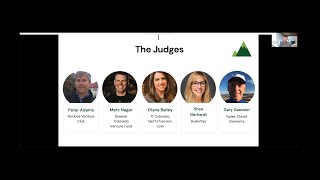
Appreciate it, John. All right, well, thank you so much to John Nordmark, everybody. I know we put his information in the chat there as well. We'll share this video out, but his company that he's working on now, iterate.ai, it's a relevant company for both corporates and startups. So check that out. John, thank you so much. Okay, well, I am going to share my screen now, and we're going to get into the second part of this event. I hope that— that was awesome. So I hope you all enjoyed that as well, uh, but now we are going to get into the pitch competition. So, um, here was the process for the Elevation Pitch Competition. This is going to be going out, uh, going on for, I think, 2 or 3 months or so. We had over 250 event attendees to these events, 70+ applications. We whittled that down to 10 semifinalists. I've been working— the team has been working with these semifinalists, and we have got it down to 5 finalists. Uh, it's a very nice mixture of companies. They're from— they're all from Colorado, but they're doing a number of different things, whether it's healthcare or a various number kind of apps, hardware, things like that. And what we're going to do now is each of them is going to come on, they're going to have a 2-minute pitch, all right? Elevation pitch, it's like elevator pitch. It sounded really clever when we came up with it. I don't know if a lot of people are really putting 2 and 2 together, but anyway, elevation pitch, it's an elevator pitch competition. So 2 minutes, no slides, no visuals whatsoever. It's supposed to kind of mimic if we were in this pre-COVID world and we were all in a cafe or a bar or whatever, and they're pitching their business. So after each of these 2-minute pitches, we have an amazing judging panel that's going to go through each of the pitches. So I want to take a minute here to introduce the judging panel one by one. This honestly is pretty much— it's an amazing judging panel. So let me start. I guess I'll go left to right here. So Peter. I know John mentioned you a couple times there. Peter, are you there?
Yeah, I'm here.
All right. Hey, Peter. So I know Peter— Peter's a Rockies Venture Club, Rockies Venture Fund, Pandemic Impact Fund. Tell us a little bit about yourself, Peter.
Well, so RVC, if you don't know, it's the longest-running angel group in the US, and we are one of the top investors in Colorado. We've done about 180 deals over the last 6, 7 years and even more over the years. We love working with Founders Institute and helping out and funding companies that come out of this. We're early stage, we're angels, we're syndicating, lots and lots of cat herding to invest in great deals.
Yeah, it is cat herding a lot of the time, isn't it? And it's— they too, they're doing— maybe I'm taking a little too far, but God's work, right? They're literally, they're bringing people together to fund companies. So thank you, Peter. So next up here, Mark Nyer. So Mark is with the Greater Colorado Venture Fund. For any of you in Colorado, you might've joined in either virtually or in person to the Greater Colorado Venture Series, what was it, 10 days ago or so, Mark?
Yeah, just a couple of weeks ago. And no, thanks for having me, John, and really appreciate you guys putting this on, especially being so new to Colorado yourself. It was exciting to have you guys jump in like this. I guess, quick background, I was one of the co-founders of Startup Weekend, and we built and grew that and ended up selling to Techstars. I spent a year on the team there and then found my way to the mountains here in Colorado, and I got to meet folks like Gary who were amazing mentors for the Telluride Venture Accelerator. And through that program, I really kind of understood the better, bigger opportunity in some of the rural markets in this state. And I'm really passionate about trying to figure out how do we unlock these rural markets for venture capital. And a lot of the stats that John was talking about with VC are a lot of the reasons I got into this and motivators for how we can think about doing things differently, not just an approach, but sometimes the term sheets and the structure, the alignment that you can actually create with founders. So our fund's a $17.5 million fund, a seed stage fund. So we definitely do play a little later on that, in that journey for most entrepreneurs. And we currently have 24 investments, all headquartered and operating in rural Colorado here.
Yeah, and it's pretty awesome, Mark. You should check out the website, but they're doing these competitions, bringing a lot of interesting companies. Rural entrepreneurship is hard, especially from an investment perspective. I've been on the entrepreneur side, I've been on the other side of it too. It's the math, and a lot of times it's hard. So I know Mark and your team has been trying— you've been working with different models, new models, right? Not just the traditional venture model. Anything you want to share on that side?
Yeah, and actually spent a lot of time talking with Peter, and I think Shea has heard me talk about this as well. So in I'm in good company here, but we do a lot of revenue-based investing. So it's kind of like a hybrid between debt and equity. And at this point, we've done a half dozen of those investments and it's just a different way to approach it. A great brand out there helping steward the cause more than anybody is Indie.VC, I-N-D-I-E.VC, if you want to learn a little bit more about the similar type of approach that we use.
Awesome. All right. Thank you, Mark. So next I'll bring up Diane Bailey. So Diane is— she leads the FI Colorado. She just recently sold a company of hers, which is awesome. Congratulations to Diane. And she also is now running something called gettotraction.com. Diane, are you there?
I am. Hi, Jonathan. Thank you, everyone, for attending us today or tomorrow for those of us joining in early in the morning tomorrow. It's been great. I, Diane Bailey, I am the director for the Colorado chapter for Founder Institute. So if you go through the accelerator, you can think of me as your point of contact, but also I am your success coach. So we have our next cohort coming up mid-August. We have applications. Our final application deadline is coming up soon, August 8th. So if you really enjoyed the presentation from John and want to work with mentors like John in the program in order to launch your company, then please consider Founder Institute. Outside of that, I run gettotraction.com. It is a startup stack for early-stage startups. It's the best of comprehensive how-tos and guides on all the different facets of how to get to traction with your startup.
Awesome. All right. And I'm completely unbiased, but yeah, Founder Institute is awesome. Awesome. So Shay, Shay, are you there? Hey Shay. So Shay is the founder and CEO of Butterflies, and we were just chatting before we went live here today that a couple of people on the line were wearing some Butterflies. Hey Shay, are you there?
Hey, yeah. Can you guys hear me?
Yeah. Tell us a little bit about Butterflies and about yourself.
Yeah, sure. Well, John, first, thanks for having me. I think Founder Institute is so such a cool, amazing program and what you guys are doing for the entrepreneurial space is just awesome. So I appreciate it. We have a headphone company, an earbud company that we started for to help with long-term comfort and high-quality sound in the mid-range price point range. The top complaint in the earbud industry is fit. It either hurts after a while wearing them, they fall out, or they don't fit at all. And the reason is the the human ear is constantly moving. All earbuds in the market right now are made with a hard, inflexible clamshell material design, and that constant movement against that design is what causes that ear fatigue and pain. We also have the technology behind high-quality sound has improved significantly since earbuds were invented 14 years ago, but no one is bringing them into this mid-price point range. So Right, that is the high-level overview of what we are about. We launched our MVP in May after a small seed round last April in 2020. RVC helped lead the round for us. And then we just actually this weekend closed, oversubscribed a small million-dollar round. And our next release will be the true wireless, but we'll have a really cool hardware-software integration that we are in the process of going down the patent road for. So yeah, it's been fun. I loved John's presentation going through the ups and downs because, you know, entrepreneurial— being an entrepreneur is not for the faint of heart, and we're all a little bit crazy to do it because of the ups and downs. And so I just love to be, you know, part of this community and hear someone like John, who in my opinion is crazy successful but still is humble about the experience we're all going through. So yeah, that's how.
Awesome. Yeah, no, it is. It is. We may all have a little bit of something off, but that's what unites us. Sí. And you're based in Colorado, right?
Yeah, we're in Denver.
Yeah.
All right. So awesome. Next time you're looking for headphones, try to Buy local. And then, yeah. And then finally, Gary Gessler. So, hey Gary. Gary's— anything related to SaaS or anything, Gary's the guy that I go to. So I guess that'll be my unofficial introduction to Gary. But hey Gary, do you wanna introduce yourself?
Yeah, thanks Jonathan. So I have 4 passions, FI mentoring, thanks to John. Nordmark for introducing me to FI. I've been involved as a co-director, a mentor, a leader over the past 8 years. Second passion is building API SaaS companies. Third is networking. I have over 17,000 LinkedIn connections. Every job, every gig, every investment, every startup has to do with meeting people. And my last one is skiing. And specifically skating with Jonathan at Snowmass.
So he's not too shabby, Gary.
So just real quick, a networking story that I'm most proud of. We were mentoring a new class, Denver, and I met a co-founder, actually my co-founder, who was another mentor, Mark Genie. We founded Cloud Elements 8 years later. We had an exit to UiPath. UiPath is the fastest growing tech company in history and we had an exit. They were valued around $35 billion and they went IPO 2 weeks after they bought us. So never, ever, ever thought I would sell a company like that. With that type of growth and success. And it all started out of networking and Founders Institute. So everyone on the call, everyone pitching, this is the place to build your company and launch.
Well, thank you, Gary. I appreciate that. And Gary's awesome. And yeah, he's a great skier. I tried to put him through the wringer that day, but he didn't fold. Okay, so this is what we are all here for. We are now going to go into the pitches. So if I could ask all the judges, if you wouldn't mind, and I'm going to do this myself as well, please do mute yourself, turn your camera off, and we're going to start with Eddie Ortiz. Eddie's coming all the way from Colorado Springs, Colorado, talking about Press Play Finance. And Eddie, I'm gonna hide myself, and, uh, the, uh, the, uh, the floor is yours.
Thank you, John. Hi, I'm Eddie Ortiz, founder and CEO of Press Play Finance. My company is developing new web and app platforms to help millennial and Gen Z people of color go from zero, understanding money basics, to one, building wealth, with a focus on making lasting behavioral changes. We know psychologically that spend on this, not that It's not a great way to change your behavior. That's why we aim to understand a habit, break it down into what's the trigger that occurs, what thought appears in your brain, and what action does it cause you to do? And can we interrupt any of those things? Now, the reality is this: there is no app that can help you tackle your emotional triggers with money unless you face those triggers head-on. And it's these triggers that make people of color feel generationally cursed. Now, that's where Press Play stands alone. Our secret sauce lies in an app that takes your personal financial circumstances into account as you navigate our financial behavior change program. For example, Press Play teaches you not to rely on automation, but how to critically think and use it financially. And through this process, you'll feel empowered to create the keys of wealth you can hand off in the future. From generationally cursed to generational trailblazer, that's our goal for every user of Press Play. And the timing is right for this business because there is no clear market leader focused on people of color and helping them learn financial content founded in behavioral economic principles. Closing the wealth gap is something we can all get behind because if it continues to exist at current levels, Latinx and Black median wealth will be $0 by 2073, which will cripple the US economy. I am the right person to build this business because I bring military leadership experience to the table. I'm a certified financial health counselor who understands this problem at a very human level, and I know how to scale companies from my recent unicorn startup experience. Thank you for your time today and for the opportunity to compete here at Elevation Pitch.
Awesome. All right, thank you, Eddie. Um, say hello to your dog as well. Uh, I'm a dog lover.
He has a thing like in an hour and a half, and of course he knows I'm perfect.
No, it's all good. I have a dog and normally he's back here scratching his nether regions right on the— right in the middle of my Zoom camera, but luckily he's not here now. But I'd like to bring the judges back on stage and if anyone would like to kick us off, maybe?
Yeah, I'll go, Jonathan. And Eddie, thanks for your service. Really, really appreciate that. Quick question. So it sounds like you're sort of like a Dave Ramsey for this segment. Super cool. Dave Ramsey has done very well for himself and helped a lot of people. How do you get subscribers? How do you get people to use the app?
Sure. So first and foremost, we want to build something that users are going to love, and that's effective. And so, you know, I think what we're hinting at too is kind of like, how are we going to use revenue models to kind of drive users towards this? And so there's a few revenue models that have made themselves apparent to us and that we're playing around with. The first being an entry product in the realm of life insurance, specifically term life insurance. People of color have historically been underinsured, and term life insurance provides a cheap way to essentially establish a little bit of generational wealth. And we want to use that as the initial product offering and bring the user into the ecosystem that way.
Thank you.
Hey, I'll follow up because I think Gary was asking you— you sort of answered one of my questions, which is how do you monetize this? But I think Gary was asking you what channels would you use and how would you out all of these people in order to bring them onto this platform? And that's actually my other question, so I'll double down on it.
Sure.
So I realize that when we're talking to people of color, there is a general mistrust of the financial industry in general. So I know that there's going to be a big push on our end to use content marketing to our advantage. And really what I'm hoping to generate is is a really like authentic grassroots outreach program where we're able to use influencers to be able to kind of push that out there. So social media is going to be our friend in this, and we plan to utilize that initially to grab early adopters.
Okay, it looked like Mark, you were raising your hand. Mark, you want to—
Yeah, question. And again, great, a huge problem, and really appreciate you going on. I can actually relate. As, as well from my upbringing. But, uh, you're talking about behavior change, behavior change in a really big way, and like promoting that through the app, um, and, and driving this, this notion of critical thinking, right? Um, and, and reducing some of the automation, which I'm also attracted to the idea of. Do you have any evidence of that critical thinking, or what exact types, or even just some examples that you might have that have been shown to drive some of that behavior change?
Absolutely. So I'd like to— I want to consider ourselves kind of the— if you've ever heard of the weight loss app called Noom, that is one of the apps and one of the companies that we really admire. And it's because they use bite-sized kind of on-demand content to teach people not, you know, eat this, not that. It's more along the lines of teaching them how to eat, why it's important to do these things. And then there's an infrastructure behind the content to include a virtual support group that they can join, a personal coach. And so we want to— we would want to adapt many of those same things. And it really revolves around the process of shared decision-making. There's a lot of studies in shared decision-making, particularly in weight loss. And so we're kind of taking a look at it in that same way.
Got it.
Yeah, makes a lot of sense. Great analogy.
Thank you. All right, Diane or Shade, do you have any questions?
Yeah, I've got a question. First, I think you're solving a really big problem, so I think that's awesome. I'm wondering if there's any stickiness or gamification to the app that would keep people coming back to keep engaging in it. So that there's, there's reason for this. You said it was a subscription model, correct?
We're going to be playing around with the subscription model. Yes.
Okay.
And so, yeah, so that's the part of the elevation pitch I didn't include. But gamification is something that we're super interested in integrating. So on top of that on-demand content that can be learned by just, you know, through either reading or some type of video, there would be also the opportunity to play fun games and be able to kind of learn that way. And not just the game itself, but also modeling, particularly compound interest. The studies we've seen, if you can model that and have games around the topic of compound interest, that seems to engage audiences quite a bit. And honestly, admittedly, compound interest was the first thing that really made me fall in love with personal finance, because it was the first thing that really showed me, oh, wow, if I use— if I was— it would have started like 10 years ago. And so that's kind of what we're hoping to achieve using gamification as well.
Sure.
Okay, Diane, any questions?
Curious how you intend to build trust with your brand beyond your content strategy.
So I think part of keeping the company comprised of what these United States look like is going to be very important to the company. We want to make sure that we're looking representative of the folks that we're trying to help, A, but also how is our content presented and how can our users actually curate the content based off how they culturally identify? That's another interesting way we're trying to kind of solve this puzzle because there's tons of financial content out there, but the language is so hard to decipher, it makes it hard for people to get into it. So I think that was— that's going to be one way we really identify with, uh, with our user base, particularly early adopters, in, in that speaking in a way to them that they can understand this content very quickly, uh, and so that way it can kind of spread, spread like wildfire.
Okay. All right, well, thank you so much, Eddie. Eddie, there's a couple more questions in the chat here as well, so I would recommend you go in there and address some of those questions. Thank you, Eddie. You were the, uh, sort of the sacrificial lamb here a little bit to go first, so appreciate it. It's never easy to go first. All right, so thank you, Eddie. Okay, so next up we're gonna go to Thayer, and Thayer is in Frisco. Thayer, are you there?
I am, and I'm actually out of Bozeman today.
Out of Bozeman today, all right, awesome. Yeah, all right.
Hi, I'm Thayer. My company HomeCheck is developing a mobile app to help homeowners in ski communities prevent costly home repairs through a subscription service that provides routine home inspections, app-based maintenance reminders, and discounted one-click service requests. The timing is right for this business because of the huge spike in home sales in these communities by owners who eagerly want to protect their assets but lack the time and knowledge to navigate the local contractor network. Extreme climates in ski towns compound home maintenance issues, which is especially concerning as up to 70% of these homes lay vacant. I'm the right person to build this company because in addition to having been an electrician, management consultant, and scaled operations at several startups, I live in Frisco, Colorado, a ski town. I've seen five-figure devastation and ruined vacations caused by a leak that could have been prevented with a routine inspection or a $40 temperature sensor. HomeCheck, we are peace of mind for your home.
Okay, all right, uh, maybe, maybe we'll start ladies first this time. Shay or Diane, do any of you have, uh, have any questions for Thayer? I mean, I think we all know that the, uh, a lot more people that have second homes are now living at those second homes, especially in Colorado and some of these vacation communities. But any questions for there?
Yeah, I have a question. I guess it's around, I mean, how do you plan to scale? I mean, managing that contractor network is a huge challenge. And so what's the plan around scaling and how do you keep that side of the business engaged?
Yeah, so we see a couple things here is we'll have our own employees as we see it. They're the ones who do the inspections and then do basically everything that doesn't require a permit. So hanging a TV, replacing a faucet, drywall repair, um, bigger ticket items, replacing a roof or maybe major HVAC or electrical that requires a permit, we'll have partnerships in place with those companies. The typical kind of referral fee is 10% for those. We think we can negotiate anywhere from 5% to 15% on the kind of the bigger jobs. But for the most part, the inspections will be done by HomeCheck employees.
Interesting. Okay. Diana, any thoughts, or if anyone else wants to jump in? I didn't know that aspect of it. So you would basically, on your payroll will be non-permitted, non-licensed people, and then you would.
Yeah, I think to start off, I think that's the way to do it, to basically offer the best customer service that way. Okay.
Happy, happy to jump in. And I'm cheating a little bit because I got to know Thayer through our pitch series as well. Um, Thayer, you know, one thing we chatted a little bit, but I'd love to know even more, the, the onboarding cost of getting a property and kind of documenting, all right, you have this HVAC, this You know, these are your appliances and whatever else, right? That's a pretty manual or potentially expensive process, especially when you think about Chase's comment and scaling. How do you kind of minimize or automate or make that not a total loss leader, a huge loss leader upfront?
Yeah, great question. So when I started this out in the fall, it was me taking pictures, running to a spreadsheet, And it took like hours to document a home. My co-founder Ted quickly developed a test flight iPhone app. So we're taking pictures and taking notes just verbally into the phone. We're documenting that. We see it as the future iteration is you don't even need an inspector. So you could walk around your home, take a picture under your sink, in the attic. We guide you through that. And then either using some sort of AI or just inspectors on a computer at home can quickly diagnose things. So basically taking the inspector out of the home is, is the future iteration as, as we see it.
Interesting. All right, any other questions?
Well, I have a question. So while you were giving this, I, I did a quick search on, um, home check Frisco, and I found Get a Home Check and Rocky's Property Management Summit County Home Check.
Are those both you or—
Get a HomeCheck, me. The other one is, I believe, a property management firm out of the Vail Valley.
Okay. So my question, kind of following on Shay's question, is, well, first of all, HomeCheck, maybe just thinking about your scaling, HomeCheck is a start, but there's probably so many other things once you build, you know, a clientele that kind of go beyond that. And I wonder if naming it something like Uber that means nothing, harder to build a brand, but gives less confusion. Because here, just in Frisco, I find two that say HomeCheck, and then you're going to get all these people. But at the same time, I'm thinking to scale, working through property management companies like that and sharing a bit of the cut would maybe be a good way to have them because they're touching so many rental properties that might help you scale quickly.
Absolutely. So totally on the name, I agree. If people have suggestions for a name, throw them in the chat. But yes, we think we complement property management in its current state. We work with a couple of our beta customers use a property management firm, but then also use us. For that preventative maintenance piece and to get things done quickly. Kind of the next scale, we've been— we're in final negotiations with a 106-unit HOA in Silverthorne. And so we think we can take down big chunks of customers that way by pitching to the HOA instead of individual customers.
Great, thanks.
Okay, awesome. So Diane and Gary, any questions on your end?
I think for me it was just on just a general comment on the pitch delivery. I think we are getting more information out of the Q&A part than the presentation itself, and I'm not sure how long the pitch was. I know it was less than 2 minutes, and so things like talking— it sounds like the, the ski towns and the ski communities, that that's your go-to-market strategy for this long-term goal of removing the inspectors. And to me, that's the really cool part and the part that investors, I would think, would be interested in. So it would have been nice to have that as part of the pitch. That would be just kind of a general comment I have.
Oh, thank you.
Okay. Gary, any last comments on your end?
No, I'm good.
Okay, awesome. It sounds like, Peter, your general advice there too was not to necessarily— you use an Uber analogy. Right? So maybe not necessarily look at the, the taxi driver, like look at them as the ecosystem and collaborate with them, right? Versus— is that, is that kind of what you were getting at there, Peter?
Well, you know, yes, but there's always, for startups, there's always this challenge. And this is a universal challenge. Do you have a descriptive name or do you build a brand? And if you're going to scale it and build it big, sometimes, you know, making it something that's not really a word and building a brand can be the way to go.
Yep, awesome. All right, thank you so much there. We'll see you in a little bit. And now we're going to move on to the next pitch, and this is Romi coming from Broomfield, and she's doing some interesting stuff in the healthcare space. Hey, Romi, can you hear me?
Hi.
All right, the floor is yours, Romi.
All right. Hi, I'm Romi. I'm the founder and CEO of Humankind Pharma. My company is developing an affordable and stable pre-filled insulin syringe for diabetics in resource-constrained communities. Diabetes is one of the fastest-growing health concerns of the 21st century, with prevalence increasing most rapidly in low- and middle-income countries. Insulin is a life-dependent medication for diabetics, and yet 100 years after its discovery, it is still not reliably accessible to half of the 463 million people who depend on it. Current insulin vials quickly lose effectiveness outside a narrow temperature range, and thus their distribution is dependent on a network of refrigeration systems that are costly and problematic in many countries. Humankind Pharma's pre-filled insulin syringe overcomes this challenge by providing insulin in a dry, stable form that is easily prepared for injection by the user. Insulin stability is also a concern in the US and other Western countries, which allows for price scaling of Humankind's products. Our approach will significantly expand the global insulin market, which already stands at $21 billion US and is projected to double in the next 5 years. My pursuit of this venture is purpose-driven and a personal one. My own Type 1 diabetes diagnosis prompted a commitment to serve other diabetics, especially those less fortunate than myself. As the founder and an inventor, I'm very committed to this goal, and my focused product execution will support my success. Thank you.
All right. Awesome. Thank you. Romy, um, does anybody have any questions to get us kicked off? Anyone? All right, I'll start putting people on the spot if not.
Happy to. Yeah, um, Romy, thank you for that. Uh, my grandmother, um, was diabetic, so I grew up watching her, um, struggle with that my whole life. Um, question for you, you know, insurance companies, big pharma, they all have a big stake in this, right? So an obvious question is What's the role that they might play in your development and growth, especially as you think about scaling?
Yeah, that's a great question. You know, 95% of the insulin market is dominated by 3 main players. And so one opportunity that that brings is partnering, and that's something that we've considered in our in our model, and I think those companies do have an interest in these parts of the world and are actively working to increase accessibility to insulin through organizations that they've set up and various programs. I think our technology enables them to reach far more diabetics than they have been, and I think that's really exciting and great opportunity for the diabetic community to come together and see how we can serve all diabetics.
Okay, looks like Shay has a question. Oh no, go ahead, Peter.
Well, I was just going to ask about— first of all, by the way, I think this is great, especially for third world countries where refrigeration is not available. This is just Absolutely amazing.
Thank you.
But I have a question about your IP. I think I read somewhere you're licensing this technology, and if so, if that's true, could you talk about that license agreement and how locked up that is?
Yeah, absolutely. I have an exclusive license for the field of diabetic care, um, for patents of Active Pharma Group. I also have patented a stepwise reconstitution approach that enables storing insulin in this dry form and overcomes the the problem that dry insulin is not soluble at the pH at which it needs to be injected. And I'm expecting that as we advance with development and address new findings, that'll lead to more innovation.
Great. Thank you.
Yeah.
Okay. Shay, you had a question.
I was actually going to ask about IP and what you had, but I guess the other question I have is, you know, how long have you been doing this and then have you been able to test it? Do you know it will work?
Yeah.
Where are you with things?
Yeah, that's a great question. Humankind is in a very early stage, but the license I have for the device has— initial prototypes have been developed by the licensor. And they've been tested by the Bill and Melinda Gates Foundation, Teva, and Sanofi with positive results. So we have some traction there, and it looks very promising.
Awesome. Okay, Diane or Gary?
My question is, who is your initial customer, especially in this early stage? Are you purely going after the licensing or are you doing a parallel acquisition strategy?
Yeah, so my initial customer, that's a great idea, a great question, and definitely the company will need to do more market commercialization research to determine which country we roll out in first. I think it's important to file and potentially commercialize in the US first, So we will be filing with the FDA through a regulatory path which is accelerated and can save a lot of development time. Does that answer your question?
Okay, Gary? All right, we might have lost Gary to the ethers of the internet here. It's all good. It's hard to go through an hour and a half event without some interruption. All right, but thank you so much, Romi, and we're going to go on to the next pitch here. So the next pitch coming up is Daniel, and Daniel is coming from Grand Junction. Daniel, are you there? I'm here. Awesome. All right, floor is yours, Daniel.
All right, thank you. All right, my name is Daniel Illenberger, and our company ShipMate is making internet-connected home lockboxes to help heads of U.S. suburban households aged 25 to 45 increase their family's security, privacy, and flexibility by stopping package theft, also known as porch piracy. We beat other internet-connected home lockboxes for 3 reasons. First, unlike the competition, Our product does not need to be connected to your home's Wi-Fi, so it can be placed anywhere on your property, like at the end of your driveway, and still be controlled by a mobile device. Secondly, whereas the competition chooses to use plastic, wood, or metal building materials, we use layers of various materials, which reduces the cost to the customer, but we also provide a great-looking product. And then finally, unlike the competition who sells their product outright, we're selling ours as a subscription service. Currently, home lockboxes aren't very common, and our sales model allows customers to try the product at a lower risk, not having to spend $300 or $500 on it. This should expand the market and allow us to be the go-to provider of internet-connected home lockboxes. Package theft is an issue. CNBC reported that $25 million worth of packages are stolen every single day, and that number skyrocketed with the increase in online shopping caused by COVID-19 concerns. So right now, it's a perfect time for us to go to market. Our team of 4 is made up of leaders, hardware and software engineers, and aerospace craftsmen. But we're looking for additional hardware and software engineers and advisors to help us get to market faster. Thank you.
All right, thank you. So, uh, thank you, Daniel. Uh, anybody, uh, anybody want to jump in first here? And we got Daniel is we have one more pitch coming up. I know I'm asking the judges to stay a little bit longer. If you have to jump, please don't, uh, please don't feel obligated to stay. Uh, luckily in this competition, the winner is chosen by the audience. Um, but, uh, but if you're able to stay, please do. But, uh, but anyway, um, yeah, who wants to jump in?
Well, I've looked at a couple of your competition, uh, uh, and their products, and, and, and I think the I think the subscription idea is a good one because it is a lot of money up front, and I think that's a big barrier to entry. I think figuring that out is going to be important. Of course, your cost, you'll have to bear that cost, so it does change your capital picture a little bit. I had two basic questions about the physical questions, and just quickly, one is, all right, so you can put it at the end of your driveway. How is this powered? What's the electricity? Solar, battery, whatever. And then the second is what keeps somebody from stealing the whole damn box?
Yeah, those are great questions. Um, so we, uh, we decided to go with a solar system. We, uh, we made the whole thing super power efficient and then we can put a small battery in there. A small solar power, uh, cell runs the whole thing. And then as far as stealing the whole box, yes, that is definitely a concern. We see videos of this happening with some of the competition.
Competition.
And I mean, their solution was put a rock in it. We didn't want to do that. So we're actually including a tether with it that you can actually lock it down. So, you know, at the end of a driveway, you can put a stake in or tether it to a tree. If it's outside of a gate, you could just kind of tether it to the gate or the fence. So we thought that was the best.
Like a bike lock, maybe?
Yeah, kind of like a bike lock. Hopefully it looks better than a bike lock, but that's the right idea.
Okay, great. Thanks.
You just need one of those things on there where it spits out all of the glitter.
Glitter bomb. And then we make money on selling glitter packets.
It's perfect.
And YouTube video ad views.
Yeah, right.
I had a question on like unit economics, Daniel. How long would it take you to break even on a subscription, you know, for the cost of the box and your upstart fee or onboarding fee, I guess, for each customer?
Yeah, so our goal is to be able to build the boxes for about $125. That was what we want to be able to build a one-off cost box for. That's the goal. Initially starting the company, because we do want to bootstrap it a little bit, we're going to be charging an upfront fee and then a monthly fee, and I think a lot of people will be accepting of that. So that really fixes, you know, those upstart costs that you were talking about. So if we're charging, you know, initially we could start at $100, but we'll scale that down in time to what we want to hit, like $35 or less. With an $8 a month subscription, you come out starting to cash flow about 4 months in.
So great.
Thank you.
I have a question.
I have a question about your general problem statement. So what is the actual determinant deterrent for porch piracy? Is it because I know that some, some of your comp— your competitors just have, you could call it a dumb box. They're not a smart box. Is that alone a deterrent? Do you need to have all of the additional technology and all of the smart features in order to provide that level of security?
Well, the extra features are really to drive adoption. So, you know, what a lot of people are doing is trying to stop package theft. And that's part of what we're doing. But really the company is about making a home shipping and receiving system. Uh, so we want to be able to secure the packages and then in time we're going to fall, uh, add a full package tracking, hopefully with partnership with a tracking mobile tracking application. Uh, and then the updates that you're going to get. So you're going to know exactly when a package has arrived. So that's kind of like proof of delivery for people. So that's the idea. So security is just one version of it.
Okay. Shay, do you have a last question?
I think this is a really interesting idea. I wonder, have you tested any, you know, sales funnels to see how people are reacting to this? The other thought I have is, have you ever thought about going B2B with this and like getting an Amazon on board so that they are helping pay for the costs?
And this is somebody building a B2C hardware product, right? So it's interesting.
So we're still pretty early. So getting the prototype out is the next stage, and we think we can do that fairly quickly. As far as your question for going straight to a company. We have thought about that and we think it's an excellent idea. I can imagine a situation in which maybe an online retailer that's kind of fallen out of favor could buy us or buy this lockbox and then put their name on it. And every time you get an Amazon package, they open the lid and they see a different company on there, might push them towards the other online retailer. So we have definitely thought about that. But initially, you know, we're going straight to customers so we can get that traction, kind of prove that people like the product, right? Scale out a little bit, and then we'll start going to those bigger names.
Okay. All right. Thank you, Daniel. So last finalist coming up now, last but certainly not least, we have Anthony coming from Denver. Hey, Anthony, how are you?
Hi, everyone. I'm great. Thank you.
All right, floor is yours, Anthony.
Excellent. Well, first, I want to congratulate my fellow pitch finalists. It's been awesome hearing your pitches and been a pleasure sharing the stage with you today. But my name is Anthony and I am the founder of Wayfinder. We have developed a mobile app that helps parents raising children with disabilities navigate the healthcare system from finding quality providers to understanding insurance benefits to accessing community resources, navigating the US healthcare system is notoriously difficult, especially for those who are raising children with complex medical needs. So unfortunately, these complex— complexities lead to care avoidance and wasteful medical spending and significant health disparities among the disability population. We exist to personalize the patient experience and make high-quality, affordable affordable care much easier to access. Our trained healthcare navigators and licensed clinical social workers are available via our app to help members with a number of things, from finding high-quality in-network providers to scheduling appointments, understanding diagnoses, booking transportation, connecting with community resources, advocating for better care, and more. By focusing on a high-risk, high-cost pediatric patient population, we believe that Wayfinder can reduce unnecessary medical spending for payers and improve outcomes for patients and their caregivers. The timing is right for this business because the rate of children being born with disabilities here in the US is on the rise. About 1 in 6 or 12.4 million children between the ages of 3 and 17 have diagnosed developmental disabilities such as autism and cerebral palsy. I'm also the right person to build this business because I've personally experienced the frustrations of coordinating care for clients with disabilities when I was a caregiver. My background's also in special education, and I've previously co-founded an adaptive recreation nonprofit. All right, thank you.
Awesome, all right, that's a great pitch to take us home, Anthony, appreciate it. So does anybody want to jump in first here?
I'll jump in. So I had a question, and, you know, I'm going to do what I did before and just ask you about the name, uh, because first thing I do in due diligence is Google you. And if I type Wayfinder children with disabilities, I get Join Wayfinder and Wayfinder family, both of which are Wayfinders for children with disabilities. And so I'm thinking you're at an early stage. Is this a good idea to choose a name that is so tied to somebody else in exactly your business with exactly that name?
Sure.
I think my only familiarity with the other Wayfinder is kind of a place-based initiative in California. And so they're more focused on kind of having a physical presence in a local community here. So—
But I think Peter's point is, as you're getting going, you're gonna get Googled, you know?
Sure, yeah.
So, you know, I'm not tied to the name. I'm open to suggestions.
It's a great name. I actually like the name, except that it isn't, you know? But I mean, you are a wayfinder, and I really like that. But I'm thinking about a company that I saw at Unreasonable Institute a few years ago. Maybe you know them, called Aunt Bertha.
Yeah.
And Aunt Bertha, that's a crazy name, you know, but it has nothing to do with what they do, but it's kind of wayfinder for people looking for services and government support and all of that. Right. So again, I think maybe building a brand might be, might be a better step for you, or, you know, being less similar.
Great.
Thank you so much for the feedback. Appreciate it.
It seems like it's such a great name that it's kind of been used before.
So, and by the way, I just want to say what you're doing is awesome. So don't let my comment diminish that in any way. I think it's really good and needed. So, so keep it up.
Fantastic. Thanks, Peter.
Yeah.
One question, Anthony, I guess just generally more on the business model, especially, you know, how, how are you guys going to make money? How are you funded, uh, especially early on? And then does that change over time?
Yeah, we're, we're in the pilot phase right now. So we're testing by selling directly to families. We're charging them about $60 a month. We have several folks on our waitlist right now. Our ultimate goal, though, is to sell to insurers. There's a lot of new research that's been coming out that shows that healthcare coordination and navigation services actually save on wasteful medical spending by about $700 per member per year. So ultimately, we would love to partner with private insurance companies like Cigna and United, and that would also take care of kind of our distribution challenge as well.
That's a great stat. Diane, you had a question?
I— that was going to be one of my questions, was if you plan to work with insurance agencies and how that is going to help you scale But I guess just from the product itself, it sounds like this is more of a resource aggregator. And so I'm just wondering, I know you talked about more of the personalization. So is it resource aggregator, concierge, or— I'm just trying to get a sense of how you can create something that someone else can't replicate easily enough. How are you developing your moat around your business, your defensibility?
Yeah, so two, two pieces I didn't mention in my pitch. In our app, we also have a library of culturally competent resources available for folks, and we've also built in a community feature where parents can ask questions, share knowledge, and meet other members who are in similar situations. So I think, you know, to Peter's point, I think building a really strong brand is going to be important, but also creating stickiness with our community and our resources to keep bringing people back.
Okay, Shay, any, any last comments or questions?
Sorry, I was on mute. Um, no, I mean, I think what you're doing is, is really important, and it's so hard to navigate. And when you're a parent and you're raising someone that has disabilities like this, it just becomes that much harder. So I really appreciate what you're doing. Yeah, I mean, I guess my question was around like, how are you going to make it so that you have a competitive advantage in the space? And you just sort of answered it. So I don't really have a question outside that, but except for I really love what you're doing.
Oh, thanks. Yeah, I, I don't want to repeat myself, but I, I do think it comes down to, to coming to building a really strong brand, um, and, and putting a lot of our time and energy into the resources that we're providing our families, um, into the community, making sure that provides a lot of value as well.
Awesome. All right, well, that's the last of them. Thank you, Anthony. So now we get to the fun part. Okay, so here's what's going to happen. Thank you so much to our judging panel. Judging panel also does get a vote, by the way, but your vote counts just as much as everybody else. Hopefully the judging panel provided you with some context as to how to vote for the winner, but we're going to give— we're going to put up a Zoom vote here in just a moment, and it'll be open for 90 seconds for you to vote. And just right before we queue up this vote for everybody, uh, just really quick on what's at stake here. We have $1,000 cash from Founder Institute, $1,000 cash from an awesome legal firm, Bold Legal, uh, fellowships with the Founder Institute, uh, program that's coming up. Um, and also amazing other perks and office hours, uh, with some of these, uh, resources here that you see that, that honestly are some of the best resources in Colorado. And the Mountain West that are really just designed for you to talk to the right people, to get to the right feedback, and also to get the right connections to take these ideas and to push them forward. Okay. With that being said, Felicia, who is the producer who's on there in the background, I'm going to go to the next slide here. Are we ready to get that— the vote going, Felicia?
Yep, we're all set.
Awesome. All right, well, let's do it. We're going to do 90 seconds here. And super, super high tech, I embedded a GIF there in this slide. You know, this is the type of production you can expect here from me and the Founder Institute. But while we're waiting here for the vote to come in, I'd love to hear if any of the judges want to, want to chime in maybe with what— who their favorite boat, their favorite company was and why. Does anybody want to jump in with that? You made it hard.
You threw a hard question up, John.
Okay, well, maybe— all right, so maybe I'll rephrase it. Maybe not the favorite one, but who are some of the ones that, you know, piqued your interest kind of thing?
I think, right, there's— I really like that Rami and Eddie were solving some just really big— and Daniel, really big— like everybody had some big markets that they were going after and big problems that they were chasing. So I think you guys did a great job selecting for that. It's really hard to jump in and just pick a favorite right now. So this is hard for everybody else that's sitting on the line too.
Yeah. Okay. Peter, any thoughts on—
well, I was going to say, you know, it's not really fair to ask us this. I don't want to influence anybody and tell until they voted. But I will say this on the positive side, usually there's one or two on things like this where you can say, well, those guys are definitely out. And I don't see anybody who's definitely out here. I think everybody's got a dog in the hunt.
That's good to hear. We tried to be deliberate in choosing all of these presenters, and I think they all did an amazing job. And we did stop the vote. Maybe— is there a way Oh, okay. It's gonna keep running here, but, uh, but yeah, we stopped the vote, um, and we'll announce it in a second and we'll have some pageantry around that. But yeah, any final thoughts? Uh, maybe Shay, I'll start with you.
No, I mean, I agree with Peter. Like, this is hard to— I had a hard time if I had to choose, you know, deciding. I do love that Rami and Eddie were solving huge problems. I thought Eddie did an amazing job pitching. Everyone did a great job pitching, but he, even with the dog interruption, he nailed it. And I thought, you know, this is, this is good. I agree that everyone has huge potential here.
Awesome. And Diane?
Yeah, I agree. I think everyone did a really good job. Everyone had a very polished pitch and just thinking about the big problems that people are wanting to solve and that there's companies right here that are going to change the world is, is very inspiring to me.
Yeah, it was hard, honestly. We got a lot of good pitches and there were a lot of people that we had to cut. Diane and I were going through this last week. So I think that the companies that came on today are companies and ideas are all awesome, but there does have to be one winner. It's just the way the world works. So I am going to go to the next slide here. Felicia, can we— we can share out the winner of the first ever, and I think this will be an annual or inaugural Elevation Pitch Competition. Let's share that out. Who is the winner? I don't see it. Do you guys see it?
Yes.
Yes. Who is it?
Romy, Humankind Pharma.
Humankind Pharma. All right, thank you, Romy. For some reason, I'm the only one who didn't see it, but Humankind Pharma comes in. All right, look at that. That was close. Uh, 30— well, 35%. Clearly, uh, you, you outpaced the rest, but the rest of them were all there. So Romy, um, you are the elevation pitch champion. Congratulations, Romi. Let's all give her a round of applause.
Thank you so much, and thanks for this opportunity. And it was great to hear from the other founders. I was really inspired by all of your work. So thanks.
Awesome.
All right.
Thank you so much, everybody. So just as a quick reminder, Romi is going to get $2,000 cash. That's no strings attached. It's just cash in your pocket. Hopefully you spend that on your business, Romi. But $2,000 cash, mentorship with some of these amazing organizations. Thank you, Peter, Rockies Venture Club. Check out Peter Adams at Rockies Venture Club. Thank you, Diane Bailey, also works at the Founder Institute Colorado, get2traction.com. Thank you, Mark Nair. Am I getting that down now, Mark? I've had sort of a— am I getting the last name down?
Okay, I'm Swiss and it's Nager. I always tell people lager like the beer and then nobody ever forgets.
Okay, perfect.
All right, well, actually said Mark Lager the other day by accident. That's how good it works.
All right, well, Greater Colorado Venture Fund, they're doing some awesome stuff funding, uh, organizations in, uh, in rural and rural places. Uh, Shay, are you still there too? Shay, thank you so much for joining. Check out Butterflies. Shay's building some amazing stuff there. Are you there, Shay?
Yes.
Hi.
Yeah, thanks. Thanks for having me. I appreciate it. It was so fun. Congratulations to all, all of the founders. You guys did awesome.
Awesome.
All right.
And Romy, once again, you are the champion. So congratulations again. Your business has an amazing mission and we're going to try to, to give you the feedback and the connections and all that stuff to make make this a reality. Yeah.
Thank you so much. I appreciate you.
Okay, awesome. All right, well, thank you everybody for joining today. Thank you for the judges for sticking around 20 minutes later. I really do appreciate it. I sort of have a habit of making these things go long, so I appreciate you sticking it out. Thank you everybody for joining. Everybody who did register will get a video in the next 48 hours or so, and hope you all have a good night. Take care, everybody.










