In a Veterans Day online demo, Herbert Dwyer, CEO and co‑founder of Empec and former Marine Corps cryptanalyst, delivers a pitch for Empec’s cloud‑based, SaaS point‑of‑sale (POS) financing marketplace targeting commercial HVAC contractors. He opens with a vivid scenario of a property owner (Beth) facing an urgent boiler failure and the contractor (Fred) offering a quick financing solution, illustrating the pain of delayed cash flow and lost deals. Dwyer explains that contractors who provide POS financing close 30% more deals, while 79% of customers otherwise seek external financing, representing an $8 billion market in commercial HVAC. Empec does not lend directly; it acts as a two‑sided marketplace that connects contractors, end‑customers (small‑to‑mid‑size businesses, nonprofits, municipalities), and financing partners (banks, leasing companies, ESCOs, subscription models). The company partners with traditional lenders, turning them into allies rather than competitors, and already works with major players such as Comfort Systems USA, McKinsey, and Huckestein. Empec is post‑revenue, cloud‑native, and plans to onboard 400 contractors over three years, targeting roughly $400 million in total transaction volume. Revenue is modeled as a lead‑as‑a‑service fee (3.5‑5% of loan value) versus the 7‑8% banks typically spend to acquire loans. Dwyer discusses the pivot from a previous, less‑scalable model to the current hyper‑scalable marketplace, citing insights from the book Blitzscaling and the “move fast, break things” ethos. Funding needs are addressed: the company is raising a West‑Coast pre‑seed round through the Founder Institute Funding Lab, seeking equity investors, mentors, and strategic partners. He closes by inviting contractors, investors, and industry experts to connect.
Chapters
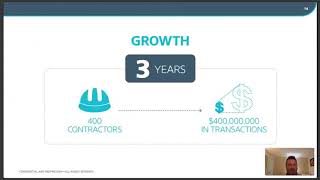
Hello everyone and happy Veterans Day, and thank you to any veterans on the phone that, you know, obviously for your service to this great nation. As Ryan mentioned, I am the CEO and co-founder of Empec. I'm also a former cryptanalyst in the United States Marine Corps, and without further ado, let's get started. So I'd like you to pretend for a moment that you're Beth and that you just recently purchased a beautiful multifamily project, you know, a few years ago. It's been going through the regular maintenance, you know, the old equipment and the old boilers that came along with the building, you know, they've been limping along. You've been hiring your now best friend Fred, who's, you know, the local contractor who comes in your building quite often to fix these machines. Unfortunately, there was just a cold snap and this morning you received a phone call at 2:00 AM waking you up out of bed from an angry and very cold tenant. She informed you that there's no heat in the building. So of course, you immediately contact your best friend Fred, say, hey Fred, we got a problem. I need you to come out to the building, I'll meet you there. We have no heat, I need heat immediately. Fred rolls out of bed, you meet him at the apartment building, and you go down to the boiler room. Fred looks at the boiler, runs some diagnostics, and sure enough, you hear the news you didn't want to hear, that it has to be replaced. So of course you ask Fred, hey Fred, how much is it going to cost me? And he responds, $40,000. And your immediate thought, 'cause you're an investor, is, "Oh my goodness, how am I going to pay for this? I don't have the money because I'm already overleveraged by buying this property. I don't have $40,000 in cash." But Fred, being a smart contractor, realizes this is probably what's going through your head right now, and he says, "You know what? Let me help you with that. If you fill out this simple, short, 7-question form, I can help you find financing, cost-competitive financing." Could be a loan, could be a lease, maybe even an energy services contract in a matter of time. Well, obviously, you thanked Fred because this is the type of thought that was going through your head. I'm gonna have more angry tenant emails and phone calls, and I'm gonna have to track down, you know, banks and make phone calls there and go through all sorts of paperwork in order to track down financing because I need financing. You wonder, well, geez, how did Fred know to do that? Well, Fred is part of a vast growing number of smart contractors across the United States that realize that by having financing at the point of sale, they're able to close more deals faster, actually 30% more deals faster. That's actually a lot in this world of highly competitive contracting. 30% is a lot. It's a big number. But Fred also realizes that 79%, on average, across the board, that Beth is going to go out and find her own financing. That means that she is going to include third-party folks that are not part of Fred's selling transaction, right? So that means that the lead is going elsewhere to find a solution that Fred really should be offering in order to be of complete value-add to Beth. This market size is currently around $8 billion just alone in the commercial HVAC POS market space. And our business model is actually very simple. We work with traditional lenders and banks that are looking to target this coveted market, right? The best of the world, which is real small, small business. They spend an incredible amount of money to put flyers in our inboxes, in our in our emails in the hopes that that message gets to us, the consumer, at the right time in the right place in order for us to choose their financing. But many times that's not the case. That's why they spend a lot of money to market. Well, you're probably thinking to yourself, well, yeah, there's, there's a lot of competitors out there in the finance space, but we're actually not doing the financing. We're just more doing the meet and greeting. So, you know, companies like Cabbage, Wells Fargo, and TD, They're out there spending an incredible amount of money to try and capture that point-of-sale event, but we are that point-of-sale event, and that's really our unfair competitive advantage. So essentially, we're turning our competitors actually into partners. And we are post-revenue. We do have traction in the marketplace, and we're working with some of the, the biggest and best contractors out there, and even smaller regional contractors, companies such as Comfort Systems USA, which is the second largest publicly traded HVAC corporation in the United States, McKinsey, one of the top 5 ESCOs in the United States, as well as Huckestein, a large regional commercial contractor. Let's talk about growth. Over the next 3 years, our plan is to onboard 400 contractors, which will lead to about $400 million in total transactions. And since we are completely cloud-based, we are software as a service, along with that comes high scalability as well as high margin potential. Thank you very much for your time. My name is Herbert Dwyer, and we're Empec. Happy to answer any questions that you may have.
Alright, thanks Herb. So while people are putting their questions in the chat, I'll just ask you a couple questions. So first, why are you doing this?
Well, so I come from the contracting industry, and I can tell you that We've lost a lot of transactions and experienced incredibly slow sales cycles going backwards, right? And, you know, and we realized actually 3 of us left a company to figure out a way. We had no idea how to solve the problem, but figure out a way to enable commercial HVAC contractors to close more projects faster. You know, and we went through a few iterations. We actually just recently pivoted from our last, business model. And, you know, we realized that, you know, where we need to be is really focusing on the transaction and focusing on, on, you know, what makes us truly unique. And that's really being at the point of sale for B2B POS financing.
So that actually dovetails really nicely into my second question, which is, you know, why does your company have high growth potential? And I think you touched on it with the point of sale, but could you elaborate a little bit more?
Yeah, so, you know, I just recently had our entire team read Chris Yeh's, who's one of the publishers of Blitzscaling, incredible book. And if people haven't read it out there, I encourage you to do that and really listen to what they have to say. And there's a bunch of stuff that I learned in business school that is completely opposite of everything that they talk about in that book. But it's also stuff that leads to a startup hyperscaling, right? And Essentially what we were doing in our last business model was not hyper-scalable, and that's why we pivoted into doing what we're doing here to be more hyper-scalable. And a lot of it has to do with Mark Zuckerberg's move fast, break things, but he also said with making sure to have proper infrastructure in place, right? That became a caveat later on with his saying. So we're kind of at that position. So we have the infrastructure in place, We've been operating, we are post-revenue. We were very successful in the last business model. However, we realized that that business model was not scalable. So now we have the infrastructure in place and now it's time to start moving faster and breaking more things and really getting out there to solve some serious problems that commercial contractors experience.
In the true spirit of the Marine Corps.
Right.
Faye asked the question, who is your targeted buyer? Is it insurance companies, real estate contractors and managers?
Yeah, so I guess the answer can be, I guess the answer lies a few different ways, right? So the contractor technically isn't our buyer, they're more of a partner of ours, right? We're helping them close more deals faster. So the buyer is really the end customer who is buying the product from one of our other partners, which is the bank, right? So the bank is offering a loan or a lease, or maybe even backing, you know, some kind of, you know, energy services contract or a subscription. So, you know, what we're really doing is we've built a two-sided marketplace that's connecting the commercial customer, which is more of a small, maybe smaller midsize business, even nonprofits and sometimes municipality, with the financing option. And it may not always be a traditional bank. It may be, you know, a non-traditional financing instrument like a subscription.
Yeah, and so that actually— Jim asked a question. Who is backing your financing operation? Is it a bank or a leasing company?
So, there's actually two financing that's really occurring. Number one, there's equity financing, right? So, that's, you know, investors into the company, equity investors that are financing our growth, that are pouring fuel on our fire. And then, there's the actual financing of the projects themselves. We're not taking on the project finance risk. That's someone else's job. We're just helping them get more leads faster, more quality leads faster, so they can do their normal investing operations into these projects. So we're really just connecting the two.
Yeah, that's a really great distinction.
Gretchen asks, "What are the revenue projections?" Right, so what we're looking at over the next 3 years is really about growing the business to $400 million in total transactions. So if you look at some of the banking industry's own kind of analysis of how much commercial banks spend to acquire a commercial loan, it's actually a lot of money. It's around 7 or 8%. So if you look at that, you're like, okay, so that's tied up infrastructure. So, you know, bank has a marketing department, they're hiring PR, they're paying for ads and all this other stuff. And if you could bring them a lead, say, for something less than that, at no, you know, capital commitment up front, and they only pay if the project closes, you know, you can go to market with, say, you know, 3.5%, 5%, and say, hey, this is what we're gonna, you know, sell you this lead at. Are you interested? And, you know, you come to find out that there's banks out there that are like, wow, that's really cool. And there's even banks out there that you're literally connecting their own customer back to them, and they're paying you for that because they're still gonna have to market to that same customer some, you know, product, or, you know, let it be a loan product, the lease product, whatever it is, they're still spending money to market to their existing customer. So we just— we're really an outsourced marketing firm if you, if you really want to think, you know, about that. But at the same time, we're, you know, helping the contractor again close more deals faster. It's win-win-win across the board, and that's exactly the type of relationships we'd like to build here at Empec.
Okay, great. We have time for one more question, and then Herb will jump into the chat. So if you have more questions for him, you can connect directly in the chat. But how can the people in the audience help you?
Yeah, that's great. So my cell phone is right there and my email address is right there. So if you're interested in investing or becoming a mentor or have an opportunity for us, feel free to reach out. The lines are always open. But currently, you know, we are going into a funding round actually through the Founder Institute funding lab accelerator that starts in January. So we will be looking to raise additional funds, more of a, I'd say, a California pre-seed round, West Coast pre-seed. But so if anybody is looking to get on board, please do. If you're a contractor or know contractors that are interested in selling more faster, please, you know, providing greater value to their customers and new customers and kind of a value-add, you know, unique selling position in the market, have them reach out to me. Love to meet them. And, you know, if you're maybe retired or soon-to-be-retired expert in some of these disciplines that we work in, you know, real estate, finance, you know, construction, HVAC, sales, please reach out. You know, I will listen to you. I really respect expertise and people that have made mistakes to help me not make my own. But thank you, everybody, for being here today. And again, happy Veterans Day, and thank you, veterans, for your service.