eTrack Tech - IoT for the Health of Your Commercial Equipment
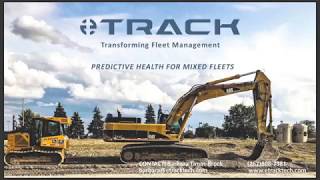
Barbara from eTrack presents ETRAK, an IoT sensor platform that predicts maintenance failures on heavy equipment like forklifts without violating warranties. The system cuts maintenance costs by 25% or more and alerts technicians via text or app. eTrack targets mid-market companies with 200+ assets and has raised $2 million for market entry.
Chapters
Well, worldwide, businesses spend over $140 billion a year on the repair and maintenance of heavy equipment. And just for perspective, that's bigger than all of video and mobile gaming combined. In my experience, I was an executive doing facilities and operations leadership, so I personally experienced this, as I show here, a ticking time bomb of heavy equipment. Where the breakdowns caused really expensive downtime. And when I reacted to failures instead of anticipating them, it increased repair costs by up to 10 times. And that's been proven. And surprisingly, if you have mixed types of assets or older equipment, there is no predictive maintenance solution for that equipment. So we developed ETRAK. We use the Internet of Things to turn this powerful equipment data into actionable information for our clients. And we do it across vendors and vintages. We alert you to problems before they become serious. And what we found is this not only saves a lot of money by eliminating downtime, but of course improves productivity and it improves maintenance costs, reduces them by 25% or more. So quick tutorial on how this works. We connect our proprietary non-invasive IoT sensor system to the equipment. It sends data to our eTrack cloud there in the middle. And before something really big and expensive goes wrong, we send an alert via text, API, or app. And just a quick look at the app, we can see what's going to break. Next, we can see the details of what's wrong. And finally, and this is super cool, the maintenance tech can see the history. And our master tech who's worked with us on this said that it will save time, which of course will save our customers money. So a lot of people are surprised that there isn't something like this already. And here's the situation. The OEMs have some IoT monitoring, but it's only for their stuff and only their new trucks. They don't monitor other brands or the older trucks, pre, pre-technology. Fleet trackers can handle multiple brands, but they don't have predictive or real-time work orders. So our business model is software as a service to monitor each asset. We also sell hardware and we have a global partner who provides that to us. And that's part of our professional services installation package. Longer term, we'll also have extensive data to sell to interested parties, you know, like those OEMs. So the market's really interesting. $8 billion of the world's heavy equipment repair market is just in the US with lift trucks, forklifts. This equipment, as you know, is like critical to revenue 'cause it's between, the factory in you, and it breaks down a lot and there's no predictive solution. So forklifts are an initial focus for our team right now. We're really excited to have Fortune 500 companies in our pipeline. We have commercial pilots and we have some really exciting strategic partnerships underway with both the heavy equipment folks and some facility service providers, and they're going to help introduce ETRAK to their businesses who need this solution. We have a team that is just so exciting to work with. We, my co-founder and I, we have deep experience with this kind of problem given our past business experience, and we bring together our IoT, our maintenance, and the team experience here to solve these kinds of problems for our customers. And I've done a lot of business scaling. Right now we have Finished our early friends and family round, and we're now raising $2 million to accelerate our market entry through new use cases and pilots. And it will also support our patent process. So we are transforming fleet management through predictive machine insights. And I'll just say that everyone who's listening knows someone who uses heavy equipment. It might be you. So please visit our website and we'll help you make your workplace work better.
Awesome. Thank you, Barbara. So I had a quick question first, Barbara. You'd mentioned that the term non-invasive IoT sensor— can you dig a little into that?
Yes, you know, a lot of heavy equipment has warranties where if you interrupt the equipment mechanics, you you violate the warranty. And so actually one of our patents that we're applying for has to do with the installation procedure to make this non-invasive. So we can measure a bunch of things that normally you need to stick a probe into. We can measure it without putting the probe in by using algorithms and a unique installation technique. So we don't mess with your equipment. It's in the same condition before we came as after we come.
Yeah, is— are most of those, uh, assets owned by your client or are they leased?
Both, interestingly. One of the clients we're working with leases over 20,000 forklifts, and when you have a lease, you pay for any kind of repair that's considered abuse or not under warranty. And one of the things that we determined is there's a bunch of stuff that should be under warranty that's currently with the leased equipment. So we do both. There's, you know, actually equal advantages to leased or owned. I think if you're owned, you oftentimes have your own maintenance people too. So we can help make them a lot more efficient and effective because they know what's— Yeah.
And is there an opportunity for you to get third-party distribution by working with leasing companies and doing partnerships on that side, or do you anticipate go having a direct sales model?
Um, actually having partners in the middle is a big part of our model, but they're maybe not quite what you're, you're thinking there with leasing. Um, OEMs are a target down the road, so we'll definitely be talking to them about incorporating our solutions so their distributors who do most of this leasing can take advantage of it. Also, there are a lot of companies that already provide specific services to these types of equipment. Like wheels. And so we can partner with the wheel and tire folks to bring a solution so they know when that tire needs to be repaired. So we're really excited about the partnership opportunities. Also make another note on the partnerships. It's surprising that a lot of the big companies, even the ones that have IoT, and I won't embarrass them by mentioning their names, they are still looking for someone who goes from sensor to insight. We do the data analysis with, of course, we have a business rules engine, but machine learning makes that stronger and then take it all the way to something the operator can do with it. And then asset insights. In a lot of companies, you need to hire another company in the middle to do that work. So a platform that kind of is full life on the, on the data cycle is really what we're offering and we're plug and play. We don't need to do everything. You pick the equipment, we can do just that specific equipment.
And are you, are you a useful vendor for someone who only owns one forklift or do they have to own 100 forklifts? Like where's that critical mass where you become useful?
Yeah. It depends on how important that one forklift is. I think we can be useful to that. It's really, if you think about it, it's cost benefit, right? I will tell you—
Doesn't mean you want to chase that business though.
No, our, our focus is on mid-market folks who have at least 200 assets and then enterprise, which, you know, 2,000 is very low. One enterprise folks, folks we're working with have 100,000 assets, but those small ones, I think our service partners who help us do installations, they can identify those. Right now, the small business people I love because they've been doing our pilots with us and One guy has a piece of equipment that we're monitoring that's a $250,000 piece of equipment. And so one piece of our equipment is totally worthwhile for that piece of equipment for him. So when do you—
and when do you become profitable on a contract? Is it month 3, month 6, month 1?
We've looked at our profitability in terms of the total number of assets that we're monitoring rather than a specific specific contract because we're building our entire ecosystem. So as a company, we become profitable when we're at about 1,500 assets. So that, that happens right about, about in a year or a year and a half from now.
Okay. But I would encourage you because I mean, it's very— if you're out there as a SaaS business, it's a very common question for SaaS companies from investors is when does that contract become profitable? Because we assume there's a bunch of upfront sales costs, there are perhaps some upfront, you know, setup costs, maybe NRE for you guys because you actually have some hardware that has to go into the equipment or around the equipment, um, get deployed in the market. So just that number is also very interesting because people have an expectation for where you should be, right?
And I can— we could go into more detail on that, but we do know the contract size and all the individual buckets. Charge for the installation process and the setup process as part of our professional services because we do some analysis for folks that's valuable. So each— the contracts actually become profitable at a pretty small number of assets, right?
If you're able to get that money up front, that's great.
Yeah.
Well, we had a question or two from the audience here, so technical questions it seems like. So Sarah asked, what is the IoT device and what standard are you using for the network connectivity?
Ah, okay. So I won't go into all the weeds there, but one thing that's different about us is we use sensors that are best-in-breed sensors for— and they're all different types of sensors. And so we connect that to a custom-configured sensor hub. And by the way, those are all available on the open market. We don't— we have only invented one sensor. So those all connect to an industry-standard device. And so we're following all kind of the industry standard protocols for that. And, you know, she can reach out to me separately. I'd be happy to share all the details because I don't want to bore everybody else. And we— the one thing I'll say is we, we use the cellular system for everything. So we're not riding on company networks. One of my co-founders has a background in cybersecurity, and this is one way we have been able to fly through the enterprise security process because we're not exposing any of their systems to risk with our stuff.
Oh no, that's great. That was actually the sec— we had a bunch of questions here about security.
So yeah, IoT. Every one of our devices is its own endpoint. So even if somebody messes with us, it's one. So that for and there's no backwards signal. We actually started out considering doing energy management because we do heating, ventilation, and air conditioning monitoring, and it was the return signal that gave us heartburn, and so we decided to stick with one-way.
All right. Thank you, Barbara. That was great.
Thank you, and I'll put my contact information in the chat room for people who want to reach out.
Yeah, please do. And just for everybody else, we will be sending the video and all the contact information out shortly after this webinar.










