Everywhere Ventures' Jenny Fielding on the Future of Startup Funding & AI
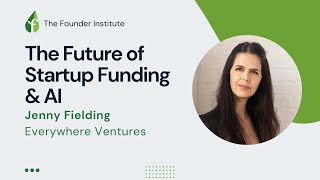
In this interview, Royston G. King talks with Jenny Fielding, co‑founder and partner at Everywhere Ventures, about the firm’s evolution from a traditional fund to the globally‑focused Everywhere Ventures brand. They discuss why many investors overlook high‑potential markets such as LATAM and Africa, the cultural and historical reasons behind this bias, and how Everywhere Ventures actively seeks founders in those regions. The conversation then shifts to what early‑stage investors look for: founder psychology (elasticity, determination, resilience), team dynamics, sector relevance, and momentum. Jenny explains how they evaluate pre‑seed and seed companies, the typical $250K check size, and the importance of capital efficiency—aiming for 24‑30 months of runway and disciplined hiring. They cover practical fundraising tactics, including targeted outreach, researching investor theses, and crafting concise, relevant emails. The discussion also touches on solo founders, the role of AI as an enabling technology rather than a headline, and how founders should demonstrate AI‑first efficiency in their stacks. Finally, Jenny offers actionable advice: prepare months ahead, build a strong investor pipeline, and be buttoned‑up even when not actively raising.
Chapters
And I'm super excited today to bring on Jenny Fielding, who is an amazing speaker in herself. If you follow the venture community, right, it's probably been pretty hard for you to not see Jenny's face and to not be hearing about Everywhere Ventures across these last couple years, because Everywhere Ventures— I believe it was called the fund first, Right?
Yeah, it was a bit of a rebrand. You know, when we started it—
Was the fund hard to hand out or to stick out?
I mean, honestly, we like, you know, SEO'd quite well, which is very funny. But when we started our fund, probably like many people watching this, it was really an experiment. And so the experiment was, can founders and operators become LPs, the people that give us money, and then produce deal flow and access to founders that would provide outsized returns. And so we ran this as an experiment, two iterations. So we raised kind of two funds under the brand, the fund. And then at the end of, or I guess like about 2021, we kind of looked at each other. We're like, wow, this is like really working. So we have some incredible companies in our first fund, our second fund. And we just thought like, okay, why don't we find a brand that really matches our ethos? So my co-founder Scott Hartley and I have spent our careers building companies and investing in companies around the world. You know, our thesis is that we believe innovation's everywhere and we wanna be where the best founders are, you know, wherever they are. And so that means getting on planes and going to far-flung places to meet founders, to get to know them and to bring them into our ecosystem. So obviously it was very heartening when I saw your chat and like people are literally I'm in Nigeria and I'm in São Paulo and I'm in Canada. So that's like, you know, totally our jam and that just like really gets me excited. So amazing to see everyone dialing in from around the world.
Yeah, no, and it's amazing. So yes, Everywhere Ventures, very much probably better described than just the fund, right? Yeah. So it's a rebrand that, and you also have a book called Venture Everywhere, so you know, something kind of reaching these different markets that maybe are overlooked by other investors is something that you're very passionate about. I remember when we spoke last week, you said you had just come back from like 6 weeks in Europe or something like that, right? So you are literally physically going everywhere to meet some of these founders. Like, why do you, and we very much believe this too, right? Founder Institute, we believe that there's entrepreneurial talent is everywhere. Talent is distributed, but not necessarily access. For you guys, why do you think that a lot of investors are just not kind of wising up to that game? You think mostly with investors, it's, hey, you're trying to sort of find market inefficiencies, right? You're trying to look in places that maybe other people aren't rather than trying to bid on the next highest, the next hottest AI startup where the numbers are just going insane, right? Why do you think a lot of these investors are overlooking some of these non-traditional markets?
Yeah, I mean, I think if you look historically, right, to the origin of Silicon Valley and what was actually being invested in and cultivated, that silicon, like, well, where was it coming from, right? It wasn't coming from international waters. It was much more of a local business. And so the kind of mindset started, you know, back in the '50s, '60s, '70s, you know, really around silicon and investing in things that were in their backyard. And so I think, you know, a lot of, Industries just develop around culture and around history, right? Why do we have finance in New York? Why do we have Hollywood and all of that? And so once you kind of get into a groove, it becomes the norm. And so we saw this mentality of investors on Sand Hill Road in California really not wanting to invest, they used to say, further than a 25-mile radius because they could drive to a board meeting.
From Sand Hill Road?
Yeah, from Sand Hill Road in a pretty short time. And I think, you know, over the last decade, we've started to see that culture and that methodology really erode. And we're seeing interesting founders pop up around the world and no, you can't drive to them in 25 minutes, but, you know, it seems pretty crazy to overlook that if you also believe that, you know, there are pockets of innovation everywhere. And then if you can connect the capital, which might be still, constrained in certain places to those founders, well, you can create multi-generational companies. Now, I saw that on a small scale. So, I built two companies in New York City. Now, people kind of roll their eyes and they're like, yeah, but that's New York. I mean, let me tell you in 2007, 2008, what it was like to start a company here. Everyone thought you were crazy. If you were going to build software, you had to go to New York City. There was no venture capitalists here. And so, even a place like New York was really not ideal, but many of us kind of, OG folks who started out building companies here, you know, dug our heels in and looked around and said, you know, there might not be venture capital here, but there's a lot of capital. So we could tap into, you know, pockets, whether it was real estate or finance people. There was incredible engineers and talent. Every multinational was here. So I think we're all expecting, you know, innovation to be global from day one. And I think we also have to realize that these things take a while. And so some of these nascent Ecosystems are just gonna take kind of a generation, you know, which might be 10 or 20 years to become as robust as some of the more established ones. And, you know, so we saw that in New York, it did take quite a while, and now New York's second largest ecosystem. And we're just seeing, you know, amazing places flourish around the world.
And I can echo that too, because I built a startup in New York in 2005, and it was sold in 2007. Yeah. And again, it was New York, but it was challenging because you were dealing with, yes, there's, like you said, there's money there. There's, there's real estate money. There's, there's Wall Street money. But it's just a totally different mindset when it comes to venture. Right. And that was one of the biggest things that we had an issue with, right, was that we're trying to run a startup, but then we have people who come from Wall Street who was just a different mindset. Right. And I think I was just in Colombia and I was seeing a lot of the same thing. Where there's a ton of money there, whether it's coming from mining or commercial real estate, right, booming market. But again, it's like when those people start to talk venture, it becomes really challenging. So it's, it's a cultural shift that sometimes can take a long time, but it also presents an opportunity for investors to go into those markets and see that, no, like, this is an amazing team, right? Um, I think COVID drove opportunity for so many more entrepreneurs all around the world. AI tools are doing that as well, right? To really stick out. What are some of the markets that you have seen? And I know that you guys are going everywhere, right? But are there a couple specific markets that you've really been impressed with that you, you know, obviously you've probably invested one or two companies maybe in some of these markets, but you really are bullish on just the types of talent that you're seeing there, the culture, the drive?
Yeah. So, you know, as the name suggests, we do invest globally. One of my favorite markets though is LATAM. And I think it has this kind of, you know, rich mix of people that want to hustle, that are, you know, are very resilient, that are not kind of entitled or expecting things. It has incredible talent and like actually big markets. And so although the startup seen might be smaller than, you know, in the US. Um, I think LATAM has like a huge potential. I'm even more excited about it now because kind of during COVID 2020, 2021, there were a lot of US investors that went there. Um, and slowly they've kind of retreated. Now, they went there for a few reasons. They saw opportunity, but they also saw more attractive valuations. Um, and, you know, some other arbitrage. I think now that the market has cooled, they're kind of refocusing on the US and that's left, you know, a little bit less capital there, which is not great for entrepreneurs, but it's been very fruitful for us to invest in places like Mexico and Brazil in particular.
Yeah, exactly. During COVID when money was flush, right? And we see a similar dynamic like in, in Africa too, for example, right? Like that's probably one of our strongest growth markets. Across Founder Institute, we're just seeing amazing companies coming out of Ghana, of Ivory Coast, of Nigeria. And it was the same kind of thing where during COVID a lot of people pushed money in there and then we've just seen it retreat, right?
100%. And we've done a fair amount in Nigeria, in South Africa, and it has been pretty stark to see the retreating of capital, but it'll come back. I think that the thing that you and I know as someone that started a company, you know, 20 years ago as well, is that we see these things in cycles. And so, you know, ecosystems don't get built in a night, they don't get destroyed in a night, and that, you know, the founders will have to, you know, persevere and the capital, you know, will come.
Yeah, for sure. And I just want to just give a quick note, guys. We are going to try to pepper in some questions from the audience. So if you do have any questions, please do throw them in to the chat. Actually, with this volume, it's probably better to throw them into the Q&A tool that we have in here, and the team will kind of feed those into me, and I'll try to pepper those in because I know that we'd love to get some of your personal questions over to Jenny as well throughout this conversation. So you're looking at companies around the world, you're going to all these different markets, and, you know, you guys try to be, and in a lot of cases, the first money in, right, or one of the first checks in the pre-seed stage. I think your standard check is $250K, correct? Um, and, you know, we, we know that at that point it's hard to evaluate these companies, right? I mean, comparatively, uh, Series A, Series B investors, right, they have no shortage of data points and all types of things, and they can, they can really go in there and crunch your data and, and, and evaluate, you know, at a very, very high level of certainty, like, kind of what the company looks like. In the beginning, it's a lot harder. There's a lot less data. And I know there was a quote that we saw from a recent interview where you were talking about, you know, I think the quote was that venture capital is not really about finance, it's about psychology. Right. And I think that's really, I mean, I think it's applicable in a couple of ways, right? It's applicable in kind of evaluating companies, it's applicable in helping them grow after you've invested. But But I'd love for you to dive a little bit more into that because I think it could be really helpful for founders too, who, you know, are trying to go out and raise capital when maybe they don't have the metrics, you know, especially that pre-seed, first check kind of stage. Like how, yeah, like what is the type of psychology? What do you mean by that? And what are the things that you're sort of looking for, you know, as data points when traditional data points like financial metrics and et cetera, are gonna be scarce.
Yeah. So I mean, any company at the early stage kind of has these three attributes. They have their, let's call it like their momentum. So we won't call it traction, but like the mo— somehow they have their momentum, they have their team, and then they have like product market fit, or they have a kind of a fit in the market. Well, None of the early companies have product market fit. So like we can't look at numbers or we can't look at data. So like let's strip that, you know, let's strip that away. Many of them don't have a lot of momentum. And so like the really, when you're peeling the onion, there's like the sector that they're in. So you may or may not be interested in the sector, but then the only thing left is the founder, right? And so we try to spend time with founders sometimes over weeks, sometimes over months, sometimes over years. Just getting to know them, getting to know what drives them, what their psychology is, what their mission is, and how that may or may not align to where we see the world. So I think it's fine not to have traction or momentum, not to have, you know, your go-to-market figured out or product market fit. Like, we're not expecting that. But the thing that you can control is really like, how do you show up for your company and yourself? Right? And so we tend to over-index on people that we think have resilience, that have had experiences in their past that have made them more kind of battle-tested. I talk about in my book, this idea of elasticity, which is, you know, being able to, you know, respond to the situation that's being presented to you, which may not always be, you know, straightforward. And so, you know, how do you do that? And so we try to spend time, you know, understanding who these people are as humans, because we think that that will kind of drive where the company is going. Now, the company might pivot and that's totally fine. It probably will. There'll be bumps along the road, but how you respond in those tough moments, I think, says a lot. And this is not going to be a 2, 3, 4, 5, 6, 7, 8-year journey. This is going to be like a 10 to 15-year journey. That's actually the reality if you have success. So, what's going to get you through those years? Because there's going to be times when things are not going well. That might be your team, that might be shifts in the market, your technology, and your product. And so what's gonna kind of get you through. So those are the things that we're looking for. And I think that that lends itself really well, especially for international markets, because a lot of those folks have not grown up in, you know, some of the privilege that maybe folks in the US have had or in certain communities. And so, you know, we love meeting those founders who have these like great rich stories of how, you know, they became entrepreneurial and how they have taken, you know, themselves into a better situation. And I think that's really inspiring. So we try to look for those individuals and like index on that mentality.
And this is something that we measure too. And we literally see this where, you know, it's something that we measure through social science, which is like determination right now. We call it determination, but it's a collection of a couple of different traits that we think sort of go up to that. And you see that, yeah, U.S. is among the lowest. Right, worldwide. And that doesn't necessarily mean that we're not determined. It just means that, yeah, it's sort of this theory, you know, it's like we haven't had it as hard as some of these other markets, right? So they bring these other tangible skills to the, you know, to the table that maybe aren't necessarily, you know, immediately visible until you kind of see how they act like sort of under duress, right? It's not how they act when things are rosy. It's when things are challenging.
I think the challenge is like, well, how do you kind of test for that in a short period of time or really understand it? And for us, you know, there's kind of big, big ways that are kind of like big flags, red flags or green flags. And then they're like more subtle ways. So like a more subtle way, just to be very tactical here, is like, You know, as you're getting your financing together, like, how are you approaching dealing with your lawyers and this kind of negotiation between your investors and all of that? And it says a lot about founders. Like, do they just kind of push it off to a third party, you know, who's like, okay, you deal with it? Are they kind of in the weeds? Are they afraid to have uncomfortable conversations about, you know, pro rata, about co-founders, all these kinds of things? And so I think you can kind of like get to, again, the psychology. If you kind of dig down a bit.
Right, how they're handling those difficult conversations. And I love the term elasticity too, right? Because a lot of— another term that a lot of people use is like grit, right? But I think there's a subtle difference between elasticity and grit, right? Grit is really kind of more like, OK, like, how tough are you necessarily, right? Whereas elasticity, you know, it's something that we talk about a lot, right? It's like there's always this fine line with founders where you want them to sort of stand their ground and be— have conviction, right? Um, but at the same time, you— they also have to be somewhat flexible, coachable, right, is, is the word that, that a lot of investors will look for. And, and I think elasticity kind of perfectly sums that up, right? It shows that, okay, well, Yeah, they have a vision, like they have conviction. They're not just going to kind of flop in the wind and do everything an investor tells them to do just because the investor's telling them to do it. Right. But they have the ability to be flexible in those moments as well. And, you know, elasticity obviously brings— it's like bouncing back from hard things.
And sometimes it might be, you know, very unexpected. So in my book, I interview a founder who His team was primarily based in Ukraine. And when the war broke out, one of the things that he had to do, obviously he was a CEO of a, or he is the CEO of an edtech company. This was really not in the job description, but he had many international employees who all of a sudden were kind of literally stuck in a war-torn country. And he had to physically go around in his car, pick these people up and drive them to the border, right? So let's talk about what leadership means in those times, right? So he was supporting his business, And he's literally physically supporting his employees. So that ability to switch gears and be elastic to the situation that presents itself is pretty important in startups, because you're just going to be thrown all of these kind of black swan moments that no one ever told you about. And it's like how you show up, right? And how you deal with that, because I think many people would've crawled into a hole, right? So yeah, I think there's great examples that are a little bit less traditional than like, OK, well, you know, what, how do we reorchestrate the P&L? You know, there are things that are just kind of more core. And so how do we get to the heart of that as we're meeting people early on in their journey?
Yeah, and there's no shortage. I mean, God willing, not a lot of people have to deal with a good amount of their team being in a war-torn country. But, but there's always going to be these situations that pop up that sort of like are not— there's no handbook for. Right. And sure, like you can have mentors and stuff to help guide you through it. But a lot of these things are so unique that, yeah, it's just the founder's ability to just really get in there, get their hands dirty and deal with these types of situations.
And like one of my tactical pieces of advice is like, as you're meeting investors and stakeholders in your business is like, don't be afraid to show that. Right. I think that there's a lot of, you know, pretense about running a startup that you should have it all together and that you should be this fearless leader. And I think showing and really expressing times when things didn't go as planned and how you responded is a very powerful way to one, build trust quickly with an investor or really anyone, an employee or anyone, but also to kind of just show how you respond in adversarial times. Right. And so I think those are good things in a, you know, in a kind of respectful or appropriate way to really express as opposed to like, I've got this all figured out. Because at the beginning, no one has this all figured out. Yeah.
Yeah. I, yeah, it's totally fine for a founder and this, this I see wrong a lot. So it was totally fine for a founder to say, I don't know. Right. A lot of times, like I'll, I'll be in a conversation, I'll ask them something and instead of saying, I don't know, you can just kind of see they just start to quickly go rambling and pull out different data points and all this stuff. They're kind of trying to think on the fly and I'm just like, okay, so you don't know. It's okay. You don't know, right? Like you're not—
Yeah. I think another way that, you know, when you don't know something, um, is really just to say like, well, here's how, like, I'm thinking about it now. This is obviously needs more thought. Or like, I, you know, I'd have to kind of come back to you the more thoughtful way, but like, this is kind of a framework of how I think. I think that's you know, that's also helpful.
Yeah, for sure. And I have a question here and it's an extension, right? Because right now we're sort of talking about like the founder. Sofia from Cyprus, or Sofa from Cyprus, welcome Sofa, is asking like, you know, more from like a team concept, right? So when you're looking at sort of this, you know, psychology, elasticity, of the founders, how does that also apply like in, in the team concept? You know, is that something that you're looking for between team members when you start to meet them and look at them and, you know, at least as an indicator to maybe how the longevity that a company may have?
Yeah, I think that's a great question. Primarily, we spend time with the founders at the earliest stages. Mostly there isn't much more there. You know, there might have one other employee, but, you know, these are very, very early stage companies. So we're truly trying to understand the founders, but to that point, we like to have the founders, you know, we like to meet them together, or at least on a Zoom, virtually meet them and kind of see how they interact, right? Do they interrupt each other? Do they complement each other? Are they, do they have the shared vision? We like to ask them really kind of pointed, tough questions. Like, why does one of you have a certain amount of equity and the other have a different and see how they respond, right? So I think the way that you interact with your teammates is super important. It's definitely hard for us. Us doing diligence quickly, getting to know, to like really understand a whole team if you do happen to have a larger team. But I think once you start raising Series As and Bs, that's something that investors will do. They'll spend a fair amount of time with team members understanding like, do you think that the leadership is the right leadership? Do you think that the vision is the right vision? And what they're really looking for is alignment, right? Alignment with the team is a very powerful thing. So I think the more that you can be aligned with your co-founder or anyone on your team, the stronger that you will present.
For sure. And I'm going to get the next topic we're going to get into here a little bit is kind of the current funding landscape and some other, some other tips for founders, which I know is going to be very, very enlightening for a lot of people here. But I just want to get to two, two other quick questions. So maybe this one is a good one to just kind of wrap up, like, okay, like the founder profile archetype. That, that, you know, that you guys are typically looking for. Aziza from Minneapolis is asking, like, what would you say is like the profile of a leader? How would you define leadership? Kind of a tough question, but, but I'm, yeah, just wondering maybe in, in a word, you know, you know, how, how you would tackle that.
I mean, for us, leadership is getting people aligned around a vision, right? So at the early stages, you're not going to be able to spend money to hire, right? Like Google will always scoop up the best talent for the most amount of money. And the only thing that you can compete for is your vision, right? It's equity on your cap table and the vision that you present. So for me, leadership is being able to clearly articulate that vision and get people willing to give up hundreds of thousands of dollars going to work at Google or OpenAI and say, I also believe in this vision and I want to do the craziest thing that someone can do, which is walk away from something safe to run this crazy thing called a startup. And so to me, that's real leadership. And anyone that will do that for another person, that's a pretty big statement. So for me, that's really what leadership is. And then you really are empowering your team, right? And then you're activating them to act as kind of owners, right? Because you want everyone on your team to care as much as you do. And so, if you can kind of really imbue that feeling of this is, this is a mission, this is what we were put on Earth to do, I think you can get a lot of people, like-minded people, to join you on the journey. And those first early employees and team members are just so critical.
I love it. Yeah, defining and having super, super clarity on what is the deeper purpose of what we're doing here. Why is it worth doing? And also just how is everybody's work contributing to that? Right. Yeah, I think that's brilliant. Um, and then one last thing here, and I know that we were talking that you guys get something like 1,000 inbound pitches a month, I think you were saying. So if anybody here did want to, to, you know, submit or get in contact with you about their startup, what would be the best way to do it? Number one. And then number two. Any quick tip to like stand out?
Yeah, so I mean, we have a submission on our website and that's a great place to start, and those do get, you know, reviewed. I'd say like the first place to start is just with any investor is like review their content, not just on their website, but things that they're interested in investing in, talking about. We get so many submissions that are just out of our thesis, right? And so that just like wastes your time, and I just wouldn't recommend like crafting me, you know, a very thoughtful email, but you're raising a $5 million seed. Like, we don't do that. Or something in consumer, like, we actually just don't invest in that. So the best thing you can do is just like spend time on the front end researching who the best investors are for you based on things that they're actually investing in. And there's a lot of great tools out there, whether it's Crunchbase or PitchBook or CB Insights, where you can actually do research on these investors, not just what they say in the headline of their website. You can actually see what they're investing in, how much money they're putting in, are they leading rounds? Like all this information is out there. It's just not in one spreadsheet. You have to kind of aggregate it and become the expert. And so that's what I would recommend. But yes, our website is good. If you wanna send me, you know, a direct email, it's j@everywhere.vc. I get about 400 to 500 emails a day. So unfortunately can't get back to everyone. But if you do think that you're a perfect Everywhere company based on, things I've talked about, what it says on the website, et cetera, et cetera, please be in touch. And yeah, I think that's just a good methodology for anyone that you're trying to get in touch with. Just craft a well thought out, relevant, short, concise email about why this could be a good fit.
Yeah. Cold outreach to VCs can work, guys. It's just, it has to be super targeted, right? So again, you're, You're at the right stage, you're within what they care about, the topics that they're talking about, et cetera. You're within their investment thesis essentially. And keep it short and sweet too. That's the other thing, right? Is like, you know, most busy people aren't gonna be able to read any email that's more than like 4 or 5 sentences, right?
Yeah. And actually this is a fun fact. So we have a couple hundred founder LPs that are really the source of our deal flow. So mostly we get our inbound from that community of people. And if you can connect with one of them, That's always a great channel into us. But obviously we do also look at colds and the top company in our current fund was a company that reached out cold on LinkedIn to both my co-founder and myself. I didn't catch it because I'm getting a lot of LinkedIn messages. My co-founder did, ended up having a call. We ended up just thinking this was an incredible company. We invested. And that company is closing a very large Series A right now. It will make it our top performing company in our fund. So that came in cold. So there is good reason to do cold, but I think the lesson there is really you sometimes can't just expect, you put it into the ether and it comes back. That founder wrote like really good LinkedIn requests to both my co-founder and myself separate. And I missed mine, very typical of me. My co-founder caught it. So you have to be persistent as well, I think, is the message.
Yep. And I probably wouldn't have it as your only strategy, right?
Yeah, for sure.
Yeah. Don't just go in with cold. You still need to try to build up connectors, try to build relationships and all that kind of stuff and put content out there too, which, which I want to get to in a second. You know, that kind of makes you a thought leader in your space. So the second topic here and keep the questions coming, guys. I'm going to try to pepper them in. Is, you know, really just tips for founders, right? So right now, God, I don't even know what to call the investing market right now, right? It has gone through all types of transformations these last couple of years. But, you know, from specifically kind of like this first check and the pre-seed environment of what you're seeing, like, have you been seeing a lot of significant changes kind of in the benchmarks? That are required now for people to successfully raise a pre-seed round and, you know, any of the big changes that you've seen recently over the last year or two?
Yeah, so I'd say, you know, there's pre-seed and there's seed. We've seen big changes in seed and I'd say the momentum and traction you need for seed is pretty significant. So with a SaaS typical SaaS company, I mean, you're gonna need like pretty significant growth rate and, you know, approaching a million ARR. That's a huge change. But in the US, those seed rounds are anywhere between $4 and $6 million. So maybe they're the old Series As. So maybe that actually makes sense. Now, pre-seed is interesting cuz going back to what I said originally, you kind of only have these, these levers to toggle. You have your team, You have your sector that you're in, and then you have your traction or momentum, and that's all you have. And so it kind of like, the answer is really like, it depends. So if you have this incredible team, you guys just, you know, spun out of Google's AI lab and you have no traction and you're in a good market, like that round is gonna get done. If you're in a less favorable sector, maybe that's edtech and your team has never worked in edtech before, but you actually have some traction 'cause you've been hustling, you've been selling into schools or whatever it may be, like that deal also might get done. So you have to think about those 3 buckets and you have to look very critically at yourself and say, which of these do I actually have? And depending what you have, it will determine the ease of your, um, pre-seed funding round. Now that's just how it is right now. So if you're in a hot sector, you might not need the other 2 buckets, which is this like amazing team with industry expertise. And traction. If you're in a less exciting sector, you're probably gonna need one or two of those other things like this team that just knows where the bodies are buried and has crushed it before, or you just happen to have momentum. So you have to just do an evaluation of yourself and think, okay, am I in a market that's not just a hot market, I'm working in AI, but am I in a big market? Am I in something that other investors are looking into that are, you see a lot of activity in that. And so You have those 3 things to toggle and that's kind of all you have. And so I always just say like, you know, it depends if your pre-seed is gonna get done. From a practical point of view, you want to up those chances. And so the best thing that you can do is like broaden your top of the funnel for investors. So that deal is like probably not gonna get done if you only talk to 10 investors, like it's a hard market. But if your top of the funnel is 100 investors and you've qualified these people and you've figured out like how I can get to each one, I'd say like your deal's probably gonna get done. So, you know, these are the levers that you have as founders and you just have to be very honest about it and you have to kind of know where your leverage is and where your strengths are.
Yeah. Persistence, I'd say, right, is a huge thing. We're, yeah, we're telling people you got, you have to be ready to get like 100 nos, right? And that can be soul crushing, by the way, to keep after a couple of nos, maybe it's your third no of the day. Now you're on the fourth call and now you got to turn on the Zoom and just be, all right, I'm ready to go again, right? Like it's, it's, it can be tough, but persistence helps. And the other thing too that I want to point out there, right? Like you said, is that, you know, each company is going to have their own kind of, you know, USPs, so to say, right? Like the, okay, here are the things that we want to lead with and highlight because we see this as our strengths. And I still see so many startups who just go, they look at like the old Airbnb pitch deck. And they just use that as a template, right? And it's like, I'll see, I think in that pitch deck, like the team slide was like last or something, right? But like you said, it's like a team, it's like a startup that where the team is like kick ass and they've done this before and they have all the right contacts into the right industries and stuff, but it's the last slide. So you really need to be looking at that narrative, right? And how to present yourself to investors in a way that's, that's really highlighting your strengths.
Right. 100%. Yeah.
Um, I know that, and, and this has always been sort of a, a truism where, and I don't know if it's been a truism, but, but it's just sort of a natural extension of the venture environment, right? It's like bigger is better, scale, scale, scale, grow, grow, grow. Um, especially, you know, coming out of this, this bubble that we had in the post-COVID landscape. Um, but I know in, in some, in some recent speaking engagements and stuff, you've really been pushing against that, against this sort of like, you know, raise more faster, um, religion. And I'd love to hear, you know, from your perspective, because I think this will be enlightening to a lot of founders, right? Because I think that's sort of the default. It's like, hey, like, let's just raise as much money as we possibly can, right? Um, you know, could you explain a little bit further as to why you think like that can be dangerous in some cases and how it could in some cases do more harm than good.
Yeah, I think money can be a trap in a few ways. One is that it can make your team kind of lazy and/or over-reliant on this thing called venture capital, which historically had been used as an accelerant and has somehow repositioned itself as a way to put people in business and keep them in business potentially without any metrics. So I think, you know, too much money can be a trap. And we obviously saw that, you know, and I'm old enough and been building companies, investing in companies, you know, for long enough that it's not just the 2020-2021 vintage. We saw this, but we've seen this in the dot-com, and we've seen this in crypto and a few of the other, um, kind of cycles that we've been through. But if you look at the last one, 2020-2021, where capital was incredibly cheap, um, it was easy to raise money and there was an abundance of it. And with that extra money, we didn't actually see better company is coming out of it, more generational, you know, impact. We actually just saw a lot of money being, you know, go up in flames. And there were a lot of investors. Ultimately, the founder, it is the founder's responsibility, but we did see a lot of investors pushing that narrative, right? If you can outspend other people, then you can get ahead. And I think that's a really tough positioning to have. We haven't seen it work. Too well. And we are starting to see it again with AI, right? So the most amount of money are now slated to kind of win the race. And I think there could be a lot of money lost and a lot of disappointment there, even with some of the big folks. So I'd say raise enough money that you have 24 months of runway. So that's a little bit of a change. It used to be 12 months, maybe 18 months. I'd say make sure that you feel confident that this money can last because it might take you longer to get to your next milestone. And you might not be able to raise again. So you need time to adjust your model so you can, you know, own your own destiny, so to speak. So I think you need to raise enough for that, but don't raise too much that you can do too many experiments or that you can feel like you can overhire and all those things. Because quite honestly, it's not necessarily going to make you faster and better. And we kind of saw in the, you know, the extreme pullback of 2022 when teams got cut in half, Oftentimes their productivity went up, right? And so there's a lot of data on that as well. That, you know, over-investing in a team at an early stage, especially pre-product market fit, can be, you know, a real hazard and doesn't necessarily let you accelerate, you know, faster. So I'd say, you know, money can be a trap. It can be a real accelerant and it can be a de-accelerant to your business.
And the more money you raise, the more pressure, generally speaking, you're going to have from investors to, to kind of spend that money quickly. Right. It's a lot of investors that say, oh, we have all this much money in the bank. They're like, why aren't you hiring like 5 more, you know, marketers then? Like, like, let's get these numbers up. Right. And they can put you down a path that maybe, like you said, is not the most efficient, maybe doesn't allow you to really properly understand the customers because you're focused so much on scaling. Right.
And I think today in the age of AI, there are many people, founders, investors that are still playing kind of the old game, right? Yeah. And now you're seeing very efficient, capital efficient teams with 2 to 3 people that are actually able to hit some pretty impressive benchmarks. And so if you're playing that old game of, okay, I've just raised $3 million, now I need to hire 12 engineers and I need my office in New York and all these things. You're gonna be outpaced by the next company coming outta YC, I can tell you right now. And so you've gotta like, you know, just put those old ways aside and say, okay, this is the new norm of efficiency and we've got to treat every dollar as the last and also just make it last. So yeah, it's, it's kind of interesting. And unfortunately we've seen a lot of founders, including in our portfolio, that have gotten a little bit caught, right? So they might have raised a pre-seed, maybe it was like $1.5 million, That was gonna get them, you know, to a metric. Maybe they faltered a little bit. Now they're kind of in, you know, no man's land where maybe they have $500K ARR. It's not really enough to raise a seed because there's so many companies that are doing a million. And so no one kind of wants to bridge them. And so they're in this like, you know, tricky spot. And so you have to think about, am I raising enough that I can get to that metric that will allow me to raise that next round and really work work backwards and be very kind of specific about what you need to achieve.
And is capital efficiency something, I mean, I know it's been a buzzword across the industry now, basically just since kind of the bottom fell out in 2002, 2003. But for you guys, is that something that you're really looking at in your companies plotting out saying, okay, with this round, will you have that 24 to 30 months? And are you spending in a way that will allow you, you know, realistically, you may need to do a pivot, like, you know, just to get to those points, to get to that next round?
100%. Like we are very, you know, insistent about reviewing and really understanding a financial model and an operating model with our founders, not because we believe it's right, but because we kind of want to understand the assumptions and the thinking. And we think that that's like really important. So I'd say, you know, actually we just went over this with the analysts on our team this morning. So, you know, the big ones are obviously, you know, the burn. We have to understand, you know, does this provide 18, 24, you know, 30 months of runway? That's very important. As you know, what's the opex for the team? Like, are their salaries, you know, are they taking minimal salaries? Are they taking, you know, salaries that are pretty high? And then I think another great, thing for you to benchmark your company is what's projected revenue per employee, right? So I can only add an employee if that employee is going to be paid for by the increase in revenue. And so that's an exercise that we find many founders don't actually do. And they say, well, but we're not really sure where the revenue's going to hit and we need that ramp-up time. Well, do that exercise. And I think that'll be very enlightening to you. And if you always think of your team as kind of a cost center, right? That needs to be justified by an end result of revenue or traction in some way. That's like a really different way of framing it. So it's a thought exercise. I'm not telling anyone that's how you should run your company, but I do think it's an interesting lever that you have and metric that you should kind of understand. And so we find it very impressive when founders can kind of, they know these numbers. Off the, you know, off, like, they just know them. They don't even have to look stuff up because they're so focused on efficiency.
So we have a couple minutes left here, and this has been amazing. So thank you, Jenny. A lot of great nuggets here. This is a question, sort of an extension of, okay, let's think, maybe it's not efficiency necessarily, but I know, and I just saw something pop up in my feed this morning, like, from solo founders. There's been a push now, probably driven by the AI age, right? Of, okay, is our solo founders kind of making a comeback, so to speak, right? And, uh, Elastante from Tanzania is asking, like, for you guys, is that something, um, that, that plays a large part if it is a solo founder in your evaluation of a company?
I mean, I'll be honest, I've changed my tune on this. I used to think solo founders were a bit of a liability. I ran two companies, like I know how hard it is, but I've, you know, kind of watched and been educated and, you know, seen successes with one founder, with multiple founders. And so I don't actually think there is one way. So we don't really have a bias. I'd say the one-person team is probably not for us. That might be the future, right? Everyone's talking about the one-person billion-dollar team. That's not where we want to spend our time right now. We want to invest in teams that are building together to change the world. And so I think that you need a foundational team to do that. So if you're a solo founder and you have 2 folks that complement your skillset on the team and they're incentivized with equity, I think that's fine as well. So I've kind of changed my tune. It's very specific. I think doing these things all by yourself, running a company by yourself is hard and lonely. And so you do need thought partners. You need people with real skin in the game to help you. But who those people are, maybe they don't need to be co-founders. And we've obviously seen the other side of having co-founders is that relationships are hard and sometimes those blow up and that's not good either. So I think it's very specific to the person. The one other thing I'll say about efficiency though, and where we spend a fair amount of time when we meet founders is like, are you running an AI native internal playbook. So your company may not be building LLMs or vector databases or things that are LLM-native, but are you, you know, an AI-first company? And that's super important. And when we don't see it, we don't see that you're using the latest tools and that, you know, you're not kind of activating an efficient stack, I'd say that's a red flag as well. So I think whether you're a solo founder or not, that's something that you should present to investors and just really show how efficient you're being using the best software our tools.
Right. And I'm glad, and it's amazing that we, it's only 5 minutes left and now we're getting to AI. But I'd like to, and there's been a couple comments in here too, right? And I know that you've been out there quoted like, AI is an enabling technology, it's not the business itself, right? Despite every single company literally just going, oh, we need to put AI on the first slide, right? AI, AI, is AI on this slide? Is AI on this slide? Yeah. You know, it's an enabling technology, right? But like you said, it's even deeper. So you guys are looking into it as how are you using AI across sort of your technology stack to be as efficient as possible across all of your various, you know, your business operations, right? That's something that you're analyzing in depth now, just as a gauge of, okay, how in tune are they on the tools? How are they thinking about the business? How efficient are they building it? From the ground up?
It's really important to us. I mean, again, we think most companies have, you know, some type of AI angle. You kind of have to right now. Are those AI-native companies? Not really. So an AI-native company is really creating a new market using AI as opposed to using it as an enabler for themselves and also for customers, right? So we're mostly investing at the application layer, which is kind of the latter. And we really want to make sure that founders are up up to speed on the latest tools, um, and that they can really serve their customers in the best possible, most efficient way. And that's, you know, using the best software. So again, we're looking for founders that want to solve, you know, big problems in the world. We're primarily investing across healthcare, fintech, future of work, climate, kind of big categories. Um, and are they using the best enabling technology, which, um, you know, as we've seen, so there's cloud, That might be right for you. There's crypto. That might be the right rails for you. There's AI. And probably you're using some type of cocktail of all of these. Doesn't necessarily make you an AI company. And so that's, I think, maybe the point.
It's something that I saw recently in a pitch deck too, where it was the same thing. It wasn't an AI company, right? It was, they were solving a problem for a customer and AI was part of it, but they specifically had a slide. About how they were using AI in the business to be more efficient. That's great. Now they, they didn't necessarily call it like how we're using AI to be efficient, but it was like, we're an AI-first organization, right? And they were showing from the ground up like their stack, how different departments are using it and how it's helping them be more efficient. And I saw that and I'm like, okay, this is probably gonna be something I'm gonna start to see a lot more often for sure.
For sure. Yeah. And fun fact, like we also have to raise capital and I also have a deck and I also talk to stakeholders and we have that slide in our deck too of how we're using AI internally. So I think, you know, everyone really should have that.
Yeah. Every company is basically going to be not necessarily an AI company, but it's just, it's going to be a fundamental thing in the same way that everybody's using cloud services. Doesn't mean you're a cloud company. but it just helps you be more efficient and it helps you drive more value. Um, I think, yeah, and this was, there was a question I want to have here and then I'm going to get to a final question and then we'll wrap up this conversation, which has been amazing, Jenny. Um, you know, are you guys looking specifically more? So Abala was asking like how disadvantaged is the founder if they're raising sort of a non-AI SaaS company in the current environment. And at least something, you know, when you typically see these, it's cyclical, right? When you see these venture pullbacks the last couple of years, what happens? People start to pull back from markets that maybe aren't traditional, right? And I think another thing is people start to pull back from investments. I mean, generally the investments that may be seen as a little bit more risky. SaaS in general is just something that investors tend to love. Because it's consistent, easier to forecast, et cetera. You know, is that something where you've been seeing any change in the appetite for SaaS? Is that like, how do you guys look at that in terms of like the balance of your portfolio?
Yeah, I think it's a great question. I mean, one thing I would encourage founders to do is to like step outside of their day-to-day and just kind of survey the landscape. So I'd say for the last, you know, year, The number of pitches I get around workflow automation is at like a crazy high where it's like there just can't be that many workflow automation companies cuz there has to be consolidation, there has to be efficiencies of scale. All these companies cannot be successful, but I'm not sure that all these companies know about each other. So I'd encourage you to like get out there and, and see what's happening. So I don't think it's about SaaS or non-SaaS. I think it's about finding pockets of opportunity where you can use AI in a way and have a sense of a defensible moat. Now, really, your only moat is your distribution. So, if you can credibly say like, our distribution model, the way our flywheel, our pipeline, the reason that we can get there first, well, that's something that makes people perk up. If you're a workflow automation for internal tools and whatnot, There's so many of these and every day, you know, Gemini and OpenAI are producing more of these. And so you have to literally ask yourself, you know, at what point is this gonna be displaced? Do I think it's gonna be displaced? So I think that there are natural categories to kind of worry about. And then there are some, I mean, I would say like logistics, manufacturing, like these types of areas. I mean, I think they're ripe for efficient solutions using AI and having a SaaS business model. And it's unclear that, you know, the LLMs are gonna like, you know, displace that type of application. So it's not like a very clear answer, but I'd say the best thing is like things are changing so fast that you just have to kind of make sure that you're seeing what's happening and that you're seeing it in aggregate so that you can get more informed about the long possible longevity of your company, which is, you know, it's kind of like a harsh thing to say, but a reality.
And especially just, I wanna point out too, what you're saying is like with AI workflows, right? Cause I'm seeing so many pitch decks and they're all focused on, hey, we can use this AI to do really cool stuff. It's like, yeah, I know, I know AI can help people do really cool stuff. Right. Um, and there's a lot of different use cases that we know it's gonna do that, but it's the ones that can actually show how are you actually gonna get to the customer at scale.
Yeah, exactly. What's your go-to-market? How is that, um, differentiated and defensible? Well, that's interesting, right? Not just that we create an agent deck. Workflow. So again, think about the end result and how you're gonna get there. And to me, that's what's unique about your company.
Right. Awesome. So I have one final question, Jenny, and this is similar to a question I like to ask always when we wrap these things up, right? 'Cause I always find that it usually gets some interesting advice, right? But it's, you talk to so many founders, you just spent a whole bunch of time in Europe. You're everywhere, Ventures. You're literally everywhere talking to founders, all different types cultures, all different types of businesses all the time, right? And I'm sure there's a piece of advice that you give to founders a lot that you're probably like sort of sick of hearing yourself say it, but it's so important. And you think that, you know, even though you're saying it so much to founders, that a lot of them are still sort of missing the mark. Is there any specific piece of advice that you think comes to mind as we wrap up our convo?
Yeah, I mean, I'd say the big one, because most people lean on me for fundraising advice, is, you know, understand that the market is challenging and put yourself in the best position by doing work ahead of time. And that might be a few months ahead of time, kind of qualifying who the best investors are, creating your data room, making sure your materials are just top-notch. And I think then you'll be in much better shape to get introductions, build your investor pipeline, and just realize that you're gonna need more top of the funnel. So I'd say, you know, my advice is just, it's harder than it was before. So you're gonna have to be more buttoned up, more prepared, and you're gonna have to do more pitches. And so like, just get started today, even if you're not raising.
Right. It's not too early to get started.
Exactly.
Okay. Thank you so much, Jenny. This has been really, really enlightening. If we can get some virtual applause from the crowd. There it is. Some hearts.
So good. There are so many questions in the comments. I'm sorry I couldn't get to them. I'll have to come back, Jonathan, but it's always so fun to be part of the, you know, the Founder Institute community and all the work that you guys are doing really aligns with our mission as well. So thanks for having me. And yeah, that's just a great session.
Thank you so much, Jenny. And I know we put her LinkedIn in there, guys, as well. If you want to connect with them, everywhere.vc/jenny. Great URL, right? Or is it everywhereventures.vc or everywhere.vc?
Everywhere.vc. But yeah, everywhereventures.com works as well. But pretty easy to find. I'd say for hot tips, definitely follow me on Twitter because I give a lot of interesting nuggets on what I'm seeing on the ground. So it's @jeefielding. And yeah, otherwise like LinkedIn for kind of longer, more thoughtful posts.
Awesome. Okay, thank you so much, Jenny. Thank you for taking the time. I know you have a busy schedule, so thank you so much. That was amazing.
Talk to you soon. Bye.










