Female Founder Demo Day (Dec 13, 2016)
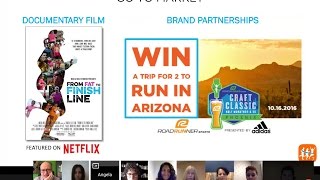
Six female founders from three continents pitch to investors at the Founder Institute's demo day. Profhire seeks $300K to connect universities with part-time faculty. Ask Pam, Bridger, From Fat to Finish Line, and DADÁ each ask for $500K for a CRM for concierge services, a B2B manufacturing platform, a community for overweight runners, and a collaborative art network.
Chapters
John? Oh, we're live. All right. Hi everybody. Uh, welcome to our online female demo day today. Uh, I see people are streaming in already, which is awesome. Very excited. Uh, let me tell you a little bit about the Founder Institute. We believe that great companies can be built anywhere, so we operate training and launch programs for amazing startups in over 150 cities around the world. Today you're going to see some amazing companies from 3 different continents. These are graduates of the Founder Institute, and these companies either have incredible traction or they've received some funding or both. They're solving big problems— satellite delivery, healthcare, and more— and they're going to pitch their businesses to Silicon Valley investors and get some feedback. So it's going to be an exciting day. Since 2009, we've helped launch over 600 female-led businesses across 6 continents, and they've collectively raised in excess of $65 million, these female-led businesses. In fact, one of our of the top companies worldwide is a female-led business. We also recently graduated an all-female class in Afghanistan, which I'm particularly excited about because that's a challenging market in general and a challenging market for women in particular. So what I'm gonna do is I'm gonna invite our esteemed investors to the screen and give them a shot to introduce themselves. Let's start with Chandini from 500 Startups. Do you want to come on there?
Sure. Hi everyone. Hi Adeo. First of all, I think this is an amazing, amazing opportunity for all the female founders, and thank you for doing this. As Adeo mentioned, my name is Chandini. I'm a distribution partner at 500 Startups, which is a global venture capital firm doing early-stage investments. They have over 1,600 investments all over the world. And I, as a distribution partner, I work hands-on with many of these startups in Southeast Asia, Korea, US, Europe, India, all parts of the world. And so, yeah, I've had a chance to meet with not enough female founders. So I'm very excited to be here.
Yeah.
And I take a look at— I work hands-on with different business models, hardware, software, technology platforms and so on. And also before that, I built two startups myself, a hardware startup and a software startup and one of them making, still making a few million dollars in revenue. So I've been on both sides of the table. I know what it is to be a female founder and struggle being on that side of the table. So I really appreciate this event and I'm proud of you for being where you are and I look forward to hearing your pitches.
Great. Me too, actually. I've heard most of them before, but I'm excited as well. I gotta tell you, 500 Startups is a fantastic organization. And honestly also one of the leaders in the world on bringing women into the investing side of things. How many women work on the investment side at 500?
So there's about 130 in staff in total, and I believe, I mean, I know close to 50% are women, 50 or 55, so it's either on the higher side or at least close to 50, and even on the investment side, Probably got 20 investors of which 10 or 11 are women. Yeah, about 50%.
That's great. And so we're really honored to have you here. Next, I'd like to invite on screen Jill Earthy. She's a Chief Growth Officer of Frontfunder. Are you there, Jill?
I'm here. Hi everyone. Hi. It's wonderful to be here too. I'm absolutely thrilled. So I'm based here in Canada and Frontfunder is an online investment platform helping entrepreneurs to raise capital in a new, innovative way and to connect with a broader range of investors. And my passion's always been around supporting female entrepreneurs. So I echo Chandini's comments around just— it's so great to see so many of you here. I do a lot of work helping entrepreneurs raise capital and access the right resources that they need at the right stage. And then also really passionate about educating, especially more women, about starting to invest in smaller-stage, earlier-stage companies and just what does that mean in creating new environments for those conversations. Also been on the other side as an entrepreneur too. So appreciate all sides of it and just thrilled to be here and in the ecosystem supporting more women entrepreneurs. So thanks for having me.
Yeah, we thank you. And, and, you know, what I'll add is that there's a lot of people in the audience. We're about to cross 500 individuals participating. Hopefully we'll get up to 1,000. So be sure to share this out to your network. We have some investors who are listening in and we're going to have hopefully one more female investor join us momentarily, Rosemary. She was having some tech issues, but we can always, you know, like all things as an entrepreneur, you get started no matter what. Maybe there's a problem in your deck or the AV isn't working, but you just keep the show going. So today we're going to give each female entrepreneur who will be pitching 3 minutes. Then we'll have the investors give some feedback for about 5 minutes or so, ask some questions, also give some commentary. And, you know, one of the things just for everyone who's watching in today, we like to be very honest at the Founder Institute because we believe that honesty is the path to greatness. So you can also ask questions in the chat and provide feedback in the chat. So For those listening and watching, please be honest. For those providing feedback, also please be honest because that's how we're going to help these companies really dominate and do amazing things in the world, which is something that we're excited to see happen. Okay, so without further ado, enough of me talking. I'm more of the moderator. Let's go to our first pitch. One of my favorite companies. It's called Profhire. Lisa is a Silicon Valley graduate of the Founder Institute, and she has a lot of experience in the area that she'll be talking about today. So, uh, Lisa, do you want to come on screen there?
I'm on screen, and do you want me to share my slides now?
Uh, now would be as good a time as any, so Whenever you're ready, we'll get started.
Do you see them?
Not yet.
Not yet.
Oh, it look—
ah, there we go. They're perfectly on screen. So whenever you're ready, tell us about Profhire.
You know, I need to go to the beginning. Alright, thank you, Adeo. Profhire is a web-based platform that connects colleges and universities and training organizations with vetted scholars and industry industry professionals for part-time faculty positions. I've been the chief human resources officer at 3 universities and found this to be one of my huge pain points and felt like I needed to solve this problem. So one of the big issues is that today more than 50% of faculty in colleges and universities are part-time. And that number is expected to rise to 65% by 2020 because of online training and some of the new training models, as well as the boot camps that are coming about. I tested this by talking with 200 academic administrators and asking them what some of their biggest issues were. 70% of them said that finding quality part-time faculty was one of their biggest issues. They also identified having a diverse faculty pool and ensuring regulatory compliance with the accreditors. Our solution is to help them find quality part-time faculty faster, and we do this with an online platform It's very easy to use. We have a diverse pool of candidates. We have right now 38% people of color identified and 51% women. We reduce risk by vetting the candidates. We verify all of their information, and we also do a brief interview with them. Today, universities are spending about $340 million on recruiting and onboarding alone for part-time faculty. That does not include any salaries. As we saturate this market, we see ourselves expanding to the larger higher education faculty and academic administrator market, and then on to additional HR tech industry. The platform is very easy to use. We get that comment constantly. The university puts in a request, they receive vetted candidates through our matching algorithm, and they're able to see not only the candidate, but they're able to download their information. They have a full portfolio of them. It also shows what we have verified for the candidate. We launched our product in February of this year and have placed so far 55, um, academics in higher education, and our numbers are growing, um, every month. The pricing model is we have a tiered university pricing model based on the number of candidates that the university assumes they'll see in a year. In 2017, we'll be moving to a freemium model for our applicants. We— our competition is primarily academic job boards, and that while they do have part-time faculty on those, they don't specialize in part-time faculty. None of them curate candidates like we do, and none of them vet. Our team is made up of myself, with years in higher education and human resources. Tak Ota, who is a database administrator and it consultant to higher ed. And Jonathan Jiang, who we call a serial startup software engineer. He's been to a number of startups. Our ask, we're seeking $300,000 to bring our numbers to 45 additional university contracts and $350,000 in university revenue in 2017. Thank you so much.
So let's start getting questions and feedback, and maybe if you switch back to the camera there. I just want to note that I've been reading the chat, and we have women from Tunisia, Abu Dhabi, Really all over the world, London. It's beautiful to see such a wide range of people. So for the various esteemed investors and as well as listeners, what questions or comments do you have for Lisa?
How do you want to do this? Dale, I can jump in.
Please do.
This is Jill here. And this is actually fantastic because I actually serve on the board of governors for a large university here in Canada, so I know that this is a pain point. So really, really appreciate your presentation and definitely know the need is there. Could you just speak a little bit more about your pricing model? So you talked about the tiered pricing and also just around confidentiality. How, as universities sign up for these— for these— sorry, these, you know—
Recruiting?
Recruiting. I need another coffee. Sorry. I'll get going here. Yeah, how does that work as far as confidentiality and how— and then if you could speak a bit further to the pricing model, please.
Starting with the pricing model, what we do is we have— so one, if they're wanting to place only one person, it's $750. And then we have tiered based on the number that they're looking at that they feel that they'll be placing in a year. So for example, if they think they'll have 25, it's $15,000, and then in increments based on that $15,000 for 25 up to the point of 50 where they get another price break.
Okay, and do you guarantee any success around that as far as— how does that work?
Once we share the candidates with them, then what we will do is if they— as long as, you know, within reason, as long as they are not able to find a candidate, we'll continue to look for them. The other thing we'll do is if we— if they really can't find a candidate, then we'll roll that over to another search.
Okay, great.
And the confidentiality question, sorry, I don't want to let that get overlooked.
Yeah, that's the key piece.
I wasn't sure if you meant confidentiality for the candidates or confidentiality for the school.
Well, both, because it is a two-sided marketplace that you're working on.
So with the school, we've had schools say, you know, that are using us now, and part of the contract is that we don't disclose who they are. We don't disclose the school to the candidate until we're right at the end so that we— so that, you know, they don't contact them directly and they don't circumvent the system. In terms of the candidates, one of the things that they really like about it is the platform is private, so it's not like the job boards where they have all their information out, and only the school sees it and only the people that are at the school that are the information shared with SEAD.
Okay.
Chandani, did you have a—
Yeah, two questions. How are you planning on using $300,000, and what are your best channels for your demand side acquisition right now? How are you getting more universities?
Right, so what we've done is we go to academic conferences, we go to— and we are partnering with academic organizations primarily, and then word of mouth is the third way, the— in terms of getting the customers. And I forget what your sec— your first question was.
The $300,000.
Oh, the $300,000. Yes, we're definitely using that to bring more schools on board. So it'll be primarily marketing and sales.
So that goes back to my first question. How are you going to amplify the word of mouth using the $300,000? And how is it going to help you reach out more academic organizations?
Yeah, one of the things when it's interesting when we go into a go to school and talk to them and actually show them the product, we have had no one turn it down at this point. And they find the need, they feel, they love the interface. What we really need is we need people to be able to do the sales for us and get out there and help us with the sales. So that's one of the major things. The other thing is being able to go to these conferences and, and talk and share what we have, as well as some advertising within the higher education community.
There's a couple questions online quickly, just to make sure our audience gets some voice. Kim was asking, are the candidates vetted? And then there's another question from Christine, and then we'll go back to the judges.
Yeah, definitely the candidates are vetted. That is— that's one of the secret sauces we have, is that we actually do vet the candidate, every candidate candidate before we put them forward to a university.
And Christine was asking, is this— and a number of people in the chat— is this a path to full-time employment for these vetted candidates, or is this really something they want to be part-time forever?
We have, we have a mix of people. We have quite a few people who are industry experts and working in the industry. And they really want to be part-time faculty and, you know, they just want to teach a class or two per semester and that's it. But we also have some people who do want full-time positions and that is identified in their profile that they're looking for something that's full-time.
Esteemed judges, any feedback or further questions?
I'll just make a quick comment. I thought it was a great presentation. I thought you hit all of the key elements and it sounds like you have a great foundation. You've built some good traction. My question is, is $300,000 enough to get you where you want to go and grow?
Well, certainly get us started. Yeah, we would then be looking for additional funding to work with the technology platform, build our base of employees.
Okay.
I also have a quick comment. So it looks like it's a great market and you guys know how to convert them into a customer once you, you know, talk to them. So that's like the demo phase. I would recommend that you try some more scalable channels. So conferences, academic organizations, word of mouth doesn't seem like a tap that you can turn on and off at your will. So that would be the most important thing for you to do next is, first of all, it's most important for the founders, one of the founders, to take up the sales, not recruit somebody to do it at this stage. So for one of you to take that on and explore better scalable channels like inside sales, email lead gen, and then, you know, doing a drip campaign, following up on that, getting on the phone with them. So you have, so you know, you know, you know what the conversion funnel is like, how many calls it takes to convert somebody, how many leads it takes to get to a customer. So that would make the $300K very scalable.
Right. That's a pretty, and of course you do growth at 500 Startups among other things. So That's a key area. Not to put any pressure on you, but would someone like Lisa be applicable for the 500 Startups program? Because her raise is right in the zone.
No, not just Lisa. I would definitely invite everybody to apply, as long as you're willing to put yourself out there, right? So we always look for hustlers. So if Lisa is going to hire somebody to do her sales, then I would just say no right now. But if she's willing to put herself out there, willing to, you know, explore these scalable channels herself and do the work that it takes to get her customers—
I'm the one doing it now.
Okay, well, that's great feedback. Um, everyone in the chat, we crossed the 500 mark. Please share it through social media. We'll put a hashtag and some links in the chat because I see that's a question. Lisa, you did fantastic there. Let's keep our fingers crossed for our next presenter, Ask Pam, which is ironic, the name of the company, because the young lady pitching is also Pam. So let's invite Pam.
Let's ask Pam to pitch.
Thank you, Lisa. Well done. Well done.
Yeah.
Pam, do you want to come online? Or Pamela, I should say.
I'm going to share my screen. I'll start by sharing my screen.
Great. Hi there, welcome. So Ask Pam is a concierge service bringing concierges into the 21st century out of Canada. So I'll turn it over to you and the floor is yours.
All right. Hi everyone. My name is Pamela. I'm the founder and CEO of ASPAM, and after working for over 7 years in the concierge industry, I decided to launch the first CRM dedicated for concierges. What is a concierge? The concierge has the power to increase customer satisfaction and hotel profitability, and this has been proven by an international hotel chain of $80 million in revenue directly linked to improved guest experience. Unfortunately, the concierge is always— opportunity in the hotel, with less than 9% of the guests who ever talk to them. And this is essentially due to the lack of— outdated technology, communication channel between guests and concierges. So this is what we do, we empower concierge to make sure they never miss an opportunity to engage with the guests. So what we did, we consolidated all the modern communication channel into one unified platform, such as SMS, live messenger, etc., that completes what is used today in emails. This automatically generates, prioritizes, and tracks the task list, and we also guarantee like this complete transparency and collaboration across the hotel. The data that are collected are now gold for the hotel management that can make better data-driven decisions. Is growing, is one of the fastest growing segments in the hospitality industry. As of today, with our current feature set and pricing, we are targeting the independent hotel that represents the no-pause, but since as we're adding features to our product, and since concierge are not only in the hotels, we are expanding in the $7 trillion travel industry. And we have a plan to do that. So we find a secret formula. What we do, we use the local— we are digitizing the powerful concierge community that exists in every city but are limited because right now they are offline. And so by leveraging this network, we can capture leads to convert hotels faster and at lower cost. We integrated that social network component into our solution, which makes ASPAM shareable and sticky, a bit like Facebook and LinkedIn, because now concierge can collaborate, connect, and exchange from the platform. So today we have over 200 concierges and hotels in the pipeline and already 3 paying hotels.
Pam, Pam, hold on a sec. Just slow down a little bit because your mic is cutting in and out a little bit. So if you speak a little slower.
Okay.
Okay, no, no, sorry.
No problem.
So to achieve all of this, a team of developers, marketers, and expert concierges. I have myself over 10 years in the industry and I launched 2 previous concierge companies, one in London, and I also worked in 5-star hotels. We are also supported by experts in the hospitality and enterprise. So today, with the team, the vision, and already a product that resonates with the market, we are raising $500,000 to reach $120,000 monthly recurring revenue by the end of next year. So if you have questions about the concierge industry, feel free to connect.
Very well done. Just for future pitchers, if you slow down a little bit in case there is a mic problem or whatever, it will make it a little easier to hear. And so when responding to questions, Pam, if you just speak a little slower, because I think I could follow, but judges, let's get your feedback, comments.
Okay, Chandini, do you want to go first?
Sure.
So you said you're expanding to the US, so where are you right now?
And I'm sorry, I can't hear, it's cutting off.
So yes, I have a problem.
We're cutting out both ways.
Yeah.
You said you're expanding to the US. Where are you right now? Where do you have hotels right now? And also you have 200 concierges, out of which 10 are paying, what are the other 190? They're still using the app but not paying?
Yeah, exactly.
So for the first question, we started in Montreal, so we have hotels in Montreal. We also have hotels in France, concierges in over 40 cities worldwide. So those concierges are not paying, they're using the basic features of the platform and they're allowing us to convert the hotel after they start using the platform and using the social networking aspect of the product.
Yes?
So you're doing sort of B2C to B sales model essentially, which has been very successfully deployed by Yammer and other—
So we're not really like B2C, we're targeting directly the community, so we don't have to go one by one. So that's the good thing about it.
Right. The C in this case is concierge. Jill, do you have—
Yeah, exactly. No, I think great, great pitch. It was well laid out.
How do you—
just so I understand, maybe you could speak a little bit more to the actual model and the value-add with it and customer service. How do you maintain—
All right.
Oh, we're cutting in and out.
I really—
Okay, I'll speak slower.
I'm sorry.
Yeah, we all need to speak a little slower.
Exactly. Maybe could you speak a little bit more to the model and how you track the information and how you keep it relevant? How do you provide customer service for these, for your customers? I don't know if that—
I missed a part. So you asked about the model?
Yes.
Maybe expand on that. The actual service. That you provide.
I'm so sorry, is it possible to write a question because I have a really hard time, um, well, uh, can you hear me okay? Maybe I can hear you better, Adil.
Okay, so the question was, um, how do you expand the model over time, right?
Um, sure.
Okay, expand geographically or into other industries.
Jill, did you get that?
Yeah, so both. And you did mention expanding to the travel industry beyond just the hotel industry.
Yes. Yes.
So, yes. So maybe just, yes.
So the fact that concierge is a— so do you only have concierge in hotels? You have concierge in other travel and hospitality organizations, which is luxury products, credit card companies, all residential, like it's very growing, and travel airline companies. So the goal is to build a network of local resources worldwide, and so we can open out our resources to those companies who right now are using call centers that then use concierges to provide service directly to travelers. So that's how we're planning to expand in other industries. With our local network of— global network of concierges.
One of the questions from Evelyn is that the problem could be a little clearer statement. She said the problem that you're solving could be a little clearer. And maybe you could just comment on that in terms of— because you opened with if they do it right, it increases the revenues. So maybe if you could talk to the problem you're solving a little more, and then we'll go back to the judges.
Yeah, great.
Okay, so the problem is because first the concierge industry is a traditional one that has a very hard time to evolve with the new technology because it's a human-based industry, a human-touch industry. So they're lacking the tools to connect with the travelers, other solutions to get the local information. So this is also empowering the concierge with the right technology in order for them to better connect with the clients because they are paid for that. So we're improving, so we're reducing the cost of the concierge and to provide more benefits for the organization. So that's the main problem right now we're solving with the CRM.
Okay. Yeah, I think that helps a lot because I think I was trying to figure out, so it's to help conversion. So engage, increase engagement between the guests, and then obviously, and then the— Okay, that makes sense. And so I think if you made that a little bit more clear in your pitch, that would be very helpful.
But—
Okay.
Uh-huh.
You said you're targeting communities. Where do these communities hang out? Is it Facebook groups? And how do you scale getting to multiple communities? So if you want to go from one community to 100 communities, in, you know, next week, how would you do that?
Okay, so the community of associations, you have concierge, local concierge association. Every city has at least one or few concierge associations, whether it's hotel, independent, etc. And you have regional as well, and national concierge associations. So that's how we're going from— that's why we're expanding to community. We have, for example, right now a ship that's gonna bring us about 6,000 concierge concierges on the platform, and we're working on finalizing that. You have the CLEDO Association, which is an international association of hotel concierge. So that's how we can expand very fast. And by having those entities, we're able to gather more association. As a proof of concept, we're getting the biggest, and we can gather the are you paying them per lead or are you paying them like an advertising cost or how, why are they talking about you to their community members? So we're providing them a platform that they can, because right now communicate with the members is by email. So they don't like, so we're solving a big problem for the community where we provide them a platform where they can gather all the members outside of the meetup that they do on a regular basis. So they can exchange, so they exchange a lot of information from the suppliers, from all the partners. So we allowing them to gather all those information on one platform, but also get metrics on the members engagement. Right now they have no information on that, and they cannot leverage that with the suppliers that they're getting commission from. So that's why they want to use the platform.
They can't track it through all the way to completion. They don't know if they make a reservation that you even go.
Absolutely.
And how this helps as well when we go to an hotel is that we don't have to train anybody using the platform part of the community. So the training was a big friction when we go to hotel. Right now with that model, we don't have to train them, so they can onboard in a couple of weeks on the platform.
Alright, Pam, well done. Sorry about some audio challenges there. Not to cut you off, but we got a few more to go. So third in line is going to be Bridger. Amira is also from the Montreal— or from Canada, and in this case Montreal. Are you online there?
Ah, there you go.
Hello.
Welcome, Amira. Tell us a little bit about Bridger. You saw one of the— you're in a— man, you were going another B2B here, so to speak. So can you pull your slides up?
Yes, I am. Can you see my screen?
We can see your screen and your audio sounds perfect. If you remember just to speak a little slower in case we run into some audio problems.
Oh, hello everyone, my name is Amira, and at Bridger we help small and medium manufacturing companies find and collaborate with validated and qualified experts to solve their operation problems. I actually spent more than 100 hours listening and analyzing the sales of big names of the manufacturing world in Canada and in Algeria. And what I can tell you is that in today's world, external expertise is more than necessary. It's actually mandatory, especially the one in operation, as it represents 80% of their issues. But today's solutions require an average of 60 days to close a deal and a minimum of $120K per project. Another option is for them to find independent consultants that are willing and able to help them, but they are hidden and considered risky by manufacturers. That's why we, we created Bridger, an online platform where small and medium manufacturing companies can find the right curated experts in days rather than months, and for a price that actually matches the reality. In our platform, a manufacturer can tell us exactly his needs, and it's okay if he doesn't know because we're building an automated tool for operation diagnosis. Then we can provide him with choices, and the company can decide with whom they want to work. We then provide both of them a collaborative platform where they can manage their project with a bunch of tools that can help increase their productivity. Today, we went from no platforms 3 months ago to a live product with actually 5 projects currently running. There is 5 others in the process to start this month. They are in 3 different countries. To help them, we have over 60 experts with an average of 10 years of experience in the manufacturing world. And as our business model is that we take a transaction fee on all the payments, the manufacturers actually pay us and we pay the expert. And as you can see, the commission is evolutive. To match the needs of our market, a market that is actually today evaluated at $6 billion. We're talking here about the operation expertise market. And for the manufacturers, they are over 300,000 in North America, with each one a potential of 3 to 5 projects and a projected lifetime value between $7,500 and $100K. As for the competition, today companies can either go to specialized firms, but they are still a lot super expensive and not really collaborative because you have just access to their expertise, or to the online platform where you actually have a lot of consultants, but no one is today specialized in the manufacturing work. And to acquire our clients, our strategy is simple: be where they are and partnership strategy. We are reaching over 1,000 qualified leads in the beginning of next year, and we're building a content marketing strategy that will help us increase our visibility and legitimacy. And it's important to know that we're also using the experts themselves to build the content, as they are writing for us. To do that, we're a team of 4 persons with backgrounds in computer science, management, digital marketing, consultant, and I spend a lot of time in manufacturers. We're helped by an amazing team of advisors in entrepreneurship consulting as well as manufacturing. Today, we would like to team up with investors to be better at what we do as well as to raise $300K for a 1-year runway and to reach our target of having 115 projects on our platform. So we're Bridger, we're bridging bridges between two worlds actually, to solve a real problem, and you guys have the opportunity to help us and help this market that is in great need of it.
Thank you.
Well done, and no audio problems, feedback or questions.
Yeah, that was a really, really clear and crisp pitch. I really love that, like, you explained things very clearly. I had no— I had no questions on the pitch itself. So tell me more about the demand acquisition. How are you getting the manufacturers?
How we get them? Okay, for now we didn't spend a penny like on marketing. We went a lot with our network, and we actually had a lot of references. And for all our first clients, all the ones that are today on our platform, we provided them with 10 free hours in the beginning, and they have to give us at least one reference at the end. So we're working a lot with, with references, and in manufacturing, you know, they all talk between themselves. So if they like you, they're gonna talk about you to everyone. So this is how we're acquiring. And then in the future, we're really doing strategic partnership. Like, we actually have a partnership with an organism here, here in Montreal, and we're targeting 100,000 leads in Montreal, in Quebec, Canada, and and in the US. We're gonna call them, be there, talk to them, and from there we'll see. But it's mainly to be where they are, to the event they are, and so on.
Jill, do you want to ask a question as well? I have one too, but I'll let you go first.
Okay, yeah, no, sure. Fantastic presentation. As I was jotting down notes about to ask a question, you then, you answered it for me. So I love pitches like that. So that was fantastic. And I also had some questions around the acquisition, and you just answered that. Although I would just be curious about a little bit more around those strategic partnerships. What do those models look like as you grow?
Okay, so for now we have two kinds of partnerships. The first one is that we're teaming up with the technology provider for manufacturers, because today with Industry 4.0, there is a lot of technology that is being provided to manufacturers. Manufacturers, and one of the things is that manufacturers don't understand them, so they still need a human being to do it. So we're teaming up with them. Today we have 10 partners like, like this one, and we want to have more so we can— they can share with us their client and we can share with them ours. And we are teaming up with universities but also with the manufacturing association because it's still the best channel for them to talk.
This—
they got association by industry, they got association cities and so on. So we work with them to get, to get to the clients.
Okay, great. Thank you.
I have a quick question. Um, you know, maybe for the— by the way, everyone in the chat thought you did fantastic, which is great. Um, one of the things that maybe if you could give us a, a very specific example, but because we have a lot of people on the line, so you mentioned these partnerships with that, that for lead gen, if you could give us a very specific example. And, and maybe even let me add one more thing, which is, because I would imagine that they're not hiring the same person over and over again per se, they're hiring like one expert here, a different expert here. And if we had an example, that could be helpful.
So, okay, so, okay, so you just— for me to make sure, you want an example of a company?
That will use—
expert they would hire and what that would do.
Okay, so actually we actually have one in Montreal that they are manufacturing some of the parts here and they got their assembly line in Montreal. And this company is growing. They went from B2C to B2B and they are expecting in the next months to get a much higher level of like of selling, so they need their whole production line to go with that. So we started working with them by first, like, we provided them with 10 free hours of help to help them identify how they should evolve. And now we have an expert that is working with them to actually help them build and plan for their assembly line, how it should evolve, and to actually meet the numbers they need to reach. And later we can, from here we can already identify the other problems. There is change management problems that are related to that, there is HR problems that are related to that, there is the like health and security problems that are related to that. So from this we can identify what are the future pain points of our clients, and even if the mandate is over, tell them, okay, If you want to keep on, here are the other experts that can help them. And it's the same platform, we just add it to your accounts, they'll have what you want them to know, and they can work together after.
That was great. Judges, I'll read some feedback. Feedback's been great, but anything else, Chandini or Jill?
Go ahead, Chandini.
I was going to ask, what are your biggest bottlenecks right now?
Right now, it's, I would say, the internal resources, because we have a number of clients on the platform, and we figured that today we're not able to have more right now. We need to scale that, we need more resources, and to be able to build like the automated product and be able to get more clients. I think this is the main pain point right now.
Sorry, when you say resources, you meant more of—
yeah, like, I think we— because we have like internally the developing team that is working on the next features, and we're automating— we're still doing some parts not like manually, so we need to automate this part to be able to scale. And in the same time, we're helping companies identify their problem, we're doing diagnosis for them, and we can't do more than a certain level So we need to figure out how we're gonna be able to scale up this with the resources we have. I think this is the biggest thing. That's why we're raising, actually.
One of the questions that came from Chelsea is, do you only generate revenue when you book the consultant or have a transaction, or is there something else that allows you to generate revenue?
Yeah, for the diagnosis, the plan is to make companies pay for it. It's gonna be a fixed price, but for depending on how they want it, but they're gonna pay for that and pay, and we have our commission on the experts. Great.
I just have a quick comment. Most of the early-stage startups should know this, that it's, there's nothing wrong in doing things manually in a very unscalable fashion. It's okay, but it's better that you have more leads and, you know, divide your jobs into the $10 an hour job, the $100 an hour job, and the, you know, $500, $5,000 an hour job. So those things you should be doing. But if there's something that's just manual and repetitive, you should just write down a process and hire the $10, $15 an hour person. That way, you know, never let your processes be the bottleneck. Let your number of leads be your bottleneck. Yeah, you can just get as many of these as you can, and even if you have to just manually pedal, you know, things in the backend, you know, your customers don't need to know that. Yeah, um, don't waste your resources automating things yet. Just get a lot of customers first, and you can automate.
There were some great comments and questions in the chat, but we do have more pitches to get through. So, um, what I would recommend, Amira, is if you want to— and, and this will hold true for all of the pitchers. Why don't you respond to some of the questions in the chat because they really are quite good and let's move on now. Well done. The feedback was fantastic.
Awesome.
Great job.
You know, that, that's really great. We're going to move on to Angela Lee from Fat to Finish Line. There's— while Angela comes on screen and gets her presentation operating, you want to pull your presentation? I'll tell a little background. You're helping people lose weight one mile at a time. You actually made a movie and were like, how do I promote the movie? And then decided to turn that into a business. So the documentary is now on Netflix. I'll maybe even watch it tonight after I see the pitch. So why don't you get started and tell us about From Fat From Fat to Finish Line, Angela.
Okay, great. So I'm Angela Lee, and my company From Fat to Finish Line is a fitness community and resource hub for overweight runners. And our vision is to be the number one digital destination for the millions of overweight runners worldwide. Now, in the US alone, overweight runners are a rapidly growing yet underserved vertical in a $40 billion a year industry. And we provide our members with an online community and a set of tools for fitness success. These tools include specialized training plans, coaching advice, and continual community support. So this is Lori, and she's one of our early adopters, and she went from overweight couch potato to marathon runner in 18 months, and she's lost 130 lbs.
along the way.
And a side note, she just ran her second marathon 2 weeks ago. So our unfair advantage is our documentary film, and it was released worldwide in September. It's currently one of the top sports and fitness documentaries on Netflix, which gives us an incredible marketing edge. And this year we've begun partnering with major brands, and together we're creating social media campaigns to leverage their customer base. We've also had team members attend major running events around the country for face-to-face recruiting. So shortly after the film, we began filming, overweight runners began reaching out to us for advice because we were featured in some periodicals and some press. And since the film's release, our membership has been growing exponentially, and it spans the globe with members in 6 continents. We had a really great member post her 5K in Algeria a couple of weeks ago. So our business model is based on recurring membership dues. And premium members will have access to multiple training plans and discount from brand partners and on Fat to Finish Line gear. And platinum membership will include local training groups and personalized coaching. So here we are going to go from just digital to a kind of brick and mortar type, not necessarily stores, but we will have local coaches and in-person training groups. Now, we're the only solution focused exclusively on the special needs of overweight runners. Our founding team has broad experience in media, marketing, finance, tech, and business development. The founders have invested $250,000, and we're currently looking for $500,000 to reach our next milestone. Which is 20,000 paid members, which would generate an annual recurring revenue of $2.6 million. So again, my name is Angela, and my company is Fat to Finish Line.
Thank you very much. Great.
Well done. Angela, you took the speak slowly advice to heart.
Exactly.
So, you know, let's get feedback from the judges. But you've also been a runner and done a a lot of this and maybe do you want to just tell your backstory for a second while the judges come up with the questions?
Yeah, you know, this is very much my story and my co-founder's story, Jennifer Rowe, who actually lost over 100 pounds while running. And she was my producing partner on the documentary. And it just became apparent, you know, when you're in the journey yourself, you kind of think you're all alone and it became apparent as we were making seeing the movie, that there's a huge underserved community out there. And that's when we realized that, you know, by creating an official community, we could all help each other succeed.
Beautiful. Chandonni or Jill? Sure.
I love that you're building a community and you've really identified this specific vertical. I think that's really important. And it's also interesting because, you know, you could potentially help all of these people who then may no longer be your customers, which is probably a good thing, right? There's always, always more people. How many— can you just speak to how many customers do you have now? You indicated your goals. How many, how many paying customers do you have?
Well, right now it's, it's free. We've been spending, we've been spending our time really nurturing our customer base in our group. So we have 10,000 10,000 members and it's all free membership right now. But to speak to what you said about customers kind of growing out of our community, the great thing is that they do stick around and they become mentors.
Right.
And maintaining a weight loss or a fitness lifestyle, if it's not something that's kind of inherent to your being, is is as difficult, sometimes more difficult than actually, you know, the journey itself. And so we have found our members, 'cause we've been around for a couple of years, and we've found that our successful members have become incredible tools for us in mentoring and helping other people.
I love that, that's fantastic.
I have a comment and a suggestion, and you can tell me what you've been doing regarding this. So for a business like yours, the best thing would be, you know, it looks like you have a bunch of data, the best thing you could do is do a regression analysis of some sort to understand what is that core feature. What is that? You know, it might be a period of time. It might be like, let's say, 3 in-person meetups or 4 online check-ins or whatever it is. They have to do X number of actions and beyond that they trip and they become retained members. Right. So I'm sure you have an idea of who they are. So what percentage have have tripped and become those retained members and what percentage have dropped off. And then, and then you can go back to those folks and ask them if they would pay for it and how much they would pay for it, right? So tell me more about what, what sort of actions you've taken to identify these core actions, core features, and what you could do to get, push people to, to, you know, take those core actions.
So we have just recently, within the last couple of months, onboarded to HubSpot. So that we are able to now do, you know, sales funnel analytics and find out how many times, how many touchpoints it takes to convert people. We have done a lot of polling and we've done some test conversions where we provided team gear and stuff like that to convert, and we did, we converted 8.5% of our members early on when we did a Team Gear test, and that's part of what we're doing our race for, is to, to be able to do more data analytics and to, to be able to have more research done.
Josh was asking in the chat— I guess he's not an overweight runner, but what are some of the special needs that overweight runners have? Because you talked about them having special needs, but you didn't I didn't necessarily identify what they are. And then, you know, another question was reiterated similarly from Tamara. So if you could go into the special needs and how you serve them, that would be great.
You know, one of the things that we kind of joke about is, you know, Nike's slogan is "Just do it." And we kind of say, well, if we could just do it, we'd all be skinny marathon runners. So it really is based around the Community, and success in weight loss and fitness is really about motivation for us, and the Community is what gives you the motivation. And we've had incredible friendships. We have bridesmaids, you know, people have become friends and bridesmaids, and people have traveled around the world to visit each other. We have one, romance, one blooming romance in our group. So it really is, you know, a worldwide family. And we've traveled and met each other at major events. Like, what, 2 years in a row we've gone to the Rock 'n' Roll Marathon in Las Vegas, and we've gone to a couple other races around the country. We've partnered with Road Runner Sports, who has a race series, and we're meeting at all of those races because one of the things that runners spend money on is destination races and healthy vacations.
That's great.
Any other feedback, judges? I'm also scanning the chat for other questions.
I was just gonna say too, it sounds like you have, I mean, you have multiple revenue streams right now. You have, you have the membership model, it sounds like you have some sponsorship relationships as well, and just, yeah, I think there'll be a number of different opportunities. Have you thought about that? How are you mapping that out? How you maximize that?
Yeah, one of the things that we look forward to as our numbers get much bigger is that, you know, we also bring new runners to the sport, and so there are people who haven't made brand loyalties yet, and that's where we have a lot of interest in brands, and that's where we're able to make, you know, kind of starting out with quid pro quo relationships like with Road Runner Sports, which is the largest running shoe store in the world, really, because they recognized the potential even though we were just starting out and our movie hadn't even been released yet when we partnered with them.
Right, right. Yeah, it's been 4 months. Yeah, it's great.
3 months, actually.
Yeah, the feedback in the chat is fantastic. There's a great question from Anna about the golf. What I would recommend, because I want to just keep time here, Angela, is like the other presenters, if you hop into the chat and start replying to people. But I got to tell you, it's— the people are very, very impressed with the judges, very, very impressed with the pitches, and there are lots of great questions coming in. And let's move on now to our last pitch. Dada, come on, come on board. Beatriz. So I'm gonna color this with a little jaded feedback. So my apologies to everyone. I actually, whenever I'm down or a little bit upset and I want to get in a good mood, I go to this website, data.nyc. And I got to tell you, you know, a lot of people are like, entrepreneurship exists to build the new widget that does this and this. And then you see something like data.nyc and you're like, Wow, like, that's just beautiful and amazing. So I hate to color things with some commentary, but I really love this product a lot. So I'll turn it over to you. Do you want to put your— do you have slides? Do you want to put them on Spanish?
Hello, everybody. Let's see.
Oh, that's— hey!
Hello!
¡Hey!
Thank you so much, Adeo, for such a beautiful introduction. Alright, so I'm Beatriz, I'm the founder of DADÁ, and DADÁ is basically the only visual conversation network in the world. And what that means is that it's a place where artists and regular people can speak to each other through drawings. What you see here, every panel is made by a different person. And it's not only— you're not only engaging in a real dialogue, but— are you listening to me?
Yes.
Okay, but you're also— what you're creating, it's your work, it's becoming part of somebody else's creation, and that's very, very powerful. So envision a global community that can take take control of their work and through software and creative collaboration achieve economic independence. Meaning that what we want is for artists and anyone to do what they love and create art together, and we as a platform will take care of the distribution, marketing, and sales of everything that is being created. So this is how it works. Somebody, this is an example, somebody in the US made a simple flower, probably not an artist, and an artist in Chile responded with this indigenous person. And from there other people started replying, and 6, 7 months later we have somebody in Italy still replying to and adding to this conversation. What's beautiful is that all of this is being created by different people in different countries who have never met each other at different times, and it's a completely spontaneous process. So basically, in essence, that is also a new way of making art that wasn't possible before. And we have over 150,000 registered users, 80,000 drawings being created by these this community, and it's very, very— our users are very, very engaged. So I'm an artist. I've done illustrations for The New York Times. I worked at MTV and Disney, and I'm also an entrepreneur. I founded an animation studio in New York, and I managed its offices and the offices in South America for over 10 years. We have a CTO, tech co-founder, who's been with us from day one, and a CMO co-founder who's been for 20 years in advertising, who takes care of all the communications and the community management. So we, at this point, we know that 80% of our users come to view viewers. So we're thinking that if we can get to 3 million content creators, they can attract 10 million viewers who can potentially become— could be able to buy this content. So our goal is to get to 3 million by spring of 2017, and we know that we're missing out a 80% of the market by being on desktop only. So the main component here is to make a killing mobile app, and for that we partner with Apple as they're pushing Pencil, which is specifically to draw. They're helping us in every step of the process of development, and they're also gonna help us with business and and especially for us, the marketing once we go to market. So, you know, we're experimenting and exploring different revenue models. One of the things is the content, and people are creating original content. Just remember that nobody's uploading anything, everything's being created there. So we're partnering with different platforms so that we can integrate the APIs and just monetize this content, whether it's for merchandising or digital art or Pond5, you know, it's a marketplace for royalty-free images. We're exploring those avenues with them. Where the big opportunity is, is the talent since we're creating a very engaged community. We know that we have an addressable market of 16 billion just in the US. And a very interesting opportunity came out where SAP came to us and they want to do a pilot program with 7,000 of their global employees because they see that as a platform are the perfect space for employee engagement, fostering creativity and innovation. And also because it's a universal language and they have a lot of problems with language and cultural barriers, they think that this could be a great place for them to solve all of that. So that is where unique. There's nothing like it online, offline. We're not an online gallery, we're not a drawing tool, we are an engaged network of people who are creating art with each other. And we're fundraising $500,000 that will get us to that next milestone and then raise Series A. And thank you very much.
Wow, guys, I gotta say, well done, Beatriz. I really, I've been typing in the chat. If you gotta see it to believe it, because I mean, I scroll through some of them and I laugh. I scroll through them and I cry. I mean, it's like nothing I've ever seen. It's really, and for the judges, I would recommend it's just Dada.nyc if you want to pull it up and scroll as you ask, you'll be Hopefully, hopefully you don't crash your connection.
I was just peeking, peeking on my phone. It's unbelievably beautiful. So thank you so much.
Yeah, uh, so again, I mean, this is a kind of business that you just don't normally see, but it, it's beautiful. So questions, anyone in the chat as well? I see, uh, I don't know, actually you have someone who wants to invest. —perfect. So sorry, I just had to throw that out there. Yeah, that's awesome.
Santini? I just want to continue with what Adeo said. This is, you know, all the pitches have been so unique. None of them are like, oh, the Airbnb for X or Uber for Y, right? They're all super unique ideas and they're all authentic founders. They're all, each of them solving their own problems. So just like, I pulled up Della as she was talking about it. I love I love that when I try to scroll down, it scrolls right. And the design is just very impressive.
Very impressive. Thank you so much. Yeah, no, I love it too. I was just saying, just the communities that are being created, you know, by each of you, but certainly this last one as well. I just love that, that impact that you're all having on bringing people together in your own unique ways. I think it's amazing.
Well, I gotta say, so actually there's a bunch of people people in the chat saying, how do I invest in these companies? So, um, I didn't necessarily expect that, but I hoped it. By the way, I'm kind of tearful because it went so well. And you're right, these businesses are just so awesome and unique. And, and Dada in particular, I just— not that I didn't love the other businesses. To me, it just speaks— again, it just makes me happy. So for people who are interested in investing in the chat, You can email grads@fi.co, and, and we have a gentleman named Mike, and he can put you in touch with the founders, uh, to, to comment. And then we'll paste in the chat a list of the companies and their URL so you have their names. But let's go back to additional, uh, feedback about data. I mean, uh, Jill, Chandani, anyone?
Yeah, I mean, I just love— I mean, you're getting great traction, which is fantastic, going back to that. And you've identified— you identified what you need to do, I think, around the mobile app, around, you know, the partnerships you're establishing are fantastic. I don't know if I have any specific questions that you didn't answer. Your revenue model, you're working on different aspects of that. I think it's all— yeah, it's all wonderful. Thank you.
I have one very basic question. So how— how you said it's only on desktop, So you said the images are uploaded. So somebody just draws on their desktop using the mouse right now?
Okay. Yeah, yeah. Mouse or tablet. Yeah.
Okay. So the question I had was, you know, why not open these up for sales right now? Like, you know, you were talking about that being one of your revenue models for just any consumer who comes to your site to just be able to buy one of these. Right. What prevented you from opening that up?
Well, this is one of the things that we're doing. Actually, we're testing that exactly this week. We already created it, but we believe that we now— we don't want to— one of the things that we're very cautious is that we, we don't want to be a marketplace necessarily. We want to use marketplaces that already exist. So we are gonna do it and we're gonna put it out there I guess, but for us, the.5 partnership would make more sense. So whatever way we can do it together, like with TeePublic, for instance, they do merchandising, right? Any drawing can become a t-shirt or a mug. If you go to DADA, you will be able to do that, and only the transaction will happen at TeePublic.
Turn it? Because I'll tell you, there are ones that I've seen that are so beautiful, profoundly beautiful, I would buy. And they're really— the chandonniere, back to your question, like, they're really long, right? You can scroll through forever. But I mean, I don't know how you would even print them. That would be an it. But I would have one on my wall, no question.
Yeah, that's— yeah, absolutely.
There is a plan I got that from a Curious, it's called, that in New York that is basically tackling that problem. So anything that you do, they can make it in beautiful prints already framed and they send it to you. So those are the kind of things that they can do.
I mean, I would buy one that's 10-foot long and that one with the flower that became the aboriginals that became the eagle, I think it's one of the most beautiful things I've ever seen. Humanity create. I mean, that's enough. I mean, to be honest, so I would have it printed on my wall in a heartbeat. Yep, I agree with that. Sorry, I keep— gorgeous. Any other questions, guys? Maybe some final thoughts if you don't have other questions or feedback.
I just have a quick comment on that. I think you might be underestimating the consumer to creator ratio, because for something like Yelp, say, I know it's not a good comparison, but just something like Yelp, 90% of consumers, 9% of them— this is sort of like, you know, a rule of thumb kind of thing— 9% of them give the thumbs up, thumbs down, or the stars, and there's only 1% creating the actual reviews. So similarly with your, you know, with your visual communication, visual storytelling thing, if you only have 1% of creators, you can have 99% consumers So what I was trying to say is, if you focus on that, if you are trying to monetize the consumers and not the creators, that would be easy to do by opening it up. By getting the consumers would be an easier thing to do, is what I'm saying.
Right, exactly. Yes, that's the one thing that we learned, that actually we created the platform for content creators, not thinking necessarily of viewers. So the actual experience when you view it is terrible. So what we, what we are doing is making it into a discovery app and redesigning the whole platform so that it's very easy for people to just see it and see the whole content. So that's exactly— so that we would like to get— we think that if we do that, we would probably get about 60 percent of active users because they're mostly consumers.
Yeah, it's— and the thing is, you've done the harder part. For most people, getting the creators is harder. Yeah. And getting the consumers is easy. So it's because you were so focused on creators, you've done the harder part already. Yeah. So it's easier for you to grow from here.
This has been beautiful. By the way, Sue, your, uh, co-conspirator Judy is answering questions. Oh, great. I would ask back questions, but you're speedily responding to everyone. Well done, Beatriz. Well done. Thank you so much. This is really lovely. Let's get some final thoughts or feedback because we have women and men from all around the world listening in to this webinar. I literally, as I mentioned earlier, I saw Europe, Africa, the Middle East, obviously all across America and South America. So, um, uh, Jill, any, any closing thoughts from you or feedback? And then we'll go Chandani last. And yeah, sure.
No, I mean, I just, I loved all of the pitches today. I mean, I always love hearing the stories, and I think that does— that really came through today is the stories and the impact and that authenticity that we talked about. And I think that I think that's powerful. That's what makes people want to jump in and invest because they believe in the people behind these businesses. So keep doing it. You're doing amazing things. And keep asking for help and reaching out in these types of forums. And Adeo, thank you for curating this type of forum because I think it's so important, as we were sort of talking a little bit about before. We do need more. We need to change the environment to bring more women and men together to support more women as they're building and growing their businesses. I think this is just fantastic.
So thank you. Well, thank you, and I want to thank my team. We've got a wonderful team. We have two women on our team, Megan and Rachel. We have more than two, but the two women that are focusing very aggressively on trying to get our numbers up to 40% female graduates worldwide. Awesome. So I want to put a special thanks out to both Megan and Rachel for their work today. Chandini, what are any final comments or feedback from you?
Sure, I want to echo what Jill said, that it's the authenticity of these founders and what they're trying to do is what is most impactful and would spur anybody into action. So kudos to everyone for that. And the one piece of advice if I have to give that's common to everybody is take a few more risks, because one thing that I heard with everyone was is, you know, I'm trying to improve the product a little bit more before I go do X. It's okay, you don't have to be perfectionist, you know, you don't have to have a great product, just take more risk, go get more customers, and then learn on the court, right? Don't try to learn the game outside the court and then go play. Just be there, sell it, you know, it's okay, your customers are forgiving. And the third thing is I want to offer to help. So if anybody, you know, I'm happy to work with any of these these 6 companies to help them, you know, with some office hours or if they want to pitch to 500 or whatever to work with them personally one-on-one to help them get to the next step.
Absolutely. I extend that offer as well. Happy to help in any way I can.
That's great. And the feedback in the chat, I want to thank everyone. There's been a lot of questions and responses, offers to invest, which is great. Who would have known what a successful after— morning and afternoon morning, afternoon, and evening depending on where you are. This has been— so I want to thank our esteemed judges. I want to thank all the beautiful companies and their great work and all of the guests. So thanks everyone, this has been amazing. Thank you, thank you all.
Good luck. Bye everybody. Bye everyone. Thank you.










