Female Founder Roundtable: Building the post-COVID-19 World
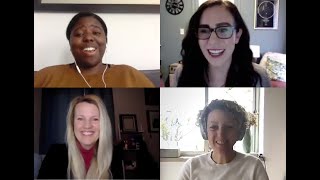
The session, moderated by Rachel Shepherd of the Founder Institute, brings together four female founders—Olivia Owens (iFundWomen), Stella Suíça (Daytow/Dytal), Liza Rodewald (Instant Teams), and moderator Rachel—to discuss the biggest challenges female entrepreneurs face during the COVID‑19 crisis and practical ways to overcome them. The conversation covers uncertainty and the need to pivot, limited access to capital, the role of rewards‑based crowdfunding and grant programs, remote leadership and employee wellbeing, the importance of diversity and inclusion, building supportive communities and mentorship networks, skill‑upgrading for the remote economy, and fundraising strategies in a virtual world. Panelists share concrete tactics such as flexible work policies, mental‑health check‑ins, virtual learning circles, leveraging partnerships, and using community platforms to expand networks. Audience questions are answered throughout, focusing on mentorship, starting a business in a new country, encouraging women to use crowdfunding, and the competencies employers now value. The roundtable ends with a call to action to stay connected via the Female Founder Initiative’s Slack, office‑hours, and Founder Institute programs.
Chapters
Hello everyone. Good morning, good evening, good afternoon from wherever you are in the world. Welcome to the Female Founder Roundtable we're having today with the topic Building the Post-COVID-19 World. My name is Rachel Shepherd. I'm the Director of Global Marketing and the co-creator of the Female Founder Initiative here at Founder Institute. And I'm very excited to be joined by a lovely panel today to sort of answer your questions, talk a little bit about the struggles female founders are facing right now, how to get past them, what we think that can be helpful for female founders in the future, and really just having a wonderful conversation. And so we are expecting a huge audience today from all over the world. So before I talk a little bit about the initiative as well as discuss a little bit about Founder Institute and introduce our panel, I want you to tell us where you are calling in from in the world. So go ahead and put in the chat. Let us know where you're from. And I'm calling in from the Bay Area, from California, and that's where I'm at today. So the Female Founder Initiative, what is it? It's powered by the Founder Institute, the world's largest pre-seed startup accelerator. The initiative is designed to help women launch, grow, and fund their startup communities. We support women through newsletters, Slack channels, partner resources, and office hours. You can learn more about that at femalefounderinitiative.com. And that's whether or not you're interested in Founder Institute. We're here to help. We want to help as many women around the world as we can, no matter where you are. We're hoping to help you get to that next step, help you at least, you know, get through one challenge. And that's our whole goal. So if you're interested in learning more about that, as I said, you can go to femalefounderinitiative.com. If you're interested in learning more about Founder Institute, we're currently enrolling across 6 continents. So you can find out more about our program and where we're open at fi.co/enrolling. But without further ado, I want to introduce our amazing panel we have today. And first up is Olivia Owens. She's the head of partnerships at iFundWomen. Olivia is the— in addition to being the head of partnerships at iFundWomen, she's also a founding team member of iFundWomen, which launched in 2016 and continues to help women raise millions of dollars in capital. Welcome, Olivia. Do you want to tell us a little bit about yourself?
Yes, absolutely, and thank you so much for the introduction. Really excited to be here today. I am in Brooklyn, New York, and yeah, I'm here with iFundWomen. We are a startup funding platform designed specifically for women entrepreneurs, and we provide access to capital through both crowdfunding and grants, expert business coaching on all the topics you need to know about, and a connected community of women entrepreneurs going through this journey together. And really excited to talk about kind of how we've seen we've seen women flocking to our platform leveraging crowdfunding as a tool to navigate this time with COVID and talk about some strategies that we can leverage to keep our businesses going.
Wonderful. Thank you so much, Olivia. Thank you for being here with us today. Next up is Stella Suíça, founder of Daytow and startup community leader in Portugal. Stella is the founder of Daytow and a startup community leader in— for Lean In Portugal as well as Startup Grind Lisbon. At Dytal, she helps European tech companies access and retain diverse talent with a focus on women. And as a Lean In regional leader, she supports a large network of women and men dedicated to gender equality. Stella, do you want to tell us a little bit about yourself as well?
Yeah, thank you very much for calling me here. It's amazing to share the floor with amazing women and have this conversation. I'm based in Lisbon at the moment. My last 10 years were, I spent them in Dubai. That's when I started my quest for women and found that was my passion and my calling. And yeah, just in January, I started Daytel, which stands for diverse talent. There is a big need for diversity in technology especially, and in both in technology, in technical positions and in leadership positions. So a few people started asking me, where can I find more women? And then I decided to start this, and I'm super excited, super happy to be here and to be making a difference and helping people understanding more about unconscious bias. And how to overcome it. So wonderful.
And last but certainly not least is Liza Rodewald, CEO of Instant Teams. Liza is a 4-time entrepreneur and software engineer and the founder and CEO of Instant Teams, a technology platform that enables companies to create and manage remote customer success teams powered by a global workforce of military spouses. And it shouldn't go without note that Liza closed a $1.5 million round in February as well. So congratulations, Liza, do you want to share a little bit about yourself?
Thank you. So excited to be here with you guys. Founder Institute has always been a really great supporter of Instant Teams and myself. I went through Founder Institute in D.C. when I lived there. But just as a little background, I kind of call myself an accidental entrepreneur. I started my journey actually pitching remote work type consultancy to my first company. Wanting to have a little bit more control of my time and some flexibility. And that kind of led me into the path of entrepreneurship. And I did, like we said, this is my fourth company since starting that journey. And really along my path, I saw the need in the corporate space to have a solution for remote teams, remote workforces, being able to assemble them, being able to do the HR payroll side. And then in that journey, I met and married my husband, became a military spouse. So I was already working remotely, had a distributed company. And then when I moved into my first military community, that's when I met the military spouses and just an amazing untapped talent workforce. Um, that was at like a 26% unemployment rate just because they moved every 2 to 3 years. And so I started mentoring and helping and met my co-founder along the way. And her and I came together and decided, okay, this technology idea that I have for Instant Teams and this untapped talent pool and this idea she has for giving them remote work. Let's combine these two things together and see what we can do. And that's how we started Instant Teams. You know, we went through the Founder Institute program, raised the seed round, and then now just closed our $1.5 million round in February, right before COVID hit. So definitely an interesting time to be in the space and to be fundraising. So happy to answer questions about my journey along that way and you know, what we, what we did and the approach that we took in order to close that round.
Absolutely. And we'll dig into a little bit of that as well, fundraising pre and during COVID-19, right? So we'll talk about that for sure. First of all, we have an amazingly global audience today. We have people calling in from South Africa, Malaysia, which is amazing because you're still awake. And that's awesome. You stayed up to join us and we really appreciate that. Amsterdam, Canada, Switzerland, Russia. Welcome, welcome everyone. Thank you so much for joining us. From Zimbabwe.
Hi.
Thank you. We're so excited to be here to answer your questions. As you can see, we have some amazingly talented women on the call today who have generously given their time to just share their experience and talk a little bit about, from their experience, how can women make it out of this pandemic stronger and in a better position, especially for their company, right? So Let's go ahead and dig in. We're going to go through some questions we have, but please put your questions in the chat. I have— our team is working to make sure that your questions get answered. And so we'll be weaving that in as we, as we get started. All right. So first of all, I'd love to hear from the whole panel. From your perspective, what is the biggest challenge female founders are facing right now? And do you have any tips for helping female founders get through this global crisis? And that could be from your experience or women you know who are experiencing something specific as well. Who wants to jump in first? Let's go with Liza. Liza, what are your thoughts first? Okay.
Well, from my perspective, I think one of the things that female founders struggle with sometimes is change and pivot that I've seen and holding on. So especially in the COVID time, like it's time to kind of just take a step back and reevaluate, see where your business is, what's going on, and then where you can make the changes to pivot. Because sometimes I think we're reluctant to do that because, no, this was the path. And I'm, you know, not stubborn, but just really into, you know, passionate about what we're doing and the companies that we find that we have founded. So sometimes it's hard to change and pivot when you need to. But having an open mind and then realizing that those things are not failures, right? If you have to change, you have to pivot. These are not failures. These are just modifications that you're making, things that you're learning. You're adapting to the environment that's happening. And, you know, even at Instant Teams, even though we're a remote workforce and remote workforce management platform system, so we should be great in COVID, there's still changes and things we've had to do to pivot because the environment is just new for everyone. So not to be afraid of those, but embrace that and then figure out, okay, how do you come out of that on the other side? And then how do you thrive in it at the moment as well?
Absolutely. Stella?
Yeah, I totally agree. At the same time, I think from my talks as well with the women founders in my community is that they are so overwhelmed by the uncertainty. For me, I would say that's the word that I hear the most. There is no clarity. So uncertainty is kind of the new normal kind of thing. So a lot of people as well, from what I feel, they are overwhelmed on the pivoting side. Like, is it really— like, should we pivot? And if so, towards where exactly? Trying to anticipate all the needs of the future, trying to anticipate what is going to be the new normal after this. And then trying to get ready to serve the needs that are gonna be— we are gonna start to see in a few months when we are gonna finally gonna know what is gonna be the new normal. No, but that's what I feel right now, that is all of these. I think also a big challenge that we are all facing is in the finances, right? And not being able to— a lot of companies as well, they don't— they have employees, right? And how can they assure to keep that people in check? So all the layoffs we are seeing, they're definitely challenging times that we are living.
Yeah, I totally agree with that. I think the biggest need that we're seeing from the entrepreneurs in our community is simply access to capital, which is not new by any means due to COVID. But it is how are we able to leverage all of the different tools and resources out there to get the funding we need to come out on the other side. And so obviously we're really dogmatic about crowdfunding at iFundWomen, and we're seeing our entrepreneurs in kind of two different need states. The ones who are now coming to us because they need to raise some emergency funding to cover payroll, to cover manufacturing costs, whatever it is over the next couple months. And then We're seeing entrepreneurs who are kind of using this time to say, okay, I can use, I can use this opportunity to plan out a campaign later in the year and really get the education that I need to make sure I can be successful down the road. And then we're really focused on getting grant opportunities out there. There are so many big companies who need a way to market right now and showing up with your dollars can be very valuable. So I'd say also stay tuned for grants for MyFundWomen because they're definitely in the works and we know how needed they are.
On that same thread, Olivia, do you want to talk a little bit about iFundWomen and about, you know, how it works, how it's a rewards-based crowdfunding platform? Just because I know funding's top of mind and that's gonna be a big topic, I think, for a lot of the ladies here on the call. So do you want to chat a little bit about that quickly?
Absolutely. And I see Lauren in the chat is saying, "Access to capital, if I had $5 every time you hear that phrase, I wouldn't need access to capital." and I 1,000% agree with that sentiment. So for iFundWomen, we're focused on rewards-based crowdfunding. So that's selling your products, services, content, experiences in exchange for cash for your business. There is no equity exchanged, but it's really about kind of digging into where are those opportunities that you can pivot or what are the expertise or superpowers that you can leverage to enhance people's experience right now? The reality is, Many people are still spending money on things and they're spending money on the things that are enhancing their live, work, play from home experience. So what are the things that you could offer them, um, in exchange for cash for your business, whether it's digital day camp for their kids or it's self-care kits for mom or whatever it is, how can you get really creative, um, to engage your audience in a way that, that'll make them feel good about spending their money on you?
Absolutely. Yeah. And that's, you know, there's, there's, that's back to the pivoting point, right, that we were all sort of touching on earlier is just like, right now is a time where you have to go back to your customers and understand what your strengths are as a company and what their problems are now in this new normal or new world. And how those, those problems are going to change as we start to come hopefully out of this, you know, and soon. And so that's a big thing for sure. And so kind of along those lines, I would love to hear from each of you too about how you're leading. So there's a lot of challenges as a founder right now, or as a leader in a company and having to, you know, have hard conversations about money and other things like that, or even, you know, approach how, you know, sort of pushing people to make sure that we're getting the work done we need to get done, but also at the same time giving people space to deal with their life that is happening right in front of you and that we're all sort of experiencing, right? So thoughts on that, Stella, do you want to start off?
Yeah, where to start from? There is so much happening at the moment and And yeah, we were talking before about the normalization of being at home and everything, what is happening. I think it's a good time to pause and think of what we really are doing and what we want to do. Rethink our strategy as businesses. And I think it's a good time for a lot of companies to rethink as well the company culture. And make diversity and inclusion part of the core of the strategy. I think there is a business case for diversity and inclusion, and it's proven over and over. So why not using this time to change things around and to really test? I mean, we have seen what happens when there is no diversity. So why not give it a chance, right? It's proven that it works. It's proven that it boosts innovation. It's proven that it boosts motivation, ROI. What else do we need to prove, or we need research to prove, for companies to understand that this is good for them? They are not making any favor to anyone. It is good for business. It adds— it makes business better. It makes health and mental health better as well, because people feel safer and included. And it's always the same thing about diversity. It's not only diversity, it's also inclusion. If you have a policy of hiring people and you're showing more diversity, but you don't make them feel part of it. And now I think it's so much more important for companies to make their employees or their teams wherever there are freelancers or full-timers or contractors to make them feel part because it's so lonely to be at home away from your team. And some, lot of women especially are alone with a lot of, with the kids or with a lot of tasks extra apart from the work they do. So I think it's really important time to rethink our strategy and think that We need to include diversity and inclusion as core part of our, our business practice.
Just to kind of chime in a little bit on leadership on the Ensign team side. So we have over 90 people that work for us day in and day out, all remotely. We have really paid a lot of attention to building remote culture prior to this starting so that people feel connected and engaged. And we have all kinds of programs that are surrounded that. But one thing that was really interesting is we had just formalized our remote work policy that included childcare so that people would have childcare during certain hours. We instituted what we called core hours for each time zone so that everyone in a certain time zone had coverage, childcare during these hours, which were core working hours. Well, we released that like 3 weeks before COVID So obviously, once COVID hit, we're like, okay, throw that policy out the window. Now we got to figure out how do we support everyone who has their spouses, their children, like everything at home with them working now because that's a totally new environment. So we started creating job sharing opportunities. So if workers needed to say, okay, now I can really only work 3 to 4 hours a day with all the other load that I have now with the homeschooling or with whatever is going on. We gave them that opportunity. You don't lose your job if you need to scale back, just tell us, we'll work with it. We instituted like different working hours. So if you need to now work at night or early morning or midday, like whatever works, like come to us, tell us your schedule, let us work with you and figure out what makes the most sense so that the stress, we don't continue to add stress into your life. Because what we've seen from our workers is they are so dedicated and such hard workers, we have to tell them to stop working. Like, please put the phone down, don't answer my Slack message, don't answer my email at midnight or whatever. This is when I'm able to work. And we even put like an automated message on all of our emails saying, I'm working in the time that works for me. Please reply and respond in a time that works for you so that people don't feel the pressure to be responding 24 hours a day and doing that kind of stuff. So as leadership, those are the things we kind of looked at, how we can best support how we can continue to operate fully as a company, but also how can we support and not put an additional burden of stress and anxiety on people that are already stressed and have, you know, all of these situations going on. We also do mental health check-ins. So we have in Slack, we have these color-coded hearts where we just put them in and you're green if you're okay today and it goes down all the way to black. I'm struggling. That way people can just drop a heart and then we can reach out one on one and have a discussion. So that doesn't have to be a big deal. It doesn't have to be open. But a lot of times people will not come to you and say, hey, I'm struggling. But if you give it, open the door and give an opportunity, then they may reach out and say, OK, yeah, I could actually use a little bit of encouragement here. So that's one thing that, you know, we did just to kind of have check-ins, but not also stress people out with having to have more check-ins and more Zoom calls and things like that, trying to offer support but also limit it so that it's not adding to the extra stress and pressure.
I love everything you just had to say, and I'm definitely taking notes for, for our team. I think that's kind of what we're all trying to figure out. And I think that kind of the underlying thread in this is we've all been level set. We are all on the same playing field. We are all working with the same access to each other. And, and so I think that that's been kind of humbling. But I also I also think it opens up the opportunity. I know somebody asked, how do you have those hard conversations with stakeholders? I think stakeholders understand where you're coming from. And I think it's just a need for you to be really clear about the challenges that you're facing and opportunities for you where you might need support. But back to the other part of the question in terms of how is I Fund leading, I Fund Women leading during this time, we're trying to make our tools and resources as accessible as possible. So we have workshops through our platform every single week, whether it's— I think we have one coming up this week on how to do financial planning for your business during a crisis and just these topics that are top of mind. We've made all of our workshops free so that you can get access to these experts similar to this experience and get those questions answered and get the support and kind of just look around and say, everybody is in this boat with me. And therefore we can all work together to get, to get forward. And so the other thing that I'd say is really pushing our entrepreneurs to make the ask, whatever it is that you need. Nobody can assume, nobody can guess what your needs are. So stepping outside of your comfort zone and saying, hey, look, this is what I need right now. Where can you come and support and how can I do that vice versa?
Absolutely. I love everything you guys said. And I think that there's, there's so much truth to it too, right? Like about people. I love the idea of the Slack messages because I think when you ask people, I know at least I feel pressure to be like, I'm good, I'm fine. You know, because, you know, my family is thankfully healthy. And we're certainly hoping that everyone out there, everyone listening right now, that your family is healthy and you're healthy and safe. And, you know, I feel like I've been lucky through this this, this crisis. But there are times where, you know, you just don't feel like yourself, you're still working from home in a global crisis. And so finding unique ways like that to check in with people that are a little more not direct, because if anyone asks, they're likely going to say, like, I'm good, I'm fine, which is maybe not always the case, right? So that's, that's incredibly powerful. I love that. We got some questions too in the chat about, you know, sort of retention. So how are you guys handling retention with people, meaning with your employees as you're managing your teams? You know, I think a lot of people, you know, may have even been thinking about moving on to a next step before COVID-19. And now they're like, oh, maybe that's not— now's not the time. But how are you really working on building amazing bridges with your employees so that when this time comes and ends, as it will, because everything will pass, when that happens, how are we— you wanting to make sure you're keeping your best people on board with your team, as I think some founders are hoping to be able to do even through the crisis? Sorry, Liza, do you want to start with that one? Yeah.
I think, you know, just the layers of support that you offer right now is going to make a big difference, right? So being connected, having empathy, making sure that you are taking the time to listen to what's going on in everyone's individual life, because everyone's life looks different. Everyone has different challenges now being working from home. So just being really honest and having open conversations, I think will go a long way with the employees and the people that work for you, and then knowing that you actually care. Like, the outcome here is that everyone is whole and doing as best they can. And sometimes if that means they have to move on to another job, then you— that's what it means. And you have to bless it and let them go, right? Because at InstaTeams, we especially don't want to seem like we're holding anybody captive. We want the people here that want to be here and that love what we're doing, love the mission, and we will support them in any way that we can think of to make it better. So as long as you have that kind of mindset, I don't think you have to worry about you know, your best people leaving for other opportunities. You know, you're creating the culture, you're setting the tone, you're being the leader, you're being empathetic. And those are all the things that you can do. And if there's something that they need to do outside of that, then it's nothing to do with you or your company or your team. It's just something they need to do. Right. So looking at them from those lenses and just making sure you're offering every layer of support you can right now and knowing that The needs are greater right now than in a normal situation. So how can you think out of the box? How can you come up with new ideas? How can you come up with new ways to offer support to your existing team members that maybe you hadn't done in the past?
That's fantastic. Also, and I want to, I want to have Stella follow up on that, too, because, Stella, you run a lot of these community platforms in, in Portugal, right? You know, you have Lean In Portugal and Startup Grind Lisbon. And you're running both of those. So, so how do you think that community is really helping people sort of get through this right now? So like the company is one sort of bridge that can help people stay healthy, you know, check in. But as founders, that's sometimes a very small team, especially at the early stage many of these teams are right now. So how are you seeing like these larger communities play a role in helping people sort of lead and learn from one another and keep ourselves healthy during this time?
Yeah, thank you for the question. And the best thing about this situation is that we are not limited by geography anymore. And this is a proof of it, right? We are connecting from I don't know how many different places. We have people from every single continent participating in this call. And that's, for me, has been an amazing thing. And I think for the community as well. Because I instead now, I mean, we are living in Portugal and we are focused on the people here, but I started also inviting people from other places to join our talks. And it has been so, like, it has enriched us in that sense. And it has enriched everyone as well on the conversation. So for people to network with other people, to exchange ideas, to understand what is happening in other countries, how other people are tackling the same problems, because at the end of the day, problems are more or less the same. And be able to talk to people that is in the other side of the world, but having the same difficulties as you, is making a big difference for a lot of people. It's making a big difference for me. I started this community because I also needed when I came here to Lisbon. And it's so good that now I can include my previous communities from Dubai and the Middle East as well within my new community. Because now everyone is online. So it's been amazing for me as well. And we were discussing about this a few days ago, is like you can talk virtually to everyone in the world. And now everyone is open for a call. And so my Calendly is on fire basically, because I'm dropping lines to a lot of people and reaching out, and I'm empowering my community to do the same. And the results are being really good, is that you can really have a virtual coffee with a lot of people that you always wanted to to talk to, from those institutions that you admire, from those partners that you want to make some partnerships. Find that time to have that conversation and start new partnerships. For me, that's one of the things that is working and I'm seeing a lot, helping the community as well to reach out and network. And in a human— but what we are saying again is, sadly, like, it's we are so much human. In a sense, like we are not rushing from one place to the other. So we are, I feel like people is more present. I don't know what is your opinion on this, but that's mine personally. And one more thing, yeah, and one more thing about this, sorry, I just came up, it's like, on the learning circles, one of the things that I love the most and that I would really recommend as well for your company employees, Lisa, for your teams is that we set up these times, like some circles that are to talk about our feelings, how are we today. And I usually, or the person leading the call usually starts. So when, usually it's me. So I start saying like how I feel this week. And I talk about when I felt really good, but I also talk about, for example, when I was really bad. And I think that opens the room for people to be, to be vulnerable and to talk about how are they feeling. And mostly my groups are for women, but we have seen as well a lot of men, like the moment I start opening for men, we have also a lot of men showing up and feeling safe to be able to talk about their feelings. So it's been really good to create those safe spaces, and I recommend everyone to go ahead and do that. And if they have any questions, to reach out to me, because I will be super happy to give you a few tips to start these kind of circles.
I love that. And I love that point you made too about how, you know, geography isn't necessarily a blocker anymore, right? And we're having these amazing conversations. And I think this is a time where, as a leader, you can really get outside of your own bubble. And I say that almost introspectively because I live in the Bay Area and Silicon Valley is a very unique place, but it's really important to have conversations and understand what people are going through in other places around the world. And also to be able to rely on those communities and connect those people. You also touched on partnerships, which is something that Olivia is an expert in, and I'd love to talk a little bit about that too. So how can partnerships for founders really lead to some opportunities during this time as they start to sort of recover and build out from COVID-19?
Yeah, absolutely. And I think this kind of also ties into what Stella was talking about in terms of we're kind of open opening our minds to the reach that our businesses can have. For example, if you had a business that was a brick and mortar in a specific location, you could only serve the people who could come into the space. That's kind of been blown up now. Now you have to create a digital membership and why only limit to people who are around you? You can, you can think bigger. Um, and I think that's also really valuable when it comes to the partners that you're identifying. It's asking for us, we're asking our entrepreneurs, what are the tools that you're already using that we could reach out to and figure out how we can partner and make those more accessible. To you, or who are the communities that are hungry for content right now? Everyone's looking for ways to do customer engagement and what's the value that you can step in and provide and where are the opportunities where you can look for partners who can provide that in return? And I think we can get, we can start thinking really outside of the box and part of what I've been able to do since COVID is take a second and stop thinking, well, this is how we've always done it. And similar to what Stella was talking about when it comes to diversity and inclusion, it's how How can we get innovative here? How can we think outside of the box? How can we step around the existing kind of systems that we've put in place to make more of an impact? And I think conversations with partners to hear what they've done in other places and collaboration is going to be so crucial in that.
Absolutely. And I think that what's so amazing, you know, to your point, is just that right now is a time where women leaders all over the world, founders, etc. The future will be built without us if we are not there building it, right? So it's, it's so important to come to the table representing who you can represent and sort of build the future from a diverse perspective, right? And the great way to do that is with partnerships and really kind of opening that up right now, especially as a woman in tech, you bring a very different perspective and you can approach a lot of companies and say, hey, I can, I can bring you something different and reach a new opportunity or a new group of people, which I think is super powerful.
Awesome.
So we want to get through some of the questions in the chat as well. So Nicole says that, how did you gain the acumen or go about moving from an initial idea to establishing a successful company? And did mentorship play a role? So I'm gonna, I'm gonna send that back to Olivia. Olivia, do you have some thoughts on that?
Yeah, so what we really ingrain into our entrepreneurs is once you have an idea, the most important thing for you to do with that is prove demand for it. Prove not only are people interested in this, but are they willing to pay for it? And that's really what we see crowdfunding as an exercise in. It gives you the ability to prove demand for your product or service before you invest in supply. We firmly believe you should not go into debt funding the earliest days of your startup because you don't even know if there's a there there yet. And we're super comfortable talking about failure at iFundWomen. Our founder's first startup was a failure, and that's how iFundWomen was born. They crowdfunded as a Hail Mary, and there was this lightbulb moment of, oh wow, this is where we should be starting and then build from there. Crowdfunding is not only a marketing tactic, but it allows you to do customer research and really kind of leverage all of those different things that are building the foundation of your business. It's an exercise in that with the happy byproduct of funding at the end. And we've had entrepreneurs, for example, we had a clothing designer who had been in market for a few years, she started noticing that the women coming into her store, some of them were a larger size than what she was already offering. And so she decided to crowdfund for a plus-size collection, see if this is something that people are interested in. She was able to raise the $30,000, bring the collection to life, only to realize, eh, there wasn't actually as much of a demand for this as I thought. And now she hasn't gone out of pocket to test that. She delivered what her customers bought through her campaign, but now she's able to navigate her business with a checkoff. Okay, I explored that and now I can move forward.
That's awesome feedback. And then Liza, any thoughts from your end?
Yeah, I think it's really important to piggyback on what Olivia said about testing your idea. So I mean, and being able to listen. So you have to test your idea and then you have to be able to listen to the feedback to make the adjustments. Because I've seen in my experience too, sometimes it's hard because you've got this idea. No, this is the way it's supposed to be. And then you put it out there and people are like, No, it's supposed to be like this or this, you know, and you have to be able to learn, okay, what do I take from that? What do I leave from that? And then what do I create moving forward? Because not all feedback you get is going to be good, right? And you don't need to do everything everyone tells you to do. You have to learn how to filter that and how to, how to move it through. So when we started Instant Teams, I mean, we even started under a different name. So we've pivoted, moved, shaped, you know, we, We started off one way and then we realized, okay, well, that's not working really well and we need to refine it here. So then we, we are doing that constantly. We are still doing that, right? Because we listen to our customers. We make sure we're getting feedback there. We listen to the team members that are working on the platform, making the adjustments there. So you'll have your base idea, but I guarantee when you get to the end, it's not going to look the same. And that's a good thing, right? Because you want to be able to adapt. You want to be able to make those changes. So I would say don't be afraid to start. Start as small as you can. So when we started Instant Teams, I built MVP. I have a software development background, but I built it in WordPress with some plugins just to kind of figure out, hey, is anybody interested in this? Then after we got some interest, we started building things. Then I said, okay, now we'll go into some actual development and we'll spend some dollars here, but not until we went through and we use the MVP for a good 9 months. Months testing and refining and doing everything and just buying off-the-shelf things and putting them together in order to make it work. And then a lot of manual magic in the background. You know, so it wasn't the smooth, huge technology piece, right? But it grew into that over time. And then that helped us not have to redesign our tech platform after we got started, right? Because we already had data, we already had customers, we already had payment, we had, we had a system in place, and we knew how it needed to work. And then we could then turn that and build that into something else. So don't be afraid to test your idea even in like the smallest ways. You know, crowdfunding, a landing page, an email you send out. Like there's all kinds of ways to start testing to see if there's a market for your idea. So don't, don't discount them because they're so— they seem so small and menial at the time because you'll get a lot of valuable information from that.
Absolutely. And I would say that actually goes for everyone, no matter what your stage is right now. Like you got to be talking to your customers. I talk to founders. There may be even founders on this call who I've talked to one-on-one and, you know, we're figuring out what their biggest— what's on their mind right now. What are their biggest challenges right now?
It's a huge—
everything. I think that's a next step everyone on this call could take, you know, is just, you know, go talk to your customers and learn a little bit more about them and see if there's opportunities that are already arising, you know, through this time. And then just to finish out this question, Stella, I'd love to hear from you too about like when you got started, how did mentorship play a role? Because that was a because that was a piece Nicole wanted to know about as well.
Well, it's good you ask about this because for me it's what made the big difference in my life, I will say. It was life-changing, totally. And so how it happened is like I joined the Lean In, local Lean In in Dubai, and the person organizing it I just like, was like, wow, this woman, she was a founder, she was organizing all these things, an amazing speaker. And so I started to offer my volunteering time to help with them. And then she took me under her wing and started mentoring me and it was very organic. So it was amazing because it was thanks to that mentoring experience that I decided to leave a job that didn't make me happy, but just paid very well. So, and it was a difficult decision, as we all know here, because most of us had to do that, exactly. Well, it took me a while, it was not straight away. I just had to manage my finances to make sure that I had a buffer of like 2 years in case things didn't work out. But she taught me a lot about consulting and she taught me a lot. She put me in touch with people working with her, with partners. She started introducing me giving me some consulting work within her company. So it happened very naturally, very organic, and it was what gave me the strength to go on my own. And then from there, I've been— it took me a while, and then I went back to contracting work, and now I'm back to my own business. So for me, it has been crucial, and I always encourage mentoring. The only thing that I'm seeing is like a lot of men are getting scared of mentoring women after all this MeToo. That's the data I get from LinkedIn. And I think it's time that we get over that and we don't put excuses. It doesn't matter if you are mentored by a man or by a woman. I happen to be mentored by a woman and I like women mentoring women, but I think it's also time to break the barriers of biases. And not always try to mentor someone that looks like you, which is what we come across too, right? And try to reach out to people that doesn't look like you, because I'm also— something that I'm seeing a lot happening is the reverse mentoring. It's like, now my mentor asked me, can you mentor me? I was like, what do you mean I mentor you? She's like, yeah, I want to learn what you know. You are super good at tech, you know a lot of things that I'm a different generation, I don't know, can you mentor me? And I'm seeing this happening more and more as well. So it's good to reach out to mentoring. I think mentoring is crucial for me, that's my opinion, and I would totally encourage everyone to reach out for mentorship. Actually, I just last week, I reached out to someone that I admire, that I like how she's working, Again, call, virtual coffee, and then I send an email and I was like, hey, would you be willing to, like, are you looking into mentoring or maybe— I proposed a few different things like advisor for my company or mentoring. And she was like super happy. She's like, yeah, let's exchange some mentoring within the next month. And I'm like, it's about reaching out and putting ego on the side and just reach out. That's my, my advice, at least.
I just wanted to add a few things in there, if you don't mind, because this is something I struggled with when I started off was like mentoring and how to navigate this. So I don't know if other female founders maybe listening maybe do the same, because when I started off, I was like, I need a mentor, I need mentors. And so then it made it like really awkward. So if you ask somebody, hey, you want to be my mentor, then they're like, well, what does that mean? Like how much time? And You know, so sometimes it can be a little tricky to navigate and can be intentional and can be organic. Like Stella mentioned, hers was very organic, right? She started volunteering her time. You know, a mentorship needs to be balanced, so it needs to be value back and forth. So, and then one of the things I learned too is if you ask someone to mentor you or spend time with you, you need to have a specific goal and something in mind because most of these people are extremely busy. They're successful. That's why you want to have some of their time, right? And they're very strategic with how they use their time. So when I first got on like mentor calls, I was very like taken aback because they're like, how can I help? And I'm like, I don't know, you tell me how you can help. Like, that's why I'm here, right? So it's kind of like you have to learn how to navigate that. So now if I get on a call, I already know, I've researched them, I know their background, I know what it is that Specifically that I can ask, like, you need to come up, come with specific asks, and then you'll get kind of where you need to go. But if you kind of, if it's one of those things where you're approaching someone and you're trying to get some of their time, that's, I think that's a good framework to use. If it's someone that you meet organically and you're developing a relationship over time, it becomes a more natural mentorship that doesn't really have a label necessarily on it. But I did kind of flounder around a little bit in that, trying to figure out Yeah, you know, how does this, how does this work? Because I did have a few very awkward moments in the beginning.
Absolutely. And I would also double down too on what Syl said as well about, you know, sort of looking to mentor or be mentored by people outside of, you know, who you look like and who you are and your demographics. Right. Because I think that makes a really big difference. And, you know, like to that point, the Female Founder Initiative at Founder Institute was not built by just women. Our co-founder Jonathan Gretchin is on our call right now helping us out today. And, you know, Ryan Micheletti, who, Liza, I know you know as well, he has taken— took a strong interest in the initiative early on and has helped it grow and done what he can in his power to help us achieve new milestones. So there's a lot that goes into, you know, building a company and building a leader. And I think that you can— the more people you gather from, the better leader you'll be. And then you'll be able to give back to more people. Which, that's that inclusion piece we're all really looking for at the end of the day. Awesome. So next up is Ronnie has a question. How do you recommend to start up business when you are a newcomer in a country? I know, Stella, you mentioned you had relocated. And so is there— what do you have any recommendations for, you know, sort of getting started in a new area of the world?
Yeah, I just moved to Portugal 2 years ago after being 10 years in Dubai. And again, I went to Dubai without knowing anyone. And when things started to change for me, it's when I joined a community. That's why I'm such a big advocate of a community. And that's what I do most of my time. And if I would say my biggest expertise and my biggest strength for the community, because that's what I've been doing and living for, basically. And when I moved here to Portugal, the same thing. I started joining local groups, local communities, and I went to different meetings, and some of them I didn't really felt the connection. I tried a few times and then I decided to start leaning here again. So I always go back to the same. And the good thing about having an international community, and I think it also happens with the Founder Institute, is like once you go back to another location, you already have people that you have things in common. Like happens with Linné, so, or any other international. I would say community for me is the biggest way and go to different meetups, groups, now obviously not in person, but online and reach out to people as well as groups and forums. I think there is also a really nice initiative that I love called Elfas for women founders. And I really like it. It's more US-focused. Most of the conversations are, but I really like the conversation and you can really connect with people. But I also like to reach out to my network and see who is, like whenever someone is moving, a lot of people reach out to me and say, hey, I'm going to this place within my community. And I like to put them in touch with people I used to travel a lot for work and I done events as well for work in a lot of places, so I got to meet other people and I always keep the connections and then introduce people. So a lot of people reach out to me to make those introductions. So I will say reach out to your network and ask if someone has connections on that network and just ask them to introduce you. That's something I like to do as well. I enjoy getting my people from my community getting to another place and meeting new people.
Absolutely. And these online events are happening like crazy, right? They're all over the place. So there's lots of opportunity, I think, to get out there and meet new people in this area and build that community. We got a specific question for Olivia. Olivia, how do we encourage women to explore crowdfunding? And this is from Angeline. How do we get women to explore crowdfunding and promote their campaigns in this challenging time? Many backers are holding onto their cash, how do you drive them and help them get through this?
Absolutely.
And I think really what that question is asking is how do you make the ask, which is something that is probably one of the biggest obstacles that we've seen our entrepreneurs have, both pre and during COVID And I think it really goes back to the conversation that we were having earlier about how are you pivoting your messaging and ensuring that you're not being toned down. Left during this time. You understand that many people are in a very similar position that you are in. But I think it also goes back to how are you not just making an ask, but how are you providing value on the tail end as well? And so for example, I'm working with a community right now whose, their budget has been squashed because they make all of their money off of their live events. And now they're having to turn to their community who they know are struggling as well and ask for their support. But it really comes down to if You've had value from us before. If you want to see us keep going, these are the things that we can offer to you in exchange for that support. And I think the biggest thing is give people the opportunity to tell you no. It's not going to break you. It's not going to be the end-all be-all, but you can circle back and say, okay, I totally understand that you can't support from a financial perspective, but if you could share my campaign with 5 people in your network who I don't know, or if you could support in another way that's not monetary, it'll make that person feel good that they they still have the opportunity to support you in some way. And it also gets you the support that you need as well to keep going. So I would just say don't be afraid to put it out there because people can't read minds. You have to let them know that, that you need their support. But even more important, you have to let them know how to support you.
Absolutely. I actually sponsored a campaign on iFundWomen. And when I did, one of the things that I could do that I bought was an opportunity to give marketing feedback to another female founder. So it was kind of a way for me to give to someone else. So it was almost like a gift at this time, which was kind of interesting too, right? So there's a lot of creativity out there. And I think ways for, for you to be, to Olivia's exact point, not tone deaf to what's going on, but also asking for what you need. Absolutely.
And I just follow that up to say you don't have to reinvent the wheel. By any means. We have so many campaigns on our platform that you can check out and see what other people are doing. You can jump into our Slack network and connect with other women who are going through this experience. And you can also connect with our coaches. That's what we're here for, to help you strategize and navigate this specific to your business and your experience. So the other thing is you don't have to go through this alone by any means.
Fantastic. We have a question too for Liza specifically about— so Liza raised a $1.5 million round back in February, pre-COVID. Different times. Seems like it was a really long time ago, at least for me, February, you know. And but now you're also still working on fundraising. And so Barbara has a question, you know, can you talk a little bit about how you're differentiating yourself during this time? What should women anticipate when it comes to fundraising? And when should a startup go to a VC versus asking for other types of fundraising?
Okay. I think one of the cool things, and we touched on it just a little bit earlier, was the whole geography issue right now is completely, you know, nobody's expecting anyone to travel anywhere, right? So now is a great opportunity for you to get in front of different investors that don't expect you to show up at their office, that you can do Zoom calls with and those kinds of things with. So I would say definitely be looking to broaden your network and expand. I actually raised my $1.5 million round completely virtually, even pre-COVID, because I live in Hawaii, actually. So, and I have 4 children. So just jumping on an airplane and be bopping around for 3 months is not going to happen, right? So I had to be very strategic about the time that I did travel, what I traveled for, and be— and guard myself and my time when I was raising money in that. So So I think, you know, it can definitely be done virtually and now would be the time more than ever because they don't expect you to, they don't want you to come to their office, right? So like those barriers are definitely down. So, and in order to stand out, I mean, I think the advantage we have as InstaTeams is we're remote work and we're a remote work platform. So that makes sense in COVID. Our business model kind of translates automatically into what's happening now. So that is definitely an advantage. That we have. We also have, you know, an untapped talent workforce that we've plugged in, which gives us another layer of advantage. So one of the things that we always look for is the differentiators, you know, and how can we make ourselves just a little different. So one of the other things we do is we build the teams in 5 days, super fast. 23 days is the average, right? So how can you improve your company, your, your structure, your business so that you can do things differently and deliver different value in different ways. So So we have different value props that we've delivered like that, you know, untapped talent workforce, really fast, you know, easy delivery. And that's how we kind of differentiate ourselves, you know, in the market. But I think it's very, very important when you're fundraising. You know, my whole strategy has always been to build a network because a warm intro will get you so much further than you knocking down people's doors. So that is the main reason why I went to Founder Institute in D.C. was to start building my network. Network because I grew up in the middle of nowhere in Missouri. I know, knew no investors, I knew no people in the tech space, I did not have a connection to Silicon Valley. So I knew I have to start creating that, like, I've got an idea. I know I can execute, I know I'm a good entrepreneur. But I'm not going to get anywhere if I don't have the right people connected into my business and making connections for me. So I was very strategic about going through the Founder Institute to build a network in DC. But remember, I'm a military spouse, so I've moved 6 times in 7 years, 3 of those while I was building Instant Teams. So reestablishing a network every time I went was actually to my advantage, right? Even though it can be looked at as daunting. I was in D.C. for the Founder Institute. Then I moved to Hawaii. When I got to Hawaii, I thought, how in the world? This was right when I was going to raise our first seed round. I'm like, how am I going to raise money if I'm in Hawaii, out of all places? But I found out who the movers and shakers were here in Hawaii. Like, who are the people involved in tech? Who are the people that are involved in investment? How can I get to know these people? And then I reached out to actually some mentors I got from Founder Institute. Who do you know in Hawaii? Who can you connect me to here? Okay, so then they make an introduction. Okay, so then I got those and then just building on from there. But I would say no matter if you're starting to fundraise, you're thinking about fundraising, or you've already fundraised, you're— if, if you're going to go the VC route for your company and your business, like you're just constantly fundraising. I take meetings all the time right now, even though I'm not actually actively fundraising. I still have meetings at least 2 a week, just warm connections, because, you know, you want to be able to build those relationships. And I know it seems like counter— it's kind of weird at first because you're like, obviously I'm talking to you because I want to get money eventually. But you still need to be able to build connection a little bit at a time. And then when the time comes for the ask, you've already, you've already established yourself as a professional, as someone who follows up, as someone who's moving in their business and doing what they said they were going to do. And you're laying those relationships and those, and those boundaries beforehand. So then when the ask comes, you're so much stronger for a yes than just a cold, hey, this is my idea. What do you think? You know, we have no other connection. It's much easier for them to say no to you. At that point, you know, because they don't have the information, than if you've taken the time to build the relationship over time. And that's how I did both the rounds that I did, building those relationships over time and then asking when the time was right.
Yes, yes, totally agree. That's, you know, so, so spot on. And I think there's been two main themes through this, right, which is this whole conversation we've had. Before we wrap up and, you know, ask our last question is Community networking. There are no boundaries right now. Get out there, make, you know, make friends, you know, get to know people, you know, get to know some potential, you know, people who you could mentor as well as people who could mentor you. You know, just start building that. And now is the time. Now is not a time to be waiting, which I think a lot of people think. Now is the time to be acting. And then secondly, it would just be, you know, to make sure to tell people what you want. I think that's how Olivia's really honed in on that. Eliza just honed in on that. You know, people, they need to know who you, you know, what you need. And so, like, if you're looking for a job right now, you should probably be telling people that in the chat. There are people who are going to hire at some point very soon, you know, making sure to put it out there. This is what I'm looking for. This is what I need. OK, so last question, and this one came from Andrea. She said, What skills and competencies are you looking for or do you think will need to be developed for those looking for roles right now or jobs in the short term? This will be our last question. So why don't we start with Stella?
Yeah, that's, that's, that's an interesting one. And I was actually, I was actually thinking of that because I'm starting to block 2 hours on Fridays for learning. One of the things that I had to do with all of these of being at home in front of my laptop all day, and I guess as most of you, I had to set up time to take care of myself. And one of them is reinvesting on my skills because I feel like everything is changing, so I need to reskill myself continuously. Usually you have to do that, but now I would say even more. I would say digital is skills, anything that helps you being able to connect online and automatize as much as you can. But if you are looking for a role, usually what I've seen that now companies are hiring are mostly companies in tech or companies that can do things online, as well as companies that are in the necessary services. This is what what is currently being on demand. And I would say the skills, being able to connect in a human level, even if virtually like Lisa is doing, being able to raise, to have those sales calls online without sounding salesy, but humanizing that human contact, I think is one of the most important because at the end of the day, something that will never be like, we can automatize a lot of things, with technology, but human contact is never gonna go away. So those are the skills we need now more and more, in my opinion, is to make sure you can connect with your customers, connect, making sales, at the same time show compassion and understand the needs of people without trying to force them. Listening skills, trying to understand, and also trying to see how can you help people, how can you repurpose your business or your job to make sure that it's solving a problem that is happening now. But I think it's a bit early still to say what it's going to be. I'm actually— we were talking about this recently. I would love to see what was happening before and after. What are the difference in skills, because I think right before the COVID LinkedIn launched a report on the most in-demand skills. So I would love to actually see the post-COVID and see if there is any difference on the skills required, but I would say it might be something similar. And from what I remember, it was AI, blockchain, some of those kind of higher, more tech. But there was also, surprisingly, a lot of soft skills that were very necessary, as long as user experience and things like that. So I would say like the human, human touch will be always in demand.
Awesome. Thank you, Stella. Liza, you had some thoughts?
Sure. So just industry-wise, we've seen a lot of health tech, ed tech, those kinds of companies hiring telehealth. So if you have like great admin skills or some different things that you can kind of translate into some of those industries, they're the ones that, you know, are coming to Instant Teams right now and really building up their teams and their workforces. So just like keep those in mind. But from Instant Teams' perspective, like one of the things that we hire the most on is, and it's going to be important right now, really strong communication skills. So flex those muscles and high levels of emotional intelligence, because when you're working online, you have to be able to not apply tone to emails, Slack messages, those types of things. And those are very difficult for people to do. And even in the interview process, that stuff comes out. So be very, very mindful of your communication, how you're interpreting, and the tones that you are sending and receiving. And offline communication because not having the face-to-face, you know, removes some of that personal. So you have to make sure you overcommunicate in your daily work, overcommunicate in how you're, you're, how you're reaching out so that all of the information is communicated to people that you are trying to get a hold of. So emotional intelligence, communication, I would work on those. And of course, all digital skills translate automatically right now to the remote work environment. But definitely check out health tech and ed tech.
And I totally agree from the communication perspective where we start with all of our entrepreneurs, no matter where they are in the stage of their business, is their pitch. Getting really clear on your messaging. So what is your pitch for yourself? How are you positioning yourself? What is the superpower that you have? How do you, what's the role that you play on the team? Because people are going to, um, can only read from you what you're telling them. And so how are you being super clear in communicating the ultimate value that you provide and portraying that you have a clear understanding of that for yourself?
Absolutely. That is wonderful advice. And there has been an hour's worth of wonderful advice on here. Everyone will get a recording. So if you register, you will get a recording. For this. If you want to continue conversation, if you go to femalefounderinitiative.com, we have a Slack channel you can join. Also, you can sign up for group office hours, which is we do, you know, calls with about 10 to 15 founders and a mentor. And we try to do that every, every week, every other week or so, and bring, bring the mentors to you as much as we can. And so just thank you to everyone. If you want to learn more about Founder Institute's Pre-Seed Accelerator, by the way, you can go to fi.co/join/webinar. As well. But thank you to the ladies on this call. Thank you for sharing your experience and your insight. There's been— the founders are very happy in the chat. So thank you, and everybody stay safe, stay healthy, have a wonderful day.
Thank you.
Thank you. Thank you very much.










