FI Food Startup Showcase, featuring Charlotte Aschim (CEO of TotalCtrl)
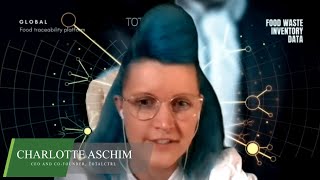
Charlotte Aschim, CEO of TotalCtrl, presents a food waste platform that delivers 35% waste reduction and 60% time-cost savings for customers. Six accelerator startups pitch solutions ranging from nutrient tracking to vertical aquaculture, with the program reporting a 75% survival rate and 45% funding rate for its graduates.
Chapters
Welcome everyone, my name is Janne Saariq. I'm one of the directors of the Founder Institute Global Food Ecosystems Accelerator, and this is a great day because it's the graduation for our 2021 global cohort, and you'll be seeing some of the most of the people from graduating from that cohort here tonight. Before we go any further, I would like to introduce you to my colleagues here. So let's start with Ingeborg Kasser-Kris. Hello, Ingeborg, good to have you with us.
How's it going? Oh, well, I'm good. I'm just so excited I can hardly speak, honestly.
Excellent, excellent. Then we have Tasha Dolmacheva. You can unmute and say hello.
Hey, hello everyone, glad to see everybody, so many participants and our happy cohort.
Yes, excellent, thanks Tasha. And Daniel Behé also. Hi everyone, nice to see you, very excited to be part of this journey now coming to an end. Yes, great. We have also a lot of other people here in the system. And so, but yeah, let's go forward. This is probably my only sort of like Founder Institute bragging slide on this entire thing. Can you imagine? It just shows the one important thing, which is part of the, of the success of many of our graduates. And it shows the global reach that we have in the programme. The global reach on the top line is really, really big. So we are all over the world, which means that we also understand how things work around the world. Another thing besides of that, you can find it on the lower grid here, is the survival rate. So our graduates, these people who are here today, Their survival rate is 75%. For startups, that's phenomenal. And the funding rate is 45%, which is even more phenomenal. And the reason for that is the way how we done our things. We have probably the most structured program in the, in the system. And in the world, and we are just loving to give the tough love to our founders who are here in the system. These people have been supported by our mentor roster, some 200 people around the world. And these people here are not the only ones in the food ecosystems, food tech, ag tech, something related to the food chain. There are over 350 graduates around the world from the Founder Institute, and one of them is actually our featured speaker today, Charlotte Ashim. Charlotte is the CEO and co-founder of Total Control. She's a Founder Institute graduate, and recently she's also become the the global food waste superstar. I don't know all the awards that Charlotte and Total Control have gotten. They have raised— was it over $2 million, if I remember correctly? And she's a well-sought-after speaker. I've seen her speaking in places like the World Economic Forum in Davos and many other places. So without any further ado, Charlotte, are you here?
Yes, I am, and I'm so excited to be here. And first of all, congratulations to all of the startups that are graduating today. Um, as I graduated from Founder Institute, uh, a couple of years ago, like in 2018, I know how hard the program is and how rewarding and interesting life gets after graduating from Founder Institute. So before I can continue, do you guys see my screen?
We see your screen really well, but you're not on the presentation mode yet. So if you can make that happen.
Let's see, make sure that I share the right screen because there's different screens here. So How about now?
Now it's full screen and we have a lot of veggies and fruits thrown away on our screen. So Charlotte, the floor is yours.
Thank you, Janne. Yeah, and of course want to start with some shock effect. We are all about food today and this is how our current food system looks. We waste 1/3 of all the food that we produce every single year. And my question then is, how smart is this for, for people, planet, and profit? In our case, we don't think this is very smart. So that's why Toll Control is working on enabling food waste elimination and increasing the food traceability throughout the entire value chain from farm to fork. And reason for doing this is because the system is of course broken, then there's a lot of need for innovation in the food system. And just briefly as well, if you look at food waste as a problem, you will see that even if you waste something at home, or at a restaurant or grocery store or at the farm, it has some sort of ripple effect because it affects the entire value chain. We waste one-third of the food that we produce. That means 1.2 trillion is actually wasted every single year. So it's a huge problem that of course, we're trying to solve. And we're solving that with technology. Our goal is to transform the food industry and make it better. So imagine sitting at a restaurant, for example, and scanning your QR code and being able to see where your food has been produced and traveled. And at the same time getting local offers, or as a business owner for restaurant, hotel, grocery store to be able to track your food from farm and to fork to enable and ensure food traceability, elimination of food waste, and optimized operations. And that's our main focus. But I'm here to also talk a bit about my journey and try to inspire and give some good advice to the founders that are graduating today. And it all start— starts at the very start before even coming to Founder Institute. One of the things that was kind of similar to other entrepreneurs as well is that I have a tendency to be a bit different, restless. I have a master's degree within land management. So I've been able to finish a good education. But I've been also working 2 to 3 jobs while studying and playing soccer. So I love being active. I love working, and I've worked in industries, mainly in the food industry. I worked in hotels, restaurants, grocery stores, gas stations, you name it. I've been a farmer for a couple of months as well. But after I finished my university graduation, I worked in the construction industry, flying drones and building bridges in 3D. So I've been a lot of places, and, but I've been also extremely interested in the food industry and technology from, from the very start. And that led me into a stable job, high-paying job. And I managed to kind of check off all of my things on the bucket list pretty early. So when I was 5 years ago, I decided that I wanted to do something else. And I wanted to become an investor. So I teamed up with She Invest and I went to the US and I became a wannabe investor, which led me to meet a lot of inspiring CEOs and other investors, which again made me decide that instead of becoming an investor, I actually wanted to be an entrepreneur. I didn't have any experience as an entrepreneur, so that led me to starting Founder Institute in 2018. And since then, a lot of things have happened, and the journey of entrepreneurship has made me be able to meet highly prestigious politicians, even become part of the Crown Prince Network in Norway, and meeting celebrities and being in magazines, which is amazing. But the major thing here is that I'm trying to do something good with our company and not promote myself. But last year, everything that Foundry Institute taught me has also led me to become and run one of the top tech startups in the world. So just last year, I spoke in front of a lot of people and tried to tell everybody about the goals of Total Control and what we're trying to help the world achieve. And of course, Foundry Institute has played a huge part in that journey. So I started the Foundry Institute in 2018, and since then our company has become a selected portfolio company of Foundry Institute. We also received funding from Loyal VC, which invests in Foundry Institute graduates and the fastest growing companies in 2021, as well as in 2022. So Foundry Institute has played a huge part in Total Control's journey and continuously do that as we move forward and scale our company even more. But quickly take you through also what Total Control does, because as I mentioned at the start, we're trying to fix a huge problem, which is food waste, a broken system that has its main causes due to lack of control, expired food, and manual routines. So at Total Control, we started out before even starting Fountain River Institute. I had started using my experience from the food industry, where I saw the problem of inefficiencies and expiration dates being the root cause of food waste. So when I worked in grocery stores and hotels, I actually wrote down in book the expiration dates and the products to just know when they were about to expire so that I could actually sell the food prior to them expiring instead of wasting it. So that was the founding point for Total Control. And then we've added technology to this. So I learned how to code on YouTube, and then I created a digital datebook. Which notified our customers about when things were about to expire. And then the project— product developed, as you will see with your own startup as well. And our product developed into a larger inventory system. And then we have created a lot of technology. So even though our goal is the same, the road to our goal has changed a lot along the way. And the product has also evolved. And this is the case for a lot of startups. So even though things are shifting and there's a lot of ups and downs in the startup journey, if you keep your eye on the prize and the goal and have the vision in place with the right people, you'll be able to get there. Uh, the journey will just be a bit different than what you expected it to be. We created a lot of technology and now we are taking this to the next level with a traceability solution that also prevents food waste. So we are kind of adding to our existing foundation. So we will always keep our product growing, but our goal will still remain the same. We're eliminating food waste and ensuring traceability throughout the entire value chain because we want to make sure that the entire food industry benefits from all of the data that it needs to be to be able to produce better, buy better, and use and sell their products smarter. That is our ultimate goal. And we've made sure that our technology actually results into something special for our customers. So within using our technology for only one month, our customers have seen a 35% reduction in food waste, 60% reduction in time and cost, and an increase in sales by 5%. So it's important to also verify your results as you go. And we've also done this with our credibility. So our company has 38 awards. We've been in the papers a lot. And we are certified B Corp, meaning that we hold the highest standards for social and environmental impact. And we're trying our best to make sure that our technology is as fast, easy to use, and impactful as possible, which has led to great deals. So after 4 years of hard work and a pandemic on top of that, we've secured huge deals with leading IT companies. We've made sure that we are connected to the leading brands in the market. So we partnered up with Mastercard, SAP, Lightspeed, and others, and we're continuously continuing our journey in collaborating with the best people that have our our customers in, in their portfolio. But as any startup, any business, any home or anything, you cannot do great things without the great people. We've been lucky enough to have a lot of good people with us, both on the advisory and board and in the team. And even though a lot of things have happened during our journey, they've all stayed with us. With the same goal and the same intention of creating something big and having fun along the way. So our people, both our team, our board of advisors, and board members have industry expertise and are extremely valuable for our growth. Because even though that this was my slide when I started the company, it still remains the slide that I also talk about and think about every day now. How can we make sure that Toll Control changes the food system, ensures that we use technology, our knowledge, and educate people around the world about how we can prevent food waste from happening? Because it will help save people, planet, and profit. I hope this has inspired you in regards to your journey. It's going to be hard. It's going to be a lot of fun. But please reach out and use the Foundry Institute network as much as possible. You have great experience people in that network, and a lot of people say yes. So thank you for having me, and I look forward to hearing more about your startups today.
Wow.
Wow.
That, that was, that was so good. That was so, so nice, actually. Thanks, Charlotte, for, for doing this for us today. I have a question for you, Charlotte. In the end, you know, at the Foundry Institute, we talk a lot about the SDGs, the UN Sustainable Development Goals. So what's your take on that? Because some people sometimes say like, oh, you know, you're just talking, you can't make money out of that. So what's your take on that?
Good question. You for sure can make money out of focusing on the SDGs. And as well as for a startup, it is perfectly timed now because there's getting more and more capital put into companies that are working and proven that they actually have an effect on the SDGs. So I believe that as we see both laws and regulations move now towards the Global Goals and to a more sustainable future, it would be extremely important both for small and big businesses to keep that in mind. And you can make money. And for example, we've proven that with our customers. You can save a heck of a lot of money if you just prevent food waste and you can earn more money if you just optimize and digitize your operations. So for sure, SDG will be top of mind moving forward and anything that you can do in order to make an impact for everybody. People, planet, and profit will be good for you and everybody else.
Yes, that's a good, that's a good one. I fully agree. Thanks, Cheryl, so much being here with us. But I think we'll need to move forward because we have a lot of interesting new companies being presented here. So thanks so much for, for everything until now. You're getting a lot of comments on the chat, so you can take a look at that in the meanwhile. So I'll be continuing here just shortly. So we were moving on. A few things you'll be noticing that one thing that's a big thing for making things come true is the thing about being together. And it means that we have so many people, so many organizations that have that have similar goals and passions as we do. And here are some of them. So in the top line, you can actually see our current key partner portfolio. So we have players from around the world. We have, I believe actually we have some of the representatives from there. We have Arbejio from Latin America. Then I, at least I saw Marc Leinemann from Ground Foods here. We have Food Fac. We have Thoughtful Food. I was just chatting with Christina Gold, the CEO and founder of the company there. And we have a new one here, uh, is the Food Design Factory. So that's University of Helsinki, where we'll be able to, uh, help research-based, uh, food tech things being commercialized. So a lot of exciting things coming. They have all the labs and a lot of innovation going on, but also Along the years from last year, you'll see the lower row there. So we're actually working to cooperate with different players sort of like ad hoc on different things, not going forward to these, but there are some of the people and organizations we work together with last year. So doing things together, it's a very essential and crucial thing here. One thing that all our founders will know actually is is the hardness of Founder Institute. And sometimes we're told like, you know, don't make people, uh, don't scare people. But in a way, I think that it's sometimes it's, it's better to tell the people the truth and, and, and sort of like challenge them in making their dreams come true rather than not to challenge them. So what does it mean, Founder Institute? First of all, For those people, including our founders here, what they need to do is when they join the program, they take the DNA test, entrepreneur DNA test, not DNA test as swiping your mouth or anything like that. It's an online test which tests the abilities to be an early-stage entrepreneur. So we'll test if people are good for running a startup company. Then there is, after that, when they get accepted in the program, there's 4 months of hard work, assignments weekly, and tough feedback. Honest. We like honest and blunt and honest feedback, and that's what you get from us. And the reality is that only 30% of the participants make it to the graduation. So there were many more when we started this cohort And it's just, it's a good thing because during the program a lot of people also realize if running a company is not for them. So that's why we actually also love the people who make the decision and realize that there is something more that is more important at this stage of their life, or it's just not for them. Next, before we go to the actual pitching, I want to announce our next cohort. So if you feel after these pitches, if you feel like, like, I want to be like them, I want to be like Charlotte, I want to be like Gary, or, or, or all the people we have there, uh, we have just opened the applications for our next virtual program. Here are the dates. It will start in September, but we actually— it's open today, so we actually do have some applications in already. So So go and, and take the tests. You can see the URLs there: fi.co/join/food will take you straight to the application. Or if you want to know more, you go to fi.co/food. That's it, easy as that. That's where your journey starts. But next, we're going to move to the pitches. Are you guys ready? Yeah, let's start. The first one to pitch from the entire cohort comes actually from Frankfurt in Germany, and that person is John Wonjun Choi.
Hi.
Hey, John, can you put your microphone on?
Yes, yes.
Excellent. So these speeches are 3 minutes. There's not going to be any Q&A, but if you have comments, uh, just feel free to, to comment on the chat, and, uh, and they'll be— the guys will be more than happy to talk to you in the Airmeet after the event. So, John, the floor is yours whenever you're ready.
Okay, I'm ready.
Yeah.
Hi, we're Nufield, your personal gateway to optimal nutrition. With our mobile app, in addition to standard calorie counting and weight loss, we enable users to achieve perfect intakes of all essential nutrients to help unlock their true potential. 3 years ago, I had to take a 2-month break from normal life because I wasn't taking care of my health, and a big part of the problem was poor diet and nutrition. I've suffered from this problem myself, and I know the worst of what it can do to one's physical and mental health. And the first real change I made after this slump was my nutrition, and I experienced firsthand how my life got better. And ever since then, my passion has been to empower people's lives through the power of nutrition. United by this passion, I met my advisor almost one year ago at the Rockefeller and TFF Food Systems Hub. Aileen was the founder and first executive director at the USDA Center for Nutrition Policy and Promotion. She's the former dean and current professor at the Tufts Friedman School of Nutrition and on the boards of several global nutrition organizations. And when our mutual interests and chemistry instantly clicked, I was inspired to turn this passion into a business. And that was the start of Nufield. So what we've developed is a mobile concept where users can log what they ate, track their intakes of more than 50 essential nutrients and get personalized nudges for food and recipe recommendations based on the user's recent eating habits over time and their basic biological profile. At the end of the day, the user will have perfect intakes of all essential nutrients. The big opportunity here is that this market will more than double in the next decade, and with our clear competitive advantage over standard calorie counter apps We are uniquely positioned to really capture this growth. And what we've accomplished to date is not only a concept. We've launched a working web app, iterated a few times, and achieved higher retention rates for this prototype compared to the industry benchmark for health and fitness apps that are already on the App Store. Our core revenue model for this is a freemium subscription. They're paying a monthly subscription for premium features or using the basic version for free. But we will go beyond because we will have unique access to highly detailed user data covering all their dietary patterns, food choices, and all the way to their precise nutritional intakes across various demographics. And we have the unique strong ties to the research and policy organizations that will use these insights for decision-making towards positive impact in nutrition. So I'm seeking $200,000 in funding for the next 14 months We will officially launch the app, rapidly grow our user base, and acquire 10,000 paying users and start expanding the team. If you're interested in hearing more, please find me afterwards or contact me.
Thank you.
Oh, John, that's it? Yeah, yeah, you have already questions and comments on the chat, so, so well done. It was, uh, it was a really good one. How does it feel now? Any tears coming? No, no, no, no. Okay, I feel good.
That was, um, it was, it was a great experience, the program, and I feel good.
Yeah, excellent. You better go and answer the questions in the chat while we move on to, uh, Carly. So we're leaving Frankfurt and going to Accra in Ghana. So Carly, where are you?
Okay.
Hey, Carly, am I there? So, uh, you're sharing your presentation already. Um, so, uh, hey, actually, I'm ready. Are you ready?
Yeah.
All right, the floor is yours. Go ahead.
Hello, I'm Carly Edwards, founder and CEO of Ground Up Ghana. Where we're creating ambitious food from forgotten crops. I've lived in Ghana for more than a decade running public health, community engagement, and nutritional food production projects across the country. I'm now harnessing this experience to build a food company that will benefit communities and the environment.
Let's make sure this—
Did you know that over 60% of the world's calorie consumption comes from just 3 crops? Rice, maize, and wheat. This puts us all at risk of food scarcity. War is disrupting a global breadbasket, and rising temperatures are reducing yields. But we don't need to rely on just these three crops. There are traditionally grown alternatives in West Africa, and they taste great, and they're healthier for the people and the planet. At Ground Up Ghana, we're creating ambitious nature-positive food ingredients and snacks from new processes and blends of these underutilized climate-resilient crops. Our products diversify menus and fields and allow us to pay a fair trade price to majority female small-scale farmers using climate-friendly practices. Then our customers amplify our positive impact for communities and the environment while enjoying a tasty and healthy treat. Our first product is a baking flour blend that can be used for a variety of applications including waffles, muffins, and cookies, which are naturally gluten-free, and packed an extra punch of protein, fiber, and other essential nutrients. We're now developing ready-to-eat and ready-to-bake products while following international quality standards. We're based in Ghana and piloting our products here while we work towards export to the United States, where the demand for ethical label and plant-based food products continues to increase and companies with international connections are outperforming. Based on the success of companies with similarly placed products, We aim for an initial market opportunity of around $5 million in the first US market where we launch. To gather feedback and grow brand awareness, we began pilot sales at Ghana's premier eco-artisan market. We're currently renovating a site for small-scale production and going through a recruitment process with onboarding next month. We will conduct acceptability trials in 3 regions in the United States this year. We will then meet potential customers at events to grow brand awareness and a pipeline of customers for online sales. We're targeting the United States as our first export market, as our products can be imported duty-free under the AGOA agreement, there are no language barriers, our team has a strong network there, and there's demand for ethical, unique food and gluten-free products that have taste. Our team has a proven track record of success running an international standard food factory in Ghana and connecting with rural communities. We're currently filling key positions to push our model forward. As we prepare to start commercial production, we're looking for grants for machinery, for lab equipment, machinery, and acceptability studies, as well as technical advisors on branding and climate impact. Our dream is to grow a global brand of nature-positive foods that will enable a living wage for female farmers, provide jobs to youth, and support biodiversity while building a strong vibe with our customers. We hope you'll join us in this ambitious mission to adapt to climate change while creating ethical global connections.
That's it. Excellent. Thank you. Thank you, Carly. And your internet stayed there all the time. Everything was just perfect. Excellent.
Good.
Go Ghana, go Accra. You actually are sort of like a second timer here with the Foundry Institute. So you've actually taken the generic, uh, uh, thing again, but you came again for the food-specific thing. How's it been for you?
It was really great. I loved working with everyone who's passionate about food. The program's really intense and it's definitely still valuable a second time, but it was really cool to talk with food people It's also cool to talk with people who know Ghana. So now I've been able to do both, and it's been great.
Excellent, excellent. We really have loved having you here along and also had some good moments here and there. And you have one of the best internet connections, actually, I think we've had ever. So really happy about that. Thank you very much, Carly. Then moving again back to Europe, And we'll have François. Bonjour.
Hello.
Bonjour.
Hey.
Do you see the presentation?
We actually see the presentation. You have better internet. So guys, this is something very special and different. So pay attention. It's actually worth looking at this. I mean, everyone's, uh, but everyone's special here. Everyone's really good here. But this, uh, this is good. So listen to what François is saying. And, uh, hey, are you ready? Because the floor is yours.
Okay, whenever you want.
Go ahead.
I'm François Weinberg, founder and CEO of Adyenometrics, and we just signed our first two customers totaling $70K ARR. Agenometrics has developed an approach to use the measurements of tasting and smelling food digitally through judges who taste the food, but also with sensors like enosis and emouth. Our project is team-centric and our advantage is high experience in large food and beverage or IT organizations such as Mitsui, Unilever, or IBM. Today we employ about 20 people helping us to change the perception of food in the industry, especially about how it is measured. So why now? The food and beverage industry is undergoing a massive change. The time is ready to enable digital technology in sensory measurements. This is thus the right time to address the pains of the food scientists that are still using conventional methods to solve their problems. And they do face hard-to-solve problems. On the left, in quality control, food scientists rely on data to produce the good food. If the food tastes bad, they need to restart from scratch. But with Adgenomatrix, they only need to go one small step back to correct the mistake, saving an average of 40% of the costs. In product development, when creating a new product, scientists rely on large amounts of experiments. By centralizing data, Agenomatrix eliminates at least 20 to 25% of the costs. So as you may see, the food industry is wasting a lot of time, as we saw, money, and also data is tough to analyze. Here is our software, how it looks when used by our clients. It's a wizard here which is used to digitize a set of sensory data. Agenomatrix uses its patent-pending MetaRecipe system to build and manage data integration pipelines across data silos for ingredients and final product data through production protocols, enabling the refinement of machine learning models to predict and control sensory attributes of the final products. So in a nutshell, we are ready to code our first prototype. Research spans in the past for 20 years And in the future, we plan to implement a co-creation table with 10 suppliers as soon as we can serialize our solution into SAS delivery. Our product line is composed in 3 layers. The base layer is composed by the license of our software, the sensory database, and any market for sensory digital IDs. The middle layer is composed by our services, including a quality label, And finally, on top, we provide a tech accelerator. We are in the process of closing a round at €10 million initially, oversubscribed to €12 million, and split at €6 million. There may be positions still available depending on the quality of engagement to the project. We're introducing the intelligence that the food industry is craving, adding taste and flavor to reach full potential. Thank you.
Wow, François, there, there, there you go. How's it feel now?
Good, good.
You did well. Yeah, it's one of your best pitches, I would say, uh, probably. And I love the, the way how your slides look nowadays, uh, so that's really, that's really great, uh, uh, thing. So, so excellent. Thanks for, for being there. Hopefully, hopefully there is some benefit for you and really looking Really being happy for you closing customers and about raising a round as well. So thank you. At this point, actually, I have to show everyone one slide. So let me share my screen here again, because sort of like to show a bit of a result here. What we do during our program is that we're really about building company hands-on. Actually, these people have executed approximately 200 assignments which all target to build their own company, making it a solid fundable startup. All the nice things you have to do, but also all the nasty things that you really don't like doing at all. So, uh, that's, that's one of the reasons why it's there. And that background actually makes an interesting combo because we pitch a lot. So, so we've actually making pitching a routine for, uh, for all these, uh, all these founders. But that it's not just about presenting, it's about knowing and understanding the data and the reasoning behind those slides. So that's why it's a very comfortable situation. And the third thing I want to tell you at this point is, uh, the fact that we're having something called office hours. And I just today did and checked from this cohort, the best one person has had 70 accounted office hours with mentors, and I'm actually pretty sure that there were some that were not in our bookings because I know that I actually had a few with that person as well. So in 4 months, having 70 mentoring meetings one-on-one, that's a good job. That helps to build perspective to your company. But yes, that was about that again. So let's continue. Uh, who's next? Torulf, a Finn in France. Uh, can you put your—
Correct.
Yes.
Now can you hear me?
Oh, we hear you and we see you as well. So you're here with your co-founder Martine, who is a Belgian in Sweden, and you're a Finn in France, so could it be any better combo to build a Pepper Market marketplace?
Yes, of course, we also have a Finn in Finland in this company.
Oh yeah, that's the third one, that's the third one, yes. Okay, Torulf, time for your pitch whenever you're ready.
All right, thank you. So hi, my name is Torulf and I'm here to present to you pepper.market, a business-to-business spice trading marketplace. Now, the global spice trade is worth €15 billion annually, and of this, 80% is tied up in fixed long-term contracts for, for supplies, but 20% is left uncovered by such fixed contracts. And this 20% is our opportunity. To find supplies for this, the industrial purchase guys will usually just pick up the phone and call through the contact networks, which is incredibly inefficient and time-consuming. So what we're doing is that we are bridging food ingredient suppliers, mainly outside of the EU, through our Pepper.market e-commerce platform to the food industry, first in the EU and later on worldwide. Now, this is a screenshot of, of our current minimum viable product. We are just doing the first real trades on this And we will be continuing to build this in close collaboration with both the, the suppliers and the purchasers to make sure it is very, very targeted and tailored to their needs. However, we're not only providing an e-commerce platform, we also have a team of experienced salespeople to really be able to work as this supplier's sales channel in Europe. Our main competition is kind of single sales guys, traditional brokers and agents that work without any specific IT infrastructure behind them. There are also some e-commerce platforms, but usually these are just platforms without the dedicated sales team and the connections that are really needed to drive the sales through this. So you cannot simply outsource your sales into one of these. We, on the other hand, we have very, very good connections on both the supply side and on the demand side. So for the suppliers, I said we act as their sales channel in Europe, while for the demand side, we help them save time and money by making it easier for them to find the right supplies at the right time. Our business model is closely modeled on what everyone in this business is used to, which is the agents and brokers charging a commission from the supply side. This is a non-issue for everyone. The company is being founded by a team that has extensive experience from both the supply, both the spice trade business and the IT business. We have founded, grown, and sold companies on both sides. And we have very good advisors as well, both on the supply side and the demand side on the spice business, and from e-commerce. A guy has had a long, long career in Klarna. We just founded a company a week ago. We are now gathering users' feedback and making the first trades go through the system. We will launch and keep expanding on this in the, in the coming, uh, months and year. Our go-to-market strategy: we have the first trades agreed on the platform that will give us revenue in the hundreds of thousands of euros for 2022, and we will use that to bootstrap the company. Now we will then expand into other spices, other food ingredients. And that was Pepper.market, the business-to-business spice trading marketplace.
Thank you.
Thank you, Torolf. And you know, you already have questions and comments there in the chat. Someone was talking really real money there as well. So you actually better go there and start answering those questions together with Martín. Okay, thank you, Torolf. And next, let's move from from France over to Newfoundland in Canada.
Fantastic. Hi everyone, I'm Johan. Glad to be here. So let me begin by sharing my screen.
Okay, could you just share your screen?
Yep.
And put in the presentation mode. So, uh, so, uh, Spanish spoken in, uh, in, in Newfoundland. That's okay. So Your time to shine, Mr. Mendez.
Awesome.
Fantastic. Hi everyone, I'm Johan, founder and CEO of Inverte. We are Inverte. We are rethinking portioning. The problem we are addressing is like the $600 billion that are currently incinerated in the food service industry. This waste is primarily attributed to inefficiencies found in restaurants' value chain. Our solution to this problem is smart portion control. And we create adaptable weighing scale technologies that prevent inventory loss by eliminating overserving and guarantee the consistency that customers want by preventing underserving. And this is how currently our technology fits in an actual workstation commonly found in restaurants. Here we guarantee consistency because we eliminate overserving an underservant. Moreover, we help our clients reduce labor time because we give them the ability to skip pre-portioning, which is a labor-intensive practice. Finally, we increase visibility because we give the managers and owners the peace of mind that somebody else is taking care of their precious inventory. This is currently how our solution fits in the competitive landscape. We are a hardware and software company, and we are a proactive food waste reduction company. Because we measure the input in real time. We are not just analyzing the waste that has been generated. Now it is the perfect time to implement this solution because we have identified this niche that is currently being affected by two very significant problems, which is the labor issues and the food inflation that is threatening the finances of these establishments. We offer our solution as a product, as a service, meaning that we rent the smart bin and we give access to the AI training and analytics for a monthly fee starting at $60. Our go-to-market is quite straightforward. We call, dine, and show our solution to restaurants here found in Newfoundland in Canada. And primarily we're looking to pilot test and build our testimonials so that once we begin to scale, we look into digital marketing and taking pre-orders. Currently, we have a significant number of pilot testers and we have a high closing rate. And primarily this is because of how we present the solution. And we look forward to providing and deriving the ROI of our product. This is the growth plan for the next quarters. We are primarily looking for key partnerships in terms of acquiring commercial kitchen retailer deals and targeting multiple unit owners because this is the right way to scale this business, going from 2, 4, to 10 restaurants. And primarily, we're going to be on-demand 3D printing. This is the great team of innovators that will bring this idea to market. We have a passionate computer scientist collaborating with a military-grade hardware engineer and a key sales leader who is driving our sales. We have a great team of advisors and supporters throughout the world. and we look forward to bringing this invention as an innovation to the market. Primarily, we're looking for North American strategic restaurant advisors who can help us propel our business forward. Thank you very much. This has been Inverte.
Thank you, Johan. That was a good one. Also changing and improving. So, so well done. I can see you already have questions there in the chat as well. So Well done. And I think since you're in Canada, you know, we shouldn't let the North America stay there. So let's move a bit more southwards but stay in North America. Gary Skipper, are you there?
Yes.
Hey, sorry about the second place in the NFL. I think you can live with it. You have something more important to do, so Yeah. Hey, can you share your presentation, please, with us, please? Put it in the presentation mode. So whenever you're ready, the floor is yours.
We're Inland Shrimp Company, and who's hungry? Were you aware the United States imports over 90% of its shrimp from foreign shrimp farms that use environmentally damaging and questionable farming practices, yet less than 2% is FDA inspected, and out of that, 60% is rejected, mostly for banned antibiotic use. So really, how safe are your shrimp to eat? Our solution is offer our customers fresh, healthy, locally raised, and safe shrimp that they can enjoy within hours of being harvested instead of weeks or months later, without a heavy carbon footprint and no extra added nasty chemicals. We call it technology-driven aquaculture where we're using vertical farming methods to farm multiple species of seafood and reefs, uh, purpose inner city facilities that use solar and geothermal for heat and electric production, remote sensing and automation to collect and manage data and reduce labor costs, and a recirculating aquaculture system that recycles 95% of its water. We call it the blue circle economy, and it's where all components increase the bottom line through cost savings and revenue production. We've successfully raised and sold 20 kilograms of shrimp to local restaurants from our minimum viable prototype. We competed in the Fish 2.0 contest held at Stanford University and won for our business idea, and been mentioned and featured in these and several other industry-leading publications. So first year of sales alone, we're looking at over $600,000 in sales with net margins of over 35%. By the end of the second year, we will end up reaching over $1 million in sales, and by year 5, we will end up reaching at least $1.5 million in sales, be able to offer our investors a fast return on investment and a less than 3-year payback. Our vision is to become the United States' largest domestic shrimp producer and have a facility in every major city. So locally here in the Cincinnati area, our market size is over $1 million in value. Nationally, wholesale value of over $7 billion, and retail value nationwide is over $40 billion. It's a lot of shrimp. Our go-to-market strategy is to partner with major retailers like Kroger's, Meijer's, and Whole Foods, who we've already been in talks with, and develop a territory franchise scale for scale and expansion and domination of domestic shrimp and industry. And target the buy fresh, buy local crowd that really cares about the quality of their food and is willing to pay more for it. So I am the captain, Mr. Shrimp, with 10 years of shrimp experience. Walter Weller is my first mate and early pioneer in aquaculture projects. Ray's our certified genius, which comes from the biggest shrimp producer province of India. And Mark Berry's our 30-year business growth professional to help round out the crew. We're looking for $1.5 million to purchase a facility with land, equipment, infrastructure, and inventory to reach production goals and $1 million in sales by the end of the second year. We're Inland Shrimp Company, and who's ready to help change the way Americans eat shrimp? Thank you.
Thank you, Gary. This is a good one. Your new set of slides done for this occasion, that's really impressive. I'm just looking forward to see when, when your production facilities spread to Europe as well. Do you know when that's going to happen?
We're looking at later on this year. No, I'm just kidding. Probably next year.
I would be your first customer for sure. Excellent. Excellent. Thank you, Gary. And you know what, everyone? I think I'll just have to share one slide to you. Uh, in an interesting moment, ladies and gentlemen, I give you the Founder Institute Food Ecosystems Accelerator 2021 cohort. Won't you enjoy Carly Edwards, François Weinberg, Johan Arcos Mendez, Gary Berry, Torulf Järnström, and Martin van der Heijn. Congratulations everyone, you're graduated from the Foundry Institute. And now I'll give the word and floor to my dear colleague Ingeborg, who has something to say.
Yes, I do actually. Thank you very much, Janne. So, yes indeed, John, Carly, François, Torol, Martínez, Johan, Gary, you are official graduates of Pounder Institute Global Food Ecosystems. You are now part of our alumni family. I want everybody in the audience, whether we can see you or not, to applaud big time. And you know, guys, this is a big moment. It's a really big moment for all of you. And you're not just graduates now, but you are also heroes. Seriously now. I mean, I really mean this when I say it. We've been talking a lot about how hard Founder Institute is, right? You need to pass the test. You need to do the assignments. You need to get tough feedback. But there is, and I mean, you've all been here for more than 4 months now, and it's been a lot more than that, especially for this cohort, especially for this cohort. Yes, you got your assignments mostly delivered on time, but you also got quite a few epic sprints. Epic sprints, by the way, is something that Founder Institute does to make it even harder at the moment when it's hard and to make it hurt even more in those places where it hurts. So that's, that's something that we have found to be very effective. But I feel that this cohort has been especially heroic because you have, in contrast to all other Founder Institute chapters in the world, you have worked across time zones. And while that may not be such a big deal when you dial in for the, for the evening sessions every week, you can probably plan for that. But you had working groups, and I know because I check and my co-directors also check that these working groups have actually been very much active. And our presidents, changing presidents, have done a great job of kick keeping those working groups together, and it hasn't been easy because of time zones, right? The other, the other factor that in this semester has been an additional challenge for all of us, let's be honest, was the pandemic. I don't know how many times you've struggled with, my co-founder isn't available because his family is all in quarantine. I don't know how many of you have experienced the situation, my law firm has shut down because everyone has COVID. But we've had loads of those messages. And, you know, since you are here today, it means that you have overcome these additional challenges on top. So you, you can really, really be almost as proud of yourself as I am of you, which is a lot. Try to top me. And, you know, guys, it's— I know, I know this is just the beginning. I know it's just the beginning because Foundry Institute is hard. Entrepreneurship is harder. You will go on to do great things. You will go on to grow fresh, healthy, local shrimps on the land, not in the ocean. You will go on to make optimal nutrition easy for everyone. You will go on to create a market for underleveraged local African crops, right? These are big things you're going to do. Initiate a whole new market for spices, enable restaurants to serve the perfect portion and avoid food waste, digitize the sense of taste and smell. Those are big things you're planning to do, and it will, you know, be the focus of your lives for many, many years to come. But even though, even though it will be a long journey and it will have its ups and downs, you know that being alumni of the Foundry Institute, you have a huge likelihood of succeeding in market. So what I would suggest is that you do after tonight, you do take the time just for a little breather, for a little celebration with those people for who your company, your journey in entrepreneurship is important, and those who support you in it. And, you know, raise the proverbial glass and take a moment to celebrate. You've really, really deserved it. Congratulations, very well done.
Wow, very nice words, Ingeborg. Now I'll offer an opportunity to our partners who are here to say something. So at least I see Mark, Christine, Gonzalo here. So I think maybe we'll start with Mark. Who is probably coughing there on mute.
So, everybody, now it's okay again.
Thanks, Yannick, for the introduction.
Hi, everybody.
Yeah, I would like to thank you all for this amazing inspiration throughout the whole semester. I've never seen a cohort like that at the Foundry Institute in Food Ecosystem. So well prepared, so great ideas, to the point. And whenever we put something more on their shoulders, like you have to improve more, you have to improve more. I just rethink, think about the last session we had where Daniel pointed out something and then you improved again. So that was really amazing.
Wow.
Really, really Yeah, talkable, recommendable. So thanks a lot. It was really inspiring. And to, to be a mentor. And yeah, well done, everybody. Really great ideas and a lot of success from my side for the future. And I'm really sure that we will hear in the future from you, that you're not vanishing away. So but that you become bigger and more successful. So all the best from my side and also from our food startup network Crowdfoods. Thanks a lot.
Thanks, Marc. Well, well said. Here next we have— hey, Mari is up here! Mari from Start for Food. Hey, uh, what's up? You want to say something?
I would love to say something. Yes, thank you for giving me the opportunity to do so. So yes, It's Marie from Thought for Food. And it's been great seeing all of your journeys from the beginning, from the first session, from the first pitches we saw, and seeing where they've gone. Seeing you, you know, talk about what you do with more confidence and more clarity, especially, and still making it fit into those 3 minutes. I know at first 3 minutes seems like it goes so fast, but today it's really clear that you found the essence of what you do and you found a way to communicate it. And I think that's really great. And that's gonna open doors as well because it's what you need to do. You need to tell others what you do in a convincing way. And the beauty about Founder Institute is that you have this giant network. You already have each other and you have other networks through TFF, through the other partners, and all of us are rooting for you. So make the most of that and you just don't know what's gonna happen. And next year you're gonna be the advanced ones. While there are other people in the room feeling incredibly nervous while they pitch. So enjoy everything that's about to happen. It's going to be great.
Thanks, Marie. That was very nicely said. I believe Christine, sort of like you took Christine's word as well, and I know she had some issues there. So Gonzalo, are you still here with us? Hey.
I'm here, I'm here.
Yeah, you want to say something?
Yes, just very quickly, congratulations to all, to all the founders.
I've—
today I, I have the, the investor hat on, but I've been in that founder's seat. I know how hard it is. Um, I've seen some of, some of the pitches, at least a couple of the pitches a while back, and, and there's a clear improvement in such a, in such a short time. Uh, I know there's also a lot of hard work that goes in in the background that's not necessarily seen in these 3 minutes, but that all that hard work ends up being summarized in these pitches, and you guys have all done a very good job. So congratulations and the best of luck for the future.
Excellent, thanks. And Gonzalo didn't introduce himself, and so very briefly, Gonzalo is a VC from Latin America. Arbejo.vc. Was that even close to the right?
That's perfect.
Thank you.
And Marie is with the Thought for Food from all over the world, global organization. And Mark Leinemann is representing groundfoods.com, which is the German-speaking Europe, so DACHLI region for those who are in the know. So we're having like everything from global to regional to local. And there, there is stuff there. So, uh, and but there's more about these guys and some more. So I'm going to share again my screen because the next time to see actually all these 3 people and some more is, uh, is here on the April 14th. Uh, we're having— we're actually talking more about this thing and the networks. So we're having there a talk for food Crowdfoods, also Swiss Food and Nutrition Valley, and the Good Food Institute, and Wikidesign Factory. So, so, so a lot of players, and Arbejo is there as well. Sorry, the system wouldn't allow you to— so that you— we run out of space there. I need to fix that for the next thing. So a lot of talk about the food ecosystem and how to make that, that the food world a better place for the future. Now the question here, actually to everyone who is not a graduate, is that are you willing to take the leap as well? I mean, like, if someone like these people are willing to commit 30 hours per week for 4 months and want to start up a company ready January 2023. So the first thing for you to do, or the next thing for you to do, is actually go and take that our Entrepreneur DNA test. And you can find it from that link fi.co/join/food, and that's where it all starts. So feel free to join us. As the very last thing before we move to the networking part, I just, you know, we've talked about that some people here, some organizations here, very important thing to remember that we are actually a global community. So there are so many other people here as well. So our mentors, many of them are here today as well, cheering in the audience. I know they're working after this with our grads as well. Our partners, of course, our people in the alumni, And our fans, you know, I'm feeling like this global food movement is— we're getting fans and I'm just loving it because it's a great thing to be a fan of someone making a better food planet, just simply. And that's what we're trying to do. So without further ado, the next thing is go and talk more to each other. So it's going to be in the chat as well. So next thing is moving to this networking platform called Airmeet. And the link is better— it's such a long link, so it's better to get it from the chat. Basically, when you move in there, please use Chrome or Firefox browser. They work the best. And when you enter the one, it's really easy. You just fill in the conference pass, so your name, your organization, et cetera. And then you join the event. And there are two things you can do there. You can go to the tables to sit on the table and wait until someone else comes there. It's free talking about anything and everything. Or if you're really adventurous, you can go to the speed networking. So you will be sort of like given someone to talk to for certain time. I think it's 2 or 3 minutes and then you'll get the next one. So it's up to you. I mean, like I'm going there. I know my colleagues are going there. I'm sure the grads will be there. So feel free to join us, and that space is open right now. So thank you from the behalf of this Zoom presentation, and see you on Airmeet. Thank you.










