FI Silicon Valley Graduation, featuring Trugenomix CEO Charles Cathlin
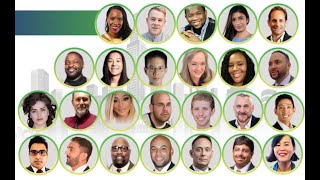
The video records the Founder Institute Silicon Valley graduation ceremony hosted by Ryan Micheletti. After a brief overview of the FI program’s selectivity (1,400 applicants, 130 enrolled, 27 graduates across 26 companies), cohort president Cindy Lin presents a fundraiser that raised $1,552 for Feeding America and Ashoka. The keynote is delivered by Charles Cathlin, a U.S. Air Force veteran and CEO of TruGenomics, who shares the company’s journey from near‑collapse to a $2.5 M seed round, $3 M revenue, and an FDA pre‑submission for a genomics‑based PTSD diagnostic (TruGen One). He stresses the critical role of a cohesive, values‑aligned leadership team, illustrating his own team’s composition and cultural principles. The event then streams twelve 3‑minute founder pitches, each outlining a problem, solution, market opportunity, traction, and funding ask. The startups span fraud‑detection SaaS (Analytix), digital physical‑therapy (PT Circle), global contract‑management with smart contracts (Quoco), children’s fitness gaming (Playground.io), personalized curly‑hair care (Love My Curls), electronic ID‑verification for auto dealers (Droplets), ESG reporting for fashion (Hey Social Good), disaster‑relief registry (Green Shoot), strength‑training sensor analytics (MetricMe), do‑it‑together marketing SaaS (SpotSight), truck‑driver health wearables (Heal Me Fit), and plant‑care sensor subscription (Credo). The ceremony concludes with networking instructions.
Chapters
Welcome everyone to the Founder Institute Silicon Valley graduation event. My name is Ryan Micheletti and I'm head of global operations for the Founder Institute. We are the world's largest pre-seed startup accelerator. So over the last 12 years, we've had over 5,000 companies go through the program. And so we were founded in 2009 by our co-founder and CEO Adeo Ressi and John Grisham. And we have the world's largest mentor network of 20,000 mentors. And so we're extremely honored and proud of all the graduates and are happy to host you for today's event. As head of operations, I also run the flagship FI Silicon Valley program. So I not only work with the leaders around the world that operate the Founder Institute, but we also run the Founder Institute Silicon Valley Accelerator. And we're proud to say that we actually run one of the toughest programs in the world. And so every single one of the founders that are graduating today have done an amazing job on their journey to build their startup company through the program. And so just some high-level stats, we had over 1,400 people apply to the Founder Institute Silicon Valley, out of which a subset were accepted and we had 130 or a little bit over 130 enroll into the program. And only the top 27 founders graduated across 26 companies because there are a couple co-founders in the program. And so you can see here that the, the program is one of the toughest in the world, not just within Founder Institute, but the Founder Institute itself is one of the toughest programs in the world. And so we're excited to share with you the pitches and, and also keynote for today. And so before we jump into the content, let me just give you a quick agenda. So in a moment, I'm going to welcome Cindy to the stage here. Cindy is one of our cohort presidents, and she's going to talk a little bit about the Founder Institute and a fundraiser that the alumni have put together. And then after that, we're going to do a keynote with our very own founder of True Genomics, Charles Kaplan. He is an FI alumni as well. And then after that, we're going to play about 12 different pitches from the cohort. So the alumni who are presenting today, we've got 12 founders out of the 26 that will be playing their 3-minute pitch. And then after the session, we're going to do a networking event with the founders. So if you want to stick around and meet with some of the founders, talk to them afterwards, we're going to continue into the lounge, which everyone was just in, where we're going to play the pitches and you're going to be able to meet with other founders. Stick around and we'd love to have you there. So first, let's welcome Cindy to the stage. Cindy, are you with us today? Awesome. Cindy, first of all, congratulations on graduating and also being nominated as president. You know, I've loved seeing the trajectory of your company throughout the program. You've made excellent progress. And not only that, but you're also doing an impact company, which is really, really cool to see. And so why don't you talk a little bit about the fundraiser and if there's anything else that you wanna cover today. Feel free.
Yes, thank you so much, Ryan, and good day to everyone. And I know that we're actually probably across 5 time zones. So hello, everybody. I'm Cindy Lin. I'm co-founder of HeySocialGood. We're a data company revolutionizing social good for people, planet, and profit. And I'm really honored to be here to represent my class of 27 founders and 26 companies working on awesome solutions and I can't wait for all of you guys to learn about them. I just want to really reiterate something that Ryan said earlier, which is the hardest and toughest accelerator. Now, I've never been in other accelerators, but I have been in school a lot, have a bunch of hours of schoolwork under my belt. And I will tell you that this is probably one of the toughest. Between our sweat, pain, and sleepless nights, we couldn't imagine the things that we achieved. Hundreds of different pages of reports that we wrote, talking to probably like dozens of customers, And so it was all amazing. We never learned so much and so quickly in a short amount of time. And I know that every single one of us feels so much better for it. And even though we were really challenged with honest feedback, we felt so, I think, intentional guidance and mentorship along the way. And we really wanted to show that gratitude with not just t-shirts, but with a fundraiser. And it was actually an idea that was planted in our head by Noah Wallach. And if he's here, hey Noah. And he had this amazing inspiring idea of let's do a fundraiser. And we got, as a group, chose two fundraisers. Actually, this is how high achievers we are. We have 15 charities and we had to actually do a whole poll. We ended up with two charities, which is Feeding America and the Ashoka organization, which funds young changemakers and young social entrepreneurs from around the world. And in four days, we actually raised $1,552.53 to Feeding America and Ashoka. And just a little bit of stats, if we split that fund in half, we funded 7,750 meals. These are nutritious meals that actually worked with Feeding America before, and about 10+ stipends for fellows with Ashoka. So it's super exciting. Thank you so much to Founder Institute, to Ryan, Mike, and Scout of kind of, you know, guiding us along the way, and to my cohort of amazing co-founders founders along the way. I really see you as part of my family and I'm just excited to keep moving forward and working with all of you. Thanks for everybody and thanks, Noah.
Awesome. Thank you, Cindy. I mean, truly like you are one of the reasons why we run Founder Institute. And it's not just about building companies, but it's also building this network of great people and founders that are supporting each other. And so if you remember at the beginning at orientation, I told you that, you know, by the end of the program, you're gonna feel like family. And so it's really great to see all of the founders coming together to do some good in the world.
Yes, totally.
We're super excited.
All right. Well, thank you, Cindy. I'll take it from here. And I just also put the link to the fundraiser in the chat. So if anyone wants to contribute, I'd love to try and get this to over $2,000. And we can submit the money through the link there. So anyway, let's move on. I would love to introduce now— Charles Kaplan, who is an Air Force veteran, FI alumni, and the CEO of TruGenomics, which is a behavioral health company that uses the power of genomics to advance the diagnosis and treatment of PTSD. So they're making really, really great strides in this space. Super interesting company. Um, Charles and I have been working together for the last couple years now, feels like. And so, Charles, uh, I'd like to welcome you to the event. Thanks for joining us today.
Hey, thanks for having me. I really appreciate, uh, the invite. And, and good morning. As Ryan said, my name is Charles Cathlin, CEO of TruGenomics. I'm a retired U.S. military veteran, and I connected with the Founders Institute through the Veteran Founder Initiative program, which supports veteran founders of technology companies like, like myself. And as, as Ryan mentioned, our company, we developed a genomic biomarker test and a bioinformatics platform to help identify people who are at higher risk for mental health disorders such as post-traumatic stress disorder, which I'll tell you more about in a moment. But first, I'd like to congratulate today's graduates and wish you much success in your startup journey. And I'd like to thank Ryan and the rest of the Founders Institute team for inviting me today. And I was actually very surprised to get the invitation because honestly, my company is probably not that much further along than many of you on this call and who are graduating today. In fact, about a year and a half ago, we were very close to essentially dissolving the company. You know, investors weren't interested. We had debt in the six figures. Our partners weren't talking to us. As of today, we recently raised about $2.5 million in seed, in a seed fund, fundraise. We've earned about $3 million in revenue, and we just turned in a pre-submission package to the FDA, and we're preparing for our Series A. And a lot of this was all accomplished during a global pandemic. The only variable that really changed is that we have the right leadership team in place now. And so I want you to walk away at the end of this understanding the importance of building a strong and cohesive leadership team and how essential it is to, you know, to a startup. So first, let me— I'll share my screen and tell you a little bit more about myself and my company. Um, and I know I'm biased, but I think we're doing some, some really, some really cool stuff here. So hold on, let me, let me share. All right, so like I mentioned, I'm a veteran. I retired in 2018 with 23 years total between the Air Force and the US Public Health Service. I was an officer and an engineer. I grew up in Brooklyn, New York, and graduated from the Air Force Academy in 1995. And while serving in the Air Force, I deployed to the Middle East. I deployed to Eastern Europe for the Kosovo War, deployed to Africa. But it was actually a deployment to Ground Zero following the 9/11 attacks which got me interested in mental health. And this photo here is essentially a bodega that was converted into a medical station at the World Trade Center following the 9/11 attacks. And I served as the preventive medicine officer. And so it was my job to protect my team from the environmental hazards. And in fact, 20 years later, I'm still getting annual screenings to this event to make sure nothing is wrong because of the toxicities in the air. But it was really not just the physical, but the mental impact really on my team, the community, the first responders, especially those firefighters who watched their brothers crushed by 100-story buildings. And that had a profound impact on me and it inspired me to search for better solutions for mental health. So 9/11 also, as you know, resulted in fighting in two wars over the last 20 years. And one of the signature wounds of these wars has been PTSD. And when I think about these wars, I think about individuals like my friend Todd. I actually met him at Stanford Business School, and he had shared with me after he learned about our company that he was a Special Forces operator, served 4 tours in Afghanistan and went undiagnosed with PTSD for about 7 years before he was diagnosed and turned his life around. Once he received treatment— excuse me, I think there's some type of— are you hearing a noise here?
Yeah, we're hearing it too.
Okay.
There we go, it's gone.
Okay. All right, can you still— let me share it again here. Perfect, perfect, perfect. So yeah, as I was mentioning, so Todd, you know, he spent about 7 years struggling with PTSD, and he was able to turn his life around eventually after getting treatment. And Todd's a success story, but he didn't have to lose 7 years of his life because the tools that we have just aren't, in my opinion, adequate to help these individuals, particularly finding that they're being challenged early in the process. And Todd's a success story, right? He eventually went on to, you know, attend Stanford Business School, became an entrepreneur, But a lot of veterans in our country aren't as lucky. In fact, there are 22 veterans that commit suicide every day, in large part because there are diagnostic barriers. Our current healthcare system addresses mental health, and the way I like to describe it is by waiting for the individual to sort of fall off the cliff, and then you have the ambulance at the bottom waiting, at the bottom of that cliff waiting to help the individual. When what we need to do is really have some signs and barriers at the top of the cliff and look at prevention. And that's because we use surveys. Surveys are very, very subjective instruments. So imagine if you had cancer or COVID and they used a survey to diagnose those conditions. It just wouldn't be acceptable. And through the, through the power of genomics, we now have the technology to actually do that and get some insightful insights on mental health conditions like PTSD based on your genomics. And so as an engineer, I understand the worst way to address a problem is downstream. You have to go upstream. You have to get as close as possible to the root cause and again, put those signs at the top of the cliff. And we can do that through genomics. So we're commercializing our test we call TruGen One. Which identifies an individual's susceptibility to PTSD. This is technology we actually licensed from Mount Sinai, and we've been working to commercialize it. And so it's based on some very interesting work that was done in research on 9/11 first responders, just so happens, and even before that, markers that were found based off of research that, looking at epigenetic research that was looking at Holocaust survivors and their descendants. Dr. Richard LeHood is one of the inventors and highly regarded in his field, so I wanted to give acknowledgement of that. And the other thing, we're developing not just the markers, but we also have a bioinformatics engine that we've developed as well. So when you sequence DNA, RNA, you generate a lot of data, and that data has to be analyzed. And so when you layer on, layer machine learning, AI predictive modeling, then you can continue to refine the insights for clinical use. And so that's what we're working on, and we're very excited by that work. And I also wanna mention that PTSD is not just a veteran issue. That's been highlighted by COVID. A lot of frontline workers have been affected by PTSD, particularly healthcare providers. And in fact, prior to COVID, it was estimated by a study that the cost burden for PTSD is, will be $6 trillion by 2030, 13 times greater than cancer. And so the other thing I like to mention is that we're working with some great partners right now. We're working with the Canadian military, we're doing a study with them. In fact, we have a contract with them using our test for research purposes, looking at Canadian special forces who've been exposed to combat. We have a collaboration agreement with the VA, and we're also working with the Department of Defense as well. We're working with private healthcare systems. Sanford Health is a large healthcare system, largest in the Midwest. They invested in our company, and they're also a great partner. And so I just wanted to sort of mention some of this and tell you a little bit about our team. And so, you know, this is our team here. And actually, I'm going to go back to my team here. I want to first start with this quote here. And it's a quote by Jim Collins. And in fact, he's one of my favorite authors. And if you haven't, if you're not familiar with him, he's written Good to Great, Great by Choice, and Built to Last. And another author I would also recommend is Lencioni, Patrick Lencioni. He's the author of the book called The Advantage and The Five Dysfunctions of a Team. So I wanted to mention that real quick if you want to take some notes on that. But I was listening to a podcast a couple of weeks ago and they were interviewing Jim Collins and he made a comment that I think nicely summarizes the point that I want to get across today. And essentially, when you put the right people who you trust, who are selected for their values and their judgment, next to a highly reputable, disciplined, recipe, you put those things together and you have a, and you have a great, uh, company. Um, so, so what, you know, let's break down those, those two things here. Um, first, you know, you have that highly repeatable, um, disciplined, uh, recipe, right? And, and that, that includes things like your business model, achieving product-market fit, uh, generating recurring revenue. And if you break down all those things, it's essentially about your understanding of numbers and data, which is essentially math. I mean, so even your product, if you're building software, you're putting together ones and zeros. And with DNA, it's manipulation of A, C, Gs, and Ts. But there's no math and there's no algorithm for building a strong cohesive team. It's very touchy-feely. And so I think you're always at the risk of paying less attention to that because of it. And then the other part of that component is, you know, the right people. So, you know, who are the right people? It's essentially, he breaks it down in the quote, you know, people you trust because of their values and judgment. And so I want to, you know, I want to focus on values for part of this or the rest of this talk because that's the DNA of an organization. The foundation for building your company and your company's culture. It should drive your decision-making process and result in higher quality decisions to include decisions like who are you going to recruit, reward, and retain as team members in your company. A successful company is essentially the result of a long sequence of quality decisions, especially if you have limited time, information and resources. So it's important that you make these, these quality decisions, and not having the right team with aligned values can be a showstopper, or at least it was for us. And even with a degree of success, having a degree of success, it's unlikely to be sustainable success with misaligned values. It's like I say, it's like when you you button that top button on your shirt incorrectly and then all the buttons below that get misaligned as well. And so, you know, I think it's really important and I think that's a good analogy to make sure that that top cohesive leadership team for a startup is aligned. And again, I know it's very touchy-feely. It's not as exciting as the math and data stuff, especially if you're an engineering type like me. So let me kind of go back to my team here, and I already told you a little bit about my experiences at Ground Zero. I also worked at the FDA for about 9 years regulating medical devices. I was the chief of neurology devices before I left and went to work for the Defense and Veterans Brain Injury Center. I served as their chief of staff. 300-person organization and I ran the operations. And a lot of the work I was doing was really around finding, bringing the right people into the team. So this is, you know, very near and dear to me, this topic. And I also wanna mention our Chief Medical Officer, Dr. Anne Noclaro, 30-year Army veteran, highly dedicated individual. She served as a Deputy Surgeon United States Army in Europe and a command surgeon for the Army National Guard. She literally wrote the book called Women in Combat, so she's an author of that, of a really great book on that. And Dr. Tshaka Cunningham, he's a PhD graduate of Rockefeller University, worked at the VA for about 9 years working in genomics programs and neurology. As well, also worked in pharma. So I have a fantastic team and we all have different personalities. So that's one thing. But at the same time, we all have a passion for the mission. We understand our roles and our core values are aligned. And that really came into light a couple of months ago because we actually started the process of hiring some more people onto the team. And so we worked with a consultant on that, and she asked us a simple question, which was essentially describe the type of person that you enjoy working with. And what I'm going to do right now is actually share some of that content with you here, if you bear with me. Yeah, so this is the— the values and culture brainstorm is what I called it, you know, the type of person that we want to, the type of people that we want to bring onto the team. And these are just sort of random comments that we just were throwing out there. And it was very surprising that we were sharing some very similar sentiments. Even again, we all have different personalities, different skill sets that we bring to the table. And, you know, I highlighted a couple of them, love to see other people be successful. Appreciation for others' talents. When you see others do well, you're likely to jump in and help. So just kind of rolling your sleeves up, jumping in and help. There's enough winning to go around. Someone who's service-oriented. It's not about you, it's about the mission, the vision, and the why. Someone who's ambitious, but in a good way. Doesn't step on other people, not dishonest, not entitled. There's another quote here because we're so close to the military, like I should be. Someone who's saying, "I should get a medal out of this." That's not why you do stuff. That's not why you deploy. That's not why you go fight for your country. That's not why you go to work at Ground Zero. It's not for a medal. You do it because you want to serve. Don't make excuses. Don't just do the fun and easy stuff. You need to do certain things because it's what the company needs. I call eating your vegetables, you know, certain things that they're not fun, you just gotta do them. And then leaders who does, or nothing is below me. So a person that will roll up their sleeves, nothing's below them, if they have to sweep a floor, they'll sweep a floor. So I thought that was absolutely wonderful to hear that from my team. So I'm going to stop sharing here. And let me see if I can get back and just make a couple of final comments. Essentially, in summary, you know, if you're, if you're building your team, particularly as startups, vet, you know, vet early, prioritize working with people with aligned values. If you currently have a strong team, protect it, understand why it works, ensure there's clarity around your core values, continue vetting even when you start to grow quickly, it becomes even more important. If you have the wrong team, you have to address it. You have to address it as soon as possible. Don't wish it away. I mean, it's like cancer. It doesn't get better with time. And you can't, and you can't just ignore it or wish it away. So have those crucial conversations and take the necessary corrective actions. So I thank you for your time, and I will turn it back over to you, Ryan.
Charles, that was awesome. First of all, thank you for your service. Thank you for everything you're doing for the veteran community. I think a lot of people really resonated with your presentation. And also, I love the comment of eating your vegetables. This whole week I've been eating vegetables. So, you know, that's part of the journey. So I'm going to use that as a takeaway. So thank you for joining us. Feel free to hang out in the chat. If people ever have questions for Charles or they want to connect, we put his LinkedIn in the chat so you can connect. And if you're curious of learning more about TruGenomics, you can also contact me or Charles directly, happy to share more information. So thank you, Charles, for joining us, and we'll see you in the next event.
Take care. Bye-bye.
All right. So now we're going to go on to the founder pitch part of the event. And so let me just give you a quick overview of the agenda for this. So the cohort graduated 26 companies, but in the interest of time, because we don't want to have this go on for 3 hours, We're going to present 12 of them today on stage, and so these are recorded presentations, but all of the founders are here. And so if you'd like to connect with any of the companies, they're going to post their LinkedIn into the chat when their pitch is playing, and you'll be able to connect with them directly that way. Founders and alumni, feel free to post your email as well in case people want to connect with you. But definitely, if you have questions at any time, put them into the chat and the founder can, can address it directly. I'll also put here an overview of all the companies from a press release that we put out where you can see all the companies that are graduating from this cohort. So, Scout, are we ready to start the video presentations?
Hi, my name is Andrew Scott. I'm a co-founder of Analytix, and we build software for small and medium businesses to detect and prevent internal fraud such as check fraud, invoicing, and expenses fraud, to name a few. Our co-founding team consists of 4, 2 of which in the center here have deep and extensive forensic accounting and fraud investigation expertise. They have discovered and recovered hundreds of millions of dollars in internal fraud. Our full-stack developer has extensive and deep experience in fraud and automation software and has built our MVP. And my background is in global award-winning B2B tech marketing. The problem we're solving is small and medium businesses in the US lose money to internal fraud. The tune of over $110 billion every year, and it takes them 24 months in medium time to detect it. And less than 20% have any data continuous monitoring audit controls. Our solution solves that through a SaaS solution that monitors and prevents internal fraud through continuous monitoring of threats. And it detects it in 24 hours, not 24 months. And we also provide automated auditing and control systems through our data analysis. Our product does 3 things. It monitors for any irregular and suspicious payment transactions, and it does that providing real-time alerts across 3 indicators of fraud, risk, and performance for employees, customers, or all 3 from high to low threat levels. And we bring that together to be able to enable the small business and business to control its risks through banking, accounting, and public data being integrated and analyzed to provide them with early warning signs to be able to take actions to mitigate risk and internal fraud. We're integrated with QuickBooks desktop and online versions as part of our, our go-to-market strategy. Our traction to date: we stress-tested and optimized our solution with accounting firms, and we have 5 signed LOIs and more in the pipeline. And we're on target to hit our target of 30 LOIs with construction firms by mid-June. Our business model subscription: our aim in 18 months is to sign up 800 users, or 2 per account, or 400 customers with $2.1 million ARR. In 5 years, by the end of 2025, that would move to $40 million ARR or 8,000 customers 24,000 users, 3 per account. Our market opportunity we see very much through the lens of small businesses, and we believe that 60% of that market, $32 billion, is accessible to us, driven by trends in the adoption of SaaS and businesses wanting to reduce risk and grow in a way that protects their business. When we dial that back to our immediate opportunity, we're looking at $40 million as our opportunity or our sum. 24,000 users and 20% of 120,000 QuickBooks Advanced users, which is our 20% year-on-year growth for the next couple of years. It's a sweet spot between small and medium businesses, so 50 to 150 companies. Our go-to-market is laser-focused on business owners, finance operation leads, businesses with $10 million ARR, high propensity for internal fraud risk. And we will have, again, a very tight focus for customer acquisition through world-class email segmented by industry and opt-in QuickBooks users, and we'll fuel that with content that informs, inspires, and educates across digital touchpoints, especially video and social. Competition: we see an untapped and underserved market when it comes to financial risk management using internal fraud data analytics to mitigate risk for small businesses. Certainly that has been applied to enterprise customers above 1,000 people, but we believe there's a timely opportunity and a large one in the SMB space. We're looking to raise $550,000 to accelerate customer acquisition to hit our goal of $2.1 million ARR in 18 months, and we'll split that equally pretty much through growth, new hires, and product development. Thank you very much.
Hi, welcome to PT Circle, creating digital physical therapy clinics. My name is Fereshta, I'm a doctor of physical therapy and I work with my advisor Dr. Papa. She's the head of physical therapy department at the University of North Georgia. The problem we're trying to solve is that employed physical therapists are burnt out and overworked, but they hit the income ceiling of $75K year after year with no pay raise. And starting a clinic is costly and hard. Now physical therapists can start their very own business on a digital space. They can double their income, own 100% of their patients, and get exposure to more patients. Why now? Because for the first time in history, we have permanent insurance parity for telehealth services. The adoption of telehealth in physical therapy surged from 0% to 98%, and many studies proved the effectiveness of remote physical therapy. In ptCircle, physical therapists can create their digital clinic on their own terms. They can upload their exercise videos in a space called the general library where everyone has access to. By doing so, they put themselves on the display and can reach out to more patients and actually have a voice in the platform. What makes us unique is that we use those exercise videos to train the computer vision algorithms. This creates a reinforcing loop that makes those algorithms more and more accurate to the point where we can simulate a virtual coach. As for patients, they can easily book an appointment, get prescribed exercise videos, and exercise in front of the virtual coach. The benefit of the system is that patients are no longer left alone in their home exercise program. Our initial product is developed and ready. Physical therapists signed up for our service, and our goal for this month is to start onboarding our first customers. We take 20% fee on each transaction, but we also offer bundles for multiple sessions. On average, patients need 10 sessions, so 500 270,000 patients will make up for 5.7 million visits. The average cost of a physical therapy session is about $75. We take $15, and our projected revenue by 2026 is $86 million. We are aiming for 1,500 physical therapists. With a minimum of 80 sessions per week per therapist, we can generate $86 million. Later, we will expand to other cities but still target only the musculoskeletal conditions. But eventually, we can enter other branches of physical therapy to target a $4.5 billion market. Higher discoverability and computer vision set us apart from other services, but we also provide community and match patients to physical therapists. And unlike others, we promote autonomy for physical therapists. And the initial customer archetype is new grad pts. They're ambitious, they're tech savvy, and they love sharing content. We begin with Los Angeles and two other major cities with the most number of physical therapists in the US. Our patient adoption strategy is content marketing about niche musculoskeletal conditions. And right now we're looking for a technical co-founder to join the circle. Thank you.
Hi, my name is Chetan and I'm the founder of Quoco. At Quoco, we streamline contracting and negotiations for growing businesses globally. About my background, I've been a tech lawyer with 2 decades of experience both in law firms and in-house. I've been a partner in tier 1 law firms, and on the in-house side, I've been part of Facebook. I have global work experience and I'm also licensed in key jurisdictions. At Kwoko, we have a solid functionally adept founding team with an average of about 20 years of experience across domains. Based on my experience working with businesses globally, most of these struggle with contracting and negotiations. The problem is acute with startups and SMBs because these businesses depend on contracting to record revenues, and poor negotiations often contribute to lost revenues and reduced valuations. In fact, a study by IECCM suggested that businesses lose on average 9.2% of their annual revenues because of poor negotiations. Our solution is Quoco, which is an integrated contract creation, negotiation, and document management solution. There are 3 things that differentiate us. We support business contracting and negotiations globally. 2, we cover your business end to end, right from contract creation to negotiations to post-signing contract management. 3, we deploy smart contracts and all-round workflow automation for an agile business contracting experience. And we also offer these through a platform and a mobile app. Introducing our product, which is available both as an online platform and a mobile app. Key features of product include end-to-end automated contract creation, which replaces hot docs or Contracting Express. Customers can use our inbuilt editing and collaboration tools, replacing email and Office 365. Customers can use our next-gen video and audio conferencing platform to conduct negotiations securely, replacing Zoom, MS Teams, and the telephone. Customers don't have to pay for DocuSign or HelloSign. We support ePad signatures and auto-signing on blockchain. Customers can use our management tools to store contracts, design workflows, and run analytics, replacing Google Drive, Box, Dropbox, or even local storage. Our platform and app are both live. Here's the traction, and we are growing rapidly and have a great product. We reached, we reached $75K in ARR in April and with 11 customers, and we are growing very strongly in May. In terms of business, SaaS is our primary model where we offer annual subscriptions with a number of add-ons. We offer 3 tiers of plans and have a clearly laid out strategy to capture customers across these plans. We are targeting year 1 revenues of about $840K US and year 2 revenues of about $9 million US. Launch market is India, where we plan to target SMBs and startups in just 2 states in year 1. We aim to achieve about $95 million in revenues and service about 6,000 customers in the process. A primary differentiation against the competition is an integrated contract management and negotiations platform through licensed professionals. We are cutting-edge platform offers built-in AI and blockchain abilities at a price point which is very, very attractive. Our go-to-market is a direct sales strategy and we have a fantastic pipeline in place with many new companies signing up since launch. We are raising what, $500K to achieve a number of objectives in year one of launch. Please contact us for any further information. Thank you for—
Hi, my name is Gary Konecko, co-founder and CEO of Playground.io. We are reimagining fitness for children in this modern and digital world. The problem we are addressing is that children are not getting the daily physical activity recommended by health experts, as there is not enough time in the day for parents to fit fitness in for their kids, and kids are spending on average 6.5 hours daily sedentary in front of a screen. We are creating an on-demand application dedicated to children between the ages of 5 to 12 to increase physical activity and convert some of that inactive screen time to becoming physically active.
Active.
Our online product offers fitness games in different categories, bringing together fitness instructor-led classes into a first-person gaming environment. We are de-digitizing this experience by using a sensor mat as a gamepad, providing real-time feedback and a more physically immersive experience. Our kid hero chooses the fitness adventure and our instructor leads our hero through the adventure, running, jumping, and moving on the mat, while increasing their heart rate and having fun through our fitness games. We have gained significant customer validation from over 15,000 surveys and interviews. We have a mailing list of over 4,000 individuals and 200 pre-beta signups. Our revenue model includes two paid subscription services, one for gaming content only and the other with full capabilities utilizing the smart mat. In year 3, we project revenue to scale over $20 million with a total customer count of 185,000 by year end. The key strategy of how we are going to scale is with our B2B partnerships. One example of this is we've had discussions with the regional YMCA expressing interest to showcase our product to their member families. This partnership would allow us to gain access with the endorsement of the YMCA and then sell to their trusted network of hundreds of families. With the YMCA, we would start regionally and then expand nationally into their 4 million+ family membership base. We would then replicate this to other children-focused organizations that have significant memberships. Within the gaming market for children, early adopters that have children spend $650 million per year on gaming content, which is our SOM. Our SAM is the target audience of middle-class or higher households in the US, and our TAM is the total gaming market for children. With our child-dedicated platform, our hero or heroine can participate in a wide array of instructor-led fitness adventures from the comfort of home that span the imagination while increasing their physical activity levels. We bring significant expertise and experience as a team to build this company, as we have a synergy being connected for over 20 years to one another. Cyrus has managed software engineering for a tech unicorn pre- and post-IPO. Jenny is a top-ranked pediatrician for the largest managed care organization in the U.S. Amar has expertise in finance and business strategy, leading large program and product launches, and Ahmed has managed international supply chains specializing in biz ops. And I have been publicly recognized as a top 100 industry leader managing partnerships with Fortune 100 companies. In closing, we're asking for $750,000 to help scale our efforts to acquire 8,700 customers over the next 12 months for a total LTV of $4.2 million.
Thank you.
Hi, my name is Asia, founder of Love My Curls. Throughout my career, I've directly generated over $20 million in revenue overseeing product launches for consumer beauty and lifestyle brands, including MAC Cosmetics, Expedia, and Sunglass Hut. As well as for celebrities like Kimora Lee Simmons and Jay-Z. I'm also the founder of the Love My Curls Festival, an event celebrating women with curly, coily, and kinky hair. In 15 years of working in the beauty industry, I have seen how time-consuming and expensive it is for women with curly hair to find the right products that work for her hair type. I've even watched as some women spend up to a decade experimenting with styling techniques and products only to be disappointed by the results. Nielsen data shows that Black women spend 9 times more on ethnic-targeted beauty products than the average consumer. This can amount to up to $1,200 per year just on hair care. There's also the emotional toll that comes from hair damage due to excessive heat styling and hair loss from wearing protective styles. The solution to all of this is Love My Curls. We deliver personalized hair care and wellness products at scale to women with curly, coily, and kinky hair. Our products are reliable because they are customized for her hair type, the environment she lives in, and her specific hair goals. It saves her time and money from endlessly experimenting, and it addresses her overall hair health by connecting her with our community of hairstylists, naturopaths, and medical professionals. So how does it work? Log on to lovemycurlsexo.com and take a short, fun quiz to tell us about your hair concerns. After providing us a hair sample, we will analyze it and recommend a bundle of custom blended hair care products and supplements to help you reach your hair goals. You can then track your progress through consultations with our expert community. We know that the time to launch this product is now. 80% of the women that we spoke to expressed dissatisfaction with the current hair products they're using, which has fueled the waitlist for our launch. We're currently in R&D on our core product line and plan to launch Love My Curls in Q4. Our business model is subscription. Based on competitive data and customer interviews, our initial purchase price is $125. That will include a hair analysis, professional consult, and 4 customized products, after which she will be charged an average of $75 per month to replenish these items. There is an estimated 15.4 million Black women in the US between the ages of 20 to 60 that contribute to the over $2.5 billion US Black hair care industry. 9.5 million of these women wear their hair curly on a regular basis. Our goal is to scale from 2,000 customers in year 1 to 100,000 customers generating $100 million in revenue by year 5. So how will we get there? We will use influencer marketing to reach African American women 20+ who wear their hair curly their hair natural. We will take the organic and paid content that they create and amplify that through social advertising. We will then directly engage these influencers with our community through online and offline events. Industry analysts are bullish on the hyper-personalization of beauty products. Our key competitors that you can see here, most of them have launched within the last 4 years. Now, all of them, with the exception of Mayavana, have some form of customized hair care product. But none of these brands cater specifically to the curly, coily, or kinky hair consumer. My ask today, I'm looking for a co-founder and founding team members to join me on this journey to help women love their curls. Thanks.
Hi, I'm Brandon Noel, and I'm introducing Droplets. ID verification and compliance made way smarter. There are over 5 million vehicles sold in the US every single month, and dealers are legally required to copy their customers' driver's licenses before they can even go on a test drive. Currently, their photo copies copying them, creating 27 shipping containers worth of paper waste every single year. On top of that, they're paying to store all of that information with personally identifiable information in storage facilities for as long as 7 years. The solution is to do it electronically from the very beginning. With the Droplets app, you take your customer's ID, put it in the tray, and press a button in the front. It's that simple. It then takes a digital copy of the license, autofills the required DMV forms and loan applications, and it can even facilitate a free quote with one of our insurance partners. All in a matter of seconds. What's really cool is I've already been operating in a very similar space. For the past 4 years, I've bootstrapped an ID scanning and compliance company. I took the technology, brought it before legislators, got it approved by state agencies, gained the support of law enforcement, rolled it out to businesses, and then I grew it to over 1.7 million members. We'll initially start out by giving Droplets to the dealers for free, as we can charge the insurance agencies to quote the leads that are coming in from the test drives. Longer term, we'll convert the dealers into a SaaS model for the long-term electronic storage of their compliance material, for as much as 7 years. Planning is fantastic. Implementation is what counts. I've been able to pre-sell and have ongoing discussions with the National Independent Auto Dealers Association, Cadillac, Range Rover, and Jag, as well as LOIs signed with Allstate and State Farm. Initially, our biggest competitors are going to be in the lead generation space, and there's plenty of them, but what makes us superior is the accuracy of information desired by the customer and timeliness. Our information is coming directly off off of driver's licenses when the customer requests it. And it's happening in real time while somebody's actively test driving a vehicle. That's how we're gonna beat them. The ID verification and compliance space is a $15 billion a year industry. And our obtainable market within 5 to 8 years is estimated to be $750 million in annual recurring revenue. We have a small but mighty team right now. My co-founder Mike Palumbo and I began working together back in 2007. 2006 at Allstate Insurance Company, where I worked in enterprise regulatory compliance and also managed the 14,000 agency websites, where Mike managed agile sales technology at the agency level. Our ask is $400,000 to help us build out the core technological framework and distribution channels, with the goal of hitting revenue by month 9, with $1.3 million in sales by month 18. And with that, Wear droplets. I look forward to talking to you.
Hey, I'm Dr. Cindy J. Lin and the co-founder of Hey Social Good. I'm an environmental and data scientist, and we are revolutionizing social good for people, planet, and profit. You've probably heard of fast fashion and its negative environmental and social impacts globally. But one of the biggest problems is that socially responsible executives at fashion businesses find it hard to track their environmental and social goals because data tracking and reporting is overwhelming, expensive, and time-consuming. Our solution is a social good SaaS platform, making it easy for corporate socially responsible fashion executives to verify and meet their environmental and social goals. Our complete simple data solution is cost-effective, saving between 30 to 60% compared with traditional reporting, and offers a rapid 72-hour turnaround time. There has been an explosive demand for businesses to report and track their social responsible practices. Consumers are demanding it, investors and shareholders are looking for it, and policies are in place to ensure credible and transparent tracking and communicating of data and information. With our platform, our customers fill out an assessment form. We apply our domain expertise, data analytics, and machine learning to generate medal rankings and reports. With our social good reports, we review the social responsible practices of businesses, offering social good rankings and insights into improvements of their sustainable and ethical practices.
Businesses.
Ours is a B2B SaaS subscription model with 3 report pricing tiers. We're looking at annual recurring revenue of $725,000, a customer acquisition cost of $125, and a lifetime value of $5,900. Our traction to date is 8 sales, 3 recurring, and $24,000 in total revenue. The market for global responsible reporting and tracking is over $20 billion, and of that, $2.8 billion are US businesses working on or looking to improve their social responsible reporting. Our platform can be applied across many different verticals, but based on our current traction to date, we're looking to capture the market beachhead of sustainable fashion, and that is a $117 million market opportunity annually. We're targeting fashion executives of brands and supply chain, going to trade shows and being featured in trade journals, and using content marketing to share how best to meet the pain points for our customers. The competition in this space is varied between large to small boutique consulting firms. We offer high social impact insights rapidly. Our secret sauce is our domain expertise and machine learning algorithms. And because of this, our customers find us to give a real practical solution that can be applied. After many years developing, designing certifications and standards, having worked at the US Environmental Protection Agency, my co-founder Chris Reyes is a serial entrepreneur with deep experience in tech and biotech solutions, and Lathrau has a business development background and in public health. We're asking for $500,000 to scale and grow Hey Social Good to capture 1,600 customers and $725,000 in revenue. Thank you very much.
Hi, I'm Adam. In 2017, my wife and I survived Hurricane Irma by sheltering in our bathtub while the record-breaking Cat 5 destroyed the British Virgin Islands and left us in desperate need of support. My company was born out of this terrifying experience and is developing a public registry to help disaster survivors share their recovery needs with donors. After a disaster, there's a flood of requests for supplies. The problem is disaster relief is inefficient and slow. It's difficult for survivors to share their needs, communicate what has been received versus what is still needed, and to differentiate from the thousands of other survivors asking for help. Green Shoot improves efficiency by empowering schools, civic organizations, and places of worship to share their community's needs, and we make it easy to communicate updates on recovery progress. In the process, we help survivors tell a more vivid story beyond just asking for money. Using a wedding registry style format, survivors can quickly list their recovery needs, then share these registries with family, friends, and the public, who can then donate cash towards a specific need. I started beta testing in late 2020 and have 9 registries with a $570,000 combined value in needs requested. This hurricane season, my objective is to grow registry value to $5 million with payment processing enabled to start generating revenue. We make money through a voluntary transaction fee. Estimated at $4.50 using the lower bound percentage fees collected by other donation-based platforms. Online donations to disasters are estimated to be 155 million transactions in 2025. In 5 years, I expect to achieve 13 million donations representing $1 billion contributed through Green Shoot and a 9% share of SOM. Our competitors' generalized approach offers an opportunity to specialize in disaster fundraising and to differentiate by providing complete transparency, where donors are notified when a purchase is made with their donation and then can rate their satisfaction with their donation's use. Importantly, we help donors better prioritize who receives their money by showing survivors' real needs rather than simply a dollar ask. We're focused on billion-dollar-plus natural disasters, targeting survivors and relying on their network to drive donations. We engage survivors and donors with a series of community support challenges ranging from social sharing to community-based sales for other disasters. I'm an ex-Wall Street trader with firsthand experience surviving a life-changing disaster. I want to leverage my skill set to make disaster relief more efficient and effective. To date, I have done all the coding. However, I recently brought on Greg as CTO. I'm seeking $250,000 to help 2,500 survivors over the next 18 months. Thank you for your time.
Hi, I'm MT Strickland, electrical engineer, entrepreneur, and co-founder of MetricMe, a data analytics company focused on fitness that through our patented sensor technology communicating with our mobile application gives users deeper insights into their strength training workouts to make them more efficient and more effective. Now, I'm sure if we look through everybody's phone here, you would have an app application for everything from Apple Watch and Fitbit tracking your steps to tools like Peloton giving you information on your cycling journey. For years, strength training has been ignored because the sensor technology did not exist to properly track your strength training workouts until MetricMate. MetricMate offers a solution that is easy to use, cost-effective, and allows anybody to save time when implementing strength training into their workout routine. Users input simple information about their fitness journey, utilize the MetricMate smart device to track their workout data, get live feedback about their workouts, as well as deeper insights when using the MetricMate app. After their workout, users can look at their performance logs as well as share them with their friends, their peers, and third-party trainers. Trainers through the application can communicate with users to ensure that they know exactly what they need to do every time they hit the gym. Up to this date, we've sold over 30 presale orders for our MetricMate smart device. We've also partnered with Total Fitness Revolution as our premier fitness partner, housing the MetricMate platform for their members to use. We're also in discussions with Division I universities to incorporate the MetricMate device and platform into their strength training routines for their athletes. Our business model is simple. It consists of our hardware, which we intend to sell to larger organizations and fitness facilities, our mobile application, which stores, analyzes, and allows users to share their data. Now, the mobile application is free to download, with subscribers getting access to a more powerful platform, including extended storage as well as deeper analytics and a user interface that will help you, me, and anyone live a happier, healthier life. The market for this type of technology is continuing to grow, especially in the fitness industry, with an $87 billion global fitness market, $24 billion in the US, and we have an opportunity to address and obtain $2 billion in market share with people working out in gyms using strength training equipment. The competitive landscape for technology like MetricMate is continuing to prosper. That's why MetricMate made it a focus to secure 5 patents on our technology to ensure the uniqueness and the novelty of our technology well into the future. Our go-to-market strategy is simple: incorporate into gyms, as they are the aggregates of our ideal customer. Appeal to these customers with an amazing user experience and information that they cannot get anywhere else. Market to these customers through live events and competitions. Institutions to show them the functionality and the power of the MetricMate platform and seek to convert 100 members per fitness facility into paid subscribers in the MetricMate community. Our team comes with a diverse skill set with expertise in patent law, software development, supply chain, and business operations. We complement each other to continue to grow MetricMate as a business and as a brand. That's why we're speaking to strategic partnership to help us access more and more fitness facilities across the country and around the world to incorporate Metrik Mate, as well as explore opportunities for our sensor and data analytic technologies.
Hi, I'm Linda Carlberg, the CEO and founder of SpotSight customer conversion systems. Businesses without any marketing experience make more money online with SpotSite. Today there are only two types of online marketing services: DIY, which is cheap and better than nothing, maybe, and it's a huge time sink, or expensive agencies that may do it for you but are unaffordable for small businesses. SpotSite fills a major gap in the market with do-it-together services. One-third of small businesses fail for lack of customer acquisition, and the pandemic has made it worse. They lack time and skills, they lack leads and follow-up, and they lack conversions. SpotSite solves all three with less of your time and more of our skills. SpotSite works with you. The system generates leads for you with reliable customer conversions. A spot site is a custom-designed customer experience delivered in a single or multi-page format. Our end-to-end response-driven system contains two key components not offered by DIY platforms: strategy and content co-creation, which we build into a microsite, deliver it using launch points, and track its with analytics that provide the intel for continuous improvement and churn reduction. Our business model is a software as a service company with 3 levels of service. Our goal is to reach $26 million in annual recurring revenue in 2023 with 7,000 clients. Our customer acquisition cost is only $70 because we use the same system we offer our clients. Our lifetime value ranges from $2,000 to $11,000 and a churn of 0.3%. Our market is vast, with our first target 7,500 small businesses seeking to expand their online marketing. Next, we'll address the 9 million small businesses already selling online with a total addressable market of 31 million US small businesses with a value of $11 billion. Our competition is highly skewed in the tools and automation only and do-it-yourself sectors. By contrast, SpotSight is a do-it-together platform that offers strategy, content, and tools. Our traction has included beta testing. We've also launched and begun sales. In 2020, we enhanced our user experience, and in 2021, we've expanded our vision from a standalone product to a system. Now we have 4 letters of intent and we're already getting sales traction for the new spot site system. Here's a typical success example where we were able to generate 1,048 additional prospects for this client that they wouldn't have otherwise had. Our go-to-market strategy is direct sales to businesses. We have over 800 qualified leads we'd love to address. We have business already in the pipeline, letters of intent and in development. We'll supplement this with LinkedIn advertising and by joining associations and forming affiliations. The team consists currently of myself with 25+ years as an advertising and marketing agency owner. I've worked with hundreds of small businesses. And Josh Duffy, our lead developer, also with 20+ years experience. We're seeking a safe investment of $200,000 to enhance our product and support our growth, plus introductions to increase sales.
Thank you.
Hi, my name is Raven McNeil, and I'm the founder of Heal Me Fit.
Improving driver health and minimizing accidents is what we do. Our vision is to focus on increasing truck driver health through biometric data by keeping them safe and decreasing accidents within the transportation industry. The problem is that truck drivers who are obese with a BMI of 35 are 44% more likely to cause accidents. 98% of these accidents result in one death. The average cost, $148,000. The average cost of a fatality is $5 million. Due to their sedimentary lifestyle, unhealthy eating habits, sleep apnea, and things of that nature, it also costs the industry $3,000 to $5,000 to replace these drivers when accidents occur or through these unhealthy habits that they have. Turnover equates to a $3 billion problem within this industry alone. The pain, the transportation organizations, they experience ongoing loss of revenue when accidents take place, equipment expenses, workforce costs, and legal proceedings. This all totals to $180 billion worth of costs associated with this annually. Heal Me Fit looks to minimize those costs for the industry overall by focusing on the health and wellness of the truck drivers within the industry and allowing them to track this information through a biometric wearable that we would like to place on truck drivers, being able to gather that data, provide analytics and insight to safety, HR, fleet managers, and the CEOs. Of these companies. Our competition is Rolling Strong and Trucking Fit, two previous truck drivers who saw a need for health and wellness within the industry. Our competitive advantage is the biometric data and the healthy dashboard that we'll create with data analytics and insights. Our market opportunity is based off the average technology spend of $2,400. We will be focusing on that in the local area of Phoenix, where we are going to secure 125 clients at the $2,400 market. Making us a $300,000 in revenue organization. Our SOM, $128 million, SAM, $140 million, and our total addressable market in this space for small operators is $50 billion. Our pricing model is tiered for small, medium, and large size transportation companies, depending on the features that they need and the amount of employees that they have. All will be responsible for a monthly driver fee of $50. Our go-to-market strategy. We've cold-called over 1,000 transportation companies. We've subscribed over 20 to our waiting list. We have a pipeline of 3,000. We've conducted over 50 customer discovery interviews and secured 8 letters of intent. We're going to scale this business through direct sales. Our traction is as follows. We've been able to get— gain traction from February through to May, and in June we'll be launching our MVP. Our team is as follows: myself, who is a sales and marketing manager over 17 years leading companies. We have Taylor, Rich, and we have advisors in various areas. Our ask is $550,000 to build out our product, market our product, and sell our product, and then manage our expenses for customer acquisition and support. Thank you.
Hi everyone, my name is Eric Lo, biologist, software engineer, and CEO and co-founder of Credo. Let me introduce you to Mika. She's a 20-year-old female who recently found indoor plants. She thought it'd be a fun and relaxing hobby, but so far every plant she's purchased has died. With her last plant baby, Pat the Peace Lily, she's determined to keep him alive and has even invested in a plant care app. Now the app will let her know when to water, but Mika didn't realize Pat's soil salt content was too high and it was causing his leaves to yellow. The app also let her know the most common reasons for that issue, but it was too late and Pat began to wilt. Mika didn't realize taking care of plants would be so hard. At Crado, we believe plant care should be easy. Our care begins in your plant's pot, but it doesn't end there as we deliver continued tailored care directly to your door.
Door.
Looking for a better solution, Mika discovers Crado on social media. After watching a few videos and reading our blog, she decides to subscribe to our plant care system. Mika receives a Crado sensor and places it in Pat's pot, and it begins monitoring his health in real time. She then uses our mobile app and is greeted by Pat's digital plant avatar, who's ready to catch her up on what he needs for the day. With our subscription, anytime Pat needs anything, it already ready to be on its way. Fertilizer, soil, pesticide. It'll arrive curated specifically for Pat in easy-to-use, one-time-use packs. What used to be a painful and time-consuming experience is now a fun and easy one. Mika is now confident in her plant care and excited to grow a plant family. We created this company in 2019, and we've been working hard to bring this product to market. We've interviewed 81 customers, surveyed over 1,000 respondents, and our alpha prototype is ready to be tested by the 100 subscribers on our waitlist. Like Mika, plant owners are desperate for a solution, but current plant care apps miss the mark. Without any real-time plant data, they're doing no better than if Mika were to guess. At Credo, there is no guessing. The plant data our sensors provide not only make our platform more intelligent over time, but it creates a barrier of entry to our competitors, leads to future innovation automations, and most importantly, that'll allow you to care for your plants proactively. Subscriptions will be our primary revenue generator with different tiers based on the number of plants you own. In year 1, we expect a higher churn rate of 4% with a lifetime value of $120 per customer and a customer acquisition cost of $30, generating $1 million in revenue from 11,000 subscribers. Our initial focus will be on millennials in the US. In the Southwest, which account for 5 million plant owners growing at a rate of 10% year over year and eventually expand to the rest of the US market, focusing on the tech gadget crowd. Got a great team with the technical skills and vision needed to succeed. I'm joined by Max Sono, our CTO, who's a senior software engineer and has worked at multiple startups, and Jesse Montgomery, our CPO, who has a PhD in bioengineering. We're looking to raise $500,000 to get to $1 million revenue in 18 months. Months, with the funds being split between product development and marketing, with a focus on growth and getting 10,000 customers on our waitlist before our official launch. At Credo, we believe anyone will be able to grow anything, anywhere. Thank you.
All right, wow, what a great group of founders and pitches. Huge congrats to everyone, uh, this was fantastic. And there's even more founders that were weren't able to pitch today due to time constraints. And so before we transition to the networking part of the session, I'd like to just share some closing thoughts with the alumni. So first is that although the structured program has ended, the support for your company has not. So in the coming weeks, we'll be setting follow-up meetings with you to do office hours and help you set your KPIs. And in addition, I highly recommend that you stay connected with your fellow alumni through your monthly alumni meetings. That level of engagement is going to help you along the entire journey of your startup, and it's the brain trust that will really help you succeed. The second is that the next 3 months for you will be crucial. Speed out of the gate is very important for your trajectory, and you want to make sure that you're still giving yourself aggressive monthly targets. So we're not going to be there pushing you as we have been in the program, but fortunately you've been kind of operating at a very high speed, so you're going to be able to push yourself. And so make sure you set up those targets and you work really hard to achieve them and continue pushing hard. Stay focused, stay disciplined, and make sure you're accountable to yourself for hitting those targets. And then the last announcement sort of here is the, uh, Funding Lab program will begin midsummer, um, either in late July or early August. So This is a free program for all of our alumni where we help you raise money for your next funding round. So be on the lookout for updates from us as applications will open in either late June or early July, but the program won't start until probably late July or early August. And so finally, I'd like to thank everyone in the audience today for joining us. At Founder Institute, it's our misión to help founders like the ones you've seen today to build meaningful and impactful companies for the entire life of their startup. So we're gonna go ahead and transition to the networking session of the event today.










